 Artisanal fishery at the Corumbau Marine Extractive Reserve (Bahia, Brazil): subsidies for local sustainable management
ABSTRACT
Extractive reserves (reservas extrativistas, RESEXs) are protected areas designed to preserve the livelihoods and culture of traditional populations, enabling sustainable use of resources. At the Corumbau RESEX, artisanal fisheries represent great potential for local socio-economic development. The current study aimed at characterizing the fishing activity at the Corumbau RESEX, using semi-structured interviews with 56 fishers and analyzing the data through descriptive statistics. The fishing frequency indicated by the fishers was one to three days a week. Speedboats are the primary transportation means involved in fishing, in which various fishing techniques are employed, with handline fishing as the most cited. The main targeted species in the fisheries were lane snapper (Lutjanus synagris), yellowtail snapper (Ocyurus chrysurus), and blue runner (Caranx crysos). Among the target species, there are the parrotfish species, which, despite being threatened, are allowed to be fished in the Corumbau RESEX due to the local management plan. Nearly 45% of those interviewed fish for parrotfish, with 60% living in the community of Cumuruxatiba, and 32% of the divers travel significant distances to reach the fishing spot, ranging from 5 to 18.5 nautical miles. The results presented in this paper can generate subsidies for the management of the RESEX and for future research.
Keywords
Marine protected areas; RESEX; Traditional communities
RESUMO
As reservas extrativistas (RESEXs) são áreas protegidas concebidas para preservar os meios de vida e a cultura de populações tradicionais, possibilitando o uso sustentável dos recursos. Na RESEX do Corumbau, a pesca artesanal representa grande potencial para o desenvolvimento socioeconômico local. O presente estudo teve como objetivo caracterizar a atividade pesqueira na RESEX do Corumbau, utilizando entrevistas semiestruturadas com 56 pescadores e análise dos dados por meio de estatísticas descritivas. A frequência de pesca indicada pelos pescadores foi de um a três dias por semana. As embarcações do tipo lancha são o principal meio de transporte utilizado na pesca, na qual diversas técnicas são empregadas, sendo a pesca de linha de mão a mais citada. As principais espécies-alvo da atividade pesqueira foram o ariacó (Lutjanus synagris), a cioba (Ocyurus chrysurus) e o xerelete (Caranx crysos). Entre as espécies-alvo, encontram-se algumas espécies de budião, que, apesar de ameaçados, têm sua captura permitida na RESEX do Corumbau por causa do plano de manejo local. Cerca de 45% dos entrevistados pescam budião, sendo 60% residentes na comunidade de Cumuruxatiba, e 32% dos mergulhadores percorrem distâncias significativas até os locais de pesca, variando de 5 a 18,5 milhas náuticas. Os resultados apresentados neste trabalho podem gerar subsídios para a gestão da RESEX e para pesquisas futuras.
Palavras-chave
Áreas marinhas protegidas; RESEX; Comunidades tradicionais
INTRODUCTION
The fishing activity holds significant importance both from an economic and social perspective, contributing to the supply of animal protein, as well as to the social identity and livelihood for many communities (Asche et al., 2025; Golden et al., 2021). Small-scale fisheries account for approximately 40% of the global fish catch and support around 90% of the labor force engaged in capture fisheries, with women comprising 40% of all individuals involved across the aquatic value chain (FAO, 2024). In Latin American and the Caribbean, it is estimated that approximately 90% of capture fisheries are conducted by small-scale fishing operations, ensuring food security for many communities living near rivers and oceans, particularly indigenous ones (FAO, Duke University & WorldFish, 2023).
Nevertheless, marine small-scale artisanal fishery is subjected to countless threats that can compromise its reproduction, such as environmental degradation, climate change, overfishing, weak governance, and competition from industrial fleets (FAO, Duke University & WorldFish, 2023). According to The State of World Fisheries and Aquaculture, report published by the Food and Agriculture Organization of the United Nations (FAO, 2024), sustainability of the marine fishery resources is a major concern, as the percentage of fish stocks exploited within sustainable limits dropped to 62.3% in 2021. This indicates that, in 2021, 38% of the fish stocks were being harvested at levels exceeding their reproduction and recovery capacity.
This scenario fuels the creation of protected areas, which not only aim at the protection of nature, but also at safeguarding traditional populations (Prost & Cerqueira, 2010). Among the protected areas that allow for the sustainable use of natural resources, extractive reserves (RESEX) stand out. According to Article 18 of Law No. 9,985/2000 (National System of Protected Areas), these are protected areas used by traditional populations whose livelihoods depend on extractive activities. They are created with the purpose of protecting the populations’ livelihoods and culture, ensuring sustainable use of natural resources (Brasil, 2000).
The institution of RESEXs was a significant advancement for traditional populations, particularly with the creation of marine RESEXs, which ensure technical and institutional conditions for artisanal fisheries activities in fishing communities (Figueiredo, 2013).
There are four RESEXs in Bahia, two of which are classified as marine RESEXs (Instituto Socioambiental, 2023). Among them, there is the Corumbau Marine Extractive Reserve, established by a federal decree published in Diário Oficial da União on September 21st, 2000, with the aim of ensuring social use of the fishery resources by the local resident traditional populations.
In RESEXs, artisanal fishery provides fishers with extensive knowledge about the environment in which they live and the available resources, in addition to the potential for sustainable use of their socio-ecological system allowed by culturally embedded aspects and lower-impact technologies used (Lima, 2015). Aligned with these aspects, there is environmental protection, as traditional wisdom and resource management based on these insights contribute to biodiversity preservation (Prost & Cerqueira, 2010).
In the Corumbau RESEX, the fishing activity falls into a combination of “subsistence” and “small-scale” categories (Berkes et al., 2006), or even conducted as a seasonal activity through the exploration of environments near the coast, using small boats and more accessible gear (Dias Neto, 2002). In this context, it is fundamental to characterize fishing in protected areas to support local governance focused on the sustainability of these socio-ecological systems (McGinnis & Ostrom, 2014; Souza et al., 2012).
By characterizing artisanal fisheries, it is possible to identify the challenges and opportunities faced by fishing communities, as well as possible solutions to improve their living and working conditions. This includes implementing public policies that can contribute to strengthening artisanal fisheries, conservation of natural resources, and enhancing dialogue between fishing communities, protected-area managers, and other actors involved in management of these resources.
Building on the significance of fishing resources for the beneficiary communities of the Corumbau Marine RESEX, this article aimed at characterizing the artisanal fisheries activity in the RESEX, in order to provide insights for the governance of this socio-ecological system.
MATERIALS AND METHODS
Study area
The research was developed with fishers from communities in the Corumbau Marine RESEX (Fig. 1). Located on Costa do Descobrimento, southernmost part of the state of Bahia, Brazil, and approximately 800 km from the capital city, Salvador, the Corumbau RESEX spans the municipalities of Prado and Porto Seguro, encompassing an approximate area of 90,000 hectares. Its extension comprises the fishing belt between Ponta da Praia do Espelho, the northern limit in the municipality of Porto Seguro, to Praia das Ostras, in the municipality of Prado, including the 8 nautical mile marine strip and 65 km of coastline, parallel to the Descobrimento National Park (Ferreira et al., 2018).
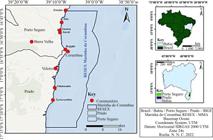
Location of the Corumbau Marine Extractive Reserve, Bahia, Brazil, and the beneficiary fishing communities.
The Corumbau RESEX includes the communities of Curuípe, Satu, Caraíva, Xandó, Barra Velha, Bugigão, Corumbau, Veleiro, Imbassuaba, and Cumuruxatiba (Fig. 1), comprising nine associations and two fishers colonies, which rely on fishery extractivism as one of their main income and livelihood sources.
Data collection
Data collection was conducted between December 2022 and July 2023 by applying a semi-structured questionnaire to fishers benefiting from the Corumbau RESEX. The questionnaire included both objective and subjective questions, aiming to understand the fishers’ perspective on the activity. It was divided into sections related to the fishers’ socio-economic characterization (e.g., age, place of birth, fishing experience), the characterization of the fishing they practice (e.g., main fishing gear and techniques used, captured species, destination of the production, types of boats), as well as their knowledge and understanding of the current regulations established within the protected area.
The species mentioned by the fishers were identified based on Previero et al. (2013). Additionally, to ensure greater accuracy in identification, it was also used the Guide for the Identification of Major Fishery Resources of the Abrolhos Bank (Fernandes et al., 2009).
The fishers were selected using the “snowball” sampling method (Coleman, 1958; Goodman, 1961), in which an interviewee recommends another with similar competence, and the process is repeated with the newly included participants.
The interviews were carried out with the artisanal fishers in their homes, initially clarifying their purpose and requesting the fishers’ consent by signing an Informed Consent Form. This research was approved by the Committee of Ethics in Research with Human Beings belonging to the Universidade Federal do Sul da Bahia–Protocol No. 60784522.0.0000.8467.
The data collected were entered into Microsoft Excel and analyzed using descriptive statistics.
RESULTS
The total of 56 interviews was conducted with artisanal fishers benefiting from the Corumbau RESEX, residents of the following communities: 21.4% in Barra Velha (N = 12), 8.9% in Bugigão (N = 5), 17.8% in Caraíva (N = 10), 14.2% in Corumbau (N = 8), 17.8% in Cumuruxatiba (N = 10), 7.1% in Curuípe (N = 4), 3.6% in Imbassuaba (N = 2), 5.4% in Veleiro (N = 3), and 3.6% in Xandó (N = 2).
The profile of the fishers interviewed was characterized by gender, age group, schooling level, and origin. Ninety-one percent of those interviewed were male, and only five female respondents (9%). The fishers’ mean age was 41 years old, varying from 22 to 68, with the youngest ones living in the Cumuruxatiba community and the oldest in Imbassuaba.

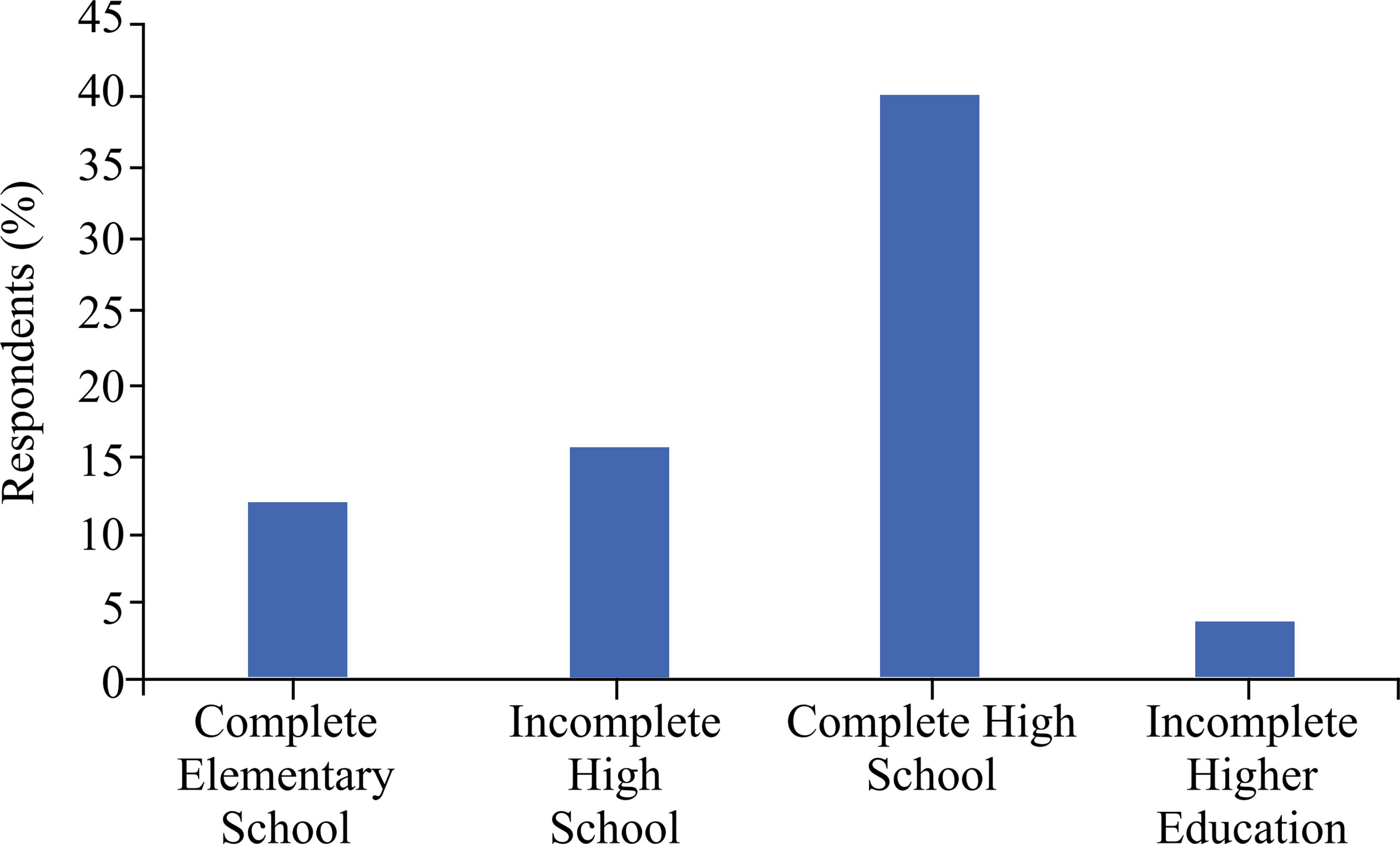
Regarding educational level, only 44.7% answered the question. Among them, 40% had complete high school (Fig. 2).
In relation to the fishers’ origin, 85.2% stated that they were from the places where they live, calling themselves “natives”. When asked about how long they had lived in the community, 89.1% asserted that they had lived there for more than 20 years.
Regarding the type and number of boats, 78.6% of the fishers stated owning their own boat. The majority own only one boat, with an emphasis on activities developed in small speedboats, motorized boats, and flat-bottomed boats (bateiras) (Table 1).
Categorization and number of vessels cited by the fishers from the Corumbau Marine Extractive Reserve, Bahia, Brazil.
In relation to the fishing effort, the fishers indicated that their fishing frequency varied from one to three days per week for 41% (N = 23), with four fishers asserting that they only maintain this frequency if the weather conditions are favorable. For 16.1% (N = 9) of those interviewed, fishing is daily, 9% (N = 5) fish occasionally, and 33.9% (N = 19) fish according to the weather conditions (Fig. 3).

Fishing frequency among the fishers of the Corumbau Marine Extractive Reserve, Bahia, Brazil.
Among the total number of fishers interviewed, 69.6% (N = 39) stayed at sea for just one day, with a mean time per fishing trip of around 10 hours. It is worth noting that those who mentioned fishing for more than one day specified that they carry out this activity outside the RESEX limits, navigating between 9 and 27 nautical miles until they reach the fishing grounds.
The main fishing gear used in the Corumbau RESEX includes handline fishing (89.2%, N = 50), trap nets and diving (48.2%, N = 27), and “bicheiro” (44.6%, N = 25), a tool employed in octopus capture (Fig. 4).

The fishers indicated that lane snapper (Lutjanus synagris), yellowtail snapper (Ocyurus chrysurus), and blue runner (Caranx crysos) stand out among the main captured species (Fig. 5). Commercialization of the fishing resources takes place within the communities themselves, with products sold to restaurants, lodges, fish markets, intermediaries, and the local population.
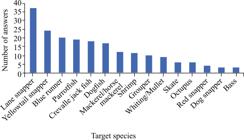
Species most cited as fishing targets by the fishers of the Corumbau Marine Extractive Reserve, Bahia, Brazil. Common names and respective species names. Lane snapper: Lutjanus synagris; yellowtail snapper: Ocyurus chrysurus; blue runner: Caranx crysos; parrotfish: Scarus trispinosus; crevalle jack fish: Caranx hippos; dogfish: Carcharhinus porosus; mackerel/horse mackerel: Scomberomorus brasiliensis; shrimp: Xiphopenaeus kroyeri; grouper: Epinephelus morio; whiting/mullet: Cynoscion virescens and Isopisthus parvipinnis; skate: Dasyatis sp., Gymnura sp., Aetobatus sp. and Rhinobatos sp.; octopus: Octopus sp.; red snapper: Lutjanus analis; dog snapper: Lutjanus jocu; bass: Centropomus sp.
Among the fishing target species in Corumbau RESEX, the parrotfish species are noteworthy (Scarus trispinosus, Scarus zelindae, Sparisoma frondosum, Sparisoma axillare, and Sparisoma amplum), with an emphasis on blue parrotfish (Scarus trispinosus), which was mentioned among the key fishing resources, accounting for 33.9% (N = 19) of the answers.
Among the fishers, 44.6% (N = 25) asserted that they fish for parrotfish, but only 33.9% (N = 19) considered parrotfish as the target species for their fishing. In comparison to the total number of fishers interviewed in each community, 58.3% (N = 7) of those in Barra Velha and 60% in Cumuruxatiba (N = 6) stated that they fish for parrotfish (Table 2).
Number of parrotfish fishers interviewed per community in the Corumbau Marine Extractive Reserve, Bahia, Brazil.
The parrotfish fishers’ mean age was 34 years old, seven years younger than for fishers in general. The weekly frequency of going out to sea to fish for parrotfish varies from daily for 25% (N = 6) of the fishers to one to three times a week for 33.3% (N = 8). The remaining fishers reported that their parrotfish fishing frequency depends on the weather conditions (37.6%, N = 9) and that it takes place occasionally (4.1%, N = 1).
Another important factor for understanding the parrotfish fishing effort at the Corumbau RESEX is the number of fishing days. Approximately 80% of the divers spend just one day at sea, with a mean of 10 hours of activity.
In relation to the fishing grounds visited for parrotfish capture, 32% of the parrotfish fishers provided the mean travel distance, with 12 nautical miles as the mean distanced traveled (standard deviation ± 4.7). The closest fishing ground is nearly five miles away, and the furthest is 18.5 miles away. In order to cover the aforementioned distances, 56% of the divers have their own vessel, primarily categorized as speedboats and motorized boats.
In general, 82.6% of the fishers who catch parrotfish sell the fish, and sales occur locally in their entirety.
Finally, 92% of the divers interviewed are familiar with the local management plan (LMP) rules for parrotfish in the Corumbau RESEX, showing the effectiveness of the efforts made by the Corumbau RESEX management in disseminating the LMP in recent years.
DISCUSSION
The results show that only 9% of the fishers who participated in this research were female. Women’s reduced participation in the local fishing scene is a multifaceted phenomenon that deserves further analysis. One of the reasons for this gender disparity can be attributed to the working conditions in fishing, which frequently involve high physical exertion level and safety risks (Harper et al., 2020). Traditionally, fishing has been perceived as a brute force-intensive activity, which may discourage women from participating due to gender stereotypes associated with physical frailty.
However, the women’s role in fishing is oftentimes made invisible, as they engage in a dual workday, balancing fishing activities (such as making and repairing nets, and processing and selling fish, among others) with household management (Corpuz et al., 2023; Fonseca et al., 2016; Galvão et al., 2020).
Another factor that can be related to women’s low participation in the research can be attributed, in part, to the snowball method, the methodology used to apply the questionnaires. This approach can result in a selection bias, because it relies heavily on the existing social networks and on the interconnection between the target audience subjects (Geddes et al., 2018). As women in fishing can oftentimes be made invisible in fishing communities, the snowball methodology may fail to achieve adequate representation of their perspectives and experiences in fishing.
The idea that fishing is a predominantly male activity can result in marginalization and lack of recognition of women as protagonists in this sector. This invisibility prevents their skills, knowledge and contributions from being valued and respected (Gonçalves Neto & Souza Amaral, 2022).
Other authors report that there is significant demand and growing mobilization among women to take on a more prominent role in the organization of fishing professionals (Vasconcellos et al., 2007). Over the years, several studies have evidenced the significant participation of women in the fishing production chain (Cidreira Neto et al., 2020; Gonçalves Neto & Souza Amaral, 2022; Hauzer et al, 2013; Ribeiro & Nascimento, 2020). These studies highlight the growing recognition of fisherwomen’s participation and reinforce the need to promote greater inclusion and visibility in the sector.
Persistence of the family tradition in fishing is evidenced by the fact that, despite the adversities faced, many young people continue to enter this sector. Silva et al. (2007) show that fishing ends up being developed by different generations, with knowledge transmitted to younger individuals, aiming to provide conditions for reproduction of the activity (Okuye & Eyibo, 2021).
The age group range of the fishers from the Corumbau RESEX suggests that knowledge relating to the activity, accumulated over time, is passed from parents to children. This result shows that, even at an advanced age, the fishers are still active as artisanal fishers, looking for a means of supporting their families in the Corumbau RESEX reefs, and, for this reason, they still contribute to the local economy. These data also indicate that younger people may be prioritizing studies and/or directing their occupations to other activities, considered by most of them to be of greater importance in relation to fishing (Zacardi et al., 2014). According to Alves and Nishida (2003), abandoning studies and entering the world of work is a part of the social and economic context in which fishing communities are inserted. However, in this survey, most of the fishers had completed high school. This result can be linked to the fact that these fishers are engaged in other economic activities that require higher schooling levels.
For Nishida et al. (2008), the need to contribute to improving family income and lack of encouragement to continue studies can be identified as the main factors for school dropout. On the other hand, Vasconcelos et al. (2003) suggest that younger fishers may be acquiring higher levels of school knowledge when compared to previous generations in fishing communities. This improvement is possibly related to the increase in the number of public schools nearby or within these communities.
In the Corumbau RESEX, young individuals are frequently drawn to engage in alternative economic activities, mainly those associated with the tourism sector. Some of these activities demand higher schooling levels, prompting the youth to seek educational attainment. Once primarily undertaken for subsistence and income, artisanal fishery no longer holds an exclusive position in generating income for coastal communities nowadays.
Intense tourism in coastal regions imposes transformations in the way of life of fishing communities, mainly in pre-existing economic activities such as fishing (da Silveira & Ferreira, 2024). In this context, fishers also dedicate themselves to other activities, such as those related to tourism demand (Kimbu et al., 2022; Souza & Vieira Filho, 2011). As the Corumbau RESEX is situated in municipalities that are part of important tourist destinations in southern Bahia, hosting significant ecosystems of the Abrolhos Bank and having an extensive reef area, tourism has been promoted in the region. Some communities in the Corumbau RESEX show a keen interest in tourism, leading to the migration of several young individuals from traditional fishing activities to the tourism sector, which includes working in bars, restaurants, lodges, providing services in vacation homes, and even renting boats and organizing tours.
This migration of activities is not a current event. According to Sanches (1997), artisanal fishers who once relied solely on artisanal fisheries and other activities related to agriculture and extractivism are abandoning these pursuits to sustain themselves through tourism, perhaps because the latter generates more significant economic gains. In addition, in many regions the migration to tourism is taking place due to the reduction in fish stocks (Kimbu et al., 2022).
During the interviews, it was possible to perceive the traditional knowledge scope and the plurality of fishing activities carried out by the fishers. Due to the specific environmental conditions that characterize each season of the year, as well as to the ethno-knowledge acquired over the years regarding fishery biology, most of the fishers engage in fishing using more than one fishing gear and target various species.
Similar results were presented by Siqueira (2006), who found that the use of handlines by fishers from the Corumbau RESEX is related to subsistence fishing. Considered a low-cost fishing gear, handline fishing is used in the capture of various reef fish species, as other fishing techniques operate in a limited way in these coral environments.
Another highly present fishing gear in the Corumbau RESEX is the gill net, followed by diving and capture with “bicheiros” (specific tools). Gill nets are considered passive fishing gear, as fishers do not actively pursue the fish but rather wait for them to become entangled in the net. This type of net is responsible for capturing various species found in both pelagic and benthic regions, as it presents distinct characteristics based on the amount of gear (buoys and sinkers) present in the net, being either a surface or bottom gill net (Zacardi et al., 2014).
Unlike gill nets, diving and capturing with “bicheiros” are considered active fishing methods because fishers can visually locate the fish to capture it. Diving is a common practice in the Corumbau RESEX, taking place in reef areas with the aim of capturing economically valuable species such as groupers (Serranidae), and blue (Scaridae) and red (Lutjanidae) parrotfish. In turn, “bicheiros” are the devices used to capture octopuses, and are used according to tide variations. When the reefs are exposed, octopus hunters walk on the reef flat, identifying dens for capture.
The fact that the fishers were native to the coastal region has significant implications for the fishing activity dynamics. Familiarity with the local environment gives these fishers a considerable advantage, as they can travel more efficiently and economically to the fishing locations. This ease of access reduces the operational costs associated with the activity, such as transportation and logistics, making fishing a more appealing option in financial terms. In turn, this contributes to greater income potential for fishers (Cardoso & Freitas, 2007; Souza & Mendonça, 2009).
At the Corumbau RESEX, parrotfish species appear as prominent targets for the fishing activity, with a special emphasis on blue parrotfish (S. trispinosus). In particular, it emerges as one of the primary fishing resources for some of the communities that exploit the RESEX.
Parrotfish species are characteristic reef fish in Brazil, belonging to the Perciformes order and the Scaridae family, occurring between the states of Maranhão and São Paulo (de Queiroz-Véras et al., 2023; Moura et al., 2001). Due to unregulated capture, this species is in a critical state of threat on the Official National List of Endangered Fauna Species (MMA Ordinance No. 445 of 2014) (Instituto Chico Mendes de Conservação da Biodiversidade, 2014).
The susceptibility of parrotfish to overfishing can be attributed to various characteristics, such as their considerable body size and widespread distribution in shallow waters, as documented by previous studies (Bonaldo & Hay, 2014; de Queiroz-Véras et al., 2023; Taylor & Choat, 2014). However, the species holds significant importance for the communities in the Corumbau RESEX, possessing high economic and cultural value and directly contributing as an income and subsistence source.
Considering the threat to parrotfish species, the LMP for parrotfish fishing was established in 2021 through Ordinance No. 284, of May 11th, 2021. This ordinance grants fishing rights to beneficiaries from the Corumbau RESEX who have been previously registered by the managing body of the protected area and establishes rules for the fishing and management of parrotfish species (S. trispinosus, Scarus zelindae, Sparisoma frondosum, Sparisoma axillare, and Sparisoma amplum) (Brasil, 2021). Therefore, parrotfish fishing control must be done through fishing monitoring, with the help of environmental monitors who collect information generated by the fishers regularly (de Queiroz-Véras et al., 2023).
Fishing for parrotfish at the Corumbau RESEX is an activity predominantly carried out by young people, a characteristic that can be attributed to the specific nature of this activity. Catching parrotfish generally involves snorkeling, a modality that attracts a younger age group when compared to other fishing gear (Roos et al., 2016).
In the Corumbau RESEX, the breath-hold diving fishing modality takes place exclusively during the summer, directly impacting the fishing frequency among divers. This frequency may undergo changes due to environmental factors that affect the diving conditions, such as water turbidity and luminosity. This can be interpreted as a natural closed season that directly influences the diving practice and, consequently, parrotfish fishing. This is because, from May to October, the water in the fishing grounds becomes turbid, making it impossible for divers to see the fish. This period plays an important role in biodiversity conservation and in the regeneration of parrotfish populations in the reefs of the Corumbau RESEX, which favors the implementation of the LMP for parrotfish.
Although parrotfish continue to be caught and sold in the Corumbau RESEX, according to the fishers, many studies indicate that the abundance and size of parrotfish species have been reduced in various regions in recent decades, mainly due to fishing pressure (de Queiroz-Véras et al., 2023). In this sense, future studies should better understand the relationship between fishing in the Corumbau RESEX and the population parameters of these species, which play a fundamental ecological and economic role in the socio-ecological systems of the Corumbau RESEX.
CONCLUSIONS
The fishers in the Corumbau Marine RESEX practice artisanal fishing, relying on traditional methods and small to medium-sized vessels. This activity serves as a vital source of both food and income for local fishing communities.
The results revealed that groupers–especially lane snappers and yellowtail snappers–are the most heavily caught species, making them the primary targets of local fishers. To prevent overexploitation, fisheries management should integrate traditional knowledge alongside science-based measures, such as establishing minimum catch sizes, annual quotas, seasonal closures, and designated no-take zones.
Although parrotfish are classified as endangered, they continue to be regularly caught and sold in the Corumbau RESEX, under its LMP. Interview data suggested their populations remain stable–possibly due to environmental conditions that naturally restrict diving, creating a natural closed season.
To ensure sustainable management, the Instituto Chico Mendes de Conservação da Biodiversidade should prioritize long-term monitoring of these stocks to assess compliance with conservation policies. Furthermore, the LMP’s effectiveness must be explicitly evaluated for its impact on parrotfish recovery and the broader goal of sustainable fisheries in the RESEX.
ACKNOWLEDGMENTS
The authors express their gratitude to the fishers who generously dedicated their time to participate in the interviews, and to Instituto Chico Mendes de Conservação da Biodiversidade for its support during the field research.
-
FUNDING
Universidade Federal do Sul da BahiaGrant No: 23746.007750/2023-99
DATA AVAILABILITY STATEMENT
All data sets were generated or analyzed in the current study.
REFERENCES
- Alves, R. R. N., & Nishida, A. K. (2003). Aspectos socioeconômicos e percepção ambiental dos catadores de caranguejo-uçá Ucides cordatus cordatus (L. 1763) (Decapoda, Brachyura) do estuário do rio Mamanguape, Nordeste do Brasil. Interciência, 28(1), 36-43.
-
Asche, F., Garlock, T. M., Anderson, J. L., Pincinato, R. B., Anderson, C. M., Camp, E. V., Chu, J., Cojocaru, A. L., Eggert, H., Lorenzen, K., Love, D. C., & Tveteras, R. (2025). A review of global fisheries performance. Fish and Fisheries, 26(3), 444-453. https://doi.org/10.1111/faf.12890
» https://doi.org/10.1111/faf.12890 - Berkes, F., Mahon, R., McConney, P., Pollnac, R., & Pomeroy, R. (2006). Gestão de pesca de pequena escala: diretrizes e métodos alternativos Editora FURG.
-
Bonaldo, R. M., & Hay, M. E. (2014). Seaweed-coral interactions: Variance in seaweed allelopathy, coral susceptibility, and potential effects on coral resilience. PLoS One, 9(1), e85786. https://doi.org/10.1371/journal.pone.0085786
» https://doi.org/10.1371/journal.pone.0085786 -
Brasil (2000). Lei nº 9.985 – Sistema Nacional de Unidade de Conservação (SNUC) Retrieved from http://www.planalto.gov.br/ccivil_03/leis/l9985.htm
» http://www.planalto.gov.br/ccivil_03/leis/l9985.htm -
Brasil (2021). Portaria nº 284, de 11 de maio de 2021. Diário Oficial da União Retrieved from https://www.in.gov.br/web/dou/-/portaria-n-284-de-11-de-maio-de-2021-321527004
» https://www.in.gov.br/web/dou/-/portaria-n-284-de-11-de-maio-de-2021-321527004 -
Cardoso, R. S., & Freitas, C. E. C. (2007). Desembarque e esforço de pesca da frota pesqueira comercial de Manicoré (Médio Rio Madeira), Amazonas, Brasil. Acta Amazônica, 37(4), 605-612. https://doi.org/10.1590/S0044-59672007000400016
» https://doi.org/10.1590/S0044-59672007000400016 -
Cidreira Neto, I. R. G., Rodrigues, G. G., & Candeias, A. L. B. (2020). Pesca artesanal: Identidade e representatividade da mulher pescadora. Cadernos de Gênero e Tecnologia, 13(42), 62-76. https://doi.org/10.3895/cgt.v13n42.10577
» https://doi.org/10.3895/cgt.v13n42.10577 - Coleman, J. S. (1958). Snowball sampling: Problems and techniques of chain referral sampling. Human Organization, 28-36.
-
Corpuz, J. T. M., Cacho, R., Villamor, B., Samson, M. G., & Simat, M. S. (2023). Unfolding women’s role in small-scale fishing community in the Philippines toward formulating a gender-sensitive local government policy. Otoritas: Journal Ilmu Pemerintahan, 13(1), 30-43. https://doi.org/10.26618/ojip.v13i1.9911
» https://doi.org/10.26618/ojip.v13i1.9911 -
Da Silveira, M. F., & Ferreira, B. P. (2024). Temporal changes in a small-scale artisanal reef fishery in Brazil: Coastal development and its impacts. Marine Policy, 165, 106186. https://doi.org/10.1016/j.marpol.2024.106186
» https://doi.org/10.1016/j.marpol.2024.106186 -
De Queiroz-Véras, L. V. M. V., Ferreira, B. P., Freitas, M., & Feitosa, J. L. L. (2023). A critical review and knowledge gaps to assess and manage threatened parrotfishes’ stocks in Brazil. Aquatic Sciences, 85(2), 44. https://doi.org/10.1007/s00027-023-00939-x
» https://doi.org/10.1007/s00027-023-00939-x -
Dias Neto, J. (2002). Gestão do uso dos recursos pesqueiros marinhos no Brasil (Master’s dissertation, Universidade de Brasília). Retrieved from https://www.ibama.gov.br/sophia/cnia/livros/gestaodosrecursospesqueirosdigital.pdf
» https://www.ibama.gov.br/sophia/cnia/livros/gestaodosrecursospesqueirosdigital.pdf - Fernandes, V. J. G., Previero, M., & Freitas, M. O. (2009). Guia para identificação dos principais recursos pesqueiros do Banco dos Abrolhos Ecomar; Conservação Internacional Brasil; Ministério da Pesca e Aquicultura.
-
Ferreira, M. V. C., Andrade, L. M. S., & Menezes, P. D. R. (2018). Por um território terrestre da Reserva Extrativista Marinha do Corumbau: O caso de Caraíva. Paranoá, 11(22), 172-181. https://doi.org/10.18830/issn.1679-0944.n22.2018.12
» https://doi.org/10.18830/issn.1679-0944.n22.2018.12 -
Figueiredo, M. M. A. (2013). Trabalho e participação política das pescadoras na Reserva Extrativista (RESEX) Canavieiras – BA (Master’s dissertation, Universidade Federal da Bahia). https://repositorio.ufba.br/handle/ri/20158
» https://repositorio.ufba.br/handle/ri/20158 -
Fonseca, M., Alves, F., Chagas Macedo, M., & Azeiteiro, U. (2016). O papel das mulheres na pesca artesanal marinha: Estudo de uma comunidade pesqueira no município de Rio das Ostras, RJ, Brasil. Revista de Gestão Costeira Integrada, 16, 87-100. Retrieved from https://www.redalyc.org/articulo.oa?id=388346765010
» https://www.redalyc.org/articulo.oa?id=388346765010 -
Food and Agriculture Organization of the United Nations (FAO) (2024). The state of world fisheries and aquaculture 2024: Blue transformation in action FAO. https://doi.org/10.4060/cd0683en
» https://doi.org/10.4060/cd0683en -
Food and Agriculture Organization of the United Nations (FAO), Duke University & WorldFish (2023). Illuminating hidden harvests: The contributions of small-scale fisheries to sustainable development FAO. https://doi.org/10.4060/cc4576en
» https://doi.org/10.4060/cc4576en - Galvão, M. C., Medeiros, R. P., & Veras Neto, F. Q. (2020). Estratégias adaptativas dos modos de vida e os papéis das mulheres em um sistema socioecológico pesqueiro artesanal no sul do Brasil. In C. S. Seixas, P. H. F. Vieira & R. P. Medeiros (Eds.), Governança, conservação e desenvolvimento em territórios marinhos-costeiros no Brasil (pp. 223-240). Rima.
-
Geddes, A., Parker, C., & Scott, S. (2018). When the snowball fails to roll and the use of ‘horizontal’ networking in qualitative social research. International Journal of Social Research Methodology, 21(3), 347-358. https://doi.org/10.1080/13645579.2017.1406219
» https://doi.org/10.1080/13645579.2017.1406219 -
Golden, C. D., Koehn, J. Z., Shepon, A., Passarelli, S., Free, C. M., Viana, D. F., Matthey, H., Eurich, J. G., Gephart, J. A., Fluet-Chouinard, E., Nyboer, E. A., Lynch, A. J., Kjellevold, M., Bromage, S., Charlebois, P., Barange, M., Vannuccini, S., … & Thilsted, S. H. (2021). Aquatic foods to nourish nations. Nature, 598(7880), 315-320. https://doi.org/10.1038/s41586-021-03917-1
» https://doi.org/10.1038/s41586-021-03917-1 - Gonçalves Neto, A., & Souza Amaral, S. C. (2022). O trabalho da mulher na pesca artesanal: Uma análise das questões identitárias e de reconhecimento. In Congresso Fluminense de Pós-Graduação
- Goodman, L. A. (1961). Snowball sampling. The Annals of Mathematical Statistics, 32(1), 148-170.
-
Harper, S., Adshade, M., Lam, V. W., Pauly, D., & Sumaila, U. R. (2020). Valuing invisible catches: Estimating the global contribution by women to small-scale marine capture fisheries production. PLoS One, 15(3), e0228912. https://doi.org/10.1371/journal.pone.0228912
» https://doi.org/10.1371/journal.pone.0228912 -
Hauzer, M., Dearden, P., & Murray, G. (2013). The fisherwomen of Ngazidja island, Comoros: Fisheries livelihoods, impacts, and implications for management. Fisheries Research, 140, 28-35. https://doi.org/10.1016/j.fishres.2012.12.001
» https://doi.org/10.1016/j.fishres.2012.12.001 - Instituto Chico Mendes de Conservação da Biodiversidade (2014). Portaria nº 445, de 17 de dezembro de 2014. Lista Nacional Oficial de Espécies da Fauna Ameaçadas de Extinção - Peixes e Invertebrados Aquáticos. Diário Oficial da União, Seção 1(245), 126.
-
Instituto Socioambiental (2023). Unidades de Conservação: SNUC Retrieved from https://uc.socioambiental.org/pt-br
» https://uc.socioambiental.org/pt-br -
Kimbu, A. N., Booyens, I., & Winchenbach, A. (2022). Livelihood diversification through tourism: Identity, well-being, and potential in rural coastal communities. Tourism Review International, 26(1), 25-40. https://doi.org/10.3727/154427221X16245632411854
» https://doi.org/10.3727/154427221X16245632411854 -
Lima, J. R. C. (2015). Representação ambiental e caracterização da pesca artesanal realizada pela colônia de pescadores Z-3, Goiana, Pernambuco (Master’s dissertation, Universidade Federal Rural de Pernambuco). Retrieved from https://www.tede2.ufrpe.br:8080/tede/bitstream/tede2/8426/2/Josimar%20Robson%20da%20Cruz%20Lima.pdf
» https://www.tede2.ufrpe.br:8080/tede/bitstream/tede2/8426/2/Josimar%20Robson%20da%20Cruz%20Lima.pdf -
McGinnis, M., & Ostrom, E. (2014). Social-Ecological System Framework: Initial changes and continuing challenges. Ecology and Society, 19(2), 30. https://doi.org/10.5751/ES-06387-190230
» https://doi.org/10.5751/ES-06387-190230 - Moura, R. L., Figueiredo, J. L., & Sazima, I. (2001). A new parrotfish (Scaridae) from Brazil, and revalidation of Sparisoma amplum (Ranzani, 1842), Sparisoma frondosum (Agassiz, 1831), Sparisoma axillare (Steindachner, 1878) and Scarus trispinosus Valenciennes, 1840. Bulletin of Marine Science, 68(3), 505-524.
- Nishida, A. K., Nordi, N., & da Nóbrega Alves, R. R. (2008). Aspectos socioeconômicos dos catadores de moluscos do litoral paraibano, Nordeste do Brasil. Revista de Biologia e Ciências da Terra, 8(1), 207-215.
-
Okuye, M., & Eyibo, C. (2021). Life for fisheries: Sociology and rural economy for fishermen. Journal Siplieria Sciences, 2(1), 21-25. https://doi.org/10.48173/jss.v2i1.81
» https://doi.org/10.48173/jss.v2i1.81 -
Previero, M., Minte-Vera, C., & Moura, R. (2013). Fisheries monitoring in Babel: Fish ethnotaxonomy in a hotspot of common names. Neotropical Ichthyology, 11(3), 467-476. https://doi.org/10.1590/S1679-62252013000300004
» https://doi.org/10.1590/S1679-62252013000300004 -
Prost, C., & Cerqueira, I. L. S. (2010). Pesca artesanal em áreas protegidas: Territórios conjugados. Grupo de Pesquisa Costeiros, Universidade Federal da Bahia. Retrieved from https://costeiros.ufba.br/producoes
» https://costeiros.ufba.br/producoes -
Ribeiro, N., & Nascimento, G. (2020). Guardiãs das tradições: Mulheres da pesca em Arraial do Cabo-RJ. Humanas Sociais & Aplicadas, 10(29), 20-33. https://doi.org/10.25242/ 8876102920202204
» https://doi.org/10.25242/ 8876102920202204 -
Roos, N. C., Pennino, M. G., de Macedo Lopes, P. F., & Carvalho, A. R. (2016). Multiple management strategies to control selectivity on parrotfishes harvesting. Ocean & Coastal Management, 134, 20-29. https://doi.org/10.1016/j.oceco aman.2016.09.029
» https://doi.org/10.1016/j.oceco aman.2016.09.029 -
Sanches, R. A. (1997). Caiçaras e a Estação Ecológica de Juréia-Itatins Litoral Sul de São Paulo: Uma abordagem etnográfica e ecológica para o estudo da relação homem-meio ambiente (Master’s dissertation, Universidade de São Paulo). Retrieved from https://www.teses.usp.br/teses/disponiveis/41/41134/tde-17112021-165546/
» https://www.teses.usp.br/teses/disponiveis/41/41134/tde-17112021-165546/ - Silva, M. C., Oliveira, A. S., & Nunes, G. Q. (2007). Caracterização socioeconômica da pesca artesanal no município de Conceição do Araguaia, estado do Pará. Amazônia: Ciência e Desenvolvimento, 2(4), 37-51.
-
Siqueira, A. M. (2006). Quem são os extrativistas? Perfil dos pescadores e da atividade pesqueira na Reserva Extrativista Marinha do Corumbau – BA [Master’s dissertation, Universidade Federal de São Carlos]. https://repositorio.ufscar.br/handle/20.500.14289/1917
» https://repositorio.ufscar.br/handle/20.500.14289/1917 -
Souza, C., Batista, V., & Fabre, N. N. (2012). Caracterização da pesca no extremo sul da Área de Proteção Ambiental Costa dos Corais, Alagoas, Brasil. Boletim do Instituto de Pesca, 38(2), 155-169. Retrieved from https://institutodepesca.org/index.php/bip/article/view/953/933
» https://institutodepesca.org/index.php/bip/article/view/953/933 -
Souza, G. M. R., & Vieira Filho, N. A. Q. (2011). Impactos socioculturais do turismo em comunidades insulares: Um estudo de caso no arquipélago de Fernando de Noronha-PE. Revista Acadêmica Observatório de Inovação do Turismo, 6(4), 1-18. Retrieved from https://granrio.emnuvens.com.br/raoit/article/view/3502
» https://granrio.emnuvens.com.br/raoit/article/view/3502 -
Souza, R. L. S., & Mendonça, M. R. (2009). Caracterização da pesca e dos pescadores de peixes ornamentais da região de Tefé/AM. Uakari, 5(2), 7-17. Retrieved from https://mamiraua.org.br/documentos/2b9dbcd3a51d77ae33bcfc453571d196.pdf
» https://mamiraua.org.br/documentos/2b9dbcd3a51d77ae33bcfc453571d196.pdf -
Taylor, B. M., & Choat, J. H. (2014). Comparative demography of commercially important parrotfish species from Micronesia. Journal of Fish Biology, 84(2), 383-402. https://doi.org/10.1111/jfb.12294
» https://doi.org/10.1111/jfb.12294 - Vasconcellos, M., Diegues, A. C., & Sales, R. R. (2007). Limites e possibilidades na gestão da pesca artesanal costeira. In A. L. Costa (Org.), Nas redes da pesca artesanal (pp. 15-83). IBAMA.
- Vasconcelos, E. D., Lins, J. E., Matos, J. D., Junior, W., & Tavares, M. M. (2003). Perfil socioeconômico dos produtores da pesca artesanal marítima do estado do Rio Grande do Norte. Boletim Técnico Científico do Cepene, 11, 277-292.
- Zacardi, D. M., Ponte, S. C. S., & Silva, A. J. S. (2014). Caracterização da pesca e perfil dos pescadores artesanais de uma comunidade às margens do rio Tapajós, Estado do Pará. Amazônia: Ciência & Desenvolvimento, 10(19), 129-148.
Edited by
-
Section editor:
Fabiana Garcia https://orcid.org/0000-0002-1164-0499