
 Aquaculture biosecurity in Brazil: Assessment of tilapia fry hatcheries in the Federal District
ABSTRACT
This study evaluated biosecurity practices in five tilapia fry hatcheries in the Federal District, Brazil, between August 2023 and August 2024. Data analysis showed high compliance in water quality monitoring, feed management, and mortality records, but weaknesses in quarantine, visitor control, use of personal protective equipment, pest control, and sanitary fallowing. No significant differences were observed among thematic groups (p > 0.05), although variation among farms was detected (p < 0.001). Biosecurity adoption is partial and non-standardized, highlighting the need for improved protocols and management practices.
Keywords
Fish health management; Risk assessment; Water quality monitoring; Disease prevention; Sustainable aquaculture practices
RESUMO
Este estudo avaliou as práticas de biosseguridade em cinco unidades produtoras de alevinos de tilápia no Distrito Federal, Brasil, entre agosto de 2023 e agosto de 2024. Os resultados indicaram elevada conformidade no monitoramento da qualidade da água, manejo alimentar e registros de mortalidade, mas fragilidades nos protocolos de quarentena, controle de visitantes, uso de equipamentos de proteção individual, controle de pragas e vazio sanitário. Não foram observadas diferenças significativas entre os grupos temáticos (p > 0,05), embora tenha sido identificada variação entre as propriedades (p < 0,001). A adoção da biosseguridade é parcial e não padronizada, evidenciando a necessidade de aprimoramento dos protocolos e das práticas de manejo.
Palavras-chave
Sanidade de peixes; Avaliação de risco; Monitoramento da qualidade da água; Prevenção de doenças; Aquicultura sustentável
INTRODUCTION
The Nile tilapia (Oreochromis niloticus) is among the most widely farmed fish species worldwide, ranking as one of the leading species in global aquaculture. Its continued expansion is attributed to favorable traits such as hardiness, rapid growth, efficient feed conversion, and tolerance to high stocking densities, which enable broad adaptation to diverse farming systems (El-Sayed, 2021; FAO, 2024). In 2022, global tilapia production was estimated at approximately five million tons, consolidating its role as a strategic pillar for food security in many countries (FAO, 2024).
In Brazil, tilapia farming accounts for 62.7% of national aquaculture production, reaching 662.2 thousand tons in 2024, thereby reinforcing its economic and social relevance (Peixe BR, 2025). Despite this expansion, the activity faces major sanitary risks, primarily linked to the spread of emerging pathogens such as tilapia lake virus and Infectious Spleen and Kidney Necrosis Virus (ISKNV), in addition to the lack of standardized biosecurity protocols in certain production stages, particularly hatcheries (Ayiku et al., 2024; Surachetpong et al., 2020). This phase is especially critical due to high stocking densities and the increased immunological susceptibility of fry (Emam et al., 2025; MacKinnon et al., 2023).
Biosecurity is widely recognized as a cornerstone for the prevention and control of aquatic animal diseases, integrating physical, chemical, and administrative barriers (FAO, 2020; WOAH, 2021). International guidelines, such as those from the World Organization for Animal Health (WOAH) and technical manuals from the Food and Agriculture Organization of the United Nations (FAO), emphasize that the adoption of best management practices, sanitary record-keeping, epidemiological surveillance, and traceability protocols is fundamental to reducing vulnerabilities and mitigating the spread of infectious agents (FAO, 2021; WOAH, 2021).
In this framework, assessing adherence to biosecurity practices across regions is essential to identify gaps and propose strategies that strengthen both sanitary and economic sustainability in aquaculture. This study aimed to evaluate the adoption of biosecurity practices in tilapia hatcheries in Brazil, focusing on the Federal District, and to contribute to the international discussion on challenges and opportunities for improving aquatic animal health.
MATERIALS AND METHODS
A cross-sectional and semi-quantitative survey was conducted between August 2023 and August 2024 to characterize biosecurity practices in Nile tilapia hatcheries in the Federal District, Brazil. The study population included all hatchery operators active in the region, totaling five farms, which represented 100% of the target population.
Questionnaire structure
The survey instrument consisted of 89 closed-ended questions with binary responses (“yes” or “no”), three multiple-choice questions, and two open-ended questions. The items were grouped into five thematic domains:
-
G1: on-farm biosecurity practices (23 questions);
-
G2: access control and equipment sanitation (13 questions);
-
G3: measures for vehicles, visitors, and workers (seven questions);
-
G4: water quality monitoring (12 questions);
-
G5: implementation of preventive and/or corrective measures (34 questions).
Survey design, application, and data collection
The questionnaire was developed based on technical guidelines and regulatory frameworks for aquaculture, including the Plano Distrital de Vigilância e Boas Práticas em Aquicultura (Portaria SEAGRI No. 88/2023) (Distrito Federal, 2023a), the National Program for the Health of Aquatic Animals of Cultivation (Brasil, 2015; 2019), and the Peixe-BR Aquatic Biosecurity Guide (Peixe BR, 2023). Data were collected either in person or via teleconference with technical managers or farm administrators, ensuring comprehensive coverage of management and sanitary practices.
Statistical analysis
The data were initially tabulated in Microsoft Excel for organization and structuring of responses. Subsequently, statistical analyses were performed in R software (version 4.3.2; R Core Team, 2023), applying both descriptive and inferential statistics. The analyses were categorized according to their objective and purpose to facilitate interpretation.
-
Data organization and characterization: tabulation of absolute and relative frequencies (%);
-
Basic descriptive statistics: standard deviation and relative variability;
-
Association testing: χ2 test of independence to identify associations between groups of questions and responses; Cramér’s V to measure the strength of associations between categorical variables;
-
Group comparisons: analysis of variance (ANOVA) to evaluate differences in mean conformity between groups of farms;
-
Linear relationships: Pearson’s correlation to examine linear relationships between responses from different questions;
-
Exploration of patterns and latent structures: hierarchical cluster analysis to group questions with similar responses; principal component analysis (PCA) to identify underlying dimensions and synthesize variability in the dataset.
RESULTS AND DISCUSSION
Biosecurity practices in the evaluated hatcheries: identification of key risks
Data presented in Table 1 indicate high compliance with structural items: frequent fish monitoring (100%), stocking records (100%), knowledge of origin/health status (80%), and mandatory animal movement permits (GTA, 100%), in line with Brazilian regulations (MAPA Normative Instruction No. 4/2019) (Brasil, 2019) and the Plano Distrital de Vigilância e Boas Práticas em Aquicultura (Distrito Federal, 2023a).
Adoption rates (%) of biosecurity practices in tilapia fry hatcheries in the Federal District, Brazil.
Oversight by licensed professionals was reported by 80% of farms, and quarantine measures by 75–80%, aligning with recommendations for tilapia farming (MacKinnon et al., 2023). However, gaps persist regarding movement restrictions during outbreaks (20%), staff ability to recognize clinical signs (40%), and regular training programs (80%).
Transport emerged as a critical point: none of the farms provided documentation confirming vehicle disinfection, increasing the risk of cross-contamination (FAO, 2021; Peixe BR, 2023). Furthermore, 40% did not request or store records of treatments or vaccinations for incoming animals, hindering traceability and compliance with current regulations (Brasil, 2019). These findings underscore the need for standard operating procedures—already present in 60% of farms—and their dissemination to workers to ensure standardization and traceability.
Overall, the results of this study are consistent with those of Raposo et al. (2024), who assessed 112 commercial tilapia farms in the Federal District. In that survey, production systems showed varying levels of biosecurity compliance, with larviculture and juvenile trade farms achieving the second-highest conformity, surpassed only by closed grow-out systems. Annual evaluations conducted by the Secretariat of Agriculture, Supply and Rural Development of the Federal District (SEAGRI-DF) corroborate this trend: in the past two years, juvenile production units maintained the highest compliance rates compared to other systems (Distrito Federal, 2023b; Distrito Federal, 2024).
It is noteworthy that the Federal District has a voluntary sanitary certification program for hatcheries classified as biosecure, monitored, or officially pathogen-free (SEAGRI Ordinance No. 175/2025). Full compliance (100%) with biosecurity standards is a mandatory prerequisite for certification, representing a strong incentive for improving sanitary performance in these production systems.
At the international level, the indices observed in the Federal District are similar to those reported by MacKinnon et al. (2023) in Southeast Asian countries, where logistical and economic constraints limit the full implementation of biosecurity measures. However, they remain below standards in more advanced contexts, such as Norway, where legislation mandates complete traceability and strict protocols for the transport of live aquatic animals—including vehicle approval, mandatory disinfection, and continuous water quality monitoring (Norway, 2019; Standard Norway, 2024). A comparable situation is observed in Chile, where full traceability systems and third-party audits are required for certification and commercialization (FAO, 2024; SeafoodSource, 2023). In the European Union, the European Commission (2024) has also established a regulatory framework that integrates hygiene, transport, and environmental sustainability standards, reinforcing mandatory “farm-to-consumer” traceability.
Control of access and equipment sanitation in farms
Table 2 shows that physical and sanitary control measures are not fully consolidated in the evaluated hatcheries yet. Although 80% reported restricted access, only 60% keep the gate locked and control entry through a single point, while warning signs are present in 20%. These numbers highlight vulnerabilities in controlling the entry of people and vehicles, an aspect already pointed out by MacKinnon et al. (2023) as one of the main vectors for pathogen introduction in tropical countries.
Low adherence to visitor and vehicle records (20%) and internal traffic monitoring (20%) compromise traceability and contradict the requirements of Normative Ordinance MAPA No. 4/2019 (Brasil, 2019), in addition to diverging from national biosafety guidelines (Peixe BR, 2023) and from international standards, such as the European Union’s “farm-to-fork” traceability framework (European Commission, 2024) and the mandatory sanitary protocols applied in countries like Norway and Chile (Norway, 2019; SeafoodSource, 2023).
On the other hand, high compliance was observed in the sanitation of equipment and supplies: 100% of farms carry out frequent cleaning and disinfection, proper storage, do not share materials with other farms, and use equipment in sufficient quantity. All also record the purchase of medicines and supplies with the competent authorities, ensuring traceability and compliance with legislation. These results are similar to those found by Raposo et al. (2024) and confirm the consolidation of good operational practices, already highlighted by Can et al. (2023) and Emam et al. (2025), as essential to reducing the risk of pathogen dissemination.
Thus, despite advances in the management of equipment and supplies, critical gaps remain in access control and visitor/vehicle traceability, which reinforces the need for continuous training, incentives for sanitary certification, and stricter protocols, especially in regions of intensive production (Distrito Federal, 2023b; FAO, 2021; MacKinnon et al., 2023).
Biosecurity measures for vehicles, visitors, and staff on farms
The data in Table 3 show that the adoption of these measures remains incipient and heterogeneous. Only 40% of farms reported vehicle cleaning at the entrance and 40% provided disinfection points for feet and hands, yet none had protective coverage at these stations, which compromises the effectiveness of sanitizing agents. The provision of basic hygiene supplies was limited (20% offered soap or alcohol), and only 40% used footbaths. Furthermore, 20% of farms did not apply any preventive measure, representing a high risk for pathogen introduction.
These weaknesses are consistent with the literature, which identifies failures in access barriers as critical routes for the spread of emerging diseases, including ISKNV (Ayiku et al., 2024; Debnath et al., 2023; Ramírez-Paredes et al., 2021). They also confirm the findings of Ayiku et al. (2024), Mazzucato et al. (2023), and Raposo et al. (2024), who emphasize that the lack of adequate infrastructure—such as covered footbaths—reduces the effectiveness of biosecurity measures. Thus, biosecurity related to visitors and vehicles remains a critical issue, requiring greater awareness, investment in infrastructure, and the standardization of protocols.
Water quality monitoring on farms
Water monitoring was identified as the most consolidated axis of biosecurity (Table 4). All farms reported using protective screens and exclusive water supply sources, in addition to ensuring safe water for transportation (100%). The use of filters was reported by 80%, but only 20% applied active disinfection, indicating a weakness in the prevention of contaminants.
Regarding parameter monitoring, pH was controlled by 100% of the farms, while temperature, dissolved oxygen, alkalinity, nitrogen compounds, and hardness were monitored by 60–80%. In 80% of the cases, the results were recorded, allowing technical traceability. These findings are consistent with the rates reported by SEAGRI (Distrito Federal, 2024) in its surveillance reports.
This scenario demonstrates a clear perception of the importance of water quality, although the low adoption of disinfection methods still represents a gap. Recent studies reinforce that, despite the relatively good level of technification, the absence of disinfection increases sanitary risks in intensive systems (Debnath et al., 2023; FAO, 2021; MacKinnon et al., 2023).
Implementation of preventive and/or corrective measures to reduce or eliminate risks on farms
Table 5 shows high compliance with management practices: 100% of farms reported controlling inputs, using stage-specific feeds, performing biometrics, removing and recording mortality, and disinfecting tanks before introducing new batches. However, deficiencies persist in operational and structural aspects. Only 40% reported the use of personal protective equipment (PPE), preventive maintenance, and formal cleaning protocols. Pest control programs were reported by 60%, but none of the farms contracted specialized companies or kept documented records.
Percentage of farms implementing preventive and/or corrective measures to reduce or eliminate risks on the properties.
In addition, environmental measures such as fallowing (50%) and natural pond drying (40%) showed low adoption rates, despite being widely recommended to interrupt pathogen cycles.
These results reinforce that, although management practices are well consolidated, significant gaps remain in occupational and environmental biosecurity that must be addressed to ensure greater system resilience. The literature confirms that failures in PPE usage, cleaning protocols, and fallowing reduce the effectiveness of sanitary control (Ahmadivand et al., 2025; Makovska et al., 2025).
Statistical analysis and variability
The combined analysis confirmed that biosecurity practices in fish farms in the Federal District are partial and heterogeneous. While measures such as water monitoring, feed management, and mortality recording are widely implemented, others remain fragile, including visitor control, use of PPE, pest management programs, and sanitary fallowing.
Statistical tests support this scenario. The χ2 test did not identify significant differences among thematic groups (χ² = 5.359; p = 0.147), and the ANOVA likewise confirmed the absence of relevant mean variation (F = 0.665; p = 0.586). On the other hand, significant differences were observed among farms (p < 0.001), indicating that variability is more closely associated with individual management practices of producers than with specific biosecurity categories.
The moderate variability (standard deviation = 12.7%) suggests some degree of alignment among farms, although without consolidated standardization. The water quality group proved to be the most consistent, whereas equipment and vehicles exhibited greater heterogeneity, reflecting structural and managerial gaps. This is consistent with studies indicating that access control remains one of the most neglected aspects of aquaculture biosecurity (Kyule-Muendo et al., 2022; MacKinnon et al., 2023). These differences are illustrated in Fig. 1, which presents the compliance analysis by groups, highlighting the stronger performance of the water quality dimension and the weaknesses observed in risk assessment.
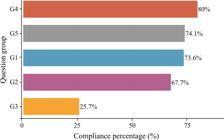
Compliance percentage by biosecurity group in fish farms of the Federal District (DF, federative unit of Brazil and headquarters of the federal government).
Relational analysis
The relational analysis revealed consistent association patterns among practices. A total of 140 significant pairs were identified (p < 0.05), with strong correlations (Cramér’s V ≈ 0.80; Pearson |r| > 0.5), particularly among records, quarantine protocols, and access control. Cluster analysis grouped the 89 questions into five blocks, highlighting a subset of advanced requirements with low adherence (e.g., pest control by specialized companies, vehicle disinfection declarations, formal records).
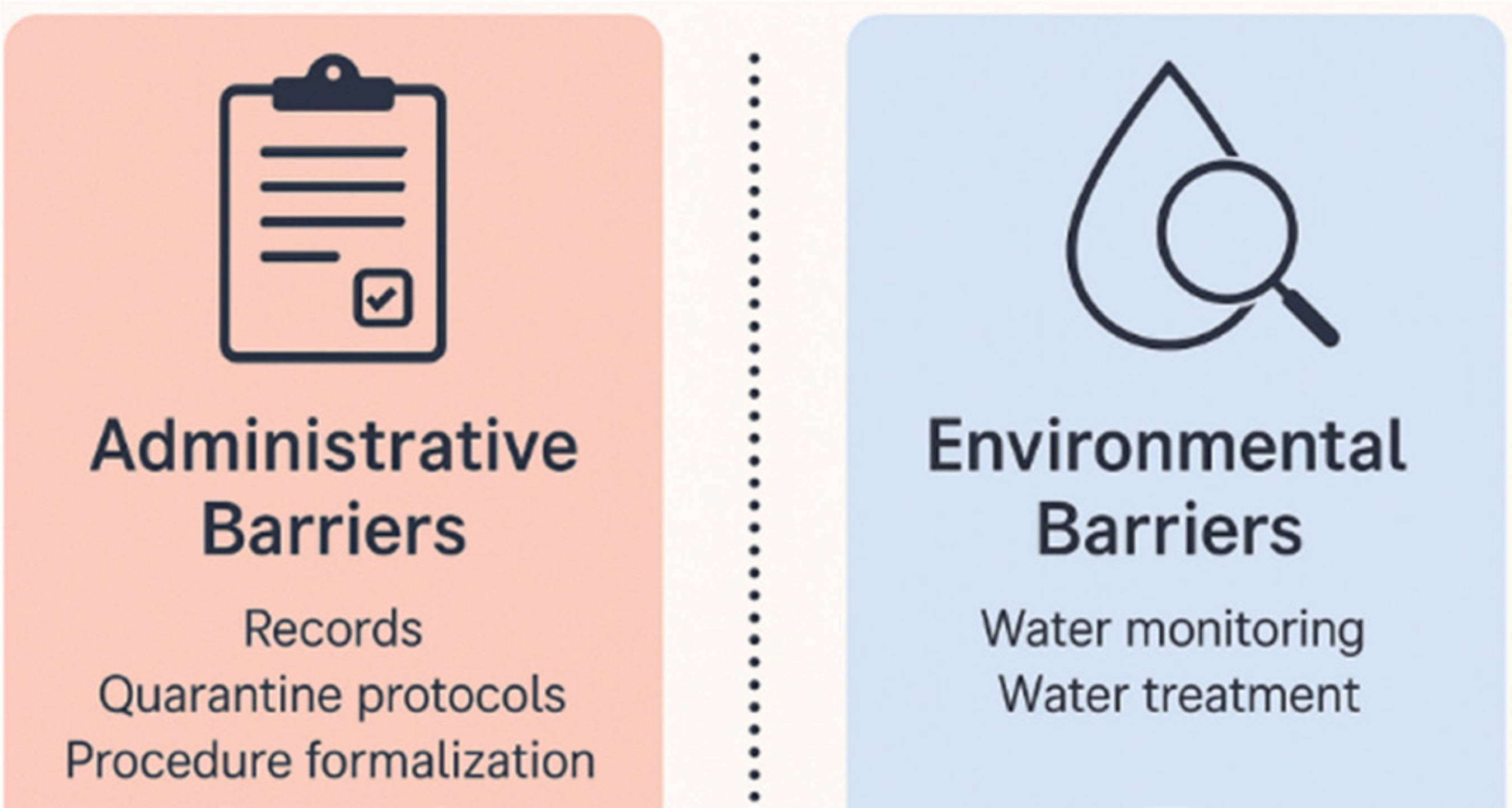
This outcome demonstrates the presence of two organizational axes of biosecurity: the first related to administrative barriers, involving records, quarantine protocols, and formalization of procedures; and the second linked to environmental barriers, focusing on water monitoring and treatment, which are essential for maintaining sanitary conditions in aquaculture (Fig. 2).
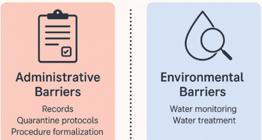
Organizational axes of biosecurity in fish farms: administrative barriers and environmental barriers.
Although some practices are perceived as alternatives (negative correlations), the literature is clear: effectiveness depends on the overlap of multiple barriers (Aly & Fathi, 2024; Subasinghe et al., 2023). Recent studies further emphasize that isolated administrative measures rarely sustain sanitary protection without integration with sound environmental and management practices (Aly & Fathi, 2024; Muniesa et al., 2022). Thus, the evaluated fish farms are still at a stage of partial consolidation, with stronger emphasis on certain axes and low adherence in others, indicating the need for more comprehensive protocols and continued technical support.
Exploration of patterns and latent structures
The hierarchical cluster analysis (Fig. 3) was conducted to identify latent grouping patterns among the biosecurity questions, allowing us to highlight which practices tend to be perceived or applied in a similar manner by producers. This approach aimed to reveal implicit dimensions of sanitary management that do not emerge solely from the individual descriptive analysis of variables.
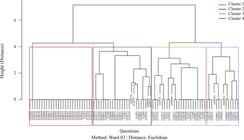
Dendrogram of the hierarchical cluster analysis of biosecurity questions, using the Ward.D2 method and Euclidean distance. Colors delimit the four identified clusters. Each code represents a question from the survey instrument, in which G indicates the thematic group and P corresponds to the question number within each group.
The results indicated the formation of four distinct clusters. Cluster 1 (Fig. 3) comprised 23 questions, mostly related to basic biosecurity practices on farms (G1), but also including monitoring aspects (G3) and preventive measures (G5), suggesting that these actions are perceived as integrated into daily production routines. Cluster 2 (Fig. 3), with 27 questions, concentrated most of the measures concerning access control and sanitization (G2), in addition to practices associated with the implementation of preventive measures (G5), indicating that producers tend to associate physical barriers with prevention protocols. Cluster 3 (Fig. 3), with 25 questions, stood out for integrating internal farm management practices (G1) and water monitoring (G4), revealing a connection between operational routine practices and environmental quality surveillance. Finally, Cluster 4 (Fig. 3), composed of 14 questions, mainly grouped measures directed at vehicles, visitors, and workers (G3), along with specific preventive actions (G5), demonstrating that these practices are perceived as a distinct block associated with external risks of pathogen introduction.
This clustering pattern reinforces that, although biosecurity practices show overlap among thematic axes, producers structure their perception into relatively cohesive nuclei:
-
Basic internal routines;
-
Barriers and sanitization;
-
Integration of operational management and environmental monitoring;
-
Measures addressing external risks.
Such a structure highlights both the areas with greater consolidation and those that may compromise the effectiveness of biosecurity protocols.
Principal component analysis
The PCA (Fig. 4) was employed with the objective of reducing the dimensionality of the set of questions and identifying the main axes of variability in producers’ responses. The first two principal components jointly explained 60.4% of the total variance, increasing to 74.2% when the third component was considered, demonstrating that a substantial portion of the heterogeneity can be summarized in a few latent axes. The first principal component accounted for 41.1% of the variance, mainly reflecting practices related to vehicles, visitors, and workers (e.g., G3P39, G5P66, G5P67), whereas the second principal component, responsible for 19.2% of the variance, emphasized specific preventive measures, such as those associated with pest control programs and sanitization protocols (e.g., G5P73, G5P75). Questions G3P40, G3P41, and G4P46 also emerged among the strongest contributors, indicating that the perception of biosecurity is structured around the intersection between external access control, implementation of preventive barriers, and environmental monitoring. These findings suggest that, although biosecurity is a multifactorial construct, certain thematic axes stand out as determinants of variability among farms, offering key points for strengthening sanitary management strategies.
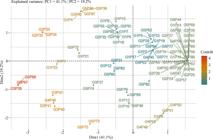
Principal component analysis applied to biosecurity practices in fish farms of the Federal District, Brazil. Arrows represent the original variables (questions coded as GxPy, in which G indicates the thematic group and P the corresponding question, with x and y referring to group and question number, respectively), while points correspond to the evaluated fish farms. The arrangement of vectors indicates the relative contribution of each variable to the principal components.
Figure 5 presents the heatmap of the correlation matrix of the 20 questions with the greatest variation in responses among the evaluated fish farms, as detected by the PCA. Positive correlation blocks (in red) and negative correlation blocks (in blue) can be observed, highlighting association patterns among biosecurity practices. Questions related to sanitary control and structural organization of farms (e.g., G5P65, G5P56, and G2P35) tend to cluster together, suggesting that fish farms adopting certain measures are also likely to implement others simultaneously. Conversely, the presence of negative correlations between some variables, such as G1P21 and G3P37, indicates practices that do not necessarily coexist within the same enterprises. This visual mapping allows the identification of groups of interdependent measures and potential implementation gaps, providing valuable insights for guiding technical recommendations and more integrated management policies.
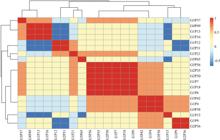
Heatmap of the correlation matrix of the 20 questions with the greatest variation in responses among fish farms evaluated for biosecurity practices in the Federal District, Brazil.
CONCLUSION
Biosecurity in tilapia hatcheries of the Federal District is partially implemented and heterogeneous. While water quality management is well established, critical gaps remain in risk control, preventive measures, and epidemiological surveillance. These weaknesses highlight the need for standardized protocols, technical training, and improved biosecurity practices to strengthen the sanitary and economic sustainability of the sector.
ACKNOWLEDGMENTS
The authors thank Terramaré Pescados, Pisciculturas Vale do Sol, Cia do Peixe and Rei dos Alevinos and Granja do Ipê (Secretariat of Agriculture of the Federal District) for their collaboration in this study.
-
DECLARATION OF USE OF ARTIFICIAL INTELLIGENCE TOOLS
The authors used artificial intelligence tools (ChatGPT, OpenAI) to assist with language revision and text editing. All content was critically reviewed and approved by the authors, who take full responsibility for the final version of the manuscript.
-
FUNDING
Not applicable.
DATA AVAILABILITY STATEMENT
All data sets were generated or analyzed in the current study.
REFERENCES
-
Ahmadivand, S., Savage, A. C. N. P., & Palic, D. (2025). Biosecurity and vaccines for emerging aquatic animal RNA viruses. Viruses, 17(6), 768. https://doi.org/10.3390/v17060768
» https://doi.org/10.3390/v17060768 -
Aly, S. M., & Fathi, M. (2024). Advancing aquaculture biosecurity: a scientometric analysis and future outlook for disease prevention and environmental sustainability. Aquaculture International, 32(7), 8763-8789. https://doi.org/10.1007/s10499-024-01589-y
» https://doi.org/10.1007/s10499-024-01589-y -
Associação Brasileira da Piscicultura (Peixe BR) (2023). Aquatic biosecurity guide Peixe BR. Retrieved from https://www.peixebr.com.br/guia
» https://www.peixebr.com.br/guia - Associação Brasileira da Piscicultura (Peixe BR) (2025). Guia de biosseguridade aquícola Peixe BR.
-
Ayiku, A. N., Adelani, A. A., Appenteng, P., Nkansa, M., Ngoi, J. M., Morang’a, C. M., Dzabeng, F., Paley, R., Cudjoe, K. S., Verner-Jeffreys, D., Quashie, P. K., & Duodu, S. (2024). Molecular epidemiology and current management of Infectious Spleen and Kidney Necrosis Virus (ISKNV) infection in Ghanaian cultured tilapia. Aquaculture, 581, 740330. https://doi.org/10.1016/j.aquaculture.2023.740330
» https://doi.org/10.1016/j.aquaculture.2023.740330 -
Brasil (2019). Ministério da Agricultura, Pecuária e Abastecimento. Instrução Normativa nº 04, de 4 de fevereiro de 2019. Diário Oficial da União Retrieved from https://www.in.gov.br/materia/-/asset_publisher/Kujrw0TZC2Mb/content/id/64485289
» https://www.in.gov.br/materia/-/asset_publisher/Kujrw0TZC2Mb/content/id/64485289 -
Can, E., Austin, B., Steinberg, C. E. W., Carboni, C., Sağlam, N., Thompson, K., Yiğit, M., Seyhaneyildiz Can, S., & Ergün, S. (2023). Best practices for fish biosecurity, well-being and sustainable aquaculture. Sustainable Aquatic Research, 2(3), 100057. https://doi.org/10.5281/zenodo.10444855
» https://doi.org/10.5281/zenodo.10444855 -
Debnath, S. C., McMurtrie, J., Temperton, B., Delamare-Deboutteville, J., Mohan, C. V., & Tyler, C. R. (2023). Tilapia aquaculture, emerging diseases, and the roles of the skin microbiomes in health and disease. Aquaculture International, 31(5), 2945-2976. https://doi.org/10.1007/s10499-023-01117-4
» https://doi.org/10.1007/s10499-023-01117-4 -
Distrito Federal (2023a). Secretaria de Agricultura, Abastecimento e Desenvolvimento Rural. Plano Distrital de Vigilância e Boas Práticas em Aquicultura. Portaria SEAGRI nº 88 de 10 de agosto de 2023. Diário Oficial do Distrito Federal Retrieved from https://www.seagri.df.gov.br/documents/d/seagri/plano-distrital-de-vigilancia-e-boas-praticas-em-aquicultura-pdf
» https://www.seagri.df.gov.br/documents/d/seagri/plano-distrital-de-vigilancia-e-boas-praticas-em-aquicultura-pdf -
Distrito Federal (2023b). Secretaria de Agricultura, Abastecimento e Desenvolvimento Rural. Relatório Analítico 2023 – Plano Distrital de Vigilância e Boas Práticas em Aquicultura SEAGRI-DF. Retrieved from https://www.seagri.df.gov.br/documents/d/seagri/relatorio-analitico-pdvaq-2023-pdf-1
» https://www.seagri.df.gov.br/documents/d/seagri/relatorio-analitico-pdvaq-2023-pdf-1 -
Distrito Federal (2024). Secretaria de Agricultura, Abastecimento e Desenvolvimento Rural. Relatório Analítico 2024 – Plano Distrital de Vigilância e Boas Práticas em Aquicultura Secretaria de Agricultura, Abastecimento e Desenvolvimento Rural. Retrieved from https://www.seagri.df.gov.br/documents/d/seagri/relatorio_analitico_pdvaq_2024-pdf
» https://www.seagri.df.gov.br/documents/d/seagri/relatorio_analitico_pdvaq_2024-pdf - El-Sayed, A. F. M. (2021). Tilapia culture (2ª ed.). CABI.
-
Emam, W., Lambert, H., & Brown, C. (2025). The welfare of farmed Nile tilapia: a review. Frontiers in Veterinary Science, 12, 1567984. https://doi.org/10.3389/fvets.2025.1567984
» https://doi.org/10.3389/fvets.2025.1567984 -
European Commission (2024). Aquaculture in the European Union European Commission. Retrieved from https://oceans-and-fisheries.ec.europa.eu/policy/aquaculture-policy_en
» https://oceans-and-fisheries.ec.europa.eu/policy/aquaculture-policy_en - Food and Agriculture Organization of the United Nations (FAO) (2020). Aquatic biosecurity: prevention, control and eradication of aquatic animal disease FAO.
-
Food and Agriculture Organization of the United Nations (FAO) (2021). Tilapia lake virus disease strategy manual FAO. Retrieved from https://openknowledge.fao.org/items/b2e0313a-745f-40b3-a3e2-998bcefc53f4
» https://openknowledge.fao.org/items/b2e0313a-745f-40b3-a3e2-998bcefc53f4 -
Food and Agriculture Organization of the United Nations (FAO) (2024). The State of World Fisheries and Aquaculture 2024: Blue transformation in action FAO. Retrieved from https://www.fao.org/documents/card/en/c/cc7779en
» https://www.fao.org/documents/card/en/c/cc7779en -
Kyule-Muendo, D., Otachi, E., Awour, F., Ogello, E., Obiero, K., Abwao, J., Muthoni, C., & Munguti, J. (2022). Fish health management and biosecurity measures in fish farms, cages and hatcheries in Western Kenya. CABI Agriculture and Bioscience, 3(1), 18. https://doi.org/10.1186/s43170-022-00086-7
» https://doi.org/10.1186/s43170-022-00086-7 -
MacKinnon, B., Fathi, M., Aly, S., Debnath, S. C., Shinn, A. P., Bondad-Reantaso, M. G., Fridman, S., Bin, H., & Nekouei, O. (2023). Improving tilapia biosecurity through a value chain approach. Reviews in Aquaculture, 15(Suppl. 1),57-91. https://doi.org/10.1111/raq.12776
» https://doi.org/10.1111/raq.12776 -
Makovska, I., Biebaut, E., Dhaka, P., Korniienko, L., Jerab, J. G., Courtens, L., Chantziaras, I., & Dewulf, J. (2025). Methods for assessing efficacy of cleaning and disinfection in livestock farms: a narrative review. Frontiers in Veterinary Science, 12, 1581217. https://doi.org/10.3389/fvets.2025.1581217
» https://doi.org/10.3389/fvets.2025.1581217 -
Mazzucato, M., Dorotea, T., Franzago, E., Mulatti, P., Marchetti, G., Casarotto, C., Fabris, A., Ferrè, N., Toffan, A., Marsella, A., Callegaro, A., Manca, G., & Dalla Pozza, M. (2023). Overview on the biosecurity measures of salmonid fish farms: a case study in Italy. Fishes, 8(11), 554. https://doi.org/10.3390/fishes8110554
» https://doi.org/10.3390/fishes8110554 -
Muniesa, A., Furones, D., Rodgers, C., & Basurco, B. (2022). An assessment of health management and biosecurity procedures in marine fish farming in Spain. Aquaculture Reports, 25, 101199. https://doi.org/10.1016/j.aqrep.2022.101199
» https://doi.org/10.1016/j.aqrep.2022.101199 -
Norway (2019). Norwegian Food Safety Authority. Regulations on transport of aquatic animals NFSA. Retrieved from https://www.mattilsynet.no
» https://www.mattilsynet.no -
R Core Team (2023). R: A language and environment for statistical computing R Foundation for Statistical Computing. Retrieved from https://www.R-project.org/
» https://www.R-project.org/ -
Ramírez-Paredes, J. G., Paley, R. K., Hunt, W., Feist, S. W., Stone, D. M., Field, T. R., Haydon, D. J., Ziddah, P. A., Nkansa, M., Guilder, J., Gray, J., Duodu, S., Pecku, E. K., Awuni, J. A., Wallis, T. S., & Verner-Jeffreys, D. W. (2021). First detection of Infectious Spleen and Kidney Necrosis Virus (ISKNV) associated with massive mortalities in farmed tilapia in Africa. Transboundary and Emerging Diseases, 68(3), 1550-1563. https://doi.org/10.1111/tbed.13825
» https://doi.org/10.1111/tbed.13825 -
Raposo, R. S., Oliveira, N. V. B., Delphino, M. K. V. C., Leal, C. A. G., Mota, A. L. A. A., & Sant’Ana, F. J. F. (2024). Validation of a health characterization model for tilapia farming in a brazilian federative unit. Fishes, 9(11), 469. https://doi.org/10.3390/fishes9110469
» https://doi.org/10.3390/fishes9110469 -
SeafoodSource (2023). Chile’s salmon industry strengthens biosecurity and traceability standards SeafoodSource. Retrieved from https://www.seafoodsource.com
» https://www.seafoodsource.com - Standard Norway (2024). NS 9416:2024 – Aquaculture – Requirements for environmental monitoring of marine fish farms Standards Norway.
-
Subasinghe, R., Alday-Sanz, V., Bondad-Reantaso, M. G., Jie, H., Shinn, A. P., & Sorgeloos, P. (2023). Biosecurity: reducing the burden of disease. Journal of the World Aquaculture Society, 54(2), 397-426. https://doi.org/10.1111/jwas.12966
» https://doi.org/10.1111/jwas.12966 -
Surachetpong, W., Roy, S. R. K., Nicholson, P. (2020). Tilapia lake virus: The story so far. Journal of Fish Diseases, 43(10), 1115-1132. https://doi.org/10.1111/jfd.13237
» https://doi.org/10.1111/jfd.13237 -
World Organization for Animal Health (WOAH) (2021). Aquatic Animal Health Code WOAH. Retrieved from https://www.woah.org
» https://www.woah.org
Edited by
-
Section editor:
Leonardo Tachibana https://orcid.org/0000-0002-5847-8723

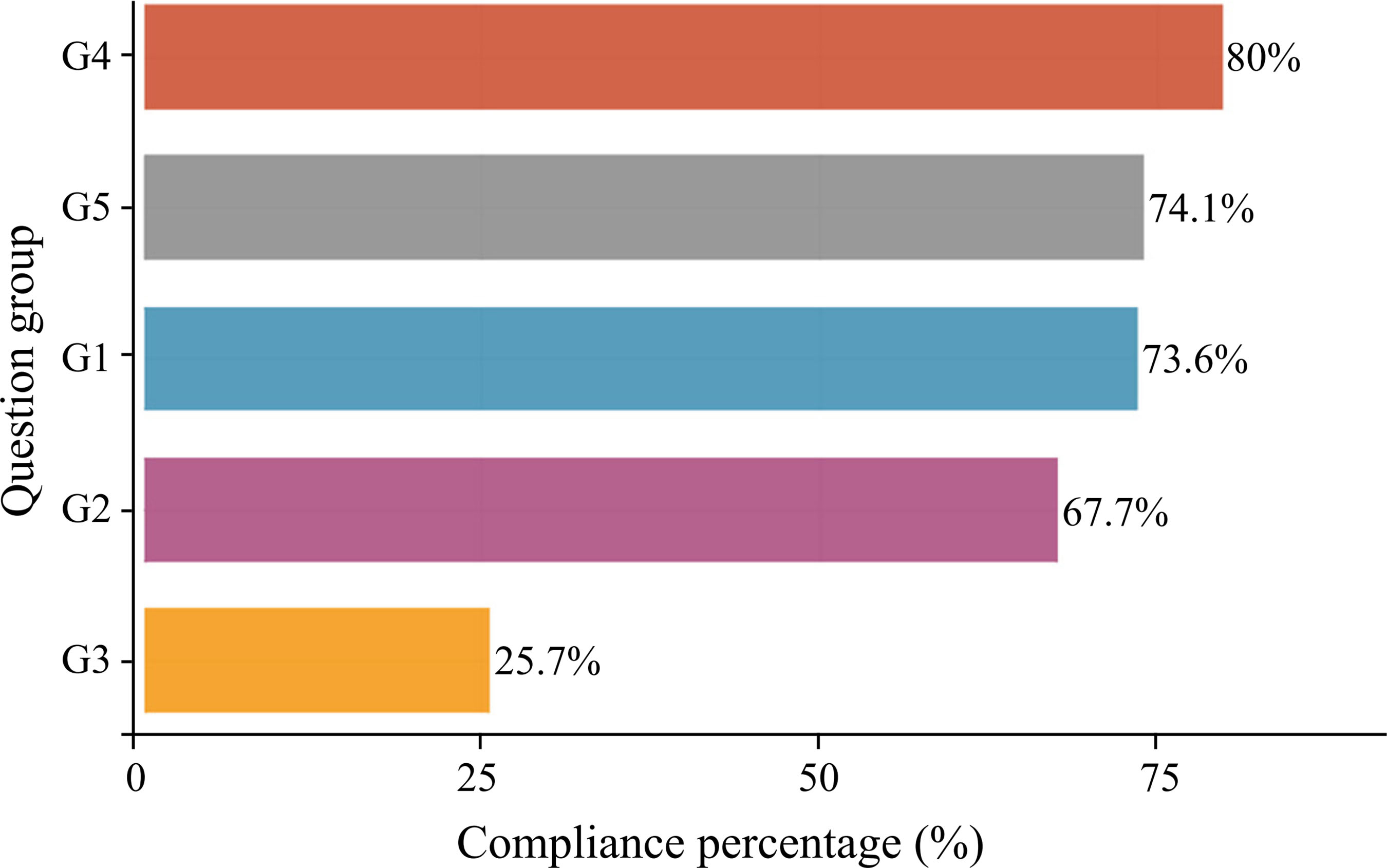 G1: biosecurity practices on farms (23 questions); G2: access control and equipment sanitization (13 questions); G3: measures for vehicles, visitors, and workers (seven questions); G4: water quality monitoring (12 questions); G5: implementation of preventive and/or corrective measures (34 questions).
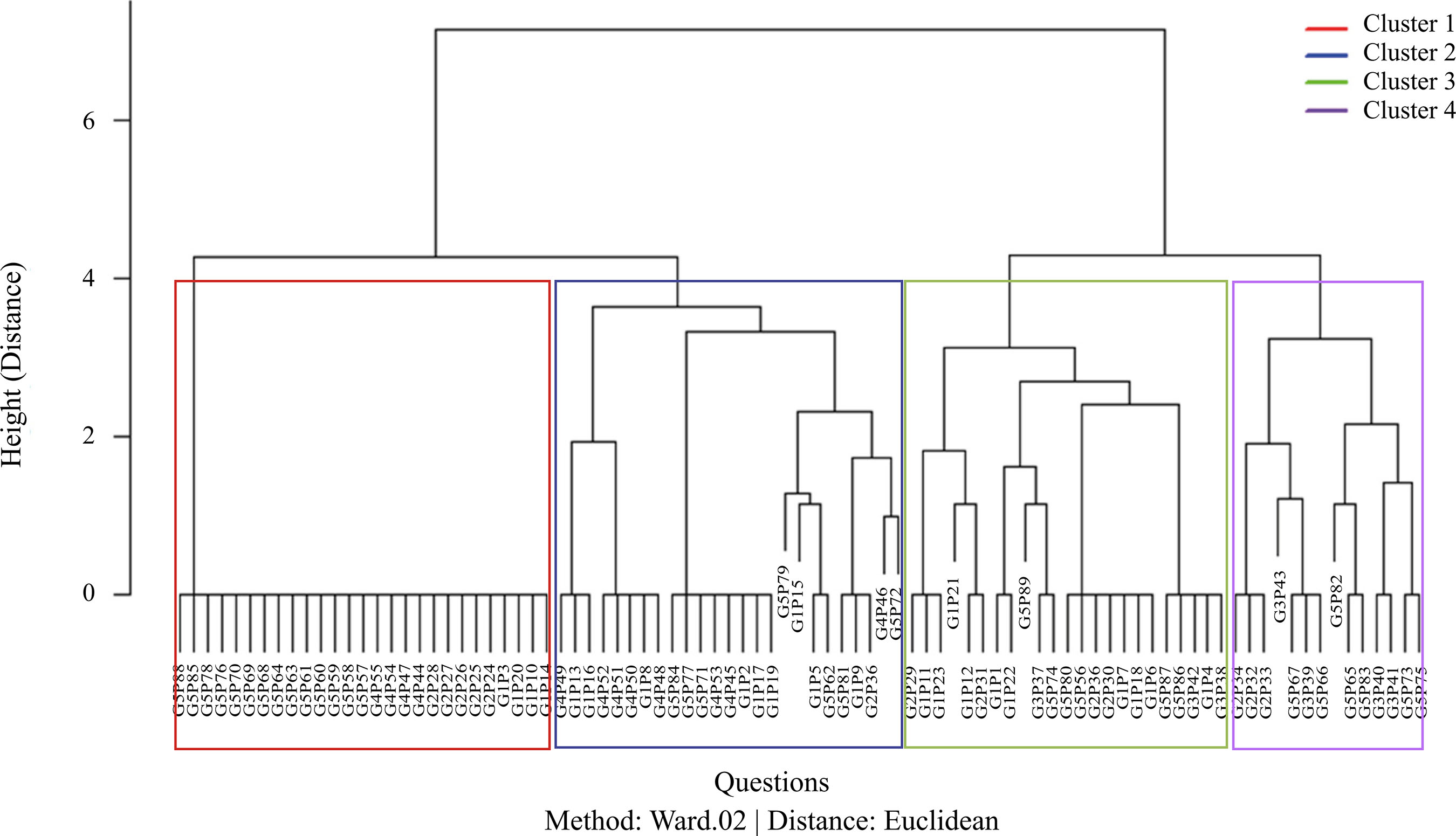 G1: biosecurity practices on farms; G2: access control and equipment sanitization; G3: measures for vehicles, visitors, and workers; G4: water quality monitoring; G5: implementation of preventive and/or corrective measures.
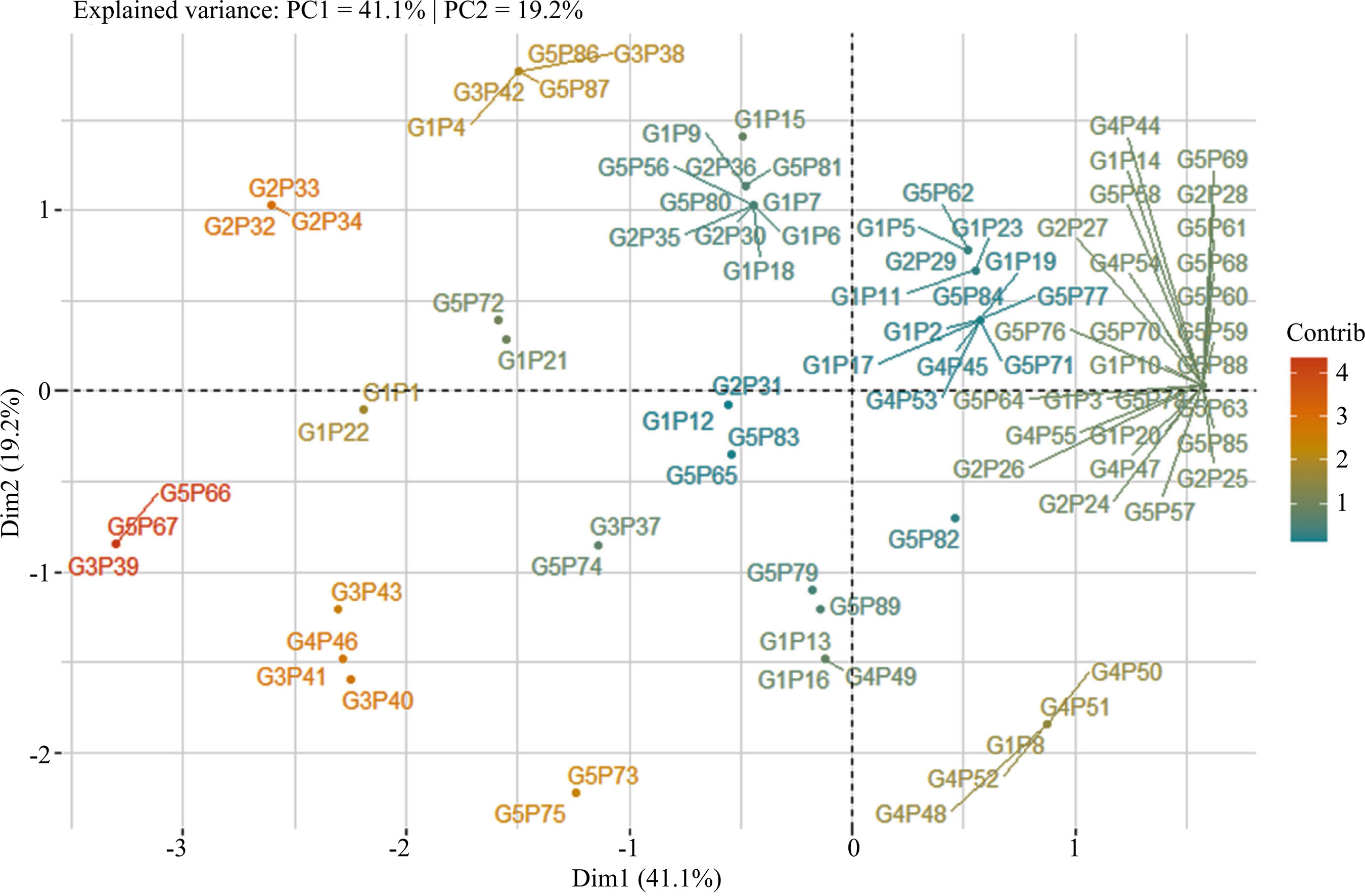
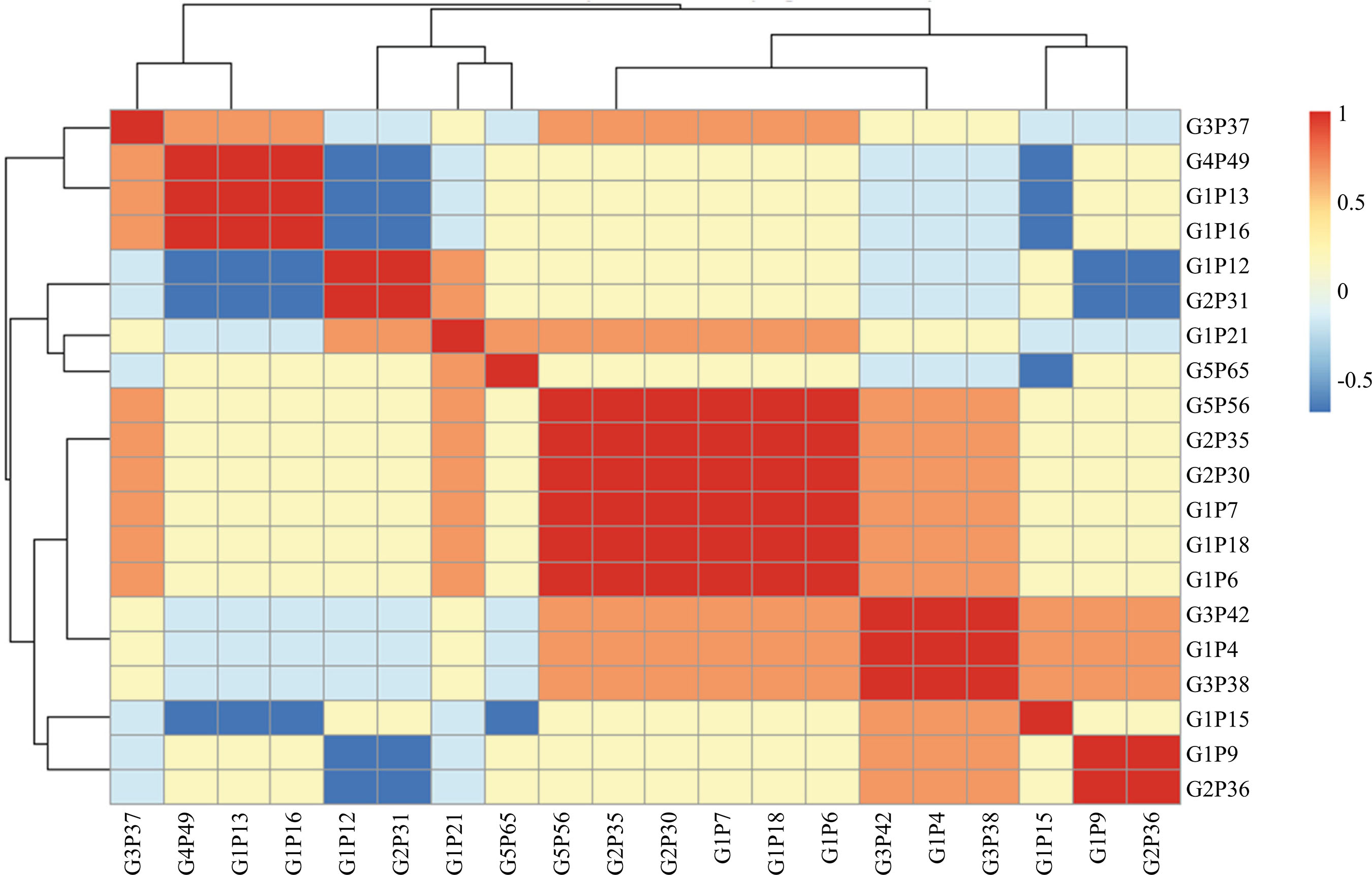 G1: biosecurity practices on farms; G2: access control and equipment sanitization; G3: measures for vehicles, visitors, and workers; G4: water quality monitoring; G5: implementation of preventive and/or corrective measures; P: the question number within each group.