 Importance of fishing permits in no-take marine protected area overlapping with fishing grounds
ABSTRACT
Public policies in marine areas are often constructed while ignoring the presence of artisanal fishing. Consequently, conflicts arise, and public policies become ineffective. Studies aimed at reducing such conflicts have been conducted worldwide. We analyzed an example, a no-take marine protected area (NTMPA) that overlaps with fishing grounds. This conflict was mitigated through an agreement that established: catch species, vessel numbers, and permitted periods. We evaluated the significance of NTMPA using fish landing data from fishery monitoring program. For this, we present the use of fishing grounds through heat maps, along with the importance of the permitted species regarding: production, via relative importance index; and profitability, through first-sale value relative to fishing days. Results showed that NTMPA has high productivity and profitability in relation to two of the three fishing resources allowed, which are among the most important local resources. Although the agreement established is valuable, it has limitations: transitory nature, and strict rules. Maintenance of this agreement and creation of permanent spaces for dialogue to adaptation on rules are recommended. Subsequently, recategorization of the NTMPA such that sustainable regulated use is allowed should be debated.
Keywords
Small-scale fisheries; Conflict; Fishery agreement; Productivity; Profitability; Marine National Park of the Currais Islands
RESUMO
As políticas públicas no território marinho muitas vezes ignoram a presença da pesca artesanal. Consequentemente, surgem conflitos, e as políticas públicas tornam-se ineficazes. Estudos voltados à redução desses conflitos têm sido realizados mundialmente. Analisamos um exemplo, uma Área Marinha Protegida de Uso Restrito (Ampur) sobreposta ao território pesqueiro. Esse conflito foi amenizado por meio de acordo que estabeleceu: espécies de captura, número de embarcações e períodos permitidos. Avaliamos a importância da Ampur utilizando dados de desembarque do programa de monitoramento da pesca. Para isso, apresentamos o uso das áreas de pesca por meio de mapas de calor, bem como a importância das espécies permitidas em relação a: produção, por meio do índice de importância relativa; e rentabilidade, pelo valor da primeira venda relacionado aos dias de pesca. Os resultados mostraram a alta produtividade e rentabilidade da Ampur em relação a dois dos três recursos pesqueiros permitidos, que estão entre os recursos locais mais importantes. Embora o acordo estabelecido seja valioso, há limitações: natureza transitória e regras rígidas. Recomendam-se a manutenção desse acordo e a criação de espaços permanentes de diálogo para adequação das normas. Posteriormente, é preciso debater a recategorização da Ampur de modo que o uso sustentável seja regulamentado.
Palavras-chave
Pesca de pequena escala; Conflitos; Acordo de pesca; Produtividade; Rentabilidade; Parque Nacional Marinho das Ilhas dos Currais
INTRODUCTION
Brazil’s main fishing resources have long been overfished, which has led to imposition of regulatory measures to prevent the collapse of these fisheries. The measures adopted have included fleet limitation, characterization of fishing gear/ equipment, definition of minimum sizes for target species caught, imposition of closed-season periods, and the creation of no-take marine areas (Perez et al., 2001; Jimenez et al., 2019; Mattos and Wojciechowski, 2019). However, these measures often do not achieve the goal for which they are created, i.e., to preserve fishing resources (Jones, 2007; Voyer et al., 2012; Barreto et al., 2021). Overall, the fishing sector has suffered through such restrictions and decreases in its catches.
Artisanal fishery has been facing this situation. However, it is necessary to understand the role that artisanal fishing has been playing over time. Worldwide, several studies have highlighted the importance of artisanal fishing for maintaining the communities’ way of life, generating income and jobs and ensuring fishing production and food security (Word Bank, 2012; Chuenpagdee and Jentoft, 2015; Crona et al., 2016; Teh and Pauly, 2018; FAO, 2020; Arthur et al., 2022; Mattos et al., 2022). Additionally, the history and culture of these peoples have significantly contributed to important aspects of the development of Brazil’s coasts, lakes, and rivers, encompassing a rich variety of tropical and subtropical ecosystems (Gerhardinger et al., 2017). For the people involved in this activity, when their livelihoods, food security, and well-being are compromised, the necessary prospects for effective and legitimate governance are compromised as well (Mattos et al., 2022).
Brazilian efforts to implement public policies for small-scale fishing derived largely from existing institutional and legal frameworks have tended to be ineffective. These have historically disregarded the following matters:
-
Development strategies for policies and associated issues within broader socioeconomic considerations;
-
Expectations and perspectives of fishing communities regarding construction and implementation of public policies;
-
Fishing governance and governability (Mattos et al., 2022).
These matters have been little considered in constructing the rules, which has led them to become dissonant with the realities of small-scale fishing.
The creation of the conservation unit of the Marine National Park of the Currais Islands (Parque Nacional Marinho das Ilhas dos Currais, PARNA Currais) in the state of Paraná, Brazil, is an example of this type of public policy. It involved the creation of a fully protected or category II unit, in accordance with the International Union for Conservation of Nature (IUCN) classification system (Dudley, 2008), in which direct use of natural resources is not allowed, i.e., a no-take marine protected area (NTMPA). This gave rise to great conflict with artisanal fishing communities on the Paraná coast, which have traditionally used this region for fishing activities, especially regarding migratory and harvested fish.
This NTMPA consists of marine areas surrounding an archipelago located on the coast of the state of Paraná, opposite the municipalities of Matinhos and Pontal do Paraná. It includes three uninhabited islands, at a distance of about seven nautical miles from the mainland. It was created through bill law no. 7,032/2002 (Brasil, 2002b), with the objective of “protecting the ecosystems of the Currais Islands, as well as the marine environments of the limits of their surroundings, while also enabling protection and control of important nesting areas for various bird species and habitats for marine species”. Even without fulfilling with the legal requirements for the creation of conservation units provided for in Brazilian legislation (Brasil, 2000), especially with regard to the public consultation process for participation by the population (Giraldi-Costa and Murata, 2015; Oliveira Leis et al., 2019), the bill was approved and sanctioned as Law no. 12,829/2013 (Brasil, 2013). This demonstrated that public policies were being constructed without considering the traditional activity of small-scale fishing, as pointed out earlier.
Since the creation of PARNA Currais, several discussions about the main traditional uses and claims of artisanal fishers regarding this area have taken place, with the participation by several institutions, such as the Federal Public Prosecutor’s Office, the management body (Instituto Chico Mendes de Conservação da Biodiversidade–ICMBio), the Universidade Federal do Paraná (UFPR) and the fishers’ communities of Matinhos and Pontal do Paraná. The UFPR marine studies center presented information from fishery monitoring that made it possible to describe the socioecological dynamics of fishing and its impacts. These data provided justification for the need for transitional agreements, to be implemented until a definitive solution could be found. The discussions culminated in a statement of commitment that was issued in 2017: this consisted of an official licensing document from the Ministry of the Environment, represented by ICMBio, for users of a given area, to enable them to make use of natural resources through obeying specific rules. It served to make traditional human use compatible with the conservation objectives of the unit (Madeira et al., 2018; Jankowsky and Mendonça, 2022).
The commitment statement established regulations for fishing in the PARNA Currais area, including:
-
Authorization for vessels from Pontal do Paraná and Matinhos;
-
Restriction to catching only Spanish mackerel (Scomberomorus brasiliensis and Scomberomorus cavalla), mullet (Mugil liza), and leatherjack (Oligoplites saliens and Oligoplites saurus);
-
Use of a tall vertical net, such as an encircling gillnet, without rings;
-
Mesh sizes of 9, 10, 11, or 12 cm;
-
Fishing permitted only between May 15 and August 31.
The selection of vessels granted fishing permits was made by the fishing communities of Pontal do Paraná and Matinhos. Initially valid for one year, the commitment statement was subsequently renewed in 2018 and 2021. Currently, there are 28 authorized vessels from Pontal do Paraná and 44 from Matinhos permitted to fish in PARNA Currais.
Drawing from the regulations set forth in the commitment statement, we aimed to quantitatively address the question: how relevant is the fishing territory of Currais to fish production and to the fishers of the two municipalities involved? To achieve this, we examined the production, profitability, and utilization of the Currais area. We provided a concise overview of fishing activities in Pontal do Paraná and Matinhos, followed by a characterization of fishing activities within PARNA Currais during the commitment period under review. Subsequently, we delved into the utilization patterns of fishing grounds within these municipalities and assessed the significance of permitted species in terms of production and profitability, juxtaposing the Currais fishing area with all fishing grounds utilized by fishers from the two municipalities. Furthermore, we discussed pertinent issues concerning fisheries management and the execution of the commitment statement.
METHOD
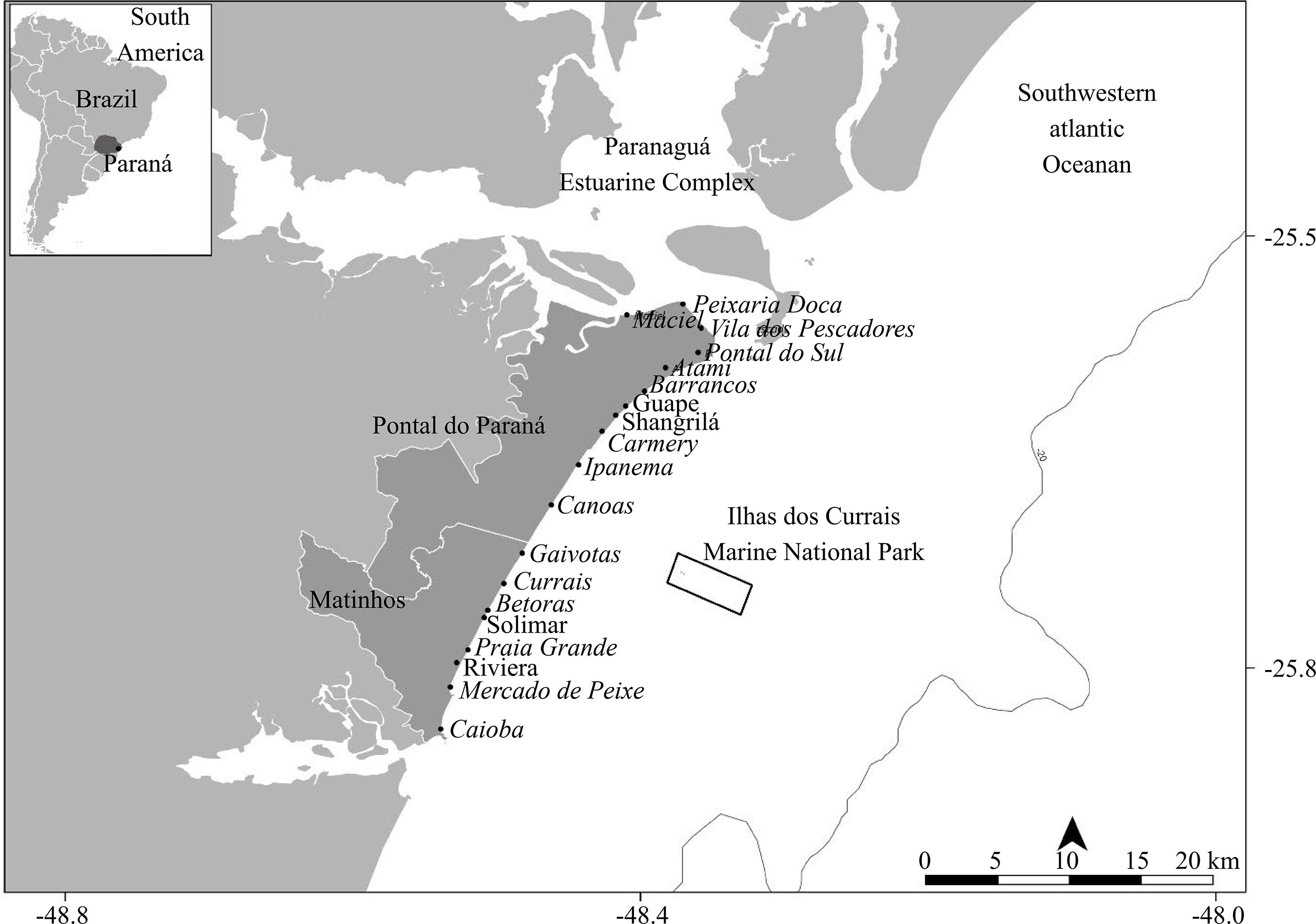
Data were obtained through the monitoring program for fishing activity in Paraná, which was developed by the Agribusiness Development Foundation and the Fisheries Institute. Information was collection in the form of a census, with the aim of obtaining data on fish landings (Mendonça, 2018; Jankowsky et al., 2019). This was done at 20 landing sites (Fig. 1), and the following information was recorded: vessel data, production, fishing effort (days, hours and net size), fishing area, products caught, and fishing gear used. All these data on the landings were georeferenced and totaled into statistical blocks. These comprised groupings or squares measuring 5 × 5 nautical miles that gathered the fishing gear used, fish category or municipality, while considering fleet mobility and the operating characteristics of each type of fishing gear. The species caught were identified at the most precise taxon level possible.

Location of the Marine National Park of the Currais Islands and the landing ports monitored in the municipalities of Matinhos and Pontal do Paraná, Paraná, Brazil.
This study was divided into three stages of analysis. First, the fisheries panorama of the municipalities of Pontal do Paraná and Matinhos was established through using annual data covering the period from 2017 to 2021, during which there was a total of 25,159 landings. The main fishery products and the fishing gear used were determined, with the quantities of fish caught. The monthly mean production (with standard deviation) for each municipality over the months of production, along with the production of each type of fish (serra Spanish mackerel, mullet, and leatherjack), permitted through the statement of commitment.
After establishing this panorama, the fleet was characterized through interviews with the person in charge of 52 out of the 72 authorized vessels (72.22%). The vessels were described, along with the way in which the tall vertical nets (in surround mode) were used.
To evaluate the use of the Currais area during the period allowed through the statement of commitment, i.e., May 15 to August 31, information on 7,815 fishing trips was used. The following analyses were done:
-
Construction of a heat map of the fishing area, showing the areas of highest production from the fleet, using tall vertical nets in surround mode;
-
Comparison of the Index of Relative Importance (IRI) of species caught in the Currais area and outside this area;
-
Comparison of profitability (in R$ per fishing day) in the Currais area and throughout the fishing grounds of the municipalities of Pontal do Paraná and Matinhos.
Profitability was calculated from the sum of the value of the first sale of the fishing resources authorized during the period of the statement of commitment, divided by the number of fishing days for the catches. The IRI was calculated using Eq. 1 (FURG, 2013):
Where: i: 1, 2, ... , E refers to the species index, such that E is the total number of species; Di: Ci · (∑Ei = 1 Ci)-1 denotes the relative production (by weight) for the species i; Ci: ∑Vj=1 Cij denotes the total (by weight) landed for the species i; j: 1, 2, . . . , V refers to the landing index, such that V is the total number of landings used; Oi: Fi × V-1 denotes the relative frequency of occurrence of species i; Fi: ∑Vj = 1 Qij denotes the number of landings in which species i was present; Qi,j: an indicator variable with the value Q = 1 if species i was present and Q = 0 if it was not present in landing j.
RESULTS
Panorama of fishing gear and fishing resources landed in the municipalities of Pontal do Paraná and Matinhos
In the municipality of Pontal do Paraná, the average catch between 2017 and 2021 was 174.35 tons (standard deviation– SD = 70.77), and June and July were the months with greatest landings (Fig. 2). In the municipality of Matinhos, the average catch was 176.76 tons (SD = 59.43), and the periods from June to September and November to January had the highest monthly volumes (Fig. 2).

Average monthly landings (with standard deviation) in the municipalities of (a) Pontal do Paraná and (b) Matinhos over the period from 2017 to 2021.
In the Pontal do Paraná municipality, fishing for the seabob shrimp (Xiphopenaeus kroyeri) is important in this municipality, and this is the product that is most landed (37.7% of the fish landed), and small double-trawls are the gear that is most used. The fishing for serra Spanish mackerel (S. brasiliensis) and mullet (M. liza) accounts for 19.9 and 12.0% of the fish landed, respectively, and tall vertical nets in surround mode are the gear mostly used for this fishing (Tables 1 and 2). In the Matinhos municipality, Serra Spanish mackerel was the product most landed (37.8% of the fish landed), and tall vertical nets, encircling gillnet, in surround mode were the gear that was most used (Tables 1 and 2). Mullet production accounted for 7.9% of the fish landed. It should be noticed that tall vertical nets, encircling gillnet, used in surround mode are a fishing method authorized through the statement of commitment that was signed. It is also the most common form of the use of gillnetting in these two municipalities, followed by bottom gillnetting and encircling motor driven gillnet (“rede tipo caracol”). Among the authorized fishing products that were caught, mackerel and mullet were the first and third most landed resources. The leatherjack (Oligolepis sp.) appears among the main products, but smaller quantities were landed in both municipalities.
Annual quantities (in tons) caught using the main types of fishing gear and their modes of use in the municipalities of Matinhos and Pontal do Paraná, Paraná, Brazil, over the period from 2017 to 2021.
Annual quantities (in tons) of the main fishing products caught and landed in the municipalities of Matinhos and Pontal do Paraná, Paraná, Brazil, over the period from 2017 to 2021.
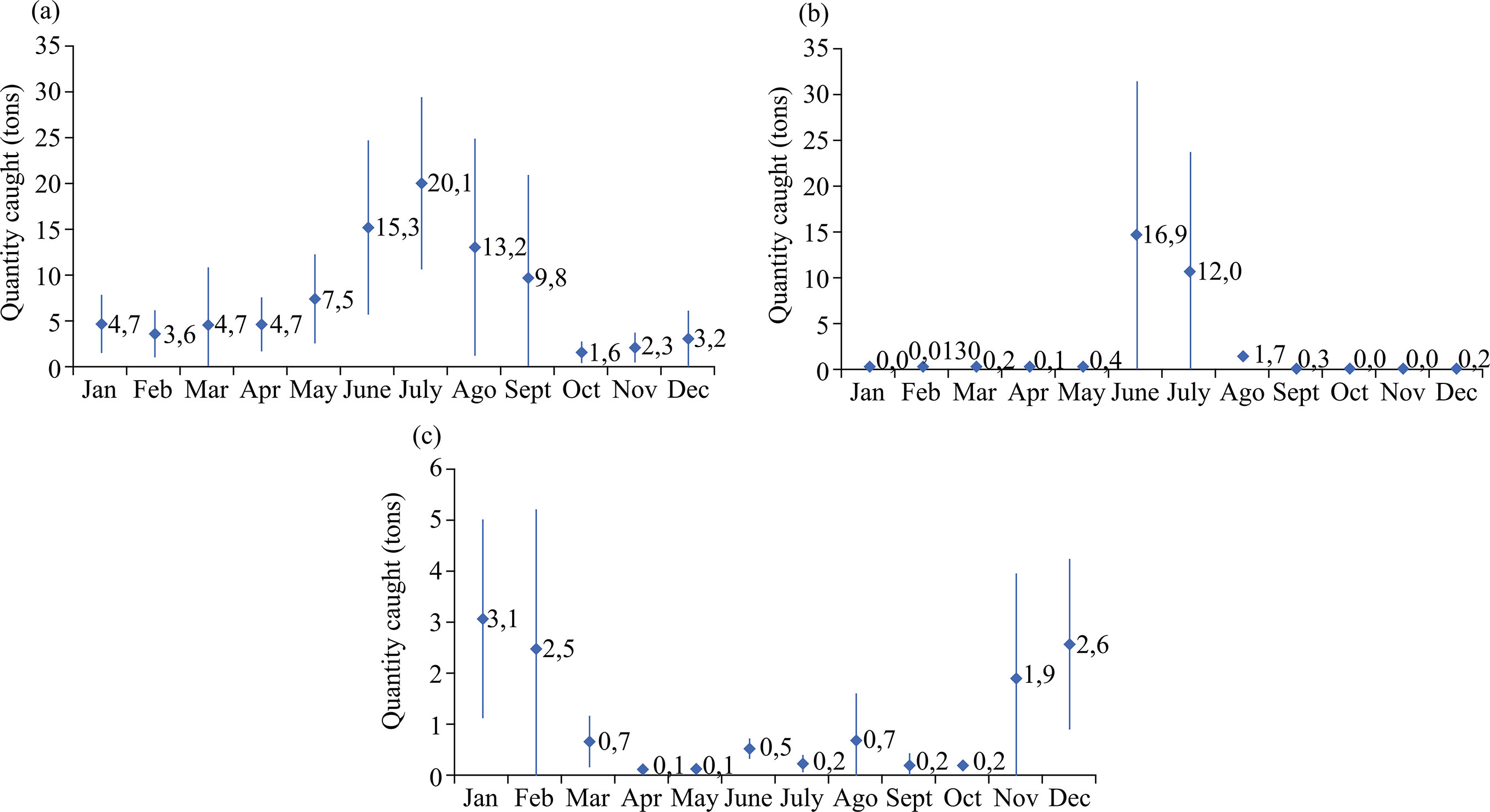
In analyzing the harvests of these three fishing resources in these municipalities, it was noticed that the period of highest production of serra Spanish mackerel and mullet was during the cold months, partially in line with the period of the statement of commitment, considering that large quantities of mackerel were also caught in September, which is outside the period permitted through the statement of commitment. However, the highest production of leatherjack (Oligoplites sp.) was during the hottest period, i.e., from November to February, which is totally outside the period of the statement of commitment. Harvesting seasons see greater variability in landings due to factors like weather and fishing experience. Outside of these seasons, landings are consistently smaller, resulting in deviations closer to the mean (Fig. 3).

Average landings (with standard deviation) of (a) serra Spanish mackerel, (b) mullet, and (c) leatherjack in the municipalities of Pontal do Paraná and Matinhos, Paraná, Brazil, over the period from 2017 to 2021.
Characterization of authorized fishing vessels and their gear
Although no criteria have been established regarding vessel specifications, the authorized vessels are similar to each other. All are of canoe type, of up to 5 gross tonnage (GT), without a cabin. Nearly all the vessels (95.97%) are made of fiberglass. Their length ranges from 6 to 10 meters, with an average of 8.87 meters (SD = 1.59). Their engine power ranges from 8 to 115 HP, with an average of 35.55 HP (SD = 30.45). The main navigation equipment used is global positioning system (GPS), which is present in 65.45% of the canoes. In most cases, the fishers use polystyrene or other thermal boxes filled with ice to store the fish on board (88.46%), and a small proportion (11.54%) uses polystyrene boxes alone for storage. No fish processing is done on board.
The authorized fishing gear consists of a tall vertical net, used in surround mode, as an encircling gillnet. For this fishing activity, one to three fishers need to be present. This is an active fishing method using a gillnet, in which the net is suspended vertically to reach the entire water column and is extended in a half-moon shape, to surround the shoal of fish. The fisher can then come into the middle of the circle and hit the surface of the water with a paddle or throw stones into the water, which causes the fish to flee towards the net, in which they become trapped. There is no ring in the nets.
For all the 72 vessels authorized, on 96.49% of the fishing days, a vertical net consisting of only 1 mesh size was used for catching the fish. The mesh size, measured between opposite knots, was most commonly 10 cm (74.42%). Mesh sizes of 9 (2.58%), 11 (1.6%), and 12 cm (21.64%) were also used. The length of the nets ranged from 100 to 3,000 meters, with an average of 1,025.26 meters. The height ranged from 10 to 27 meters, with an average of 22.80 meters. When a second net was used (3.51% of fishing trips), this was added to the main net as an “extra cloth” with a mesh size differing from that of the main net. In these cases, mesh size 12 cm was most used (52%), followed by mesh 9 (36%) and mesh 10 (10%). This second net had a shorter length, ranging from 270 to 650 meters, with an average of 542.27 meters; and a height between 20 and 25 meters, with an average of 24.09 meters.
Use of the Currais area
From observing the heat map of the fleet using tall vertical nets in surround mode (Fig. 4), it could be seen that the PARNA Currais area and its immediate limits were areas of intense use over the five years analyzed. Although the area with highest production varied from year to year, the areas overlapping the PARNA Currais area and its limits were the only ones with high intensity across the years. This demonstrates the importance of the Currais area for use of tall vertical nets over the period of the statement of commitment.

Spatial distribution of catches made using a tall vertical net (surround mode) and landed in the municipalities of Matinhos and Pontal do Paraná, Paraná, Brazil, between 2017 and 2021.
To evaluate the area in relation to the species caught, we used the IRI. This makes it possible to observe the importance of each species within the total production, from a given location. Both in the Currais area and in the entire area of the municipalities, serra Spanish mackerel and mullet had the highest IRI during the period analyzed (Fig. 5). Comparison of the IRI between the Currais area and the entire fishing area of Matinhos and Pontal do Paraná showed that, especially regarding serra Spanish mackerel catches, Currais had the highest importance, superior to the fishing areas of both municipalities (Fig. 5). Mullet was also important, although lower in the Currais area. On the other hand, leatherjack showed low IRI in both the Currais area and the entire fishing area during the period of the statement of commitment, potentially because this period is outside of the harvest period for this species and because this species is less intensely fished in both municipalities (Fig. 5). Furthermore, although less important, nor listed as one of the permitted species, the smooth weakfish (Cynoscion leiarchus) had a higher IRI in the Currais area than in the entire fishing grounds (Fig. 5). This therefore is an indication of a species that could be included in fishing permits for the Currais area, with greater importance than the leatherjack.
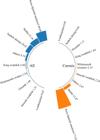
Index of relative importance of the main species caught during the period of the statement of commitment in Marine National Park of the Currais Islands (Parque Nacional Marinho das Ilhas dos Currais) and in the general area of the municipalities of Pontal do Paraná and Matinhos, Paraná, Brazil, over the years 2017 to 2021.
The analysis on income (R$ per day of fishing) showed that the income accumulated from the Currais area was greater, in relation to both serra Spanish mackerel (19.8% higher) and mullet (109.5% higher), despite annual fluctuations in income between the fishing areas (Fig. 6). Lower income was attributable to leatherjack in the Currais area (21.1% lower).

Income (reais/fishing day) relating to serra Spanish mackerel, mullet and leatherjack during the period of the statement of commitment in Marine National Park of the Currais Islands (Parque Nacional Marinho das Ilhas dos Currais, PARNA Currais) and in the municipalities of Pontal do Paraná and Matinhos, Paraná, Brazil, over the years 2017 to 2021.
DISCUSSION
The fishing activity carried out by fishers from the municipalities of Pontal do Paraná and Matinhos is considered artisanal according to Brazilian legislation (Jankowsky et al., 2019, 2020) and through the activity model (Andriguetto-Filho et al., 2006). Although the legislation considers medium-sized vessels of not more than 20 GT to be artisanal, the fleet of these municipalities is far from reaching that size. Specifically, the fleet that operates in the Currais area consists entirely of small vessels, without a cabin, which are used for “dawn to dusk” fishing. Comparison of the characteristics of this fleet with previous characterizations of the Paraná fleet (Andriguetto-Filho et al., 2009; Caldeira and Pierri, 2014) shows that there have been few changes over the years. The main differential is the presence nowadays of some vessels with higher engine power, such that the average is now close to 35 HP, while it was previously observed to be up to 24 HP (Andriguetto-Filho et al., 2009; Caldeira and Pierri, 2014).
Fishing with gillnets was responsible for 71.94% of the production landed between 2017 and 2021. Tall vertical nets used in surround mode were the gear and method used that account for the largest catch quantities: 29.59% of all production, or 40.64% of the production obtained though using gillnets. The use of the gillnets in this way is an adaptation of other forms of use of gillnets, as observed among fishers from Matinhos starting in 2016. It is a more selective and more profitable form of use (Andriguetto-Filho et al., 2022).
Although the seabob shrimp has great importance, especially in Pontal do Paraná (Andriguetto-Filho et al., 2009, 2022; Caldeira and Pierri, 2014), the total production of serra Spanish mackerel was higher than that of seabob shrimp, when the production of the two municipalities was summed. The higher production of fish than crustaceans in Matinhos is an exception on the Paraná coast (Andriguetto-Filho et al., 2022), although regional importance of serra Spanish mackerel production has been reported (Chaves and Birnfeld, 2021; Jankowsky and Mendonça, 2022), as well as of mullet (Pinheiro et al., 2010; Steenbock, 2019; Afonso and Chaves, 2021). Winter is also the period of greatest production in these two municipalities, especially the harvests of mullet (Garbin et al., 2014; Steenbock, 2019) and serra Spanish mackerel (Chaves et al., 2021; Jankowsky and Mendonça, 2022). It should be noticed that the permissions brought in through the statement of commitment cover a large part of the period of higher production of the main fish species, as well as the equipment, mode of use, and mesh sizes responsible for the period of higher production in these municipalities.
Evaluation of the production and profitability of the Currais area in this context has allowed us to make inferences about the role of this area in the construction of the fishery realities. The heat maps show that during the period in which the statement of commitment has been in force, the PARNA Currais area and its immediate surroundings were the only area with high production in the five years analyzed. Among the species captured, mackerel, mullet, and weakfish had the highest IRI in the PARNA Currais area. For mackerel, the IRI was above 75% and much higher than that what was observed over the entire fishing area used over this period, in which it was close to 40%. Moreover, the profitability of serra Spanish mackerel was also higher in the Currais area. For mullet, the IRI in the PARNA Currais area was lower than in the entire area, but its profitability was 100% higher than what was observed in the rest of the area. For weakfish, even though its catches were not authorized through the statement of commitment, the IRI in the PARNA Currais over this period was higher than what was observed in the entire area. These results make it clear that the Currais area is important in the period with high production and profitability of fishing activity.
The role of the statement of commitment
The creation of the NTMPA disregarded the existence of fishing grounds that had already been delimited by fishers and brought in a management conflict (Oliveira Leis et al., 2019). As already pointed out in other studies, the primary objective of this type of protected area is the conservation of marine biodiversity, without considering its negative impact on fishing and disregarding the forms of appropriation of fishing resources and marine property regimes (Jones, 2007; Sowman and Sunde, 2018; Outeiro et al., 2019). Among these impacts, we highlight the loss of cultural ecosystem services (Outeiro et al., 2019), loss of sense of belonging, reduction of area of use and impairment of the way of life (Sowman and Sunde, 2018). The asymmetry of power that was made explicit through the creation of the NTMPA, in which the public consultation that is necessary was not conducted (Giraldi-Costa and Murata, 2015), and exclusion contributed to a sense of resentment among the fishers (Almudi and Kalikoski, 2009; Sowman and Sunde, 2018; Islam et al., 2021) and brought to them the loss of ecosystem benefits. This top-down environmental management method has been widely criticized because of the difficulties in implementing it and the social injustices that it has caused worldwide (Berkes, 2007; Sowman and Wynberg, 2014; Armitage et al., 2020; Mudliar, 2021).
Although artisanal fishing is moving from a hierarchical system to a more cooperative management system (Chuenpagdee and Jentoft, 2018), there are examples in Brazil of more successful management in areas with permits for regulated use, such as environmental protected areas (Gerhardinger et al., 2015; Macedo et al., 2019) which correspond to category V of the IUCN classification system. Although progress has been made in these areas, there is still room for improvement in terms of consultation and social participation, which are considered key factors for successful management (Oliveira Júnior et al., 2016).
The signing of the statement of commitment recognized the previous existence of the fishing grounds and contributed towards reduction of this conflict. The results presented here show the important role that the NTMPA has for the local fishing sector and highlights the value of the statement of commitment for the region.
However, the statement of commitment is an instrument provided for in Brazilian legislation that recognizes the rights of traditional peoples and communities whose territories are affected through the creation of a no-take protected area, until they are “resettled” (Brasil, 2000, 2002a). Thus, it can be understood as a transitory instrument that was idealized for terrestrial areas, since there is no provision for resettlement in fishing grounds.
In addition to the limitation of this provisional nature, which in this case consists of a permanent demand, it needs to be highlighted that over these five years of operation of the statement of commitment, no adjustment regarding the rules that had been established was made. The results demonstrate some missteps between the rigidity of the rules and the reality. Regarding the species and the permitted catch period, the leatherjack harvest period is totally outside the authorized period, given that this is a summer species, as already pointed out in previous studies (Caldeira and Pierri, 2014; Afonso and Chaves, 2021). For mackerel, on the other hand, part of its harvest season is within the catch period permitted through the statement of commitment, but the month of September is also part of the annual harvest (Jankowsky and Mendonça, 2022). At the same time, for weakfish, which is not one of the species permitted through the statement of commitment, the IRI is higher inside the PARNA Currais area during the permitted period.
These are some of the adjustments that could be better discussed and, after reaching a consensus, could be implemented. However, the rigidity of the rules and the difficulty in making adjustments are worsened through the absence of a management council, which would form a space for social participation, as provided for in Brazilian legislation; and a management plan, which would be a management instrument constructed on a technical-scientific basis, with social participation. It is noteworthy that successful adoption of participatory and adaptive forms of management has been gaining space, especially in the light of the reality of climate change and the need to adapt to this (Fujitani et al., 2017; Cinner et al., 2019; Sowman, 2020).
CONCLUSION
The creation of this NTMPA that overlaps with fishing grounds has generated a situation of conflict with artisanal fishing. This was worsened by the way in which this was done, without due public consultation with the fishing sector. However, implementation of the statement of commitment moved the issue forward through reducing the conflict. Thus, the statement of commitment functioned as an instrument for transforming the conflict and recognizing the fishing grounds. The results presented here show that this NTMPA plays an important role in the results obtained from fishing, i.e., whether it is productive or profitable. Although the statement of commitment is very relevant in this context, it has some limitations that need to be addressed, such as its transitory nature and the rigidity of its rules.
From our results and the context set out here, the possibility of recategorizing the protected area such that from an NTPA to IUCN category V or VI, in which sustainable and regulated use is permitted, should be considered. It should be emphasized that, in doing so, full compliance with Brazilian legislation is maintained if the due process of public consultation and the rights of traditional peoples and communities are respected. Nevertheless, we recognize the conflict of interest present in the recategorization and therefore strongly recommend the maintenance of the statement of commitment and the creation of permanent spaces of dialogue that enable and encourage community participation and constant adaptation of the instrument. Currently, the NTMPA still lacks a space for dialogue, for this and other management issues. Institution of such a space is important for dealing with the complexity of the NTMPA and its demands.
ACKNOWLEDGMENTS
To the fishers who voluntarily collaborated with fisheries monitoring. To Paraná Fishing Monitoring Project team for their work and dedication.
-
FUNDING
Petróleo Brasileiro S.A.Fishery Monitoring ProgramGrant No.: 2400.0101918.16.2Fundação de Desenvolvimento da Pesquisa do AgronegócioInstituto de PescaGrant No: 2400.0101918.16.2
DATA AVAILABILITY STATEMENT
Data will be available upon request.
REFERENCES
-
Afonso, M.G.; Chaves, P.T.C. 2021. Pesca de emalhe e conservação de recursos pesqueiros: um estudo de caso no litoral sul do Brasil. Biodiversidade e Conservação Marinha, 10: e2021001. https://doi.org/10.37002/revistacepsul.vol10.1754e2021001
» https://doi.org/10.37002/revistacepsul.vol10.1754e2021001 -
Almudi, T.; Kalikoski, D. 2009. Homem e “natureza” em um parque nacional do sul do Brasil: meios de vida e conflitos nos arredores da Lagoa do Peixe. Desenvolvimento e Meio Ambiente, 20. https://doi.org/10.5380/dma.v20i0.12291
» https://doi.org/10.5380/dma.v20i0.12291 - Andriguetto-Filho, J.M.; Chaves, P.T.C.; Santos, C.; Liberati, S.A. 2006. Diagnóstico da pesca no litoral do estado do Paraná. In: Isaac, V.J.; Martins, A.S.; Haimovici, M.; Andriguetto-Filho, J.M. (eds.). A pesca marinha e estuarina do Brasil no início do século XXI: recursos, tecnologias, aspectos socioeconômicos e institucionais. Belém: Editora Universitária, p. 117-140.
-
Andriguetto-Filho, J.M.; Krul, R.; Feitosa, S. 2009. Analysis of natural and social dynamics of fishery production systems in Paraná, Brazil: implications for management and sustainability. Journal of Applied Ichthyology, 25(3): 277-286. https://doi.org/10.1111/j.1439-0426.2009.01273.x
» https://doi.org/10.1111/j.1439-0426.2009.01273.x -
Andriguetto-Filho, J.M.; Medeiros, R.P.; Vaz-dos-Santos, A.M.; Chaves, P.T.C. 2022. Shrimp up, fish down, and vice-versa: Fishers’ strategies and long-term changes in small-scale fisheries landings at two spatial levels in Southern Brazil. Marine Policy, 143: 105184. https://doi.org/10.1016/j.marpol.2022.105184
» https://doi.org/10.1016/j.marpol.2022.105184 -
Armitage, D.; Mbatha, P.; Muhl, E.; Rice, W.; Sowman, M. 2020. Governance principles for community‐centered conservation in the post‐2020 global biodiversity framework. Conservation Science and Practice, 2(2): e160. https://doi.org/10.1111/csp2.160
» https://doi.org/10.1111/csp2.160 -
Arthur, R.I.; Skerritt, D.J.; Schuhbauer, A.; Ebrahim, N.; Friend, R.M.; Sumaila, U.R. 2022. Small‐scale fisheries and local food systems: Transformations, threats and opportunities. Fish Fishery, 23(1): 109-124. https://doi.org/10.1111/faf.12602
» https://doi.org/10.1111/faf.12602 -
Barreto, G.C.; Silva, M.D.; Nascimento, D.E.; Serafini, T.Z.; Medeiros, R.P. 2021. Institutional frameworks for human dimensions: reflections for marine protected areas. Revista Brasileira de Ciências Ambientais, 57(1): 34-47. https://doi.org/10.5327/Z217694781027
» https://doi.org/10.5327/Z217694781027 -
Berkes, F. 2007. Community-based conservation in a globalized world. Proceedings of the National Academy of Sciences of the United States of America, 104(9): 15188-15193. https://doi.org/10.1073/pnas.0702098104
» https://doi.org/10.1073/pnas.0702098104 - Brasil. 2000. Lei nº 9.985, de 18 de julho de 2000. Regulamenta o Art. 225, incisos I, II, III, e VII da Constituição Federal, institui o Sistema Nacional de Unidades de Conservação da Natureza e dá outras providências. Diário Oficial da União
- Brasil. 2002a. Decreto nº 4.340, de 22 de agosto de 2002. Regulamenta artigos da Lei nº 9.985, de 18 de julho de 2000, que dispõe sobre o Sistema Nacional de Unidades de Conservação da Natureza - SNUC, e dá outras providências. Diário Oficial da União
-
Brasil. 2002b. Projeto de Lei nº 7.032, de 25 de junho de 2002 Cria o Parque Nacional Marinho das Ilhas dos Currais, Estado do Paraná. Brasília: Câmara dos Deputados. Available at: https://www.camara.leg.br/proposicoesWeb/prop_mostrarintegra?codteor=62689&filename=Tramitacao-PL%207032/2002. Accessed on: May 21, 2024.
» https://www.camara.leg.br/proposicoesWeb/prop_mostrarintegra?codteor=62689&filename=Tramitacao-PL%207032/2002 - Brasil. 2013. Lei nº 12.829, de 20 de junho de 2013. Cria o Parque Nacional Marinho das Ilhas dos Currais, no Estado do Paraná. Diário Oficial da União
-
Caldeira, G.A.; Pierri, N. 2014. As relações econômicas e a gestão compartilhada de recursos comuns: o caso da pesca marinha em Pontal do Paraná, Sul do Brasil. Desenvolvimento e Meio Ambiente, 32. https://doi.org/10.5380/dma.v32i0.35927
» https://doi.org/10.5380/dma.v32i0.35927 -
Chaves, P.T.C.; Birnfeld, P.O. 2021. The Serra Spanish mackerel fishery (Scomberomorus brasiliensis – Teleostei) in Southern Brazil: the growing landings of a high trophic level resource. Brazilian Journal of Biology, 83. https://doi.org/10.1590/1519-6984.246180
» https://doi.org/10.1590/1519-6984.246180 -
Chaves, P.T.C.; Birnfeld, P.O.; Vaz-dos-Santos, A.M. 2021. Population dynamics of Scomberomorus brasiliensis from a small-scale fishery off Southern Brazil. Ocean and Coastal Research, 69: e21013. https://doi.org/10.1590/2675-2824069.20-016pdtdcc
» https://doi.org/10.1590/2675-2824069.20-016pdtdcc -
Chuenpagdee, R.; Jentoft, S. 2015. Exploring Challenges in Small-Scale Fisheries Governance. In: Jentoft, S.; Chuenpagdee, R. (eds.). Interactive Governance for Small-Scale Fisheries Global Reflections MARE Publication Series, p. 3-16. https://doi.org/10.1007/978-3-319-17034-3_1
» https://doi.org/10.1007/978-3-319-17034-3_1 -
Chuenpagdee, R.; Jentoft, S. 2018. Transforming the governance of small-scale fisheries. Maritime Studies, 17: 101-115. https://doi.org/10.1007/s40152-018-0087-7
» https://doi.org/10.1007/s40152-018-0087-7 -
Cinner, J.E.; Lau, J.D.; Bauman, A.G.; Feary, D.A.; Januchowski-Hartley, F.A.; Rojas, C.A.; Barnes, M.L.; Bergseth, B.J.; Shum, E.; Lahari, R.; Ben, J.; Graham, N.A.J. 2019. Sixteen years of social and ecological dynamics reveal challenges and opportunities for adaptive management in sustaining the commons. Proceedings of the National Academy of Sciences, 116(52): 26474-26483. https://doi.org/10.1073/pnas.1914812116
» https://doi.org/10.1073/pnas.1914812116 -
Crona, B.I.; Basurto, X.; Squires, D.; Gelcich, S.; Daw, T.M.; Khan, A.; Havice, E.; Chomo, V.; Troell, M.; Buchary, E.A.;, Allison, E.H. 2016. Towards a typology of interactions between small-scale fisheries and global seafood trade. Marine Policy, 65: 1-10. https://doi.org/10.1016/j.marpol.2015.11.016
» https://doi.org/10.1016/j.marpol.2015.11.016 -
Dudley, N. 2008. Guidelines for Applying Protected Area Management Categories Gland, Switzerland: IUCN. Available at: https://portals.iucn.org/library/sites/library/files/documents/pag-021.pdf Accessed on: Jan 23, 2023.
» https://portals.iucn.org/library/sites/library/files/documents/pag-021.pdf -
Food and Agriculture Organization (FAO). 2020. The State of World Fisheries and Aquaculture 2020 Sustainability in action. FAO. https://doi.org/10.4060/ca9229en
» https://doi.org/10.4060/ca9229en -
Fujitani, M.; McFall, A.; Randler, C.; Arlinghaus, R. 2017. Participatory adaptive management leads to environmental learning outcomes extending beyond the sphere of science. Science Advances, 3(6): 1-12. https://doi.org/10.1126/sciadv.1602516
» https://doi.org/10.1126/sciadv.1602516 -
Garbin, T.; Castello, J.P.; Kinas, P.G. 2014. Age, growth, and mortality of the mullet Mugil liza in Brazil’s southern and southeastern coastal regions. Fishery Research, 149: 61-68. https://doi.org/10.1016/j.fishres.2013.09.008
» https://doi.org/10.1016/j.fishres.2013.09.008 -
Gerhardinger, L.C.; Castro, F.; Seixas, C.S. 2015. Scaling-up Small-Scale Fisheries Governability Through Marine Protected Areas in Southern Brazil. In: Jentoft, S.; Chuenpagdee, R. (eds.). Interactive Governance for Small-Scale Fisheries Global Reflections MARE Publication Series, p. 339-357. https://doi.org/10.1007/978-3-319-17034-3_18
» https://doi.org/10.1007/978-3-319-17034-3_18 -
Gerhardinger, L.C.; Ferreira, B.M.P.; Mattos, S.M.G.; Mendonça, J.T.; Vila-nova, D.; Bossolani, A.; Scharer, R. 2017. A Strong, Cohesive Voice The implementation of the SSF Guidelines in Brazil will need to be nested in local and territorial. Samudra Report, 39-44. Available at: https://www.icsf.net/samudra/a-strong-cohesive-voice/ Accessed on: Nov. 29, 2022.
» https://www.icsf.net/samudra/a-strong-cohesive-voice/ -
Giraldi-Costa, A.C.; Murata, A.T. 2015. Problemática Socioambiental na Unidades de Conservação. Sustentabilidade em Debate, 6(1): 86-100. https://doi.org/10.18472/SustDeb.v6n1.2015.12157
» https://doi.org/10.18472/SustDeb.v6n1.2015.12157 -
Islam, M.M.; Begum, A.; Rahman, S.M.A.; Ullah, H. 2021. Seasonal Fishery Closure in the Northern Bay of Bengal Causes Immediate but Contrasting Ecological and Socioeconomic Impacts. Frontiers in Marine Science, 8: 704056. https://doi.org/10.3389/fmars.2021.704056
» https://doi.org/10.3389/fmars.2021.704056 -
Jankowsky, M.; Mendonça, J.T. 2022. Scomberomorus brasiliensis (Scombridae) fishery on southern and southeastern coast of Brazil. Anais da Academia Brasileira de Ciências, 94: 1-14. https://doi.org/10.1590/0001-3765202220210791
» https://doi.org/10.1590/0001-3765202220210791 -
Jankowsky, M.; Mendonça, J.T.; Morroni, D. 2019. Monitoramento Pesqueiro no Litoral do Paraná. In: Tulio, L. (ed.). Fronteiras Para a Sustentabilidade 2 São Paulo: Atena, p. 41-55. https://doi.org/10.22533/at.ed.7311923124
» https://doi.org/10.22533/at.ed.7311923124 -
Jankowsky, M.; Mendonça, J.T.; Morroni, D. 2020. Pesca no Litoral do Paraná: Resultados e Aplicações do Monitoramento Pesqueiro. In: Alves, A.R. (ed.). Litoral do Paraná: Território e Perspectivas Brazil Publishing, v. 4, p. 101-130. https://doi.org/10.31012/978-65-5861-087-8
» https://doi.org/10.31012/978-65-5861-087-8 -
Jimenez, É.A.; Barboza, R.S.L.; Amaral, M.T.; Lucena Frédou, F. 2019. Understanding changes to fish stock abundance and associated conflicts: Perceptions of small-scale fishers from the Amazon coast of Brazil. Ocean and Coastal Management, 182: 104954. https://doi.org/10.1016/j.ocecoaman.2019.104954
» https://doi.org/10.1016/j.ocecoaman.2019.104954 -
Jones, P.J.S. 2007. Point-of-View: Arguments for conventional fisheries management and against no-take marine protected areas: Only half of the story? Reviews in Fish Biology and Fisheries, 17: 31-43. https://doi.org/10.1007/s11160-006-9016-8
» https://doi.org/10.1007/s11160-006-9016-8 -
Macedo, H.S.; Medeiros, R.P.; McConney, P. 2019. Are multiple-use marine protected areas meeting fishers’ proposals? Strengths and constraints in fisheries’ management in Brazil. Marine Policy, 99: 351-358. https://doi.org/10.1016/j.marpol.2018.11.007
» https://doi.org/10.1016/j.marpol.2018.11.007 - Madeira, J.A.; Muller, B.R.; Medeiros, R.P.; Giraldi, A.C.; Mendonça, J.T.; Alvite, C.; Steenbock, W.; Corre, F.M. 2018. Termo de Compromisso: Conciliação permite a pesca em unidade de proteção integral recém-criada pelo poder legislativo. In: ICMBio (ed.). Boas práticas na gestão de unidades de conservação Brasília: ICMBio, p. 149-152.
-
Mattos, S.M.G.; Mendonça, J.T.; Ferreira, B.M.P.; Souza Mattos, M.P.; Wojciechowski, M.J.; Gerhardinger, L.C. 2022. Coastal Small-Scale Fisheries in Brazil: Resentment Against Policy Disarray BT - Blue Justice: Small-Scale Fisheries in a Sustainable Ocean Economy. In: Jentoft, S.; Chuenpagdee, R.; Bugeja Said, A.; Isaacs, M. (eds.). Blue Justice MARE Publication Series, Vol 26. Springer International Publishing, p. 35-54. https://doi.org/10.1007/978-3-030-89624-9_3
» https://doi.org/10.1007/978-3-030-89624-9_3 -
Mattos, S.M.G.; Wojciechowski, M.J. 2019. Existing Institutional and Legal Framework and Its Implications for Small-Scale Fisheries Development in Brazil. In: Salas, S.; Barragán-Paladines, M.J.; Chuenpagdee, R. (eds.). Viability and Sustainability of Small-Scale Fisheries in Latin America and The Caribbean Cham: Springer, p. 495-511. https://doi.org/10.1007/978-3-319-76078-0_21
» https://doi.org/10.1007/978-3-319-76078-0_21 -
Mendonça, J.T. 2018. Monitoramento pesqueiro: avaliação de estratégias de coleta. In: Investigação Qualitativa em Ciências Sociais. Atas, 3: 27-36. Available at: https://proceedings.ciaiq.org/index.php/ciaiq2018/article/view/1712 Accessed on: Nov 29, 2022.
» https://proceedings.ciaiq.org/index.php/ciaiq2018/article/view/1712 -
Mudliar, P. 2021. Polycentric to monocentric governance: Power dynamics in Lake Victoria’s fisheries. Environmental Policy and Governance, 31(4): 302-315. https://doi.org/10.1002/eet.1917
» https://doi.org/10.1002/eet.1917 -
Oliveira Júnior, J.G.C.; Ladle, R.J.; Correia, R.; Batista, V.S. 2016. Measuring what matters – Identifying indicators of success for Brazilian marine protected areas. Marine Policy, 74: 91-98. https://doi.org/10.1016/j.marpol.2016.09.018
» https://doi.org/10.1016/j.marpol.2016.09.018 -
Oliveira Leis, M.; Chuenpagdee, R.; Medeiros, R.P. 2019. Where Small-Scale Fisheries Meet Conservation Boundaries: MPA Governance Challenges in Southern Brazil. In: Salas, S.; Barragán-Paladines, M.J.; Chuenpagdee, R. (eds.). Viability and Sustainability of Small-Scale Fisheries in Latin America and The Caribbean Springer, p. 453-472. https://doi.org/10.1007/978-3-319-76078-0_19
» https://doi.org/10.1007/978-3-319-76078-0_19 -
Outeiro, L.; Rodrigues, J.G.; Damásio, L.M.A.; Lopes, P.F.M. 2019. Is it just about the money? A spatial-economic approach to assess ecosystem service tradeoffs in a marine protected area in Brazil. Ecosystem Services, 38: 100959. https://doi.org/10.1016/j.ecoser.2019.100959
» https://doi.org/10.1016/j.ecoser.2019.100959 -
Perez, J.A.A.; Pezzuto, P.R.; Rodrigues, L.F.; Valentini, H.; Vooren, C.M. 2001. Pesca de Arrasto nas Regiões Sudeste e Sul do Brasil. Brazilian Journal of Aquatic Science and Technology, 5(1): 1-34. https://doi.org/10.14210/bjast.v5n1.p1-34
» https://doi.org/10.14210/bjast.v5n1.p1-34 -
Pinheiro, L.; Lana, P.D.C.; Andriguetto Filho, J.M.; Hanazaki, N. 2010. Pesca de pequena escala e a gestão patrimonial: o caso da pesca da tainha no litoral paranaense. Desenvolvimento e Meio Ambiente, 21. https://doi.org/10.5380/dma.v21i0.16018
» https://doi.org/10.5380/dma.v21i0.16018 -
Sowman, M. 2020. Participatory and rapid vulnerability assessments to support adaptation planning in small-scale fishing communities of the Benguela Current Large Marine Ecosystem. Environmental Development, 36: 100578. https://doi.org/10.1016/j.envdev.2020.100578
» https://doi.org/10.1016/j.envdev.2020.100578 -
Sowman, M., Sunde, J. 2018. Social impacts of marine protected areas in South Africa on coastal fishing communities. Ocean and Coastal Management, 157: 168-179. https://doi.org/10.1016/j.ocecoaman.2018.02.013
» https://doi.org/10.1016/j.ocecoaman.2018.02.013 -
Sowman, M.; Wynberg, R. 2014. Governance for Justice and Environmental Sustainability London: Routledge. https://doi.org/10.4324/9780203120880
» https://doi.org/10.4324/9780203120880 -
Steenbock, W. 2019. Subsídios para o ordenamento da pesca da tainha (Mugil liza, Mugilidae) uma análise histórica recente de aspectos relacionados à política de cotas. Biodiversidade e Conservação Marinha, 8: e2019003. https://doi.org/10.37002/revistacepsul.vol8.874e2019003
» https://doi.org/10.37002/revistacepsul.vol8.874e2019003 -
Teh, L.C.L.; Pauly, D. 2018. Who brings in the fish? The relative contribution of small-scale and industrial fisheries to food security in Southeast Asia. Frontiers in Marine Science, 5: 44. https://doi.org/10.3389/fmars.2018.00044
» https://doi.org/10.3389/fmars.2018.00044 -
Universidade Federal de Rio Grande (FURG). 2013. Boletim estatístico da pesca artesanal e industrial no estuário da Lagoa dos Patos – 1º Semestre de 2013 Rio Grande. Available at: https://imef.furg.br/images/stories/documentos/boletim%20furg%202013-1.pdf Accessed on: July 23, 2022.
» https://imef.furg.br/images/stories/documentos/boletim%20furg%202013-1.pdf -
Voyer, M.; Gladstone, W.; Goodall, H. 2012. Methods of social assessment in Marine Protected Area planning: Is public participation enough? Marine Policy, 36(2): 432-439. https://doi.org/10.1016/j.marpol.2011.08.002
» https://doi.org/10.1016/j.marpol.2011.08.002 -
Word Bank. 2012. Hidden harvest: The global contribution of capture fisheries. (No. Report no. 66469-GLB). Available at: https://openknowledge.worldbank.org/handle/10986/11873 Accessed on: Nov 23, 2022.
» https://openknowledge.worldbank.org/handle/10986/11873
Edited by
-
Section editor:
Raniere Garcez https://orcid.org/0000-0002-5620-389X