
 End of life and dignity: an integrative review
Abstract
This article aimed to explore the meanings of dignity at the end of life from the perspective of health professionals and to identify care actions that promote it. An integrative review was conducted between March and April 2022, with nine articles selected from databases, all published since 2012. The results indicated that dignity is related to valuing autonomy and that the conduct of health professionals, the care environment, and therapies involving invasive treatments influence its promotion. Among the actions taken by care professionals to foster dignity, the use of tools such as the Patient Dignity Inventory in care planning was highlighted. The conclusion is that health professionals play a key role in promoting autonomy—a fundamental element of dignity for people who are ill—and that both intrinsic and extrinsic factors should be considered when planning care to ensure a good death.
Respect; Right to die; Health personnel; Terminal care
Resumo
Este artigo buscou conhecer os significados de dignidade no final da vida na perspectiva de profissionais de saúde e identificar ações de cuidado para promovê-la. Realizou-se uma revisão integrativa entre março e abril de 2022, com nove artigos selecionados em bases de dados, publicados desde 2012. Os resultados indicaram que a dignidade está vinculada à valorização da autonomia e que a conduta dos profissionais de saúde, o ambiente de cuidado e a terapêutica relacionados a tratamentos considerados invasivos interferem em sua promoção. Entre as ações de cuidado dos profissionais para promover dignidade, mencionou-se o uso de ferramentas como o Inventário de Dignidade do Paciente no planejamento dos cuidados. Conclui-se que os profissionais de saúde são centrais para promover autonomia, elemento fundamental da dignidade das pessoas em adoecimento, e que devem ser considerados fatores intrínsecos e extrínsecos no planejamento dos cuidados para efetivar a boa morte.
Respeito; Direito a morrer; Pessoal de saúde; Assistência terminal
Resumen
Este artículo tuvo como objetivo explorar los significados de la dignidad al final de la vida desde la perspectiva de los profesionales de la salud y identificar acciones de cuidado que la promuevan. Se realizó una revisión integrativa entre marzo y abril de 2022, con nueve artículos seleccionados de bases de datos, todos publicados a partir del año 2012. Los resultados indicaron que la dignidad está relacionada con la valoración de la autonomía, y que la conducta de los profesionales de la salud, el entorno de atención y las terapias que implican tratamientos invasivos influyen en su promoción. Entre las acciones llevadas a cabo por los profesionales para fomentar la dignidad, se destacó el uso de herramientas como el Patient Dignity Inventory en la planificación del cuidado. Se concluye que los profesionales de la salud desempeñan un papel clave en la promoción de la autonomía —un elemento fundamental de la dignidad de las personas enfermas— y que deben considerarse tanto factores intrínsecos como extrínsecos al momento de planificar los cuidados para lograr una muerte digna.
Respeto; Derecho a morir; Personal de salud; Cuidado terminal
When coping with a disease that threatens the continuity of life, patients experience different phases, and some signs indicate the approach of death. The end of life can be characterized by worsening physical and psychological symptoms, non-compliance with modifying treatment, and limited life expectancy of less than 12 months, among other factors 1. Accordingly, health care professionals, family members and individuals experiencing this moment need to recognize the transition from illness to the end of life with a view to maintaining dignity.
Collectively, human dignity is conceived as a quality inherent in every person and encompasses precepts of self-determination, protection in relation to the environment and development and, individually, freedom and access to what is basic and fundamental by nature 2. It can be influenced by personal and cultural experiences and individual factors, and those who are experiencing finitude must have their main needs and desires recognized and their care planned while considering spiritual issues, physical needs and maintenance of relationships 3.
The concept of dignity is still poorly defined; however, a systematic review 4 addressed the current concepts and found an association with innate, individual, relational and social factors. As innate factors, there is a relation with intrinsic values, recognition, inalienation, respect and valorization; individual factors are associated with the control of physical and functional symptoms, personal identity and the maintenance of autonomy; relational factors relate to family ties and receiving support and care; and social factors are linked to the social position occupied by the individual and the relationship with the health care team 4.
When considering dignity in the transition to the end of life, it is necessary to ensure respect for the wishes of the person by means of obtaining consent to the health care actions they wish to receive or not, with a view to expanding autonomy in therapeutic decision-making about their body 5. It is essential to preserve patient autonomy, promoting relief from existential anxiety, since the fear of loss of dignity or even the desire for its preservation can be perceived 3. At this time, the process of decision-making on treatments and care is permeated by fears regarding ethics and bioethics, elements that are transversal and fundamental for the maintenance of dignity in the process of dying and in death.
In the care of people with life-limiting diseases, investment in healing, prolongation of suffering and consequent postponement of death are commonly observed. Such measures are inconsistent with the principles of human dignity, at the collective or individual level, being contrary to the principles of good death—that considered painless and without suffering 6. Based on the fundamental principles of the Brazilian Federal Constitution, dignity is a human right 7. A dignified end of life can be enabled by orthothanasia, which is defined as a care model centered on death that occurs at the right time, without postponement or hastening 6.
Despite the national and international progress of discussions on and development of palliative care (PC) services, there is still the use of inappropriate end-of-life treatments, such as antibiotic therapy 8, making it difficult to experience death without suffering and limiting the maintenance of a dignified existence 9. A study showed that physicians with longer training, without specialization in PC, who work in public services are more resistant to the suspension of antibiotic therapy, as they consider antibiotics not as invasive as other measures, thus prolonging the process of dying 8.
Due to characteristics that are inherent to the profession, nurses are considered as professionals capable of promoting death with dignity. Such characteristics include using communication strategies, enabling a safe setting, promoting the occurrence of good death and increasing the quality of life of patients. The promotion of death with dignity, that is, with respect for ethical principles and valuing the human being during the end of life, and the work of the teams, increasing the self-esteem of professionals and patients and the satisfaction of their families, is intrinsically related to nursing care 10.
The lack of discussions about death is a cultural behavior and becomes a hindering factor for the promotion of dignity, since the teams are more prepared to seek vitality and healing 11. It is observed that the end of life is permeated by fears and challenges for those who face it, because, in addition to the diagnosis of a threatening disease, there is the prevalence of limitations, especially physical and physiological limitations, which prevent the maintenance of autonomy and independence, thus posing a risk to the maintenance of dignity 12.
Thus, the objectives of this article were to explore, in the national and international literature, the meanings of dignity at the end of life from the perspective of health care professionals and to identify care actions for the promotion of dignity at the end of life.
Method
This is an integrative literature review comprising: 1) definition of the review question; 2) research and selection of primary studies; 3) extraction of data from primary studies; 4) critical evaluation of primary studies; 5) synthesis of review results; and 6) presentation of review results 13.
The research question was developed by the PIO strategy 14, in which: P: population; I: intervention, influence or exposure; and O: outcomes, the synthesis of meanings and actions related to dignity at the end of life. The research was guided by the following questions: what are the perspectives of health care professionals about dignity at the end of life and what actions to promote dignity at the end of life can be identified in the national and international literature?
The study identification and selection stage was conducted between March and April 2022, using the Health Science Descriptors (DeCS) “respect,” “right to die,” and “death” and the Medical Subject Headings (MESH) “right to die,” “value of life,” and “death,” associated with the Boolean operators “and” and “or” in the Scientific Electronic Library Online (SciELO) and Medical Literature and Retrieval System Online (MEDLINE) databases, via Pubmed (Chart 1).
We found 181 documents in SciELO and 4,340 in MEDLINE. The inclusion criteria were: original articles, reviews and theoretical essays in Portuguese, English and Spanish, published from 2012, available in full via the CAPES journal portal, which included issues involving dignity at the end of life in adults. The exclusion criteria were: experience report, dissertations, theses, abstracts and monographs, studies focused on the concepts of euthanasia, dysthanasia, orthothanasia, misthanasia, assisted suicide and suicide, which had as a setting intensive care units, addressed the donation and capture of organs and tissues, which did not have abstracts or specific objectives and incomplete studies.
Thus, search filters were applied, leaving 116 articles in SciELO and 416 articles in MEDLINE, totaling 532 articles. Subsequently, the duplicates were eliminated, leaving 518, and, after reading titles and abstracts, 35 articles were selected for full reading. In total, nine articles composed the empirical material of analysis. The Preferred Reporting Items for Systematic Reviews and Meta-Analyses (PRISMA) 15 was used to prepare the flowchart of the searches (Figure 1).
For data organization and management, we used free tools from the Rayyan 17 application and Google’s spreadsheet management platform. The review results were grouped by similarity between the themes, based on their repetitions.
Results and discussion
Chart 2 presents the general characterization of the empirical material for analysis.
Most participants were health care professionals 18,21,23,24, followed by patients 19,25, and a single study 22 included health care professionals, patients and family members. Two studies 20,26 do not mention the participants. Study settings included hospital setting 18,21,25, oncology outpatient clinic 19 and palliative care outpatient clinic 22, primary health care (PHC) 18 and nationwide studies in the following countries: United States of America 24,26, England and France 20 and Switzerland 23. The years of publication were: 2020 18,19, 2018 21,22, 2016 20,26, 2021 23, 2013 25 and 2012 24; the countries of publication were: United States 20,26, Brazil 18, Taiwan 19, Netherlands 21, England 22, Germany 23 and Hong Kong 25.
The analyses led to four main categories in relation to dignity: concepts and definitions; factors that influence the promotion or maintenance of dignity; therapy; and care actions to promote dignity. They are addressed below.
Concepts and definitions of dignity
The concept of dignity was related to respect and autonomy, in the sense that the person must be seen and respected as such. It is essential to recognize this autonomy in older people, recovering their identity and providing individualized care focused on the main needs, in order to promote dignity 18.
Another study 20, carried out in England and France, found that, in the first country, dignity is understood as respect for autonomy, such that the two terms are equivalent and, therefore, redundant, which makes it a priority that the person be seen as autonomous and can pursue their own goals until the end of their life. In France, dignity is related to the collectivity and can be understood as a form of respect for humanity, while individual interests are secondary 20.
Thus, there is the recovery of the definition of autonomy: the capacity of the individual to control their life and self-govern according to their own wills to maintain their integrity, with no disrespect to their rights in the social sphere 27. In the end-of-life period, this autonomy is associated with dignity and subject to care support, the work of the health care team, current legislation and psychological, social, physical and spiritual support.
Corroborating the findings, a study 28 with health care professionals showed that the maintenance of dignity through autonomy at the end of life can occur through the inclusion of the family in care support, improving connections; through interaction by dialog, to understand individual aspects; and through the inclusion of the person in decision-making about their treatment. The health care team is responsible for sharing correct information among the members, sharing the decision-making process and, when possible, requesting the opinion of a specialized professional, in addition to recognizing the nurse’s leadership to defend the person’s autonomy in the end-of-life period. According to the authors, these conducts guarantee respect and autonomy with a view to maintaining dignity, since some situations may compromise it 28.
Another study 21 identified four categories of dignity: dignity as a principle; dignity as a state or situation; dignity to describe social differences; and dignity as personal meaning. The first considers that all human beings have intrinsic dignity that must be preserved to protect humanity, which, for being understood as something inherent, is subject to violation. From this perspective, health care professionals cannot offer dignity to the person, but they can try to ensure humanized care that preserves it until the moment of death.
The second category understands dignity as something concrete and related to the state of health, which can be violated in situations considered precarious. The third category understands that dignity is granted to some, that is, those privileged by the position they occupy in society, and therefore relates directly to social influences and the idea of meritocracy, showing that people of lower social classes have less dignity than those rising to upper social classes. In the fourth category, dignity comprises individual values and is identified when the person is included in their own health care, having their opinion and values considered 21.
The concept of dignity is broad and follows transformations in society resulting from technical-scientific development and globalization. In Stoicism, it was seen as equal for all human beings and differentiated them from other living beings. In addition, since classical Antiquity, dignity would be related to the position that the person occupied in society or their degree of recognition 29.
Returning to the findings of this review, a study 24 conducted with 1,032 physicians linked dignity to a condition transferred by a transcendent to each person. In addition, most professionals believed that there was no difference in dignity between people after this transfer process. It was also related to the individual ability to make one’s own choices, and some participants expressed that, during the process of dying, the person loses some of it (43% of respondents), loses it totally (36%) or does not lose it at all (21%). Of these respondents, those who were considered religious believed that dignity was equal for all and that it could not undergo loss.
Finally, a study 25 mentioned that, in the Eastern context, dignity is related to spirituality, a relation that is decisive in promoting quality of life and in the context of PC. This statement is justified by the holistic approach, which reestablishes dignity through spiritual care in the last moments of life. In this context, dignity is considered a spiritual value that is inherent to human beings, which is manifested in self-determination and self-responsibility, implies respect for others, and must be respected by society 30. Therefore, it is important that health care professionals promote spiritual care and facilitate religious rituals according to patient will so as to enable a dignified and quality end of life. From this perspective, it is understood that comprehending the spiritual dimension and preserving it allows the humanization of care, which can thus be offered with enhanced comprehensiveness in end-of-life scenarios 31.
Factors that influence the promotion or maintenance of dignity
The quality of care was directly related to the maintenance of dignity. Not making judgments, respecting personal values, religion and spirituality, supporting decisions and offering care to the main needs are conducts directly related to a more dignified death 18. It is considered that knowledge of oneself and of the other is one of the pillars of care and that it is important to analyze the patient’s situation in order to understand human nature in its complexity 32. The professionals’ spirituality and positive thinking can assist in the provision of care and thus influence the comfort offered to patients and promote a humanized death through dignified care 33.
The place where the person is experiencing their last moments is another factor that influences dignity. It is considered that, in the hospital setting, mainly, the person is distant from their routine and there are restrictions in the care provided by the professionals due to the limited time offered to patients, in addition to the workers exhaustion due to excessive workload 18.
Another study 21 showed that, in the Netherlands, an inappropriate place for death would be the intensive care unit (ICU), because the technological support of the setting is considered life-sustaining treatment and incompatible with dignity. Also, it is mentioned that the hospital would not be an appropriate place for death, as this setting is geared toward curing diseases. Although dying at home is considered the best choice for the majority in the Netherlands, home care provided by local health care services is advocated, noting that these services would need to be coordinated with other reference services so as to promote dignity 21. In contrast, a Canadian study 26 found that 70% of the population believes that the hospital is the setting that provides end-of-life care, and even most people who prefer to die at home die in the hospital.
To discuss the findings of this review, we found a study 34 with 71 caregivers of already deceased patients who had been followed-up by a PC team. It found that 86.7% of the respondents were satisfied with the fact that the family member had died at home, and 13.2% preferred the occurrence of death in the hospital. When asked about the possibility of the family member dying at home before the follow-up of the team and the beginning of the treatment, 56.6% considered it impossible and 43.4% already knew about the possibility, and all reported having had support from the health care team at the time of the death of the family member. The same study observed that dying at home with family preparation and adequate symptom control is also the preference among health care professionals 34.
After diagnosis of a life-limiting disease, in order to enable the promotion of dignity, it is necessary that health care professionals provide patients with humanized care and talk about comfort care they wish to receive and preference for place of death. A study 35 evaluated the most frequent place of death among the Brazilian population and found that the hospital was prevalent (66.71%) compared to the home (21.43%). As a justification, the authors noted that the preference for the hospital is due to receiving appropriate care and reducing the burden on family members/caregivers, while the choice of home is due to the desire to spend more time with the family 35,36.
In another study 37, with 400 older adult patients, 52.2% of respondents mentioned preferring to die at home, and 47.8% preferred it to be in some institution, including the hospital. A study with physicians 38 found that most believe that the patient should choose the place of death, as this allows the preservation of autonomy and dignity. However, it is argued that it is essential to offer support to family members, as keeping the patient supported is a difficult task given the modification in the family routine and the need to adapt the setting 38.
Finally, there was mention of the issue of level of dependence or loss of independence and their relation with the loss of dignity, due to reduced or limited functional capacity to follow a normal routine 25. Disease-related concerns, such as physical and psychological distress, resulting from death anxiety, and the existence of physical symptoms, such as pain, fatigue and inappetence, also interfered with dignity. The authors note that, although pain is an uncomfortable symptom, it is fundamental to maintain dignity as experiencing it means vitality and strengthening of spirituality and morality. Excessively reducing it could negatively interfere with the spiritual growth generated by the experience of suffering 25.
The same study shows that reducing concerns about the future and seeking spiritual comfort to find peace, improve family connections and improve life prospects are factors that promote existential integrity and help promote dignity in people who are at the end of life and receive PC 25. In addition, issues related to lack of privacy and social support, reduced level of care and concerns related to the disease undermine the dignity of these people. It is considered that residents of institutions suffer due to the lack of space and feel constrained by institutional care, because in many cases health care professionals are not trained in PC to provide it to them 25.
The provision of PC is considered one of the main approaches to maintain dignity. However, there are still gaps in the training of professionals with a view to its practical application, and it would be relevant to expand the study on this approach. There is also a lack of quality services and trained professionals, as not every one of them is trained to deal with death naturally. Thus, maintaining patient autonomy during the end of life poses a challenge 38,39.
Concerning privacy, corroborating the findings, a study 40 shows that offering it ensures greater patient satisfaction and that demonstrating sensitivity and presence and looking into the eyes positively influences the treatment. The preservation of autonomy is directly related to dignity, as it is important that the person is able to independently perform routine and self-care activities. When there are hindrances to this, there is a reduction in the sense of dignity, and it is essential that health care professionals identify the main needs and promote comfort measures 40.
Therapy
As for therapy, in a study 18 that evaluated patients with advanced heart failure, there was the emergence of questions related to the interruption or not of life support. The question was about contribution to dignity versus prolongation of suffering, since patients with cardiac implants have higher chances of complications when submitted to certain therapies 18. It is discussed that the maintenance of dignity can be compromised when patients are submitted to invasive procedures and interventions considered unnecessary, which focus on cure and, therefore, for people with incurable diseases, only prolong suffering. Because it is difficult for health care professionals to accept death, such measures become routine in health care practice 41.
Other study analyzed in this review 20 reports that, in England, patients are primarily responsible for decisions and have the right to refuse treatments according to the principle of corporal integrity, provided that they are informed and demonstrate understanding of their decision. France established Law 303/2002, which provides for patients’ rights and allows the refusal of treatments; however, some professionals are not sure if this refusal includes life-sustaining treatments. Thus, also in France, Law 370/2005, on patients’ rights and the end of life, stipulates that patients have the right to refuse any treatment, including clinically-assisted nutrition and hydration. This law specifies that physicians must respect the patient’s wishes and desires; however, if there is risk to life, physicians are responsible for “convincing” patients to continue treatment, which configures duality about the patient’s ownership of their rights and wishes, since the professionals are considered responsible for the decisions 20.
Thus, patient autonomy is directly related to freedom to make choices, including decisions about end of life, including the refusal of treatment, in respect of what they consider as good life and good death. Therefore, when this autonomy cannot be exercised, for physical or cognitive reasons, it is possible that someone else decides instead. To develop dignity with autonomy, it is necessary that the individual can choose the course of treatment and deal with its consequences. The Brazilian legislation established as legal the medical practice of orthothanasia, that is, the cessation or impediment of the beginning of treatments that will not lead to cure, but rather prolong suffering. This practice is considered as promoting dignity in the face of suffering by not hastening the end while accepting death naturally 42-44.
As for the promotion of dignity, other study 21 included in this review demonstrated the professionals’ perception that, if the patient refused treatment, even if it were their own desire or that of family members, there would be risk to their own dignity. That is, the maintenance of patient dignity would be conditioned to the professionals of the medical team. The care offered by the nursing team included patient hygiene, music therapy and prayers, in addition to comfort measures with oxygen therapy.
Another notable result concerns the physicians’ opinion on voluntarily stopping nutrition and hydration in a Swiss study 23. Some professionals believe that such interruption is part of natural death, while others claim that it is passive euthanasia, since some family members accepted such measures and did not oppose life-sustaining measures. This practice was compared to physician-assisted suicide or suicide proper. However, deaths that occurred through voluntary interruption of nutrition and hydration treatment were considered dignified, since there was supervision by professionals when patient suffering was considered unbearable.
Considering this finding, it is argued that the voluntary interruption of hydration and nutrition at the end of life understands the person’s need to end their suffering, hence they decide to refuse the offer. However, in Brazil, this practice is uncommon and can be confused with interruption for other reasons, such as impossibility/difficulty in swallowing, inappetence, among others, that is, cases with evident difficulty in maintaining treatment, and it is not clear whether it is an option to hasten death. Health care professionals believe that such strategy should be considered as a last resort and that it is essential that the case be evaluated by a PC specialist and that the opinion of the family be considered 45.
Care actions to promote dignity
As for the care actions adopted to promote or maintain dignity, a study 19 mentioned the use of the Patient Dignity Inventory, consisting of 25 questions that assess existential and psychological suffering, loss of autonomy and symptoms reported by patients at the end of life. In addition to this inventory, we used the 24-item Demoralization Scale, which assesses feelings of demoralization, including loss of purpose, discouragement, feeling of failure and helplessness; and the 9-item Patient Health Questionnaire, which assesses the severity of depression in patients in the previous two weeks. The study concluded that all groups that received these interventions had increased dignity and reduced depression and feelings of demoralization.
These tools direct the planning of care offered to patients with advanced disease so as to facilitate the work of health care teams during care, as they are practical and applicable. A study 46 performed the psychometric validation of the Patient Dignity Inventory (PDI-Br), an instrument composed of 25 items and three domains: the first is related to physical and emotional symptoms; the second, to dependence; and the third, to existential suffering. This inventory was based on other patient assessment tools, and the results of its validation demonstrate that dignity is directly related to physical symptoms, anxiety, depression, functional capacity, spirituality and quality of life.
Other study in this review 22 mentioned the use of Dignity Talk, a tool whose objective is to promote conversations between family members and relationships in general to reinforce values and dignity as a means to improve connections, promote interaction between family members, and deal with unfinished issues. End-of-life patients say it is a great opportunity to revisit memories, talk about personal matter and resolve issues. It also allows family members to reflect on the guidelines and information about the patient’s life.
It was found that Dignity Talk is a great opportunity to improve family relationships, working as a starting point for conversation and support for caregivers, providing personal valorization and promoting dignity. It is a tool to transmit memories, life lessons, promote emotional interactions and facilitate the grieving process, helping the end-of-life person to die without regrets and with well-established family relationships 22.
Communication is an essential element in the health care field, especially with regard to PC, as only communication enables understanding the wishes of patients and family members. It is essential that professionals implement strategies aimed at effective communication to promote trust, strengthen bonds and preserve the dignity of patients in this context. Adequate and effective communication enables patients to express their distresses and wishes, given the freedom to communicate what ails them 38.
Communication is understood as the exchange of information between stakeholders, classified as verbal or non-verbal, and in PC it can be established by quality listening, attention, empathy and understanding. It also enables professionals to plan care to meet the main needs of each person, preserving their autonomy. Here, the nursing team’s work is noted, since nurses are the main providers involved in exchanges of information about patient health condition due to the direct interaction, thus being able to trace demands and issues due to communication 38,47.
In Brazil, there was cultural adaptation of the Health Communication Assessment Tool (HCAT), which was developed by American researchers and consists of 22 statements and an open-ended question that assesses the establishment of bonds, the encouragement of autonomy, the training and empathy based on the behavior of health care professionals and students. The open-ended question is part of the category on language used with patients in care and enables professionals or students to identify the use of scientific terminology in care. The use of this tool can contribute to the quality and safety of care and facilitate the definitions of proposed health care treatments, preserving the patients’ understanding of their condition and their autonomy, as they participate in decision-making 48.
Finally, issues related to end-of-life counseling as a strategy for maintaining dignity were noted. A U.S. study 26 demonstrated that private initiative plans benefit care planning because, in their hiring, they provide qualified professionals, including nurses and specialized physicians, who discuss cases individually to implement advanced health care.
These services enable the allocation of resources for the establishment of evidence-based PC with a focus on patient autonomy. They also aim at shared decision-making as a means of strengthening bonds with patients and families, through patient participation in decision-making about treatment and interventions they want to receive, aware of possible damages and benefits. They consist in a collaborative process between professionals, family members and patients, considering cultural, social and individual aspects, with health care professionals ensuring the dignity of the person at the end of life 26.
In Brazil, the 2019 Atlas of Palliative Care shows that, although PC services are predominantly public (50%), through the Brazilian Unified Health System (SUS), there are private services (36%) and mixed services (14%). According to the data, 22.4% of Brazilians who need PC access them in private services, for health care follow-up and advice, and the remaining Brazilians (77.6%) benefit from the public health care network 49.
In PHC, care planning by family health strategy teams enables including patients in decision-making about treatment, as they fully understand the individual, valuing their participation through access to services, as well as their family 50. In the final stage of life, it is essential to facilitate the patient’s participation in their dying process according to their understanding of what is most appropriate for them. The bond and continuity of care must occur in a humanized manner, thus allowing the incorporation of effective PC in therapy and a dignified death 51.
Final considerations
This review enabled learning about the meanings of dignity at the end of life from the perspective of health care professionals and about some actions they adopt to promote dignity in care. It was found that the meaning is broad and varies depending on context, cultural characteristics, personal issues and professional issues.
For end-of-life care to be effective and comprehensive, the concept of dignity should be recovered and incorporated as a fundamental element in the approach to each person, focusing on a good death. It is also necessary to learn about the intrinsic and extrinsic characteristics that constitute the dignity of each person, preserve their autonomy and wills, include them in decision-making, allowing them to be an active subject in the various phases of life, including the end of life.
Health care professionals are mainly responsible for promoting and encouraging the autonomy of people in illness, because, like patients, they are central in care. For persons to have their wishes met, care planning should include factors that promote dignity. Thus, holding discussions in health care services about dignity is considered necessary so as to relativize the professionals’ choices and views about patients and families. Recognizing, valuing and incorporating PC in health care practice is a possibility to enable such movements towards recovering the autonomy of human persons in the face of death.
References
-
1 Cordeiro FRC, Oliveira S, Giudice JZ, Fernandes VP, Oliveira AT. Definitions for "palliative care", "end-of-life" and "terminally ill" in oncology: a scoping review. Enfermería [Internet]. 2020 [acesso 3 jun 2024];9(2):205-28. DOI: 10.22235/ech.v9i2.2317
» https://doi.org/10.22235/ech.v9i2.2317 -
2 Zisman CR. A dignidade da pessoa humana como princípio universal. Revista de Direito Constitucional e Internacional [Internet]. 2017 [acesso 3 jun 2024];96:1-16. Disponível: https://tinyurl.com/rzwpn87s
» https://tinyurl.com/rzwpn87s -
3 Schüttengruber S, Großschädl F, Lohrmann C. A consensus definition of end of life from an international and interdisciplinary perspective: a delphi panel study. J Palliat Med [Internet]. 2022 [acesso 16 jan 2024];25(11):1677-85. DOI: 10.1089/jpm.2022.0030
» https://doi.org/10.1089/jpm.2022.0030 -
4 Chua KZY, Quah ELY, Lim YX, Goh CK, Lim J, Wan DWJ et al. A systematic scoping review on patients' perceptions of dignity. BMC Palliat Care [Internet]. 2022 [acesso 27 ago 2023];21(118):1-18. DOI: 10.1186/s12904-022-01004-4
» https://doi.org/10.1186/s12904-022-01004-4 -
5 Lima MLF, Rego STA, Siqueira-Batista R. Processo de tomada de decisão nos cuidados de fim de vida. Rev. bioét. (Impr.) [Internet]. 2015 [acesso 25 jul 2023];23(1):31-9. DOI: 10.1590/1983-80422015231043
» https://doi.org/10.1590/1983-80422015231043 -
6 Silva LA, Pacheco EIH, Dadalto L. Obstinação terapêutica: quando a intervenção médica fere a dignidade humana. Rev. bioét. (Impr.) [Internet]. 2021 [acesso 25 jul 2023];29(4):798-805. DOI: 10.1590/1983-80422021294513
» https://doi.org/10.1590/1983-80422021294513 -
7 Brasil. Constituição da República Federativa do Brasil de 1988. Diário Oficial da União [Internet]. Brasília, 5 out 1988 [acesso 25 jul 2023]. Disponível: https://www.planalto.gov.br/ccivil_03/constituicao/constituicao.htm
» https://www.planalto.gov.br/ccivil_03/constituicao/constituicao.htm -
8 Crispim DH, Silva IO, Carvalho RT, Levin AS. End-of-life use of antibiotics: a survey on how doctors decide. Int J Infect Dis [Internet]. 2021 [acesso 14 ago 2023];114:219-25. DOI: 10.1016/j.ijid.2021.10.026
» https://doi.org/10.1016/j.ijid.2021.10.026 -
9 Pinheiro JE, Peres GA. Ortotanásia e dignidade na finitude: relato de caso. Colloq Vitae [Internet]. 2023 [acesso 25 jul 2023];15(1):36-41. DOI: 10.5747/cv.2023.v15.v359
» https://doi.org/10.5747/cv.2023.v15.v359 - 10 Rafii F, Abredari H. Death with dignity in end-of-life nursing care: concept analysis by rodgers' evolutionary method. Iran J Nurs Midwifery Res [Internet]. 2023 [acesso 22 jan 2024];28(2):179-87. DOI: 10.4103%2Fijnmr.ijnmr_440_21
-
11 Schaefer F. A importância da implantação dos cuidados paliativos no Sistema Único de Saúde. Rev direito sanit [Internet]. 2019 [acesso 25 jul 2023];20(3):26-50. DOI: 10.11606/issn.2316-9044.v20i3p26-50
» https://doi.org/10.11606/issn.2316-9044.v20i3p26-50 -
12 Zilli F, Oliveira SG. Pacientes com doença oncológica avançada e o cuidado de si a partir das relações interpessoais. Rev Contexto Saúde (Impr.) [Internet]. 2020 [acesso 25 jul 2023];20(40):256-66. Disponível: https://tinyurl.com/tmybn969
» https://tinyurl.com/tmybn969 -
13 Mendes KDS, Silveira RCCP, Galvão CM. Uso de gerenciadores de referências bibliográficas na seleção dos estudos primários em revisão integrativa. Texto & contexto enferm [Internet]. 2019 [acesso 17 ago 2023];28(e20170204):1-13. DOI: 10.1590/1980-265X-TCE-2017-0204
» https://doi.org/10.1590/1980-265X-TCE-2017-0204 - 14 Polit DF, Beck CT. Fundamentos da prática de enfermagem baseada em evidências. In: Polit DF, Beck CT, editores. Fundamentos de pesquisa em enfermagem: avaliação de evidências para a prática da enfermagem. 9ª ed. Porto Alegre: Artmed; 2019. p. 20-40.
-
15 Liberati A, Altman DG, Tetzlaff J, Mulrow C, Gotzsche P, Ioannidis JPA et al. The PRISMA statement for reporting systematic reviews and meta-analyses of studies that evaluate health care interventions: explanation and elaboration. J Clin Epidemiol [Internet]. 2009 [acesso 15 jun 2022];6(7):1-34. DOI: 10.1016/j.jclinepi.2009.06.006
» https://doi.org/10.1016/j.jclinepi.2009.06.006 -
16 PRISMA Flow Diagram. PRISMA Transparent Reporting of Systematic Reviews and Meta-Analyses [Internet]. 2020 [acesso 15 jun 2022]. Disponível: https://www.prisma-statement.org/prisma-2020-flow-diagram
» https://www.prisma-statement.org/prisma-2020-flow-diagram -
17 Rayyan [Internet]. Cambridge: Rayyan; 2022 [acesso 25 jul 2022]. Disponível: https://www.rayyan.ai/
» https://www.rayyan.ai/ -
18 Sampaio C, Renaud I, Leão PP. "A montanha-russa da insuficiência cardíaca": a percepção de dignidade pelas equipes de enfermagem. Acta paul enferm [Internet]. 2020 [acesso 9 abr 2022];33:1-8. DOI: 10.37689/acta-ape/2020AO0165
» https://doi.org/10.37689/acta-ape/2020AO0165 -
19 Li YC, Feng YH, Chiang HY, Ma SC, Wang HH. The effectiveness of dignity therapy as applied to end-of-life patients with cancer in Taiwan: a quasi-experimental study. Asian Nurs Res [Internet]. 2020 [acesso 9 abr 2022];14(4):189-95. DOI: 10.1016/j.anr.2020.04.003
» https://doi.org/10.1016/j.anr.2020.04.003 -
20 Horn R, Kerasidou A. The concept of dignity and its use in end-of-life debates in England and France. Camb Q Healthc Ethics [Internet]. 2016 [acesso 9 abr 2022];25(3):404-13. DOI: 10.1017/S0963180116000050
» https://doi.org/10.1017/S0963180116000050 -
21 Pols J, Pasveer B, Willems D. The particularity of dignity: relational engagement in care at the end of life. Med Health Care Philos [Internet]. 2018 [acesso 9 abr 2022];21(1):89-100. DOI: 10.1007/s11019-017-9787-9
» https://doi.org/10.1007/s11019-017-9787-9 -
22 Guo Q, Chochinov HM, McClement S, Thompson G, Hack T. Development and evaluation of the dignity talk question framework for palliative patients and their families: a mixed-methods study. Palliat Med [Internet]. 2018 [acesso 9 abr 2022];32(1):195-205. DOI: 10.1177/0269216317734696
» https://doi.org/10.1177/0269216317734696 -
23 Stängle S, Büche D, Häuptle C, Fringer A. Experiences, personal attitudes, and professional stances of Swiss health care professionals toward voluntary stopping of eating and drinking to hasten death: a cross-sectional study. J Pain Symptom Manage [Internet]. 2021 [acesso 9 abr 2022];61(2):270-8. DOI: 10.1016/j.jpainsymman.2020.07.039
» https://doi.org/10.1016/j.jpainsymman.2020.07.039 -
24 Antiel RM, Curlin FA, James KM, Sulmasy DP, Tilburt JC. Dignity in end-of-life care: results of a national survey of U.S. physicians. J Pain Symptom Manage. 2012 [acesso 9 abr 2022];44(3):331-9. DOI: 10.1016/j.jpainsymman.2011.09.020
» https://doi.org/10.1016/j.jpainsymman.2011.09.020 -
25 Ho AHY, Chan CLW, Leung PPY, Chochinov HM, Neimeyer RA, Pang SMC, Tse DMW. Living and dying with dignity in Chinese society: perspectives of older palliative care patients in Hong Kong. Age Ageing [Internet]. 2013 [acesso 9 abr 2022];42(4):455-61. DOI: 10.1093/ageing/aft003
» https://doi.org/10.1093/ageing/aft003 -
26 Fink-Samnick E. The evolution of end-of-life care: ethical implications for case management. Prof Case Manag [Internet]. 2016 [acesso 9 abr 2022];21(4):180-92. DOI: 10.1097/NCM.0000000000000159
» https://doi.org/10.1097/NCM.0000000000000159 -
27 Autonomia. Michaelis [Internet]. 2022 [acesso 15 jul 2022]. Disponível: https://michaelis.uol.com.br/busca?id=EMnj
» https://michaelis.uol.com.br/busca?id=EMnj -
28 Gaspar RB, Silva MM, Zepeda KGM, Silva IR. O enfermeiro na defesa da autonomia do idoso na terminalidade da vida. Rev bras enferm [Internet]. 2019 [acesso 23 jul 2023];72(6):1639-45. DOI: 10.1590/0034-7167-2018-0768
» https://doi.org/10.1590/0034-7167-2018-0768 -
29 Lauxen ECU, Barretto VP. A (re)construção da ideia de dignidade humana / The (re) construction of the idea of human dignity. Quaestio Iuris [Internet]. 2018 [acesso 23 jul 2023];11(1):67-88. DOI: 10.12957/rqi.2018.22980
» https://doi.org/10.12957/rqi.2018.22980 -
30 Oliveira I, Oliveira RA, Oliveira TMC. Princípio da dignidade da pessoa humana [Internet]. São Paulo: Uniesp; 2017 [acesso 23 jul 2023]. Disponível: https://tinyurl.com/3hh8dd7c
» https://tinyurl.com/3hh8dd7c -
31 Arrieira ICO, Thoferhn MB, Schaefer OM, Fonseca AD, Kantorski LP, Cardoso DH. O sentido do cuidado espiritual na integralidade da atenção em cuidados paliativos. Rev gaúcha enferm [Internet]. 2017 [acesso 23 jul 2023];38(3):1-9. DOI: 10.1590/1983-1447.2017.03.58737
» https://doi.org/10.1590/1983-1447.2017.03.58737 -
32 Simões A, Sapeta P. Conceito de dignidade na enfermagem: análise teórica da ética do cuidado. Rev. bioét. (Impr.) [Internet]. 2019 [acesso 23 jul 2023];27(2):244-52. DOI: 10.1590/1983-80422019272306
» https://doi.org/10.1590/1983-80422019272306 -
33 Arrieira ICO, Thofehrn MB, Porto AR, Moura PMM, Martins CL, Jacondino MB. Espiritualidade nos cuidados paliativos: experiência vivida de uma equipe interdisciplinar. Rev Esc Enferm USP [Internet]. 2018 [acesso 24 jul 2023];52:1-8. DOI: 10.1590/S1980-220X2017007403312
» https://doi.org/10.1590/S1980-220X2017007403312 -
34 Oliveira LP, Gomes CHR, Santos LCC, Xavier ERA, Neres LJS, Soares JC et al. Avaliação dos cuidados paliativos para uma boa morte: percepção dos cuidadores de pacientes com câncer. Rev méd Minas Gerais [Internet]. 2020 [acesso 24 jul 2023];30:1-7. DOI: 10.5935/2238-3182.20200048
» https://doi.org/10.5935/2238-3182.20200048 -
35 Lima R, Borsatto AZ, Vaz DC, Pires ACF, Cypriano VP, Ferreira MA. A morte e o processo de morrer: ainda é preciso conversar sobre isso. REME rev min enferm [Internet]. 2018 [acesso 25 jul 2023];21:1-4. DOI: 10.5935/1415-2762.20170050
» https://doi.org/10.5935/1415-2762.20170050 -
36 Marcucci FCI, Cabrera MAS, Rosenberg JP, Yates P. Tendências nos locais de óbito no Brasil e análise dos fatores associados em idosos de 2002 a 2013. Geriatr, Gerontol Aging [Internet]. 2017 [acesso 24 jul 2023];11(1):10-7. DOI: 10.5327/Z2447-211520171600068
» https://doi.org/10.5327/Z2447-211520171600068 -
37 Jorge R, Calanzani N, Freitas A, Nunes R, Sousa L. Preference for death at home and associated factors among older people in the city of Belo Horizonte, Brazil. Ciênc Saúde Colet [Internet]. 2019 [acesso 24 jul 2023];24(8):3001-12. DOI: 10.1590/1413-81232018248.24102017
» https://doi.org/10.1590/1413-81232018248.24102017 -
38 Toldo APR, Nsaif LD, Dalonso N. Cuidados paliativos: a atuação da enfermagem em hospitais públicos da cidade de Joinville/SC. Rev Iniciaç Cient Ex UniSociesc [Internet]. 2021 [acesso 24 jul 2023];8(3):1-23. Disponível: https://reis.unisociesc.com.br/index.php/reis/article/view/299
» https://reis.unisociesc.com.br/index.php/reis/article/view/299 -
39 Côbo VA, Dal Fabbro AL, Parreira ACSP, Pardi F. Cuidados paliativos na atenção primária à saúde: perspectiva dos profissionais de saúde. Bol Acad Paul Psicol [Internet]. 2019 [acesso 24 jul 2023];39(97):225-35. Disponível: http://pepsic.bvsalud.org/pdf/bapp/v39n97/a08v39n97.pdf
» http://pepsic.bvsalud.org/pdf/bapp/v39n97/a08v39n97.pdf -
40 Franco ME, Salvetti MG, Donato SCT, Carvalho RT, Franck EM. Percepção de dignidade de pacientes em cuidados paliativos. Texto & contexto enferm [Internet]. 2019 [acesso 24 jul 2023];28:1-15. DOI: 10.1590/1980-265X-TCE-2018-0142
» https://doi.org/10.1590/1980-265X-TCE-2018-0142 -
41 Maingué PCPM, Sganzerla A, Guirro UBP, Perini CC. Discussão bioética sobre o paciente em cuidados de fim de vida. Rev. bioét. (Impr.) [Internet]. 2020 [acesso 25 jul 2023];28(1):135-46. DOI: 10.1590/1983-80422020281376
» https://doi.org/10.1590/1983-80422020281376 -
42 Andrade OM. Status legal da eutanásia e ortotanásia no Brasil. Revista da Seção Judiciária do Rio de Janeiro [Internet]. 2020 [acesso 24 jul 2023];23(47):96-109. DOI: 10.30749/2177-8337.v23n47p96-109
» https://doi.org/10.30749/2177-8337.v23n47p96-109 -
43 Oliveira DAT. Dignidade da pessoa humana, cuidados paliativos e ortotanásia: a visão de um juiz. Amagis Jurídica [Internet]. 2019 [acesso 24 jul 2023];(7):33-56. Disponível: https://tinyurl.com/56uzkh88
» https://tinyurl.com/56uzkh88 -
44 Menezes RA, Ventura M. Ortotanásia, sofrimento e dignidade: entre valores morais, medicina e direito. Rev bras ciênc soc [Internet]. 2013 [acesso 25 jul 2023];28(81):213-29. DOI: 10.1590/S0102-69092013000100013
» https://doi.org/10.1590/S0102-69092013000100013 -
45 Dadalto L, Carvalho S. Os desafios bioéticos da interrupção voluntária de hidratação e nutrição em fim de vida no ordenamento jurídico brasileiro. Rev latinoam bioét [Internet]. 2021 [acesso 25 jul 2023];21(2):127-42. DOI: 10.18359/rlbi.5181
» https://doi.org/10.18359/rlbi.5181 -
46 Donato SCT, Chiba T, Carvalho RT, Salvetti MG. Validade e confiabilidade da versão brasileira do Patient Dignity Inventory (PDI-Br). Rev Latinoam Enferm [Internet]. 2021 [acesso 26 jul 2023];29:1-11. DOI: 10.1590/1518-8345.4015.3371
» https://doi.org/10.1590/1518-8345.4015.3371 -
47 Monho BMF, Ferreira IMP, Ribeiro MFB, Alves TSC, Maurício MDALLD. A comunicação na promoção da dignidade em cuidados paliativos: desafios para a enfermagem. Rev baiana enferm [Internet]. 2021 [acesso 26 jul 2023];35:1-9. DOI: 10.18471/rbe.v35.34788
» https://doi.org/10.18471/rbe.v35.34788 -
48 Reis NBC, Goés FSN, Aredes NDA, Campbell SH. Adaptação cultural da ferramenta de avaliação de comunicação em saúde (HCAT) para a língua portuguesa, Brasil. RECIIS [Internet]. 2018 [acesso 26 jul 2023];12(4):443-55. DOI: 10.29397/reciis.v12i4.1501
» https://doi.org/10.29397/reciis.v12i4.1501 -
49 Santos AFJ, Ferreira EAL, Guirro UBP. Atlas dos Cuidados Paliativos no Brasil 2019 [Internet]. São Paulo: ANCP; 2019 [acesso 26 jul 2023]. Disponível: https://paliativo.org.br/wp-content/uploads/2020/05/ATLAS_2019_final_compressed.pdf
» https://paliativo.org.br/wp-content/uploads/2020/05/ATLAS_2019_final_compressed.pdf -
50 Dias LM, Bezerra MR, Barra WF, Nunes R, Rego, F. Planejamento antecipado de cuidados: guia prático. Rev. bioét. (Impr.) [Internet]. 2022 [acesso 28 fev 2024];30(3):525-33. DOI: 10.1590/1983-80422022303546PT
» https://doi.org/10.1590/1983-80422022303546PT -
51 Aguiar MN, Princhak HC. A importância da dimensão espiritual nos pacientes em cuidados paliativos: um exame à luz da alteridade. RJLB [Internet]. 2023 [acesso 28 fev 2024];(1):1031-74. Disponível: https://www.cidp.pt/revistas/rjlb/2023/1/2023_01_1031_1074.pdf
» https://www.cidp.pt/revistas/rjlb/2023/1/2023_01_1031_1074.pdf
Edited by
-
Responsible editor
– Dilza Teresinha Ambrós Ribeiro

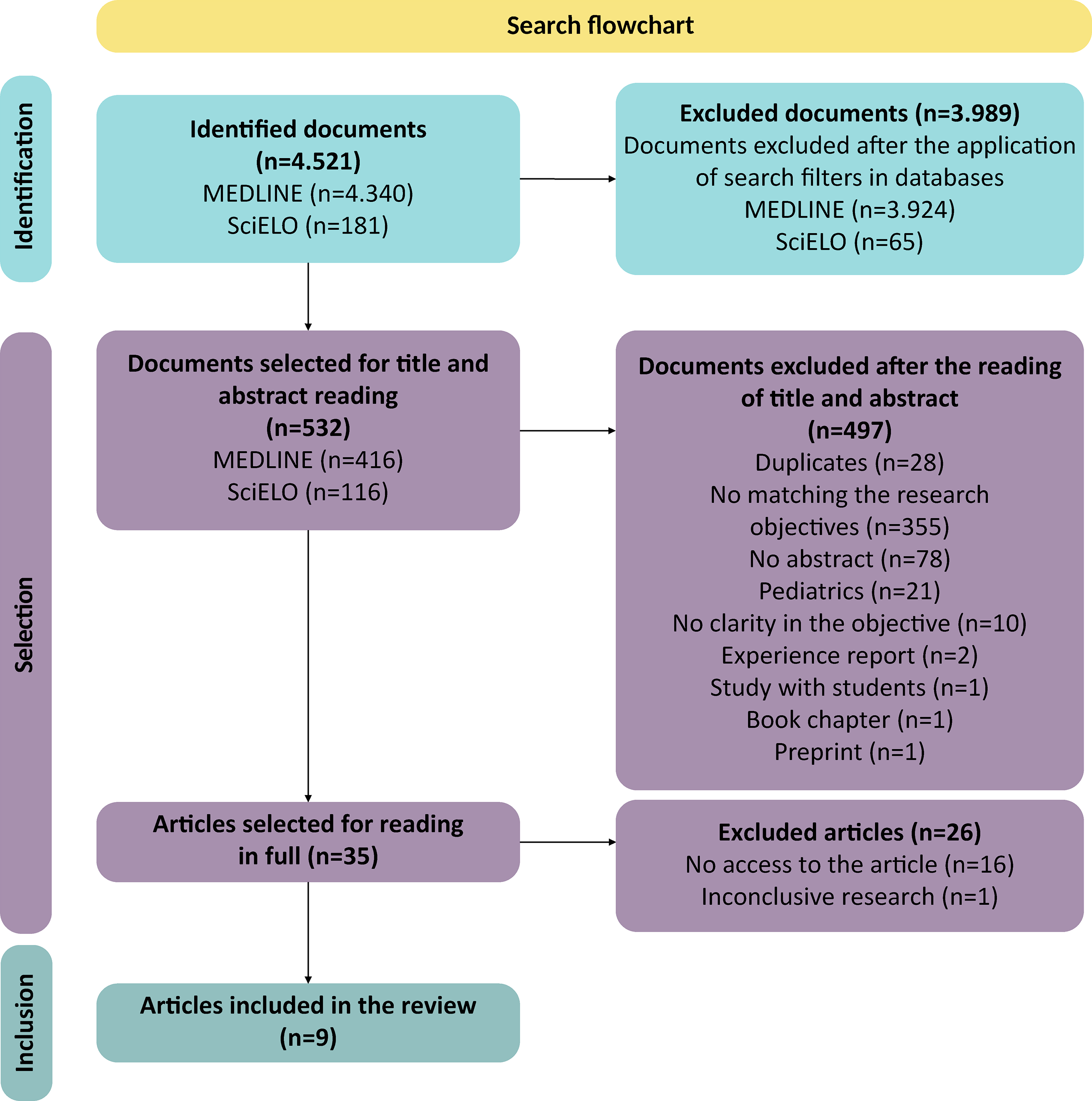 Source: adapted from PRISMA Flow Diagram 16.