
 Development of the principle of autonomy for overcoming obstetric violence
Abstract
This article analyzes how the principle of autonomy can contribute to overcoming obstetric violence, strengthening the rights and dignity of pregnant women. Obstetric violence is addressed as a violation of human rights, manifested by dehumanizing and non-consensual medical practices. A qualitative methodology was used, with a hermeneutic approach and documentary review of jurisprudence and national and international standards, from a bioethical and legal perspective. The results indicate a disconnect between legislation and medical practice, evidencing non-compliance with informed consent. It was observed that the lack of training in bioethics perpetuates the violation of the patients’ autonomy. The discussions point to ethical tensions between autonomy, beneficence and emergency decisions. It is concluded that the integration of bioethics in medical education contributes to reducing obstetric violence and strengthening reproductive rights. The study also proposes a theoretical and practical framework for the constitutionalization of autonomy and improvement of women-centered health policies.
Keywords:
Bioethics; Personal autonomy; Informed consent; Violence
Resumo
Este artigo analisa como o princípio da autonomia pode contribuir para a superação da violência obstétrica, fortalecendo os direitos e a dignidade da gestante. A violência obstétrica é abordada como violação de direitos humanos, manifestada por práticas médicas desumanizadoras e não consensuais. Utilizou-se metodologia qualitativa, com abordagem hermenêutica e revisão documental de jurisprudência e normas nacionais e internacionais, sob uma perspectiva bioética e jurídica. Os resultados indicam desconexão entre legislação e prática médica, evidenciando o descumprimento do consentimento informado. Observou-se que a falta de formação em bioética perpetua a violação da autonomia das pacientes. As discussões apontam para tensões éticas entre autonomia, beneficência e decisões emergenciais. Conclui-se que a integração da bioética na formação médica contribui para redução da violência obstétrica e fortalecimento dos direitos reprodutivos. O estudo também propõe um arcabouço teórico-prático para a constitucionalização da autonomia e o aprimoramento de políticas de saúde centradas na mulher.
Palavras-chave:
Bioética; Autonomia pessoal; Consentimento livre e esclarecido; Violência
Resumen
Este artículo analiza cómo el principio de autonomía puede contribuir a la superación de la violencia obstétrica, fortaleciendo los derechos y la dignidad de las mujeres embarazadas. La violencia obstétrica se aborda como una violación de los derechos humanos, manifestada en prácticas médicas deshumanizantes y no consensuadas. Se empleó una metodología cualitativa, con un enfoque hermenéutico y una revisión documental de jurisprudencia y estándares nacionales e internacionales, desde una perspectiva bioética y legal. Los resultados indican una desconexión entre la legislación y la práctica médica, evidenciando el incumplimiento del consentimiento informado. Se observó que la falta de formación en bioética perpetúa la vulneración de la autonomía de las pacientes. Las discusiones señalan tensiones éticas entre la autonomía, la beneficencia y las decisiones de emergencia. Se concluye que la integración de la bioética en la formación médica contribuye a la reducción de la violencia obstétrica y al fortalecimiento de los derechos reproductivos. El estudio también propone un marco teórico y práctico para la constitucionalización de la autonomía y la mejora de las políticas de salud centradas en las mujeres.
Palabras clave:
Bioética; Autonomía personal; Consentimiento informado; Violencia
This research article examines obstetric violence, highlighting its profound impact on women’s autonomy and dignity during pregnancy, childbirth, and postpartum. Focusing on the implementation and relevance of the principle of autonomy in the obstetric context, it is demonstrated how its violation constitutes a serious violation of human rights and directly affects the physical and emotional integrity of women.
The theoretical framework of the research is based on constitutionalizing the principle of autonomy, from the perspective of bioethics, and on the provisions of international and national law. The study investigates historically normalized medical practices that often undermine women’s personal decisions and consent, leading to non-consensual practices and dehumanizing treatments.
A qualitative design with a hermeneutical approach is adopted to analyze the judicial decisions on obstetric violence issued by the Council of State of Colombia, seeking to interpret how the bioethical principle of autonomy is applied. An inductive method is used, which starts by observing patterns in sentences to develop theories about their practical application. The sample included relevant phrases taken from these sentences and the use of the documentary review technique enabled the identification and recording of data on autonomy and obstetric violence using a specific matrix. The analysis was supported by the “New NVivo” software, which enables systematic coding and validation of data, organized into two main categories: the principle of autonomy and obstetric violence.
Therefore, research suggests integrating bioethics and human rights education more effectively into the training of health professionals. This integration could significantly improve the quality of medical care, promote respect for patients’ autonomy, and reduce cases of obstetric violence. At the same time, it is recommended to develop clear policies that promote a medical practice that respects both autonomy and other bioethical principles, such as justice, beneficence, and non-maleficence, in harmony with women’s rights.
Bioethics and obstetric violence: legal bases
This section will focus on obstetric violence and its relationship with the principle of autonomy, constituting a violation of human rights and human dignity, which threatens the autonomy and physical and emotional integrity of women during pregnancy, childbirth, and postpartum. Despite its frequency, the legal and bioethical response to this type of violence has been inconsistent in various regions of the world.
Constitutionalizing the principle of autonomy in the field of obstetric care is crucial, as this would reinforce the need for respectful and consensual treatment, in line with the fundamental principles of bioethics 1.
To understand how the bioethical principle of autonomy is expressed in obstetric practice and, in certain cases, how it can lead to situations of violence, it is essential to begin by defining autonomy according to the international legal framework and, subsequently, the Colombian one.
The principle of autonomy refers to the ability and right of all people to make free and informed decisions about their own body and medical treatment. This principle is one of the fundamental pillars of bioethics 2.
However, it is often ignored in the obstetric field, since women are, historically, victims of non-consensual medical practices, disrespect for their personal decisions, and, in some cases, dehumanizing treatments 3.
Constitutionalizing autonomy means explicitly integrating this principle into national legislation, giving it legal support that guarantees its application in all areas of health care, including obstetric procedures 4. One of the main conclusions is that an essential part of obstetric procedures is linked to the principle of autonomy, which is effectively manifested when the birth plan is fully respected—document prepared by the woman for health professionals responsible for care during pregnancy, childbirth, and postpartum—detailing the needs, preferences, and expectations of the woman regarding her care 5.
Incorporating autonomy into obstetric medical practice requires a significant transformation in the training of health professionals, and a deep respect for the decisions of the pregnant woman. This, in turn, integrates considering your input on the birth plan, avoiding medical procedures without proper informed consent, and eliminating unnecessary or coercive medical practices, such as unsolicited episiotomies and overuse of medications to speed up labor 6.
To this end, medical professionals must receive training in technical, ethical, and communication skills, which produce greater respect for patients’ rights 7.
Constitutionalizing autonomy implies expanding the protection of a principle that guarantees people the control over matters that affect their physical and mental integrity, as well as their human dignity.
At the international level, the principle of autonomy has been approached from a holistic perspective that considers cultural and religious factors when addressing it in the medical context. However, a uniform approach has been maintained, treating it as a separate aspect of the paternalistic relationship that existed between health professionals and patients. This has led to a new approach, in which the patient is recognized as capable of making informed decisions about their process and the medical interventions they undergo 8,9.
An example of this is the case “Guachalá Chimbo et al. v. Ecuador”, in which the Inter-American Court of Human Rights (hereinafter, I/A Court H.R.) examined the principle of autonomy from the perspective of informed consent in the medical field. This court decision emphasizes that patients must be given adequate information about treatments to make informed and voluntary decisions about their own health 7. The I/A Court H.R. emphasized the responsibility of the Ecuadorian State to guarantee and respect personal autonomy, especially in situations of vulnerability, such as in medical or psychiatric institutions. At the same time, it emphasized that the protection of autonomy must extend to both private and public spheres, which imposes specific obligations on the State to guarantee this fundamental right 10.
Regarding Colombia, the principle of autonomy has been incorporated into jurisprudence via rulings of the Constitutional Court. These judgments recognize individual autonomy and, in terms of health services, determine the need for the development of informed consent.
The rulings emphasize that patients have the right to make informed decisions about their own health care, including accepting or refusing specific treatments, always based on complete and understandable information about the potential risks and benefits.
Judgment C-233, for example, addresses the principle of autonomy in an ethical context, focusing on people’s ability to make informed and voluntary decisions about the end of their life 11.
The Constitutional Court has reiterated on numerous occasions that medical decisions must not only be technically appropriate but also respect the will and well-being of the patient. This requires a deep respect for personal autonomy, which is not limited to situations such as the self-determined end of life, but also encompasses cases such as the termination of pregnancy, assisted reproduction, and other medical procedures. In all these circumstances, informed consent and the patient’s will are paramount 12, should be the basis. This perspective is especially relevant in the context of end-of-life treatments, in which the ability to decide on one’s own existence is considered a clear manifestation of human dignity and the free development of personality.
For this reason, the Constitutional Court reinforces the concept of autonomy as an individual right and an ethical and legal principle that guides both medical practice and legislative decisions in the fields of health and criminal law 13.
That said, it is crucial to make a connection between the principle of autonomy and obstetric violence. The violation of this principle in the obstetric field is evident in medical practices that ignore or minimize the will of women and impose treatments or procedures on them without their fully informed consent 14. This form of violence affects women’s autonomy, but at the same time it can have serious consequences for their physical and emotional well-being and generate trauma and mistrust in the health system 15. In this context, constitutionalizing autonomy aims to ensure that all medical interventions are conducted with absolute respect for women’s decisions, highlighting the need for effective communication and informed consent as fundamental aspects of medical care 16.
Another important challenge is to balance the principle of autonomy, especially in emergency situations that require quick decisions 17. In these cases, ethics of care can provide a useful framework by emphasizing empathy and commitment to patients’ well-being, while respecting their values and preferences even in critical circumstances 18.
However, some authors suggest that, in situations that put the patient’s life or physical or moral integrity at risk, the doctor could deviate from consent and perform procedures to preserve their dignity. This situation generates a debate on the balance of rights and principles such as life, health, self-determination, human dignity, and professional ethics 19.
As can be seen, it is crucial that society participates in this change. Public education on women’s rights during pregnancy and childbirth, together with the promotion of open dialogue on obstetric violence, is essential to destigmatize these issues and foster an environment of support and respect for women 20.
Bioethical autonomy in international law
In the field of international law, the principle of autonomy is defined as the right of each person to make free and informed decisions about their own body and the medical treatments to which they wish or not to be subjected, thus manifesting freedom and the principle of self-determination derived from human dignity 8.
Recently, this principle has acquired great relevance in medical practice, which marks a change in the traditional relationship between doctor and patient, historically dominated by the paternalism of the health professional 9. Currently, numerous international treaties and conventions that protect human rights highlight autonomy as a pillar to guarantee people’s rights.
These treaties and conventions consider that adequate human development includes the ability to make decisions about access to treatment, the humanization of medical procedures, and even crucial aspects such as the voluntary interruption of life 21.
The Universal Declaration of Human Rights was one of the first documents to recognize the importance of individual autonomy, emphasizing the right of everyone not to be subjected to torture or cruel, inhuman, or degrading treatment 22. This interpretation of autonomy should not be limited to the criminal context, but also to medical care.
A clear example is observed in obstetric medicine, in which obstetric violence manifests itself in practices that violate the human rights of women during pregnancy, childbirth, and postpartum 23 and includes the violation of personal autonomy and informed consent, which are essential aspects of respect for human dignity.
Women are often subjected to medical procedures—such as episiotomies, induction of labor, and caesarean sections—without their explicit consent, which on the one hand violates their rights and, on the other, can put them at risk of unnecessary complications.
Moreover, obstetric patients often face situations in which their dignity and preferences are ignored 24. This can manifest itself in a lack of privacy during examinations, inappropriate or discriminatory comments by medical staff, and a refusal to allow a companion during childbirth 15. These practices can be considered cruel and inhumane, especially when they are conducted without clear medical justification or without the woman’s consent.
Medical malpractice, such as ignoring signs of complications during childbirth, failing to provide adequate pain relief, or failing to respond promptly to obstetric emergencies, also constitutes inhuman or degrading treatment. Therefore, these failures can have serious consequences for the physical and emotional health of both the woman and the baby 14, in addition to the psychological impact that leads to disorders such as post-traumatic stress, postpartum depression, and a general aversion to future medical interactions.
There are eight situations that constitute obstetric violence, such as:
-
No pain relief;
-
Excessive and unnecessary use of cesarean sections and episiotomies;
-
Performing medical procedures without informed consent;
-
Unnecessary separation of mother and newborn;
-
Limitation of movement during labor;
-
Extensive or unnecessary vaginal examination;
-
Artificial rupture of membranes (by managing oxytocin) to speed up labor;
-
Prohibition of being accompanied during childbirth.
In this area, the International Covenant on Civil and Political Rights (ICCPR) 25 and the Convention on the Elimination of All Forms of Discrimination against Women (CEDAW) 26, reinforce the right to personal autonomy and ensure that medical decisions are made without discrimination, coercion, or violence.
The ICCPR protects individuals from performing medical procedures without their consent and ensures the recognition of legal capacity for individuals to make decisions, including medical decisions 25. In turn, CEDAW promotes equal access to health services for women and defends their right to decide about their own health without discrimination, highlighting the importance of autonomy in reproductive health 26.
In medical practice, especially in obstetrics, the effective application of the principle of autonomy requires the guarantee of informed consent 27, that must go beyond the signing of the document and requires an ongoing communication process, in which the woman is fully informed and understands and accepts the proposed medical interventions 28.
This practice, supported by the international guidelines, emphasizes the active participation of women in decision-making about their health care 29.
For this very reason, it is emphasized that health professionals and users are aware of the guidelines, to lead to medical practice that truly respects and promotes individual autonomy and guarantees care based on respect, equity, and justice, as well as the realization of the principles of autonomy in obstetric care worldwide 23.
Bioethical autonomy in Colombia
The principle of autonomy in Colombia is firmly rooted in the legislation, regarding the protection of human rights in the health sector.
This principle is crucial to ensure respect for decisions related to people’s bodies and health and plays an essential role in combating obstetric violence and ensuring fair and dignified treatment in reproductive health care 30.
Autonomy is reflected in other constitutional provisions that emphasize the importance of protecting the rights to information and privacy. Because it safeguards people’s ability to make decisions without undue interference, which is essential for the proper management of health problems and medical treatments 11.
The Colombian Constitution of 1991 establishes an essential framework to sustain the principle of autonomy, emphasizing the rights to life, health, physical integrity, and dignity. Article 16 of the Constitution guarantees the right to the free development of personality, which can be considered the basis of personal autonomy, and includes the ability to make informed decisions about one’s own body. The right to free development of personality is particularly important in the field of health, in which informed consent is a fundamental requirement for any medical procedure and ensures that patients’ decisions are respected in accordance with their values and preferences 31.
In Colombia, notable progress has been made in recognizing and addressing obstetric violence as a violation of women’s rights. Law 2,244/2022 5, for example, explicitly mentions obstetric violence and seeks to ensure that women are treated with dignity during pregnancy, childbirth, and postpartum. This law guarantees the right to draw up a birth plan, which enables women to establish their needs and preferences and guarantees respect for their autonomy and informed decisions 5.
At the same time, the inclusion of the principle of autonomy is highlighted, which emphasizes comprehensive and respectful attention that guarantees the right to information, respect, non-discrimination, and self-determination in these processes. All with a differentiated approach to ensure that all procedures and medical care are tailored to the specific needs and desires of women 32.
However, there are challenges for the application of these laws and principles in daily practice. Given that the gap between theory and reality in the context of obstetric violence is reflected in complaints of bad practices and lack of respect for women’s decisions by some health professionals.
This points out that, despite the existence of legal frameworks, it is crucial to continue training and raising awareness among health professionals on respect for patients’ autonomy 15. In this sense, there are challenges such as the need for specialized training in reproductive rights and humanized care, the adaptation of hospital infrastructure to standards of care, and a cultural change in medical practices. That many times they neglect female autonomy.
Therefore, a robust monitoring and enforcement system must be in place to ensure that the legal framework is implemented uniformly across the health system to promote respectful and discrimination-free deliveries 32. From the promotion of a culture of respect and protection of human rights at all levels of the health system. With medical training, which must integrate technical, ethical, and humanistic aspects in health care, even in knowledge of public policies that guarantee the continuous respect of women’s rights to autonomy and dignity 20.
Bioethical autonomy and obstetric violence at Colombia
The jurisprudence of the Council of State of Colombia—which is the highest instance in the administrative jurisdiction—has been crucial in the interpretation of obstetric violence, and mainly regarding the right to health and personal integrity. Because, by numerous judgments, this court has highlighted the importance of respecting the autonomy of individual decisions in the medical and obstetric field and has recognized the need to protect the rights of women during pregnancy, childbirth, and postpartum.
This legal approach sets precedents for dignified treatment that respects human rights, strengthening the legal framework that protects women at a critical stage of their lives and promotes medical care that respects their autonomy and personal decisions.
One of the ways in which the Council of State of Colombia has addressed obstetric violence in cases of medical-obstetric responsibility. Although they do not follow a model of strict liability, it has convicted medical and health personnel, when it is considered that there is strong evidence of non-compliance with the service, if the pregnancy has passed without complications and the damage occurred after a medical intervention during childbirth. On this point, this judicial authority considers these events as a manifestation of obstetric violence, as well as an expression of the State’s responsibility in this matter 33.
In this regard, in the judgment of June 28, 1994, the Council of State established that, to determine medical liability for non-compliance with the service, certain requirements must be met, which are detailed in the following figure.
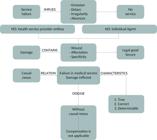
In Ordinance 11001-03-15-000-2023-03389-00/2023 33, the Council of State of Colombia once again addresses the relationship between the omission of the medical service and the derived responsibility. In the case analyzed, the lives of the mother and her newborn were severely affected by multiple deficiencies in medical care. Since the patient suffered serious complications, including the loss of the baby and an emergency hysterectomy, when she was not transferred in time to a specialized hospital despite her hypertension, already known and reflected in her medical history.
In this incident, the Council of State describes a serious violation of the principle of autonomy, since the patient suffered both the lack of an adequate referral, as well as the absence of clear information and effective communication about her condition and that of the fetus. Hence, the lack of adequate communication prevented her from making informed decisions about her medical care, aggravating the already tragic consequences of the situation 33,34.
In such a way, informed consent is the patient’s right, and an ethical and legal obligation of health professionals. For this reason, the Council of State emphasized that informed consent requires understanding and dialogue, in which the patient receives clear, understandable, and complete information about their medical condition, the treatment options available, and the risks involved 35.
According to this case law, the information of consent must be detailed, especially regarding possible unforeseen events during the procedure. The documentation and process should enable the patient to fully understand the implications of the proposed interventions and ensure that any consent for additional procedures in emergency situations is well-founded 35.
Effective doctor-patient communication, in which all possible variations are explained in an understandable way to ensure truly informed and voluntary decisions, is crucial in the obstetric context, as decisions affect both mother and baby 27.
In the case analyzed, Ms. Tania González, a first-time mother, suffered a prolonged and complicated birth at the Santa Monica Hospital in Dosquebradas, in western Colombia. She was admitted with intense pain and contractions, and her son was born the next day, but he was rushed to another hospital due to his serious condition and, unfortunately, died of neonatal asphyxia. The lawsuit seeks to hold medical institutions responsible for moral damage and damage to family life caused by deficiencies in care during childbirth 36.
In this case, obstetric violence focuses on whether failures in medical care contributed to the tragic outcome, because the arguments in the lawsuit highlight that Ms. Gonzalez’s delivery did not receive adequate and timely medical care, coupled with deficiencies in compliance with standard medical protocols and clinical practice guidelines. The forensic analysis even revealed several omissions during delivery that could have caused severe hypoxia and the death of the newborn. This situation illustrates a clear case of obstetric violence, in which the lack of adequate and respectful attention during a critical moment violates the principles of care and respect that should prevail in obstetric practice 36.
In situations of obstetric violence, jurisprudence has highlighted that the principle of autonomy is violated when health professionals neglect or minimize women’s decisions and preferences during childbirth. In this context, the decisions of the Council of State have confirmed that any medical intervention conducted without the explicit consent of the patient violates her rights. This includes cases where non-urgent medical procedures are performed without proper authorization, such as medically unjustified cesarean sections or the administration of medications to speed up labor without clear consent 37.
A prominent case was the one issued by the third section of the Council of State, in which a woman was admitted to a hospital where a cesarean section was recommended due to obstetric complications, including fetopelvic disproportion and oligohydramnios, which is a reduction of amniotic fluid 37. These conditions pose significant risks to both mother and baby and warrant immediate surgical intervention to avoid the dangers associated with vaginal delivery in these circumstances. But, due to the lack of operating available rooms, a cesarean section was not performed. Because of this, the mother had to undergo a vaginal delivery, which led to severe fetal distress and postpartum complications for the newborn 37.
This incident highlights a serious lack of adequate and necessary medical care, which could be interpreted as obstetric violence by omission and lack of resources.
According to this court ruling, obstetric violence encompasses both explicit physical or psychological abuse, as well as the lack of adequate care and the performance of unauthorized or unnecessary procedures, as in this case, where the required cesarean section was not performed.
Bioethical autonomy and obstetric violence
Obstetric violence is a type of violence that goes beyond physical harm and profoundly affects the psychological and moral well-being of women. Once their ability to make free and informed decisions about their own body and the birth process is affected, their personal integrity and dignity are compromised. The repercussions are not limited to the immediate experience of childbirth, but also affect long-term emotional and psychological health 15. The lack of informed consent and the pressure to accept faster medical interventions demonstrate how cultural and structural norms undermine women’s autonomy in critical situations.
As has been said, the principle of autonomy is basic to bioethics 17. This is based on the right of patients to make informed and voluntary decisions about their medical treatment. However, in the obstetric field, this right may be neglected by traditionally accepted practices, which may arise both from direct actions by the medical team and from the lack of intervention or refusal of health institutions to perform the necessary procedures 38.
This violation occurs with the performance of cesarean sections without clear medical indication or under pressure, without providing the patient with complete information about the alternatives and risks 39, so that while this practice may be justified as a precaution, it often does not consider the patient’s explicit wishes or her right to opt for a less invasive birth 6.
Another example of violation of autonomy in obstetrics is dehumanizing treatment during childbirth, which manifests itself as derogatory comments, lack of privacy, or restrictions on decision-making about posture during labor. These practices are ethically wrong, constitute obstetric violence, and negatively impact the experience of motherhood.
From a bioethical perspective, every case of obstetric violence violates the principle of autonomy. In such a way, bioethical analysis should focus on how the actions of health personnel affect women’s decision-making capacity and consider how information is communicated, wishes are respected, and worries and fears are managed 27.
In another example, we have the decision of first instance of March 9, 2021, in which the Court a quo denied the claims of Luz Marina; the plaintiff woman. In concluding that the ESE San Rafael de Yolombó Hospital, located in the department of Antioquia, in northwestern Colombia. Fulfilled its medical care obligations, without any delay in the provision of service 40.
According to the testimonies given during the initial hearing, both by the health professionals who attended Luz Marina’s delivery and by the appointed expert, the patient was admitted in an advanced phase of the expulsive period.
Therefore, the only viable alternative was to assist the birth vaginally, since it was no longer possible to reverse the process to perform a cesarean section. Then, to avoid neurological damage to the newborn, the Kristeller maneuver and the Velasco spatula were applied.
Based on this evidence, the judge of first instance concluded that there was no loss of opportunity, as it was not technically demonstrated that an alleged delay in care would have affected the patient’s health.
In her appeal before the Court of Second Instance, the plaintiff Luz Marina, via her attorney, argued that the judge of first instance made a mistake in considering that the care provided was adequate and in accordance with the protocols, arguing that the absence of responsibility was based on the testimonies of the professionals directly involved in the procedure, whose versions lack impartiality, while an unfavorable sentence could lead to legal action against them.
Regarding loss of opportunity, it was alleged that Luz Marina was not informed about the benefits, risks, alternatives, or consequences of the Kristeller maneuver. Although this intervention may have been technically appropriate, the patient should have received sufficient information to enable her to freely and informed consent or reject the procedure, even without expressly recording her decision.
The plaintiff woman attributes the damage to an alleged deficiency in the medical care provided at the Hospital, without the Ministry of Health and Social Protection having been involved. There was proof that the Kristeller maneuver was applied to Luz Marina during delivery, exerting violent pressure on her abdomen aiming to force birth.
In view of the foregoing, the Decision Chamber considers that the contested judgment of first instance should be revoked. The foregoing, by virtue of the fact that, on the one hand, it is established that the Department of Antioquia lacks passive standing within the process and, on the other, the ESE San Rafael de Yolombó Hospital must be declared administratively and patrimonially responsible.
This responsibility is because the Kristeller maneuver was practiced without the patient’s informed consent, violating her fundamental rights to dignity, integrity, access to information, and autonomy over her own body. In accordance with Article 1 of Law 1,257 41 of 2008—which establishes rules for the awareness, prevention, and punishment of violence and discrimination against women—the judge evaluated the evidence of the process to determine if the patient received clear information about the possible risks and if she freely accepted the intervention.
An analysis of the clinical condition, the severity of the condition, the available alternatives, and the patient’s behavior are also added. Based on the above, the evidence shows that, during childbirth, the child, Edwar Isaias, suffered an injury to the right brachial plexus that caused Erb’s palsy with sequelae. This condition was evaluated by the Regional Disability Rating Board of Antioquia, which determined a loss of work capacity of 39.38%.
With the documents of all the judicial rulings reviewed, a single hermeneutic unit was constituted, to then proceed with its analysis via the New NVivo Software, which was used as an analysis system. As a result, three states of the principle of autonomy in the documents were determined (explicit, implicit, absent), finding that in most of them it was absent and to a lesser extent it was explicit.
Sometimes, when a hermeneutical analysis is conducted, the categories may be in an implicit or implied state, but in the analysis the categories of autonomy were not found in this form in any sentence. This means that in all cases the concept of autonomy is either expressly stated or unknown.
The above is shown in the following figure.

Final considerations
After examining and analyzing the administrative judicial rulings issued by Colombian judges and magistrates, in addition to international standards, it is concluded that obstetric violence manifests itself as a series of medical practices that constitute a serious violation of human rights and negatively affect the dignity and autonomy of women during pregnancy, childbirth, and puerperium. This type of violence, which undermines women’s ability to make informed and free decisions about their bodies and the birthing process, causes not only physical harm, but also profound psychological and ethical consequences.
Since constitutionalizing autonomy in Colombia, the law has sought to remain at the forefront in these situations of violence, such as obstetric violence, aligning itself with the efforts of the authorities to guarantee respectful and consensual treatment, in accordance with the fundamental principles of bioethics, applicable to both obstetrics and medicine in general.
Without distinction of any kind, it is essential that, during recognizing and institutionalizing practices to combat obstetric violence, it is ensured that all health professionals receive adequate training in technical skills and ethical and communicative competencies that respect the rights of patients. Such training should emphasize the importance of informed consent as an ongoing process, not as a bureaucratic formality.
It is also essential to develop clear policies in health institutions that promote respect for patient autonomy and establish accountability mechanisms for violations of this principle.
At the international level, a general understanding of obstetric violence has developed in relation to certain medical and hospital practices and omissions. Despite this, it is necessary to promote a holistic perspective that considers cultural and religious factors and goes beyond the traditional paternalistic approach between doctors and patients. This would enable a new paradigm that recognizes the ability of patients to make informed decisions about their medical process and interventions, and, consequently, establish a new ethical standard in medicine, according to which patients can participate actively, consciously, and responsibly in their treatments, even when they choose not to do so.
In Colombia, jurisprudence has played a preponderant role in strengthening autonomy, especially in the field of health and informed consent, particularly regarding the right of patients to make informed decisions about their medical care, including the acceptance or rejection of treatments based on complete and understandable information.
References
-
1 O'Brien C, Newport M. Prioritizing women's choices, consent, and bodily autonomy: from a continuum of violence to women-centric reproductive care. Soc Sci Med [Internet]. 2023 [acesso 11 jun 2025];333:116110. DOI: 10.1016/j.socscimed.2023.116110
» https://doi.org/10.1016/j.socscimed.2023.116110 -
2 Neyro-Bilbao JL, Elorriaga MA, Lira-Plascencia J. Contraception and bioethics: between the conscience objection and the autonomy principle. Ginecol Obstet Mex [Internet]. 2015 [acesso 11 jun 2025];83(2):125-38. Disponível: https://bit.ly/3HkUgiY
» https://bit.ly/3HkUgiY -
3 Alexandra ST, Oliveira MSS, Alves SM, Bessa MMM, Albuquerque GA, Santana MDR. Obstetric violence under the perspective of nursing professionals of the birth care. Cult cuid [Internet]. 2019 [acesso 11 jun 2025];23(53):119-28. DOI: 10.14198/cuid.2019.53.12
» https://doi.org/10.14198/cuid.2019.53.12 -
4 Flórez VJA. La constitucionalización del Derecho y su incidencia en Colombia. Revista Pensamiento Americano [Internet]. 2009 [acesso 11 jun 2025];2(2):65-9. DOI: 10.21803/PENAMER.2.2.23
» https://doi.org/10.21803/PENAMER.2.2.23 -
5 Colombia. Ley nº 2244 de 2022. Por medio de la cual se reconocen los derechos de la mujer en embarazo, trabajo departo, parto y posparto y se dictan otras disposiciones o "Ley de parto digno, respetado y humanizado". Función Pública [Internet]. Bogotá, 11 jul 2022 [acesso 11 jun 2025]. Disponível: https://bit.ly/4mmR3Pv
» https://bit.ly/4mmR3Pv -
6 Macedo J, António I, Macedo E, Lopes MF. The birth plan as a safeguard mechanism the right to self-determination of women in obstetric context in Portugal. Rev. Bioética y Derecho [Internet]. 2023 [acesso 11 jun 2025];(58):223-42. DOI: 10.1344/rbd2023.58.39814
» https://doi.org/10.1344/rbd2023.58.39814 -
7 Vega-Hurtado C. Importancia de las estrategias de comunicación entre médico y paciente. Rev Med Inst Mex Seguro Soc [Internet]. 2020 [acesso 11 jun 2025];58(2):197-201. DOI: 10.24875/RMIMSS.M20000017
» https://doi.org/10.24875/RMIMSS.M20000017 -
8 González C. Autonomy in Bioethics: criticisms and re-definitions. Revista de Filosofia Moral y Política [Internet]. 2022 [acesso 11 jun 2025];(67):1-14. DOI: 10.3989/isegoria.2022.67.12
» https://doi.org/10.3989/isegoria.2022.67.12 -
9 Jaramillo CAL, Lew JCH. Autonomía, confianza y ética médica en la obra de Onora O'Neill. Rev Colomb Psiquiatr [Internet]. 2013 [acesso 11 jun 2025];42(1):120-35. Disponível: https://bit.ly/4lhroGy
» https://bit.ly/4lhroGy -
10 Corte Interamericana de Derechos Humanos. Caso Guachalá Chimbo y Otros vs. Ecuador. Sentencia de 26 de marzo de 2021 (Fondo, reparaciones y costas). Corte Interamericana de Derechos Humanos [Internet]. 2021 [acesso 11 jun 2025]. Disponível: https://bit.ly/453Pi3m
» https://bit.ly/453Pi3m -
11 Colombia. Corte Constitucional de Colombia. Sentencia C-233. Función Pública [Internet]. 2003 [acesso 11 jun 2025]. Disponível: https://bit.ly/4mzsrCO
» https://bit.ly/4mzsrCO -
12 Colombia. Corte Constitucional de Colombia. Sentencia T-018. Función Pública [Internet]. 2021 [acesso 11 jun 2025]. Disponível: https://bit.ly/3Hei0Wc
» https://bit.ly/3Hei0Wc -
13 Bustamante BJP, Díaz RG. Asentimiento y consentimiento informado en pediatría: aspectos bioéticos y jurídicos en el contexto. Rev Colomb Bioét [Internet]. 2013 [acesso 11 jun 2025];8(1):144-65. Disponível: https://bit.ly/4myBd3L
» https://bit.ly/4myBd3L -
14 Pérez R, Pérez M, Pérez D. The symbolic framework of obstetric violence. Enferm Clin (Engl Ed) [Internet]. 2023 [acesso 11 jun 2025];33(5):375-6. DOI: 10.1016/j.enfcle.2023.07.003
» https://doi.org/10.1016/j.enfcle.2023.07.003 -
15 Meza MI, Privat MHC, Vilcahuaman JM, De la Torre RJM. La violencia obstétrica como biopoder: a propósito de la dignidad de la mujer. Encuentros [Internet]. 2023 [acesso 11 jun 2025];(17):411-23. DOI: 10.5281/zenodo.7527761
» https://doi.org/10.5281/zenodo.7527761 -
16 Ramírez-García HS. La constitucionalización de la persona: un marco de la relación entre el Estado de derecho y los derechos humanos. Cuest Const [Internet]. 2022 [acesso 11 jun 2025];(47):367-95. DOI: 10.22201/iij.24484881e.2022.47.17533
» https://doi.org/10.22201/iij.24484881e.2022.47.17533 -
17 Ramirez Borrero ND, Corredor Nino MA, Navas Gutierrez SE. Bioethical recommendations for the pandemic a personalistic perspective. Pers Bioet [Internet]. 2021 [acesso 11 jun 2025];25(1):e2515. DOI: 10.5294/pebi.2021.25.1.5
» https://doi.org/10.5294/pebi.2021.25.1.5 -
18 Páez Moreno R. A Bioethical approach of "medical education from the human rights based approach to health". Investigación Educ Médica [Internet]. 2020 [acesso 11 jun 2025];9(36):96-102. DOI: 10.22201/fm.20075057e.2020.36.20242
» https://doi.org/10.22201/fm.20075057e.2020.36.20242 -
19 Cioffi A, Zaami S. Legge Italiana nº 219/2017: Conseguenze sul consenso informato del malato psichiatrico e sul privilegio terapeutico. Riv Psichiatr [Internet]. 2020 [acesso 11 jun 2025];55(2):129-30. DOI: 10.1708/3333.33028
» https://doi.org/10.1708/3333.33028 -
20 Gleason EG, Berrío DPM, Ríos JML, Merino CMM. Giving birth is not a matter of ethnicity, it is a matter of humanity: experiences of obstetric violence during childbirth among indigenous women. Salud Colect [Internet]. 2019 [acesso 11 jun 2025];17:e3727. DOI: 10.18294/sc.2021.3727
» https://doi.org/10.18294/sc.2021.3727 -
21 Maier E. Convenios internacionales y equidad de género: un análisis de los compromisos adquiridos por México. Pap poblac [Internet]. 2007 [acesso 11 jun 2025];13(53):175-202. Disponível: https://bit.ly/45v2nlo
» https://bit.ly/45v2nlo -
22 Naciones Unidas. La Declaración Universal de los Derechos Humanos [Internet]. 1948 [acesso 11 jun 2025]. Disponível: https://bit.ly/45DnIKr
» https://bit.ly/45DnIKr -
23 Silva A, Pantoja F, Millón Y, Hidalgo V, Stojanova J, Arancibia M et al. Stakeholders' perceptions of humanized birth practices and obstetric violence in Chile: a scoping review. Medwave [Internet]. 2020 [acesso 11 jun 2025];20(9):e8047. DOI: 10.5867/medwave.2020.09.8047
» https://doi.org/10.5867/medwave.2020.09.8047 -
24 Flores CA, Ferreira ED. The war against a linguistic expression: no more "obstetric violence". Cad Ling Soc [Internet]. 2023 [acesso 11 jun 2025];24(2):160-178. DOI: 10.26512/les.v24i2.46920
» https://doi.org/10.26512/les.v24i2.46920 -
25 Naciones Unidas. Pacto Internacional de Derechos Civiles y Políticos [Internet]. 1966 [acesso 11 jun 2025]. Disponível: https://bit.ly/4ldQZQk
» https://bit.ly/4ldQZQk -
26 Naciones Unidas. Convención sobre la eliminación de todas las formas de discriminación contra la mujer políticos [Internet]. 1979 [acesso 11 jun 2025]. Disponível: https://bit.ly/3ULRmXA
» https://bit.ly/3ULRmXA -
27 Uzcátegui O, Cabrera C. Bioethical aspects of cesarean section and informed consent. Rev Obstet Ginecol Venezuela [Internet]. 2010 [acesso 11 jun 2025];70(1):47-52. Disponível: https://ve.scielo.org/scielo.php?script=sci_arttext&pid=S0048-77322010000100009
» https://ve.scielo.org/scielo.php?script=sci_arttext&pid=S0048-77322010000100009 -
28 Serrano CC, Leon LPD. The obstetric violence and its legal implications in Mexico. Cuest Const [Internet]. 2024 [acesso 11 jun 2025];25(50):27-65. DOI: 10.22201/iij.24484881e.2024.50.18802
» https://doi.org/10.22201/iij.24484881e.2024.50.18802 -
29 La OMS adquiere importantes compromisos en favor del empoderamiento y la salud de las mujeres. Organizacion Mundial para la Salud [Internet]. Comunicados de prensa; 5 jul 2021 [acesso 11 jun 2025]. Disponível: https://bit.ly/4m58GmI
» https://bit.ly/4m58GmI -
30 Alvarez HMM. La autonomía: principio etico contemporaneo. Rev Colomb Cienc Soc (En Linea) [Internet]. 2012 [acesso 11 jun 2025];3(1):115-32. Disponível: https://bit.ly/4opNN7b
» https://bit.ly/4opNN7b -
31 Colombia. Asamblea Nacional Constituyente. La Gaceta Constitucional [Internet]. 1991 [acesso 11 jun 2025];(116). Disponível: https://bit.ly/4ldSXQI
» https://bit.ly/4ldSXQI -
32 Ramos BE, González AGA, Verduzco MFG, Pérez CSG. Violencia obstétrica: una revisión sistemática de literatura. Revista de Ciencias Humanas y Sociales [Internet]. 2023 [acesso 11 jun 2025];(100):60-93. DOI: 10.5281/zenodo.7637450
» https://doi.org/10.5281/zenodo.7637450 - 33 Colombia. Consejo de Estado. Sentencia 11001031500020230338900. Relatoría Jurisprudencial. C.P. Stella Jeannette Carvajal Basto. 2023.
- 34 Colombia. Consejo de Estado. Sentencia 8839. Relatoría Jurisprudencial. 1994.
- 35 Colombia. Consejo de Estado. Sentencia 11001031500020230737200. Relatoría Jurisprudencial. C.P. Pedro Pablo Vanegas Gil. 2024.
- 36 Colombia. Consejo de Estado. Sentencia 66001233300020120002101. Relatoría Jurisprudencial. C.P. Jaime Enrique Rodriguez Navas. 2023.
- 37 Colombia. Consejo de Estado. Sentencia 13001233100020110013602. Relatoría Jurisprudencial. C.P. Jaime Enrique Rodríguez Navas. 2023.
-
38 Mella-Guzmán M, Binfa L, Weeks F. Autonomy in labour and delivery in a Latin American urban centre: a qualitative phenomenological analysis. Sex Reprod Health Matters [Internet]. 2023 [acesso 11 jun 2025];31(1):2310889. DOI: 10.1080/26410397.2024.2310889
» https://doi.org/10.1080/26410397.2024.2310889 -
39 Maietti F, García JFV. Theoretical approaches to the phenomenon of obstetric violence: a look at the international and inter-american normative and jurisprudential framework. Vniversitas [Internet]. 2023 [acesso 11 jun 2025];72. DOI: 10.11144/Javeriana.vj72.atfv
» https://doi.org/10.11144/Javeriana.vj72.atfv - 40 Colombia. Tribunal Administrativo de Antioquia. Sala Quinta de Decisión. Sentencia 111. Radicado 05001333302220140006103 [Expediente]. Magistrado Ponente: Liliana Navarro Giraldo. 2023.
-
41 Colombia. Ley nº 1257 de 2008. Por la cual se dictan normas de sensibilización, prevención y sanción de formas de violencia y discriminación contra las mujeres, se reforman los Códigos Penal, de Procedimiento Penal, la Ley 294 de 1996 y se dictan otras disposiciones. Función Pública [Internet]. Bogotá, 4 dez 2008. Disponível: https://bit.ly/4flJl58
» https://bit.ly/4flJl58
-
Data availability:
All data used or generated in this study are described and presented in full in the body of the article.
Edited by
-
Editor in charge:
Dilza Teresinha Ambrós Ribeiro
All data used or generated in this study are described and presented in full in the body of the article.


