The relationship between metribuzin dose and winter wheat dose-response using artificial neural network
Abstract
Background A precise technique is needed to determine the lowest possible rates of herbicide applications to optimize weed control and minimize damage. A neural network can be used to predict the toxicity of herbicides, particularly for those that have not been tested as well as new herbicides.
Objective The objective of this research was to use a neural network to determine the level of tolerance of winter wheat to metribuzin, as influenced by application time and dose.
Methods Tests were done on herbicide application at two stages; PRE planting and application POST emergence in a completely randomized design as a factorial arrangement with three replications in two locations. The PRE planting and POST emergence treatments consisted of twenty doses of metribuzin. To predict the relationship between dose of herbicide and wheat response a Multilayer Perceptron (MLP) neural network was employed.
Results In training Multilayer Perceptron ANN, test and total phase P-value indicating that there was no significant (p<0.05) difference between observed and estimated statistical parameters such as average, variance and statistical distribution. Data from this study suggests that POST emergence applications of metribuzin at half the proposed dose (140–280 g a. i. ha-1) is safe to use in winter wheat with minimum biomass reduction. However, in PRE planting application of metribuzin resulted in an unacceptable level of crop injury and reduction in shoot dry matter.
Conclusions The Multilayer Perceptron ANN should be considered a standard technique for the analysis of dose-response relationship involving time of herbicide activity.
Herbicide; MLP neural network; Optimum dose; Triticum aestivum L.
1.Introduction
Winter wheat (Triticum aestivum L.) is the most popular crop in the world (Aula et al., 2019). Wheat production is limited by a number of factors, among which is the problem of severe weed infestation (Gandía et al., 2021; Gyawali et al., 2022). Zand et al. (2007) estimated that reduced wheat yield reduction from weed infestation in Iran is as high as 30%. Wheat yield losses due to weeds can be managed by different methods, but using herbicides is the most improved method (MacLaren et al., 2020). Weed control strategies for winter wheat often require new herbicide, multiple herbicide applications or combinations of products to achieve satisfactory results. Additionally, herbicide resistance has developed in recent years, which further complicates weed control in wheat crops (Gherekhloo et al., 2016). Therefore, continuous use of an herbicide (or herbicides from the same herbicide group) for many years can drastically decrease the number of susceptible biotypes within a natural weed population, which serves to dramatically increase numbers of resistant biotypes (Kniss, 2017). It is therefore important to use herbicides with different modes of action and to apply herbicide treatments appropriately to cereal production. The following herbicides are recommended for control of broadleaf weeds in winter wheat; 2, 4-D, metsulfuron, triasulfuron, chlorsulfuron, dicamba, 2, 4-D plus clopyralid and fluroxypyr (Klein et al., 2006). Currently, the broadleaf herbicides used for wheat production in Iran include post-emergence applications of tribenuron methyl, dichloprop-p plus mecoprop-p plus MCPA, bromoxynil plus MCPA, and 2,4-D plus MCPA and some two purpose herbicides such as sulfosulfuron, mesosulfuron-methyl + iodosulfuron-methyl, and imazamethabenz methyl (Montazeri et al., 2005; Gherekhloo et al., 2016). But, none of these herbicides are currently able to provide adequate full-season control of broadleaf weeds (Zand et al., 2004). It is reported that these above-mentioned herbicides can cause injury to crops and reduce yields (Klein et al., 2006; Khatami et al., 2022; Mohd Ghazi et al., 2023). For example, winter wheat yields were reduced by over 20% with fall applications of 2, 4-D at the 2–4 leaves stage of winter wheat. Research has also documented that it is becoming increasingly difficult to control some species of weeds affecting winter wheat such as kochia, Russian thistle and prickly lettuce with acetolactate synthase (ALS) inhibitor herbicides as weeds have become resistant to this group of herbicides (Hein, Kamble, 2003; Ofosu et al., 2023). To prevent crop injury and yield loss or slow down the development of resistance in certain broadleaf weeds, herbicides with other modes of action are needed for effective weed control in winter wheat. Currently there are no safe soil applied herbicides available for weed control in winter wheat and these forces growers to use only post-emergence (POST) herbicides. However, many of these POST emergence herbicides can cause various levels of injury to wheat crops (Bernard et al., 2009); therefore, there is a need for pre-emergence (PRE) herbicide applications in winter wheat (Knezevic et al., 2010; Grey, Newsom, 2017). So, there is a need for identification of new treatments for pre and post emergence applications of herbicide.
Metribuzin is an asymmetrical triazine herbicide that has demonstrated effective pre-plant, pre-emergence or post-emergence control of broad-leaved and grassy weeds in a variety of vegetable crops, as well as in soybeans, sugar beet and some other vegetables (Falk et al., 2006; Hashem, et al., 2011). It provides much better control of a wide spectrum of annual, biennial and perennial broadleaf weeds. Amaranthus retroflexus, Chenopodium album, Sinapis arvensis L., Abutilon theophrasti Medic. are weed species that can be effectively controlled by metribuzin (Curran, Foster, 2002; Venceill, 2002). Other species such as Phalaris minor L., Avena fatua L., (Das, 2002), have also been controlled effectively by this herbicide. Javaid et al. (2022) reported that foliar application of metribuzin at 175 g a.i ha1 significantly decreased Fumaria indica, Melilotus indica, Anagallis arvensis, and Phalaris minor density in wheat field. Dhammu and Nicholson (2006) showed, that endurance varieties of wheat such as EGA Eagle Rock and Blade tolerated to pre-emergent metribuzin up to 600 g a.i. ha-1 (four times the registered rate). Schroeder et al. (1986) evaluated tolerance in several soft red winter wheat cultivars (T. aestivum L.) to post-emergence applications of metribuzin, in greenhouse and field experiments, at two locations in Georgia. They showed that in greenhouse conditions, none of the cultivars tolerated metribuzin at 0.6 kg a.i. ha -1 in two- to three-tiller, six- to nine-tiller, or early-stem elongation growth stages. Based the results of Schroeder et al. (1986), none of the wheat cultivars evaluated in field experiments were injured by the 0.3 kg. ha-1 rate of metribuzin. Some farmers make inappropriate herbicide applications. Proper applications in terms of timing and dose would benefit the environment and boost a farmer’s profit.
Artificial neural networks basically provide a non-deterministic mapping between sets of random input–output vectors. Absence of any preliminary assumed relationship beforehand between input–output quantities, in-built dynamism and robustness towards data errors, are some advantages of these networks over statistical methods (Soltanali et al., 2021). The ANNs approach has been successfully employed in farm engineering. A neural network can be trained to perform a particular function by adjusting the values of the connections (weights) between the elements (Vakil-Baghmisheh, 2002). The main advantages of using neural networks are learning directly from examples without attempting to estimate the statistical parameters. More generally, there is no need for firm assumptions about the statistical distributions of the inputs and generating any continuous nonlinear function of input (universal approximating). ANNs are highly parallel which makes them especially amenable to high-performance parallel architectures (Vakil-Baghmisheh, 2002; Thomas et al., 2013; Soltanali et al., 2021). In this study, the most common type of network, namely, Multilayer Perceptron (MLP) is used. It supposedly has the ability to approximate any continuous function. The input nodes receive the input values and pass them to the hidden nodes, which multiply the input by connection weights. Subsequently, adding up such product and attaching a bias, the result is then transformed through a transfer function. Before it is put into actual operation, the network weight and bias values should be fixed. This can be established, by employing a training algorithm and using a set of known input–output patterns, until the error between the network-generated and the actual output reaches a minimum. Among different available algorithms, Basic Back-propagation (BB) and Back-propagation with Declining Learning-Rate Factor (BDLRF) were used in this study. This is mainly because, the former is most common and the latter is more efficient (Rohani et al., 2011; Soltanali et al., 2021). Use of both training schemes ensured that the desired training was correctly established. The details could be obtained elsewhere e.g., Vakil-Baghmisheh (2001). Therefore, the objective of this research was to use a neural network to determine the level of tolerance of winter wheat to metribuzin, as influenced by application time and dose.
2.Materials and Methods
2.1 Site description
To evaluate winter wheat tolerance to metribuzine [4-amino-6-(1,1-dimethylethyl)-3-(methylthio)-1,2,4-triazin-5(4H)-one], tests were done on herbicide application at two stages; PRE planting by incorporation in to the soil and application POST emergence. Tests were done in two pot experiments in the greenhouse at the faculty of Agriculture, Shahrood University of Technology, Shahrood (36° 25’ N, 55° 01’ E, altitude 1345m above the sea level) and outside the greenhouse at the faculty of Agriculture, Ferdowsi University of Mashhad (36° 25’ N, 55° 01’ E, altitude 1,345 m above the sea level), Razavi Khorasan state, Iran. An equal number of pots was used for each test, they were randomly arranged in three replications for the pre planting applications and randomly placed in three replications for post emergence applications of metribuzin in the greenhouse (day/night temperature 18/120 oC and a 16:8 h light/dark period). The same treatments were implemented in Mashhad. A commonly grown winter wheat cultivar (T. aestivum cv. Roshan) was seeded into open plastic pots (with 30 cm in diameter and 40 cm in depth) with a central hole, containing 3 kg unsterilized soil on November 15, and December 10, 2018 in Shahrood and Mashhad, respectively. Soil was then air-dried, sieved to 2 mm and homogenized. The soil type at Mashhad was 1:1 (v/v) mixture of sand (1–2 mm) and farm soil (soil was silty clay loam with 18.0% sand, 58.8% silt, 23.2% clay, 2.1% OM, pH of 6.9 and a CEC of 20 cmolc/kg soil). The soil used in the experiment at Shahrood region was collected from 0–20 cm depth. Soil was then air-dried, sieved to 2 mm and homogenized. A 1:1 (v/v) mixture of sand (1–2 mm) and farm soil (soil was with 32% sand, 24% silt, 44% clay, 0.33% OM, pH of 7.2 and EC of 0.68 dSm-1) was used as the growth medium in order to enhance the permeability of the soil. The soil used in this experiment was provided from a farm that was under a 2-year crop rotation of corn-fallow (since 2012). The corn was produced using a conventional tillage system. The soil of the experimental area in Shahrood region has been classified as Aridisols according to the USDA taxonomy (Soil Survey Staff 2006). Winter wheat seeds were scattered over the soil surface and covered with a thin layer of sifted soil and watered in trays. After emergence the number of plants was thinned to five per pot.
2.2 Experimental design and treatments
The experiment was conducted in a completely randomized design in a factorial arrangement with three replications. The PRE planting and POST emergence treatments in both locations consisted of twenty doses of metribuzin (Sencor 700 WP, Bayer code: DPX-G2504 (Du Pont)) (0(control), 35, 70, 105, 140, 175, 210, 245, 280, 315, 350, 385, 420, 455, 490, 525, 560, 595, 630, 700 g a.i. ha-1). All pots, including the untreated control, were kept weed-free during the experiment by hand-weeding as and when weeds appeared. The PRE planting herbicide applications were made at the time of planting and post emergence applications were made at the 2–3 leaf stage (5 cm height) of wheat growth (Knezevic et al., 2010). Applications were made using a laboratory spray chamber equipped with flat fan nozzle tip (Tee Jet 8002 EVS2) at a pressure of 250 kPa, and calibrated to deliver 300 L ha1 of spray solution.
2.3 Description of the experimental set-up
Above-ground plant tissue was harvested 21 days after treatment (DAT), in both pre planting and post emergence experiments. Dry weights were recorded as percentages of untreated control plants.
2.4 Data preprocessing
Based on these available data, the herbicide dose (g a.i. ha-1) was selected as a variable input. The dry weight of wheat (g. Plant-1) was selected as a variable output. Prior to any ANN training process with trend free data, the data must be normalized over the range of [0, 1]. This is necessary for the function of neurons transfer, because a sigmoid function is calculated and consequently these can only be performed over a limited range of values. If data used with an ANN are not scaled to fit appropriate range, the network will not converge on training or it will not produce meaningful results. The method of normalization involves mapping the data linearly over a specified range, whereby each value of a variable x is transformed as follows;
Where, x is the original data, xn the normalized input or output values, xmax and xmin, are the maximum and minimum values of the concerned variable, respectively. rmax and rmin correspond to the desired values of the transformed variable range. The range of 0.1 – 0.9 is appropriate for transformation of a variable onto the sensitive range of the sigmoid transfer function.
Data were shuffled and split into two subsets: a training set and a test set. The splitting of samples has an important role in the evaluation of an ANN performance. The training set is used to estimate parameters in a model and the test set is used to check a model’s generalization ability. The training set should be a representative of the whole population of input samples. In this study, the training set and the test set included 17 patterns (85% of total patterns) and 3 patterns (15% of total patterns), respectively. There was no acceptable generalized rule to determine the size of training data for suitable training; however, the training sample should cover all spectrums of available data (NeuroDimensions Inc, 2002). The training set can be modified if the model’s performance does not meet expectations (Zhang, Fuh, 1998). However, a network can be retrained by adding new data to the training samples. To assess model performance and prevent overfitting, we employed 5-fold cross-validation. The dataset was randomly partitioned into five equal-sized subsets. In each iteration, four subsets were used for training, and the remaining subset served as a validation set. This process was repeated five times, resulting in twenty different training and validation sets. The model with the best performance across these iterations was selected for final evaluation.
2.5 The multilayer perceptron neural network
To predict the relationship between dose of herbicide and wheat response a MLP neural network was employed. The network was trained by BB and BDLRF learning algorithms. Among various ANN models, MLP has maximum practical importance. MLP is a feed-forward layered network with one input layer, one output layer, and some hidden layers. Figure 1 shows a MLP with one hidden layer. Every node computes a weighted sum of its inputs and passes the sum through a soft nonlinearity. The soft nonlinearity or activity function of neurons should be non-decreasing and differentiable. The most popular function is unipolar sigmoid:

The network is in charge of vector mapping, i.e. by inserting the input vector, Xq the network will answer through the vector Zq in its output (for q=1,…,Q). The aim is to adapt the parameters of the network in order to bring the actual output Zq close to corresponding desired output dq (for q=1,…,Q). The most popular method of MLP training is the back-propagation algorithm, and in literatures there exist many variants of this algorithm.
This algorithm is based on minimization of a suitable error cost function. In this study, two variants of MLP training algorithm, i.e. BB and BDLRF were employed. A computer code was also developed in MATLAB software to implement these ANN models.
2.5.1 BB algorithm
In this algorithm the total sum-squared error (TSSE) is considered as the cost function and can be calculated as:
Where, and zqk are the kth components of desired and actual output vectors of the qth input, respectively. Network learning happens in two phases: forward pass and backward pass. Idqkn forward pass an input vector is inserted to the network and the network outputs are computed by proceeding forward through the network, layer by layer:
Where,wij is the connection weight between nodes i and j, and ujk is the connection weight between nodes j and k; wij and ujk are set to small random values [-0.25, 0.25]; l2 and l3 are the number of neurons in the hidden and output layers, respectively. In backward pass the error gradients versus weight values, i.e. (for i=1,...,l1, j=1,…,l2) and (for j=1,..l2, k=1,…l3), are computed layer by layer starting from the output layer and proceeding backwards. The connection weights between nodes of different layers are updated using the following equations:
Where, η is the learning rate adjusted between 0 and 1, α is the momentum factor at interval [0, 1]. Momentum factor is used to speed up the convergence. The decision to stop training is based on some test results of the network, which is carried out every N epoch after TSSE becomes smaller than a threshold value. The details could be seen in Vakil-Baghmisheh and Pavešic (2003).
2.5.2 BDLRF algorithm
We have also used a modified version of BB algorithm which is BDLRF algorithm (Vakil-Baghmisheh, Pavešic, 2001). This training algorithm is started with a relatively constant large step size of learning rate η and momentum term α. Before destabilizing the network or when the convergence is slowed down, for every T epoch (3 ≤ T ≤ 5) these values are decreased monotonically by means of arithmetic progression, until they reach to x% (equals to 5) of their initial values. η (and similarly α) was decreased using the following equations:
Where, m, n1, ηn and ηo are the total number of arithmetic progression terms, the start point of BDLRF, the learning rate in nth term of arithmetic progression, and the initial learning rate, respectively. All networks were 3-layered feed forward type, trained using both BB and BDLRF training algorithms. In this study, the optimal number of neurons in the hidden layer was selected using a trial-and-error method. Table 1 shows the parameters of optimum BB-MLP network. Maximum number of epochs was selected based on the training algorithm is repeated until the steady state is reached. In order to speed up convergence, an extra term called momentum (α) is used to the weights update (Vakil-Baghmisheh, 2002; Rohani et al., 2011; Fayyazi et al., 2017). The learning rate and momentum factors are only used in the learning process, so the criteria used to optimize them are based on the learning error and the iteration number. When the optimal topology of the neural network was found, the learning rate (η) and momentum term (α) was also optimized throughout a trial-error method.
2.6 Performance evaluation criteria
Four criteria were used to evaluate the performance of model. They were mean absolute percentage error (MAPE), root mean-squared error (RMSE), TSSE and the coefficient of determination of the linear regression line between the predicted values from the MLP model and the actual output (R2). They are defined as follows:
Where, dji is the ith component of the desired (actual) output for the jth pattern; pji is the ith component of the predicted (fitted) output produced by the network for the jth pattern; d_ and p_ are the average of the desired output and predicted output, respectively; n and m are the number of patterns and the number of variable outputs, respectively. A model with the smallest RMSE, TSSE, MAPE and the largest R2 is considered to be the best.
All statistical analyses were performed using MATLAB version 2010b (MathWorks, Natick, Massachusetts, USA).
3.Results and discussion
3.1 MLP neural networks setting
The learning rate and momentum factors have interactive impacts on network training. This makes parameter tuning a difficult task where momentum term is added. It is observed that the error value is increased and the convergence speed of the learning process is decreased when the momentum term is zero or close to 1. The results also revealed that the convergence could be faster with a relatively larger learning rate (close to 1). However, with a very high learning rate, the neural network will not converge to its true optimum and the learning process will be instable. It is also evident that, the convergence speed of the learning process was improved through an appropriate choice of parameters η and α (Table 1).
According to Vakil-Baghmisheh and Pavešic (2001), in order to improve the behavior of MLP during training, and due to simplicity of adjusting process of network parameters, we also used BDLRF algorithm. Therefore, when the convergence was slowed down, a point was chosen and η and α were decreased using Eq10. Table 2 shows the parameters of optimum BDLRF-MLP. Based on the number of epochs, it was found that BDLRF algorithm has faster convergence speed than BB algorithm (Tables 1 and 2).
3.2 Statistical analysis
3.2.1 Training phase
During training phase, the network used the training set. Training was continued until a steady state condition was reached. The BB and BDLRF algorithms were utilized for model training. Some statistical properties of the sample data used for training process and the prediction values associated with different training algorithms are shown in Table 3. Considering the average values of standard deviation and variance, it can be deduced that the values and the distribution of real and predicted data are analogous. Accordingly, the neural networks have been learned the training set very well, hence the training phase has been completed.
3.2.2 Test phase
In test phase, we used the selected topology with the previously adjusted weights. The objective of this step was to test the network generalization property and to evaluate the competence of the trained network. Therefore, the network was evaluated by data outside the training set. Table 4 shows some statistical properties of the data used in test phase and the corresponding prediction values associated with different training algorithms. It can be seen that the differences of statistical values between the measured and predicted data in test phase is more than in training phase for both of training algorithms (Tables 2 and 3). This fact can be justified since these data are completely new for the MLP. On the other hand, the kurtosis, sum and the average values are similar, hence it can be deduced that both series are similar. The predicted values were very close to the desired values and were evenly distributed throughout the entire range. Although the results of training phase were generally better than the test phase, the latter reveals the capability of neural network to predict the response with new data.
From a statistical point of view, both desired and predicted test data have been analyzed to determine whether there are statistically significant differences between them. The null hypothesis assumes that statistical parameters of both series are equal.
The P value was used to check each hypothesis. Its threshold value was 0.05. If the p value was greater than the threshold, then the null hypothesis was fulfilled. To check differences between data series, different tests were performed and p values were calculated for each case. The results were shown in Table 5. A method of evaluation known as the t-test was used to compare means of both series. It was also assumed that variance of both the samples could be considered as equal. The obtained p values were greater than the threshold, so the null hypothesis could not be rejected in all cases (p>0.6). Variance was analyzed using the F-test. Here, a normal distribution of samples was assumed. Again, p values confirmed the null hypothesis in all cases (p>0.4). Finally, the Kolmogorov–Smirnov test also confirmed the null hypothesis. From a statistical point of view, both desired and predicted test data had similar distribution for both training algorithms (p>0.3).
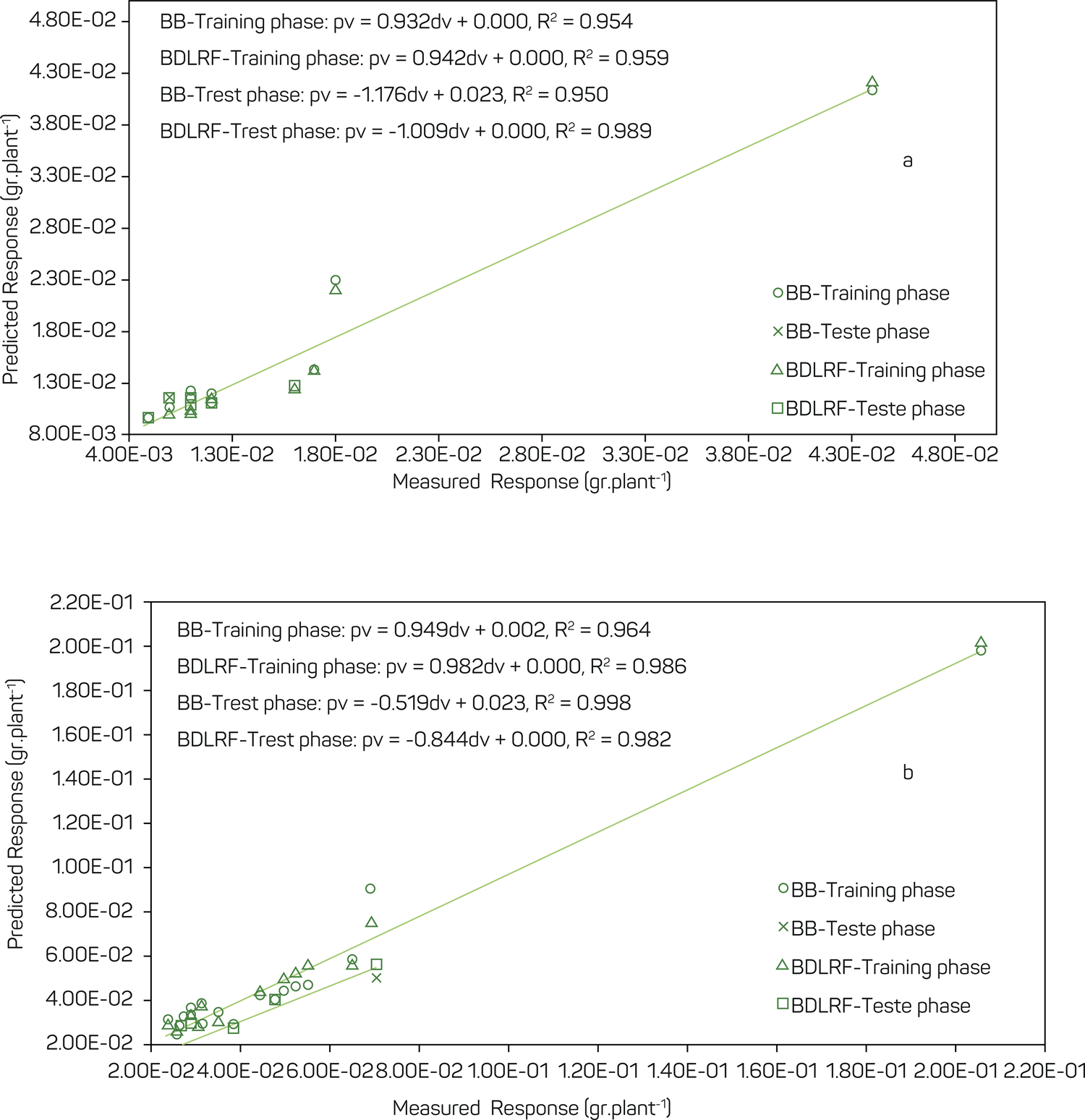
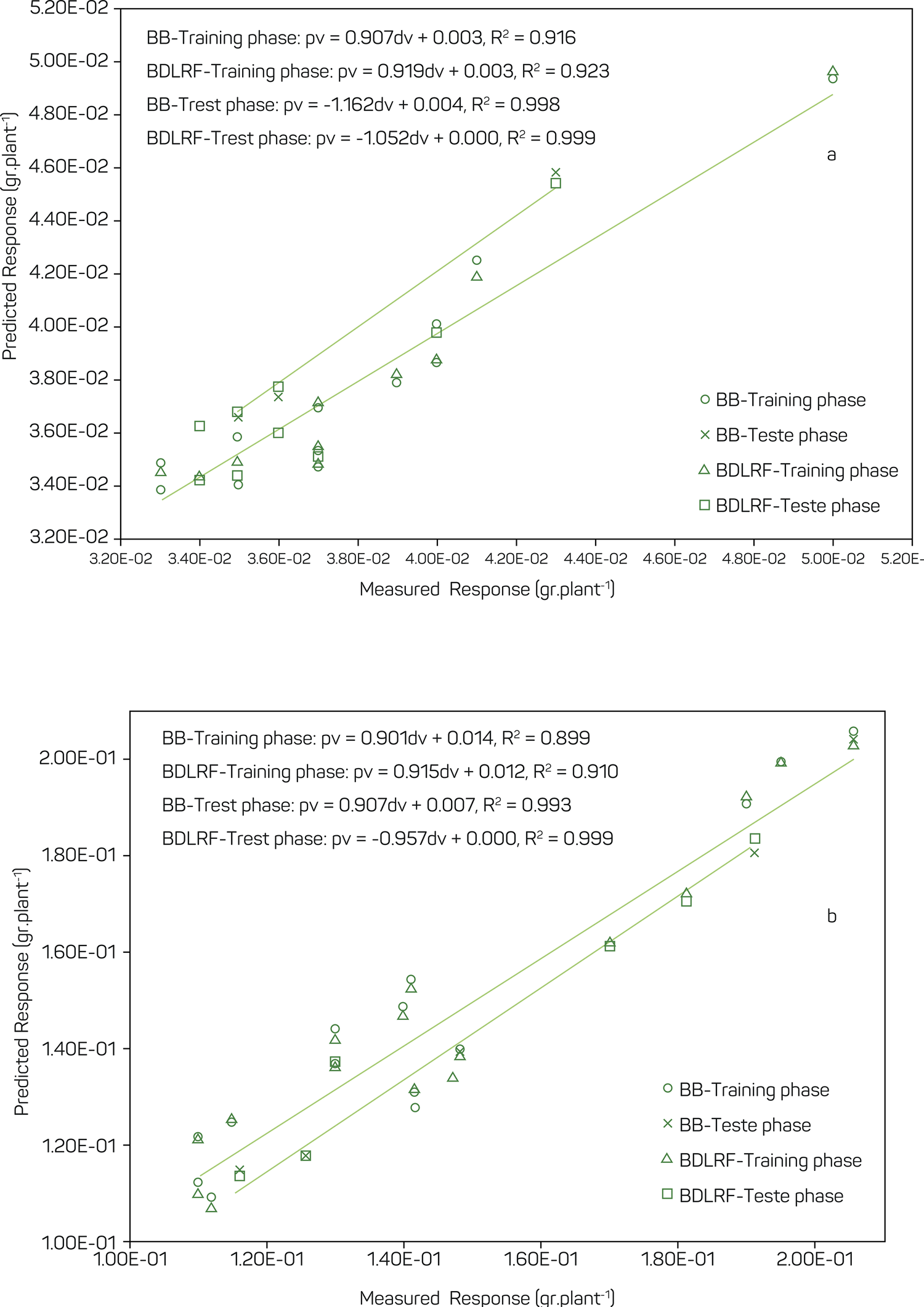
Figures 2 and 3 show measured responses versus predicted ones. It is clear that the regression coefficients of determination between measured and predicted data (R2>0.89) are high for the trained data sets and test data sets. As excellent estimation performance was obtained using the trained network, it can be said that the trained network is reliable, accurate and suitable for making predictions of plant responses to various doses of herbicide. These figures reveal that the response predictions from a BB training algorithm were not as good as to fit to a measured response in comparison to BDLRF response prediction.

Predicted values of BB-MLP and BDLRF-MLP networks versus measured values of responde of pre-emergence application in Shahrood (a) and Mashhad (b)

Predicted values of BB-MLP and BDLRF-MLP networks versus measured values of responde for post-emergence application in Shahrood (a) and Mashhad (b)
Comparisons of measured versus predicted responses for a BB training algorithm resulted in least squares linear regression lines with slopes lower or approximately equal to BDLRF, while the BDLRF training algorithm resulted in lines with y-intercepts lower than those in the BB training algorithm.
3.2.3 Comparison of training algorithms
For predictions of response, several networks with different settings and training algorithms were trained. Performances of these two training algorithms are shown in Table 6. For this specific case study, a comparison of results revealed that both algorithms were capable of generating accurate estimates within the preset range. Results demonstrated that MAPE, RMSE and TSSE values that resulted from BDLRF were less than or approximately equal to those obtained by the BB algorithm for the training phase and the test phase (Table 6).
It was quite clear that the BDLRF training algorithm performed much better than the BB training algorithm. Considering all the results obtained by this study, the advantages of the BDLRF training algorithm over BB are as follows: faster convergence, a shorter training time and an easy process of parameter adjustment by decreasing sensitivity to the parameter values. These results also conform to the findings of research by Vakil-Baghmisheh and Pavešic (2001) and Soltanali et al. (2021).
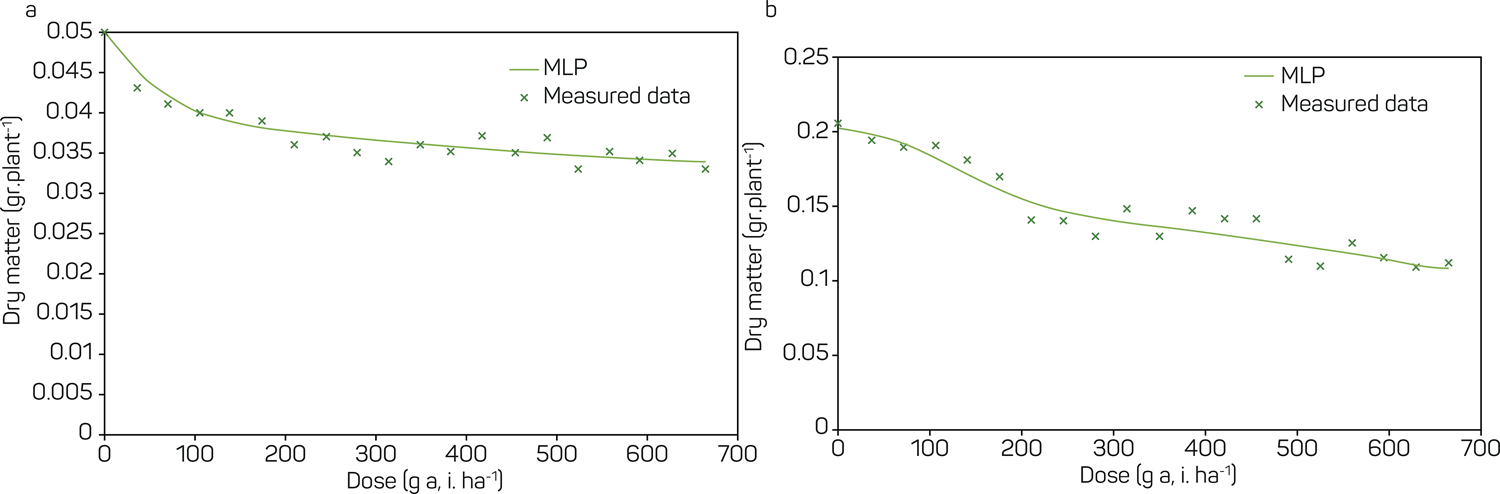
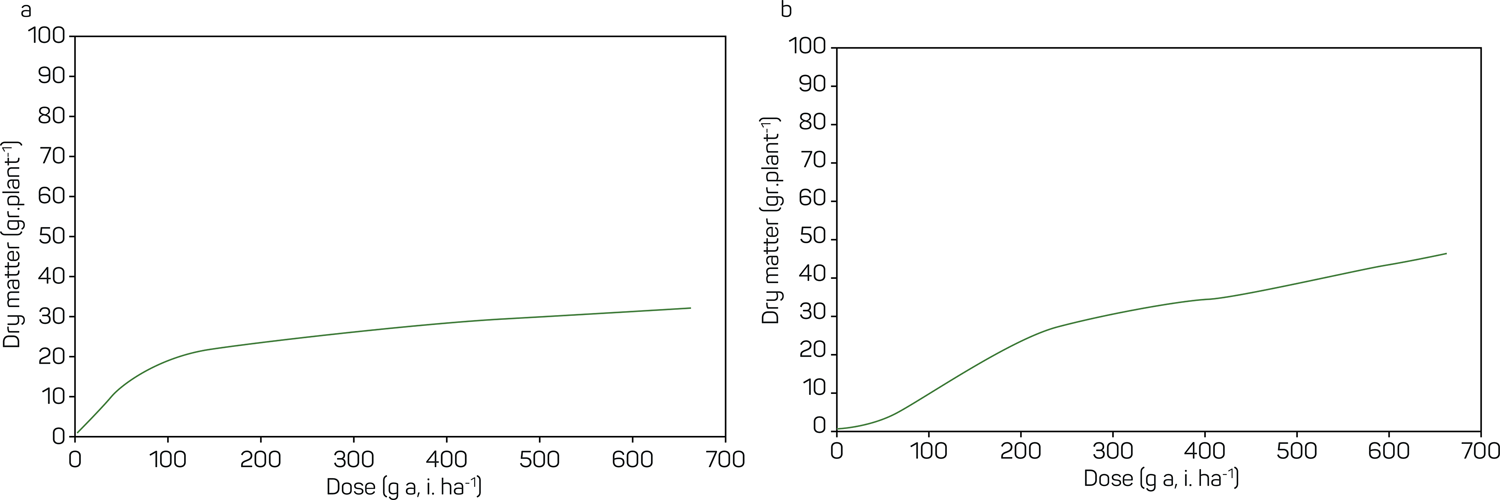
Based on our results winter wheat showed sensitivity to metribuzin applied PRE planting at both locations (Figure 4). In general, wheat dry weight loss increased with an increasing dose of metribuzin in the PRE planting test that occurred with 60 and 112 g a.i. ha-1 metribuzin applications, respectively. Dry weight reductions of 70% and 85% were recorded with applications of 126 and 455 g a.i. ha-1 at pre-emergence in the Mashhad respectively (Figures 4 and 5).

Herbicide dose response curve corresponding to pre-emergence application in Shahrood (a) and Mashhad (b).
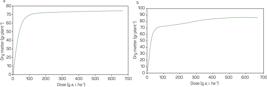
Herbicide dose response curve for winter wheat based on injury rating at pre-emergency application in Shahrood (a) Mashhad (b).
Evaluations for shoot dry weight as a function of metribuzin dose was described with a MLP ANN; tolerance parameters were determined at ED20 and ED30. According to these results winter wheat showed acceptable tolerance to metribuzin applied POST emergence at Shahrood and in Mashhad (Figures 6 and 7). Dry weight reductions of about 20% and 30% were evident with metribuzin at doses of 126 and 455 g a. i. ha-1 applied POST emergence at Shahrood and doses of 175 and 280 g a. i. ha-1 applied POST emergence at Mashhad.

Herbicide dose response curve corresponding to post-emergence application in Shahrood (a) and Mashhad (b).

Herbicide dose response curve for winter wheat based on injury rating at post-emergence application in Shahrood (a) and Mashhad (b)
Other research Sikkema et al. (2008), has similarly reported that saflufenacil applied Post emergence did not affect yield of winter wheat. These results are similar to those of Mansourian et al. (2009) who reported that, a pre-plant application of metribuzin, decreased the leaf area index of different wheat varieties more than it did post-emergence. However, herbicide injury varies according to herbicide used, variety of crop and the growth stage at which the application is made (Klein et al., 2006). Results showed that in post-emergence metribuzin, because of low phytotoxicity, wheat shoot dry weight was significantly higher than it was in the pre-plant treatment. Based on the results of Schroeder et al. (1986), none of the wheat cultivars evaluated in the field experiments was injured by a 0.3 kg. ha-1 rate of metribuzin. Acceptable selective weed control was obtained with this rate, indicating that metribuzin could be used in some winter wheat cultivars (Schroeder et al., 1986). In general, high doses cause severe phytotoxicity and produce less dry weight. Javaid et al. (2022) treated wheat plants with different doses of herbicide metribuzin. They concluded that herbicide pretreatment in suitable doses did not cause significant alterations in photosynthesis and fluorescence parameters of seedlings but high doses of this herbicide significantly reduced gas exchange parameters (net photosynthesis rate, stomatal conductance, transpiration rate, and water use efficiency) in wheat plant.
However, weed control with a reduced rate of metribuzin (175 g a. i. ha-1) seems to be adequate, and from an environmental standpoint, it is not recommended that higher doses than that are used. In summary, the most efficient treatment was the post-emergence application with a reduced rate of metribuzin (140–280 g a. i. ha-1).
4.Conclusion
This article focused on the application of MLPNN to predict the relationship between dose of herbicide and wheat response. Data from winter wheat cultivation was used to show the applicability and superiority of the approach proposed in this study. The network was trained by BB and BDLRF learning algorithms. Statistical comparisons of measured and predicted test data were applied to the selected ANN. Results of the statistical analysis, found that at 95% confidence level (with p-values greater than 0.9) both measured and predicted test data were similar. The results also revealed that, using a BDLRF algorithm yielded a better performance than did the BB algorithm. It was also determined that a neural network is particularly suitable for learning nonlinear functional relationships that are not known or cannot be specified.
Because the ANNs do not assume any fixed form of dependency between output and input values, unlike the regression method, it seems to be the more successful application under consideration. It could be said that the neural network provides a practical solution to the problem of estimating herbicide dose in a fast, yet accurate and objective way. It is hoped that the analysis conducted in this article can provide reference for the choice of ANNs in such an area. Additional research on ANNs is required to make using these networks more appealing and user-friendly to make predictions of herbicide dose applications. These results are consistent with the proposed use pattern of metribuzin herbicide. Data from this study suggests that POST emergence applications of metribuzin at half the proposed dose (140–280 g a. i. ha-1) is also safe to use in winter wheat with minimum biomass reduction. However, in PRE planting application of metribuzin resulted in an unacceptable level of crop injury and reduction in shoot dry matter. Additional testing is needed to evaluate winter wheat tolerance at several other growth stages and in farm conditions.
References
-
Aula L, Dhillon JS, Omara P, Wehmeyer GB, Freeman KW, Raun WR. World sulfur use efficiency for cereal crops. Agron J. 2019;111(5):2485-92. Available from: https://doi.org/10.2134/agronj2019.02.0095
» https://doi.org/10.2134/agronj2019.02.0095 - Curran B, Foster R. Weed control manual. Willoughby: Meister; 2002.
- Das TK. Metribuzin: an excellent alternative to isoproturon for weed control in wheat. Indian Farm. 2002;51:9-12.
- Dhammu HS, Nicholson DF. Metribuzin tolerance of EGA Eagle Rock wheat. In Preston C, Watts JH, Crossman ND, editors. Proceeding of 15th Australian Weeds Conference; 2006; Adelaide, Australia. Torrens Park: Weed Management Society of South Australia; 2006. p. 355-8.
-
Falk JS, Shoup DE, Al-Khatib K, Peterson DE. Protox-resistant common waterhemp ( Amaranthus rudis ) response to herbicides applied at different growth stages. Weed Sci. 2006;54(4):793-9. Available from: https://doi.org/10.1614/WS-06-020R.1
» https://doi.org/10.1614/WS-06-020R.1 -
Fayyazi S, Abbaspour-Fard MH, Rohani A, Monadjemi SA, Sadrnia H. Identification and classification of three Iranian rice varieties in mixed bulks using image processing and MLP neural network. Int J Food Eng. 2017;13(5). Available from: https://doi.org/10.1515/ijfe-2016-0121
» https://doi.org/10.1515/ijfe-2016-0121 -
Gandía ML, Del Monte JP, Tenorio JL, Santín-Montanyá MI. The influence of rainfall and tillage on wheat yield parameters and weed population in monoculture versus rotation systems. Sci Rep. 2021;11(1):1-12. Available from: https://doi.org/10.1038/s41598-021-00934-y
» https://doi.org/10.1038/s41598-021-00934-y -
Gherekhloo J, Oveisi M, Zand E, Prado R. A review of herbicide resistance in Iran. Weed Sci. 2016;64(4):551-61. Available from: https://doi.org/10.1614/WS-D-15-00139.1
» https://doi.org/10.1614/WS-D-15-00139.1 -
Grey TL, Newsom LJ. Winter wheat response to weed control and residual herbicides. In: Wanyera R, Owuoche J, editors. Wheat improvement, management and utilization. London: IntechOpen; 2017. Available from: https://doi.org/10.5772/67305
» https://doi.org/10.5772/67305 -
Gyawali A, Bhandari R, Budhathoki P, Bhattarai S. A review on effect of weeds in wheat ( Triticum aestivum L.) and their management practices. Food Agri Econ Rev. 2023;2(2):48-54. Available from: https://doi.org/10.26480/faer.02.2022.48.54
» https://doi.org/10.26480/faer.02.2022.48.54 -
Hashem A, Collins RM, Bowran DG. Efficacy of interrow weed control techniques in wide row narrow-leaf Lupin. Weed Technol. 2011;25(1):135-40. Available from: https://doi.org/10.1614/WT-D-10-00081.1
» https://doi.org/10.1614/WT-D-10-00081.1 -
Hein GL, Kamble ST. Production pro?le for winter wheat in Nebraska. Washington: National Institute of Food and Agriculture; 2003[access May 12, 2008]. Available from: http://www.ipmcenters.org/CropPro?les/docs/NEwheat-winter.pdf
» http://www.ipmcenters.org/CropPro?les/docs/NEwheat-winter.pdf -
Javaid MM, Mahmood A, Bhatti MIN, Waheed H, Attia K, Aziz A et al. Efficacy of metribuzin doses on physiological, growth, and yield characteristics of wheat and its associated weeds. Front Plant Sci. 2022;13:1-11. Available from: https://doi.org/10.3389/fpls.2022.866793
» https://doi.org/10.3389/fpls.2022.866793 -
Khatami SA, Barmaki M, Alebrahim MT, Bajwa AA. Salicylic acid pre-treatment reduces the physiological damage caused by the herbicide mesosulfuron-methyl + iodosulfuron-methyl in wheat ( Triticum aestivum ). Agronomy. 2022;12(12):1-14. Available from: https://doi.org/10.3390/agronomy12123053
» https://doi.org/10.3390/agronomy12123053 - Klein RN, Martin AR, Lyon DJ. Annual broadleaf weed control in winter wheat. Neb Guide. Aug 2006.
-
Knezevic SZ, Datta A, Scott J, Charvat LD. Tolerance of winter wheat ( Triticum aestivum L.) to pre-emergence and post-emergence application of saflufenacil. Crop Protec. 2010;29(2):148-52. Available from: https://doi.org/10.1016/j.cropro.2009.08.017
» https://doi.org/10.1016/j.cropro.2009.08.017 -
Kniss AR. Long-term trends in the intensity and relative toxicity of herbicide use. Nature Commun. 2017;8:1-7. Available from: https://doi.org/10.1038/ncomms14865
» https://doi.org/10.1038/ncomms14865 -
MacLaren C, Storkey J, Menegat A, Metcalfe H, Dehnen-Schmutz K. An ecological future for weed science to sustain crop production and the environment: a review. Agron Sustain Dev. 2020;40:1-29. Available from: https://doi.org/10.1007/s13593-020-00631-6
» https://doi.org/10.1007/s13593-020-00631-6 - Mansourian S, Alizadeh MH, Zand E. [Effect of metribuzin various doses and application timing on leaf area index of different wheat varieties]. Iranian J Weed Sci. 2009;8:122. Persian.
-
Mohd Ghazi R, Nik Yusoff NR, Abdul Halim NS, Wahab IRA, Ab Latif N, Hasmoni SH et al. Health effects of herbicides and its current removal strategies. Bioengineered. 2023;14(1):1-21. Available from: https://doi.org/10.1080/21655979.2023.2259526
» https://doi.org/10.1080/21655979.2023.2259526 - Montazeri M, Zand E, Baghestani MA. [Weeds and their control in wheat fields of Iran]. Tehran: Agricultural Research and Education Organization Press; 2005. Persian.
-
Ofosu R, Agyemang ED, Márton A, Pásztor G, Taller J, Kazinczi G. Herbicide resistance: managing weeds in a changing world. Agronomy. 2023;13(6):1-16. Available from: https://doi.org/10.3390/agronomy13061595
» https://doi.org/10.3390/agronomy13061595 -
Rohani A, Abbaspour-Fard MH, Abdolahpour S. Prediction of tractor repair and maintenance costs using artificial neural network. Expert Sys Applicat. 2011;38(7):8999-9007. Available from: https://doi.org/10.1016/j.eswa.2011.01.118
» https://doi.org/10.1016/j.eswa.2011.01.118 -
Schroeder J, Banks PA, Nichols RL. Soft red winter wheat ( Triticum aestivum ) cultivar response to metribuzin. Weed Sci. 1986;34(1):66-9. Available from: https://doi.org/10.1017/S0043174500026473
» https://doi.org/10.1017/S0043174500026473 -
Sikkema PH, Shropshire C, Soltani N. Tolerance of spring barley ( Hordeum vulgare L.), oats ( Avena sativa L.) and wheat ( Triticum aestivum L.) to saflufenacil. Crop Prot. 2008;27(12):1495-7. Available from: https://doi.org/10.1016/j.cropro.2008.07.009
» https://doi.org/10.1016/j.cropro.2008.07.009 -
Soltanali H, Rohani A, Abbaspour-Fard MH, Farinha JT. A comparative study of statistical and soft computing techniques for reliability prediction of automotive manufacturing. Appl Soft Comput. 2021;98. Available from: https://doi.org/10.1016/j.asoc.2020.106738
» https://doi.org/10.1016/j.asoc.2020.106738 - Thomas BS, Koppu S, Viswanatham M, Williams SM, Deepak C. Optical character and object recognition using artificial neural network. Int J Appl Eng Res. 2013;8(9):1021-33.
-
Vakil-Baghmisheh MT, Pavešic N. A fast simplified fuzzy ARTMAP network. Neural Process Lett. 2003:17:273-301. Available from: https://doi.org/10.1023/A:1026004816362
» https://doi.org/10.1023/A:1026004816362 - Vakil-Baghmisheh MT, Pavešic N. Back-propagation with declining learning rate. Proceeding of the 10 th Electrotechnical and Computer Science Conference; 2001, Sept; Portorož, Slovenia.
- Vakil-Baghmisheh MT. Farsi character recognition using artificial neural networks [PhD thesis]. Ljubljana: University of Ljubljana; 2002.
- Venceill WK. WSSA herbicide handbook. 8th ed. Lawrence: Weed Science Society of America; 2002.
-
Zand E, Baghestani MA, Sou?zadeh S, PourAzar R, Veysi M, Bagherani N et al. Broadleaved weed control in winter wheat ( Triticum aestivum L.) with post-emergence herbicides in Iran. Crop Prot. 2007;26(5):746-52. Available from: https://doi.org/10.1016/j.cropro.2006.06.014
» https://doi.org/10.1016/j.cropro.2006.06.014 - Zand E. [Final report of study on weed control spectrum of common broadleaved weed herbicides in wheat ?elds in Iran]. Teheran: Plant Pest and Disease Research Institute Press; 2004. Persian.
-
Zhang Y F, Fuh JY H. A neural network approach for early cost estimation of packaging products. Comput Industr Eng. 1998;34(2):433-50 Available from: https://doi.org/10.1016/S0360-8352(97)00141-1
» https://doi.org/10.1016/S0360-8352(97)00141-1
-
Funding:
This research received no external funding.
Edited by
-
Editor in Chief:
Anderson Luis Nunes
-
Associate Editor:
Arthur Arrobas Martins Barroso