Survey of herbicide-resistant weed management in oil palm estates from Peninsular Malaysia and Indonesia
Abstract:
Background: The use of herbicides is a common practice to control weeds in oil palm plantation. However, high dependency on herbicides causes intense selection pressure, which could lead to the evolution of herbicide resistance in weed.
Objective: To assess planters’ understanding of herbicide resistance management practices.
Methods: Data were gathered via the application of questionnaires during the 2022 growing season to planters working with oil palm in Peninsular Malaysia and Indonesia. There were 101 respondents, covering about 14 states.
Results: Planters (75 to 85% respondents) found herbicide rotation, cover crops, and pre-emergence herbicide application effective against herbicide-resistant weeds, but high herbicide costs hindered their selection of chemical solutions. Peninsular Malaysia planters (30 to 78% respondents) reported five major putative resistant weeds such as Eleusine indica (L.) Gaertn., Clidemia hirta (L.) D. Don., Melastoma malabathricum (L.), Ischaemum muticum (L.), and Asystasia gangetica (L.) T. Anderson. Indonesian planters (28 to 43% respondents) faced putative resistance in E. indica and C. hirta. Peninsular Malaysia's higher incidence of putative resistance was linked to insufficient knowledge of herbicide classification, less use of tank-mixed herbicides, and reduced herbicide rates, potentially fostering resistance evolution.
Conclusions: The survey revealed that Indonesia planters possess a better understanding of herbicide resistance management as compared to Peninsular Malaysia planters. There is a need to increase awareness on sustainable use of herbicides through training and educational programs for planters in Peninsular Malaysia.
Keywords:
Clidemia Hirta; Eleusine Indica; Herbicide Classification; Herbicide Rotation; Herbicide Resistance; Tank Mixture
1. Introduction
Elaeis guineensis (Jacq.), commonly referred to as oil palm, stands as the predominant oil crop globally, constituting approximately 40% of the total traded vegetable oil (Murphy et al., 2021). Palm oils are integral to the diets of many individuals and find extensive application in non-food sectors, notably in the production of cleaning and sanitizing products. Given the escalating demand for palm oil in both food and industrial domains, oil palm cultivation spans various countries across Africa, South America, and Southeast Asia, with Indonesia and Malaysia largely dominating the global market (Ritchie, 2021). In 2018, global oil palm production hit 72 million tonnes, with Indonesia contributing 57% (41 million tonnes) and Malaysia contributing 27% (20 million tonnes) (Ritchie, 2021). As of 2022, Indonesia boasted approximately 15 million hectares of oil palm plantations, yielding an annual production of 46 million tonnes of palm oil (Badan Pusat Statistik Indonesia, 2023). Ownership distribution in Indonesian oil palm plantations reveals that private companies hold 55.9%, smallholders account for 40.5%, and the government owns 3.6% (Badan Pusat Statistik Indonesia, 2023). Malaysia, the world's second-largest palm oil producer after Indonesia, maintains palm oil plantations spanning over 5.67 million hectares as of 2022 (Kadir, 2022). Sarawak leads in oil palm plantation area within Malaysia, covering 1.62 million hectares or 28.6% of the total, followed by Sabah with 1.51 million hectares or 26.6%, while Peninsular Malaysia accounts for 2.54 million hectares or 44.8% (Kadir, 2022). Crude palm oil production reached 18.45 million tonnes, with an average fresh fruit bunches yield of 15.49 tonnes per hectare, and total palm oil exports, including other palm-based products, amounted to 24.72 million tonnes (Kadir, 2022). In 2021, Malaysia's total oil palm plantation area was 5.7 million hectares, with private and government/state agency estates covering 73.2%, individual smallholders holding 15.1%, and organized smallholders managing 11.7% (Parveez et al., 2022). Despite Indonesia and Malaysia's substantial oil palm output, the presence of weeds in oil palm plantations poses a potential threat to productivity. Weeds, characterized by vigorous growth, hinder sunlight penetration, and compete with desirable plants for nutrients (Ruzlan, Hamdani, 2020).
Weeds in oil palm plantations detrimentally impact both the quantity and quality of fresh fruit bunches, impede plant development, increase vulnerability to pests and diseases, disrupt water usage, and elevate agricultural costs (Hakim et al., 2020). Assessing the impact of weeds on oil palms proves challenging due to its extended economic lifespan, typically spanning 20 to 30 years (Kuan et al., 1991). Nevertheless, Sahid et al. (1992) documented production reductions of 6 to 20% in oil palm farms due to intense weed competition. Furthermore, effective management of weed species like Asystasia gangetica (L.) T. Anderson had the potential to enhance fresh fruit bunch production by 12% (Kustyanti, Horne, 1992). Effective weed management hinges on plant identification, understanding the plant life cycle, and selecting appropriate control strategies. Despite the utilization of biological, mechanical, and cultural methods, herbicide spraying remains the primary weed management approach in oil palm plantations. Herbicides such as glyphosate, glufosinate, metsulfuron-methyl, and the recently banned paraquat are extensively used in oil palm plantations (Ruzlan, Hamdani, 2020).
However, excessive reliance on herbicides could lead to the emergence of herbicide-resistant weeds. This phenomenon is intensified due to the monoculture of oil palm in Malaysia and Indonesia. To date, eight weed biotypes have evolved herbicide resistance in the oil palm plantations or nurseries in Malaysia, including four weed species of Eleusine indica (L.) Gaertn. (Chuah et al., 2004), Oldenlandia verticillata (L.) (Chuah et al., 2005), Chromolaena odorata (L.) R. M. King and H. Rob (Chuah and Sahid, 2010) and Clidemia hirta (L.) D. Don (Ramadzan et al., 2012) in the states of Pahang, Kedah, Selangor, Perak, Johor, and Sarawak, Terengganu, Kelantan in Malaysia (Chuah and Sahid, 2010). Most of these weed biotypes are resistant to paraquat, glyphosate, and metsulfuron. E. indica, which is a problematic weed that grows on young oil palm plantations and nurseries, has evolved resistance to multiple herbicides, such as glyphosate, paraquat, glufosinate and/ or fluazifop (Jalaluddin et al., 2010). Similarly, E. indica populations resistant to glyphosate in oil palm plantation in North Sumatra, Indonesia have been documented (Tampubolon et al., 2019; Purba, Sipayung, 2022).
The emergence of herbicide-resistant weeds in oil palm plantations can have substantial economic and environmental impacts. Economically, it can lead to reduced crop yields and higher weed management costs due to diminished herbicide efficacy. Environmentally, increased herbicide use resulting from resistance may lead to a loss of plant biodiversity and the degradation of soil health. Consequently, it is crucial to minimize the risks of herbicide resistance through effective weed management strategies. However, there is still limited information available on the planters’ understanding regarding herbicide resistance management, the challenges faced by them, and the current status of herbicide-resistant weeds in oil palm plantations. Recognizing and addressing these issues are essential for implementing an improved weed management strategy aimed at slowing down the evolution of herbicide-resistant weeds while ensuring the sustainable use of herbicides. This survey was carried out to evaluate planters’ knowledge and management practices regarding herbicide-resistant weeds in oil palm estates in Peninsular Malaysia and Indonesia. The survey is anticipated to yield valuable insights for researchers, extension officers, plantation managers, and policy makers. It will help identify knowledge gaps among planters and deficiencies within support systems that impede sustainable management of resistant weeds in oil palm plantations.
2. Materials and Methods
2.1 Study Sites
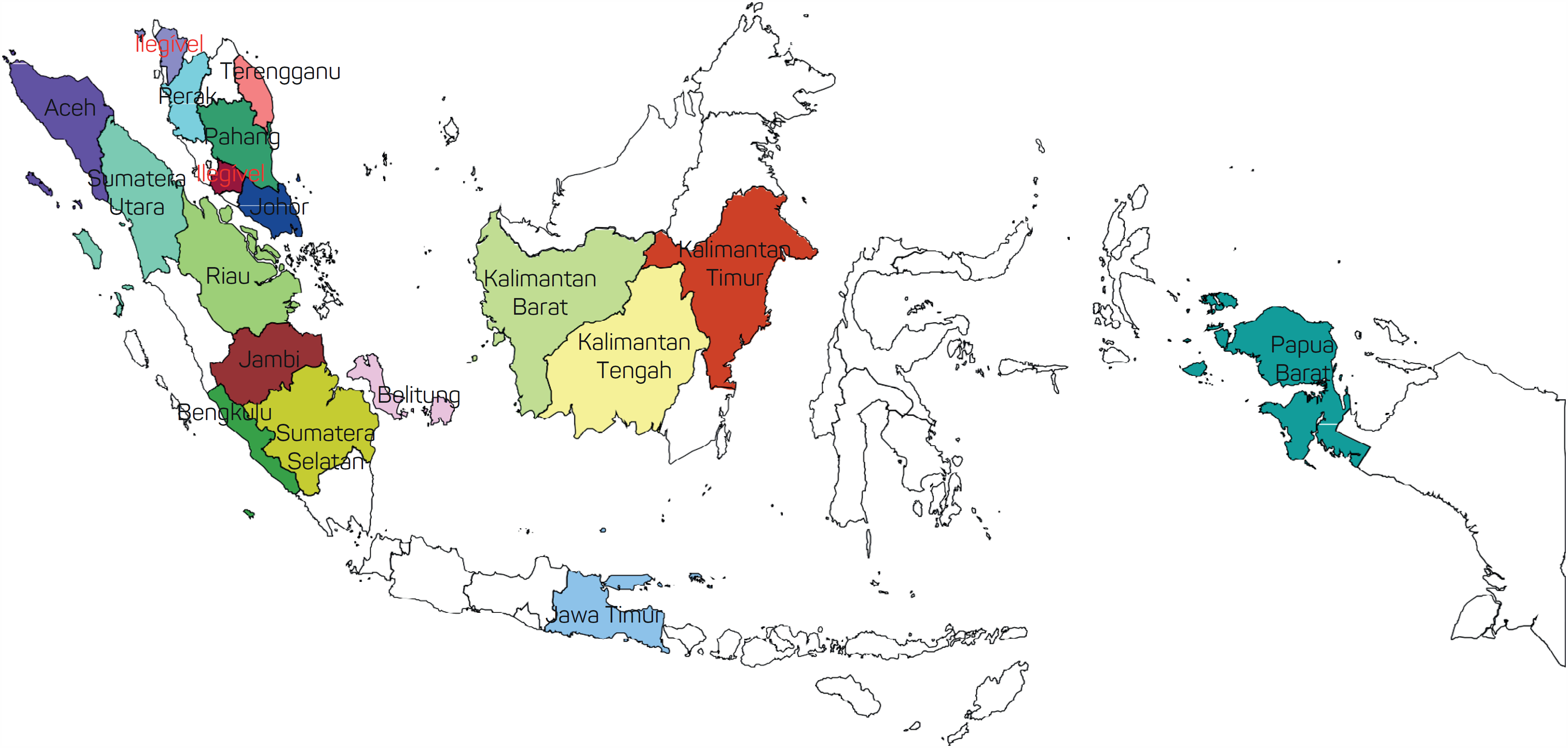
The survey encompassed significant oil palm planted states such as Kedah, Terengganu, Perak, Pahang, Negeri Sembilan, and Johor in Peninsular Malaysia, as well as Aceh, Sumatera, Riau, Jambi, Belitung, Bengkulu, Kalimantan, and Papua in Indonesia (Figure 1). These surveyed states collectively accounted for 87% (2.22 million ha) and 65% (9.5 million ha) of oil palm planted areas in Peninsular Malaysia and Indonesia, respectively.

2.2 Survey Design
A survey was conducted using a structured survey questionnaire and sent randomly to oil palm estate growers through google forms in 2022. Prior to data collection, a pilot test was conducted to assess the suitability of the questions, their clarity, and the probability of obtaining high-quality data. Thirty-five planters were selected for the pilot test, a sample size consistent with the recommended range by Kieser and Wassmer (1996). The questionnaire was subsequently sent to participants from government and private estates. A total of 27 respondents were obtained from oil palm estates in Peninsular Malaysia, while a total of 74 respondents were from oil palm estates in Indonesia.
The survey had 10 questions organised into two sections: (1) respondent's demographic, and (2) the occurrence and management of herbicide-resistant weed. Part 1 of the study required the growers to provide their sociodemographic details including age, level of education, experience in oil palm cultivation, main occupation, and oil palm cultivation area. In part 2, planters were surveyed about their awareness on the emergence of herbicide resistance weed, the classification of herbicides based on their mode of action, and their compliance with the appropriate herbicide application rate. Next, the planters were surveyed regarding their implementation of agronomic techniques to combat herbicide resistance in weeds, challenges faced by respondents in selecting appropriate herbicides to effectively control resistant weed species, as well as the occurrence of problematic weeds despite multiple herbicide applications.
3. Experimental design and Statistical analysis
The data collected from the questionnaire underwent coding and analysis using Statistical Package for Social Sciences (SPSS) version 25. Sociodemographic characteristics were examined through a chi-square test to explore the relationship between variables across the study countries. A chi-square analysis was also employed to assess the disparities in planters’ awareness regarding the occurrence of herbicide resistance, the classification of herbicides based on mode of action, and their adherence to applying the recommended herbicide rate between two countries. The Kruskal-Wallis test with pairwise comparison was utilized to evaluate discrepancies in deterrents encountered by respondents when selecting appropriate herbicides to manage resistant weed species.
4. Results and Discussion
4.1 Sociodemographic Characteristics of Planters
The sociodemographic characteristics of surveyed planters from estates are presented in Table 1. The survey findings indicate 89% of respondents were primarily engaged in oil palm-related occupations in Peninsular Malaysia. By contrast, all respondents from Indonesia worked within the oil palm sector. Additionally, estate planters from both regions had varying levels of farming experience (P<0.01). In Peninsular Malaysia, the majority (90%) of planters had between less than 5 years to 20 years of experience, whereas in Indonesia, 80% of planters had less than 5 years to 15 years of experience. However, estates in both countries were primarily managed by planters aged between 21 to 50 years old, constituting 92% of respondents. On the other hand, the extent of oil palm cultivation area differs significantly (P<0.001) between the two countries. The majority (97%) of planters from Peninsular Malaysia cultivated oil palm on land ranging from 500 to 5,000 hectares, whereas 97% of planters from Indonesia managed cultivation areas ranging from 100 to over 5,000 hectares. Furthermore, there are disparities in the education levels of planters between the two countries (P<0.001). In Indonesia, the majority of planters had education levels ranging from diploma (82%) to higher education (11%), while in Peninsular Malaysia, planters’ education levels ranged from secondary education (22%) to diploma (41%) and higher education (37%).
4.2 Awareness on Herbicide-Resistant Weed and Herbicide Application Practice
Table 2 presents the planters’ awareness regarding the occurrence of herbicide resistance, the classification of herbicides based on mode of action, and their adherence to applying the recommended herbicide rate. The majority of planters from both countries demonstrated a high level of awareness in recognizing the occurrence of herbicide-resistant weeds in their estates. Specifically, 100% of planters in Peninsular Malaysia and 97% of planters in Indonesia were aware of the occurrences of herbicide-resistant weeds. In Indonesia, planters exhibited a notably high awareness of the classification of herbicides based on mode of action (MOA), with 97% of respondents indicating familiarity with this aspect. However, awareness regarding the classification of herbicides based on MOA among planters in Peninsular Malaysia was slightly lower (P<0.05), accounting for 78% of respondents.
Awareness of planters on occurrence of herbicide resistance, classification of herbicide based on mode of action and their adherence to apply recommended rate of herbicide
The majority of planters in both Peninsular Malaysia (78%) and Indonesia (84%) reported adhering to herbicide application at the recommended rate. However, a small percentage of planters (P<0.05) in Peninsular Malaysia (7%) chose to reduce the recommended herbicide rate, while no planters in Indonesia adopted this method. Conversely, some planters increased the recommended herbicide rate. Applying herbicides at higher-than-recommended dosages can significantly increase the mortality rate of targeted weeds. However, as highlighted by Purba and Sipayung (2022), in cases where weeds have developed resistance to herbicides, the efficacy of weed control, even at increased application rates, may be low. Furthermore, this approach can lead to higher input expenses and labor costs. By contrast, applying herbicides at doses lower than the recommended rate (sublethal doses) can result in a significant number of weeds surviving, potentially leading to the evolution of herbicide resistance. Studies on the evolution of herbicide-resistant weeds through repeated application of low herbicide dosages in oil palm plantations are still scarce. Nevertheless, several studies have documented cases of field-evolved herbicide-resistant weeds following continuous application of herbicides at lower-than-recommended rates (Manalil et al., 2011; Ashworth et al., 2016).
4.3 Agronomic Practices of Herbicide-Resistant Weed Management
Table 3 outlines the agronomic practices adopted by planters in Peninsular Malaysia and Indonesia to manage herbicide-resistant weeds in their estates. The findings reveal that the majority of planters (70–85%) from both countries recognize certain preferred agronomic strategies for addressing herbicide resistance in weeds, including rotating herbicides, utilizing cover crops, and implementing thorough field preparation with pre-emergence herbicides. However, in Peninsular Malaysia, a significant number of planters reported using mulching (74%) and animal grazing (70%) as methods for managing herbicide-resistant weeds. Conversely, the majority of planters (89%) in Indonesia opted for the practice of mixing herbicides in a tank as another method to control herbicide-resistant weed.
Widely acknowledged strategies for managing herbicide resistance include the implementation of tank mixtures and herbicide rotation. Previous studies have provided evidence that mixtures offer a more effective approach to delaying resistance evolution compared to single-use or simple herbicide rotations (Busi et al., 2020). Mixing herbicides has been observed to be more successful in controlling E. indica compared to using a single herbicide at oil palm plantations in North Sumatra, Indonesia (Tampubolon et al., 2020). Hence, the prevalence of tank mixed herbicides among planters in Indonesia might be attributed to this factor compared to planters in Peninsular Malaysia.
It is not recommended to mix two herbicides without first determining if they are compatible since they may work antagonistically, additively, or synergistically (Dilipkumar et al., 2020). The practice of tank mixing requires use of multiple herbicides, which increases the complexity of the weed management system, thus requiring a certain degree of expertise and knowledge to match herbicides and effective modes of action with target species (Norsworthy et al., 2012). Additionally, a prior study on a weed management program at an oil palm plantation in Peninsular Malaysia found that the combination of chemical, cultural (e.g., mulching), and biological control (e.g., animal grazing, such as sheep and cattle) produced lower costs of weed control strategies compared to the use of chemicals alone (Ruzlan, Hamdani, 2020). Another study has shown that oil palm-cattle integration may save total weeding costs by 5 to 69% when compared to chemical control (Devendra, 2011). The affordable cost of weed control achieved through cultural and biological methods might be the reason planters in Peninsular Malaysia opted for the practice of mulching and livestock grazing at the plantation compared to planters in Indonesia.
4.4 Constraints of Herbicide-Resistant Weed Management
Table 4 shows the constraints encountered by planters when selecting herbicides for managing herbicide-resistant weeds. The severity of constraints was categorized into four grades (1 to 4), with 1 indicating no difficulty and 4 representing very high difficulty. The majority of respondents highlighted that expensive herbicide products posed a significant challenge for planters in both Peninsular Malaysia and Indonesia, with average ratings ranging from 3.04 to 3.23, respectively.
Difficulties or deterrents experienced by respondents in choosing the right herbicides to control the resistant weed species
The repeated application of a single herbicide with the same mode of action (MOA) over an extended period is often linked to the development of herbicide resistance (Beckie, 2006). Utilizing herbicides with different MOAs, preferably in combination as mixes, and alternatively in rotation as part of a weed control program, might delay the development of resistance in certain scenarios (Norsworthy et al., 2012). A previous study by Kniss et al. (2022) indicated that using an effective MOA mixture in field crops would increase the cost of herbicides by at least two-fold, even in the absence of any pre-existing herbicide resistance, and the expense would escalate considerably more if there were already resistance to herbicides in a field. In this context, government agencies and private sectors should collaborate to provide incentives for planters to enhance their purchasing power toward a wider range of affordable and effective herbicides to manage resistant weed species, thereby achieving the long-term goal of efficient weed control.
4.5 Problematic Weed Species
The current study unveils the persistence of numerous weed species resilient to herbicides, persisting even after multiple rounds of spraying, as delineated in Table 5. Two problematic weed species were identified by the majority of planters in Indonesia, namely E. indica and C. hirta, accounting for 43% and 28% of respondents, respectively. Conversely, in Peninsular Malaysia, the majority of planters reported more than two problematic weed species, including E. indica (78% respondents), C. hirta (70% respondents), Melastoma malabathricum (L.) (52% respondents), Ischaemum muticum (L.) (41% respondents), and A. gangetica (30% respondents).
Problematic and survived weed species reported by respondent despite having sprayed herbicides for several rounds
Previous research has documented cases of E. indica populations resistant to glyphosate in oil palm plantations in North Sumatra, Indonesia (Tampubolon et al., 2019; Purba, Sipayung, 2022). Several weed species, including C. hirta and E. indica, have demonstrated resistance to multiple herbicide applications in oil palm plantations located in Peninsular Malaysia (Chuah and Sahid, 2010; Ramadzan et al., 2012). Similarly, the present study reveals that three weed species from Peninsular Malaysia—M. malabathricum, I. muticum, and A. gangetica—and one weed species, C. hirta, from Indonesia may have developed resistance to herbicides. Further study is needed to confirm the occurrence of herbicide resistance in these weeds through dose response bioassay.
The emergence of developed putative herbicide-resistant weed species may coincide with the challenge of selecting the right herbicide due to expensive herbicide products, leading planters to persistently use the same herbicide over time without transitioning to alternative options. The increased occurrence of evolved putative herbicide-resistant weeds in plantations across Peninsular Malaysia, in contrast to Indonesia, could be linked to the consistent exposure of targeted weeds to sublethal levels of herbicides by some planters. Furthermore, the elevated presence of these problematic weeds in Peninsular Malaysia might align with specific agronomic methods practiced in these plantations. Planters in Peninsular Malaysia lack a comprehensive understanding of herbicide classification based on mode of action and tend to utilize tank mixed herbicides less frequently, despite evidence demonstrating their superior effectiveness compared to herbicide rotation. This current finding suggests that various measures, including selecting the right herbicides and adopting best agronomic practices, must be undertaken by government agencies and planters to slow down further evolution of any new herbicide-resistant weed species.
5. Conclusions
This survey offered deeper insights into the management of herbicide-resistant weeds among oil palm planters in Peninsular Malaysia and Indonesia. It shed light on planters’ comprehension of herbicide resistance, the challenges impeding the adoption of sustainable weed management practices, and the factors driving the evolution of herbicide resistance. The majority of planters, across both regions, demonstrated awareness of herbicide resistance, indicating a widespread recognition of this issue. However, the sustainable utilization of chemical weed control methods faces hurdles due to the high costs of herbicides, limiting the range of available options. This circumstance has directly contributed to the evolution of major putative herbicide-resistant weeds such as E. indica, C. hirta, M. malabathricum, I. muticum, and A. gangetica. The higher incidence of these problematic weeds in Peninsular Malaysia was due to a lack of knowledge about herbicide classification based on mode of action, less use of herbicide mixture and the application of herbicides at reduced rates. Therefore, comprehensive educational programs on sustainable use of herbicide are needed for planters in Peninsular Malaysia.
Acknowledgements
The authors are very appreciative to the respondents who participated in the survey by sharing their expertise and knowledge.
References
-
Ashworth MB, Walsh MJ, Flower KC, Powles SB. Recurrent selection with reduced 2, 4-D amine doses results in the rapid evolution of 2, 4-D herbicide resistance in wild radish (Raphanus raphanistrum L.). Pest Manag Sci. 2016;72(11):2091-8. Available from: https://doi.org/10.1002/ps.4364
» https://doi.org/10.1002/ps.4364 -
Badan Pusat Statistik Indonesia – BPS. [Indonesia oil palm statistics 2022]. Vol. 16. Jakarta: Badan Pusat Statistik Indonesia; 2023[access Mar 22, 2023]. Indonesian. Available from: https://www.bps.go.id/id/publication/2023/11/30/160f211bfc4f91e1b77974e1/statistik-kelapa-sawit-indonesia-2022.html
» https://www.bps.go.id/id/publication/2023/11/30/160f211bfc4f91e1b77974e1/statistik-kelapa-sawit-indonesia-2022.html -
Busi R, Powles SB, Beckie HJ, Renton M. Rotations and mixtures of soil-applied herbicides delay resistance. Pest Manag Sci. 2020;76(2);487-96. Available from: https://doi.org/10.1002/ps.5534
» https://doi.org/10.1002/ps.5534 - Chuah TS, Noor-Zalila MR, Cha TS, Sahid I. Paraquat and glyphosate resistance of Woody Borreria (Hedyotis verticillata) growing at oil palm plantations in Terengganu. Malays Appl Biol. 2005;34(2):43-9.
-
Chuah TS, Sahid I. The status of weed resistance in plantation crops of Malaysia. Planter. 2010;86(1014);615-20. Available from: https://doi.org/10.56333/tp.2010.008
» https://doi.org/10.56333/tp.2010.008 -
Chuah TS, Salmijah S, Teng YT, Sahid I. Changes in seed bank size and dormancy characteristics of the glyphosate-resistant biotype of goosegrass (Eleusine indica [L.] Gaertn.). Weed Biol Manag. 2004;4(2):114-21. Available from: https://doi.org/10.1111/j.1445-6664.2004.00127.x
» https://doi.org/10.1111/j.1445-6664.2004.00127.x -
Devendra C. Integrated tree crops-ruminants systems in South East Asia: advances in productivity enhancement and environmental sustainability. Asian-Australas J Anim Sci. 2011;24(5):587-602. Available from: https://doi.org/10.5713/ajas.2011.r.07
» https://doi.org/10.5713/ajas.2011.r.07 -
Dilipkumar M, Chuah TS, Goh SS, Sahid I. Weed management issues, challenges, and opportunities in Malaysia. Crop Prot. 2020;134. Available from: https://doi.org/10.1016/j.cropro.2017.08.027
» https://doi.org/10.1016/j.cropro.2017.08.027 -
Hakim DB, Hadianto A, Giyanto Hutaria T, Amaliah S. The production efficiency of herbicides in palm oil plantation in Sumatera and Kalimantan. IOP Conf Ser Earth Environ Sci. 2020;468(1):10. Available from: https://doi.org/10.1088/1755-1315/468/1/012054
» https://doi.org/10.1088/1755-1315/468/1/012054 -
Jalaluddin A, Ngim J, Bakar BHJ, Alias Z. Preliminary findings of potentially resistant goosegrass (Eleusine indica) to glufosinate-ammonium in Malaysia. Weed Biol Manag. 2010;10(4):256-60. Available from: https://doi.org/10.1111/j.1445-6664.2010.00392.x
» https://doi.org/10.1111/j.1445-6664.2010.00392.x -
Kadir APG. Overview of the Malaysian oil palm industry 2022. Kajang Selangor: Malaysian Palm Oil Board; 2022[access Dec 10, 2023]. Available from: https://bepi.mpob.gov.my/images/overview/Overview2022.pdf
» https://bepi.mpob.gov.my/images/overview/Overview2022.pdf -
Kieser M, Wassmer G. On the use of the upper confidence limit for the variance from a pilot sample for sample size determination. Biom J. 1996;38(8):941-9. Available from: https://doi.org/10.1002/bimj.4710380806
» https://doi.org/10.1002/bimj.4710380806 -
Kniss AR, Mosqueda EG, Lawrence NC, Adjesiwor AT. The cost of implementing effective herbicide mixtures for resistance management. Adv Weed Sci. 2022;40(spe1):1-9. Available from: https://doi.org/10.51694/
» https://doi.org/10.51694/ - Kuan CY, Ann LS, Ismail AA, Leng T, Fee CG, Hashim K. Crop loss by weeds in Malaysia. In: Lee SA, Kon KF, editors. Proceeding of the third tropical weed science conference. Kuala Lumpur: Malasyan Plant Protection Society; 1991.
-
Kustyanti T, Horne P. The effect of Asystasia on the growth of young rubber in polybags. In: United States Agency for International Development – USAID. Small ruminant collaborative research support program Sungai Putih, Indonesia: annual report 1991-1992. Washington: United States Agency for International Development; 1992. Available from: http://pdf.usaid.gov/pdf_docs/PDABG454.pdf
» http://pdf.usaid.gov/pdf_docs/PDABG454.pdf -
Manalil S, Busi R, Renton M, Powles SB. Rapid evolution of herbicide resistance by low herbicide dosages. Weed Sci. 2011;59(2):210-7. Available from: https://doi.org/10.1614/WS-D-10-00111.1
» https://doi.org/10.1614/WS-D-10-00111.1 -
Murphy DJ, Goggin K, Paterson RRM. Oil palm in the 2020s and beyond: challenges and solutions. CABI Agric Biosci. 2021;2(39):1-22. https://doi.org/10.1186/s43170-021-00058-3
» https://doi.org/10.1186/s43170-021-00058-3 -
Norsworthy JK, Ward SM, Shaw DR, Llewellyn RS, Nichols RL, Webster TM et al. Reducing the risks of herbicide resistance: best management practices and recommendations. Weed Sci. 2012;60(sp1):31-62. Available from: http://dx.doi.org/10.1614/WS-D-11-00155.1
» http://dx.doi.org/10.1614/WS-D-11-00155.1 -
Parveez GKA, Kamil NN, Zawawi NZ, Ong-Abdullah M, Rasuddin R, Loh SK et al. Oil palm economic performance in Malaysia and R&D progress in 2021. J Oil Palm Res. 2022;34(2):185-218. Available from: https://doi.org/10.21894/jopr.2022.0036
» https://doi.org/10.21894/jopr.2022.0036 -
Purba E, Sipayung R. Confirmation, and control of glyphosate-resistant biotype of goosegrass (Eleusine indica L.) in Sumatran oil palm. J Saudi Soc Agric Sci. 2022;21(5):318-23. Available from: https://doi.org/10.1016/j.jssas.2021.10.010
» https://doi.org/10.1016/j.jssas.2021.10.010 - Ramadzan AMN, Sahid I, Chuah TS. A preliminary report on the potential resistance of a soapbush (‘Clidemia hirta’ (L.) D. Don) biotype to metsulfuron-methyl in an oil palm plantation in Jerantut, Malaysia. Plant Prot Q. 2012;27(2):64-9.
-
Ritchie H. Palm Oil. Our World In Data. 2021[access Dec 10, 2023]. Available from: https://ourworldindata.org/palm-oil
» https://ourworldindata.org/palm-oil - Ruzlan KAC, Hamdani MSA. Occurrence and management of resistant weed species in FGV plantation in Malaysia: a review. Plant Arch. 2020;20(1):3057-62
- Sahid I, Hamzah A, Aris PM. Effect of paraquat and alachlor on soil microorganism in peat soil. Pertanika J Trop Agric Sci. 1992;15(2):121–125
- Tampubolon K, Purba E, Basyuni M, Hanafiah DS. Application of monosodium methyl arsenate with diuron herbicide to control the characteristics of glyphosate-resistant Eleusine indica at oil palm plantations. Bulg J Agric Sci. 2020;26(5):1003-12.
-
Tampubolon K, Purba E, Basyuni M, Hanafiah DS. Glyphosate resistance of Eleusine indica populations from North Sumatra, Indonesia. Biodiversitas. 2019;20(7):1910-6. Available from: https://doi.org/10.13057/biodiv/d200717
» https://doi.org/10.13057/biodiv/d200717
Edited by
-
Approved by:
Editor in Chief: Carol Ann Mallory-Smith
-
Associate Editor: Madonna Casimero