 ASSESSMENT AND FEEDBACK IN DENTAL TRAINING: AN ANALYSIS OF COURSE PLANS
Abstract
Traditionally, learning assessment has been characterized by a summative and classificatory approach to teaching. With the emergence of constructivism, however, students assumed a more active and leading role, making assessment essentially formative. Despite these advances, resistance to changing assessment methods persists in higher education. This study aimed to examine the learning assessment process outlined in the curricular framework of the Dentistry program at a Higher Education Institution, investigate references to feedback during the teachinglearning process, and identify the most frequently used assessment instruments and types. Documentary research was carried out, using a qualitative approach, and analyzing the course syllabi from the 2019.2 and 2020.2 academic semesters, as well as the program’s Pedagogical Course Project (Projeto Pedagógico do Curso - PPC). The findings revealed the predominance of assessment instruments focused on the “shows how” and “does” levels of Miller’s Pyramid of Clinical Competence. Although most course syllabi involved continuous, process-oriented assessment, traditional models remain deeply rooted, with limited evidence of feedback and self-assessment practices.
Keywords:
evaluation; learning; feedback.
Resumo
A avaliação da aprendizagem tradicionalmente caracterizou-se por uma perspectiva somativa, classificatória de ensino. Posteriormente, com o surgimento do construtivismo, o estudante passou a ter papel ativo e protagonista, em uma avaliação essencialmente formativa. No entanto, no ensino superior ainda existe uma resistência com relação à modificação dos métodos avaliativos. Esta pesquisa procurou identificar o processo de avaliação da aprendizagem contido na matriz curricular do curso de Odontologia de uma Instituição de Ensino Superior, investigar a referência ao feedback durante o processo ensino-aprendizagem e verificar os instrumentos avaliativos e tipos de avaliação mais frequentes. Realizou-se uma pesquisa documental, com abordagem qualitativa, através da análise dos planos de curso dos semestres letivos 2019.2 e 2020.2 e o PPC de Odontologia da referida instituição. Ao analisar os resultados, verificou-se a presença de instrumentos avaliativos voltados a avaliar o “mostrar como faz” e “fazer” e, apesar de a maioria dos planos de curso referirem uma avaliação contínua, processual, ainda existe um enraizamento da avaliação tradicional, com ausência de feedback e autoavaliação.
Palavras-chave:
avaliação; aprendizagem; feedback.
Resumen
La evaluación del aprendizaje se ha caracterizado tradicionalmente por una perspectiva de enseñanza sumativa y clasificatoria. Posteriormente, con la irrupción del constructivismo, el estudiante pasó a tener un papel activo y protagónico, en una evaluación esencialmente formativa. Sin embargo, en la educación superior todavía hay resistencia a cambiar los métodos de evaluación. Esta investigación buscó identificar el proceso de evaluación del aprendizaje contenido en la matriz curricular de la carrera de Odontología en una Institución de Educación Superior, investigar la referencia a la retroalimentación durante el proceso de enseñanza-aprendizaje y verificar los instrumentos de evaluación y tipos de evaluación más frecuentes. Se realizó una investigación documental, con enfoque cualitativo, mediante el análisis de los planes de estudio de los semestres académicos 2019.2 y 2020.2 y el PPC de Odontología de dicha institución. Al analizar los resultados, se constató la presencia de instrumentos de evaluación orientados a evaluar el “mostrar cómo hacerlo” y el “hacerlo” y, aunque la mayoría de los planes de estudios se refieren a la evaluación continua y procedimental, aún existe un arraigo de la evaluación tradicional. con falta de retroalimentación y autoevaluación.
Palabras clave:
evaluación; aprendiendo; retroalimentación.
1 INTRODUCTION
The National Curriculum Guidelines for Dentistry programs (Brazil, 2021) emphasize a generalist, humanistic, critical, and reflective professional education. However, to achieve this goal, it is essential to analyze the teaching-learning process, particularly from the perspective of assessment.
Traditionally, learning assessment has reflected a summative and classificatory approach to teaching, in which the instructor is considered the bearer of knowledge and the student a passive recipient.
Within this framework, educational practice became centered on tests and examinations, with an emphasis on pass and fail rates, a phenomenon referred to as the “pedagogy of examination” (Luckesi, 2008).
The emergence of constructivist approaches to teaching marked a shift in this paradigm, positioning students in a leading role as active participants in their learning process. Thus, assessment became essentially formative, in which qualitative dimensions prevail over quantitative measures, and error is considered an integral component of learning (Duarte, 2016; Masetto; Prado, 2003).
Although summative assessment remains valuable when correctly applied, allowing the evaluation of knowledge and skill acquisition as well as decisions regarding student certification, the formative perspective attributes meaning to the act of assessing, which must occur continuously throughout the educational process. In this context, feedback emerges as a structural response that guides evaluation and fosters reflection on teaching and learning practices (Borges et al., 2014; Carneiro et al., 2019).
A study conducted at the University of São Paulo’s School of Nursing found that most undergraduate programs use participatory assessment methods (60.4%), whereas written examinations predominate in partner institutions (64.7%) (Tronchin, Pedro, & Rezende, 2017).
Learning assessment studies suggest that Dentistry programs largely retain traditional, summative models centered on outcome measurements rather than the continuous monitoring of formative processes (Carneiro et al., 2019; Tenório Neto, 2017).
Research involving students from the seventh and tenth semesters revealed that although they acknowledge the importance of assessment practices for learning, these experiences occur sporadically, underscoring the need to strengthen formative and participatory approaches in dental education (Farias et al., 2015).
Borges et al. (2014) report persistent resistance to changing assessment methods and overcoming traditional paradigms in higher education.
Given the relevance of assessment to the teaching-learning process, the present study analyzed of the Pedagogical Course Project (Projeto Pedagógico do Curso - PPC) to understand the institutional perspective on the learning assessment process, and subsequently examined its implementation through the analysis of course syllabi.
Accordingly, this study aimed to identify how learning assessment is addressed within the Dentistry curriculum, investigate references to feedback during the teaching-learning process, and determine the most frequently used assessment instruments and types.
2 METHODOLOGICAL APPROACH
This exploratory documentary study used a qualitative approach and originated from the Master's dissertation entitled "Assessment of teaching-learning and feedback in a Dentistry program at a higher education institution: documentary research" (Araujo, 2024).
Documentary research seeks to understand and interpret information contained in various types of documents through specific methods and techniques. The documents may be visual, printed, handwritten, audiovisual, or auditory in nature (SáSilva; Almeida; Guindani, 2009).
This methodological approach allows researchers to validate information obtained through other methods or identify inconsistencies between theory and practice. The analysis process is influenced by multiple factors related to the author, the reader, the document itself, and/or the broader social context (Cunha; Yokomizo; Bonacim, 2013).
The present study analyzed the PPC of the Dentistry program at a Higher Education Institution, along with the course syllabi for the 2019.2 and 2020.2 academic semesters.
Course syllabi are essential for class planning and typically include: (I) identification data (discipline, program, professor, class, course load); (II) course description; (III) objectives; (IV) content outline; (V) teaching methodology; (VI) assessment procedures; and (VII) bibliographic references (Spudeit, 2014).
These documents may be updated during the teaching-learning process to improve instructional quality. They differ from lesson plans, which are instructional guides for the delivery of individual classes (Spudeit, 2014).
Initially, the PPC was retrieved from the Faculty of Dentistry's official website at (Federal University of Alagoas, 2019).
The faculty’s management and coordination were contacted in the second semester of 2021 to obtain authorization for the research and access to the relevant syllabi and documents.
As stipulated in Article 1 of Resolution 510 of 2016 (Brasil, 2016), this study did not require registration or evaluation by the CEP/CONEP system. Nevertheless, following recommendations from the Ethics Committee, the study was submitted for review (Protocol No. 5.515.381, CAAE: 59560722.0.0000.5013.
Data collection was conducted during the COVID-19 pandemic. The 2020.2 semester was the last regular academic term, since not all courses were offered in the 2020.1 semester. Therefore, syllabi from the 2019.2 and 2020.2 semesters were analyzed. Elective courses were excluded. To preserve confidentiality, the syllabi were coded with alphanumeric identifiers (PL01, PL02, PL03...).
After data collection, a preliminary documentary analysis was conducted to assess the context, authorship, authenticity, and reliability of the material, as well as the type of document, its structure and key conceptual elements. The main analysis was subsequently performed to obtain the necessary information relevant to the research objectives (Cellard, 2008).
To guide the documentary analysis, specific questions were formulated to examine the course syllabi. The initial question, “What are the objectives of the courses in each academic period?” was used to map the hierarchy of knowledge across the curriculum and verify the alignment between the learning objectives and assessment methods. The analysis was then broadened to include “What teaching strategies are used?”, “What assessment instruments are adopted?”, “Is feedback and self-assessment planned?”, “At what point do they occur?”, and “Are there defined evaluation criteria?” (Araujo, 2024).
The analysis incorporated content analysis techniques, as described by Bardin (2016). An initial "floating reading" was performed to generate preliminary hypotheses, followed by the development of indicators based on the PPC and the course syllabi.
Based on this procedure, six analytical subcategories were established: Memorization, Comprehension, Application, Analysis, Evaluation, and Creation, corresponding respectively to the cognitive levels Remember, Understand, Apply, Analyze, Evaluate, and Create. Each course syllabus was classified according to the highest cognitive level indicated by the verbs it contained. For example, if a syllabus included the verbs understand, comprehend, and apply, “it was categorized under the "Application" subcategory.
The following tools were used during the research (Araujo, 2024):
-
Microsoft Office Excel, for data organization and spreadsheet development of emergent themes;
-
The WordClouds website, for generating a word cloud;
-
Microsoft Office Excel for the creation of tables and the writing of the research.
3 RESULTS AND DISCUSSION
Documentary analysis enabled a detailed examination of the curricular structure and the PPC, along with the evaluation of 49 course syllabi for all the mandatory subjects offered in the 2019.2 and 2020.2 semesters. These materials collectively represent all the available syllabi.
This review provided a necessary overview of the alignment between curricular design and assessment practices, revealing how the program structures the development of intended competencies and how this pedagogical intent is translated into the teachinglearning processes (Araujo, 2024).
With respect to assessment and feedback, the assessment instruments were categorized according to the four levels of Miller’s Pyramid of Clinical Competence, knows, knows how, shows how, and does. The levels knows and knows how correspond to the cognitive domain of learning assessment: knows denotes theoretical understanding, while knows how reflects the application of this knowledge. shows how pertains to the assessment of clinical performance in simulated environments, while does involves performance in real clinical practice with patients (Panúncio-Pinto; Troncon, 2014).
The types of assessment identified were classified as summative or continuous. Courses reporting summative theoretical assessments alongside daily or ongoing practical assessments were categorized as “continuous,” based on the overall frequency of assessment activities.
Finally, an additional analysis examined the presence of feedback and selfassessment, resulting in three categories: (1) feedback present; (2) feedback and selfassessment; and (3) feedback absent (Table 1).
The analysis revealed that several course syllabi failed to specify the assessment instruments used, hindering a clear understanding of how assessment was carried out and how it aligned with the development of the intended competencies. This omission may reflect both the diversity of assessment practices among professors and the lack of institutional standardization needed to ensure coherence between teaching, learning, and assessment.
Furthermore, some of the syllabi indicated an assessment approach focused on theoretical or practical examinations, consistent with traditional knowledge-testing models. This trend suggests that, despite ongoing efforts toward pedagogical innovation, assessment practices remain in a state of transition, with isolated progress toward integrated, competency-based approaches targeting the higher levels of Miller’s Pyramid (shows how and does).
According to Spudeit (2014), assessment should clearly describe the instruments and criteria to be used, thereby reducing uncertainties about the process. As Vitorino (2021, p. 12) notes, assessment should not be limited to a single instrument:
Everything we do involves assessing and acting accordingly. We evaluate weather conditions to decide what to wear, traffic to decide when to cross the street, and books to recommend or discourage their reading. We assess students to improve their learning. In fact, evaluation rarely serves a single purpose; thus, its methods should be diversified and its scope broadened to ensure greater validity. The validity of an evaluation determines the quality of our decisions (Vitorino, 2021, p. 12). (Vitorino, 2021, p. 12).
The assessment instruments identified in the documents are listed below:
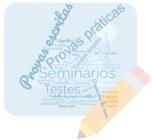
A broad range of assessment instruments was identified, including seminars, written and practical examinations, tests, case discussions, guided studies, forums, and practical assignments. This variety reflects the curricular structure outlined in the PPC of the Dentistry program (Universidade Federal de Alagoas, 2019). However, the instruments most frequently mentioned are at the lower levels of Miller’s Pyramid: knows and knows how (Gontijo; Alvim; Lima, 2015).
When the assessment instruments were applied according to their application periods, assessments targeting the knows and knows how levels predominated in the early semesters, with evidence of movement toward shows how, consistent with the initial stages of practical competency development. From the fourth semester onward, practical courses were introduced, and assessment expanded to include shows how and does levels.
Although The Dentistry PPC provides for diagnostic assessment, no references to this type of assessment were found in the documents analyzed (Universidade Federal de Alagoas, 2019).
From the fourth semester onward, continuous performance assessment predominated, particularly through daily practical evaluations conducted in laboratories and integrated clinics; indicating an underlying principle of formative assessment.
However, analysis of the syllabi revealed a significant absence of feedback and self-assessment. In the first three semesters, only one syllabus referenced feedback and another self-assessment. In the clinical training phase (4th to 9th semesters), feedback was mentioned twice, self-assessment once, and both practices together twice. There were no references to either practice in the final semester.
This scenario demonstrates that, although these formative strategies are occasionally present, they have yet to be established as structural elements of the assessment process. The lack of systematic documentation regarding these components suggests a gap in the consolidation of dialogic and reflexive assessment practices, which are essential for developing student autonomy and critical thinking.
The limited occurrence of feedback and self-assessment underscores the need for stronger integration among the dimensions of teaching, learning, and assessment. This integration is crucial to ensure curricular coherence and promote the development of competencies that extend beyond knowledge acquisition to include ethical, reflexive, and interpersonal dimensions of student training.
In formative assessment, feedback is the central mechanism for learning, enabling both students and teachers to gain insights into effective practices and areas requiring improvement, reinforcing the self-regulatory nature of learning. (Borges et al., 2014; Vitorino, 2021; Araujo, 2024).
Both the PPC and the National Curricular Guidelines (DCN) for Dentistry encourage active student participation and critical thinking, consistent with a constructivist pedagogical perspective. They advocate for the development of a professional capable of self-assessment, reflective practice, and constructive feedback within the teaching-learning process (Brasil, 2021; Universidade Federal de Alagoas, 2019).
4 CONCLUSION
This study investigated how assessment instruments and practices articulate the expected professional competencies and reflect the pedagogical coherence of the Dentistry curriculum. Assessment, conceived as an indissociable element of pedagogical planning, seeks to ensure the objectives established in course syllabi are achieved and functions as an essential component of the teaching-learning process.
Using Miller's Pyramid as an analytical framework made it possible to identify the cognitive and performance levels outlined by the assessment strategies. Although certain courses reached higher stages (shows how and does), a traditional assessment culture, based on written examinations and seminars, still predominates. This coexistence of innovative practices and conventional methods indicates a gradual transition toward assessments more closely aligned with the practical and relational competencies required in contemporary health education.
This shift becomes even clearer when considering feedback, self-assessment, and course evaluation. The limited presence of formative feedback and reflective activities suggests that only a small number of disciplines have fully incorporated a formative pedagogical perspective.
Given the time elapsed and evolving nature of curricular structures, it is likely that the program has undergone subsequent improvements. Nevertheless, this analysis provides valuable insights for future curricular revisions and contributes to the continuous improvement of teaching, learning, and assessment practices in health education. It also fosters inquiry and dialogue between faculty and students, strengthening the collective commitment to critical and reflective education in the health field.
DATA AVAILABILITY
The content underlying the research text is available in the article.
References
-
ARAUJO, F. M. A. S. Avaliação do ensino-aprendizagem e feedback no curso de odontologia de uma instituição de ensino superior: pesquisa documental. 2024. Dissertação (Mestrado Profissional em Ensino na Saúde) - Programa de Pósgraduação em Ensino na Saúde, Faculdade de Medicina, Universidade Federal de Alagoas, Maceió, 2024. Disponível em: http://www.repositorio.ufal.br/jspui/handle/123456789/14235 Acesso em: 20 jan. 2024.
» http://www.repositorio.ufal.br/jspui/handle/123456789/14235 - BARDIN, L. Análise de conteúdo. São Paulo: Edições 70, 2016.
-
BORGES, M. C. et al. Avaliação formativa e feedback como ferramenta de aprendizado na formação de profissionais da saúde. Medicina (Ribeirão Preto), Ribeirão Preto, v. 47, n. 3, p. 324-331, 2014. Disponível em: https://www.revistas.usp.br/rmrp/article/view/86685 Acesso em: 29 maio 2021.
» https://www.revistas.usp.br/rmrp/article/view/86685 -
BRASIL. Ministério da Educação. Resolução nº 3, de 21 de junho de 2021 Institui Diretrizes Curriculares Nacionais do Curso de Graduação em Odontologia. Brasília: Ministério da Educação, 2021. Disponível em: http://portal.mec.gov.br/index.php? option=com_docman&view=download&alias=191741-rces003-21&category_ slug=junho-2021-pdf&Itemid =30192 Acesso em: 28 jun. 2021.
» http://portal.mec.gov.br/index.php -
BRASIL. Ministério da Saúde. Resolução nº 510, de 7 de abril de 2016. O Plenário do Conselho Nacional de Saúde em sua Quinquagésima Nona Reunião Extraordinária, realizada nos dias 06 e 07 de abril de 2016, no uso de suas competências regimentais e atribuições conferidas pela Lei n o 8.080, de 19 de setembro de 1990, pela Lei n o 8.142, de 28 de dezembro de 1990, pelo Decreto n o 5.839, de 11 de julho de 2006. Brasília: Ministério da Saúde, 2016. Disponível em: http://conselho.saude.gov.br/resolucoes/2016/Reso510.pdf Acesso em: 20 jul. 2021.
» http://conselho.saude.gov.br/resolucoes/2016/Reso510.pdf -
CARNEIRO, V. F. et al Feedback das práticas avaliativas no curso de graduação em odontologia. CONGRESSO NACIONAL DE EDUCAÇÃO, 6., Campina Grande, 2019. Anais [...]. Campina Grande: Realize Editora, 2019. p. 1-6. Disponível em: https://editorarealize.com.br/artigo/visualizar/60509 Acesso em: 29 maio 2021.
» https://editorarealize.com.br/artigo/visualizar/60509 -
CELLARD, A. A análise documental. In: POUPART, J. et al (org.). A pesquisa qualitativa: enfoques epistemológicos e metodológicos. Petrópolis: Vozes, 2008. p. 295-316. Disponível em: https://edisciplinas.usp.br/pluginfile.php/1932953/mod_resource/content/1/CELLARD%2C%20Andr%C3%A9_An%C3%A1lise%20documental.pdf Acesso em: 3 out. 2023.
» https://edisciplinas.usp.br/pluginfile.php/1932953/mod_resource/content/1/CELLARD%2C%20Andr%C3%A9_An%C3%A1lise%20documental.pdf -
CUNHA, J. A. C. da; YOKOMIZO, C. A.; BONACIM, C. A. G. Miopias de uma lente de aumento: as limitações da análise de documentos no estudo das organizações. Revista Alcance, Itajaí, v. 20, n. 4, p. 431-446, out./dez. 2013. Disponível em: https://periodicos.univali.br/index.php/ra/article/view/4101 Acesso em: 6 jun. 2021.
» https://periodicos.univali.br/index.php/ra/article/view/4101 -
DUARTE, C. E. Avaliação da aprendizagem escolar: como os professores estão praticando a avaliação na escola. HOLOS, Natal, v. 8, p. 53-67, jan. 2016. Disponível em: https://www2.ifrn.edu.br/ojs/index.php/HOLOS/article/view/1660 Acesso em: 17 ago. 2020.
» https://www2.ifrn.edu.br/ojs/index.php/HOLOS/article/view/1660 -
FARIAS, C. M. L. et al Feedback no processo de aprendizagem: percepção dos estudantes de Odontologia em uma universidade brasileira. Rev. ABENO, Londrina, v. 15, n. 3, jul./set. 2015. Disponível em: http://revodonto.bvsalud.org/pdf/abeno/v15n3/a05v15n3.pdf Acesso em: 29 maio 2021.
» http://revodonto.bvsalud.org/pdf/abeno/v15n3/a05v15n3.pdf -
GONTIJO, E. D.; ALVIM, C. G.; LIMA, M. E. C. de C. Manual de avaliação da aprendizagem no curso de graduação em Medicina. Revista Docência do Ensino Superior, Belo Horizonte, v. 5, n. 1, p. 205-325, 2015. Disponível em: https://periodicos.ufmg.br/index.php/rdes/article/view/1980 Acesso em: 11 out. 2023.
» https://periodicos.ufmg.br/index.php/rdes/article/view/1980 - LUCKESI, C. C. Avaliação da aprendizagem escolar: estudos e proposições. São Paulo: Cortez, 2008.
-
MASETTO, M. T.; PRADO, A. S. Processo de avaliação da aprendizagem em curso de Odontologia. Revista da ABENO, Rio Grande do Sul, v. 4, n. 1, p. 48-56, 2003. Disponível em: https://revabeno.emnuvens.com.br/revabeno/article/view/1501 Acesso em: 30 maio 2021.
» https://revabeno.emnuvens.com.br/revabeno/article/view/1501 -
PANÚNCIO-PINTO, M. P.; TRONCON, L. E. de A. Avaliação do estudante - aspectos gerais. Medicina (Ribeirão Preto), Ribeirão Preto, v. 47, n. 3, p. 314-323, 2014. Disponível em: https://www.revistas.usp.br/rmrp/article/view/86684 Acesso em: 11 jan. 2023.
» https://www.revistas.usp.br/rmrp/article/view/86684 -
SÁ-SILVA, J. R.; ALMEIDA, C. D. de; GUINDANI, J. F. Pesquisa documental: pistas teóricas e metodológicas. Revista Brasileira de História & Ciências Sociais, Rio Grande, v. 1, n. 1, 2009. Disponível em: https://periodicos.furg.br/rbhcs/article/view/10351/pdf Acesso em: 6 jun. 2021.
» https://periodicos.furg.br/rbhcs/article/view/10351/pdf -
SPUDEIT, D. Elaboração do plano de ensino e do plano de aula Rio de Janeiro: UNIRIO, 2014. Disponível em: http://www.ppgd.unirio.br/unirio/cchs/eb/ELABORAO DOPLANODEENSINOEDOPLANODEAULA.pdf Acesso em: 17 jan. 2023.
» http://www.ppgd.unirio.br/unirio/cchs/eb/ELABORAO -
TENÓRIO NETO, J. F. Conhecimento docente sobre o processo de ensino avaliativo em contexto clínico do curso de Odontologia 2017. Dissertação (Mestrado Profissional em Ensino na Saúde) - Programa de Pós-Graduação em Ensino na Saúde, Faculdade de Medicina, Universidade Federal de Alagoas. Maceió, 2017. Disponível em: http://www.repositorio.ufal.br/handle/riufal/2570 Acesso em: 21 ago. 2020.
» http://www.repositorio.ufal.br/handle/riufal/2570 -
TRONCHIN, D. R.; PEDRO, A. N. da C.; REZENDE, D. P. Métodos avaliativos da aprendizagem no bacharelado na Escola de Enfermagem da Universidade de São Paulo. Avaliação: Revista da Avaliação da Educação Superior, Campinas; Sorocaba, v. 22, n. 3, p. 758-771, dez. 2017. Disponível em: https://www.scielo.br/j/aval/a/D3K6ftdqKMQ39cSHcMRgtXK/?lang=pt Acesso em: 17 ago. 2020.
» https://www.scielo.br/j/aval/a/D3K6ftdqKMQ39cSHcMRgtXK/?lang=pt -
UNIVERSIDADE FEDERAL DE ALAGOAS. Faculdade de Odontologia. Projeto Pedagógico do Curso de Odontologia da UFAL Maceió: UFAL, 2019. Disponível em: https://foufal.ufal.br/institucional/documentos/documentosparadownload/projeto-pedagogico-foufal.pdf Acesso em: 7 jan. 2024.
» https://foufal.ufal.br/institucional/documentos/documentosparadownload/projeto-pedagogico-foufal.pdf -
VITORINO, Tiago Fernandes. A diversificação da avaliação formativa, aplicação ao ensino de história 2021. Tese (Mestrado em Ensino de História) - Universidade de Lisboa, Lisboa, 2021. Disponível em: http://hdl.handle.net/10451/53750 Acesso em: 29 nov. 2022.
» http://hdl.handle.net/10451/53750
Edited by
-
Section Editor:
Rafael Ângelo Bunhi Pinto | Layout Editor: Silmara Pereira da Silva Martins
-
Translated by:
Michael George Germain Email: tradutor.michael@gmail.com

 Source: the authors.