
 How to choose institutions with responsibility in social-ecological systems? An answer by the critical systems heuristic
Abstract
This article seeks to address the question of how to make responsible decisions when choosing institutions for use and management of natural resources in Social-Ecological Systems (SES). To examine this issue, the Critical Systems Heuristics (CSH) approach was adopted using its tools for mapping the current situation and of the reference systems for limit criticism. With this theoretical-methodological framework, the consequences for those affected by the partiality of the perspectives of the social groups involved with the institutions of sharing common goods and mercantile exchange in an Amazonian location were empirically identified and differentiated. The study showed that the consequences of the partiality of the perspectives of those involved with these institutions are opposite in their implications for those affected. In addition, it showed that the clarity about the critical differences between institutional choices can contribute significantly to responsible action in public decision-making spaces in SES.
Keywords:
Institutions; social-ecological systems; responsible decision; Critical Systems Heuristics; boundary
Resumo
Este artigo aborda a questão de como tomar decisões responsáveis na escolha de instituições para uso e manejo de bens da natureza em Sistemas Social-Ecológicos (SES). Para examinar essa questão foi utilizada a abordagem da Heurística Crítica de Sistemas (HCS), valendo-se de suas ferramentas de mapeamento da situação atual e dos sistemas de referência para a crítica de limites. Com esse referencial teórico-metodológico foram identificadas e diferenciadas empiricamente as consequências para os afetados resultantes da parcialidade da perspectiva dos grupos sociais envolvidos com as instituições do compartilhamento de bens comuns e da troca mercantil em uma localidade Amazônica. O estudo mostrou que as consequências da parcialidade da perspectiva dos envolvidos com essas instituições são opostas em suas implicações para os afetados. Além disso, mostrou que a clareza sobre as diferenças críticas entre as escolhas institucionais pode contribuir significativamente na ação responsável em espaços públicos de tomada decisão em SES.
Palavras-chave:
Instituições; sistemas social-ecológicos; decisão responsável; Heurística Crítica de Sistemas; limites
Resumen
Este artículo busca abordar la cuestión de cómo tomar decisiones responsables al momento de elegir instituciones para el uso y manejo de los recursos naturales en los Sistemas Socio-Ecológicos (SES). Para examinar este problema, se utilizó el enfoque Heurístico de Sistemas Críticos (HCS), haciendo uso de sus herramientas de mapeo de la situación actual y sistemas de referencia para criticar los límites. Con este marco teórico-metodológico, se identificaron y diferenciaron empíricamente las consecuencias para los afectados que resultan de la parcialidad de la perspectiva de los grupos sociales involucrados con las instituciones de reparto de bienes comunes y de intercambio mercantil en una localidad amazónica. El estudio mostró que las consecuencias de la parcialidad desde la perspectiva de los involucrados con estas instituciones son opuestas en sus implicaciones para los afectados. Además, mostró que la claridad sobre las diferencias críticas entre las opciones institucionales puede contribuir significativamente a la acción responsable en los espacios públicos de toma de decisiones en SES.
Palabras-clave:
Instituciones; sistemas socio-ecológicos; toma de decisiones responsable; Heurística Crítica de Sistemas; límite
1. Introduction
The changes that occurred in the biophysical world due to human intervention may be leading to a prolonged period of planetary socio-environmental crisis. This situation, “[...] opens up the possibility, assessed by numerous empirical evidences, of the disappearance [also] of our species and, with it, of many other forms of life on Earth” (PEÑA, 2007 p. 31). The dimension of the impacts of human actions has even led to the proposition that we are already in a new geological epoch, which Crutzen (2002) calls the Anthropocene. In view of this situation, there is an urgent need for responsible action in the relationships that human beings establish with the biophysical world. However, what prevails is a situation of “organized irresponsibility,” characterized by Beck (2018) as the disregard of the consequences of human decisions for those affected, both human and non-human.
In social-ecological systems (SES), actors tend to assume the partiality of their perspective as representative of the totality of relevant circumstances. This situation results from the predominance of instrumental rational action, which implies the claim to objectivity of knowledge and the imposition of restrictions on responsible decision-making. This occurs because instrumental reason makes the construction of knowledge subject to the social groups’ objectives and restricts the evaluation of the unintended consequences of human actions (ULRICH, 2018). As a consequence, scientific theories and social experience face uncertainties about how to consider those affected by human decisions in decision-making processes.
Similarly, in the construction of practical-normative reason (which concerns values), there is a claim to objectivity in the definition of institutions that guide the social actors’ actions in the use and management of natural resources. Generally, a single institution is chosen without evaluation of its limits and without deliberation on the implications for those affected. This situation can be observed in the predominance of mercantile exchange in SES. The claim to objectivity in the choice of mercantile exchange is so significant that its defenders consider it the most suited institution to the supposedly innate psychological and behavioral characteristics of human beings, as perceived by Schneider and Escher (2011).
For this reason, other forms of institutional framework in the use and management of natural resources tend to be disregarded in public spaces. An example is the development of territorial public policies in Brazil that tend to assume mercantile exchange as the only relevant principle (SABOURIN, 2012), hiding its implications for the degradation of social relations and the biophysical world, as observed by Polanyi (2013). In addition, it prevents actors from seeing the diversity of possibilities for institutional choices in public spaces with preferable implications for each context. For these reasons, decision-making processes regarding the definition of institutions tend to become “blind” to the unintended consequences of normative choices.
Given this situation, would it be possible to overcome the “organized irresponsibility” resulting from the disregard of the consequences of institutional choices in SES and make responsible decisions regarding those affected? To answer this question, this article follows the path proposed by Ulrich (2017a), which seeks to distinguish the inevitable selectivity of reason in decision-making processes, opening up possibilities for evaluation of responsible action. This selectivity, and its implications, can be studied using the Critical Systems Heuristics (CSH) approach created by Ulrich (1983), which makes it possible to distinguish the limits and consequences of the social groups’ choices in SES. Thus, responsibility can be observed through the implications of the limits of the objectives of those involved for those affected but not involved. In addition, knowledge of the selectivity of institutions allows us to observe the possibility of the creation of public spaces in which responsible decisions are possible.
Therefore, the objective of this work is to verify the empirical selectivity of two institutions to examine possibilities of responsible choice in SES. For this purpose, the work is structured in four parts, in addition to this introduction. The first part presents the concept of SES and the theoretical resources of CSH to distinguish the inevitable selectivity of institutional choices and their consequences for those affected. The second part describes the methodology used based on CSH. The third part presents the selectivity of institutional choices and their implications based on the results of a study carried out in an agro-extractive region in the Amazon. Finally, in the last part, one discusses the implications that knowledge of the partiality of the actors’ perspectives can bring to reflexivity and responsibility in the choice of institutions in public spaces for decision-making.
2. CHS in the study of the consequences of choosing institutions to guide the use and management of natural resources in SES
Systems can be understood as “[...] conceptual framing devices [...],” that is, “[...] ways of framing messy situations in a purposeful manner” (REYNOLDS, 2014, p. 1386). Based on the conceptual framework of reference systems of Ulrich (2018), an SES is understood here as a system of primary interest characterized by a social and ecological context that matters to a given social group with limits (boundaries) defined by its objectives of the use and management of natural resources. These objectives are selected by the social group through institutions, defined here as a “co-distinction [facts] of a specific pattern of interaction [values] that must [empirically] or should [normatively] be followed by a social group” (ESTEVES-VASCONCELOS, 2019). The institution is not only the values, but the continuous co-distinction of these values by the social group (ESTEVES-VASCONCELOS, 2019). Therefore, the institution is dissolved when a value ceases to be co-distinguished.
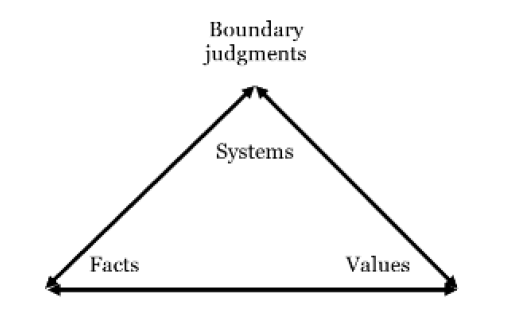
The institution fulfills the role of defining the SES limits, because the specific co-distinguished interaction patterns establish what have to or ought to be done by the social group that uses and manages natural resources. Since these values and facts are inevitably selective, they can be understood in their implications by the “eternal triangle of boundary critique” created by Ulrich (2017b), and presented in Figure 1. The eternal triangle shows that a given system of relevant interest results from the judgment of its boundaries. This judgment has a permanent relationship of close interdependence with the facts and values that matter to a social group that, for example, uses and manages natural resources. It is worth clarifying that values are not understood here as virtues, but as everything that the actors seek with their actions (MIDGLEY, 2017).

The concept of boundary judgments (one of the vertices of the triangle in Figure 1) allows us to understand how the facts and values defended by social actors define the limits of the relevant system of interest. Therefore, when choosing a certain value and certain facts as relevant, a social group is also choosing the boundaries of an SES.
Nevertheless, besides the need to distinguish the boundaries of a particular system of interest (SES), how can one distinguish the differences between systems of interest? It was for this purpose of examining the critical difference between boundary judgments that Ulrich (1983) created CHS, CHS has 12 a-priori categories to analyze how an actor selects a context that matters as a result of specific facts and values. With the theoretical resources of CHS, in addition to one being able to identify the boundaries chosen for a system of interest and the differences between systems of interest, it is also possible to point out their consequences, serving to guide responsible decision-making. These differences and consequences can be examined using the S.E.A.U. formula created by Ulrich (2017a) as presented in Figure 2.

Figure 2 shows an SES as a system of primary interest (S) that relates to its relevant environment (E), characterized by those affected that are involved with the purpose of S and can influence decisions of S (ULRICH, 2017a). In addition, the purpose of S enables the generation of affected but not involved parties (human and non-human) that belong to the context of responsible action (A) of S. Affected but not involved parties (A) have the characteristic of being affected by and not influencing the purpose of S (ULRICH, 2017a). Therefore, the purpose of S has the potential to generate unintended consequences for the relevant environment (E) and for the context of responsible action (A) (ULRICH, 2017a).
The context of responsible action (A) is delimited by the differentiation between the relevant environment (E) and the total conceivable universe (U). The total conceivable universe (U) means the totality of potentially relevant circumstances (ULRICH, 2017a). Its use serves only the critical purpose of delimiting the external part of the context of responsible action (A). The consequences of the purpose of S can be observed by the implications that each boundary judgment creates for the relevant environment (E) and the context of responsible action (A). The examination of the critical differences between the boundary judgments thus aims to reveal the partiality that results from the inevitable selectivity of the rational action of those involved (ULRICH, 2017a). Thus, it is possible to suspend the claim to objectivity in the distinction of the SES boundaries and examine its consequences for those affected but not involved.
In this sense, CHS differs from the predominant approaches in the study of institutions in SES, which presuppose objectivity (POTEETE; JANSSEN; OSTROM, 2009) and comprehensiveness in the examination of aspects considered relevant by researchers. The search for objectivity and comprehensiveness is so significant that one identified 32 characteristics considered relevant to explaining the durability of experiences of sharing common goods (AGRAWAL, 2001). Even so, these characteristics were not considered sufficient because their explanatory mechanism does not generate the durability of the experiences it intends to explain (OSTROM, 2000; AGRAWAL, 2001). This shows that the claim to objectivity and comprehensiveness implies difficulty in understanding the systems of interest to those involved.
CHS also differs from traditional approaches in the study of institutions in SES with regard to the consideration of their consequences. While traditional approaches reduce the possibilities of actors’ action only to the level of theoretical-instrumental rational action (POTEETE; JANSSEN; OSTROM, 2009), CHS considers that actors can act rationally in the search for mutual understanding, allowing them to understand the consequences of their interests and consider those affected but not involved (ULRICH, 2017). In other words, traditional approaches are based on the assumption that the actors’ actions are always motivated by individual interests (OSTROM, 1990), which implies disregarding the context of responsible action (A) of SES characterized by those affected but not involved that have no say in decision-making. In contrast, CHS allows us to examine the context of responsible action (A) of SES by considering those affected but not involved.
3. Methodological procedures
This study on the choice of institutions for the use and management of natural resources was carried out in the Santo Antônio II Agro-extractive Settlement Project (PAE), implemented in 2005, and located on Ilha do Capim, which belongs to the archipelago of the municipality of Abaetetuba, in the state of Pará (Figure 3).
The municipality of Abaetetuba is 123 km away from Belém, the capital of Pará, and belongs to the Northeast Pará Mesoregion and the Cametá microregion. PAEs are a special type of agrarian reform settlement created by the National Institute of Colonization and Agrarian Reform (INCRA) for the land regularization of traditional communities (CASTRO et al., 2022). The Santo Antônio II PAE is home to 180 agro-extractivist families, totaling approximately 940 people. The choice of this settlement for the study is due to the fact that the local existence of different institutions allows the application of the theoretical-methodological principle of boundary critique. This principle considers that the understanding of a given context depends on how each social group delimits what it considers relevant and what differences can be observed when compared with the context that matters to other social groups (ULRICH, 2017b).
The theoretical-methodological resource of boundary critique can be applied in the Santo Antônio II PAE because a study carried out by Azevedo (2019) identified in this location the simultaneous presence of institutions of sharing of common goods and mercantile exchange. This characteristic of the simultaneous presence of institutions, which can be observed in agro-extractive communities throughout the Amazon (COSTA; FERNANDES, 2016), allows observing different contexts that are important to social groups and their critical differences. In addition to the simultaneous presence of mercantile exchange and sharing of common goods, the agro-extractive community of the Santo Antônio II PAE shares with other Amazonian agro-extractive communities the characteristic of diversity of spaces for common use (floodplain, dry land, and sea) (AZEVEDO, 2019). Thus, it can be stated that the applicability of CHS and of the theoretical-methodological resource of boundary critique is not restricted to this agro-extractivist settlement or to this context.
The research modality adopted was the case study (YIN, 2015), given that it enables the generation of “context-dependent knowledge” (FLYVBJERG, 2006 p. 242). This knowledge is relevant to the CHS application for two reasons. The first reason is the need to distinguish the diversity of SES (social-ecological contexts) that are important to those involved. The second reason is that the application of the theoretical-methodological principle of the boundary critique implies the critique of the claims to universal knowledge (independent of the context) by considering practical knowledge (dependent of the context). Universal views tend to confuse the system of primary interest (S) with the total conceivable universe (U)(ULRICH, 2018). This is observed in the tendency to consider mercantile exchange as the only important institution (SABOURIN, 2012) in SES. Therefore, the contextual knowledge (FLYVBJERG, 2006) generated by the case study favors the boundary critique of views taken as universal in the study on institutions.
The study carried out on Ilha do Capim was also based on the methodological principle of systemic triangulation created by Ulrich (2017b). This principle is characterized by the reflective process of systematically applying the “eternal triangle of boundary critique” (Figure 1) to the task of boundary critique, To apply systemic triangulation, one used the CHS empirical selectivity mapping tool (‘is’ mode) (ULRICH, 2010). This tool is characterized by the application of 12 questions that identify how social actors include what they consider relevant and exclude what they consider irrelevant in a given situation, as defined by Ulrich (2018):
-
Who is the beneficiary? In other terms, whose interests are served?
-
What is the purpose? Alternatively stated, what are the ends?
-
What is the measure of improvement or measure of success? That is, how is it determined that the ends, taken together, constitute an improvement?
-
Who is the decision maker? In simple words, who is in a position to change the measure of improvement?
-
What resources and other conditions of success are controlled by the decision maker? That is to say, what conditions of success can the involved people control?
-
What conditions of success are part of the decision environment? Putting it differently, what conditions can’t the decision maker control?
-
Who is involved as a professional or expert? Otherwise stated, who is involved as a competent provider of experience and expertise?
-
What kind of expertise is considered? That is, what counts as relevant knowledge?
-
What or who is considered the guarantor of success? To clarify, where can those involved look for some assurance that improvement will be achieved?
-
Who bears witness to the interests of those affected but not involved? To explain further, who is treated as a legitimate stakeholder, representing those stakeholders who cannot speak for themselves, including future generations and non-human nature?
-
What guarantees the emancipation of those affected from the premises and promises of those involved? To specify, where is the legitimacy?
-
What worldview is decisive? In other terms, what are the different visions of ‘improvement’ considered, and how are they reconciled?
The application of the methodological principle of systemic triangulation, using the 12 questions, seeks to identify the empirical selectivity of each institution based on the facts and values that guide it and, at the same time, to observe the differences between institutions. The 12 questions enable the understanding of the anatomy of selectivity from the perspective of the social actors that participate in the use and management of natural resources. Moreover, these questions allow us to distinguish the different elements of the S.E.A.U. formula presented in Figure 2. While questions 1, 2, 3, 4, 5, 7, 8, and 9 allow us to examine the system of primary interest (S), question 6 examines the relevant environment (E), and questions 10, 11, and 12 examine the context of responsible action (A).
Data on empirical selectivity from the perspective of the actors involved in the sharing of common goods and in mercantile exchange were collected using a structured questionnaire. This questionnaire included the 12 questions from the CSH ‘is’ mode in order for one to understand how the actors include and exclude what they consider relevant in each of the institutions studied. The questions were adjusted throughout the research to adapt them to the characteristics of the local language and to enable the interviewees’ understanding. Data collection was performed between 2021 and 2022 by means of 53 interviews.
Three qualitative criteria were used in an integrated manner to define the size of the interviewee sample: the diversity of interviewees and experiences based on Gonçalves and Lisboa (2007); snowballing, based on Mendes and Boeira (2022), and the “saturation” criterion, characterized by the situation in which new interviews do not add anything new, based on Miguel (2009, p. 35). Based on the diversity criterion, people with different experiences regarding the situation under analysis were interviewed, which also meant that the “saturation” criterion was satisfied with the number of interviews (53) conducted. Since each of the interviewees is involved in up to five different experiences of sharing common goods or mercantile exchange, even this number of interviews presented a lot of repetition in the information collected, without anything new being observed.
Table 1 identifies the institutions, spaces of use, natural assets, and the types of interviewees selected based on the three integrated criteria adopted in the research.
The research was approved by the Ethics Committee of the Federal University of Santa Catarina (UFSC) through the Brasil Platform, and is registered under the CAAE code: 42599020.0.0000.0121. Based on the guidelines of the Ethics Committee, all interviewees signed the Informed Consent Form (ICF) at the time of the interview.
4. Results and discussion
This section presents and discusses the results of the interviews (n=53) about empirical selectivity and critical differences between the perspectives of those involved in the sharing of common goods and in the mercantile exchange observed in Ilha do Capim’s SES. The boundary judgments of the institutions studied and their critical differences are presented in Table 2, which answers the 12 questions of the CSH ‘is’ mode, presented in a more brief format. Each question in Table 2 identifies the relevant system of interest (S, E, or A) that the examination of each heuristic category selects, in coherence with the S.E.A.U. formula in Figure 2. Based on the results presented in Table 2, one analyzes the different implications of the boundary judgments of each institution for the context of responsible action (A) and how the examination of these critical differences can contribute to responsible decision-making in public spaces for decision-making about SES.
As shown in Table 2, the institution of sharing common goods is constituted by the value of merit, which differs from meritocracy. Merit is a value that guides intersubjective assessments in the sharing of common goods, while meritocracy refers to the valuation of individual action. In its turn, the institution of mercantile exchange is based on the value of competitive opportunities.
The sharing of common goods and mercantile exchange have critical differences with opposite implications for the context of responsible action (A). This situation can be observed in the answers to CSH questions 10, 11 and 12 described in Table 2. Those involved in the sharing of common goods, when perceiving the consequences of their technical-productive operations, tend to include those affected but not involved as a context that matters. An example of this is the prohibition of the use of poison extracted from the cunambi (Clibadium surinamense) (plant) in shared fishing areas. The ban was imposed when two implications for those affected but not involved were perceived: the death of fish and turtles that are not used for consumption and of those that have not yet reproduced, besides the contamination of drinking water for all families, even those that do not fish.
In contrast, those involved in the mercantile exchange, when perceiving the implications of their technical-productive operations, tend to exclude those affected but not involved and transfer responsibility for the unintended consequences of the technical-productive operations to agents outside the exchange relations. Thus, taking the previous example, the cunambi poison continues to be applied by the fishermen involved in the mercantile exchange, even if they have realized the consequences for those affected but not involved, and the responsibility for improving the situation falls to the police, an agent outside the exchange relations.
Knowledge of the critical differences between institutions, as distinguished in Table 2, enables the use of boundary judgments as support for the critical examination of the inevitable selectivity of value choices and the rupture with normative objectivity in public spaces for decision-making. For Ulrich (2017a), clarity about the inevitable selectivity of rational action hinders dogmatism and the claim to objectivity in the public space because actors see that their perspective is selective and, consequently, partial. With this, actors can minimize their tendency to confuse their primary interest system (S) with the total conceivable universe (U) in a space of normative choice (ULRICH, 2018).
In this context, the claim to objectivity becomes fragile because the manifestation of alternative boundary judgments makes the mask of objectivity slip and the creation of hidden agendas loses relevance because critical differences expose interests that have not been submitted to public scrutiny (Ulrich, 2017a). Therefore, knowledge of this rational selectivity of those involved with different institutions has the potential to significantly improve the current and recurring situation of choosing mercantile exchange as the only relevant institution in public spaces for decision-making, without examining the unintended consequences for those affected but not involved (the context of responsible action (A)). To understand this potential for reflective use of critical differences between boundary judgments, we present a hypothetical situation for applying the results of Table 2 for normative choice in a public space for decision-making.
Let us imagine a situation involving the development of a public policy aimed at fishing activities in Ilha do Capim’s SES, in which the government agent proposes the objective (CSH question 2) of increasing the fishermen’s profitability. A possible intervention by the peasants would be to publicly state to the government agents that the choice of the objective of profitability (typical of mercantile exchange) is empirically selected by the value of competitive opportunities, which tends to exclude those affected but not involved because they are seen as negative for the interest system (S) of the social group. For Ulrich (2017b), an exposition of boundary judgments like this would highlight the consequences of the inevitable selectivity from the perspective of the government agent.
To defend their own perspective, the peasants could express a critical difference to the boundary judgment of the objective proposed by the government agents by presenting an alternative choice of objective. To this end, they could defend the objective of rewarding the equivalent (the fair value) resulting from the effective contributions of those involved (typical of the sharing of common goods) due to its positive implications for the context of responsible action (A) of fishing activities. In other words, peasants could justify that the objective of generating equivalence (fair value) favors the consideration of the consequences for those affected but not involved. With this, it would be possible to argue that the objective of generating equivalence implies positive consequences in the consideration of those affected who have no voice. For Ulrich (2017b), a proposition like this would imply a critical difference that would make it difficult for government agents to argue that their proposed objective (S) represents the total conceivable universe (U), weakening claims to objectivity in public spaces for decision-making.
Also, considering the hypothetical case, government agents interested in the mercantile exchange could also use the clarity about their own boundary judgments to oppose the limit of the objective of generating equivalence proposed by the peasants. With this, it would become difficult for both sides (peasants and government agents) to hide the inevitable selectivity (and, consequently, the partiality) of their perspectives and implications for those affected but not involved (A). This situation is not merely hypothetical if we consider that Reynolds and Williams (2012 p. 130) critically evaluated projects aimed at equity (justice) in access to resources, noting that, in the cases analyzed, “worst-off groups are further disenfranchised.”
In a systematic literature review, Hutcheson et al. (2023) found that CSH has been applied to a wide range of problematic contexts, ranging from agriculture to health, including the environment, education, energy and public services, among others. According to these authors, CSH is most frequently applied to address situations of coercion or power asymmetries, as well as to defend marginalized groups, as may be the case in the use and management of natural resources in PAEs. In terms of public policies, Cintra and Cavalcanti-Bandos (2014) applied CSH to analyze critical differences in public policies for digital inclusion in the municipality of Franca, in the state of São Paulo. These authors observed that the limits of this public policy did not generate negative consequences for those affected but not involved. Therefore, it was possible to assess that it was an acceptable initiative when strictly considering its implications for those who have no voice.
Tirivanhu et al. (2016) used CSH to support a conceptual framework to systematically evaluate the impacts of boundary judgments on the design of a “Community Comprehensive” initiative in Zimbabwe, concluding that understanding the implications of the design is fundamental to its empowerment and emancipatory goals. For Riswanda et al. (2017), in a case study based on ethnographic research on prostitution in Indonesia, the CSH application provides a means of testing public policy ideas considering the range of values present in their context. This would allow for informed value judgments that consider as much freedom and diversity as possible, without compromising others’ rights.
The possibility of critical reflexivity generated by the CSH application was also observed by Ulrich and Reynolds (2010) in the evaluation of participatory development projects. For Ulrich (2010), critical reflexivity does not mean that a collective definition of the situation examined publicly will never be reached, but only that neither side will be able to rely on claims to objectivity and dogmatism in defending their value assumptions. Thus, the critical and reflexive examination of the boundary judgments and their critical differences for the context of responsible action can be made in public spaces for decision-making and the recurring situation of “organized irresponsibility,” denounced by Beck (2018), could be improved.
5. Final considerations
The process of choosing institutions for the use and management of natural resources in SES often occurs without considering their context of responsible action. This occurs because actors see their specific institutional choice as if they were considering all relevant issues in a given situation. In Ilha do Capim’s SES, this is the case, for example, of actors who choose the institution of mercantile exchange. This occurs due to the current tendency to see it as the only viable institution to regulate technical-productive operations and economic-ecological flows in this SES, as observed by Sabourin (2012) in other locations. Therefore, actors recurrently select the limits of technical-productive operations and economic-ecological flows in an SES with a claim to objectivity and without clarity of their implications for those who will have to live with the consequences of their decisions.
The answer to the question of how to choose institutions with responsibility in SES by applying CSH is, therefore, that it should be done by criticizing the limits of the systems of interest to those involved, for at least four reasons. The first reason is that this approach allows for a clear distinction of the boundary judgments of the institutions in SES. The second reason is that the examination of these judgments allows the institutions to be submitted to processes of critical evaluation in public spaces. The third reason is the possibility of improvement of recurring situations of normative choice with a claim to objectivity, as occurs with the choice of mercantile exchange. Finally, and resulting from the previous reasons, the fourth reason is the possibility of consideration of those affected but not involved that belong to the context of the responsible action (A) of SES. With this, decision-makers can remedy their situation of “blindness” in considering those who will have to live with the consequences of their decisions in SES.
CSH is a relatively underutilized approach when compared to other systemic methods but it is, in essence, versatile for allowing the understanding of different perspectives on issues of interest (HUTCHESON et al., 2003). Knowing the limits created by the choice of institutions makes it possible to distinguish the implications of the primary interest system (S) for the relevant environment (E) and for the context of responsible action (A), opening up the possibility of consideration of those affected but not involved in SES. For this purpose, it is essential to study the diversity of specific institutions and their limits to create conditions for critical reflexivity in institutional choice processes. Thus, the distinction of the context of responsible action (A) creates the possibility of critical evaluation and consideration of the unintended consequences of decision-making processes, something fundamental in the current context of the Anthropocene emergence.
Acknowledgments
We would like to thank the Coordination for the Improvement of Higher Education Personnel (CAPES) for the financial support for this research.
References
- AGRAWAL, A. Common property institutions and sustainable governance of resources. World Development. v. 29 n. 10 p. 1749-1672, 2001.
- ALIER, J. M. O ecologismo dos pobres: conflitos ambientais e linguagens de valoração. São Paulo: Contexto, 2007.
- AZEVEDO, D. P. A construção social do mercado de açaí para fortalecer a gestão territorial na Ilha do Capim, no município de Abaetetuba no estado do Pará. Dissertação de mestrado. UNB, 2019.
- BECK, U. Sociedade de risco mundial: em busca da segurança perdida. Leya, 2018.
- CASTRO, R. R. A. de; SIMÕES, A; SCHLINDWEIN, S. L. Aprendendo a viver no Antropoceno: uma abordagem sistêmica para a governança de Projetos de Assentamentos Agroextrativistas. Novos Cadernos NAEA, v. 25, n. 2, p. 129 - 152, 2022.
- CINTRA, F. G; CAVALCANTI-BANDOS, M. F. A utilização da metodologia Critical Systems Heuristics (CSH) para a avaliação de políticas públicas de inclusão digital. In: 10º Congresso Brasileiro de Sistemas. 2014.
- COSTA, F. de A; FERNANDES, D. A. Dinâmica agrária, instituições e governança territorial para o desenvolvimento sustentável da Amazônia. Revista de Economia Contemporânea, v. 20, n. 3, p. 517-518, 2016.
-
CRUTZEN, P. J. Geology of mankind. Nature, v. 415, n. 6867, p. 23, Jan. 2002. DOI: http://dx.doi.org/10.1038/415023a
» http://dx.doi.org/10.1038/415023a - D’ALISA, G. Bienes comunes: las estructuras que conectan. Ecología política, n. 45, p. 30-41, 2013.
- ESCOBAR, A. Autonomía y diseño: la realización de lo comunal. Editorial Universidad del Cauca, 2019.
- ESTEVES-VASCONCELLOS, M. A nova teoria geral dos sistemas: dos sistemas autopoiéticos aos sistemas sociais. Simplissimo Livros Ltda, 2019.
- FEENY, D., BERKES, F., McCAY, B. J., & ACHESON, J. M. A tragédia dos comuns: vinte e dois anos depois. In: DIEGUES, A. C. S. Repensando e recriando as formas de apropriação comum dos espaços e recursos naturais. Espaços e recursos naturais de uso comum. Tradução. São Paulo: NUPAUB, 2001.
- FLYVBJERG, B. Five misunderstandings about case-study research. Qualitative inquiry, v. 12, n. 2, p. 219-245, 2006.
- FUNTOWICZ, S; RAVETZ, J. Ciência pós-normal e comunidades ampliadas de pares face aos desafios ambientais. História, ciências, saúde - Manguinhos, v. 4, p. 219-230, 1997.
- GONÇALVES, R. de C; LISBOA, T. K. Sobre o método da história oral em sua modalidade trajetórias de vida. Revista Katálysis, v. 10, n. SPE, p. 83-92, 2007.
- HUTCHESON, M; MORTON, A; BLAIR, S. Critical systems heuristics: a systematic review. Systemic Practice and Action Research, p. 1-16, 2023.
- MENDES, J. F. A; BOEIRA, S. L. Representações sociais sobre ‘ser atingido’ por rejeitos de minério: um estudo sobre os afetados pela barragem de Fundão. Desenvolvimento e Meio Ambiente, v. 60, p. 590-612, 2022.
- MIDGLEY, G. Moving beyond value conflicts: systemic problem structuring in action. In: Proceedings of the 61st Annual Meeting of the ISSS-2017 Vienna, Austria. 2017.
- MIGUEL, L. A. Dinâmica e diferenciação de sistemas agrários. PLAGEDER, 2009.
- OLSON, M. The logic of collective action [1965]. In: Contemporary Sociological Theory. Craig Calhoun, Joseph Gerteis, James Moody, Steven Pfaff, Indermohan Virk (Eds.) p. 124 - 133, 2012.
- OSTROM, E. Governing the commons: The evolution of institutions for collective action. Cambridge university press, 1990.
- OSTROM, E. Understanding Institutional Diversity. Princeton: Princeton University Press, 2005.
- PEÑA, F. G. Sobre la epistemología ecológica. In: GARRIDO, F; MOLINA, G. M; SERRANO, J. L; SOLANA, J. L. El paradigma ecológico en las ciencias sociales. Icaria, p. 31 - 53, 2007.
- PLOEG, J. D. van der. Camponeses e Impérios Alimentares: lutas por autonomia e sustentabilidade na era da globalização. UFRGS Editora, 2008.
- POLANYI, K. A grande transformação. Leya, 2013.
- POTEETE, A; JANSSEN, M; OSTROM, E. Multiple methods in practice: collective action and the commons. Indiana University, 2009.
- REYNOLDS, M. Triple-loop learning and conversing with reality. Kybernetes, 43(9/10), 2014 p. 1381-1391.
- REYNOLDS, M; WILLIAMS, B. Systems thinking and equity-focused evaluations. In Michael Bamberger and Marco Segone (eds) (2012). Evaluation for Equitable Development Results. New York, UNICEF, p. 115-141, 2012.
- RISWANDA; MCINTYRE-MILLS, J; CORCORAN-NANTES, Y. Prostitution and Human Rights in Indonesia: a critical systemic review of policy discourses and scenarios. Systemic Practice and Action Research, v. 30, p. 213-237, 2017.
- SABOURIN, E. Reciprocidade e análise de políticas públicas rurais no Brasil. RURIS -Revista do Centro de Estudos Rurais, p. 53-90, 2012.
- SCHNEIDER, S; ESCHER, F. A contribuição de Karl Polanyi para a sociologia do desenvolvimento rural. Sociologias, v. 13, p. 180-219, 2011.
- TIRIVANHU, P; MATONDI, P. B.; SUN, D. Systemic evaluation of a comprehensive community initiative based on boundary critique in Mhakwe ward in Zimbabwe. Systemic Practice and Action Research, v. 29, p. 541-564, 2016.
- ULRICH, W. Some difficulties of ecological thinking, considered from a critical systems perspective: a call for critical holism. Systems Practice, 6, n. 6, 1993, p. 583-611.
- ULRICH, W. Critical heuristics of social planning: A new approach to practical philosophy. Wiley, 1983.
- ULRICH, W. Reflections on reflective practice (5/7): Practical reason and rational ethics: Kant. Ulrich’s Bimonthly, 2009.
- ULRICH, W. Systems Thinking as if People Mattered. Part 2/2: Practicing Boundary Critique. Werner Ulrich’s Home Page: Ulrich’s Bimonthly, 2017a.
- ULRICH, W. The Concept of Systemic Triangulation. Its Intent and Imagery. Werner Ulrich’s Home Page: Ulrich’s Bimonthly, 2017b.
- ULRICH, W; REYNOLDS, M. Critical systems heuristics. In: Reynolds, Martin and Holwell, Sue (Eds.) Systems Approaches to Managing Change: A Practical Guide. London: Springer, 2010 p. 243-292.
- ULRICH, W. Reference Systems for Boundary Critique. A Postscript to «Systems Thinking as if People Mattered». Werner Ulrich’s Home Page: Ulrich’s Bimonthly, 2018.
- YIN, R. K. Estudo de Caso: Planejamento e métodos. Bookman editora, 2015.
-
Data Availability Statement:
The datasets supporting this research are available only upon request.Availability upon request is necessary to ensure that the authors can uphold the confidentiality and privacy criteria established in the Informed Consent Form (ICF) signed by the interviewees during the course of the study.
The datasets supporting this research are available only upon request.
Availability upon request is necessary to ensure that the authors can uphold the confidentiality and privacy criteria established in the Informed Consent Form (ICF) signed by the interviewees during the course of the study.

 Font:
Font: 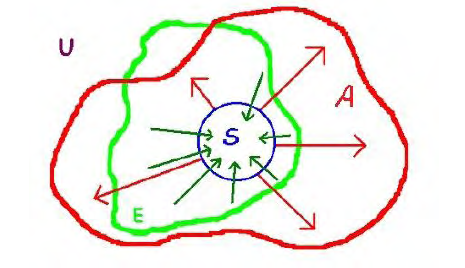 Font:
Font: 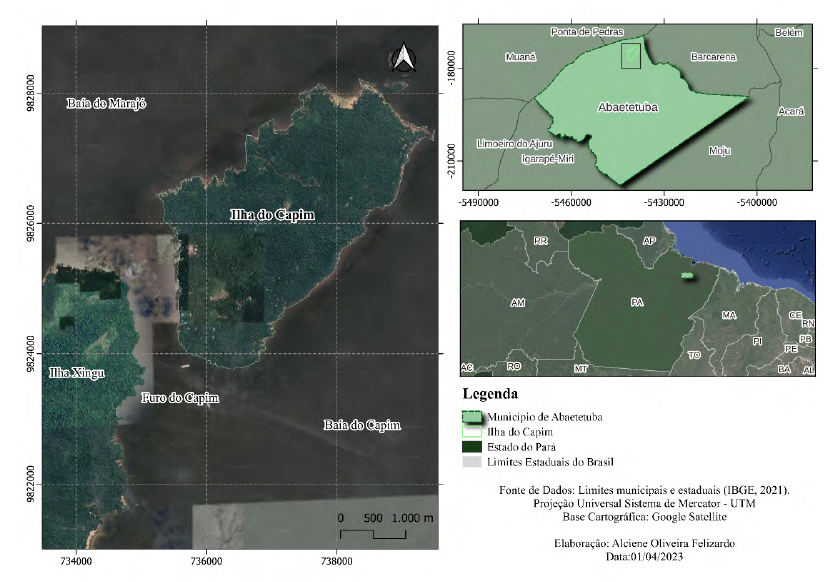 Font: Authors (2023).