
 Diagnosis of Non-Conventional Food Plants in School Teams in the Microregion of Itapetinga-Ba
Abstract
Non-Conventional Edible Plants (NCEPs) are species not commonly used in the population’s diet, despite being sources of important nutrients and possessing medicinal properties that are often unknown to the general public and the scientific community. Therefore, this study aimed to diagnose NCEPs in schools in the Itapetinga, Bahia, microregion by analyzing responses to a semi-structured questionnaire. The questionnaire addressed knowledge about NCEPs, their consumption, by age group, gender, and school activity. The survey results showed that older participants were familiar with these species, but their consumption is quite low among those interviewed. Younger participants, in general, have only heard of these plants and have never consumed them, reinforcing the need to revive their use, particularly due to their nutritional and often medicinal properties.
Keywords:
Healthy eating; PANC; food security; food education; school nutrition
Resumo
Plantas Alimentícias Não Convencionais (PANCs) são espécies não comumente utilizadas na dieta da população, apesar de serem fontes de nutrientes importantes, além de apresentarem propriedades medicinais que, muitas vezes, são desconhecidas da população e da comunidade científica. Neste sentido, este trabalho teve como objetivo realizar um diagnóstico sobre as PANCs em escolas da microrregião de Itapetinga-BA, através da análise das respostas a um questionário semiestruturado, que teve como abordagem o conhecimento sobre as PANCs, relacionado a seu consumo, por faixa etária, gênero e atividade exercida no contexto escolar. Os resultados da pesquisa mostraram que os participantes mais idosos conheciam essas espécies, porém, o consumo das mesmas é bem reduzido entre os entrevistados. Já a população jovem, de modo geral, apenas ouviu falar de tais plantas e nunca consumiram, o que reforça a necessidade de se resgatar a utilização destas plantas, principalmente devido às suas propriedades nutricionais e, muitas vezes, medicinais.
Palavras-chave:
Alimentação saudável; PANC; segurança alimentar; educação alimentar; nutrição escolar
Resumen
Plantas Alimenticias No Convencionales (PANC) - especies no utilizadas comúnmente en la dieta de la población, a pesar de ser fuentes de importantes nutrientes, además de tener propiedades medicinales muchas veces desconocidas por la población y la comunidad científica. En este sentido, este trabajo tuvo como objetivo realizar un diagnóstico de las PANC en escuelas de la microrregión de Itapetinga-BA, a través del análisis de las respuestas a un cuestionario semiestructurado, que se centró en el conocimiento sobre las PANC, relacionado con su consumo, por rango. edad, género y actividad realizada en el contexto escolar. Los resultados de la encuesta mostraron que los participantes de mayor edad conocían estas especies, sin embargo, su consumo es muy bajo entre los entrevistados. La población joven, en general, sólo ha oído hablar de este tipo de plantas y nunca las ha consumido, lo que refuerza la necesidad de reactivar su uso, principalmente por sus propiedades nutricionales y, muchas veces, medicinales.
Palabras-clave:
Alimentación saludable; PANC; seguridad alimentaria; educación nutricional; nutrición escolar
Introduction
Human health depends largely on plants, as millennia ago, humans learned to use them for their physical well-being, whether for curing diseases, providing food, or providing shade and fresh, purified air for the planet and its inhabitants. Vasconcellos et al. (2018) define food security as the right to access quality food in sufficient quantities without compromising other essential needs. These conditions have become increasingly difficult for the population to achieve due to the decline in purchasing power caused by social inequality, linked to rising inflation on food products. Ribeiro and Pilla (2014) present food security as a public health condition, as the modernization experienced by a portion of the world’s population has drastically altered people’s eating patterns, increasingly highlighting foods high in fat and sugar. Healthy, environmentally friendly eating is related to food production that considers the preservation of biodiversity and ensures varied consumption and the preservation of regional foods (SOUZA, 2021).
In Brazil, a large portion of the population lacks access to adequate food and suffers from food insecurity. However, this situation can be addressed by introducing practices that enable access to and knowledge of healthy food, always respecting dietary, cultural, environmental, economic, and sustainable diversity (SOUZA, 2021). These practices can be defined as instructions and/or guidance on how to produce and consume plants and vegetables, which often go unnoticed by those who need them.
In 2022, the Second National Survey on Food Insecurity in the Context of the COVID-19 Pandemic in Brazil revealed that 33.1 million people do not have enough to eat (14 million new Brazilians facing hunger). According to the survey, more than half (58.7%) of the Brazilian population lives with some degree of food insecurity: mild, moderate, or severe (REDE PENSSAN, 2022). Mild food insecurity involves concern or uncertainty about future food access and inadequate food quality, due to strategies aimed at avoiding the family’s food supply. Moderate food insecurity involves a reduction in the quantity of food available among adults, disrupting eating patterns due to food shortages. Severe food insecurity involves a drastic reduction in the amount of food available to all family members-in this condition, hunger is already established.
Food insecurity is most acute in rural Brazil, at 7.1%, while in urban areas it affects up to 4.1% of the population. The North and Northeast regions have the highest rates of food insecurity, accounting for 10.2% of households in the North and 7.1% in the Northeast, while in the South and Southeast, these percentages drop to 2.2% and 2.9%, respectively (REDE PENSSAN, 2022).
Since the dawn of time, humans have needed plants for food, medicine, thermal comfort, and other purposes. To this end, their characterization and classification as harmful and useful, prolific, nutritionally diverse, and knowledge about their uses were essential. However, much of this knowledge has not been fully developed, and others have been lost or restricted to small groups. This has led to the neglect of several Non-Conventional Food Plants (NCFPs), leading to their disuse in both urban and rural communities.
In this sense, disseminating knowledge from traditional populations about food and medicinal plants and other environmental issues related to cultivation of native and exotic species is as relevant as that produced in academic circles, related to the phytochemical characterization and nutritional potential of each species (PINHEIRO, 2019). PANCs are species that are not common on the tables of urban dwellers, not part of their daily eating habits, and also include parts of vegetables that are not used in conventional species, such as the “navel” of the banana plant, sweet potato leaves, or pumpkin leaves, flowers, shoots, and seeds (KINUPP; LORENZI, 2014). PANCs are regional, non-globalized, hardy, and resilient species, often occurring spontaneously, without a structured production chain, in addition to presenting outstanding nutritional potential (MADEIRA; KINUPP, 2016). Despite their long history of use, they fell into disuse over time, being replaced by foods from simpler, less nutritious, and economically more valuable sources, thus directly affecting the health of each individual (SOUSA, 2020).
According to Derani and colleagues (2017), Non-Conventional Edible Plants fit into the context of healthy and sustainable diets because, in addition to being nutritious and tasty, they are important for preserving the biodiversity of Brazilian fauna and flora.
Therefore, this study aimed to assess the knowledge, consumption, interest, and availability of Non-Conventional Food Plants (NFPs) among the school community (administrators and teachers) of Itapetinga, Bahia, and surrounding regions. With the aim of helping to solve the problem of neglecting Non-Conventional Food Plants (NFPs) in the diet, combined with the possibility of promoting better food security conditions for the local population, the need arose to consider ways to disseminate them to the regional community and society as a whole.
Materials and methods
The assessment was conducted from October to December 2022 in the Itapetinga microregion, Bahia, using semi-structured questionnaires, including the Informed Consent Form (ICF). This questionnaire was used to understand the importance of the research, followed by questions characterizing the interviewees and questions about their knowledge related to Unconventional Edible Plants. The questionnaires were administered online, using the Google Forms platform, to facilitate participation by a larger number of participants. The project was submitted to the UESB Research Ethics Committee (CEP) and approved by opinion number 5,290,777.
The questionnaires consisted of two sections: one containing questions to characterize the participants and the other with objective, multiple-choice, and multiple-mark questions. The questionnaire began with the reading of the Informed Consent Form and the option to voluntarily participate in the research, following the methodology of Minayo and Costa (2018), in agreement with Chizzotti (2018), who characterize it as qualitative research, considering that the interpretation of the results was subjective.
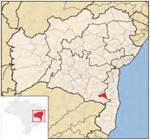
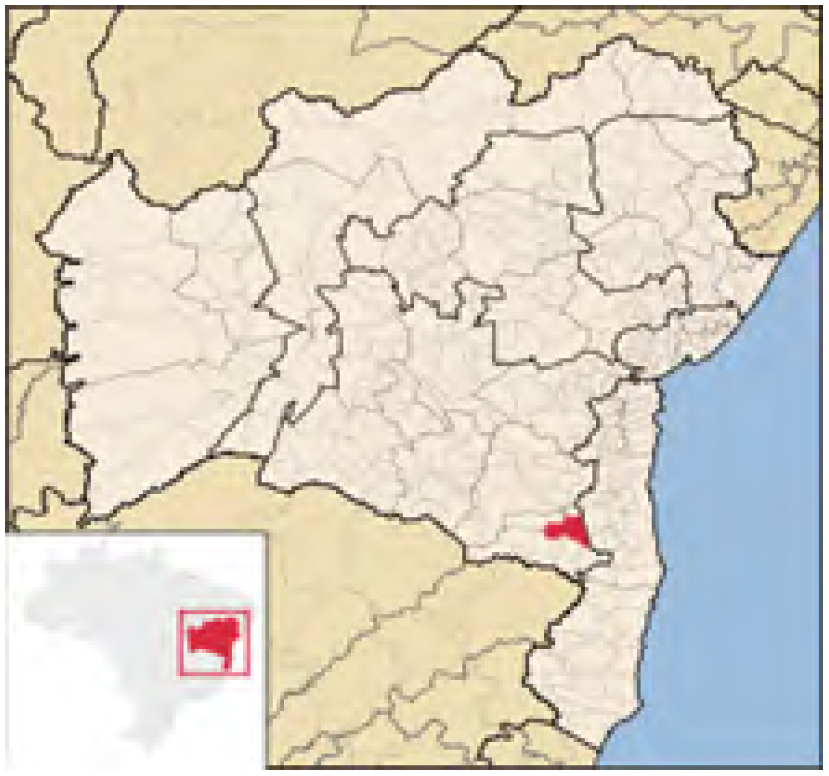
Itapetinga is a municipality located in the southwest region of Bahia (Figure 1), with a territorial extension of 1,651.158 km², an estimated population of 77,408 people and a population density of 41.95 inhabitants/km² (IBGE, 2021). Neighboring the municipalities of Itororó, Caatiba, and Macarani, Itapetinga is located 76 km southeast of Vitória da Conquista and 577 km from Salvador (the capital of Bahia). Located at an altitude of 293 meters, Itapetinga has the following geographic coordinates: Latitude: 15° 15’ 23’’ South, Longitude: 40° 15’ 27’’ West.
Information was collected through responses to the semi-structured questionnaire, which addressed participants’ knowledge about PANCs, linked to age, gender and profession.
Results and Discussion
It is important to emphasize that the assessment was directed at the school community, primarily administrators, teachers, and staff, as they are directly responsible for student education and are crucial not only for promoting PANCs in schools but also for ensuring they are incorporated into the daily diets of elementary school students.
Interviewee Characterization
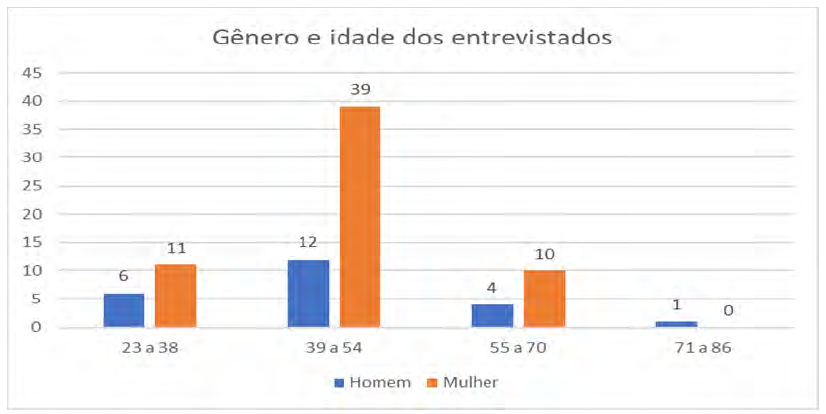
Of the 85 respondents, 70.6% (60) were female and 29.4% (25) were male. The ages ranged from 25 to 83 years old, with a predominance of those aged 39 to 54 (Figure 2).
Regarding the question about education level, 67 respondents, corresponding to 78.8%, responded that they had postgraduate degrees, and the remainder held undergraduate degrees (16) and bachelor’s degrees (2) in their respective fields. When asked about their place of residence, 47% of those interviewed (51 people) responded that they lived in Itapetinga, followed by 9% living in Maiquinique, 3.5% living in Santa Cruz da Vitória, Macarani, as well as Itororó, Firmino Alves, Caatiba, Iguaí, Ibicuí, Itambé, Itarantim and Nova Canaã, who also responded to the questionnaire.
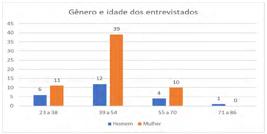
Distribution according to gender and age of respondents in the survey on Non-Conventional Edible Plants in school communities in the micro-region of Itapetinga-BA
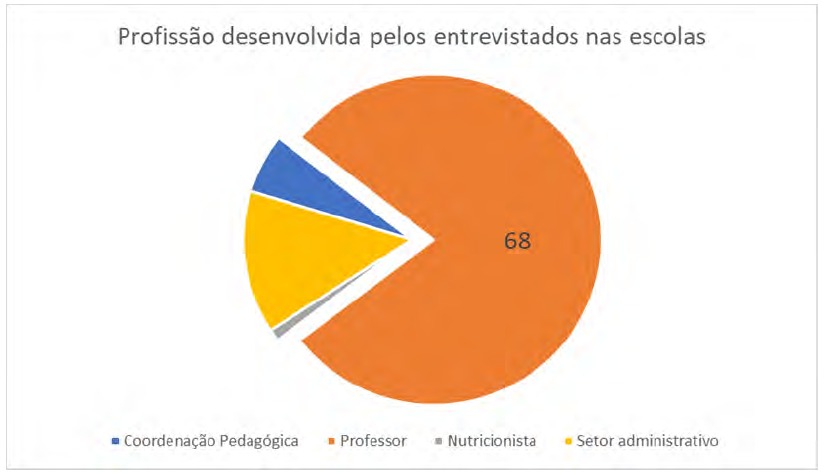
When asked about what activity they perform in school units, 68 interviewees, equivalent to 80%, currently work as teachers, 5 as pedagogical coordinators, 12 as administrative technicians and 1 as nutritionist (Figure 3).
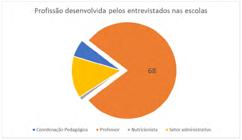
Profession developed by interviewees in the research on Non-Conventional Edible Plants in school communities in the micro-region of Itapetinga-BA
The assessment allowed the topic of PANCs to be brought into the school environment, enabling education professionals to learn about their nutritional and medicinal properties, their use in everyday nutrition, both inside and outside of school, and encouraging their consumption and cultivation. At the same time, the assessment brought PANCs into the classroom, as a topic in various subjects and in different grades, enabling the school community to acquire knowledge about this class of foods.
Knowledge of Non-Conventional Edible Plants
In the second section of the questionnaire, the question about knowledge of the term “PANCs,” 50 respondents, equivalent to 58.8%, responded that they were already familiar with the term, and some immediately cited popularly known species, such as: taioba, serralha, arrowroot, São Caetano melon, palm, among others. In this same question, they were able to identify, through photos, the species they knew and describe how they were used, if they had consumed them. Of the 85 people who responded to the questionnaire, 17, or 20%, were unfamiliar with the PANC species listed on the form, or had little knowledge of them but did not consume these plants. A large number of people do not consume them daily but have had contact with them on other occasions.
Interestingly, people who were unfamiliar with or did not consume these PANCs were willing to try them, while only three respondents were somewhat resistant.
This lack of knowledge among some can be explained by Brazil’s conventional agrifood system, with a limited number of species, in addition to a hegemonically industrialized and limited dietary routine. This ultimately contributes to the devaluation and lack of knowledge of several plant species, most of which are native, which have high economic and nutritional potential, despite having one of the greatest biodiversity of fauna and flora in the world (SILVA et al, 2022). However, numerous plant species have great environmental significance and prominence, as well as untapped nutritional richness and economic potential. This underscores the importance of this type of research to encourage the use and implementation of these species in the population’s diet.
There is significant variation among the most commonly consumed PANCs in Brazilian regions, which led this study to identify those most commonly consumed in the microregion studied (Table 1).
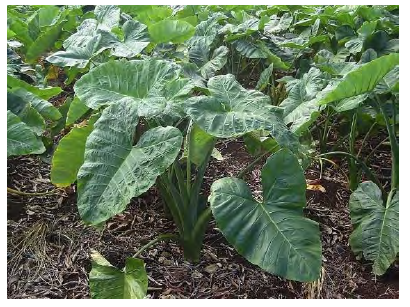
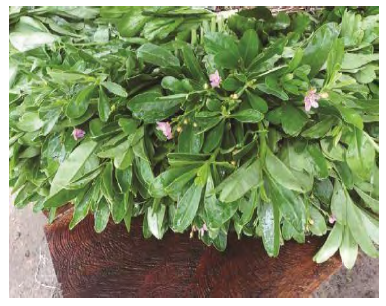
To strengthen the possibility of including these plants in school meals, it was found that a very high percentage (93%) of schools represented in this study offer school meals, as they are part of the public education system. Only a small percentage (12%) have nutritionists to monitor their nutrition, demonstrating that school meal preparation is often done without the assistance of a qualified professional. From the list of PANCS presented in the questionnaire, the following species were recognized: 89% of respondents identified taioba (Xanthosoma taioba), (Figure 4), followed by the cow’s tongue (Talinum paniculatum) (Figure 5), with 64%, ora-pro-nobis (Pereskia aculeata) with 57%, chayote (Cyclanthera pedata) with 55%, Table 1. Respondents also referred to the use of some species for medicinal purposes, such as arrowroot tea and ora-pro-nobis capsules.
Plants can be used as sources of minerals, vitamins, proteins, as well as antioxidants and antimicrobials. Xanthosoma sagittifolium (L.) Schott, popularly known as taioba, is a vegetable in the Araceae family, generally cultivated in tropical regions of south-central America and in some countries in Asia and Africa. The plant’s leaves are edible and resemble kale. It is considered an unconventional food plant (UFP), rich in calcium, iron, zinc, magnesium, proteins, carotenoids, lycopene, chlorophyll, and vitamin C (ARAÚJO et al., 2019).
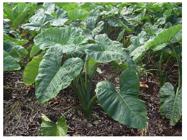
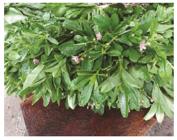
Taro leaves are used sautéed or cooked with chicken, ground beef, or rice, in bean farofas, omelets, and soufflés. Its rhizomes can be used like yams (BRASIL, 2010).
According to Souza (2018), taro is widely used in regions such as China, the Americas, and West Africa as a good source of dietary fiber and carbohydrates. Its rhizome ranks sixth among the most important roots in the world, after cassava, potatoes, sweet potatoes, and yams. It is a food option for people with type 2 diabetes mellitus, as it slows glucose absorption and reduces postprandial hyperglycemia.
The consumption of vegetables in general, whether conventional or unconventional, offers several benefits, including: they are light and easily digestible; they promote satiety, providing few calories; they are rich in fiber, supporting proper bowel function; It contains carbohydrates, minerals, vitamins, and water, all important nutrients for the proper functioning of the body (BRASIL, 2010).
Araruta, a member of the Amaranthaceae family with a wide distribution range from the Northeast to the South of the country, is a hardy, perennial herbaceous plant native to tropical regions of South America, including central Brazil, and can reach 1.5 to 1.8 m in height. The most commonly consumed parts are underground structures (rhizomatous stems), especially for extracting starch for making bread and cookies. Its starch is widely used in celiac diets. Planting is done using propagules (portions of the rhizomatous stems) directly in the final location. It can be harvested 6 to 7 months after planting, using a hoe or moldboard. Average productivity is 30 tons/ha (MADEIRA, 2021). Its properties include the presence of nutrients and antioxidants, iron, potassium, magnesium, copper, zinc, and calcium. Arrowroot starch is highly digestible and can be used in the preparation of breads, creams, porridges, cookies, cheese breads, and to thicken sauces (MADEIRA, 2021).
Bertalha (Basellaceae) is a perennial herb native to Southeast Asia and the Indian subcontinent. The fleshy part of the fruit contains a dye (betalain), which can be used to color gelatins, pasta, and sweets. It adapts well to warm climates, with temperatures between 26 and 28°C (79 and 82°F) and propagates by seeds, which germinate in approximately 10 days. Harvest begins 60 days after planting (MADEIRA et al., 2013). Rich in fiber, vitamins A and C, calcium, iron, and zinc, its leaves can be eaten raw, cooked, or dried and ground as a dietary supplement (GONÇALVES, 2020).
Ora-pro-nobis (Pereskia aculeata), a member of the Cactaceae family, grows in dry climates throughout the tropical region of the Americas. A shrubby species, it is a climbing plant with succulent leaves. It contains calcium, potassium, magnesium, zinc, phosphorus, iron, vitamins (A, B, and C), tryptophan, fiber, and a high protein content. It is an easy-to-grow and propagate plant with low water requirements and a low incidence of diseases, characteristics that favor domestic cultivation as a low-cost vegetable (KINUPP; LORENZI, 2014). The ways in which respondents use PANCs, in an open-ended question in the questionnaire that allowed them to share their knowledge of the species presented, ranged from salads, stir-fries, stews, porridges, and meat-stuffed dishes. Although some respondents are unfamiliar with or do not consume these species, they expressed a willingness to learn about and experiment with them. There is an opportunity to further promote PANCs, as when asked if they would use this topic in the classroom, 72 respondents, corresponding to 84%, responded positively, demonstrating their interest in expanding this knowledge. This willingness to promote these plants in classrooms facilitates the process of reintroducing PANCs into the school community’s food culture, and in turn, this eating habit can reach students’ families.
It is difficult to find these species in fairs and markets due to low consumer demand, which often leads to unfamiliarity with them or neglecting them, leading to their use being forgotten over time. PANCs are species that, because they do not participate in the conventional food production chain, have no commercial relevance, even though they are easy to cultivate and do not require inputs, fertilizers, or large areas for planting, often growing spontaneously (SILVA et al., 2022).
Combined with their nutritional and medicinal potential, some plant species have shown immense potential for the production of secondary compounds that can exhibit diverse biological activities (SPLETOZER, 2021).
Knowledge and study of PANCs can promote food sovereignty can promote food sovereignty and strengthen the relationship between society and nature, especially in developing countries like Brazil, where the demand for imported or processed foods has been growing increasingly within urban and even rural settings. Baptista et al. (2019) emphasize that, when it comes to food security, school meals should be used as an essential tool to ensure that children and young people have adequate nutrition. Therefore, conducting a diagnosis in educational institutions is the first step toward incorporating these plants into school meals. This action has the potential to combat food insecurity in families living on the margins of society.
According to Nunes et al. (2021), in developing countries, the population’s diet is still closely linked to available natural resources. In regions like the Brazilian semiarid region, although several wild plant species are used for food purposes, many other plants, and parts of these species, are underutilized due to social and environmental factors, failing to contribute to improved food security in the region. The agricultural model, known as agribusiness, has brought about changes in the global agrifood system, encroaching on Brazil’s arable lands and proposing a perverse work pattern for family farmers (MOTA; SILIPRANDI; PACHECO, 2021).
According to the aforementioned authors, access to land and food and nutritional security are felt by these families, who produce in a diversified manner, with little or no use of pesticides, and primarily allocate their production to guarantee family reproduction and the local economy.
In this context, PANCs (re)emerge as an alternative source of income for this professional category, so important to food production in Brazil-family farmers-because these species can be easily cultivated and do not require many inputs. According to the latest Census by the Brazilian Institute of Geography and Statistics (IBGE, 2018), family farming in Brazil represents 77% of the country’s rural establishments, employing over 10 million people and accounting for a significant portion of the population’s basic food supply. More than 80% of the 3.9 million establishments in this segment, spatially speaking, are located in municipalities with up to 50,000 inhabitants, playing a prominent role in society and local economies.
Despite its importance, family farming was only included on the Brazilian government’s agenda in the mid-1990s, with the creation of the National Program for Strengthening Family Farming (PRONAF).
According to Favareto and Aquino (2021), especially between 2003 and 2014, several important programs were created or expanded for income transfer, food security, government procurement, rural housing, access to water, technical assistance and rural extension, support for agroecology and territorial development, among others, helping Brazil escape the so-called Hunger Map.
However, starting in 2016, the situation reversed, and a process of dismantling these initiatives began. Currently, social movements and various research groups have sought to discuss alternatives to reverse this situation and reinvigorate government action in this area.
For Favareto and Aquino (2021), public policies supporting family farming need to be updated and remodeled. To meet current and future challenges, at least seven aspects must be considered: 1. The strategic place that family farming policies will occupy in the new government’s political and economic agenda; 2. The organization of healthy and sustainable food systems; 3. Production policies for family farming; 4. The digitalization of family farming; 5. Market expansion; 6. Guidance for farmers on accessing government programs; 7. Territorial development strategies.
There are approximately 5,000 plant species that can be used for food, but of these, only 130 are actually cultivated and consumed, and only 30 meet the population’s basic nutritional needs (SOUZA et al., 2021). This demonstrates the reduced diversity in the population’s diet and the need for greater public awareness regarding PANCs (plant-based foods). This improves access to and consumption of plant-based foods, given their ease of planting and cultivation. This contributes to the food security of the community, which gains knowledge about this type of food.
Due to their direct impact on individual health, it is necessary to observe some specific characteristics of the Brazilian population’s diet, especially regarding PANCs, demonstrating that these species have high nutritional and medicinal potential. However, there has been a significant reduction in the consumption of these species, being replaced by vegetables that are more highly valued by the market, harming food security and, in turn, causing a restriction on the consumption of native Brazilian products (BRASIL, 2013).
In Brazil, there is an extensive network of medium-sized cities that can serve as a base for the development of innovative regional projects. There is also a decentralized network of universities and federal institutes, which can integrate and assist in the development of territorial transformation strategies.
According to the discussions raised by the authors and which we corroborated during the development of this work, the most important thing is to “create a favorable environment for debating key ideas from the perspective of this construction of the future” and, above all, to mobilize the social forces that help sustain this agenda.
Therefore, we need, above all, to build social foundations that help us, as institutions, implement our political and educational project of conscious societal change, so that we can live in a more just, egalitarian, and sustainable world, capable of promoting the healthy development of all beings that inhabit it.
Final Considerations
Encouraging knowledge and consumption of PANCs contributes to improving food security for low-income families, in addition to encouraging a balanced, healthy diet and the use of species from the regional biodiversity of the Itapetinga microregion.
Although consumption has not yet stimulated the local trade of these species, there is a noticeable tendency, albeit small, to (re)adhere to this food culture. To this end, better access to scientific knowledge about these species is necessary, as well as their preparation and consumption methods, which was demonstrated by the interviewees’ interest in accessing this type of knowledge.
As a result of this research, it is pertinent that, in due course, activities involving the preparation and tasting of recipes using the main species of Non-Conventional Edible Plants found in the study region can be carried out. This will allow students and the school community to better understand their nutritional and nutritional potential and incorporate them into daily school meals, as well as in the home environment.
References
- ALBUQUERQUE, U. P. Introdução à Etnobotânica. 2. ed. Rio de Janeiro: Interciência, 2005.
- AMOROZO, M. C. M. A abordagem etnobotânica na pesquisa de Plantas Medicinais. In: DI STATSI, L. C. (Org.). Plantas medicinais: Arte e Ciência, um guia de estudo interdisciplinar. São Paulo: EDUSP. 2010.
-
BAPTISTA, M. J. C. de S. et al. Sistemas de gestão de segurança alimentar. 2019. Tese de Doutorado.Portugal. Universidade Católica Portuguesa. http://hdl.handle.net/10400.14/30660
» http://hdl.handle.net/10400.14/30660 - BRASIL, Ministério da Agricultura, Pecuária e Abastecimento. Manual de hortaliças não convencionais. Secretaria de Desenvolvimento Agropecuário e Cooperativismo. Brasília: Mapa /ACS, 2010. 92p.
- CHIZZOTTI, A. Pesquisa em ciências humanas e sociais. Cortez editora, 2018.
-
DERANI, C.; SCHOLZ, M. C. A injustiça ambiental das externalidades negativas das monoculturas para commodities agrícolas de exportação no Brasil. 2017. Revista de Direito Agrário e Agroambiental, v. 3, n. 2, p. 1-25. https://doi.org/10.26668/IndexLawJournals/2526-0081/2017.v3i2.2281
» https://doi.org/10.26668/IndexLawJournals/2526-0081/2017.v3i2.2281 - KINUPP, V. F.; LORENZI, H. Plantas Alimentícias Não Convencionais (PANC) no Brasil. Nova Odessa: Instituto Plantarum, 2014.
-
MINAYO, M. C. de S.; COSTA, A. P. Fundamentos teóricos das técnicas de investigação qualitativa. Revista Lusófona de Educação, n. 40, p. 11-25, 2018. doi: 10.24140/issn.1645-7250.rle40.edit
» https://doi.org/10.24140/issn.1645-7250.rle40.edit - FAVARETO, A.; AQUINO J. R. Desafios para uma nova geração de políticas de agricultura familiar. Brasil Debate. 2021.
-
FIRMO, W. da C. A. et al. CONTEXTO HISTÓRICO, USO POPULAR E CONCEPÇÃO CIENTÍFICA SOBRE PLANTAS MEDICINAIS. Cadernos de Pesquisa, São Luís, 2012. Disponível em: https://periodicoseletronicos.ufma.br/index.php/cadernosdepesquisa/article/view/746 Acesso em: 6 jan. 2023. ISSN 2378-2229.
» https://periodicoseletronicos.ufma.br/index.php/cadernosdepesquisa/article/view/746 - GOTTLIEB, O. R.; KAPLAN, M. A. C.; BORIM, M. R. M. B. Biodiversidade. Um enfoque químico - biológico. Rio de Janeiro: Editora da UFRJ, 1996. 267p.
-
INSTITUTO BRASILEIRO DE GEOGRAFIA E ESTATÍSTICA - IBGE. Censo Agropecuário 2017. Disponível em: https://censoagro2017.ibge.gov.br/templates/censo_agro/resultadosagro/index.html Acesso em: 02 maio 2023.
» https://censoagro2017.ibge.gov.br/templates/censo_agro/resultadosagro/index.html - LIMA, E. da S.; LIMA, R. A. Levantamento de Plantas Condimentares na comunidade de Cristolandia, Humaita - AM, Brasil. Revista EDUCAmazônia - Educação Sociedade e Meio Ambiente, Humaitá, LAPESAM/GISREA/UFAM/CNPq/EDUCAMAZÔNIA. 2021. - ISSN 2358-1468
- MADEIRA, N. R.; KINUPP, V. F. Experiências com as plantas alimentícias não convencionais no Brasil. Informe Agropecuário, Belo Horizonte, v. 37. n. 295. 2016.
- MOTA, D. M. da; SILIPRANDI, E; PACHECO, M. E. L. Soberania alimentar : biodiversidade, cultura e relações de gênero. Brasília, DF. Embrapa. 2021.v.5. p. 391. ISBN 978-65-87380-09-4.
- NUNES, L. V. et al. Avaliação do Conhecimento Sobre Plantas Alimentícias Não Convencionais (PANC) por meio de questionário da plataforma Google Forms aplicado à população. 2021. Revista Ibero-Americana de Humanidades, Ciências e Educação- REASE, v. 7, n. 7, p.250-251.
-
PINHEIRO, B. C. S. Educação em Ciências na Escola Democrática e as Relações Étnico - raciais. Revista Brasileira de Pesquisa em Educação em Ciências - RBPEC. 2019. https://doi.org/10.28976/1984-2686rbpec2019u329344
» https://doi.org/10.28976/1984-2686rbpec2019u329344 - REDE PENSSAN. II Inquérito Nacional sobre Insegurança Alimentar no Contexto da Pandemia da COVID-19 no Brasil [livro eletrônico]: II VIGISAN : relatório final/Rede Brasileira de Pesquisa em Soberania e Segurança Alimentar - PENSSAN. -- São Paulo, SP : Fundação Friedrich Ebert : Rede PENSSAN, 2022. -- (Análise ; 1) ISBN 978-65-87504-50-6
-
ROCHA, L. P. B. da. et al. Uso de plantas medicinais: história e relevância. Investigação, Sociedade e Desenvolvimento, [S. l.], v. 10, n. 10. 2021. DOI: 10.33448/rsd-v10i10.18282. Disponível em: https://rsdjournal.org/index.php/rsd/article/view/18282 Acesso em: 6 jan. 2023
» https://doi.org/10.33448/rsd-v10i10.18282» https://rsdjournal.org/index.php/rsd/article/view/18282 - SANTOS, A. J. S.; RAMOS, A. B. B. Etnobotânica em Comunidade Reassentada do Projeto de Integração do Rio São Francisco. II Congresso Internacional das Ciências Agrárias, COINTER-PDV Agro 2017.
- SILVA, W. F. M. da et al. Plantas alimentícias não convencionais: pesquisa sobre conhecimento e consumo da região de Brasília-DF. Research, Society and Development, v. 11, n. 9. 2022.
- SOARES, I. F. Desempenho de Hortaliças não Convencionais em consórcio sob Sistema Orgânico de Produção. UnB. DF: Brasília. 2017.
-
SOUZA, G. B. Aceitabilidade de preparações alimentícias com a taioba (Xanthosoma sagittifolium) e ora-pro-nóbis (pereskia aculeata miller): uma revisão de literatura. In: Avanços em Ciência e Tecnologia de Alimentos. v. 5, p. 16-23. 2021. DOI 10.37885/210906205
» https://doi.org/10.37885/210906205 -
SOUZA, M. R. de M. et al. Instalação artístico pedagógica como instrumento de construção do conhecimento sobre Plantas Alimentícias Não Convencionais (PANC). Revista Verde de Agroecologia e Desenvolvimento Sustentável. v. 16, n. 2, p. 189-198. 2021. DOI: 10.18378/rvads.v16i2.8478
» https://doi.org/10.18378/rvads.v16i2.8478 - SPLETOZER, A. G. et al. Plantas com potencial inseticida: enfoque em espécies amazônicas. Ciência Florestal., Santa Maria, v. 31, n. 2, p. 974-997, abr./jun. 2021. ISSN 1980-5098.
All data supporting the findings of this study have been published within the article itself.

 Font: IBGE, 2022.
 Font; Authors, 2023.
 Font: Authors, 2023.
 Font: Madeira, 2022.
 Font: Madeira, 2022.