 Evaluation of dietary Dill powder on the performance, carcass characteristics, blood metabolites, humoral immunity and immune-related gene expression in broilers
ABSTRACT.
This study was done to assess the effects of dietary Dill (Anethum graviolens L.) inclusion on growth performance, carcass characteristics, some blood metabolites, ileal micro-flora, humoral immunity, and immune-related gene expression in broilers. This experiment arranged by using a total of 600 day-old Ross-308 broilers with 5 treatments, 6 replicates as 20 birds per replicate. Treatments included: basal diet contained 1% dill plant powder, basal diet contained 2% dill plant powder, and basal diet contained 3% dill plant powder, basal diet, basal diet + Lincomycin (0.05%, positive control). The results indicated that during the whole period of the experiment (1-42 day), dietary dill powder inclusion at the levels of 1 or 2 percent increased body weight gain of the broilers (p<0.05). Production efficiency index of the broilers fed with 2 percent dill powder was higher than the control group (p<0.05). The birds consumed 2 percent dill powder had higher ileal Lactobacillus population (p<0.05). Feeding the birds by 2 or 3 percent dill caused to decrease ileal Escheriashia-Coli count of the broilers (p<0.05). In conclusion, using 2% dill powder in broilers diet could improve growth performance and intestinal micro-flora without any adverse effect on the birds’ carcass traits.
Keywords:
phytogenic; broilers; growth; microflora; immunity
Introduction
Today, medicinal plants´ products are using in birds´ diet to promote the quantity and quality of products, along with their health state. Dill (Anethum graviolens L.), a medicinal herb, which is a permanent plant from the family Umbelliferae (Aljabary, 2017). The main essential oils of dill are carvone, limonene, and phellandrene. Also, the other effective substances of dill are pinene, diterpene, dihydrocarvone, cineole, myrcene, paramyrcene, dillapiole, isomyristicin, myristicin, myristin, apiol, and dillapiole (Al Masoody et al., 2023; Patel et al., 2025). Dill has antioxidant properties and is an effective medicinal plant that influences the level of glucose, triglyceride, low‐ density lipoprotein (LDL). It has negative effect on blood cholesterol and increases HDL level (Satyanarayana et al., 2004; Panda, 2008; Yazdanparast & Bahramikia, 2008). It was reported that dill leaves contain high levels of vitamin C, vitamin A (beta‐carotene), and fibers essential for controlling the absorption of fats and sugars (Oni et al., 2023). The dill seed has a pleasant taste and is a good source of iron, potassium, calcium, vitamin K and vitamin B complex and it can increase appetite and feed intake (Al‐Janabi, 2013). Vispute et al. (2019) reported that dill supplementation at the level of 0.3% had no effect on growth performance and carcass characteristics of broiler chickens. Torki et al. (2018) reported that dill supplementation decreased serum triglycerides and cholesterol levels in chickens under heat stress condition. In a recent study, Hamodi et al. (2021) reported that using dietary dill at the levels of 0.4-0.6% improved growth performance of the broilers. Eftekhari et al. (2020) reported that using dietary 0.5 or 1% dill powder improved the birds´ performance, immune state, and intestinal Bacillus count. In challenge with Newcastle and influenza viruses, broilers consumed dill powder had higher antibody titer compared to the group fed control diet (Eftekhari et al., 2020). Thus, this study was done to assess the effect of dietary dill (Anethum graviolens L.) on the growth performance, carcass characteristics, some blood metabolites, humoral immunity and immune-related gene expression in broiler chickens.
Materials and methods
Ethical statement
The authors have followed EU standards for the protection of the broiler chickens used for scientific targets. All the chickens’ procedures and ethics considerations were done according to the Guide of the Care and Use of Agricultural Animals in Research and Teaching (Federation of Animal Science Societies, 2010).
Broiler chickens, experimental diets, and house management
A total of 600 one day- old broiler chicks (as mixed sex, Ross 308) were prepared from a broiler breeder flock at 38 weeks age. The chicks were weighted on arrival moment (42.05 ± 0.46), then allocated to 30 litter pens (1 m × 2 m2) in a completely randomized design with five treatments, 6 replicates, and 20 chicks per experimental unit. Dill (Anethum graviolens L.) waste was prepared from fresh vegetable selling market, air dried, and then ground. Chemical analysis of dill powder was done according to Association of Official Analytical Chemists (1991) that is shown in Table 1.
The experimental treatments was as bellow: 1- diet contained 1 percent dill, 2- diet contained 2 percent dill, 3- diet contained 3 percent dill, 4- Basal diet, 5- Basal diet + 0.05% dietary antibiotic (Licodan contained 8.8 g Lincomycin HCL kg-1). The experimental diets were iso-caloric and iso-nitrogenous (Tables 2 and 3).
The birds had free access to feed and water during the whole period of the experiment. The initial temperature of the rearing house was set at 33 ± 1°C during the first week of age, then gradually reduced 3°C weekly to reach 22°C, the final temperature kept until the end of the experiment. The relative humidity was kept around 55-65% during the whole period of the experiment. The experiment lasted 6 weeks. Cross ventilation was used, and the lighting program was done as 23h light: 1 h dark. Vaccination program was done via drinking water using dry milk according to a local veterinarian. About 2 hours before vaccination, the access of the birds to water was restricted.
Growth performance
The broiler chickens ´growth performance traits such as body weight (BW), body weight gain (BWG), feed intake (FI), and feed conversion ratio (FCR) were recorded weekly according to Hajati et al. (2018). About 4 hours before weighting the birds, their access to feed was restricted to have similar state of the gastrointestinal tract. Also, the production efficiency factor (PEF) was calculated for the whole period of the experiment. The PEF was calculated using the following formula: PEF = [live ability (%) ×live weight (kg)]/ [age (d) × FCR] × 100 according to Aljumaah et al. (2020).
Humoral immunity
About 10 days after each vaccination against Newcastle disease (ND, Table 4), blood sample of two birds each replicate was collected into blood tubes, centrifuged at 3000 rpm for 10 minutes, serum samples were separated. Then the humoral immune response against ND was determined by Hemagglutination Inhibition (HI) antibody titration according to Majid et al. (2023).
Hematological parameters
At 42nd day, two birds with body weight near to the mean of each replicate was selected to take the blood samples from the brachial vein. The blood of the birds were collected into blood collection tubes without any anticoagulant agent, centrifuged at 3000 rpm for 10 minutes to prepare serum (Al-Sagan et al., 2021). The level of glucose, triglyceride (TG), cholesterol, and malo-dealdehyde (MDA) was evaluated by using commercial kits (Prasazmoon). Aspartate aminotransferase (AST) and alanine aminotransferase (ALT) activity was assessed according to Gudiso et al. (2019).
Intestinal bacteria population
On day 42nd, after slaughtering, the ileal content was collected into sterile tubes; carry on ice to microbiological laboratory for assessing the counts of Lactobacillus by using MRS agar media, and E. coli by applying MacConkey agar media according to Zaghari et al. (2020).
Carcass characteristics
On day 42nd, after slaughtering two birds from each experimental unit the carcass yield were calculated as the carcass weight (without the head, feet, neck, and viscera) relative to the live weight of the birds. Also, the breast and legs (thigh and drumstick) yields were calculated as their relative weight to eviscerated carcass weight according to Santos et al. (2021). The percentages of abdominal fat, liver, pancreas, bursa fabricius were calculated as the percentage of live weight.
Isolation of RNA, reverse transcription, and real-time PCR
At 42nd day, blood samples of one bird per replicate was collect into tubes contained ethylene-diamine-tetra-acetic acid (EDTA), then centrifuged at 3000 rpm for 10 minutes to prepare plasma. Total RNA was extracted from blood plasma samples using Trizol according to Zaghari et al. (2020). Briefly, two micrograms of RNA was reverse transcribed to cDNA by using reverse transcription enzyme (Thermo, USA), Oligo-dT, and random primers. The considered primers were interleukin 10 (IL10), Interferon gamma (INF-ƴ), and glyceraldehyde 3 phosphate dehydrogenase (GAPDH) as control. Real-time quantitative polymerase chain reaction (qRT-PCR) was performed in triplicate reactions. The sequences of the primers are seen in Table 5. The average gene expression relative to the GAPDH was calculated using the 2−ΔΔCt method.
Statistical model and analysis
Completely randomized design was used according to the following model: Xij = μ + Ti + eij. Generalized linear model (GLM) procedure was used to analyze the data by using SAS software version 9.1 (SAS Institute, 2004). Duncan’s multiple range test was applied to evaluate the differences among treatments. Probability values (Pvalue) at p≤0.05 were recognized as significant.
Results and discussion
Growth performance
The effects of ‘the experimental’ treatments on the growth performance of broiler chickens are shown in Table 6. Dill powder inclusion did not have any significant effect on body weight gain, feed intake, and feed conversion ratio of the birds during 1-21st day of age (p>0.05). Also, different treatments had no significant effect on body weight gain of the birds during 22-42nd day of age (p>0.05). However, dietary dill powder inclusion at the levels of 1 or 2 percent or adding dietary Lincomycin increased feed intake of broilers during 22-42nd day of age (p<0.05). Inclusion of dietary dill powder at the level of 3 percent or adding dietary Lincomycin increased feed conversion ratio of the broilers during 22-42nd day (p<0.05). During whole period of the experiment (1st-42nd day), dietary dill powder inclusion at the levels of 1 or 2 percent increased body weight gain of the broiler chickens (p<0.05), however, different dietary treatments had no significant effect on feed intake and feed conversion ratio of the birds (p>0.05). Production efficiency index of the broilers fed with 1 percent dill powder was not different from the control group (p>0.05), however, production efficiency index of the broilers fed with 2 percent dill powder was higher than the control group. The group fed with 3 percent dill powder or Lincomycin had lower production efficiency index (p<0.05).
Dill powder inclusion did not have any significant effect on the growth performance of the birds during starter and grower periods. This may be due to the level of Dill powder used at present study. At present study, using dietary dill at the levels of 1 or 2 had positive effect on feed intake of the birds during finisher period. Also, applying 1 or 2 percentages of dill powder improved the body weight gain of the broilers during the whole period of the experiment. Production efficiency index of the broilers fed with 2 percent dill powder was higher than the control group. Parallel to these results, Hammod et al. (2020) reported that applying dill powder significantly improved feed intake and body weight gain compared to control group. In contrast, Rafiei‐Tari et al. (2016) reported that the birds consumed diet included dill seeds had lower feed intake during the experiment. The discrepancy in results may be due to the different dosage, period of usage, processing method, level of effective substances, basal diet composition, age, strain, health state, and rearing condition of the birds. Also, it was reported that dill powder can improve digestion in the intestine (Ali et al., 2024). Kheiri et al. (2015) stated that active materials of medicinal plants can stimulate the appetite of broilers and improves the endogenous enzyme secretion. The effective substances of dill powder such as Limonene, Carvone, phenolic acids, and some necessary vitamins and minerals have antimicrobial effects which can improve the health and growth performance of the broilers (Bahadori et al., 2013; Jannesar et al., 2024). It was reported that nano-encapsulated dill extract improved growth performance of the broiler chickens, and can be considered as a novel alternative for antibiotic (Meimandipour et al., 2017). At present study, using 3 percent dill powder had negative effect on feed conversion ratio of the broilers during finisher period. Also, the birds consumed 3 percent dill powder had lower production efficiency index. So, it seems that 3 percent dill powder is too high for the broilers and it has negative effect on the birds´ growth performance.
Humoral immunity
Table 7, shows the antibody titers against Newcastle disease 10 days after each vaccination. There was no significant different among the primary, secondary, and third humoral immunity responses of the birds (p > 0.05).
At present study, there was no significant different in anti-body titers against Newcastle disease in broiler chickens. In contrast to these results, Jangali et al. (2021) reported that using 3 percent dill powder increased antibody titers against the viruses of Newcastle disease and avian influenza. The difference between findings can be related to the differences in birds’ diet and rearing house management. It was revealed that flavonoid substances of dill have antioxidant properties that can promote the immune state of the birds (Jangali et al., 2021).
Hematological parameters
Table 8 shows the effects of the experimental diets on some blood metabolites in broiler chicken at 42nd day of age. Dietray inclusion of dill powder at the levels of 2 or 3 percent decreased the serum glucose and tryglyceride levels compared to the control group (p<0.05). Using dill dietary powder at different levels decreased the serum cholesterol and MDA levels in broilers (p<0.05). There were no difference in serum ALT or AST levels of the birds fed with different experimental treatments (p>0.05).
At present study, dill powder reduced the serum glucose, triglyceride, cholesterol, and MDA levels compared to the control birds. These results are in agreement with the findings of Mohammadi (2020) who reported that dill powder decreased serum cholesterol, triglyceride, and MDA in broiler chickens. It is well known that MDA is considered as an end product of lipid peroxidation. It has been measured as a biomarker of oxidative stress in different biological samples such as blood (Cordiano et al., 2023). Takahashi et al. (2013) reported that dill seed extract had positive effect on activation of peroxisome proliferator-activated receptor-α (PPAR-α), that is an essential regulator for hepatic lipid metabolism, and increasing the expression of fatty acid oxidation-related genes. Previous researchers have found that flavonoid composition of quercetin was the cause of reduced glucose, cholesterol, and low density lipoprotein in animals (Azimi et al., 2022).
Intestinal bacteria population
Effects of the experimental diets on ileal microbial population of broiler chickens is shwon in Table 9. The birds consumed 2 percent dill powder had higher ileal Lactobacillus population (p<0.05). Feeding the birds by 2 or 3 percent dill powder caused to decrease ileal Escheriashia-Coli count of the broiler chickens at day 42nd (p<0.05).
It is well known that due to antioxidant, antimicrobial, and anti-inflammatory properties of dill essential oil, it can be applied in different industries such as food and feed industries (Jeet & Baldi, 2021). The results of the present study showed that feeding the birds by 2 or 3 percent dill powder caused to decrease ileal E. coli count of the broilers. These results are in agreement with the findings of Eftekhari et al. (2020), who reported that the counts of E. coli and Lactobacilli in broilers fed dill were lower and higher than broiler chickens consumed basal diets. Parallel to this result, Ali et al. (2022) have found that essential oils derived from the seeds of dill had antibacterial properties and its usage is common in South Asia. Milenković et al. (2024) reported that the monoterpenes limonene and carvone are the major essential oils of dill that have antibacterial activity. Burt (2004) have found that the essential oils react with the lipid parts of the bacteria cell membrane and cause either higher ion permeability and leakage of cell content, or destroy the enzymes involved in polysaccharide synthesis. The higher count of Lactobacillus in broilers received 2 percent dill powder might be due to lower pH of the intestinal environment of the birds which is desired for the growth of Lactobacillus bacteria.
Carcass characteristics
Effects of the feeding different levels of dill powder or Lincomycin supplementation on carcass characteristics of broiler chickens is shown in Table 10. There was no difference in carcass, breast, thigh+drumstick, abdominal fat, pancreas, or bursa fabricius percentages of the birds at 42nd day. The birds consumed Lincomycin had lower liver percentage compared to the control group (p<0.05).
As mentioned above, using dill powder did not have effect on the carcass, breast, thigh + drumstick, abdominal fat, pancreas, or bursa fabricius percentages of the broilers at 42nd day. Parallel to these results, Rafiei‐Tari et al. (2016) reported that using 3% dill in quails diet had no significant effect on carcass, breast, thigh, liver, and heart relative weight (g 100 g-1 live body weight). In contrast, Bahadori et al. (2013) revealed that thigh weight percentage was better in dill consumed broilers (up to 3% during starter and grower periods, up to 6% during finisher period) compared to control group. The discrepancy in results may be due to the fact that the level of active substances at present study was not enough to affect the carcass traits of the broilers.
Cytokine gene expression
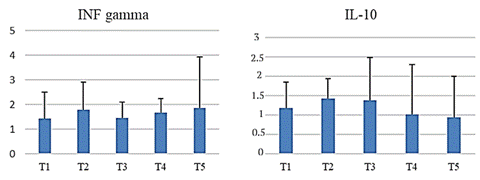
Figure 1 shows the effects of the experimental diets on INF gamma and IL-10 gene expression in broiler chickens. There was no difference among the cytokine gene expression (INF gamma and IL-10) of the birds fed with different experimental diets (p>0.05).

Effects of the experimental diets on INF gamma and IL-10 gene expression in broiler chickens.
It is well known that IL-10 is an anti-inflammatory cytokine that interfere the inflammatory responses against infections caused by different pathogens (Couper et al., 2008). Also, Manzanillo et al. (2015) reported that this cytokine is critical in intestinal immunity and homeostasis. Kaiser and Staheli (2014) reported that interferon gamma (IFN-γ) is one of the critical cytokines in poultry that fight against pathogens in poultry. Interferon gamma regulates the activity of macrophages and binds the innate and adaptive immunity of the chickens, MHC I and MHC II expression, Th1 and Th2 responses, antigen presentation and damage of pathogens (Santhakumar et al., 2017). Previous researchers revealed that IFN-γ released by T-cells after stimulating by different antigens such as viral (Sabbaghi et al., 2020) and protozoan (Lagler et al., 2021). Actually, it can promote cellular immunity after infection or vaccination. At present study, there was no difference among the gene expression of INF gamma and IL-10 in broilers fed with different levels of dill. This result might be due to health state of the broilers that had no pathogenic challenge.
Conclusion
Dill (Anethum graviolens L.) is a medicinal herb which contains a variety of bioactive compounds such as carvone and limonene. These compounds have antimicrobial properties, which can promote a healthier gut due to the microflora modulation of the intestines. Inclusion of 2% dill powder in broilers improved the broilers´ body weight gain and production efficiency index. Also, it decreased serum cholesterol, triglyceride, MDA, and increased ileal Lactobacillus population. Applying dill powder at the levels of 2 or 3 percent decreased Escheriashia-Coli count in the ileum of the broilers. The cytokine gene expression (INF gamma and IL-10) of the birds fed with different experimental diets was not different among the broilers. Using dill powder up to 3 percentages had no significant effect on carcass, breast, thigh + drumstick, abdominal fat, pancreas, or bursa fabricius percentages of the broilers. However, applying 3% dill powder in broilers diet had negative influence on production efficiency index which can be due to the level of effective substances higher than the birds´ cell tolerance.
Data availability
The datasets generated and analyzed during the current study are available from the corresponding author upon reasonable request.
References
- Al Masoody, I. H., Alarkwazi, R. K. & Al Yasssiry, A. S.. (2023). Pharmaceutical and biological properties of dill: a review. IOP Conference Series: Earth and Environmental Science, 1158(6), 1-6.
-
Ali, U., Naveed, S., Qaisrani, S. N., Mahmud, A., Hayat, Z., Abdullah, M., Kikusato, M. & Toyomizu, M.. (2022). Characteristics of essential oils of apiaceae family: their chemical compositions, in vitro properties and effects on broiler production. The Journal of Poultry Science, 59(1), 16-37. https://doi.org/10.2141/jpsa.0210042
» https://doi.org/https://doi.org/10.2141/jpsa.0210042 -
Ali, U., Qaisrani, S. N., Mahmud, A., Hayat, Z. & Toyomizu, M.. (2024). Effects of supplemented coriander, ajwain, and dill seed essential oils on growth performance, carcass characteristics, gut health, meat quality, and immune status in broilers. The Journal of Poultry Science, 61(1), 2024006. https://doi.org/10.2141/jpsa.2024006
» https://doi.org/https://doi.org/10.2141/jpsa.2024006 - Aljabary, A. M.. (2017). Effect of immersion in Garlic and Dill seed extract on some storability parameters of potato tubers. Tikrit Journal for Agricultural Sciences, 17(4), 79-87.
- Al-Janabi, A. A., Ahmed, S. A., Amin, K. M. & Bedan, S. D.. (2013). Induction of sperm head abnormalities in male mice by using Dill extracts. Engineering and Technology Journal, 31(3), 40-46.
-
Aljumaah, M. R., Alkhulaifi, M. M., Abudabos, A. M., Alabdullatifb, A., El-Mubarak, A. H., Al Suliman, A. R. & Stanley, D.. (2020). Organic acid blend supplementation increases butyrate and acetate production in Salmonella enterica serovar Typhimurium challenged broilers. PLoS One, 15(6), e0232831. https://doi.org/10.1371/journal.pone.0232831
» https://doi.org/https://doi.org/10.1371/journal.pone.0232831 -
Al-Sagan, A. A., Al-Yemni, A. H., Abudabos, A. M., Al-Abdullatif, A. A. & Hussein, E. O.. (2021). Effect of different dietary betaine fortifications on performance, carcass traits, meat quality, blood biochemistry, and hematology of broilers exposed to various temperature patterns. Animals, 11(6), 1555. https://doi.org/10.3390/ani11061555
» https://doi.org/https://doi.org/10.3390/ani11061555 - Association of Official Analytical Chemists (1991). Official methods of analysis. AOAC.
-
Azimi, M., Deldar, M., Moayeri, A. & Sayehmiri, K. (2022). Effects of dill extract on blood lipid levels (TC, TG, LDL and HDL): a systematic review and meta-analysis. Journal of Advances in Medical and Biomedical Research, 30(141), 306-313. https://doi.org/ 10.30699/jambs.30.141.306
» https://doi.org/https://doi.org/ 10.30699/jambs.30.141.306 -
Bahadori, M. M., Irani, M., Ansari Pirsaraei, Z. & Koochaksaraie, R. R.. (2013). The effects of dill powder in diet on some blood metabolites, carcass characteristics and broiler performance. Global Veterinaria, 10(5), 500-504. https://doi.org/10.5829/idosi.gv.2013.10.5.71241
» https://doi.org/https://doi.org/10.5829/idosi.gv.2013.10.5.71241 -
Burt, S.. (2004). Essential oils: their antibacterial properties and potential applications in foods—a review. International journal of food microbiology, 94(3), 223-253. https://doi.org/10.1016/j.ijfoodmicro.2004.03.022
» https://doi.org/https://doi.org/10.1016/j.ijfoodmicro.2004.03.022 -
Cordiano, R., Di Gioacchino, M., Mangifesta, R., Panzera, C., Gangemi, S. & Minciullo, P. L.. (2023). Malondialdehyde as a potential oxidative stress marker for allergy-oriented diseases: an update. Molecules, 28(16), 5979. https://doi.org/10.3390/molecules28165979
» https://doi.org/https://doi.org/10.3390/molecules28165979 -
Couper, K. N., Blount, D. G. & Riley, E. M.. (2008). IL-10: the master regulator of immunity to infection. The Journal of Immunology, 180(9), 5771-5777. https://doi.org/10.4049/jimmunol.180.9.5771
» https://doi.org/https://doi.org/10.4049/jimmunol.180.9.5771 -
Eftekhari, M., Hosseini, S. A., Jabbari Rad, M. & Shahrami, E.. (2020). Effects of different dietary levels of dill powder versus growth promoters flavomycin on performance, humoral immune system response and cecal microbial population of broiler chickens. Animal Production, 22(4), 609-618. https://doi.org/10.22059/jap.2020.302915.623531
» https://doi.org/https://doi.org/10.22059/jap.2020.302915.623531 - Federation of Animal Science Societies (2010). Guide for the care and use of agricultural animals in agricultural research and teaching, third ed. Consortium for developing a guide for the care and use of agricultural animals in agricultural research and teaching. FASS.
-
Gudiso, X. C., Hlatini, V. A., Ncobela, C. N., Chimonyo, M. & Mafongoya, P. L.. (2019). Serum metabolites and weights of internal organs of broilers fed on varying levels of Acacia angustissima leaf meal. Canadian Journal of Animal Science, 99(3), 475-481. https://doi.org/10.1139/cjas-2018-0047
» https://doi.org/https://doi.org/10.1139/cjas-2018-0047 - Hajati, H., Hassanabadi, A., Golian, A., Nassiri-Moghaddam, H. & Nassiri, M. R.. (2018). The effect of grape seed extract supplementation on performance, antioxidant enzyme activity, and immune responses in broiler chickens exposed to chronic heat stress. Iranian Journal of Applied Animal Science, 8(1), 109-117.
- Hammod, A. J., Abd El-Aziz, A. H., Areaaer, A. H. & Alfertosi, K. A.. (2020). Effect of dill powder (Anethum graveolens) as a dietary supplement on productive performance, mortality and economic figure in broiler. IOP Conference Series: Earth and Environmental Science, 553(1), 012018.
- Hamodi, S. J., Bandr, L. K. & Alkhilani, F. M.. (2021). Effect of adding different levels of dried dill (Anethum gravelens) to the diet on the productive performance of broilers. International Journal of Aquatic Science, 12(2), 5345-5351.
-
Jangali, A., Hedayati, M., Khalaji, S. & Manafi, M.. (2021). Oxidative stress and effects of dill (Anethum graveolens dhi) powder on the performance and health status of broilers. South African Journal of Animal Science, 51(6), 700-714. https://doi.org/10.4314/sajas.v51i6.3
» https://doi.org/https://doi.org/10.4314/sajas.v51i6.3 -
Jannesar, N., Bassiri, A., Ghavami, M., Chenarbon, H. A. & Tarzi, B. G.. (2024). Investigation of physicochemical and antibacterial properties of dill (Anethum graveolens L. ) microencapsulated essential oil using fluidized bed method. Food Chemistry: X, 23(1), 101708. https://doi.org/10.1016/j.fochx.2024.101708
» https://doi.org/https://doi.org/10.1016/j.fochx.2024.101708 -
Jeet, K. & Baldi, A.. (2021). Trending microbiologicals and their role to enhance growth and essential oil content of dill (Anethum graveolens). International Journal of Pharmaceutical Sciences and Research, 12(2), 875-888. https://doi.org/10.13040/IJPSR.0975-8232.12(2).875-88
» https://doi.org/https://doi.org/10.13040/IJPSR.0975-8232.12(2).875-88 - Kaiser, P. & Stäheli, P. (2014). Avian cytokines and chemokines. In Avian immunology. (pp. 189-204). Academic Press.
-
Kheiri, F., Rahimian, Y. & Nasr, J.. (2015). Application of sumac and dried whey in female broiler feed. Archives Animal Breeding, 58(1), 205-210. https://doi.org/10.5194/aab-58-205-2015
» https://doi.org/https://doi.org/10.5194/aab-58-205-2015 -
Lagler, J., Schmidt, S., Mitra, T., Stadler, M., Wernsdorf, P., Grafl, B., Hatfaludi, T., Hess, M., Gerner, W. & Liebhart, D.. (2021). Comparative investigation of IFN-γ-producing T cells in chickens and turkeys following vaccination and infection with the extracellular parasite Histomonas meleagridis. Developmental & Comparative Immunology, 116(1), 103949. https://doi.org/10.1016/j.dci.2020.103949
» https://doi.org/https://doi.org/10.1016/j.dci.2020.103949 -
Majid, E. M., Shahla, S., Mohammad, E. & Reza, Y. A.. (2023). Study of cellular and humoral immunity and histopathology of target tissues following newcastle Clone12IR vaccine administration in SPF chickens. Archives of Razi Institute, 78(5), 1421-1429. https://doi.org/10.32592/ari.2023.78.5.1421
» https://doi.org/https://doi.org/10.32592/ari.2023.78.5.1421 -
Manzanillo, P., Eidenschenk, C. & Ouyang, W.. (2015). Deciphering the crosstalk among IL-1 and IL-10 family cytokines in intestinal immunity. Trends in Immunology, 36(8), 471-478. https://doi.org/10.1016/j.it.2015.06.003
» https://doi.org/https://doi.org/10.1016/j.it.2015.06.003 -
Meimandipour, A., Nouri Emamzadeh, A. & Soleimani, A.. (2017). Effects of nanoencapsulated aloe vera, dill and nettle root extract as feed antibiotic substitutes in broiler chickens. Archives Animal Breeding, 60(1), 1-7. https://doi.org/10.5194/aab-60-1-2017
» https://doi.org/https://doi.org/10.5194/aab-60-1-2017 -
Milenković, L., Ilić, Z. S., Stanojević, L., Danilović, B., Stanojević, J. & Cvetković, D.. (2024). Chemical composition and bioactivity of dill seed (Anethum graveolens L. ) essential oil from plants grown under shading. Plants, 13(6), 886. https://doi.org/10.3390/plants13060886
» https://doi.org/https://doi.org/10.3390/plants13060886 - Mohammadi, F.. (2020). Chemical composition and dietary effects of pennyroyal and dill on biochemical, hematological, and oxidative stress biomarkers in broiler chickens. Journal of Agricultural Science and Technology, 22(2), 401-413.
-
Oni, A. I., Adeleye, O. O., Adebowale, T. O. & Oke, O. E.. (2023). The role of phytogenic feed additives in stress mitigation in broiler chickens. Journal of Animal Physiology and Animal Nutrition, 108(1), 81-98. https://doi.org/10.1111/jpn.13869
» https://doi.org/https://doi.org/10.1111/jpn.13869 -
Panda, S.. (2008). The effect of Anethum graveolens L. (dill) on corticosteroid induced diabetes mellitus: involvement of thyroid hormones. Phytotherapy Research, 22(12), 1695-1697. https://doi.org/10.1002/ptr.
» https://doi.org/https://doi.org/10.1002/ptr. -
Patel, R. S., Metgud, R. M., Dodamani, S., Nadaf, R. & Patil, A.. (2025). Comparative evaluation of the antimicrobial efficacy of Anethum graveolens gel with chlorhexidine gel against Aggregatibacter cinomycetemcomitans, Porphyromonas gingivalis and Fusobacterium nucleatum - an in vitro study. Archives of Razi Institute, 80(1), 225-232. https://doi.org/10.32592/ARI.2025.80.1.225.
» https://doi.org/https://doi.org/10.32592/ARI.2025.80.1.225. - Rafiei-Tari, A., Karimi, K., Hosseini, S. A. & Meimandipour, A.. (2016). Growth performance, carcass characteristics and serum biochemicals of Japanese quails fed with oat bran (Avena sativa) and dill seed (Anethum graveolens). Iranian Journal of Applied Animal Science, 6(2), 423-428.
-
Sabbaghi, A., Miri, S. M., Keshavarz, M., Mahooti, M., Zebardast, A. & Ghaemi, A.. (2020). Role of γδ T cells in controlling viral infections with a focus on influenza virus: implications for designing novel therapeutic approaches. Virology Journal, 17(1), 1-18. https://doi.org/10.1186/s12985-020-01449-0
» https://doi.org/https://doi.org/10.1186/s12985-020-01449-0 -
Santhakumar, D., Rubbenstroth, D., Martinez-Sobrido, L. & Munir, M.. (2017). Avian interferons and their antiviral effectors. Frontiers in Immunology, 8(49), 1-17. https://doi.org/10.3389/fimmu.2017.00049
» https://doi.org/https://doi.org/10.3389/fimmu.2017.00049 -
Santos, M. N., Rothschild, D., Widowski, T. M., Barbut, S., Kiarie, E. G., Mandell, I., Guerin, M. T., Edwards, U. M. & Torrey, S.. (2021). In pursuit of a better broiler: carcass traits and muscle myopathies in conventional and slower-growing strains of broiler chickens. Poultry Science, 100(9), 101309. https://doi.org/10.1016/j.psj.2021.101309
» https://doi.org/https://doi.org/10.1016/j.psj.2021.101309 - SAS Institute (2004). SAS user’s guide statistics (Version 9.1). SAS Institute Inc.
-
Satyanarayana, S., Sushruta, K., Sarma, G. S., Srinivas, N. & Raju, G. S.. (2004). Antioxidant activity of the aqueous extracts of spicy food additives—evaluation and comparison with ascorbic acid in in vitro systems. Journal of Herbal Pharmacotherapy, 4(2), 1-10. https://doi.org/10.1080/J157v04n02_01
» https://doi.org/https://doi.org/10.1080/J157v04n02_01 -
Takahashi, N., Yao, L., Kim, M., Sasako, H., Aoyagi, M., Shono, J., Tsuge, N., Goto, T. & Kawada, T.. (2013). Dill seed extract improves abnormalities in lipid metabolism through peroxisome proliferator‐activated receptor‐α (PPAR‐α) activation in diabetic obese mice. Molecular Nutrition & Food Research, 57(7), 1295-1299. https://doi.org/10.1002/mnfr.201200767
» https://doi.org/https://doi.org/10.1002/mnfr.201200767 - Torki, M., Sedgh-Gooya, S. & Mohammadi, H.. (2018). Effects of adding essential oils of rosemary, dill and chicory extract to diets on performance, egg quality and some blood parameters of laying hens subjected to heat stress. Journal of Applied Animal Research, 46(1), 1118-1126.
-
Vispute, M. M., Sharma, D., Mandal, A. B., Rokade, J. J., Tyagi, P. K. & Yadav, A. S.. (2019). Effect of dietary supplementation of hemp (Cannabis sativa) and dill seed (Anethum graveolens) on performance, serum biochemicals and gut health of broiler chickens. Journal of Animal Physiology and Animal Nutrition, 103(2), 525-533. https://doi.org/10.1111/jpn.13052
» https://doi.org/https://doi.org/10.1111/jpn.13052 - Yazdanparast, R. & Bahramikia, A.. (2008). Evaluation of the effect of Anethum graveolens L. crude extracts on serum lipids and lipoproteins profiles in hypercholesterolaemic rats. DARU, 16(2), 88-94.
-
Zaghari, M., Sarani, P. & Hajati, H.. (2020). Comparison of two probiotic preparations on growth performance, intestinal microbiota, nutrient digestibility and cytokine gene expression in broiler chickens. Journal of Applied Animal Research, 48(1), 166-175. https://doi.org/10.1080/09712119.2020.1754218
» https://doi.org/https://doi.org/10.1080/09712119.2020.1754218