 Mobile app to support the care of low-risk newborns in home environments
Abstract
Objective to develop and validate a mobile app to support the care of low-risk newborns in home environments.
Methods a methodological and technological study conducted between April 2022 and June 2023, in two phases: app development and content validation with experts. The app was developed based on the Scrum and Kanban methodology, using Kodular, Web Trello, and Web Canva platforms for managing team documents and activities. Content and usability validation was conducted with experts working as researchers, healthcare professionals, healthcare managers, and an IT technician. The Content Validity Index was calculated using the Delphi technique, and agreement rates above 0.80 were considered.
Results the mobile app called RnNeo provides access to six menus on its main screen: breastfeeding, sleep, crying, bathing, vaccinations, and important tips. The Content Validity Index was above 0.80 among the experts, although the app’s crashing issue was unfavorable in the assessment of 16.7% of the evaluators. Based on this evidence, the app was returned to the technical professionals for appropriate adjustments and improvements. Available on the Android operating system, the app can be accessed by any user, any day and at any time.
Conclusion The RnNeo app achieved acceptable agreement among the experts and demonstrates that its content and functionalities are reliable and have the potential to support caregivers of low-risk newborns in the home environment.
Keywords:
Inventions; Biomedical technology; Infant newborn; Home environment
Resumo
Objetivo Desenvolver e validar aplicativo móvel de apoio ao cuidado de recém-nascidos de baixo risco em ambiente domiciliar.
Métodos Estudo metodológico e tecnológico conduzido entre abril de 2022 e junho de 2023, em duas etapas: desenvolvimento do aplicativo e validação do conteúdo com especialistas. O aplicativo foi desenvolvido com base na metodologia Scrum e Kanban, plataformas Kodular, Web Trello e Web Canva para o gerenciamento de documentos e atividades da equipe. A validação de conteúdo e usabilidade ocorreu com especialistas, os quais exercem seus trabalhos como pesquisadores, profissionais de saúde, gestores de saúde e um técnico em informática. O Índice de Validade de Conteúdo foi realizado por meio da técnica Delphi e considerou-se taxas de concordância com valores acima de 0,80.
Resultados Denominado RnNeo, o aplicativo móvel apresenta, em sua tela principal, acesso a seis menus: amamentação, sono, choro, banho, vacinas e dicas importantes. O Índice de Validade de Conteúdo foi superior à 0,80 entre os especialistas, embora a questão de travamento do aplicativo tenha sido desfavorável na avaliação de 16,7% dos avaliadores. Com base nessa evidência, o aplicativo retornou aos profissionais técnicos para os devidos ajustes e melhorias. Disponível no sistema operacional Android, o aplicativo pode ser acessado por qualquer usuário e em qualquer dia e horário.
Conclusão O aplicativo RnNeo obteve concordância aceitável entre os especialistas e demonstra que o conteúdo e as suas funcionalidades são confiáveis e com potencial para apoiar cuidadores de recém-nascidos de baixo risco em ambiente domiciliar.
Descritores:
Inovação tecnológica; Tecnologias em saúde; Recém-nascido; Ambiente domiciliar
Resumen
Objetivo Desarrollar y validar una aplicación móvil de apoyo para el cuidado de recién nacidos de bajo riesgo en el entorno doméstico.
Métodos Estudio metodológico y tecnológico realizado entre abril de 2022 y junio de 2023, en dos etapas: desarrollo de la aplicación y validación del contenido con especialistas. La aplicación se desarrolló con base en la metodología Scrum y Kanban, en las plataformas Kodular, Web Trello y Web Canva para la gestión de documentos y actividades del equipo. La validación del contenido y de la usabilidad se realizó con especialistas que trabajan como investigadores, profesionales de la salud, gestores sanitarios y un técnico informático. El Índice de Validez de Contenido se realizó mediante el método Delphi y se consideraron índices de concordancia con valores superiores a 0,80.
Resultados Denominada RnNeo, la aplicación móvil presenta acceso a seis menús en su pantalla principal: lactancia, sueño, llanto, baño, vacunas y consejos importantes. El Índice de Validez de Contenido fue superior a 0,80 entre los especialistas, aunque la cuestión del bloqueo de la aplicación fue desfavorable en la evaluación del 16,7 % de los evaluadores. Con base en esta evidencia, la aplicación se devolvió a los técnicos para que realizaran los ajustes y mejoras necesarias. La aplicación está disponible en el sistema operativo Android y todos los usuarios puede acceder cualquier día y a cualquier hora.
Conclusión La aplicación RnNeo obtuvo una buena aceptación entre los especialistas y demuestra que su contenido y sus funcionalidades son fiables y tienen potencial para apoyar a los cuidadores de recién nacidos de bajo riesgo en el entorno doméstico.
Descriptores:
Invenciones; Tecnología biomédica; Recién nacido; Ambiente en el hogar
Introduction
Digital technologies have advanced faster than any other innovation, reaching approximately 50% of the population in developing countries. By expanding connectivity and access to public services, these technologies help balance demands and, consequently, provide agile, dynamic, and secure solutions across different areas of knowledge.(1-3)
In the healthcare field, digital technologies have emerged as support tools both in the diagnostic and life-extending domains, as well as in the interface between health promotion, protection, and education processes. These tools are therefore an integral part of the daily lives of a large portion of users and caregivers and have rapidly transformed the work process and clinical and care relationships in the healthcare field.(4-7)
Studies show that healthcare systems will increasingly be shaped by the needs and expectations of users-consumers of healthcare services—which will require knowledge and experience in digital access from healthcare managers and professionals, as well as speed and agility in service delivery. Digital technologies will gradually displace traditional healthcare and enable computerization, combined with the efficiency and effectiveness of healthcare referrals and the reduction of operating costs.(8,9)
As in healthcare services, digital technologies have begun to play an important role in the home environment. As a result of the COVID-19 pandemic, digital resources have rapidly expanded to reduce contact, prevent infections, and facilitate agile responses to user needs. The range of digital services, information systems, and platforms has increased significantly, making them accessible to users in the home environment.(10-12)
A previous study conducted by this research group, involving 21 mothers who cared for newborns in the home environment, demonstrated that the care process requires differentiated attention and a formal and informal support network that considers the unique needs of caregivers. The results of this study strongly suggest the relevance of digital and instructional technologies as tools to support decision-making and daily learning in the home environment.(13)
Based on the study by Hammel et al. (2024) and open-access searches, no mobile apps aimed at the care of low-risk newborns in the home environment were found. Therefore, it was found appropriate to develop a mobile app that empowers caregivers of low-risk newborns, providing information related to breastfeeding, sleep, crying, bathing, vaccinations, and other important tips. Based on the above, the objective of this study was to develop and validate a mobile app to support the care of low-risk newborns in home environments.
Methods
A methodological and technological study was conducted between April 2022 and June 2023 in two stages: app development and content validation with experts.
The app was developed based on the functionalities of the Scrum methodology, a tool considered agile and effective for project management.(14) Additionally, the Kanban methodology was used to organize deliverables into three distinct but complementary actions: Do, Doing, Done. This organizational dynamic allowed the development team to systematically monitor the execution schedule and provide comprehensive visualization of tasks.(15)
The Trello web platform was used to organize deliverables and streamline Kanban method actions. This tool tracked the timeline of tasks, based on visual cards describing weekly activities. The Kodular platform was used to systematize the programming logic, based on action blocks (visual and practical format), in order to provide the app’s connectivity to the Android operating system.(16) Besides that, the Canva web platform was used, in parallel, as a resource to support the graphical construction of modifiable images and texts. The Technology Readiness Level (TRL) was used to assess the app’s technological maturity levels: research level (1 to 3), development level (4 to 6), and implementation level (7 to 9).(17)
The Scrum method, an agile tool to support the development of complex projects, considers that people are more important than tools, that technological functionalities transcend specific and linear techniques, and that interactivity between professionals surpasses verticalized paths.(18)Figure 1 below demonstrates the method’s app path in our present study.

Technological development path based on the Scrum and Kanban methodology, Kodular, Web Trello and Web Canva platforms
A backlog was initially created with deliverables and the essential components for project development. Subsequently, different sprints were structured, defining specific activities for each team member. Monthly sprints were encouraged, with regular in-person and virtual meetings to manage deliverables and discuss specific needs. Systematic management of team activities, based on clarity and objectivity guidelines, was carried out using the Kodular, Web Trello, and Web Canva platforms, aligned with the Scrum and Kanban methodology.
Content validation was performed by experts who responded positively to the invitation, sent by email, based on recommendations from the local municipal health secretary. The experts included researchers, healthcare professionals, healthcare managers, and an IT technician. All of them had access to the app via QR code, which was available on the day of the evaluation. After usability testing, each of the experts was individually invited to complete a questionnaire created on the Google Forms platform and accessible via a QR code. The eight-question, Likert-scale questionnaire included questions related to the app’s content, functionality, and appearance. The Likert scale was numbered from 1 to 5, with 1 indicating “completely disagree” and 5 indicating “completely agree.” The CVI assessment was based on the responses to the questionnaire. All experts in this study signed an Informed Consent Form. In addition to the eight Likert-scale questions, two dichotomous questions were listed, each with “Yes” and “No” options.
The results of this expert evaluation were organized in Microsoft Excel® 365 using double entry. Descriptive statistics and graphs were then created to facilitate broader understanding, and finally, content validation was performed using the Content Validity Index (CVI).(19) A CVI of 0.80 was considered the minimum acceptable score for content validity.
The prototype’s usability testing was conducted at a public institutional event called Valida TecCofen. This event was attended by healthcare managers and professionals, nursing and healthcare researchers, and IT technicians. The prototype was initially presented and then tested by the participants. Subsequently, the audience was given the opportunity for interventions and suggestions.
The app became publicly available after the final technical changes were made, its registration with the National Institute of Industrial Property (INPI), and its launch on the Play Store platform. Its formal implementation will subsequently occur in Primary Health Care Units and private healthcare services that have maternity wards or birthing centers.
During development, the recommendations of National Health Council Resolution No. 466/2012 and specific regulations of the National Health Surveillance Agency (ANVISA) were considered. The app’s functionality and content were evaluated against RDC No. 657/22 and RDC No. 751/22.(20,21)
The research project was approved by the University’s Research Ethics Committee under No. 4,253,922 (Certificate of Presentation of Ethical Appraisal: 53319116.5.0000.5306).
Results
The developed mobile app (RnNeo) features attractive interfaces, broad access, and agility and objectivity in clarifying doubts. It can be accessed at any time, as long as the user has access to the Android operating system. Furthermore, the app has reached maturity level TRL7, meaning the prototype is functional and applicable in a real-world environment. It can be installed (the user will have to download the app) via the Play Store at the following link: https://play.google.com/store/apps/details?id=io.kodular.miguelmachado0007.Rneoapp&pcampaignid=web_share&pli=1.
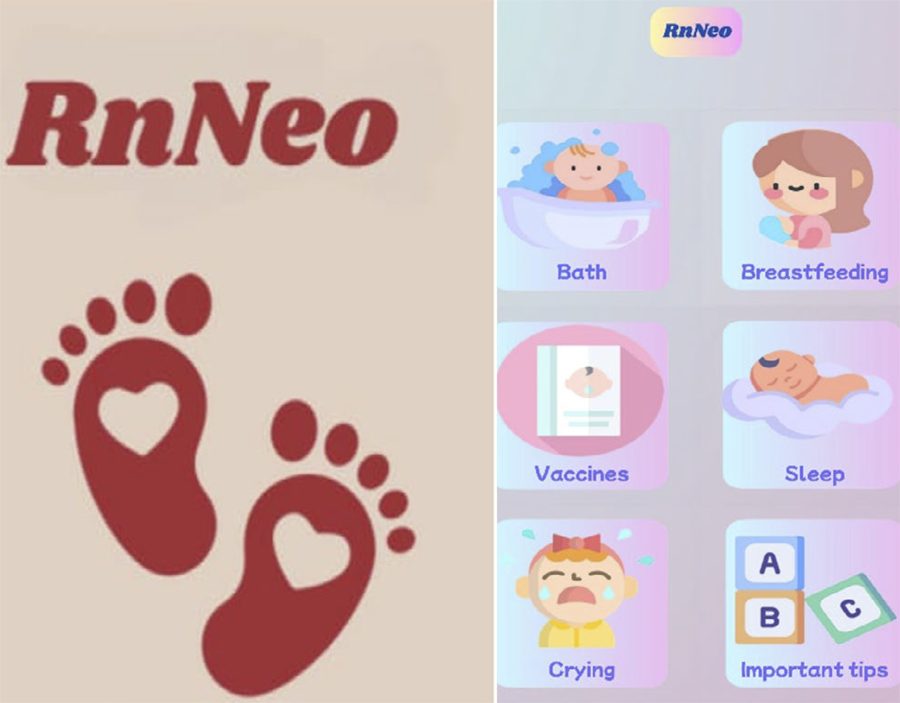
In order to ensure user anonymity, data will be protected and will not be stored by the app. The RnNeo app features, in its main menu, images of a baby’s feet, in dark red, with a heart on each foot, and a beige background, to denote sensitivity, warmth, and the bond between mother and baby. On the app’s home screen (Figure 2), users will find a pastel-colored layout with the app’s name and the slogan “The support that was missing in newborn care.””.

The app’s home menu provides access to the following icons: breastfeeding, sleep, crying, bathing, vaccinations, and important tips. By accessing the breastfeeding icon, users will find clear and objective guidance provided by leading professionals in each specific field and based on the best scientific evidence. The app’s thematic guidance is available to users through nine thematic videos produced by leading professionals in the field, as explained in Chart 1.
The Breastfeeding menu provides guidance on the benefits of breastfeeding for the child, mother, family, and society, as well as demonstrating the benefits of the mother-baby bond, latching positions for breastfeeding, and maternal nutrition care. The video “Nipple Types and How to Express Breast Milk” provides guidance on nipple types and how they can influence breastfeeding. The third video offers tips on how to handle choking, such as the Heimlich maneuver, and a document on myths and truths associated with breastfeeding.
In the Bath icon, caregivers will find specific guidance, such as: the ideal water temperature for bathing a newborn, how and where to start the bath, umbilical cord stump hygiene, and other relevant care. The Crying icon presents the various conditions that affect a baby’s crying. In addition to hunger and pain, a baby’s crying can be related to tension and colic. This icon also clarifies the main causes of crying and how to intervene in these cases. It recommends a pediatric consultation if your baby’s crying persists.
A welcoming environment and a supportive family routine free from stressful interventions are recommended for your baby’s sleep. The Sleep icon also highlights benefits associated with memory consolidation and growth hormone release. The Vaccination icon lists the baby’s vaccination schedule, as well as the chronological doses for the 2nd, 3rd, 4th, 5th, 6th, 9th, and 12th months of the child’s life. It also lists the benefits of each vaccine listed in the vaccination schedule, as well as a reminder of the importance of the vaccination schedule.
The Important Tips icon provides guidance on the Support Network; Parental Care; Parental Rights; What to Pack in the Maternity Bag; Nutritional Care; Baby’s Birth: Delivery Day and Newborn Care. It reinforces the importance of a support network in the immediate postpartum period. The parental care icon highlights changes in the home routine with the arrival of a baby, such as nighttime sleep, rest hours, and other changes that may impact daily life.
The sub-icons Parental Rights; What to Pack in the Maternity Bag; Nutritional Care; Baby’s Birth: Delivery Day; and Newborn Care provide simple, clear, and objective guidelines that every mother, father, or caregiver needs to know in advance to navigate this journey with greater peace of mind and confidence.
The RnNeo app’s functionality testing took place at a public event attended by healthcare managers and professionals, nursing and health researchers, and information systems technicians. Specifically, 12 experts participated in the validation process: three researchers, five healthcare professionals, three healthcare managers, and one IT technician.
Table 1 shows the agreement regarding the items evaluated (content, functionality, usability, and appearance of the app) and the CVI related to the evaluators’ responses. The results analyzed mostly obtained a CVI of 1.00, suggesting high reliability and validity regarding the app’s functionalities. Only for questions “2 - Was the app easy to use?” and “3 - Did you like the app interface?” did the CVI slightly lower (0.83), indicating that reliability or validity may be lower in these areas.
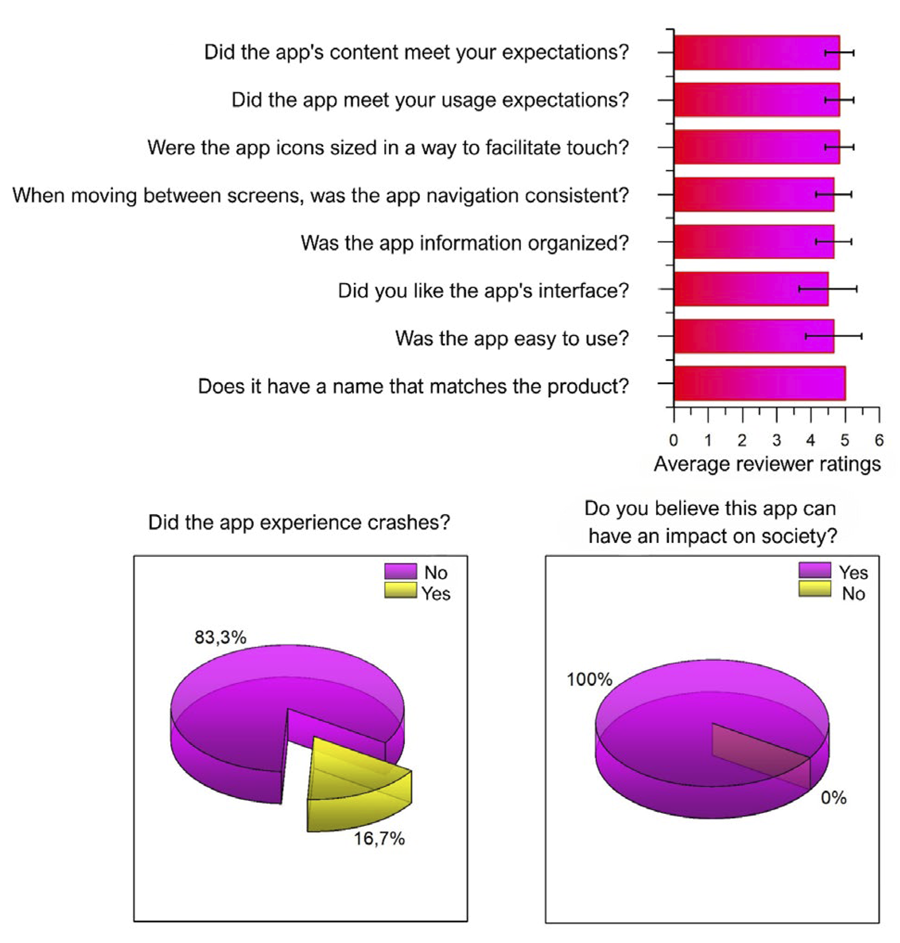
Figure 3 presents the descriptive statistics of the values tabulated based on the Likert scale scores and the dichotomous questions of the questionnaire completed by the evaluators. The graph shows that the app had an average acceptability score of 4.5 points or higher for all evaluated items. The only unfavorable issue was related to app crashes, as 16.7% of evaluators reported some type of crash during use. This evidence generated a new demand in the Trello environment. A backlog was created, a new sprint was defined, and the project’s technology team’s progress was monitored until this bug was fixed. Regarding the impact, the experts were favorable and demonstrated that the app has the potential to impact society.
Graphs showing descriptive statistics for the results of the RnNeo app evaluation. Bar chart shows data from the 8 Likert-scale questions and pie charts for the 2 dichotomous questions.
Discussion
This study described the development process of a mobile app to support the care of low-risk newborns in the home environment, as well as its content validation and functionality testing. The results suggest that the RnNeo app is relevant and pertinent for supporting parents and caregivers of low-risk newborns in the home environment. Furthermore, it constitutes a valuable technical and scientific tool for Primary Health Care Units, accessible via Android operating system by any user.
Although a semantic content analysis of the app was not performed by the target population (mothers caring for newborns at home), RnNeo app has been considered accessible and easy to use. Before being available to Primary Health Care Units, it will be monitored and evaluated by mothers caring for newborns at home.
In addition to providing clear, simple, and objective guidance, the RnNeo app is capable of improving and optimizing care processes. These findings are corroborated by studies demonstrating that digital technologies can optimize processes, ensure greater effectiveness, and improve health indicators, in addition to promoting greater agility and interprofessional connections.(22,23)
Developed based on the functionalities of the Scrum and Kanban methodologies, and the Kodular, Web Trello, and Web Canva platforms, the RnNeo app enabled advances in management, organization, and greater agility in the construction and validation process. A study reinforces these advances, mentioning that agile methodologies enable benefits related to speed, interactivity, and efficiency in the development process and, consequently, provide greater user satisfaction.(24)
Digital technologies, for the most part, promote and expand access to information and aim to contribute to the achievement of the Sustainable Development Goals, more specifically regarding indicators associated with reducing preventable deaths of newborns and children under five.(25) With this in mind, the RnNeo app is aligned with the priorities of the Department of Informatics of the Unified Health System (SUS) and contributes to the achievement of the goals established by the Digital Health Strategy for Brazil 2020-2028.(26)
Digital health, as a medical and public health practice supported by mobile devices, has been gaining ground and visibility due to the possibility of proactively intervening in the empowerment of caregivers, promoting health promotion, and contributing to the prediction and monitoring of relevant information. relevant.(27,28) However, technical and scientific knowledge cannot be developed for purely consumerist purposes, that is, solely to serve market interests. It must, however, enable access and the common good, in order to promote universal health.(29)
Another study previously conducted with mothers caring for low-birth-weight newborns in the home environment reveals the main concerns and questions that caregivers face during the caregiving process.(13) With this in mind, the RnNeo app was designed and developed to address specific topics related to breastfeeding, sleep, crying, bathing, vaccinations, and important tips. In addition to providing these guidelines, the RnNeo app reinforces the importance of childhood vaccination and warns about diseases that may resurface due to low vaccination coverage.
In this sense, this app plays an important social role by supporting parents and caregivers regarding doubts, distortions, and fake news, in addition to providing guidance on the benefits of vaccination for the healthy development of children. The RnNeo app also seeks to raise awareness among users about the risks associated with preventable diseases and, consequently, to reflect on anti-vaccine movements that directly or indirectly encourage parents not to vaccinate their children(30)
The RnNeo app therefore encourages prospective alert and awareness measures regarding the importance of childhood vaccination as one of the key measures to reduce re-emerging diseases.(31) From this perspective, the RnNeo app constitutes a tool for promoting best practices in child health within primary health care.
The RnNeo app aims to enhance, in addition to care for low-risk newborns, the importance of exclusive breastfeeding up to six months of age, as well as to provide guidance on continued breastfeeding up to two years or beyond with timely supplemental feeding. This practice is widely recommended by health organizations, such as the World Health Organization and the United Nations Children’s Fund. Exclusive breastfeeding up to six months of age is therefore essential for healthy child development. In this regard, it is essential that the guidelines be clear, objective, and encourage new thinking about the relevance of breastfeeding.(32-34)
The topics advocated in the RnNeo app can foster best practices and promote advances in maternal and child health. Caring for a newborn is, in itself, permeated by expectations, fears, and uncertainties. From this perspective, it is crucial to explore technologies that provide clear, safe guidance that enhances new knowledge and practices.(35,36)
The main contributions of this study to the advancement of nursing and health science are related to the provision of a technological tool-the RnNeo app-that is easily accessible and offers clear and objective guidance for mothers, fathers, and caregivers of low-risk newborns in the home environment. Downloading the RnNeo app is only necessary the first time and allows quick access to information and resources whenever desired. Another contribution is associated with the empowerment of parents and caregivers, as the app provides information related to newborn care in the home environment, which can result in better outcomes for healthy child development.
The limitations of this study include the fact that the app is only available on the Android operating system, making it impossible to access it on the iOS operating system; the configuration of the topics in video format, which may not be appealing to some parents and caregivers; and accessibility for people with visual, hearing, or motor impairments. Furthermore, a significant limitation of the study is the fact that the professionals/specialists did not demonstrate specific skills to evaluate the app for low-risk newborn care at home, as the initial idea was to include professionals/specialists from diverse fields who had interacted with the researchers and developers of the app throughout its development process.
Conclusion
The developed and validated mobile app has the potential to support the care of low-risk newborns in the home environment. The RnNeo app achieved acceptable agreement among the experts, demonstrating that its content and functionalities are reliable and have the potential to support caregivers of low-risk newborns in the home environment. It can be accessed by any Android operating system user, thus enabling caregiver empowerment and contributing to health promotion. It features a functional home menu and directs users to options that cover relevant topics related to newborn care in the home environment. Based on the Delphi technique, the experts obtained an Agreement and Content Validity Index above 0.80. In short, it can be inferred that the present RnNeo app has the potential to support managers and public health policy makers, in order to prevent diseases and promote healthy child development, especially with regard to vaccines and exclusive breastfeeding until the sixth month, but continued until two years or more, with the timely supplementation of food.
References
- 1 Almeida TC, Sousa MM, Gouveia BL, Almeida AA, Oliveira SH. Prototype of a motivational mobile application for people with hypertension. Acta Paul Enferm. 2021;34:eAPE001055.
- 2 Virani A, Duffett-Leger L, Letourneau N. Parenting apps review: in search of good quality apps. MHealth. 2019;5:44.
- 3 Souza FM, Santos WN, Dantas JC, Sousa HR, Moreira OA, Silva RA. Development of a mobile application for prenatal care and content validation. Acta Paul Enferm. 2022;35:eAPE01861.
- 4 Mendoza-Holgado C, García-González I, López-Espuela F. Digitalization of activities of daily living and its influence on social participation for community-dwelling older adults: a scoping review. Healthcare (Basel). 2024;12(5):1-17.
- 5 Silveira MA, Nóbrega MS, Goyatá SL, Ribeiro PM, Giacomelli B, Moreira DS. Aplicativos móveis em saúde baseados no método design instrucional contextualizado: revisão integrativa. Contrib Cien Social. 2023;16(8):11233-53.
- 6 Alnuaimi A, Rawaf S, Hassounah S, Chehab M. Use of mobile applications in the management of overweight and obesity in primary and secondary care. JRSM Open. 2019;10(3):205427041984382.
- 7 Santos SV, Ramos FR, Costa R, Batalha LM. Assessment of the quality of a software application for the prevention of skin lesions in newborns. Rev Lat Am Enferm. 2020;28:e3352.
- 8 Stoumpos AI, Kitsios F, Talias MA. Digital Transformation in Healthcare: Technology Acceptance and Its Applications. Int J Environ Res Public Health. 2023;20(4):3407.
- 9 Labrique A, Agarwal S, Tamrat T, Mehl G. WHO Digital Health Guidelines: a milestone for global health. NPJ Digit Med. 2020;3:120.
- 10 Martínez-Peláez R, Ochoa-Brust A, Rivera S, Félix VG, Ostos R, Brito H, et al. Role of digital transformation for achieving sustainability: mediated role of stakeholders, key capabilities, and technology. Sustainability. 2023;15(14):11221.
- 11 Rožman M, Oreški D, Tominc P. Artificial-intelligence-supported reduction of employees' workload to increase the company's performance in today's VUCA Environment. Sustainability. 2023;15(6):5019.
- 12 Alghamdi NS, Alghamdi SM. The role of digital technology in curbing COVID-19. Int J Environ Res Public Health. 2022;19(14):8287.
- 13 Hammel GS, Simas LT, Rodrigues Junior LF, Zamberlan C, Lomba L, Backes DS. Mothers' perception of the care of newborn in the home environment. Rev Bras Enferm. 2024;77(1):e20230080.
- 14 Loddi VP, Campos RR. Metodologia ágil Scrum para desenvolvimento de software: estudo a partir de um relato de implantação. Inter Tecnol. 2021;18(1):28-41.
- 15 Machado Junior WA, Rodrigues MJ, Souza PA, Nogueira RF. Inventory Control: Process management using the Kanban tool supported by the Scrum methodology. Res Soc Dev. 2019;8(1):e2381531.
- 16 Camargo LJ, Flórez CO, Hurtado OG. Kodular: A tool for teaching programming and microcontrollers. J Lang Ling Stud. 2022;18(4):1186-96.
- 17 Holden NM. A readiness level framework for sustainable circular bioeconomy. EFB Bioeconomy J. 2022;2:10003.
- 18 Alvim AL, Gazzinelli A, Couto BR. Construction and validation of instrument to assess the quality of infection control programs. Rev Gaúcha Enferm. 2021;42:e20200135.
-
19 Brasil. Ministério da Saúde. Agência Nacional de Vigilância Sanitária (ANVISA). Resolução de Diretoria Colegiada - RDC Nº 657, de 24 de março de 2022. Dispõe sobre a regularização de software como dispositivo médico (Software as a Medical Device - SaMD). Brasília (DF): Ministério da Saúde, Agência Nacional de Vigilância Sanitária; 2022 [citado 2025 Ago 12]. Disponível em: https://pdf.datalegis.net/files/d3priphaec8j8sdl1c4su07tof_1755190979.pdf
» https://pdf.datalegis.net/files/d3priphaec8j8sdl1c4su07tof_1755190979.pdf -
20 Brasil. Agência Nacional de Vigilância Sanitária. Resolução de Diretoria Colegiada - RDC Nº 751, de 15 de setembro de 2022. Dispõe sobre a classificação de risco, os regimes de notificação e de registro, e os requisitos de rotulagem e instruções de uso de dispositivos médicos. Brasília (DF): Ministério da Saúde, Agência Nacional de Vigilância Sanitária; 2022 [citado 2025 Ago 12]. Disponível em: https://pdf.datalegis.net/files/8uj2f6g9t1sbv4n6pk4752omv2_1755191042.pdf
» https://pdf.datalegis.net/files/8uj2f6g9t1sbv4n6pk4752omv2_1755191042.pdf - 21 Grützmann A, Zambalde AL, Bermejo PH. Innovation, new product development and internet technologies: study in Brazilian companies. Gest Prod. 2019;26(1):e1451.
- 22 Mauro M, Noto G, Prenestini A, Sarto F. Digital transformation in healthcare: assessing the role of digital technologies for managerial support processes. Technol Forec Social Change. 2024;209:123781.
- 23 Jong E, Vijge MJ. From millennium to sustainable development goals: evolving discourses and their reflection in policy coherence for development. Earth System Governance. 2021;7:100087.
- 24 Ríos MJ, Pedreira-Souto N. Approach of agile methodologies in the development of web-based software. Information. 2019;10(10):314.
- 25 Bachmann N, Tripathi S, Brunner M, Jodlbauer H. The Contribution of Data-Driven Technologies in Achieving the Sustainable Development Goals. Sustainability. 2022;(14):2497.
-
26 Brasil. Ministério da Saúde. Secretaria-Executiva. Departamento de Informática do SUS. Estratégia de saúde digital para o Brasil 2020-2028. Brasília (DF): Ministério da Saúde; 2020 [citado 2025 Ago 12]. Disponível em: https://bvsms.saude.gov.br/bvs/publicacoes/estrategia_saude_digital_Brasil.pdf
» https://bvsms.saude.gov.br/bvs/publicacoes/estrategia_saude_digital_Brasil.pdf - 27 Fernandez-Luque L, Labarta JI, Palmer E, Koledova E. Content analysis of apps for growth monitoring and growth hormone treatment: systematic search in the android app store. JMIR Mhealth Uhealth. 2020;8(2):e16208.
- 28 Santos Júnior CJ, Silva Júnior SN, Costa PJ. Construction and validation of educational technology in the format of comic books in the field of immunizations: an instrument for self-care and encouraging the vaccination of children. Cien Educ. 2021;27:e21036.
- 29 Beltrão RP, Mouta AA, Silva NS, Oliveira JE, Beltrão IT, Beltrão CM, et al. Danger of the antivaccine movement: epidemio-literary analysis of the anti-vaccination movement in Brazil. Rev Eletr Acervo Saúde. 2020;12(6):e3088.
- 30 Phagdol T, Nayak BS, Lewis LE, Margaret B, George A. Designing a mobile health intervention for preterm home care: Application of conceptual framework. Public Health Nursing. 2021;39(1):296-302.
- 31 Matic Z, Šantak M. Current view on novel vaccine technologies to combat human infectious diseases. Appl Micr Biotech. 2022;106:2556.
- 32 Alotiby AA. The role of breastfeeding as a protective factor against the development of the immune-mediated diseases: a systematic review. Front. Pediatr. 2023;11. Review.
- 33 Meedya S, Khin TW, Yeatman H, Fahy K, Walton K, Burgess L, et al. Developing and testing a mobile application for breastfeeding support: the milky way application. women and birth. 2021;34(2):e196-203.
- 34 Aronson PL, Politi MC, Schaeffer P, Fleischer E, Shapiro ED, Niccolai LM, et al. Development of an app to facilitate communication and shared decision-making with parents of febrile infants = 60 days old. Acad Emerg Med. 2021;28(1):46-59.
- 35 Corrêa BS, Góes FG, Silva AC, Silva MA, Goulart MC, Campos BL, et al. Effectiveness of educational technology in video format on home bathing of term newborns. Texto Contexto Enferm. 2024;33:e20230161.
- 36 Costa LD, Dalorsoletta K, Warmling KM, Trevisan MG, Teixeira GT, Cavalheiri JC, et al. Maternal difficulties in home care for newborns. Rev Rene. 2020;21:e44194.

 Source: Hammel GS, Simas LTL, Rodrigues Junior LF, Zamberlan C, Lomba L, Backes DS. Mothers’ perception of newborn care in the home environment. Rev Bras Enferm. 2024;77(1):e20230080; Loddi VP, Campos RR. Agile Scrum methodology for software development: a study based on an implementation report. INFA. 2021;18(1):28-41; Machado Junior WA, Rodrigues MJ, Souza PA, Nogueira RF. Inventory Control: Process management using the Kanban tool supported by the Scrum methodology. RSD. 2019;8(1):and 2381531.(13-15)