Do cognitive dysfunction and fatigue impact illness perception in people living with multiple sclerosis?
Background Multiple sclerosis (MS) is a chronic disease with an unpredictable clinical course, presenting both recurrent relapses and progressive worsening over time. People living with MS (pwMS) are impacted physically, psychologically, and socially. Illness perception refers to a person's cognitive and emotional representations of their disease, which can impact their psychophysical well-being and treatment adherence.
Objective To assess the illness perception of pwMS and determine how it is impacted by cognitive dysfunction and fatigue.
Methods In this cross-sectional pilot survey study, the Brief Illness Perception Questionnaire (B-IPQ), Montreal Cognitive Assessment (MoCA-BR), Modified Fatigue Impact Scale (MFIS-BR), and Multiple Sclerosis Quality of Life Questionnaire (MSQOL-54) were used. Demographic and clinical data, as well as the Expanded Disability Status Scale (EDSS), were collected.
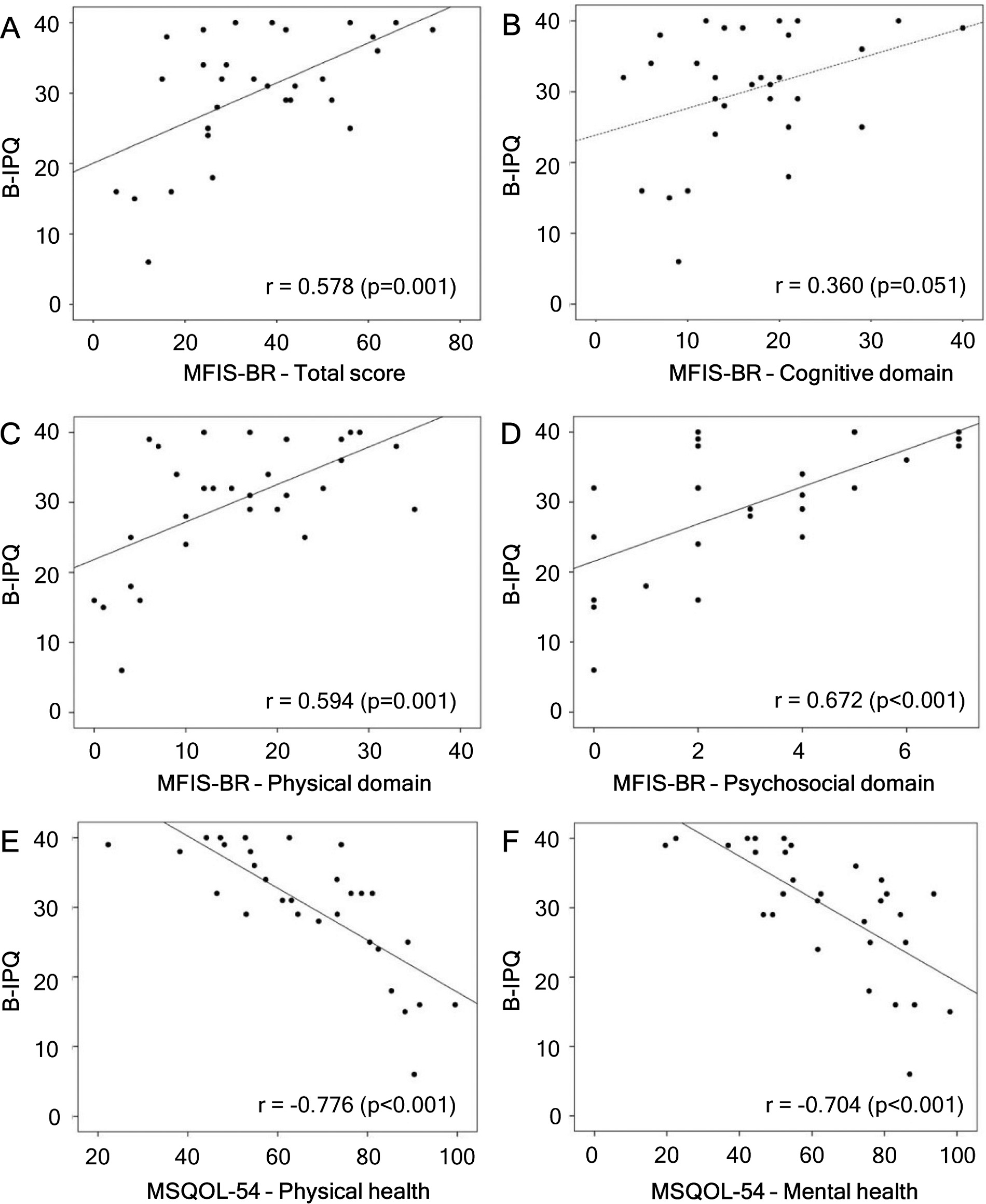
Results A total of 30 RRMS patients (66.7% of female subjects, with a mean age of 36.8 ± 1.8 years) were enrolled. The mean score on the B-IPQ scale was of 30.2 ± 8.9 points, with 40% presenting a threat perception of the disease. No significant correlation was observed between cognitive performance and illness perception (r = −0.058; p = 0.761). However, significant correlations were found between illness perception and all fatigue domains (total: r = 0.578; p = 0.001; physical: r = 0.594; p = 0.001; psychosocial: r = 0.672; p < 0.001), except the cognitive domain (r = 0.360; p = 0.051). The EDSS and MSQOL-54 scores also demonstrate significant correlations with illness perception (EDSS = 2.30; p = 0.034; MSQOL-54 physical: r = −0.776; p < 0.001; MSQOL-54 mental: r = −0.704; p < 0.001).
Conclusion Illness perception in MS is influenced by patients' fatigue, quality of life, and disability levels, but it does not appear to be affected by cognition.
Keywords
Multiple Sclerosis; Cognitive Dysfunction; Fatigue
 Thumbnail
 Thumbnail
 Thumbnail
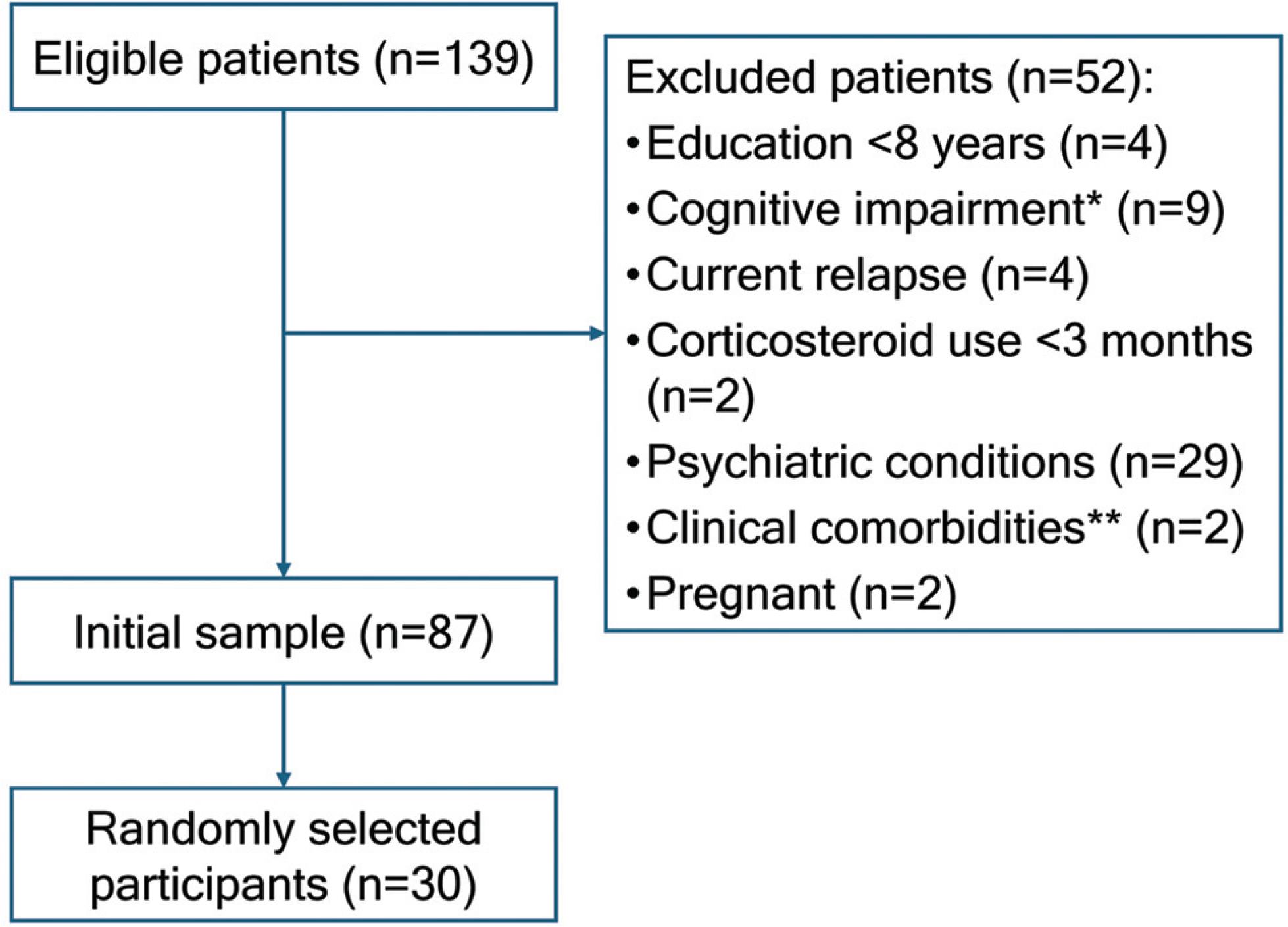 Notes: *Diagnosis of dementia according to the diagnostic criteria of the National Institute on Aging and Alzheimer's Associ8ation (NIA-AA) and the Brazilian Academy of Neurology (ABN), or those who had a Montreal Cognitive Assessment (MoCA) score below the cutoff for dementia based on the level of schooling suggested by ABN; **Patients who had other relevant clinical comorbidities.