 A systematic review of the water quality in the Doce River Basin: following the Fundão dam collapse
Abstract:
Aim The Doce River Basin has a high ecological and socioeconomic relevance. This basin faces considerable challenges, especially after the Fundão dam collapse in 2015, which contaminated the river system with iron ore tailings, impacting the river's biota and the communities that depend on it. This study aimed to identify thematic patterns, knowledge gaps, and temporal trends in scientific production based on a systematic review and scientometric analysis of water quality studies.
Methods This study searched for articles focusing on the basin using the Web of Science and Scopus databases, following the PRISMA criteria for systematic reviews. Articles published up to December 2024 were included, using terms related to water quality and the Doce River Basin and its main tributaries. In addition, temporal trend analysis and thematic categorization of the studies were conducted.
Results A total of 88 studies were identified, 76 of which were published after the disaster, with an emphasis on metal and metalloid concentrations, followed by physicochemical indicators such as pH and conductivity. In contrast, nutrients, emerging contaminants, and bioindicators were significantly less addressed. There are critical gaps in the assessment of chronic impacts such as changes in land use and effluent discharge, which could potentially hinder the assessment of the effects of dam failure. In addition, most tributaries remain poorly studied.
Conclusions Scientific production increased substantially after the disaster but remained concentrated on specific themes and regions. Expanding the geographic and thematic scope, as well as integrating biological indicators and chronic contaminants, is essential to support conservation policies and the integrated management of water resources in the basin.
Keywords:
scienciometric analysis; Brazil; Fundão Dam; anthropogenic impacts; river conservation
Resumo:
Objetivo A bacia do rio Doce, localizada no sudeste do Brasil, possui alta relevância ecológica e socioeconômica. Esta bacia enfrenta desafios consideráveis, especialmente após o rompimento da barragem de Fundão em 2015, que contaminou o sistema fluvial com rejeitos de minério de ferro, impactando a biota do rio e as comunidades que dependem dele. Portanto, a pesquisa buscou identificar padrões temáticos, lacunas de conhecimento e tendências temporais na produção científica sobre o tema através de uma revisão sistemática e análise cienciométrica de estudos de qualidade da água.
Métodos Este estudo buscou artigos que abordam a bacia, utilizando as bases de dados Web of Science e Scopus e seguindo os critérios PRISMA para revisões sistemáticas. Foram incluídos artigos até dezembro de 2024, utilizando termos relacionados à qualidade da água e à Bacia do Rio Doce e seus principais afluentes. Além disso, foi aplicada uma análise de tendência temporal e categorização temática dos estudos.
Resultados Foram identificados 88 estudos, sendo 76 publicados após o desastre, com ênfase na análise de concentrações de metais e metaloides, seguidos por indicadores físico-químicos como pH e condutividade. Em contrapartida, nutrientes, contaminantes emergentes e bioindicadores foram significativamente menos abordados. Existem lacunas críticas na avaliação dos impactos crónicos, tais como mudanças no uso do solo e descarga de efluentes, o que pode potencialmente prejudicar a avaliação dos efeitos do rompimento da barragem. Além disso, a maioria dos afluentes permanece pouco estudada.
Conclusões A produção científica aumentou substancialmente após o desastre, porém permanece concentrada em temas e regiões específicas. A ampliação do escopo geográfico e temático, bem como a integração de indicadores biológicos e contaminantes crônicos é fundamental para subsidiar políticas de conservação e gestão integrada dos recursos hídricos na bacia.
Palavras-chave:
análise cienciométrica; Brasil; barragem de Fundão; impactos antrópicos; conservação de rios
1. Introduction
The Doce River is an important river in southeastern Brazil, with 98% of its basin lying within the Atlantic Forest biome, a recognized biodiversity hotspot that demands prioritization for conservation (Espindola 2005; Arantes et al., 2009; Felippe et al., 2016). The river is characterized by significant biological and geological diversity that has been exploited since the 18th century, driven by gold mining, which was intensified by the large-scale expansion of agriculture, pastures, and iron ore mining (Espindola 2005; Arantes et al., 2009). Over time, the lack of sustainable practices and inadequate monitoring systems has intensified environmental pressures on the Doce River, leading to significant challenges in assessing and maintaining water quality (Cheng et al., 2022; Silva et al., 2022). Consequently, the water quality of the Doce River has deteriorated, threatening not only aquatic biodiversity, but also human health and the economy (Silva et al., 2022).
On November 5, 2015, the Doce River was severely affected by the collapse of the Fundão tailings dam, which released an estimated 34 million cubic meters of iron-ore tailings into the river (ANA, 2016). The dam failure has had profound socioeconomic repercussions, displacing communities, disrupting the water supply, and highlighting the consequences of inadequate environmental governance (Fernandes et al., 2016). This event drew significant scientific attention and led to numerous studies on the river water quality. However, the absence of pre-disaster data hinders accurate quantification of the environmental impact. Additionally, the varying methodologies and distinct focuses of these independent studies have hindered a comprehensive assessment of the overall water quality of the Doce River, particularly in a post-disaster context (Duarte et al., 2021).
Despite ongoing efforts by Brazilian researchers, there remains a notable lack of comprehensive data on the river water quality, even in such a developed region. Monitoring water quality in aquatic environments is essential not only to conserve these ecosystems, but also to ensure that they continue to provide critical environmental services, such as adequate water quality and quantity for human use and the protection of aquatic biodiversity (Li & Wu, 2019; Wei et al., 2022). Moreover, analyzing pre-disaster data is essential to understand the historical baseline of water quality, thus providing better evidence to assess environmental impacts (Hatje et al., 2017).
To develop a comprehensive understanding of the water quality of the Doce River, this study conducted a systematic review and scientometric analysis to (i) compile and synthesize scientific studies on the water quality of the Doce River and its main tributaries, (ii) identify publication trends and consolidate key findings, (iii) identify major bottlenecks and persistent knowledge gaps, and (iv) suggest potential applications of these findings for river conservation.
2. Methods
2.1. Study area
In southeastern Brazil, the Doce River Basin covers approximately 84,000 km2, with 86% in Minas Gerais and 14% in Espírito Santo. The main river is 888 km long, crossing 209 municipalities and supporting approximately 3.6 million people (ANA, 2016). The region is located in two biodiversity hotspots: the Atlantic Forest (98%) and the Cerrado (2%) (Myers et al., 2000).
The climate is warm (18–25°C), with a rainy season from November to April (800–1300 mm) and a dry season from May to October (150–250 mm). The basin provides water for domestic, agricultural, mining, industrial, and energy uses, especially the middle Doce River and Piracicaba sub-basin that are the most densely populated (ANA, 2016). The basin suffers from deforestation, soil erosion, and inadequate wastewater treatment (Fernandes et al., 2016).
The Fundão Dam collapse occurred in the Gualaxo do Norte River, a tributary of the Carmo River that flows into the Doce River. The disaster released 34 million cubic meters of iron ore tailings, severely impacting water quality and ecosystems across the basin (ANA, 2016) (Figure 1).

Map showing the hydrography of the Doce River basin. Studies with collected data were found for the main course of the Doce River, highlighted in red, and for eight tributaries, highlighted in pink. The star marks the location of the Fundão Dam.
2.2. Literature Search and Selection Criteria
A systematic review search was conducted in indexed journals in the Web of Science (Clarivate Analytics) and Scopus (Elsevier) databases following the "Preferred Reporting Items for Systematic Reviews and Meta-Analyses" (PRISMA) guidelines (Page et al., 2021). In the former, we searched by "topic" and in the latter, by "article title, abstract, and keywords," using the following terms: ("water quality" OR "water quality index" OR "IQA" OR "metal*" OR "iron" OR "turbidity" OR "dissolved oxygen" OR "nutrient*" OR "nitrogen" OR "phosphor" OR "pollution") AND ("Rio Doce" OR "Doce River" OR "Doce basin" OR "Piranga" OR "Carmo" OR "Santo Antonio" OR "Piracicaba"). The adopted timeframe includes all years until December 2024. We only used indexed journal articles and excluded book publications and abstracts. The relevance of retrieved articles to our objectives was assessed by examining their titles and abstracts. Studies were excluded if they were duplicates, did not align with the topic, did not address rivers within the Doce River Basin, or focused exclusively on marine or estuarine environments, lakes, or headwater streams (Figure 2).

PRISMA Flow diagram showing the method applied for the inclusion of articles in this review (Page et al., 2021).
The following data were extracted from the reports: (i) first author's name, (ii) first author's affiliation, (iii) authors' research group, (iv) international collaborations, (v) publication year, (vi) journal name, (vii) sampled rivers, (viii) data sources, (ix) analyzed impacts, (x) quality parameters collected as described in the Methods section, and (xi) whether water, sediment, or both were evaluated. In addition, the results and discussion sections related to the water quality parameters were extracted and synthesized. Parameters that were not addressed in the articles’ discussion were disregarded. The first author conducted all article categorization and data extraction. The full data extracted are available in the SciELO Data repository (Valle et al., 2025)
A temporal trend analysis of publication frequency was conducted using an exponential regression model to assess growth patterns over time. Additionally, a Mann–Whitney U test was applied to compare the number of publications before and after the 2015 Fundão Dam collapse. All statistical analyses were performed using the R software (R Core Team 2024).
3. Results
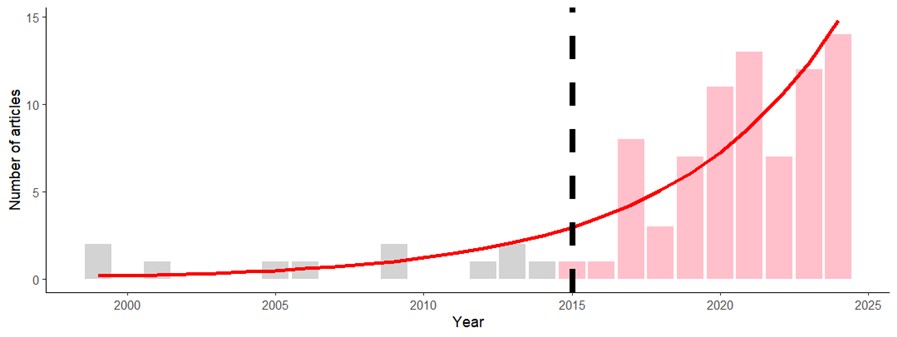
From the database search, 1,290 scientific articles were obtained. Of these, 88 addressed water quality in the Doce River Basin and were selected for this systematic review. The first studies on the water quality of the Doce River and its tributaries were published in 1999. The first study (Cursino et al., 1999) evaluated the concentration of Hg from mining in the sediment of the Carmo River and its relationship with the incidence of bacterial resistance to this metal. The second study examined the distribution of Chironomidae larvae in the Piracicaba River and its relationship with water quality (Marques et al., 1999). There was a significant increase in publications after the Fundão Dam collapse (p < 0.05, W = 11). A total of 12 articles were identified before the collapse compared to 76 articles published after the catastrophe until 2024, with a peak of 14 publications in 2024 (Figure 3).

Bar plot showing the number of articles published per year. The red line represents the exponential regression model (R2 = 0.832; mean number of articles = 0.1717 × exp[0.1783 × (Year−1999)]), and the dotted vertical line indicates the year of the Fundão Dam collapse (2015).
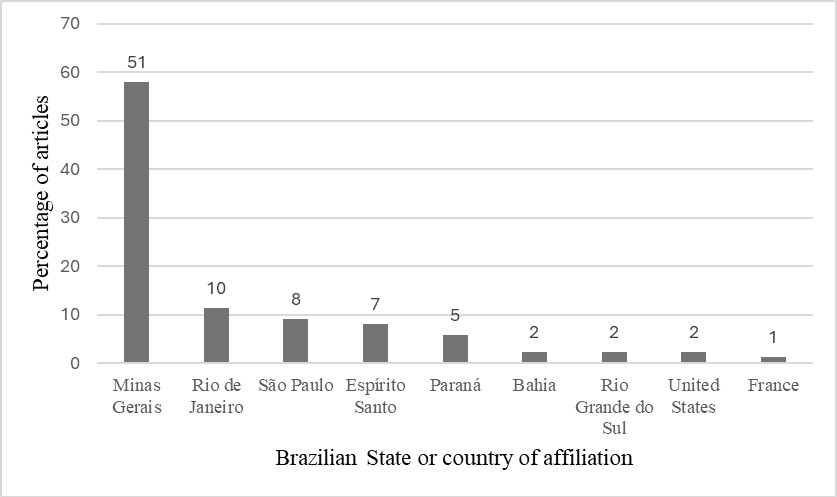
The studies were conducted by Brazilian universities (88.6%), private companies (3.4%), and other Brazilian institutions (4.5%), with 84% involving collaboration between research groups. Additionally, 19% included international authors and three had the first author affiliated with an international institution. The Brazilian state with the most publications during the evaluation period was Minas Gerais, followed by Rio de Janeiro, and São Paulo (Figure 4).

Barplot showing the percentage of articles by the first author’s Brazilian state or country of affiliation.
The studies used primary data collected from the Gualaxo do Norte, Doce, Carmo, Piracicaba, Piranga, Santa Bárbara, Severo, Peixe, Ipanema, Tripuí, and Matipó Rivers. The secondary data used was collected by the "Águas de Minas" project made by the Instituto Mineiro de Gestão das Águas (IGAM) and by the “Programa de Monitoramento Quali-quantitativo Sistemático de Água e Sedimento” (PMQQS) made by the Renova Foundation, which sampled several rivers throughout the basin (Figure 1). The first three rivers were affected by the collapse of the Fundão Dam (ANA, 2016).
Among the 88 articles reviewed, 93.2% analyzed some types of impact. According to the questions or objectives of the articles, the most assessed impacts were mining tailings related to the Fundão Dam collapse (59.1%), followed by multiple anthropogenic impacts (18.2%), mining impacts unrelated to the dam collapse (9.1%), sewage impact (2.3%), land use and land cover (1.1%), metal contamination impact (1.1%), habitat degradation (1.1%), and reforestation impact (1.1%) (Figure 5).

The frequency of all parameters was investigated in the 104 selected study reports (Figure 6). The most frequently evaluated parameters were metals and metalloids (72.1%), particularly iron (60.5%), followed by pH (47.1%), conductivity (34.6%), and dissolved oxygen (30.8%). An increase in monitoring efforts occurred after the Fundão Dam collapse, with 84% of the total parameter observations recorded after the disaster. Parameters such as turbidity and total suspended solids, which are linked to tailings and sanitation, showed a substantial increase in post-disruption studies. On the other hand, parameters such as herbicides, pharmaceuticals, and other organic pollutants were rarely analyzed, revealing little explored research areas. This frequency distribution highlights the focus on contamination and environmental risk assessment after the disaster and underscores the need to expand monitoring beyond metal toxicity.
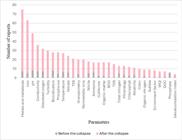
Barplot of the number of reports by parameter with more than five occurrences in the articles. In gray is the number before the Fundão Dam collapse, and in pink the number after the collapse. The full occurrences and parameters are available in the SciELO Data repository (Valle et al., 2025).
3.1. Metals and metalloids
Metals and metalloids were the most frequently studied parameters. However, only 6.7% (n = 7) of these reports were conducted before the Fundão dam collapse, while 65% (n = 68) were published afterwards, reflecting a marked shift in research attention to the impacts caused by the disaster.
Metals have been investigated in the Doce River Basin since the earliest studies owing to the history of gold mining and its impact on water resources (Cursino et al., 1999; Costa et al., 2006). Even before the collapse, the Carmo River and its tributaries, Tripuí and Gualaxo, were the focus of investigations to assess the impact of mining and the effects of trace metals on aquatic biota (Arantes et al., 2009).
With the collapse of the Fundão Dam, trace elements have gained prominence in research. In 13 studies, many elements were found in concentrations exceeding the limits established by Brazilian legislation in water (CONAMA 357, 2005) (Brasil, 2005), and five studies reported similar occurrences in sediments (CONAMA 454, 2012) (Brasil, 2012) (e.g.,Reis et al., 2020; Girotto et al., 2020). Health risks were also documented in post-collapse studies, particularly via fish muscle contamination and the water used by riverside communities (Carvalho et al., 2018; Mourão et al., 2023).
Conversely, two post-disaster studies (Segura et al., 2016; Matos et al., 2022) found metal levels within safety limits, although one study reported elevated Fe and Se levels in fish muscle tissue. Several studies have highlighted both natural geological enrichment (Fe and Al) and anthropogenic sources as contributors to the observed concentrations (Alves et al., 2023; Gontijo et al., 2022). Other rivers on the basin that did not suffer from dam collapse also presented high metal concentrations (Reis et al., 2017; Soares et al., 2020).
3.2. Physicochemical conditions
Physicochemical parameters such as pH, conductivity, temperature, redox potential (ORP), and alkalinity were assessed in 50% of the reviewed studies (n = 52). Of these, only 9 were published before 2015, while 43 were published after the dam failure.
The pH was acidic in headwater rivers and neutral in the middle and lower sections, as reported in pre-collapse studies (Petrucio et al., 2005; Medeiros et al., 2012). After the disaster, three studies indicated that the pH values of the water were elevated compared to the historical values; however, during the dry period of 2018, the values returned to the previous historical series level (Silva et al., 2022; Garcia et al., 2024). Other studies have found no changes in this parameter (e.g.Foesch et al., 2020).
Three studies conducted after the Fundão Dam rupture found conductivity values higher than the historical average and those in reference locations (Nogueira et al., 2021; Frachini et al., 2021).
Reis et al. (2020) reported that the redox potential of the water in the Gualaxo do Norte River was under oxidizing conditions that can influence the adsorption and precipitation of trace elements into the sediment.
3.3. Oxygen and solids dynamics
Parameters related to oxygen and solids in water, including dissolved oxygen (DO), biochemical oxygen demand (BOD), turbidity, total suspended solids (TSS), and total dissolved solids (TDS), were analyzed in 45 studies (43% of the total). These parameters showed a significant increase in post-disaster monitoring, with 37 studies conducted after 2015 and only 8 before.
The analyzed studies (32 total, 25 post-collapse) indicate that the waters of the basin are generally well-oxygenated and comply with Brazilian legislation (>5 mg/L; CONAMA, Brasil, 2005) (e.g., Hatje et al., 2017; Reis et al., 2019). The passage of the tailing wave caused oxygen depletion in the month following the disaster (e.g.Cordeiro et al., 2019; Silva et al., 2022).
Biochemical Oxygen Demand (BOD), evaluated in 17 studies (16 post-collapse), has low values overall, despite the widespread discharge of untreated sewage (Serrano & Borges 2022). However, in the Piracicaba River, some studies have found that peaks in BOD intensified during dry periods (Silva et al., 2017; Passos et al., 2021). This parameter was not correlated with the Fundão disaster.
Turbidity, one of the most visibly affected parameters after the collapse, was addressed in 30 studies (29 post-disaster). Field monitoring and remote sensing confirmed turbidity values up to 67 times above the legal limits immediately after the disaster, with subsequent fluctuations related to rainfall events, sediment resuspension, and bank erosion (Carvalho et al., 2018; Miller et al., 2023). Post-disaster restoration actions, such as replanting riparian forests and bank stabilization, can contribute to reducing turbidity (Santana et al., 2021).
Total suspended solids (TSS) and total dissolved solids (TDS) were measured in 21 and 15 studies, respectively, with the majority occurring after the disaster. Both indicators showed sharp increases immediately after the failure, followed by progressive declines, partly due to sediment retention in hydropower reservoirs and dilution in downstream reaches (Richard et al., 2020; Garcia et al., 2024). Color (10 studies) exceeded the legal limits (CONAMA 357, 2005) because of the high iron concentration resulting from the disaster (Foesch et al., 2020; Santana et al., 2021).
3.4. Nutrients and organic enrichment
Nutrient dynamics, including phosphorus, nitrogen compounds, and organic carbon, were analyzed in 47 (45%) studies, with a clear post-disaster emphasis: 40 of them were conducted after 2015 and only 7 before.
Pre-disaster nutrient assessments were rare and confined to the Piracicaba River, highlighting point-source sewage pollution and its seasonal variability (Petrucio et al., 2005; Silva et al., 2017).
Phosphorus often exceeds Brazilian regulations in more recent studies (CONAMA 357, 2005), although some studies have suggested stable or decreasing trends (e.g.Fraga et al., 2020; Costa et al., 2023).
Among nitrogen forms, nitrate (n = 23), nitrite (n = 18), ammonia (n = 17), total nitrogen (n = 13), and organic nitrogen (n = 9) were frequently assessed. Notably, ammonia levels decreased, likely due to biological uptake by cyanobacteria, while nitrate concentrations increased, particularly in rivers with mining influence or agricultural runoff (Fraga et al., 2021; Reis et al., 2019). After the dam breach, high nitrate levels (averaging 2 mg/L) were found in the Gualaxo do Norte River, which was attributed to the use of amines in ore processing (Reis et al., 2019).
In addition to dissolved nutrients, organic matter parameters such as dissolved organic carbon (DOC) and particulate organic carbon (POC) were explored in only 9 studies. DOC often exceeds legal limits in urbanized areas (Frachini et al., 2021), although it remains stable after the collapse (Cordeiro et al., 2019).
3.5. Biological and sanitary indicators
Biological and sanitary indicators were addressed in 44 studies (42% of the total), with a clear post-disaster focus: 37 were published after the 2015 Fundão dam collapse, compared to only 7 before.
Bioindicators, including fish, bacteria, algae, zooplankton, invertebrates, and even plants, were used in 28 studies to assess the ecological response to contamination. Pre-disaster studies primarily documented Hg adaptation and community composition in mining-influenced and organically polluted rivers (e.g., Cursino et al., 1999; Medeiros et al., 2012). Post-collapse research has expanded to include toxicological assays, biomarkers, and genotoxicity tests (Macêdo et al., 2020; Santos et al., 2023).
Notable findings in post-disaster studies were the reduction of microbial biomass in sediments (Santos et al., 2019); alteration of bacterioplankton composition, with the emergence of metal-resistant genes (Segura et al., 2016; Cordeiro et al., 2019); evidence of sublethal effects in fish and amphibians (e.g., difficulty swimming, gill damage) due to exposure to water and sediments contaminated with tailings (Girotto et al., 2020; Macêdo et al., 2020; Almeida et al., 2024); toxic effects on Allium cepa, Daphnia similis, and Raphidocelis subcapitata (Vergilio et al., 2021); and biomass reduction and earthworm evasion in contaminated sediments (Cesar et al., 2022).
Sanitary indicators, such as total and thermotolerant coliforms, were analyzed in 17 studies (15 post-disaster), with consistent reports of concentrations well above the CONAMA 357 limits (1000 MPN/100 mL for Class 2 rivers). These concentrations were common in rivers with urban effluent discharge, especially in the Piracicaba, Ipanema, Peixe, and Piranga sub-basins (Silva et al., 2017; Queiroz et al., 2019).
A smaller number of studies (n = 9) also applied the Water Quality Index (WQI) and Trophic State Index (TSI) metrics. WQI generally declined during the rainy season due to increased turbidity and reduced dissolved oxygen, while the TSI results ranged from oligotrophic in springs to eutrophic in impacted urban areas (Fraga et al., 2021; Nascimento et al., 2019). None of the studies correlated this index with dam failure.
3.6. Organic pollutants and emerging contaminants
Organic pollutants and emerging contaminants were the focus of 9 reports (8.7% of the total), all conducted after the collapse of the Fundão Dam. These investigations focused on ethereal amines, phenolic compounds, pharmaceuticals, herbicides, and polycyclic aromatic hydrocarbons (PAHs), which are linked to iron ore processing, agriculture, domestic sewage, and industrial waste.
Ether amines, used in iron ore beneficiation, were found in the Gualaxo do Norte River, with higher concentrations closer to the Fundão Dam disaster. In unaffected areas, ether amine levels were below the detection limit (Santos et al., 2019).
Phenols in the Doce River indicate contamination from organic fertilizers in pastures, agriculture, and domestic and industrial sewage. 12 phenolic compounds were identified, with some exceeding legal limits. Total phenols in the basin do not violate legal limits but still pose a risk to biota (Fraga et al., 2020; Ramos et al., 2021).
Antiretrovirals, antibiotics, antidepressants, and herbicides were detected in the Gualaxo do Norte, Carmo, and Doce Rivers. The concentrations of most of these pharmaceuticals and herbicides exceeded the predicted no-effect concentrations, potentially compromising organism health and causing microbial resistance (Gomes et al., 2022).
Another study reported high levels of Polycyclic Aromatic Hydrocarbons (PAHs) in the Doce River, with benzo[a]pyrene concentrations reaching up to 90 ng/L. Some points had high pyrethroid levels, indicating pesticide use in the region. However, the upper Doce River has low occurrences of these compounds (Yamamoto et al., 2023).
3.7. Sediment and geochemical indices
Sediment-related parameters were addressed in 40 of the reviewed studies (39%), with a strong post-disaster bias: 33 were published after the Fundão Dam collapse, and only 7 before.
In the Doce River Basin, the sediment organic matter concentration is generally low, indicating a predominantly mineral composition (Santolin et al., 2015; Santos et al., 2023). After the dam collapse, sediments and riverbed soil collected show less organic matter than non-impacted areas (e.g.,Reis et al., 2020; Bertoldo et al., 2023).
Sand is the most dominant particle size fraction in the Rio Doce, and following the dam collapse, there was a notable increase in the proportion of fine particles (e.g., Duarte et al., 2021, 2023). Mineralogically, sediments in the Gualaxo do Norte, Carmo, and Doce Rivers consist mainly of hematite, quartz, kaolinite, goethite, and gibbsite. The tailings had a similar composition, causing an increase in the proportion of silica, iron, and magnesium oxides after the disaster (Costa et al., 2006; Duarte et al., 2023).
Santolin et al., (2015), one of the few pre-collapse studies, found that sites across the basin were “unpolluted to moderately polluted,” primarily due to upstream mining activities, according to the enrichment factor (EF) and geoaccumulation index (I_geo). In contrast, post-collapse assessments identified higher EF and I_geo values at both affected and unaffected sites, which is attributed not only to the disaster but also to the mining history in the Gualaxo do Norte (Reis et al., 2020; Yamamoto et al., 2023).
4. Discussion
Scientific research on water quality in the Doce River Basin remained scarce until 1999, despite the basin's long history of environmental exploitation and its ecological significance as a biodiversity hotspot (Myers et al., 2000; Cursino et al., 1999; Marques et al., 1999). The number of publications increased significantly after the Fundão Dam failure, with 76 articles published between 2016 and 2024, five times more than before the disaster. This incident marked a significant shift in research focus on the Doce River, which reflects how environmental crises often catalyze scientific attention, particularly toward pollution and ecosystem risk. However, the lack of pre-disaster studies has made it difficult to assess their impact (Carvalho et al., 2018). Only a few studies (e.g. Cursino et al., 1999; Rodrigues et al., 2013) provide pre-collapse information, and many post-disaster comparisons rely on datasets such as the "Águas de Minas" project by the Instituto Mineiro de Gestão das Águas (IGAM) to compare water quality before and after the disaster (e.g., Passos et al., 2021; Silva et al., 2022). Long-term projects, such as these, are crucial for river conservation; however, relying on a single database can amplify potential bias, particularly when extrapolating trends.
Post-dam collapse studies concentrated their focus on metals and metalloids, along with physicochemical parameters, reflecting both the composition of the waste and the perceived urgency in assessing toxic risks (e.g.,Carvalho et al., 2017; Gontijo et al., 2022). Metals and metalloids, especially iron, arsenic, and mercury, were examined in 72% of the studies, with several exceeding the Brazilian water and sediment quality standards (e.g.,Yamamoto et al., 2023). However, only four pre-disaster studies have assessed metals in detail, reinforcing this data gap (Santolin et al., 2015). Physicochemical indicators such as pH, conductivity, and temperature were frequently assessed, with clear shifts in pH and conductivity immediately after the collapse. Though the effects of seasonal drought and natural geochemistry also contributed to parameter variability, complicating attribution to the disaster alone (Garcia et al., 2024; Wild et al., 2024).
Given the tailing’s composition and processing, other parameters, such as amines and sodium hydroxide (Segura et al., 2016), could provide more information, but are often overlooked. Also, nutrient dynamics, bioindicators, and organic pollutants remain underexplored. Despite widespread agriculture (66% of land use) and 68% of untreated sewage discharge (CBH-DOCE, 2022; MapBiomas, 2023), only 45% of studies have assessed phosphorus, nitrogen, and organic matter dynamics. Emerging contaminants, such as pharmaceuticals and phenolic compounds, were detected only in post-disaster studies and in less than 10% of cases, a striking omission given their known toxicity and potential for long-term ecosystem disruption.
Aquatic ecosystem alterations might not be detected by traditional water quality parameters but can still affect biota (Marques & Barbosa, 2001; Zorzal-Almeida & Fernandes, 2021). After the dam collapse, 23% of the studies have incorporated bioindicators focusing on ecotoxicological texts, however few have investigated community changes, which are a consequence of the lack of previous data. Analyzing bioindicator changes and conducting ecotoxicological assays can enhance the assessment of how impacts affect aquatic organisms.
Although 11.4% of the studies have assessed water quality parameters in both Minas Gerais and Espírito Santo, most have focused on a single state. This lack of integration hampers a comprehensive understanding of the system, as the Doce River Basin extends beyond state borders. This political division also affects research funding, conservation projects, and the Doce River policies. For instance, the "Águas de Minas" project operates only in Minas Gerais, as it is part of a state agency's project. This highlights the necessity for integrated funding and collaborative research efforts to encompass the entire basin. It is also worth highlighting the lack of studies on other important tributaries, such as the Santo Antônio River, which is in a portion of the basin characterized by greater vegetation cover, lower rates of degradation, and the presence of endemic fish species (Vieira, 2009).
A major challenge in assessing Fundão’s legacy is to separate its effects from those of pre-existing pollution sources. Researchers have compared the affected and unaffected areas, however, many reference sites, such as Gualaxo do Norte upstream of the impact or the Piracicaba sub-basin, have been historically influenced by mining, untreated sewage, and industrial discharge and have high metal contamination (Queiroz et al., 2017; Davila et al., 2020). Hence, sampling designs must consider the basin’s background and other pollution sources that could potentially distort or exaggerate research findings.
The Doce River Basin faces multiple impacts, and dam failure may have been the most acute and tragic. However, it is not the only one. Agriculture covers 65.74% of the basin, with 72.48% of degraded pasture areas (MapBiomas, 2023). This activity increases solids, organic matter, nitrogen, and phosphorus levels and reduces water quality (Cheng et al., 2022). Chronic stressors and point-source effluents continue to shape water chemistry and ecosystem health long after the collapse.
Few studies have focused on conservation of the Doce River. The central Basin areas are the most vulnerable, with 35.9% of the basin area having high or very high vulnerability, reflecting poor water quality (Campos et al., 2023). Reforesting riparian zones is a tested recovery method in the Doce River basin, increasing watercourse resilience (Pires et al., 2017) and reducing nutrient loads from agricultural and pasture areas (Lee et al., 2020). Conservation measures should be implemented throughout the basin, focusing on multiple stressors.
To support improved water governance and research planning in the Rio Doce Basin, we present the following summary of the main insights from the systematic review and scientometric analysis:
-
Eighty-four percent of the reviewed studies (n = 74) were published after the Fundão dam collapse, indicating a reactive scientific response.
-
There has been a strong emphasis on metals and basic water chemistry. 72% of the studies focused on metals/metalloids, with iron, arsenic, and mercury being the most common. Physicochemical parameters such as pH and conductivity have also received significant attention.
-
There is an underrepresentation of nutrient dynamics, biological indicators, and emerging contaminants. Less than 45% of the studies assessed nitrogen or phosphorus; only 9 examined organic pollutants (e.g., pharmaceuticals, ether amines), and less than a third used biological indicators.
-
The lack of baseline data limits the impact assessment. Only 13.6% of the studies were published before 2015, and most pre- and post-failure comparisons were based on a single monitoring database (Águas de Minas), limiting their robustness.
-
Uneven geographic and political coverage. Most studies have focused on the Minas Gerais. Only 11.4% of the studies collected samples from both states, and tributaries remained unstudied.
-
Reference sites have other contamination. Several “control” areas are affected by mining and urban waste, complicating the attribution of impacts.
-
Signs of recovery, but chronic stressors persist. Enhanced post-failure studies have reported the return of turbidity and solids to pre-failure levels, which does not indicate good water quality as widespread untreated sewage and pasture degradation continue to affect it.
-
Land use and cumulative pressure require further attention. Tailings are not the only problem; agriculture, deforestation, and sewage all contribute to it. An integrated assessment is essential.
-
Effective conservation requires inter-state coordination. Interjurisdictional monitoring, shared databases, and long-term funding are vital to support basin-wide governance and ecological restoration.
5. Conclusion
This systematic review and scientometric analysis of water quality studies in the Doce River Basin revealed that scientific interest intensified markedly after the 2015 Fundão Dam collapse. Metals and metalloids were the most frequently assessed parameters. However, our findings indicate that attributing elevated concentrations solely to the disaster remains complex due to legacy contamination and limited pre-disaster baseline data. Future research should carefully refine the experimental design and incorporate additional parameters to enhance the robustness of the conclusions.
The focus on rivers impacted by tailings has resulted in under-representation of other important tributaries in the basin. Additionally, other anthropogenic impacts such as land use and land cover changes and untreated sewage have been insufficiently addressed. Future research must expand beyond reactive disaster assessment to address broader basin-wide pressures through integrated, long-term monitoring. In addition, studies should shift their focus to river conservation, particularly through the evaluation of strategies aimed at mitigating existing environmental impacts. These changes are essential to guide effective water governance and ecological restoration throughout the basin.
Acknowledgements
We acknowledge the Universidade Federal de Minas Gerais for providing equipment, structure, and access to the databases. BLV and LTO are grateful for the scholarship received from FAPEMIG (APQ-00208-19; Edital FAPEMIG/RENOVA). We appreciate the researchers responsible for mapping the study area. This work was supported by the Fundação de Amparo à Pesquisa do Estado de Minas Gerais [APQ-00208-19, Edital FAPEMIG/RENOVA].
Data availability
All research data analyzed in the research are available in SciELO Data. Access is open (CC BY 4.0). It can be accessed at https://doi.org/10.48331/SCIELODATA.HIQFPX
-
Cite as:
Valle, B.L. et al. A systematic review of the water quality in the Doce River Basin: following the Fundão dam collapse. Acta Limnologica Brasiliensia, 2025, vol. 37, e36. https://doi.org/10.1590/S2179-975X8724
References
-
Agência Nacional de Águas – ANA, 2016. Encarte especial sobre a Bacia do Rio Doce: rompimento da barragem em Mariana/MG [online]. Brasília: ANA. Retrieved in 2023, June 16, from https://arquivos.ana.gov.br/RioDoce/EncarteRioDoce_22_03_2016v2.pdf
» https://arquivos.ana.gov.br/RioDoce/EncarteRioDoce_22_03_2016v2.pdf -
Almeida, T.V.P., Sales, C.F., Ribeiro, Y.M., Sobjak, T.M., Bazzoli, N., Melo, R.M.C., & Rizzo, E., 2024. Metal-contaminated sediment toxicity in a highly impacted Neotropical river: insights from zebrafish embryo toxicity assays. Chemosphere 362, 142627. PMid:38885763. http://doi.org/10.1016/j.chemosphere.2024.142627
» http://doi.org/10.1016/j.chemosphere.2024.142627 -
Alves, A.V., Mendes, L.A., Teixeira, J.B., dos Santos, V.M.R., de Guarda, V.L.M., & Andrade, A.L., 2023. Evaluating the Water Quality of Springs in Paracatu de Baixo after the Fundão Dam Collapse. Rev. Virtual Quim. 16(2), 187-194. http://doi.org/10.21577/1984-6835.20230062
» http://doi.org/10.21577/1984-6835.20230062 -
Arantes, I.A., Pinto, M.T.C., Mangabeira, P.A., Grenier-Loustalot, M.F., Veado, M., & Oliveira, A.H., 2009. Mercury concentration in fish from Piracicaba River (Minas Gerais, Brazil). Environ. Monit. Assess. 156(1-4), 119-130. PMid:18683058. http://doi.org/10.1007/s10661-008-0468-2
» http://doi.org/10.1007/s10661-008-0468-2 -
Bertoldo, L.A., Ribeiro, A., Reis, C.E.S., Frachini, E., Kroetz, B.L., Abrao, T., & Santos, M.J., 2023. Environmental risk assessment of potentially toxic elements in Doce River watershed after mining sludge dam breakdown in Mariana, MG, Brazil. Environ. Monit. Assess. 195(5), 539. PMid:37017824. http://doi.org/10.1007/s10661-023-11080-5
» http://doi.org/10.1007/s10661-023-11080-5 -
Brasil. Conselho Nacional do Meio Ambiente – CONAMA, 2005. Dispõe sobre a classificação dos corpos de água e diretrizes ambientais para o seu enquadramento, bem como estabelece as condições e padrões de lançamento de efluentes, e dá outras providências (Resolução CONAMA n° 357, de 17 de março de 2005). Diário Oficial da União [da] República Federativa do Brasil, Poder Executivo, Brasília, DF. Retrieved in 2023, September 12, from https://conama.mma.gov.br/?option=com_sisconama&task=arquivo.download&id=450
» https://conama.mma.gov.br/?option=com_sisconama&task=arquivo.download&id=450 -
Brasil. Conselho Nacional do Meio Ambiente – CONAMA, 2012. Estabelece as diretrizes gerais e os procedimentos referenciais para o gerenciamento do material a ser dragado em águas sob jurisdição nacional. (Resolução CONAMA n° 454, de 1º de novembro de 2012). Diário Oficial da União [da] República Federativa do Brasil, Poder Executivo, Brasília, DF. Retrieved in 2023, September 12, from https://www.suape.pe.gov.br/images/publicacoes/legislacao/22._CONAMA_454_2012.pdf
» https://www.suape.pe.gov.br/images/publicacoes/legislacao/22._CONAMA_454_2012.pdf -
Campos, J.A., Silva, D.D., Fernandes Filho, E.I., Pires, G.F., Amorim, R.S.S., Menezes Filho, F.C.M., Ribeiro, C.B.M., Uliana, E.M., & Aires, U.R.V., 2023. Environmental vulnerability assessment of the Doce River basin, southeastern Brazil. Environ. Monit. Assess. 195(9), 1119. PMid:37648931. http://doi.org/10.1007/s10661-023-11782-w
» http://doi.org/10.1007/s10661-023-11782-w -
Carvalho, G.O., Pinheiro, A.A., Sousa, D.M., Padilha, J.A., Souza, J.S., Galvão, P.M., Paiva, T.C., Freire, A.S., Santelli, R.E., Malm, O., & Torres, J.P.M., 2018. Metals and Arsenic in Water Supply for Riverine Communities Affected by the Largest Environmental Disaster in Brazil: The Dam Collapse on Doce River. Orbital Electron J. Chem. 10(4), 299-307. http://doi.org/10.17807/orbital.v10i4.1081
» http://doi.org/10.17807/orbital.v10i4.1081 -
Carvalho, M.S., Moreira, R.M., Ribeiro, R.D., & de Almeida, A.M., 2017. Concentração de metais no rio Doce em Mariana, Minas Gerais, Brasil. Acta Brasiliensis. 1(3), 37-41. http://doi.org/10.22571/Actabra13201758
» http://doi.org/10.22571/Actabra13201758 -
CBH-DOCE, 2022. O dia da água e as questões de saneamento na bacia do rio Doce [online]. CBH-Piracicaba MG. Retrieved in 2023, September 12, from https://www.cbhpiracicabamg.org.br/noticias/o-dia-da-agua-e-as-questoes-de-saneamento-na-bacia-hidrografica-do-rio-doce
» https://www.cbhpiracicabamg.org.br/noticias/o-dia-da-agua-e-as-questoes-de-saneamento-na-bacia-hidrografica-do-rio-doce -
Cesar, R.G., Marçal, M.S., Serrano, A.F., Lourenço, R.S., Do Nascimento, M.T., Rabello, M.V.T., et al, 2022. Poluição por metais pesados em depósitos fluviais impactados pelo rompimento de barragem de mineração na Bacia do Rio Doce (MG): minhocas como bioindicadores. Rev. Bras. Geogr. Fis. 15(1), 414-428. http://doi.org/10.26848/rbgf.v15.1.p414-428
» http://doi.org/10.26848/rbgf.v15.1.p414-428 -
Cheng, C., Zhang, F., Shi, J., & Kung, H.-T., 2022. What is the relationship between land use and surface water quality? A review and prospects from remote sensing perspective. Environ. Sci. Pollut. Res. Int. 29(38), 56887-56907. PMid:35708802. http://doi.org/10.1007/s11356-022-21348-x
» http://doi.org/10.1007/s11356-022-21348-x -
Cordeiro, M.C., Garcia, G.D., Rocha, A.M., Tschoeke, D.A., Campeão, M.E., Appolinario, L.R., Soares, A.C., Leomil, L., Froes, A., Bahiense, L., Rezende, C.E., de Almeida, M.G., Rangel, T.P., De Oliveira, B.C.V., de Almeida, D.Q.R., Thompson, M.C., Thompson, C.C., & Thompson, F.L., 2019. Insights on the freshwater microbiomes metabolic changes associated with the world’s largest mining disaster. Sci. Total Environ. 654, 1209-1217. PMid:30841395. http://doi.org/10.1016/j.scitotenv.2018.11.112
» http://doi.org/10.1016/j.scitotenv.2018.11.112 -
Costa, E.C.D., Linares, M.S., Carvalho, G.W.D., Gomes, P.P., Hughes, R.M., & Callisto, M., 2023. Human pressures degrade the ecological condition of the Upper Graipu River. RBRH 28, e38. http://doi.org/10.1590/2318-0331.282320230054
» http://doi.org/10.1590/2318-0331.282320230054 -
Costa, A.T., Nalini Jr, H.A., Castro, P.T.A., Lena, J.C., Morgenstern, P., & Friese, K., 2006. Sediment contamination in floodplains and alluvial terraces as an historical record of gold exploitation in the Carmo River basin, Southeast Quadrilátero Ferrífero, Minas Gerais, Brazil. Acta Hydrochim. Hydrobiol. 34(3), 245-256. https://doi.org/10.1002/aheh.200400625
» https://doi.org/10.1002/aheh.200400625 -
Cursino, L., Oberda, S.M., Cecilio, R.V., Moreira, R.M., Chartone-Souza, E., & Nascimento, A.M.A., 1999. Mercury concentration in the sediment at different gold prospecting sites along the Carmo stream, Minas Gerais, Brazil, and frequency of resistant bacteria in the respective aquatic communities. Hydrobiologia 394(0), 5-12. http://doi.org/10.1023/A:1003541512505
» http://doi.org/10.1023/A:1003541512505 -
Davila, R.B., Fontes, M.P.F., Pacheco, A.A., & Ferreira, M.D., 2020. Heavy metals in iron ore tailings and floodplain soils affected by the Samarco dam collapse in Brazil. Sci. Total Environ. 709, 136151. PMid:31887517. http://doi.org/10.1016/j.scitotenv.2019.136151
» http://doi.org/10.1016/j.scitotenv.2019.136151 -
Duarte, E.B., Neves, M.A., & de Oliveira, F.B., 2023. Main chemical and mineralogical components of the Rio Doce sediments and the iron ore tailing from the Fundão Dam disaster. Southeast. Brazil. Environ. Monit. Assess. 195(4), 456. PMid:36892675. http://doi.org/10.1007/s10661-023-11087-y
» http://doi.org/10.1007/s10661-023-11087-y -
Duarte, E.B., Neves, M.A., de Oliveira, F.B., Martins, M.E., de Oliveira, C.H.R., Burak, D.L., Orlando, M.T.D., & Rangel, C.V.G.T., 2021. Trace metals in Rio Doce sediments before and after the collapse of the Fundão iron ore tailing dam, Southeastern Brazil. Chemosphere 262, 127879. PMid:32781334. http://doi.org/10.1016/j.chemosphere.2020.127879
» http://doi.org/10.1016/j.chemosphere.2020.127879 - Espindola, H.S., 2005. Sertão do Rio Doce. Governador Valadares: Editora Univale.
-
Felippe, M.F., Magalhães Junior, A.P., Mendes, L.C., Cota, G.E.M., Carneiro, P.S., & Gontijo, B.M., 2016. Conexões geo-históricas e contemporâneas entre ocupação territorial, degradação ambiental e rarefação hídrica na Bacia do Rio Doce. Geografias. 203-222. http://doi.org/10.35699/2237-549X..13474
» http://doi.org/10.35699/2237-549X..13474 -
Fernandes, G.W., Goulart, F.F., Ranieri, B.D., Coelho, M.S., Dales, K., Boesche, N., Bustamante, M., Carvalho, F. A., Carvalho, D.C., Dirzo, R., Fernandes, S., Galetti, P.M., Garcia Millan, V.E., Mielke, C., Ramirez, J.L., Neves, A., Rogass, C., Ribeiro, S.P., Scariot, A., & Soares-Filho, B., 2016. Deep into the mud: ecological and socio-economic impacts of the dam breach in Mariana, Brazil. Natureza & Conservação, 14(2), 35-45. http://doi.org/10.1016/j.ncon.2016.10.003
» http://doi.org/10.1016/j.ncon.2016.10.003 -
Foesch, M.D.S., Francelino, M.R., Rocha, P.A., & Gomes, A.R.L., 2020. River water contamination resulting from the Mariana Disaster, Brazil. Floresta e Ambiente. 27 (4), e20180132. https://doi.org/10.1590/2179-8087.013218
» https://doi.org/10.1590/2179-8087.013218 -
Frachini, E., Ferreira, C.S.R., Kroetz, B.L., Urbano, A., Abrao, T., & Santos, M.J., 2021. Modeling the kinetics of potentially toxic elements desorption in sediment affected by a dam breakdown disaster in Doce River - Brazil. Chemosphere 283, 131157. PMid:34182633. http://doi.org/10.1016/j.chemosphere.2021.131157
» http://doi.org/10.1016/j.chemosphere.2021.131157 -
Fraga, M.D., da Silva, D.D., Reis, G.B., Guedes, H.A.S., & Elesbon, A.A.A., 2021. Temporal and spatial trend analysis of surface water quality in the Doce River basin, Minas Gerais, Brazil. Environ. Dev. Sustain. 23(8), 12124-12150. http://doi.org/10.1007/s10668-020-01160-8
» http://doi.org/10.1007/s10668-020-01160-8 -
Fraga, M.D., Reis, G.B., da Silva, D.D., Guedes, H.A.S., & Elesbon, A.A.A., 2020. Use of multivariate statistical methods to analyze the monitoring of surface water quality in the Doce River basin, Minas Gerais, Brazil. Environ. Sci. Pollut. Res. Int. 27(28), 35303-35318. PMid:32592050. http://doi.org/10.1007/s11356-020-09783-0
» http://doi.org/10.1007/s11356-020-09783-0 -
Garcia, A.R.M., Pujoni, D.G.F., & Bezerra-Neto, J.F., 2024. Resilience or Collapse? Reconstructing the Water Quality Time Series of a Tropical River Impacted by a Mine Tailings Dam Failure. Limnol. Review 24(4), 637-652. http://doi.org/10.3390/limnolrev24040037
» http://doi.org/10.3390/limnolrev24040037 -
Girotto, L., Espíndola, E.L.G., Gebara, R.C., & Freitas, J.S., 2020. Acute and Chronic Effects on Tadpoles (Lithobates catesbeianus) exposed to Mining Tailings from the Dam Rupture in Mariana, MG (Brazil). Water Air Soil Pollut. 231(7), 325. http://doi.org/10.1007/s11270-020-04691-y
» http://doi.org/10.1007/s11270-020-04691-y -
Gomes, M.P., Brito, J.C.M., Vieira, F., Kitamura, R.S.A., & Juneau, P., 2022. Emerging Contaminants in Streams of Doce River Watershed, Minas Gerais, Brazil. Front. Environ. Sci. 9, 801599. http://doi.org/10.3389/fenvs.2021.801599
» http://doi.org/10.3389/fenvs.2021.801599 -
Gontijo, E.S.J., Monteiro, A.S.C., Tonello, P.S., Roeser, H.M.P., Friese, K., & Rosa, A.H., 2022. Analyses of colloidal, truly dissolved, and DGT-labile metal species and phosphorus in mining area surrounded by tailing dams using self-organising maps. Chemosphere 303(Pt 2), 135003. PMid:35595112. http://doi.org/10.1016/j.chemosphere.2022.135003
» http://doi.org/10.1016/j.chemosphere.2022.135003 -
Hatje, V., Pedreira, R.M.A., de Rezende, C.E., Schettini, C.A.F., de Souza, G.C., Marin, D.C., & Hackspacher, P.C., 2017. The environmental impacts of one of the largest tailing dam failures worldwide. Sci. Rep. 7(1), 10706. PMid:28878243. http://doi.org/10.1038/s41598-017-11143-x
» http://doi.org/10.1038/s41598-017-11143-x -
Lee, S., McCarty, G.W., Moglen, G.E., Li, X., & Wallace, C.W., 2020. Assessing the effectiveness of riparian buffers for reducing organic nitrogen loads in the Coastal Plain of the Chesapeake Bay watershed using a watershed model. J. Hydrol. (Amst.) 585, 124779. http://doi.org/10.1016/j.jhydrol.2020.124779
» http://doi.org/10.1016/j.jhydrol.2020.124779 -
Li, P., & Wu, J., 2019. Drinking water quality and public health. Expo. Health 11(2), 73-79. http://doi.org/10.1007/s12403-019-00299-8
» http://doi.org/10.1007/s12403-019-00299-8 -
Macêdo, A.K.S., Santos, K.P.E.D., Brighenti, L.S., Windmöller, C.C., Barbosa, F.A.R., Ribeiro, R.I.M.A., Santos, H.B.D., & Thomé, R.G., 2020. Histological and molecular changes in gill and liver of fish (Astyanax lacustris Lütken, 1875) exposed to water from the Doce basin after the rupture of a mining tailings dam in Mariana, MG, Brazil. Sci. Total Environ. 735, 139505. PMid:32480153. http://doi.org/10.1016/j.scitotenv.2020.139505
» http://doi.org/10.1016/j.scitotenv.2020.139505 -
MapBiomas, 2023. Coleção v.8.0 da Série Anual de Mapas de Cobertura e Uso da Terra do Brasil [online]. Retrieved in 2023, October 17, from https://brasil.mapbiomas.org/
» https://brasil.mapbiomas.org/ -
Marques, M.M., & Barbosa, F., 2001. Biological quality of waters from an impacted tropical watershed (middle Rio Doce basin, southeast Brazil), using benthic macroinvertebrate communities as an indicator. Hydrobiologia 457(1-3), 69-76. http://doi.org/10.1023/A:1012297915323
» http://doi.org/10.1023/A:1012297915323 -
Marques, M.M., Barbosa, F.A., & Callisto, M., 1999. Distribution and abundance of Chironomidae (Diptera, Insecta) in an impacted watershed in South-east Brazil. Rev. Bras. Biol. 59(4), 553-561. PMid:23505643. http://doi.org/10.1590/S0034-71081999000400004
» http://doi.org/10.1590/S0034-71081999000400004 -
Matos, A.R., da Silva, H.T., da Faria, M.C.S., Freire, B.M., Pereira, R.M., Batista, B.L., & Rodrigues, J.L., 2022. Environmental disaster in mining areas: routes of exposure to metals in the Doce River basin. Int. J. Environ. Sci. Technol. 19(12), 12091-12102. http://doi.org/10.1007/s13762-022-03981-8
» http://doi.org/10.1007/s13762-022-03981-8 -
Medeiros, A.O., Missagia, B.S., Brandão, L.R., Callisto, M., Barbosa, F.A.R., & Rosa, C.A., 2012. Water quality and diversity of yeasts from tropical lakes and rivers from the Rio Doce basin in Southeastern Brazil. Braz. J. Microbiol. 43(4), 1582-1594. PMid:24031990. http://doi.org/10.1590/S1517-83822012000400043
» http://doi.org/10.1590/S1517-83822012000400043 -
Miller, M.E., Ghisolfi, R.D., & Barroso, G.F., 2023. Remote sensing monitoring of mining tailings in the fluvial-estuarine-coastal ocean continuum of the Lower Doce River Valley (Brazil). Environ. Monit. Assess. 195(5), 542. PMid:37017798. http://doi.org/10.1007/s10661-023-11123-x
» http://doi.org/10.1007/s10661-023-11123-x -
Mourão, A.O., Santos, M.S., da Costa, A.S.V., da Silva, H.T., Maia, L.F.O., Faria, M.C.D., Rodriguez, M.D.V.R., & Rodrigues, J.L., 2023. Assessment of health risk and presence of metals in water and fish samples from Doce River, Brazil, after Fundão Dam Collapse. Arch. Environ. Contam. Toxicol. 84(3), 377-388. PMid:37009918. http://doi.org/10.1007/s00244-023-00991-6
» http://doi.org/10.1007/s00244-023-00991-6 -
Myers, N., Mittermeier, R.A., Mittermeier, C.G., da Fonseca, G.A., & Kent, J., 2000. Biodiversity hotspots for conservation priorities. Nature 403(6772), 853-858. PMid:10706275. http://doi.org/10.1038/35002501
» http://doi.org/10.1038/35002501 -
Nascimento, L.P., Reis, D.A., Roeser, H.M.P., & Santiago, A.F., 2019. Relationship between land use and water quality in a watershed impacted by iron ore tailings and domestic sewage. Rev. Ambient. Água 14(5), 1. http://doi.org/10.4136/ambi-agua.2383
» http://doi.org/10.4136/ambi-agua.2383 -
Nogueira, L.B., Sousa, S.M., Santos, C.G.L., Araújo, G.S., Oliveira, L., & Nogueira, K.O.P.C., 2021. Water Quality From Gualaxo Do Norte And Carmo Rivers (Minas Gerais, Brazil) After The Fundão Dam Failure. Anu. Igeo. 44, http://doi.org/10.11137/1982-3908_2021_44_37175
» http://doi.org/10.11137/1982-3908_2021_44_37175 -
Page, M.J., McKenzie, J.E., Bossuyt, P.M., Boutron, I., Hoffmann, T.C., Mulrow, C.D., Shamseer, L., Tetzlaff, J.M., Akl, E.A., Brennan, S.E., Chou, R., Glanville, J., Grimshaw, J.M., Hróbjartsson, A., Lalu, M.M., Li, T., Loder, E.W., Mayo-Wilson, E., McDonald, S., McGuinness, L.A., Stewart, L.A., Thomas, J., Tricco, A.C., Welch, V.A., Whiting, P., & Moher, D., 2021. The PRISMA 2020 statement: an updated guideline for reporting systematic reviews. BMJ 372, n71. PMid:33782057. http://doi.org/10.1136/bmj.n71
» http://doi.org/10.1136/bmj.n71 -
Passos, J.B.M.C., Teixeira, D.B.S., Campos, J.A., Lima, R.P.C., Fernandes-Filho, E.I., & da Silva, D.D., 2021. Multivariate statistics for spatial and seasonal quality assessment of water in the Doce River basin. Southeast. Brazil. Environ. Monit. Assess. 193(3), 125. PMid:33587192. http://doi.org/10.1007/s10661-021-08918-1
» http://doi.org/10.1007/s10661-021-08918-1 -
Petrucio, M.M., Medeiros, A.O., Rosa, C.A., & Barbosa, F.A.R., 2005. Trophic state and microorganisms community of major sub-basins of the middle Rio Doce basin, southeast Brazil. Braz. Arch. Biol. Technol. 48(4), 625-633. http://doi.org/10.1590/S1516-89132005000500015
» http://doi.org/10.1590/S1516-89132005000500015 -
Pires, A.P.F., Rezende, C.L., Assad, E.D., Loyola, R., & Scarano, F.R., 2017. Forest restoration can increase the Rio Doce watershed resilience. Perspect. Ecol. Conserv. 15(3), 187-193. http://doi.org/10.1016/j.pecon.2017.08.003
» http://doi.org/10.1016/j.pecon.2017.08.003 -
Queiroz, M.T.A., Queiroz, C.A., Queiroz, F.A., & Benigno, G.F., 2019. Avaliação do Índice de Estado Trófico e parâmetros de qualidade da água no reservatório da Usina Hidrelétrica de Sá Carvalho, Minas Gerais, Brasil. Sist. Gest. 14(1), 1-12. http://doi.org/10.20985/1980-5160.2019.v14n1.1363
» http://doi.org/10.20985/1980-5160.2019.v14n1.1363 -
Queiroz, M.T.A., Sabara, M.G., Queiroz, C.A., Leao, M.M.D., Amorim, C.C., & de Lima, L.R.P., 2017. Estudo sobre os teores de Tório, Urânio e Potássio nas águas superficiais e sedimento marginal do Rio Piracicaba, Minas Gerais, Brasil. Eng. Sanit. Ambient. 22(2), 371-380. http://doi.org/10.1590/s1413-41522016126287
» http://doi.org/10.1590/s1413-41522016126287 -
Ramos, R.L., Lebron, Y.A.R., Moreira, V.R., de Souza Santos, L.V., & Amaral, M.C.S., 2021. Phenolic compounds in surface water: methodology and occurrence in Doce River, Brazil. Environ. Monit. Assess. 193(10), 687. PMid:34601622. http://doi.org/10.1007/s10661-021-09420-4
» http://doi.org/10.1007/s10661-021-09420-4 -
R Core Team, 2024. R: A language and environment for statistical computing [online]. Vienna, Austria: R Foundation for Statistical Computing. Retrieved in 2025, November 13, from https://www.R-project.org/
» https://www.R-project.org/ -
Reis, D.A., Fongaro, G., Lanna, M.C.D., Dias, L.C.P., & Santiago, A.D., 2019. The Relationship between human adenovirus and metals and semimetals in the waters of the Rio Doce, Brazil. Arch. Environ. Contam. Toxicol. 77(1), 144-153. PMid:30976887. http://doi.org/10.1007/s00244-019-00625-w
» http://doi.org/10.1007/s00244-019-00625-w -
Reis, D.A., Nascimento, L.P., de Abreu, A.T., Nalini, H.A., Roeser, H.M.P., & Santiago, A.D., 2020. Geochemical evaluation of bottom sediments affected by historic mining and the rupture of the Fundão dam, Brazil. Environ. Sci. Pollut. Res. Int. 27(4), 4365-4375. PMid:31832945. http://doi.org/10.1007/s11356-019-07119-1
» http://doi.org/10.1007/s11356-019-07119-1 -
Reis, D.A., Santiago, A.D., Nascimento, L.P., & Roeser, H.M.P., 2017. Influence of environmental and anthropogenic factors at the bottom sediments in a Doce River tributary in Brazil. Environ. Sci. Pollut. Res. Int. 24(8), 7456-7467. PMid:28110455. http://doi.org/10.1007/s11356-017-8443-5
» http://doi.org/10.1007/s11356-017-8443-5 -
Richard, E.D., Duarte Junior, H. A., Estrada, G. C. D., Bechtold, J. P., Maioli, B. G., Freitas, A. H., Warner, K. E., & Figueiredo, L. H. M., 2020. Influence of Fundão Tailings Dam Breach on Water Quality in the Doce River Watershed. Integr. Environ. Assess. Manag. 16(5), 583-595. PMid:32648998. http://doi.org/10.1002/ieam.4311
» http://doi.org/10.1002/ieam.4311 -
Rodrigues, A.S.D., Malafaia, G., Costa, A.T., & Nalini Junior, H.A., 2013. Evaluation of the mineral exploration influence on sediment composition in the Gualaxo do Norte River Basin (MG-Brazil) based on geochemical and stratigraphic data. Environ. Earth Sci. 68(4), 965-972. http://doi.org/10.1007/s12665-012-1799-4
» http://doi.org/10.1007/s12665-012-1799-4 -
Santana, F. C., Francelino, M. R., Schaefer, C. E. G. R., Veloso, G. V., Fernandes-Filho, E. I., Santana, A. J. P., Timo, L. B., & Rosa, A. P., 2021. Water Quality of the Gualaxo do Norte and Carmo Rivers After the Fundão Dam Collapse, Mariana, MG. Water Air Soil Pollut. 232(4), 155. http://doi.org/10.1007/s11270-021-05113-3
» http://doi.org/10.1007/s11270-021-05113-3 -
Santolin, C.V.A., Ciminelli, V.S.T., Nascentes, C.C., & Windmöller, C.C., 2015. Distribution and environmental impact evaluation of metals in sediments from the Doce River Basin, Brazil. Environ. Earth Sci. 74(2), 1235-1248. http://doi.org/10.1007/s12665-015-4115-2
» http://doi.org/10.1007/s12665-015-4115-2 -
Santos, A.S., Braz, B.F., Sanjad, P., Cruz, A.C.R., Crapez, M.A.C., Neumann, R., Santelli, R.E., & Keim, C.N., 2023. Role of indigenous microorganisms and organics in the release of iron and trace elements from sediments impacted by iron mine tailings from failed Fundão dam. Environ. Res. 220, 115143. PMid:36574804. http://doi.org/10.1016/j.envres.2022.115143
» http://doi.org/10.1016/j.envres.2022.115143 -
Santos, O.S.H., Avellar, F.C., Alves, M., Trindade, R.C., Menezes, M.B., Ferreira, M.C., França, G.S., Cordeiro, J., Sobreira, F.G., Yoshida, I.M., Moura, P.M., Baptista, M.B., & Scotti, M.R., 2019. Understanding the environmental impact of a mine dam rupture in Brazil: prospects for remediation. J. Environ. Qual. 48(2), 439-449. PMid:30951136. http://doi.org/10.2134/jeq2018.04.0168
» http://doi.org/10.2134/jeq2018.04.0168 -
Segura, F.R., Nunes, E.A., Paniz, F.P., Paulelli, A.C.C., Rodrigues, G.B., Braga, G.U.L., Dos Reis Pedreira Filho, W., Barbosa Junior, F., Cerchiaro, G., Silva, F.F., & Batista, B.L., 2016. Potential risks of the residue from Samarco’s mine dam burst (Bento Rodrigues, Brazil). Environ. Pollut. 218, 813-825. PMid:27524249. http://doi.org/10.1016/j.envpol.2016.08.005
» http://doi.org/10.1016/j.envpol.2016.08.005 -
Serrano, L.D.O., & Borges, A.C., 2022. A simpler statistical approach to estimate the allowable effluent discharge into a low monitored river network. Sci. Total Environ. 830, 154609. PMid:35307425. http://doi.org/10.1016/j.scitotenv.2022.154609
» http://doi.org/10.1016/j.scitotenv.2022.154609 -
Silva, G.J.D., Borges, A.C., Moreira, M.C., & Rosa, A.P., 2022. Statistical process control in assessing water quality in the Doce river basin after the collapse of the Fundão dam (Mariana, Brazil). J. Environ. Manage. 317, 115402. PMid:35751244. http://doi.org/10.1016/j.jenvman.2022.115402
» http://doi.org/10.1016/j.jenvman.2022.115402 -
Silva, M.M., Faria, S.D., & Moura, P.M., 2017. Modelagem da qualidade da água na bacia hidrográfica do Rio Piracicaba (MG). Eng. Sanit. Ambient. 22(1), 133-143. http://doi.org/10.1590/s1413-41522017134420
» http://doi.org/10.1590/s1413-41522017134420 -
Soares, A.L.C., Pinto, C.C., & Oliveira, S.C., 2020. Impacts of anthropogenic activities and calculation of the relative risk of violating surface water quality standards established by environmental legislation: a case study from the Piracicaba and Paraopeba river basins, Brazil. Environ. Sci. Pollut. Res. Int. 27(12), 14085-14099. PMid:32040737. http://doi.org/10.1007/s11356-020-07647-1
» http://doi.org/10.1007/s11356-020-07647-1 -
Valle, B.L., Oporto, L.T., Pujoni, D.G., & Bezerra-Neto, J.F., 2025. Data for: a systematic review of the water quality in the Doce River Basin: following the Fundão Dam Collapse. SciELO Data [Data set], V1, http://doi.org/10.48331/SCIELODATA.HIQFPX
» http://doi.org/10.48331/SCIELODATA.HIQFPX -
Vergilio, C.S., Lacerda, D., Souza, T.S., de Oliveira, B.C.V., Fioresi, V.S., de Souza, V.V., et al, 2021. Immediate and long-term impacts of one of the worst mining tailing dam failure worldwide (Bento Rodrigues, Minas Gerais, Brazil). Sci. Total Environ. 756, 143697. https://doi.org/10.1016/j.scitotenv.2020.143697
» https://doi.org/10.1016/j.scitotenv.2020.143697 - Vieira, F., 2009. Distribuição, impactos ambientais e conservação da fauna de peixes da bacia do Rio Doce. MG. Biota 2(5), 5-22.
-
Wei, M., Huang, S., Li, L., Zhang, T., Akram, W., Khatoon, Z., & Renaud, F.G., 2022. Evolution of water quality and biota in the Panjiakou Reservoir, China as a consequence of social and economic development: implications for synergies and trade-offs between Sustainable Development Goals. Sustain. Sci. 17(4), 1385-1404. http://doi.org/10.1007/s11625-021-01046-2
» http://doi.org/10.1007/s11625-021-01046-2 -
Wild, M., Rouhani, S., Oehrig, J., Alves, P.H.G., Odle, W., & Gaspar, D.F.A., 2024. Using spatiotemporal ratio analyses to quantitatively estimate water quality recovery of the Rio Doce. Integr. Environ. Assess. Manag. 20(1), 74-86. PMid:37452664. http://doi.org/10.1002/ieam.4813
» http://doi.org/10.1002/ieam.4813 -
Yamamoto, F.Y., Pauly, G.F.E., Nascimento, L.S., Fernandes, G.M., Santos, M.P., Figueira, R.C.L., Cavalcante, R.M., Grassi, M.T., & Abessa, D.M.S., 2023. Explaining the persistence of hazardous chemicals in the Doce River (Brazil) by multiple sources of contamination and a major environmental disaster. J. Hazard Mater. Adv. 9, 100250. http://doi.org/10.1016/j.hazadv.2023.100250
» http://doi.org/10.1016/j.hazadv.2023.100250 -
Zorzal-Almeida, S., & Fernandes, V.D., 2021. Ecological thresholds of periphytic communities and ecosystems integrity in lower Doce River basin. Sci. Total Environ. 796, 148965. PMid:34328909. http://doi.org/10.1016/j.scitotenv.2021.148965
» http://doi.org/10.1016/j.scitotenv.2021.148965
Edited by
-
Associate Editor:
Matthew Waters.