 Hypercoagulability in Cushing’s syndrome: past, present, future
ABSTRACT
Cushing’s syndrome is a chronic disorder characterized by prolonged glucocorticoid exposure, leading to significant multisystem complications. Multiple epidemiological studies have demonstrated a substantially elevated risk of venous thromboembolism in patients with Cushing’s syndrome, including deep vein thrombosis and pulmonary embolism, particularly during active disease, the perioperative period, but more importantly also after biochemical remission. Hypercortisolism promotes a hypercoagulable state through multiple mechanisms, including persistent endothelial dysfunction, increased procoagulant factors such as von Willebrand factor and factor VIII, impaired fibrinolysis, and venous stasis. Additionally, common comorbidities in Cushing’s syndrome, such as obesity, hypertension, and diabetes, further amplify thrombotic risk. Given these findings, recent consensus recommends thromboprophylaxis for most patients with Cushing’s syndrome, with anticoagulation therapy initiated at diagnosis, continued perioperatively, and extended post-remission when appropriate in patients both after surgery and also in patients on medical therapy. Low molecular weight heparin is the preferred anticoagulant, while direct oral anticoagulants require further investigation in patients with Cushing’s syndrome. Despite these recommendations, clinical practice varies significantly across centers and countries, highlighting the need for standardized thromboprophylaxis protocols. Future research should focus on refining risk stratification models, optimizing prophylaxis duration, and evaluating the long-term thrombotic risk in Cushing’s syndrome remission. Additionally, studies exploring the safety and efficacy of direct oral anticoagulants and personalized medicine approaches through biomarker-driven strategies may further improve patient outcomes. Addressing these gaps will enhance thromboembolism prevention strategies in Cushing’s syndrome and ultimately may reduce morbidity and mortality in this high-risk population.
Keywords:
Cushing’s syndrome; Thrombophilia; Thromboembolism
INTRODUCTION
Endogenous Cushing’s syndrome (CS) is classified as adrenocorticotropic hormone (ACTH)-dependent or ACTH-independent. Adrenocorticotropic hormonedependent cases (60% to 70%) are primarily due to Cushing’s disease (CD) from a corticotroph pituitary adenoma (80% to 90%) or ectopic ACTH secretion (6% to 10%) linked to neuroendocrine tumors. Adrenocorticotropic hormone-independent CS (20% to 30%) is mainly caused by adrenal adenomas, carcinomas, or bilateral adrenal hyperplasia (1,2).
Cushing’s syndrome is a chronic disorder caused by prolonged glucocorticoid exposure, with an estimated incidence of 2 to 8 cases per million people annually and a prevalence of 57 to 79 cases per million, though underdiagnosis is likely. It predominantly affects females, with a female-to-male ratio of approximately 4:1, and is most commonly diagnosed between ages 30 and 49, though cases have been reported from ages 5 to 75 (1,2).
Excess cortisol affects multiple systems, leading to hyperglycemia, muscle and bone loss, weight gain, hypertension, immune suppression, neurocognitive impairment, osteoporosis, and mood disorders such as depression (1). Mortality is higher than in general population and infections and cardiovascular disease are the leading causes of death, while thromboembolic events, including pulmonary embolism (PE) and deep vein thrombosis (DVT), also contribute significantly (1,3). Common CS-associated conditions, including hypertension, diabetes mellitus, osteoporosis with fractures, immune suppression, and cancer, are known risk factors for venous thromboembolism (VTE) (4,5). Additionally, surgery and hospitalizations, which are often necessary for CS treatment, further increase VTE risk (6). Surveys over the last decades showed that awareness is expanding on risk of VTE in patients with CS, however, albeit increasing, a low percentage of patients has been treated prophylactically, with large centers and countries dissimilarities (7). The Pituitary Society Consensus guideline suggested increased perioperative anticoagulants use in patients with CS; however, no consensus was reached regarding the duration of anticoagulation after remission (8).
This year, a Delphi position statement on thromboprophylaxis in endogenous CS recommends anticoagulant therapy at diagnosis, during the perioperative period, and for several months post-remission, provided there are no contraindications (9).
This review aims to summarize the epidemiology, pathophysiology, management strategies and future directions for VTE prevention in patients with CS.
EPIDEMIOLOGY
Multiple studies have demonstrated an increased risk of VTE in patients with CS, particularly during active disease, the postoperative period, and even after achieving remission. Interestingly, an increased risk of VTE events is also observed in patients with exogenous CS (10).
Active Cushing’s syndrome
Patients with active CS are at a significantly increased risk for VTE compared to the general population. A Danish population-based study found that the risk of VTE in patients with CS was 2.6 times higher than in matched controls, with the highest risk occurring around the time of diagnosis (11). Similarly, a Swedish nationwide study reported a standardized incidence ratio (SIR) of 11.5 for thromboembolism during 3 years before diagnosis, suggesting that hypercoagulability is present even before treatment (12). A systematic review and meta-analysis by Wagner and cols. further supported these findings, reporting an odds ratio (OR) of 17.82 for VTE in patients with CS compared to the general population (13). Additionally, a nationwide cohort study conducted by our group found that the 5-year risk of VTE in patients with CS was nearly five times higher than in controls from the general population with a hazard ratio (HR) of 4.71 (14). The study identified age ≥ 60 years, hypertension, ischemic heart disease, kidney disease, and prior VTE as significant predictors of thromboembolic events (14). Collectively, these studies highlight that CS itself, independent of treatment, predisposes patients to a hypercoagulable state, likely due to increased levels of procoagulant factors such as von Willebrand factor (vWF) and factor VIII, as well as impaired fibrinolysis.
When compared to patients with nonfunctioning pituitary adenomas (NFPA), the risk of VTE remains higher in those with CS. A multicenter cohort study from the Netherlands found that patients with ACTHdependent CS had a postoperative VTE incidence of 3.4% within 3 months of surgery, a significantly higher rate than in patients with NFPA, suggesting that the endogenous cortisol excess in CS contributes to a higher thrombotic risk compared to other pituitary disorders, even when controlling for risk related to surgical interventions (15).
The risk of VTE in CS has also been compared to that in patients with mild autonomous cortisol secretion (MACS), a condition characterized by subtle cortisol excess without overt CS symptoms in patients with adrenal adenomas. A retrospective analysis of the American College of Surgeons National Surgical Quality Improvement Program (ACS-NSQIP) database found that postoperative VTE was significantly more common in patients with CS than in those undergoing adrenalectomy for MACS (2.6% versus 0.9%; p = 0.007). Patients with CS were younger, had higher body mass index, and were more likely to have diabetes mellitus (p < 0.001). They also experienced longer operative times and hospital stays (p < 0.001), which were associated with increased VTE risk (16). These findings indicate that mild cortisol excess carries a lower thrombotic risk than overt hypercortisolism, further reinforcing the role of cortisol excess in promoting coagulation abnormalities.
Perioperative period
The postoperative period represents a particularly high-risk window for VTE in patients with CS. A Danish study reported an extremely high risk of VTE in the 3 months following surgery, with a HR of 59.9 (11). Similarly, a Swedish nationwide study found a peak in thromboembolism incidence from diagnosis until 1 year post-remission, with an SIR of 18.3 (12). A large, US single-center retrospective study by Suarez and cols. confirmed an increased risk of thromboembolism 30 to 60 days postoperatively (17), while Manetti and cols. reported that this risk remained elevated beyond 1 year after pituitary surgery (18). Findings from the European Registry on Cushing’s Syndrome (ERCUSYN) further emphasize the importance of postoperative risk, as 87% of the 95 VTE events recorded among 2,174 patients occurred after surgery, with nearly half occurring within 6 months (19). Key risk factors here included male sex, high urinary free cortisol levels at diagnosis, and multiple surgeries (19). A recent systematic literature review that included 25 relevant studies reported that the pooled incidence of postoperative VTE in patients undergoing transsphenoidal surgery for CD was 2% (58/2,997), while VTE-related mortality was 0.2% (6/2,077). No cases of postoperative VTE were reported in 191 patients undergoing adrenalectomy for benign ACTHindependent CS. Most reported VTE cases were DVT (48%), while cerebral venous sinus thrombosis was rare (6%). Perioperative thromboprophylaxis strategies varied significantly, but studies comparing different anticoagulation approaches suggested that extended prophylaxis was more effective than shorter-duration regimens (20). These studies highlight the need for extended thromboprophylaxis in the perioperative period, as patients with CS may remain at elevated risk for months following surgical intervention.
Disease remission
Even after achieving biochemical remission, patients with CS continue to face an increased risk of thromboembolism. A Swedish study found that while the SIR for VTE declined over time, it remained significantly elevated at 4.9 during long-term remission (12). Similarly, Manetti and cols. reported that coagulation abnormalities persist beyond 1 year postoperatively, suggesting that the prothrombotic state in CS may not fully resolve even after successful treatment (18). These findings underscore the need for ongoing monitoring and individualized risk assessment in patients with a history of CS, even after remission has been achieved.
Together, these studies highlight that patients with CS carry an elevated risk for VTE not only during active disease, but also risk is significantly increased in the postoperative period and even during long-term remission.
PATHOPHYSIOLOGY
Clinical studies have demonstrated significant abnormalities in coagulation and fibrinolysis in patients with hypercortisolism, contributing to an increased risk of thromboembolic events (21). Hypercortisolism promotes a hypercoagulable state through multiple mechanisms, including endothelial dysfunction, increased procoagulant factors coupled with impaired fibrinolysis, and venous stasis (22). These changes align with Virchow’s triad, which describes the key contributors to thrombosis: vascular abnormalities, hypercoagulability, and stasis (21) (Figure 1).
Pathophysiology of venous thromboembolism in patients with Cushing’s syndrome. Hypercortisolism promotes a hypercoagulable state through multiple mechanisms, including endothelial dysfunction, increased procoagulant factors, impaired fibrinolysis, and venous stasis.
Endothelial dysfunction
Factors such as obesity, diabetes mellitus, hypertension, dyslipidemia, and insulin resistance, all frequently observed in CS, contribute to impaired endothelial function by disrupting nitric oxide availability and increasing endothelin-1 levels (1,23-25). Elevated markers of endothelial dysfunction, such as intercellular adhesion molecule-1 and serum N-acetylβ-glucosaminidase activity, have been reported in patients with hypercortisolism (24). Additionally, increased levels of vWF and unusually large vWF multimers indicate endothelial activation, further enhancing the thrombotic potential (26,27).
Hypercoagulability and imbalance in coagulation factors
Cushing’s syndrome is characterized by increased plasma levels of procoagulant factors, including factors II, V, VIII, and IX, alongside shortened partial thromboplastin time (PTT), likely due to elevated factor VIII levels (15,18,28,29). The persistence of elevated vWF, factor VIII, and factor IX even after remission suggests a lasting prothrombotic state (29). While some studies have reported increased levels of anticoagulants such as protein C, protein S, and antithrombin, this appears to be a compensatory response to heightened coagulation activity (28,30). However, hypercortisolism also impairs fibrinolysis by increasing inhibitors such as plasminogen activator inhibitor-1 (PAI-1) and thrombin-activatable fibrinolysis inhibitor (TAFI), further promoting clot formation (28,29,31,32). Studies have shown increased clot formation speed and clot strength in patients with active CS, particularly in those with obesity, reinforcing the role of cortisol excess in accelerating thrombogenesis (33). Inflammatory and prothrombotic endothelial damage has also been observed in patients with CS even after remission: the early remission phase following the correction of hypercortisolism is marked by persistent low-grade inflammation, lasting up to 1 year post-surgery, and patients with CS who also have obesity or hyperglycemia are at a higher risk of elevated inflammatory markers during the postoperative period, potentially increasing their susceptibility to thromboembolism during this time (34).
Venous stasis
Venous thrombi commonly form in areas of slow blood flow, such as the deep veins of the legs (35). Patients with CS may exhibit increased hematocrit and blood viscosity, which can lead to reduced venous flow and promote clot formation (35,36). Additionally, external compression of veins and prolonged immobility, common in severely affected CS patients, further increase the risk of stasis-related thrombotic events (21).
Comorbidities and clinical risk factors
Thromboembolic events in CS are often triggered by additional risk factors, including surgery, malignancy, as well as conditions such as arterial hypertension, diabetes mellitus, obesity, and smoking that contribute to a prothrombotic state. Studies have found that many patients with VTE unrelated to surgery had multiple acquired risk factors, such as metabolic disorders and infections (37). In addition, genetic predispositions, such as polymorphisms in the VWF gene promoter and inherited thrombophilic defects like factor V Leiden and prothrombin gene mutations, can exacerbate the hypercoagulable state in CS (38). Moreover, patients with ectopic CS and adrenal carcinoma face a heightened risk of VTE due to underlying malignancy (21). The combination of high vWF levels, genetic predisposition, and acquired risk factors likely amplifies the risk of thrombosis in CS.
THROMBOPROPHYLAXIS MANAGEMENT
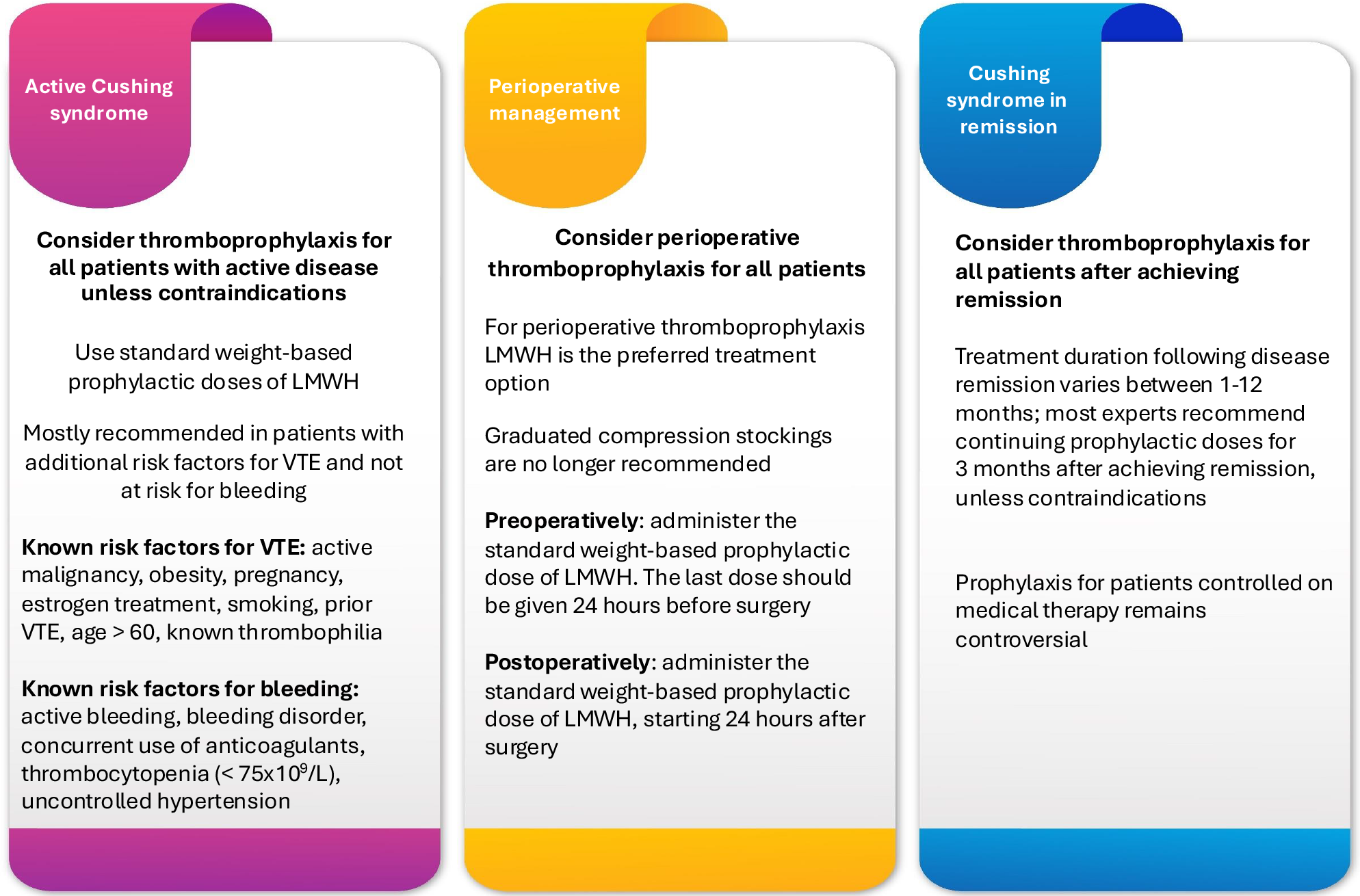
Current clinical practices for thromboprophylaxis management in patients with CS vary between countries and even centers (8,22,39); a study across EU Reference Network Rare Endocrine Conditions (Endo-ERN) reference centers reported notable differences in treatment protocols (40). The recent Delphi consensus on VTE management in CS which included endocrinologists, epidemiologists, neurosurgeons and hematologists highlights the critical need for thromboprophylaxis in most patients due to their elevated thrombotic risk. The recommendations outlined in the position statement aim to standardize care and enhance patient outcomes (9) (Figure 2).

Active Cushing’s syndrome
According to aforementioned position statement, thromboprophylaxis should be considered for all patients with CS but should only be initiated after confirming the diagnosis, except in cases of severe hypercortisolemia. The decision to administer anticoagulation must be carefully weighed in high-risk populations, as certain conditions significantly increase the risk of bleeding, including active bleeding, acquired bleeding disorders (e.g., liver failure), concurrent use of anticoagulants, acute stroke, thrombocytopenia (platelet count <75 × 109/L), uncontrolled hypertension (blood pressure >200 mmHg systolic or > 120 mmHg diastolic), untreated inherited bleeding disorders (e.g., hemophilia, von Willebrand disease), or recent or planned surgical procedures. On the other hand, thromboprophylaxis should be strongly considered in patients with additional risk factors, such as active malignancy, sedentary lifestyle, smoking, estrogen therapy, pregnancy, age over 60, known thrombophilia, obesity, significant comorbidities (e.g., cardiovascular disease, pulmonary disorders, acute infections, inflammatory conditions), or a personal or family history of VTE. While the use of oral estrogen is not contra-indicated in patients with active CS, temporarily discontinuing oral estrogen therapy in female patients prior to surgery should be considered and alternate modes of estrogen deliveries or other contraceptive measures without oral estrogen initiated as needed (41). Hospitalized patients with active CS should receive thromboprophylaxis, regardless of the reason for admission or the severity of hypercortisolism, as long as no contraindications exist.
Low molecular weight heparin (LMWH) in standard weight-based prophylactic doses is the preferred anticoagulant for thromboprophylaxis in patients with CS, similar to the American Society of Hematology guidelines on the management of VTE in patients with cancer (42). Direct oral anticoagulants (DOACs) are not currently approved for this indication and should be used with caution. In contrast with previous guidelines, graduated compression stockings are not recommended at this time, as a recent systematic review found no additional benefit in preventing VTE or reducing mortality and their use poses a risk of skin complications, which is particularly relevant in patients with CS with fragile skin (43).
Inferior petrosal sinus sampling
Although some reports have indicated a higher incidence of VTE events with inferior petrosal sinus sampling (IPSS), the decision to administer periprocedural anticoagulation for all patients remains controversial (44,45). In the latest Delphi position statement, consensus was reached that patients not already receiving anticoagulation should be started on it approximately 12 hours before IPSS. For those already on anticoagulation, prophylactic doses of LMWH can be maintained during the procedure, but higher doses should be withheld 24 hours before and resumed 48 hours after the procedure. Direct oral anticoagulants regimens vary, with discontinuation 24 to 72 hours before the procedure, bridging with LMWH, and resumption 48 hours post-procedure.
Perioperative management
If thromboprophylaxis was not started at the time of CS diagnosis, its perioperative use should be re-evaluated for all patients with CS undergoing surgery, especially in more severe cases, provided there are no clear contraindications 9. Preoperatively, the standard weight-based prophylactic dose of LMWH should be administered, with the last dose given 24 hours before surgery. Postoperatively, thromboprophylaxis should resume 24 hours after surgery and LMWH remains the preferred anticoagulant in this setting.
Aspirin has been also previously suggested perioperatively to prevent VTE, but experience in patients with CS is scarce (46,47).
Disease remission
For patients who have achieved biochemical remission, thromboprophylaxis should generally continue for 3 months unless contraindications exist. However, expert opinions varies for a treatment duration ranging from 1 to 12 months post-remission. In cases in which the patient has no additional thrombotic risk factors, thromboprophylaxis may not be necessary after biochemical remission, but there is a lack of studies on this topic. In patients with CS who have achieved remission, oral estrogen use immediately post-remission should be carefully evaluated due to the potential ongoing increased risk of thromboembolism, though further research is needed to gain a clearer understanding of this concern. Alternative therapies or other deliveries (e.g., transdermal) to oral estrogen should be explored to help mitigate this risk.
It remains unclear whether medical management of CS influences coagulation risk beyond achieving biochemical remission. Short-term biochemical remission with a combination of pasireotide, cabergoline, and ketoconazole did not show significant improvement in hypercoagulable markers (29). However, emerging data suggest some direct effects on coagulation factors. While subcutaneous pasireotide treatment for 6 to 12 months did not significantly alter clotting factors (48), relacorilant, a glucocorticoid receptor selective blocker in development, has been shown after 3 to 4 months to induce significant mean changes in factor VIII (-18.9%; p = 0.022), aPTT (+1.5 s; p = 0.046), and platelet count (-68.8 × 10⁹/L; p < 0.0001) (49). Interestingly, vWF remained largely unchanged. Differences in the effects of these drugs on coagulation factors may be attributed to their distinct mechanisms of action, with pasireotide carrying an additional risk of hyperglycemia.
If VTE is diagnosed in a patient with CS, therapeutic anticoagulation should be administered for 3 to 6 months as per guidelines for VTE treatment, followed by prophylactic dosing for at least three months after hypercortisolism is resolved. However, treatment decisions should be individualized based on ongoing risk factors.
Risk of bleeding
While the primary haemostatic concern in CS is hypercoagulability and the associated risk of VTE, there is also a notable risk of bleeding. This risk is particularly evident in the context of gastrointestinal complications, such as peptic ulcers and gastrointestinal bleeding, which are associated with hypercortisolism (11,50), and may also arise following surgical interventions.
Few studies have examined the risk of bleeding in patients with CS who are anticoagulated, either shortor long-term. In patients with brain tumors who underwent various neurosurgical procedures, a metaanalysis on thromboprophylaxis found a slightly increased risk of minor hemorrhagic complications (risk ratio = 2.02), though no significant increase in major bleeding events (51).
FUTURE DIRECTIONS
Future research should focus on refining thromboprophylaxis strategies for patients with CS to optimize patient outcomes while minimizing risks. A major priority is the development of standardized protocols, as current practices vary significantly across centers. Prospective studies are needed to establish the optimal timing, duration, and choice of anticoagulant therapy, particularly given the lack of consensus on thromboprophylaxis duration, which currently ranges from 1 to 12 months post-surgery. Need for anticoagulation for patients in biochemical remission also needs to be further studied. Additionally, defining the period during which patients remain at an elevated thrombotic risk after biochemical remission is crucial to improving long-term management.
Risk stratification algorithms incorporating both general and CS-specific factors, such as the Padua Score or CS-VTE score, could enhance individualized thromboprophylaxis. Implementing these tools may allow clinicians to better assess thrombotic risk and tailor prophylaxis accordingly, reducing unnecessary anticoagulation in low-risk patients while ensuring adequate protection for those at higher risk. Further research is also needed to clarify the role of long-term anticoagulation, as hypercoagulability in CS may persist for months following surgical remission. Understanding the balance between thrombotic and bleeding risks will help guide decisions on extended anticoagulation therapy.
The potential use of DOACs in CS represents another important area for investigation. While DOACs offer advantages in other hypercoagulable states, their use in CS remains limited, and safety data are lacking. A particular concern is the reported higher bleeding risk associated with DOACs compared to LMWH (52). Dedicated clinical trials are necessary to evaluate their efficacy, safety, and suitability for CS patients.
Currently, there is insufficient evidence to provide clear recommendations regarding thromboprophylaxis in patients with mild CS or MACS. Further research is needed to determine the thrombotic risk in these populations and guide management strategies accordingly.
Finally, future research should explore personalized medicine approaches through genetic and biomarker-driven strategies to refine thromboprophylaxis. Identifying molecular markers that predict VTE risk could enable a more individualized approach, ensuring that high-risk patients receive appropriate prophylaxis while avoiding unnecessary anticoagulation in those at lower risk. By addressing these gaps, future studies have the potential to improve patient safety, standardize care, and enhance outcomes in this high-risk population.
-
Funding: none.
-
Disclosure: Amit Akirov has received occasional scientific fee for scientific consulting and advisory boards from Medison, CTS pharma, and Neopharm. Maria Fleseriu has been a PI with research funding to the university from Crinetics and Sparrow and has received occasional scientific fee for scientific consulting and advisory boards from Crinetics, Recordati, Sparrow and Xeris.
Data availability:
datasets related to this article will be available upon request to the corresponding author.
REFERENCES
-
1 Reincke M, Fleseriu M. Cushing syndrome: a review. JAMA. 2023;330(2):170-81. doi: 10.1001/jama.2023.11305
» https://doi.org/10.1001/jama.2023.11305 -
2 Gadelha M, Gatto F, Wildemberg LE, Fleseriu M. Cushing’s syndrome. Lancet. 2023;402(10418):2237-52. doi: 10.1016/S0140-6736(23)01961-X
» https://doi.org/10.1016/S0140-6736(23)01961-X -
3 Limumpornpetch P, Morgan AW, Tiganescu A, Baxter PD, Nyawira Nyaga V, Pujades-Rodriguez M, et al. The effect of endogenous cushing syndrome on all-cause and cause-specific mortality. J Clin Endocrinol Metab. 2022;107(8):2377-88. doi: 10.1210/clinem/dgac265
» https://doi.org/10.1210/clinem/dgac265 -
4 Pastori D, Cormaci VM, Marucci S, Franchino G, Del Sole F, Capozza A, et al. A comprehensive review of risk factors for venous thromboembolism: from epidemiology to pathophysiology. Int J Mol Sci. 2023;24(4). doi: 10.3390/ijms24043169
» https://doi.org/10.3390/ijms24043169 -
5 Rudman Y, Fleseriu M, Dery L, Masri-Iraqi H, Sasson L, Shochat T, et al. Endogenous Cushing’s syndrome and cancer risk. Eur J Endocrinol. 2024;191(2):223-31. doi:10.1093/ejendo/lvae098
» https://doi.org/10.1093/ejendo/lvae098 -
6 Barbar S, Noventa F, Rossetto V, Ferrari A, Brandolin B, Perlati M, et al. A risk assessment model for the identification of hospitalized medical patients at risk for venous thromboembolism: the Padua Prediction Score. J Thromb Haemost. 2010;8(11):2450-7. doi: 10.1111/j.1538-7836.2010.04044.x
» https://doi.org/10.1111/j.1538-7836.2010.04044.x - 7 Fleseriu M, Biller B, Grossman A, Swearingen B, Melmed S. Hypercoagulability in Cushing Disease: A Risk Awareness and Prophylaxis Survey on Behalf of the Pituitary Society.; 2017.
-
8 Fleseriu M, Auchus R, Bancos I, Ben-Shlomo A, Bertherat J, Biermasz NR, et al. Consensus on diagnosis and management of Cushing’s disease: a guideline update. Lancet Diabetes Endocrinol. 2021;9(12):847-875. doi: 10.1016/S2213-8587(21)00235-7
» https://doi.org/10.1016/S2213-8587(21)00235-7 -
9 Isand K, Arima H, Bertherat J, Dekkers OM, Feelders RA, Fleseriu M, et al. Delphi panel consensus on recommendations for thromboprophylaxis of venous thromboembolism in endogenous Cushing’s syndrome: a position statement. Eur J Endocrinol. 2025;192(3):R17-R27. doi: 10.1093/ejendo/lvaf017
» https://doi.org/10.1093/ejendo/lvaf017 -
10 Johannesdottir SA, Horváth-Puhó E, Dekkers OM, Cannegieter SC, Jørgensen JO, Ehrenstein V, et al. Use of glucocorticoids and risk of venous thromboembolism: a nationwide population-based casecontrol study. JAMA Intern Med. 2013;173(9):743-52. doi: 10.1001/jamainternmed.2013.122
» https://doi.org/10.1001/jamainternmed.2013.122 -
11 Dekkers OM, Horváth-Puhó E, Jørgensen JO, Cannegieter SC, Ehrenstein V, Vandenbroucke JP, et al. Multisystem morbidity and mortality in Cushing’s syndrome: a cohort study. J Clin Endocrinol Metab. 2013;98(6):2277-84. doi: 10.1210/jc.2012-3582
» https://doi.org/10.1210/jc.2012-3582 -
12 Papakokkinou E, Olsson DS, Chantzichristos D, Dahlqvist P, Segerstedt E, Olsson T, et al. Excess Morbidity Persists in Patients With Cushing’s Disease During Long-term Remission: A Swedish Nationwide Study. J Clin Endocrinol Metab. 2020;105(8):dgaa291. doi: 10.1210/clinem/dgaa291
» https://doi.org/10.1210/clinem/dgaa291 -
13 Wagner J, Langlois F, Lim DST, McCartney S, Fleseriu M. Hypercoagulability and risk of venous thromboembolic events in endogenous cushing’s syndrome: a systematic meta-analysis. Front Endocrinol (Lausanne). 2019;9:805. doi: 10.3389/fendo.2018.00805
» https://doi.org/10.3389/fendo.2018.00805 -
14 Rudman Y, Michaelis M, Shimon I, Dotan I, Shochat T, Kushnir S, et al. Can we predict the risk of venous thromboembolism in patients with Cushing’s syndrome: a nationwide cohort analysis. Pituitary. 2024;28(1):10. doi: 10.1007/s11102-024-01482-0
» https://doi.org/10.1007/s11102-024-01482-0 -
15 Stuijver DJ, van Zaane B, Feelders RA, Debeij J, Cannegieter SC, Hermus AR, et al. Incidence of venous thromboembolism in patients with Cushing’s syndrome: a multicenter cohort study. J Clin Endocrinol Metab. 2011;96(11):3525-32. doi: 10.1210/jc.2011-1661
» https://doi.org/10.1210/jc.2011-1661 -
16 Babic B, De Roulet A, Volpe A, Nilubol N. Is VTE prophylaxis necessary on discharge for patients undergoing adrenalectomy for cushing syndrome? J Endocr Soc. 2019;3(2):304-13. doi:10.1210/js.2018-00278
» https://doi.org/10.1210/js.2018-00278 -
17 Suarez MG, Stack M, Hinojosa-Amaya JM, Mitchell MD, Varlamov EV, Yedinak CG, et al. Hypercoagulability in Cushing Syndrome, Prevalence of Thrombotic Events: A Large, Single-Center, Retrospective Study. J Endocr Soc. 2019;4(2):bvz033. doi: 10.1210/jendso/bvz033
» https://doi.org/10.1210/jendso/bvz033 -
18 Manetti L, Bogazzi F, Giovannetti C, Raffaelli V, Genovesi M, Pellegrini G, et al. Changes in coagulation indexes and occurrence of venous thromboembolism in patients with Cushing’s syndrome: results from a prospective study before and after surgery. Eur J Endocrinol. 2010;163(5):783-91. doi: 10.1530/EJE-10-0583
» https://doi.org/10.1530/EJE-10-0583 -
19 Isand K, Feelders R, Brue T, Toth M, Deutschbein T, Reincke M, et al.; Ercusyn Study Group; Webb SM, Wass J, Valassi E. High prevalence of venous thrombotic events in Cushing’s syndrome: data from ERCUSYN and details in relation to surgery. Eur J Endocrinol. 2024;190(1):75-85. doi: 10.1093/ejendo/lvad176
» https://doi.org/10.1093/ejendo/lvad176 -
20 White AJ, Almeida JP, Filho LM, Oyem P, Obiri-Yeboah D, Yogi-Morren D, et al. Venous thromboembolism and prevention strategies in patients with cushing’s disease: a systematic review. World Neurosurg. 2024;191:205-12. doi: 10.1016/j.wneu.2024.08.090
» https://doi.org/10.1016/j.wneu.2024.08.090 -
21 Coelho MC, Santos CV, Vieira Neto L, Gadelha MR. Adverse effects of glucocorticoids: coagulopathy. Eur J Endocrinol. 2015;173(4):M11-21. doi: 10.1530/EJE-15-0198
» https://doi.org/10.1530/EJE-15-0198 -
22 Capatina C, Fleseriu M. Thromboembolic disease in hypercortisolism. Curr Opin Endocrinol Diabetes Obes. 2021;28(3):330-6. doi: 10.1097/MED.0000000000000630
» https://doi.org/10.1097/MED.0000000000000630 -
23 Barton M, Baretella O, Meyer MR. Obesity and risk of vascular disease: importance of endothelium-dependent vasoconstriction. Br J Pharmacol. 2012;165(3):591-602. doi: 10.1111/j.1476-5381.2011.01472.x
» https://doi.org/10.1111/j.1476-5381.2011.01472.x -
24 Prázný M, Ježková J, Horová E, Lazárová V, Hána V, Kvasnicka J, et al. Impaired microvascular reactivity and endothelial function in patients with Cushing’s syndrome: influence of arterial hypertension. Physiol Res. 2008;57(1):13-22. doi: 10.33549/physiolres.931126
» https://doi.org/10.33549/physiolres.931126 -
25 Muniyappa R, Sowers JR. Role of insulin resistance in endothelial dysfunction. Rev Endocr Metab Disord. 2013;14(1):5-12. doi: 10.1007/s11154-012-9229-1
» https://doi.org/10.1007/s11154-012-9229-1 -
26 Tirosh A, Lodish M, Lyssikatos C, Belyavskaya E, Feelders RA, Stratakis CA. Coagulation Profile in Patients with Different Etiologies for Cushing Syndrome: A Prospective Observational Study. Horm Metab Res. 2017;49(5):365-71. doi: 10.1055/s-0043-100113
» https://doi.org/10.1055/s-0043-100113 -
27 Casonato A, Pontara E, Boscaro M, Sonino N, Sartorello F, Ferasin S, et al. Abnormalities of von Willebrand factor are also part of the prothrombotic state of Cushing’s syndrome. Blood Coagul Fibrinolysis. 1999;10(3):145-51. doi: 10.1097/00001721-199904000-00006
» https://doi.org/10.1097/00001721-199904000-00006 -
28 Kastelan D, Dusek T, Kraljevic I, Polasek O, Giljevic Z, Solak M, et al. Hypercoagulability in Cushing’s syndrome: the role of specific haemostatic and fibrinolytic markers. Endocrine. 2009;36(1):70-4. doi: 10.1007/s12020-009-9186-y
» https://doi.org/10.1007/s12020-009-9186-y -
29 van der Pas R, de Bruin C, Leebeek FW, de Maat MP, Rijken DC, Pereira AM, et al. The hypercoagulable state in Cushing’s disease is associated with increased levels of procoagulant factors and impaired fibrinolysis, but is not reversible after short-term biochemical remission induced by medical therapy. J Clin Endocrinol Metab. 2012;97(4):1303-10. doi: 10.1210/jc.2011-2753
» https://doi.org/10.1210/jc.2011-2753 -
30 Zilio M, Mazzai L, Sartori MT, Barbot M, Ceccato F, Daidone V, et al. A venous thromboembolism risk assessment model for patients with Cushing’s syndrome. Endocrine. 2016;52(2):322-32. doi: 10.1007/s12020-015-0665-z
» https://doi.org/10.1007/s12020-015-0665-z -
31 Boscaro M, Sonino N, Scarda A, Barzon L, Fallo F, Sartori MT, et al. Anticoagulant prophylaxis markedly reduces thromboembolic complications in Cushing’s syndrome. J Clin Endocrinol Metab. 2002;87(8):3662-6. doi: 10.1210/jcem.87.8.8703
» https://doi.org/10.1210/jcem.87.8.8703 -
32 Erem C, Nuhoglu I, Yilmaz M, Kocak M, Demirel A, Ucuncu O, et al. Blood coagulation and fibrinolysis in patients with Cushing’s syndrome: increased plasminogen activator inhibitor-1, decreased tissue factor pathway inhibitor, and unchanged thrombin-activatable fibrinolysis inhibitor levels. J Endocrinol Invest. 2009;32(2):169-74. doi: 10.1007/BF03345709
» https://doi.org/10.1007/BF03345709 -
33 Coelho MC, Vieira Neto L, Kasuki L, Wildemberg LE, Santos CV, Castro G, et al. Rotation thromboelastometry and the hypercoagulable state in Cushing’s syndrome. Clin Endocrinol (Oxf). 2014;81(5):657-64. doi: 10.1111/cen.12491
» https://doi.org/10.1111/cen.12491 -
34 Vogel F, Braun L, Zopp S, Nowak E, Schreiner J, Benz I, et al. Low-grade inflammation during the glucocorticoid withdrawal phase in patients with Cushing’s syndrome. Eur J Endocrinol. 2023;188(4):375-84. doi: 10.1093/ejendo/lvad041
» https://doi.org/10.1093/ejendo/lvad041 -
35 Esmon CT. Basic mechanisms and pathogenesis of venous thrombosis. Blood Rev. 2009;23(5):225-9. doi: 10.1016/j.blre.2009.07.002
» https://doi.org/10.1016/j.blre.2009.07.002 -
36 Dery L, Stern J, Shimon I, Rudman Y, Kushnir S, Shochat T, et al. Impact of etiology, sex, diabetes mellitus and remission status on erythrocytic profile in patients with cushing’s syndrome: a large population database study. Pituitary. 2024;27(4):389-402. doi: 10.1007/s11102-024-01399-8
» https://doi.org/10.1007/s11102-024-01399-8 -
37 Bryk-Wiązania AH, Minasyan M, Świątkowska-Stodulska R, Undas A, Hubalewska-Dydejczyk A, Webb SM, et al. The thrombotic risk in Cushing’s syndrome-questions, answers, and the algorithm to consider in its assessment: part I-thrombotic risk not related to surgery. Front Endocrinol (Lausanne). 2024;15:1350010. doi: 10.3389/fendo.2024.1350010
» https://doi.org/10.3389/fendo.2024.1350010 -
38 Koutroumpi S, Daidone V, Sartori MT, Cattini MG, Albiger NM, Occhi G, et al. Venous thromboembolism in patients with Cushing’s syndrome: need of a careful investigation of the prothrombotic risk profile. Pituitary. 2013;16(2):175-81. doi: 10.1007/s11102-012-0398-4
» https://doi.org/10.1007/s11102-012-0398-4 -
39 White AJ, Almeida JP, Petitt JC, Yogi-Morren D, Recinos PF, Kshettry VR. Significant variability in postoperative thromboprophylaxis in cushing’s disease patients: a survey of the North American Skull Base Society and the AANS/CNS Joint Tumor Section. J Neurol Surg B Skull Base. 2023;85(5):540-5. doi: 10.1055/s-0043-1772698
» https://doi.org/10.1055/s-0043-1772698 -
40 van Haalen FM, Kaya M, Pelsma IC, Dekkers OM, Biermasz NR, Cannegieter SC, et al; Endo-ERN Cushing and Thrombosis study group. Current clinical practice for thromboprophylaxis management in patients with Cushing’s syndrome across reference centers of the European Reference Network on Rare Endocrine Conditions (EndoERN). Orphanet J Rare Dis. 2022;17(1):178. doi: 10.1186/s13023-022-02320-x
» https://doi.org/10.1186/s13023-022-02320-x -
41 Feelders RA, Nieman LK. Hypercoagulability in Cushing’s syndrome: incidence, pathogenesis and need for thromboprophylaxis protocols. Pituitary. 2022;25(5):746-9. doi: 10.1007/s11102-022-01261-9
» https://doi.org/10.1007/s11102-022-01261-9 -
42 Lyman GH, Carrier M, Ay C, Di Nisio M, Hicks LK, Khorana AA, et al. American Society of Hematology 2021 guidelines for management of venous thromboembolism: prevention and treatment in patients with cancer. Blood Adv. 2021;5(4):927-74. doi: 10.1182/bloodadvances.2020003442. Erratum in: Blood Adv. 2021;5(7):1953. doi: 10.1182/bloodadvances.2021004734
» https://doi.org/10.1182/bloodadvances.2020003442. -
43 Turner BR, Machin M, Salih M, Jasionowska S, Lawton R, Siracusa F, et al. An Updated Systematic Review and Meta-analysis of the Impact of Graduated Compression Stockings in Addition to Pharmacological Thromboprophylaxis for Prevention of Venous Thromboembolism in Surgical Inpatients. Ann Surg. 2024;279(1):29-36. doi: 10.1097/SLA.0000000000006096
» https://doi.org/10.1097/SLA.0000000000006096 -
44 Obuobie K, Davies JS, Ogunko A, Scanlon MF. Venous thromboembolism following inferior petrosal sinus sampling in Cushing’s disease. J Endocrinol Invest. 2000;23(8):542-4. doi: 10.1007/BF03343772
» https://doi.org/10.1007/BF03343772 -
45 Blevins LS Jr, Clark RV, Owens DS. Thromboembolic complications after inferior petrosal sinus sampling in patients with cushing’s syndrome. Endocr Pract. 1998;4(6):365-7. doi: 10.4158/EP.4.6.365
» https://doi.org/10.4158/EP.4.6.365 -
46 Smith TR, Hulou MM, Huang KT, Nery B, de Moura SM, Cote DJ, et al. Complications after transsphenoidal surgery for patients with Cushing’s disease and silent corticotroph adenomas. Neurosurg Focus. 2015;38(2):E12. doi: 10.3171/2014.10.FOCUS14705
» https://doi.org/10.3171/2014.10.FOCUS14705 -
47 Segon YS, Summey RD, Slawski B, Kaatz S. Surgical venous thromboembolism prophylaxis: clinical practice update. Hosp Pract (1995). 2020;48(5):248-57. doi: 10.1080/21548331.2020.1788893
» https://doi.org/10.1080/21548331.2020.1788893 -
48 Barbot M, Guarnotta V, Zilio M, Ceccato F, Ciresi A, Daniele A, et al. Effects of pasireotide treatment on coagulative profile: a prospective study in patients with Cushing’s disease. Endocrine. 2018 Oct;62(1):207-14. doi: 10.1007/s12020-018-1669-2
» https://doi.org/10.1007/s12020-018-1669-2 -
49 Simeoli C, Di Paola N, Stigliano A, Lardo P, Kearney T, Mezosi E, et al. Relacorilant or surgery improved hemostatic markers in Cushing syndrome. J Endocrinol Invest. 2025;48(3):671-80. doi: 10.1007/s40618-024-02468-2
» https://doi.org/10.1007/s40618-024-02468-2 -
50 Sater ZA, Jha S, McGlotten R, Hartley I, El Lakis M, Araque KA, et al. Diverticular Perforation: A Fatal Complication to Forestall in Cushing Syndrome. J Clin Endocrinol Metab. 2018;103(8):2811-4. doi: 10.1210/jc.2018-00829
» https://doi.org/10.1210/jc.2018-00829 -
51 Alshehri N, Cote DJ, Hulou MM, Alghamdi A, Alshahrani A, Mekary RA, Smith TR. Venous thromboembolism prophylaxis in brain tumor patients undergoing craniotomy: a meta-analysis. J Neurooncol. 2016 Dec;130(3):561-570. doi: 10.1007/s11060-016-2259-x
» https://doi.org/10.1007/s11060-016-2259-x -
52 Neumann I, Izcovich A, Zhang Y, Rada G, Kahn SR, Spencer F, et al. DOACs vs LMWHs in hospitalized medical patients: a systematic review and meta-analysis that informed 2018 ASH guidelines. Blood Adv. 2020;4(7):1512-7. doi: 10.1182/bloodadvances.2019000840
» https://doi.org/10.1182/bloodadvances.2019000840
Edited by
-
Associated editor:
Leandro Kasuki, https://orcid.org/0000-0003-1339-3192

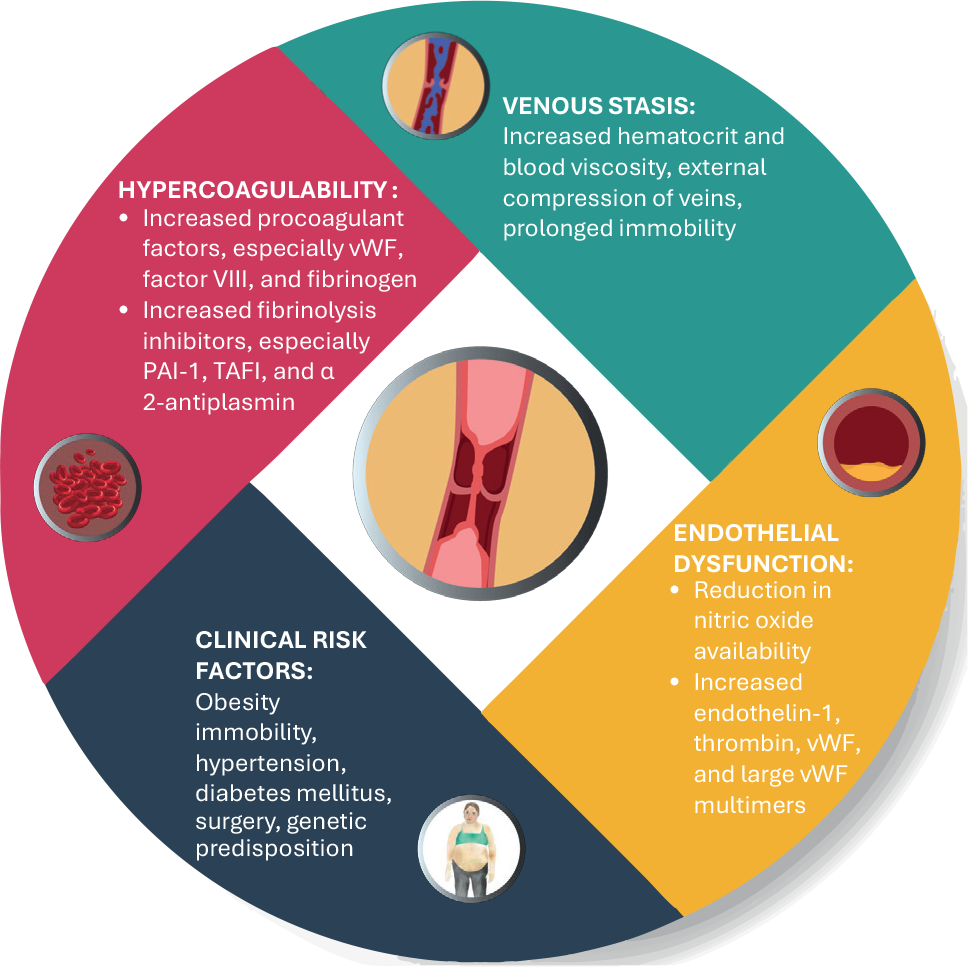 PAI-1: plaminogen activator inhibitor-1; TAFI: thrombin-activatable fibrinolysis inhibitor; wWF: von Willebrand factor.