 Development and evaluation of REMIC: self-instructional website about remote microphone systems
ABSTRACT
Purpose 1) To develop, update, and improve a self-instructional website on Remote Microphone Systems for hearing-impaired students and their speechlanguage therapists, teachers, and parents; 2) to validate the website as a continuing education tool for teachers.
Methods This is a cross-sectional, descriptive, quantitative study. 1) All REMIC content was converted into infographics based on instructional design; 2) Thirteen elementary school teachers answered three questionnaires (pre- and post-intervention theoretical questionnaire, Motivational Survey Form, and Self-Assessment Scale of the Impact of Training on the Job).
Results 1) Six modules were created using infographics, communicating specific content objectively to the target audience. 2) There was a statistically significant difference between pre-and post-training about the questionnaire (p-value 0.005), the “Meaningful” domain of the Motivational Research Form had the highest score (19.23), and the average of the Training Impact on the Job Self-Assessment Scale was 42.3 points. These results indicate that the website is valuable for teacher training.
Conclusion REMIC has been updated and is available at https://remic.fob.usp.brin Brazilian Portuguese and American English. Teachers considered it effective as a continuing education tool.
Keywords:
Hearing loss; Hearing devices; Remote microphone; Education; School teachers
RESUMO
Objetivo Desenvolver, atualizar e aprimorar um site autoinstrucional sobre sistemas de microfone remoto para estudantes com deficiência auditiva e seus fonoaudiólogos, professores e pais e validar o site como ferramenta de formação continuada para professores.
Métodos Estudo transversal, descritivo, quantitativo. Todo o conteúdo do site REMIC foi convertido em infográficos com base no design instrucional. Treze professores do ensino fundamental responderam a três questionários (questionário teórico pré e pós-intervenção, Ficha de Pesquisa Motivacional e Escala de Autoavaliação do Impacto do Treinamento no Trabalho).
Resultados Foram criados seis módulos utilizando infográficos, comunicando conteúdos específicos de forma objetiva ao público-alvo. Houve diferença estatisticamente significativa entre pré e pós-treinamento em relação ao questionário (p-valor 0,005). O domínio “Significativo” da Ficha de Pesquisa Motivacional teve a maior pontuação (19,23), e a média da Escala de Autoavaliação do Impacto do Treinamento no Trabalho foi de 42,3 pontos. Esses resultados indicam que o site é valioso para a formação de professores.
Conclusão O site REMIC foi atualizado e está disponível em https://remic.fob.usp.br em português brasileiro e inglês americano. Os professores o consideraram eficaz como ferramenta de formação continuada.
Palavras-chave:
Deficiência auditiva; Auxiliares de Audição; Microfones remotos; Teleducação; Professores
INTRODUCTION
Remote microphone systems (RMS) are assistive technology devices indicated mainly for students with hearing impairment (HI), users of electronic hearing devices and whose primary form of communication is oral language, with the aim of helping to improve functionality, favoring the process of autonomy(1). These devices can be classified according to their signal transmission method, such as digital transmission via the 900 MHz frequency band and the 2.4 GHz frequency band (digital modulation - DM), Bluetooth transmission, and the frequency modulation system (FM system)(2).
According to Ordinances No. 1.274 of June 25, 2013 (3), and No. 3 of February 19, 2020(4), RMS is indicated for children with HI, users of personal sound amplification devices (PSADs), and/or cochlear implants (CI) and bone-anchored hearing aids (BAHA), at any academic level, and who have oral language as their primary form of communication, as it assists and minimizes the acoustic problem of distance, background noise and reverberation(5-7).
As reported by the Department of Information and Informatics of the Unified Health System (DATASUS) (2023)(8), from July 2013 to September 2023, 22.540 RMS were granted and adapted in services authorized by the Ministry of Health (MH). Despite the number of RMS granted, adherence and consistent use is a challenge, as it depends not only on the student but also on the support of their teachers.
Some authors(9,10) report that difficulties in using and adhering to RMS include embarrassment about using the device, breakage of the PSADs or the RMS itself, and lack of support from teachers in adhering to the device.
Teachers of students who use RMS often report being unprepared to receive students who use this technology. In one study(11), of the 33 teachers interviewed, 78.78% (n=26) reported that they had not taken a specialization course or had no professional qualifications involving educational inclusion and accessibility, and 51.51% (n=17) of the participating teachers reported that they did not feel prepared or qualified to meet the academic needs of students with hearing impairments.
Continuing teacher training is ensured by the Law on Brazilian Education Guidelines and Bases (LDB)(12) and the National Education Plan (PNE)(13). However, this training is still a challenge(14). Considering that Brazil is an underdeveloped country, the Brazilian population needs support from society(15). Thus, several academic studies aim to help specific groups(16-18).
The FM System Portal was developed to assist speech-language pathologists and audiologists in the process of adapting RMS, since, since the publication of Ordinance No. 1.274 of the Ministry of Health (GM/MH) in 2013, no validated protocols have been provided for this purpose. For this reason, the FM System Portal website was developed and validated in 2016 by 31 speech-language pathologists and audiologists(19,20).
Since the development of the FM System Portal, its creators have planned to update it following new technological advances in Educational Audiology. Due to the constant research and technological development applied to remote microphone systems, the FM System Portal has become REMIC, a combination of the first syllables of the words remote microphone in English, to include other remote microphones and new information.
Therefore, this study aimed to develop, update, and improve REMIC, a self-instructional website on the remote microphone system, and validate the website as a continuing education instrument for basic education teachers.
METHODS
This is a cross-sectional, descriptive, and quantitative study, developed at the Laboratório de Acessibilidade Auditiva e Audiologia Educacional of the Department of Speech-Language Pathology and Audiology of the Bauru School of Dentistry, University of São Paulo (FOB-USP), and approved by the Research Ethics Committee under number 90562518.0.0000.5417 (CAEE 2.909.498), based on the ethical standards of the National Health Council (CNS) Resolution 466/12.
The following methods and sections were divided according to the objectives of the study.
Development, updating, and improvement of REMIC
Considering technological developments and the existence of other remote microphones, changes were made to the structure and design of the website to update it. These changes were made in conjunction with the Educational Technology Sector and the Online Media Sector of the Bauru School of Dentistry, University of São Paulo (FOB-USP).
The development and improvement of the REMIC design were based on an instructional design development model proposed by authors(21). The model describes four phases: – analysis, design and development, implementation, and evaluation activities – which occur together, enabling changes throughout the process.
Validation as a tool for continuing education for teachers
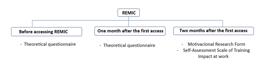
According to the proposed steps(21), the effectiveness of REMIC, concerning content transmission, information retention, attitude changes, impact on work, and usability, needed to be evaluated. Thus, 13 elementary school teachers from the state of São Paulo participated in this stage. First, all participants were instructed on the objective and procedures of the study and signed the Free and Informed Consent Form (FICF). Then, they answered three questionnaires at different times during the study (Figure 1).
Questionnaire I: theoretical questionnaire about your experience with hearing-impaired students and remote microphone system (Appendix 1)
The questionnaire consisted of nine closed questions. Teachers answered it twice to assess their prior and acquired knowledge: before accessing the REMIC website and one month after the first access.
Questionnaire II: Motivational Research Form(22,23)
It was used to assess the motivational aspects of REMIC subjectively. It consists of 32 statements, each scored as follows: (3) I totally agree, (2) I partially agree, (1) I partially disagree and (0) I totally disagree.
The statements are grouped into four domains: Stimulating (statements 1, 5, 9, 13, 17, 21, 25 and 29), Meaningful (statements 2, 6, 10, 14, 18, 22, 26 and 30), Organized (statements 3, 7, 11, 15, 19, 23, 27 and 31) and Easy to Use (statements 4, 8, 12, 16, 20, 24, 28 and 32).
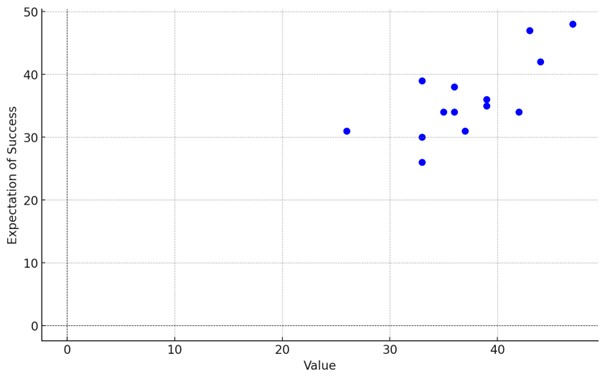
After scoring each domain individually, they are grouped according to the formulas Value = Stimulating + Meaningful and Expectancy of Success = Organized + Easy to Use. The author(22) recommends using a Cartesian projection: the abscissas (X-axis) score according to the Value formula and the ordinates (Y-axis) score according to the Expectancy of Success formula. If many points are located within the upper right quadrant, the material is an “impressive learning program” and is evaluated positively.
Questionnaire III: Self-Assessment of Training Impact at Work Scale(24)
The scale consists of 12 questions, scored on a Likert scale (1 to 5 points). Teachers answered it two months after first accessing REMIC, to verify whether the information available on the site impacted their daily routine with students with HI.
Data were analyzed qualitatively. The Wilcoxon test(25) compared the theoretical questionnaire before and after teachers accessed REMIC. A significance level of 0.05 was adopted, with the construction of 95% confidence intervals.
RESULTS
Development, updating, and improvement of REMIC
Chart 1 presents the adjustments made according to the instructional design development model proposed by authors (21).
The REMIC website was composed of 8 main pages:
-
Home: presents interactive banners that lead to the modules. The page exposes the topics that will be covered in the REMIC units.
-
Unit 1 – Noise and school: module that discusses the importance of acoustic accessibility for speech perception and how noise and reverberation directly impact listening effort and fatigue.
-
Unit 2 – Remote Microphone: The module describes the types of remote microphone systems (RMS) and the signal processing mode.
-
Unit 3 – Remote Microphone Adaptation: module containing guidelines for RMS adaptation and evaluation. Procedures such as electroacoustic transparency and behavioral assessment are described.
-
Unit 4 – Parents and teachers: the module presents the types of hearing impairment, the audiogram of familiar sounds, and a guidance guide for parents and teachers on best practices for the effective use of RMS. In addition, illustrative videos are presented and booklets are available for free download.
-
Unit 5 – Self-advocacy: module that presents a booklet on what self-advocacy is and the rights of people with disabilities. At the end, testimonies from a teacher and a student who uses RMS are presented.
-
Unit 6 – Troubleshooting: module that describes 5 common malfunctions that can occur with RMS and their solutions.
-
About the site: a brief explanation of the origin of the site with links to the master's dissertations that report on its development.
All modules were created using infographics, communicating specific content objectively to the target audience, and are available for access and download (in PDF)(26).
Validation as a tool for continuing education for teachers
Questionnaire I: theoretical questionnaire about your experience with hearing-impaired students and remote microphone system
There was a significant difference (p-value 0.005) in the prior and acquired knowledge of teachers assessed by the theoretical questionnaire (Table 1).
Descriptive statistical analysis of the total score and percentage of correct answers in the theoretical questionnaire before and after accessing the REMIC website
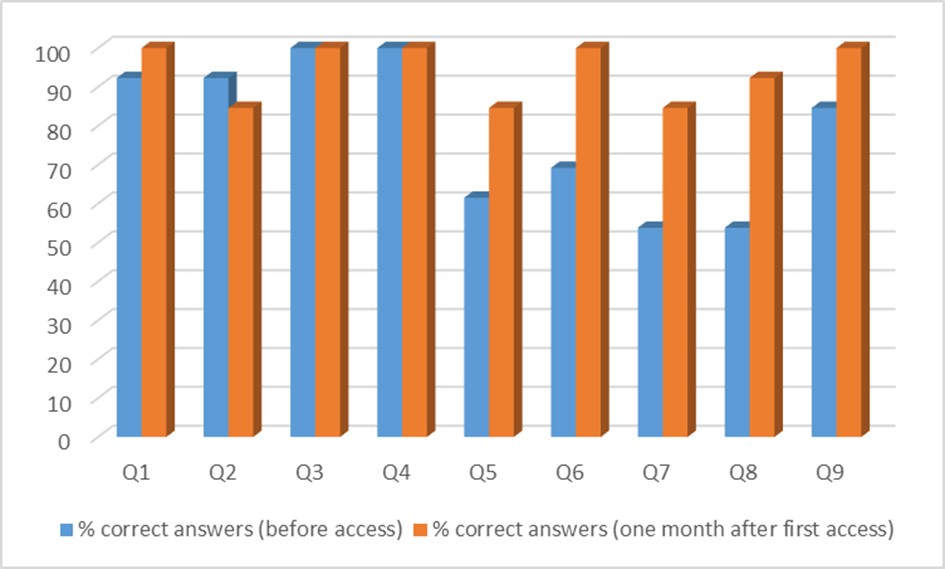
Figure 2 shows the distribution of teachers' correct answers per question before and after accessing REMIC.

Questionnaire II: Motivational Research Form(22,23)
The “Meaningful” domain obtained the highest average score (19,23), emphasizing the relevance of the topics covered, followed by “Easy to use” (18,46) and “Stimulating” (18,23), indicating that the audiovisual resources used in REMIC were attractive and intuitive (Figure 3).

Descriptive Statistical Analysis of Domains Assessed by Participants in the Motivational Research Form
After scoring each domain by participant, they were organized according to the formulas Value = Stimulating + Meaningful and Expectancy of Success = Organized + Easy to Use. Figure 4 presents the recommended Cartesian projection(22). Since all points are located in the upper right quadrant, REMIC was evaluated positively by the teachers.

Questionnaire III: Self-Assessment of Training Impact at Work Scale(24)
Figure 5 shows the descriptive statistical analysis of the Self-Assessment of Training Impact at Work Scale, answered by teachers two months after their first access to REMIC.
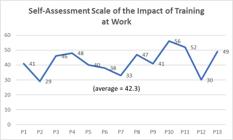
Descriptive Statistical Analysis of Total Scores per Participant on the Self-Assessment Scale of the Impact Training at work
The maximum score on the scale was 60. The average total score of the participants was 42.3, indicating that REMIC positively impacted their work.
DISCUSSION
This study described the development, updating, and improvement of REMIC, a self-instructional website on RMS, and its validation as a continuing education tool for teachers.
When preparing the REMIC content, we sought to achieve the greatest possible clarity, avoiding unnecessary technical terms. When essential, technical terms in audiology were described and visual representations were used to facilitate the reader's understanding. Infographics allow extensive and complex information to be shared in a didactic way, with visual reinterpretation for lay readers(27,28).
When analyzing the overall score of the theoretical questionnaire, there was a significant difference (p-value 0.005) in the prior and acquired knowledge of teachers, indicating that REMIC is an effective self-instructional website. These results correspond to other studies, which suggested distance training through websites with self-instructional resources to cultivate knowledge(20,29).
Observing the questions in the theoretical questionnaire individually, the percentage of correct answers for most questions improved after accessing REMIC, except for questions 2, 3, and 4 (Figure 2).
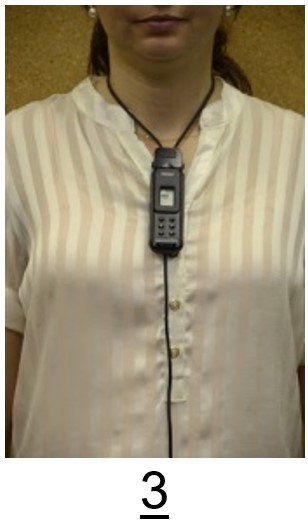
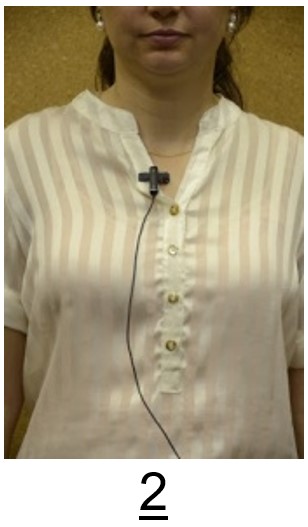
Question 2 considered the appropriate distance between the teacher's mouth and RMS. It presented a lower percentage of correct answers when compared to prior knowledge. Considering that the distance from the RMS is essential for its proper use, images representing correct and incorrect ways of using the different types of RMS were added to module 4 (parents and teachers). It is worth noting that validation with teachers was carried out in the Brazilian version of REMIC and the changes resulting from this process were not reflected in the North American English version. However, the proposed development model(21) already anticipated such situations, as it describes phases that occur recursively.
Question 3 concerns the functioning of RMS and question 4 its use. The scores remained the same in both questions: teachers scored the highest before and after accessing REMIC. These results suggest that participants had a minimum prior knowledge, which was consolidated after accessing the site.
REMIC uses motivational resources that encourage the reader to learn through integrated links to other media and activities. The Motivational Research Form was used to assess the motivational aspects of REMIC subjectively. The results suggest that REMIC resources favored teachers' navigation and engagement with the site.
The participants' average score on the Self-Assessment of Training Impact at Work Scale indicates that REMIC had a positive impact on their work. These findings are in agreement with a previous study(20), which evaluated the continuing education proposal on the FM System Portal from the perspective of Brazilian speech-language pathologists and audiologists.
CONCLUSION
REMIC was developed and updated(26) in Brazilian Portuguese and American English. Teachers found the RMS training effective for students with hearing impairments. It is suggested that the website be validated by parents and users of this type of assistive technology. It is expected that REMIC will contribute as a valuable tool for RMS users, speech-language pathologists and audiologists, parents, education professionals, researchers, and policymakers, contributing to the promotion of more inclusive and accessible practices.
Appendix 1 Theoretical questionnaire regarding their experience with hard-of-hearing students and remote microphones systems (RMS)
| 1. According to Ordinance No. 1.274/13, which students would benefit from using the RMS? | a. All students would benefit from using it. | |
| b. Students whose first language is the Brazilian Sign Language (Libras). | ||
| c. Students who use hearing aids and/or cochlear implants and have good performances while using the devices. | ||
| 2. What is the proper distance between the teacher’s mouth and the RMS? | a. 20 to 25 cm. | |
| b. 10 to 15 cm. | ||
| c. 30 cm. | ||
| 3. RMS is an assistive technology device is composed of... | a. ...a transmitter and a receiver. The transmitter (teacher’s microphone) picks up the signal from the sound source and transmits it to the student’s receiver. | |
| b. ...a transmitter that is connected to the student’s hearing device. | ||
| c. ...a receiver that is connected to the student’s hearing device. | ||
| 4. Regarding the use of RMS, select the correct option. | a. Always check that the device is working correctly at the beginning of class. | |
| b. Do not let scarves, blouses, lab coats or jackets cover the microphone. | ||
| c. All options are correct. | ||
| 5. The following images illustrate the use of an RMS transmitter. Please, select the image that represents the correct way to use it. |

|

|
|
||
| 6. Why use RMS? | a. So that your voice always comes above the background noise and constantly. | |
| b. So that the student is not exhausted at the end of the class for having worked so hard to understand the teacher. | ||
| c. All options are correct | ||
| 7. Select the correct instruction | a. Write down the model and channel each student uses in the school. | |
| b. Select different channels to avoid interference between students who are not in the same classroom. | ||
| c. All options are correct. | ||
| 8. Which of these changes can help the learning process in the classroom? | a. Placement of more curtains and/or thicker curtains, and use of chairs and tables with rubber feet | |
| b. Use of cork boards. | ||
| c. All options are correct.. | ||
| 9. The following images illustrate the use of an RMS transmitter with a lavalier microphone. Please, select the image that represents the correct way to use it.. |

|
|

|
||
| 10. Do you think the Classroom Speech Perception Audiogram, Brazilian Portuguese version, helped you understand the auditory characteristics and hearing needs of a student with hearing impairment? | Yes | No (explain) |
ACKNOWLEDGMENTS
To Coordenação de Aperfeiçoamento de Pessoal de Nível Superior - Brasil (CAPES), for funding the research
-
Study carried out at Laboratório de Acessibilidade Auditiva e Audiologia Educacional, Departamento de Fonoaudiologia, Faculdade de Odontologia de Bauru – FOB, Universidade de São Paulo – USP – Bauru (SP), Brasil.
-
Funding: Coordenação de Aperfeiçoamento de Pessoal de Nível Superior - Brasil (CAPES) - Finance Code 001.
References
-
1 Jacob RTDS, Alves TKM, Moret ALM, Morettin M, Santos LG, Mondelli MFCG. Participação em sala de aula regular do aluno com deficiência auditiva: uso do Sistema de frequência modulada. CoDAS. 2014 Jul;26:308-14. http://doi.org/10.1590/2317-1782/201420130027 PMid:25211690.
» http://doi.org/10.1590/2317-1782/201420130027 -
2 Rodemerk KS, Galster JA. The benefit of remote microphones using four wireless protocols. J Am Acad Audiol. 2015;26(8):724-31. http://doi.org/10.3766/jaaa.15008 PMid:26333880.
» http://doi.org/10.3766/jaaa.15008 - 3 Brasil. Portaria no 1.274 de 25 de junho de 2013. Inclui o Procedimento de Sistema de Frequência Modulada Pessoal (FM) na Tabela de Procedimentos, Medicamentos, Órteses, Próteses e Materiais Especiais (OPM) do Sistema Único de Saúde. Diário Oficial da União; Brasília; 2013.
- 4 Brasil. Portaria no 3 de 19 de fevereiro de 2020. Torna pública a decisão de ampliar o uso do Sistema de Frequência Modulada Pessoal para indivíduos com deficiência auditiva de qualquer idade matriculados em qualquer nível acadêmico, no âmbito do Sistema Único de Saúde - SUS. Diário Oficial da União; Brasília; 2020.
- 5 Smaldino J, Flexer C. Classroom acoustics: personal and soundfield FM and IR systems. In: Madell J, Flexer C. editors. Pediatric audiology diagnosis, technology, and management. New York: Thieme; 2008. p. 192-202.
-
6 Hanschmann H, Wiehe S, Müller-Mazzotta J, Berger R. Speech perception in noise with and without FM technology. HNO. 2010;58(7):674-9. http://doi.org/10.1007/s00106-010-2086-x PMid:20517588.
» http://doi.org/10.1007/s00106-010-2086-x -
7 Bertachini ALL, Pupo AC, Morettin M, Martinez MAN, Bevilacqua MC, Moret ALM, et al. Sistema de frequência modulada e percepção da fala em sala de aula: revisão sistemática da literatura. CoDAS. 2015;27:292-300. http://doi.org/10.1590/2317-1782/20152014103 PMid:26222948.
» http://doi.org/10.1590/2317-1782/20152014103 - 8 Brasil. Ministério da Saúde. Departamento de Informação e Informática do Sistema Único de Saúde - DATASUS. Tabnet. Brasília: Ministério da Saúde; 2023.
- 9 Esturaro GT, Novaes BCDAC, Deperon TM, Martinez MAN, Mendes BDCA. Uso de sistema de transmissão sem fio e desempenho de estudantes com deficiência auditiva na perspectiva de professores. Distúrb Comun. 2016;28(4):730-42.
-
10 Spósito C, Carneiro LDA, Bento BCDS, Bucuvic ÉC, Jacob RTDS. Resistência ao uso do Sistema FM por crianças e adolescentes: fato ou mito? Uma análise de prontuários de pacientes atendidos em um serviço de saúde auditiva. Rev CEFAC. 2023;25(1):e8022. http://doi.org/10.1590/1982-0216/20232518022s
» http://doi.org/10.1590/1982-0216/20232518022s -
11 de Carvalho DS, Pedruzzi CM. Uso do sistema de frequência modulada por escolares com perda auditiva. Distúrb Comun. 2019;31(1):12-21. http://doi.org/10.23925/2176-2724.2019v31i1p12-21
» http://doi.org/10.23925/2176-2724.2019v31i1p12-21 - 12 Brasil. Lei no 9.394: Diretrizes e Bases da Educação (LDB). Recomenda a inclusão escolar de pessoas com deficiência da rede regular de ensino. Diário Oficinal da União; Brasília; 1996.
- 13 Brasil. Lei no 13.005, de 25 de junho de 2014. Aprova o Plano Nacional de Educação-PNE e dá outras providências. Diário Oficial da União; Brasília; 2014.
-
14 Almeida ML, Bento MJC, Da Silva NV. As contribuições da pesquisa-ação para a elaboração de políticas de formação continuada na perspectiva da inclusão escolar. Rev Bras Estud Pedagog. 2018;99(252):257-76. http://doi.org/10.24109/2176-6681.rbep.99i252.3466
» http://doi.org/10.24109/2176-6681.rbep.99i252.3466 -
15 Castro MC, Massuda A, Almeida G, Menezes-Filho NA, Andrade MV, Souza Noronha KVM, et al. Brazil’s unified health system: the first 30 years and prospects for the future. Lancet. 2019;394(10195):345-56. http://doi.org/10.1016/S0140-6736(19)31243-7 PMid:31303318.
» http://doi.org/10.1016/S0140-6736(19)31243-7 -
16 Minowa E, Watanabe HAW, Nascimento FAD, Andrade EAD, Oliveira SCD, Westphal MF. Contribution of universities to the review of the National Health Promotion Policy. Saude Soc. 2017;26(4):973-86. http://doi.org/10.1590/s0104-12902017169405
» http://doi.org/10.1590/s0104-12902017169405 - 17 Pinho MJD. Science and education: contributions of the scientific initiation in higher education. Aval. 2017;22(3):658-75. http://doi.org/10.1590/S1414-40772017000300005.
-
18 Sousa BS, Andrade AP, Silva FG, Sales RF Fo, Sousa ILL, Gonçalves KG. A contribuição da extensão universitária no serviço de assistência pré-hospitalar. Nursing. 2019;22(250):2740-3. http://doi.org/10.36489/nursing.2019v22i250p2740-2743
» http://doi.org/10.36489/nursing.2019v22i250p2740-2743 -
19 Alves TKM. Portal Sistema FM: intercâmbio técnico científico entre profissionais que atuam com alunos usuários de Sistema FM [dissertação]. Bauru: Faculdade de Odontologia de Bauru, Universidade de São Paulo; 2016 [citado em 2023 Dez 17]. Disponível em: http://www.teses.usp.br/teses/disponiveis/25/25143/tde-17052016-104057/pt- br.php
» http://www.teses.usp.br/teses/disponiveis/25/25143/tde-17052016-104057/pt- -
20 Medina C, Machado TK, de Souza Jacob RT, Domiciano CLC. Contribuições da infografia para o treinamento de profissionais que atuam com alunos usuários de Sistema FM. Blucher Design Proc. 2018;4(5):348-59. http://doi.org/10.5151/cidi2017-034
» http://doi.org/10.5151/cidi2017-034 - 21 Filatro A, Piconez SCB. Design instrucional contextualizado. São Paulo: Senac; 2004.
-
22 Paixão MP. Modelo de educação a distância em hanseníase voltado para rede de detecção de casos e diagnóstico [tese]. São Paulo: Universidade de São Paulo; 2008. http://doi.org/10.11606/T.5.2008.tde-17122008-192918
» http://doi.org/10.11606/T.5.2008.tde-17122008-192918 - 23 Blasca WQ. Telessaúde: intercâmbio técnico científico entre centros de atendimento ao deficiente auditivo. [tese]. Bauru: Faculdade de Odontologia de Bauru, Universidade de São Paulo; 2012.
- 24 Abbad GS, Mourão L, Meneses PPM, Zerbini T, Borges-Andrade JE, Vilas-Boas R. Medidas de avaliação em treinamento, desenvolvimento e educação: ferramentas para gestão de pessoas. Porto Alegre: Artmed; 2012. Suporte à transferência de treinamento e suporte à aprendizagem; p. 125-9.
- 25 Wilcoxon F. Individual comparisons by ranking methods. In: Kotz S, editor. Biometrics bulletin. Berlin: Springer; 1992. p. 196-202.
-
26 USP: Universidade de São Paulo. Faculdade de Odontologia de Bauru. Reabilitação em microfones remotos [Internet]. Bauru: USP; 2023 [citado em 17 Dez 2023]. Disponível em: http://remic.fob.usp.br
» http://remic.fob.usp.br -
27 Lima ROC. O que é infografia jornalística? InfoDesign. 2015;12(1):111-27. http://doi.org/10.51358/id.v12i1.312
» http://doi.org/10.51358/id.v12i1.312 -
28 Siricharoen WV, Siricharoen N. Infographic utility in accelerating better health communication. Mob Netw Appl. 2018;23(1):57-67. http://doi.org/10.1007/s11036-017-0900-3
» http://doi.org/10.1007/s11036-017-0900-3 -
29 Matos IL, Ferreira MC, Mondelli MFCG. Development and evaluation of portal do zumbido: a novel telehealth approach to tinnitus. Int Arch Otorhinolaryngol. 2021;25(2):e258-66. http://doi.org/10.1055/s-0040-1709113 PMid:33968230.
» http://doi.org/10.1055/s-0040-1709113


 Subtitle: Q = question; % = percentage