 The effects of hCG or GnRH treatment on embryonic mortality and reproductive performance in Buchi sheep of Cholistan desert, Pakistan
ABSTRACT
This study was conducted on Buchi sheep at Government livestock farm, Jugaitpeer, Bahawalpur, to investigate the birth and adult body weights, growth and turnover rates on reproductive performance. We also examined the effect of GnRH and hCG treatments to enhance pregnancy rate. Male lambs exhibited higher (P<0.05) birth (3.40±0.16kg) and adult weights (61.67±0.95kg) compared to females (3.00±0.00kg and 39.67±0.41kg, respectively). In the second experiment, 30 ewes were divided into hCG, GnRH, and control groups. These were mated to ram at synchronized estrus by two injections of 2ml PGF2α analogue (Dalmazin) given at 11 days apart. The control group received only saline. Plasma progesterone concentrations detected by ELISA were higher (P<0.05) in sheep as compared with saline treated controls and improved reproductive outcomes. The hCG group showed the best performance with a litter size of 1.28%, no embryonic mortality, and increased twinning and fecundity rates. The GnRH group also demonstrated enhanced reproductive efficiency with a litter size of 1.25% and no embryonic loss. The control group had the lowest reproductive outcomes, including a higher embryonic mortality rate. Overall, hCG proved more effective than GnRH in enhancing progesterone levels, fecundity, and prolificacy in Buchi sheep.
Keywords:
Buchi sheep; PGF2α; hCG; GnRH; embryonic mortality
RESUMO
Este estudo foi realizado com ovelhas Buchi na fazenda pecuária governamental de Jugaitpeer, Bahawalpur, para investigar o peso ao nascer e na idade adulta, as taxas de crescimento e renovação e o desempenho reprodutivo. Também examinamos o efeito dos tratamentos com GnRH e hCG para aumentar a taxa de gravidez. Os cordeiros machos apresentaram pesos ao nascer (3,40 ± 0,16kg) e pesos adultos (61,67 ± 0,95kg) mais elevados (P < 0,05) em comparação com as fêmeas (3,00 ± 0,00kg e 39,67 ± 0,41kg, respectivamente). No segundo experimento, 30 ovelhas foram divididas em grupos hCG, GnRH e controle. Elas foram acasaladas com carneiros em cio sincronizado por duas injeções de 2mL de análogo PGF2α (Dalmazin) administradas com 11 dias de intervalo. O grupo controle recebeu apenas solução salina. As concentrações plasmáticas de progesterona detectadas por ELISA foram mais elevadas (P<0,05) nas ovelhas em comparação com os controles tratados com solução salina e melhoraram os resultados reprodutivos. O grupo hCG apresentou o melhor desempenho, com um tamanho de ninhada de 1,28%, sem mortalidade embrionária e aumento das taxas de gêmeos e fecundidade. O grupo GnRH também demonstrou maior eficiência reprodutiva, com um tamanho de ninhada de 1,25% e nenhuma perda embrionária. O grupo controle teve os piores resultados reprodutivos, incluindo uma taxa mais alta de mortalidade embrionária. No geral, o hCG se mostrou mais eficaz do que o GnRH no aumento dos níveis de progesterona, fecundidade e prolificidade em ovelhas Buchi.
Palavras-chave:
ovelhas Buchi; PGF2α; hCG; GnRH; mortalidade embrionária
INTRODUCTION
Buchi is a dominant sheep breed from a hot region of Pakistan, distinguished by distinct breed features. It can last 72 hours without drinking water. Buchi sheep rank fourth, following the Kajli, Lohi, and Thalli sheep breeds in Punjab (Akhtar et al., 2014). Significant embryonic mortality has been documented in all farm mammals so far. Maternal recognition of pregnancy, occurring about day 13 post-mating, demands strong signaling among the growing embryo, endometrium, and ovary. Gonadotrophin supplementation during early pregnancy can reduce embryonic losses. GnRH/hCG therapy has been demonstrated to enhance pregnancy rates and litter sizes in sheep (Khan et al., 2007). Furthermore, GnRH/hCG administration enhanced conceptus growth, development and implantation. This study will enhance the socio-economic conditions of the population reliant on sheep for their livelihood. An increase in conception rates and litter sizes would also enhance the supply of meat, potentially resulting in lower or stable prices (Khan et al., 2009). Embryonic loss is a primary factor constraining reproductive yield in livestock, with reports indicating that the greatest incidence of pregnancy loss occurs in several mammalian species during the early stages of gestation (Reynolds et al., 2010).
Reproductive performance throughout various sheep production systems is a fundamental aspect of production units (meat, wool, milk) (Ayele and Urge, 2018). Pre-implantation embryonic loss is the major factor limiting optimum reproductive performance in farm animals. In sheep, 30-40% of fertilized eggs are lost during the first 3 weeks of pregnancy (Michels et al., 1998). The primary causes of embryonic mortality in sheep include deficiency of luteal function, embryonic-uterine asynchrony, and insufficient embryo development, evidenced by reduced embryo signaling for pregnancy establishment and a reduced autotrophic impact (Bazer, 2013). Insufficient luteal function is a major cause of embryonic losses in sheep. Since the 1980s, many treatment techniques have been employed to enhance luteal function, decrease embryonic mortality, and improve reproductive performance. Luteotropic hormones, including gonadotrophin-releasing hormone (GnRH) and human chorionic gonadotrophin (hCG), were utilized for this aim during the early luteal phase or late luteal phase (Hashem et al., 2015). Hormone administered during the luteal phase can directly or indirectly affect the ovary, potentially leading to the formation of an accessory corpus luteum and an increase in serum progesterone (P4) levels (Lashari and Tasawar, 2013b).
Numerous studies indicate that elevated progesterone levels enhance embryonic survival and decrease embryonic losses in ruminants (Rostami et al., 2017). However, experimental results are inconsistent, conflicting, and frequently inconclusive. Some research indicated that the administration of GnRH or hCG following artificial insemination (AI) or natural mating enhances pregnancy rates and promotes embryonic growth (Mırzaeı et al., 2014). Moreover, the treatment of hCG or GnRH during the luteal phase reduces embryonic losses and enhances litter size and birth weight in lambs (Hashem et al., 2015).
The primary objective of this study was to determine the optimal timing for administering GnRH and hCG post-mating concerning blood progesterone levels and other reproductive activity in ewes, which was not previously described. The second objective was to compare GnRH with hCG administered on various days of the estrous cycle in ewes superovulated with eCG throughout the spring season (Khan et al., 2007). Multiple studies have used hCG to elevate plasma progesterone levels, as this hormone functions similarly to LH. Thus, ewes have utilized it to enhance lambing rates, increase litter size, and promote fetal growth (Bobowiec et al., 2012). Administering hCG on day 12 post-mating in cyclic ewes enhances plasma progesterone and oestradiol levels, increases corpora lutea weight, promotes conceptus growth, and improves placental attachment. However, the documented beneficial effects of hCG treatment in adult ewes decreased in cyclic ewe lambs (Khan et al., 2009).
Anestrus lactating ewes 20-30 days postpartum and anestrus ewes exhibiting low fertility rates enhanced fertility with hCG treatment (Gómez-Brunet et al., 2007). This indicates that in sheep groups experiencing challenges in maintaining pregnancy, the injection of hCG may enhance reproductive performance. In prepubertal sheep lambs undergoing estrus induction treatment, the administration of hCG during the luteal phase enhanced the luteal area and plasma progesterone concentration (Catalano et al., 2012). This study aimed to examine the impact of administering hCG on the day of mating or day 12 post-mating on luteal function, embryo viability, placentation, and reproductive performance in sheep.
Gonadotrophin supplementation may decrease embryonic losses. A solitary administration of the GnRH analog, buserlin, on day 12 of gestation may reduce embryo mortality in cattle and sheep (Khan et al., 2007). Similar results have been documented following a solitary administration of human Chorionic gonadotrophin on day 11 or day 12 post-estrus in sheep (Khan et al., 2007). The administration of GnRH on days 10, 11, 12, or 13 post-mating has been demonstrated to enhance early embryo survival and pregnancy rates in sheep. The timing of such hormonal therapy may also appear to be significant. It is currently unclear whether GnRH and hCG exert analogous effects on fetal growth and embryo viability. The current study aimed to examine the effects of GnRH and hCG therapies on plasma hormone levels, conceptus development, placentation, and reproductive performance in sheep. GnRH or hCG administration enhances pregnancy rates and reduces embryonic mortality in Buchi sheep (Khan et al., 2006).
ETHICAL ASPECTS
The research work was approved by the Departmental Research Ethics Committee, Department of Zoology, The Islamia University of Bahawalpur, Pakistan vide Letter No ZOOL-3/2024-23 dated 05-03- 2024.
MATERIALS AND METHODS
The study was conducted at the Government livestock farm, Jugaitpeer, district Bahawalpur. The experimental area is located at 72.22 longitude and 29.61 latitude. The region's native flora mainly consists of drought-tolerant grasses, shrubs, and trees.
All ewes and rams on the farm were registered, and data records were acquired for each flock monthly from diverse flocks in the Cholistan Desert, Punjab, Pakistan. Data was collected monthly through first-hand observation of animals. The flocks were chosen to assess the genetic potential, litter size, embryonic mortality, and reproductive performance of Buchi sheep. The sheep were maintained mostly on grazing, along with supplemental feeding of an active ration, and an organized breeding program was implemented on this farm. The newborn lambs were entirely nourished by their mother's milk for the initial month of life. From the second month onward, they grazed separately from the adults on natural vegetation, allowing them to suckle from their mothers in the morning and evening until the weaning age.
Adult male and female animals were weighed monthly from the beginning of data collection until one year later. Several animals initially chosen for the experiments died, were auctioned, or were slaughtered during the study period and were consequently removed from the final analysis. The animals were assigned a field number via a metallic disc fixed to the neck or through ear tattooing. Each animal was weighed roughly on the same day across various calendar months of the study year, and a record was kept. The overall pregnancy status of each female was recorded through direct observation and information provided by the farmers. The data regarding sex, breed, age, and birth type (twin/single) were recorded for each animal individually; however, the effects of birth type and timing were excluded from the final analysis due to data limitations. The monthly mean weight was later assessed for several groups of animal flocks using standard statistical methods to analyze different aspects.
A varying number of newborn lambs were selected, with each individual assigned a number and tagged with a metallic disk around the neck. The birth time data was obtained from the specific farmer or through indirect sources accessible to the workers, together with maintained records of sex, kind of birth, and probable breed for each individual separately. The information regarding the type of birth was considered inadequate for a more comprehensive analysis and was therefore skipped from the final data analysis.
Each individual was weighed monthly on a consistent date within the calendar month. Data on the previously born individual was also gathered to clarify the growth rate. Data pooling across multiple age groups was conducted without difficulty because of the comparable growth patterns observed among many individuals within the same stocks. The data on birth weights were verified by existing literature concerning these breeds in the region. The mean weight for each month for each stock was determined from the aggregated data available for various months of age utilizing standard statistical methods (Sokal, 1995), with the initial weight recorded considered as the first month of age.
The growth rates were estimated based on the assumption that each month consists of 30 days, and the turnover weight was determined by the daily weight gain of each animal. The calculation involved a standard mathematical conversion, dividing the total average weight gain over various months by 30, although the growth rate was thought to be influenced by differing calendar months and seasonal variations related to the local vegetation supply.
The breeding efficiency of Buchi sheep was assessed by comparing the number of reproductively active females to those that successfully lambed during the study. A selected group of pregnant females was closely monitored to document lambing outcomes and determine annual and biannual lambing patterns. Data on the number of offspring per female post-term was used to calculate the proportions of single, twin, and triplet births, expressed as percentages of total pregnancies.
Annual lamb production per female was calculated by dividing the total number of lambs by the number of observed females. Birth records were analyzed to examine the distribution of births across different months, and the data were grouped to show seasonal trends, specifically the proportions of births in winter and summer. These patterns were then correlated with the area's vegetation cycle to explore environmental influences on lambing.
Additional information, including the age of male and female sheep (obtained from farmers) and the outcomes of newborns, was used to infer the reproductive age of females. However, data on male reproductive age was limited, as most were sold early, with only a few retained for 2 to 5 years within flocks.
This study aimed to assess the impact of GnRH or hCG therapy on embryonic mortality and reproductive performance in Buchi sheep throughout the spring season. A total of (n=30) healthy sheep, aged 2-4 years and weighing around 40-45kg, were utilized for the experiment. Ultrasonography examination was performed on all chosen non-pregnant sheep. All Buchi sheep had unrestricted access to water, shade, and trace mineral salt blocks, and were provided with seasonal fodder and tree foliage.
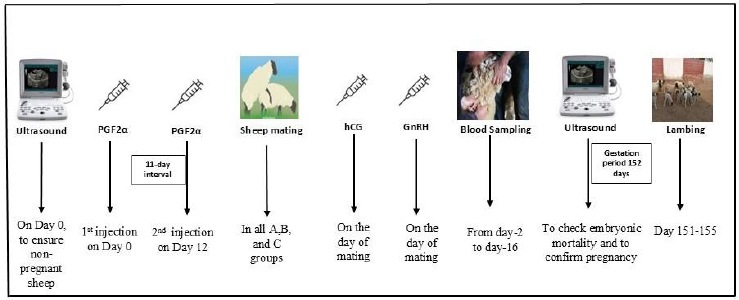
A real-time, B-mode ultrasound scanner, DUS 60 Digital Ultrasonic Diagnostic Imaging System, with 5-7.5 MHz endocavity linear-array endorectal probes (Edan Endorectal Transducer E741-2) was utilized to differentiate between pregnant and non-pregnant sheep. The scanning protocol described by (Gonzalez‐Bulnes et al., 2010) was employed. After 27 days, ultrasonography was performed again to check embryonic mortality and to confirm pregnancy.
Randomly allocated the animals (n=30) into three separate treatment groups. This minimized bias and ensured that the groups were equal at the onset of the trial. Group A (n=10) was the Control Group: Sheep that got no intervention. Group B (n=10) was the hCG treatment group, and Group C (n=10) was the GnRH group. All the sheep in various groups were marked with distinct colored ribbons.
Ewes were categorized into three groups. Group A was given no treatment and served as a control. Animals of Groups B and C were first administered a prostaglandin injection of 2ml Dalmazin (PGF2α ) (Fatro Pharmaceutical Veterinary Industry, Italy) at the onset of the breeding season, and the second injection was administered after 11 days.
Initially, the animals were weighed and assigned to the required groups. Estrus was synchronized in group B and C animals with two intramuscular injections of Dalmazin (PGF2α) prostaglandin analog given 11 days apart. This was validated by placing these females with fertile males in a confined space for natural mating at a ratio of 1:10 (1 male to 10 females), natural mating was considered Day 0 for calculating the gestational age.
The sheep were categorized into three groups. Group A (n=10) served as the control with no treatment, while the other functioned as the experimental group. After the second injection of prostaglandin, ewes in estrus were mated naturally. Group B (n=10) received 1ml hCG per sheep, whereas Group C (n=10) animals received 2ml Dalmaralin (GnRH) (Dalmaralin, Fatro Pharmaceutical Veterinary Industry, Italy) per sheep on the day of mating. The ewes were not slaughtered and not given any anesthesia for this study. Embryonic mortality was observed by using ultrasonography. Ewes returning to estrus after 21 days were observed to determine non-return rates. During lambing, the number and weight of each lamb were recorded (Cam and Kuran, 2004). Stillbirths of lambs were recorded for data analysis.
For the progesterone assay, blood samples were obtained via jugular vein puncture from day 2 to 16 following hCG and GnRH injections, utilizing a 5ml plastic syringe (Lahore Medical Instruments, Pakistan) and a 23-gauge x 1 needle, and subsequently transferred into pre-heparinized 5ml glass tubes. In each test tube, 1ml of heparin solution was added to 3ml of the blood sample. Samples (about 3-5ml) were collected at 8:00 AM before feeding. Blood samples were collected more often. Blood samples were centrifuged at 3000 rpm for 15 minutes, and the separated serum was placed into eppendorf tubes and kept at −20°C until analyzed for progesterone using ELISA. The hemolyzed samples were eliminated.
Graphical methodology of the present study (Exp 2) is shown in Fig. 1.
Comparison between treatment groups were analyzed by chi-square analysis for non-return rate, pregnancy rate and twinnings. Data for gestation length, mortality, birth weight and litter size were subjected to analysis of variance, and differences between means were tested by an LSD test. Data was analyzed by using computer software Minitab version 18.
RESULTS
Buchi sheep's mean (± SEM) adult and lambs' birth body weight of experimental animals is shown in (Table-1). A significant difference (P<0.05) was observed in the adult body weight and lambs birth weight between males and females.
Males exhibited greater seasonal body weight variability, while females maintained a steady growth trend, with significant (P<0.05) weight differences observed between the sexes due to environmental and nutritional factors in (Table 2).
A 12-month growth study of Buchi lambs revealed consistent weight gain in both sexes, with males growing significantly faster than females (P<0.05) (Table 3). At 1 month, male lambs weighed 5.6±0.11kg compared to 5.16±0.11kg in females. This gap widened over time, with males reaching 42.52±0.91 kg and females 28.79±0.68kg by 12 months. The most pronounced growth in males occurred between the 9th and 12th months. These findings reflect typical sexual dimorphism in sheep, with males achieving higher body weights. The small SEM values indicate uniform growth trends across the population.
A 12-month study assessed the body and turnover weights of male and female Buchi lambs (Table 4). Both sexes showed steady growth, but males consistently outperformed females in both parameters. Male lambs increased from 5.24±0.13kg to 42.52±0.91kg in body weight and from 173.03±4.10g to 1412.6±32.7g in turnover weight. Females grew from 5.38±0.17kg to 28.79±0.68kg, and their turnover weight rose from 177.14±5.74g to 929.1±54.9g. While no significant differences were noted during the first five months (P>0.05), a significant difference (P<0.05) emerged from months 6 to 12, with males showing accelerated growth. The data confirms typical sexual dimorphism in sheep, with males exhibiting greater and more rapid development, likely influenced by genetic and hormonal factors.
A seasonal comparison of Buchi sheep breeding performance (Table 5), revealed notable differences between spring and autumn. In spring, 62.83% of 113 sheep were pregnant, producing 62 lambs with a lambing rate of 87.32%. Single births dominated (93.54%), while twin births were rare (6.45%), and abortion/dead birth cases were relatively higher (14.5%). In contrast, autumn showed a lower pregnancy rate (42.5% of 120 sheep) but a higher lambing rate (92.15%) with fewer abortion cases (2.82%). Single births made up 87.23%, and twin births increased slightly to 12.76%. These variations suggest that seasonal environmental factors, nutrition, and management practices influence reproductive outcomes in Buchi sheep.
The comparison of embryonic mortality and reproductive performance in Buchi sheep treated with saline (control), human chorionic gonadotropin (hCG) and Gonadotropin-releasing hormone (GnRH) during spring season (Table 6), highlights the positive impact of hCG and GnRH. There was a non-significant difference (P>0.05) in gestation length of all groups. Birth weights were also significantly higher (P<0.05) in the hCG group, and no dead births occurred in hCG and GnRH. These results suggest that hCG and GnRH treatment significantly enhances reproductive performance, increases litter size, and reduces embryonic mortality in Buchi sheep during the spring season. But the GnRH is more effective.
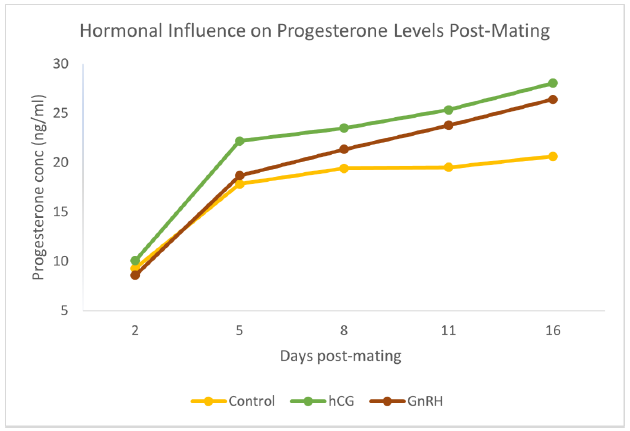
Table 7 summarizes the mean (± SEM) progesterone concentrations in Buchi sheep across different days (2, 5, 8, 11, and 16) for Control, hCG, and GnRH-treated groups. Initially, on day 2, the GnRH group showed significantly lower progesterone levels (8.58±0.10) compared to the control (9.29±2.73) and hCG group (10.07±2.99). However, from day 5 onward, all groups exhibited rising progesterone concentrations, with the hCG group consistently showing the highest levels across all time points. By day 16, the hCG group reached a peak progesterone level of 28.05±1.99, followed by GnRH (26.41±4.10), and the control group (20.64±4.02). These findings indicate that both hCG and GnRH treatments enhance progesterone production over time, with hCG having the most pronounced effect. This suggests a stronger luteotrophic influence of hCG, potentially supporting improved reproductive outcomes in treated animals. Plasma progesterone levels in Buchi sheep during the spring season showed in Fig. 2.

DISCUSSION
The mean ± SEM adult body weight of males and females recorded during the study period was 61.67±0.95kg and 39.67±0.41kg, respectively. A significant difference (P<0.05) was observed in the adult body weight between males and females. The previous study showed that the adult body weight of male and female sheep in Pakistan has revealed significant variation in different breeds. The Hissardale breed exhibits adult weights of 66.4kg for males and 41.94kg for females, while the Awassi breed shows slightly higher weights at 67.89kg for males and 45.34kg for females (Lashari et al., 2015). The Lohi breed presents a mean adult weight of 61.75 kg for rams and 54.26 kg for ewes (Lashari and Tasawar, 2013a). On the other hand, the Kacchi breed has lower body weights, with males averaging 51.24 kg and females 35.19kg (Lashari and Tasawar, 2010). These findings highlight the diversity in sheep body weight between different breeds in Pakistan, influenced by genetic and environmental factors. The Balochi and Beverigh breeds also reflect this trend, with male weights at 39.18kg and 35.80kg for females at 24 months (Kakar et al., 2011). These findings indicate a diverse range of body weights influenced by breed and management practices, highlighting the importance of genetic potential in sheep production in Pakistan. Rams consistently exhibit greater body weight than female sheep (ewes) across various ages and breeds, indicating a strong genetic basis for sexual dimorphism in body weight (Gudex et al., 2015). Early nutritional conditions significantly impact adult body composition, with undernutrition during critical developmental periods leading to sex-specific metabolic changes. Males show increased fat mass and altered lipid metabolism compared to females (Poore et al., 2014; Jaquiery et al., 2012). Environmental factors, such as seasonal conditions and management practices, also play a crucial role in liveweight variation, affecting both sexes but with differing impacts on weight loss and gain (Blumer and Gaeder, 2015). The gender of the newborn lamb significantly affects birth weight, with male lambs (3.40±0.16) being significantly (P<0.05) heavier than female lambs (3.00±0.00).
Similarly (Hussain, 2019) documented that Thalli sheep lambs born in the spring season were marginally heavier (4.05±0.12kg) than those born in the fall season (4.01±0.06kg), while single lambs (4.24±0.00kg) were shown to be heavier than twin lambs (3.68±0.01kg). The male lambs exhibited greater weight than the females, as indicated. The average birth weights for male and female lambs were 4.21±0.10kg and 3.85±0.08kg, respectively. (Mokhtari and Rashidir, 2010) noted that season of birth and sex significantly influenced birth weight. The birth weight of lambs born in spring was much greater than that of lambs born in October, a fact also corroborated by the present study. The outcomes of various surroundings. The average birth weight of Hissardale male and female lambs was 4.72±0.80kg and 4.46±0.84kg, respectively; likewise, the birth weight of Awassi male and female lambs was 4.89±0.16kg and 4.30±0.14kg, respectively (Lashari et al., 2015). Lambs born as singles generally exhibit higher birth weights compared to those born as twins, with significant differences noted in certain sheep genotypes (Ristanovic et al., 2022). The decline in birth weight is also associated with increased litter size, indicating a linear relationship between litter size and lamb birth weight (Gootwine, 2005). Ewes that receive adequate nutrition throughout gestation tend to produce heavier lambs, emphasizing the importance of maternal diet (Gardner et al., 2007). Environmental conditions, such as the season and the age of the ewe, also play a crucial role. Lambs born in spring-summer tend to weigh more, while younger and older ewes produce lighter lambs (Petrovic et al., 2011).
The average seasonal variation in the (mean ± SEM) body weight of adult male and female Buchi sheep over 12 months. Both sexes showed a consistent pattern of cyclic variation. In males, the body weight fluctuates over the year, starting at 54.25±1.55kg in the first month and gradually increasing to 65.75±1.49kg by the 12th month. While the female Buchi sheep maintain a more stable body weight throughout the year. Their weight starts at 39.03±0.44kg in the first month and gradually increases, reaching 43.47±0.33kg by the 12th month. Overall, in 12 months, a significant difference (P<0.05) was observed in the body weight of male and female Buchi sheep.
Studies indicate that body weight fluctuates significantly across seasons, with peaks often observed in autumn and declines in spring. For instance, adult ewes of various breeds, including Malpura and Avimaans, showed a mean weight of 31.10±0.067kg, with the highest weights recorded in October (34.49±0.217kg) and the lowest in April (27.84±0.218kg) (Swarnkar and Arora, 1996) Buchi sheep exhibit notable seasonal weight fluctuations influenced by environmental factors, which can differ from other breeds. Their preweaning and postweaning growth traits are significantly affected by year and season, with average weights at weaning adjusted to 120 days being 12.55kg and 33.78kg at 365 days (Akhtar et al., 2014). Seasonal variations in adult sheep body weight result from feed availability, climate, reproductive cycles, hormonal changes, and management practices. Weight gain occurs in spring and early summer due to abundant forage, while winter and late summer bring weight loss due to poor feed quality and climatic stress (Sejian et al., 2012).
The lamb's weight consistently grows until 12 months of age. The average growth rates for males and females during the initial four months of age were 5.6 to 17.27kg and 5.16 to 15.33kg, respectively, indicating a significant difference (P˂0.05). This was followed by a gradual increase until the 5th to 8th month, reaching 20.89 to 28.04kg in males and 19.91 to 22.00kg in females. Growth continued until the 9th to 12th months, the males increasing from 31.17 to 42.52kg and females from 23.12 to 28.79kg, respectively. The males reported more weight than the females across all age groups. The examination of growth rates across various ages for both genders indicates that, while considerable weight differences between male and female lambs at comparable ages, as determined by maximum likelihood approaches, males consistently outweighed females at all ages. The growth rate of Buchi lambs over 12 months exhibits considerable variety in comparison to other sheep breeds. In a study, Balochi lambs attained an average weight of 30.65±1.92 kg for males and 27.42±1.04kg for females at 12 months (Kakar et al., 2011). Conversely, Texel lambs demonstrated a wider spectrum of growth rates, with heritability for these rates ranging from 0.14 to 0.74 (Lambe et al., 2006). Individual lambs exhibit significant genetic variability, influencing their growth rates. For instance, lambs from ewes rearing singletons tend to show higher average daily gains compared to those from ewes with twins or triplets (Hu et al., 2024). Effective management practices, including monitoring growth rates and adjusting feeding regimens, can enhance productivity and profitability in lamb production (Gascoigne and Lovatt, 2015).
The turnover rate is based on the daily weight gain per animal across various ages, sexes, and months. The gender-specific turnover rate was 173,265,385,539g/day for male lambs and 177,278,379,524g/day for female lambs during the initial four months of age, respectively. The average turnover rates of lambs, categorized by gender throughout various seasons, showed significant differences (P˂0.05). The overall growth rate of the current stock increased by 16kg in males and 15kg in females over the initial four months of age, respectively. The growth rate subsequently increased by 28.53kg for males and 22.00kg for females from months 5 to 8, followed by a gradual increase of 42.52kg for males and 28.79kg for females in the older age range of 9-12 months. The males showed a superior growth rate compared to the females. The mean (± SEM) body weight and turnover weight (± SEM) of male and female Buchi lambs over 12 months can be compared with other breeds based on various studies. Baluchi male sheep at 12 months had a mean body weight of approximately 35kg, with growth rates of 222.4g/day for those in a growth group (Kamalzadeh and Shabani, 2007). In contrast, lambs from other breeds, such as the improved Jezersko-Solcava, had an average body weight of 22.9kg at weaning, with males showing higher daily gains. Notably, sex differences were significant, with males generally exhibiting better growth performance than females (Bizjak and Cividini, 2020). Males generally exhibit greater body weights than females due to higher muscle mass, Genetic Influences and fat deposition. For instance, male sheep in a study showed significant weight differences, averaging 36.76kg compared to 32.12kg for females (Awad et al., 2023). Climatic conditions significantly impact body weight, with variations in weather affecting growth rates in different regions. For example, lamb weights were influenced by spring and summer weather conditions across various grazing areas (Steinheim et al., 2004).
Various parameters correlated with the reproductive efficiency of Buchi sheep, classified by gender. In the present study, all the ewes showed a biannual lambing trend. The female fertility rate in spring was 62.83%, whereas in autumn it was 42.5%. A notable variation (P<0.05) was seen in sheep fertility rates across seasons. Single birth rates were 93.54% in spring and 87.23% in autumn. Twin births were recorded at a rate of 6.45% in spring and 12.76% in autumn, with no occurrences of triplet births in either season. The death rate was 14.5% in spring and 12.76% in autumn, whereas the abortion rate was 2.82% in spring and 1.96% in autumn. Similarly, the female fertility rates for Lohi and Kacchi sheep were 86.3% and 80%, respectively. No significant difference was observed in the reproductive rates of sheep across varying flock sizes for both breeds. The incidence of twin births was 16.34% in Lohi sheep and 13.60% in Kacchi sheep, with no instances of triplet litters recorded in either breed. The average litter size was 1.53 per sheep. Lambing transpired throughout two distinct seasons: August to November and February to April. In conclusion, the Lohi breed exhibits superior genetic reproductive performance, birth weight, and growth potential. The lambs exhibit a superior survival rate. The Lohi sheep exhibit strong breeding potential and are well adapted to thrive in both dry and irrigated conditions of the region (Lashari and Tasawar, 2013). Various studies on stock and reproductive rates in Pakistan indicate significant variability in sheep fertility. The prevalence of sheep in flocks in the current study is significantly higher than previously published figures: Karakuli at 75%, Balali at 69%, and Randozai at 64% by, as well as Horo at 70.1% and Menz at 79.5% by (Berhan Van Arendonk, 2006). However, some studies indicate a greater reproduction rate: 96.1% in Lohi, 97.1% in Afghan, and 90% in the general nomadic flock of Lebanon (Ahmad, 1985). The variation in reproductive performance of sheep across different seasons is influenced by a combination of environmental factors, hormonal changes, and management practices. Seasonal breeding patterns are primarily dictated by photoperiod, with ewes exhibiting increased reproductive activity as day length decreases, particularly in autumn. This seasonal behavior is further affected by climatic conditions, such as temperature, precipitation, and sunlight, which can impact fertility rates and lambing success (Kovačić et al., 2023; Đuričić et al., 2021).
The reproductive performance in the hCG and GnRH-treated ewes was significantly higher (P<0.05) than that of the control group, with no embryonic death was seen in the hCG and GnRH treated group compared to the control group. A similar study by (Khan et al., 2007) showed that hCG treatment improved embryo survival in hCG-treated animals with more triplet, quadruplet, and quintuplet births than the saline-treated controls.
Consistent with our findings, previous studies have indicated that hCG injection in the early stages of pregnancy enhances lamb production and reproductive performance in sheep (Khan et al., 2007; González-Álvarez et al., 2016) asserted that gonadotrophins are essential for follicular development. The dosage and timing of hCG injection are crucial for enhancing luteal activity evaluated the dose- and time-dependent impact of hCG on luteal function in anestrus ewe lambs (Catalano et al., 2012). The variation in embryonic mortality and reproductive performance between saline-injected (control) and hCG-treated sheep is attributed to hCG's effectiveness in inducing estrus, promoting follicular growth, and enhancing ovulation rates, leading to improved embryonic implantation rates (Santos-Jimenez et al., 2021). For instance, administering hCG shortly after estrus observation can lead to synchronized ovulation and improved pregnancy rates (Didarkhah and Vatandoost, 2022). The physiological state of the ewes, including their reproductive history and health, can influence the effectiveness of hormonal treatments. Ewes treated with hCG showed better follicular development and ovulation rates compared to controls (Mirzaei et al., 2023).
Similarly, finding was observed by (Almadaly et al., 2016), a favorable impact on ovulation synchronization in ewes using GnRH - PGF2α - GnRH during the non-breeding season in a Karakul flock. The effect of exogenous GnRH injection may differ depending on the stage of the estrous cycle in the treated animals (González-Álvarez et al., 2016). Ewes treated with GnRH or hCG showed improved reproductive metrics, such as higher twinning rates and fecundity compared to control groups receiving saline (Didarkhah and Vatandoost, 2022). GnRH treatment resulted in significantly elevated serum progesterone levels, which are essential for maintaining pregnancy (Mirzaei et al., 2023). GnRH treatment altered metabolite levels related to collagen and prostaglandin synthesis, potentially affecting embryo implantation and overall pregnancy success. The study found that GnRH treatment significantly reduced pregnancy rates in Huyang (72.2% vs. 82.9% for saline control, P<0.05), indicating potential increased embryonic mortality and impaired reproductive performance associated with GnRH administration during artificial insemination (Zhang et al., 2024). The timing of GnRH administration relative to estrus onset significantly influenced mating success and pregnancy rates, with variations noted across different sheep breeds (Hidayahet al., 2023). Different dosages of GnRH can also lead to varying reproductive outcomes. For example, higher doses of GnRH did not significantly improve ovulation or pregnancy rates compared to control groups, indicating that optimal dosing is crucial for achieving desired reproductive outcomes (Didarkhah and Vatandoost, 2022).
The progesterone concentrations (mean ± SEM) across different days (2, 5, 8, 11, and 16) for Control, hCG, and GnRH groups. Initially, the hCG group had slightly higher levels than the control, while the GnRH group had the lowest. Progesterone levels increased in all groups over time, with hCG consistently showing the highest concentrations, followed by GnRH and then control. By day 16, the hCG group had the highest progesterone concentration, indicating that both hCG and GnRH treatments elevated progesterone levels, with hCG having the most significant effect. The first reason for doing this study was to identify whether different hormonal programs at different times after mating could improve the concentration of progesterone as a pregnancy-retaining hormone in sheep or not. The results of this study showed that the use of GnRH and hCG during different days (days 1, 2, 5, 7 and 12) after mating in Lake-Ghashghaei ewes significantly increased serum progesterone concentration compared to the control group that was consistent with the results of other studies (Hashem et al., 2015). In those studies, despite the time of using these hormones, the concentration of progesterone compared to the control group increased significantly. hCG has similar activity to Luteinizing Hormone (LH) with a longer half-life than LH and causes luteotropic stimulation in the corpus luteum (Fonseca et al., 2018). These effects can be done either by converting small cells into large corpus luteum or by increasing the size of large luteal cells (Hashem et al., 2015). Increased progesterone levels can be due to an increase in the number of extra corpus luteum on the surface of the ovary, and or increase the number of luteal cells that secrete progesterone (Afri-Bouzebda et al., 2015). In some other studies, an increase in the pregnancy rate and the rate of lambing was reported when using GnRH and hCG in the time of mating or on different days after mating in different breeds of sheep. Differences in results can be attributed to the different protocols used, management systems, nutritional or physiological status of ewes and experimental conditions (Coleson et al., 2015). Several previous studies reported that hCG increases the embryo's size and length, increases the secretion of interferon tau, luteal weight, and increases placental weight (Cam and Kuran, 2004).
ACKNOWLEDGMENTS
The authors are grateful to the Office of Research, Innovation and Commercialization (ORIC), The IUB, for research funding through a research project (Project No.3910/ORIC/IUB/2021). The author would like to acknowledge the deanship of Graduate Studies and Scientific Research, Taif University for funding this work.
REFERENCES
- AFRI-BOUZEBDA, F.; LAMRAOUI, R.; BOUZEBDA, Z. et al. Effects of GnRH or hCG on ovarian response in PMSG-superovulated Ouled Djellal ewes (Algeria). Global Vet., v.15, p.498-5052015.
- AHMAD, M.K. Study on productive and reproductive performance of Afghan sheep at Livestock Production Research Institute, Bahadurnagar (Okara) [Pakistan]. Annu. Rep., 1985. (Directorate of Livestock Production Research Institute, Bahadurnagar, Okara (Pakistan).
- AKHTAR, M.; JAVED, K.; ABDULLAH, M. Single trait analysis for preweaning growth traits of Buchi sheep in Pakistan. J. Anim. Plant Sci., v.24, n.3, 2014.
- ALMADALY, E.; ASHOUR, M.; EL-KON, I. et al. Efficacy of various synchronization protocols on the estrus behavior, lambing rate and prolificacy in Rahmani Egyptian ewes during the non-breeding season. Asian J. Anim. Vet. Adv., v.11, p.34-43, 2016.
- AWAD, A.M.; AZZAWI, M.S.; FADHEL, A.A. Impact of growth hormone receptor gene on measurements of dimen-sions and body weights of local Iraqi sheep. J. Kerbala Agric. Sci., v.10, p.162-169, 2023.
- AYELE, S.; URGE, M. Productive and reproductive performances of indigenous sheep in Ethiopia: a review. Open J. Anim. Sci., v.9, p.97-120, 2018.
- BAZER, F.W. Pregnancy recognition signaling mechanisms in ruminants and pigs. J. Anim. Sci. Biotechnol., v.4, p.1, 2013.
- BERHAN, A.; VAN ARENDONK, J. Reproductive performance and mortality rate in Menz and Horro sheep following controlled breeding in Ethiopia. Small Ruminant Res., v.63, p.297-303, 2006.
- BIZJAK, M.; CIVIDINI, A. The effect of genotype and sex on growth and carcass traits of lambs. Acta Fytotechn. Zootec., v.23, n.5, 2020.
- BLUMER, S.E.; GARDNER, G.E.; FERGUSON, M.B.; THOMPSON, A.N. Environmental and genetic factors influence the liveweight of adult Merino and Border Leicester× Merino ewes across multiple sites and years. Anim. Prod. Sci., v.56, p.775-788, 2015.
- BOBOWIEC, R.; KOSIOR-KORZECKA, U.; PATKOWSKI, K. et al. Reproductive performance of PLS and BCP ewes exposed to hCG at the follicular phase of the estrous cycle. Med. Wet., v.68, p.226-230, 2012.
- CAM, M.A.; KURAN, M. Effects of a single injection of hCG or GnRH agonist on day 12 post mating on fetal growth and reproductive performance of sheep. Anim. Reprod. Sci., v.80, p.81-90, 2004.
- CATALANO, R.; TERUEL, M.; GONZALEZ, C. et al. The effect of hCG treatment on follicular characteristics and luteal function in seasonally anestrous ewes lambs. J. Anim. Vet. Adv., v.11, p.2091-2096, 2012.
- COLESON, M.P.; SANCHEZ, N.S.; ASHLEY, A.K. et al. Human chorionic gonadotropin increases serum progesterone, number of corpora lutea and angiogenic factors in pregnant sheep. Reproduction, v.150, p.43-52, 2015.
- DIDARKHAH, M.;VATANDOOST, M. Comparison of the effect of gonadotropin-releasing hormone and human chorionic gonadotropin on reproductive performance of romanov ewes during the natural breeding season. Arch. Razi Inst., v.77, p.991, 2022.
- ĐURIČIĆ, D.; DOBOS, A.; GRBAVAC, J. et al. Climate impacts on reproductive performance of Romanov sheep in the moderate climate. J. Anim. Behav. Biometeorol., v.10, n.1, 2021.
- FONSECA, J.F.; CASTRO, A.C.; ARASHIRO, E.K. et al. Effects of hCG administration on accessory corpus luteum formation and progesterone production in estrous-induced nulliparous Santa Inês ewes. Anim. Reprod., v.15, p.135, 2018.
- GARDNER, D.S.; BUTTERY, P.J.; DANIEL, Z.; SYMONDS, M.E. Factors affecting birth weight in sheep: maternal environment. Reproduction, v.133, p.297-307, 2007.
- GASCOIGNE, E.; LOVATT, F. Lamb growth rates and optimising production. In Pract. v.37, p.401-414, 2015.
- GÓMEZ-BRUNET, A.; SANTIAGO-MORENO, J.; MONTORO, V. et al. Reproductive performance and progesterone secretion in estrus-induced Manchega ewes treated with hCG at the time of AI. Small Ruminant Res., v.71, p.117-122, 2007.
- GONZÁLEZ-ÁLVAREZ, V.H.; MEZA-HERRERA, C.A.; LEYVA, C. et al. Effectiveness of different hCG and GnRH based protocols in progesterone primed goats on estrus induction and reproductive outcomes in out-off-season goats. J. Anim.Res., v.6, p.177-182, 2016.
- GONZALEZ‐BULNES, A.; PALLARES, P.; VÁZQUEZ, M.I. Ultrasonographic imaging in small ruminant reproduction. Reprod. Domest. Anim., v.45, p.9-20, 2010.
- GOOTWINE, E. Variability in the rate of decline in birth weight as litter size increases in sheep. Anim. Sci., v.81, p.393-398, 2005.
- GUDEX, B.W.; GONDRO, C.; MARSHALL, K.; VAN DER WERF, J.H. The genetics of sexual dimorphism in sheep. In: CONFERENCE ASSOCIATION FOR THE ADVANCEMENT OF ANIMAL BREEDING AND GENETICS, 21., 2015, Barossa Valley. Proceedings… Barossa Valley: AAABG, 2015.
- HASHEM, N.M.; EL-AZRAK, K.M.; EL-DIN, A.N. et al. Effect of GnRH treatment on ovarian activity and reproductive performance of low-prolific Rahmani ewes. Theriogenology, v.83, p.192-198, 2015.
- HIDAYAH, C.N.; SUMARYADI, M.Y.; SALEH, D.M. et al. Relationship of Gonadotropin-Releasing Hormones (GnRH) induction to reproductive performance in batur sheep. In: INTERNATIONAL CONFERENCE ON MULTIDISCIPLINARY APPROACHES FOR SUSTAINABLE RURAL DEVELOPMENT MOLECULAR CHARACTERIZATION AND PHYLOGENY OF WOLBACHIA PIPIENTIS IN MOSQUITOES, 5., 2023. Proceeding…[s.l.]: ICMA-SURE, 2023. p.140-146.
- HU, F.; CHENG, Y.; FAN, B. et al. Ruminal microbial metagenomes and host transcriptomes shed light on individual variability in the growth rate of lambs before weaning: the regulated mechanism and potential long-term effect on the host. Msystems, v.9, p.e00873, 2024.
- HUSSAIN, A. Genetic evaluation of Thalli sheep in Pakistan. 2019. Thesis (Doctoral) - University of Agriculture, Faisalabad, PAK.
- JAQUIERY, A.L.; OLIVER, M.H.; HONEYFIELD-ROSS, M. et al. Periconceptional undernutrition in sheep affects adult phenotype only in males. J. Nutr. Metabol., v.2012, p.123610, 2012.
- KAKAR, M.S.; TARIQ, M.M.; WAHEED, A. et al. Pakistan’ın Belucistan bölgsindeki balochi ve bibrik (beverigh) koyun irklarının ekonomik özelliklerinin değerlendirilmesi. J. Inst. Sci. Technol., v.1, p.133-139, 2011.
- KAMALZADEH, A.; SHABANI, A. Maintenance and growth requirements for energy and nitrogen of Baluchi sheep. Int. J. Agric. Biol., v.9, p.535-539, 2007
- KHAN, T.H.; BECK, N.F.; KHALID, M. The effect of hCG treatment on Day 12 post-mating on ovarian function and reproductive performance of ewes and ewe lambs. Anim. Reprod. Sci., v.116, p.162-168, 2009.
- KHAN, T.H.; BECK, N.F.; KHALID, M. The effects of GnRH analogue (buserelin) or hCG (Chorulon) on Day 12 of pregnancy on ovarian function, plasma hormone concentrations, conceptus growth and placentation in ewes and ewe lambs Anim. Reprod. Sci., v.102, p.247-257, 2007.
- KHAN, T.H.; BECK, N.F.; MANN, G.E.; KHALID, M. Effect of post-mating GnRH analogue (buserelin) treatment on PGF2α release in ewes and ewe lambs. Anim. Reprod. Sci., v.95, p.107-115, 2006.
- KOVAČIĆ, M.; ĐURIČIĆ, D.; SUDARIĆ BOGOJEVIĆ, M. et al. Influence of climatic elements on the reproductive traits of Romanov sheep in the Bilogora region, Croatia. Vet. Stanica, v.54, p.375-381, 2023.
- LAMBE, N.R.; NAVAJAS, E.A.; SIMM, G.; BUNGER, L. A genetic investigation of various growth models to describe growth of lambs of two contrasting breeds. J. Anim. Sci., v.84, p.2642-2654, 2006.
- LASHARI, M.H.; TASAWAR, Z. Genetic potentials of local breed of sheep habitating around Dera Ghazi Khan, Pakistan. Sarhad J., v.26, n.2, 2010.
- LASHARI, M.H.; TASAWAR, Z. Genetic potentials of Lohi sheep of Multan, Pakistan. Sci. J. Anim. Sci., v.2, p.254-263, 2013a.
- LASHARI, M.H.; TASAWAR, Z. The Effect of GnRH (Dalmarelin) given on day 12 post-mating on ovarian function and embryo development in Lohi sheep at southern Punjab, Pakistan. Pak. J. Life Soc. Sci., v.11, p.165-170, 2013b.
- LASHARI, M.H.; ZAHIDA TASAWAR, Z.T.; NUZHAT SIAL, N.S. et al. Genetic potentials of Awassi and Hissardale sheep breeds maintained on a government farm, Pakistan. Wayamba J. Anim.Sci., v.1, p.1173-1178, 2015.
- MICHELS, H.; VANMONTFORT, D.; DEWIL, E.; DECUYPERE, E. Genetic variation of prenatal survival in relation to ovulation rate in sheep: a review. Small Ruminant Res., v.29, p.129-142, 1998.
- MIRZAEI, A.; JAVIDI, M.; BOOSTANI, A. The effect of progesterone injection combined with prostaglandineF2α, GnRH and hCG administrations on the pregnancy and lambing rate of lactating and non‐lactating fat‐tailed ewes during the breeding season. Reprod. Domest. Anim., v.58, p.307-313, 2023.
- MIRZAEI, A.; REZAEI, M.; ASADI, J. Reproductive performance after hCG or GnRH administration of long-term progestagen treatment of fat tailed ewes during seasonal anoestrus. İstanbul Üniv. Vet. Fak. Derg., v.40, p.176-182, 2014.
- MOKHTARI, M.S.; RASHIDI, A. Genetic trends estimation for body weights of Kermani sheep at different ages using multivariate animal models. Small Ruminant Res., v.88, p.23-26, 2010.
- PETROVIC, M.P.; MUSLIC, D.R.; PETROVIC, V.C.; MAKSIMOVIC, N. Influence of environmental factors on birth weight variability of indigenous Serbian breeds of sheep. Afr. J. Biotechnol.,. v.10, p.4673-4676, 2011.
- POORE, K.R.; HOLLIS, L.J.; MURRAY, R.J. et al. Differential pathways to adult metabolic dysfunction following poor nutrition at two critical developmental periods in sheep. PLoS One, v9, p.e90994, 2014.
- REYNOLDS, L.P.; BOROWICZ, P.P.; CATON, J.S. et al. Uteroplacental vascular development and placental function: an update. Int. J. Dev. Biol., v.54, p.355, 2010.
- RISTANOVIC, B.; ILIĆ, Z.; CARO PETROVIĆ, V. et al. Influence of birth type on body weight of lambs from birth to weaning in various strains of sheep Pramenka. Genet. Časopis, v.54, p.749-759, 2022.
- ROSTAMI, B.; HAJIZADEH, R.; SHAHIR, M.H.; ALIYARI, D. The effect of post-mating hCG or progesterone administration on reproductive performance of Afshari× Booroola-Merino crossbred ewes. Trop. Anim. Health Prod., v.49, p.245-250, 2017.
- SANTOS-JIMENEZ, Z.; MEZA-HERRERA, C.A.; CALDERON-LEYVA, G. et al. Efficiency of hCG for inducing resumption of ovarian cyclicity and synchronized ovulations during the seasonal anestrous in sheep. Animals, v.11, p.3159, 2021.
- SEJIAN, V.; MAURYA, V.P.; KUMAR, K.; NAQVI, S.M. Effect of multiple stresses (thermal, nutritional, and walking stress) on the reproductive performance of Malpura ewes. Vet. Med. Int., v.2012, p.471760, 2012.
- SOKAL, R.R. Biometry, the principles and practice of statistics in biological research. San Francisco: Freeman, 1995 .p.451-554.
- STEINHEIM, G.; WELADJI, R.B.; SKOGAN, T. et al. Climatic variability and effects on ungulate body weight: the case of domestic sheep. Ann. Zool. Fennici, v.41 p.525-538, 2004.
- SWARNKAR, C.P.; ARORA, A.L. Monthly variation in adult body weights of ewes under semi-arid conditions of Rajasthan. Indian J. Small Ruminants, v.2, p.1-6, 1996.
- ZHANG, J.; SUN, S.; BAI, X. et al. Metabolomics analysis of the effect of GnRH on the pregnancy rate of ewes with estrus synchronization scheme based on progesterone. Front. Vet. Sci., v.11, p.1442931, 2024.
The research data are available within the article itself.