
 Variations in Myocardial FDG Uptake and Metformin Use: Implications for Survival during Immunotherapy
Abstract
Background: The rise of immune checkpoint inhibitors (ICIs) has significantly improved lung cancer outcomes; however, there is a lack of response prediction protocols. Furthermore, preclinical studies have indicated a promising association between metformin, β-blockers (BBs), and improved cancer patient outcomes.
Objectives: The primary objective of this study was to investigate metformin's impact on survival outcomes. The secondary objectives included assessing myocardial FDG uptake variation (change in standardized uptake value [ΔSUV]) during ICI treatment and evaluating the effects of smoking, diabetes, hypertension, and BB usage on survival outcomes.
Methods: This single-arm, unicentric retrospective cohort study evaluated lung cancer patients who started using ICIs from July 2016 to December 2021. Inclusion criteria were age 18 years or above, lung cancer treated with ICIs (CTLA-4, PD-1, and PD-L1 inhibitors), and having undergone at least two positron emission tomography-computed tomography (PET-CT) scans.
Results: Fifty-eight patients fulfilled all the inclusion criteria. Metformin users presented a 759-day increase in overall survival (OS) (p = 0.015). A trend of a 161-day increase in progression-free survival was observed in patients with positive myocardial ΔSUV compared to the negative ΔSUV group (p = 0.066), along with a trend of a 285-day increase in favor of BB users (p=0.886).
Conclusion: The significant association between metformin use and increased OS suggests metformin as a promising adjuvant for ICI therapy. A trend of positive myocardial ΔSUV and improved outcomes may suggest a potential role of PET-CT in response prediction; however, larger studies are necessary to solidify this hypothesis.
Keywords:
Immune Checkpoint Inhibitors; Positron Emission Tomography-Computed Tomography; Metformin; Cardio-Oncology; Cardiotoxicity

Resumo
Introdução: O aumento do uso de inibidores de checkpoint imunológicos (ICIs) melhorou significativamente os resultados no câncer de pulmão; no entanto, ainda há falta de protocolos para prever a resposta ao tratamento. Além disso, estudos pré-clínicos indicaram uma associação promissora entre metformina, β-bloqueadores (BBs) e melhores resultados em pacientes com câncer.
Objetivos: O objetivo principal deste estudo foi investigar o impacto da metformina nos desfechos de sobrevida. Os objetivos secundários incluíram a avaliação da variação na captação de FDG no miocárdio (alteração no valor de captação padronizado [ΔSUV]) durante o tratamento com ICIs e a avaliação dos efeitos do tabagismo, diabetes, hipertensão e uso de BBs nos desfechos de sobrevida.
Métodos: Este estudo de coorte retrospectivo unicêntrico e de braço único avaliou pacientes com câncer de pulmão que começaram a usar ICIs de julho de 2016 a dezembro de 2021. Os critérios de inclusão foram: idade superior a 18 anos, câncer de pulmão tratado com ICIs (inibidores de CTLA-4, PD-1 e PD-L1) e realização de pelo menos dois exames de tomografia por emissão de pósitrons combinada à tomografia computadorizada (PET-CT).
Resultados: Cinquenta e oito pacientes preencheram todos os critérios de inclusão. Os usuários de metformina apresentaram um aumento de 759 dias na sobrevida global (SG) (p = 0,015). Uma tendência de aumento de 161 dias na sobrevida livre de progressão (SLP) foi observada nos pacientes com ΔSUV miocárdica positiva em comparação ao grupo com ΔSUV negativa (p = 0,066), juntamente com uma tendência de aumento de 285 dias a favor dos usuários de BBs (p=0,886).
Conclusão: A associação significativa entre o uso de metformina e aumento da SG sugere que a metformina é um adjuvante promissor para a terapia com ICI. Uma tendência de ΔSUV miocárdica positiva e melhores resultados pode sugerir um papel potencial da PET-CT na previsão de resposta, porém, estudos maiores são necessários para solidificar essa hipótese.
Palavras-chave:
Inibidores de Checkpoint Imunológico; Tomografia por Emissão de Pósitrons combinada à Tomografia Computadorizada; Metformina; Cardio-Oncologia; Cardiotoxicidade

Introduction
Immune system evasion represents a pivotal mechanism in carcinogenesis, whereby tumor cells employ various mechanisms to elude immune surveillance. These mechanisms encompass the downregulation of tumor antigen presentation and the exposure of molecules that impede directed immune response.1 Notably, lung cancer, the leading cause of global cancer-related deaths, is frequently approached by the utilization of immune checkpoint inhibitors (ICIs) as a treatment modality. These therapeutic agents function by impeding the detrimental regulatory mechanisms enacted by the tumor, thus fostering an enhanced immune defense against malignant growth.
Despite limited improvements in 5-year survival rates among lung cancer patients, 2-year survival rates have significantly increased.2 This improvement can be largely attributed to the well-documented efficacy of ICI therapy in enhancing long-term overall survival (OS) and progression-free survival (PFS).3 , 4 In addition to the stand-alone effectiveness of ICI therapy, the safety and effectiveness of combination regimens involving immunotherapy and chemotherapy,5 platinum-based regimens,6 , 7 and/or radiotherapy8 , 9 have been extensively reported.
However, predicting immunotherapy response and the impact of synergistic drugs on treatment outcomes remains uncertain. Although some evidence supports the safety and efficacy of adjuvant drugs such as β-blockers (BBs),10 metformin,11 and albendazole12 through murine models, retrospective data, and meta-analyses, high-quality clinical trials are still needed.
As further research is needed to establish the role of these adjuvant drugs, their potential to complement ICI therapy and contribute to improved patient outcomes remains a subject of hypotheses and speculation. Certain positron emission tomography-computed tomography (PET-CT) models have been proposed to predict immunotherapy response by analyzing standardized uptake value variation (ΔSUV) and employing PET tracers targeting ICIs, including PD-L1. Nevertheless, the absence of standardized evidence and ambiguous implications for clinical practice present ongoing challenges.13 – 15
Thus, we propose to evaluate the role of adjuvant drugs, such as metformin, on ICI therapy prognosis and to assess changes in myocardial FDG uptake (MGU) rate in advanced lung cancer patients undergoing ICI treatment. Our investigation aims to explore MGU's potential as a monitoring tool for immunotherapy response and the effects of metformin, BBs, and other drugs on survival in immunotherapy.
Methods
Study design and participants
This retrospective cohort study is a single-arm, unicentric investigation that utilized electronic medical records and PET-CT images to evaluate lung cancer patients who initiated ICI treatment between July 2016 and December 2021. Inclusion criteria included age 18 or above, lung cancer treated with ICIs (Cytotoxic T-lymphocyte associated protein 4 - CTLA-4, Programmed Death 1 PD-1, and Programmed-Death Ligand 1 PD-L1 inhibitors), and having undergone at least two PET-CT scans – one at baseline and another during the course of treatment.
The primary objective of the study was to assess the variation in MGU rate, measured by the ΔSUV, during the administration of ICIs and their impact on survival outcomes. The secondary objectives aimed to investigate the potential positive or negative effects associated with smoking, diabetes, hypertension, metformin usage, and BB usage on survival outcomes.
Ethical approval for this research was obtained from the ethics committee under the registration number CAAE 47402321.9.0000.5186
Statistical analysis
Descriptive statistics for numerical variables were presented as median and interquartile range, while categorical variables were described using absolute and relative frequencies. The Mann-Whitney test was employed to compare medians between groups. PFS and OS were estimated using the Kaplan-Meier method, and the log-rank test was utilized to compare survival curves. The significance level (alpha) was set at 0.05.
Results
Among the 114 patients with lung cancer who underwent immunotherapy at our medical center, 58 patients met the inclusion criteria. Of these, 25 were female and 33 were male, with a median age of 68 years (standard deviation [SD] ±10). The median body mass index was 26 (SD ±4), and the median interval from baseline PET scan to treatment start was 27 days (SD ±47).
Nearly 52% of the patients received immunotherapy in combination with chemotherapy, while the remaining 48% received immunotherapy alone. Within our sample, 31 patients (53.45%) exhibited a positive ΔSUV, indicating an increase in MGU. Conversely, 25 patients (43.10%) showed a negative ΔSUV, indicating a decrease in MGU. Two patients (3.45%) had no SUV variation and were excluded from the subgroup analysis. The subgroups with positive and negative ΔSUV were comparable, except for a prolonged interval between baseline PET scan and treatment start in the negative ΔSUV group. Detailed clinical and demographic data are shown in Table 1 , and Table 2 shows the histological and treatment characteristics of the study population.
Demographic characteristics and subgroup distribution of the study population (n = 58), +δSUV and –δSUV subgroups.
Among the documented comorbidities, the highest prevalence was observed for tabagism (74%), followed by hypertension (48%) and diabetes (21%). The most commonly used drugs were angiotensin-converting enzyme (ACE) inhibitors or Angiotensin II receptor blockers (ARBs) (29%), BBs (24%), and metformin (14%).
Regarding the primary outcome, the overall median ΔSUV was +0.05. Within the disease control group, the median ΔSUV was +0.48, indicating an increase in MGU. In contrast, the disease progression group exhibited a median ΔSUV of −0.66.
When comparing patients with a positive myocardial ΔSUV to those with a negative ΔSUV, there was a median prolongation of PFS by 161 days in favor of the positive myocardial ΔSUV group (p = 0.066). Additionally, an increase of 281 days in OS was observed in the positive myocardial ΔSUV group (p = 0.256) ( Figure 1 ).

ICI: immune checkpoint inhibitors; PET-CT: positron emission tomography-computed tomography; BBs: β-blockers; PFS: progression-free survival; SUV: standardized uptake value; OS: Overall Survival.
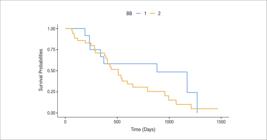
Furthermore, diabetic patients demonstrated a noteworthy increase of 759 days in OS (p = 0.023). In subgroup analysis, a trend toward even more favorable outcomes was observed in metformin users (p = 0.015) ( Figure 2 ). Additionally, a non-statistically significant trend of prolongation in OS by 285 days was noticed among BB users (p = 0.886) ( Figure 3 ).

However, no statistically significant associations were found between the usage of ACE inhibitors or ARBs, tobacco use, or hypertension and OS or PFS.
Discussion
The well-documented ability of Fluorodeoxyglucose F 18 (18F-FDG) PET-CT to identify tissue inflammation—a hallmark of immune-related adverse events (irAEs)—indicates its potential for the early detection of subclinical irAEs. Moreover, PET-CT may play a crucial role in confirming suspected irAEs, including myocarditis, by revealing heterogeneous and moderate-to-high increases in 18F-FDG uptake within the left ventricle (LV).16 , 17
The disparity observed in the average cardiac ΔSUV between the disease control group and the disease progression group within our study suggests a potential association between increased SUV following treatment and improved responses to immunotherapy. This finding is further substantiated by the median prolongation of 161 days in PFS (p = 0.066) and 281 days in OS (p = 0.256) among patients exhibiting a positive ΔSUV. These results highlight the potential utility of ΔSUV as a predictive marker for treatment response and prognosis in patients undergoing immunotherapy.
Although the precise mechanism underlying irAEs is not yet fully understood, it is known that ICIs enhance the immune response against tumors, leading to inflammatory side effects through the recognition of shared antigens between tumor cells and normal tissues. Thus, it is hypothesized that the increase in 18F-FDG uptake, known in inflammatory processes, along with the presence of irAEs, could estimate response to immunotherapy and be associated with positive clinical outcomes.
Our findings align with a recent systematic review and meta-analysis, which demonstrated a correlation between irAEs and improved OS, PFS, and objective response rates (ORRs) in ICI-treated patients. The increase in SUV was identified as the main irAE marker on PET-CT.18 , 19 Similarly, it was found that patients who experienced low- to mid-grade irAEs during atezolizumab-containing treatment regimens exhibited longer OS compared to those with high-grade irAEs or no irAEs at all.20 These findings further support the notion that the occurrence of irAEs, along with changes in MGU, can serve as a valuable prognostic indicator and predictor of treatment response in patients undergoing immunotherapy.
A significant correlation was observed between increased OS and the usage of metformin (p = 0.015). The relationship between metformin and cancer immunity has been postulated to involve various mechanisms. These include the activation of adenosine monophosphate-activated protein kinase (AMPK)-dependent and AMPK-independent signaling pathways, which exert anti-tumor effects, and the elevation of the exhaustion threshold of cytotoxic T-lymphocytes (CTLs), thereby enhancing immune surveillance. Furthermore, metformin has been shown to impede the immune-inhibitory signaling of PD-L1 through the phosphorylation of PD-L1 associated with AMPK-dependent signaling activation,21 as well as the glycosylation and degradation of PD-L1 within the endoplasmic reticulum.22 These findings support the potential role of metformin as a modulator of cancer immunity and suggest its potential benefits in improving patient outcomes, particularly in terms of OS.
Consistent with our findings, several studies have demonstrated enhanced treatment outcomes when ICIs are combined with metformin in preclinical models of metastatic melanoma,23 non-small cell lung cancer (NSCLC),24 and breast cancer.21 These studies provide further evidence supporting the potential synergistic effects of combining ICIs with metformin, leading to improved therapeutic responses in various cancer types.
Furthermore, the combination of metformin with PD-1 blockade has shown promising results in enhancing tumor clearance and improving T-cell function by mitigating tumor-induced hypoxia, which acts as an inhibitory factor for T-cell activity.25 Moreover, in murine models, the synergistic effect of metformin and vaccine immunotherapy has been demonstrated to reduce PD-L1 expression on tumor cells.11 These findings highlight the potential of metformin in modulating the tumor microenvironment, alleviating hypoxia-associated immune suppression, and augmenting the efficacy of immunotherapeutic approaches.
In the same manner, investigations have examined the potential of combining metformin with anti-PD-1 monotherapy or a combination of anti-VEGFR2 and anti-PD-1 to restore sensitivity to immunotherapies in Nonalcoholic Steatohepatitis-Hepatocellular Carcinoma (NASH-HCC) tumors, which are typically characterized by limited responsiveness. Notably, these studies conducted in mice demonstrated the enhanced therapeutic efficacy achieved through such combinations, providing further support for exploring the synergistic effects of metformin and immunotherapies in overcoming resistance and improving treatment outcomes in challenging tumor types.26 , 27
Although limited in number, the available studies investigating the combination of metformin and ICIs in human subjects have yielded promising results. In an Italian study involving 40 patients, the concomitant administration of metformin and nivolumab was well tolerated and deemed safe. Notably, higher metformin doses (>1,000 mg daily) were associated with longer OS (p = 0.037) and PFS (p = 0.021) and improved response rates, corroborating our own findings.28 Similarly, the combination of metformin with ICIs demonstrated potentially favorable clinical outcomes, although statistical significance was not reached, likely due to the small sample size.23 Furthermore, metformin has been shown to enhance natural killer cell functions in head-and-neck squamous cell carcinoma.29 These preliminary findings suggest that the combination of metformin with ICIs holds promise as a therapeutic strategy, warranting further investigation in larger clinical studies to establish its efficacy and safety profile on humans.
Hence, based on the multitude of pathways and immunologic mechanisms proposed in preclinical studies and its favorable results, it can be reasonably concluded that metformin may play a significant role as a safe, well-tolerated, and readily available adjuvant therapy in the management of solid cancers when used in conjunction with ICIs.
The potential role of beta-blockers (BBs) in cancer treatment has been widely investigated, with conflicting evidence found in the literature. Some older retrospective studies have demonstrated improved treatment outcomes in patients with breast cancer, especially in triple-negative,30 , 31 ovarian,32 bladder,33 and NSCLCs.34
Moreover, a possible mechanism of action for BBs in cancer has been proposed in the literature, where beta-adrenergic signaling was found to be related to reduced proliferation of CD8+ T-cells and immune suppression mediated by regulatory T-cells and myeloid-derived suppressor cells.10
While the observed data regarding BB usage and OS did not reach statistical significance, potentially due to the limited sample size, the trend toward a 285-day increase in OS suggests a possible role for BBs as adjuvant therapy to ICIs in cancer treatment. Further studies with larger sample sizes are warranted to elucidate the underlying mechanism of action and determine whether BBs should be considered as a complementary drug for all patients undergoing immune checkpoint blockade.
Despite conflicting evidence in the literature regarding the impact of BBs on OS, PFS, and ORRs, similar findings to ours were reported in a recent meta-analysis that included 10,156 patients. The meta-analysis revealed that BB usage was associated with better ORRs to ICIs (odds ratio [OR] = 0.42 [0.19−0.94], p = 0.036), particularly in the subgroup of lung cancer patients (OR = 0.25 [0.08−0.83], p = 0.024). However, no significant association was found between BBs and OS or PFS in the pooled analysis.29
In summary, while the literature on the relationship between BBs and cancer treatment outcomes remains inconclusive, our findings, along with the meta-analysis results, suggest that BBs may have a potential role as adjunctive therapy to ICIs in cancer treatment that should be further studied.
Study limitations
The study has certain limitations that need to be acknowledged. First, the sample size was relatively small, primarily due to the limited number of lung cancer patients who received ICI therapy at our center. Consequently, the statistical significance of some findings may be compromised. Further research involving larger cohorts is essential to strengthen the validity and generalizability of our results.
Moreover, additional investigations are required to establish the underlying mechanisms of action and determine the clinical significance of using BBs in combination with ICIs. Furthermore, the importance of ΔSUV on survival outcomes also needs to be explored in future studies. These aspects will provide a more comprehensive understanding of the therapeutic potential and prognostic implications associated with the combined use of metformin, BBs, and ICIs in the context of lung cancer treatment.
Conclusions
Although further studies are needed to comprehensively assess the relationship between increased MGU and improved outcomes in patients undergoing ICI therapy, the role of PET-CT as a valuable tool for evaluating treatment response and irAEs is well established. Our findings highlight a significant association between increased OS and metformin use. This suggests that metformin could serve as an important adjuvant treatment option for patients undergoing ICI therapy, regardless of their diabetic or hyperglycemic status. Metformin's synergistic effects through multiple pathways, coupled with its accessibility, minimal side effects, and favorable safety profile, underscore its potential in enhancing treatment outcomes.
-
Sources of Funding
There were no external funding sources for this study.
-
Study Association
This study is not associated with any thesis or dissertation work.
-
Ethics Approval and Consent to Participate
This study was approved by the Ethics Committee of the Secretaria de Saúde do Estado da Paraíba – SES/PB under the protocol number 47402321.9.0000.5186. All the procedures in this study were in accordance with the 1975 Helsinki Declaration, updated in 2013. Informed consent was obtained from all participants included in the study.
References
- 1 Zitvogel L, Kroemer G, editors. Oncoimmunology: A Practical Guide for Cancer Immunotherapy. Cham: Springer International Publishing; 2018.
- 2 American Cancer Society. Global Cancer Facts & Figures 2023. Atlanta: American Cancer Society; 2023.
-
3 Reck M, Remon J, Hellmann MD. First-Line Immunotherapy for Non-Small-Cell Lung Cancer. J Clin Oncol. 2022;40(6):586-97. doi: 10.1200/JCO.21.01497.
» https://doi.org/10.1200/JCO.21.01497 -
4 Zulfiqar B, Farooq A, Kanwal S, Asghar K. Immunotherapy and Targeted Therapy for Lung Cancer: Current Status and Future Perspectives. Front Pharmacol. 2022;13:1035171. doi: 10.3389/fphar.2022.1035171.
» https://doi.org/10.3389/fphar.2022.1035171 -
5 Zouein J, Haddad FG, Eid R, Kourie HR. The Combination of Immune Checkpoint Inhibitors and Chemotherapy in Advanced Non-Small-Cell Lung Cancer: The Rational Choice. Immunotherapy. 2022;14(2):155-67. doi: 10.2217/imt-2021-0014.
» https://doi.org/10.2217/imt-2021-0014 -
6 Qian L, Ding X, Li FQ, Tian HM, Chen X, Han FJ, et al. Cellular Immunotherapy Combined with Platinum-Based Chemotherapy Prolongs Survival for Non-Small Cell Lung Cancer Patients. Neoplasma. 2023;70(2):251-9. doi: 10.4149/neo_2023_230127N44.
» https://doi.org/10.4149/neo_2023_230127N44 -
7 Bianco A, Campbell SFM. Atezolizumab Plus Platinum-Based Regimen and Bevacizumab: Is it Time to Consider Immunotherapy in a Concurrent Approach for Lung Cancer? Transl Cancer Res. 2019;8(Suppl 2):103-5. doi: 10.21037/tcr.2018.11.06.
» https://doi.org/10.21037/tcr.2018.11.06 -
8 Arina A, Gutiontov SI, Weichselbaum RR. Radiotherapy and Immunotherapy for Cancer: From "Systemic" to "Multisite". Clin Cancer Res. 2020;26(12):2777-82. doi: 10.1158/1078-0432.CCR-19-2034.
» https://doi.org/10.1158/1078-0432.CCR-19-2034 -
9 Zhang Z, Liu X, Chen D, Yu J. Radiotherapy Combined with Immunotherapy: The Dawn of Cancer Treatment. Signal Transduct Target Ther. 2022;7(1):258. doi: 10.1038/s41392-022-01102-y.
» https://doi.org/10.1038/s41392-022-01102-y -
10 Oh MS, Guzner A, Wainwright DA, Mohindra NA, Chae YK, Behdad A, et al. The Impact of Beta Blockers on Survival Outcomes in Patients with Non-Small-Cell Lung Cancer Treated with Immune Checkpoint Inhibitors. Clin Lung Cancer. 2021;22(1):e57-e62. doi: 10.1016/j.cllc.2020.07.016.
» https://doi.org/10.1016/j.cllc.2020.07.016 -
11 Munoz LE, Huang L, Bommireddy R, Sharma R, Monterroza L, Guin RN, et al. Metformin Reduces PD-L1 on Tumor Cells and Enhances the Anti-Tumor Immune Response Generated by Vaccine Immunotherapy. J Immunother Cancer. 2021;9(11):e002614. doi: 10.1136/jitc-2021-002614.
» https://doi.org/10.1136/jitc-2021-002614 -
12 Zhu L, Kuang X, Zhang G, Liang L, Liu D, Hu B, et al. Albendazole Induces Immunotherapy Response by Facilitating Ubiquitin-Mediated PD-L1 Degradation. J Immunother Cancer. 2022;10(5):e003819. doi: 10.1136/jitc-2021-003819.
» https://doi.org/10.1136/jitc-2021-003819 -
13 Léger MA, Routy B, Juneau D. FDG PET/CT for Evaluation of Immunotherapy Response in Lung Cancer Patients. Semin Nucl Med. 2022;52(6):707-19. doi: 10.1053/j.semnuclmed.2022.04.010.
» https://doi.org/10.1053/j.semnuclmed.2022.04.010 -
14 Mu W, Jiang L, Shi Y, Tunali I, Gray JE, Katsoulakis E, et al. Non-Invasive Measurement of PD-L1 Status and Prediction of Immunotherapy Response Using Deep Learning of PET/CT Images. J Immunother Cancer. 2021;9(6):e002118. doi: 10.1136/jitc-2020-002118.
» https://doi.org/10.1136/jitc-2020-002118 -
15 Evangelista L, Sepulcri M, Pasello G. PET/CT and the Response to Immunotherapy in Lung Cancer. Curr Radiopharm. 2020;13(3):177-84. doi: 10.2174/1874471013666191220105449.
» https://doi.org/10.2174/1874471013666191220105449 -
16 Cherk MH, Nadebaum DP, Barber TW, Beech P, Haydon A, Yap KS. 18 F-FDG PET/CT Features Of Immune-Related Adverse Events and Pitfalls Following Immunotherapy. J Med Imaging Radiat Oncol. 2022;66(4):483-94. doi: 10.1111/1754-9485.13390.
» https://doi.org/10.1111/1754-9485.13390 -
17 Tatar G, Alçin G, Samanci NS, Fenercioglu ÖR, Beyhan E, Cermik TF. Diagnostic Impact of 18F-FDG PET/CT Imaging on the Detection Of Immune-Related Adverse Events in Patients Treated with Immunotherapy. Clin Transl Oncol. 2022;24(10):1903-13. doi: 10.1007/s12094-022-02840-9.
» https://doi.org/10.1007/s12094-022-02840-9 -
18 Fan Y, Xie W, Huang H, Wang Y, Li G, Geng Y, ET AL. Association of Immune Related Adverse Events with Efficacy of Immune Checkpoint Inhibitors and Overall Survival in Cancers: A Systemic Review and Meta-Analysis. Front Oncol. 2021;11:633032. doi: 10.3389/fonc.2021.633032.
» https://doi.org/10.3389/fonc.2021.633032 -
19 Zhou X, Yao Z, Yang H, Liang N, Zhang X, Zhang F. Are Immune-Related Adverse Events Associated with the Efficacy of immune Checkpoint Inhibitors in Patients with Cancer? A Systematic Review and Meta-Analysis. BMC Med. 2020;18(1):87. doi: 10.1186/s12916-020-01549-2.
» https://doi.org/10.1186/s12916-020-01549-2 -
20 Socinski MA, Jotte RM, Cappuzzo F, Nishio M, Mok TSK, Reck M, ET AL. Association of Immune-Related Adverse Events with Efficacy of Atezolizumab in Patients with Non-Small Cell Lung Cancer: Pooled Analyses of the Phase 3 IMpower130, IMpower132, and IMpower150 Randomized Clinical Trials. JAMA Oncol. 2023;9(4):527-35. doi: 10.1001/jamaoncol.2022.7711.
» https://doi.org/10.1001/jamaoncol.2022.7711 -
21 Cha JH, Yang WH, Xia W, Wei Y, Chan LC, Lim SO, et al. Metformin Promotes Antitumor Immunity via Endoplasmic-Reticulum-Associated Degradation of PD-L1. Mol Cell. 2018;71(4):606-620.e7. doi: 10.1016/j.molcel.2018.07.030.
» https://doi.org/10.1016/j.molcel.2018.07.030 -
22 Ma R, Yi B, Riker AI, Xi Y. Metformin and Cancer Immunity. Acta Pharmacol Sin. 2020;41(11):1403-9. doi: 10.1038/s41401-020-00508-0.
» https://doi.org/10.1038/s41401-020-00508-0 -
23 Afzal MZ, Mercado RR, Shirai K. Efficacy of Metformin in Combination with Immune Checkpoint Inhibitors (anti-PD-1/anti-CTLA-4) in Metastatic Malignant Melanoma. J Immunother Cancer. 2018;6(1):64. doi: 10.1186/s40425-018-0375-1.
» https://doi.org/10.1186/s40425-018-0375-1 -
24 Shen X, Zhao Y, Liu G, Zhou HL, Fan J, Zhang L, et al. Upregulation of Programmed Death Ligand 1 by Liver Kinase B1 and its Implication in Programmed Death 1 Blockade Therapy in Non-Small Cell Lung Cancer. Life Sci. 2020;256:117923. doi: 10.1016/j.lfs.2020.117923.
» https://doi.org/10.1016/j.lfs.2020.117923 -
25 Scharping NE, Menk AV, Whetstone RD, Zeng X, Delgoffe GM. Efficacy of PD-1 Blockade Is Potentiated by Metformin-Induced Reduction of Tumor Hypoxia. Cancer Immunol Res. 2017;5(1):9-16. doi: 10.1158/2326-6066.CIR-16-0103.
» https://doi.org/10.1158/2326-6066.CIR-16-0103 -
26 Lujambio A, Sarobe P. Metformin Keeps CD8+ T Cells Active and Moving in NASH-HCC Immunotherapy. J Hepatol. 2022;77(3):593-5. doi: 10.1016/j.jhep.2022.05.038.
» https://doi.org/10.1016/j.jhep.2022.05.038 -
27 Wabitsch S, McCallen JD, Kamenyeva O, Ruf B, McVey JC, Kabat J, et al. Metformin Treatment Rescues CD8+ T-Cell Response To Immune Checkpoint Inhibitor Therapy In Mice with NAFLD. J Hepatol. 2022;77(3):748-60. doi: 10.1016/j.jhep.2022.03.010.
» https://doi.org/10.1016/j.jhep.2022.03.010 -
28 Ciccarese C, Iacovelli R, Buti S, Primi F, Astore S, Massari F, et al. Concurrent Nivolumab and Metformin in Diabetic Cancer Patients: Is It Safe and More Active? Anticancer Res. 2022;42(3):1487-93. doi: 10.21873/anticanres.15620.
» https://doi.org/10.21873/anticanres.15620 -
29 Crist M, Yaniv B, Palackdharry S, Lehn MA, Medvedovic M, Stone T, et al. Metformin Increases Natural Killer Cell Functions in Head and Neck Squamous Cell Carcinoma Through CXCL1 Inhibition. J Immunother Cancer. 2022;10(11):e005632. doi: 10.1136/jitc-2022-005632.
» https://doi.org/10.1136/jitc-2022-005632 -
30 Løfling LL, Støer NC, Sloan EK, Chang A, Gandini S, Ursin G, et al. β-Blockers and Breast Cancer Survival by Molecular Subtypes: A Population-Based Cohort Study and Meta-Analysis. Br J Cancer. 2022;127(6):1086-96. doi: 10.1038/s41416-022-01891-7..
» https://doi.org/10.1038/s41416-022-01891-7. -
31 Caparica R, Bruzzone M, Agostinetto E, De Angelis C, Fêde Â, Ceppi M, et al. Beta-Blockers in Early-Stage Breast Cancer: A Systematic Review and Meta-Analysis. ESMO Open. 2021;6(2):100066. doi: 10.1016/j.esmoop.2021.100066.
» https://doi.org/10.1016/j.esmoop.2021.100066 -
32 Watkins JL, Thaker PH, Nick AM, Ramondetta LM, Kumar S, Urbauer DL, et al. Clinical Impact of Selective and Nonselective Beta-Blockers on Survival in Patients with Ovarian Cancer. Cancer. 2015;121(19):3444-51. doi: 10.1002/cncr.29392.
» https://doi.org/10.1002/cncr.29392 -
33 Udumyan R, Botteri E, Jerlstrom T, Montgomery S, Smedby KE, Fall K. Beta-Blocker Use and Urothelial Bladder Cancer Survival: A Swedish Register-Based Cohort Study. Acta Oncol. 2022;61(8):922-930. doi: 10.1080/0284186X.2022.2101902.
» https://doi.org/10.1080/0284186X.2022.2101902 -
34 Yan X, Liu P, Li D, Hu R, Tao M, Zhu S, et al. Novel Evidence for the Prognostic Impact of β-Blockers in Solid Cancer Patients Receiving Immune Checkpoint Inhibitors. Int Immunopharmacol. 2022;113(Pt A):109383. doi: 10.1016/j.intimp.2022.109383.
» https://doi.org/10.1016/j.intimp.2022.109383
Edited by
-
Editor responsible for the review:
Marcelo Tavares


