Hypertrophic Cardiomyopathy: Analysis of Septal Thickness with Gradient Reduction in Patients Undergoing Radiofrequency Septal Ablation
Background: Hypertrophic obstructive cardiomyopathy (HOCM) is an autosomal dominant genetic disorder. Invasive treatment for intraventricular gradient reduction is indicated in patients (p) who are refractory to clinical treatment with gradient ≥ 50 mmHg. Radiofrequency ablation (RFA) is one of the current options for invasive management.
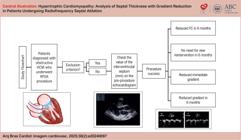
Objectives: To evaluate the correlation between interventricular septal diameter and procedural success, defined as immediate post-procedural gradient reduction, improvement in functional class (FC), and sustained gradient reduction at 6-month follow-up.
Methods: Twenty-two patients with HOCM were included. Transthoracic echocardiography was performed before and six months after RFA, while transesophageal echocardiography (TEE) was carried out intraprocedure.
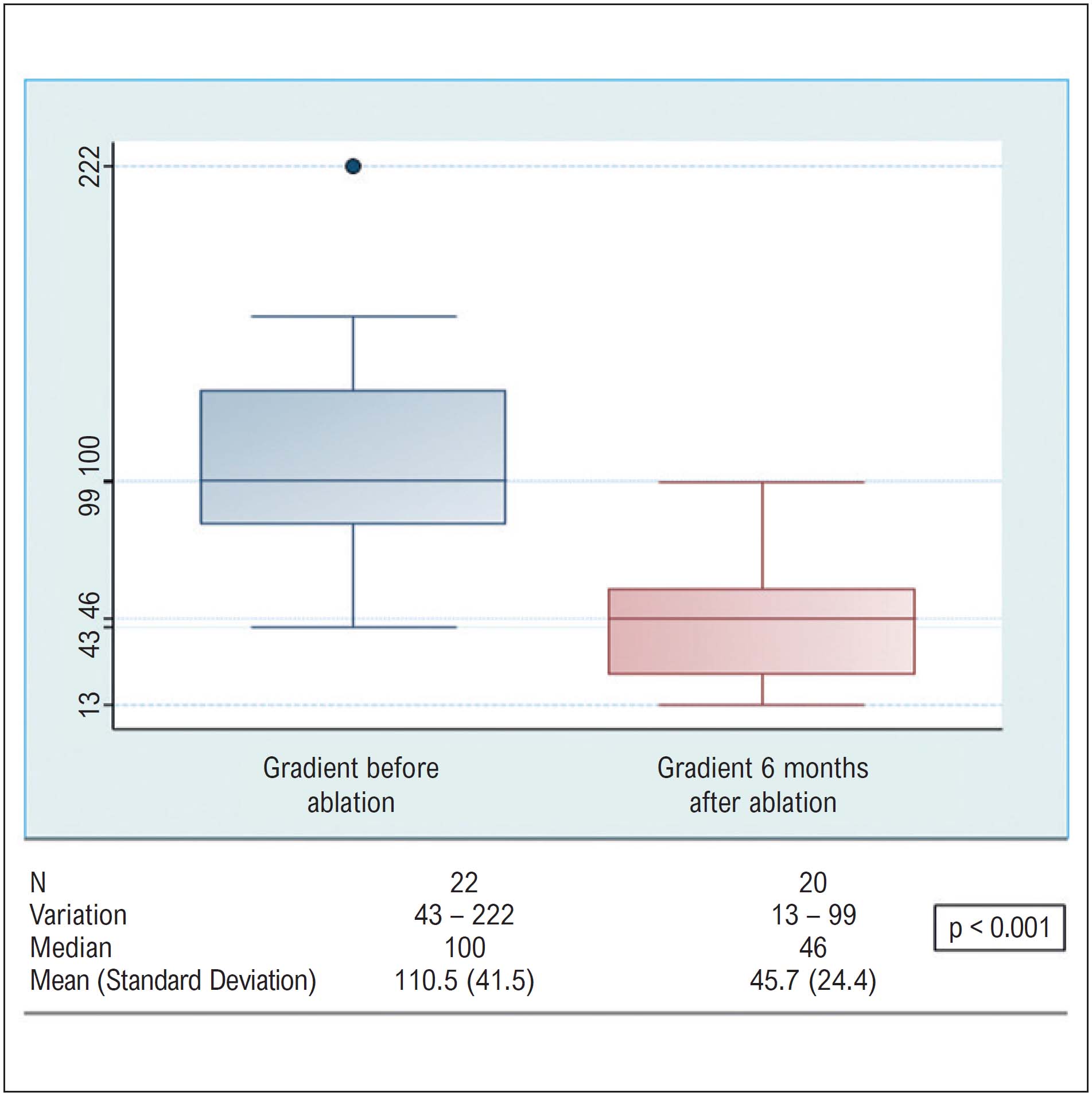
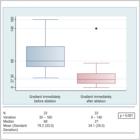
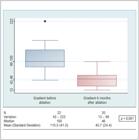
Results: The mean age was 56.64 years (± 12.23), with 68.18% of patients being female and 73% hypertensive. An immediate gradient reduction greater than 50% was observed in 72.7% of patients. At the 6-month follow-up, 60% of patients showed a ≥ 50% gradient reduction along with an improvement in FC. A median septal thickness of 18 mm was associated with greater procedural success compared to a median of 15 mm, and no significant change in septal thickness was observed over the 6-month follow-up period.
Conclusion: Radiofrequency septal ablation (RFSA) is an effective and safe technique for the invasive management of HOCM. The procedure enables a significant reduction in the intraventricular gradient, accompanied by improved FC and sustained short-term results. Thicker septal were associated with greater intraprocedural gradient reductions; however, there was no reduction in thickness during the 6-month follow-up.
Keywords:
Hypertrophic Cardiomyopathy; Radiofrequency Ablation
 Thumbnail
 Thumbnail
 Thumbnail
 Thumbnail
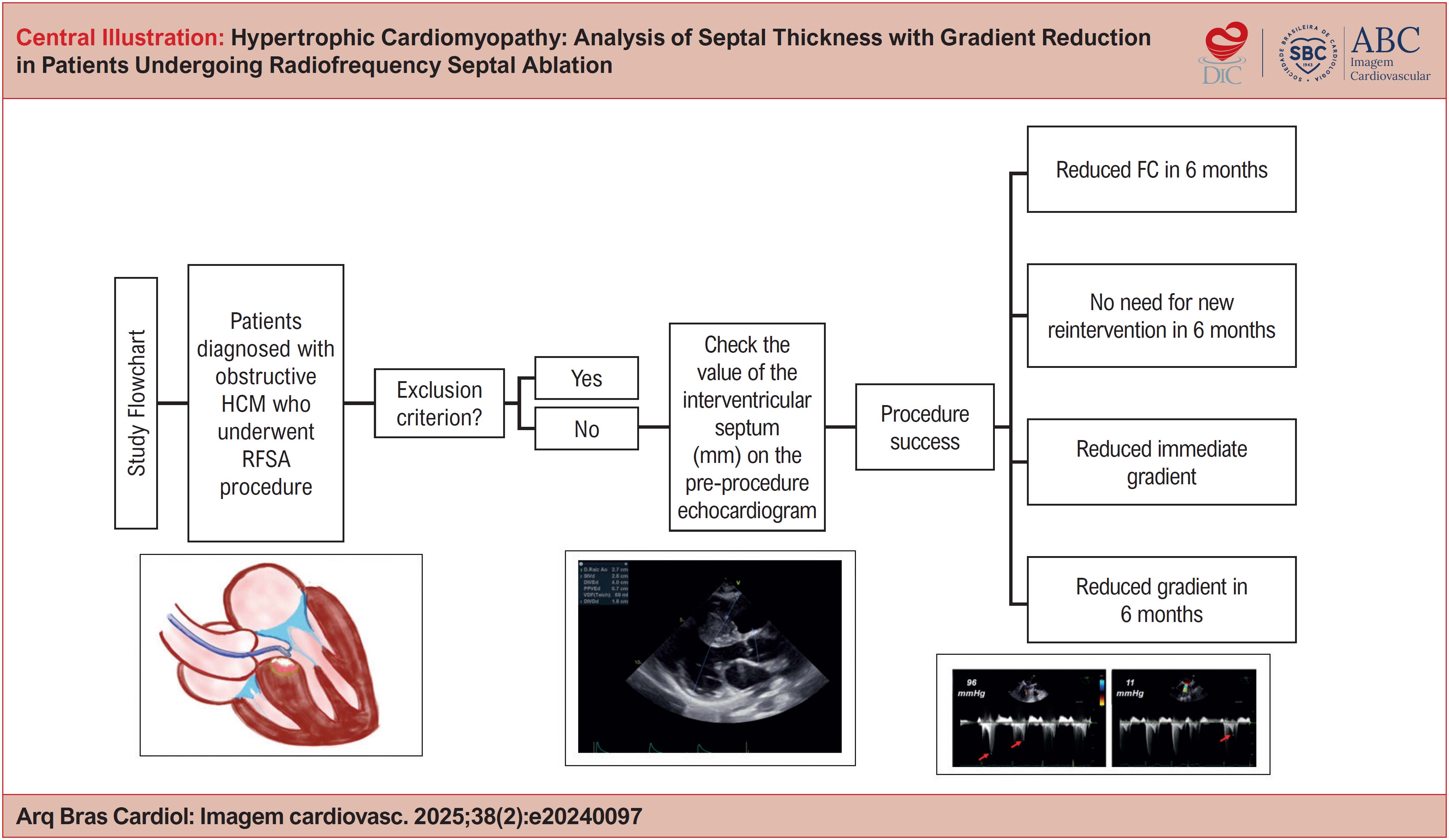 HCM: Hypertrophic cardiomyopathy; RFSA: Radiofrequency septal ablation; FC: functional class.