 Clinical Outcomes Following PM Implantation: A 3-Year Comparative Study of Sick Sinus Syndrome and Atrioventricular Block
Background Permanent pacemaker implantation is an established treatment for both sick sinus syndrome (SSS) and atrioventricular block (AVB), yet limited data exist comparing long-term clinical outcomes and cardiac remodeling patterns between these distinct bradyarrhythmic etiologies.
Objectives To compare three-year clinical outcomes and cardiac structural changes between SSS and AVB patients following permanent pacemaker implantation.
Methods This retrospective observational study enrolled 192 adult patients (65 SSS, 127 AVB) who underwent pacemaker implantation between January 2018 and December 2020. Demographic data, echocardiographic parameters, pacemaker-recorded data, and clinical outcomes were assessed at baseline, one month, six months, one year, and three years. Primary outcomes included changes in cardiac structure and function, symptomatic improvement, new-onset atrial fibrillation, rehospitalization, and all-cause mortality.
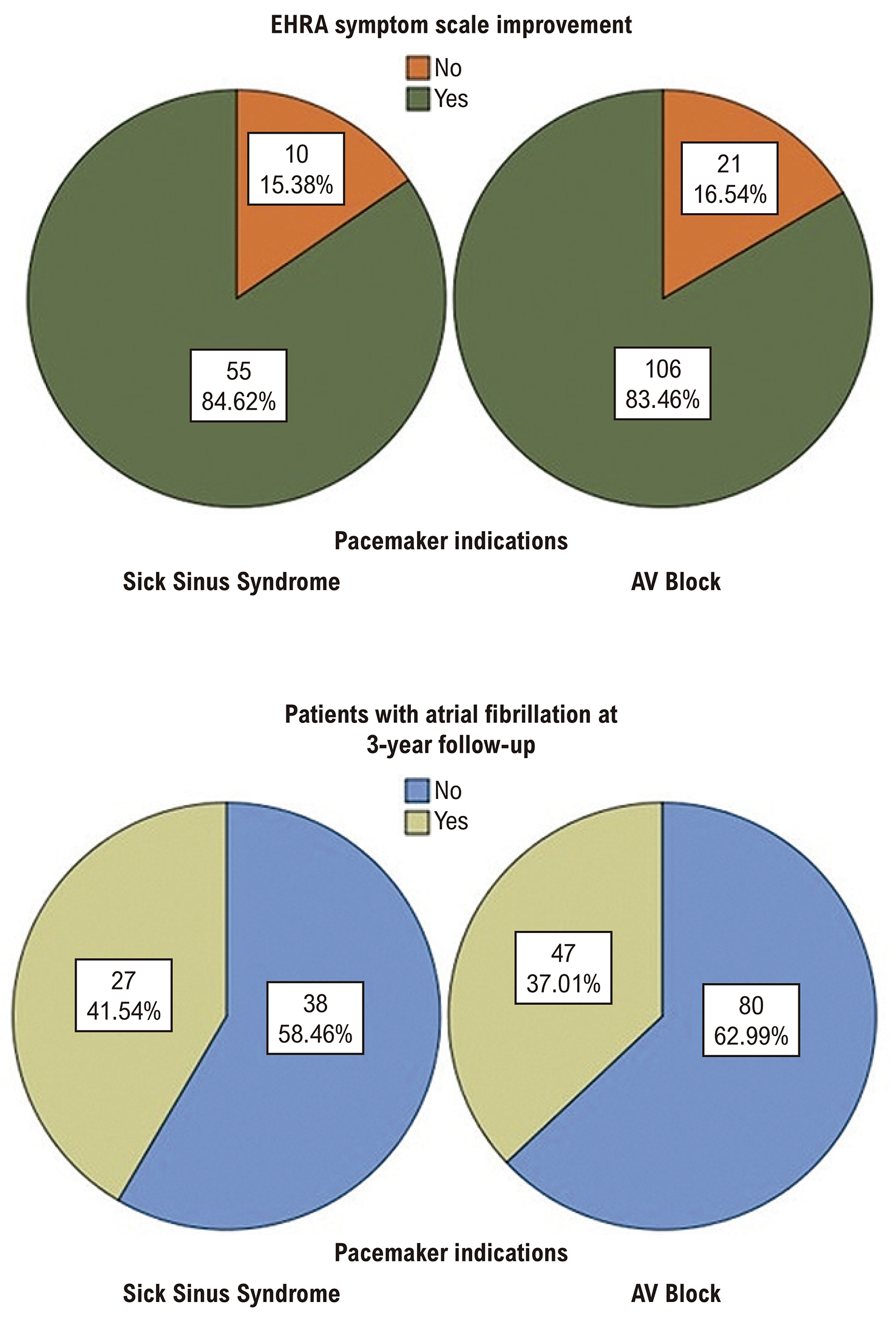
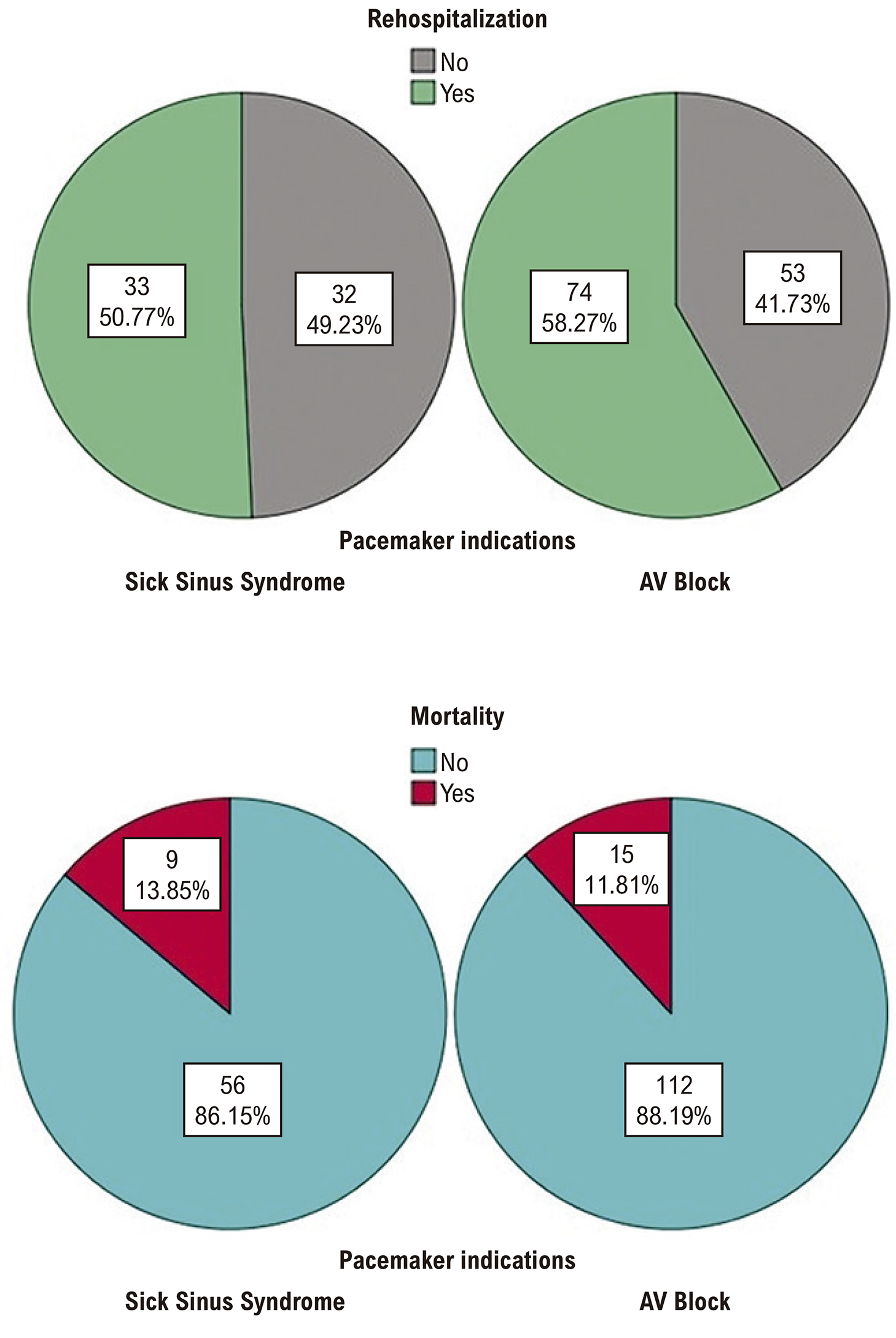
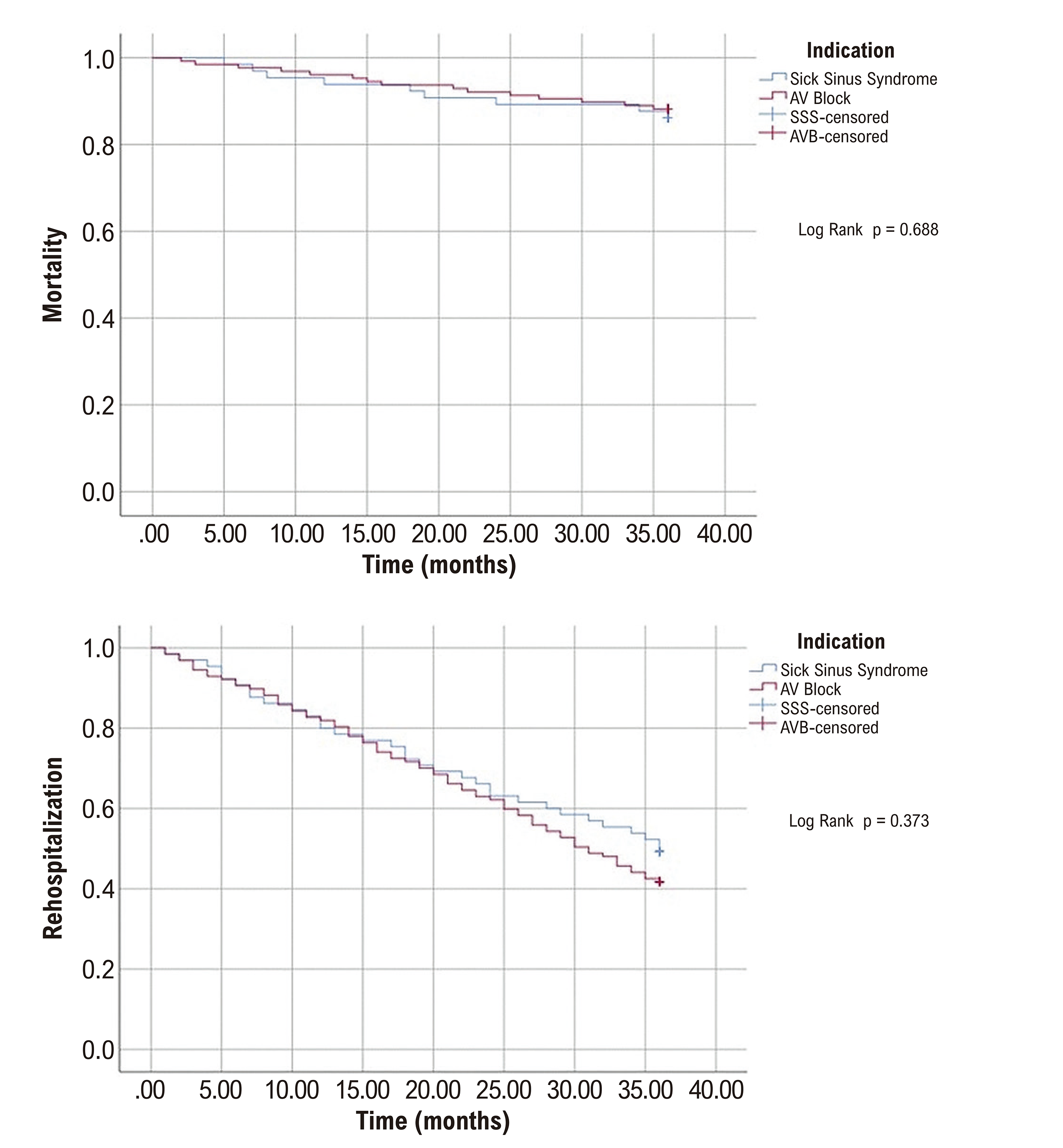
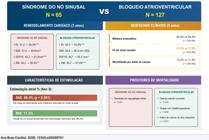
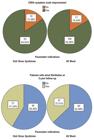
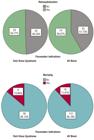
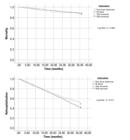
Results Both groups demonstrated significant declines in left ventricular ejection fraction over three years (SSS: 57.2±6.0% to 54.3±8.3%, p<0.001; AVB: 55.5±7.0% to 53.0±6.8%, p<0.001). Despite similar ventricular dysfunction progression, distinct remodeling patterns emerged: SSS patients exhibited significant increases in left atrial diameter (31.3 to 38.8 mm, p=0.040), left ventricular end-diastolic diameter (45.2 to 51.0 mm, p<0.001), and mitral regurgitation prevalence (26.2% to 64.6%), while AVB patients maintained stable chamber dimensions despite high ventricular pacing burden (>90%). Symptomatic improvement was comparable (SSS: 85.6% vs. AVB: 83.5%, p=0.84), as were new-onset atrial fibrillation (41.5% vs. 37.0%, p=0.54), rehospitalization (50.8% vs. 58.3%, p=0.38), and all-cause mortality (13.8% vs. 11.8%, p=0.69). Mortality predictors differed: mitral regurgitation severity in SSS versus coronary artery disease, beta-blocker therapy, and left atrial volume in AVB patients.
Conclusions Despite similar symptomatic benefits and clinical outcomes, SSS and AVB patients demonstrate distinct cardiac remodeling patterns and different mortality predictors, supporting the need for etiology-specific follow-up strategies in pacemaker recipients.
Keywords
Artificial Pacemaker; Sick Sinus Syndrome; Atrioventricular Block; Atrial Fibrillation
 Thumbnail
 Thumbnail
 Thumbnail
 Thumbnail
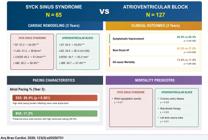
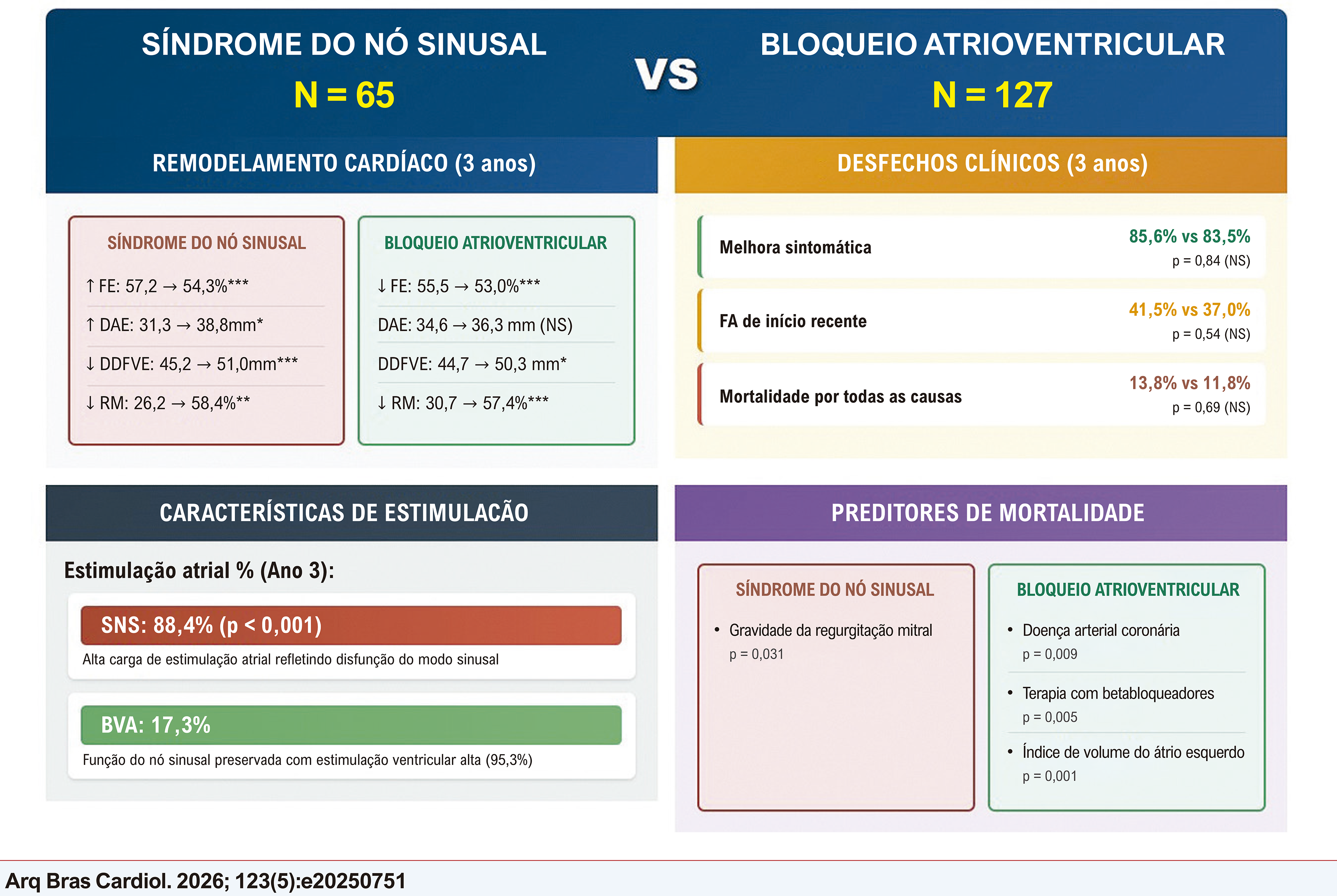 Significância estatística: * p < 0,05; ** p < 0,01; *** p < 0,001; NS indica insignificância (p ≥ 0,05). Todas as comparações baseadas na linha de base vs. medições de acompanhamento de 3 anos. Código de cores: Caixas vermelhas/rosas: Resultados do grupo SNS; Caixas verdes: Resultados do grupo BAV; Seção laranja: Resultados clínicos; Seção roxa: Preditor de morbilidade. AVB: bloqueio atrioventricular; EF: Fração de ejeção; DDFVE: Diâmetro diastólico final do ventrículo esquerdo; RM: Regurgitação mitral; AF: fibrilação atrial; NS: insignificante. Setas: ↓ indica diminuição do valor basal para o acompanhamento de 3 anos; ↑ indica aumento do valor basal para o acompanhamento de 3 anos.
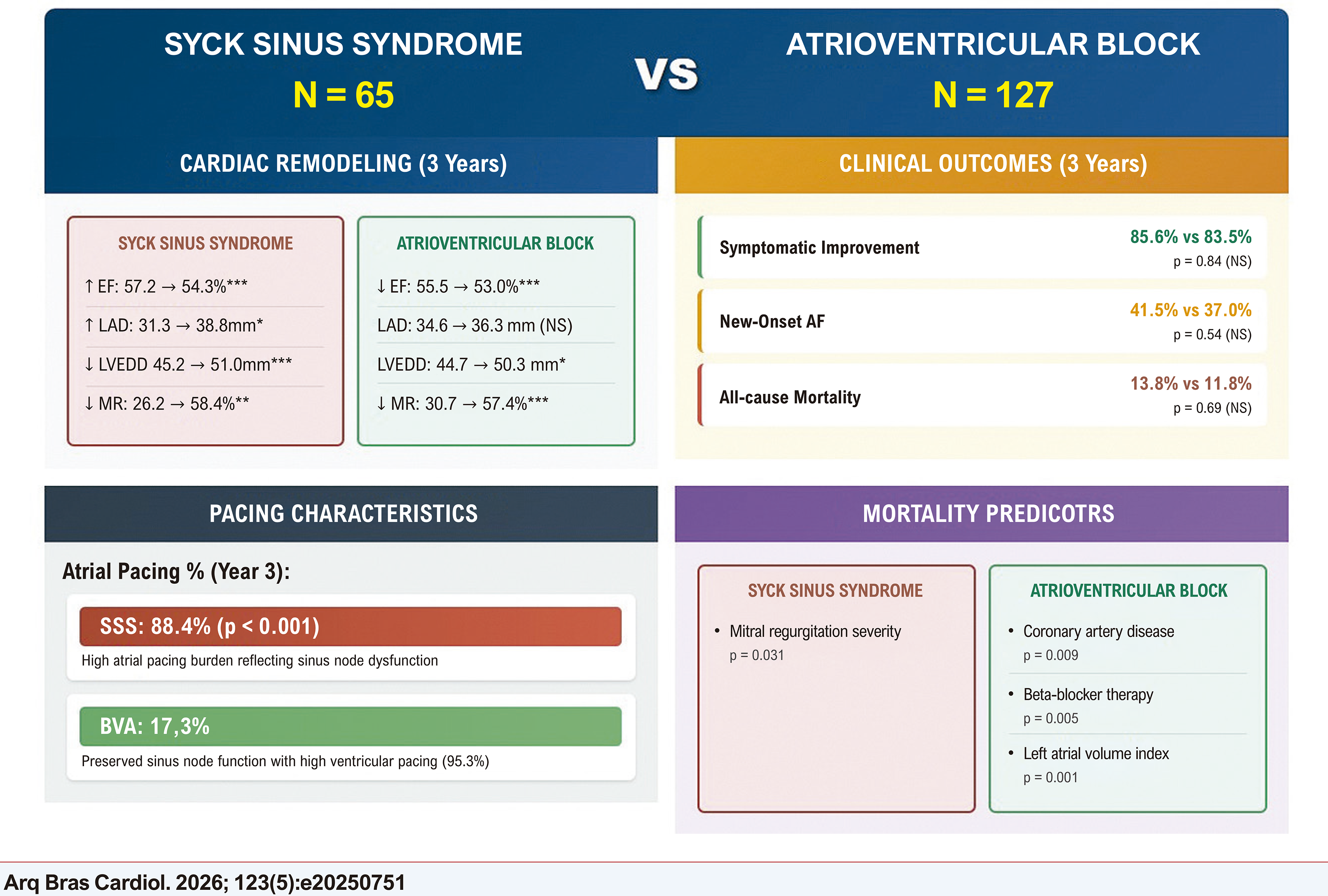 Statistical significance: * p < 0.05; ** p < 0.01; *** p < 0.001; NS indicates not significant (p ≥ 0.05). All comparisons based on baseline vs. 3-year follow-up measurements. Color coding: Red/pink boxes: SSS group findings; Green boxes: AVB group findings; Orange section: Clinical outcomes; Purple section: Mortality predictors. SSS: Sick Sinus Syndrome; AVB: Atrioventricular Block; EF: Ejection Fraction; LAD: Left Atrial Diameter; LVEDD: Left Ventricular End-Diastolic Diameter; MR: Mitral Regurgitation; AF: Atrial Fibrilation; NS: Not Significant. Arrows: ↓ indicates decrease from baseline to 3-year follow-up; ↑ indicates increase from baseline to 3-year follow-up.