
 Association of Plasma Osmolality with Cardiovascular Disease Risk: Evidence from the National Health and Nutrition Examination Survey Database
Abstract
Background Cardiovascular disease (CVD) remains the world’s leading cause of death. Because of its substantial public health burden, further research is needed to define risk factors that are both modifiable and measurable.
Objective We examined the association between plasma osmolality (Osm) and CVDs — namely, heart failure, coronary heart disease, angina, and myocardial infarction — using data from the National Health and Nutrition Examination Survey (NHANES).
Methods We analyzed nine NHANES cycles (1999-2018). Associations between Osm and CVD were assessed with weighted logistic regression. Odds ratios (ORs) and 95% CIs were estimated, and subgroup analyses were conducted. Restricted cubic spline (RCS) models were used to evaluate potential nonlinear relationships. Statistical significance was set at p < 0.05.
Results Higher Osm was associated with increased odds of heart failure, coronary heart disease, angina, and myocardial infarction in unadjusted and partially adjusted models. After full adjustment, the associations remained significant for all outcomes except angina. RCS analyses indicated a significant U-shaped relationship for heart failure and angina across all models, with the lowest risk around 278 mmol/kg. Subgroup analyses were consistent with the primary results.
Conclusion Increased Osm is significantly associated with CVD risk. Osm may serve as a useful biomarker for assessment and management of CVD risk in clinical practice, pending confirmation in prospective cohort studies.
Keywords
Cardiovascular Diseases; Heart Failure; Coronary Disease; Myocardial Infarction
Resumo
Fundamento A doença cardiovascular (DCV) continua sendo a principal causa de morte no mundo. Diante de seu elevado impacto em saúde pública, ainda são necessários estudos que definam fatores de risco ao mesmo tempo modificáveis e mensuráveis.
Objetivo Investigar a associação entre a osmolalidade plasmática (Osm) e DCV — especificamente insuficiência cardíaca, doença coronariana, angina e infarto do miocárdio — utilizando dados do National Health and Nutrition Examination Survey (NHANES).
Métodos Foram analisados nove ciclos do NHANES (1999-2018). As associações entre Osm e DCV foram avaliadas por regressão logística ponderada. Estimaram-se razões de chances (OR) e IC 95%, além de análises por subgrupos. Empregaram-se modelos restricted cubic spline (RCS) para investigar possíveis relações não lineares. Adotou-se significância estatística de p < 0,05.
Resultados O aumento de Osm associou-se a maiores chances de insuficiência cardíaca, doença coronariana, angina e infarto do miocárdio nos modelos não ajustados e parcialmente ajustados. Após o ajuste completo, as associações permaneceram significativas para todos os desfechos, exceto angina. As análises com RCS indicaram relação em U significativa para insuficiência cardíaca e angina em todos os modelos, com menor risco em torno de 278 mmol/kg. As análises de subgrupos foram consistentes com os resultados principais.
Conclusão O aumento de Osm associa-se de forma significativa ao risco de DCV. A Osm pode ser um biomarcador útil para avaliação e manejo do risco cardiovascular na prática clínica, sujeito à confirmação em estudos de coorte prospectivos.
Palavras-chave
Doenças Cardiovasculares; Insuficiência Cardíaca; Doença das Coronárias; Infarto do Miocárdio
Introduction
Cardiovascular disease (CVD) encompasses conditions affecting the heart and blood vessels, including coronary heart disease (CHD), hypertension, and heart failure (HF).1-5 The World Health Organization identifies CVD as the leading cause of death globally, accounting for approximately 17.9 million deaths each year,6 with profound impacts on patients and families and a substantial economic burden on society. Despite advances in pharmacological, interventional, and surgical therapies, substantial limitations remain — particularly in risk stratification and personalized treatment.5,7-9 Consequently, there is an urgent need for research to deepen our understanding of CVD risk factors.
Plasma osmolality (Osm) regulates water balance across intra- vs. extracellular and intra- vs. extravascular compartments and is largely determined by Na+, K+, and Cl–. , with a normal range of 275-295 mOsm/kg.10 Measuring and monitoring Osm is essential in the assessment and management of numerous conditions. Alterations in Osm are closely linked to the course of disorders such as hyponatremia, hypernatremia, hyperglycemia, osteoarthritis, nephropathy, and chronic obstructive pulmonary.11 Emerging evidence also suggests a relationship between Osm and cardiovascular outcomes. In diabetic patients, both low and high Osm were associated with increased all-cause mortality, indicating a U-shaped association.12 The blood urea nitrogen-to-albumin ratio (BAR) — with BUN as a major Osm component — predicts mortality in severe CHD and CHF.13,14 Osm is furthermore a key prognostic indicator in CHF, correlating with 28-day all-cause mortality.15 However, most prior work has emphasized prognosis among patients with established CVD, and comprehensive evaluations of Osm and CVD risk in the overall population remain limited.
By using data from the National Health and Nutrition Examination Survey (NHANES), we examined the association between Osm and the risk of CHF, CHD, angina, and myocardial infarction, with the goal of informing clinical risk assessment.
Methods
Study participants
We used data from the NHANES (https://www.cdc.gov/nchs/nhanes/index.html), a nationally representative program that assesses the health and nutritional status of the U.S. population through continuous, multistage probability sampling.16 Home interviews were followed by physical and laboratory examinations conducted at Mobile Examination Centers (MECs). All NHANES protocols were approved by the National Center for Health Statistics Ethics Review Board, and written informed consent was obtained from all participants. All analyses adhered to NHANES guidelines and regulations.
We analyzed the most recent nine NHANES cycles (1999-2018), comprising 91,351 participants. Individuals with missing Osm measurements or missing CVD questionnaire data were excluded.
Exposure and outcomes
Osm was measured at MECs using the NHANES variable LBXSOSSI and ranged from 201 to 323 mmol/kg. Participants were categorized into quartiles (Q1-Q4), with Q1 denoting the lowest and Q4 the highest Osm values.
The primary outcomes were the prevalences of CHF, CHD, angina, and myocardial infarction, defined by self-reported questionnaire items: MCQ160b (“Ever told had CHF”), MCQ160c (“Ever told you had CHD”), MCQ160d (“Ever told you had angina/angina pectoris”), and MCQ160e (“Ever told you had heart attack”). Respondents answering “Yes” were classified as having the condition; those answering “No” were classified as not having the condition.
Covariates
Following Bays et al.,17 we adjusted for age; sex; race/ethnicity (Mexican American, other Hispanic, non-Hispanic White, non-Hispanic Black, other); histories of hypertension and diabetes; systolic (SBP) and diastolic blood pressure (DBP); smoking status; body mass index (BMI); triglycerides (TG); low-density lipoprotein cholesterol (LDL-C); BUN; and blood glucose. Demographic characteristics and histories of hypertension, diabetes, and smoking were obtained by questionnaire. SBP, DBP, and BMI were derived from examination data collected at MECs, and TG, LDL-C, BUN, and glucose were obtained from MEC laboratory data. Smoking status was categorized as “Every day,” “Someday,” or “Not at all.” TG was dichotomized as ≤ 1.70 vs > 1.70 mmol/L, and LDL-C as ≤ 3.37 vs > 3.37 mmol/L. To limit bias from missingness, variables with ≤ 20% missing data underwent multiple imputation; for variables with > 20% missingness, categories were created and included as dummy variables in the models.
Statistical analysis
Normality was assessed with the Shapiro-Wilk test. Because all continuous variables were nonnormally distributed, they are reported as medians with interquartile ranges and compared using the Mann-Whitney U test. Categorical variables are presented as counts (n) and percentages (%) and were compared using the chi-square test.
Weighted logistic regression (WLR) was used to estimate associations between exposure and outcomes, with covariates added sequentially. Model 1 was unadjusted; Model 2 adjusted for age, sex, and race; Model 3 additionally adjusted for hypertension, diabetes, smoking, SBP, DBP, BMI, TG, LDL-C, BUN, and blood glucose. To evaluate the discriminative performance of Model 3, we generated receiver operating characteristic (ROC) curves and calculated the area under the curve (AUC) and McFadden’s pseudo-R2. To mitigate multicollinearity, we computed variance inflation factors (VIFs) and excluded variables with VIF > 5. Restricted cubic spline (RCS) models assessed potential nonlinear relationships. Subgroup analyses were then performed and displayed as forest plots. Analyses were conducted in R version 4.4.2, with two-sided p < 0.05 considered statistically significant.
Results
A total of 44,475 participants met the eligibility criteria (Figure 1). Because all continuous variables were nonnormally distributed, the Mann-Whitney U test was used. Baseline characteristics are shown in Table 1 and indicate a predominance of females, non-Hispanic White participants, and individuals ≤ 60 years. Compared with Q1 (lowest Osm), Q4 (highest Osm) included more males and older adults (> 60 years) and showed higher prevalences of hypertension, diabetes, CHF, CHD, angina, and heart attack, as well as higher BMI, SBP, BUN, and glucose levels.

– Study enrollment flow diagram. CVD: cardiovascular disease; CHD: coronary heart disease; CHF: congestive heart failure; NHANES: National Health and Nutrition Examination Survey; Osm: plasma osmolality.
WLR analyses (Table 2) showed that higher Osm was associated with substantially increased CVD risk in unadjusted, partially adjusted, and fully adjusted models. When modeled continuously, higher Osm was significantly associated with greater risks of CHF, CHD, and myocardial infarction across all three models. Angina showed the same pattern in unadjusted and partially adjusted models, but the association was no longer significant after full adjustment (Table 2).
ROC analysis for Model 3 is shown in Figure 2. Model 3 performed best for CHD (AUC = 0.863). McFadden’s pseudo-R2 values for Model 3 were 0.204 for CHF, 0.240 for CHD, 0.172 for angina, and 0.195 for myocardial infarction. When Osm was analyzed categorically, Q4 had higher risks of CHF, CHD, and myocardial infarction than Q1. The risk of angina was also higher in Q4 for Models 1 and 2, but not in the fully adjusted model (Table 2).

– Receiver operating characteristic curve analysis of Model 3. CHF: congestive heart failure; CHD: coronary heart disease.
RCS analyses (Figure 3) identified significant nonlinear relationships between Osm and CHF, CHD, angina, and myocardial infarction in unadjusted and partially adjusted models (p for nonlinearity < 0.0001). In the fully adjusted model, the nonlinear associations for CHD and myocardial infarction were no longer evident, whereas the nonlinear relationships for CHF and angina persisted.

– Restricted cubic spline analysis results. A) Associations between OSM and CHF. B) Associations between osmolality and angina. C) Associations between osmolality and CHD. D) Associations between osmolality and myocardial infarction. CHF: congestive heart failure, CHD: coronary heart disease; OR: odds ratio; Osm: plasma osmolality.
Subgroup analyses by age, sex, diabetes status, and BMI are presented in Figure 4. Among participants > 40 years, Osm was positively associated with incident CHF, CHD, and myocardial infarction, with consistent findings across sex, diabetes, and obesity subgroups. For angina, Osm was positively associated among individuals > 60 years, those with or without diabetes, and those with or without obesity. An interaction between Osm and diabetes was observed (p = 0.031).

– Results of subgroup analysis. A) MI; B) Angina; C) CHD. D) CHF. CHF: congestive heart failure; CHD: coronary heart disease; DM: diabetes mellitus; OR: odds ratio.
As summarized in Central Illustration, logistic regression demonstrated a significant dose-response association between Osm and CVD risk (CHF, CHD, angina, and myocardial infarction), whereas RCS analyses showed significant U-shaped associations specifically for CHF and angina.
Discussion
By using NHANES data, we examined the association between Osm and CVD. Among 44,475 participants, women, non-Hispanic White individuals, and those ≤ 60 years predominated. Higher Osm was associated with a significantly greater CVD risk. After full adjustment, the association with angina was no longer significant. RCS analyses identified a nonlinear association: a U-shaped pattern for CHF and angina across all models, with the lowest risk around 278 mmol/kg. Subgroup analyses consistently supported these findings.
Prior studies have linked Osm to prognosis across diverse patient groups.18-25 In diabetes, both low and high Osm have been associated with higher all-cause mortality, indicating a U-shaped relationship.12 Kaya et al. reported a normal Osm range of 275-295 mOsm/kg and an optimal range of 292-293 mOsm/kg, with values outside this range associated with worse outcomes,18 which aligns with the U-shaped pattern observed for CHF in our study. Increased Osm often reflects dehydration, hypernatremia, or hyperglycemia; even a ≤ 1% change can increase arginine vasopressin (AVP) release.26 Via V1A receptors, AVP promotes peripheral vasoconstriction and myocardial stimulation, and via renal V2 receptors it induces water retention,27 thereby contributing to CHF. Low Osm has been linked to neurohormonal dysregulation, decompensation, and fatigue,28,29 which may promote fluid retention and increased preload, potentially triggering or worsening CHF.
We also observed a U-shaped association between Osm and angina. Although this association attenuated after full adjustment, to our knowledge it has not been previously described. Hypotonic stress increases cell volume and proliferation — particularly of vascular smooth-muscle cells — processes implicated in CVD.30,31 It also influences platelet aggregation and increases mean platelet volume, a marker of platelet activation.32,33 Conversely, high sodium levels can stimulate endothelial release of von Willebrand factor and promote hypercoagulability.34 Conditions associated with hypernatremia — including dehydration, older age, diabetes, high-salt diets, and hyperosmolar therapy — may predispose to thrombosis.35
Subgroup analyses indicated broadly consistent associations between Osm and CVD outcomes across age, sex, diabetes status, and BMI categories. For angina, positive associations were evident among adults > 60 years and among individuals with or without diabetes or obesity. A significant interaction between Osm and diabetes was detected. One possible explanation is that people with established diabetes may receive more intensive risk-factor management (e.g., glycemic, blood-pressure, and lipid control), whereas those without diabetes or with prediabetes may not receive comparable interventions, which could influence angina risk.
This study offers a preliminary examination of the association between Osm and CVD, providing a new lens for investigating CVD risk. Increased Osm may serve as an early warning signal, particularly in high-risk groups. Incorporating Osm monitoring into CVD assessment and management could help improve prognosis and reduce risk, and Osm could be incorporated into early screening and risk-stratification programs.
Several limitations merit consideration. First, the cross-sectional design precludes causal inference; prospective cohort studies are needed for confirmation. Second, although the sample was large, limited stratification of specific subpopulations may restrict generalizability. Third, NHANES provides a constrained set of variables, and key factors — such as echocardiography, coronary angiography, renal function (estimated glomerular filtration rate), diuretic use, and hydration status — were unavailable. Fourth, because the population was predominantly non-Hispanic White Americans, the findings may not generalize to other regions, such as Africa and Asia. Potential biases include selection bias from household, voluntary participation; information bias, as Osm was calculated indirectly rather than measured by osmometry; self-report bias, because outcomes — namely, CHF, CHD, angina, myocardial infarction — were questionnaire-based rather than clinically adjudicated; and possible publication bias due to emphasis on positive findings, including associations that attenuated to nonsignificance after full adjustment.
Conclusion
Increased Osm is significantly associated with CVD risk, suggesting that Osm may be a useful biomarker for risk assessment and clinical management. These findings, however, derive from cross-sectional data and require validation in prospective cohort studies.
References
-
1 Katta N, Loethen T, Lavie CJ, Alpert MA. Obesity and Coronary Heart Disease: Epidemiology, Pathology, and Coronary Artery Imaging. Curr Probl Cardiol. 2021;46(3):100655. doi: 10.1016/j.cpcardiol.2020.100655.
» https://doi.org/10.1016/j.cpcardiol.2020.100655 -
2 Carey RM, Moran AE, Whelton PK. Treatment of Hypertension: A Review. JAMA. 2022;328(18):1849-61. doi: 10.1001/jama.2022.19590.
» https://doi.org/10.1001/jama.2022.19590 -
3 Roger VL. Epidemiology of Heart Failure: A Contemporary Perspective. Circ Res. 2021;128(10):1421-34. doi: 10.1161/CIRCRESAHA.121.318172.
» https://doi.org/10.1161/CIRCRESAHA.121.318172 -
4 Townsend N, Kazakiewicz D, Wright FL, Timmis A, Huculeci R, Torbica A, et al. Epidemiology of Cardiovascular Disease in Europe. Nat Rev Cardiol. 2022;19(2):133-43. doi: 10.1038/s41569-021-00607-3.
» https://doi.org/10.1038/s41569-021-00607-3 -
5 Powell-Wiley TM, Baumer Y, Baah FO, Baez AS, Farmer N, Mahlobo CT, et al. Social Determinants of Cardiovascular Disease. Circ Res. 2022;130(5):782-99. doi: 10.1161/CIRCRESAHA.121.319811.
» https://doi.org/10.1161/CIRCRESAHA.121.319811 -
6 Sajjad MW, Muzamil F, Sabir M, Ashfaq UA. Regenerative Medicine and Nanotechnology Approaches against Cardiovascular Diseases: Recent Advances and Future Prospective. Curr Stem Cell Res Ther. 2025;20(1):50-71. doi: 10.2174/011574888X263530230921074827.
» https://doi.org/10.2174/011574888X263530230921074827 -
7 Magnussen C, Ojeda FM, Leong DP, Alegre-Diaz J, Amouyel P, Aviles-Santa L, et al. Global Effect of Modifiable Risk Factors on Cardiovascular Disease and Mortality. N Engl J Med. 2023;389(14):1273-85. doi: 10.1056/NEJMoa2206916.
» https://doi.org/10.1056/NEJMoa2206916 -
8 Zhao D. Epidemiological Features of Cardiovascular Disease in Asia. JACC Asia. 2021;1(1):1-13. doi: 10.1016/j.jacasi.2021.04.007.
» https://doi.org/10.1016/j.jacasi.2021.04.007 -
9 Lindstrom M, DeCleene N, Dorsey H, Fuster V, Johnson CO, LeGrand KE, et al. Global Burden of Cardiovascular Diseases and Risks Collaboration, 1990-2021. J Am Coll Cardiol. 2022;80(25):2372-425. doi: 10.1016/j.jacc.2022.11.001.
» https://doi.org/10.1016/j.jacc.2022.11.001 -
10 Rasouli M. Basic Concepts and Practical Equations on Osmolality: Biochemical Approach. Clin Biochem. 2016;49(12):936-41. doi: 10.1016/j.clinbiochem.2016.06.001.
» https://doi.org/10.1016/j.clinbiochem.2016.06.001 -
11 Jiang Y, Abudurexiti S, An MM, Cao D, Wei J, Gong P. Risk Factors Associated with 28-Day All-Cause Mortality in Older Severe COVID-19 Patients in Wuhan, China: A Retrospective Observational Study. Sci Rep. 2020;10(1):22369. doi: 10.1038/s41598-020-79508-3.
» https://doi.org/10.1038/s41598-020-79508-3 -
12 Hu T, Li C, Wang T, Liu H, Geng J, Gong A. Serum Osmolality Was Non-Linearly Associated with the Risk of All-Cause and Cardiovascular Mortality in Patients with Diabetes. BMJ Open Diabetes Res Care. 2023;11(6):e003826. doi: 10.1136/bmjdrc-2023-003826.
» https://doi.org/10.1136/bmjdrc-2023-003826 -
13 Zhang L, Xing M, Yu Q, Li Z, Tong Y, Li W. Blood Urea Nitrogen to Serum Albumin Ratio: A Novel Mortality Indicator in Intensive Care Unit Patients with Coronary Heart Disease. Sci Rep. 2024;14(1):7466. doi: 10.1038/s41598-024-58090-y.
» https://doi.org/10.1038/s41598-024-58090-y -
14 Zhang YY, Xia G, Yu D, Tu F, Liu J. The Association of Blood Urea Nitrogen to Serum Albumin Ratio with Short-Term Outcomes in Chinese Patients with Congestive Heart Failure: A Retrospective Cohort Study. Nutr Metab Cardiovasc Dis. 2024;34(1):55-63. doi: 10.1016/j.numecd.2023.10.011.
» https://doi.org/10.1016/j.numecd.2023.10.011 -
15 Zou Q, Li J, Lin P, Ma J, Wei Z, Tao T, et al. Association between Serum Osmolality and 28-Day All-Cause Mortality in Patients with Heart Failure and Reduced Ejection Fraction: A Retrospective Cohort Study from the MIMIC-IV Database. Front Endocrinol. 2024;15:1397329. doi: 10.3389/fendo.2024.1397329.
» https://doi.org/10.3389/fendo.2024.1397329 -
16 An S, Ahn C, Jang J, Lee J, Kang D, Lee JK, et al. Comparison of the Prevalence of Cardiometabolic Disorders and Comorbidities in Korea and the United States: Analysis of the National Health and Nutrition Examination Survey. J Korean Med Sci. 2022;37(18):e149. doi: 10.3346/jkms.2022.37.e149.
» https://doi.org/10.3346/jkms.2022.37.e149 -
17 Bays HE, Kulkarni A, German C, Satish P, Iluyomade A, Dudum R, et al. Ten Things to Know About ten Cardiovascular Disease Risk Factors - 2022. Am J Prev Cardiol. 2022;10:100342. doi: 10.1016/j.ajpc.2022.100342.
» https://doi.org/10.1016/j.ajpc.2022.100342 -
18 Kaya H, Yücel O, Ege MR, Zorlu A, Yücel H, Günes H, et al. Plasma Osmolality Predicts Mortality in Patients with Heart Failure with Reduced Ejection Fraction. Kardiol Pol. 2017;75(4):316-22. doi: 10.5603/KP.a2016.0168.
» https://doi.org/10.5603/KP.a2016.0168 -
19 Rohla M, Freynhofer MK, Tentzeris I, Farhan S, Wojta J, Huber K, et al. Plasma Osmolality Predicts Clinical Outcome in Patients with Acute Coronary Syndrome Undergoing Percutaneous Coronary Intervention. Eur Heart J Acute Cardiovasc Care. 2014;3(1):84-92. doi: 10.1177/2048872613516018.
» https://doi.org/10.1177/2048872613516018 -
20 Charkoudian N, Eisenach JH, Joyner MJ, Roberts SK, Wick DE. Interactions of Plasma Osmolality with Arterial and Central Venous Pressures in Control of Sympathetic Activity and Heart Rate in Humans. Am J Physiol Heart Circ Physiol. 2005;289(6):H2456-60. doi: 10.1152/ajpheart.00601.2005.
» https://doi.org/10.1152/ajpheart.00601.2005 - 21 Bahri Z, Andra CA, Mukhtar Z, Raynaldo AH, Sarastri Y, Hasan H. High Admission Plasma Osmolality Value as in-Hospital Major Adverse Cardiovascular Events Predictor in Patient with Acute Myocardial Infarction. Int J Res Sci Manag. 2020;7(11):79-85.
-
22 Zhai G, Wang J, Liu Y, Zhou Y. The Association between Plasma Osmolarity and in-hospital Mortality in Cardiac Intensive Care Unit Patients. Front Cardiovasc Med. 2021;8:692764. doi: 10.3389/fcvm.2021.692764.
» https://doi.org/10.3389/fcvm.2021.692764 -
23 Wang H, He Z, Li J, Lin C, Li H, Jin P, et al. Early Plasma Osmolality Levels and Clinical Outcomes in Children Admitted to the Pediatric Intensive Care Unit: A Single-Center Cohort Study. Front Pediatr. 2021;9:745204. doi: 10.3389/fped.2021.745204.
» https://doi.org/10.3389/fped.2021.745204 -
24 Bhalla A, Sankaralingam S, Dundas R, Swaminathan R, Wolfe CD, Rudd AG. Influence of Raised Plasma Osmolality on Clinical Outcome after Acute Stroke. Stroke. 2000;31(9):2043-8. doi: 10.1161/01.str.31.9.2043.
» https://doi.org/10.1161/01.str.31.9.2043 -
25 Nakagawa A, Yasumura Y, Yoshida C, Okumura T, Tateishi J, Yoshida J, et al. Prognostic Relevance of Elevated Plasma Osmolality on Admission in Acute Decompensated Heart Failure with Preserved Ejection Fraction: Insights from PURSUIT-HFpEF Registry. BMC Cardiovasc Disord. 2021;21(1):281. doi: 10.1186/s12872-021-02098-z.
» https://doi.org/10.1186/s12872-021-02098-z -
26 Verbalis JG. Disorders of Body Water Homeostasis. Best Pract Res Clin Endocrinol Metab. 2003;17(4):471-503. doi: 10.1016/s1521-690x(03)00049-6.
» https://doi.org/10.1016/s1521-690x(03)00049-6 - 27 Jard S. Mechanisms of Action of Vasopressin and Vasopressin Antagonists. Kidney Int Suppl. 1988;26:S38-42.
-
28 Hoch CR, Klinedinst NJ, Larimer K, Gottlieb SS. Heart Failure Related Fatigue: An Exploratory Analysis of Serum Osmolality from the National Health and Nutrition Examination Survey. Heart Lung. 2024;68:284-90. doi: 10.1016/j.hrtlng.2024.08.012.
» https://doi.org/10.1016/j.hrtlng.2024.08.012 -
29 Lohmeier TE. Neurohypophysial Hormones. Am J Physiol Regul Integr Comp Physiol. 2003;285(4):R715-7. doi: 10.1152/ajpregu.00390.2003.
» https://doi.org/10.1152/ajpregu.00390.2003 -
30 Zhou JG, Ren JL, Qiu QY, He H, Guan YY. Regulation of Intracellular Cl- Concentration Through Volume-Regulated ClC-3 Chloride Channels in A10 Vascular Smooth Muscle Cells. J Biol Chem. 2005;280(8):7301-8. doi: 10.1074/jbc.M412813200.
» https://doi.org/10.1074/jbc.M412813200 -
31 Chen BY, Wang SR, Lu FT, Lv XF, Chen Y, Ma MM, et al. SGK1 Mediates Hypotonic Challenge-Induced Proliferation in Basilar Artery Smooth Muscle Cells Via Promoting CREB Signaling Pathway. Eur J Pharmacol. 2021;898:173997. doi: 10.1016/j.ejphar.2021.173997.
» https://doi.org/10.1016/j.ejphar.2021.173997 -
32 Park Y, Schoene N, Harris W. Mean Platelet Volume as an Indicator of Platelet Activation: Methodological Issues. Platelets. 2002;13(5-6):301-6. doi: 10.1080/095371002220148332.
» https://doi.org/10.1080/095371002220148332 -
33 Pantazi D, Stratou A, Dounousi E, Petrou A, Tselepis AD. In Vitro Investigation of Platelet Dysfunction Induced by Osmotic Pressure Variations. Med Princ Pract. 2023;32(4):242-9. doi: 10.1159/000533852.
» https://doi.org/10.1159/000533852 -
34 Bihari S, Prakash S, Peake SL, Bailey M, Pilcher D, Bersten A. ICU Mortality is Increased with High Admission Serum Osmolarity in All Patients Other than Those Admitted with Pulmonary Diseases and Hypoxia. Respirology. 2017;22(6):1165-70. doi: 10.1111/resp.13055.
» https://doi.org/10.1111/resp.13055 -
35 Dmitrieva NI, Burg MB. Secretion of von Willebrand Factor by Endothelial Cells Links Sodium to Hypercoagulability and Thrombosis. Proc Natl Acad Sci U S A. 2014;111(17):6485-90. doi: 10.1073/pnas.1404809111.
» https://doi.org/10.1073/pnas.1404809111
-
Study association:
This study is not associated with any thesis or dissertation work.
-
Ethics approval and consent to participate:
This article does not contain any studies with human participants or animals performed by any of the authors.
-
Use of Artificial Intelligence:
The authors did not use any artificial intelligence tools in the development of this work.
-
Data Availability Statement:
This study utilizes controlled-access data from the NHANCE database. In accordance with the database’s access policies and data use agreements, the original raw data cannot be publicly redistributed by users. Researchers interested in accessing the data must submit an application directly to the NHANCE database steering committee to obtain access permissions. The processed data derived from the analyses reported in this manuscript are available from the corresponding author upon reasonable request.
-
Sources of funding:
This study was partially funded by Wuxi Municipal Health and Wellness Commission Major Research Project 2024 (No. Z202306).
-
Erratum
November 2025 Issue, vol. 122(11):e20250176In the Original Article “Association of Plasma Osmolality with Cardiovascular Disease Risk: Evidence from the National Health and Nutrition Examination Survey Database”, with DOI: https://doi.org/10.36660/abc.20250176, published in the journal Arquivos Brasileiros de Cardiologia, Arq Bras Cardiol. 2025; 122(11):e20250176, on page 1, change the institution “Nanjing University of Traditional Chinese Medicine Affiliated Wuxi Hospital - Cardiovascular” to “Wuxi Affiliated Hospital of Nanjing University of Chinese Medicine - Cardiovascular”.
Edited by
-
Editor responsible for the review:
Gláucia Maria Moraes de Oliveira
This study utilizes controlled-access data from the NHANCE database. In accordance with the database’s access policies and data use agreements, the original raw data cannot be publicly redistributed by users. Researchers interested in accessing the data must submit an application directly to the NHANCE database steering committee to obtain access permissions. The processed data derived from the analyses reported in this manuscript are available from the corresponding author upon reasonable request.

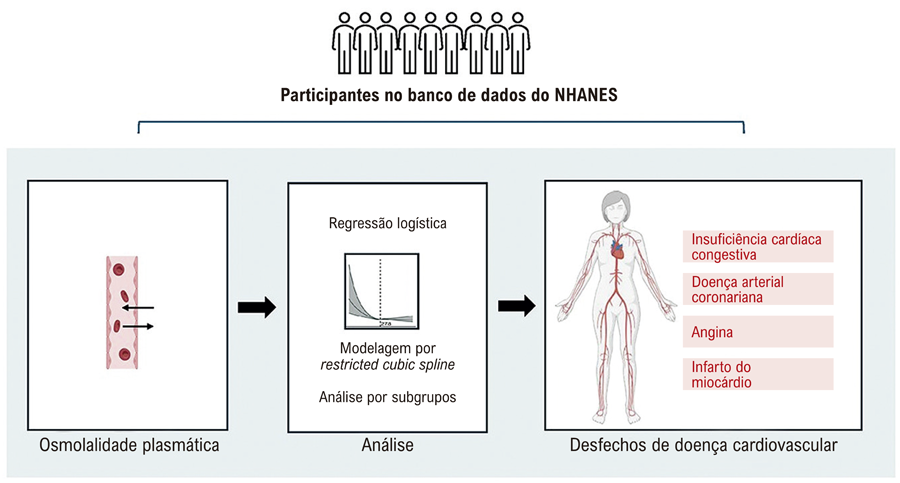 NHANES: National Health and Nutrition Examination Survey.
 NHANES: National Health and Nutrition Examination Survey.


