 Registry of Percutaneous Coronary Interventions in Very Small-Caliber Vessels: Analysis of a Sirolimus-Eluting Stent and Other Contemporary Drug-Eluting Stents
Background Percutaneous coronary intervention (PCI) in very small-caliber vessels (≤2.25 mm) presents technical challenges and is associated with poorer outcomes compared to larger vessels. The Inspiron® stent, a drug-eluting stent (DES) manufactured in Brazil, has been evaluated in multiple studies; however, data on its performance in vessels smaller than 2.5 mm are lacking.
Objectives This study aimed to evaluate the clinical outcomes of PCI using DES in very small-caliber vessels and to compare the Inspiron® stent with other contemporary DES platforms. The primary endpoint was major adverse cardiac events (MACE), defined as cardiac death, target lesion myocardial infarction, and clinically driven target lesion revascularization.
Methods We conducted an observational study including a consecutive sample at a Brazilian reference center from 2017 to 2021. Outcomes were assessed in-hospital, at 30 days, 6 months, and 12 months, using a 5% threshold for statistical significance.
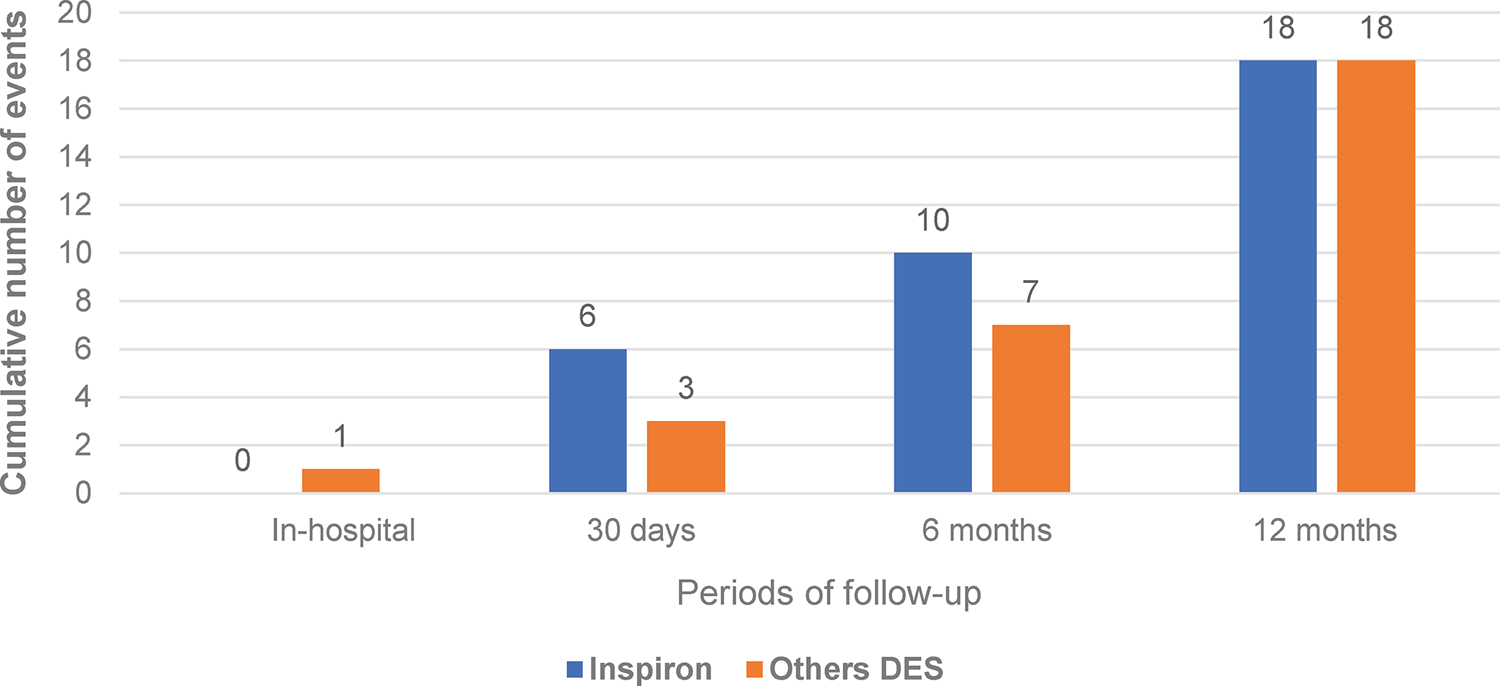
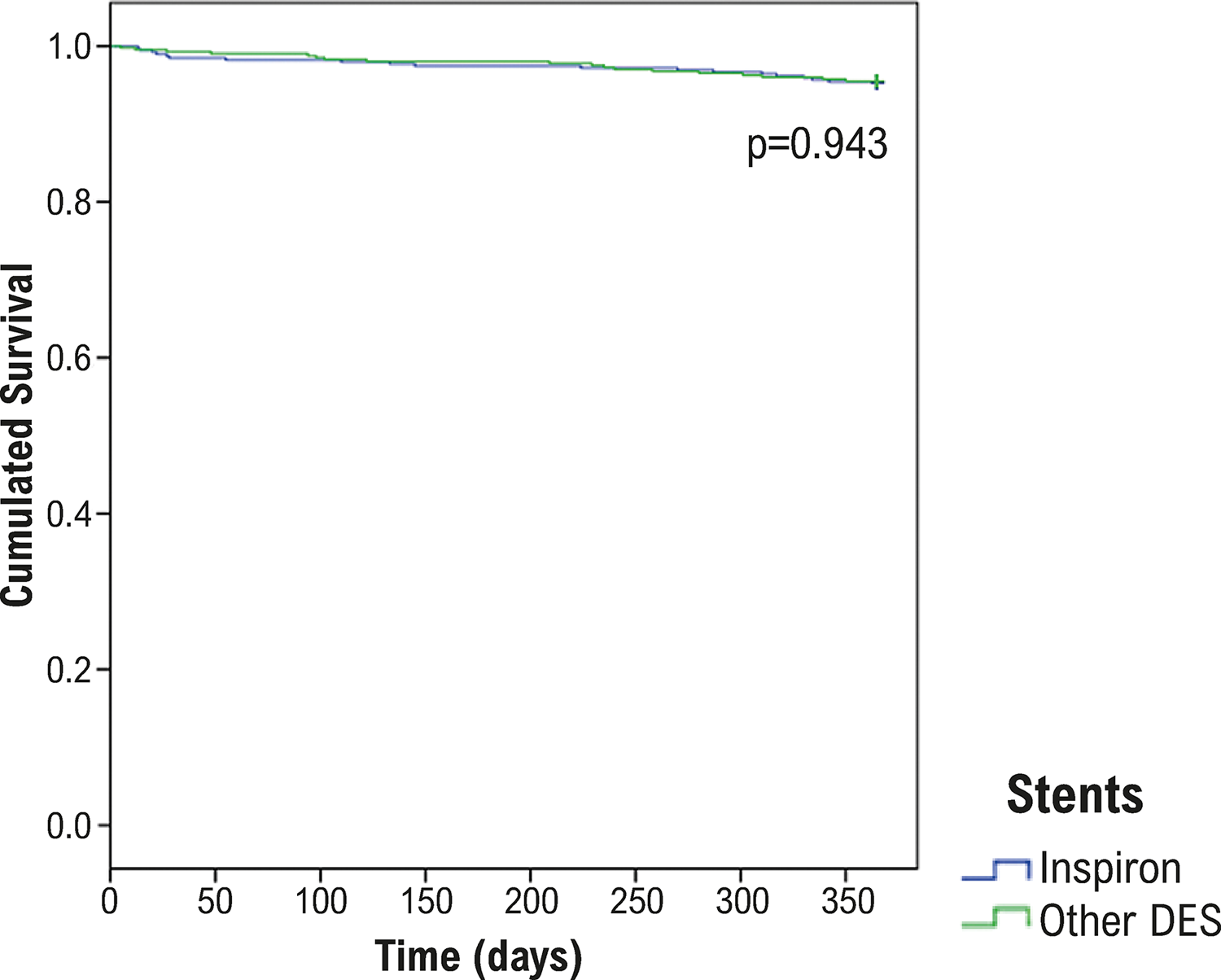
Results A total of 783 DES were implanted: 47% Inspiron® and 46.8% other DES. The mean patient age was 64.7 ± 11 years; 61% were male, and 42% had diabetes mellitus. At 12 months, the overall MACE rate was 4.54% (36/793), with no difference between groups (Inspiron®: 4.6% vs. other DES: 4.6%; p=1.000). Individual endpoints and stent thrombosis rates were also similar (4 [1.0%] vs. 2 [0.5%]; p=0.868).
Conclusion our findings show that the Inspiron® stent has acceptable safety and efficacy and provides comparable 12-month clinical outcomes to other contemporary DES in very small-caliber coronary vessels.
Keywords
Drug-Eluting Stents; Sirolimus; Percutaneous Coronary Intervention; Coronary Artery Disease

 Thumbnail
 Thumbnail
 Thumbnail
 Thumbnail
 Thumbnail
 RLA: Revascularização de lesão alvo; Mortalidade Cardíaca: Mortalidade cardíaca confirmada e provável; MACE: mortalidade cardíaca, infarto da lesão alvo e revascularização de lesão alvo clinicamente dirigida.
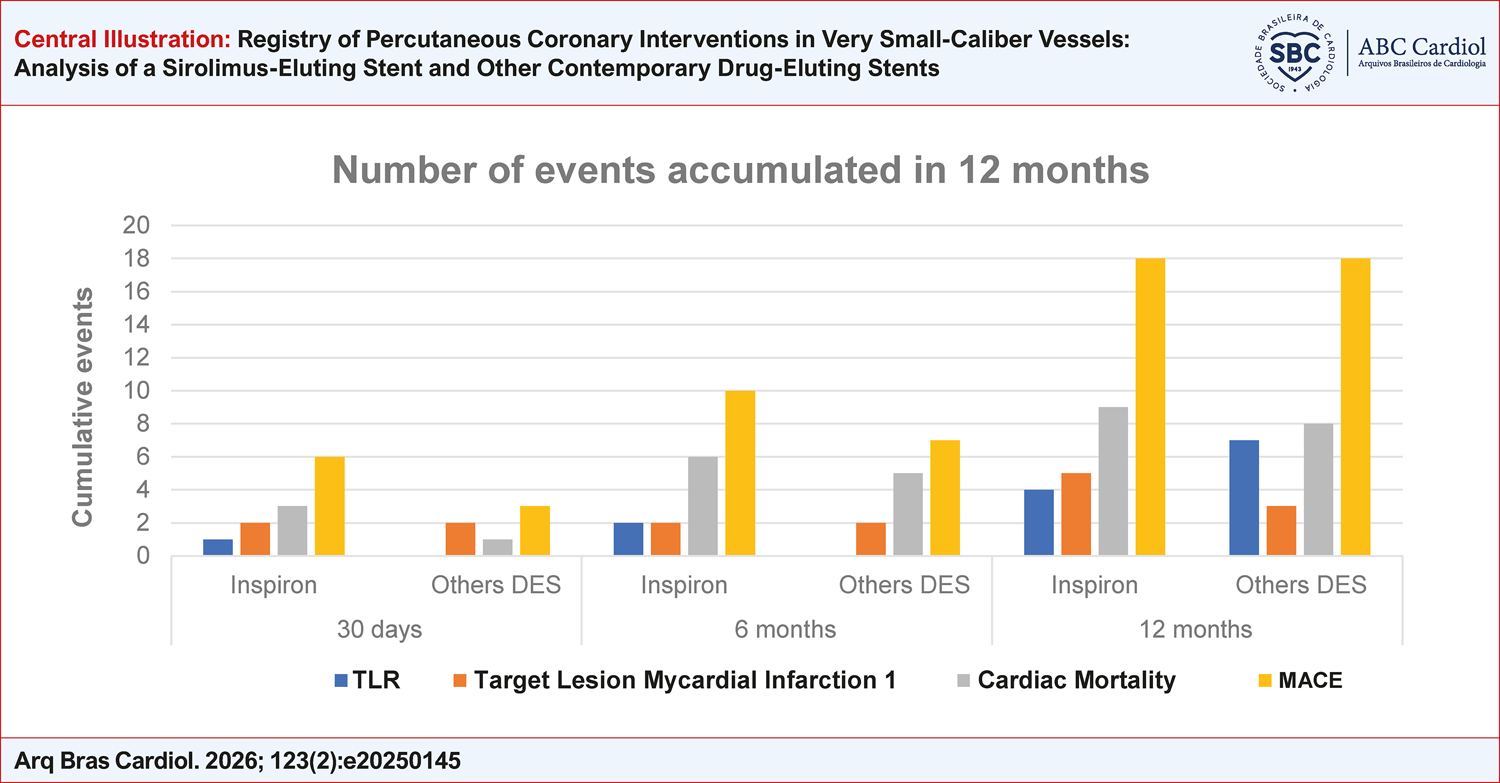 TLR: Target lesion revascularization; Cardiac Mortality: Confirmed and probable cardiac mortality; MACE: Major Adverse Cardiovascular Events — cardiac mortality, target lesion myocardial infarction, and clinically driven target lesion revascularization.