 Registry of Percutaneous Coronary Interventions in Very Small-Caliber Vessels: Analysis of a Sirolimus-Eluting Stent and Other Contemporary Drug-Eluting Stents
Abstract
Background Percutaneous coronary intervention (PCI) in very small-caliber vessels (≤2.25 mm) presents technical challenges and is associated with poorer outcomes compared to larger vessels. The Inspiron® stent, a drug-eluting stent (DES) manufactured in Brazil, has been evaluated in multiple studies; however, data on its performance in vessels smaller than 2.5 mm are lacking.
Objectives This study aimed to evaluate the clinical outcomes of PCI using DES in very small-caliber vessels and to compare the Inspiron® stent with other contemporary DES platforms. The primary endpoint was major adverse cardiac events (MACE), defined as cardiac death, target lesion myocardial infarction, and clinically driven target lesion revascularization.
Methods We conducted an observational study including a consecutive sample at a Brazilian reference center from 2017 to 2021. Outcomes were assessed in-hospital, at 30 days, 6 months, and 12 months, using a 5% threshold for statistical significance.
Results A total of 783 DES were implanted: 47% Inspiron® and 46.8% other DES. The mean patient age was 64.7 ± 11 years; 61% were male, and 42% had diabetes mellitus. At 12 months, the overall MACE rate was 4.54% (36/793), with no difference between groups (Inspiron®: 4.6% vs. other DES: 4.6%; p=1.000). Individual endpoints and stent thrombosis rates were also similar (4 [1.0%] vs. 2 [0.5%]; p=0.868).
Conclusion our findings show that the Inspiron® stent has acceptable safety and efficacy and provides comparable 12-month clinical outcomes to other contemporary DES in very small-caliber coronary vessels.
Keywords
Drug-Eluting Stents; Sirolimus; Percutaneous Coronary Intervention; Coronary Artery Disease

Resumo
Fundamento A intervenção coronária percutânea (ICP) de vasos de muito pequeno calibre (≤ 2,25mm) é um desafio técnico e tem piores resultados quando comparado aos maiores calibres. O stent Inspiron® é um stent farmacológico (SF) feito no Brasil, o qual têm segurança e eficácia avaliadas por diversos estudos em diferentes cenários, mas não há dados analisando seu desempenho em vasos <2,5mm.
Objetivos Analisar os resultados clínicos de ICP com SF’s em vasos de muito pequeno calibre e comparar com outras plataformas de SF’s contemporâneos. O desfecho MACE foi definido como por mortalidade cardíaca, infarto da lesão alvo e revascularização de lesão alvo clinicamente dirigida.
Métodos Estudo observacional, com amostra consecutiva em centro de referência no Brasil, entre 2017 e 2021, tendo desfechos analisados nos períodos intra-hospitalar, 30 dias, seis e 12 meses, com nível de significância estatística de 5%.
Resultados Um total de 783 SF’s foram implantados, sendo 47% INSPIRON® e 46,8% “Outros SF’s”. A idade média dos pacientes foi de 64,7±11 anos, 61% dos pacientes masculinos e 42% portadores de Diabetes Mellitus. Aos 12 meses, o desfecho de MACE geral foi 4,54% (36/793) e foi similar entre os grupos comparados (Inspiron®-4,6%; vs.. “Outros SF’s” -4,6%; p=1,000), sem diferença significativa nos desfechos individuais. A taxa de trombose de stent foi similar entre os grupos (4 [1,0%] vs. 2 [0,5%], p 0,868).
Conclusão Nossos achados demonstram resultados aceitáveis e com desempenho similar em 12 meses do Inspiron® a outros SF’s contemporâneos em vasos de muito pequeno calibre.
Palavras-chave
Stents Farmacológicos; Sirolimo; Intervenção Coronária Percutânea; Doença da Artéria Coronariana

Introduction
Percutaneous coronary intervention (PCI) has grown increasingly complex due to advances in device technology, operator expertise, and procedural techniques.1,2 Small vessel disease (<2.75 mm) is present in up to 50% of PCI cases.3-5 The advent of 2.0 mm and 2.25 mm stents introduced the term “very small-caliber vessel”.6
PCI in small-caliber vessels presents significant challenges and is linked to higher risks of adverse cardiac events, including restenosis and stent thrombosis.4,7-16 These vessels often have diffused atherosclerotic disease requiring longer stents, which increases restenosis risk13 and limits the suitability for surgical revascularization.14-16
With numerous drug-eluting stent (DES) options available, research focuses on features that predict better outcomes. Thinner stent struts correlate with reduced thrombogenicity and shear stress,17-19 Meta-analyses suggest thinner struts may reduce stent thrombosis, myocardial infarction, and target lesion revascularization (TLR) risks, although these findings lack statistical significance. The type of drug eluted by the stent is another key factor. While DES generally exhibit a class effect in small vessels,20 Sirolimus-eluting DES have shown better outcomes for TLR and myocardial infarction, particularly in longer lesions.21
The Inspiron® stent, the first DES manufactured in Brazil, elutes Sirolimus, consists of cobalt-chromium alloy with 75 μm struts, and uses a biodegradable abluminal polymer, making it suitable for very small vessels. Although its safety and efficacy have been evaluated,17,18,22 no comparative data exist for vessels ≤2.25 mm vs. other contemporary DES.
Given the frequency of PCIs in these vessel sizes and widespread Inspiron® use, this study aims to analyze real-world outcomes of PCI with contemporary DES in very small-caliber coronary vessels.
Methods
Study design, setting, and population
This investigator-initiated, prospective observational study included a consecutive sample of patients aged over 18 years who were referred to the cardiac catheterization laboratory of a tertiary referral hospital in southern Brazil between 2017 and 2021. All patients underwent PCI of very small-caliber vessels using either the INSPIRON® stent or other contemporary DES. The indication for PCI was determined by the attending medical team for each patient. Patients with stents implanted in coronary lesions of larger calibers (≥2.5 mm), as well as those undergoing PCI without DES implantation, were excluded from this study.
Clinical data were collected from medical records, outpatient follow-up visits, and telephone contacts. Clinical outcomes were assessed during hospitalization and at 30 days, 6 months, and 12 months post-PCI. Repeat coronary angiography was performed only in patients with a clinical indication for invasive reassessment as determined by the attending physicians; routine angiographic or functional testing was not performed during follow-up.
The study protocol was approved by the Institutional Research and Ethics Committee of the hospital and was conducted in accordance with Resolution CNS 466/2012.
Procedural aspects
All patients received dual antiplatelet therapy (DAPT) either before or immediately after the PCI procedure, and unfractionated heparin was administered during the intervention. The procedural strategy, including the choice and duration of DAPT, was determined by the attending medical team. Except in cases guided by intravascular imaging, the reference vessel diameter was estimated visually during angiography.
Stents
All patients received at least one INSPIRON® or other DES. The choice of stent type was based on operator discretion and device availability at the center. The characteristics of the stents used are shown in Table 1.
Study endpoints
The primary endpoint was Major Adverse Cardiovascular Events (MACE), a composite of Cardiac Death, Target Lesion Myocardial Infarction, and Clinically Driven TLR. In addition, the individual components of the primary endpoint were analyzed, as well as the endpoint of Stent Thrombosis, defined as acute myocardial infarction associated with occlusion of a previously implanted 2.00 mm or 2.25 mm DES, classified as definite or confirmed stent thrombosis.20
The main study objective was to evaluate the overall composite endpoint in the sample and compare outcomes between INSPIRON® and other contemporary DES available at the center over a one-year follow-up period. Differences in MACE rates were compared according to strut thickness (<80 µm vs. >80 µm) and the type of drug eluted (Sirolimus vs. other agents).
Angiographic success of PCI was defined as residual stenosis <20% with TIMI 3 flow, without side-branch occlusion, flow-limiting dissection, distal embolization, or angiographic thrombus.21
Statistical analysis
Data were analyzed using the IBM Statistical Package for the Social Sciences (SPSS), version 20.0. Categorical variables are presented as absolute numbers (n) and percentages (%), and continuous variables as mean ± standard deviation. The normality of distribution for continuous variables was assessed using the Kolmogorov–Smirnov test. Associations between categorical variables were tested using the Chi-square test, and differences in continuous variables were assessed with the unpaired Student’s t-test. A two-tailed p-value <0.05 was considered statistically significant. Survival curves were estimated using the Kaplan–Meier method, and group differences were compared using the log-rank test, adopting a 5% significance level.
Study power
Given the available sample size of 391 and 392 patients per group, the study had over 80% power to detect differences of approximately six percentage points. Power calculations were performed using the WINPEPI software, version 11.65.
Results
From January 2017 to December 2021, a total of 834 stents were implanted and included in the database. Of these, 783 (93.8%) stents met the inclusion criteria, were successfully implanted, and had at least 12 months of follow-up: 392 INSPIRON® stents (47%) and 391 “Other DES” (46.8%). These 834 stents were implanted in 762 patients (1.03 stent per patient). Seven stents (0.8%) were excluded from follow-up (four in the INSPIRON® group and three in the “Other DES” group, 1.02% vs. 0.76%, p=0.760) due to four cases of no-reflow, two cases of stent delivery failure due to severe proximal tortuosity and calcification, and one death caused by ventricular fibrillation during stent deployment (Figure 1).

The rates of hypertension, diabetes mellitus, active smoking, and dyslipidemia were similar between groups. Mean age was slightly higher in the “Other DES” group, reaching statistical significance, though the small numeric difference had no clinical impact on outcomes. Prior heart failure was more frequent in the INSPIRON® group, while acute coronary syndrome (ACS) accounted for 74.7% of the PCI indications, with unstable angina being the most common diagnosis (40.4%), significantly higher in the “Other DES” group. Other clinical characteristics are shown in Table 2.
INSPIRON® stents were more frequently implanted in the circumflex artery, right coronary artery, and posterior descending artery compared with the “Other DES” group. There were no significant differences between groups regarding stent length, access route, or percentage of pre-dilated lesions. PCIs using INSPIRON® stents showed lower rates of rotational atherectomy and intravascular ultrasound (IVUS) use, though absolute rates of these devices were very low, preventing correlation with events. Additional angiographic and procedural data are presented in Table 3.
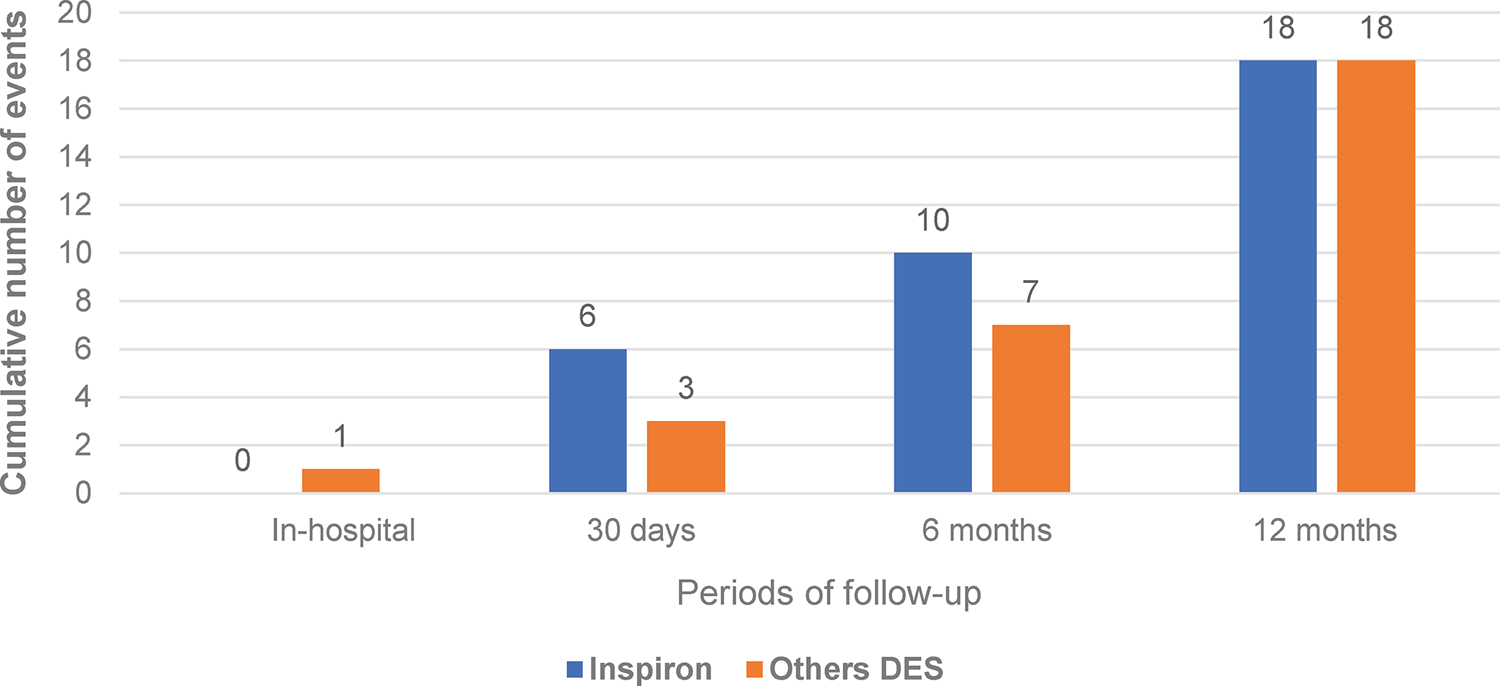
The overall MACE rate was 4.54% (36/793) and statistically equivalent between the compared groups (Table 4): 18 events in the INSPIRON® group and 18 in the “Other DES” group (Figure 2), as well as in each individual endpoint. he incidence of stent thrombosis was similar between stent types throughout all evaluated periods (Figure 3).

– MACE Events. Cumulative number of MACE (Major Adverse Cardiovascular Events — cardiac mortality, target lesion myocardial infarction, and clinically driven target lesion revascularization) during the follow-up periods for each stent group.

– Stent Thrombosis During the Evaluated Periods. Cumulative number of stent thrombosis events during the follow-up periods for each stent group.
The confirmed and probable cardiac mortality rate in the overall cohort was 2.14% (17/793), similar between study groups. Clinical follow-up was comparable across groups, with a loss to follow-up of 42 patients (5.5%) over one year.
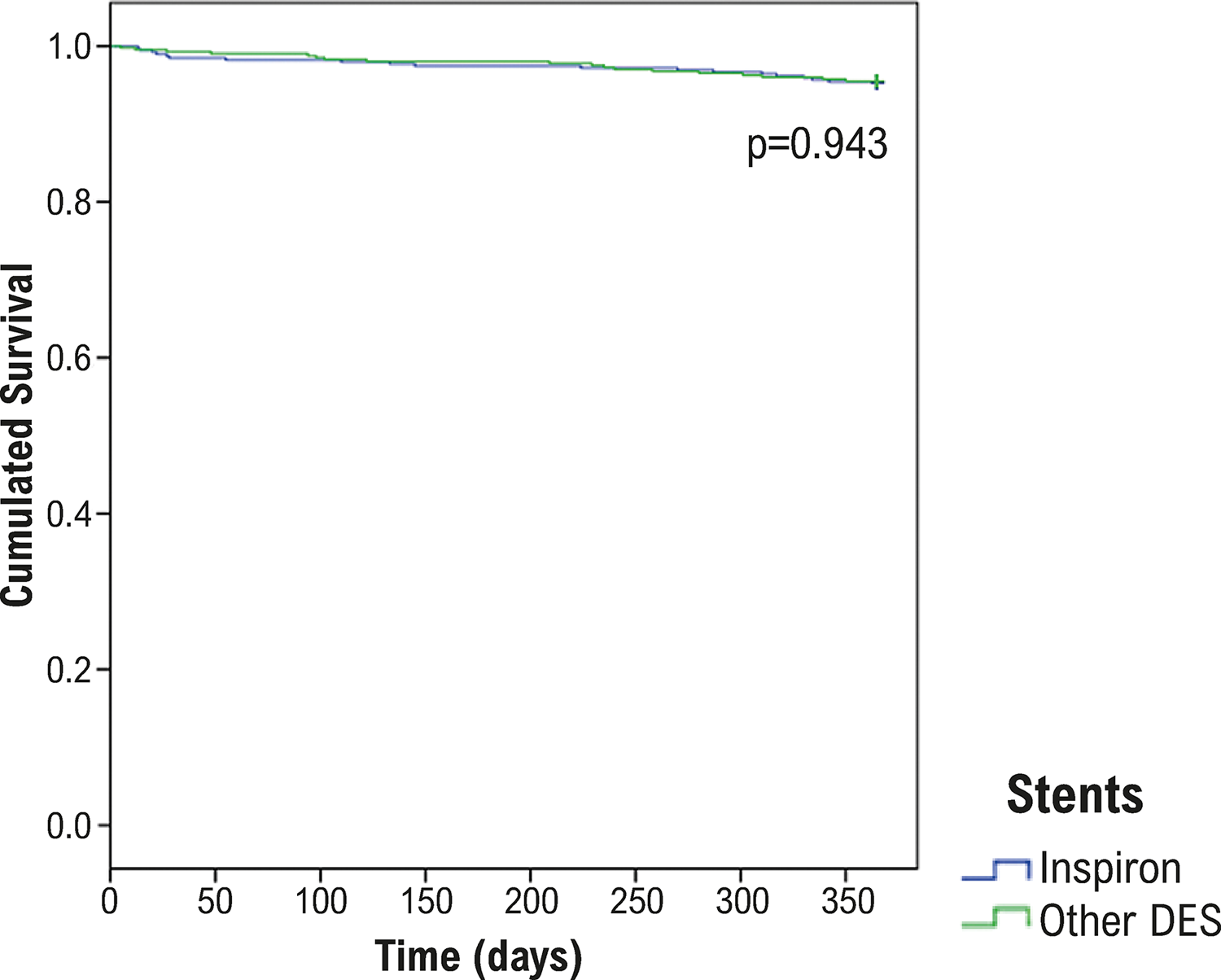
During a one-year follow-up, event-free survival curves were similar (Figure 4). At 6- and 12-month follow-up, both groups maintained comparable DAPT use (Table 6)..

– Kaplan-Meier Curve. Kaplan-Meier cumulative survival curve free from MACE (Major Adverse Cardiovascular Events — cardiac mortality, target lesion myocardial infarction, and clinically driven target lesion revascularization) during the 365-day follow-up period.
The incidence of stent thrombosis was similar between stent types throughout all evaluated periods (Table 5). At 6- and 12-month follow-up, both groups maintained comparable DAPT use (Table 6).
Discussion
This contemporary real-world registry, which evaluated Brazilian clinical data from patients undergoing PCI with stent implantation in very small-caliber vessels, demonstrated low MACE rates and comparable outcomes among the different available stent platforms (Central Illustration), consistent with data from previous literature.23,24
The presence of diabetes mellitus is often associated with diffuse atherosclerotic coronary disease in small vessels and is considered a predictor of restenosis and stent thrombosis after PCI with DES.25-35 In our sample, among the stents associated with MACE, 42% (15/36) were implanted in patients with known diabetes mellitus — the same proportion as in the overall cohort. Most patients undergoing PCI required stents longer than 20 mm; however, the mean stent length was not greater among those associated with MACE compared with event-free stents (21.98 mm vs. 21.43 mm, p=0.820). Although certain clinical characteristics differed between groups, analysis of MACE for INSPIRON® vs. “Other DES” showed no significant difference among patients with heart failure and reduced ejection fraction (<50%) (4/18 [22%] vs. 3/18 [17%], p=0.67) or those presenting with acute coronary syndromes (8/18 [44.4%] vs. 9/18 [50%], p=0.74). The small number of events during follow-up precluded multivariate analysis of other clinical and procedural variables.
The potential benefit of thinner stent struts, which may cause less endothelial injury, was evaluated in our cohort when comparing DES with <80 µm vs. >80 µm strut thickness. Although no statistical significance was found between INSPIRON® and other DES (48% vs. 52%, p=1.010), it is plausible that a larger sample or studies including routine angiographic follow-up might detect differences, as the occurrence of acute or chronic ischemic symptoms — the main indication for invasive re-evaluation — may have been underestimated due to the small myocardial territory at risk.
When analyzing results by eluted drug, our data demonstrate statistical equivalence in MACE between Sirolimus-eluting stents (INSPIRON®) and devices eluting other agents, suggesting a class effect among currently available DES, in line with existing evidence.36-39 These findings also indicate that engineering and biochemical characteristics of contemporary DES platforms may mitigate the relative importance of the specific drug used.
The use of intravascular imaging (particularly IVUS) improves acute and long-term angiographic and clinical outcomes.40-43 However, its use in our sample was very limited — only 1% (8/783) of cases — since most procedures were performed in public health system patients, where this technology is not routinely funded. Moreover, IVUS use in vessels <2.25 mm can be technically challenging and may increase the risk of iatrogenic plaque injury,41 which might have influenced operator decisions.
The diffuse distribution pattern of stent thrombosis events observed in our registry suggests that acute procedural factors such as stent underexpansion or significant coronary dissection were not major contributors to adverse outcomes Table 5.
DAPT use and duration were similar between groups throughout follow-up, with a high maintenance rate of DAPT at 12 months, which may have influenced the low event frequency (Table 6).
This study has limitations inherent to nonrandomized designs and device availability at the time of PCI. Restenosis might have been underdiagnosed due to the absence of routine angiographic follow-up; however, late restenosis (>12 months) is usually more related to atherosclerotic progression than to the previous PCI. Grouping different DES solely by strut thickness or drug elution may not be entirely appropriate, as other design factors — such as strut geometry, connection morphology, and polymer degradation — may also influence outcomes. Nevertheless, this study represents a significant real-world sample from a high-volume tertiary center, with broad inclusion criteria and clinically relevant findings.
The emergence of drug-eluting balloons (DEB) has introduced a rational alternative for avoiding metallic scaffolds.23,24,44,45 Comparative studies between new-generation DES and DEB in de novo lesions of very small-caliber vessels (<2.5 mm), similar to those in our study, are essential to determine the optimal therapeutic approach for these patients.
Conclusion
PCI in very small-caliber vessels using contemporary DES demonstrates satisfactory clinical outcomes at 12-month follow-up, supporting the continued use of this therapeutic strategy and of the evaluated stent platforms.
References
-
1 Cortese B, Di Palma G, Guimaraes MG, Piraino D, Orrego PS, Buccheri D, et al. Drug-Coated Balloon Versus Drug-Eluting Stent for Small Coronary Vessel Disease: PICCOLETO II Randomized Clinical Trial. JACC Cardiovasc Interv. 2020;13(24):2840-9. doi: 10.1016/j.jcin.2020.08.035.
» https://doi.org/10.1016/j.jcin.2020.08.035 -
2 Landes U, Bental T, Levi A, Assali A, Vaknin-Assa H, Lev EI, et al. Temporal Trends in Percutaneous Coronary Interventions thru the Drug Eluting Stent Era: Insights from 18,641 Procedures Performed Over 12-Year Period. Catheter Cardiovasc Interv. 2018;92(4):E262-E270. doi: 10.1002/ccd.27375.
» https://doi.org/10.1002/ccd.27375 -
3 Wöhrle J, Markovic S, Rottbauer W, Muramatsu T, Kadota K, Vázquez-González N, et al. Bioresorbable Polymer Sirolimus-Eluting Coronary Stent Compared with Permanent Polymer Everolimus-Eluting Coronary Stent Implantation for Treatment of Small Vessel Coronary Artery Disease: CENTURY II Trial. EuroIntervention. 2016;12(2):e167-74. doi: 10.4244/EIJV12I2A30.
» https://doi.org/10.4244/EIJV12I2A30 -
4 Schunkert H, Harrell L, Palacios IF. Implications of Small Reference Vessel Diameter in Patients Undergoing Percutaneous Coronary Revascularization. J Am Coll Cardiol. 1999;34(1):40-8. doi: 10.1016/s0735-1097(99)00181-3.
» https://doi.org/10.1016/s0735-1097(99)00181-3 -
5 Mosseri M, Yarom R, Gotsman MS, Hasin Y. Histologic Evidence for Small-Vessel Coronary Artery Disease in Patients with Angina Pectoris and Patent Large Coronary Arteries. Circulation. 1986;74(5):964-72. doi: 10.1161/01.cir.74.5.964.
» https://doi.org/10.1161/01.cir.74.5.964 -
6 Ellis SG, Popma JJ, Lasala JM, Koglin JJ, Cox DA, Hermiller J, et al. Relationship between Angiographic Late Loss and Target Lesion Revascularization after Coronary Stent Implantation: Analysis from the TAXUS-IV Trial. J Am Coll Cardiol. 2005;45(8):1193-200. doi: 10.1016/j.jacc.2004.11.063.
» https://doi.org/10.1016/j.jacc.2004.11.063 -
7 Ertan C, Ozeke O, Gul M, Aras D, Topaloglu S, Kisacik HL, et al. Association of Prediabetes with Diffuse Coronary Narrowing and Small-Vessel Disease. J Cardiol. 2014;63(1):29-34. doi: 10.1016/j.jjcc.2013.06.015.
» https://doi.org/10.1016/j.jjcc.2013.06.015 -
8 Lee JZ, Singh N, Ortega G, Low SW, Kanakadandi U, Fortuin FD, et al. Composite Outcomes in 2.25-mm Drug Eluting Stents: A Systematic Review. Cardiovasc Revasc Med. 2015;16(4):237-42. doi: 10.1016/j.carrev.2015.03.008.
» https://doi.org/10.1016/j.carrev.2015.03.008 -
9 Tam CC, Chan K, Lam S, Yung A, Lam YM, Chan C, et al. One-Year Clinical Outcomes of Patients Implanted with a Resolute Onyx™ Zotarolimus-Eluting Stent. J Int Med Res. 2018;46(1):457-463. doi: 10.1177/0300060517717826.
» https://doi.org/10.1177/0300060517717826 -
10 Wybraniec MT, Banka P, Bochenek T, Roleder T, Mizia-Stec K. Small Vessel Coronary Artery Disease: How Small can we go with Myocardial Revascularization? Cardiol J. 2021;28(5):767-78. doi: 10.5603/CJ.a2020.0127.
» https://doi.org/10.5603/CJ.a2020.0127 -
11 van der Heijden LC, Kok MM, Danse PW, Schramm AR, Hartmann M, Löwik MM, et al. Small-Vessel Treatment with Contemporary Newer-Generation Drug-Eluting Coronary Stents in All-Comers: Insights from 2-year DUTCH PEERS (TWENTE II) Randomized Trial. Am Heart J. 2016;176:28-35. doi: 10.1016/j.ahj.2016.02.020.
» https://doi.org/10.1016/j.ahj.2016.02.020 -
12 Cassese S, Byrne RA, Tada T, Pinieck S, Joner M, Ibrahim T, et al. Incidence and Predictors of Restenosis after Coronary Stenting in 10 004 Patients with Surveillance Angiography. Heart. 2014;100(2):153-9. doi: 10.1136/heartjnl-2013-304933.
» https://doi.org/10.1136/heartjnl-2013-304933 -
13 Claessen BE, Smits PC, Kereiakes DJ, Parise H, Fahy M, Kedhi E, et al. Impact of Lesion Length and Vessel Size on Clinical Outcomes after Percutaneous Coronary Intervention with Everolimus- versus Paclitaxel-Eluting Stents Pooled Analysis from the SPIRIT (Clinical Evaluation of the XIENCE V Everolimus Eluting Coronary Stent System) and COMPARE (Second-Generation Everolimus-Eluting and Paclitaxel-Eluting Stents in Real-Life Practice) Randomized Trials. JACC Cardiovasc Interv. 2011;4(11):1209-15. doi: 10.1016/j.jcin.2011.07.016.
» https://doi.org/10.1016/j.jcin.2011.07.016 -
14 O'Connor NJ, Morton JR, Birkmeyer JD, Olmstead EM, O'Connor GT. Effect of Coronary Artery Diameter in Patients Undergoing Coronary Bypass Surgery. Northern New England Cardiovascular Disease Study Group. Circulation. 1996;93(4):652-5. doi: 10.1161/01.cir.93.4.652.
» https://doi.org/10.1161/01.cir.93.4.652 -
15 Limanto DH, Chang HW, Kim DJ, Kim JS, Park KH, Lim C. Coronary Artery Size as a Predictor of Y-Graft Patency Following Coronary Artery Bypass Surgery. Medicine. 2021;100(2):e24063. doi: 10.1097/MD.0000000000024063.
» https://doi.org/10.1097/MD.0000000000024063 -
16 Shah PJ, Gordon I, Fuller J, Seevanayagam S, Rosalion A, Tatoulis J, et al. Factors affecting Saphenous Vein Graft Patency: Clinical and Angiographic Study in 1402 Symptomatic Patients Operated on Between 1977 and 1999. J Thorac Cardiovasc Surg. 2003;126(6):1972-7. doi: 10.1016/s0022-5223(03)01276-5.
» https://doi.org/10.1016/s0022-5223(03)01276-5 -
17 Foin N, Lee RD, Torii R, Guitierrez-Chico JL, Mattesini A, Nijjer S, et al. Impact of Stent Strut Design in Metallic Stents and Biodegradable Scaffolds. Int J Cardiol. 2014;177(3):800-8. doi: 10.1016/j.ijcard.2014.09.143.
» https://doi.org/10.1016/j.ijcard.2014.09.143 -
18 Briguori C, Sarais C, Pagnotta P, Liistro F, Montorfano M, Chieffo A, et al. In-Stent Restenosis in Small Coronary Arteries: Impact of Strut Thickness. J Am Coll Cardiol. 2002;40(3):403-9. doi: 10.1016/s0735-1097(02)01989-7.
» https://doi.org/10.1016/s0735-1097(02)01989-7 -
19 Kolandaivelu K, Swaminathan R, Gibson WJ, Kolachalama VB, Nguyen-Ehrenreich KL, Giddings VL, et al. Stent Thrombogenicity Early in High-Risk Interventional Settings is Driven by Stent Design and Deployment and Protected by Polymer-Drug Coatings. Circulation. 2011;123(13):1400-9. doi: 10.1161/CIRCULATIONAHA.110.003210.
» https://doi.org/10.1161/CIRCULATIONAHA.110.003210 -
20 Buiten RA, Ploumen EH, Zocca P, Doggen CJM, Jessurun GAJ, Schotborgh CE, et al. Thin Composite-Wire-Strut Zotarolimus-Eluting Stents versus Ultrathin-Strut Sirolimus-Eluting Stents in BIONYX at 2 Years. JACC Cardiovasc Interv. 2020;13(9):1100-1109. doi: 10.1016/j.jcin.2020.01.230.
» https://doi.org/10.1016/j.jcin.2020.01.230 -
21 Kang DY, Jang JS, Chang M, Lee CH, Lee PH, Ahn JM, et al. Comparison of Different Types of Drug-Eluting Stents for De Novo Long Coronary Artery Lesions. JACC Asia. 2022;2(4):446-456. doi: 10.1016/j.jacasi.2022.02.009.
» https://doi.org/10.1016/j.jacasi.2022.02.009 -
22 Winter RJ, Zaman A, Hara H, Gao C, Ono M, Garg S, et al. Sirolimus-Eluting Stents with Ultrathin Struts Versus Everolimus-Eluting Stents for Patients Undergoing Percutaneous Coronary Intervention: Final Three-Year Results of the TALENT Trial. EuroIntervention. 2022;18(6):492-502. doi: 10.4244/EIJ-D-21-00766.
» https://doi.org/10.4244/EIJ-D-21-00766 -
23 Saito S, Ando K, Ito Y, Tobaru T, Yajima J, Kimura T, et al. Two-Year Results after Coronary Stenting of Small Vessels in Japanese Population Using 2.25-mm Diameter Sirolimus-Eluting Stent with Bioresorbable Polymer: Primary and Long-Term Outcomes of CENTURY JSV Study. Cardiovasc Interv Ther. 2019;34(1):25-33. doi: 10.1007/s12928-018-0511-3.
» https://doi.org/10.1007/s12928-018-0511-3 -
24 Parikh MA, Soverow J, Leon MB, Serruys P, Xu B, Yuan Z, et al. Outcomes of Stenting Extra-Small (=2.25 mm) Vessels Using the Resolute Zotarolimus-Eluting Stent (R-ZES). EuroIntervention. 2016;12(10):1215-1221. doi: 10.4244/EIJV12I10A200.
» https://doi.org/10.4244/EIJV12I10A200 -
25 Cassese S, Byrne RA, Tada T, Pinieck S, Joner M, Ibrahim T, et al. Incidence and Predictors of Restenosis after Coronary Stenting in 10 004 Patients with Surveillance Angiography. Heart. 2014;100(2):153-9. doi: 10.1136/heartjnl-2013-304933.
» https://doi.org/10.1136/heartjnl-2013-304933 -
26 Rathore S. Small Coronary Vessel Angioplasty: Outcomes and Technical Considerations. Vasc Health Risk Manag. 2010;6:915-22. doi: 10.2147/VHRM.S8161.
» https://doi.org/10.2147/VHRM.S8161 - 27 Kastrati A, Dirschinger J, Boekstegers P, Elezi S, Schühlen H, Pache J, et al. Influence of Stent Design on 1-Year Outcome after Coronary Stent Placement: A Randomized Comparison of Five Stent Types in 1,147 Unselected Patients. Catheter Cardiovasc Interv. 2000;50(3):290-7. doi: 10.1002/1522-726x(200007)50:3<290::aid-ccd5>3.0.co;2-w.
-
28 Oliveira MD, Ribeiro EE, Campos CM, Ribeiro HB, Faillace BL, Lopes AC, et al. Four-Year Clinical Follow-Up of the First-In-Man Randomized Comparison of a Novel Sirolimus Eluting Stent with Abluminal Biodegradable Polymer and Ultra-Thin Strut Cobalt-Chromium Alloy: The INSPIRON-I Trial. Cardiovasc Diagn Ther. 2015;5(4):264-70. doi: 10.3978/j.issn.2223-3652.2015.07.05.
» https://doi.org/10.3978/j.issn.2223-3652.2015.07.05 -
29 Falcão F, Cantarelli F, Cantarelli R, Mota F, Navarro M, Mota H, et al. One-Year Clinical Outcome of Inspiron Stent in All-Comers Population (Analysis from 790 Consecutive Patients). J Interv Cardiol. 2020;2020:6340716. doi: 10.1155/2020/6340716.
» https://doi.org/10.1155/2020/6340716 -
30 Araujo GN, Machado GP, Moura M, Silveira AD, Bergoli LC, Fuchs FC, et al. Real-World Assessment of an Ultrathin Strut, Sirolimus-Eluting Stent in Patients with ST-Elevation Myocardial Infarction Submitted to Primary Percutaneous Coronary Intervention (INSTEMI Registry). Arq Bras Cardiol. 2023;120(6):e20220594. doi: 10.36660/abc.20220594.
» https://doi.org/10.36660/abc.20220594 -
31 Thygesen K, Alpert JS, Jaffe AS, Chaitman BR, Bax JJ, Morrow DA, et al. Fourth Universal Definition of Myocardial Infarction (2018). J Am Coll Cardiol. 2018;72(18):2231-64. doi: 10.1016/j.jacc.2018.08.1038.
» https://doi.org/10.1016/j.jacc.2018.08.1038 -
32 Feres F, Costa RA, Siqueira D, Costa JR Jr, Chamié D, Staico R, et al. Diretriz da Sociedade Brasileira de Cardiologia e da Sociedade Brasileira de Hemodinâmica e Cardiologia Intervencionista sobre Intervenção Coronária Percutânea. Arq Bras Cardiol. 2017;109(1 Suppl 1):1-81. doi: 10.5935/abc.20170111.
» https://doi.org/10.5935/abc.20170111 -
33 Iakovou I, Schmidt T, Bonizzoni E, Ge L, Sangiorgi GM, Stankovic G, et al. Incidence, Predictors, and Outcome of Thrombosis after Successful Implantation of Drug-Eluting Stents. JAMA. 2005;293(17):2126-30. doi: 10.1001/jama.293.17.2126.
» https://doi.org/10.1001/jama.293.17.2126 -
34 West NE, Ruygrok PN, Disco CM, Webster MW, Lindeboom WK, O'Neill WW, et al. Clinical and Angiographic Predictors of Restenosis after Stent Deployment in Diabetic Patients. Circulation. 2004;109(7):867-73. doi: 10.1161/01.CIR.0000116750.63158.94.
» https://doi.org/10.1161/01.CIR.0000116750.63158.94 -
35 Dortimer AC, Shenoy PN, Shiroff RA, Leaman DM, Babb JD, Liedtke AJ, et al. Diffuse Coronary Artery Disease in Diabetic Patients: Fact or Fiction? Circulation. 1978;57(1):133-6. doi: 10.1161/01.cir.57.1.133.
» https://doi.org/10.1161/01.cir.57.1.133 -
36 Taglieri N, Bruno AG, Ghetti G, Marrozzini C, Saia F, Galié N, et al. Target Lesion Failure with Current Drug-Eluting Stents: Evidence from a Comprehensive Network Meta-Analysis. JACC Cardiovasc Interv. 2020;13(24):2868-78. doi: 10.1016/j.jcin.2020.09.014.
» https://doi.org/10.1016/j.jcin.2020.09.014 -
37 Bangalore S, Toklu B, Patel N, Feit F, Stone GW. Newer-Generation Ultrathin Strut Drug-Eluting Stents versus Older Second-Generation Thicker Strut Drug-Eluting Stents for Coronary Artery Disease. Circulation. 2018;138(20):2216-26. doi: 10.1161/CIRCULATIONAHA.118.034456.
» https://doi.org/10.1161/CIRCULATIONAHA.118.034456 -
38 Park KW, Kang SH, Velders MA, Shin DH, Hahn S, Lim WH, et al. Safety and Efficacy of Everolimus- versus Sirolimus-Eluting Stents: A Systematic Review and Meta-Analysis of 11 Randomized Trials. Am Heart J. 2013;165(2):241-50.e4. doi: 10.1016/j.ahj.2012.08.007.
» https://doi.org/10.1016/j.ahj.2012.08.007 -
39 Waha A, Dibra A, Byrne RA, Ndrepepa G, Mehilli J, Fusaro M, et al. Everolimus-Eluting versus Sirolimus-Eluting Stents: A Meta-Analysis of Randomized Trials. Circ Cardiovasc Interv. 2011;4(4):371-7. doi: 10.1161/CIRCINTERVENTIONS.111.963256.
» https://doi.org/10.1161/CIRCINTERVENTIONS.111.963256 -
40 Li L, Wang L, Zhai CJ, Mou YR, Wang JH, Cui LQ. Clinical Utility of Intravascular Ultrasonography-Guided Therapy in a Small-Vessel Coronary Lesion Associated with Type 2 Diabetes Mellitus. Anatol J Cardiol. 2019;22(2):68-76. doi: 10.14744/AnatolJCardiol.2019.77009.
» https://doi.org/10.14744/AnatolJCardiol.2019.77009 -
41 Matsuo Y, Kubo T, Aoki H, Satogami K, Ino Y, Kitabata H, et al. Optimal Threshold of Postintervention Minimum Stent Area to Predict In-Stent Restenosis in Small Coronary Arteries: An Optical Coherence Tomography Analysis. Catheter Cardiovasc Interv. 2016;87(1):E9-E14. doi: 10.1002/ccd.26143.
» https://doi.org/10.1002/ccd.26143 -
42 Elgendy IY, Mahmoud AN, Elgendy AY, Bavry AA. Outcomes with Intravascular Ultrasound-Guided Stent Implantation: A Meta-Analysis of Randomized Trials in the Era of Drug-Eluting Stents. Circ Cardiovasc Interv. 2016;9(4):e003700. doi: 10.1161/CIRCINTERVENTIONS.116.003700.
» https://doi.org/10.1161/CIRCINTERVENTIONS.116.003700 -
43 Kordish I, Philipp S, Boese D, Sack S, Erbel R. Dissection of the Right Coronary Artery as a Complication after the IVUS Procedure. Herz. 2007;32(7):573-7. doi: 10.1007/s00059-007-2900-8.
» https://doi.org/10.1007/s00059-007-2900-8 -
44 Jeger RV, Farah A, Ohlow MA, Mangner N, Möbius-Winkler S, Leibundgut G, et al. Drug-Coated Balloons for Small Coronary Artery Disease (BASKET-SMALL 2): An Open-Label Randomised Non-Inferiority Trial. Lancet. 2018;392(10150):849-56. doi: 10.1016/S0140-6736(18)31719-7.
» https://doi.org/10.1016/S0140-6736(18)31719-7 -
45 Richelsen RK, Overvad TF, Jensen SE. Drug-Eluting Balloons in the Treatment of Coronary De Novo Lesions: A Comprehensive Review. Cardiol Ther. 2016;5(2):133-160. doi: 10.1007/s40119-016-0064-4.
» https://doi.org/10.1007/s40119-016-0064-4
-
Study association:
This article is part of the thesis of master submitted by João Vitor Slaviero, from Instituto de Cardiologia de Porto Alegre.
-
Ethics approval and consent to participate:
This study was approved by the Ethics Committee of the Instituto de Cardiologia/Fundação Universitária de Cardiologia under the protocol number 2.699.665. Informed consent was obtained from all participants included in the study.
-
Use of Artificial Intelligence:
The authors did not use any artificial intelligence tools in the development of this work.
-
Data Availability Statement:
All datasets supporting the results of this study are available upon request from the corresponding author
-
Sources of funding:
There were no external funding sources for this study.
Edited by
-
Editor responsible for the review:
Henrique Ribeiro
All datasets supporting the results of this study are available upon request from the corresponding author

 RLA: Revascularização de lesão alvo; Mortalidade Cardíaca: Mortalidade cardíaca confirmada e provável; MACE: mortalidade cardíaca, infarto da lesão alvo e revascularização de lesão alvo clinicamente dirigida.
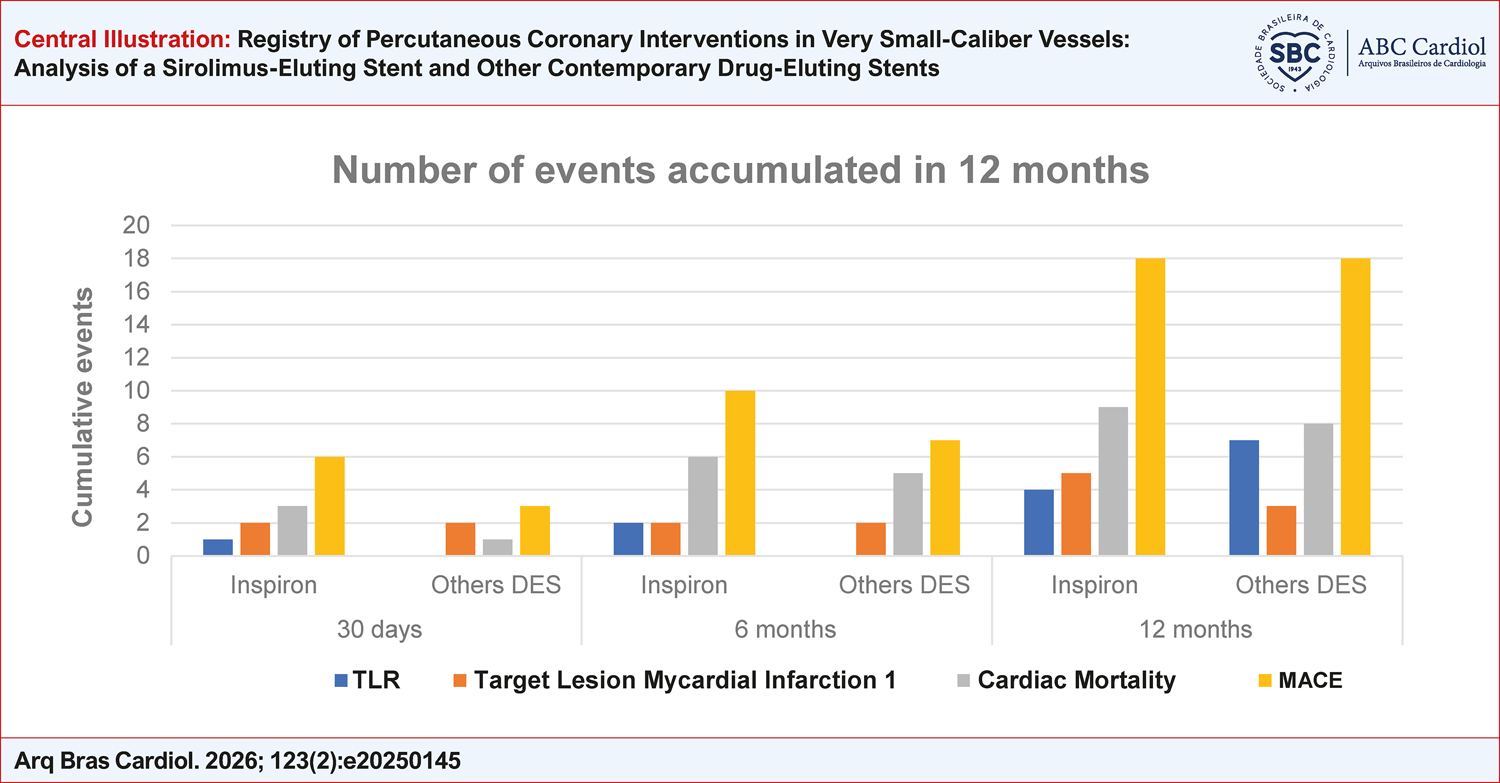 TLR: Target lesion revascularization; Cardiac Mortality: Confirmed and probable cardiac mortality; MACE: Major Adverse Cardiovascular Events — cardiac mortality, target lesion myocardial infarction, and clinically driven target lesion revascularization.