
 Acupuncture for Essential Hypertension and Endothelial Dysfunction: A Randomized Clinical Trial
Keywords
Acupuncture; Hypertension; Prehypertension; Endothelium
Palavras-chave
Acupuntura; Hipertensão; Pré-Hipertensão; Endotélio
Keywords
Acupuncture; Hypertension; Prehypertension; Endothelium
Palavras-chave
Acupuntura; Hipertensão; Pré-Hipertensão; Endotélio
Introduction
Arterial hypertension (AH) is one of the main modifiable risk factors for cardiovascular diseases,1 as it causes increased arterial stiffness and endothelial dysfunction since early stages.2
Sympathetic hyperactivity and activation of the renin-angiotensin-aldosterone system (RAAS) are among the major pathophysiological mechanisms of AH, in addition to an overproduction of reactive oxygen species (ROS) and imbalances in the nitric oxide (NO) availability.3 The increase in endothelial permeability in response to low NO synthesis explains the correlation of AH with atherosclerosis and makes the analysis of endothelial function a useful tool for clinical assessment.1,4,5
Despite the wide availability of therapeutic options, AH is still poorly controlled worldwide1 and recommendations for non-pharmacological therapy should be given to hypertensive patients.1,3,6 Some evidence has suggested the beneficial effects of acupuncture (ACP) in hypertensive patients.7–16 The pain stimulus generated by the needle insertion reaches sympathetic preganglionic neurons of the rostral ventrolateral medulla, blocks autonomic visceral, sympathoexcitatory reflexes and reduces smooth muscle spasm.7,17–19 In addition, it inhibits sympathetic activation mediated by the RAAS system,20,21 reduces the release and activity of renin and angiotensin II receptors19,20 and levels of ROS, and activates endothelial NO synthase, increasing NO bioavailability and vasodilation and improving endothelial dysfunction,7,21,24 thereby contributing to the effects of ACP on blood pressure control.7,17–24
This article describes the methodology of a randomized clinical trial that will evaluate the effects of ACP on peripheral blood pressure, central blood pressure (CBP), pulse wave velocity (PWV) and flow-mediated dilation (FMD). These parameters were measured before and after 24 sessions of ACP in prehypertensive and stage 1 hypertensive patients at low cardiovascular risk.
Methods
Study type and location
This will be a randomized, placebo-controlled, single-blind., single-center clinical trial; data will be collected at the research center of the Arterial Hypertension Unit of Goias Federal University (UFG).
The study is registered at the Brazilian Registry of Clinical Trials (RBR-9qnxb9z) and will be conducted following the STRICTA/CONSORT recommendations.25 The study was approved by the ethics committee of the UFG general hospital (approval number 6.244.770).
Population and sampling
Study population will consist of prehypertensive or stage 1 hypertensive adults at low cardiovascular risk that are not taking antihypertensive medications.
Patients at stage 2 or 3 AH, at moderate/high cardiovascular risk, and patients with diabetes, history of coronary arterial disease, cerebrovascular disease, heart failure thyroid diseases, conditions that may affect afferent and efferent innervations, uncontrolled psychiatric disorders, severe blood dyscrasias, and skin lesions or other conditions that make it impossible to access the ACP points will be excluded. Pregnant and lactating women, and patients who have received antihypertensive treatment in the previous six months or have ever received ACP will also be excluded.
Sample size was calculated considering the comparisons of the means of two independent groups of at less 3 mmHg for systolic pressure, with an alpha of 5%, power of the test of 90% and loss to follow-up of 10%, yielding a sample of 25 participants in each group.10
Patient recruitment and randomization
Patients will be selected from a database of the Arterial Hypertension Unit of UFG, composed by patient referral or screening campaigns, and will be assessed during three visits.
Visit 1
All patients will be seen by a cardiologist and a physician acupuncturist through history taking and physical examination. The stage of AH will be confirmed by measurement of blood pressure following the Brazilian guidelines on AH,1 using an automated oscillometric device (OMRON 1120).
After fulfilling the inclusion criteria and agreeing to participate in the study, all patients will sign an informed consent form. Subsequently, the patients will be randomized using www.randomization.com and allocated to either intervention group (G1) or control group (G2). Then, all patients will be assessed for endothelial function by FMD, and for CBP and PWV.
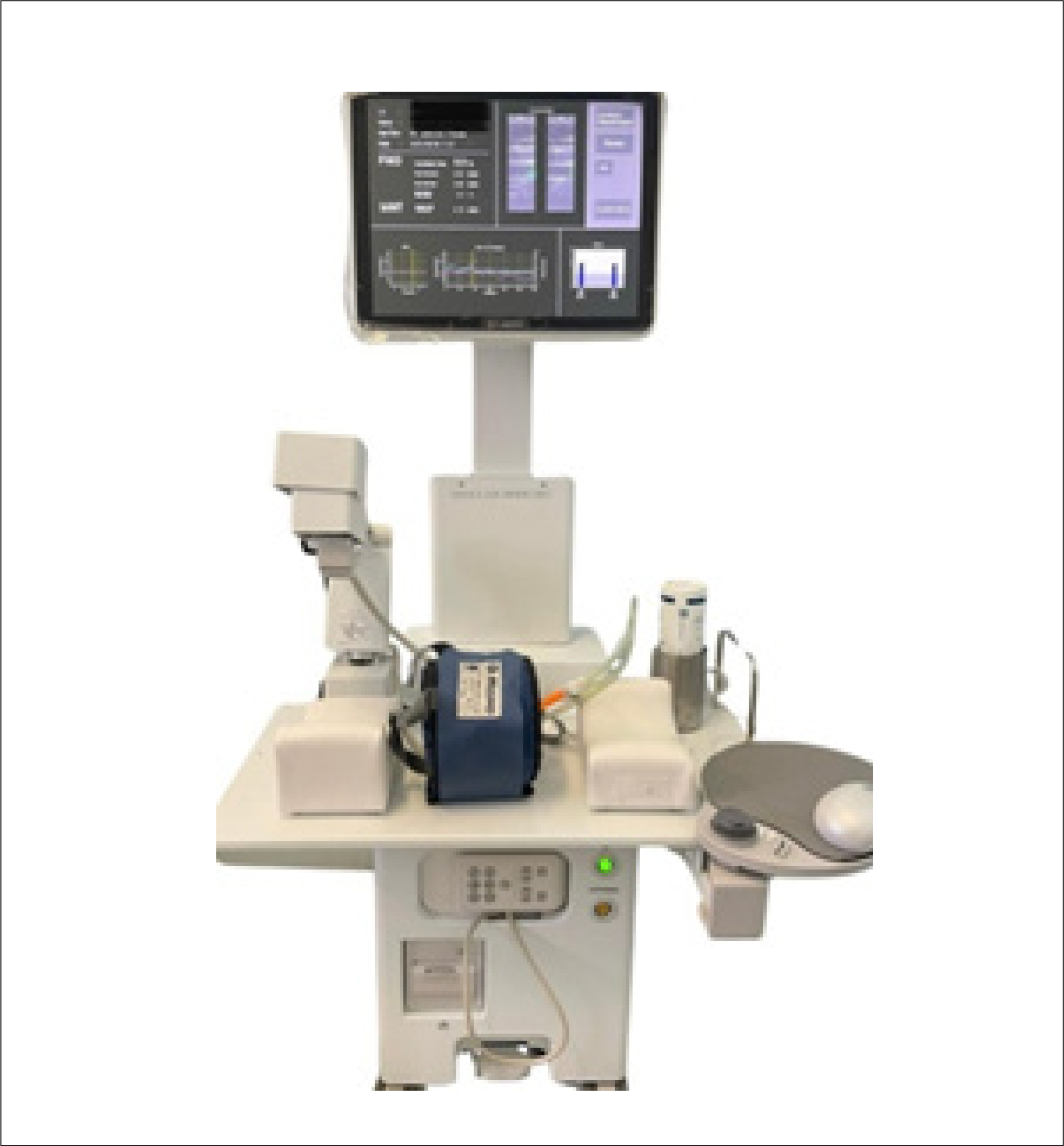
Assessment of endothelial function by FMD will be conducted using a high-resolution ultrasound device (UNEX ED38G), which is equipped with a robotic probe that scans through patient's brachial artery automatically, in a uniform and precise way (Figure 1). The test will be conducted following guidelines’ recommendations.26–28
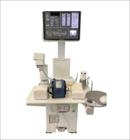
Analysis of arterial stiffness and CBP will be performed using the Mobil-OGraph® (IEM, Stolber, Germany), which is an oscillometric method that estimates CBP, PWV and Augmentation Index.29,30
Intervention (G1) and control (G2)
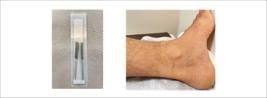
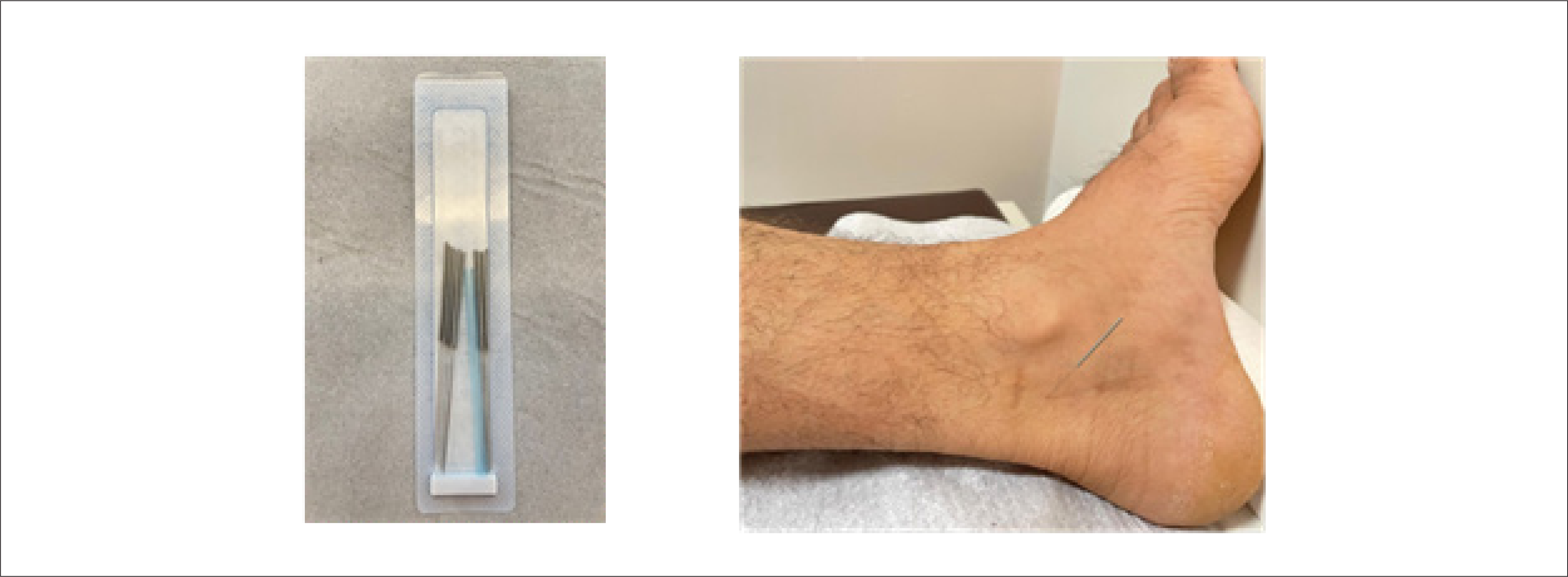
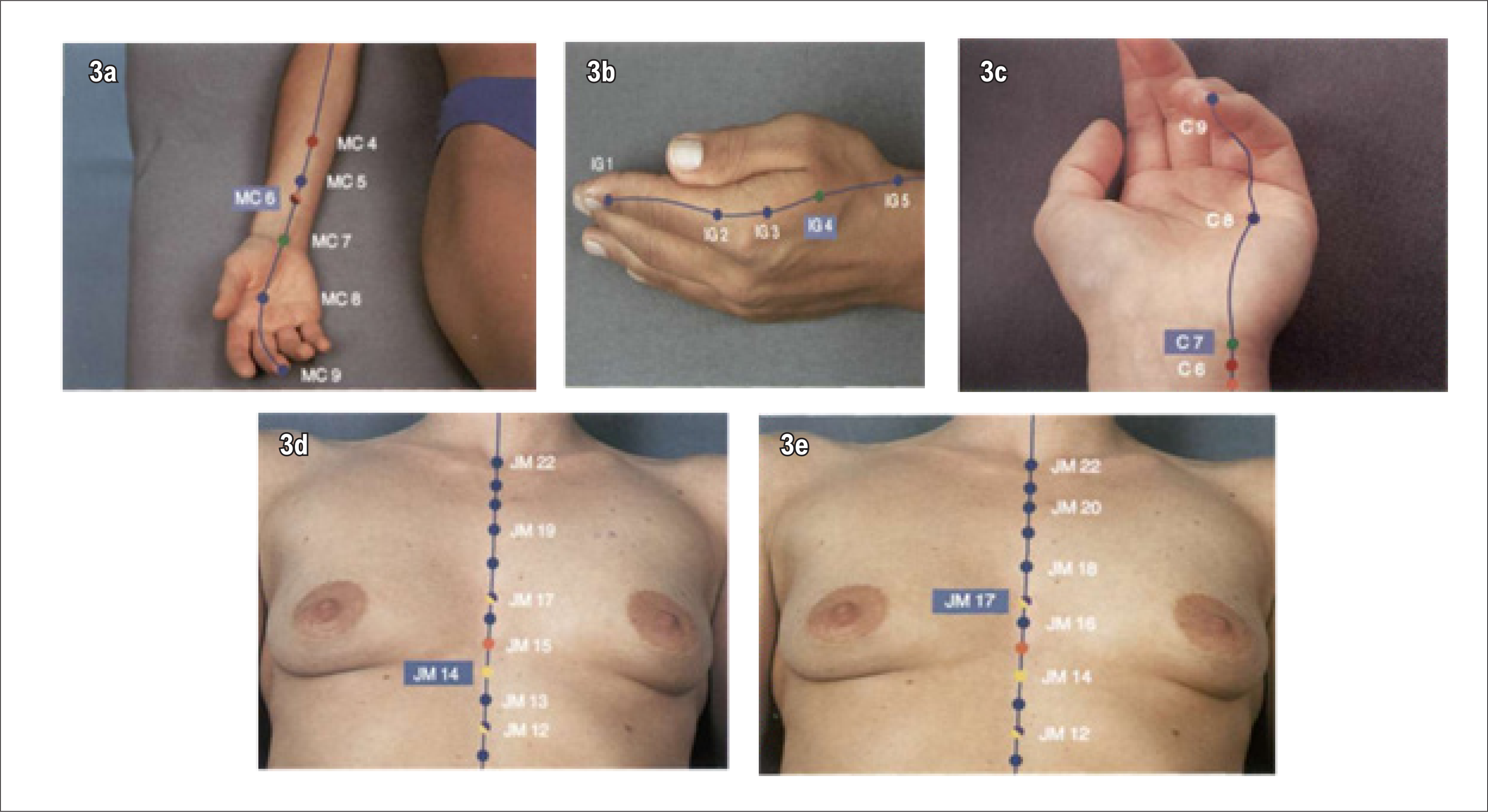
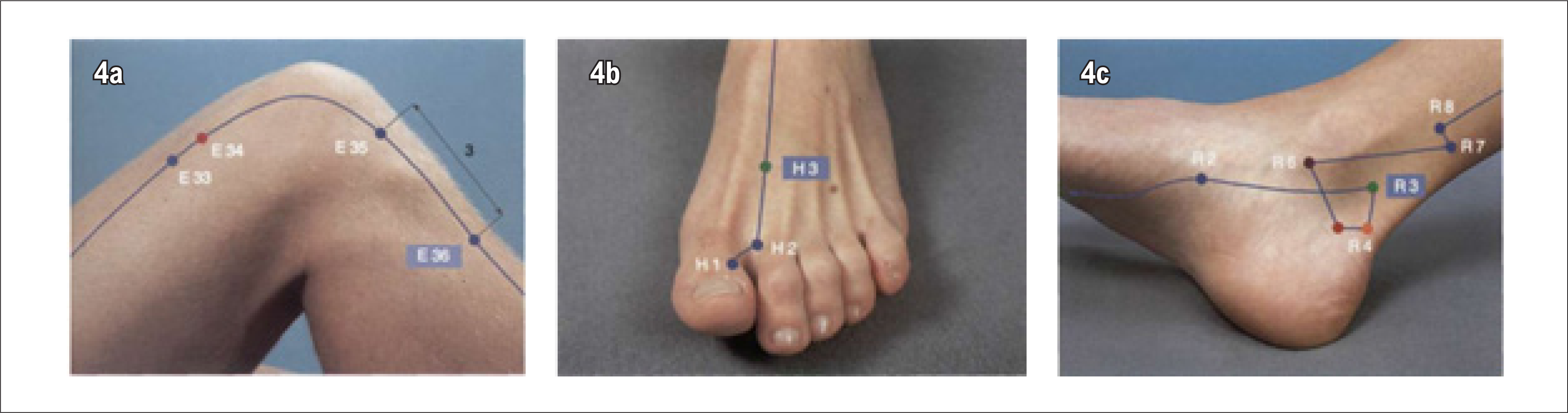
In the G1 patients, eight stainless steel, sterile needles (0.25 x 0.30 mm) (Figure 2) will be inserted in eight points – PC6, IG4, C7, VC14, VC17, E36, F3, R3 (Figures 3 and 4). The technique will be conducted by a physician acupuncturist, following the principles of traditional Chinese medicine31 and the Brazilian Acupuncture Medical College's recommendations.
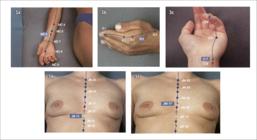
Acupuncture points: 3a. PC6 (MC6- Neiguan); 3b. IG4 (Hegu); 3c. C7 (Shenmen); 3d. VC14 (JM14 - Juque); 3e. VC17(JM17 - Shanzhong).
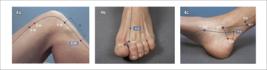
Patients in the G2 group will be treated with eight placebo needles (Streitberger needles) that do not penetrate the skin32 in eight non-ACP points throughout the trunk and limbs. The technique will be performed by the same physician (Figure 5).

All patients will receive two 30-minute sessions weekly, with an interval of up to three days between them, for 12 consecutive weeks (total of 24 sessions). Each participant will be blindfolded during the procedure as they will be blinded for group allocation.
Final visit and follow-up visit
All patients will be seen in a final visit (FV) after 24 ACP sessions and in a follow-up visit 30 days after the FV. In both visits, participants will undergo clinical assessment, blood pressure, CBP and PWV measurements, and FMD for assessment of endothelial function.
During the follow-up visit, all patients will be asked about the type of needle they believed that they received during the sessions – ACP needle (that penetrates the skin) vs. non-ACP/placebo needle (Streitberger needle, which does not penetrate the skin).
Statistical analysis
Categorical variables will be expressed as frequencies and proportions. Association analysis of these variables should be done by chi-square test or Fisher exact test, according to sample size. Continuous quantitative variables will be first assessed for normality distribution using the Shapiro-Wilk test. Then, parametric tests like the Student's t-test or the Mann-Whitney test and the ANOVA or the Kruskal-Wallis test will be applied according to data distribution. All tests should consider a type I error of 5% and a type II error of 80%, with a 95% confidence interval.
Conclusion
If the effectiveness of ACP in reducing blood pressure and improving endothelial function is proven, it can be suggested as a non-pharmacological therapy for hypertension in future guidelines.
-
Sources of funding
There were no external funding sources for this study.
-
Study association
This article is part of the thesis of master submitted by Amanda Rodrigues Bitencourt, from Universidade Federal de Goiás.
-
Ethics approval and consent to participate
This study was approved by the Ethics Committee of the Hospital das Clínicas HC/EBSERH/UFG under the protocol number 6.244.770. All the procedures in this study were in accordance with the 1975 Helsinki Declaration, updated in 2013. Informed consent was obtained from all participants included in the study.
References
-
1 Barroso WKS, Rodrigues CIS, Bortolotto LA, Mota-Gomes MA, Brandão AA, Feitosa ADM, et al. Brazilian Guidelines of Hypertension - 2020. Arq Bras Cardiol. 2021;116(3):516-658. doi: 10.36660/abc.20201238.
» https://doi.org/10.36660/abc.20201238 - 2 Brandão A, Amodeo C, Nobre F. Hipertensão. São Paulo: Manole; 2022.
-
3 Mancia G, Kreutz R, Brunström M, Burnier M, Grassi G, Januszewicz A, et al. 2023 ESH Guidelines for the Management of Arterial Hypertension The Task Force for the Management of Arterial Hypertension of the European Society of Hypertension: Endorsed by the International Society of Hypertension (ISH) and the European Renal Association (ERA). J Hypertens. 2023;41(12):1874-2071. doi: 10.1097/HJH.0000000000003480.
» https://doi.org/10.1097/HJH.0000000000003480 -
4 Alexander Y, Osto E, Schmidt-Trucksäss A, Shechter M, Trifunovic D, Duncker DJ, et al. Endothelial Function in Cardiovascular Medicine: A Consensus Paper of the European Society of Cardiology Working Groups on Atherosclerosis and Vascular Biology, Aorta and Peripheral Vascular Diseases, Coronary Pathophysiology and Microcirculation, and Thrombosis. Cardiovasc Res. 2021;117(1):29-42. doi: 10.1093/cvr/cvaa085.
» https://doi.org/10.1093/cvr/cvaa085 -
5 Konukoglu D, Uzun H. Endothelial Dysfunction and Hypertension. Adv Exp Med Biol. 2017;956:511-540. doi: 10.1007/5584_2016_90.
» https://doi.org/10.1007/5584_2016_90 -
6 Précoma DB, Oliveira GMM, Simão AF, Dutra OP, Coelho OR, Izar MCO, et al. Updated Cardiovascular Prevention Guideline of the Brazilian Society of Cardiology - 2019. Arq Bras Cardiol. 2019;113(4):787-891. doi: 10.5935/abc.20190204.
» https://doi.org/10.5935/abc.20190204 -
7 Li J, Sun M, Ye J, Li Y, Jin R, Zheng H, et al. The Mechanism of Acupuncture in Treating Essential Hypertension: A Narrative Review. Int J Hypertens. 2019;2019:8676490. doi: 10.1155/2019/8676490.
» https://doi.org/10.1155/2019/8676490 -
8 Fan H, Yang JW, Wang LQ, Huang J, Lin LL, Wang Y, et al. The Hypotensive Role of Acupuncture in Hypertension: Clinical Study and Mechanistic Study. Front Aging Neurosci. 2020;12:138. doi: 10.3389/fnagi.2020.00138.
» https://doi.org/10.3389/fnagi.2020.00138 -
9 Chiu YJ, Chi A, Reid IA. Cardiovascular and Endocrine Effects of Acupuncture in Hypertensive Patients. Clin Exp Hypertens. 1997;19(7):1047-63. doi: 10.3109/10641969709083204.
» https://doi.org/10.3109/10641969709083204 -
10 Liu Y, Park JE, Shin KM, Lee M, Jung HJ, Kim AR, et al. Acupuncture Lowers Blood Pressure in Mild Hypertension Patients: a Randomized, Controlled, Assessor-blinded Pilot Trial. Complement Ther Med. 2015;23(5):658-65. doi: 10.1016/j.ctim.2015.06.014.
» https://doi.org/10.1016/j.ctim.2015.06.014 -
11 Zheng H, Li J, Li Y, Zhao L, Wu X, Chen J, et al. Acupuncture for Patients with Mild Hypertension: A Randomized Controlled Trial. J Clin Hypertens. 2019;21(3):412-20. doi: 10.1111/jch.13490.
» https://doi.org/10.1111/jch.13490 -
12 Li DZ, Zhou Y, Yang YN, Ma YT, Li XM, Yu J, et al. Acupuncture for Essential Hypertension: A Meta-Analysis of Randomized Sham-Controlled Clinical Trials. Evid Based Complement Alternat Med. 2014;2014:279478. doi: 10.1155/2014/279478.
» https://doi.org/10.1155/2014/279478 -
13 Flachskampf FA, Gallasch J, Gefeller O, Gan J, Mao J, Pfahlberg AB, et al. Randomized Trial of Acupuncture to Lower Blood Pressure. Circulation. 2007;115(24):3121-9. doi: 10.1161/CIRCULATIONAHA.106.661140.
» https://doi.org/10.1161/CIRCULATIONAHA.106.661140 -
14 Zhao H, Li D, Li Y, Yang Y, Liu Y, Li J, et al. Efficacy and Safety of Acupuncture for Hypertension: An Overview of Systematic Reviews. Complement Ther Clin Pract. 2019;34:185-94. doi: 10.1016/j.ctcp.2018.12.003.
» https://doi.org/10.1016/j.ctcp.2018.12.003 -
15 Zhang M, Zhu Y, Wang J, Li Y, Hua Z. Association between Acupuncture and Grade 1 Hypertension: A Systematic Review and Meta-analysis. Complement Ther Clin Pract. 2022;49:101649. doi: 10.1016/j.ctcp.2022.101649.
» https://doi.org/10.1016/j.ctcp.2022.101649 -
16 Fan M, Dai G, Li R, Wu X. Efficacy of Acupuncture in the Treatment of Essential Hypertension: An Overview of Systematic Reviews and Meta-Analyses. Cardiovasc Ther. 2023;2023:1-19. doi: 10.1155/2023/2722727.
» https://doi.org/10.1155/2023/2722727 -
17 Li QQ, Shi GX, Xu Q, Wang J, Liu CZ, Wang LP. Acupuncture Effect and Central Autonomic Regulation. Evid Based Complement Alternat Med. 2013;2013:267959. doi: 10.1155/2013/267959.
» https://doi.org/10.1155/2013/267959 -
18 Wang XR, Yang JW, Ji CS, Zeng XH, Shi GX, Fisher M, et al. Inhibition of NADPH Oxidase-Dependent Oxidative Stress in the Rostral Ventrolateral Medulla Mediates the Antihypertensive Effects of Acupuncture in Spontaneously Hypertensive Rats. Hypertension. 2018;71(2):356-65. doi: 10.1161/HYPERTENSIONAHA.117.09759.
» https://doi.org/10.1161/HYPERTENSIONAHA.117.09759 -
19 Longhurst J. Acupuncture's Cardiovascular Actions: A Mechanistic Perspective. Med Acupunct. 2013;25(2):101-113. doi: 10.1089/acu.2013.0960.
» https://doi.org/10.1089/acu.2013.0960 -
20 Huo ZJ, Li D, Guo J, Li S, Ding N, Li ZX. Effect of Electroacupuncture Stimulation on Expression of Angiotensinogen, Angiotensin II Type 1 Receptor, Endothelin-1, and Endothelin a Receptor mRNA in Spontaneously Hypertensive Rat Aorta. Chin J Integr Med. 2016;22(10):778-82. doi: 10.1007/s11655-016-2522-1.
» https://doi.org/10.1007/s11655-016-2522-1 -
21 Chiu YJ, Chi A, Reid IA. Cardiovascular and Endocrine Effects of Acupuncture in Hypertensive Patients. Clin Exp Hypertens. 1997;19(7):1047-63. doi: 10.3109/10641969709083204.
» https://doi.org/10.3109/10641969709083204 -
22 Kim DD, Pica AM, Durán RG, Durán WN. Acupuncture Reduces Experimental Renovascular Hypertension through Mechanisms Involving Nitric Oxide Synthases. Microcirculation. 2006;13(7):577-85. doi: 10.1080/10739680600885210.
» https://doi.org/10.1080/10739680600885210 -
23 Leung SB, Zhang H, Lau CW, Lin ZX. Attenuation of Blood Pressure in Spontaneously Hypertensive Rats by Acupuncture was Associated with Reduction Oxidative Stress and Improvement from Endothelial Dysfunction. Chin Med. 2016;11(1):38. doi: 10.1186/s13020-016-0110-0.
» https://doi.org/10.1186/s13020-016-0110-0 -
24 Park JM, Shin AS, Park SU, Sohn IS, Jung WS, Moon SK. The Acute Effect of Acupuncture on Endothelial Dysfunction in Patients with Hypertension: A Pilot, Randomized, Double-blind, Placebo-Controlled Crossover Trial. J Altern Complement Med. 2010;16(8):883-8. doi: 10.1089/acm.2009.0427.
» https://doi.org/10.1089/acm.2009.0427 -
25 MacPherson H, Altman DG, Hammerschlag R, Youping L, Taixiang W, White A, et al. Revised STandards for Reporting Interventions in Clinical Trials of Acupuncture (STRICTA): Extending the CONSORT Statement. J Evid Based Med. 2010;3(3):140-55. doi: 10.1111/j.1756-5391.2010.01086.x.
» https://doi.org/10.1111/j.1756-5391.2010.01086.x -
26 Celermajer DS, Sorensen KE, Gooch VM, Spiegelhalter DJ, Miller OI, Sullivan ID, et al. Non-invasive Detection of Endothelial Dysfunction in Children and Adults at Risk of Atherosclerosis. Lancet. 1992;340(8828):1111-5. doi: 10.1016/0140-6736(92)93147-f.
» https://doi.org/10.1016/0140-6736(92)93147-f -
27 Corretti MC, Anderson TJ, Benjamin EJ, Celermajer D, Charbonneau F, Creager MA, et al. Guidelines for the Ultrasound Assessment of Endothelial-dependent Flow-Mediated Vasodilation of the Brachial Artery: A Report of The International Brachial Artery Reactivity Task Force. J Am Coll Cardiol. 2002;39(2):257-65. doi: 10.1016/s0735-1097(01)01746-6.
» https://doi.org/10.1016/s0735-1097(01)01746-6 -
28 Thijssen DHJ, Bruno RM, van Mil ACCM, Holder SM, Faita F, Greyling A, et al. Expert Consensus and Evidence-based Recommendations for the Assessment of Flow-Mediated Dilation in Humans. Eur Heart J. 2019;40(30):2534-47. doi: 10.1093/eurheartj/ehz350. PMID: 31211361.
» https://doi.org/10.1093/eurheartj/ehz350 -
29 Townsend RR, Wilkinson IB, Schiffrin EL, Avolio AP, Chirinos JA, Cockcroft JR, et al. Recommendations for Improving and Standardizing Vascular Research on Arterial Stiffness: A Scientific Statement from the American Heart Association. Hypertension. 2015;66(3):698-722. doi: 10.1161/HYP.0000000000000033.
» https://doi.org/10.1161/HYP.0000000000000033 -
30 Brandão AA, Amodeo C, Alcântara C, Barbosa E, Nobre F, Pinto F, et al. I Luso-Brazilian Positioning on Central Arterial Pressure. Arq Bras Cardiol. 2017;108(2):100-8. doi: 10.5935/abc.20170011.
» https://doi.org/10.5935/abc.20170011 - 31 Yamamura Y. Acupuntura Tradicional: a Arte de Inserir. São Paulo: Center Ao; 2021.
-
32 Xie CC, Wen XY, Jiang L, Xie MJ, Fu WB. Validity of the "Streitberger" Needle in a Chinese Population with Acupuncture: A Randomized, Single-blinded, and Crossover Pilot Study. Evid Based Complement Alternat Med. 2013;2013:251603. doi: 10.1155/2013/251603.
» https://doi.org/10.1155/2013/251603 - 33 LianYL, Chen CY, Hammes M, Kolster BV. Atlas Gráfico de Acupuntura Seirin: Representación de los Puntos de Acupuntura. Colonia: Könemann; 2000.

 Source: Authors’ archive.
 Source: Authors’ archive.
 Adapted from the Lian et al.
 Adapted from the Lian et al.
 Source: