 Endothelial Function by Flow-Mediated Dilation (FMD) in the Brachial Artery in Hypertensive Patients
Background High blood pressure (BP) values have traditionally been associated with the risk of ischemic heart disease, stroke, chronic kidney disease, and early mortality. The brachial artery FMD after cuff deflation has become the standard parameter for quantifying endothelial function, being a useful surrogate outcome due to its non-invasiveness, close correlation with coronary endothelial function, and association with the incidence of long-term coronary events.
Objectives To test hypotheses of correlation between the FMD and several blood parameters and to compare parameters between altered and non-altered FMD groups, and between hypertensive patients in the resistant hypertension groups (RHTN and non-RHTN).
Methods Seventy-two volunteers from a referral hypertension outpatient clinic participated in this prospective cross-sectional study, in which several patient variables were compared between the altered FMD (n = 38) and non-altered FMD (n = 34) groups, and also between the RHTN (n = 49) and non-RHTN (n = 23) groups. The variables that would explain the FMD were also investigated in this study. Statistical analyses were performed using parametric methods when the assumptions were met, and non-parametric methods otherwise. The significance level adopted in the statistical analysis was 5%.
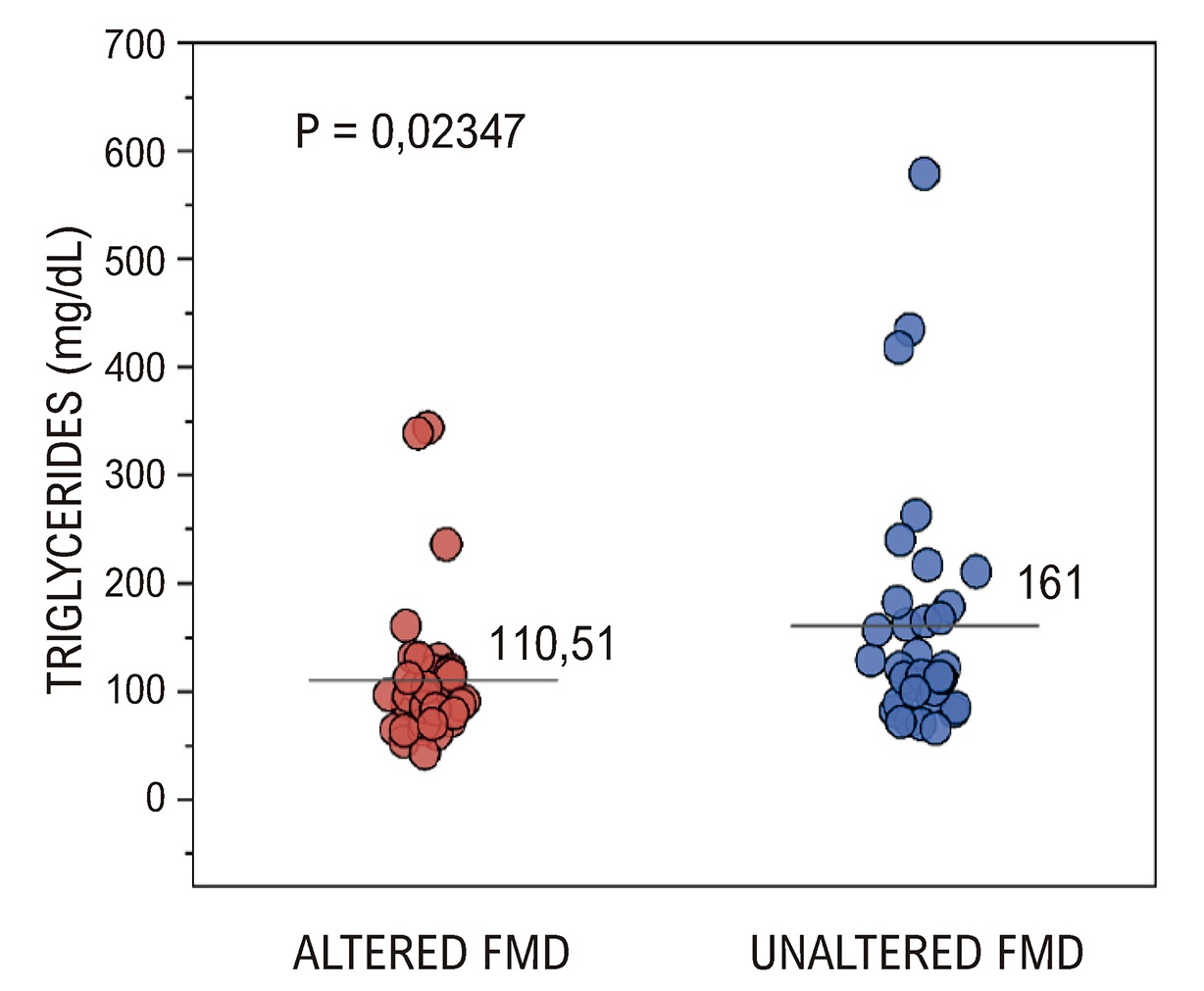
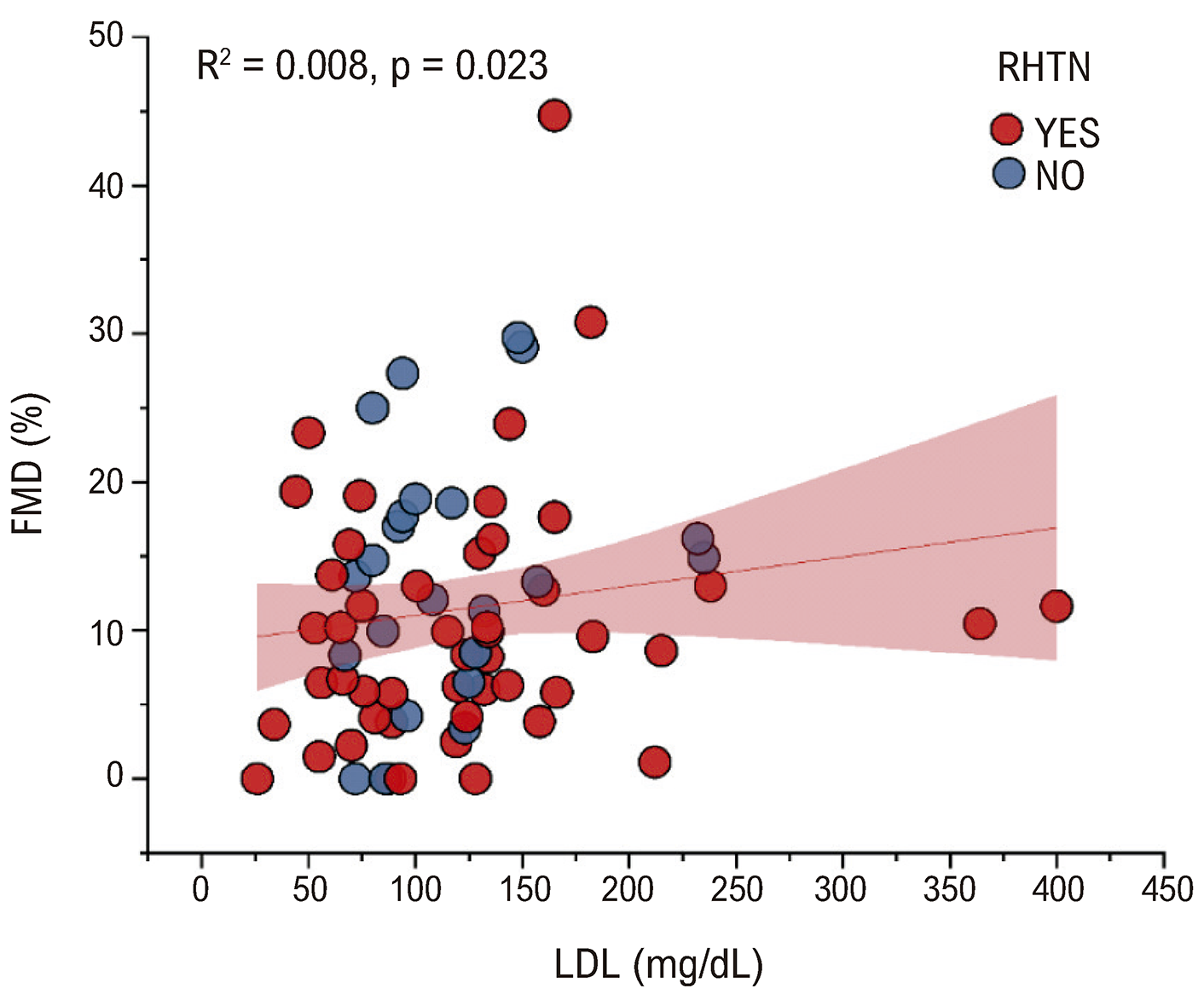
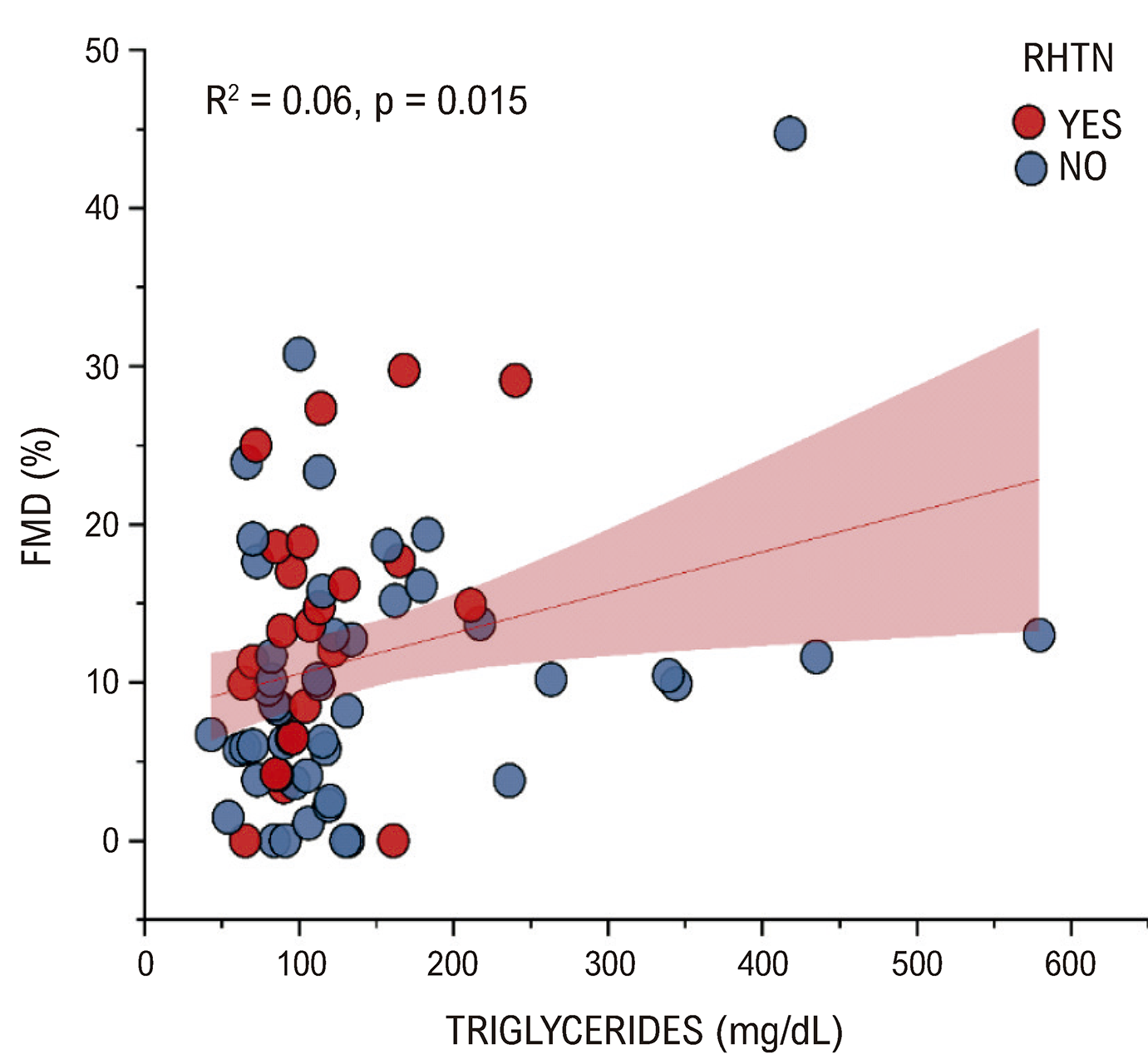
Results The results showed a significant positive correlation between the FMD and LDL (p = 0.204, p = 0.042) and between FMD and triglycerides (p = 0.247, p = 0.037). Glycated hemoglobin was higher in the RHTN group (p = 0.020), potassium was higher in the non-RHTN group (p = 0.029), and C-reactive protein was higher in the RHTN group (p = 0.04). For the other comparisons, no statistically significant differences were found.
Conclusion LDL and triglycerides are FMD predictors, and the RHTN and non-RHTN groups differ in terms of the amount of potassium, protein C, and glycated hemoglobin. The altered and non-altered FMD groups differ only in terms of triglycerides.
Brachial Artery; Vascular Endothelium; Hypertension

 Thumbnail
 Thumbnail
 Thumbnail
 Thumbnail
 Thumbnail
 Thumbnail
 Thumbnail