 Use of Marasmius neocrinis-equi rhizomorphs in the construction of towiri (Psarocolius decumanus) nests in the Brazilian Amazon rainforest
Abstract
The birds called towiri by the Baniwa people include three species: Psarocolius decumanus Pallas, P. bifasciatus Spix, and P. viridis Statius Muller. These are known respectively as japu, japuguaçu and japu-verde in Portuguese, and as Crested Oropendola, Olive Oropendola and Green Oropendola in English. This study investigated the use of rhizomorphs in nests constructed by the P. decumanus. Females of this species build large, pocket-shaped nests that form colonies of 7–12 nests in tall trees. We examined P. decumanus nests collected from two localities in Manaus, and Psarocolius sp. from São Gabriel da Cachoeira in the Brazilian Amazon rainforest, and conducted phylogenetic analyses based on internal transcribed spacer sequences to identify the incorporated rhizomorphs, which belonged to Marasmius neocrinis-equi R.A Koch & Aime. This is the first report of this fungal species in Brazil. In addition, we discuss the role of Psarocolius spp. in the traditions of the indigenous Baniwa people and the observation of kite string in P. decumanus nests in an urban area of Manaus, Brazil.
Key words
Birds-fungi interaction; Japu; Horsehair fungus; Icteridae; Marasmiaceae; Oropendola
INTRODUCTION
During nest construction, some birds incorporate rhizomorphs to enhance the strength of the nest (Wright & Ferraro 1986, McFarland & Rimmer 1996, Chatellenaz & Ferraro 2000, Blanchette & Toapanta-Alban 2022). These rhizomorphs are typically black or dark brown, wire, hair-like, or horsehair macrostructures produced by macrofungi (Marshall 1948, Heckscher et al. 2014, Koch et al. 2017, 2018, 2020, César et al. 2018, Oliveira et al. 2019, 2024a, b, Guard et al. 2024). They are apically dominant, with organized growing tips, and they function in a manner analogous to plant roots (Rayner et al. 1985, Yafetto 2018). In 2013, 98 bird species from 27 families from the tropics and the Nearctic were listed as using Marasmius rhizomorphs in nest construction (Aubrecht et al. 2013). A later global review of rhizomorph use in bird nests expanded this list to 176 bird species from 37 families (Elliott et al. 2019).
During the course of this study, 128 bird nests were collected between May 2023 and November 2024 in the Brazilian states of Amazonas and Pará. Notably, nests constructed by the Crested Oropendola (Psarocolius decumanus Pallas) incorporated substantial quantities of rhizomorphs. This species is called japu in Portuguese and towiri in the language of the indigenous Baniwa people.
The Baniwa are part of the Arawak language family (Ramirez 2001). They live mainly in the basin of the Içana River and its tributaries—the Cubate, Cuyari, and Ayarí rivers—with a population of approximately 6,000 in this region. “Medzeniakonai” is the self-designation of these people used by the Baniwa author of this article (Lopes-Baniwa J.S.) as well as by Casimiro D.E. (unpublished data), who translated it as “those who are born with the language and traditional knowledge,” reflecting their history. The Baniwa are known throughout Brazil for their art and for pepper, which have become symbols of local sustainable-development initiatives through the advocacy of Baniwa leadership (Garnelo 2003, Silva et al. 2016).
Psarocolius decumanus females build large, pocket-shaped nests - in colonies of 7–12 nests in tall trees. This species was first observed to use rhizomorphs in nest construction by Goeldi (1897, as Ostinops decumanus). One of the nest construction materials was described in that study as “a black hairy substance, like horsehair.” This substance was later identified as the rhizomorphs of Marasmius sp. (Huber 1902).
We identified the species of rhizomorph used by Psarocolius spp. for nest construction in the Ayari River basin and in Manaus. We also explored the other materials used in nest construction and the role of Psarocolius spp. in the traditions of the Baniwa people.
MATERIALS AND METHODS
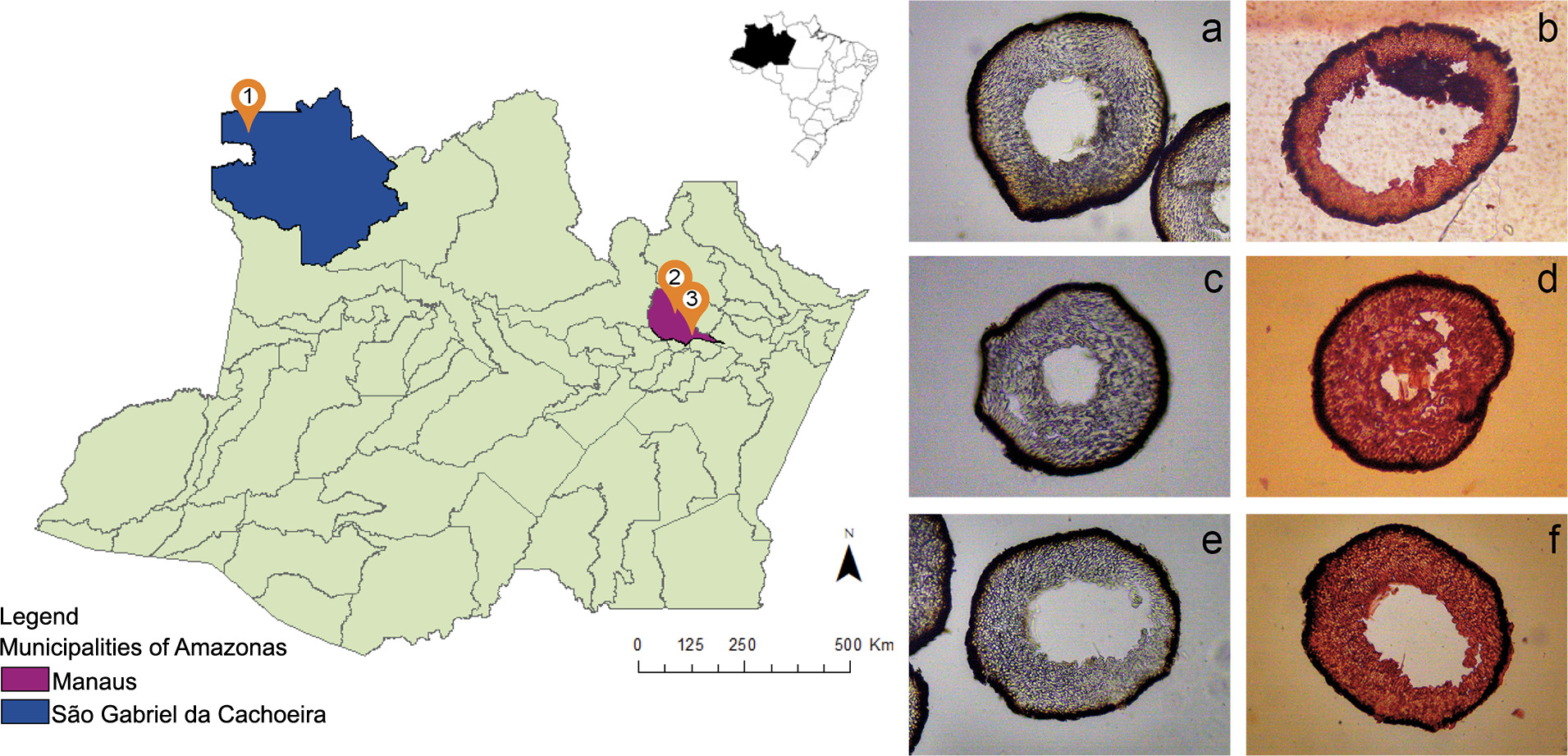
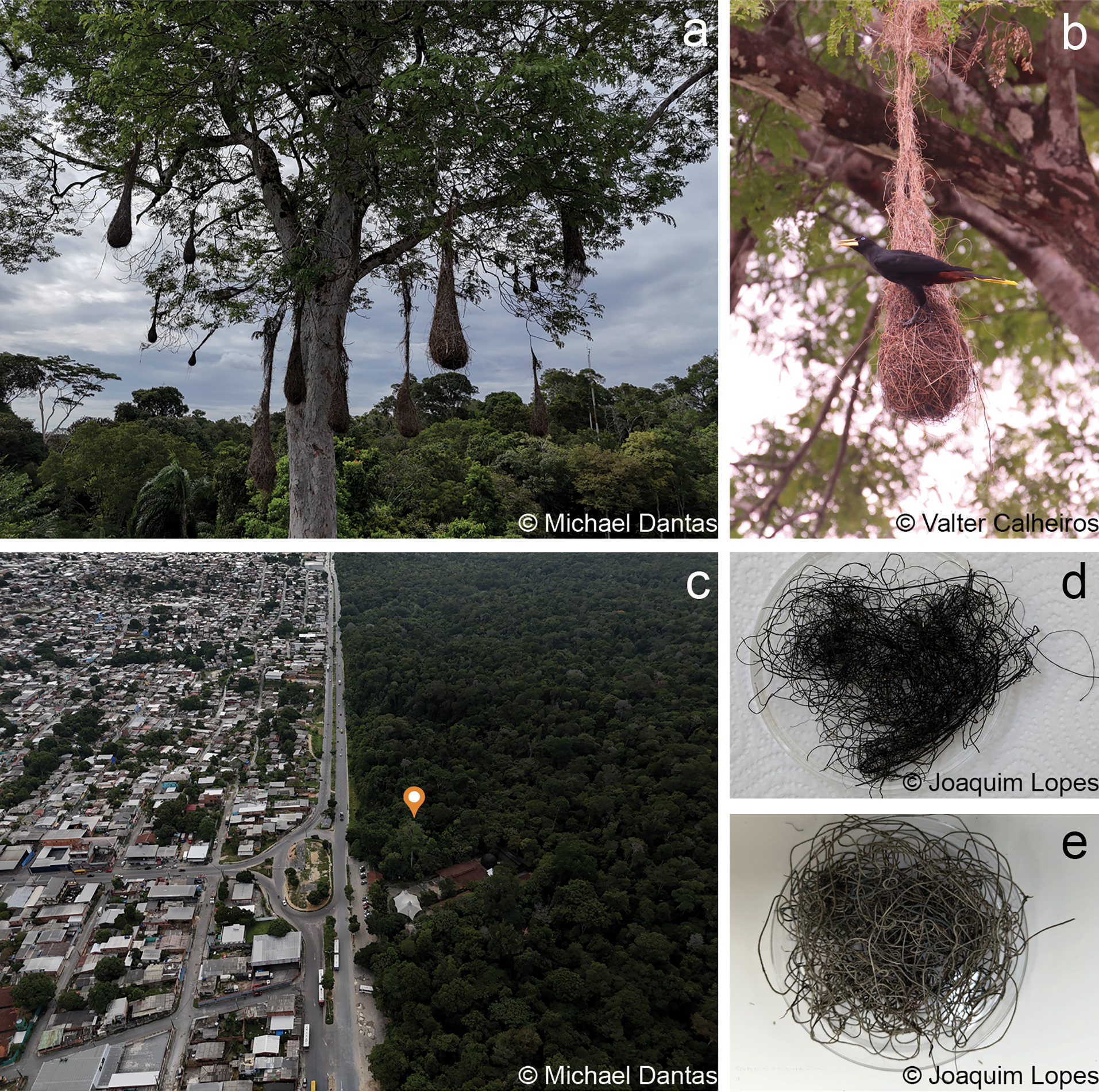
Between May 2023 and November 2024, bird nests were collected from the Ayari River basin and the region surrounding Manaus, Brazil (Figure 1). Nests were collected only after visual inspection had confirmed the absence of eggs or chicks. From among the 128 nests collected, we selected nests for this study from three locations in the state of Amazonas, Brazil: Comunidade Canadá, Alto Rio Negro Indigenous Land, São Gabriel da Cachoeira; Museu da Amazônia (MUSA), Manaus; and Conjunto Acariquara, Manaus. Comunidade Canadá is located approximately 1,100 km from Manaus, and the landscape where the nests were collected is a terra firme area near Campinarana. The MUSA collection site has a unique landscape that features large Angelim Pedra trees (Hymenolobium petraeum Ducke) in which P. decumanus builds its nests; this region is located within the Adolpho Ducke Forest Reserve, a 10,000-ha reserve at the border of the urban area of Manaus (Figure 2). Conjunto Acariquara is located in the urbanized area of Manaus, near a forest fragment of approximately 600 ha at the Federal University of Amazonas. Birds from both locations in Manaus were identified as P. decumanus visually using binoculars with a magnification of 10 × 50 (Bushnell, Overland Park, KS, USA). The nests in the Comunidade Canadá were abandoned and there were no records of the birds, so we will consider Psarocolius sp. The nests were labeled with the collection date, location, and tree species, and transported to the National Institute of Amazonian Research laboratory. The length, base width, and entrance opening of the nests were measured using a ruler. Then the nests were separated into dry plant fibers, dry leaves, rhizomorphs, and other materials such as kite string and kapok seeds.
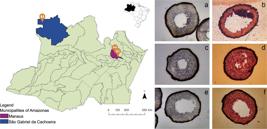
Map of Psarocolius spp. nest-collection sites: (1) Comunidade Canadá, Alto Rio Negro Indigenous Land, São Gabriel da Cachoeira, Amazonas, Brazil, (2) Museum of the Amazon (MUSA), Manaus, Amazonas, Brazil, and (3) Conjunto Acariquara, Manaus, Amazonas, Brazil. Cross-sectional images (MO) of rhizomorphs collected from nests. Nest rhizomorphs collected at (a, b) site 1, (c, d) site 2, and (e, f) site 3. Staining was conducted using KOH (a, c, and e) or Congo Red (b, d, and f).
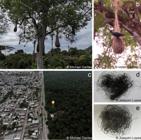
Photographs taken at the MUSA and Manaus collection sites. a - Psarocolius decumanus nest colony on a tall angelim pedra tree (Hymenolobium petraeum) (February 16, 2024). b - Female P. decumanus building a nest (October 24, 2024). c - Aerial photograph showing the contrast between the MUSA forest and urban Manaus; red arrow indicates an angelim pedra tree. d - Marasmius neocrinis-equi rhizomorphs found in P. decumanus nests. e - Kite strings found in P. decumanus nests.
Rhizomorphs were photographed in the laboratory using a stereoscopic microscope (M205C, Leica, Wetzlar, Germany) equipped with a digital camera (MC 190 HD, Leica). For microstructural analysis, thin sections were manually prepared, and the surface, cortex, and inner layer of the rhizomorphs were examined following the method of Yanomami et al. (2019). Subsequently, the sections were treated with 70% ethyl alcohol, rehydrated with 5% aqueous KOH (Oliveira et al. 2024b), stained with 1% Congo Red (Koch et al. 2018), and photographed using an optical microscope (DM 2500, Leica). The rhizomorphs were deposited at INPA Herbarium, according to registration number INPA 302103 to INPA 302108.
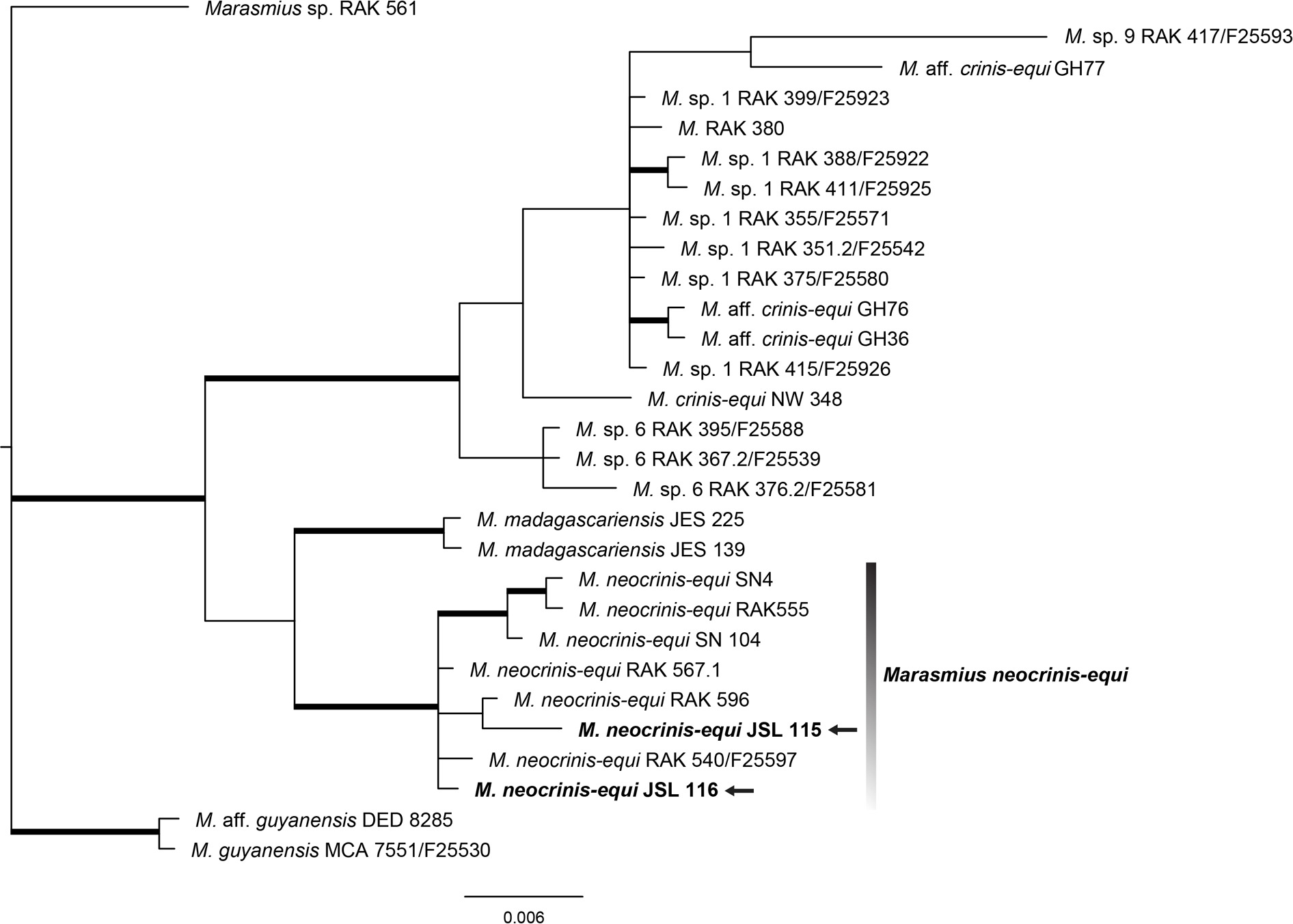
Phylogenetic analyses were conducted to confirm the rhizomorphs species identity by clustering. For this, DNA extraction, amplification and sequencing followed Cabral et al. (2024). The ITS region (nuclear ribosomal internal transcribed spacer, including 5.8S) was amplified and sequenced with the ITS1/ITS4 primers pairs (White et al. 1990). Sequences were visualized and combined in Sequencher (Gene Codes Corporation), and submitted to a BLAST search for similarity. An alignment matrix was built in Aliview v 1.26 (Larsson 2014) using Koch et al. (2020) dataset and the newly generated sequences. The first analysis was conducted using the complete dataset to understand the phylogenetic position of the analyzed specimens (data not shown here). Subsequently, a second analysis was performed, including the sequences from the clade where the specimens clustered and the sequences from phylogenetically related clades. For this purpose, Marasmius sp. RAK 561 (GenBank ID MN930556) was used as the outgroup. jModelTest2 (Darriba et al. 2012) was used to choose the best-fit substitution model and the matrix was submitted to Bayesian phylogenetic analyses at MrBayes (Ronquist & Huelsenbeck 2003). The run consisted in two parallel runs with four incrementally heated simultaneous MCMC simulations over 10 million generations, with trees sampled every 1,000 generations, discarding the first 25% of trees at the burnin stage. The substitution model and phylogenetic analyses were implemented at CIPRES Science Gateway (Miller et al. 2010). Tree was visualized and edited in FigTree version 1.4.2.
RESULTS AND DISCUSSION
Psarocolius decumanus
The body length and weight of adult P. decumanus averages 34–45 cm and 155–360g, respectively (Sick 1997). It has the long yellow tail that characterizes all species of the genus, and the male is larger than the female. This species lives in flocks, from Panama to northern South America, from Bolivia to Argentina, and in all regions of Brazil except Rio Grande do Sul, where it is scarce in regions lacking tall forests. The visual characteristics of the P. decumanus birds at the two collections from Manaus sites followed Sick’s descriptions. In this study, we observed that the females build large, bag-shaped nests in tall trees, forming colonies of around 7–12 nests each measuring 97–143 cm in length, 18–29 cm in basal width, and 10–13 cm in entrance width. The nest trees were identified as Bacabeira (Oenocarpus bacaba Mart.), Angelim Pedra (H. petraeum Ducke) (Figure 2) , and kapok (Ceiba pentandra Gaertn.) in the Comunidade Canadá, MUSA, and Conjunto Acariquara collection sites, respectively.
A recent study of 310 bird species did not record P. decumanus in the Cubate River region between January and February 2023, although the Olive Oropendola (Psarocolius viridis Spix) and Green Oropendola (Psarocolius bifasciatus Muller) were both observed (Baniwa et al. 2024).
Rhizomorphs
The DNA sequences obtained from the rhizomorphs collected in the nests clustered with Marasmius neocrinis-equi R.A. Koch & Aime, confirming the species identification, with a posterior probability value of 0.99 (Figure 3). The species was initially described in Guyana, where it was found in bird nests of an unknown species (Koch et al. 2020). Marasmius neocrinis-equi is also distributed in Ecuador and Costa Rica, and the present study reports for the first time the species in Brazil and in nests of P. decumanus.

No Basidiomata were found in the nests studied. The Basidiomata of species that produce long rhizomorphs are generally very small and fragile; therefore, it is believed that they are lost either during transport to the nest and/or during its construction. In an exploratory experiment, small fragments of rhizomorphs were placed on potato dextrose agar (PDA) medium. Mycelial growth was observed at the ends of the fragments, indicating they were alive. However, due to contamination, it was not possible to isolate the mycelial culture. In addition, rhizomorphs are found attached to wood and organic matter, indicating that the fungus is alive. In August 2024, during the nesting period of P. decumanus, a good availability of rhizomorphs was observed in the forest understory, despite this being a period of low rainfall in the Manaus region, representing an accessible resource for the birds when building their nests.
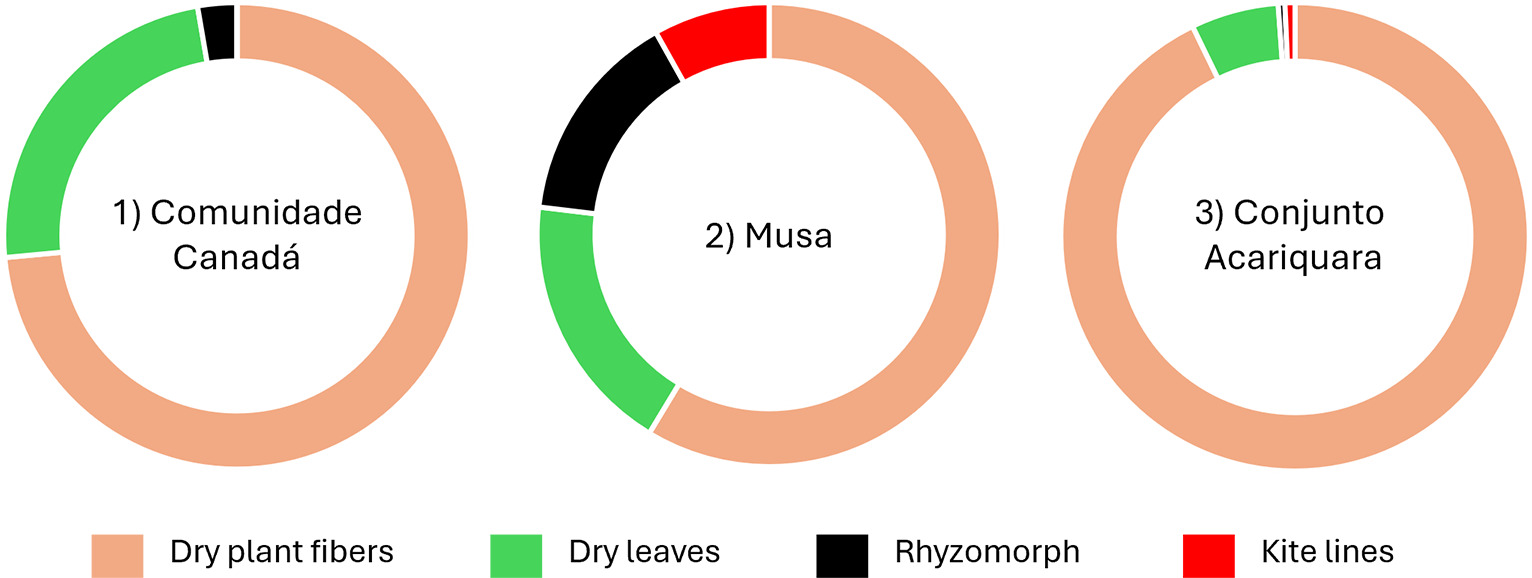
The main material found in the Psarocolius spp. nests was dry plant fibers, representing 58–92% of the total nest weight. All nests had an inner bedding layer of dry leaves, with the greatest amounts found in nests from Comunidade Canadá (24%), followed by Conjunto Acariquara (6%). All nests contained rhizomorphs within the nest structure, with MUSA nests having the highest quantity (15%), followed by Comunidade Canadá (3%) and Conjunto Acariquara (0.5%) (Figure 4). We also observed small amounts of kapok seeds in the bedding layer of Conjunto Acariquara nests.

Average proportions (n = 3 nests) of total nest weight of various materials found in Psarocolius sp. nests from the 1) Comunidade Canadá, São Gabriel da Cachoeira, Amazonas, Brazil, and 2) P. decumanus nests in MUSA collection sites, and 3) Conjunto Acariquara, Manaus, Amazonas, Brazil.
Rhizomorphs, which are resistant to tensile stress, have a waterproof surface and a melanized rind that shields the inner web layer, cortex, and medulla (Yanomami et al. 2019, Rana et al. 2021). The medulla may be solid or hollow, creating cavities that function as conductive pipes for water and dissolved nutrients (Freymann 2008, Yafetto 2018). Images of the rhizomorph structures observed in this study are presented in Figure 1a-f.
Live Marasmius colonies produce antimicrobial compounds (Rosa et al. 2003, Ramesh & Pattar 2010). Rhizomorphs extracted from bird nests in humid tropical forests were metabolically viable, implying that the rhizomorphs used by birds can provide additional benefits, including the production of antimicrobials (Bach et al. 2022). Cortés-Romay & Vargas (2024) observed that after interaction of acacia ants with Marasmius rhizomorphs results in signs of alarm, repellence and intoxication of the ants. They suggest that birds may benefit from using fungal rhizomorphs as it may deter the ants from entering the nest.
In addition to birds, animals such as wasps (Turillazzi 1990) and flying squirrels (Prange & Nelson 2006) use rhizomorphs in nest construction. In the Malay Peninsula, the wasp Metischnogaster drewseni Saussure constructs long, suspended nests using aerial fungal rhizomorphs resembling horsehair; these nests are highly mimetic and feature a conical structure that prevents rain droplets from wetting the interior of the nest (Turillazzi 1990). In Alabama, USA, southern flying squirrels (Glaucomys volans L.) were found to use Gymnopus neobrevipes R.H. Petersen (= Marasmius brevipes Berk. & Ravenel) rhizomorphs as a bedding layer in nest construction, in the first study of ecological interactions between fungi and mammals (Prange & Nelson 2006). In the Maturacá region of the Amazon, women use Marasmius yanomami J.S. Oliveira & N.K. Ishikawa rhizomorphs to decorate their baskets (Yanomami et al. 2019); the incorporation of these rhizomorphs adds to the uniqueness of the baskets, strengthens the traditional knowledge of Yanomami women, and contributes to income generation in their villages.
Flexibility in the use of materials
Psarocolius decumanus birds have demonstrated flexibility in their selection of materials for nest construction. In southern Brazil, P. decumanus nests were reported to have a grayish color due to the incorporation of bromeliad Tillandsia usneoides L. (Spanish moss; Barba-de-velho) (Goeldi 1897). Similarly, nests from the Lower Amazon River Region have a dark color because they contain large quantities of Marasmius rhizomorphs, which are concentrated near the branch (Goeldi 1897, Huber 1902), hypothetically to increase support.
After a century of intense transformations in the metropolitan areas of Belém and Manaus, characterized by deforestation, reduced availability of rhizomorphs, and advancing anthropization, P. decumanus has achieved a high degree of plasticity in its use of the resources available in its surroundings. Replacing rhizomorphs, whose morphology and physical properties resemble plastic threads, these birds have begun to incorporate artificial materials, especially synthetic polymers such as polyethylene, into their nest construction.
A recent study conducted in Salinópolis municipality, Pará, Brazil, in the eastern Amazon, indicated that birds have been impacted by plastic pollution through entanglement, accidental ingestion, and exposure to chemical contaminants (Lopes et al. 2024). The occurrence and composition of plastics were analyzed in 36 P. decumanus nests at three different sites on the Amazon coast. Plastics were present in 67% of abandoned fallen nests; these nests appeared blue, mainly due to the incorporation of blue plastic fibers and ropes, likely obtained from discarded fishing gear. These findings demonstrate the widespread use of plastics by P. decumanus, which may increase the exposure of both juveniles and adults to potential contaminants (Lopes et al. 2024).
In the present work, P. decumanus nests found in urban areas included atypical materials in their construction, including kite strings. Large quantities of kite strings were found in MUSA nests (8%), with smaller quantities in Conjunto Acariquara nests (0.7%) (Figure 2e and Figure 3). The use of kite strings in P. decumanus nest construction raises concerns that products applied to the strings, such as cerol, a mixture of glue and glass powder, could be detrimental to the health of the birds (Figure 5). Conversely, no artificial materials were found in the Psarocolius sp. nests in Comunidade Canadá.

a - Psarocolius decumanus nests observed near areas with intense kite-flying activity in Manaus on December 22, 2024. b - Abandoned kites tangled on power lines; c - kite strings coated with cerol (glue and powdered glass) for sale.
Cultural role of Oropendola among the Baniwa people
The birds that the Baniwa people call towiri include three species: P. decumanus, P. bifasciatus, and P. viridis, which are known respectively as japu, japuguaçu and japu-verde in Portuguese, and Crested Oropendola, Olive Oropendola, and Green Oropendola in English. In the Baniwa language dictionary published in 2001, Henri Ramirez used the spelling “Tóoeiri”, but currently the Ayari River Basin community prefers to use the spelling towiri to refer to the japu.
The Baniwa people refer to P. bifasciatus as towiri eenawi (chief Oropendola), in reference to the authority attributed to this species in relation to other common Oropendolas in the region. During collective activities, individuals of P. bifasciatus perform functions of vigilance and protection over multispecies flocks against predators, including hawks (Rupornis magnirostris Gmelin), jaguars (Leopardus pardalis L.), and large snake (Corallus caninus L.).
In the presence of potential threats, these individuals emit alarm calls, enabling the coordinated escape of the group. Within the avian hierarchy established in the Baniwa symbolic system, the second rank is occupied by P. decumanus (Towiri iittaapali, in Baniwa), a species valued for its organizational and leadership capacity in foraging activities. This Oropendola often leads mixed-species flocks composed of Green Oropendola (P. viridis), White-throated Toucan (Ramphastos tucanus L.), Red-rumped Cacique (Cacicus haemorrhous L.), Red-throated Caracara (Ibycter americanus Boddaert), in the Baniwa language, Towiri hipoleapali, Dzaatte, Khedzoli iraiyaapali, Tataale respectively, and other associated species.
In the sociocultural context, the Baniwa ceremonial headdress is referred to as cangatara. Its composition mirrors the symbolic bird hierarchy: feathers of P. bifasciatus are reserved exclusively for the cangatara of the highest community leadership (the cacique), functioning as emblems of protection and supreme authority. Feathers of P. decumanus are employed in the cangataras of secondary leaders, associated with the ability to guide collective groups in hunting, fishing, and the opening of new swiddens. Feathers of P. viridis may also be incorporated into both the cacique’s and the secondary leaders’ cangataras, though without occupying a prominent position.
During rituals, Oropendola and all birds with good behavior are evoked by a healer to bless children or individuals transitioning into adulthood; these rituals are thought to confer the wisdom to live productively and independently, without depending on others, as well as to dispel negative thoughts. The great ornamental and ritual importance of Oropendola (Towiri) feathers highlight the need to maintain healthy forests that are free of contaminants, which will allow them to continue to build nests of natural materials such as rhizomorphs.
Acknowledgements
We thank Michael Dantas and Valter Calheiros for the photographs, and Antônio João Cândido Lopes, Tyson Ferreira-Sateré, Laura Leite, Atmam Batista, Geovana Laurentino, Carina Valencia, and André Vieira for field and laboratory assistance. We are grateful to the leadership of Escola Baniwa Eeno Hiepole, Organização Baniwa e Koripako Nadzoeri, and the Federação das Organizações Indígenas do Rio Negro (FOIRN) for their support. This study was funded by Conselho Nacional de Desenvolvimento Científico e Tecnológico (CNPq) through PPBio 2023 (441288/2023-5), PROTAX 2024 (445729/2024-4), and ProAmazon (442677/2025-1). Scholarships were provided by FAPEAM to Joaquim S. Lopes-Baniwa, and by CNPq to Ruby Vargas-Isla and Marly C. Lima.
References
- AUBRECHT G, HUBER W & WEISSENHOFER A. 2013. Coincidence or benefit? The use of Marasmius (horse-hair fungus) filaments in bird nests. Avian Biol Res 6: 26-30.
- BACH R, BRANN M & AIME MC. 2022. Viability of fungal rhizomorphs used in bird nest construction in tropical rainforests. Symbiosis 87: 175-179.
- BANIWA D, BANIWA D, OLÍMPIO EF, PEDRO DL, BITTENCOURT GF, RIBAS CC, D’HORTA FM & MELINSKI RD. 2024. Espécies de aves do Rio Cubate: Terra Indígena do Alto Rio Negro = Wiraita uikú waita Kubati parana rupi: Iwi idijina iwatewa parana pixuna upé = Kepiranai Hiidze rikoperi: Newikinai Hipaite Makapawani poawalhe. Editora INPA, Manaus, 344 p.
- BLANCHETTE RA & TOAPANTA-ALBAN CE. 2022. Rhizomorphs above and below ground: finally we see the humongous fungus. Fungi 15: 28-31.
-
CABRAL TS. 2024. DNA extraction, amplification and sequencing for macrofungi (Basidiomycetes). Zenodo. https://doi.org/10.5281/zenodo.10605980
» https://doi.org/10.5281/zenodo.10605980 - CÉSAR E, BANDALA VM, MONTOYA L & RAMOS A. 2018. A new Gymnopus species with rhizomorphs and its record as nesting material by birds (Tyrannidae) in the subtropical cloud forest from eastern Mexico. MycoKeys 42: 21-34.
- CHATELLENAZ ML & FERRARO L. 2000. Materiales Vegetales y fúngicos en nidos de aves del nordeste Argentino y Paraguay. Facena 16: 103-119.
- CORTÉS-ROMAY R & VARGAS SA. 2024. Horse-hair fungus used in bird nests alters the behaviour of acacia ants. Anim Behav 216: 73-83.
-
DARRIBA D, TABOADA G, DOALHO R & POSADA D. 2012. jModelTest 2: more models, new heuristics and parallel computing. Nat Methods 9: 772. https://doi.org/10.1038/nmeth.2109.
» https://doi.org/10.1038/nmeth.2109 - ELLIOTT TF, JUSINO MA, TRAPPE JM, VERNES K, LEPP H, BALLARD GA, BRUHL JJ & VERNES K. 2019. A global review of the ecological significance of symbiotic associations between birds and fungi. Fungal Divers 98: 161-194.
- FREYMANN BP. 2008. Physical properties of fungal rhizomorphs of marasmioid basidiomycetes used as nesting material by birds. Ibis 150: 395-399.
- GARNELO L. 2003. Poder, hierarquia e reciprocidade: saúde e harmonia entre os Baniwa do Alto Rio Negro. Rio de Janeiro: FIOCRUZ, 257 p.
- GOELDI EA. 1897. On the Nesting of Cassius per Sicus, Cassidix oryzivora, Gymmnomystax melanicterius, and Todirostrum maculatum Ibis 4: 361-370.
- GUARD FE, DEARNALEY J, MAY TW & LEBEL T. 2024. Untangling horsehair fungi in Australia: Marasmius crinis-equi (Marasmiaceae) and related taxa. Mycol Prog 23: 60.
- HECKSCHER CM, TAYLOR SM & SUN CC. 2014. Veery (Catharus fuscescens) nest architecture and the use of alien plant parts. Am Midl Nat 171: 157-165.
- HUBER J. 1902. Sobre os materiais do ninho do Japu (Ostinops Decumanus). Bol Mus Paraense Hist Nat Ethnogr (Museu Goeldi) 3: 328-344.
- KOCH RA, LIU J, BRANN M, JUMBAM B, SIEGEL N & AIME MC. 2020. Marasmioid rhizomorphs in bird nests: Species diversity, functional specificity, and new species from the tropics. Mycol 12: 1086-1103.
- KOCH RA, LODGE DJ, SOURELL S, NAKASONE K, MCCOY AG & AIME MC. 2018. Tying up loose threads: revised taxonomy and phylogeny of an avian-dispersed Neotropical rhizomorph-forming fungus. Mycol Prog 17: 989-998.
- KOCH RA, WILSON AW, SÉNÉ O, HENKEL TW & AIME MC. 2017. Resolved phylogeny and biogeography of the root pathogen Armillaria and its gasteroid relative, Guyanagaster. BMC Evol Biol 17: 33.
-
LARSSON A. 2014. AliView: A fast and lightweight alignment viewer and editor for large datasets. Bioinform 30: 3276-3278. https://doi.org/10.1093/bioinformatics/btu531.
» https://doi.org/10.1093/bioinformatics/btu531 - LOPES AC, KUZNETSOVA M, FERREIRA ATS, WETTER NU, GIARRIZZO T & MARTINELLI FILHO JE. 2024. Blue nests: The use of plastics in the nests of the Crested Oropendola (Psarocolius decumanus) on the Brazilian Amazon coast. Mar Pollut Bull 205: 1-7.
- MARSHALL AJ. 1948. The Breeding and Distribution of Erythrura trichroa in Australia. Emu 47: 305-310.
- MCFARLAND KP & RIMMER CC. 1996. Horsehair fungus, Marasmius androsaceus, used as nest lining by birds of subalpine spruce-fir community in the northeastern United States. Can Field Nat 110: 541-543.
- MILLER MA, PFEIFFER W & SCHWARTZ T. 2010. Creating the CIPRES Science Gateway for Inference of Large Phylogenetic Trees. Gateway Computing Environments Workshop (GCE), New Orleans, LA, USA, p. 1-8. doi: 10.1109/GCE.2010.5676129.
- OLIVEIRA JJS, DESJARDIN DE, JENKINSON TS, MARGARITESCU S, CAPELARI M & MONCALVO JM. 2024a. Taxonomic revision of Marasmius Fr. And Marasmiaceae Roze ex Kunhner based on multigênero phylogenetic and morphological evidence. Fungal Divers 127: 1-54.
- OLIVEIRA JJS, ISHIKAWA NK, VARGAS-ISLA R & CABRAL DP. 2019. Progress on the phylogeny of the Omphalotaceae: Gymnopus s. str., Marasmiellus s. str., Paragymnopus gen. nov. and Pusillomyces gen. nov. Mycol Prog 18: 713-739.
- OLIVEIRA JJS, VARGAS-ISLA R, CABRAL TS, RODRIGUES DP & ISHIKAWA NK. 2024b. Spider fungi: New species of Marasmius and Pusillomyces in the aerial rhizomorph web-maker guild in Amazonia. Fung Syst Evol 14: 35-55.
- PRANGE S & NELSON DH. 2006. Use of fungal rhizomorphs as nesting material by Glaucomys volans (Southern Flying Squirrels). SENA 5: 355-360.
- RAMESH C & PATTAR MG. 2010. Antimicrobial properties, antioxidant activity and bioactive compounds from six wild edible mushrooms of western ghats of Karnataka, India. Pharmacognosy Res 2: 107-112.
- RAMIREZ H. 2001. Dicionário da Língua Baniwa. Manaus: Editora da Universidade do Amazonas, 382 p.
- RANA H, SMITHSON S, JACKSON J & KANNAN R. 2021. Bird usage of black Marasmius fibers as nest material. J Ark Acad Sci 75: Art 19.
- RAYNER ADM ET AL. 1985. Morphogenesis of vegetative organs. In: Anderson JB, Moore D, Casselton LA, Wood DA & Frankland JC (Eds), Developmental biology of higher fungi. Cambridge University Press, England, p. 249-279.
-
RONQUIST F & HUELSENBECK JP. 2003. MrBayes 3: Bayesian phylogenetic inference under mixed models. Bioinform 19: 1572-1574. https://doi.org/10.1093/bioinformatics/btg180.
» https://doi.org/10.1093/bioinformatics/btg180 - ROSA LH, MACHADO KMG, JACOB CC, CAPELARI M, ROSA CA & ZANI CL. 2003. Screening of Brazilian Basidiomycetes for antimicrobial activity. Mem Inst Oswaldo Cruz 98: 967-974.
- SICK H, PACHECO JF, BARRUEL P & O’NEILL JP. 1997. Ornitologia Brasileira, 2nd ed., Nova Fronteira, Rio de Janeiro, 912 p.
- SILVA A ET AL. 2016. Pimenta Jiquitaia Baniwa. Instituto Socioambiental: São Paulo; São Gabriel da Cachoeira, 68 p.
- TURILLAZZI S. 1990. Notes on the biology, social behaviour and nest architecture of Metischnogaster drewseni (Saussure) (Hymenoptera, Stenogastrinae). Entomol Gen 57: 331-339.
- WHITE TJ, BRUNS TD, LEE S & TAYLOR J. 1990. Amplification and direct sequencing of fungal ribosomal RNA genes for phylogenetics. In: Innis MA, Sninsky DH & White TJ (Eds), PCR protocols: A Guide to Methods and Applications. Academic Press Inc, p. 315-322.
- WRIGHT JE & FERRARO LI. 1986. Herbas fúngicas como principal componente de nidos de boyero en el NE argentino. Facena 6: 5-16.
-
YAFETTO L. 2018. The structure of mycelial cords and rhizomorphs of fungi: A minireview. Mycosphere 9: 984-998. https://dx.doi.org/10.5943/mycosphere/9/5/3.
» https://doi.org/10.5943/mycosphere/9/5/3 - YANOMAMI F ET AL. 2019. Përɨsɨ: Përɨsɨyoma pë wãha oni = Marasmius yanomami: o fungo que as mulheres yanomami usam na cestaria. São Paulo: O Instituto Socioambiental (ISA), 41 p.
Edited by
-
Handling editor
Marcela Lima
Data will be made available upon reasonable request..