 Conservation, diversity, and evaluation of Cassava landraces for northern Mato Grosso
Abstract
Cassava is present in several countries, including Brazil. It is an important crop for family farming and contributes to the supply of food and income for families. The objective of this study was to evaluate sweet cassava varieties grown in the state of Mato Grosso that have higher yield, resistance to deterioration and the quality of their cooked roots. The study was conducted in the municipality of Claudia, Mato Grosso, using 16 varieties of sweet cassava. The analysis of variance revealed significant differences for most trait, with the exception of the average root length and the average root diameter. The results indicate that five varieties exhibited superior performance in terms of mass of fresh aerial part, tuberous root production, fresh commercial root mass and harvest index. As for deterioration, Amarela (04NM) stood out for having no deteriorated roots after four days of storage, in addition to a shorter cooking time (10 min) and its standard cooked mass was classified as “smooth, slightly plastic and sticky”. Farmers are advised to gradually introduce varieties that have performed well in their cropping systems. The introduction of new varieties will promote crop diversification and contribute to the conservation of these varieties.
Key words
Agronomic performance; culinary quality; genetic variability; shelf life
INTRODUCTION
Native to South America, cassava (Manihot esculenta Crantz) is the second most important energy food for billions of people, particularly in developing countries (Souza et al. 2024). Approximately 100 countries cultivate cassava, with Brazil ranking as the fifth largest producer in the world, behind Nigeria, the Democratic Republic of Congo, Thailand, and Ghana (FAO 2023, Lima et al. 2020). It is an important crop for family farming, as it contributes to the food supply of families living in rural areas, in the generation of work and income through the sale of fresh roots or their derivatives (Modesto Júnior & Alves 2016).
Due to its ability to adapt to a wide range of temperatures, soils—including those low in nutrients—and drought conditions, cassava achieves satisfactory yields even when cultivated in such environments (Ribeiro et al. 2019, Paula et al. 2024).
In Brazil, the states of Pará and Paraná, are the largest producers of cassava (CONAB 2024). The state of Mato Grosso occupies 17th position in terms of national production (IBGE 2024), indicating that there is still much to be improved in terms of its productivity levels. The management of the varieties and the development of appropriate techniques for cassava cultivation in the most varied production systems are the main challenges for improving the productivity and quality of the roots (Paz et al. 2020).
Family farming develops its agricultural practices based on the ownership of the means of production, aiming both at consumption by the family and commercialization (Santos et al. 2014). Alternative production approaches can be an option for family farming, as they are valued by the market for combining innovative techniques with traditional agricultural practices, which foster diversification and reduce environmental impacts (Finatto & Corrêa 2011, Yavorski & Lima 2021).
Several studies have been carried out that have proved the high number of local varieties of cassava with production potential in Mato Grosso (Amorozo 1996, Carrasco 2012, Tiago 2016, 2020, Oler 2017, Zago et al. 2017, Pedri et al. 2018, Figueredo et al. 2019, Oler et al. 2019, Martins et al. 2024). This indicates that there is sufficient genetic variability and that there are varieties adapted to the environmental conditions of the state. However, it was observed that the germplasm collection is generally local and restricted to specific communities or, at most, to neighboring communities within the same municipality, with little exchange of propagules over longer distances between cities. This situation poses a risk to the maintenance and conservation of this genetic heritage, since when agricultural activities are interrupted for different reasons (such as rural exodus, shortage of family labor, or low economic return), valuable materials selected over many years can be lost, leading to genetic erosion.
Cassava roots store a significant amount of starch in the parenchyma, which can represent up to 85% of the total weight of the root, and the size, shape and weight of these roots are mainly influenced by the cultivated variety and the environmental conditions under which they are planted (Silva 2021). The varieties of cassava for cooking at home are chosen by the producers considering the demands of the consumers in relation to the quality of the roots, which involves several factors. The final texture of the cooked roots is one of the quality attributes most valued by consumers, which is significantly influenced by the time they are cooked for (Padonou et al. 2005, Kouadio et al. 2011, Pedri et al. 2018, Tagliapietra et al. 2021). Another important factor is shelf life, as cassava roots are highly perishable. From 24 to 48 hours after harvest, symptoms of physiological deterioration begin to appear, which increases root loss and production costs, as well as limiting the distance between production and marketing sites (Djabou et al. 2017, Santos et al. 2022, Morante et al. 2010).
Based on the facts presented, the objective of this study was to promote the diversification and evaluation of cassava varieties in northern Mato Grosso. To achieve this purpose, the research was structured into four specific objectives: (i) introduce new cassava varieties to farmers in the municipality of Cláudia; (ii) perform agronomic evaluation and clustering of the varieties; (iii) determine the post-harvest physiological deterioration rate of the varieties; and (iv) evaluate root cooking time in relation to desirable culinary attributes.
MATERIALS AND METHODS
Implementation of the experiment
Study area
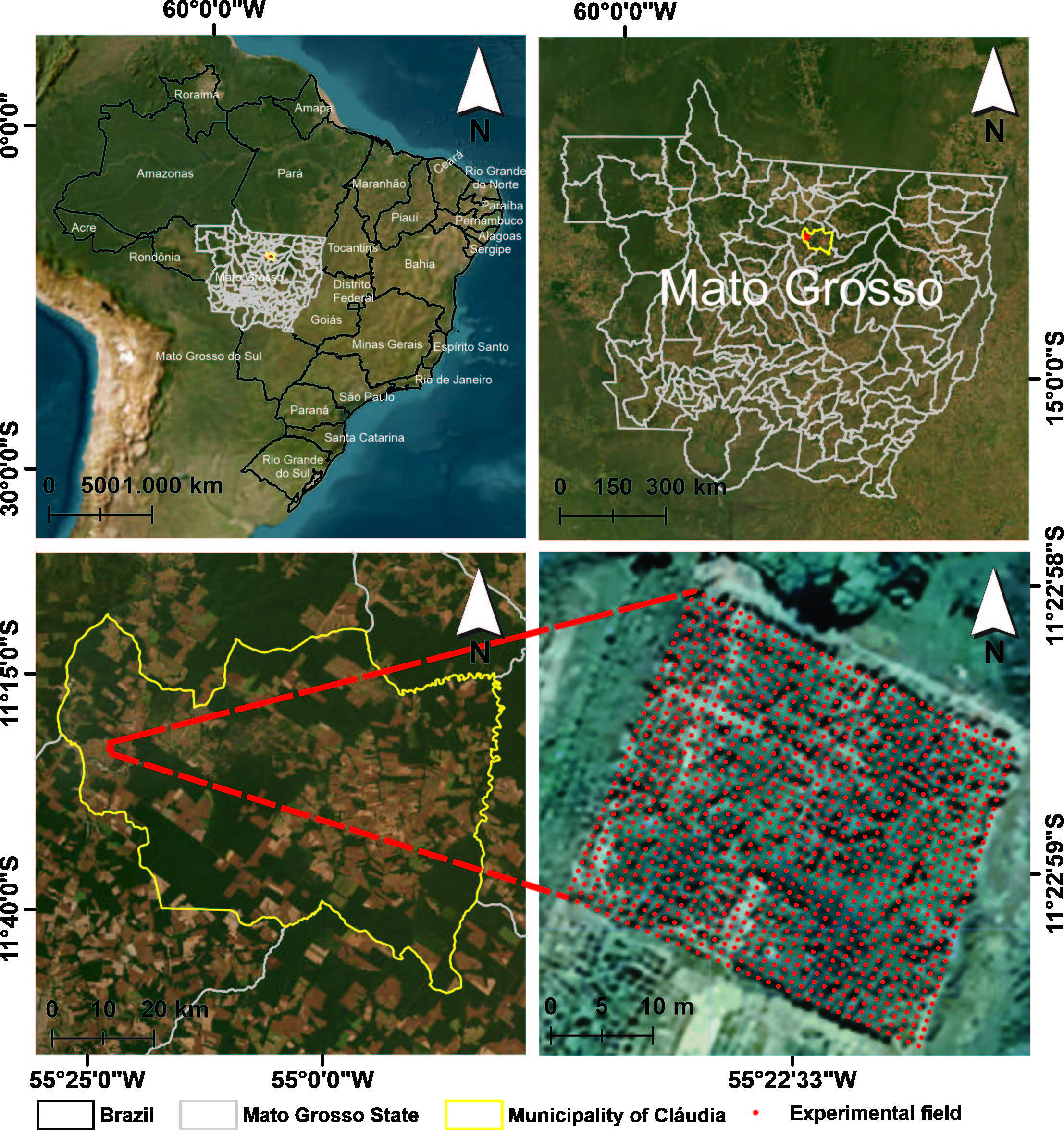
The study was conducted on the property Unidade Camponesa de Produção Agroecológica Vencedor, BR163, km 890, located in the settlement 12 de outubro, which is in the municipality of Cláudia, Mato Grosso (11°22’58.7” S e 55°22’32.9” W) (Figure 1).

Map of location of the experimental area in the municipality of Cláudia in the state of Mato Grosso.
The municipality has an area of 3,843.561 km2 and is approximately 570 km from the state capital Cuiabá and 60 km from Sinop. It belongs to the northern Mato Grosso mesoregion (IBGE 2022), and has a tropical-rainy type climate with a short period of drought, (Am in the Köppen classification), being a transition between the superhumid equatorial climate (Af) of the Amazon and the humid tropical (Aw) of the Central Plateau (Alvares et al. 2013, Almeida et al. 2015). The region is characterized by two seasons, a rainy one that occurs from October to April and a dry one, from May to September (Borella et al. 2018).
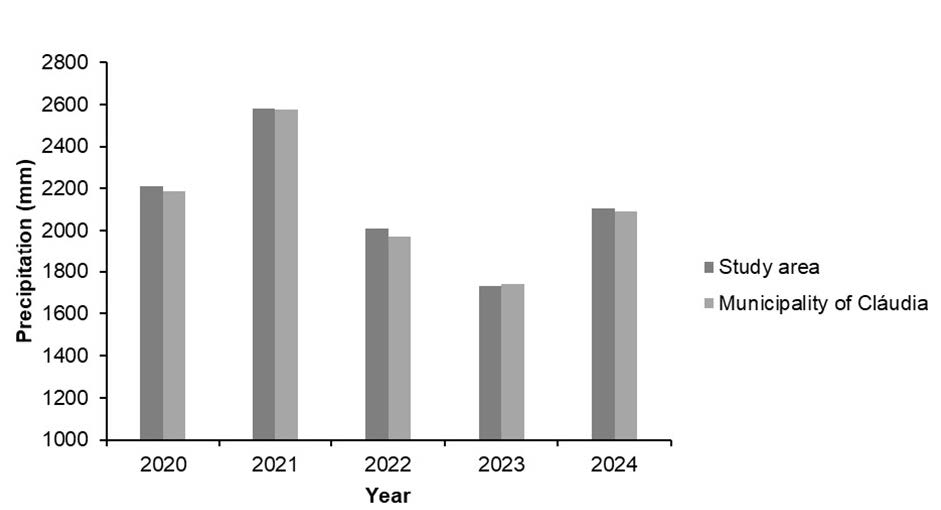
The experiment was conducted during the rainy season to ensure natural water availability for cassava growth. This period was selected to take advantage of the region’s favorable climatic conditions, thereby minimizing external limitations to plant development. The climatic data corresponding to the experimental period are presented in Figure 2. Precipitation data were extracted via remote sensing from the Climate Hazards Group InfraRed Precipitation with Station data (CHIRPS) product (Oliveira-Júnior et al. 2021).

Annual precipitation (mm) recorded between 2020 and 2024, comparing data collected in the experimental area and in the municipality of Cláudia, MT.
Selection of cassava varieties
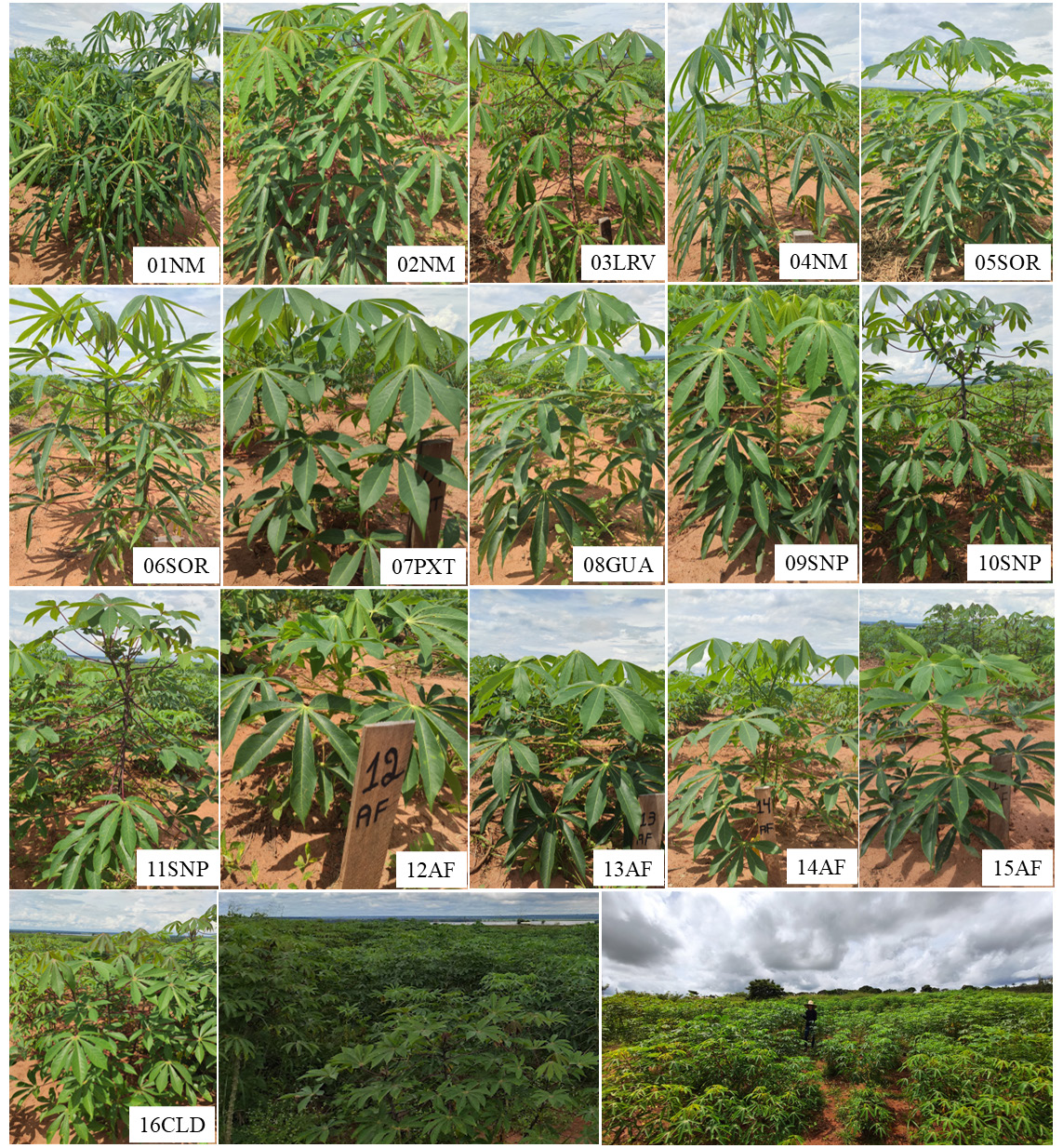
The cassava varieties that integrated this research were based on previous studies conducted by Tiago (2016) and Pedri (2022). These materials were collected in the north of the state, along the BR163 highway, and in the municipality of Alta Floresta, which stand out for their agronomic potential for cultivation and commercialization, as shown in Table I and Figure 3. The varieties were introduced into the materials already cultivated by farmers with the purpose of expanding the genetic base present in the fields, promoting productivity gains, stimulating the conservation of local varieties, and strengthening the income generation of farming families. The control (16CLD) was the native variety used by the farmers of the settlement.

Varieties in the experimental field in the municipality of Cláudia. 01NM - Amarelinha; 02NM - Cascatinha; 03LRV - Branca; 04NM - Amarela; 05SOR - Branca; 06SOR - Mandioca de Fritar; 07PXT - Mandioca Branca; 08GUA - Castelinha; 09SNP - Pão; 10SNP - Talo Vermelho; 11SNP - Cuiabana; 12AF - Cacau Roxa; 13AF - Mandioca Pão; 14AF - Cacau Amarela; 15AF - Amarela; 16CLD - Cacau. Source: Author.
Cassava is commonly classified as ‘bitter’ when its roots contain between 100 and 500 mg kg⁻¹ of cyanide (CN⁻), and as ‘sweet’ when the content is below 100 mg kg⁻¹ (Wheatley et al. 1993). The cyanide concentration depends on the variety, environmental conditions, cultural practices, and the plant’s developmental stage (McMahon et al. 1995). Although specific cyanide analyses were not conducted in this study, the cultivars evaluated are traditionally used for human consumption in home cooking (sweet cassava), which allows us to assume that their cyanide levels fall within the safe range, i.e., below 100 mg kg⁻¹.
Preparation of the area and planting of varieties
Initially, soil analysis was performed, with collection in the 0-20 cm layer. The results are presented in Table II.
Because it is an agroecological area, the farmers do not use conventional fertilizers on their properties and, therefore, the experiment was conducted following local practices, without the use of fertilizers. Soil preparation was carried out with a harrow and a grader. The planting holes were dug to a depth of between 10 and 15 cm. The setts were cut into lengths of approximately 15 cm (maintaining an average of five buds per propagule). Maintenance of the area was carried out in the form of manual weeding. The experiment was installed in a randomized block design, with three replications and 16 treatments. Each variety consisted of two rows of eight plants, spaced 1.0 m between rows and between plants, with 16 plants for each variety per repetition, totaling 768 plants (Figure 4). Planting took place on October 19, 2022, and the crop was harvested at 11 months after planting (September 2023).

Implementation of the cassava experiment (a, b); planting team together with the farmer (c); emergence of varieties (d, e). Source: Author.
Evaluations
Agronomic characterization
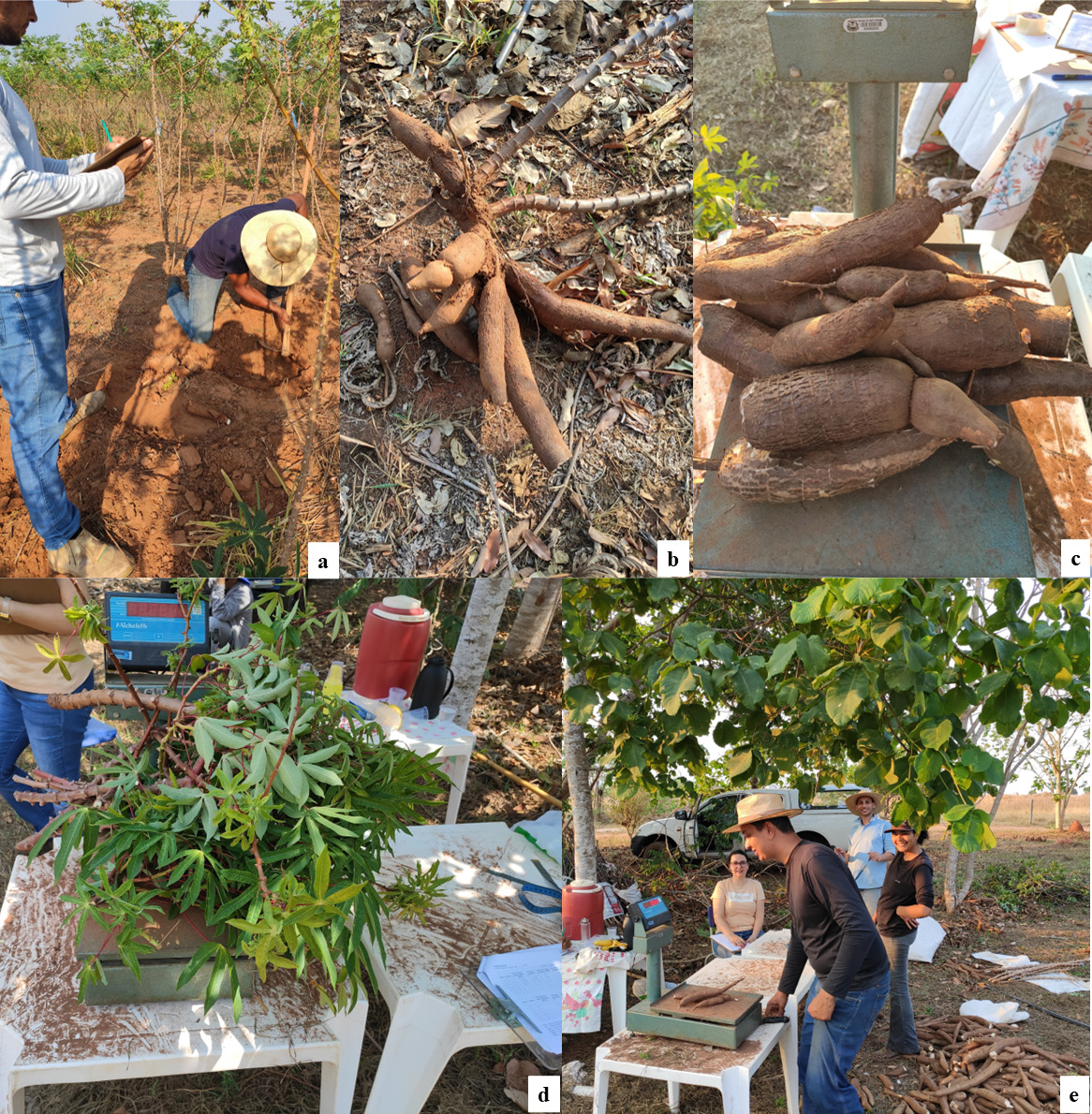
Agronomic characterization occurred at harvest, through seven quantitative variables, as proposed by Fukuda & Guevara (1998): (1) mass of fresh aerial part – MFAP (t/ha); (2) tuberous root production – TRP (t/ha); (3) fresh commercial root mass – FCRM (t/ha); (4) harvest index – HI (%), obtained via the relationship between tuberous root production and total weight of the plant; (5) average number of roots per plant – ANRP; (6) average root length – ARL (cm); (7) average root diameter – ARD (cm) (Figure 5).

Harvest and agronomic characterization of the 16 cassava varieties (a and b), with emphasis on root weight (c), aerial part (d), and non-commercial grade roots (e). Source: Author.
The execution of the experiment in a single cultivation cycle was considered sufficient to achieve the objectives of this study, since the main purpose was to characterize and compare cassava varieties introduced into farmers’ fields in the northern region of Mato Grosso, evaluating their productive performance, culinary attributes, and susceptibility to postharvest deterioration. The tested varieties had previously been selected by farmers and partner institutions for their good agronomic potential and regional adaptation. The 10–12 month period after planting is widely used in morphoagronomic and yield characterization trials of cassava, as it coincides with the stage when roots typically reach their maximum accumulation of dry matter and commercial yield, allowing the full expression of the evaluated traits (Enesi et al. 2022, Sampaio Filho et al. 2024, Nzola et al. 2022). Previous studies have also indicated that one growing cycle is sufficient to evaluate productivity and agronomic characteristics in cassava, such as those conducted by Moreto & Neubert (2014), Simongini et al. (2021), Nzola et al. (2022), who performed one-year experiments to assess productive performance and root characteristics in cassava varieties.
Culinary characteristics
For evaluation of the ease of peeling of the cortex, five commercial roots of each variety, considered healthy and without damage, were randomly selected. Subsequently, the roots were washed under running water, their ends were discarded, and the median portion of the root was cut into pieces (cylinders) 5 cm long. The pieces were peeled with the aid of a knife and evaluated for the ease of removal of the pulp cortex using the following scores: easy (3), medium (5), hard (7) (Oliveira et al. 2011, Soares et al. 2017, Martins 2022).
Regarding cooking, approximately 500 g of pieces of each cassava variety, with a size of 5 cm, were weighed using an analytical balance. The cassava pieces were placed in an aluminum pressure cooker with 1.5 L of water. The maximum cooking time was timed at 30 minutes from the start of boiling. At each 10-minute interval, the pressure of the pan was released, and the pieces were tested with a fork to evaluate the cooking process according to penetration resistance, and then the cooking time was noted.
The pieces, after reaching the cooking time, were vigorously kneaded with a fork 30 times consecutively. Then, the mass was subjected to kneading 30 times by hand, and a block was molded from it (Pereira et al. 1985, Pedri et al. 2018).
Post-harvest spoilage
The study evaluated the deterioration of the roots post-harvest, considering five roots (with cortex and without damage) per variety. The roots were stored at a temperature of 25 °C for four days (Fukuda & Guevara 1998, Pedri et al. 2018). Subsequently, these were cut into 3 cm thick slices and evaluated according to the following scale: 0 (no deterioration), 1 (up to 20% of deterioration), 2 (21 to 40% of deterioration), 3 (41 to 60% of deterioration), 4 (61 to 80% of deterioration) and 5 (81 to 100% of deterioration). The data were tabulated in Excel® spreadsheets and the percentage of deterioration of each variety was calculated.
Statistical analysis
Quantitative agronomic data were analyzed using the Bartlett homogeneity and Lilliefors normality test. For the variables that did not present homogeneity and normality, the root transformation (x+k) was used. Subsequently, the data were submitted to analysis of variance (ANOVA) and, when the value of F was significant, the Scott & Knott (1974) test was applied at 5% probability to compare the means. The data were analyzed with the help of the GENES v. 1990.2022.24 (Cruz 2016).
RESULTS
The analysis of variance (ANOVA) revealed significant differences between the treatments for most of the studied characteristics (Table III), with the exception of mean root length (ARL) and average root diameter (ARD).
Table IV presents the comparison of the means between the varieties and the variables with significant results in the analysis of variance. Based on the data provided and on the groups formed by the Scott-Knott test, we can conclude that, for the variables FCRM, TRP, FCRM and HI, the means were separated into two groups. For the ANRP variable, the means are clustered in a single group, indicating that there was no difference between the varieties for this characteristic. Varieties that are in Group “a” are recommended for cultivation due to their performance for the evaluated characteristics, while those in Group “b” may be less favorable.
Identification of cassava varieties collected in the north of the state of Mato Grosso, Brazil.
Some varieties stand out for certain characteristics, as is the case of the variety 03LRV, which demonstrates superior performance for the variables MFAP, TRP and FCRM in relation to the means observed, although statistically it does not differentiate from the varieties that are in the same group. However, for the farmer, a small increase can mean greater gains, when planting on a larger scale. Equally relevant is the 01NM variety, with relatively significant means. This suggests that these varieties have considerable potential both in terms of aerial production and for root crops. On the other hand, some varieties showed inferior performance compared to others. Varieties 06SOR and 05SOR, for example, consistently recorded lower values in all characteristics, indicating that they may be less productive or less adapted to the conditions of the experiment.
The harvest index (HI) is an indicator of yield, reflecting the ratio of tuberous roots to the total mass of the plant. For this variable, 50% of the varieties presented an HI higher than 37%, while the others presented a lower value. The 02NM variety had the highest average for the HI, suggesting a better allocation of its resources for the production of tuberous roots. In addition, the average number of roots per plant (ANRP) varied considerably between varieties. While some, such as 16CLD, have a high number of roots per plant, others, such as the varieties 06SOR, 07PXT, 12AF, 14AF and 15AF, show a significantly lower number of roots.
Through a general analysis via the individual means of the evaluated characteristics, it is observed that the varieties such as 03LRV and 01NM stand out due to high productivity and commercial quality, when compared to the control (16CLD), which, despite being allocated in the same group (“a”), presented an average TRP and lower FCRM. However, the 16CLD variety, although not the most productive, still shows considerable performance, with an overall productivity rating of FCRM in 5th position. A possible explanation for this is that, although the variety stands out with a higher average ANRP, it is considered that there is a loss of roots during the analysis of commercial grade roots, or the roots are relatively lighter, compared to other varieties, which equates to low production. The information collected in this study is important for determining promising varieties in terms of productivity and commercial value.
The resistance to deterioration of the 16 cassava varieties was evaluated using a total of 80 roots, as described in Table V. The result of the analysis is important in order to understand the durability of the roots and the viability of storage, essential factors for commercialization and consumption of cassava.
Among the varieties analyzed, some stood out for their low rate of deterioration, such as 04NM, which demonstrated exceptional performance, with no deteriorated root after four days of storage, indicating excellent resistance in this parameter. Other varieties, such as 01NM, 05SOR and 08GUA, also showed good results, with only 20% of deteriorated roots, which represents only one deteriorated among the five stored.
Varieties with moderate deterioration include 09SNP, 10SNP, 11SNP, 13AF and 16CLD, all with 40%, which is equivalent to two deteriorated roots out of five. This moderate percentage suggests that they have reasonable resistance to deterioration and are recommended for short- to medium-term storage. However, varieties such as 02NM, 06SOR and 15AF showed 60% of their roots deteriorated, indicating a lower resistance and, therefore, a reduced viability for prolonged storage. On the other hand, some varieties demonstrated a high rate of deterioration, which compromises their durability. The varieties 03LRV, 12AF and 14AF presented 80% of roots deteriorated, with four deteriorating out of the five stored. As such, these varieties have a high susceptibility to spoilage, so they are not recommended for storage. It is noted that, despite the fact that the 03LRV variety has good productivity, it has a negative rating for storage of roots (at room temperature).
The 07PXT variety showed the worst performance, with 100% of roots deteriorating after four days, which makes it completely unfeasible to use it in contexts that require storage. On the other hand, 04NM is highly recommended due to its low percentage of deterioration, making it ideal for storage in the period evaluated here and for commercialization.
The ease of peeling (EP) of the varieties was evaluated in three types: easy, medium and hard. Varieties 02NM, 10SNP, 11SNP and 16CLD were classified as easy-to peel, which is a favorable and desirable characteristic for the consumer who acquires the product fresh. On the other hand, the varieties 06SOR, 09SNP, 13AF, 14AF and 15AF were considered difficult to peel, which may be a negative factor, impacting on their choice by the consumer who seeks ease in this process. Varieties 01NM, 03LRV, 04NM, 05SOR, 07PXT, 08GUA and 12AF showed medium ease of peeling, representing a balance in root peeling.
With regard to cooking time, among the 16 varieties, 11 were classified as uncooked after 30 minutes. The variety 04NM cooked fastest with a minimum time of 10 minutes, while the others required a longer time. It should be noted that the variety is among Group “a” in terms of productivity, and it is the only variety without root decay during storage, despite the fact that ease of peeling of the root cortex was classified as medium.
The quality of the cooked mass was evaluated based on the classification of the mass as being cooked or undercooked. Varieties such as 01NM, 10SNP, 12AF and 14AF produced a quality cooked mass, being smooth, non-plastic and sticky. However, most varieties resulted in an undercooked mass, which is characterized by being very lumpy, plastic and sticky.
It is important to note that the “smooth, slightly plastic and sticky” class attributed to the 04NM variety was not originally present in the standard mass analysis table by Pereira et al. (1985). The authors of this research noted that, although the mass of the 04NM variety was well cooked, it had a slight plasticity and stickiness. This categorization is therefore suggested based on detailed observations during the tests. Thus, we suggest modifying the table proposed by Pereira et al. (1985) to include this “smooth, slightly plastic and sticky class”
These results suggest that some cassava varieties are more suitable for direct consumption due to their ease of peeling, shorter cooking times and superior quality of cooked mass, while others may be more appropriate for industrial uses or processing where the standard of cooked mass may be less important (Table VI).
Analysis of the peeling, cooking time and classification of the cooked mass of 16 varieties of cassava.
DISCUSSION
The ANOVA results highlight the importance of selecting cassava varieties based on the characteristics of interest (Table III). The significant differences found in most of the studied characteristics (mass of fresh aerial part (MFAP), tuberous root production (TRP), fresh commercial root mass (FCRM) and harvest index (HI)) highlight the genetic variability among the evaluated varieties, offering opportunities for the identification and selection of materials that are better adapted to specific production systems and market demands. The analysis of mean and coefficient of variation (CV) values allows one to evaluate both the variability and the consistency of characteristics and assists in the interpretation of the results and in decision-making (Santos et al. 2022, Mendonça et al. 2020, Adjebeng-Danquah et al. 2017, Fuhrmann et al. 2019).
Table III Summary of the analysis of variance for seven characteristics evaluated in 16 cassava varieties in the year 2023.| Source of variation | df | MFAP | TRP | FCRM | HI | ANRP | ARL | ARD |
|---|---|---|---|---|---|---|---|---|
| RMS | ||||||||
| Blocks | 2 | 0.02 | 0.11 | 0.05 | 75.34 | 2.89 | 3.60 | 0.45 |
| Varieties | 15 | 1.34* | 1.77* | 1.41* | 125.34* | 5.16* | 14.12ns | 0.68ns |
| Spoilage | 30 | 0.53 | 0.59 | 0.55 | 55.38 | 2.48 | 12.22 | 0.74 |
| Average | 7.73 | 12.04 | 8.35 | 36.31 | 5.62 | 21.76 | 4.13 | |
| CV (%) | 27.63 | 22.98 | 26.98 | 20.50 | 28.05 | 16.07 | 20.82 | |
The statistical grouping by the Scott-Knott test indicated that variety 03LRV is among the group of varieties with higher averages for fresh shoot mass (MFAP), tuberous root production (TRP), and fresh commercial root mass (FCRM), together with varieties such as 01NM, 04NM, 02NM, 09SNP, 10SNP, 13AF and 16CLD. Likewise, 02NM was part of the group with higher harvest index (HI) (Table IV), which also included 01NM, 03LRV, 05SOR, 08GUA, 10SNP, 12AF and 13AF. These results reinforce the importance of considering statistical groupings rather than only mean values, and demonstrate that several varieties present potential for selection depending on the trait of interest. In contrast, varieties with lower performance, such as those grouped in “b”, indicate the need for genetic improvement or specific cultivation conditions to reach their maximum potential (Oliveira et al. 2010, Joaqui Barandica et al. 2016, Santos et al. 2021). The low productivity of some varieties may be related to climatic variations throughout the period, between planting and harvesting, in addition to the limited soil fertility, which influenced the agronomic characteristics studied, such as root production, especially considering that the varieties were exposed to a different environment from which they were accustomed.
Comparison of average yield between 16 cassava varieties by Scott-Knott test at 5% probability. Mass of fresh aerial part (MFAP); tuberous root production (TRP); fresh commercial root mass (FCRM); harvest index (HI); average number of roots per plant (ANRP).
The varieties grouped with higher averages for tuberous root production (TRP), including 01NM, 02NM, 03LRV, 04NM, 09SNP, 10SNP, 11SNP, 13AF, and 16CLD, showed an average yield of 15.86 t/ha. For fresh commercial root mass (FCRM), the group formed by 01NM, 02NM, 03LRV, 04NM, 09SNP, 10SNP, 13AF, and 16CLD presented an average of 11.47 t/ha. These values are comparable to the national average yield of 15.48 t/ha reported by IBGE (2023), highlighting that the performance of these groups demonstrates satisfactory productivity under the evaluated conditions (IBGE 2023). Similar results were reported by Oliveira et al. (2020) who found an average of 23.45 t/ha for the Rio Verde cultivar, with both demonstrating productivity above the national average, indicating that they are varieties with good productive potential under their respective growing conditions.
The varieties evaluated in this study revealed genetic variability that can be explored to broaden the root collections available to farmers. Although no clear superiority in productivity was observed when compared to the control, these materials represent new alternatives that may support family income and, at the same time, contribute to the conservation of genetic resources.
Under the conditions of the study, no corrective is applied to the soil. This may have led to nutritional deficiencies and limited the full development of the varieties, possibly resulting in lower production (FidalskI 1999, Howeler 1991). However, unfavorable environments lead to the selection of more resilient varieties. This research considered the local reality in the search for materials that are more adapted to the conditions of the settlement. This contrasts with conventional improvement programs, which seek materials with high stability and adaptability in various environments.
The characteristics that influence plant production are related to the genetic control of the organism, the environment to which it is subjected and the interaction between these factors. Thus, the phenotypic variations in the face of changes in environmental conditions result in distinct behaviors of the genotypes, characterizing the interaction (Yamamoto 2006, Abreu et al. 2008).
Cassava is highly adaptable to different environments and ecosystems and maintains satisfactory yields even under low-rainfall conditions (Bergantin et al. 2004, El-Sharkawy 2007, Aina et al. 2007, El-Sharkawy 2012, Okogbenin et al. 2013), as observed during the 2022/23 agricultural year when the experiment was established. Yield reduction depends on the duration of water stress and the stage of plant development, with the most critical period occurring between the first and fifth month after planting (Okogbenin et al. 2013). Nevertheless, cassava shows a high capacity for recovery after rehydration, with rapid leaf regrowth and restoration of productivity (El-Sharkawy 2007). Although rainfall during the study year was below the regional average for the previous five years, it did not reach critical levels of water deficit that could severely compromise plant development (Figure 1). The accumulated rainfall during the experimental period ranged from approximately 1,700 to 2,000 mm, which falls within or above the range considered ideal for cassava cultivation, between 1,000 and 1,500 mm per year, according to Ghini et al. (2011), Mattos et al. (2006), Pinheiro (2019). On the other hand, although cassava requires soils with good water availability, excessive moisture can also be a limiting factor, as waterlogging reduces soil aeration, impairs root respiration, and favors the occurrence of rots, especially during the early stages of development (Bonfim Jr. et al. 2020, Feltran et al. 2023). With regard to production (TRP), it was noted that eight varieties were statistically equivalent to the control (16CLP), which shows that these farmers had already been selecting varieties adapted to their environment (in this case, without the use of chemical correctives for the soil). This indicates that the farmers will be able to diversify their plantations with more varieties, minimizing risks derived from biotic factors, such as diseases. In this way, the results of local evaluations of native materials can be used to increase variability through on-farm conservation of genetic resources and to encourage farmers to continue cultivating their own varieties, which are developed and maintained over successive generations, by demonstrating their potential for greater profitability (Qualset et al. 2000).
In Table IV, the group of varieties with the highest harvest index (HI), including 01NM, 02NM, 03LRV, 05SOR, 08GUA, 10SNP, 12AF, and 13AF, presented an average HI of 41.61%. This value is below the 50% level considered satisfactory by Peixoto et al. (2005). Although still below the ideal value, this group stands out for its better performance compared to another. This suggests that, although some varieties show good results for some variables, there is still a need for improvement to achieve productive efficiency. Moreto & Neubert (2014), when studying four cassava varieties in eight harvest seasons, also found varieties with an HI of less than 50%. Similarly, Paz et al. (2020) observed that, although the HI variable presented values above 50% in the first crop for all the cassava plantations evaluated, two were below this level in the second crop.
Varieties such as 04NM, 01NM, 05SOR and 08GUA are highly recommended for growers who need decay-resistant materials for long-term storage (Table V). In the study by Pedri et al. (2018), all the evaluated varieties were susceptible to deterioration when stored under ambient conditions. However, in our study, only the variety 04NM showed no deterioration during the four days of storage, making it a particularly promising option. In contrast, varieties such as 07PXT should be avoided for storage purposes due to their high susceptibility to spoilage, which compromises their commercial utility. It is essential that post-harvest processing is carried out quickly, given that the first signs of physiological damage to the roots begin to appear between 24 and 72 hours after harvest, resulting in loss of sensory quality, and in the interval between the fifth and seventh day, the microbiological damage becomes visible and can significantly compromise the quality of the product (Souza 2018). The rapid deterioration of cassava roots occurs due to its composition, which includes 68.2% water, 30% starch, 2% ash, 1.3% protein, 0.2% lipid and 0.3% fiber, according to studies by Portella (2015). To ensure success with the post-harvest cassava, freezing of the roots is one of the most important procedures to slow down deterioration, since low temperatures contribute to the reduction of microbial activities and chemical and enzymatic alterations in the vegetable (Bertin et al. 2016, Pereira 2020). According to Martins (2022), freezer storage allows cassava roots to maintain acceptable characteristics for consumption for up to 90 days, representing a viable alternative to reduce the loss of products that were not consumed shortly after harvest. In their study, Oliveira et al. (2021) reported that cassava can be marketed for up to 120 days without microbiological risk and without significant changes in its physical, chemical, and sensory characteristics, further extending its shelf life.
Therefore, resistance to spoilage among cassava varieties is important for optimizing the choice of cultivated varieties, thereby improving production efficiency and the quality of the final product available to the consumer.
The data presented in Table VI highlight that some cassava varieties, such as 04NM, 01NM, 10SNP, 12AF, are more suitable for direct consumption due to their ease of peeling (easy and medium), shorter cooking times (10 to 20 minutes) and superior quality of the cooked mass. In contrast, varieties that are difficult to peel, have longer cooking times, and produce lower-quality cooked mass may be more suitable for industrial applications or processing, such as the production of cassava starch, flour, pre-cooked products, animal feed, or bioethanol, where the quality requirements for the cooked mass are less stringent.
The variety 04NM (Amarela), (Table VI) is notable for having a cooking time of only 10 minutes, making it the fastest among the analyzed varieties. In the study by Pedri et al. (2018), the variety with the fastest cooking time was Cacau Roxa, with about 15 minutes, when harvested at six months. Both varieties are grown in Mato Grosso and are promising varieties for cultivation among local farmers.
The specialists Pereira et al. (1985), Fukuda & Borges (1988) and Lorenzi (2012) emphasize that cassava varieties with a shorter cooking time generally result in a more homogeneous, softer and fiber-free mass, which are desirable characteristics for consumption and processing. This is because these varieties have lower thermal resistance, allowing the starch to gelatinize evenly. However, the culinary quality of cassava roots is often quite variable, negatively affecting the demand for the product. When it comes to cooking, both the producers and the consumers have doubts about the quality of the product they are growing or are purchasing (Moreto & Neubert 2014). Thus, understanding these differences is important in choosing the most suitable varieties for specific needs, whether for the consumption of fresh roots, storage, marketing or industrial processing.
In general, this research allows farmers to have access to scientific information about the varieties studied, making them able to make better choices about which variety to plant (based on the end consumer).
CONCLUSIONS
Considering all evaluated traits, seven varieties (03LRV, 01NM, 02NM, 04NM, 09SNP, 10SNP, and 13AF), together with the local variety 16CLD (control), formed the statistically superior group for mass of fresh aerial part, tuberous root production, fresh commercial root mass, within this set, no significant differences were detected and performance surpassed that of the remaining varieties. However, HI further differentiated the group: 01NM, 02NM, 03LRV, 10SNP, and 13AF exhibited higher values, whereas 04NM, 09SNP, and 16CLD fell into the lower tier. The variety 04NM stood out for having the largest number of favorable characteristics: resistance to spoilage, short cooking time and its quality of cooked mass.
Farmers are recommended to gradually introduce these varieties that have excelled in their growing systems. The insertion of these new varieties will allow the diversification of their crops, thereby reducing risks such as loss of roots due to pests, diseases, or unfavorable environmental conditions, and ensuring more consistent product quality. Future research could enhance this work by evaluating these varieties over multiple growing cycles and under different soil and climatic conditions to validate their stability and adaptability. In addition, integrating physiological and molecular analyses could provide insights into the traits associated with yield performance and post-harvest quality, thereby contributing to improvements in the selection process.
Acknowledgements
The authors would like to thank the Fundação de Amparo à Pesquisa do Estado de Mato Grosso (FAPEMAT), for funding the project, the Conselho Nacional de Desenvolvimento Científico e Tecnológico (CNPq), for conceding the grant, and Embrapa Agrossilvipastoril for support with infrastructure.
References
- ABREU ML, BICUDO SJ, BRACHTVOGEL EL, CURCELLI F & AGUIAR EB. 2008. Interação genótipo ambiente na cultura da mandioca. Rev Raízes Amidos Trop 4: 43-53.
- ADJEBENG-DANQUAH J, MANU-ADUENING J, GRACEN VE, ASANTE IK & OFFEI SK. 2017. AMMI Stability Analysis and Estimation of Genetic Parameters for Growth and Yield Components in Cassava in the Forest and Guinea Savannah Ecologies of Ghana. Int J Agron 2017: 1-10.
- AINA OO, DIXON AG & AKINRINDE EA. 2007. Effect of Soil Moisture Stress on Growth and Yield of Cassava in Nigeria. Pak J Biol Sci 10: 3085-3090.
- ALMEIDA EJ, LUIZÃO F & RODRIGUES DJ. 2015. Litterfall production in intact and selectively logged forests in southern of Amazonia as a function of basal area of vegetation and plant density. Acta Amaz 45: 157-166.
- ALVARES CA, STAPE JL, SENTELHAS PC, DE MORAES GONÇALVES JL & SPAROVEK G. 2013. Köppen’s climate classification map for Brazil. Meteorol Z 22: 711-728.
- AMOROZO MCM. 1996. Um sistema de agricultura camponesa em Santo Antônio do Leverger, Mato Grosso, Brasil. Tese (Doutorado em Antropologia). São Paulo: Faculdade de Filosofia Letras e Ciências Humanas, Universidade de São Paulo.
- BERGANTIN RV, YAMAUCHI A, PARDALES JR & BOLATETE DM. 2004. Screening cassava genotypes for resistance to water deficit during crop establishment. Philipp J Crop Sci 29: 29-39.
- BERTIN RL, SCHULZ M & AMANTE ER. 2016. Estabilidade de vitaminas no processamento de alimentos: uma revisão. Boletim do Centro de Pesquisa de Processamento de Alimentos, 34 p. DOI 10.5380/cep.v34i2.53177.
- BONFIM JR MF, ZAIA JT, MORETO AL, POLA AC, NUNES EC & PERUCH LAM. 2020. Comportamento de genótipos de mandioca quanto à podridão seca das raízes. Agropec Catar 33: 38-43.
- BORELLA DR, SILVA AC, SOUZA AP, BOUVIÉ L, NOGUEIRA LAS, PEREIRA CAL & SILVA MALV. 2018. Biometria de frutos e sementes da castanheira-do-Brasil da região médio-norte do Mato Grosso. Nativa 5: 483-490.
- CARRASCO NF. 2012. Diversidade genética de variedades tradicionais de mandioca (Manihot esculenta Crantz) cultivada em comunidades da Baixada Cuiabana em Mato Grosso por meio de microssatélites. 87 p. Dissertação (Mestrado em Ciências) - Escola Superior de Agricultura Luiz de Queiroz, Piracicaba. Available at: https://www.teses.usp.br/teses/disponiveis/11/11137/tde-19092012-145332/pt-br.php. Accessed on: August 04, 2025. (Unpublished).
- CONAB - COMPANHIA NACIONAL DE ABASTECIMENTO. 2024. Mandioca - Análise mensal. 1-6. Available at: www.conab.gov.br/busca?searchword=mandioca&searchphrase=all. Accessed on: June 30, 2025.
- CRUZ CD. 2016. Genes Software - extended and integrated with the R, Matlab and Selegen. Acta Sci Agron 38: 547-552.
- DJABOU ASM, CARVALHO LJCB, LI QX, NIEMENAK N & CHEN S. 2017. Cassava postharvest physiological deterioration: a complex phenomenon involving calcium signaling, reactive oxygen species and programmed cell death. Acta Physiol Plant 39: 91.
- EL-SHARKAWY MA. 2007. Physiological characteristics of cassava tolerance to prolonged drought in the tropics: implications for breeding cultivars adapted to seasonally dry and semiarid environments. Braz J Plant Physiol 19: 257-286.
- EL-SHARKAWY MA. 2012. Stress-Tolerant Cassava: The Role of Integrative Ecophysiology-Breeding Research in Crop Improvement. Open J Soil Sci 2: 162-186.
- ENESI RO, HAUSER S, PYPERS P, KREYE C, TARIKU M & SIX J. 2022. Understanding changes in cassava root dry matter yield by different planting dates, crop ages at harvest, fertilizer application and varieties. Eur J Agron 133: 126448.
-
FAO - FOOD AND AGRICULTURE ORGANIZATION OF THE UNITED NATIONS. 2023. Crops and livestock products. Available at: https://www.fao.org/faostat/en/#data/QCL/visualize Accessed on: May 26, 2025.
» https://www.fao.org/faostat/en/#data/QCL/visualize -
FELTRAN JC ET AL. 2023. Mandioca de mesa: instruções práticas de cultivo. Série Tecnologia APTA Boletim Técnico IAC on-line, 106 p, Available at: https://www.iac.sp.gov.br/media/publicacoes/BT_IAC_232.pdf Accessed on: October 20, 2025.
» https://www.iac.sp.gov.br/media/publicacoes/BT_IAC_232.pdf - FIDALSKI J. 1999. Respostas da mandioca à adubação NPK e calagem em solos arenosos do noroeste do Paraná. Pesqui Agropecu Bras 34: 1353-1359.
- FIGUEREDO PE, TIAGO AV, ZANETTI GT, PINTO JMA, ROSSI AAB & HOOGERHEIDE ESS. 2019. Diversidade genética de mandiocas na região periurbana de Sinop, Mato Grosso, Brasil. Magistra 30: 143-153.
- FINATTO RA & CORRÊA W. 2011. A organização da agricultura familiar de base agroecológica em Pelotas/RS. Campo-Território: Rev Geogr Agrária 6: 280-311.
- FUHRMANN E, VIEIRA EA, FIALHO JDF, FALEIRO FG & CARVALHO LJCB. 2019. Agronomic performance and biochemical attributes of yellow-pulped elite sweet cassava clones. Científica 47: 77.
- FUKUDA WMG & BORGES MF. 1988. Avaliação qualitativa de cultivares de mandioca de mesa. Rev Bras Mandioca 7: 63-71.
-
FUKUDA WMG & GUEVARA CL. 1998. Descritores morfológicos e agronômicos para a caracterização de mandioca (Manihot esculenta Crantz). Embrapa Mandioca e Fruticultura, n° 78, p. 1-38. Available at: https://www.embrapa.br/busca-de-publicacoes/-/publicacao/638631/descritores-morfologicos-e-agronomicos-para-a-caracterizacao-de-mandioca-manihot-esculenta-crantz Accessed on: April 8, 2025.
» https://www.embrapa.br/busca-de-publicacoes/-/publicacao/638631/descritores-morfologicos-e-agronomicos-para-a-caracterizacao-de-mandioca-manihot-esculenta-crantz -
GHINI R, HAMADA E & BETTIOL W. 2011. Impactos das mudanças climáticas sobre doenças de importantes culturas no Brasil. Embrapa Meio Ambiente, 356 p. Available at: https://www.embrapa.br/busca-de-publicacoes/-/publicacao/905258/impactos-das-mudancas-climaticas-sobre-doencas-de-importantes-culturas-no-brasil Accessed on: September 06, 2025.
» https://www.embrapa.br/busca-de-publicacoes/-/publicacao/905258/impactos-das-mudancas-climaticas-sobre-doencas-de-importantes-culturas-no-brasil - HOWELER RH. 1991. Long-term effect of cassava cultivation on soil productivity. Field Crops Res 26: 1-18.
-
IBGE - INSTITUTO BRASILEIRO DE GEOGRAFIA E ESTATÍSTICA. 2022. IBGE: Cidades e Estados do Brasil. Available at: https://cidades.ibge.gov.br/brasil/mt/claudia/panorama Accessed on: September 06, 2024.
» https://cidades.ibge.gov.br/brasil/mt/claudia/panorama -
IBGE - INSTITUTO BRASILEIRO DE GEOGRAFIA E ESTATÍSTICA. 2023. Levantamento Sistemático da Produção Agrícola. Available at: https://sidra.ibge.gov.br/tabela/188#resultado Accessed on: August 28, 2024.
» https://sidra.ibge.gov.br/tabela/188#resultado -
IBGE - INSTITUTO BRASILEIRO DE GEOGRAFIA E ESTATÍSTICA. 2024. Levantamento Sistemático da Produção Agrícola. Available at: https://sidra.ibge.gov.br/tabela/1618#resultado Accessed on: June 30, 2024.
» https://sidra.ibge.gov.br/tabela/1618#resultado - JOAQUI BARANDICA O, PÉREZ JC, LENIS JI, CALLE F, MORANTE N, PINO L, HERSHEY CH & CEBALLOS H. 2016. Cassava Breeding II: Phenotypic Correlations through the Different Stages of Selection. Front Plant Sci 7: 1649.
- KOUADIO OK, NINDJIN C, BONFOH B, N’DRI D & AMANI GN. 2011. Water absorption as an evaluation method of cooking quality for yam (Dioscorea alata) and cassava (Manihot esculenta crantz). Procedia Food Sci 1: 153-159.
- LIMA RF, SILVA AO, DIAS PHB, SILVA BC, GUIMARÃES WR, VASCONCELOS ES, SANTOS AVF & SILVA DAS. 2020. A produção de mandioca (Manihot esculenta Crantz) na agricultura familiar da região Nordeste Paraense: estudo a partir da comunidade de Jacarequara, Capanema, Pará. Braz J Anim Environ Res 3: 1284-1296.
- LORENZI JO. 2012. Mandioca. Boletim Técnico, 129 p. Available at: %20T%C3%A9cnico%20245%20-%20Mandioca_compressed.pdf. Accessed on: August 23, 2024.
- MARTINS V. 2022. Etnovariedades de mandioca: caracterização molecular, qualidade culinária e conservação pós-colheita de raízes minimamente processadas. 76 p. Dissertação (Mestrado em Genética e Melhoramento). Universidade do Estado de Mato Grosso, Alta Floresta. (Unpublished).
- MARTINS V, ROVEDA AP, DE PEDRI ECM, TIAGO AV, DE PAIVA GA, PIRES AR & ROSSI AAB. 2024. Phenotypic characterization and culinary quality of cassava ethnovarieties cultivated in northern Mato Grosso, Brazil. Contrib Cienc Soc 17: e7509.
- MATTOS PLP, FARIAS ARN & FERREIRA FILHO JR. 2006. Mandioca: o produtor pergunta, a Embrapa responde, 1ª ed., Brasília, 176 p.
- MCMAHON JM, WHITE WLB & SAYRE RT. 1995. Cyanogenesis in cassava (Manihot esculenta Crantz). J Exp Bot 46: 731-741.
- MENDONÇA RM, VIEIRA EA, FIALHO JF, RIBEIRO MR, SENE JCS, DE PAIVA WM & MALAQUIAS JV. 2020. Agronomic performance of sweet cassava cultivars. Hortic Bras 38: 434-438.
- MODESTO JÚNIOR MS & ALVES RNB. 2016. Cultura da mandioca: aspectos socioeconômicos, melhoramento genético, sistemas de cultivo, manejo de pragas e doenças e agroindústria, 1a ed., Brasília, 257 p.
- MORANTE N ET AL. 2010. Tolerance to Postharvest Physiological Deterioration in Cassava Roots. Crop Sci 50: 1333-1338.
- MORETO AL & NEUBERT EO. 2014. Avaliação de produtividade e cozimento de cultivares de mandioca de mesa (aipim) em diferentes épocas de colheita. Rev Agropecu Catarin 27: 59-65.
- NZOLA M, NDONDA A, BIDIAKA S, GWANYEBIT KEHBILA A, TATA-HANGY W, TAMBU E & BINZUNGA M. 2022. Screening cassava for time of maturity to respond to various market needs: Case study in African sub-tropical zones. J Sci Food Agric 102: 3169-3178.
- OKOGBENIN E, SETTER TL, FERGUSON M, MUTEGI R, CEBALLOS H, OLASANMI B & FREGENE M. 2013. Phenotypic approaches to drought in cassava: review. Front Physiol 4: 93.
- OLER JRL. 2017. Etnobotânica e Diversidade Genética de Mandioca (Manihot Esculenta Crantz.): A Manutenção da Agrobiodiversidade em Comunidades Tradicionais de Jangada, Mato Grosso, Brasil. 146 p. Tese (Doutorado em Ciências Biológicas). Universidade Estadual Paulista, Instituto de Biociências, Rio Claro. Available at: https://repositorio.unesp.br/entities/publication/9f8fafc3-939b-4ff6-9f9f-4f5fd6229956. Accessed on: August 4, 2024.
- OLER JRL, HOOGERHEIDE ESS, PINTO JMA, TIAGO AV, SILVA JFV & VEASEY EA. 2019. Research Article Influence of the use of manioc on its genetic diversity conservation in a quilombo community in Mato Grosso, Brazil. Genet Mol Res 18: gmr18326.
- OLIVEIRA LA, REIS RC, VIANA ES, SANTOS JF, SOUZA VS, ASSIS JLJ, SASAKI FFC & SANTOS VS. 2021. Effect of the storage period on physical-chemical characteristics, microbiological composition and sensory acceptance of two varieties of frozen sweet cassava. Braz J Food Technol 24: e2020215.
- OLIVEIRA LB, OLIVEIRA JUNIOR AR, MACHADO ÉBN, SILVA BMA, CARVALHO GP, SILVA BCR & OLIVEIRA LB. 2020. Avaliação da produtividade de mandioca em função de diferentes doses de fósforo. Brazil J Dev 6: 72441-72452.
- OLIVEIRA NT, ALVES JMA, UCHÔA SCP, RODRIGUES GS, MELVILLE CC & DE ALBUQUERQUE JAA. 2011. Caracterização e identificação de clones de mandioca produzidos em Roraima para o consumo in natura. Revista Agro@mbiente On-line 5: 188-193.
- OLIVEIRA SP, VIANA AES, MATSUMOTO SN, CARDOSO JÚNIOR NDS, SEDIYAMA T & SÃO JOSÉ AR. 2010. Efeito da poda e de épocas de colheita sobre características agronômicas da mandioca. Acta Sci Agron 32: 99-108.
- OLIVEIRA-JÚNIOR JF, SILVA JUNIOR CA, TEODORO PE, ROSSI FS, BLANCO CJC, LIMA M, GOIS G, CORREIA FILHO WLF, BARROS SANTIAGO D & SANTOS VANDERLEY MHG. 2021. Confronting CHIRPS dataset and in situ stations in the detection of wet and drought conditions in the Brazilian Midwest. Int J Climatol 41: 4478-4493.
- PADONOU W, MESTRES C & NAGO MC. 2005. The quality of boiled cassava roots: instrumental characterization and relationship with physicochemical properties and sensorial properties. Food Chem 89: 261-270.
- PAULA MT, SOARES LCR, CASTRO AFB, SILVA GS, NUNES HCB & LIMA NMO. 2024. Aspectos socioeconômicos e agronômicos da cultura da mandioca (Manihot esculenta crantz): uma revisão de literatura. Braz J Anim Environ Res 7: e73257.
- PAZ RBO, COSTA CHM, VIEIRA EA, COELHO MV, CRUZ SCS & MACHADO LB. 2020. Desempenho agronômico de cultivares de mandioca de mesa em ambiente do cerrado. Colloq Agrariae 16: 37-47.
- PEDRI ECM. 2022. Etnovariedades de Mandioca Cultivadas em Mato Grosso, Brasil: Diversidade Genética e Caracterização Morfoagronômica. 109 p. Tese (Doutorado em Biodiversidade e Biotecnologia). Universidade do Estado de Mato Grosso, Alta Floresta.
- PEDRI ECM, ROSSI AAB, CARDOSO ES, TIAGO AV, HOOGERHEIDE ESS & YAMASHITA OM. 2018. Características morfológicas e culinárias de etnovariedades de mandioca de mesa em diferentes épocas de colheita. Braz J Food Technol 21: e2018073.
- PEIXOTO JR, BERNARDES SR, SANTOS CM, BONNAS DS & FIALHO JF. 2005. Desempenho agronômico de variedades de mandioca mansa em Uberlândia. Rev Bras Mandioca 18: 19-24.
-
PEREIRA GC. 2020. Estudo de parâmetros da mandioca no pós-colheita em diferentes condições de processamento, armazenamento e tempo. 24 p. Trabalho de Conclusão de curso (Graduação em Engenharia Agronômica). Centro Universitário do Sul de Minas, Varginha. Available at: http://repositorio.unis.edu.br/handle/prefix/1455 Acessed on: August 28, 2024. (Unpublished).
» http://repositorio.unis.edu.br/handle/prefix/1455 - PEREIRA AS, LORENZI JO & VALLE TL. 1985. Avaliação do tempo de cozimento e padrão de massa cozida em mandiocas de mesa. Rev Bras Mandioca 4: 27-32.
- PINHEIRO JCD. 2019. A realidade da mandioca no Maranhão, 2ª ed., São Luís, 75 p.
-
PORTELLA AL. 2015. Caracterização do processo produtivo, aspectos da qualidade da farinha de mandioca e percepção dos agentes da cadeia na região central do estado de Roraima. 105 p. Dissertação (Mestrado em Defesa Sanitária Vegetal). Universidade Federal de Viçosa, Viçosa. Available at: https://locus.ufv.br/items/cdcc7fec-37cd-4d45-a9fa-fac686b36fbb Acessed on: August 28, 2024. (Unpublished).
» https://locus.ufv.br/items/cdcc7fec-37cd-4d45-a9fa-fac686b36fbb - QUALSET CO, DAMANIA AB, ZANATTA ACA & BRUSH SB. 2000. Locally based crop plant conservation. In: Plant Genetic Conservation, Dordrecht: Springer Netherlands, p. 160-175.
- RIBEIRO FW, RODRIGUES CC, ARAÚJO MDS, DA SILVA AC & MATOS FS. 2019. Custos de produção e rentabilidade econômica do cultivo da mandioca em Goiás. Rev Verde Agroecol Desenv Sustent 14: 104.
- SAMPAIO FILHO JS, DE SOUZA CAMPOS M & DE OLIVEIRA EJ. 2024. Stability and genetic parameters for cassava yield attributes in the tropical humid region of Brazil. Euphytica 220: 127.
- SANTOS CF, SIQUEIRA ES, DE ARAÚJO IT & MAIA ZMG. 2014. A agroecologia como perspectiva de sustentabilidade na agricultura familiar. Ambiente Soc 17: 33-52.
- SANTOS MM, DOS SANTOS MG, SOUZA AC, MONTELO AB, DA SILVA DL, ARAÚJO LC, RIBEIRO RR & DOS SANTOS LL. 2021. Produtividade de genótipos de mandioca em função de dose de fósforo no município de Gurupi-TO. Braz J Dev 7: 100186-100197.
- SANTOS VS, SANTOS MLM, SASAKI FFC, DE OLIVEIRA LA & LEDO CAS. 2022. Agronomic characteristics, cooking and postharvest conservation for selecting sweet cassava clones. Rev Caatinga 35: 730-738.
- SCOTT AJ & KNOTT M. 1974. A Cluster Analysis Method for Grouping Means in the Analysis of Variance. Biometrics 30: 507-512.
- SILVA RB. 2021. Crescimento e produtividade da mandioca sob níveis de irrigação. 87 p. Tese (Doutorado em Agronomia). Universidade Federal de Alagoas, Rio Largo. Available at: https://www.repositorio.ufal.br/bitstream/123456789/8043/1/Crescimento%20e%20produtividade%20da%20mandioca%20sob%20n%c3%adveis%20de%20irriga%c3%a7%c3%a3o.pdf. Accessed on: July 29, 2024.
- SIMONGINI L, RIVADAVEA WR, LIMA JD, PENASSO WG, TEIXEIRA JA, RAMIREZ MONZON DL, RIBOLDI MONTEIRO PH & DA SILVA GJ. 2021. Productivity Evaluation of Cassava (Manihot esculenta Crantz) Cultivated with Different Fertilizers. J Agric Stud 9: 326.
- SOARES M, NASCIMENTO R, NOVAES Q, FOGAÇA J & OLIVEIRA D. 2017. Características agronômicas e culinárias de cultivares de mandioca em seis períodos de colheita. Encicl Biosf 14: 107-118.
-
SOUZA KOC. 2018. Competição de cultivares de mandioca tipo mesa (Manihot esculenta Crantz), cultivadas em dois sistemas de plantio. 44 p. Trabalho de Conclusão de Curso (Graduação em Agronomia). Universidade Federal de Alagoas, Centro de Ciências Agrárias, Rio Largo. Available at: https://www.repositorio.ufal.br/handle/riufal/6056 Accessed on: August 28, 2024. (Unpublished).
» https://www.repositorio.ufal.br/handle/riufal/6056 - SOUZA IF, MACIEL SS & CABRAL NETO O. 2024. Prejuízos que as pragas e doenças causam na cultura da mandioca. Remunom 11: 1-17.
- TAGLIAPIETRA BL, ZANON AJ, ESCALONA MSJ, STRECK NA & RICHARDS NSPS. 2021. Época de colheita e práticas de manejo influenciam nas características de qualidade de raízes de mandioca cozida? Rev Bras Tecnol Agroind 15: 3591-3607.
- TIAGO AV. 2016. Diversidade genética e uso de etnovariedades de mandioca (Manihot esculenta Crantz) cultivadas em propriedades rurais no município de Alta Floresta, norte do estado de Mato Grosso. 96 p. Dissertação (Mestrado em Biodiversidade e Agroecossistemas Amazônico). Universidade do Estado de Mato Grosso, Alta Floresta. (Unpublished).
- TIAGO AV. 2020. Caracterização Molecular, Morfoagronômica e Culinária de Etnovariedades de Mandioca (Manihot Esculenta Crantz) Cultivadas no Estado de Mato Grosso. 115 p. Tese (Doutorado em Biodiversidade e Biotecnologia). Universidade do Estado de Mato Grosso, Alta Floresta.
- WHEATLEY CC, SÁNCHEZ T & ORREGO JJ. 1993. Quality evaluation of cassava core collection at CIAT. In: Roca WM & Thro AM (Eds), Proceedings of the First International Scientific Meeting of the Cassava Biotechnology Network, Cartagena, p. 255-264.
- YAMAMOTO PY. 2006. Interação genótipo x ambiente na produção e composição de óleos essenciais de Lippia alba (Mill.) NE Br. 78 p. Dissertação (Mestrado em Agricultura Tropical e Subtropical). Instituto Agronômico de Campinas, Campinas. Available at: https://www.iac.sp.gov.br/areadoinstituto/posgraduacao/repositorio/storage/teses_dissertacoes/pb1805104.pdf. Accessed on: November 12, 2024. (Unpublished).
- YAVORSKI R & LIMA IY. 2021. Agroecologia: uma prática da agricultura familiar na busca pela qualidade de vida. Rev GeoPantanal 30: 62-74.
- ZAGO BW, BARELLI MAA, HOOGERHEIDE ESS, CORRÊA CL, DELFORNO GIS & DA SILVA CJ. 2017. Research Article Morphological diversity of cassava accessions of the south-central mesoregion of the State of Mato Grosso, Brazil. Genet Mol Res 16: gmr16039725.
Edited by
-
Handling editor
Pablo Bolaños-Villegas
Data will be made available upon reasonable request.