 Mapping knowledge to guide conservation action: Trends in broad-snouted caiman research
Abstract
The broad-snouted caiman (Caiman latirostris) is a key species in South American wetlands with ecological, cultural, and economic importance. Despite its significance, no systematic effort has quantified research trends and gaps. This study integrated bibliometric mapping and systematic review to analyze 484 publications, focusing on geographic distribution, research topics, and collaborative networks. Research is geographically and thematically imbalanced, dominated by Argentina and Brazil, and focused on physiology, toxicology, and reproduction, often under captive settings. Ecological and conservation-oriented studies on habitat-specific dynamics and anthropogenic impacts remain underrepresented. Keyword analysis identifies population ecology, habitat-specific studies, and conservation actions as key gaps. The role of C. latirostris as a sentinel species underscores the need to expand field-based research and conservation strategies that go beyond preserving physical habitats to include pollution control policies. Collaborative networks remain geographically clustered, underscoring the importance of fostering international partnerships. This study provides actionable recommendations to align research with conservation priorities, including prioritizing underrepresented regions, increasing field-based studies, addressing anthropogenic impacts, promoting regional capacity-building, and integrating grey literature into accessible databases. Beyond addressing C. latirostris, the results establish a replicable framework for identifying priorities and research gaps in other taxa, advancing conservation biology by bridging science with practice.
Key words
Caiman latirostris; crocodilians; bibliometric mapping; scientometrics; research synthesis; science mapping
INTRODUCTION
The broad-snouted caiman (Caiman latirostris) is a widely distributed crocodilian species inhabiting rivers, mangroves, and wetlands across southeastern South America, including Argentina, Bolivia, Brazil, Paraguay, and Uruguay (Bassetti et al. 2016, Coutinho et al. 2013, Siroski et al. 2020). Despite being abundant throughout most of its range and its adaptability to altered environments, such as reservoirs and eutrophic lakes, the species faces ongoing threats, including habitat loss, pollution, and unsustainable use, particularly in local markets (Filogonio et al. 2010, Marques et al. 2016, Mourão & Campos 1995, Siroski et al. 2020). Along with its ecological-evolutionary importance, C. latirostris holds significant socioeconomic and cultural value as a resource for local livelihoods.
Although C. latirostris is currently listed as Least Concern by the IUCN Red List (Siroski et al. 2020), its conservation status varies regionally. For example, Argentina and Brazil both classify the species as non-threatened (Coutinho et al. 2013, Prado et al. 2012), yet the Convention on International Trade in Endangered Species of Wild Fauna and Flora (CITES) lists its populations in different appendices: Appendix II for Argentina and Brazil (the latter with a zero-export quota for wild specimens) and Appendix I for Bolivia, Paraguay, and Uruguay (CITES 2023, 2024). Such differences highlight the need for locally tailored management strategies and underscore the importance of comprehensive knowledge about the species’ population dynamics, habitat use, and conservation challenges.
Despite the species importance, there is a consensus among assessments that existing research on C. latirostris is unevenly distributed geographically, and existing conservation measures remain limited in scope and effectiveness (Borteiro et al. 2006, Coutinho et al. 2013, Prado et al. 2012, Rodriguez-Cordero et al. 2019). In Argentina, the establishment of a management program in the early 1990s contributed to the development of research in several fields, resulting in a high scientific output in this country, in contrast to the limited information available for other range countries (Siroski et al. 2020). These assessments have also highlighted that limited knowledge constrains the development of effective conservation actions, emphasizing the need for population surveys, evaluation of human-driven impacts, and assessment of ranching program feasibility as priorities for recovering natural populations. Indeed, the amount, type, and quality of existing knowledge are recognized as critical limitations to designing effective habitat- and species-specific conservation interventions (Sutherland et al. 2004).
While traditional conservation assessments have outlined priorities for C. latirostris, no study has systematically quantified trends or gaps in research for this species. Systematic approaches, such as bibliometric mapping and reviews, can help quantify these gaps and identify research priorities (Nakagawa et al. 2019). These methods can complement conventional reviews with a reproducible framework for analyzing scientific output, by identifying thematic and geographic patterns, and underexplored research areas. Such approaches have proven valuable for guiding research agendas, optimizing resource allocation, and aligning scientific efforts with conservation needs (Westgate et al. 2015, Farrell et al. 2022, Fisher et al. 2011).
In this work, we combined science (bibliometric) mapping and systematic review to assess the current state of knowledge on C. latirostris to unveil patterns, trends, and gaps in research efforts with the species. Specifically, we examined research trends, thematic and geographic gaps, and collaborative networks, aiming to answer three key questions: (1) What have been studied across topics, geographic regions, and management conditions? (2) Who are the leading authors and research groups? (3) How does the research landscape inform future conservation efforts? By analyzing available scientific production with C. latirostris, we expect to help in the development of future research, contributing to the alignment of conservation needs and research efforts with the species. By providing an integrative synthesis, this work provides a framework for improving research strategies and conservation planning for C. latirostris and other species with similarly complex conservation challenges.
MATERIALS AND METHODS
Data collection
A systematic search for studies on Caiman latirostris was conducted using ISI Web of Science Core Collection (WoS), Scopus, SciELO, and Google Scholar. The inclusion of Google Scholar ensured an exhaustive search and minimized bias by identifying relevant grey literature, including theses, conference proceedings, and technical reports (Haddaway et al. 2020, Haddaway & Bayliss 2015). SciELO searches were integrated into WoS, leveraging their platform integration since 2014.
Search terms included “Caiman latirostris,” “broad-snouted caiman,” and “broad-nosed caiman,” applied to titles, abstracts, and author keywords in WoS, Scopus, and SciELO. Google Scholar searches were limited to titles, returning 710 results, compared to an overwhelming 5,390 when terms were retrieved anywhere in the document. This partial inclusion of Google Scholar data provided general insights but excluded results lacking metadata necessary for bibliometric analyses. Searches were completed in July 2024, and study selection followed PRISMA guidelines (Page et al. 2021), with details provided in a flowchart in Supplementary Material (Figure S1).
Exported results were processed using the Bibliometrix package (Aria & Cuccurullo 2017) in R (R Core Team 2023). After merging into a unified database, duplicates were manually removed to account for records with incomplete metadata. Titles and abstracts were screened to exclude irrelevant studies, inaccessible documents, or reviews where C. latirostris was not the primary subject. To minimize bias, publications in English, Portuguese, and Spanish were included (Amano et al. 2023). Data cleaning involved excluding duplicate records in different languages, correcting metadata errors (spelling of author’s name, sources and titles), and adding abstracts and keywords to Google Scholar-only records when available.
Data analysis
WoS and Scopus export files provided comprehensive metadata critical for bibliometric analyses, contrasting with Google Scholar’s incomplete metadata. Thus, Google Scholar data were excluded from metadata analyses but retained for descriptive insights. When duplicate records were found between WoS and Scopus, WoS entries were prioritized due to its broader coverage, including SciELO records, and consistent citation metrics.
The complete dataset included variables such as: (1) authors; (2) title; (3) abstract; (4) keywords; (5) year; (6) source (Journal name or University, for Thesis); (7) document type (Article, Book/Book chapter, Meeting Abstract, Report or Thesis); (8) language; (9) location of study (country); (10) situation/condition of study population/individuals (wild, captive/laboratory condition, both, or not available/applicable); and (11) research topic. Each record was categorized into 21 research topics based on titles and abstracts, with one primary category assigned per record for simplicity (Table I). Additional metadata exclusive to WoS, Scopus, and SciELO included the institution and country of first and corresponding authors and citation counts.
Summary of information of the 15 most relevant sources of articles from peer-reviewed journals about Caiman latirostris. Analysis by Bradford’s law identified three zones, in which zone 1 are the most popular for a given research topic. SJR = SCImago Journal & Country Rank; JIF = Thomson Reuter (ISI) Journal Impact Factor (JIF). No value is shown for journals not indexed in Thomson Reuter (ISI).
Descriptive analyses quantified authorship patterns, document types, and source relevance (Table SII). Indicators included publications per author, co-authors per document, international co-authorship percentages, citation metrics, and the most impactful authors, documents, and journals. Temporal trends in publication frequency were analyzed overall and for the top 10 authors by output. Geographic analyses examined study locations and first-author affiliations, with country-level metrics for the latter, restricted to WoS, Scopus, and SciELO results.
Bradford’s Law analysis identified core journals/sources by publication volume, classifying them into zones of focus. For core journals, SCImago Journal & Country Rank and Journal Impact Factor were evaluated. The first (core) zone reflects the nucleus of sources focusing on a given subject. This analysis was applied separately to WoS/Scopus/SciELO and Google Scholar results.
Collaboration networks among the 50 most productive authors were assessed using the Waltrap clustering algorithm, normalized by Jaccard distance. The analysis identified key authors with high betweenness and connections within research clusters.
To assess research topics, co-word analysis was performed on author keywords to identify the 50 most frequently used terms, both overall and excluding taxonomic terms (common names, Latin names and species names), revealing dominant research topics (Nakagawa et al. 2019, Farrell et al. 2022, Nunez-Mir et al. 2016, Westgate et al. 2015). Temporal keyword trends were examined through frequency distributions and quartile analyses over time.
Keyword network analysis visualized connections among terms with at least 100 nodes and a minimum of one edge. Thematic maps were generated using Waltrap clustering, categorizing keywords into Motor themes, Niche themes, Basic themes, and Emerging/Declining themes. Thematic maps organize the most frequent keywords based on values of centrality and density of each keyword (Cobo et al. 2011). Centrality metrics quantified a theme’s significance to the broader field, by quantifying how keywords are connected to the broader research outside its cluster. Density measures its internal maturity, by quantifying connections between studies within a theme/cluster.
RESULTS
Trends in research efforts
A total of 1,327 records were retrieved across four databases: WoS (n=305), Scopus (n=290), SciELO (n=23), and Google Scholar (n=710). After screening, 484 publications met our inclusion criteria. Studies spanned 88 years, beginning in 1936 (Patterson 1936), with an overall annual growth rate of 3.2%. Detailed bibliometric information of included studies are provided in Table SI. Publications from WoS, Scopus, and SciELO showed a higher annual growth rate (4.83%) compared to Google Scholar (0.79%). The highest publication years were 2023 (30 records), followed by 2020 (28), and 2013 (27). (Figure 1a).
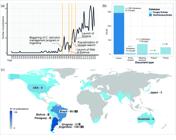
Trends in scientific production with the broad-scouted caiman Caiman latirostris. (a) Annual scientific production about C. latirostris since the first publication in 1936 to 2024. (b) Number of publications per document type by search engines. (c) Countries’ scientific production – Geographic distribution of publications by the affiliation country of the first author of the included studies. Color gradient depicts number of studies. Country name – no. of publications in WoS/Scopus/Scielo / no. of publications in Google Scholar (shaded values).
Publications were predominantly articles (n=340, 69.2%), with additional contributions from meeting abstracts (n=73, 14.9%), thesis (n=50, 10.2%), book/book chapters (n=11, 2.2%), and technical reports (n=10, 2.0%). While WoS, Scopus, and SciELO collectively contributed 288 articles, Google Scholar added 52 unique articles and was the primary source for grey literature, including 50 theses and 10 technical reports (Figure 1b). English was the most common language (n=333), followed by Portuguese (n=79) and Spanish (n=72).
Research output was geographically concentrated in C. latirostris range countries, with significant contributions from Argentina and Brazil. Within WoS, Scopus, and SciELO, Argentina led with 139 articles, followed by Brazil (95). Google Scholar showed a similar trend for grey literature, with Brazil (n=93) and Argentina (n=91) as the top contributors. Paraguay showed limited productivity with only one record identified (Figure 1c).
Sources of Publications
Publications originated from 243 distinct sources. WoS, Scopus, and SciELO collectively accounted for 148 sources with an average citation rate of 13.89 per document. Among 340 peer-reviewed articles, 14 core journals were identified using Bradford’s Law, with Herpetology Notes emerging as the most relevant source. Journals represented eight countries, with Brazil and Argentina contributing four journals collectively (Table I).
Table II The most relevant institutions by the number of mentions of first authors and co-authors within publications retrieved in WoS/Scopus/Scielo.| Rank | Affiliation | Articles | Country |
|---|---|---|---|
| 1 | National University of The Littoral | 192 | Argentina |
| 2 | Consejo Nacional de Investigaciones Cientificas y Tecnicas (CONICET) | 144 | Argentina |
| 3 | University of São Paulo | 41 | Brazil |
| 4 | Federal Rural University of Pernambuco | 25 | Brazil |
| 5 | Universidade Estadual Paulista | 24 | Brazil |
| 6 | National University of Cordoba | 22 | Argentina |
| 7 | National University of la Plata | 18 | Argentina |
| 8 | Federal University of Bahia | 15 | Brazil |
| 9 | University of Buenos Aires | 15 | Argentina |
| 10 | Museo de la Plata | 14 | Argentina |
| Federal University of Pernambuco | 14 | Brazil | |
| University of Vila Velha | 14 | Brazil |
Grey literature was distributed across 64 sources, with the Proceedings of the Working Meeting of the Crocodile Specialist Group of the Species Survival Commission of IUCN contributing the largest share (n=25), followed by publications from Universidad Nacional del Litoral (n=12, Argentina) and University of São Paulo (n=10, Brazil) (Table SII).
Authorship and Collaboration Networks
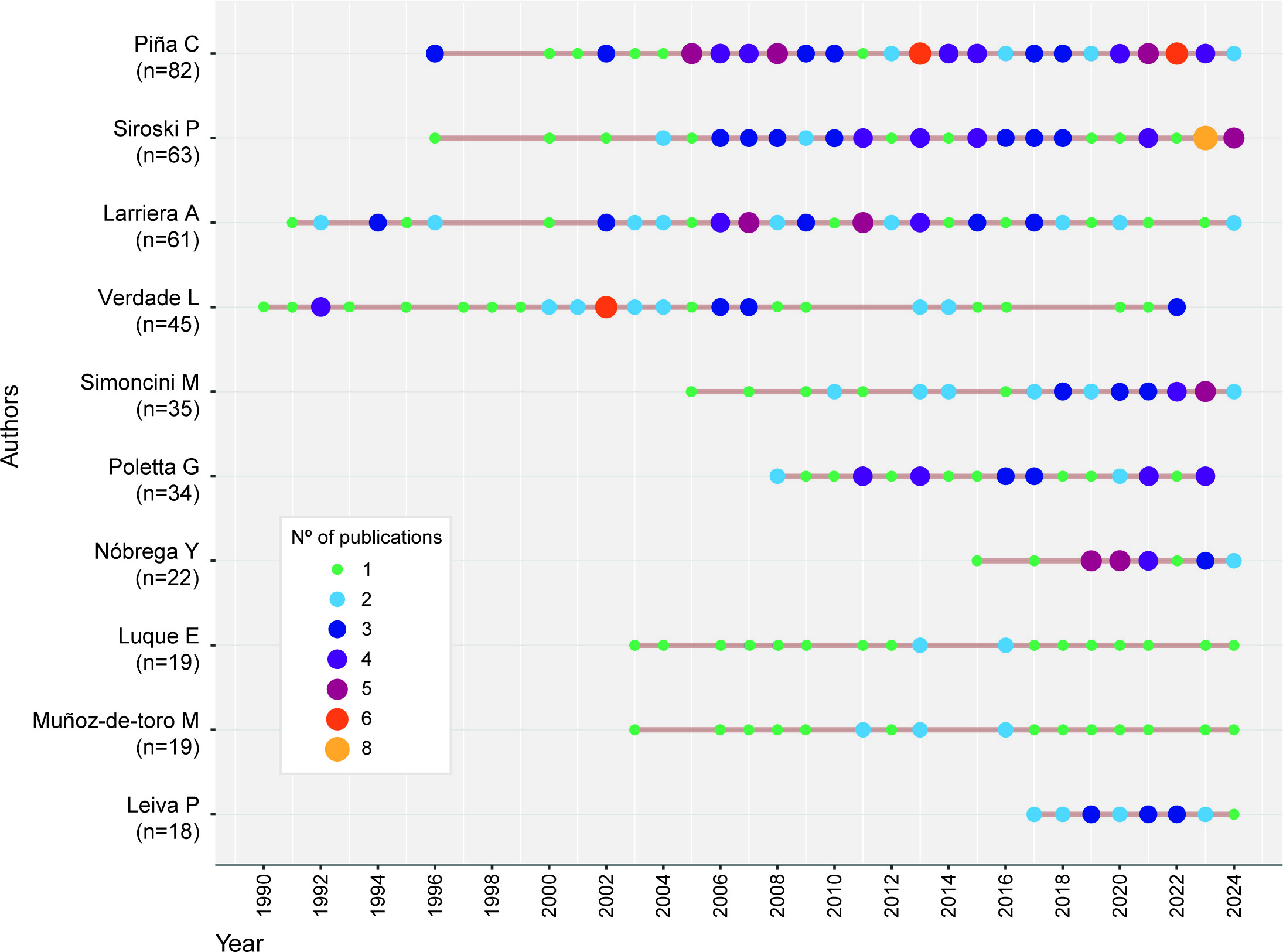
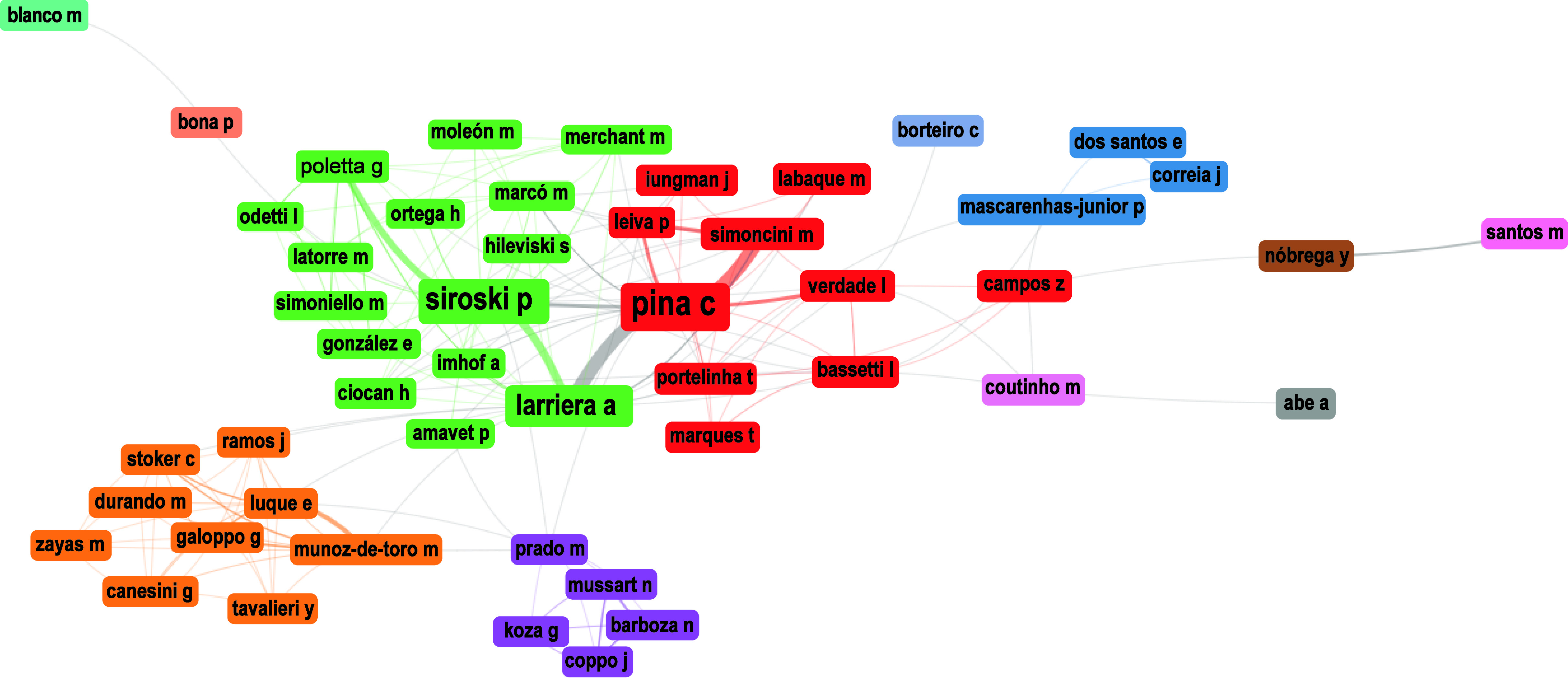
A total of 823 authors contributed to the dataset. Most authors (n=579) authored single publications, with only 244 authors publishing more than two records. The most prolific authors were Piña C. (n=82), Siroski P. (n=63), and Larriera A. (n=61) (Figure 2). Collaboration network analysis identified 11 distinct research clusters. Key authors with high betweenness, including Piña C., Larriera A., and Muñoz-de-Toro M., facilitated connections between clusters (Figure 3, Table SIII). Five clusters consisted of single authors with minimal connections to broader networks.

Temporal trends in authors’ production for the 10 most productive authors. Circle size and colors depicts the number of publications per year. Total number of publications for each author are shown in parentheses.
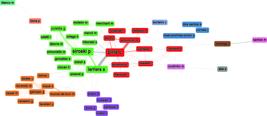
Trends in Authorships and collaborations. Author collaboration network, where nodes/box represent top 50 authors in terms of the numbers of authored papers in the data set, and box size is proportional to the number of authored papers.; links are co-authorships, and its thickness is proportional to the number of co-authorships; the colors represent to which cluster each author belongs.
Trends in research topics
The 484 studies were classified into 21 research topics (Table III). The most frequent topics included Physiology (n=65), Reproduction (n=52), and Toxicology (n=49). Studies in controlled conditions (n=186) exceeded those in the wild (n=146), with some studies encompassing both (n=23). Controlled studies dominated in Physiology (n=51), Toxicology (n=38), Use & Trade (n=16), Infectiology (n=13) and Diet & Body condition (n=13), Growth (n=12), and Behavior (n=8). Wild studies were prevalent in topics such as Reproduction (n=28), Genetics (n=16), Predation (n=7) and Parasitology (n=5). The 10 most relevant articles within WoS/Scopus/Scielo based on total number of citations were published between 2000 and 2011 (Table IV). Among the most cited papers, the topic of Toxicology was the most frequent.
Number of studies with the broad-snouted caiman Caiman latirostris according to 21 defined research topics, and to the origin of individuals from each study.
Included studies were conducted in 12 countries, with Argentina (n = 250) and Brazil (n = 207) contributing the most research (Table SIV). Argentina produced more studies under controlled conditions, while Brazil exhibited a more balanced focus. In Argentina, most studies were conducted in controlled environments (n = 112) rather than in the wild (n = 66), with some spanning both conditions (n = 10). In Brazil, the number of studies in controlled conditions (n=67) was nearly equal to those conducted in the wild (n = 68), with 13 studies covering both conditions (Table SV). In contrast, studies in Bolivia, Paraguay, and Uruguay were exclusively conducted in wild conditions (Table SV).
Keyword Analysis
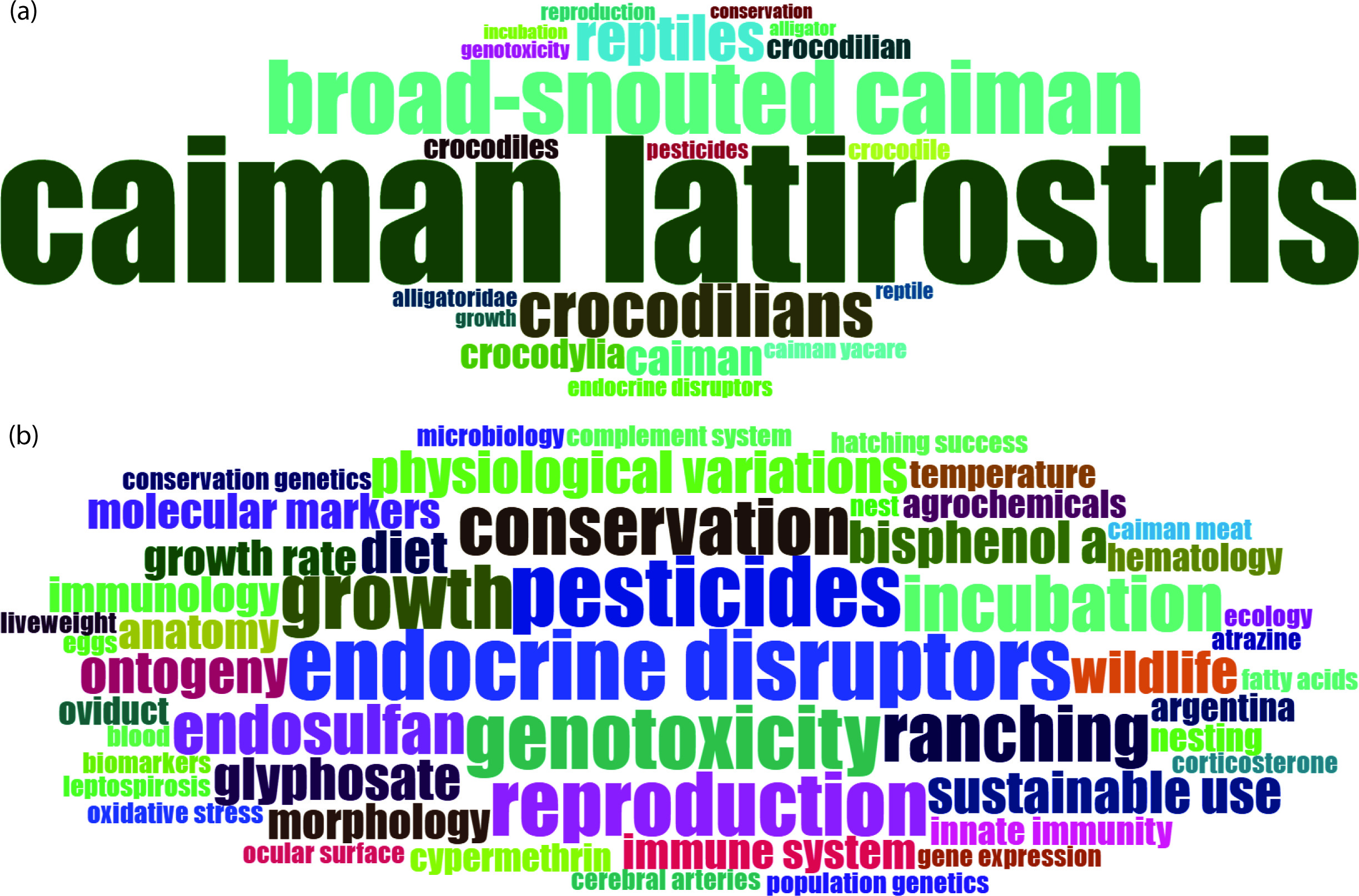
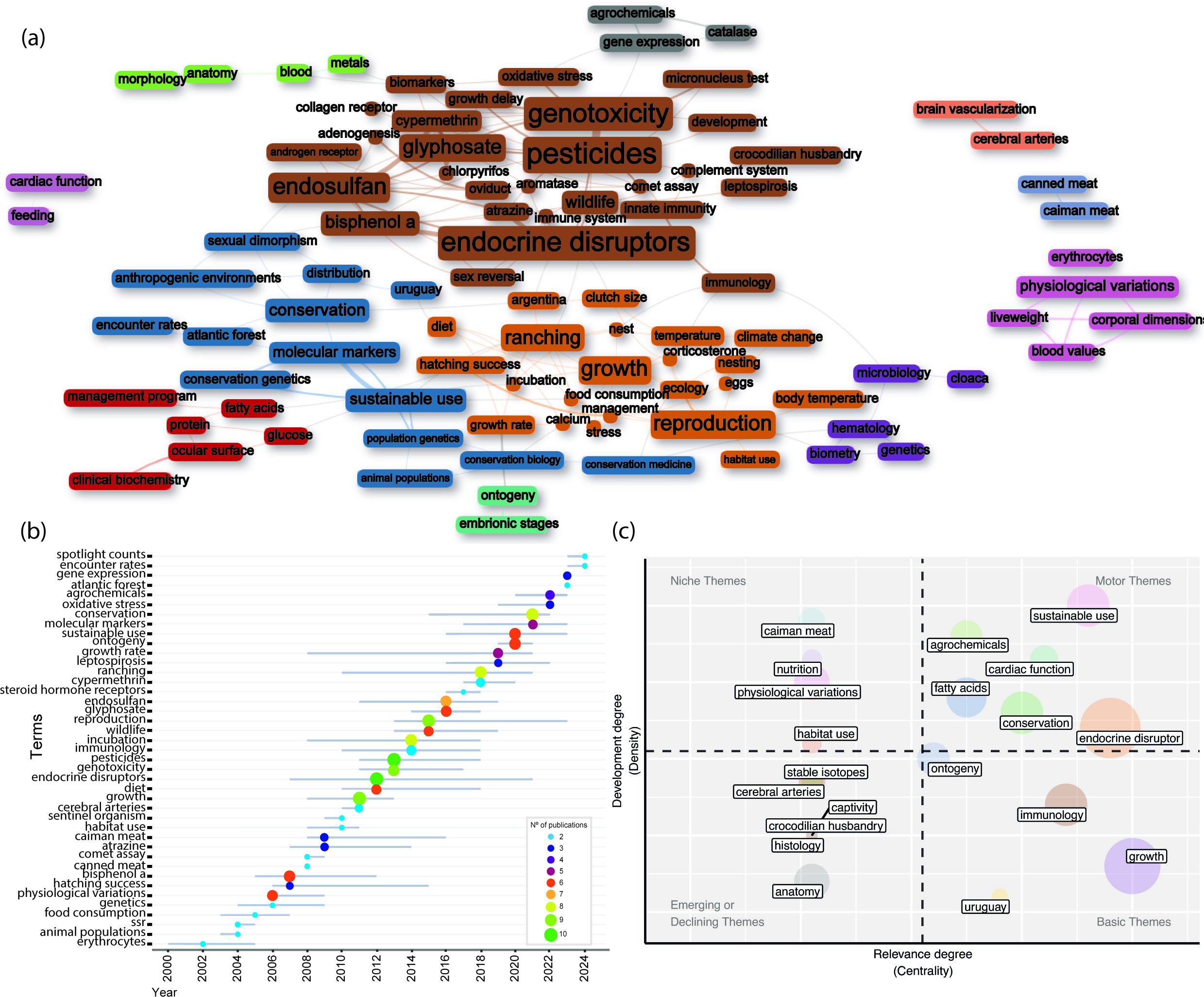
Keyword analysis revealed frequent use of terms such as “Caiman latirostris” (n=79) and “broad-snouted caiman” (n=40) (Figure 4a, Table SVI). Excluding taxonomic terms, prominent research topics included “endocrine disruptors” (n=10), “pesticides” (n=10), “reproduction” (n=9), and “conservation” (n=9), (Figure 4b, Table SVII). Emerging trends from 2023–2024 highlighted terms such as “spotlight counts”, “gene expression”, and “Atlantic Forest” (Figure 5a, Table SVIII).
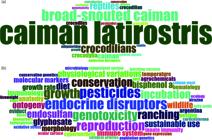
The most frequent Author’s keywords illustrated by word clouds. The sizes of the terms are proportional to the number of studies in our database. (a) Word cloud of all the keywords of the included studies. (b) Word cloud of the keywords with the exclusion of terms related to taxonomic classification (common names, Latin names and species names), revealing main research topics.

Trends in research topics with C. latirostris. (a) Co-word network analysis based on the co-occurrence of keywords. The colors represent to which cluster each keyword belongs, and each cluster can be seen as a topic. Nodes/box represent the top keywords in terms of frequency, and box size is proportional to term frequency. Links are co-occurrence of keywords among studies, and its thickness is proportional to the number of co-occurrences. (b) Temporal trends in the frequency of keywords for the 50 most recently used terms. Circle size and colors depicts the keyword frequency among included studies. The gray bar indicates the first and third quartiles of the occurrence distribution. The circle position in the grey bar is the reference year for each term, which is the median of the distribution of keyword occurrences over the considered time period. (c) Thematic map based on co-word analysis on the co-occurrence of keywords. The colors represent to which cluster each keyword belongs.
Co-occurrence network analysis grouped keywords into 12 clusters, reflecting thematic connections (Figure 5c). The 12 clusters labels with the most frequent keywords were: (1) ‘glucose, (2) ‘sustainable use’, (3) ‘blood’, (4) ‘microbiology’, (5) ‘ranching’, (6) ‘pesticides’, (7) ‘physiological variations’, (8) ‘gene expression’, (9) ‘ontogeny’, (10) ‘cerebral arteries’ and ‘brain vascularization’, (11) ‘caiman meat’ and ‘canned meat’, and (12) ‘cardiac function’ and ‘feeding’. (Table S IX). Notable clusters included “sustainable use,” “ranching,” and “pesticides,” indicative of well-developed research areas. Clusters tied to specific geographies, such as “Argentina” (connected to conservation, endocrine disruptors, clutch size and ranching), “Atlantic Forest” (connected to encounter rates, conservation, and molecular markers), and “Uruguay” (connected with distribution and diet) reflected regional research priorities.
A thematic map categorized keywords into 20 clusters organized into four quadrants based on centrality and density values (Figure 5b, Table S X). Among the topics in the upper quadrants, which are terms with high density values (indicating well-developed, specialized areas, with numerous connections between studies within a theme), terms were grouped into Motor and Niche Themes, according to their centrality values. Motor Themes (upper right) exhibited high density and centrality, indicating relevance and strong internal development. Topics included “sustainable use”, “endocrine disruptors”, “agrochemicals”, “cardiac function”, “fatty acids”, and “conservation”. Niche Themes (upper left) were highly developed but less integrated into broader research, including topics such as “caiman meat”, “nutrition”, “habitat use” and “physiological variations”. While these areas are developed, as they are highly connected to each other, they are more isolated from broader research effort outside their clusters.
Among the topics with low density values (indicating they are underdeveloped and need further exploration, with low numbers of connections between studies within a theme), terms were grouped into Basic and Emerging or Declining Themes. Basic Themes (lower right) had high centrality but low density, reflecting foundational areas needing further exploration, such as “growth”, “immunology”, “ontogeny” and “Uruguay”. Emerging or Declining Themes (lower left) included less-developed or waning topics such as “anatomy”, “stable isotopes”, “cerebral arteries”, “captivity”, “crocodilian husbandry”, and “histology”, suggesting these areas are either losing relevance or have yet to become significant in the field.
DISCUSSION
This study provides a detailed synthesis of research trends and gaps in knowledge about Caiman latirostris, offering insights into the geographic distribution of studies, primary research topics, and collaborative networks of researchers. Through an integrative science (bibliometric) mapping and systematic review, we highlight dominant themes and specific areas where further study is needed, aligning and complementing the conclusions from previous cross-national and regional C. latirostris assessments (Bassetti et al. 2016, Coutinho et al. 2013, Siroski et al. 2020, 2019). Our findings reveal that research is largely concentrated in Argentina and Brazil, with a strong focus on the topics of physiology, toxicology, and reproduction, often under controlled conditions, which underscores the opportunity to expand field studies on underexplored topics including ecological dynamics, habitat-specific conservation actions, anthropogenic impacts, and human-wildlife interactions. This geographic and thematic concentration is likely influenced by factors such as accessible research funding, established conservation programs, researcher networks, and logistical ease of access to study sites (Santos et al. 2020, Fisher et al. 2011, Lessa et al. 2019, Meyer et al. 2015, Oliveira et al. 2016). These factors can limit studies to certain areas or topics, thereby reducing the existence of regional and local data, and underrepresenting crucial ecological variables across the species’ full range.
Trends in research output
Our temporal and geographic analysis further clarifies patterns in research productivity and distribution across the range of C. latirostris. The analysis revealed a substantial increase in research output since the 1990s, with over 87% of studies published post-2000, following the same increase as research into crocodilian biology in general (Grigg & Kirshner 2015). Argentina (n=250) and Brazil (n=207) contributed the majority of publications, indicating a strong research presence in these countries. While this has contributed valuable baseline data, it also emphasizes a significant gap in research investment in countries including Bolivia, Paraguay, and Uruguay. Furthermore, despite the substantial volume of studies in Brazil, the distribution of research efforts should be cautiously interpreted given the country’s vast land area and environmental diversity. Although Brazil comprises a large proportion of C. latirostris range, there is limited data on the species’ population dynamics within its borders (Siroski et al. 2020). Future studies should prioritize lesser-explored regions to enhance ecological understanding and support habitat-specific conservation strategies for the species.
Conservation and research strategies
While geographic distribution patterns reveal clear regional research imbalances, it also reflects differing conservation strategies, levels of management and understanding across its range. The rise in research output during the 1990s can largely be attributed to Argentina’s successful conservation initiatives, such as the implementation of sustainable use programs (Grigg et al. 1995, Siroski et al. 2024, Webb 2002). Wildlife sustainable management fosters the involvement of local communities in conservation efforts, generating long-term socioeconomic benefits and improving quality of life. In this context, Argentina’s establishment of a ranching program for C. latirostris, which involves egg harvesting and head-starting restocking, has played a pivotal role in the recovery of wild populations (Siroski et al. 2024). This program, initiated in the early 1990s, contributed to the species’ listing in CITES Appendix II in 1997 and provides a model for similar approaches in Brazil, where conservation efforts have focused on captive breeding to reduce illegal exploitation (Verdade & Lavorenti 1990, Verdade 1992). Research efforts throughout Brazil have also generated much information as evidenced by our data. Recently, the Brazilian scientific output contributed with baseline information to support the downlisting under CITES Appendix from I to II, opening up new opportunities for sustainable-use conservation programs (CITES 2023). Given C. latirostris’s limited representation in protected areas network (Lourenço-de-Moraes et al. 2023), sustainable use approaches in private lands are critical for conservation. This finding underscores the need for further government-supported experimental management programs in Brazil, modeled on Argentina’s successful conservation strategy.
Research gaps in the ecological and conservation focus
The thematic focus of studies further underscores key gaps and priorities for future research on C. latirostris. A significant research gap lies in the underrepresentation of ecological and conservation-focused studies. While topics such as physiology and toxicology are well-researched, there is limited emphasis on field-based studies in natural habitats, especially regarding population dynamics, habitat use, and human-wildlife interactions. Co-word analysis revealed strong connections among popular research topics but identified gaps (Farrell et al. 2022, Nakagawa et al. 2019, Nunez-Mir et al. 2016, Westgate et al. 2015), particularly in terms such as “population dynamics,” “encounter rates,” and “habitat use,” which remain isolated from key conservation and ecological themes. Similarly, geographic terms such as “Atlantic Forest’ and ‘Uruguay” also shows limited connections to broader research topics, while “Argentina” is more central and linked to well-developed clusters. Addressing these gaps requires prioritizing studies in natural habitats, as field-based research remains underexplored despite its relevance for planning effective species conservation and management strategies.
Anthropogenic impacts and ecotoxicology
Anthropogenic influences, especially agricultural pollutants, have been extensively studied, highlighting C. latirostris as an indicator of environmental health (Poletta et al. 2008, Rojas-Hucks et al. 2022, Tavalieri et al. 2020). Toxicological studies have demonstrated the negative impacts of pesticides and heavy metals on gene expression, reproduction, and growth in C. latirostris at various life stages, suggesting significant implications for natural populations and their habitat (Santos et al. 2024, Odetti et al. 2024, Rojas-Hucks et al. 2022, Tavalieri et al. 2020). These impacts stress the need for integrated habitat protection measures that go beyond preserving physical habitats to include pollution control policies in agricultural landscapes. However, laboratory studies alone, while valuable, are insufficient; complementary field studies should be prioritized to assess the real-world impacts of pollution on the species (Poletta et al. 2011b).
Collaboration networks and capacity building
Our findings also highlight the uneven distribution of research capacity across the range of C. latirostris, which is closely tied to the volume of local scientific production. Collaboration and publication patterns reveal concentrated efforts among a small group of authors and institutions, primarily in Argentina and Brazil. While cross-country collaborations exist, there is a need to expand research networks, particularly in underrepresented regions including Paraguay, Uruguay, and parts of Brazil. Expanding these networks could foster regional capacity building, provide training opportunities, and enhance the scientific output in areas where data is currently lacking (Fisher et al. 2011, Parreira et al. 2017). For example, studies in the Caatinga biome in Brazil highlight the importance of local scientific capacity in driving research, with most publications led by local researchers (Lessa et al. 2019). Additionally, the development of local research capacity helps to integrate research into global conservation efforts by inserting work into broader scientific contexts, and enhancing the visibility of local studies.
The role of grey literature
Grey literature, including non-indexed publications such as conference proceedings, theses, and technical reports, is vital to understanding the full scope of C. latirostris research. Despite often being overlooked in traditional research databases, these sources provide valuable insights, especially in areas that may not meet the criteria for peer-reviewed publications (Haddaway et al. 2020). For instance, proceedings from the Crocodile Specialist Group (CSG) meetings provide critical updates on conservation and management practices. However, the limited accessibility of grey literature, especially those not indexed in major databases such as WoS and Scopus, restricts their visibility. Expanding the inclusion of grey literature in widely used databases could improve data synthesis, facilitate broader engagement, and support informed decision-making for conservation strategies.
Improving data synthesis and future directions
To maximize the impact of future research on C. latirostris, we recommend a strategic approach to keyword selection in research publications. By using standardized and targeted language across titles, abstracts, and metadata, researchers can improve discoverability in search engines and databases, making the findings more accessible (Nakagawa et al. 2019). As scientific production grows exponentially, text analysis tools provide opportunities to synthetize research, identify knowledge gaps, research biases, and improve literature review replicability (Farrell et al. 2022). Moreover, incorporating geographic and thematic keywords at multiple scales will enhance data synthesis using text and citation analysis tools, thereby increasing the efficiency of literature reviews and meta-analyses (Fisher et al. 2011).
CONCLUSIONS
In synthesizing nearly a century of research on C. latirostris, this study provides essential insights into the trends and gaps in the scientific study of this ecologically and culturally significant species. Our findings underscore the importance of addressing geographic and thematic imbalances, promoting a broader, more inclusive approach to research that encompasses the full range of C. latirostris habitats and populations. By employing science (bibliometric) mapping techniques, it clarifies the current state of knowledge and provides a framework for prioritizing future research and conservation strategies. Importantly, the approach demonstrated here also illustrates the broader value of single-species science mapping with broader applications for conservation, providing a replicable model for similar assessments on other species.
In summary, and based in our findings, to address these gaps and strengthen the scientific foundation for C. latirostris conservation and management, we recommend: (1) Expanding research efforts to underrepresented regions, such as Paraguay, Bolivia, Uruguay, and lesser-studied areas in Brazil; (2) Increasing field-based ecological studies to better understand population dynamics, habitat-specific behaviors, and species interactions in natural settings; (3) Addressing anthropogenic impacts, particularly through the study of pollutants such as endocrine disruptors and pesticides, complementing laboratory studies with field-based experiments; (4) Fostering international and interdisciplinary collaboration to enhance research capacity and knowledge sharing across the species’ range; and (5) Improving data accessibility by expanding the indexing of grey literature in major databases such as Scopus and Web of Science; and by incorporating geographic and thematic keywords in publications. These recommendations align with cross-national conservation priorities, and will amplify the visibility and impact of C. latirostris research, supporting informed decision-making and robust conservation strategies for the species.
Acknowledgements
We thank the Postgraduate Program in Ecology, Conservation and Management of Wildlife at the Federal University of Minas Gerais. Our research received funding from the Brazilian Biodiversity Fund (FUNBIO, Portuguese acronym) in collaboration with Instituto Humanize (046/2021), the IUCN-SSC Crocodilian Specialist Group, and the Rufford Foundation (31840-1). Gabriela is supported by a doctoral scholarship granted by Coordenação de Aperfeiçoamento de Pessoal de Nível Superior (CAPES/Brazil). This article is part of Gabriela’s doctoral thesis.
References
- AMANO T ET AL. 2023. The role of non-English-language science in informing national biodiversity assessments. Nat Sustain 6: 845-854.
- ARIA M & CUCCURULLO C. 2017. bibliometrix: An R-tool for comprehensive science mapping analysis. J Informetr 11: 959-975.
- BASSETTI LA, SOARES Y, BATAUS YSL, RODRIGUES J, UHLIG VM, ANDRADE TA, COUTINHO ME, FARIAS IP, MAGNUSSON WE, VALADÃO RM & CAMPOS Z. 2016. Caiman latirostris. Sistema de Avaliação do Risco de Extinção da Biodiversidade - SALVE.
- BONA P & DESOJO JB. 2011. Osteology and cranial musculature of Caiman latirostris (Crocodylia: Alligatoridae). J Morphol 272: 780-795.
- BORTEIRO C, PRIGIONI C, GARCÍA JE, TEDROS M, GUTIÉRREZ F & KOLENC F. 2006. Geographic distribution and conservation status of Caiman latirostris (Crocodylia , Alligatoridae) in Uruguay. Phyllomedusa 5: 97-108.
- CITES. 2023. Notification to the Parties No. 2023/005. Amendments to Appendices I and II of the Convention adopted by the Conference of the Parties at its 19th meeting (Panama, 14 - 25 November 2022). 2.
- CITES. 2024. CITES Appendices I, II, and III.
- COBO MJ, LÓPEZ-HERRERA AG, HERRERA-VIEDMA E & HERRERA F. 2011. An approach for detecting, quantifying, and visualizing the evolution of a research field: A practical application to the Fuzzy Sets Theory field. J Informetr 5: 146-166.
- COUTINHO ME ET AL. 2013. Avaliação do risco de extinção do jacaré-de-papo-amarelo Caiman latirostris (Daudin, 1802) no Brasil. Biodiversidade Bras 3: 13-20.
- FARRELL MJ, BRIERLEY L, WILLOUGHBY A, YATES A & MIDEO N. 2022. Past and future uses of text mining in ecology and evolution. Proc R Soc B Biol Sci 289.
- FILOGONIO R, ASSIS VB, PASSOS LF & COUTINHO ME. 2010. Distribution of populations of broad-snouted caiman (Caiman latirostris, Daudin 1802, Alligatoridae) in the São Francisco River basin , Brazil. Brazilian J Biol 70: 961-968.
- FISHER R, RADFORD BT, KNOWLTON N, BRAINARD RE, MICHAELIS FB & CALEY MJ. 2011. Global mismatch between research effort and conservation needs of tropical coral reefs. Conserv Lett 4: 64-72.
- GRIGG GC, HALE PT & LUNNEY D. 1995. Conservation Through the Sustainable Use of Wildlife.
- GRIGG GC & KIRSHNER D. 2015. Biology and evolution of crocodylians, CSIRO Publishing, 597 p.
- HADDAWAY NR & BAYLISS HR. 2015. Shades of grey: Two forms of grey literature important for reviews in conservation. Biol Conserv 191: 827-829.
- HADDAWAY NR, BETHEL A, DICKS LV, KORICHEVA J, MACURA B, PETROKOFSKY G, PULLIN AS, SAVILAAKSO S & STEWART GB. 2020. Eight problems with literature reviews and how to fix them. Nat Ecol Evol 4: 1582-1589.
- IUNGMAN J, PIÑA CI & SIROSKI P. 2008. Embryological development of Caiman latirostris (Crocodylia: Alligatoridae). Genesis 46: 401-417.
- LESSA T, SANTOS JW, CORREIA RA, LADLE RJ & MALHADO ACM. 2019. Known unknowns: Filling the gaps in scientific knowledge production in the Caatinga. In: Wen T-H (Ed), PLoS One 14: e0219359.
- LOURENÇO-DE-MORAES R, CAMPOS FS, CABRAL P, SILVA-SOARES T, NOBREGA YC, COVRE AC & FRANÇA FGR. 2023. Global conservation prioritization areas in three dimensions of crocodilian diversity. Sci Rep 13: 1-13.
- MARQUES TS, BASSETTI LAB, LARA NRF, MILLAN CH, PIÑA CI & VERDADE LM. 2016. Population structure of the broad-snouted caiman (Caiman latirostris) in natural and man-made water bodies associated with a silvicultural landscape. Salamandra 52: 1-10.
- MEYER C, KREFT H, GURALNICK R & JETZ W. 2015. Global priorities for an effective information basis of biodiversity distributions. Nat Commun 6.
- MOURÃO G & CAMPOS Z. 1995. Survey of broad-snouted caiman Caiman latirostris, marsh deer Blastocerus dichotomus and capybara Hydrochaeris hydrochaeris in the area to be inundated by Porto Primavera dam, Brazil. Biol Conserv 73: 27-31.
- NAKAGAWA S, SAMARASINGHE G, HADDAWAY NR, WESTGATE MJ, O’DEA RE, NOBLE DWA & LAGISZ M. 2019. Research Weaving: Visualizing the Future of Research Synthesis. Trends Ecol Evol 34: 224-238.
- NUNEZ-MIR GC, IANNONE BV, PIJANOWSKI BC, KONG N & FEI S. 2016. Automated content analysis: addressing the big literature challenge in ecology and evolution. Methods Ecol Evol 7: 1262-1272.
- ODETTI LM, PARAVANI EV, SIMONIELLO MF & POLETTA GL. 2024. Micronucleus test in reptiles: Current and future perspectives. Mutat Res - Genet Toxicol Environ Mutagen 897: 503772.
- OLIVEIRA U ET AL. 2016. The strong influence of collection bias on biodiversity knowledge shortfalls of Brazilian terrestrial biodiversity. Divers Distrib 22: 1232-1244.
- PAGE MJ ET AL. 2021. The PRISMA 2020 statement: An updated guideline for reporting systematic reviews. BMJ 372.
- PARREIRA MR, MACHADO KB, LOGARES R, DINIZ-FILHO JAF & NABOUT JC. 2017. The roles of geographic distance and socioeconomic factors on international collaboration among ecologists. Scientometrics 113: 1539-1550.
- PATTERSON B. 1936. Caiman latirostris from the Pleistocene of Argentina, and a Summary of South American Cenozoic Crocodilia. Herpetologica 1: 43-54.
- PIÑA CI, LARRIERA A, CABRERA MR, PIÑA ACI, LARRIERA A & CABRERA MR. 2003. Effect of incubation temperature on incubation period, sex ratio, hatching success, and survivorship in Caiman latirostris (Crocodylia, Alligatoridae). J Herpetol 37: 199-202.
- POLETTA GL, KLEINSORGE E, PAONESSA A, MUDRY MD, LARRIERA A & SIROSKI PA. 2011a. Genetic, enzymatic and developmental alterations observed in Caiman latirostris exposed in ovo to pesticide formulations and mixtures in an experiment simulating environmental exposure. Ecotoxicol Environ Saf 74: 852-859.
- POLETTA GL, LARRIERA A, KLEINSORGE E & MUDRY MD. 2008. Caiman latirostris (broad-snouted caiman) as a sentinel organism for genotoxic monitoring: Basal values determination of micronucleus and comet assay. Mutat Res - Genet Toxicol Environ Mutagen 650: 202-209.
- POLETTA GL, LARRIERA A, KLEINSORGE E & MUDRY MD. 2009. Genotoxicity of the herbicide formulation Roundup® (glyphosate) in broad-snouted caiman (Caiman latirostris) evidenced by the Comet assay and the Micronucleus test. Mutat Res - Genet Toxicol Environ Mutagen 672: 95-102.
- POLETTA GL, LARRIERA A, SIROSKI P, KLEINSORGE E & MUDRY MD. 2011b. Integral approach of glyphosate-induced alterations in a South American caiman species. Herbic Prop Crop Prot Environ Hazards 189-210.
- PRADO WS, PIÑA CI & WALLER T. 2012. Categorización del estado de conservación de los caimanes (yacarés) de la República Argentina. Cuad Herpetoglogia 26: 403-410.
- R CORE TEAM. 2023. R: A Language and Environment for Statistical Computing.
- REY F, GONZÁLEZ M, ZAYAS MA, STOKER C, DURANDO M, LUQUE EH & MUÑOZ-DE-TORO M. 2009. Prenatal exposure to pesticides disrupts testicular histoarchitecture and alters testosterone levels in male Caiman latirostris Gen Comp Endocrinol 162: 286-292.
- RODRIGUEZ-CORDERO AL, BALAGUERA-REINA SA & DENSMORE LD. 2019. Regional conservation priorities for crocodylians in Bolivia. J Nat Conserv 52: 125753.
- ROJAS-HUCKS S, RODRIGUEZ-JORQUERA IA, NIMPSTCH J, BAHAMONDE P, BENAVIDES JA, CHIANG G, PULGAR J & GALBÁN-MALAGÓN CJ. 2022. South American National Contributions to Knowledge of the Effects of Endocrine Disrupting Chemicals in Wild Animals: Current and Future Directions. Toxics 10.
- SANTOS JW, CORREIA RA, MALHADO ACM, CAMPOS-SILVA JV, TELES D, JEPSON P & LADLE RJ. 2020. Drivers of taxonomic bias in conservation research: a global analysis of terrestrial mammals. Anim Conserv 23: 679-688.
- SANTOS RL, MARIZ CF, MASCARENHAS PB, BARBOZA RSL, DOS SANTOS EM, DE SOUSA CORREIA JM & DE CARVALHO PSM. 2024. Nondestructive Evaluation of Metal Bioaccumulation and Biochemical Biomarkers in Blood of Broad-Snouted Caiman (Caiman latirostris) from Northeastern Brasil. Environ Toxicol Chem 43: 878-895.
- SIROSKI P, BASSETTI LAB, PIÑA C & LARRIERA A. 2020. Caiman latirostris. The IUCN Red List of Threatened Species 2020.
- SIROSKI PA, BASSETTI L, PIÑA CI & LARRIERA A. 2019. Broad-snouted Caiman Caiman latirostris. In: Manolis SC & Stevenson C (Eds), Crocodiles. Status Survey and Conservation Action Plan, Darwin: Crocodile Specialist Group, IUCN, p.7.
- SIROSKI PA, CIOCAN H, HILEVSKI S & LARRIERA A. 2024. Increasing Population Status of Broad-Snouted Caiman (Caiman latirostris) Based on Sustainable Use Strategies in a Managed Protected Area in Santa Fe, Argentina. Animals 14.
- STOKER C, BELDOMÉNICO PM, BOSQUIAZZO VL, ZAYAS MA, REY F, RODRÍGUEZ H, MUÑOZ-DE-TORO M & LUQUE EH. 2008. Developmental exposure to endocrine disruptor chemicals alters follicular dynamics and steroid levels in Caiman latirostris Gen Comp Endocrinol 156: 603-612.
- STOKER C, REY F, RODRIGUEZ H, RAMOS JG, SIROSKY P, LARRIERA A, LUQUE EH & MUÑOZ-DE-TORO M. 2003. Sex reversal effects on Caiman latirostris exposed to environmentally relevant doses of the xenoestrogen bisphenol A. Gen Comp Endocrinol 133: 287-296.
- SUTHERLAND WJ, PULLIN AS, DOLMAN PM & KNIGHT TM. 2004. The need for evidence-based conservation. Trends Ecol Evol 19: 305-308.
- TAVALIERI YE, GALOPPO GH, CANESINI G, LUQUE EH & MUÑOZ-DE-TORO MM. 2020. Effects of agricultural pesticides on the reproductive system of aquatic wildlife species, with crocodilians as sentinel species. Mol Cell Endocrinol 518.
- VERDADE LM. 1992. O Programa Experimental de Criação em Cativeiro do Jacaré-de- Papo-Amarelo ( Caiman latirostris ) da ESALQ / USP : Histórico e Perspectivas.
- VERDADE LM. 2000. Regression equations between body and head measurements in the broad-snouted Caiman (Caiman latirostris). Rev Bras Biol 60: 469-482.
- VERDADE LM & LAVORENTI A. 1990. Preliminary notes on the status and conservation of caiman latirostris in the state of sao paulo, brazil. Directions of the captive breeding, reintroduction and management program. Proceeding 10th Work Meet Crocodile Spec Gr 231.
- WEBB GJW. 2002. Conservation and sustainable use of wildlife - an evolving concept. Pacific Conserv Biol 8: 12.
- WESTGATE MJ, BARTON PS, PIERSON JC & LINDENMAYER DB. 2015. Text analysis tools for identification of emerging topics and research gaps in conservation science. Conserv Biol 29: 1606-1614.