 Microplastic in water and wastewater: occurrence, toxicity, analytical approach, and remediation
Abstract
The occurrence of microplastics (MPs) in aquatic environments is constantly expanding. This paper aims to provide a comprehensive analysis of the concentrations, typologies, and fate of MPs in water and wastewater. Their occurrence and toxicity were examined, detailing an analytical approach for detection, quantification, and remediation. A diversity of studies that include countries of all continents was collected and compared to identify patterns of composition and size, in addition to analyzing the distribution of MPs. The study showed that polyethylene and polypropylene were the most common polymers in surface waters, being reported on all continents. PET and PE stood out as the polymers with the highest environmental risk. However, few studies were observed in developing countries. South America, both for water and wastewater, was the continent with the fewest studies reported in literature. MP presence was confirmed in countries such as Brazil and Bolivia, but few studies reported these identifications and quantifications. These gaps can impede the formulation and implementation of effective policies. Thus, developing robust legislation to identify, quantify, and regulate MPs is essential to protect the environment and public health.
Key words
plastic particles; risk assessment; quantification; occurrence; remediation
INTRODUCTION
Microplastics (MPs) are recognized as some of the most persistent anthropogenic pollutants. These solid particles, composed of synthetic materials (<5 mm in size), have long residence times in natural environments and can undergo long-range transport through various vectors (Petersen & Hubbart 2021). Annually, around 4.8 to 12.7 Mt of plastic particles are released into the oceans, equivalent to a direct global release of 30 g/capita-d (Boucher & Friot 2017), adding to an estimated 195 Mt of plastics already present (Maria Tsakona et al. 2021). As water is the primary medium for MP dispersion, these pollutants are distributed globally, accumulating in various ecosystems and raising concerns for environmental quality and human health (Sol et al. 2023).
The enrichment of MPs in aquatic systems is intrinsically linked to the water cycle. Both anthropogenic activities, such as urban wastewater discharge, and natural factors, such as rainfall, contribute to their introduction into surface waters, eventually making the oceans their final repository (Xia et al. 2020). Higher concentrations of MPs in surface waters were observed in China, considered the largest plastic producer in the world, and parts of the USA (>5.4 × 10⁶ MP/m³). In European freshwaters, MP concentrations observed are between 1 and 100 MP/m³ (Pironti et al. 2021). Groundwater systems are also affected, and China appears as a pioneer with around 0.087 – 6832 MP/m3. Other countries such as Iran and Germany have reported groundwater concentrations between 100 – 1300 MP/m3, and >20 μm MPs up to 7 MP/m³, respectively (Sangkham et al. 2023).
Wastewater treatment plants (WWTPs) play a significant role in the fate of MPs. These facilities receive urban wastewater with MPs originating from domestic and industrial activities, as well as stormwatter runoff containing fragmented plastic waste (Galafassi et al. 2019). However, despite their design to remove undesirable compounds, nutrients, and pathogens, WWTPs are not optimized to completely retain MPs (Barchiesi et al. 2021). Removal efficiencies vary based on plant configurations and MP characteristics, such as shape, size, polymer type, and density (Luo et al. 2023). Studies have identified high concentrations of MPs in wastewater treatment plants, with an average global discharge of 7.2 × 10⁹ MP/d (Liu et al. 2021). In the Netherlands, medium-sized wastewater plants with a capacity of 30–50,000 m3/day have been shown to discharge up to 7 × 10⁶ MP/d (Leslie et al. 2017). In Southeast Asia, a concentration of 183–443 MP/L in influents and 138–340 MP/L in effluents have been detected (Capodaglio 2024).
MPs pose risks not only due to their physical presence but also their ability to adsorb and transport a wide spectrum of pollutants, including heavy metals, polychlorinated biphenyls (PCBs), per- and poly-fluoroalkyl substances (PFAS), and pharmaceuticals (Kinigopoulou et al. 2022, Puckowski et al. 2021, Torres et al. 2021). These risks associated with MP contamination can impact human health since ingested MPs can accumulate in the digestive tract, potentially causing inflammation and other health problems (Adeleye et al. 2024). Furthermore, MPs may gradually release toxic additives over time, potentially bioaccumulating in ecosystems (Yu et al. 2024). The potential risk of MP varies with the type of polymer, the nature of the source materials, the environmental environment, and the characteristics of the contaminant, and does not depend directly on the concentration of MP (Ferguson et al. 2024, Barhoumi et al. 2022, Wang et al. 2020a).
Addressing MP pollution requires standardized monitoring and legislative frameworks. The European Union’s Drinking Water Directive (2020/2184) and Urban Wastewater Treatment Directive (EU 7108/24) aim to regulate and reduce MP pollution, promoting water quality and ecosystem health. Monitoring of MPs is also required in wastewater and sludge when they are reused in agriculture by EU Regulation 2020/741, ensuring water quality and the protection of the environment and human and animal health. However, further efforts are needed to standardize methodologies for MP quantification, and characterization, such as the sample volume to be collected, the material of the containers to avoid cross-contamination, the type of extraction and analysis to be used, as well as the expression of data (Kirstein et al. 2021). Such standardization is essential for comparing studies and developing effective remediation strategies (Sun et al. 2019).
From this perspective, this article aims to understand the concentrations, typologies, and fate of MPs in the water cycle. Special attention is given to the role of water and wastewater treatment plants, their removal efficiencies, and potential remediation approaches to mitigate MP pollution.
ANALYTICAL APPROACH FOR MP QUANTIFICATION IN WATER AND WASTEWATER
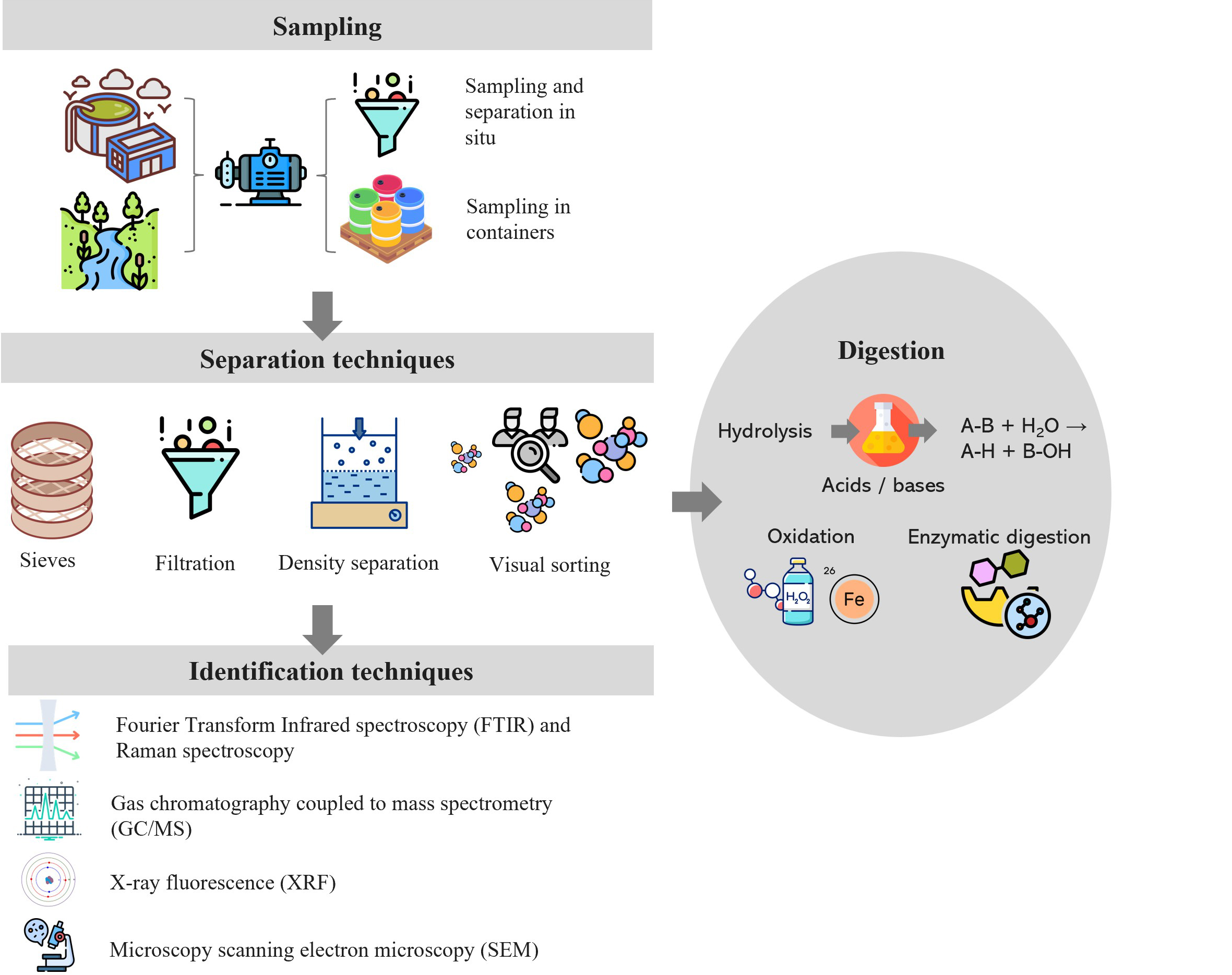
The procedures for quantifying MPs in wastewater or surface water, from the sampling to the analytical identification and characterization techniques, are presented in Figure 1. Samples are usually collected in suitable containers free from possible contamination and sent to laboratories for the separation procedure. In some situations, sample pumping is coupled with filtration so that the MP separation step accompanies the sampling step. In this case, precautions must be taken to avoid cross-contamination of the samples since separation is done in an environment with greater exposure to contamination (Okoffo et al. 2019).
Among the MP separation procedures, the most widely adopted in the literature are sieving, visual sorting, density separation, and filtration (Tirkey & Upadhyay 2021). The sieving process is generally performed with a series of sieves with diverse mesh sizes - chosen according to the desired MP size ranges - through which a continuous sample flow is passed. In the case of wastewater, this process may be less effective since the high organic load can lead to rapid blockage of the sieve meshes (Okoffo et al. 2019). Therefore, before sieving, separation by density can be carried out. The separation of MPs by density is done by mixing - for a determined time - the sample with a higher-density solution, such as sodium chloride (NaCl), sodium iodide (NaI), and zinc chloride (ZnCl2) solutions. Subsequently, the supernatant with the MPs is extracted. For example, NaCl solutions (1.2 g/cm3) are generally used to extract low-density polymers such as polyethylene, polystyrene, and polypropylene (Bretas Alvim et al. 2020).
In addition, filtration processes – typically using paper filters with pore sizes of 1 - 2 μm – can be used to separate MPs directly from collected samples or the supernatant of density separation. Commonly used filters include glass fiber, nitrocellulose, and polycarbonate filters (Bretas Alvim et al. 2020). As with sieving, particulate matter, especially in wastewater, can block the pores of the filters. As a solution, practices such as reducing the filtered volume or adding chemicals for prior flocculation of particles can be used. It is essential to highlight that the gaps in MPs separation protocols make it difficult to compare the number of MPs reported in different studies. However, the International Organization for Standardization recently published a document (ISO 24187:2023) describing principles to analyze MPs in various environmental matrices, including particle size classification, specific apparatus for sampling, sample preparation, and the determination of representative sample quantities. Therefore, this is an essential initiative for greater standardization of analyses with MPs.
In matrices with high concentrations of organic matter, inference during MPs’ quantification and characterization procedures is a common challenge. Therefore, in these cases, sample digestion as pretreatment can be used to remove organic matter. Techniques such as acidic or alkaline hydrolysis, oxidative digestion using hydrogen peroxide, and enzymatic digestion have been widely applied for this purpose (Schrank et al. 2022). It is important to emphasize that these procedures must be performed cautiously and under specific conditions to maintain the integrity of the MPs in the sample (Schrank et al. 2022).
For MP quantification and characterization several analytical methods can be used such as Fourier Transform Infrared spectroscopy (FTIR) and Raman spectroscopy, gas chromatography coupled to mass spectrometry detector (GC/MS), X-ray fluorescence (XRF) and microscopy scanning electron microscopy (SEM), or a combination of scanning electron microscopy coupled with energy dispersive spectroscopy (SEM/EDS).
FTIR generally identifies and characterizes MPs, in addition to being able to differentiate polymers. The main advantage of this technique is the ability to analyze the chemical composition of a sample without damaging it, allowing multiple analyses. However, FTIR has limitations in the identification of MPs, mixtures of different types of plastic, and very small microplastics, since its resolution is limited to ~20 μm due to the electromagnetic spectrum range used with a wavelength of 2500–50,000 nm (Andoh et al. 2024). In addition, it requires technical expertise and adequate equipment maintenance.
Raman spectroscopy is used to investigate the chemical and physical characteristics of materials based on the Raman effect. (Andoh et al. 2024) highlight that microplastics have distinct Raman spectra that can be used to determine their chemical composition, with each polymer having a unique Raman spectrum, allowing the identification and differentiation of various types of microplastics (Huang et al. 2023).
Employing thermos-analytical methods to detect microplastics, such as GC/MS, the choice of degradation products as indicators should be specific to the microplastic type being examined (Ribeiro et al. 2020). Martín-Gómez et al. (2024) emphasize that GC-MS can be an alternative for the detection and quantification of MPs, but since it involves derivatization processes and usually requires longer analysis times, it has been less used.
Another welcome combination of analytical techniques for the quantification and determination of MPs is pyrolysis with GC/MS (Pyr-GC/MS), capable of analyzing different types of microplastic polymers simultaneously. Pyr-GC/MS is a suitable technique for analyzing MPs in complicated mixtures with inhomogeneous distributions and can be used regardless of the limitation of MP sizes (Wu et al. 2023). Advantages such as requiring less sample pretreatment, allowing direct examination of macromolecules and/or polymers in liquid or solid state (Eisentraut et al. 2018), and the possibility of detecting microplastics in sediments, soils, and sewage sludge are highlighted for the widespread use of the technique.
It is noteworthy, however, that for the identification of MPs in soil, sediment, and sewage sludge samples, before performing pyrolysis, sample purification steps must be carried out, including washing, digestion, extraction, and flotation to reduce interference from the soil matrix effect (Picó & Barceló 2019). Despite the various advantages of this technique, its potential applications are limited by its disadvantages, such as the requirement for large sample quantities, higher operating costs, and the need for constant maintenance. In addition, the standard pyr-GC-MS system often applies the electron ionization source, which provides high energy to break the polymer into small pieces. This fragmentation may lead to the loss of some functional groups of microplastics, leading to incomplete information about the chemical composition of microplastics. In search for the solution to this drawback, Doyen et al. (2019) and Ivleva (2021) highlighted atmospheric pressure chemical ionization (APCI) as a soft ionization source to be coupled with pyr-GC-MS, which can generate more typical spectral data in molecular ion information for more accurate, highly sensitive and selective determination.
XRF, in turn, is a non-destructive, easy, and fast analytical method capable of determining the elemental composition of a sample (Yadav et al. 2023). Variations of the technique such as energy-dispersive XRF (ED-XRF) and wavelength-dispersive XRF (WD-XRF) spectrometers are the two types of XRF devices commonly available (Yadav et al. 2023). However, its ability to identify only the elemental composition of the sample limits its ability to discern between different types of plastics and additives such as dyes and plasticizers (Fu et al. 2020).
SEM is used to determine the shape, size, and surface structure of MPs (Andoh et al. 2024). The association of this technique with others, such as energy-dispersive X-ray spectroscopy (SEM/EDS), may offer improvements in the performance of MP identification since it will be possible to obtain information about the chemical and elemental composition of the microplastic (Upadhyay et al. 2024).
FTIR, Raman spectroscopy, and GC/MS have been widely used to confirm microplastics in samples. Nonetheless, these are more time-consuming technologies and are subject to greater interference from the matrix (Santos et al. 2023). SEM/EDS, in turn, can allow many microplastic particles to be tracked quickly and efficiently, with less potential for misidentification (Wang et al. 2017). However, limitations may exist due to the different sizes of MPs in the samples.
MP IN WATER
Occurrence of MPs in water
Microplastics occurrence in water environments is constantly expanded and updated, especially in rivers, lakes, reservoirs, and groundwater (Yang et al. 2024). Therefore, studies that allow more precise observation of their global and local distribution, as well as the determination of the composition of each contaminant and their average sizes are necessary (Zhao et al. 2023). A diversity of studies that includes countries of all continents was collected and compared to identify patterns of composition and size, in addition to analyzing the distribution of MPs (Figure 2).
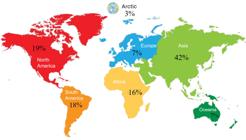
Data exploring MP occurrence in surface water in the world. References: Table SI. Total number of articles reviewed: 663 (2015-2024) (Shen et al. 2021, Morgana et al. 2018, Rasta et al. 2020, 2021, Zaki et al. 2021, Malla-Pradhan et al. 2022, Xiong et al. 2021, Roscher et al. 2021, Viitala et al. 2022, Apetogbor et al. 2023, Bashir & Hashmi 2022, Selvam et al. 2021, Leads & Weinstein 2019, Lin et al. 2018, Park et al. 2020, Ramírez-Álvarez et al. 2020, Wang et al. 2020a, Carlsson et al. 2021, Vermaire et al. 2017, Bujaczek et al. 2021, Pradit et al. 2023, Drabinski et al. 2023, Chaukura et al. 2021, Scircle et al. 2020, Loayza et al. 2022, Kabir et al. 2023, Franco et al. 2020) .
Asia emerged as the continent with the highest incidence of data on microplastics, with most studies conducted in China. Following Asia, North America accounted for 19% of the data, primarily from the United States and Canada. South America ranked third, with notable contributions from Brazil, Bolivia, and other countries. However, it is worth noting that for Brazil, only two studies were identified reporting the presence of MPs in water, and for Bolivia only one. This demonstrates that MPs are present in the aquatic compartments of these countries but are poorly identified and quantified. These gaps prevent the correct identification and real quantification of MPs in these locations, which consequently has repercussions on the formulation and implementation of effective policies.
Regarding the Arctic, although it is not officially considered a continent, its inclusion is noteworthy since contamination by microplastics occurs due to indirect factors, demonstrating the large proportions that contamination by MPs can reach, not being controlled by geographical limits.
Figure 3 shows the percentage of distribution of types of MPs present in water for human consumption such as drinking water, surface, and sub-surface waters. Identifying and characterizing the continental distribution of the composition of MPs allows for better observation and analysis between continents, with the largest fractions of MPs being observed in developed or developing countries.

The characterization of MP composition across continents showed considerable variability, but consistently high concentrations of polyethylene (PE), polypropylene (PP), polyester (PEST), polyethylene terephthalate (PET), and polystyrene (PS) were observed. Sanchez et al. (2024) highlight that due to their widespread use worldwide, polymers such as PS, PP, PE, and PET, are some of the main materials that contaminate water sources. These plastics generate around 8 million tons of waste daily, causing global contamination by microplastics (Picó & Barceló 2019). Consequently, PE, PET, PS, and PP are among the most prevalent types of microplastics identified in water samples (Huang et al. 2024). Similarly, Hoseini & Bond (2022) identified six polymers, including PP, PE, PS, PET, and polyvinyl chloride (PVC), as the most prevalent in soil, ocean, and freshwater environments. Erni-Cassola et al. (2019) also highlighted that these polymers are among the most abundant types in aquatic environments.
PE concentrations were found across all continents, particularly in the Arctic, where MPs are almost exclusively composed of PE. The remaining MPs in the Arctic are predominantly polypropylene (PP). The origin of this contamination in the Arctic remains uncertain, though it is believed that marine currents and increased water vehicle traffic may play a role in the dispersal of these contaminants. Lusher et al. (2015) suggest that the North Atlantic currents are a primary suspect in the contamination of the Arctic coastline. However, to better understand the contamination of the Arctic region, more detailed information is needed in this region. The pattern of PE composition dominance continues in other continents such as Africa and South America, where the highest concentrations of this type of MP were found. Polyethylene terephthalate (PET) is another polymer that is also found in large proportions in Asia. PP, in turn, presented lower concentrations in these continents. Unlike other continents, which had a focus on PE, PP, and PET, North America, and Oceania had higher concentrations of PEST, polyurethane (PU), and PS. In Europe, PE remained a prominent polymer, with the polymer’s poly ethyl methacrylate, ethylene acrylic acid copolymer, and chlorinated polyethylene in evidence for the first time, although in small concentrations. Furthermore, it is observed that PP and PE polymers are present in all continents and PU was only presented in North America. It is also worth noting that cotton is exclusive to Africa, PVC to Asia, and ABS to South America.
Many articles, mainly in Africa and Oceania, presented high percentages of undetermined microplastics. This fact may be associated with the lack of detail in the presentation of the collected data or even the lack of means of identifying the polymers. These gaps hinder the general view of the pattern of MPs in the world, which ends up impacting the measures to reduce this contamination.
A reduction in the percentage of PE concentration is observed in developed countries, which may be associated with public policies that regulate and prohibit the use of some polyethylene-based products, especially plastic bags (Liang et al. 2021). In 2010, these policies began in some countries, and in 2018 they became significant in some states in the United States, China, Mongolia, India, Australia, most of Europe, and some African and South American countries (Nielsen et al. 2019).
Regarding MP characteristics, they are commonly found in water with significant variation in size and abundance (Yang et al. 2024). China and the United States stood out as the countries with the greatest variations in the size range of MPs. They were also the countries that presented the smallest recorded sizes. The MP’s size is one factor associated with its toxicity (Motalebizadeh et al. 2024). In addition, the smaller the MP, the more difficult it may be to identify, which may influence the underreporting of its quantification.
Treatment strategies to produce MP-free drinking water
Although conventional water treatment plants (WTP) have not been originally designed to remove MPs, commonly used treatment processes such as coagulation/flocculation, sedimentation, sand filtration, and clarification have demonstrated capability for MP removal. For instance, Pivokonsky et al. (2018) analyzed the removal of MPs in three conventional water treatment plants and reported efficiencies of about 70%, 81%, and 83%. Wolff et al. (2020) highlight that sand filters in water treatment plants can be very effective in removing microplastics with efficiencies above 99%.
The coagulation-flocculation/flotation process is based on heterogeneous solid/liquid separation, which largely depends on the density of the fluid (water) and the solid (MP) (Wang et al. 2015). Both chemical and electrochemical coagulation-flocculation techniques have been applied to MP removal. Electrocoagulation with aluminum and iron electrodes has achieved up to 99% removal efficiency for PE MP removal, with a size of 10 mm (Perren et al. 2018). Similarly, chemical coagulation, using iron perchloride, has demonstrated an efficiency of 90% for PE MP removal with <0.5 mm of diameter (Ma et al. 2019). However, for the same MP characteristics, coagulation with alum has shown better results, achieving removal rates between 90% and 100% (Skaf et al. 2020).
Despite the extensive use of various coagulants for removing organic and inorganic contaminants from water, studies focusing specifically on MP removal remain limited. The most commonly reported coagulants for MP removal are FeCl₃ and AlCl₃ (Ma et al. 2019, Gao et al. 2002). Furthermore, Shen et al. (2020) emphasize that higher doses are required to remove MPs than other impurities from water. In the case of electrocoagulation, aluminum and iron electrodes have been widely used, but a deeper understanding of how electrode materials influence the MP separation is needed (Pérez et al. 2016). Thus, considering the variety of coagulant products available on the market, this lack of knowledge about their effectiveness in the removal of MPs represents a significant research gap. Thus, considering the variety of coagulant products available on the market, this lack of knowledge about their effectiveness in the removal of MPs represents a significant knowledge gap.
Rodríguez-Narvaez et al. (2021) emphasize that the lack of research on the mechanisms involved in the C-F/F processes to separate MPs from water is a gap that needs to be filled. Physical and chemical characterization of the sludge produced after these processes also requires further detail. The availability of this information will allow a better understanding of the changes in the characteristics of the removed MPs, such as their interaction with ions released from the electrodes and the potential changes in their mobility as a result. The authors also report that it is necessary to understand whether MPs are trapped in the produced floc and dragged into the sludge layer or form part of the foam layer at the top of the reactor. Such knowledge would optimize the removal process, obtaining better results.
Another technique widely used in the removal of different compounds from water, which is also applicable to MPs is adsorption. According to Yuan et al. (2020), this technique is direct, accessible, effective, simple, and energy efficient. MPs can be adsorbed through various mechanisms, including hydrogen bonding, hydrophobic interactions, electrostatic attractions, and van der Waals forces. It is noteworthy that the adsorption efficiency depends on several factors, such as the nature of the MPs to be absorbed, the type and amount of adsorbent, temperature, pH, and adsorption time (Abdoul Magid et al. 2021).
Various adsorbents such as biochar, activated carbon, sponge, aerogels, metal oxides, magnetic nanocomposites, carbon nanotubes, layered hydroxides, and zeolites have demonstrated effectiveness in the remediation of MPs (Rong et al. 2022). Satisfactory removal efficiencies for PS MPs with the size of 1 μm were obtained with Zn-modified biochar (99.46%) and Mg-modified biochar (98.75%) compared with magnetic biochar (94.81%) (Wang et al. 2021a). Removal of PS MPs using a zeolitic imidazolate/Fe3O4 nanocomposite was investigated by (Sponza & Özteki̇n 2023). The results revealed an enhanced adsorption rate of 99% within 30 minutes of contact time. The system showed 98% reusability even after 20 cycles during reusability tests for PS adsorption. Further studies on adsorption techniques and materials for MP removal are summarized in Table SII, providing a comprehensive overview of advancements in this field (Wang et al. 2021b, Li et al. 2023, Verma et al. 2024, Xu et al. 2023, Rong et al. 2022, Shi et al. 2022, Heo et al. 2022, Liu & Wang 2023, Sun et al. 2020, Zhuang et al. 2022, Yuan et al. 2020, Wu et al. 2022, Tang et al. 2021, Chen et al. 2023a).
Membrane separation technologies such as ultrafiltration, nanofiltration, and reverse osmosis, which are often used for advanced drinking water treatment, can be a practical method to combat microplastic contamination. Membranes act as a physical barrier against MPs. Under pressure difference, the membrane pore size is used to intercept MP particles in water (Wu et al. 2019). Membrane separation technology has its separation characteristics and can achieve the ideal treatment effect. Removals above 89% were found for several polymers such as PA, PP, PE, PET, PS, and PVC using ultrafiltration (Yang et al. 2023).
However, membrane fouling remains a significant challenge in these processes (Shen et al. 2020). This phenomenon is where macromolecular particles interact physically and chemically with the membrane during the treatment process, adsorb, and deposit on the membrane surface or in the membrane pore. As a result, the pore size becomes smaller and smaller, and consequently, it becomes blocked (Enfrin et al. 2019). The direct consequences of treatment are a decrease in permeable water flux and an increase in transmembrane pressure.
Beyond treatment processes, the degradation of MPs offers an alternative remediation strategy. Techniques such as Fenton oxidation, biodegradation, photodegradation, wet oxidation, Electro-Fenton processes, and photocatalysis have been explored for this purpose. It is worth noting that physical and/or chemical changes can be observed not only due to the application of the degradation process but also due to the variable characteristics of MPs depending on their polymeric origin.
Photodegradation is a key environmental process in the degradation of most plastics, driven by exposure to the combined ultraviolet and infrared fraction of solar radiation (Brebu 2020). During the photo-oxidative degradation of polymers, some chemical and physical changes are achieved in their structure (Iñiguez et al. 2018). These changes can manifest on the plastic surface as corrosion, fissures or cracks, discoloration, erosion, or embrittlement (Ranjan & Goel 2019). However, photodegradation can also lead to the release of chemical compounds originally used in plastic manufacturing. These transformations may generate secondary pollutants, some of which can be more toxic than the parent material, posing additional environmental and health risks (Schiavo et al. 2020). Fenton and electro-Fenton have also been shown to be capable of making chemical and physical changes to MP particles. The efficiencies of these and other degradation processes with various types of MPs are reported in Table SIII (Park & Kim 2019, Gong et al. 2018, Liu et al. 2019, Tagg et al. 2017, Miao et al. 2020, Ranjan & Goel 2019, Tofa et al. 2019, Ariza-Tarazona et al. 2019, Jiang et al. 2021, Llorente-García et al. 2020, Uheida et al. 2021, Kang et al. 2019).
MP IN WASTEWATER
Occurrence of MPs in wastewater
Wastewater is one of the main sources of MPs released into the aquatic environment. This is due to the high concentration of MPs in these matrices originating, for example, from personal care products and laundry fibers (primary microplastics) and from plastic materials that undergo fragmentation by photodegradation, physical, chemical, and biological interaction (secondary microplastics) (Bretas Alvim et al. 2020). Figure 4 shows the concentrations of MPs found in raw wastewater in different locations worldwide and the percentages of data found for each continent from 2015 to 2024. The largest amount of data reported was for Asian countries (61%), followed by European countries (20%). In contrast, North America represented only 4% of the data, and no studies were found for South American countries. Therefore, future studies on MPs in wastewater are suggested for locations lacking data.

Data exploring MP occurrence in wastewater by continent, average concentrations of MPs (MP/L) and standard error bars in different locations around the world (2015 – 2024). References: Table SIV (Ziajahromi et al. 2017, Raju et al. 2020, Fan et al. 2023, Gies et al. 2018, Liu et al. 2019, Long et al. 2023, Huang et al. 2023, Zhang et al. 2021, 2023, Lv et al. 2019, Luo et al. 2023, Meng et al. 2023, Dong et al. 2022, Yuan et al. 2021, Jiang et al. 2020, Ren et al. 2020, Yang et al. 2019, Tang et al. 2020, Lares et al. 2018, Talvitie et al. 2017, Salmi et al. 2022, Kazour et al. 2019, Parashar & Hait 2023, Takdastan et al. 2021, Sharifi et al. 2023, Oveisy et al. 2022, Naji et al. 2021, Ben-David et al. 2021, Pittura et al. 2021, Magni et al. 2019, Hidayaturrahman & Lee 2019, Hajji et al. 2023, Leslie et al. 2017, Murphy et al. 2016, Kim & Rillig 2022, Kwon et al. 2022, Bayo et al. 2020, Bretas Alvim et al. 2020, González-Camejo et al. 2023, Martín-García et al. 2023, Menéndez-Manjón et al. 2022, Bilgin et al. 2020, Üstün et al. 2022, Vardar et al. 2021, Akarsu et al. 2020, Gündoğdu et al. 2018, Michielssen et al. 2016, Gao et al. 2022, Van Do et al. 2022).
The MP concentrations ranged from 0.28 MP/L to 31,400 MP/L (Figure 4), with the highest value reported for South Korea. In this study, Hidayaturrahman & Lee (2019) evaluated MP concentrations in the influent of WWTPs in South Korea and found 31,400 MP/L (Municipal WWTP A; 469,249 m³/d), 5,840 (Municipal WWTP B; 20,840 m³/d) and 4,200 MP/L (Industrial WWTP C; 26,545 m³/d). In this case, WWTP B and WWTP C - with similar capacities - did not significantly differ in MP concentrations, even with wastewater originating from different sources. However, depending on the type of industry, such as plastic packaging and textile sectors, wastewater may have higher concentrations of MPs compared to municipal wastewater (Hajji et al. 2023). The authors highlighted that there was no standard method for sampling MPs in wastewater; therefore, samples were collected using the Environment Protection Authority (EPA) standard water quality analysis method.
This lack of standardization makes it difficult to compare different studies. For example, other studies from WWTPs in South Korea used different sample collection methods (Kwon et al. 2022). Kim et al. (2022) found an average concentration of 164 ± 57 MP/L for a WWTP in Gumi using a grab sampling and in-situ filtration technique. The evaluated WWTP has a capacity of 50,000 m³/d of wastewater originating from households and industries manufacturing electronics, packaging, synthetic resins, and plastics. Even with these industrial contributions, the WWTP concentrations were below the average for South Korea. Kwon et al. (2022) identified 15,465 MP/L (Industrial WWTP; 80,000 m³/d), 8,400 MP/L (Municipal WWTP; 26,000 m³/d), and 6,960 MP/L (Municipal WWTP; 13,000 m³/d), using an in-situ grab sampling method without filtration, with a custom-made sampler. The authors emphasize that the discrepancies between the concentrations may be due to different sampling techniques and identification methods.
Furthermore, other factors may contribute to the variation in MP concentration in wastewater, such as population density, local development area, catchment, and seasonality (Kwon et al. 2022). Hajji et al. (2023) evaluated two WWTPs in the Agadir metropolis (Morocco). For Aourir WWTP, the MP concentrations were 25 MPs/L in autumn, 42 MPs/L in winter, 26 MPs/L in spring, and 96 MPs/L in summer. For M’zar WWTP, 53 MPs/L in autumn, 126 MPs/L in winter, 88 MPs/L in spring, and 252 MPs/L in summer were reported. In this study, the average MPs in the inflow were significantly higher during the summer. According to the authors, this is primarily attributed to eliminating dilution factors. In addition, the increase in visitors to the city during this period of the year, which leads to greater use of washing machines and personal hygiene products, and greater industrial activity experienced by the city during this period, may have contributed to a higher MP load. In contrast, Meng et al. (2023) evaluated the concentration of MPs in a WWTP in Hefei, China, during dry and rainy periods and found no considerable differences. While an average of 101.9 ± 17.6 MP/L was detected during the dry period, 108.7 ± 20.1 MP/L was found during the rainy period.
Even with the factors that can be improved for more accurate measurements and fairer comparisons of MP concentrations in wastewater, it is undeniable that WWTPs receive thousands of microparticles daily in their influents (Bretas Alvim et al. 2020). Thus, it is increasingly necessary to develop and evaluate techniques for MP removal, aiming to reduce the MP load in the final effluent and, consequently, in water bodies.
Remediation technology
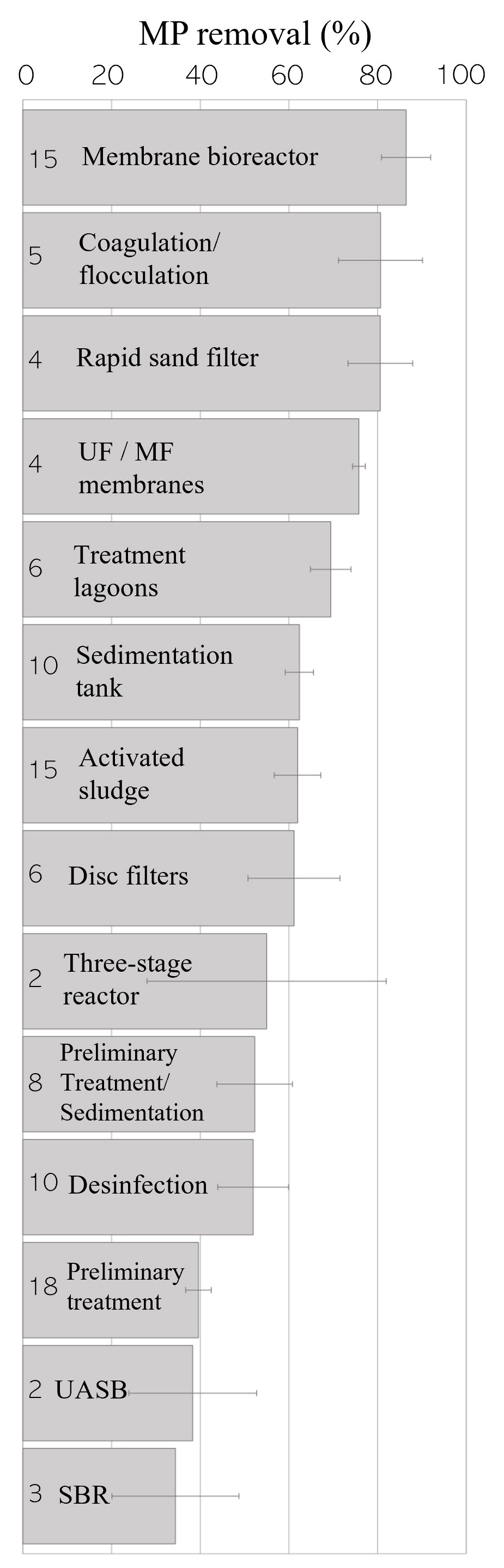
Several wastewater treatment technologies have been evaluated to remove MPs, aiming to reduce their concentrations in the final effluent (Figure 5). Some studies have evaluated the biological removal of MPs in treatment lagoons, activated sludge, three-stage reactors, Upflow Anaerobic Sludge Blanket (UASB), and sequencing batch reactors. During biological treatment, MPs are used as a substrate for the growth of microbial biofilms, which, through enzymatic action, weaken the structure of MPs, converting them into oligomers, miners, and monomers. These fragments can be assimilated and broken down into smaller molecules, such as CO2 and H2O (Tagg et al. 2020). However, the structure of many polymers that make up MPs is composed of highly stable carbon-carbon bonds, and there is a lack of enzymes that can directly weaken these bonds, making them non-biodegradable (Tokiwa et al. 2009). Thus, removal efficiencies for biological processes were generally below 60%, with the lowest removals mainly for anaerobic biodegradation technologies (Figure 5). Removals were relatively higher for treatment lagoons, such as facultative, maturation, and aerated lagoons (69.4%). This is probably due to biological degradation associated with sedimentation, provided by the high hydraulic retention time during these processes. For activated sludge - a usual treatment technology for urban wastewaters worldwide – the removal was, on average, 62%.

Average removal efficiencies, error bars, and sample number for MPs by several technologies and processes used for wastewater treatment. Reference: Table SV (Ziajahromi et al. 2019, Takeuchi et al. 2023, Bitter et al. 2022, Wolff et al. 2020, Tadsuwan & Babel 2021, Bayo et al. 2020a, b, Pittura et al. 2021, Parashar & Hait 2023, Rajala et al. 2020, Hidayaturrahman & Lee 2019, Bilgin et al. 2020, Tagg et al. 2020, Yang et al. 2023, Zhang et al. 2021).
Furthermore, it is essential to mention that the presence of MPs can impact on the performance of microbial activity in WWTPs regarding the removal of chemical oxygen demand, nitrogen, phosphorus, and some inorganic substances in the sewage, in addition to inhibiting biogas generation (Liu et al. 2023). Pittura et al. (2021) added PP particles at concentrations of 5, 18, and 50 MPs/gTS in UASB reactors aiming to evaluate the impact of PP on microbial activity. The study found that methane production decreased slightly by approximately 4% at 18 MPs/gTS, while at 50 MPs/gTS, a sharp decrease of 58% inhibition in methanogenic activity was observed. He et al. (2021) investigated the effect of PS-MPs concentration on nutrient removal in activated sludge. The results indicated that at PS particle size of 150–300 μm, ammonia oxidation during the nitrification process was inhibited by 71%, 92%, and 80% for PS concentrations of 0.01 g/L, 0.05 g/L, and 0.10 g/L, respectively. In contrast, the presence of MPs did not affect phosphate removal during the nitrification process.
Liu et al. (2023) reviewed the impact of MPs on various wastewater treatment technologies. They observed that, in general, the mechanisms by which MPs affect different types of sludge are by increasing the level of intracellular oxidative stress - which has acute inhibition in key enzymes and metabolic end products -, membrane disruption, cell death, and lactate dehydrogenase leakage, and reducing microbial abundance and diversity.
Among the technologies, the highest removals reported were for membrane bioreactors (MBR), with an average of 86.4%. Among the 15 studies found for MBR, 9 showed MP removals above 90% (Table SV). For example, Talvitie et al. (2017) evaluated WWTPs with several treatment technologies for removing MPs. Among them, MBR had the highest removal (99.9%). An MBR pilot plant was examined at the Kenkäveronniemi WWTP, located in the city of Mikkeli, Finland. The MBR included a submerged UF membrane unit with 20 flat sheet membrane cartridges, with a permeate flux between 40 and 90 L/h. In the MBR influent, the MPs were composed of PES (82.24%), PE (12%), PP (0.88%), and PS (1.68%), while in the effluent, the main polymers were PES (70%), PE (3.42%) and PP (15.8%).
In MBR, membrane processes - usually microfiltration (MF) or ultrafiltration (UF) - are associated with aerobic or anaerobic biological treatment. Thus, MBR is highly efficient in removing MPs since biodegradation and rejection by the membranes co-occur. The high rejection of solids by membranes contributes to higher biomass concentration, greater biodiversity, and greater SRT, improving the biodegradation of recalcitrant compounds, such as MPs (Lares et al. 2018, Michielssen et al. 2016). MF and UF are porous membranes through which water permeates upon application of pressure. Since MPs have different sizes on scales that typically exceed the pore size of MF and UF membranes, removal occurs mainly by the size exclusion mechanism (Enfrin et al. 2019). In addition, other mechanisms, such as adsorption - due to the hydrophobic nature of membranes and MP particles - can also contribute to the removal of MPs by membranes (Ostertag et al. 2023). Figure 5 shows that the average removal of MPs by MF/UF membranes in literature studies was 75.8%.
Other physical processes of MP separation can be observed, such as rapid sand filter, sedimentation, disc filters, preliminary treatment (screening/grit chamber), and preliminary treatment associated with sedimentation, with average removals of 80.6%, 62.4%, 61.2%, 39.6% and 52.3%, respectively (Figure 5). (Talvitie et al. 2017) evaluated the removal of MPs by rapid sand filter at Kakolanmäki WWTP, Finland. The system was able to reduce MPs from 0.7 MP/L (PE (31%), PES (18.1%), PVC (16.4%)) to 0.02 MP/L (PES (28.4%), PS (26.53%) PVC (1.9%)). In addition, at WWTP Águilas, Region of Murcia (Southeast Spain), MP removal was 75.5% by rapid sand filter. In this case, the removal of microparticles was considerably higher than that of microfibers. This shows that, during filtration, the shape of MPs can interfere with their retention or adhesion to the surface of sand grains; however, further studies should be developed to evaluate these removal mechanisms.
Regarding sedimentation, the separation of MPs occurs by gravity since these systems are designed so that solid particles settle at the bottom of a settling tank, forming a sludge layer. Settling tanks generally operate with long hydraulic retention times and low turbulence levels; thus, they can capture most MPs by sedimentation. However, the characteristics of MPs, such as the shape and density of the material, affect the sedimentation behavior and removal rates (Ruan et al. 2019). For example, Bilgin et al. (2020) evaluated the efficiency of sedimentation tanks in a WWTP and reported an average MP removal of 71%. The authors observed that MPs in fragment form had a removal of 89%, while only 52% of the fibers were removed, which was attributed to the irregular 3D structure of the fragments and their higher densities than wastewater (1.04 g/cm3). In this sense, sedimentation did not efficiently remove PP MPs - density between 0.84 and 0.9 g/cm3. In contrast, the most significant removal by sedimentation was for PA MPs (1.05 to 1.14 g/cm3).
It is essential to highlight that in wastewater, the interaction of MPs with other pollutants can interfere with their removal by sedimentation, modifying the characteristics of the particles. For example, the adsorption of fats and greases can promote the floating of particles, while the formation of biofilm by microorganisms on MPs can favor their sedimentation (Kim et al. 2022). Especially for particles with lower sedimentation rates, adding chemicals can help increase the removal efficiency. Figure 5 shows that the coagulation-flocculation process had an average MP removal of 80.7%. With the addition of coagulating agents, colloidal particles, and suspended solids, including MPs and aggregate, large flocs can be gradually created by slow mixing, which characterizes the flocculation process. Therefore, the particles settle due to the increase in density, resulting in more effective separation. Rajala et al. (2020) observed MP removals of 99.4% and 98.2% using ferric chloride and polyaluminum chloride, respectively, as coagulating agents during the treatment of wastewater from a WWTP. In contrast, Hidayaturrahman & Lee (2019) observed relatively lower MP removals, ranging from 47.1 to 81.6%, when coagulation was processes applied in three large-scale WWTPs using polyaluminum chloride as a coagulant.
Therefore, reducing MP concentrations in wastewater by controlling emission sources, such as excessively used and improperly disposed plastic waste, and using microparticles in cosmetic products is essential. Furthermore, to reduce the release of MPs into the aquatic environment, it is essential to improve wastewater treatment technologies currently used in WWTPs and to develop further studies on emerging technologies.
TOXICITY AND RISKS OF MPS IN SURFACE WATER AND WASTEWATER
MPs in surface waters and wastewater may indicate a potential hazard to the aquatic ecosystem. Therefore, studies have explored the toxicity of the polymer components of MPs to measure the adverse effects. (Santos et al. 2023) compiled several data on the toxicity of MPs for different aquatic organisms and observed that PET and PE were the polymers with the highest acute toxicity (for crustaceans), while PS and PA had the highest chronic toxicity, for fish and crustaceans, respectively. Among the studies evaluating the toxicity of MPs to aquatic organisms, adverse effects such as mortality, protein levels decrease, blood parameters decrease, mortality, inter-brood period increase, reproduction decrease, photosynthesis inhibition, growth inhibition and oxidative stress were observed (Raza et al. 2023). This shows that MPs in the aquatic environment can bring several imbalances to the ecosystem in the short and long term.
Santos et al. (2023) also highlighted that, in addition to the type of polymer, other characteristics of MPs may influence their aquatic toxicity. For example, MPs tended to be considered highly and very toxic in a 1-5 µm size range. Furthermore, Yokota & Mehlrose (2020) observed that MPs in fiber formats have prolonged sinking rates due to the more irregular structure, a large surface-to-volume ratio, and lower mass. Therefore, the fibers may be more likely to interact with aquatic organisms. However, the impact of each of the peculiarities of MPs should be further explored.
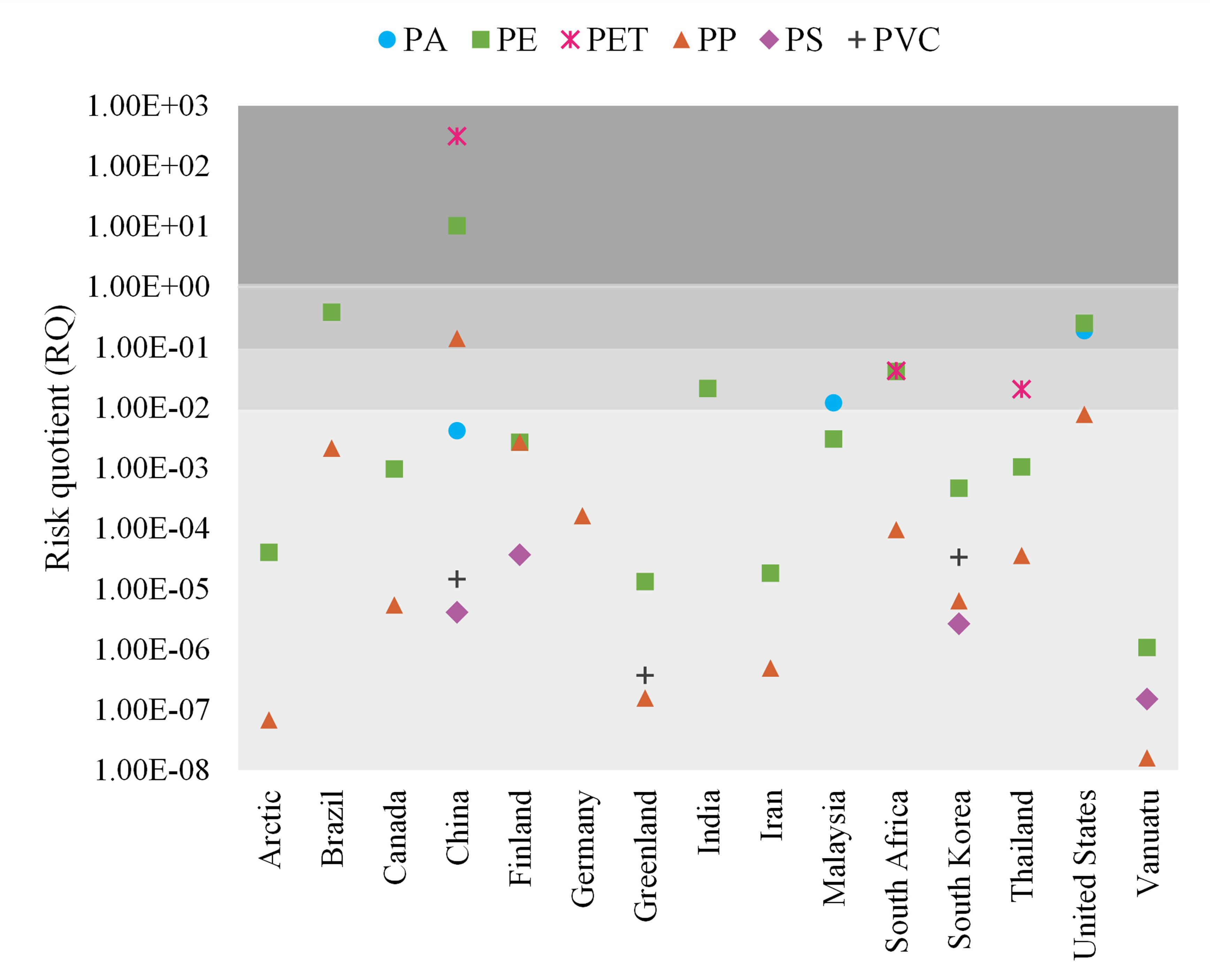
In addition to providing an essential overview of the adverse effects of MPs on aquatic organisms, toxicity data are essential for measuring the environmental risk of MPs. Environmental risk assessment is a method used to determine the hazards of pollutants on aquatic organisms. To assess the environmental risks, measured from the risk quotient (RQ), values of MP concentrations in surface water or wastewater and the acute and chronic toxicity related to them for different organisms are needed. RQ is measured by dividing MPs’ measured concentration (MEC) by the predicted no-effect concentration (PNEC). PNEC is the ratio between the toxicity for each MP and a correction factor (International Journal of Comparative Labour Law and Industrial Relations 1996). Correction factors were used depending on the amount of toxicity data for each MP: 10 for three species representing three trophic levels; 50 for two trophic levels; 100 for only one trophic level; 1000 for acute toxicity (International Journal of Comparative Labour Law and Industrial Relations 1996). Toxicity data used in the RQ are obtained by Santos et al. (2023). Then, RQ values were classified as high risk for RQ greater than 1, medium risk for 0.1 ≤ RQ ≤ 1, low risk for 0.01 ≤ RQ < 0.1, and negligible risk for RQ < 0.01.
The results of the environmental risk of MPs in surface water, by polymer type, are presented in Figure 6. Among the analyzed locations, only China exhibited MP concentrations classified as posing a high environmental risk, with an RQ greater than 1 for PE and PET. Other locations, such as Brazil, India, Malaysia, South Africa, Thailand, and the United States, had MPs classified as medium risk. However, most MPs had negligible risk in surface waters.

In addition to environmental risks, MPs in surface waters and aquatic organisms can pose potential risks to human health. Although it is impossible to measure these risks directly, as in the case of RQ for environmental risks, several studies have pointed to the dangers of ingesting MPs, for which water and a diet based on contaminated animals may be the main routes. Barboza et al. (2020), based on the average concentration of MPs found in fish muscle and the recommended weekly fish intake for different human population groups, estimated that MP intake could vary from 112 MP/year (children) to 842 MP/year (adults).
Chen et al. (2023b), in a study using vascular endothelial cells, suggested that realistic levels of MPs can cause oxidative cytotoxic stress in the human vascular system. However, the authors suggest that further studies are needed to conclude the harm to human health. Besides, it is crucial to highlight that MPs in the 50 to 500 μm range have already been detected in human feces (Schwabl et al. 2019) and blood samples from healthy individuals (Leslie et al. 2022).
It is also essential to consider that the constant release of MPs into water bodies can increase particle concentration over time and, consequently, increase the risk to the environment and human health. Therefore, preventing the entry of these pollutants into the aquatic environment becomes even more urgent. Table SVI shows the acute and chronic environmental risks of MPs for raw wastewater (RWW) and treated wastewater (TWW) from various wastewater treatment technologies. It can be noted that in RWW, in only two cases, the risks were considered medium (yellow). In contrast, in most cases the risks were low (green) or negligible (blue).
Thus, the presence of MPs in wastewater was not high enough to cause high environmental risks. However, data on concentrations of these pollutants in wastewater in several locations, mainly in developing countries, still need to be made available. As observed in the previous section, most of the data were reported for Europe and Asia, while no data were found for countries in South America, for example. Therefore, more studies are needed in these regions to measure environmental risks. In addition, the accuracy and standardization of MP quantification methods, mainly in complex matrices such as wastewater, are essential to ensure a more accurate estimate of risks.
Besides, the risk assessment was performed for MPs alone. However, studies show that MP particles can adsorb and interact with other hazardous pollutants, such as heavy metals and pharmaceuticals (Fan et al. 2022, Ziajahromi et al. 2019, Eom et al. 2021, Li et al. 2018). Thus, MPs can act as vectors of other pollutants, transporting them through aquatic compartments and the ecosystem, which increases their potential risk in wastewater.
For cases with medium risk in RWW, the treatment technologies (1) Screening and sedimentation / Biological treatment / Flocculation / Disinfection / De-chlorination processes / Ultrafiltration / Reverse osmosis and (2) Screening / Grit chamber / Activated Biological Filters / Activated sludge / Clarifier / UV Disinfection, were able to make the risks low or non-existent in TWW (Table SVI). In this sense, the overall removals of MPs for the technologies mentioned above were 90.5% and 77.1%, which resulted in PET concentrations in TWW of 0.18 MP/L and 0 MP/L, respectively.
IMPORTANCE OF ADEQUATE MANAGEMENT OF WASTEWATER TO PREVENT THE REINTRODUCING OF MP IN THE ENVIRONMENT
Due to the hydrophobic nature of MPs, they can be more readily adsorbed on organic surfaces and sewage sludge. Thus, a large proportion of the removed MPs are transferred to the sludge during water and wastewater treatment. For example, it was shown in Section 4.2 that about 62% of the MPs are removed in sedimentation tanks, and on average, 81% are removed in coagulation/flocculation processes (Figure 7). Thus, the particles removed by these processes may accumulate in the WTP and WWTP sludge fraction. Studies indicate that MP concentrations in sludge vary widely, from 510 to 495,000 MP/kg dry weight, regardless of country or region (Kwiatkowska & Ormaniec 2024).

Therefore, MPs accumulated in sludge can be reintroduced into the environment, causing imbalances in soil, water, and human health, as shown in Figure 7. Typically, WWTP sludge is sent to landfills or can be reused for agricultural applications. For the latter purpose, the sludge is subjected to biological, chemical, or thermal treatment (pasteurization, anaerobic or aerobic digestion, composting, lime stabilization of liquid sludge, liquid storage, dewatering, and storage), aiming to reduce the volume, the content of organic matter and pathogenic organisms, and other toxic pollutants (Hatinoğlu & Sanin 2021). However, studies evaluating the fate of MPs in sludge treatment are limited.
Some authors demonstrate that existing sludge treatment processes cannot effectively remove MPs. For example, Cydzik-Kwiatkowska pointed out that the presence of MPs after anaerobic digestion or composting of sludge is high due to the low removal efficiency of these techniques. However, further studies are needed in this regard. In addition, thermal treatments, such as incineration, are widely used as sewage sludge treatment and are considered effective ways of destroying plastics. However, analyses of bottom ash from incinerators indicated a quantity of MP particles (Yang et al. 2021).
Sewage sludge is known to have extensive agricultural applications. In North America and Europe, land-based recycling uses up to 50% of the sludge generated beneficially (Nizzetto et al. 2016). Consequently, the high presence of MPs in sludge and the low removal efficiency of commonly used sludge treatment techniques can lead to significant MP accumulation in soil. Corradini et al. (2019) reported up to 3,500 MPs/kg of dry agricultural soils exposed to 10 years of continuous sludge disposal. In addition, Mohajerani & Karabatak (2020) estimated that biosolids applications in the EU, USA, China, Canada, and Australia add 26,042, 21,249, 13,660, 1,518 and 1,241 tons of MPs to agricultural land annually, respectively.
Therefore, applying sewage sludge containing MPs as fertilizer may pose a significant risk to terrestrial biota (He et al. 2018). Studies show that the introduction of MPs into soil can alter soil physicochemical properties and microbial populations and affect soil enzymatic activity (Kwiatkowska & Ormaniec 2024). In addition, MPs accumulated in soil and landfills can be resuspended by wind and carried by precipitation, which also threatens the aquatic and atmospheric environment and, consequently, human health (Rocha-Santos & Duarte 2015). In addition, MPs can adsorb and transport various contaminants, including organic pollutants, heavy metals, pharmaceuticals, and pathogenic microorganisms (Andrady 2011). Thus, the presence of MPs in sludge may accompany the presence of other hazardous pollutants.
More data is needed to demonstrate the impact on the ecosystem and human health by reintroducing MPs into the environment through inadequate sewage sludge management. Reusing sludge as fertilizer is promising due to its composition, such as macronutrients (nitrogen and phosphorus) and micronutrients (zinc, copper, iron, manganese, and molybdenum). In addition, many countries depend on agricultural waste disposal due to the lack of infrastructure to manage large volumes of sludge (Milojevic & Cydzik-Kwiatkowska 2021). However, there is a clear need for adequate management and investigation of technologies to efficiently remove MPs from sludge for large-scale applications, especially when the purpose is the reuse for agricultural and soil applications. In addition, it is essential to develop regulations in this regard, limiting the concentration of MPs in sludge for reuse purposes.
CONCLUSIONS AND FUTURE PERSPECTIVES
This review highlights significant insights into the global occurrence of microplastics (MPs) in water and wastewater, their associated toxicity, and the environmental risks they pose. It also discusses methods for preventing and removing MPs. However, numerous knowledge gaps remain, particularly regarding the behavior and impact of these pollutants, which could impede effective decision-making and policy implementation.
A notable gap exists in the characterization of MPs in developing countries, such as Brazil, where studies often lack detailed data on the size, composition, and distribution of locally found MPs. No studies have been found for South American countries for wastewater. Addressing these gaps is essential for tailoring effective strategies and interventions. Furthermore, developing robust legislation to regulate MPs is critical to safeguarding environmental and public health.
Although conventional water treatment plants are not designed to remove MPs, current treatment configurations can achieve partial removal. However, further studies should be considered to identify removal mechanisms and ensure process efficiency. By ensuring the removal of these particles from water, it is possible to offer it with greater safety for human health.
Regarding wastewater, reducing MP concentrations by controlling emission sources is essential. This includes controlling emissions from improperly managed plastic waste and limiting the use of microparticles in consumer products such as cosmetics. In addition, preventing MPs from being re-released into the environment is essential. Such efforts will be instrumental in mitigating the environmental risks associated with MPs.
Acknowledgements
This research was funded by the Coordenação de Aperfeiçoamento de Pessoal de Nível Superior (CAPES), the Conselho Nacional de Desenvolvimento Científico e Tecnológico (CNPq), and the Fundação de Amparo à Pesquisa do Estado de Minas Gerais (FAPEMIG).
References
- ABDOUL MAGID ASI, ISLAM MDS, CHEN Y, WENG L, LI J, MA J & LI Y. 2021. Enhanced adsorption of polystyrene nanoplastics (PSNPs) onto oxidized corncob biochar with high pyrolysis temperature. Sci Total Environ 784: 147115.
- ADELEYE AT, BAHAR MM, MEGHARAJ M, FANG C & RAHMAN MM. 2024. The Unseen Threat of the Synergistic Effects of Microplastics and Heavy Metals in Aquatic Environments: A Critical Review. Curr Pollut Rep 10: 478-497.
- AKARSU C, KUMBUR H, GÖKDAĞ K, KIDEYŞ AE & SANCHEZ-VIDAL A. 2020. Microplastics composition and load from three wastewater treatment plants discharging into Mersin Bay, north eastern Mediterranean Sea. Mar Pollut Bull 150: 110776.
- ANDOH CN, ATTIOGBE F, BONSU ACKERSON NO, ANTWI M & ADU-BOAHEN K. 2024. Fourier Transform Infrared Spectroscopy: An analytical technique for microplastic identification and quantification. Infrared Phys Technol 136: 105070.
- ANDRADY AL. 2011. Microplastics in the marine environment. Mar Pollut Bull 62: 1596-1605.
- APETOGBOR K, PEREAO O, SPARKS C & OPEOLU B. 2023. Spatio-temporal distribution of microplastics in water and sediment samples of the Plankenburg river, Western Cape, South Africa. Environ Pollut 323: 121303.
- ARIZA-TARAZONA MC, VILLARREAL-CHIU JF, BARBIERI V, SILIGARDI C & CEDILLO-GONZÁLEZ EI. 2019. New strategy for microplastic degradation: Green photocatalysis using a protein-based porous N-TiO2 semiconductor. Ceram Int 45: 9618-9624.
- BARBOZA LGA, LOPES C, OLIVEIRA P, BESSA F, OTERO V, HENRIQUES B, RAIMUNDO J, CAETANO M, VALE C & GUILHERMINO L. 2020. Microplastics in wild fish from North East Atlantic Ocean and its potential for causing neurotoxic effects, lipid oxidative damage, and human health risks associated with ingestion exposure. Sci Total Environ 717: 134625.
- BARCHIESI M, CHIAVOLA A, DI MARCANTONIO C & BONI MR. 2021. Presence and fate of microplastics in the water sources: focus on the role of wastewater and drinking water treatment plants. J Water Proc Eng 40: 101787.
- BARHOUMI B, SANDER SG & TOLOSA I. 2022. A review on per- and polyfluorinated alkyl substances (PFASs) in microplastic and food-contact materials. Environ Res 206: 112595.
- BASHIR A & HASHMI I. 2022. Detection in influx sources and estimation of microplastics abundance in surface waters of Rawal Lake, Pakistan. Heliyon 8: e09166.
- BAYO J, LÓPEZ-CASTELLANOS J & OLMOS S. 2020a. Membrane bioreactor and rapid sand filtration for the removal of microplastics in an urban wastewater treatment plant. Mar Pollut Bull 156: 111211.
- BAYO J, OLMOS S & LÓPEZ-CASTELLANOS J. 2020b. Microplastics in an urban wastewater treatment plant: The influence of physicochemical parameters and environmental factors. Chemosphere 238: 124593.
- BEN-DAVID EA, HABIBI M, HADDAD E, HASANIN M, ANGEL DL, BOOTH AM & SABBAH I. 2021. Microplastic distributions in a domestic wastewater treatment plant: Removal efficiency, seasonal variation and influence of sampling technique. Sci Total Environ 752: 141880.
- BILGIN M, YURTSEVER M & KARADAGLI F. 2020. Microplastic removal by aerated grit chambers versus settling tanks of a municipal wastewater treatment plant. J Water Proc Eng 38: 101604.
- BITTER H, KRAUSE L, KIRCHEN F, FUNDNEIDER T & LACKNER S. 2022. Semi-crystalline microplastics in wastewater plant effluents and removal efficiencies of post-treatment filtration systems. Water Res X 17: 100156.
- BOUCHER J & FRIOT D. 2017. Primary microplastics in the oceans: A global evaluation of sources, IUCN International Union for Conservation of Nature.
- BREBU M. 2020. Environmental Degradation of Plastic Composites with Natural Fillers—A Review. Polymers (Basel) 12: 166.
- BRETAS ALVIM C, MENDOZA-ROCA JA & BES-PIÁ A. 2020a. Wastewater treatment plant as microplastics release source - Quantification and identification techniques. J Environ Manage 255: 109739.
- BUJACZEK T, KOLTER S, LOCKY D & ROSS MS. 2021. Characterization of microplastics and anthropogenic fibers in surface waters of the North Saskatchewan River, Alberta, Canada. FACETS 6: 26-43.
- CAPODAGLIO AG. 2024. Microplastics in the urban water cycle: A critical analysis of issues and of possible (needed?) solutions. Sci Total Environ 954: 176580.
- CARLSSON P, SINGDAHL-LARSEN C & LUSHER AL. 2021. Understanding the occurrence and fate of microplastics in coastal Arctic ecosystems: The case of surface waters, sediments and walrus (Odobenus rosmarus). Sci Total Environ 792: 148308.
- CHAUKURA N, KEFENI KK, CHIKURUNHE I, NYAMBIYA I, GWENZI W, MOYO W, NKAMBULE TTI, MAMBA BB & ABULUDE FO. 2021. Microplastics in the Aquatic Environment—The Occurrence, Sources, Ecological Impacts, Fate, and Remediation Challenges. Pollutants 1: 95-118.
- CHEN X, MA H, JI X, HAN R, PANG K, YANG Z, LIU Z & PENG S. 2023a. Engineering green MOF-based superhydrophobic sponge for efficiently synchronous removal of microplastics and pesticides from high-salinity water. Water Res 243: 120314.
- CHEN Y-C, CHEN K-F, ANDREW LIN K-Y, SU H-P, WU D-N & LIN C-H. 2023b. Evaluation of toxicity of polystyrene microplastics under realistic exposure levels in human vascular endothelial EA.hy926 cells. Chemosphere 313: 137582.
- CORRADINI F, MEZA P, EGUILUZ R, CASADO F, HUERTA-LWANGA E & GEISSEN V. 2019. Evidence of microplastic accumulation in agricultural soils from sewage sludge disposal. Sci Total Environ 671: 411-420.
- DONG S, GAO P, LI B, FENG L, LIU Y, DU Z & ZHANG L. 2022. Occurrence and migration of microplastics and plasticizers in different wastewater and sludge treatment units in municipal wastewater treatment plant. Front Environ Sci Eng 16: 142.
- DOYEN P ET AL. 2019. Occurrence and identification of microplastics in beach sediments from the Hauts-de-France region. Environ Sci Pollut Res 26: 28010-28021.
- DRABINSKI TL, DE CARVALHO DG, GAYLARDE CC, LOURENÇO MFP, MACHADO WTV, DA FONSECA EM, DA SILVA ALC & BAPTISTA NETO JA. 2023. Microplastics in Freshwater River in Rio de Janeiro and Its Role as a Source of Microplastic Pollution in Guanabara Bay, SE Brazil. Micro 3: 208-223.
- EISENTRAUT P, DÜMICHEN E, RUHL AS, JEKEL M, ALBRECHT M, GEHDE M & BRAUN U. 2018. Two Birds with One Stone—Fast and Simultaneous Analysis of Microplastics: Microparticles Derived from Thermoplastics and Tire Wear. Environ Sci Technol Lett 5: 608-613.
- ENFRIN M, DUMÉE LF & LEE J. 2019. Nano/microplastics in water and wastewater treatment processes - Origin, impact and potential solutions. Water Res 161: 621-638.
- EOM Y, KIM S-M, LEE M, JEON H, PARK J, LEE ES, HWANG SY, PARK J & OH DX. 2021. Mechano-responsive hydrogen-bonding array of thermoplastic polyurethane elastomer captures both strength and self-healing. Nat Commun 12: 621.
- ERNI-CASSOLA G, ZADJELOVIC V, GIBSON MI & CHRISTIE-OLEZA JA. 2019. Distribution of plastic polymer types in the marine environment; A meta-analysis. J Hazard Mater 369: 691-698.
- FAN L, MOHSENI A, SCHMIDT J, EVANS B, MURDOCH B & GAO L. 2023. Efficiency of lagoon-based municipal wastewater treatment in removing microplastics. Sci Total Environ 876: 162714.
- FAN X, LI W, ALAM E, CAO B, QIAN S, SHI S & YANG Y. 2022. Investigation of the adsorption-desorption behavior of antibiotics by polybutylene succinate and polypropylene aged in different water conditions. Environmental Science and Pollution Research 30: 36619-36630.
- FERGUSON L, AWE A & SPARKS C. 2024. Microplastic concentrations and risk assessment in water, sediment and invertebrates from Simon’s Town, South Africa. Heliyon 10: e28514.
- FRANCO AA, ARELLANO JM, ALBENDÍN G, RODRÍGUEZ-BARROSO R, ZAHEDI S, QUIROGA JM & COELLO MD. 2020. Mapping microplastics in Cadiz (Spain): Occurrence of microplastics in municipal and industrial wastewaters. J Water Proc Eng 38: 101596.
- FU W, MIN J, JIANG W, LI Y & ZHANG W. 2020. Separation, characterization and identification of microplastics and nanoplastics in the environment. Sci Total Environ 721: 137561.
- GALAFASSI S, NIZZETTO L & VOLTA P. 2019. Plastic sources: A survey across scientific and grey literature for their inventory and relative contribution to microplastics pollution in natural environments, with an emphasis on surface water. Sci Total Environ 693: 133499.
- GAO BY, HAHN HH & HOFFMANN E. 2002. Evaluation of aluminum-silicate polymer composite as a coagulant for water treatment. Water Res 36: 3573-3581.
- GAO Z, CIZDZIEL JV, WONTOR K & VIANELLO A. 2022. Spatiotemporal characteristics of microplastics in a university wastewater treatment plant: Influence of sudden on-campus population swings. J Environ Chem Eng 10: 108834.
- GIES EA, LENOBLE JL, NOËL M, ETEMADIFAR A, BISHAY F, HALL ER & ROSS PS. 2018. Retention of microplastics in a major secondary wastewater treatment plant in Vancouver, Canada. Mar Pollut Bull 133: 553-561.
- GONG J, KONG T, LI Y, LI Q, LI Z & ZHANG J. 2018. Biodegradation of Microplastic Derived from Poly(ethylene terephthalate) with Bacterial Whole-Cell Biocatalysts. Polymers (Basel) 10: 1326.
- GONZÁLEZ-CAMEJO J, MORALES A, PEÑA-LAMAS J, LAFITA C, ENGUÍDANOS S, SECO A & MARTÍ N. 2023. Feasibility of rapid gravity filtration and membrane ultrafiltration for the removal of microplastics and microlitter in sewage and wastewater from plastic industry. J Water Proc Eng 51: 103452.
- GÜNDOĞDU S, ÇEVIK C, GÜZEL E & KILERCIOĞLU S. 2018. Microplastics in municipal wastewater treatment plants in Turkey: a comparison of the influent and secondary effluent concentrations. Environ Monit Assess 190: 626.
- HAJJI S, BEN-HADDAD M, ABELOUAH MR, DE-LA-TORRE GE & ALLA AA. 2023. Occurrence, characteristics, and removal of microplastics in wastewater treatment plants located on the Moroccan Atlantic: The case of Agadir metropolis. Sci Total Environ 862: 160815.
- HATINOĞLU MD & SANIN FD. 2021. Sewage sludge as a source of microplastics in the environment: A review of occurrence and fate during sludge treatment. J Environ Manage 295: 113028.
- HE D, LUO Y, LU S, LIU M, SONG Y & LEI L. 2018. Microplastics in soils: Analytical methods, pollution characteristics and ecological risks. TrAC Trends in Analytical Chemistry 109: 163-172.
- HE Y, LI L, SONG K, LIU Q, LI Z, XIE F & ZHAO X. 2021. Effect of microplastic particle size to the nutrients removal in activated sludge system. Mar Pollut Bull 163: 111972.
- HEO Y, LEE E-H & LEE S-W. 2022. Adsorptive removal of micron-sized polystyrene particles using magnetic iron oxide nanoparticles. Chemosphere 307: 135672.
- HIDAYATURRAHMAN H & LEE T-G. 2019. A study on characteristics of microplastic in wastewater of South Korea: Identification, quantification, and fate of microplastics during treatment process. Mar Pollut Bull 146: 696-702.
- HOSEINI M & BOND T. 2022. Predicting the global environmental distribution of plastic polymers. Environmental Pollution 300: 118966.
- HUANG J, WANG L, LIU J, QIAN X & WU Y. 2023. Abundance, characteristics, and removal of microplastics in different wastewater treatment plants in a Yangtze River Delta city of China. J Water Proc Eng 54: 103987.
- HUANG Q-S, CHEN S-Q, ZHAO X-M, SONG L-J, DENG Y-M, XU K-W, YAN Z-F & WU J. 2024. Enhanced degradation of polyethylene terephthalate (PET) microplastics by an engineered Stenotrophomonas pavanii in the presence of biofilm. Sci Total Environ 955: 177129.
- HUANG Z, HU B & WANG H. 2023. Analytical methods for microplastics in the environment: a review. Environ Chem Lett 21: 383-401.
- IÑIGUEZ ME, CONESA JA & FULLANA A. 2018. Recyclability of four types of plastics exposed to UV irradiation in a marine environment. Waste Management 79: 339-345.
- INTERNATIONAL JOURNAL OF COMPARATIVE LABOUR LAW AND INDUSTRIAL RELATIONS. 1996. Communication from the Commission ‘Incorporating Equal Opportunities For Women and Men into all Community Policies and Activities.’ Int J Comp Labour Law Industr Rel 12: 158-175.
- IVLEVA NP. 2021. Chemical Analysis of Microplastics and Nanoplastics: Challenges, Advanced Methods, and Perspectives. Chem Rev 121: 11886-11936.
- JIANG J, WANG X, REN H, CAO G, XIE G, XING D & LIU B. 2020. Investigation and fate of microplastics in wastewater and sludge filter cake from a wastewater treatment plant in China. Sci Total Environ 746: 141378.
- JIANG R, LU G, YAN Z, LIU J, WU D & WANG Y. 2021. Microplastic degradation by hydroxy-rich bismuth oxychloride. J Hazard Mater 405: 124247.
- KABIR MS, WANG H, LUSTER-TEASLEY S, ZHANG L & ZHAO R. 2023. Microplastics in landfill leachate: Sources, detection, occurrence, and removal. Environ Sci Ecotechnol 16: 100256.
- KANG J, ZHOU L, DUAN X, SUN H, AO Z & WANG S. 2019. Degradation of Cosmetic Microplastics via Functionalized Carbon Nanosprings. Matter 1: 745-758.
- KAZOUR M, TERKI S, RABHI K, JEMAA S, KHALAF G & AMARA R. 2019. Sources of microplastics pollution in the marine environment: Importance of wastewater treatment plant and coastal landfill. Mar Pollut Bull 146: 608-618.
- KIM M-J, NA S-H, BATOOL R, BYUN I-S & KIM E-J. 2022. Seasonal variation and spatial distribution of microplastics in tertiary wastewater treatment plant in South Korea. J Hazard Mater 438: 129474.
- KIM SW & RILLIG MC. 2022. Research trends of microplastics in the soil environment: Comprehensive screening of effects. Soil Ecol Lett 4: 109-118.
- KINIGOPOULOU V, PASHALIDIS I, KALDERIS D & ANASTOPOULOS I. 2022. Microplastics as carriers of inorganic and organic contaminants in the environment: A review of recent progress. J Mol Liq 350: 118580.
- KIRSTEIN IV, GOMIERO A & VOLLERTSEN J. 2021. Microplastic pollution in drinking water. Curr Opin Toxicol 28: 70-75.
- KWIATKOWSKA K & ORMANIEC P. 2024. Microbial Succession on Microplastics in Wastewater Treatment Plants: Exploring the Complexities of Microplastic-Microbiome Interactions. Microb Ecol 87: 105.
- KWON HJ, HIDAYATURRAHMAN H, PEERA SG & LEE TG. 2022. Elimination of Microplastics at Different Stages in Wastewater Treatment Plants. Water (Basel) 14: 2404.
- LARES M, NCIBI MC, SILLANPÄÄ M & SILLANPÄÄ M. 2018. Occurrence, identification and removal of microplastic particles and fibers in conventional activated sludge process and advanced MBR technology. Water Res 133: 236-246.
- LEADS RR & WEINSTEIN JE. 2019. Occurrence of tire wear particles and other microplastics within the tributaries of the Charleston Harbor Estuary, South Carolina, USA. Mar Pollut Bull 145: 569-582.
- LESLIE HA, BRANDSMA SH, VAN VELZEN MJM & VETHAAK AD. 2017. Microplastics en route: Field measurements in the Dutch river delta and Amsterdam canals, wastewater treatment plants, North Sea sediments and biota. Environ Int 101: 133-142.
- LESLIE HA, VAN VELZEN MJM, BRANDSMA SH, VETHAAK AD, GARCIA-VALLEJO JJ & LAMOREE MH. 2022. Discovery and quantification of plastic particle pollution in human blood. Environ Int 163: 107199.
- LI J, CHEN X, YU S & CUI M. 2023. Removal of pristine and aged microplastics from water by magnetic biochar: Adsorption and magnetization. Sci Total Environ 875: 162647.
- LI J, ZHANG K & ZHANG H. 2018. Adsorption of antibiotics on microplastics. Environmental Pollution 237: 460-467.
- LIANG Y, TAN Q, SONG Q & LI J. 2021. An analysis of the plastic waste trade and management in Asia. Waste Management 119: 242-253.
- LIN L, ZUO L-Z, PENG J-P, CAI L-Q, FOK L, YAN Y, LI H-X & XU X-R. 2018. Occurrence and distribution of microplastics in an urban river: A case study in the Pearl River along Guangzhou City, China. Sci Total Environ 644: 375-381.
- LIU P, QIAN L, WANG H, ZHAN X, LU K, GU C & GAO S. 2019. New Insights into the Aging Behavior of Microplastics Accelerated by Advanced Oxidation Processes. Environ Sci Technol 53: 3579-3588.
- LIU S, SU C, LU Y, XIAN Y, CHEN Z, WANG Y, DENG X & LI X. 2023. Effects of microplastics on the properties of different types of sewage sludge and strategies to overcome the inhibition: A review. Sci Total Environ 902: 166033.
- LIU S & WANG J. 2023. Exploring the potential of cellulose benzoate adsorbents modified with carbon nanotubes and magnetic carbon nanotubes for microplastic removal from water. Chemical Engineering Journal 469: 143910.
- LIU W, ZHANG J, LIU H, GUO X, ZHANG X, YAO X, CAO Z & ZHANG T. 2021. A review of the removal of microplastics in global wastewater treatment plants: Characteristics and mechanisms. Environ Int 146: 106277.
- LIU X, YUAN W, DI M, LI Z & WANG J. 2019. Transfer and fate of microplastics during the conventional activated sludge process in one wastewater treatment plant of China. Chem Eng J 362: 176-182.
- LLORENTE-GARCÍA BE, HERNÁNDEZ-LÓPEZ JM, ZALDÍVAR-CADENA AA, SILIGARDI C & CEDILLO-GONZÁLEZ EI. 2020. First Insights into Photocatalytic Degradation of HDPE and LDPE Microplastics by a Mesoporous N-TiO2 Coating: Effect of Size and Shape of Microplastics. Coatings 10: 658.
- LOAYZA E, TRIGOSO BARRIENTOS AC & JANSSENS GPJ. 2022. Evidence of microplastics in water and commercial fish from a high-altitude mountain lake (Lake Titicaca). PeerJ 10: e14112.
- LONG Y, ZHOU Z, WEN X, WANG J, XIAO R, WANG W, LI X, LAI X, ZHANG Y, DENG C, CAO J & YIN L. 2023. Microplastics removal and characteristics of a typical multi-combination and multi-stage constructed wetlands wastewater treatment plant in Changsha, China. Chemosphere 312: 137199.
- LUO Y, XIE H, XU H, ZHOU C, WANG P, LIU Z, YANG Y, HUANG J, WANG C & ZHAO X. 2023. Wastewater treatment plant serves as a potentially controllable source of microplastic: Association of microplastic removal and operational parameters and water quality data. J Hazard Mater 441: 129974.
- LUSHER AL, TIRELLI V, O’CONNOR I & OFFICER R. 2015. Microplastics in Arctic polar waters: the first reported values of particles in surface and sub-surface samples. Sci Rep 5: 14947.
- LV X, DONG Q, ZUO Z, LIU Y, HUANG X & WU W-M. 2019. Microplastics in a municipal wastewater treatment plant: Fate, dynamic distribution, removal efficiencies, and control strategies. J Clean Prod 225: 579-586.
- MA B, XUE W, DING Y, HU C, LIU H & QU J. 2019. Removal characteristics of microplastics by Fe-based coagulants during drinking water treatment. J Environ Sci 78: 267-275.
- MAGNI S, BINELLI A, PITTURA L, AVIO CG, DELLA TORRE C, PARENTI CC, GORBI S & REGOLI F. 2019. The fate of microplastics in an Italian Wastewater Treatment Plant. Sci Total Environ 652: 602-610.
- MALLA-PRADHAN R, SUWUNWONG T, PHOUNGTHONG K, JOSHI TP & PRADHAN BL. 2022. Microplastic pollution in urban Lake Phewa, Nepal: the first report on abundance and composition in surface water of lake in different seasons. Environ Sci Pollut Res 29: 39928-39936.
- MARIA T ET AL. 2021. Marine Litter and Plastic Waste Vital Graphics, 1-77 p.
- MARTÍN-GARCÍA AP, EGEA-CORBACHO Á, FRANCO AA, RODRÍGUEZ-BARROSO R, COELLO MD & QUIROGA JM. 2023. Grab and composite samples: Variations in the analysis of microplastics in a real wastewater treatment plant in the South of Spain. J Environ Chem Eng 11: 109486.
- MARTÍN-GÓMEZ B, STEPHEN ELMORE J, VALVERDE S, ARES AM & BERNAL J. 2024. Recent applications of chromatography for determining microplastics and related compounds (bisphenols and phthalate esters) in food. Microchem J 197: 109903.
- MENÉNDEZ-MANJÓN A, MARTÍNEZ-DÍEZ R, SOL D, LACA A, LACA A, RANCAÑO A & DÍAZ M. 2022. Long-Term Occurrence and Fate of Microplastics in WWTPs: A Case Study in Southwest Europe. Appl Sci 12: 2133.
- MENG X, BAO T, HONG L & WU K. 2023. Occurrence Characterization and Contamination Risk Evaluation of Microplastics in Hefei’s Urban Wastewater Treatment Plant. Water (Basel) 15: 686.
- MIAO F, LIU Y, GAO M, YU X, XIAO P, WANG M, WANG S & WANG X. 2020. Degradation of polyvinyl chloride microplastics via an electro-Fenton-like system with a TiO2/graphite cathode. J Hazard Mater 399: 123023.
- MICHIELSSEN MR, MICHIELSSEN ER, NI J & DUHAIME MB. 2016. Fate of microplastics and other small anthropogenic litter (SAL) in wastewater treatment plants depends on unit processes employed. Environ Sci (Camb) 2: 1064-1073.
- MILOJEVIC N & CYDZIK-KWIATKOWSKA A. 2021. Agricultural Use of Sewage Sludge as a Threat of Microplastic (MP) Spread in the Environment and the Role of Governance. Energies (Basel) 14: 6293.
- MOHAJERANI A & KARABATAK B. 2020. Microplastics and pollutants in biosolids have contaminated agricultural soils: An analytical study and a proposal to cease the use of biosolids in farmlands and utilise them in sustainable bricks. Waste Management 107: 252-265.
- MORGANA S, GHIGLIOTTI L, ESTÉVEZ-CALVAR N, STIFANESE R, WIECKZOREK A, DOYLE T, CHRISTIANSEN JS, FAIMALI M & GARAVENTA F. 2018. Microplastics in the Arctic: A case study with sub-surface water and fish samples off Northeast Greenland. Environ Pollut 242: 1078-1086.
- MOTALEBIZADEH A, FARDINDOOST S & HOORFAR M. 2024. Selective on-site detection and quantification of polystyrene microplastics in water using fluorescence-tagged peptides and electrochemical impedance spectroscopy. J Hazard Mater 480: 136004.
- MURPHY F, EWINS C, CARBONNIER F & QUINN B. 2016. Wastewater Treatment Works (WwTW) as a Source of Microplastics in the Aquatic Environment. Environ Sci Technol 50: 5800-5808.
- NAJI A, AZADKHAH S, FARAHANI H, UDDIN S & KHAN FR. 2021. Microplastics in wastewater outlets of Bandar Abbas city (Iran): A potential point source of microplastics into the Persian Gulf. Chemosphere 262: 128039.
- NIELSEN TD, HOLMBERG K & STRIPPLE J. 2019. Need a bag? A review of public policies on plastic carrier bags - Where, how and to what effect? Waste Management 87: 428-440.
- NIZZETTO L, FUTTER M & LANGAAS S. 2016. Are Agricultural Soils Dumps for Microplastics of Urban Origin? Environ Sci Technol 50: 10777-10779.
- OKOFFO ED, O’BRIEN S, O’BRIEN JW, TSCHARKE BJ & THOMAS KV. 2019. Wastewater treatment plants as a source of plastics in the environment: a review of occurrence, methods for identification, quantification and fate. Environ Sci (Camb) 5: 1908-1931.
- OSTERTAG F, KROLITZKI E, BERENSMEIER S & HINRICHS J. 2023. Protein valorisation from acid whey - Screening of various micro- and ultrafiltration membranes concerning the filtration performance. Int Dairy J 146: 105745.
- OVEISY N, RAFIEE M, RAHMATPOUR A, NEJAD AS, HASHEMI M & ESLAMI A. 2022. Occurrence, identification, and discharge of microplastics from effluent and sludge of the largest WWTP in Iran—South of Tehran. Water Environment Research 94.
- PARASHAR N & HAIT S. 2023. Abundance, characterization, and removal of microplastics in different technology-based sewage treatment plants discharging into the middle stretch of the Ganga River, India. Sci Total Environ 905: 167099.
- PARK SY & KIM CG. 2019. Biodegradation of micro-polyethylene particles by bacterial colonization of a mixed microbial consortium isolated from a landfill site. Chemosphere 222: 527-533.
- PARK T-J, LEE S-H, LEE M-S, LEE J-K, LEE S-H & ZOH K-D. 2020. Occurrence of microplastics in the Han River and riverine fish in South Korea. Sci Total Environ 708: 134535.
- PÉREZ LS, RODRIGUEZ OM, REYNA S, SÁNCHEZ-SALAS JL, LOZADA JD, QUIROZ MA & BANDALA ER. 2016. Oil refinery wastewater treatment using coupled electrocoagulation and fixed film biological processes. Physics and Chemistry of the Earth, Parts A/B/C 91: 53-60.
- PERREN W, WOJTASIK A & CAI Q. 2018. Removal of Microbeads from Wastewater Using Electrocoagulation. ACS Omega 3: 3357-3364.
- PETERSEN F & HUBBART JA. 2021. The occurrence and transport of microplastics: The state of the science. Sci Total Environ 758: 143936.
- PICÓ Y & BARCELÓ D. 2019. Analysis and Prevention of Microplastics Pollution in Water: Current Perspectives and Future Directions. ACS Omega 4: 6709-6719.
- PIRONTI C, RICCIARDI M, MOTTA O, MIELE Y, PROTO A & MONTANO L. 2021. Microplastics in the Environment: Intake through the Food Web, Human Exposure and Toxicological Effects. Toxics 9: 224.
- PITTURA L ET AL. 2021. Microplastics in real wastewater treatment schemes: Comparative assessment and relevant inhibition effects on anaerobic processes. Chemosphere 262: 128415.
- PIVOKONSKY M, CERMAKOVA L, NOVOTNA K, PEER P, CAJTHAML T & JANDA V. 2018. Occurrence of microplastics in raw and treated drinking water. Sci Total Environ 643: 1644-1651.
- PRADIT S, NOPPRADIT P, SENGLOYLUAN K, SUWANNO P, TANRATTANAKUL V, SORNPLANG K, NUTHAMMACHOT N, JITKAEW P & NITIRATSUWAN T. 2023. Occurrence of Microplastics in River Water in Southern Thailand. J Mar Sci Eng 11: 90.
- PUCKOWSKI A, CWIĘK W, MIODUSZEWSKA K, STEPNOWSKI P & BIAŁK-BIELIŃSKA A. 2021. Sorption of pharmaceuticals on the surface of microplastics. Chemosphere 263: 127976.
- RAJALA K, GRÖNFORS O, HESAMPOUR M & MIKOLA A. 2020. Removal of microplastics from secondary wastewater treatment plant effluent by coagulation/flocculation with iron, aluminum and polyamine-based chemicals. Water Res 183: 116045.
- RAJU S, CARBERY M, KUTTYKATTIL A, SENTHIRAJAH K, LUNDMARK A, ROGERS Z, SCB S, EVANS G & PALANISAMI T. 2020. Improved methodology to determine the fate and transport of microplastics in a secondary wastewater treatment plant. Water Res 173: 115549.
- RAMÍREZ-ÁLVAREZ N, RIOS MENDOZA LM, MACÍAS-ZAMORA JV, OREGEL-VÁZQUEZ L, ALVAREZ-AGUILAR A, HERNÁNDEZ-GUZMÁN FA, SÁNCHEZ-OSORIO JL, MOORE CJ, SILVA-JIMÉNEZ H & NAVARRO-OLACHE LF. 2020. Microplastics: Sources and distribution in surface waters and sediments of Todos Santos Bay, Mexico. Sci Total Environ 703: 134838.
-
RANJAN VP & GOEL S. 2019. Degradation of Low-Density Polyethylene Film Exposed to UV Radiation in Four Environments. J Hazard Toxic Radioact Waste 23(4): https://doi.org/10.1061/(ASCE)HZ.2153-5515.000045.
» https://doi.org/10.1061/(ASCE)HZ.2153-5515.000045 - RASTA M, RAHIMIBASHAR MR, ERSHAD A, JAFROUDI HT & KOUHBANE ST. 2021. Characteristics and Seasonal Distribution of Microplastics in the Surface Waters of Southwest Coast of the Caspian Sea (Guilan Province, Iran). Bull Environ Contam Toxicol 107: 671-676.
- RASTA M, SATTARI M, TALESHI MS & NAMIN JI. 2020. Identification and distribution of microplastics in the sediments and surface waters of Anzali Wetland in the Southwest Caspian Sea, Northern Iran. Mar Pollut Bull 160: 111541.
- RAZA T, RASOOL B, ASRAR M, MANZOOR M, JAVED Z, JABEEN F & YOUNIS T. 2023. Exploration of polyacrylamide microplastics and evaluation of their toxicity on multiple parameters of Oreochromis niloticus. Saudi J Biol Sci 30: 103518.
- REN X, TANG J, LIU X & LIU Q. 2020. Effects of microplastics on greenhouse gas emissions and the microbial community in fertilized soil. Environ Pollut 256: 113347.
- RIBEIRO F ET AL. 2020. Quantitative Analysis of Selected Plastics in High-Commercial-Value Australian Seafood by Pyrolysis Gas Chromatography Mass Spectrometry. Environ Sci Technol 54: 9408-9417.
- ROCHA-SANTOS T & DUARTE AC. 2015. A critical overview of the analytical approaches to the occurrence, the fate and the behavior of microplastics in the environment. TrAC Trends in Analytical Chemistry 65: 47-53.
- RODRÍGUEZ-NARVAEZ OM, GOONETILLEKE A, PEREZ L & BANDALA ER. 2021. Engineered technologies for the separation and degradation of microplastics in water: A review. Chem Eng J 414: 128692.
- RONG X, CHEN X, LI P, ZHAO C, PENG S, MA H & QU H. 2022. Mechanically durable anti-bacteria non-fluorinated superhydrophobic sponge for highly efficient and fast microplastic and oil removal. Chemosphere 299: 134493.
- ROSCHER L ET AL. 2021. Microplastic pollution in the Weser estuary and the German North Sea. Environmental Pollution 288: 117681.
- RUAN Y, ZHANG K, WU C, WU R & LAM PKS. 2019. A preliminary screening of HBCD enantiomers transported by microplastics in wastewater treatment plants. Sci Total Environ 674: 171-178.
- SALMI T, TOLVANEN P, ERÄNEN K, WÄRNÅ J, LEVENEUR S & HAARIO H. 2022. Determination of kinetic constants by using transient temperature data from continuous stirred tank reactors. Chem Eng Sci 248: 117164.
- SANCHEZ JM, OLIVA J, GOMEZ-SOLIS C, PUENTES-PRADO E, MONTES E, JUÁREZ-RAMÍREZ I, GARCIA CR & MORENO PALMERIN J. 2024. High removal of PS and PET microplastics from tap water by using Fe2O3 porous microparticles and photothermal irradiation with NIR light. Chemosphere 367: 143538.
- SANGKHAM S, AMINUL I, ADHIKARI S, KUMAR R, SHARMA P, SAKUNKOO P, BHATTACHARYA P & TIWARI A. 2023. Evidence of microplastics in groundwater: A growing risk for human health. Groundw Sustain Dev 23: 100981.
- SANTOS RC, PINHEIRO DRUMOND G, REZENDE MOREIRA V, VALÉRIA DE SOUZA SANTOS L & CRISTINA SANTOS AMARAL M. 2023. Microplastics in surface water: occurrence, ecological implications, quantification methods and remediation technologies. Chem Eng J 474: 144936.
- SANTOS RC, PINHEIRO GD, MOREIRA RV, VALÉRIA DE SOUZA SANTOS L & AMARAL CSM. 2023. Microplastics in surface water: occurrence, ecological implications, quantification methods and remediation technologies. Chem Eng J 474: 144936.
- SCHIAVO S, OLIVIERO M, CHIAVARINI S & MANZO S. 2020. Adverse effects of oxo-degradable plastic leachates in freshwater environment. Environ Sci Pollut Res 27: 8586-8595.
- SCHRANK I, MÖLLER JN, IMHOF HK, HAUENSTEIN O, ZIELKE F, AGARWAL S, LÖDER MGJ, GREINER A & LAFORSCH C. 2022. Microplastic sample purification methods - Assessing detrimental effects of purification procedures on specific plastic types. Sci Total Environ 833: 154824.
- SCHWABL P, KÖPPEL S, KÖNIGSHOFER P, BUCSICS T, TRAUNER M, REIBERGER T & LIEBMANN B. 2019. Detection of Various Microplastics in Human Stool. Ann Intern Med 171: 453-457.
- SCIRCLE A, CIZDZIEL JV, TISINGER L, ANUMOL T & ROBEY D. 2020. Occurrence of Microplastic Pollution at Oyster Reefs and Other Coastal Sites in the Mississippi Sound, USA: Impacts of Freshwater Inflows from Flooding. Toxics 8: 35.
- SELVAM S, JESURAJA K, VENKATRAMANAN S, ROY PD & JEYANTHI KUMARI V. 2021. Hazardous microplastic characteristics and its role as a vector of heavy metal in groundwater and surface water of coastal south India. J Hazard Mater 402: 123786.
- SHARIFI H, MOVAHEDIAN ATTAR H & BINA B. 2023. Occurrence and removal of microplastics in a municipal wastewater treatment plant with conventional activated sludge process: A case study in Isfahan, Iran. Environ Health Eng Manag 10: 59-66.
- SHEN M, SONG B, ZHU Y, ZENG G, ZHANG Y, YANG Y, WEN X, CHEN M & YI H. 2020. Removal of microplastics via drinking water treatment: Current knowledge and future directions. Chemosphere 251: 126612.
- SHEN M, ZENG Z, WEN X, REN X, ZENG G, ZHANG Y & XIAO R. 2021. Presence of microplastics in drinking water from freshwater sources: the investigation in Changsha, China. Environ Sci Pollut Res 28: 42313-42324.
- SHI X, ZHANG X, GAO W, ZHANG Y & HE D. 2022. Removal of microplastics from water by magnetic nano-Fe3O4. Sci Total Environ 802: 149838.
- SKAF DW, PUNZI VL, ROLLE JT & KLEINBERG KA. 2020. Removal of micron-sized microplastic particles from simulated drinking water via alum coagulation. Chem Eng J 386: 123807.
- SOL D, SOLÍS-BALBÍN C, LACA A, LACA A & DÍAZ M. 2023. A standard analytical approach and establishing criteria for microplastic concentrations in wastewater, drinking water and tap water. Sci Total Environ 899: 165356.
- SPONZA DT & ÖZTEKİN R. 2023. Zeolitic Imidazolate/Fe3O4 Nanocomposite for Removal of Polystyrene and 4-tert-butylphenol via Adsorption. WSEAS Trans Environ Dev 19: 1071-1082.
- SUN C, WANG Z, CHEN L & LI F. 2020. Fabrication of robust and compressive chitin and graphene oxide sponges for removal of microplastics with different functional groups. Chem Eng J 393: 124796.
- SUN J, DAI X, WANG Q, VAN LOOSDRECHT MCM & NI B-J. 2019. Microplastics in wastewater treatment plants: Detection, occurrence and removal. Water Res 152: 21-37.
- TADSUWAN K & BABEL S. 2021. Microplastic contamination in a conventional wastewater treatment plant in Thailand. Waste Management & Research: The Journal for a Sustainable Circular Economy 39: 754-761.
- TAGG AS, HARRISON JP, JU-NAM Y, SAPP M, BRADLEY EL, SINCLAIR CJ & OJEDA JJ. 2017. Fenton’s reagent for the rapid and efficient isolation of microplastics from wastewater. Chem Comm 53: 372-375.
- TAGG AS, SAPP M, HARRISON JP, SINCLAIR CJ, BRADLEY E, JU-NAM Y & OJEDA JJ. 2020. Microplastic Monitoring at Different Stages in a Wastewater Treatment Plant Using Reflectance Micro-FTIR Imaging. Front Environ Sci 8.
- TAKDASTAN A, NIARI MH, BABAEI A, DOBARADARAN S, JORFI S & AHMADI M. 2021. Occurrence and distribution of microplastic particles and the concentration of Di 2-ethyl hexyl phthalate (DEHP) in microplastics and wastewater in the wastewater treatment plant. J Environ Manage 280: 111851.
- TAKEUCHI H, TANAKA S, KOYUNCU CZ & NAKADA N. 2023. Removal of microplastics in wastewater by ceramic microfiltration. J Water Proc Eng 54: 104010.
- TALVITIE J, MIKOLA A, KOISTINEN A & SETÄLÄ O. 2017. Solutions to microplastic pollution - Removal of microplastics from wastewater effluent with advanced wastewater treatment technologies. Water Res 123: 401-407.
- TANG N, LIU X & XING W. 2020. Microplastics in wastewater treatment plants of Wuhan, Central China: Abundance, removal, and potential source in household wastewater. Sci Total Environ 745: 141026.
- TANG Y, ZHANG S, SU Y, WU D, ZHAO Y & XIE B. 2021. Removal of microplastics from aqueous solutions by magnetic carbon nanotubes. Chem Eng J 406: 126804.
- TIRKEY A & UPADHYAY LSB. 2021. Microplastics: An overview on separation, identification and characterization of microplastics. Mar Pollut Bull 170: 112604.
- TOFA TS, YE F, KUNJALI KL & DUTTA J. 2019. Enhanced Visible Light Photodegradation of Microplastic Fragments with Plasmonic Platinum/Zinc Oxide Nanorod Photocatalysts. Catalysts 9: 819.
- TOKIWA Y, CALABIA BP, UGWU CU & AIBA S. 2009. Biodegradability of Plastics. Int J Mol Sci 10: 3722-3742.
- TORRES FG, DIOSES-SALINAS DC, PIZARRO-ORTEGA CI & DE-LA-TORRE GE. 2021. Sorption of chemical contaminants on degradable and non-degradable microplastics: Recent progress and research trends. Sci Total Environ 757: 143875.
- UHEIDA A, MEJÍA HG, ABDEL-REHIM M, HAMD W & DUTTA J. 2021. Visible light photocatalytic degradation of polypropylene microplastics in a continuous water flow system. J Hazard Mater 406: 124299.
- UPADHYAY S, SHARMA PK, DOGRA K, BHATTACHARYA P, KUMAR M, TRIPATHI V & KARMAKAR R. 2024. Microplastics in freshwater: Unveiling sources, fate, and removal strategies. Groundw Sustain Dev 26: 101185.
- ÜSTÜN GE, BOZDAŞ K & CAN T. 2022. Abundance and characteristics of microplastics in an urban wastewater treatment plant in Turkey. Environmental Pollution 310: 119890.
- VAN DO M, LE TXT, VU ND & DANG TT. 2022. Distribution and occurrence of microplastics in wastewater treatment plants. Environ Technol Innov 26: 102286.
- VARDAR S, ONAY TT, DEMIREL B & KIDEYS AE. 2021. Evaluation of microplastics removal efficiency at a wastewater treatment plant discharging to the Sea of Marmara. Environ Pollut 289: 117862.
- VERMA A, SHARMA G, KUMAR A, DHIMAN P, MOLA GT, SHAN A & SI C. 2024. Microplastic pollutants in water: A comprehensive review on their remediation by adsorption using various adsorbents. Chemosphere 352: 141365.
- VERMAIRE JC, POMEROY C, HERCZEGH SM, HAGGART O & MURPHY M. 2017. Microplastic abundance and distribution in the open water and sediment of the Ottawa River, Canada, and its tributaries. FACETS 2: 301-314.
- VIITALA M, STEINMETZ Z, SILLANPÄÄ M, MÄNTTÄRI M & SILLANPÄÄ M. 2022. Historical and current occurrence of microplastics in water and sediment of a Finnish lake affected by WWTP effluents. Environ Pollut 314: 120298.
- WANG C, WANG H, FU J & LIU Y. 2015. Flotation separation of waste plastics for recycling—A review. Waste Manag 41: 28-38.
- WANG G, LU J, TONG Y, LIU Z, ZHOU H & XIAYIHAZI N. 2020a. Occurrence and pollution characteristics of microplastics in surface water of the Manas River Basin, China. Sci Total Environ 710: 136099.
- WANG J, SUN C, HUANG Q-X, CHI Y & YAN J-H. 2021a. Adsorption and thermal degradation of microplastics from aqueous solutions by Mg/Zn modified magnetic biochars. J Hazard Mater 419: 126486.
- WANG T, WANG L, CHEN Q, KALOGERAKIS N, JI R & MA Y. 2020b. Interactions between microplastics and organic pollutants: Effects on toxicity, bioaccumulation, degradation, and transport. Sci Total Environ 748: 142427.
- WANG Z, SUN C, LI F & CHEN L. 2021b. Fatigue resistance, re-usable and biodegradable sponge materials from plant protein with rapid water adsorption capacity for microplastics removal. Chem Eng J 415: 129006.
- WANG Z-M, WAGNER J, GHOSAL S, BEDI G & WALL S. 2017. SEM/EDS and optical microscopy analyses of microplastics in ocean trawl and fish guts. Sci Total Environ 603-604: 616-626.
- WOLFF S, WEBER F, KERPEN J, WINKLHOFER M, ENGELHART M & BARKMANN L. 2020. Elimination of Microplastics by Downstream Sand Filters in Wastewater Treatment. Water (Basel) 13: 33.
- WU J, YANG C, ZHAO H, SHI J, LIU Z, LI C & SONG F. 2022. Efficient removal of microplastics from aqueous solution by a novel magnetic biochar: performance, mechanism, and reusability. Environ Sci Pollut Res 30: 26914-26928.
- WU M, LIU W & LIANG Y. 2019. Probing size characteristics of disinfection by-products precursors during the bioavailability study of soluble microbial products using ultrafiltration fractionation. Ecotoxicol Environ Saf 175: 1-7.
-
WU P, WU X, HUANG Q, YU Q, JIN H & ZHU M. 2023. Mass spectrometry-based multimodal approaches for the identification and quantification analysis of microplastics in food matrix. Front Nutr 10: https://doi.org/10.3389/fnut.2023.1163823.
» https://doi.org/10.3389/fnut.2023.1163823 - XIA W, RAO Q, DENG X, CHEN J & XIE P. 2020. Rainfall is a significant environmental factor of microplastic pollution in inland waters. Sci Total Environ 732: 139065.
- XIONG X, LIU Q, CHEN X, WANG R, DUAN M & WU C. 2021. Occurrence of microplastic in the water of different types of aquaculture ponds in an important lakeside freshwater aquaculture area of China. Chemosphere 282: 131126.
- XU J, GUO Y, TANG C, QIAN Y, GUO C, WANG Z & LI L. 2023. Hardwood vessel-inspired chitosan-based sponge with superior compressibility, superfast adsorption and remarkable recyclability for microplastics removal in water. Chem Eng J 475: 146130.
- YADAV S, KATARIA N, KHYALIA P, ROSE PK, MUKHERJEE S, SABHERWAL H, CHAI WS, RAJENDRAN S, JIANG J-J & KHOO KS. 2023a. Recent analytical techniques, and potential eco-toxicological impacts of textile fibrous microplastics (FMPs) and associated contaminates: A review. Chemosphere 326: 138495.
- YANG J, MONNOT M, SUN Y, ASIA L, WONG-WAH-CHUNG P, DOUMENQ P & MOULIN P. 2023. Microplastics in different water samples (seawater, freshwater, and wastewater): Removal efficiency of membrane treatment processes. Water Res 232: 119673.
- YANG L, KANG S, LUO X & WANG Z. 2024. Microplastics in drinking water: A review on methods, occurrence, sources, and potential risks assessment. Environmental Pollution 348: 123857.
- YANG L, LI K, CUI S, KANG Y, AN L & LEI K. 2019. Removal of microplastics in municipal sewage from China’s largest water reclamation plant. Water Res 155: 175-181.
- YANG Z, LÜ F, ZHANG H, WANG W, SHAO L, YE J & HE P. 2021. Is incineration the terminator of plastics and microplastics? J Hazard Mater 401: 123429.
- YOKOTA K & MEHLROSE M. 2020. Lake Phytoplankton Assemblage Altered by Irregularly Shaped PLA Body Wash Microplastics but Not by PS Calibration Beads. Water (Basel) 12: 2650.
- YU Y, KUMAR M, BOLAN S, PADHYE LP, BOLAN N, LI S, WANG L, HOU D & LI Y. 2024. Various additive release from microplastics and their toxicity in aquatic environments. Environmental Pollution 343: 123219.
- YUAN F, YUE L, ZHAO H & WU H. 2020. Study on the adsorption of polystyrene microplastics by three-dimensional reduced graphene oxide. Water Sci Technol 81: 2163-2175.
- YUAN F, ZHAO H, SUN H, ZHAO J & SUN Y. 2021. Abundance, morphology, and removal efficiency of microplastics in two wastewater treatment plants in Nanjing, China. Environ Sci Pollut Res 28: 9327-9337.
- ZAKI MRM, YING PX, ZAINUDDIN AH, RAZAK MR & ARIS AZ. 2021. Occurrence, abundance, and distribution of microplastics pollution: an evidence in surface tropical water of Klang River estuary, Malaysia. Environ Geochem Health 43: 3733-3748.
- ZHANG B, WU Q, GAO S, RUAN Y, QI G, GUO K & ZENG J. 2023. Distribution and removal mechanism of microplastics in urban wastewater plants systems via different processes. Environ Pollut 320: 121076.
- ZHANG L, LIU J, XIE Y, ZHONG S & GAO P. 2021. Occurrence and removal of microplastics from wastewater treatment plants in a typical tourist city in China. J Clean Prod 291: 125968.
- ZHANG Z, SU Y, ZHU J, SHI J, HUANG H & XIE B. 2021. Distribution and removal characteristics of microplastics in different processes of the leachate treatment system. Waste Manag 120: 240-247.
- ZHAO X, ZHOU Y, LIANG C, SONG J, YU S, LIAO G, ZOU P, TANG KHD & WU C. 2023. Airborne microplastics: Occurrence, sources, fate, risks and mitigation. Sci Total Environ 858: 159943.
- ZHUANG J, RONG N, WANG X, CHEN C & XU Z. 2022. Adsorption of small size microplastics based on cellulose nanofiber aerogel modified by quaternary ammonium salt in water. Sep Purif Technol 293: 121133.
- ZIAJAHROMI S, KUMAR A, NEALE PA & LEUSCH FDL. 2019. Effects of polyethylene microplastics on the acute toxicity of a synthetic pyrethroid to midge larvae (Chironomus tepperi) in synthetic and river water. Sci Total Environ 671: 971-975.
- ZIAJAHROMI S, NEALE PA, RINTOUL L & LEUSCH FDL. 2017. Wastewater treatment plants as a pathway for microplastics: Development of a new approach to sample wastewater-based microplastics. Water Res 112: 93-99.