 Valorization of piassava fiber by its incorporation in adobe bricks
Abstract
This study investigates valorization of piassava fiber through its incorporation in adobe bricks. The objective was to analyze the properties of adobe bricks reinforced with varying weight fractions of piassava fiber. The fibers were characterized for their chemical and physical characteristics, while the sand and clay were characterized for granulometry, XRD patterns, and EDX. Initial bricks were prepared with a constant piassava fiber weight fraction of 3% and varying sand:clay weight ratios. The mechanical properties of the adobe bricks were evaluated, and subsequent investigations involved variable fiber weight fractions of 0.5%, 1%, and 3%. Characterization included compressive characterization, apparent density, three-point bending, resistance to water erosion, and cracking behavior. The results showed that the physical and chemical characteristics of the fibers were consistent with the existing literature. The adobe bricks exhibited a range of apparent density values and compressive strength, with the S40C60P3 brick demonstrating higher strength and reduced crack visibility. The bricks with 3% fiber content outperformed others in terms of bending strength and displacement before fracture. Erosion tests revealed that higher fiber contents resulted in lower levels of mass loss and erosion depth. These findings highlight the potential of piassava fiber incorporation in adobe bricks for enhancing their properties.
Key words
adobe bricks; erosion resistance; material valorization; mechanical properties; piassava fiber
INTRODUCTION
The construction industry plays a vital role in the economic and social development of any country. The quality of life and gross domestic product are directly correlated with the growth of this sector. However, the increasing industrialization and population growth have led to the expansion of urbanization and development in the construction industry, causing significant environmental impact and unsustainable consumption of natural resources. According to the United Nations (UN Environment and International Energy Agency 2017), building construction accounts for 39% of anthropogenic CO2 emissions. Additionally, the industry is committed to reducing energy consumption by 30% by 2030, as stated in the Paris Agreement (COP21).
Therefore, the construction sector needs to improve the sustainability of its supply chain, primarily to ensure the protection of natural resources for future generations. To achieve this, alternative construction techniques should be encouraged to reduce the consumption of natural resources through the reuse of recycled waste or renewable materials, increase energy efficiency, and reduce pollution. The rising demand and popularity for the use of sustainable, lightweight, and affordable construction materials drive the need to investigate how this can be achieved to benefit the environment while ensuring compliance with regulatory standards.
Adobe bricks have been used as a construction system for thousands of years, gaining more attention in recent times due to the growing sustainable appeal in the construction context. These bricks consist of a mixture of clayey matrix, water, coarse sand, and plant fibers, prepared through vibration or cold compression. Adobe bricks differ from conventional bricks as they can achieve desired performance parameters, such as compressive and flexural strength and water absorption, without the need for thermal treatment. The processing of adobe bricks typically involves component mixing, molding, compaction, and drying (Hussain et al. 2022). Common adobe bricks are known for their positive features, including high availability, low cost, simple production techniques, and acceptable physical and mechanical properties in many applications (Dormohamadi & Rahimnia 2020, Millogo et al. 2014). The high durability of adobe construction has also been well-documented (Salih et al. 2020).
In this regard, it may take months for the petrification process of the brick to complete, which occurs through certain curing reactions of the clay, enhancing the durability and strength of the brick during its usage. This prolonged curing period allows for the gradual transformation of the clay matrix, resulting in a more solid and resilient structure. As the clay undergoes petrification, it becomes less susceptible to weathering and degradation, ensuring the long-term performance and longevity of the brick (Minh Trang et al. 2021).
Much of the current studies in this field focuses on the potential enhancement of brick properties through the incorporation of lignocellulosic or waste materials, although these efforts have been limited. The findings obtained within this research context could be particularly significant for socially disadvantaged populations in developing countries, where there is a high population deficit and abundant availability of natural resources such as fibers derived from plant stems or leaves.
The role of plant fibers in adobe bricks is to improve their durability, mechanical properties, and dimensional stability. Plant fibers offer advantages over synthetic ones, particularly glass fibers, due to their favorable specific mechanical properties, high flexibility, renewability, recyclability, biodegradability, low toxicity, carbon-neutral footprint, and low thermal and acoustic conductivity (Latif et al. 2019, Mohan & Kanny 2012). Various plant fibers have been utilized, including synthetic polymeric fibers (Araya-Letelier et al. 2021, Babé et al. 2021, Eslami et al. 2022, Parisi et al. 2015). However, there is clearly a gap regarding the potential fibers produced in Brazil, which have not been studied as reinforcements in adobe bricks. Examples of these fibers include sisal, curaua, buriti, abacá, coconut, acai, and piassava.
One such example is piassava fiber, scientifically known as Attalea funifera, which belongs to the Arecaceae family. This native South American palm tree can be found in various countries, including Brazil, Colombia, Ecuador, Peru, and Venezuela. It thrives in cerrado, caatinga, and tropical forest areas and is considered a plant of significant socioeconomic importance in certain regions. The fiber is extracted from the plant’s stem, which naturally propagates through its seeds. Piassava is a perennial crop, taking approximately 20 years for the plant to produce suitable fibers.
In Brazil, more than 95% of these fibers are predominantly produced in the southern and lower southern regions of Bahia, although there are plantations in the Alto Rio Negro area in the state of Amazonas. Currently, data from labor unions in these regions indicate that piassava cultivation supports approximately 2,000 extractive workers residing in around 15 Brazilian municipalities. Unfortunately, it is known that many of these workers live in conditions akin to slavery. Studies focusing on piassava can open doors to applications that enhance the value-added potential of materials produced from these fibers, ultimately strengthening and valorizing this production chain to improve the quality of life for the socially disadvantaged population involved in their extraction. The objective of this investigation is to accurately analyze the properties of adobe bricks reinforced with varying weight fractions of piassava fiber.
MATERIALS AND METHODS
Piassava fibers
The supplier of the piassava fibers (Attalea funifera) used in this study is located in Ilhéus, Brazil. The fibers were stored in a climatic chamber at a controlled temperature of 20±2 °C and a relative humidity of 65±3% until they reached a constant mass. Subsequently, the fibers were analyzed for their chemical and physical characteristics. Initially, the fibers were cut to a length of 3 cm, as recommended in previous literature (Araya-Letelier et al. 2018, Hussain et al. 2022), to ensure proper mixing with the clay and sand components. The dried fibers were prepared according to Tappi 257 cm-12 standards and characterized through wet chemical analyses to determine their moisture content (using a gravimetric method), ash content (T211 om-93), ethanol-toluene extractives (Tappi T204 om-97), acid-insoluble lignin (Tappi T222 om-98), and holocellulose (remaining mass up to 100%) contents. To measure water uptake, 10 g of fibers were immersed in distilled water at room temperature (20 °C) for a duration of up to 150 minutes. The weight gain of the fibers was then recorded using an analytical scale with a resolution of 0.0001 g. The water uptake value was then adjusted by subtracting the amount of water used during the kneading process of the adobe brick. The diameter of 100 fibers was measured using ImageJ software based on micrographs obtained from an optical microscope equipped with a USB 1600X camera.
Clay and sand
The clay used in this study was obtained from a pottery workshop in Pelotas, Brazil. The clay blocks were collected in their natural environment and subsequently cut into smaller portions. These portions were dried at 60 °C for 4 days. Afterwards, a grinding process was carried out using a cylindrical Tumbler ball mill with dimensions of 130 cm wide x 112 cm high x 73 cm deep. The mill was filled with 10 zirconia balls with a diameter of 48 mm and a weight of 430 g each, to grind 10 kg of clay, and operated for 10 minutes. If necessary, a second and third milling process was performed on the same batch of material to obtain the desired particle size distribution.
The ground material was sieved using an MBL AGMAGB sieve shaker, and the material passing through a 50 μm (mesh #2) sieve was selected. The non-passing clay was re-ground under the same conditions until it reached the desired particle size distribution.
The quartz-based sand used in this study was obtained from a local sand pit in Pelotas, Brazil. It was collected from a deposit of water-filled excavations and dried at 100 °C for 4 days. Subsequently, a sieving process was performed using the previously mentioned sieve shaker. The material passing through a mesh #4.8 (opening of 100 mm) sieve was selected, while the material retained on a mesh #2 (opening of 50 mm) sieve was used.
XRD patterns were obtained using a Bruker D8 Advance X-ray diffractometer with CuKα radiation (wavelength = 1.5418 A°), operating at 40 kV and 40 mA in the 10-90° 2θ range with a 0.05 °/s scanning speed. Surface elemental analysis was conducted using a Shimadzu EDX-720 Energy Dispersive X-Ray Spectrometer, with an X-ray beam energy of 20 keV for elements from Na-Sc and 40 keV for elements from Ti-U.
Manufacture of the adobe bricks
Based on the chemical composition determined by EDX analysis and considering the optimal macro-oxide contents reported in (Vasić et al. 2020), sand:clay weight ratios of 4:6, 5:5, and 6:4 were investigated, as presented in Table I. These three adobe soil mixtures were characterized for their liquid and plastic Atterberg limits, as well as the plasticity index, following the ASTM D4318 standard. This procedure is also described in (Illampas). The initial bricks were prepared with a constant piassava fiber weight fraction of 3% and a water content of 20%. After evaluating the mechanical properties of the adobe bricks, the sand:clay weight ratio of 4:6 was determined to be the most favorable. Subsequently, variable piassava fiber weight fractions of 0.5%, 1%, and 3% were investigated while maintaining the sand:clay weight ratio at 4:6.
The fibers were previously soaked in water and the amount of water absorbed was deducted from the amount of water expected to be added to each mixture. All raw materials were thoroughly mixed using a laboratory mortar mixer and subsequently poured into wooden molds. To ensure a dense structure and prevent the formation of internal voids, the molds were compacted using two cycles of dynamic vibrating, each lasting 30 seconds. To prevent water loss from the brick mixtures to the wooden walls, the internal surface of the molds was pre-coated with moistened sand.
Characterization of the adobe bricks
Cubic adobe bricks with side lengths of 50 mm were subjected to compressive characterization. To ensure accurate load/displacement measurements and avoid surface irregularities affecting the results, both the upper and bottom faces of the samples were covered with a 3 mm layer of cement paste. The testing procedure involved applying a compressive pre-load of 1 kN, followed by loading the sample at a cross-head speed of 0.01 mm/s until complete failure. Apparent density was acquired for these same bricks using the aforementioned digital caliper and analytical scale. In addition, prismatic samples with dimensions of 50 mm × 50 mm × 200 mm were tested for three-point bending using a 150 mm span and a test speed of 0.01 mm/s. These mechanical tests were conducted using an Emic DL-30000 universal testing machine.
The resistance to water erosion was evaluated on three cubic specimens from each group according to the (UNE 41410). For this assessment, an intravenous drip system was used, and the roller clamp was adjusted to release 100 ml of water over a period of 60 minutes. The sample, tilted at 30°, was positioned 40 mm below the device. Following the water exposure, the depth of the resulting hole in the sample was measured using a digital caliper with a resolution of 0.001 mm.
To examine the cracking behavior of the adobe bricks, flat samples with dimensions of 150 mm × 10 mm (diameter × thickness) were prepared, following the procedure described in (Eslami). These flat samples were cast on a vitreous surface coated with deboning oil. The cracks were monitored for the initial 7-day period using a digital microscope and imageJ® software.
Where: li and wi represent length and width of each crack, respectively;CWA P is the average crack width of a fiber-reinforced mix; CWA 0 is the average crack width of the mix with no fiber content; CWRR P is the average crack width reduction ratio; CDR Pis the crack density ratio; CDRR P is the average crack density reduction ratio;CDR P is the crack density ratio of a fiber-reinforced mix; CDR 0 is the crack density ratio of the mix with no fiber content.
To evaluate the thermal insulation behavior, thermal conductivity of adobe bricks was measured. Prismatic samples of adobe bricks with dimensions of 50 mm × 200 mm × 200 mm were utilized for the experiment. Thermal conductivity was determined using a Fox 200 heat flow meter (Laser Comp). The experiment maintained an average temperature of 24 °C, with a constant temperature difference of 28 °C between the hot and cold plates.
RESULTS
Piassava fibers
The studied fibers had diameters predominantly concentrated in the range of 300 to 500 μm, with approximately 60% of the data falling within this range and an average diameter of 398 μm. In terms of chemical composition, the piassava fibers showed a holocellulose content of 52.61%, acid-insoluble lignin of 42.5%, acid-soluble lignin of 0.94%, extractives of 0.65%, and ash content of 0.3%. The results revealed high contents of holocellulose (the sum of cellulose and hemicelluloses) and acid-insoluble lignin in the fibers. It is well known that these chemical properties directly influence the mechanical and thermal properties of the fibers. In general, the lignin content and composition are responsible for the thermal and biological resistances of the fibers, while the crystalline polysaccharides present in natural fibers contribute to their mechanical strength (HO). These chemical and physical characteristics are consistent with the limited existing literature on this type of natural fiber (D’Almeida et al. 2006, Santos et al. 2018).
The results of the water uptake kinetics revealed that the fibers gradually absorbed water over the first 60 minutes, reaching a plateau at approximately 120% thereafter. These levels of water absorption are smaller than those reported in the literature for other natural fibers used in the manufacturing of adobe bricks (De Azevedo et al. 2021, Khalid et al. 2021, Olacia et al. 2020). This finding indicates that the studied fibers hold promise for this application. It is worth noting that the total absorbed water content was subtracted from the amount of water incorporated into the bricks during their manufacturing process. This procedure aimed to prevent water shortage during the curing of the bricks, which could lead to a loss of mechanical properties, reduced durability, increased risk of cracking, and higher porosity.
Sand and clay
As shown in Table II, the sand used in the composition of adobe bricks was considered partially coarse (particles with a diameter between 0.42 and 2.00 mm) and partially fine (particles with a diameter between 2.00 and 4.00 mm). The granulometric analysis of the clay showed that it is fine sandy clay (particles with a diameter between 0.20 and 2.00 mm). Such granulometric characteristics are consistent with other raw materials used for the manufacture of adobe bricks in the literature (Araya-Letelier et al. 2021, Khalid et al. 2021, Millogo et al. 2014, Olacia et al. 2020, Santos et al. 2018, Vasić et al. 2020).
The elemental composition of the clay and sand samples revealed high silicon content in both materials, along with the presence of iron, aluminum, potassium, calcium, and trace amounts of other elements (Table III). These findings are consistent with the literature (Calabria et al. 2009, Calatan et al. 2016) and support the overall composition and characteristics of the materials. The high silicon content is expected to contribute to the strength and stability of the adobe bricks. Additionally, the presence of iron and aluminum may serve as binding agents, enhancing the cohesion and strength of the clay matrix. The XRD analysis further confirmed the chemical composition and provided insights into the mineral phases present (Figure 1). A prominent peak at 2θ equal to 31 in the clay sample corresponds to goethite phase, while the peak at approximately 27 in the sand sample is indicative of kaolinite phase, as reported in the literature (Millogo et al. 2014). Minor peaks observed around 2θ values of 50, 60, and 68 in both materials are associated with some different phases, such as quartz, illite, and goethite (Calabria et al. 2009).

Adobe bricks with different sand:clay weight ratios
Table IV presents the granulometry and Atterberg limits of the adobe soil mixtures analyzed in this study. The observed levels of Liquid Limit (LL %), Plastic Limit (PL %), and Plasticity Index (PI %) for the clay used in adobe bricks can indeed vary in the literature. After consulting various studies, ranges from 27.1 to 46.7 for LL, from 12.9 to 28 for PL, and from 9 to 23.26 for PI were found (Araya-Letelier et al. 2018, Eslami et al. 2022, Ige & Danso 2021, Illampas et al. 2014, Jové-Sandoval et al. 2018, Millogo et al. 2014). In the present study, compared to the literature, the lower Atterberg limits can be attributed to the incorporation of sand in the tested soil mixtures. In general, the addition of sand to a clay mixture dilutes its plasticity and reduces its ability to retain water. Furthermore, the presence of sand particles in the soil mixtures also contributed to a larger particle size distribution compared to the same literature.
The observed values of apparent density for the adobe bricks under study ranged from 1700 to 2100 kg/m3 (Table V). The S60C40P3 bricks exhibited a slightly lower apparent density compared to the others, as expected due to the considerably lower density of sand in relation to clay. Additionally, no significant difference in apparent density was observed between the S50C50P3 and S40C60P3 bricks, likely attributed to variations in compaction levels, which are known to influence this brick property beyond the densities of the raw materials used (Kumar Singh & Kumar 2023, Latha et al. 2023).
Apparent density (ρ), compressive strength (σc), bending strength (σb), mass loss (ML), erosion depth (ED) and thermal conductivity (λ) of adobe bricks with different clay and sand contents.
The S40C60P3 brick exhibited a higher compressive strength compared to the S50C50P3 and S60C40P3 specimens, with mean differences of 14.94% and 30.69%, respectively (Table V). These results are directly linked to the clay percentages used in the mixture, as adobe bricks with higher clay content typically demonstrate greater compressive strength. Clay provides enhanced cohesion among soil particles, enabling the adobe brick to withstand mechanically applied loads more effectively (Araya-Letelier et al. 2018). Additionally, the S60C40P3 bricks displayed greater levels of deformation before total rupture, as depicted by the curve in Figure 2. This can be attributed to the higher percentage of sand, which is a granular and porous material known to possess lower cohesion and higher deformation capacity compared to clay (Dormohamadi & Rahimnia 2020, Millogo et al. 2008). All bricks did not instantly fail at maximum compressive stress, instead they were subjected to significant additional deformation before structure collapse, which was also observed in other studies on fiber-reinforced soils (Illampas et al. 2014).

Representative compressive (a) and bending (b) curves of adobe bricks with different clay and sand contents.
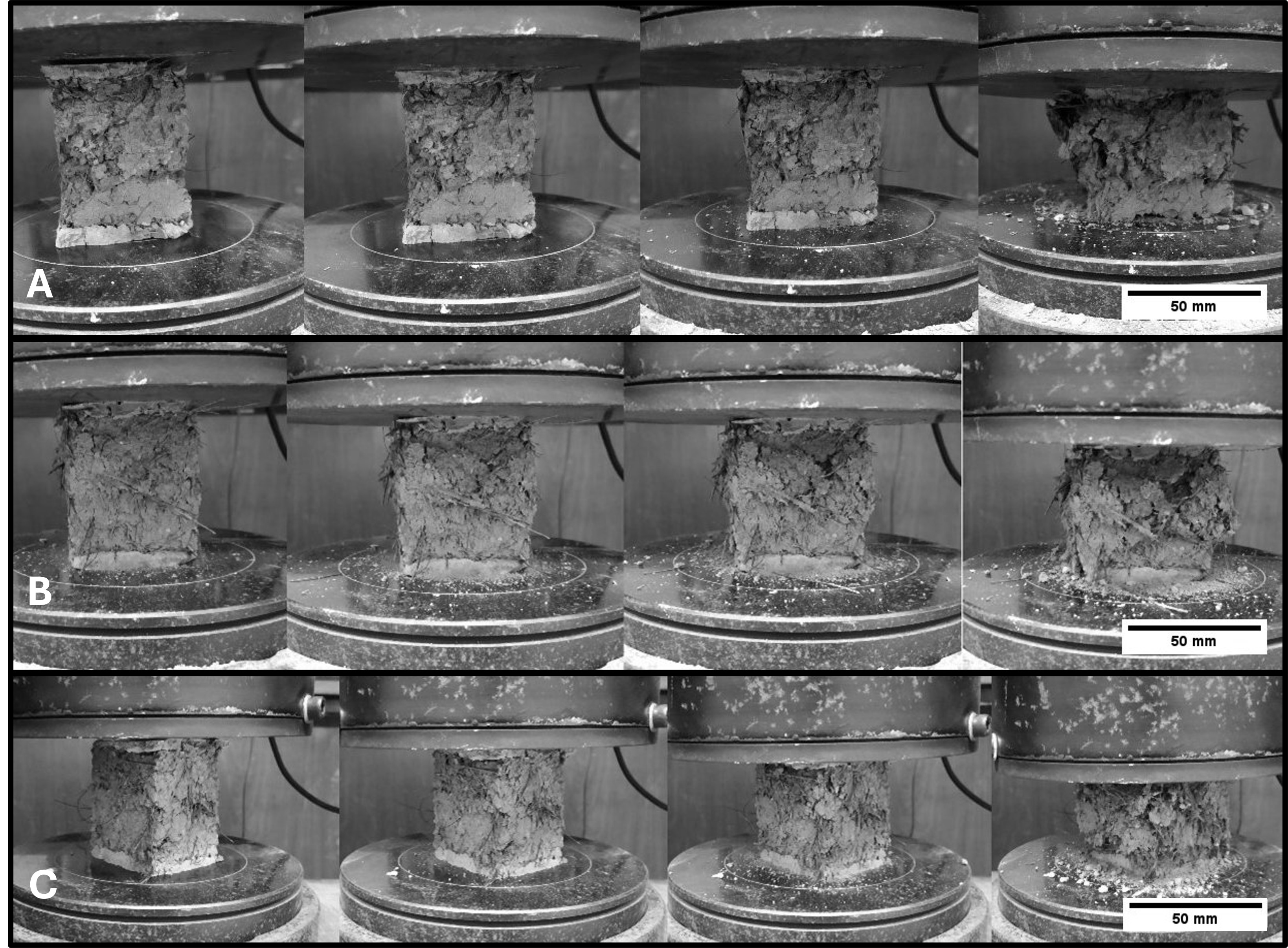
Snapshots in Figure 3 illustrate the typical distribution and progression of cracks in bricks fabricated using different weight ratios of sand and clay. Amongst the samples, the S40C60P3 bricks exhibit less conspicuous cracks that are more diffused. Conversely, the S60C40P3 bricks demonstrate a substantial expansion in lateral volume, maintaining their cohesiveness even at higher displacements. Irrespective of the sand-to-clay weight ratio, the initial crack tends to occur at elevated load levels (approximately 3 kN), followed by a slight variation across all cases. The failure modes observed in all cases involve compressive crushing and the detachment of lateral sides, a phenomenon commonly reported in the literature for other types of adobe bricks (Illampas et al. 2014, Li Piani et al. 2020).

Damage progression for the following adobe bricks under uniaxial compression: S60C40P3 (a), S50C50P3 (b), and S40C60P3 (c).
The adobe bricks manufactured with sand:clay weight ratios of 4:6, 5:5, and 6:4 presented similar bending strengths (Table V). Therefore, considering that the varying sand:clay weight ratios were likely chosen in a range that allowed for an optimal balance between the materials, this means that even with different ratios, the clay content in all the mixtures was sufficient to provide the necessary binding and cohesive properties, resulting in similar bending strengths.
Besides, it was observed that as the sand content increased in the mixture, the displacement obtained by the specimens before rupture also increased. From a theoretical standpoint, the presence of sand, being a granular and porous material, affects the overall cohesion and deformation behavior of the adobe bricks. With a higher sand content, the interparticle cohesion within the mixture decreases, leading to a lower overall stiffness of the material (Dormohamadi & Rahimnia 2020, Millogo et al. 2008). Consequently, the specimens are more prone to deform and displace under applied loads, resulting in increased displacement before rupture.
Table V still presents the results of erosion depth and mass loss of the eroded surfaces of the studied bricks. Overall, the S60C40P3 brick exhibited greatest damage, while the other two bricks (S50C50P3 and S40C60P3) showed similar levels of erosion. The depth of erosion and mass loss measurements provide insights into the durability and resistance of the adobe bricks to erosive forces. The higher damage observed in the S60C40P3 brick could be attributed to the higher sand content in its composition, which can be explained by aforementioned reasons related to the lower cohesion and higher porosity imparted by the granular and porous sand particles. Therefore, the increased sand content in the S60C40P3 brick may have led to weaker interparticle bonds and a higher propensity for particle detachment, resulting in more significant erosion (Axel et al. 2023, Javiz et al. 2023). On the other hand, the similarity in erosion levels between the S50C50P3 and S40C60P3 bricks can be attributed to their comparable sand and clay ratios. The intermediate sand:clay ratio in both mixtures likely provided a balanced combination of cohesion and porosity, resulting in similar erosion resistance.
The eroded surfaces of all the adobe bricks under study, loose sand particles and piassava fibers can be observed in the cavities formed by the dripping water droplets during the experiment. The sand and piassava fibers, being coarser and larger compared to the clay particles, tended to settle more readily when subjected to the water droplets. Therefore, the presence of loose sand in the erosion features suggests the selective removal and displacement of sand particles by the erosive action of water droplets.
Table V also illustrates the thermal conductivity results of the studied bricks. A consistent pattern emerges where the thermal conductivity increases with higher clay content. Specifically, the S40C60P3 brick exhibited the highest thermal conductivity, followed by the S50C50P3 brick, while the S60C40P3 brick demonstrated the lowest thermal conductivity. The observed differences in thermal conductivity among the studied bricks can be attributed to the varying clay content in their compositions. Higher clay content tends to result in denser structures with fewer air voids, leading to more efficient heat conduction (Araya-Letelier et al. 2018, 2021). Conversely, bricks with lower clay content, such as the S60C40P3 brick, may exhibit higher porosity and reduced density, which hinders heat transfer and results in lower thermal conductivity.
Similar trends in material properties have been observed in previous studies. For instance, Gualtieri et al. (2010) found that the thermal conductivity of fired clay bricks decreases with increasing clay particle size, potentially due to increased particle packing. According to Dondi et al. (2004) clay brick thermal conductivity is influenced by mineral components and pore size distribution, with quartz, Ca-rich silicates, and amorphous phases negatively impacting insulating properties.
Adobe bricks with different piassava fiber weight fractions
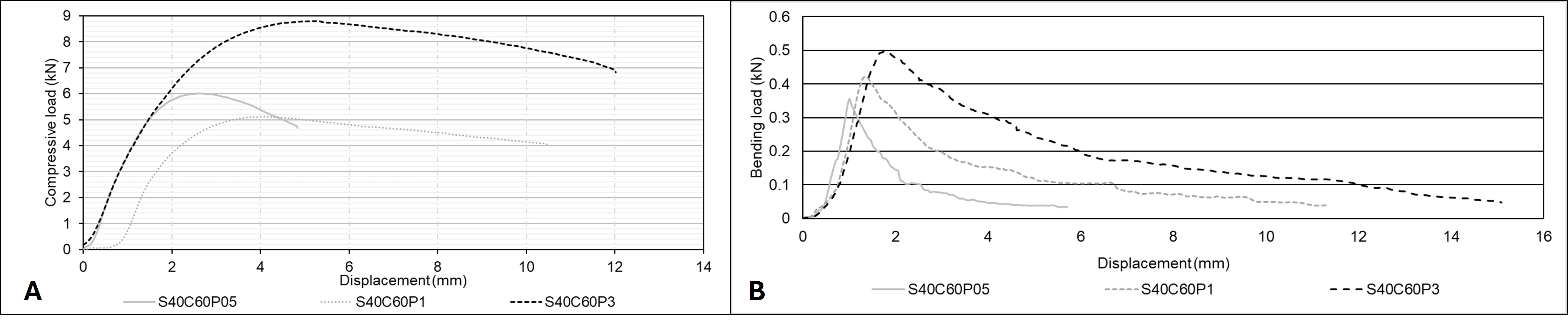
The results obtained from the mechanical tests clearly demonstrate that incorporating 3% piassava fibers in the bricks led to the highest levels of compressive strength and displacement before fracture (Figure 4). Similarly, in the bending test, the bricks with 3% fiber content outperformed the other samples in terms of bending strength and displacement before fracture. This indicates that an increase in the fiber weight fraction, from 0.5% to 3%, resulted in higher values of both compressive strength and bending properties.

Representative compressive (a) and bending (b) curves of adobe bricks with different fiber contents.
The random distribution of fibers within the matrix likely created a three-dimensional network, significantly enhancing the overall strength of the bricks and preventing collapse under compressive forces. These results highlight the remarkable toughness of piassava fibers, enabling them to efficiently absorb energy before fracture. When added to the adobe brick, these fibers help distribute the stresses that occur during compression or bending of the material, reducing stress concentration at specific points and preventing the propagation of cracks and fissures in the brick, thus making it more resistant. Additionally, the interlocking interaction among the piassava fibers likely played a crucial role in reinforcing the bricks and contributing to their overall strength.
Table VI also presents the results pertaining to erosion depth and mass loss. Overall, the damages incurred during the erosion tests showed a gradual reduction with the inclusion of fibers, wherein higher fiber contents yielded lower levels of mass loss and erosion depth. These levels of damage are comparable or even lower than those reported in studies on natural fiber-reinforced adobe bricks (Araya-Letelier et al. 2021, Babé et al. 2021, Ige & Danso 2022).
Compressive strength (σc), bending strength (σb), mass loss (ML) and erosion depth (ED) of adobe bricks with different fiber contents.
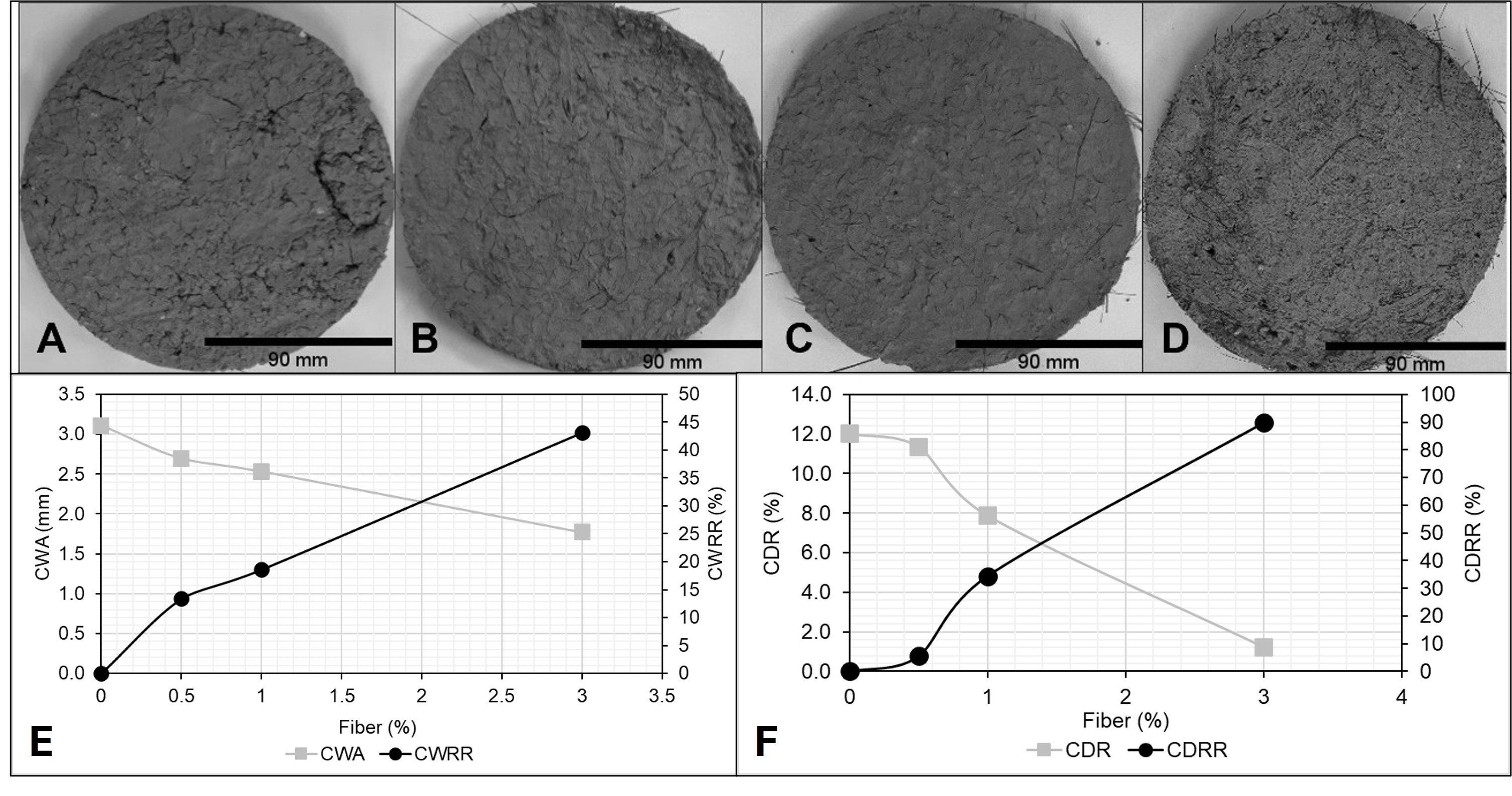
Figure 5 displays images of the bricks during natural drying and the analyzed parameters for quantifying the formation of cracks and fissures during the shrinkage process. All the bricks exhibited a gradual reduction in surface cracks as the fiber content increased, confirming the expected role of natural fibers as a mechanical skeleton within the mixture. The fibers helped to distribute stresses more evenly, reducing stress concentration points that can lead to crack formation (Araya-Letelier et al. 2021). The observed trends in the CWA, CWRR, CDR, and CDRR curves with respect to fiber content align with related literature (Araya-Letelier et al. 2018, 2021, Eslami et al. 2022).

Photographs (a-d) and CWA and CWRR curves (e), as well as CDR and CDRR curves (f), for bricks with varying contents of piassava fibers.
These findings corroborate existing literature and theoretical knowledge regarding the influence of fiber content on erosion resistance. The fibers establish a reinforcing network that distributes applied forces more uniformly, diminishing stress concentration and minimizing material loss. It is noteworthy that, according to the (UNE 41410 2008), erosion depths exceeding 10 mm indicate adobe specimens susceptible to severe weather conditions, a classification that encompasses all the adobe bricks examined in this study. The results highlight the positive effect of incorporating the studied piassava fibers, in enhancing the durability and longevity of the bricks, allowing them to withstand challenging weather conditions.
CONCLUSIONS
This study demonstrates the valorization of piassava fiber through its incorporation in adobe bricks. The results indicate that piassava fiber improves the mechanical properties, durability, and erosion resistance of the bricks. The chemical and physical characteristics of the fibers were consistent with the literature, supporting their suitability as a reinforcement material. The 6:4 sand:clay proportion yielded the smallest thermal conductivity. On the other hand, based on mechanical properties, the optimal sand:clay weight ratio was found to be 4:6, and the bricks with 3% fiber content exhibited the highest levels of compressive strength and displacement before fracture. Additionally, these bricks displayed reduced surface cracks and erosion levels compared to the other samples. The findings suggest that the inclusion of piassava fiber in adobe bricks can contribute to the development of sustainable construction materials with enhanced performance. This research contributes to the valorization of piassava fiber and its potential application in improving the quality of life for socially disadvantaged populations involved in fiber extraction.
ACKNOWLEDGMENTS
This work was supported Coordenação de Aperfeiçoamento de Pessoal de Nível Superior (CAPES, code 001).
REFERENCES
- ARAYA-LETELIER G ET AL. 2018. Influence of natural fiber dosage and length on adobe mixes damage-mechanical behavior. Constr Build Mater 174: 645-655.
- ARAYA-LETELIER G ET AL. 2021. Experimental evaluation of adobe mixtures reinforced with jute fibers. Constr Build Mater 276: 122-127.
- AXEL M ET AL. 2023. Microstructure and Strength Parameters of Cement-Stabilized Loess. Geotechnics 3: 161-178.
- BABÉ C ET AL. 2021. Effect of neem (Azadirachta Indica) fibers on mechanical, thermal and durability properties of adobe bricks. Energy Rep 7: 686-698.
- CALABRIA JÁ, VASCONCELOS WL & BOCCACCINI AR. 2009. Microstructure and chemical degradation of adobe and clay bricks. Ceramics Int 35: 665-671.
- CALATAN G ET AL. 2016. Determining the Optimum Addition of Vegetable Materials in Adobe Bricks. Procedia Technol 22: 259-265.
- D’ALMEIDA JRM, AQUINO RCMP & MONTEIRO SN. 2006. Tensile mechanical properties, morphological aspects and chemical characterization of piassava (Attalea funifera) fibers. Composites Part A: Applied Science and Manufacturing 37: 1473-1479.
- DE AZEVEDO ARG ET AL. 2021. Technological performance of açaí natural fibre reinforced cement-based mortars. J Build Eng 33.
- DONDI M ET AL. 2004. Thermal Conductivity of Clay Bricks. J Mater Civ Eng 16: 8-14.
- DORMOHAMADI M & RAHIMNIA R. 2020. Combined effect of compaction and clay content on the mechanical properties of adobe brick. Case Stud Constr Mater 13.
- ESLAMI A, MOHAMMADI H & MIRABI BANADAKI H. 2022. Palm fiber as a natural reinforcement for improving the properties of traditional adobe bricks. Constr Build Mater 325.
- GUALTIERI ML ET AL. 2010. Thermal conductivity of fired clays: Effects of mineralogical and physical properties of the raw materials. Appl Clay Sci 49: 269-275.
- HUSSAIN M ET AL. 2022. Reuse of harbour and river dredged sediments in adobe bricks. Cleaner Materials 3.
- IGE O & DANSO H. 2021. Physico-mechanical and thermal gravimetric analysis of adobe masonry units reinforced with plantain pseudo-stem fibres for sustainable construction. Constr Build Materi 273.
- IGE O & DANSO H. 2022. Experimental Characterization of Adobe Bricks Stabilized with Rice Husk and Lime for Sustainable Construction. J Mater Civil Eng 34.
- ILLAMPAS R, IOANNOU I & CHARMPIS DC. 2014. Adobe bricks under compression: Experimental investigation and derivation of stress-strain equation. Constr Build Mater 53: 83-90.
- JAVIZ E ET AL. 2023. Assessment of wind erosion and physical and mechanical properties of bentonite clay mulch in an arid region. J Arid Environ 213.
- JOVÉ-SANDOVAL F, BARBERO-BARRERA MM & FLORES MEDINA N. 2018. Assessment of the mechanical performance of three varieties of pine needles as natural reinforcement of adobe. Constr Build Mater 187: 205-213.
- KHALID MY ET AL. 2021. Natural fiber reinforced composites: Sustainable materials for emerging applications. Results in Engineering 11: 100263.
- KUMAR SINGH B & KUMAR R. 2023. Novel lightweight Portland Pozzolana cement (PPC) stabilized mud composites using crumb rubber & agricultural waste: physico-mechanical and thermal performance. Materials Today: Proceedings.
- LATHA AT, MURUGESAN B & SKARIAH THOMAS B. 2023. Compressed earth block reinforced with sisal fiber and stabilized with cement: Manual compaction procedure and influence of addition on mechanical properties. Materials Today: Proceedings.
- LATIF R ET AL. 2019. Surface treatments of plant fibers and their effects on mechanical properties of fiber-reinforced composites: A review. J Reinf Plast Comp 38: 15-30.
- LI PIANI T ET AL. 2020. Dynamic behaviour of adobe bricks in compression: The role of fibres and water content at various loading rates. Constr Buil Mater 230: 117038.
- MILLOGO Y ET AL. 2014. Experimental analysis of Pressed Adobe Blocks reinforced with Hibiscus cannabinus fibers. Constr Buil Mater 52: 71-78.
- MILLOGO Y, HAJJAJI M & OUEDRAOGO R. 2008. Microstructure and physical properties of lime-clayey adobe bricks. Constr Buil Mater 22: 2386-2392.
- MINH TRANG NT, DAO HO NA & BABEL S. 2021. Reuse of waste sludge from water treatment plants and fly ash for manufacturing of adobe bricks. Chemosphere 284: 131367.
- MOHAN TP & KANNY K. 2012. Chemical treatment of sisal fiber using alkali and clay method. Composites Part A: Applied Science and Manufacturing 43: 1989-1998.
- OLACIA E. ET AL. 2020. Sustainable adobe bricks with seagrass fibres. Mechanical and thermal properties characterization. Constr Buil Mater 239.
- PARISI F ET AL. 2015. Experimental characterization of Italian composite adobe bricks reinforced with straw fibers. Comp Struct 122: 300-307.
- SALIH MM, OSOFERO AI & IMBABI MS. 2020. Critical review of recent development in fiber reinforced adobe bricks for sustainable construction. Frontiers of Structural and Civil Engineering. Higher Education Press.
- SANTOS EBC ET AL. 2018. Effect of alkaline and hot water treatments on the structure and morphology of piassava fibers. Mater Res 21: e20170365.
- UN ENVIRONMENT AND INTERNATIONAL ENERGY AGENCY. 2017. Towards a zero-emission, efficient, and resilient buildings and construction sector. Global Status Report.
- UNE 41410. 2008. Compressed earth blocs for walls and partitions. Definitions, specifications and test methods.
- VASIĆ MV, PEZO LL & RADOJEVIĆ Z. 2020. Optimization of adobe clay bricks based on the raw material properties (mathematical analysis). Constr Build Mater 244.