 Use of lyophilized larval extracts associated with Bti in Double BR-OVT trap: Strategy to attract and kill mosquitoes of the genera Aedes and Culex
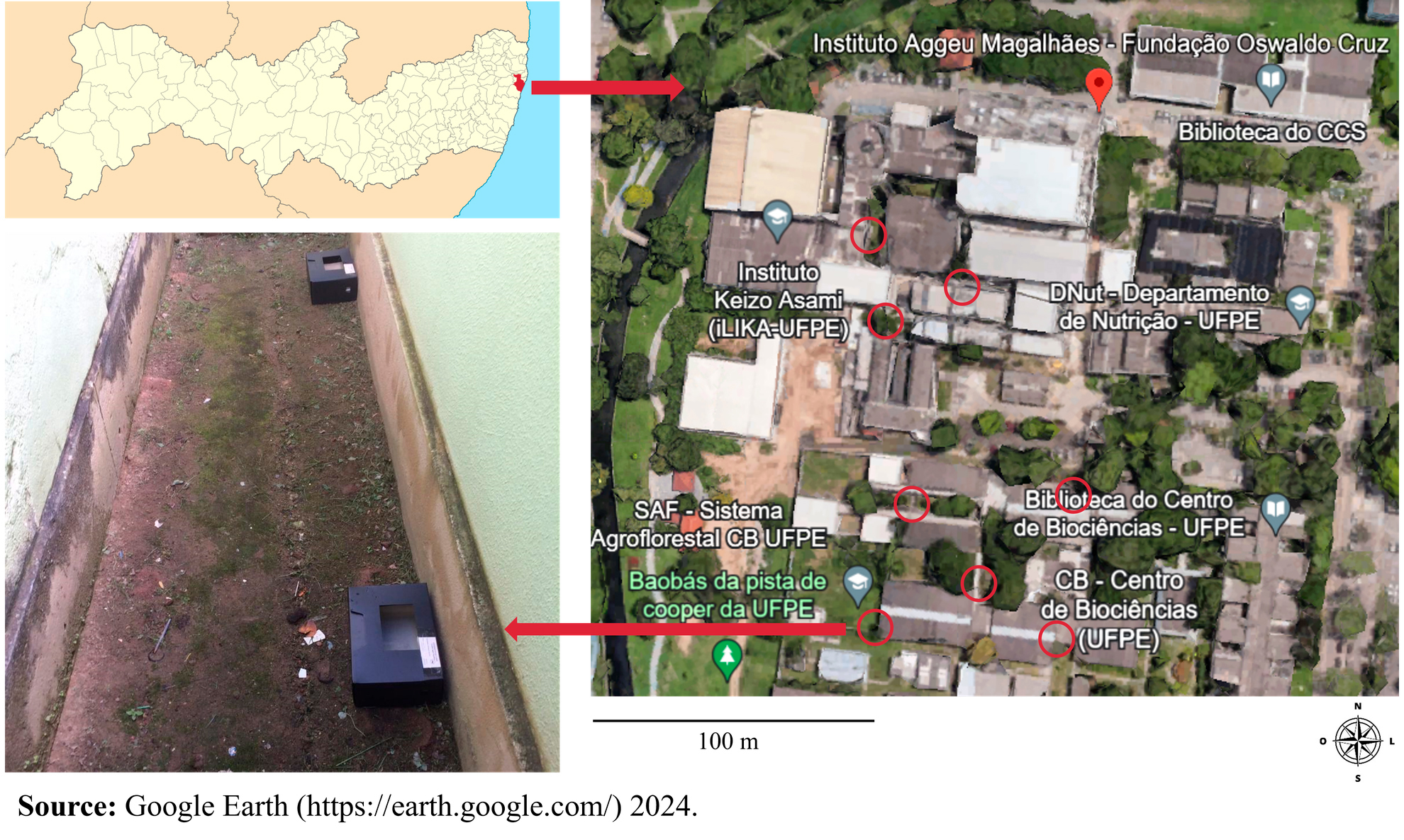
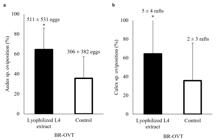
The present study evaluated the efficiency of the larval extract of Aedes aegypti associated with Bacillus thrurigiensis var. israelensis as oviposition bait to enhance the attractiveness of the Double BR-OVT trap. In the laboratory, paired tests were carried out, using two oviposition sites. Thirty pregnant females of A. aegypti were used per test. In the field, paired traps were installed at eight points. The test traps (2 g larval extract + 1 g Bti/ 2 L), controls (1 g Bti/ 2 L). For tests with lyophilized extract, each test trap contained 0.26 g/lyophilized larvae + 1 g Bti/ 2 L. Laboratory results showed that all cups treated (68.8 %/ 842 ± 177; 72.5 %/ 822 ± 167; 70.4 %/ 904 ± 169, respectively), with or without Bti, collected more eggs. In the field, traps treated with larval extract or lyophilized plus Bti collected more Aedes spp eggs (64 %/ 582 ± 467; 62.5 %/ 511 ± 531) and C. quinquefasciatus (65 %/ 11 ± 10; 70 %/ 5 ± 4.3) rafts. The association of Double BR-OVTs traps with larval extract plus Bti proves to be efficient alternatives for the integrated control, with the strategy of attracting and eliminating mosquitoes.
Key words
Aedes aegypti; Culex quinquefasciatus; mosquito control; oviposition attractant; vectors
 Thumbnail
 Thumbnail
 Thumbnail
 Thumbnail