
 Macrofungi with Potential for Bioremediation of the Herbicide Atrazine
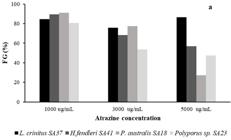
Atrazine is used widely corn cultivation, providing as an effective and low-cost control of broadleaf and grassy weeds. However, this herbicide exhibits high persistence in the soil and can potentially interfere with the photosynthesis of non-target plants. Scientific literature has demonstrated that macrofungi offer several advantages for use in the bioremediation of environmental contaminants, mainly due to their ability to withstand stressful conditions and produce extracellular enzymes with low specificity that may be involved in the biodegradation process. This study evaluated the ability of macrofungal species to tolerate the herbicide atrazine and produce laccase, an enzyme capable of degrading xenobiotics. To achieve this, tolerance assays of fungi to atrazine were performed to assess growth rate and mycelial growth inhibition, as well as analysis of laccase enzymatic activity through the oxidation of 2,2’-azino-bis (3-ethylbenzothiazoline-6-sulfonic acid) (ABTS) at 420 nm using a spectrophotometer. The results demonstrated that all four analyzed macrofungi were tolerant to the herbicide atrazine. However, Lentinus crinitus SA37 stood out, due to its low mycelial growth inhibition rate and laccase production. This research enabled the selection of L. crinitus SA37 for future studies on the biodegradation and mineralization of atrazine.
Key words
Basidiomycetes; decontamination; Laccase; tolerance; triazine
 Thumbnail
 Thumbnail


