 Effect of bee pollen on viability of starter culture bacteria in probiotic yogurt
Abstract
It aims to produce probiotic yogurts with different amounts of bee pollen (0.5%, 1.5%, 3% and 6%). The effect of bee pollen on starter culture bacteria (Bifidobacterium spp., L. acidophilus, L. bulgaricus, and S. thermophilus) was analyzed during fermentation (42°C, 24 hours) and storage (4°C, 14 days). The microbiological properties were determined for food safety. The addition of bee pollen decreased the pH value during fermentation. The lowest mean count was in Bifidobacterium spp. (6.94 log CFU/g), followed by L. acidophilus (7.64 log CFU/g), L. bulgaricus (8.20 log CFU/g), and S. thermophilus (8.57 log CFU/g) at the end of fermentation. The pH values were decreased in all samples during storage. The viability of L. acidophilus and Bifidobacterium spp. was lower than 6 log CFU/g on the 14th day. L. acidophilus was 5.83 log CFU/g and 5.98 log CFU/g in control and yogurts with 0.5% bee pollen. Bifidobacterium spp. counts were 5.72 log CFU/g, 5.35 log CFU/g, and 5.27 log CFU/g in yogurts with 1.5%, 3%, and 6% bee pollen, respectively. If the results compared in total probiotic bacteria, all samples are following the codex (>6 log CFU/g). Yeast, mold, and coliform were not observed in the samples during storage.
Key words
Bee pollen; Bifidobacterium spp; L acidophilus; L bulgaricus; S thermophilus
INTRODUCTION
Among fermented dairy products, yogurt is well-known for its numerous beneficial effects, various flavours and characteristics and high nutritional value and has been widely preferred by consumers for a long time (Herdem 2006, Sömer 2013, Say et al. 2015, Mustafa 2020). Yogurt is a fermented dairy product specifically made using symbiotic cultures of Streptococcus thermophilus and Lactobacillus delbrueckii subsp. bulgaricus which are used as starter cultures (TGK 2009, Karabagias et al. 2018).
The most active area of functional food development is the application of probiotics in yogurt, often referred to as bio-yogurt (Hattingh 2000). Probiotics, derived from the Greek words “pros” and “bios” are generally defined as live microorganisms that, when consumed in adequate amounts, confer beneficial effects on the health and physiology of the host and regulate the microbial balance of the intestines (Sezen 2013, Kırma 2016). In addition to yogurt bacteria, probiotic microorganisms are used in yogurt production due to their positive effects on health. In the production of yogurt which is the most popular food matrix that supports the growth and enhances the viability of probiotic microorganisms, particularly Lactobacillus acidophilus and Bifidobacteria species are utilized (Yilmaz-Ersan & Kurdal 2014, Güler-Akın et al. 2018). These bacteria are preferred because they are more resistant to acidic conditions and have higher oxidation-reduction potential than other probiotic bacteria (Kundakçı & Ergönül 2006).
The increasing demand for probiotic products is due to the antimicrobial properties of the probiotic bacteria present in the products, their effects on intestinal movements, their ability to reduce the risk of bacterial-related colon diseases, their control over various infections, their alleviative effect of lactose intolerance, their protective and healing effects against various illnesses, their strengthening the immune system, their lowering serum cholesterol levels and their having potential anticancer and antiallergic effects (Ouwehand & Salminen 1998, Panesar 2011, Kırma 2016, Rašović 2017, Rakhmanova et al. 2018).
Bee pollen has the potential to be a good alternative ingredient for functional foods. Bee pollen is the pollen grains collected by bees from flowers, and it contains the saliva of worker bees and a small amount of plant nectar or honey (Feás et al. 2012). Bee pollen has been known for centuries as a rich source of nutrients (carbohydrates, proteins, enzymes, fatty acids, carotenoids, phenolic compounds, flavonoids, sterols, terpenes, minerals and vitamins) for health and is considered a valuable apitherapeutic product in health and nutrition applications (González et al. 2005, Kačániová et al. 2012, Estevinho et al. 2012). It holds an important place in human nutrition with its high content of free amino acids, essential 22 amino acids and fatty acids such as Omega-3 and Omega-6. In studies examining the nutritional and therapeutic properties of bee pollen, it has been determined that it has antimicrobial, antifungal, antioxidant, antiradiation, hepatoprotective, chemopreventive, and anticancer activities (Feás et al. 2012, Hani et al. 2012).
The current study aimed to provide an alternative functional food to meet the consumer demand for healthy nutrition by producing set-type yogurt containing bee pollen, determining the effects of bee pollen on yogurt bacteria and probiotic bacteria during fermentation and storage, and evaluating it in terms of food safety. In this context, i) the production of probiotic yogurts containing different amount of bee pollen, ii) the influence of bee pollen on the growth of probiotic yogurt starter cultures during fermentation and storage, and iii) the compliance of bee pollen-produced probiotic yogurts with microbiological standards were determined.
MATERIALS AND METHODS
Food Samples
The high temperature pasteurized milk (3% fat) was purchased from a supermarket were used in this study. Bee pollen was obtained from a local beekeeper in Muğla province (Türkiye).
Commercial Starter Cultures
The probiotic yogurt starter culture was obtained from a local company (Yayla Maya, Maysa Gıda, Istanbul, Türkiye) and was used for producing yogurt samples. The company has mentioned the diversity of microorganisms in the culture such Streptococcus thermophilus, Lactobacillus delbrueckii subsp. bulgaricus, Lactobacillus acidophilus and Bifidobacterium animalis spp. lactis (Yaylamaya 2024). The probiotic yogurt starter culture contains the yogurt bacteria of S. thermophilus and L. bulgaricus and the probiotic bacteria of L. acidophilus and Bifidobacterium animalis spp. lactis. The counts of microorganisms in the starter culture were determined. S. thermophilus, L. bulgaricus, L. acidophilus, and Bifidobacterium spp. were obtained as 9.04±0.04, 8.91±0.13, 8.42±0.14, and 7.54±0.18 log CFU/g in the starter culture, respectively. These microbial counts were previously reported by Çiftçi & Öncül (2024).
Production of Probiotic Yogurt Containing Bee Pollen
The flow diagram of the probiotic yogurt production is shown in Figure 1 (Çiftçi & Öncül 2024). Bee pollens were treated with ultraviolet (UV, 253.7 nm) for 60 minutes and then added (0.5%, 1.5%, 3% and 6%) into the pasteurized milk. Heat treatment (5 minutes at 70°C) was applied to the milk samples with bee pollen for inhibition of the initial microbial load. After the heat treatment, the milk samples with bee pollen were cooled to 42°C and inoculated with 0.1% (1g/1L) of starter culture (Lomova et al. 2014, Karabagias et al. 2018, Özcan et al. 2020). The samples were portioned into sterile containers under aseptic conditions and incubated at 42°C (Daihan scientific, Thermo Stable IG-105, Korea) till 4.6 pH. The general fermentation time was between 5 and 6 hours. After incubation, the samples were kept at 4°C for storage. Analyses were carried out on the 1st, 7th and 14th days of the storage (Sert et al. 2011).
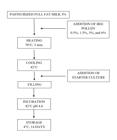
The flow diagram of probiotic yogurt production with bee pollen. Reproduced from Çiftçi & Öncül (2024) under the Creative Commons Attribution (CC BY 4.0) license.
pH determination
Measurement of the pH value of the samples was performed using a pH meter according to the AOAC (1995).
The Effect of Bee Pollen on the Growth of Probiotic Yogurt Starter Cultures during Fermentation
As described above, starter culture was added to the milk samples prepared with different ratios of bee pollen (0.5%, 1.5%, 3% and 6%) and the incubation was started at 42°C. During the incubation process, samples were taken at specific intervals (0th, 1st, 2nd, 4th, 6th, 12th and 24th hour) for the measurement of pH values and microbial analyses. Counting of L. bulgaricus, S. thermophilus, L. acidophilus and Bifidobacterium spp. was performed. Bee pollen and pasteurized milk samples were used as negative control, separately. The pasteurized milk samples with added starter culture were used as positive control (Moreno et al. 2006, Öncül et al. 2015).
Preparation of samples for microbiological analysis
Under aseptic conditions, 25 g of yogurt sample was transferred to a stomacher bag and homogenized for 1 minute in a stomacher device (Isolab, Laborgerate GmbH, Germany) with 225 mL of 0.1% peptone water (Oxoid, LP0037, UK). Decimal dilutions were prepared using 0.1% peptone water from the prepared homogenate (ISO 6887-1 2017). These prepared dilutions were used for microbiological analyses.
The Count of L. bulgaricus
Dilutions prepared for counting L. bulgaricus from yogurt bacteria were inoculated onto de Man, Rogosa and Sharpe (MRS, Biokar, BK089HA, France) agar with the spread plate method (0.1 mL). Petri dishes were incubated at 37°C for 72 hours in anaerobic conditions (Daihan scientific, Thermo Stable IG-105, Korea) (TS ISO 7889 2004).
The Count of S. thermophilus
M-17 (M-17, Biokar, BK088HA, France) agar was used for counting S. thermophilus in yogurt samples. The inoculations were performed using the spread plate method (0.1 mL), followed by incubation at 37°C for 48 hours (TS ISO 7889 2004).
The Count of L. acidophilus
Bile-MRS agar was used for counting L. acidophilus in yogurt samples. Bile-MRS agar was prepared by adding 1.5 g/1L bile (Ox-Bile, Fluka, 70168, Italy) to MRS agar medium. After inoculation using the spread plate method (0.1 mL), the petri dishes were incubated at 37°C for 72 hours (Vinderola & Reinheimer 1999).
The Count of Bifidobacterium spp.
LP-MRS agar medium was used for counting Bifidobacterium spp. in yogurt samples. LP-MRS agar was prepared by adding lithium chloride (LiCl) (Sigma, 413271000, UK) and sodium propionate (C3H5NaO2) (Sigma, 149010250, Netherlands) to the MRS agar. 2 g of LiCl and 3 g of C3H5NaO2 were added to 1 litre of MRS agar. After inoculations were performed using the spread plate method (0.1 mL), they were incubated at 37°C under anaerobic conditions for 72 hours (Lapierre et al. 1992, Vinderola & Reinheimer 1999).
The Effect of Bee Pollen on the Growth of Probiotic Yogurt Starter Cultures during Storage
In order to determine the effects of bee pollen on yogurt bacteria and probiotic bacteria during storage at 4°C, milk samples were prepared as described above. The samples were taken on days 1, 7, and 14 for pH measurement and preparations were made for microbiological analyses. The counting of L. bulgaricus, S. thermophilus, L. acidophilus and Bifidobacterium spp. was performed as described above (Simões da Silva et al. 2020).
The Microbiological Values of Probiotic Yogurt Produced with Bee Pollen
Microbiological analysis was performed to determine the microbiological values of probiotic yogurt products produced with bee pollen, in accordance with the Regulation on Fermented Milk Products numbered 2009/25 for ensuring food safety. Samples were collected from the products produced for this purpose on the 1st, 7th, and 14th days of storage, and total coliform, total yeast and total mold counts were performed. In addition, the presence of E. coli was determined (Table I) (TGK 2009). On November 30, 2022, a revision was made to the Regulation on Fermented Dairy Products, and the Turkish Food Codex Communiqué on Fermented Dairy Products, numbered 2022/44, was published (TGK 2022). Under this regulation, the criteria listed in Table I was removed except for yeast. In addition, according to Article 1.1 of the Turkish Food Codex Microbiological Criteria Regulation, fermented dairy products (such as kefir, yogurt, fruit yogurt, ayran, etc.) should not contain E. coli (TGK 2011). The count of yeast-mold, total coliform and fecal coliform, and presence of E. coli were performed according to the FDA-BAM online (2001, 2013).
Turkish Food Codex Fermented Dairy Products Regulation Microbiological Values for Fermented Dairy Products (TGK 2009).
Statistical Analysis
In the study, each analysis was conducted in a 2×2 design, with two replicates and two parallels for each. In the current study, microbiological analysis results were presented as log CFU/g or log MPN/g, and the detection limit was chosen as 10 CFU/g (<1.00 log CFU/g). Duncan test was used to compare the means and data analyses were performed using SPSS version 17 (17.0.3, 2010, SPSS Inc., Chicago, USA) statistical package program with 95% confidence interval. Two-way ANOVA was also used to determine better if the sample and time affect the studied properties.
RESULTS
The Effect of Bee Pollen on the Growth of Probiotic Yogurt Starter Cultures during Fermentation
L. bulgaricus, S. thermophilus, L. acidophilus and Bifidobacterium spp. counts were found below the detectable value (<1.00 log CFU/g) in negative controls. The pH values of bee pollen and pasteurized milk were measured as 4.51 and 6.88 at the beginning of fermentation, and as 4.36 and 6.76 at the end of the fermentation. At the beginning of fermentation, the pH values of the samples varied between 6.69 (C) and 6.16 (6%), and the pH values decreased as the amount of bee pollen increased. The pH values of the sample containing 6% bee pollen reached the pH 4.69 required for the formation of yogurt clot in the 6th hour. Addition of 6% bee pollen caused an increase in clot formation time. In other samples, it was found to be between 4.27 and 4.45 with an average of 4.43. The pH values of the yogurts decreased through 24 hours. The lowest pH values were found at the end of 24 hours. The highest pH value was found in the control (4.00) and the lowest in the yogurt containing 6% bee pollen (3.73) (Table II).
The counts of L. bulgaricus, S. thermophilus, L. acidophilus and Bifidobacterium spp. in negative controls were found below the detectable limit (<1.00 log CFU/g). L. bulgaricus, S. thermophilus, L. acidophilus and Bifidobacterium spp. results of the samples throughout the fermentation are shown in Table III.
Based on the averages, L. bulgaricus counts increased until the 12th hour during the fermentation and started to decrease in the 24th hour. As the bee pollen addition increased, the number of L. bulgaricus of the yogurt samples decreased. At the beginning of fermentation, the average number of L. bulgaricus of the samples was found to be 5.72 CFU/g, and at the end of the 24th hour, it was found to be 8.20 log CFU/g. In the control, 0.5% and 1.5% bee pollen yogurts, the highest counts were found to be 8.67 log CFU/g, 8.79 log CFU/g and 8.58 log CFU/g at the 4th hour, respectively (P>0.05). In yogurts containing 3% and 6% bee pollen, L. bulgaricus took a longer time to reach its highest value because of bee pollen, and it reached 8.64 log CFU/g and 8.24 log CFU/g in the 12th hour, respectively.
S. thermophilus counts were at the beginning of the incubation between 6.19 and 6.47 log CFU/g, and at the end of it between 7.99 and 8.93 log CFU/g. When the average values of the samples were examined on an hourly basis, S. thermophilus numbers tended to increase (9.16 log CFU/g) until the 6th hour of fermentation and decreased (8.57 log CFU/g) in the 24th hour.
L. acidophilus counts increased during the fermentation. As the bee pollen addition increased, the number of L. acidophilus of the yogurt samples decreased. At the beginning of the fermentation, the average number of L. acidophilus of the samples was 5.25 log CFU/g, and at the end of the 24th hour, it was found to be 7.64 log CFU/g.
Bifidobacterium ssp. counts increased during the fermentation until the 12th hour. As the bee pollen addition increased, it was determined that the number of Bifidobacterium ssp. decreased. Bifidobacterium ssp. counts of the samples at the beginning of fermentation were found to be between 4.93 and 5.21 log CFU/g, and at the end of the 24th hour between 6.12 and 7.73 log CFU/g. The highest Bifidobacterium ssp. results were detected in the 12th hour in all the samples.
The Effect of Bee Pollen on the Growth of Probiotic Yogurt Starter Cultures during Storage
The L. bulgaricus, S. thermophilus, L. acidophilus and Bifidobacterium spp. counts of the negative controls were found to be below the detectable value (<1.00 log CFU/g). The pH values of the yogurt samples decreased significantly (P<0.05) during storage and ranged between 4.16 and 4.54 (Table IV).
The L. bulgaricus, S. thermophilus, L. acidophilus and Bifidobacterium spp. counts of the samples during storage are shown in Table V. L. bulgaricus counts increased during storage in all the samples, including the control, and the highest values were detected on the 14th day. As the amount of bee pollen increased, the number of bacteria decreased. At the end of storage, the highest count was found to be 8.50 log CFU/g in the control sample, and the lowest was 7.29 log CFU/g in the sample containing 6% bee pollen.
The lowest number of S. thermophilus was determined as 7.66 log CFU/g in the probiotic yogurt sample with 6% pollen on the 14th day of storage and the highest in the control sample on the 1st day of storage with 9.26 log CFU/g. As the amount of pollen increased, the number of S. thermophilus decreased. When evaluated according to the storage period, a decrease was observed in the number of S. thermophilus throughout the storage period.
The highest L. acidophilus counts in yogurt samples were observed at the beginning of storage and decreased during storage. L. acidophilus values ranged from 5.83 log CFU/g to 6.97 log CFU/g. Unlike other bacteria, L. acidophilus counts increased as bee pollen increased.
The lowest Bifidobacterium ssp. count was determined as 5.27 log CFU/g in the probiotic yogurt sample with 6% bee pollen on the 14th day of the storage period and the highest count was determined as 7.49 log CFU/g in the control sample on the 1st day of storage. A decrease was observed in the probiotic yogurt samples during storage. When all the results were evaluated, it was determined that on the 14th day, probiotic yogurt samples with 1.5% (5.72 log CFU/g), 3% (5.35 log CFU/g), and 6% (5.27 log CFU/g) bee pollen did not meet the requirement stated in the Turkish Food Codex Communiqué on Fermented Dairy Products of containing a minimum of 6 log CFU/g (106) of probiotic microorganisms. However, the remaining samples were found to be in compliance with the codex (TGK 2009).
Microbiological Values of Probiotic Yogurt Produced with Bee Pollen
The results for all yogurt samples on the 1st, 7th and 14th days of storage were below the detectable value (<1.00 log CFU/g) for all tested microorganisms. Total coliform values were found as <0.30 MPN/g. For this reason, statistical analysis was not applied.
DISCUSSION
The Effect of Bee Pollen on the Growth of Probiotic Yogurt Starter Cultures during Fermentation
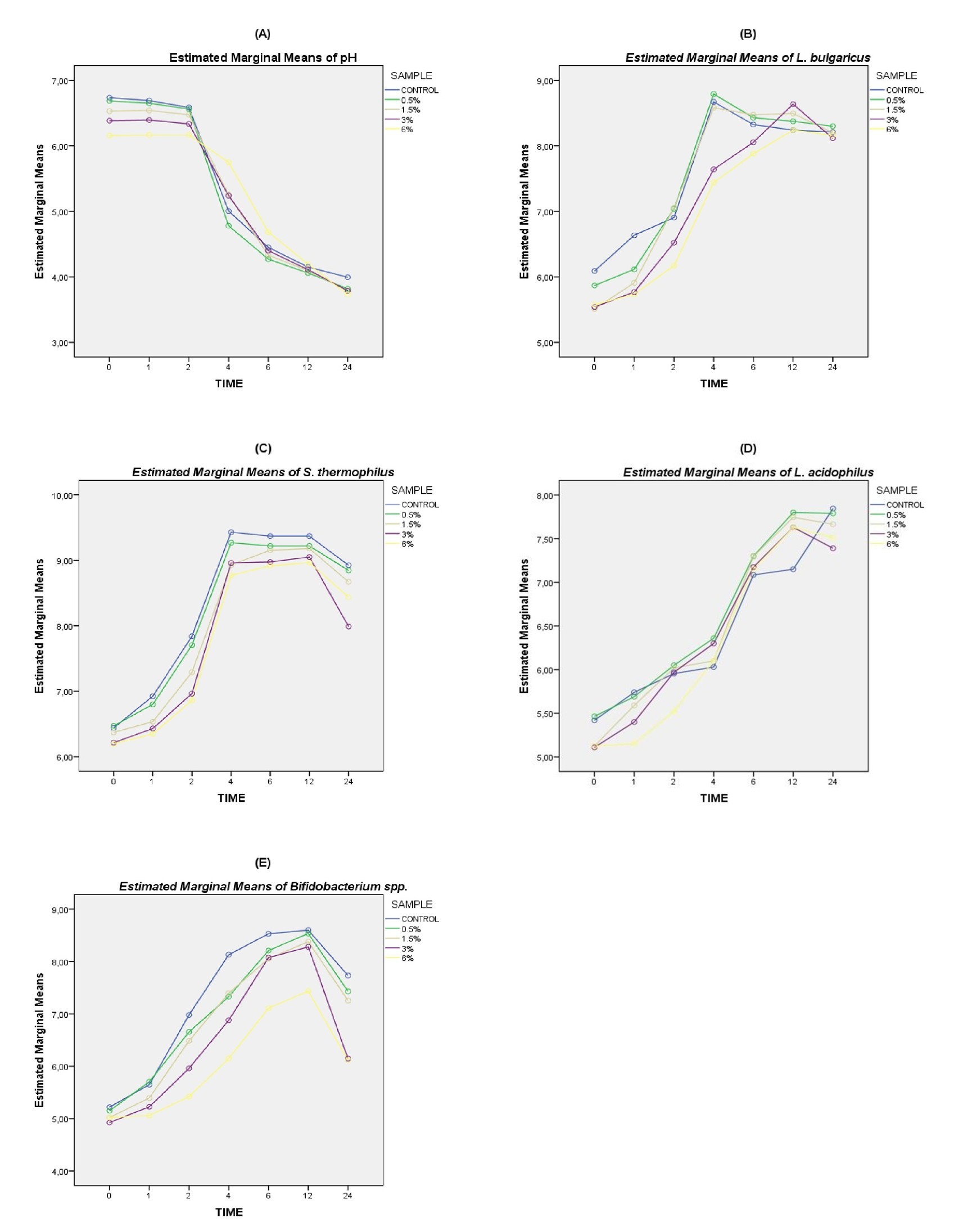
It was aimed to produce set type probiotic yogurt with bee pollen by fermenting milk in the presence of bee pollen by microorganisms in the starter culture. The pH value of the control and bee pollen yogurts at the end of the 6th hour was determined to be around 4.60. There was no significant change in pH values in the 0th, 1st and 2nd hours of the analysis for all the samples (P>0.05). At the beginning of the fermentation (0th hour), the pH value decreased as the bee pollen increased, yet this was not found to be statistically significant (P>0.05). The pH value of bee pollen is 4.51, so it is thought that the pH value decreased as the amount of bee pollen increased. Özcan et al. (2020) added 0.5%, 1%, 1.5%, 2%, 2.5% and 3% bee pollen to milk and after 3 hours of incubation at 43°C, set type yogurt samples were stored at 4°C for 1 day and analysed. Similar to this study, the addition of bee pollen decreased the pH value, and the highest pH value was determined in the control sample (pH 4.465). The lower pH values of bee pollen can be attributed to its organic acid content. The sample which included the highest amount of bee pollen (%6) needed to longest time for pH 4.6. This is probably due to the effect of some components of bee pollen such as organic acid, phenolic, etc. against the starter culture bacteria (Mărgăoan et al. 2019). So, the lag phase may extend causing the bacteria to need a longer adaptation in the presence of bee pollen. At the end of the fermentation, the pH values of samples that contained bee pollen were similar (P>0.05). Although the lowest pH values were observed at 24 hours, the viable number of L. bulgaricus, S. thermophilus, L. acidophilus and Bifidobacterium spp. were obtained higher than 6 log units for all tested samples. The pH values were decreased by time. The counts of bacteria were increased till to 4th, 6th, and 12th hours of fermentation. One logical explanation for the high bacteria counts of samples may be their ability to metabolize the components of milk and bee pollen. The interaction plots for pH, L. bulgaricus, S. thermophilus, L. acidophilus and Bifidobacterium spp. are shown in Figure 2. As seen from the plot, pH values were not affected by bee pollen additions (P>0.05). Adversely, time and Sample*Time interaction were an influential factor for pH values (P<0.05). During the fermentation, bacteria in the starter culture metabolize the carbohydrate component and produce organic acids such as lactic and acetic which also led to a decrease in the pH values (Farag et al. 2022, Shori et al. 2022). The additional statistical data are given in supplementary materials for interaction of sample and time (Supplementary Material - Table SI).

The interaction plots for (a) pH values, and (b, c, d, and e) counts of starter cultures: (b); L. bulgaricus, (c); S. thermophilus, (d); L. acidophilus, (e); Bifidobacterium ssp. during fermentation (42°C, 24 hours). Samples: Control; Probiotic yogurt without bee pollen, 0.5%; Probiotic yogurt containing 0.5% bee pollen, 1.5%; Probiotic yogurt containing 1.5% bee pollen, 3%; Probiotic yogurt containing 3% bee pollen, 6%; Probiotic yogurt containing 6% bee pollen.
The initial viable cell counts of the L. bulgaricus ranged from 5.51 log CFU/g to 6.09 log CFU/g. The average count after 6 hours incubation was 8.23 log CFU/g for L. bulgaricus. L. bulgaricus and S. thermophilus had higher viability compared to L. acidophilus and Bifidobacterium ssp. The counts L. bulgaricus and S. thermophilus in the yogurt samples were between 8.11-8.30 log CFU/g and 7.99-8.93 log CFU/g at 24th hour. L. bulgaricus and S. thermophilus are stimulated by each other’s growth by the exchange of metabolites such as folic acid and carbon dioxide. L. bulgaricus has proteolytic products like free amino acids. S. thermophilus consumes free amino acids (Wang et al. 2021, Akan 2022). Among the four organisms enumerated, S. thermophilus showed the fastest growth. This finding is consistent with those reported by Sarvari et al. (2014). S. thermophilus counts reached the highest number of viable cells in the 4th hour in yogurt containing 0.5% bee pollen, in the 6th hour in yogurts containing 1.5%, 3% and 6% bee pollen. Compared to the control, the addition of 0.5% bee pollen did not affect the number of viable cells of S. thermophilus (P>0.05), while a decrease was observed in yogurts with an increased rate of bee pollen (1.5%, 3% and 6%) (P<0.05). While the increase in the amount of bee pollen was not significant on the number of L. acidophilus in the 12th hour of fermentation in yogurts (P>0.05), the addition of bee pollen was found to have a significant effect when compared to the control sample (P<0.05). Bifidobacterium ssp. count is different in the yogurt including the highest amount of pollen than all the other yogurts including the control in the 12th hour (P<0.05). In all the samples, at the time of the highest Bifidobacterium ssp. count (12th hour), the numbers in the yogurts containing 0.5% and 1.5% bee pollen were found to be close to that of the control and found to be different in the yogurt containing 3% bee pollen (P<0.05). At the end of the fermentation, the lowest viability was detected in Bifidobacterium ssp., which was still satisfactory (6.94 log CFU/g).
It can be seen from the interaction plots that the viability of L. bulgaricus, S. thermophilus, L. acidophilus and Bifidobacterium spp. were highly affected by the addition of bee pollen and fermentation time (Figure 2). The growth of the starter culture bacteria was influenced more by fermentation time than by bee pollen addition. Sample*Time interaction was also an influential factor for the counts of bacteria (P<0.05) (Table SI). The growth of B. lactis and L. acidophilus was observed in probiotic yogurt supplemented with stevia and inulin during fermentation for 48 hours. The highest and lowest counts were presented at the 24th and 48th hours of fermentation for B. lactis and L. acidophilus. The growth of B. lactis and L. acidophilus showed an increase till to 24th hour and decreased from 24th to 48th (Eroğlu 2019, Ozcan & Eroglu 2022). Conversely, in the present study, the lowest counts were determined at the 24th hour. The highest counts for B. lactis (7.44-8.60 log CFU/g) and L. acidophilus (7.63-7.80 log CFU/g) were found at 12th hour and started to decrease till to 24th of the fermentation process. The effect of melon and watermelon seed on the development of B. lactis and L. acidophilus was investigated during fermentation (48 hours). The mean values of L. acidophilus and B. lactis were mentioned as 7.43 and 9.50 log CFU/mL which were higher than the results of this study (L. acidophilus; 6.47 log CFU/g and Bifidobacterium spp.; 6.73 log CFU/g) (Teksoy 2020).
In this part of the study, it was observed that the addition of bee pollen did not prevent the growth of bacteria in the starter culture during yogurt production and that the number of bacterial viable cells changed depending on the type of bacteria and the amount of bee pollen. Given that the fermentation period was completed between 5 and 6 hours in this study, in which yogurt production was monitored through pH monitoring, it was concluded the viability of the bacteria in the culture was high and at the end of the 6th hour, the lowest and highest values for all the samples and bacteria, including the control, were found to be 7.09 and 9.38 log CFU/g, respectively. Water and ethanol extracts of chia seeds were added to milk at the rate of 0.05% and 0.1%, and fermentation was continued at 42°C until the pH was 4.6. In this process, the numbers of L. acidophilus, S. thermophilus and B. longum in the starter culture were counted throughout the incubation and were found to be higher than the control. Chia seeds are rich in polyphenols and may have shown prebiotic properties for lactic acid bacteria (Kwon et al. 2019). However, in this study, while the bacterial counts of yogurts with 0.5% bee pollen content were similar to the control, a decrease was found in the number of bacteria as the amount of pollen increased.
The growth of bacteria was observed to their specific fermentation time which differs depending on the bacteria type during the fermentation process while the acidity was developed. The counts of bacteria were increased up to the 12th hour by the adaptation to the environment; however, the viability of the bacteria was decreased at the 24th hour due to the accumulating of toxic metabolites. This could be also explained by the fact that metabolizable carbohydrates are not found in enough quantities (Iancu et al. 2010). The viability of tested bacteria was also influenced by the amount of bee pollen addition. The decreases in bacteria count as well as the increases in bee pollen ratio were observed within the average value of samples, representing the specified bacteria type (Table III). This situation could be attributed to the organic acid and phenolic constitution of bee pollen (Karabagias et al. 2018). Another possible reason might be the presence of microbial populations in yogurt which can release a wide range of compounds (organic acids, carbon dioxide, hydrogen peroxide, ethanol, bacteriocins, etc.) (Markowiak & Slizewska 2017). Both of them may interact with each other and affect the viability of bacteria.
The Effect of Bee Pollen on the Growth of Probiotic Yogurt Starter Cultures during Storage
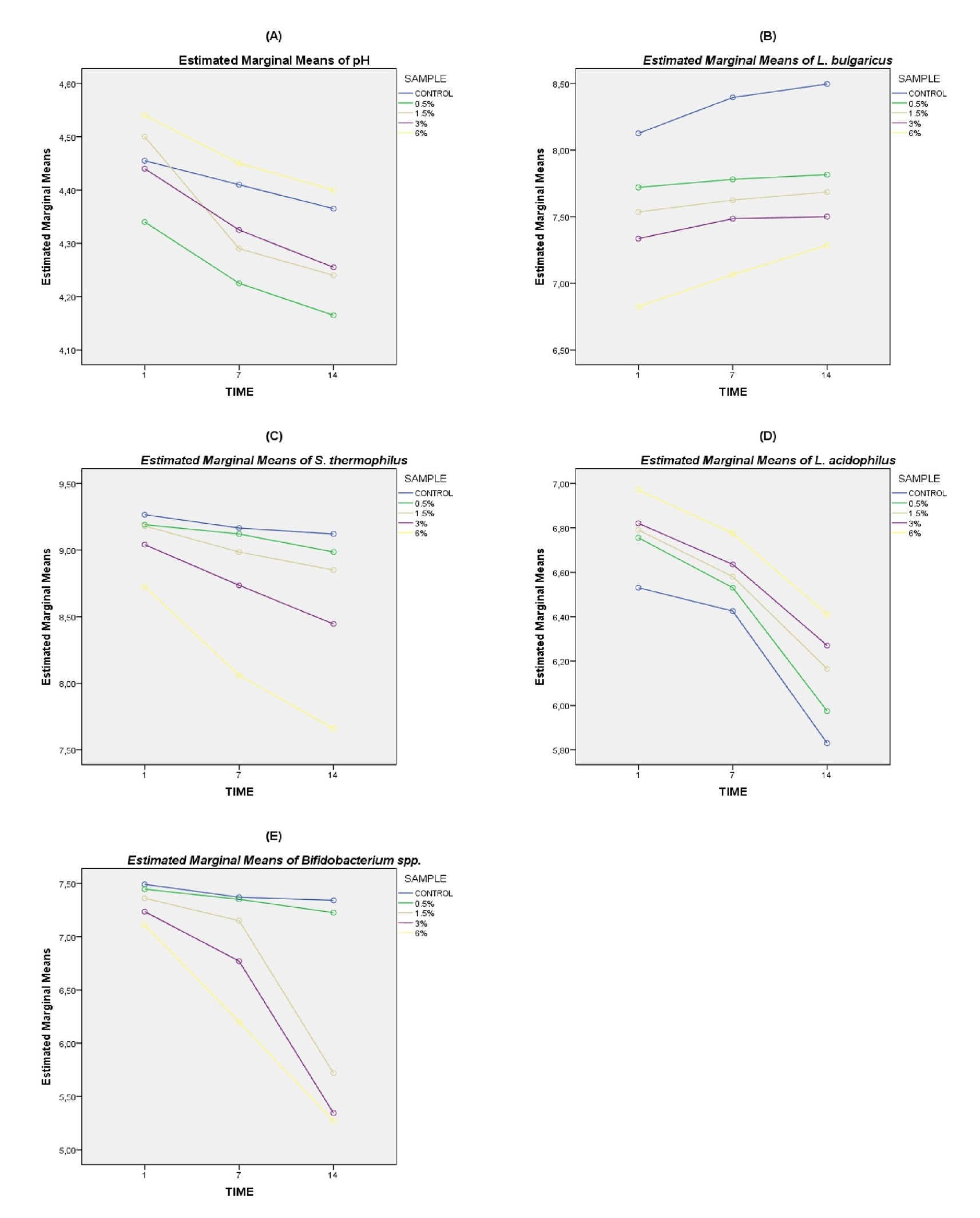
Storage time affected the viability of all bacterial species and pH values during storage. The results showed that of viability of S. thermophilus, L. acidophilus, and Bifidobacterium spp. and pH value of the yogurt had diminished over time; conversely, the viability of L. bulgaricus had risen. The microbial content of the yogurt samples (L. bulgaricus, S. thermophilus, and Bifidobacterium spp.) except L. acidophilus had reduced by increasing the ratio of bee pollen. The interaction plots are shown in Figure 3. The additional statistical data are given in supplementary materials for interaction of sample and time (Table SII).

The interaction plots for (a) pH values, and (b, c, d, and e) counts of starter cultures: (b); L. bulgaricus, (c); S. thermophilus, (d); L. acidophilus, (e); Bifidobacterium ssp. during storage (4°C, 14 days). Samples: Control; Probiotic yogurt without bee pollen, 0.5%; Probiotic yogurt containing 0.5% bee pollen, 1.5%; Probiotic yogurt containing 1.5% bee pollen, 3%; Probiotic yogurt containing 3% bee pollen, 6%; Probiotic yogurt containing 6% bee pollen.
L. bulgaricus counts on all days of storage (1st, 7th and 14th days) were found to be lower in yogurts containing bee pollen compared to the control (P<0.05). The change in L. bulgaricus counts during storage was not statistically significant in yogurts containing 0.5%, 1.5% and 3% bee pollen (P>0.05). Sample and time had a significant effect on L. bulgaricus count. The viability of L. bulgaricus had affected more by bee pollen addition than time (Table SII). However, the interaction between sample and time had no influence on L. bulgaricus (P>0.05). Kalyas & Ürkek (2020) stated that the L. bulgaricus counts for the control sample and the yogurts produced by adding black grape seed powder at different rates (0.5% and 1%) varied between 5.65 and 6.39 log CFU/g during storage. However, these results are considerably lower than the counts observed in this study. Pop et al. (2015) evaluated the effect of bee pollen, chia seeds and blueberries on the viability of probiotic bacteria in yogurts. They stated that the average number of viable cells of L. bulgaricus decreased from 2.36×10⁷ CFU/g on day 0 to 1.22×10⁷ CFU/g on day 21 during storage. The number of L. bulgaricus in the set type molasses yogurt produced by Çelik et al. (2009) with the addition of 2%, 4%, 6% or 8% molasses (AP) increased rapidly at the beginning of the storage period and reached its highest values on the 7th day. While it was found to be 8.9 log CFU/g in the control yogurt, it was found to be 9.1, 9.1, 9.3 and 9.3 log CFU/g in 2%, 4%, 6% and 8% AP yogurts, respectively. These values decreased rapidly from the 14th day of storage and reached the lowest values on the 28th day. The results were reported as 6.8 log CFU/g for the control yogurt and 7.3, 7.5, 7.5 and 7.6 log CFU/g for the molasses yogurts, respectively. Conversely, L. bulgaricus counts were increased by time in our study. Sert et al. (2011) investigated the viability of the microbial flora of yogurt by adding 0% (control), 2%, 4% and 6% sunflower honey to the yogurt they produced. The number of L. bulgaricus increased with the addition of high concentrations of honey. Addition of honey to yogurt milk affected the growth and viability of L. bulgaricus during both incubation and storage. L. bulgaricus activity was determined at maximum level both at the beginning and at the end of storage in groups with 4% and 6% honey added. At the end of the 4-week storage period, the viability of L. bulgaricus varied between 60.81% and 68.71%. In other words, it was determined that the results in the yogurts with honey were higher than the control group samples.
The number of S. thermophilus, one of the two bacteria used as a culture in yogurt production, is an important factor to determine whether the yogurt is of good quality (Alnaqeline 2022). While the number of S. thermophilus was affected by bee pollen in yogurts containing 1.5%, 3% and 6% (P<0.05), it did not cause a significant decrease during storage in yogurt containing 0.5% bee pollen (P>0.05). The viability of S. thermophilus was found to be influenced by sample, time, and their interaction (P<0.05) (Table SII). Tekyiğit (2022) found that the S. thermophilus values of the yogurt they produced by adding broad beans, black-eyed peas, celery and artichoke purees varied between 8.72 and 9.19 log CFU/g. It was reported that both the differences between the samples and the changes due to storage are not statistically significant. Alnaqeline (2022) determined the number of S. thermophilus in yogurts produced by adding jujube fruit pulp at different rates (3%, 6%, 9%, 12%) between 9 and 9.52 log CFU/mL. It was reported that the addition of jujube fruit pulp had a positive effect on S. thermophilus, since the bacterial counts of yogurts with jujube fruit pulp were higher compared to the control sample. Although S. thermophilus counts decreased in all the yogurts during storage, it was stated that this decrease was statistically significant only in the control yogurt. Pop et al. (2015) evaluated the effect of bee pollen, chia seeds and blueberries on the viability of probiotic bacteria in yogurts. They observed that the number of S. thermophilus decreased throughout storage and that while it was 3.396×10⁷ CFU/g on day 0, it was 1.606×10⁷ CFU/g on day 21. Palabiçak et al. (2019) found the number of S. thermophilus in yogurts they produced using pea flour and probiotic culture at different rates (0.5% and 1%) between 8.16 and 9.75 log CFU/g. For all samples, it was observed that the number of S. thermophilus increased until the 10th day of storage and decreased on the 20th day. Çevik (2013) produced six different probiotic yogurts by adding different ratios of citrus extract (0.05%, 0.1%, 0.15%, 0.2%) and whey powder (PAST) (0.25%, 0.5%, 0.75%, 1%) alone or as a mixture. S. thermophilus counts for the yogurts were found to vary between 6.62 and 8.74 log CFU/g. It was stated that S. thermophilus counts for the samples decreased as both the citrus extract and PAST ratio increased. It was reported that S. thermophilus counts for yogurts decreased during storage. Bakr et al. (2015) produced bioyogurt by adding 5%, 10% and 15% fennel honey using cultures of L. acidophilus, B. bifidum and S. thermophilus. S. thermophilus counts increased in all the groups until the end of the storage period and decreased as the fennel honey ratio increased. The amount of S. thermophilus varied between 16×106 and 47×106 CFU/g in the control group. It varied between 20×106 and 45×106 CFU/g in yogurts with fennel honey added. This finding is consistent with our results.
It is stated that L. acidophilus is one of the most reliable microorganisms used to develop probiotic products. Since a pre-fermentation process is applied to the nutrients in fermented milk products produced using this bacterium, the nutritional value of the products increases, and their digestibility is easier than milk (Kaya 2015). While there was no significant difference in terms of L. acidophilus between the 1st and 7th days of storage in yogurts containing different proportions of bee pollen (P>0.05), the decrease in the number of viable cells on the 14th day was significant (P<0.05). The number of L. acidophilus cells increased as the amount of bee pollen increased. The viability of L. acidophilus was influenced by the sample and time. Time had more effect on L. acidophilus than sample (P<0.05) (Table SII). According to the Turkish Food Codex Communiqué on Fermented Dairy Products, for a product to be considered as probiotic, it must contain at least 106 (6 log CFU/g) probiotic microorganisms. Although this holds true for yogurt, other starter and/or side cultures added in addition to the starter cultures (S. thermophilus and L. bulgaricus) mentioned in the definition should be at least 106 level (TGK 2009). When the results of the current study are examined, it is seen that the control (5.83 log CFU/g) and 0.5% bee pollen added probiotic yogurt samples (5.98 log CFU/g) on the 14th day of storage did not comply with the Turkish Food Codex Communiqué on Fermented Dairy Products in terms of L. acidophilus, and that the remaining samples complied with the codex.
Yerlikaya (2014) produced fermented milk drink by adding bee pollen at the rate of 2.5, 5, 7.5, 10 and 20 mg/mL and stated that L. acidophilus counts varied between 7.19 log CFU/mL and 9.40 log CFU/mL during storage which were higher than the findings of this study. Çalışkan (2021) determined the highest L. acidophilus counts of 8.54 log CFU/g and the lowest 5.91 log CFU/g in the probiotic yogurts produced using 1% and 3% silver-bush flour. It was stated that there was an increase in L. acidophilus counts only on the 7th day in yogurt supplemented with 1% silver-bush flour, and a decrease was observed in all the other samples during storage. L. acidophilus counts for the fermented milk product samples produced by Yılmaz (2006) varied between 4.42 and 8.51 log CFU/g. It was stated that there was a decrease in L. acidophilus values during storage. Özdemir (2021) produced 8 types of probiotic yogurt with 10% red beetroot, 8% sugar/sucrose and 0.025% stevia. The L. acidophilus results of the samples ranged from 8.34 to 9.67 log CFU/g. When L. acidophilus values were examined, it was stated that the lowest value was 8.89 log CFU/g on the 28th day of storage, and the highest value was 9.51 log CFU/g on the 1st day of storage. Karakuş (2013) produced 8 yogurts by adding stevia, sugar and stevia+sugar in different proportions to milk. L. acidophilus value of the yogurts was determined to be the highest (8.7 log CFU/g) on the 1st day of storage. L. acidophilus counts decreased during storage in all the samples except one group. In this yogurt sample, which did not show a regular decrease, a decrease was observed in the first week of storage, the values remained constant on the 14th day and a decrease was reported on the 21st day, the last day of storage.
Although many bacterial species are used to produce probiotic products, the most used microorganisms in fermented milk products are microorganisms belonging to Lactobacillus and Bifidobacterium species (Yılmaz 2006). It found that the change in Bifidobacterium ssp. viable cell counts with storage was not significant in yogurt containing 0.5% bee pollen, as in the control (P>0.05). While the Bifidobacterium ssp. counts at the beginning of the storage was not affected by the presence of bee pollen (except 6%), it was observed that it tolerated only at the rate of 0.5% at the end of storage. As indicated Figure 3, the viability of Bifidobacterium ssp. was influenced by time (P<0.05). The sample had no significant effect whilst the interaction between time and sample was significant (Table SII).
Yılmaz-Ersan & Kurdal (2014) found that yogurt and bio-yogurt they produced using different probiotic combinations of S. thermophilus, L. bulgaricus, L. acidophilus, Bifidobacterium spp., L. lactis, and L. casei exhibited variations in Bifidobacterium spp. counts between 6.13 and 7.90 log CFU/g. Şimşek (2022) produced probiotic strained yogurt using beef bone broth, spinach, yellow onion peel juice and quince seed gel. The probiotic bacteria count (L. acidophilus and B. bifidum) for the yogurt samples were determined between 7.67 and 7.77 log CFU/g. It was reported that a decrease was observed in the probiotic bacteria counts in the samples during storage. Süslü (2021) produced 9 different yogurt samples by adding 5% and 7% honey and using different combinations of yogurt starter cultures (S. thermophilus and L. bulgaricus) and probiotic cultures (L. acidophilus and B. lactis). B. lactis values were determined between 8.122 and 9.238 log CFU/g. Yılmaz (2006) determined the Bifidobacterium spp. count of the yogurt-like fermented milk product samples to be minimum 4.99 log CFU/g and maximum 8.57 log CFU/g and that the values decreased during storage.
It was observed that the pH value of yogurts containing different proportions of bee pollen decreased during storage, and this situation was affected by the bee pollen content. In general, bacteria in the starter culture decreased during storage and were affected by the presence of bee pollen. L. acidophilus remained more viable as the amount of bee pollen increased, inversely proportional to other bacteria. According to TGK (2009), even on the 14th day, the yogurts containing 1.5%, 3% and 6% bee pollen comply with the communiqué in terms of L. acidophilus and the yogurt containing 0.5% bee pollen complies with communiqué in terms of Bifidobacterium spp.
There was a decrease in the population of the tested bacteria over storage time, cause at the end of the cold storage bacterial cells were damaged and stressed compared to the beginning. The reduction in the concentration of microbial content may have occurred cause of the intense metabolic activity of cultures in the samples. Even at the refrigerated temperature, fermentative activity of lactic acid bacteria converts the lactose to lactic acid. The optimum pH for bifidobacteria and lactobacillus species ranged from 6.00 to 7.00 and from 5.50 to 6.09, respectively. One of the major reasons for the decline of microbial content during storage is acid production. Also, in low pH (pH<4.5) much energy is needed to maintain the cellular pH and an insufficient amount of energy leads to cell death. Lactobacillus is more acid tolerant (Meybodi et al. 2020). L. bulgaricus caused post-acidification, resulting metabolic activity. L. bulgaricus produces organic acids, can decrease the pH, and hydrogen peroxide (Menezes et al. 2022). The viability of Bifidobacterium spp. was reduced probably due to the organic acid and phenolic content of bee pollen (Karabagias et al. 2018). The level of dissolved oxygen in yogurt and acidity can affected negatively the viability of Bifidobacterium spp. (Atallah 2016). The viability of L. acidophilus has increased with increasing bee pollen addition. L. acidophilus can survive better in acidic conditions because of its ability to resist cytoplasmic pH due to its high cytoplasmic buffering capacity and membrane H+ conductance (Kailasapathy & Rybka 1997). Proteins, one of the main components of bee pollen, vary between 10–40% depending on the source of a plant (Çelik & Öncül 2022). The denaturation and release of the peptides from milk and bee pollen during fermentation help the growth and survival of L. acidophilus, due to its lack of a good proteolytic system for hydrolysing proteins (Glusac et al. 2015).
Microbiological Values of Probiotic Yogurt Produced with Bee Pollen
Bee pollen is a product rich in microbial flora by nature. Our previous study investigated the microbiological properties of bee pollen samples collected from Muğla province. The results of 10 pollen samples were noted as total mesophilic aerobic bacteria; 2.24–6.87 log CFU/g, yeasts; 1.98–3.77 log CFU/g, molds; <1.00–2.51 log CFU/g, and total coliform; 1.98–3.74 log MPN/g. It was established that E. coli was not detected (Çelik & Öncül 2022). The utilized fresh bee pollen in this study is a natural and completely unprocessed foodstuff. Considering the nutritional content and the collecting condition of bee pollen, various microorganisms can contaminate and easily grow (González et al. 2005, Hani et al. 2012). The different temperature and time combinations with UV light subjection were applied in the preliminary experiment to inhibit the initial flora which is particularly from bee pollen. So, the hurdle concept is applied to produce the yogurt supplemented with various amounts of bee pollen for minimal processing. In this way, the bacteria in the starter culture were grown in an environment without competitive microorganisms. Bee pollen has an antimicrobial effect associated with its flavonoid, protein, glucose oxidase, and non-volatile compounds (Mohdaly et al. 2015, De-Melo & De Almeida-Muradyan 2017). As expected, lactic acid bacteria release several antimicrobial compounds during the fermentation and/or storage of yogurt (Mirzaei et al. 2018, Peng et al. 2021). Therefore, total coliform, total yeast, total mold counts, and the presence of E. coli were found below detectable values during storage which is due to the high hygienic conditions, bioactive properties of bee pollen, and metabolic activity of microbial content of yogurt bacteria during the reparation and storage of yogurt. This agreed with those of Santos et al. (2020). Atallah (2016) did not detect yeast and mold in any of the probiotic yogurts produced by adding 0.6% royal jelly and 0.8% bee pollen grains. Kalyas & Ürkek (2020) determined the total yeast and mold count of the control sample and all yogurt samples produced with different ratios (0.5% and 1%) of black grape seed powder as <2.00 log CFU/g during storage. As a result of the yeast-mold analysis performed by Tepe (2021) by producing traditional sourdough yogurt and commercial starter culture yogurt, no yeast mold was found in commercial starter culture yogurts and the results of traditional sourdough yogurt were found to be between 1.30 and 4.16 log CFU/mL. These results concur with the current study. Atallah (2016) did not detect coliform bacteria in any of the probiotic yogurts produced by adding 0.6% royal jelly and 0.8% bee pollen grains. Okur et al. (2019) stated that no coliform bacteria developed during storage in any of the set type yogurts they produced by adding black cumin honey at the rate of 2.5%, 5%, 10% and 15%. Tepe (2021) produced traditional sourdough yogurt and commercial starter culture yogurt and found the coliform group bacteria count below the detectable value in the yogurt samples analyzed. Çalışkan (2021) stated that the number of coliform bacteria in probiotic yogurts produced using 1% and 3% buckwheat flour was below the detectable level during the storage period.
According to the data obtained in the current study, yogurt samples produced by enriching with bee pollen at various rates follow the Turkish Food Codex Communiqué on Fermented Dairy Products during storage.
As a result, it was determined that bee pollen did not prevent the growth and reproduction of bacteria in the culture during fermentation, but the time to reach the highest bacterial count increased as the ratio of bee pollen increased. The pH value decreased in all the yogurt samples during storage in the refrigerator. After 14 days of storage, the number of viable cells varied depending on bacteria and bee pollen content but was high in general. So, addition of bee pollen as a functional supplement in set-type probiotic yogurt production may be useful candidates for functional food market.
Acknowledgements
This paper has been granted by Muğla Sıtkı Koçman University Research Support and Funding Office through Project Grant Number: (22/134/02/3/5). This is derived from the master’s thesis of (Mehtap ÇİFTÇİ), supervised by (Nilgün ÖNCÜL), completed at (Muğla Sıtkı Koçman University).
References
-
AKAN E. 2022. The effect of fermentation time and yogurt bacteria on the physicochemical, microbiological and antioxidant properties of probiotic goat yogurts. An Acad Bras Cienc 94: e20210875. https://doi.org/10.1590/0001-3765202220210875.
» https://doi.org/10.1590/0001-3765202220210875 - ALNAQELINE MAAA. 2022. Determination of the effects of jujube pulp addiction (ziziphus jujuba mill.) on quality characteristics of set type yogurts ‘hünnap (zızyphus jujuba mıll.). Master thesis, Çukurova Univ., Adana, Türkiye. (Unpublished).
- AOAC – ASSOCIATION OF OFFICIAL AGRICULTURAL CHEMISTS. 1995. Official Methods of AOAC International. 16th ed., AOAC International. DC, USA, p 2.
- ATALLAH AA. 2016. The production of bio-yoghurt with probiotic bacteria, royal jelly and bee pollen grains. J Nutr Food Sci 6(510): 2-7.
- BAKR I, MOHAMED T, TAMMAM A & EL-GAZZAR F. 2015. Characteristics of bioyoghurt fortified with fennel honey. Int J Curr Microbiol Appl Sci 4(3): 959-970.
- ÇALIŞKAN H. 2021. Probiotic shelf life and quality characteristics of yogurts produced with the addition of probiotic bacteria (Lactobacillus acidophilus) and oleaster (Elaeagnus angustifolia L.) flour. Master thesis, Atatürk Univ., Erzurum, Türkiye. (Unpublished).
- ÇELIK M & ÖNCÜL N. 2022. Microbiological quality and nutritional values of honey bee pollen. J Food Saf Food Qual 73(5): 139-168.
- ÇELIK Ş, DURMAZ H & ŞENOCAK G. 2009. Andız pekmezi içeren set tipi yoğurtların bazı fizikokimyasal ve mikrobiyolojik özellikleri. GIDA 34(4): 213-218.
- ÇEVİK GB. 2013. Investigation of the effects of addition of whey powder (past) and bitter orange extract on the some properties of probiotic yogurt. Master thesis, Harran Univ., Şanlıurfa, Türkiye. (Unpublished).
-
ÇİFTÇİ M & ÖNCÜL N. 2024. The viability of microorganism of probiotic yogurt enriched with bee pollen. CYTA-J Food 22(1): 2319834. https://doi.org/10.1080/19476337.2024.2319834.
» https://doi.org/10.1080/19476337.2024.2319834 - DE-MELO AAM & DE ALMEIDA-MURADIAN LB. 2017. Health Benefits and Uses in Medicine of Bee Pollen. In: Alvarez-Suarez J (Eds), Bee Products - Chemical and Biological Properties, Springer, Cham, p. 261-276. https://doi.org/10.1007/978-3-319-59689-1_12.
- EROĞLU E. 2019. Evaluation of bacterial viability and product properties of probiotic yogurt with stevia. Unpublished PhD Thesis, Bursa Uludağ Univ., Bursa. Türkiye.
- ESTEVINHO LM, RODRIGUES S, PEREIRA AP & FEÁS X. 2012. Portuguese bee pollen: palynological study, nutritional and microbiological evaluation. Int J Food Sci Technol 47(2): 429-435.
- FARAG MA, SALEH HA, EL AHMADY S & ELMASSRY MM. 2022. Dissecting yogurt: The impact of milk types, probiotics, and selected additives on yogurt quality. Food Rev Int 38(Supp.1): 634-650.
-
FDA-BAM ONLINE. 2001. Food and Drug Administration’s Bacteriological Analytical Manual. Available at: http://www.fda.gov/Food/FoodScienceResearch/LaboratoryMethods/ucm071435.htm Accessed on March 21, 2021.
» http://www.fda.gov/Food/FoodScienceResearch/LaboratoryMethods/ucm071435.htm -
FDA-BAM ONLINE. 2013. Food and Drug Administration’s Bacteriological Analytical Manual. Available at: http://www.fda.gov/Food/FoodScienceResearch/LaboratoryMethods/ucm064948.htm Accessed on March 21, 2021.
» http://www.fda.gov/Food/FoodScienceResearch/LaboratoryMethods/ucm064948.htm - FEÁS X, VÁZQUEZ-TATO MP, ESTEVINHO L, SEIJAS JA & IGLESIAS A. 2012. Organic bee pollen: botanical origin, nutritional value, bioactive compounds, antioxidant activity and microbiological quality. Molecules 17(7): 8359-8377.
- GLUŠAC JR, STIJEPIĆ MJ, MILANOVIĆ SD & ĐURĐEVIĆ-MİLOŠEVIĆ DM. 2015. Physicochemical properties of honeybee pollen enriched acidophilus milk and probiotic yoghurt. Acta Period Technol 46: 45-54.
-
GONZÁLEZ G, HINOJO MJ, MATEO R, MEDINA A & JIMÉNEZ M. 2005. Occurrence of mycotoxin producing fungi in bee pollen. Int J Food Microbiol 105(1): 1-9. https://doi.org/10.1016/j.ijfoodmicro.2005.05.001.
» https://doi.org/10.1016/j.ijfoodmicro.2005.05.001 - GÜLER-AKIN MB, GONCU B & AKIN MS. 2018. Some properties of bio-yogurt enriched with cellulose fiber. Adv Microbiol 8(01): 54-64.
- HANI B, DALILA B, SALIHA D, DAOUD H, MOULOUD G & SEDDIK K. 2012. Microbiological sanitary aspects of pollen. Adv Environ Biol 6(4): 1415-1420.
- HATTINGH A. 2000. Evaluatiıon of the growth and survival of probiotic microorganisms in commercial bio-yogurt. PhD dissertation, Orange Free State Univ., Bloemfontein, South Africa.
- HERDEM A. 2006. Determination of some characteristics of different local yoghurt samples. Master thesis, Selçuk Univ., Konya, Türkiye. (Unpublished).
- IANCU C, BARBU V, NICOLAU A & IORDĂCHESCU G. 2010. Attempts to obtain a new symbiotic product based on soy milk. Innov Rom Food Biotechnol (7): 21-29.
- ISO 6887-1 - INTERNATIONAL ORGANİZATION FOR STANDARDİZATİON. 2017. Microbiology of the food chain — Preparation of test samples, initial suspension and decimal dilutions for microbiological examination — Part 1: General rules for the preparation of the initial suspension and decimal dilutions, Swiss.
- KACÁNIOVÁ M, HLEBA L, DZUGAN M, PASTERNAKIEWICZ A, KNAZOVICKÁ V, PAVELKOVÁ A & GRABEK-LEJKO D. 2012. Microbiological properties and antimicrobial effect of Slovakian and Polish honey having regard to the water activity and water content. J Microbiol Biotechnol Food Sci 2(1): 272-281.
- KAILASAPATHY K & RYBKA S. 1997. L. acidophilus and Bifidobacterium spp. - their therapeutic potential and survival in yogurt. Aust J Dairy Technol 52(1): 28-35.
- KALYAS A & ÜRKEK B. 2020. Effect of black grape seed powder on the physicochemical, microbiological and sensory properties of yoghurts. Akademik Ziraat Dergisi 9(2): 353-362.
- KARABAGIAS IK, KARABAGIAS VK, GATZIAS I & RIGANAKOS KA. 2018. Bio-functional properties of bee pollen: the case of “bee pollen yoghurt. Coatings 8(423): 1-15.
- KARAKUŞ MŞ. 2013. Contains prebiotic fiber effect on some quality characteristics strawberry flavored of acidophilus-bifidus yoghurts to the addition of stevia. Master thesis, Harran Univ., Şanlıurfa, Türkiye. (Unpublished).
- KAYA M. 2015. Synbiotic yoghurt production and rheological, on determination of functional and sensory properties. Master thesis, Yıldız Teknik Univ., İstanbul, Türkiye. (Unpublished).
- KIRMA İ. 2016. Exopolysaccharide production by using food borne lactic acid bacteria. Master thesis, İstanbul Teknik Univ., İstanbul, Türkiye. (Unpublished).
- KUNDAKÇI A & ERGÖNÜL B. 2006. Probiyotik Gıda Nedir? Ne Değildir? Türkiye 9. Gıda Kongresi, Bolu, Türkiye, p. 93-96.
- KWON HC, BAE H, SEO HG & HAN SG. 2019. Chia seed extract enhances physiochemical and antioxidant properties of yogurt. J Dairy Sci 102(6): 4870-4876.
- LAPIERRE L, UNDELAND P & COX LJ. 1992. Lithium chloride-sodium propionate agar for the enumeration of bifidobacteria in fermented dairy products. J Dairy Sci 75(5): 1192-1196.
- LOMOVA N, SNIZHKO O & NARIZHNIY S. 2014. Yoghurt enrichment with natural bee farming products. Ukr Food J 3(3): 405-411.
-
MĂRGĂOAN R, STRANȚ M, VARADI A, TOPAL E, YÜCEL B, CORNEA-CIPCIGAN M, CAMPOS MG & VODNAR DC. 2019. Bee Collected Pollen and Bee Bread: Bioactive Constituents and Health Benefits. Antioxidants 8(12): 568. https://doi.org/10.3390/antiox8120568.
» https://doi.org/10.3390/antiox8120568 -
MARKOWIAK P & ŚLIŻEWSKA K. 2017. Effects of probiotics, prebiotics, and synbiotics on human health. Nutrients 15(9): 1021. doi: 10.3390/nu9091021.
» https://doi.org/10.3390/nu9091021 -
MENEZES MUFO, BEVİLAQUA GC, XİMENES GNDC, ANDRADE SAC, KASNOWSKI MC & BARBOSA NMDSC. 2022. Viability of Lactobacillus acidophilus in whole goat milk yogurt during fermentation and storage stages: a predictive modeling study. Food Sci Technol Int 42: e50922. https://doi.org/10.1590/fst.50922.
» https://doi.org/10.1590/fst.50922 - MEYBODI NM, MORTAZAVİAN AM, ARAB M & NEMATOLLAHI A. 2020. Probiotic viability in yoghurt: A review of influential factors. Int Dairy J 109: 104793.
-
MIRZAEI EZ, LASHANI E & DAVOODABADI A. 2018. Antimicrobial properties of lactic acid bacteria isolated from traditional yogurt and milk against Shigella strains. GMS Hyg Infect Control 13. https://doi.org/10.3205/dgkh000307
» https://doi.org/10.3205/dgkh000307 - MOHDALY AA, MAHMOUD AA, ROBY MH, SMETANSKA I & RAMADAN MF. 2015. Phenolic extract from propolis and bee pollen: composition, antioxidant and antibacterial activities. J Food Biochem 39(5): 538-547.
- MORENO Y, COLLADO MC, FERRUS MA, COBO JM, HERNANDEZ E & HERNANDEZ M. 2006. Viability assessment of lactic acid bacteria in commercial dairy products stored at 4 °C using LIVE/DEAD® BacLight™ staining and conventional plate counts. Int J Food Sci Technol 41: 275-280.
- MUSTAFA RA. 2020. Role medicinal plant extracts glossostemonbruguieriand (moghat) on bio-yogurt quality during storage. Int J Adv Sci Technol 29(11): 3341-3352.
- OKUR ÖD, DAYIOĞLU FN, DUMAN M & KÖTEN P. 2019. Çörek otu balı kullanımı ile fonksiyonel set tipi yoğurt üretimi. Gıda 44(1): 104-117.
- ÖNCÜL N, YILDIRIM Z & YILDIRIM M. 2015. Laktokoksin BZ ve enterosin KP’nin yoğurt kültürlerinin aktivitesi üzerine etkisi. Turk J Food Agric Sci 3(5): 342-345.
- OUWEHAND AC & SALMINEN SJ. 1998. The health effects of cultured milk products with viable and non-viable bacteria. Int Dairy J 8(9): 749-758.
- ÖZCAN M, FINDIK S, UYLAŞER V & ÇOBAN D. 2020. Investigation of the physical and chemical properties of traditional homemade yogurt with different rates of pollen additions. EJOSAT 20: 516-521.
- OZCAN T & EROGLU E. 2022. Effect of stevia and inulin interactions on fermentation profile and short-chain fatty acid production of Lactobacillus acidophilus in milk and in vitro systems. Int J Dairy Technol 75(1): 171-181.
- ÖZDEMİR T. 2021. The use of stevia as a sugar substitute in probiotic yogurt production with red beetroot. Master thesis, Uludağ Univ., Bursa, Türkiye. (Unpublished).
- PALABIÇAK B, AKIN MB & AKIN MS. 2019. Investigation of the prebiotic usage possibility of pea flour in Lactobacillus casei in probiotic yoghurt. Uluslararası Gıda, Tarım ve Hayvancılık Kongresi, Gaziantep, Türkiye, p. 53-61.
- PANESAR PS. 2011. Fermented dairy products: starter cultures and potential nutritional benefits. Food Sci Nutr 2: 47-51.
- PENG S, SONG J, ZENG W, WANG H, ZHANG Y, XIN J & SUO H. 2021. A broad-spectrum novel bacteriocin produced by Lactobacillus plantarum SHY 21–2 from yak yogurt: Purification, antimicrobial characteristics and antibacterial mechanism. LWT-Food Sci Technol 142: 110955.
- POP C, VLAIC R, FARCAS A, SALANTA L, GHICASAN D, SEMENIUC C & ROTAR AM. 2015. Influence of pollen, chia seeds and cranberries addition on the physical and probiotics characteristics of yogurt. B Uasvm-Food Sci Te 72(1): 141-142.
- RAKHMANOVA A, KHAN ZA & SHAH K. 2018. A mini review fermentation and preservation: role of lactic acid bacteria. MOJ Food Process Technol 6(5): 414-417.
- RAŠOVIĆ M. 2017. Potential of indigenous lactobacilli as starter culture in dairy products. Acta Period Technol 48: 39-52.
- SANTOS MS, ESTEVINHO LM, DE CARVALHO CAL, DA SILVA CONCEIÇÃO AL & DE CASTRO ALMEIDA RC. 2020. Rheological and sensorial evaluation of yogurt incorporated with red propolis. J Food Sci Technol 57(3): 1080-1089.
- SARVARI F, MORTAZAVIAN AM & FAZELI MR. 2014. Biochemical characteristics and viability of probiotic and yogurt bacteria in yogurt during the fermentation and refrigerated storage. Appl Food Biotechnol 1(1): 55-61.
- SAY D, SOLTANİ M & GÜZELER N. 2015. Kurutulmuş yoğurtlar: kurut ve kashk. Pamukkale U J Eng Sc 21(9): 428-432.
- SERT D, AKIN N & DERTLI E. 2011. Effects of sunflower honey on the physicochemical, microbiological and sensory characteristics in set type yoghurt during refrigerated storage. Int J Dairy Technol 64(1): 99-107.
- SEZEN AG. 2013. Prebiyotik, probiyotik ve sinbiyotiklerin insan ve hayvan sağlığı üzerine etkileri. Ataturk Univ Vet Bilim 8(3): 248-258.
- SHORI AB, ALJOHANI GS, AL-ZAHRANI AJ, AL-SULBI OS & BABA AS. 2022. Viability of probiotics and antioxidant activity of cashew milk-based yogurt fermented with selected strains of probiotic Lactobacillus spp. LWT-Food Sci Technol 153: 112482.
- SIMÕES DA SILVA TM, PIAZENTIN ACM, MENDONÇA CMN, CONVERTI A, BOGSAN CSB, MORA D & DE SOUZA OLIVEIRA RP. 2020. Buffalo milk increases viability and resistance of probiotic bacteria in dairy beverages under in vitro simulated gastrointestinal conditions. J Dairy Sci 103(9): 7890-7897.
- ŞİMŞEK H. 2022. Investigation of microbial quality with some physiochemical properties in the production and storage process of natural additive extraction probiotic yogurt. Master thesis, Karamanoğlu Mehmetbey Univ., Karaman, Türkiye. (Unpublished).
- SÖMER VF. 2013. Determination of microbiological, physicochemical properties and biogenic amine contents in durable yoghurts. Master thesis, Mehmet Akif Ersoy Univ., Burdur, Türkiye. (Unpublished).
- SÜSLÜ RM. 2021. The effect of pine honey on probiotic bacterial vitality and some properties of probiotic yogurt. Master thesis, Van Yüzüncü Yıl Univ., Van, Türkiye. (Unpublished).
- TEKSOY Ş. 2020. In vitro evaluation of effect watermelon and melon seeds on the growth of probiotic bacteria. Unpublished PhD Thesis, Bursa Uludağ Univ., Bursa, Turkiye.
- TEKYİĞİT A. 2022. An ınvestigation on some properties of set yogurts produced by some vegetables. Master thesis, Ege Univ., İzmir, Türkiye. (Unpublished).
- TEPE M. 2021. Determination of various properties of yogurt made from cow’s milk using starter culture and traditional home made yoghurt. Master thesis, Tekirdağ Namık Kemal Univ., Tekirdağ, Türkiye. (Unpublished).
- TGK - TÜRK GIDA KODEKSI. 2009. Fermente Süt Ürünleri Tebliği. Yayımlandığı Resmi Gazete: 16.02.2009-27143, Tebliğ No: 2009/25, Ankara, Türkiye.
- TGK - TÜRK GIDA KODEKSI. 2011. Türk Gıda Kodeksi Mikrobiyolojik Kriterler Yönetmeliği. Yayımlandığı Resmi Gazete: 29.12.2011-28157 (3. Mükerrer), Ankara, Türkiye.
- TGK - TÜRK GIDA KODEKSI. 2022. Fermente Süt Ürünleri Tebliği. Yayımlandığı Resmi Gazete: 30.11.2022-32029, Tebliğ No: 2022/44, Ankara, Türkiye.
- TS ISO 7889. 2004. Yoğurt. Karakteristik mikroorganizmaların sayımı. 37°C‘de koloni sayım tekniği. Türk Standartlar Enstitüsü, Ankara, Türkiye.
- VINDEROLA CG & REINHEIMER JA. 1999. Culture media for the enumeration of Bifidobacterium bifidum and Lactobacillus acidophilus in the presence of yoghurt bacteria. Int Dairy J 9(8): 497-505.
-
WANG J, ZHAO W, GUO S, SUN Y, YAO K, LIU Z, SUN Z, KWOK LY & PENG C. 2021. Different growth behaviors and metabolomic profiles in yogurts induced by multistrain probiotics of Lactobacillus casei Zhang and Bifidobacterium lactis V9 under different fermentation temperatures. J Daıry Sci 104(10): 10528-10539. https://doi.org/10.3168/jds.2021-20352.
» https://doi.org/10.3168/jds.2021-20352 -
YAYLAMAYA. 2024. Yaylamaya. Available at: https://yaylamaya.com/ Accessed on February 12, 2024.
» https://yaylamaya.com/ - YERLİKAYA O. 2014. Effect of bee pollen supplement on antimicrobial, chemical, rheological, sensorial properties and probiotic viability of fermented milk beverages. Mljekarstvo 64(4): 268-279.
- YILMAZ-ERSAN L & KURDAL E. 2014. The production of set-type-bio-yoghurt with commercial probiotic culture. Int J Chem Eng Appl 5(5): 402-408.
- YILMAZ L. 2006. The use of different probiotic culture combinations in production of yoghurt-like fermented dairy products. PhD thesis, Uludağ Univ., Bursa, Türkiye.
Edited by
-
Handling editor
Alexander Kellner
The data supporting the findings of this article are available within the article and appendices. Further information may be requested from the corresponding author.