
 Probiotic effects on rumen ciliate community in dairy cows: A multi taxonomic assessment
Abstract
The rumen ciliate protozoa represent a significant component of the microbial ecosystem in ruminants, contributing to the degradation of complex carbohydrates, intra-ruminal nitrogen recycling, and interactions with methanogenic archaea. Despite their importance, the effects of probiotic supplementation on this community remain poorly understood. This study evaluated the impact of dietary yeast probiotics on the ruminal ciliate community in 16 Holstein × Jersey dairy cows. Animals were assigned to three treatments: a control with placebo (T1), a commercial probiotic yeast (T2), and a test probiotic yeast (T3). Rumen samples were collected and analyzed for ciliate density, diversity, and species composition. No significant differences were found in total or genus-level ciliate densities among treatments; however, species richness and community composition varied. A total of 27 ciliate species were identified. The control group (T1) exhibited the highest richness (26 species), while T3 showed the lowest (20 species). Some species were exclusive to specific treatments, and none were unique to T3, suggesting possible inhibitory effects. These findings highlight the importance of species-level resolution in evaluating probiotic effects and suggest that yeast supplementation may alter protozoal community structure without affecting overall density, with potential implications for rumen function and host productivity.
Key words
Ciliophora; probiotics; rumen microbiota; Litostomatea
INTRODUCTION
The rumen microbiota comprises a complex and dynamic community of microorganisms that play essential roles in the digestion and metabolic processes of ruminant animals. This microbial consortium includes bacteria, archaea, anaerobic fungi, viruses, and protozoa, with the latter dominated by ciliate species (Fonty & Chaucheyras-Durand 2006). Among these groups, ciliate protozoa can account for up to ~50% of the total microbial biomass in the rumen (Williams & Coleman 1992), highlighting their ecological and functional importance in this environment.
Ciliates in the rumen belong to the subclass Trichostomatia (phylum Ciliophora, class Litostomatea), and are taxonomically categorized into two orders: Vestibuliferida and Entodiniomorphida. Members of the family Isotrichidae (Vestibuliferida) are typically free-swimming and associated with soluble carbohydrate metabolism, whereas the more diverse Ophryoscolecidae (Entodiniomorphida) are often found attached to feed particles and are involved in the breakdown of complex plant materials (Dehority 1986, Lynn 2008, Cedrola et al. 2015).
Several studies have emphasized the functional contribution of trichostomatian ciliates to ruminal fermentation processes, particularly their involvement in the degradation of structural polysaccharides like cellulose and hemicellulose, as well as non-structural carbohydrates such as starch (Williams & Coleman 1992, Hillman et al. 1995, Morgavi et al. 2010). Ciliates possess a broad array of hydrolytic enzymes, and their capacity to engulf and digest plant particles and starch granules makes them pivotal for fiber digestion and energy release. Furthermore, they participate in intra-ruminal nitrogen recycling and interact synergistically with other microbial groups, such as methanogenic archaea, potentially influencing methane emissions (Firkins et al. 2020, Feng et al. 2020, Li et al. 2022).
Given their central role in nutrient utilization, the composition and abundance of rumen ciliates are considered key indicators of rumen health and host productivity. This has led to their frequent inclusion in studies evaluating the impact of dietary interventions, particularly the use of feed additives such as probiotics (Litonina et al. 2021, Sheikh et al. 2022). Probiotics are defined as live microorganisms that, when administered in adequate amounts, confer health benefits to the host by modulating gut microbiota, enhancing immune responses, or improving nutrient absorption (Parker 2014). Common probiotic agents in ruminant nutrition include Gram-positive bacteria from the genera Lactobacillus, Enterococcus, Bacillus, and Streptococcus, as well as yeasts such as Saccharomyces cerevisiae (Biernasiak et al. 2011, Nalla et al. 2022).
The inclusion of probiotics in ruminant diets has been associated with multiple beneficial outcomes, including increased milk yield, enhanced feed efficiency, reduced incidence of metabolic disorders, stabilization of ruminal pH, mitigation of acidosis, and even reduction in enteric methane production (Yang et al. 2004, Chung et al. 2011, El-Waziry & Ibrahim 2007). However, despite growing interest, the direct effects of probiotic supplementation on the rumen ciliate community—in terms of density, diversity, and community composition—remain underexplored and sometimes controversial, with reports of both stimulation and suppression depending on the probiotic strain and dosage.
This study aims to address this knowledge gap by investigating the impact of dietary yeast supplementation on the rumen ciliate protozoal community in dairy cows. Specifically, we examine changes across different taxonomic scales, including total and generic abundance, species composition, prevalence, and richness. The findings aim to clarify the potential of probiotics to modulate eukaryotic members of the rumen microbiota and contribute to more targeted strategies for improving ruminant health and productivity.
MATERIALS AND METHODS
16 Holstein x Jersey cattle (Bos taurus) were used, housed in individual stalls, and distributed into three randomized blocks. The experiment was conducted at the Instituto de Zootecnia, located in Nova Odessa, São Paulo, Brazil [-22.773971505824942, -47.294080462564004]. During the experimental period (~40 days), the animals were fed a diet composed of Sorghum Silage (44.77%), Tifton Hay (20.35%), Barley (17.44%), and Energy Concentrate (17.44%), along with three treatments: T1 - control treatment, consisting of 12g of placebo without yeast; T2 - 12g of commercial probiotic yeast (Saccharomyces cerevisae), viability (%): 70; CFU/g: 2.0 x 10¹⁰; and T3 - 12g of test probiotic yeast (Saccharomyces cerevisae) (Zimotec BS01), viability (%): 79; CFU: 1.45 x 10¹⁰.
Samples were manually obtained through gastric probe and consisted of ~20 cm3 of rumen content, including liquid and solid fractions, which were immediately preserved in 18.5% formalin (Dehority 1984). The identification of rumen ciliates was based on the studies of Dogiel (1927), Kofoid & MacLennan (1930, 1932), Kofoid & Christenson (1933), Ogimoto & Imai (1981), and Williams & Coleman (1992), through photomicrographs obtained with a Dialux 20 optical microscope (600X and 1000X magnification).
The total density of ciliated protozoa present in each sample was estimated using a Sedgewick-Rafter chamber, following Dehority (1984) and D’Agosto & Carneiro (1999). The ciliate density data were analyzed using the Kruskal-Wallis test followed by the Dunn test, which is the non-parametric equivalent of ANOVA and Tukey tests, respectively. Total densities were compared among different treatments, considering effects only when p<0.05. Analyses were performed using the car package version 3.0 (Fox & Weisberg 2019), implemented in R Studio 3.5.1. The prevalence of each species was determined according to Bush et al. (1997).
RESULTS
Across the three treatments evaluated, we identified one subclass, two orders, three families, 15 genera, and a total of 27 ciliate species (Table I; Figure S1).
No statistically significant differences were observed in the total or generic rumen ciliate density among the three treatments or among the 16 animals assessed (p > 0.01; Tables II and III). However, differences in community composition, species prevalence, and species richness were evident across treatments and individual animals.
Average total and generic rumen ciliate density (x104/ml of rumen contents) according to treatment evaluated.
Average total and generic rumen ciliate density (x104/ml of rumen contents) according to animal evaluated.
Among treatments, the species with the highest prevalence was Ostracodinium gracile, which was present in all treatment groups and in every animal examined (Table I; Figure 1). The control group (T1) exhibited the highest species richness, with 26 species identified, followed by treatment T2 with 23 species, and treatment T3 with 20 species (Figure 2).

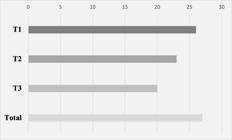
Some species were uniquely associated with specific treatments. For example, Entodinium contractum, Eremoplastron bovis, and Ostracodinium dentatum were found exclusively in T1. In contrast, Eudiplodinium maggi was exclusively detected in T2. Additionally, Charonina ventriculi, Entodinium dubardi, and Diploplastron affine were observed only in treatments T1 and T2. No species were found to be exclusive to treatment T3 (Table I).
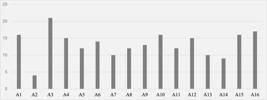
When analyzing individual animals, species richness ranged from 4 to 21 species per animal. Consistent with the treatment analysis, Ostracodinium gracile was the only species identified in all 16 animals (Table I; Figure 3).
DISCUSSION
This study evaluated the impact of dietary supplementation with yeast-based probiotics on the ruminal ciliate community in dairy cattle. To date, this is only the third study to investigate the effects of probiotics on ruminal ciliates with a taxonomic resolution at both the genus and species levels (Kowalik et al. 2008, Litonina et al. 2021). Most prior studies have focused solely on total ciliate density, without detailed taxonomic breakdowns (Doreau & Jouany 1998, Lila et al. 2004, Brossard et al. 2006, Doležal et al. 2011, Zábranský et al. 2019, Sheik et al. 2022).
In this study, no statistically significant differences were found in either total or genus-level ciliate densities among the three treatment groups (T1, T2, T3) or across the 16 animals sampled. These findings align with those of Doreau & Jouany (1998), who reported no changes in the abundance of Entodinium, Epidinium, Diploplastron, and Isotricha following supplementation with Saccharomyces cerevisiae. Similarly, Lila et al. (2004) found no significant effect on total protozoal density across varying probiotic doses, and Zábranský et al. (2019) observed no changes in ruminal ciliates after administering Bifidobacterium sp.
Conversely, our results diverge from several other studies in the literature. For example, Kowalik et al. (2008) reported that supplementation in Bos primigenius cows significantly increased the total number of ciliates and the density of Entodinium, while reducing the densities of Diplodinium and Epidinium. Similarly, Doležal et al. (2011) documented a significant increase in total ruminal ciliate numbers in dairy cows given yeast-based probiotics.
Litonina et al. (2021) explored supplementation in Russian Black Pied calves using a novel enzymatic probiotic derived from cellulolytic bacteria isolated from the rumen of reindeer (Rangifer tarandus) and observed increases in both total ciliate density and in specific genera such as Entodinium, Dasytricha, and Isotricha. Likewise, Sheikh et al. (2022) demonstrated a marked increase in ciliate populations in male Corriedale lambs following probiotic supplementation with a combination of yeast (S. cerevisiae) and lactic acid bacteria (Lactobacillus acidophilus).
The absence of detectable effects on total and genus-level ciliate densities in our study may stem from several underlying factors. Existing literature reveals substantial variability in the probiotic strains employed, their administration protocols (including dosage and duration), and the host species involved (Mathieu et al. 1996, Arakaki et al. 2000, Galip 2006, Tripathi & Karim 2011, Kowalik et al. 2008, 2011). This heterogeneity in experimental design and biological context likely accounts for the divergent outcomes reported across studies.
At the species level, however, we observed distinct treatment- and animal-specific effects on community composition, species prevalence, and richness. To our knowledge, no other study has evaluated species-level shifts in ruminal ciliate communities in response to probiotic supplementation, highlighting the novelty and depth of our approach.
Among the 27 ciliate species identified, Ostracodinium gracile and Isotricha prostoma were the most prevalent, occurring across all treatments and in 100% and 80% of the animals, respectively. While O. gracile is rarely reported as a dominant species in global rumen inventories (Booyse & Dehority 2011), it has been consistently observed at high prevalence in cattle and buffalo from southeastern Brazil (Dehority 1979, 1986, Cedrola et al. 2024)—the same geographic origin as our study animals. Interestingly, this species was absent in northeastern Brazilian sheep (Cedrola et al. 2016), suggesting a possible regional or host-specific distribution. Conversely, I. prostoma is commonly found worldwide and is considered highly adaptable to diverse ruminal environments (Booyse & Dehority 2011).
Overall, species richness ranged from 20 to 26 among treatments, with the control group (T1) exhibiting the highest richness (26 species). All species except Eudiplodinium maggii—which was unique to T2—were present in T1. T2 and T3 harbored 23 and 20 species, respectively. Intra-animal richness was highly variable, ranging from 4 to 21 species per individual.
In earlier Brazilian studies, Dehority (1979, 1986) reported significantly higher species counts—49 and 55 species in buffalo and cattle, respectively. These discrepancies may be linked to animal management practices, particularly diet. Dehority’s work animals were pasture-raised, a condition known to promote near-neutral ruminal pH and favorable microbial stability. In contrast, animals in our study received a mixed diet including fibrous forage and an energy concentrate, which can lead to lower ruminal pH and decreased protozoal diversity (Franzolin & Dehority 2010, Cedrola et al. 2016).
Supporting this, Cedrola et al. (2016, 2024) observed similar richness levels (28 and 31 species) in sheep and cattle under experimental diets with increasing levels of energy concentrate and urea, both of which destabilized ruminal conditions and adversely affected sensitive ciliate species.
Notably, in our study, seven species were absent in the T3 group, suggesting a potentially deleterious effect of this treatment. Four of these species belong to the Diplodiniinae subfamily, which includes taxa considered highly sensitive to environmental perturbations (Williams & Coleman 1992, Cedrola et al. 2016). The other absent taxa belong to genera Charonina and Entodinium. The genus Entodinium is highly diverse, and while some species are known to be more resistant to environmental changes (Cedrola et al. 2016), others are considered more sensitive. For Charonina, however, no information is currently available regarding its tolerance to such disturbances. Functional studies in the future may help clarify the ecological responses of these taxa.
The maintenance diet provided to the animals consisted of fibrous feed along with an energy concentrate. This combination, particularly when paired with probiotic supplementation, may have triggered increased fermentative activity, raising volatile fatty acid production and lowering ruminal pH. Such acidification can inhibit colonization by many ciliate species, especially those in the Diplodiniinae subfamily (Cedrola et al. 2016), potentially explaining the reduced richness observed in T3.
CONCLUSIONS
This study provides novel information into the effects of yeast-based probiotic supplementation on the ruminal ciliate community of dairy cattle, with a new view at the species level. Although no significant differences were detected in total or genus-level ciliate densities across treatments, species-level analysis revealed meaningful shifts in community composition, richness, and prevalence, suggesting possible probiotics effects. The absence of seven ciliate species in the T3 group—particularly members of the sensitive Diplodiniinae subfamily—raises the possibility of adverse impacts under certain dietary conditions, likely related to changes in ruminal pH and fermentative dynamics. These findings underscore the importance of high-resolution taxonomic approaches in understanding microbiome responses and highlight the need for further research integrating host physiology, dietary composition, and microbial ecology to fully elucidate the role of probiotics in ruminant health.
Acknowledgements
This work was supported by Fundação de Amparo à Pesquisa do Estado de São Paulo (FAPESP) [process: 2020/11027-0]. FC was funded by FAPESP [process: 2020/10682-5].
References
- ARAKAKI LC, STAHRINGER RC, GARRETT JE & DEHORITY BA. 2000. The effects of feeding monensin and yeast culture, alone or in combination, on the concentration and generic composition of rumen protozoa in steers fed on low-quality pasture supplemented with increasing levels of concentrate. Anim Feed Sci Technol 84: 121-127.
- BIERNASIAK J, ŚLIŻEWSKA K & LIBUDZISZ Z. 2011. Feeds with probiotics in animal’s nutrition. In: El-Shemy H (Ed), Soybean and Nutrition. London: Intech Open, London, UK, p. 181-200.
- BOOYSE DG & DEHORITY BA. 2011. Rumen protozoa in South African sheep with a summary of the worldwide distribution of sheep protozoa. Onderstepoort J Vet Res 78: 1-7.
- BROSSARD L, CHAUCHEYRAS-DURAND F, DOREAU BM & MARTIN C. 2006. Dose effect of live yeasts on rumen microbial communities and fermentations during butyric latent acidosis in sheep: new type interaction. Anim Sci 82: 829-836.
- BUSH AO, LAFFERT KD, LOTZ JM & SHOSTAK AW. 1997. Parasitology meets ecology on its own terms: Margolis et al. revisited. J Parasitol 83: 575-583.
- CEDROLA F, BORDIM SC, ARCURI PB, CARNEIRO JC & DIAS RJP. 2024. Rumen ciliates (Ciliophora, Trichostomatia) in Brazilian domestic cattle feeding on diets with crescent urea levels. Eur J Protistol 93: 126063.
- CEDROLA F, MARTINELE I, DIAS RJP, FREGULIA P & D’AGOSTO M. 2016. Rumen ciliates in Brazilian sheep (Ovis aries), with new records and redescription of Entodinium contractum (Entodiniomorphida, Ophryoscolecidae). Zootaxa 4088(2): 292-300.
- CEDROLA F, ROSSI M, DIAS RJP, MARTINELE I & D’AGOSTO M. 2015. Methods for taxonomic studies of rumen ciliates: a brief review. Zool Sci 32: 8-15.
- CHUNG YH, WALKER ND, MCGINN SM & BEAUCHEMIN KA. 2011. Differing effects of 2 active dried yeast (Saccharomyces cerevisiae) strains on ruminal acidosis and methane production in non-lactating dairy cows. J Dairy Sci 94: 2431-2439.
- D’AGOSTO M & CARNEIRO ME. 1999. Evaluation of lugol solution used for counting rumen ciliates. Rev Bras Zool 16(3): 725-729.
- DEHORITY BA. 1979. Ciliate protozoa in the rumen of Brazilian water buffalo, Bubalus bubalis Linnaeus. J Protozool 26: 536-544.
- DEHORITY BA. 1984. Evaluation of subsampling and fixation procedures used for counting rumen Protozoa. Appl Environ Microbiol 48: 182-185.
- DEHORITY BA. 1986. Rumen ciliate fauna of some Brazilian cattle: occurrence of several ciliates new to the rumen, including the cycloposthid Parentodinium africanum J Protozool 33(3): 416-421.
- DOGIEL VA. 1927. Monographie der familie Ophryoscolecidae. Arch Protistenkd 59: 1-288.
- DOLEŽAL P, DVOŘÁČEK J, DOLEŽAL J, ČERMÁKOVÁ J, ZEMAN L & SZWEDZIAK K. 2011. Effect of feeding yeast culture on ruminal fermentation and blood indicators of Holstein dairy cows. Acta Vet Brno 80: 139-145.
- DOREAU M & JOUANY JP. 1998. Effect of a Saccharomyces cerevisiae culture on nutrient digestion in lactating dairy cows. J Dairy Sci 81(12): 3214-3221.
- EL-WAZIRY AM & IBRAHIM HR. 2007. Effect of Saccharomyces cerevisiae of Yeast on Fiber Digestion in Sheep Fed Berseem (Trifolium alexandrinum) Hay and Cellulase Activity. Aust J Basic Appl Sci 1(4): 379-385.
- FENG JM, JIANG CQ, SUN ZY, HUA CJ, WEN JF, MIAO W & XIONG J. 2020. Single-cell transcriptome sequencing of rumen ciliates provides insight into their molecular adaptations to the anaerobic and carbohydrate-rich rumen microenvironment. Mol Phylogenet Evol 143: 106687.
- FIRKINS JL, YU Z, PARK T & PLANK JE. 2020. Extending Burk Dehority’s perspectives on the role of ciliate protozoa in the rumen. Front Microbiol 11: 123.
- FONTY G & CHAUCHEYRAS-DURAND F. 2006. Effects and modes of action of live yeasts in the rumen. Biologia 61(6): 741-750.
- FOX J & WEISBERG S. 2019. An R Companion to Applied Regression, 3rd ed., Sage: Thousand Oaks, 608 p.
- FRANZOLIN R & DEHORITY BA. 2010. The role of pH on the survival of rumen protozoa in steers. R Bras Zootec 39: 2262-2267.
- GALIP N. 2006. Effect of supplemental yeast culture and sodium bicarbonate on ruminal fermentation and blood variables in rams. J Anim Physiol Anim Nutr (Berl) 90: 446-452.
- HILLMAN K, WILLIAMS AG & LLOYD D. 1995. Postprandial variations in endogenous metabolic activities of ovine rumen ciliate protozoa. Anim Feed Sci Technol 52: 237-247.
- KOFOID CA & CHRISTENSON JF. 1933. Ciliates from Bos-gaurus H. Smith. Univ Calif Publ Zool 33: 341-392.
- KOFOID CA & MACLENNAN RF. 1930. Ciliates from Bos indicus Linn. I. The genus Entodinium Stein. Univ Calif Publ Zool 55: 471-544.
- KOFOID CA & MACLENNAN RF. 1932. Ciliates from Bos indicus Linn. II. A revision of Diplodinium Schuberg. Univ Calif Publ Zool 37: 53-152.
- KOWALIK B, MICHAŁOWSKI T, PAJĄK JJ, TACIAK M & RAWA J. 2008. The effect of supplementing cows with live yeast, Saccharomyces cerevisiae, on ciliate fauna and ruminal fermentation. J Anim Feed Sci 17(2): 157-165.
- KOWALIK B, MICHAŁOWSKI T, PAJĄK JJ, TACIAK M & ZALEWSKA M. 2011. The effect of live yeast, Saccharomyces cerevisiae, and their metabolites on ciliate fauna, fibrolytic and amylolytic activity, carbohydrate digestion and fermentation in the rumen of goats. J Anim Feed Sci 20: 526-536.
- LI Z ET AL. 2022. Genomic insights into the phylogeny and biomass-degrading enzymes of rumen ciliates. ISME J 12: 2775-2787.
- LILA ZA, MOHAMMED N, YASUI T, KUROKAWA Y, KANDA S & ITABASHI H. 2004. Effects of a twin strain of saccharomyces cerevisiae live cells on mixed ruminal microorganism fermentation in vitro. J Anim Sci 82(6): 1847-1854.
- LITONINA АS, SMIRNOVA YM, PLATONOV AV, LAPTEV GY, DUNYASHEV TP & BUTAKOVA MV. 2021. Application of enzyme probiotic drug developed based on microorganisms of the rumen of reindeer (Rangifer tarandus) in feeding cows. Regul Mech Biosyst 12(1): 109-115.
- LYNN DH. 2008. The ciliated protozoa. Characterization, classification and guide literature, 3rd ed., Dordrecht: Springer, 638 p.
- MATHIEU F, JOUANY JP, SÉNAUD J, BOHATIER J, BERTIN G & MERCIER M. 1996. The effect of Saccharomyces cerevisiae and Aspergillus oryzae on fermentations in the rumen of faunated and defaunated sheep; protozoal and probiotic interactions. Reprod Nutr Dev 36(3): 271-287.
- MORGAVI DP, FORANO E, MARTIN C & NEWBOLD CJ. 2010. Microbial ecosystem and methanogenesis in ruminants. Animal 4(7): 1024-1036.
- NALLA K, MANDA NK, DHILLON HS, KANADE SR, ROKANA N, HESS M & PUNIYA AK. 2022. Impact of Probiotics on Dairy Production Efficiency. Front Microbiol 9(13): 805963.
- OGIMOTO K & IMAI S. 1981. Atlas of Rumen Microbiology. 1st ed., Japan Scientific Societies Press Tokio.
- PARKER RB. 2014. Probiotics, the Other Half of Antibiotic Story. ANH 29: 4-8.
- SHEIKH GG, GANAI AM, SHEIKH AA & MIR DM. 2022. Rumen microflora, fermentation pattern and microbial enzyme activity in sheep fed paddy straw based complete feed fortified with probiotics. Biol Rhythm Res 53(4): 547-558.
- TRIPATHI MK & KARIM SA. 2011. Effect of yeast cultures supplementation on live weight change, rumen fermentation, ciliate protozoa population, microbial hydrolytic enzymes status and slaughtering performance of growing lamb. Livest Sci 135(1): 17-25.
- WILLIAMS AG & COLEMAN GS. 1992. The rumen protozoa, New York: Springer-Verlag New York Inc., 453 p.
- YANG W, BEAUCHEMIN KA, VEDRES DD, GHORBANI GR, COLOMBATTO D & MORGAVI DP. 2004. Effects of direct-fed microbial supplementation on ruminal acidosis, digestibility, and bacterial protein synthesis in continuous culture. Anim Feed Sci Technol 114(1-4): 179-193.
- ZÁBRANSKÝ L, GALIK B, POBORSKÁ A, HADAČOVA V, ŠOCH M, LÁD F, PETRÁŠKOVÁ E & FREJLACH T. 2019. Influence of probiotic feed supplements on functional status of rumen. J Cent Eur Agric 20(4): 1044-1054.
The datasets generated and/or analyzed during the current study are available from the corresponding author upon reasonable request.


