
 May Antarctic plants grow on Martian and Lunar soil simulants under terrestrial conditions?
Abstract
Extremophile organisms have been largely studied in Astrobiology. Among them, two antarctic plants emerge as good candidates to become colonizers of other celestial bodies, such as Mars and the Moon. The present research aimed to evaluate survival and growing capacity of Sanionia uncinata and Colobanthus quitensis on Martian (MGS-1) and Lunar (LMS-1) regolith simulants, under terrestrial conditions. The survival responses of both species on the simulators and the original sampling site of Antarctic soil were observed during 15 days, in laboratory conditions at ‘Comandante Ferraz’ Station. Based on physiological parameters changes under the three soil conditions tested, our results suggest that Martian soil can be too harsh for plant growth, showing expressive decay, especially for C. quitensis. While lunar soil might provide more favorable conditions, with less observed changes, similarly to how they would in Antarctic soil from their natural habitat. This preliminary study provides resources and fosters knowledge about the possibility of these Antarctic species to survive in extraterrestrial environments, starting with soil parameters; and discusses the importance and use of Antarctic plants in astrobiology.
Key words
astrobiology; astrobotany; antarctica; colonization; extraterrestrial simulants
INTRODUCTION
Panspermia-related theories propose that life could exist and develop in any environment capable of sustaining organisms, with the possibility of being transported between celestial bodies through ejection and space travel (Fajardo-Cavazos et al. 2009). Therefore, it would be possible for Earth’s organisms to colonize other planets or moons when landing in favorable conditions (Sancho et al. 2008, Horneck 2003). However, not all species could withstand non terrestrial conditions, survive the journey in harsh conditions and thrive in extreme environments. Colonizers of other celestial bodies surfaces habitats may not only need to be autotrophic and resistant to UV radiation, but also resist dryness, harsh soil characteristics, severe cold and heat, similar to organisms found in polar and hydrothermal environments (Rothschild & Mancinelli 2001, Wynn-Williams et al. 2001).
Non-terrestrial environments have conditions that are extremely different from those typically found on Earth. For example, Mars’ thin atmosphere with low pressure, weak attenuation to UV radiation and the large day/night thermal range, all of which, along with numerous other factors, significantly challenge survival in this environment (Petrosyan et al. 2011). Periods of water recession, which is restricted to ice-covered lakes, require high resistance to long periods of desiccation, a severe limitation even in terrestrial environments (Evans & Johansen 1999, Rothschild & Mancinelli 2001). The same applies to the lunar environment, lacking an atmosphere, it has no UV attenuation agent, in addition to extreme temperatures and dryness (Vaniman et al. 1991, van Linden et al. 2022). Both soil profiles, lunar and martian, are scarce in nutrients and have individual composition that can hinder or even inhibit the development of most Earth’s organisms (Duri et al. 2022, Isachenkov et al. 2022). In this sense, identifying the issues of habitability in Martian and Lunar soils based on their composition may be crucial for a possible colonization (Atkin & Santos in press, Chinnannan et al. 2024).
In terms of limits of life, one of the nearest environments to non-terrestrial conditions are possibly the cold deserts in Antarctica. Locations with extreme temperatures, ranging from glaciers to volcanic areas, high wind speeds, dryness and UV-B irradiation configure the extreme Antarctic habitats (Wynn-Williams et al. 2001). These environmental characteristics make Antarctica a good natural laboratory for Astrobiology studies (Sancho et al. 2008), which overtime selected extremophile species capable of facing harsh conditions presented by outer space and that could possibly colonize celestial bodies with water, such as Mars and Jupiter’s moon Europa (Stone 1999, Rothschild & Mancinelli 2001). Those capable of thriving in such harsh conditions present specific adaptations for resisting long periods of dehydration, freezing cycles and strategies to protect nucleic acids from UV radiation damage (de Vera et al. 2008, Gómez et al. 2016, Markmann-Mulisch et al. 2007). Not only microorganisms are able to overcome these factors, but also some specific plants can dominate the ice-free areas in Antarctica (Gómez et al. 2016, Câmara et al. 2020).
In contrast to the low variability of flowering plants, mosses and lichens are diverse and predominant in Antarctica, despite the extreme environmental conditions, being able to grow and even reproduce sexually (Singh et al. 2018). Multiple factors are related to these plants success, which include the production of different metabolic products and pigments, working as UV-B screening (Kappen 2000, Lud et al. 2002); and poikilohydry, i.e. the ability to reduce metabolism during long periods of desiccation and resume activities once moistened (Robinson et al. 2003, de Vera et al. 2008, Pizarro et al. 2019). These characteristics make them good candidates to survive in other celestial bodies with low disponibility of water, due to the planet or moon atmosphere and compounds (Huwe et al. 2019). In addition, these plants not only show the necessary characteristics to colonize inhospitable areas, but they also perform significant ecological services that enhance the quality of the environment, enabling the presence of other organisms (Prather et al. 2019, Rosa et al. 2020). Bryophytes and Antarctic pearlworts hold microhabitats for other organisms, such as bacteria, fungi, which also benefits plant health (Molina-Montenegro et al. 2020, Chen et al. 2022), as much as tardigrades, nematodes and microarthropods (collemboles) (Sohlenius et al. 2004, Câmara et al. 2021). Furthermore, moss turf formations are related to carbon sequestration, retaining atmospheric carbon and acting in climate regulation, erosive processes and increasing the amount of soil nutrients (Kappen 2000, Fenton 2022, Yu 2012).
In this sense, the aim of this work is to test short-term survival of two Antarctic colonizers: the flowering plant Colobanthus quitensis (Kunth.) Bartl. and the moss Sanionia uncinata (Hedw.) Loeske, in simulated extraterrestrial soil conditions using Martian Global Simulant (MGS-1) and the Lunar Mare Simulant (LMS-1) under terrestrial atmospheric conditions. Field activities were undertaken during the austral summer of 2023-2024 in the Antarctic Peninsula, species were grown in Martian and Lunar simulated substrates, and Antarctic soil for comparison.
MATERIALS AND METHODS
Biological Samples
Tufts of Sanionia uncinata and Colobanthus quitensis were collected from moss carpets and pearlwort cushions, in the vicinity of Wanda Glacier (Admiralty Bay, King George Island, South Shetlands; 61°54’S and 62°16’S, 57°35’W and 59°02’W; at sea level), during the summer of 2023-2024 during OPERANTAR XLII activities of the Brazilian Antarctic Program (PROANTAR) (Figure 1). All samples were collected under the CNPq/MCTIC/CAPES/FNDCT nº 21/2018 “BRYOANTAR” project.

As a field designed experiment, species selection was based on their suitability for the study related to the great resistance to extreme conditions (Lud et al. 2003, Pizarro et al. 2019) and their abundance in the region (Silva et al. 2022). Species identification followed Ochyra et al. (2008).
To evaluate the plants’ health along the experiment, for both species, physiological parameters were taken into account, such as pigmentation, water loss and full size; measured from branches to the end of roots for C. quitensis, and the entire gametophyte of S. uncinata, since bryophytes does not have true roots or leaves.
Sample preparation
For the survival tests, we separated 60 tufts of S. uncinata and 60 small cushions of C. quitensis, measuring between 1 and 3 cm. For decontamination, plants were washed and soaked in distilled water in order to remove the original substrate attached and related microfauna, which could influence the plants’ survival success.
Mars and Lunar regolith simulants and Wanda Glacier soil
Mars and Lunar soil simulants were acquired from Space Resource Technologies (https://spaceresourcetech.com). Specifically, for Mars, we utilized Mars Global Simulant (MGS-1), while for the Moon, the Lunar Mare Simulant (LMS-1) was used following Cannon & Britt (2019) and Isachenkov et al. (2022). As a control for the experiments, Antarctic soil from the Wanda Glacier sampling site was included in the analysis.
Both simulants are characterized as nutrient-poor and exhibit high pH levels (pH > 8.0) (Cannon et al. 2019, Isachenkov et al. 2022). MGS-1 is noted for its water content of 3.2 wt.% H2O, a more realistic value compared to previous simulants (Cannon et al. 2019). Similarly, LMS-1 demonstrates low water moisture absorption, registering at 1.38 wt.% H2O (Isachenkov et al. 2022, Yin et al. 2023). Wanda soil tested parameters showed a slightly acidic soil (pH 6).
Soil simulants and control soil from Wanda Glacier were sterilized in an autoclave and dried at 80°C for 12 hours prior to the experiment setup.
Experiment setup
One growing bed was setted up for each type of soil, using 1 kg of sterilized soil (MGS-1, LMS-1, Wanda Soil) per bed. Twenty (20) tufts of S. uncinata and twenty (20) cushions of C. quitensis were inoculated in the beds and growed for over 15 days (Figure 2). The experiment was performed inside the Comandante Ferraz station with a constant temperature of 21°C along the entire experiment. The photoperiod was controlled to be similar to the natural environment of plants, during the Antarctic summer when sampling was carried out (December, Antarctic Peninsula), with 16 hours of natural light.
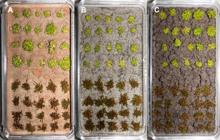
Experiment setup with a) Mars Global Simulant (MGS-1), b) Lunar Mare Simulant (LMS-1), and c) Wanda soil control, with the four rows of Colobanthus quitensis, each one with five tufts (20 individuals in total), followed by four rows of Sanionia uncinata, each one with four tufts (20 individuals in total), for each one of the beds.
Plants were observed and photographed once a day to register any significant change. Watering was made with 20 mL of purified water every two days. On the last day, plants were removed from soil and measured, including the entire gametophyte for bryophytes, and roots plus aerial parts for vascular plants.
RESULTS AND DISCUSSION
Over the 15 days of the experiment, no soil compaction or desiccation was observed for the Wanda soil and the LMS-1, either without any addition of control agents for moisture accumulation or overdry. However, the MGS-1 exhibited compaction and desiccation along the entire experiment.
Wanda soil showed good maintenance of plants’ health, as expected for the control group, the most similar to their natural environment. All the tufts and cushions survived after 15 days with root growing in C. quitensis (Figure 3) and no damage to pigmentation, showing visible development of the gametophytes and aerial parts (Figure 5).

Lateral view of aerial parts and roots of Colobanthus quitensis showing development for the Wanda soil control and the LMS-1 simulant, and the root inhibition/compaction exhibited for the MGS-1 simulant after 18 days of experiment. Scale bar = 1 cm.
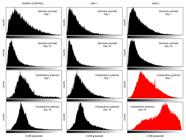
Grayscale histograms for the analyzed image samples for both Sanionia uncinata and Colobanthus quitensis. Changes observed for C. quitensis on MGS-1 simulant during the experiment period in red.
Vitality drop occurred in the Martian Global Simulant (MGS-1), showing chlorosis overtime, visible on Figure 4, and observed by a marked change on the grayscale histograms in Figure 5, specially for C. quitensis that presented peak values over the black region of the grayscale on the first day of the experiment (Day 1, 697 pixels on grayscale position 63), changing to present peak values near the white end of the grayscale on the last day of the experiment (Day 18, 438 pixels on grayscale position 178). The observed values for C. quitensis in MGS-1 simulant also showed statistically distinct mean values between both days on a significance level of 0.01. Sanionia uncinata presented a brownish coloration and showed no development of gametophyte size; Colobanthus quitensis leafs developed a yellowish color and showed no growth on the aerial part or roots (Figures 4 and 5).

Examples of aerial development observed for both Sanionia uncinata and Colobanthus quitensis on Day 1 and 18 on the Wanda soil control, LMS-1 simulant, and MGS-1 simulant.
In LMS-1, plants had a better survival rate, with discrete coloration change in C. quitensis leaves for yellowish-green, still showing photosynthetic activity, and considerable root growth (Figure 3), while S. uncinata showed no difference in coloration and little gametophyte growth (Figure 4).
In general, MGS-1 performed the worst, and LMS-1 exhibited good performance when compared to the Wanda soil control, showing only a discrete coloration change of S. uncinata and exhibiting little damage on aerial parts and roots of C. quitensis. All the 60 plants were considered alive at the end of the experiment.
For the first time, survival capacity of two species of Antarctic plants was evaluated on extraterrestrial regolith simulants. The experiment was conducted on Earth’s gravity and conditions to infer the habitability of the martian and lunar regoliths, since soil itself could be a limiter for plants colonization, even if they could adapt to different atmospheric conditions. These plants could give the first steps for soil colonization, increasing the suitability in growing food resources, performing nitrogen enrichment of the soil, which is essential for most plants development and with origin strongly related to organic matter and volcanic activity (Stevens et al. 2011, Wamelink et al. 2014). This way, the present study offers one more resource to decisions about a possible future colonization of other celestial bodies (Duri et al. 2022).
Plant survival in soil simulators were tested in different species and conditions, mostly with plants that could provide food resources and with special treatments to increase soil quality (Atkin & Santos in press, Wamelink et al. 2014). Studies in astrobiology using antarctic plants are mostly related to the BIOPAN facility of the European Space Agency, and BIOMEX (Biology and Mars Experiment) in the EXPOSURE-R2 mission of the European Space Agency on the International Space Station (ISS) (de Vera et al. 2019, Rabbow et al. 2015, Rettberg et al. 2004, Sancho et al. 2007). These investigative series tested the plausibility of the panspermia hypothesis and the limits of life exposing diverse extremotolerant organisms to simulated space conditions and in Mars-like places on Earth, in order to evaluate Mars habitability (Horneck et al. 2010, Huwe et al. 2019, Rabbow et al. 2017). Studies were conducted testing plants’ resistance to different limiters, such as space UV levels of radiation, extreme temperatures, vacuum and Mars-like atmosphere, since they present a tolerance to desiccation with no morphological loss (Huwe et al. 2019, Vaz & Penfound 2020). However, in these studies, the soil composition was not considered a potential limiting factor, even though it can affect plant development under Earth’s atmospheric conditions. Still, in the present field study, this was evident with the MGS-1 plants, which died over time under the same treatments as the other two soil types.
Not many other polar species were used for tests in previous research (de Vera et al. 2019). The only antarctic genus of mosses tested in non terrestrial conditions was Grimmia, and of flowering plants, the Bluegrass (Poaceae) showing high resistance in comparison to other tropical and temperate species tested (Novikova et al. 2015, Tepfer et al. 2012, Tepfer & Leach 2017). Other antarctic plants suggested as good candidates for this kind of assay, include Ceratodon purpureus and Schistidium antarctici (Huwe et al. 2019, Vaz & Penfound 2020), but their distribution and abundance made its use as a impracticable model in this field work (Ochyra et al. 2008), making Sanionia uncinata and Colobanthus quitensis most suitable candidates. Regardless, there is no previous research considering soil as a limiter, and growing mosses or C. quitensis on regolith simulants. In this sense, decontamination protocols and transplant of microorganism/microfauna related to plants may be as essential as understanding the impact of non-terrestrial abiotic conditions on plants.
Results on the Moon simulator were aligned with most germinations and growing studies with flowering plants (Atkin & Santos in press, Kozyrovska et al. 2006) except Wamelink et al. (2014), that had better germination and growing rates in the martian simulator than in the lunar one, but using distinct simulants from MGS-1 and LMS-1. In the same study, lunar simulants dried faster than the Martian ones, which could accumulate moisture, which could help to explain why plants in the Martian simulant performed better in their study. Nutrient composition differs among the two simulators, even though both of them are nutritionally poor, Martian regolith have more vital compounds for plant growth than in Lunar (Cannon & Britt 2019, Duri et al. 2022, Isachenkov et al. 2022). Despite that, plants were not able to grow in MGS-1, with LMS-1 being able to sustain plants’ growth even though it lacks the organic compounds that are present in MGS-1.
Nutrient scarce soil can impair chloroplast structural integrity, efficiency and light-harvesting complexes (Chinnannan et al. 2024). Thus, it reflects not only the nutritional deficiency of soil, but also their unavailability due to the lack of nitrogen fixers (Wamelink et al. 2014) and the high concentration of metals in the Martian regolith, which can be harmful to plants and may need special treatment for soil adequation (Chinnannan et al. 2024). The same is applied in Martian soil composition that also includes crystalline nitrate and perchlorate salts; compounds that are phytotoxic and could be a challenging factor for cultivation in martian soil (Cannon et al. 2019). These compounds were not added in the MGS-1 standard formula and yet, not adding it to the simulator does not bias the results, since the same kind of soil correction needed for metals are known to be performed for correcting high concentrations of perchlorate in normal soil (Cannon et al. 2019). Most of them are focused on the use of biochemical methods, Y radiation treatments and bioremediators, with emphasis in the use of microorganisms and enzymes to catalyze soil’s perchlorate into solution (Davila et al. 2013, Schnoor et al. 2001, Shang et al. 2017, Susarla et al. 2000, Quinn et al. 2013, Weeks et al. 2003). Although these methods have not been tested on martian soil regolith, they present potential to treat the perchlorate presence (Misra et al. 2021).
Finally, we should observe that considering their crucial role in colonizing the extreme Antarctic environment, the observed capacity of these species to survive in such harsh environment position them as potential candidates to sustain human habitats, helping on the development of in-situ resource utilization (ISRU) systems, and forming the basis for a biological life-support system to facilitate human survival in extraterrestrial environments.
CONCLUSIONS
The results of our short-term experiment using two Antarctic plants showed that both could be potential candidates for colonization of the lunar environment, based on soil limiters only, not only surviving but also growing essential structures. Still, Martian soil remains a challenging environment even for those plants, since both of them showed vitality decrease in MGS-1. Antarctic plants have been used as model organisms in survival experiments with different stressors from space, low earth orbit and colonization studies based on mars-like places or simulated martian conditions (Huwe et al. 2019, de Vera et al. 2004, 2019, Sancho et al. 2007, Lud et al. 2002, Wynn-Williams et al. 2000) and for the first time, in this study, on Lunar and Martian soil simulants.
This study highlights the role of understanding soil composition as one of many limitations presented by extraterrestrial environments. As well as testing Antarctic species as candidates for future development of in-situ resource utilization (ISRU) systems, and forming the building blocks that will facilitate human survival. Following similar steps to the evolutionary story of our planet as a way to prepare the baseline for an environment for life as we know it. These organic models are still far from being sufficiently understood, in order to face limits of life known in and out of our planet. In this sense, more studies considering multiple stressors in addition to soil composition are still needed.
ACKNOWLEDGMENTS
This study received financial support from the Brazilian Conselho Nacional de Desenvolvimento Científico e Tecnológico (CNPq), Ministério da Ciência, Tecnologia e Inovação (MCTI), and Programa Antártico Brasileiro (PROANTAR). CRLA is supported by Fundação Carlos Chagas Filho de Amparo à Pesquisa do Estado do Rio de Janeiro (FAPERJ).
REFERENCES
- ATKIN J & SANTOS SOP. IN PRESS. 2024 From dust to seed: a lunar chickpea story. BioRxiv, 9 p.
- CÂMARA PEAS, CONVEY P, RANGEL SB, KONRATH M, BARRETO CC, PINTO OH, SILVA MC, HENRIQUES DK, OLIVEIRA HC & ROSA LH. 2021. The largest moss carpet transplant in Antarctica and its bryosphere cryptic biodiversity. Extremophiles 25(4): 369-384.
- CÂMARA PEAS, VALENTE DV & SANCHO LG. 2020. Changes in the moss (Bryophyta) flora in the vicinity of the Spanish Juan Carlos I Station (Livingston island, Antarctica) over three decades. Polar Biol 43(11): 1745-1752.
- CANNON KM & BRITT DT. 2019. Mineralogically accurate simulants for lunar ISRU, and strategic regolith processing. Lunar ISRU 2019-Developing a New Space Economy Through Lunar Resources and Their Utilization, Nº 2152, id 5002.
- CANNON KM, BRITT DT, SMITH TM, FRITSCHE RF & BATCHELDOR D. 2019. Mars global simulant MGS-1: A Rocknest-based open standard for basaltic martian regolith simulants. Icarus 317: 470-478.
- CHEN KH, LIAO HL, ARNOLD AE, KOROTKIN HB, WU SH, MATHENY PB & LUTZONI F. 2022. Comparative transcriptomics of fungal endophytes in co‐culture with their moss host Dicranum scoparium reveals fungal trophic lability and moss unchanged to slightly increased growth rates. New Phytol 234(5): 1832-1847.
- CHINNANNAN K, SOMAGATTU P, YAMMANURU H, NIMMAKAYALA P, CHAKRABARTI M & REDDY UK. 2024. Effects of Mars Global Simulant (MGS-1) on Growth and Physiology of Sweet Potato: A Space Model Plant. Plants 13(1): 55.
- DAVILA AF, WILLSON D, COATES JD & MCKAY CP. 2013. Perchlorate on Mars: a chemical hazard and a resource for humans. Int J Astrobiol 12(4): 321-325.
- DE VERA JP, HORNECK G, RETTBERG P & OTT S. 2004. The potential of the lichen symbiosis to cope with the extreme conditions of outer space II: germination capacity of lichen ascospores in response to simulated space conditions. Adv Space Res 33(8): 1236-1243.
- DE VERA JP ET AL. 2019. Limits of life and the habitability of Mars: the ESA space experiment BIOMEX on the ISS. Astrobiol 19(2): 145-157.
- DE VERA JP, RETTBERG P & OTT S. 2008. Life at the limits: capacities of isolated and cultured lichen symbionts to resist extreme environmental stresses. Orig Life Evol Biosph 38: 457-468.
- DURI LG, CAPORALE AG, ROUPHAEL Y, VINGIANI S, PALLADINO M, DE PASCALE S & ADAMO P. 2022. The Potential for Lunar and Martian Regolith Simulants to Sustain Plant Growth: A Multidisciplinary Overview Front Astron Space Sci 8: 747821.
- EVANS RD & JOHANSEN JR. 1999. Microbiotic Crusts and Ecosystem Processes. Crit Ver Plant Sci 18(2): 183-225.
- FAJARDO-CAVAZOS P, LANGENHORST F, MELOSH HJ & NICHOLSON WL. 2009. Bacterial spores in granite survive hypervelocity launch by spallation: Implications for lithopanspermia. Astrobiology 9(7): 647-657.
- FENTON JH. 2022. The contribution of Antarctic moss peat to the understanding of global peatland processes. Antarct Sci 34(3): 266-278.
- GÓMEZ JM, ESTÉBANEZ B, SANZ AA, MATEO ME, MEDINA GJ & RULL PF. 2016. Survival of moss reproductive structures under simulated martian environmental conditions and extreme thermal stress: Vibrational spectroscopic study and astrobiological implications. Astrobiol Outreach 4(2): 1000151.
- HORNECK G. 2003. Could life travel across interplanetary space? Panspermia revisited. In: Rothschild LJ & Lister AM (Eds), Evolution on planet earth, Academic Press, p. 109-127.
- HORNECK G, KLAUS DM & MANCINELLI RL. 2010. Space microbiology. Microbiol Mol Biol Rev 74: 121-156.
- HUWE B, FIEDLER A, MORITZ S, RABBOW E, DE VERA JP & JOSHI J. 2019. Mosses in low Earth orbit: implications for the limits of life and the habitability of Mars. Astrobiol 19(2): 221-232.
- ISACHENKOV M, CHUGUNOV S, LANDSMAN Z, AKHATOV I, METKE A, TIKHONOV A & SHISHKOVSKY I. 2022. Characterization of novel lunar highland and mare simulants for ISRU research applications. Icarus 376: 114873.
- KAPPEN L. 2000. Some aspects of the great success of lichens in Antarctica. Antarct Sci 12: 314-324.
- KOZYROVSKA NO ET AL. 2006. Growing pioneer plants for a lunar base. Adv Space Res 37: 93-99.
- LUD D, MOERDIJK TCW, VAN DE POLL WH, BUMA AGJ & HUISKES AHL. 2002. DNA damage and photosynthesis in Antarctic and Arctic Sanionia uncinata (Hedw.) Loeske under ambient and enhanced levels of UV-B radiation. Plant Cell & Environ 25: 1579-1589.
- LUD D, SCHLENSOG M, SCHROETER B & HUISKES AHL. 2003. The influence of UV-B radiation on light-dependent photosynthetic performance in Sanionia uncinata (Hedw.) Loeske in Antarctica. Polar Biol 26: 225-232.
- MARKMANN-MULISCH U, WENDELER E, ZOBELL O, SCHWEEN G, STEINBISS H-H & REISS B. 2007. Differential requirements for RAD51 in Physcomitrella patens and Arabidopsis thaliana development and DNA damage repair. Plant Cell 10: 3080-3089.
- MISRA G, SMITH W, GARNER M & LOUREIRO R. 2021. Potential biological remediation strategies for removing perchlorate from Martian regolith. New Space 9(4): 217-227.
- MOLINA-MONTENEGRO MA, ACUÑA-RODRÍGUEZ IS, TORRES-DÍAZ C, GUNDEL PE & DREYER I. 2020. Antarctic root endophytes improve physiological performance and yield in crops under salt stress by enhanced energy production and Na+ sequestration. Sci Rep 10(1): 5819.
- NOVIKOVA N ET AL. 2015. Study of the effects of the outer space environment on dormant forms of microorganisms, fungi and plants in the ‘Expose-R’experiment. Int J Astrobiol: 14(1): 137-142.
- OCHYRA R, BEDNAREK-OCHYRA H & SMITH RIL. 2008. Illustrated moss flora of Antarctica. Cambridge University Press, vol. 1, 685 p.
- PETROSYAN A ET AL. 2011. The Martian atmospheric boundary layer. Rev Geophys 49(3): RG3005.
- PIZARRO M, CONTRERAS RA, KÖHLER H & ZÚÑIGA GE. 2019. Desiccation tolerance in the Antarctic moss Sanionia uncinata. Biol Res 52: 1-11.
- PRATHER HM ET AL. 2019. Species-specific effects of passive warming in an Antarctic moss system. R Soc Open Sci 6(11): 190744.
- QUINN RC, MARTUCCI HF, MILLER SR, BRYSON CE, GRUNTHANER FJ & GRUNTHANER PJ. 2013. Perchlorate radiolysis on Mars and the origin of martian soil reactivity. Astrobiol 13(6): 515-520.
- RABBOW E, RETTBERG P, BARCZYK S, BOHMEIER M, PARPART A, PANITZ C & REITZ G. 2015. The astrobiological mission EXPOSE-R on board of the International Space Station. Int J Astrobiol 14(01): 3-16.
- RABBOW E, RETTBERG P, PARPART A, PANITZ C, SCHULTE W, MOLTER F, JARAMILLO E, DEMETS R, WEISS P & WILLNECKER R. 2017. EXPOSE-R2: the Astrobiological ESA Mission on board of the International Space Station. Front Microbiol 8: 1533.
- RETTBERG P, RABBOW E, PANITZ C & HORNECK G. 2004. Biological space experiments for the simulation of martian conditions: UV radiation and martian soil analogues. Adv Space Res 33: 1294-1301.
- ROBINSON SA, WASLEY J & TOBIN AK. 2003. Living on the edge- plants and global change in continental and maritime Antarctica. Global Change Biol 9: 1681-1717.
- ROSA LH, DE SOUSA JRP, DE MENEZES GCA, COELHO LC, CARVALHO-SILVA M, CONVEY P & CÂMARA PEAS. 2020. Opportunistic fungi found in fairy rings are present on different moss species in the Antarctic Peninsula. Polar Biol 43: 587-596.
- ROTHSCHILD LJ & MANCINELLI RL. 2001. Life in extreme environments. Nature 409(6823): 1092-1101.
- SANCHO LG, DE LA TORRE R, HORNECK G, ASCASO C, DE LOS RIOS A, PINTADO A, WIERZCHOS J & SCHUSTER M. 2007. Lichens survive in space: results from the 2005 LICHENS experiment. Astrobiology 7: 443-454.
- SANCHO LG, DE LA TORRE R & PINTADO A. 2008. Lichens, new and promising material from experiments in astrobiology. Fungal Biol Rev 22(3-4): 103-109.
- SCHNOOR JL, PARKIN GF, JUST CL, VAN AKEN B & SHROUT JD. 2001. Phytoremediation and bioremediation of perchlorate at the Longhorn Army Ammunition Plant 3. Progress Report, 43 p.
- SHANG Y, XU X, JIANG P, QI S, REN Z, SONG W & GAO B. 2017. Biosorption and bioreduction of perchlorate using the nano-Fe3O4-laden quaternary-ammonium Chinese reed: considering the coexisting nitrate and nano-Fe3O4. ACS Sustain Chem Eng 5(3): 2471-2482.
- SILVA BGC, CONVEY P, CARVALHO-SILVA M, AMORIM ET, PATIÑO J & CÂMARA PEAS. 2022. Patterns of moss richness in Admiralty Bay, King George Island, cannot be explained by geological or ornithogenic drivers alone. Antarctic Sci 34(3): 208-222.
- SINGH J, SINGH RP & KHARE R. 2018. Influence of climate change on Antarctic flora. Polar Sci 18: 94-101.
- SOHLENIUS B, BOSTRÖM S & JÖNSSON KI. 2004. Occurrence of nematodes, tardigrades and rotifers on ice-free areas in East Antarctica. Pedobiologia 48(4): 395-408.
- STEVENS CJ ET AL. 2011. Ecosystem responses to reduced and oxidised nitrogen inputs in European terrestrial habitats. Environ Pollut 159: 665-676.
- STONE R. 1999. Permafrost comes alive for Siberian researchers. Science 286: 36-37.
- SUSARLA S, BACCHUS ST, HARVEY G & MCCUTCHEON SC. 2000. Phytotransformations of perchlorate contaminated waters. Environ Technol 21(9): 1055-1065.
- TEPFER D & LEACH S. 2017. Survival and DNA damage in plant seeds exposed for 558 and 682 days outside the International Space Station. Astrobiology 17: 205-215.
- TEPFER D, ZALAR A & LEACH S. 2012. Survival of plant seeds, their UV screens, and nptII DNA for 18 months outside the International Space Station. Astrobiology 12: 517-528.
- VAN LINDEN TA, LIPIŃSKA MB, FOING B & GREENWOOD-GEORGE E. 2022. Sky lake–Moon environment design. Acta Astronaut 201: 554-563.
- VANIMAN D, REEDY R, HEIKEN G, OLHOEFT G & MENDELL W. 1991. The lunar environment. The Lunar Sourcebook, CUP, p. 27-60.
- VAZ E & PENFOUND E. 2020. Data analysis for optimization of Mars terraforming: A GIS framework. Life Sci Space Res 24: 50-63.
- WAMELINK GW, FRISSEL JY, KRIJNEN WH, VERWOERT MR & GOEDHART PW. 2014. Can plants grow on Mars and the moon: a growth experiment on Mars and moon soil simulants. PLoS ONE 9(8): e103138.
- WEEKS KR, VEENSTRA SC, HILL DL & GREGSON BP. 2003. A study of treatment options to remediate explosives and perchlorate in soils and groundwater at Camp Edwards, Massachusetts. Remediation 13(2): 131-143.
- WYNN-WILLIAMS DA, NEWTON EM & EDWARDS HGM. 2001. The role of habitat structure for biomolecule integrity and microbial survival under extreme environmental stress in Antarctica (and Mars?): ecology and technology. In: Ehrenfreund P, Angerer O & Battrick B (Eds), Exo-/astro-biology, Proceedings of the First European Workshop, p. 225-237.
- WYNN-WILLIAMS DD, HOLDER JM & EDWARDS HGM. 2000. Lichens at the limits of life: past perspectives and modern technology. Bibl Lichen 75: 275-288.
- YIN K, CHENG Z, LIU J & CHEN A. 2023. Shear properties of LHS-1 and LMS-1 Lunar regolith simulants. Planet Space Sci 226: 105630.
- YU ZC. 2012. Northern Peatland Carbon Stocks and Dynamics: A Review. Biogeosciences 9(10): 4071-4085.


