|
Albizia Durazz. |
Albizia inundata (Mart.) Barneby & J.W.Grimes |
RJ |
Similarity anatomical |
Baldin & Marchiori (2014) |
|
Albizia lebbeck (L.) Benth. |
RJ |
Similarity anatomical |
Evans et al. (2006) |
|
Albizia niopoides (Spruce ex Benth.) Burkart |
RJ |
Similarity anatomical |
Evans et al. (2006) |
| León (2008) |
|
Albizia pedicellaris (DC.) L.Rico* |
RJ, IG |
Commercial timber and similarity anatomical |
Barros et al. (2001) |
| Evans et al. (2006) |
| Santos (unpublished data) |
|
Albizia polycephala (Benth.) Killip ex Record |
RJ |
Similarity anatomical |
Evans et al. (2006) |
| RBw 5940 |
|
Albizia procera (Roxb.) Benth. |
RJ |
Similarity anatomical |
Chauhan & Dayal (1985) |
| Evans et al. (2006) |
|
Handroanthus Mattos |
Handroanthus albus (Cham.) Mattos |
RJ |
Similarity anatomical |
Dos Santos & Miller (1992) |
| Pace et al. (2015) |
| RBw 5340 |
|
Handroanthus chrysotrichus (Mart. ex DC.) Mattos |
RJ |
Similarity anatomical |
Pereira (1933) |
| Pace et al. (2015) |
|
Handroanthus heptaphyllus (Vell.) Mattos |
RJ, IG |
Similarity anatomical |
Pereira (1933) |
| Dos Santos & Miller (1992) |
| Gerolamo & Angyalossy (2017) |
| RBw 5524 |
|
Handroanthus impetiginosus (Mart. ex DC.) Mattos |
RJ |
Commercial timber and similarity anatomical |
Pereira (1933) |
| Mainieri & Chimelo (1989) |
| Dos Santos & Miller (1992) |
| León (2007a) |
| Pace et al. (2015) |
| RBw 5336 |
|
Handroanthus ochraceus (Cham.) Mattos |
RJ |
Commercial timber and similarity anatomical |
Mainieri & Chimelo (1989) |
| Dos Santos & Miller (1992) |
| Yajure & Yorgana (2014) |
| Gerolamo & Angyalossy (2017) |
| RBw 3279 |
|
Handroanthuspulcherrimus (Sandwith) Mattos |
RJ |
Similarity anatomical |
Dos Santos & Miller (1992) |
|
Handroanthus Mattos |
Handroanthus serratifolius (Vahl) S.Grose |
RJ |
Commercial timber and similarity anatomical |
Dos Santos & Miller (1992) |
| León (2007a) |
| Pace et al. (2015) |
| Leme (2016) |
| RBw 3574 |
| RBw 6787 |
|
Handroanthus umbellatus (Sond.) Mattos |
RJ |
Similarity anatomical |
Barros & Callado (1997) |
| RBw7475 |
| RBw7476 |
|
Manilkara Adans |
Manilkara bidentata (A.DC.) A.Chev. |
– |
Commercial timber and similarity anatomical |
Kukachka (1981) |
| Miller & Détienne (2001) |
| León (2020) |
|
Manilkara elata (Allemão ex Miq.) Monach. |
RJ |
Commercial timber and similarity anatomical |
Kukachka (1981) |
| Mainieri & Chimelo (1989) |
| Albuquerque (unpublished data) |
| Santini Junior et al. (2021) |
| RBw 105 |
| RBw 2957 |
| RBw 5473 |
|
Manilkara longifolia (A.DC.) Dubard, |
– |
Similarity anatomical |
Kukachka (1981) |
| Mainieri & Chimelo (1989) |
| RBw 5488 |
|
Manilkara salzmannii (A.DC.) H.J.Lam |
RJ |
Similarity anatomical |
Kukachka (1981) |
|
Manilkara subsericea (Mart.) Dubard |
RJ, IG |
Similarity anatomical |
Kukachka (1981) |
| Nascimento (unpublished data) |
|
Manilkara zapota (L.) P.Royen |
RJ |
Similarity anatomical |
Richter & Dallwitz (2000) |
|
Mouriri Aubl. |
Mouriri barinensis (Morley) Morley |
NB |
Similarity anatomical |
León (2012) |
| León (2014) |
|
Mouriri chamissoana Cogn. |
RJ |
Similarity anatomical |
Mainieri & Chimelo (1989) |
| Scheel-Ybert & Gonçalves (2017) |
| Souza-Pinto & Scheel-Ybert (2021) |
|
Mouriri glazioviana Cogn. |
RJ |
Similarity anatomical |
RBw 6805 |
|
Mouriri huberi Cogn. |
– |
Similarity anatomical |
León (2020) |
|
Pinus L |
Pinus cembra L. |
NB |
Similarity anatomical |
Schoch et al. (2004) |
|
Pinus elliottii Engelm. |
RJ* |
Commercial timber |
Siegloch & Marchiori (2015) |
| Siegloch & Marchiori (2018) |
|
Pinus longaeva D.K. Bailey |
NB |
Similarity anatomical |
Baas et al. (1986) |
|
Pinus krempfii Lecomte |
NB |
Similarity anatomical |
Ickert-Bond (2001) |
|
Pinus mugo Turra |
NB |
Similarity anatomical |
Schoch et al. (2004) |
|
Pinus nigra J.F. Arnold |
– |
Similarity anatomical |
Schoch et al. (2004) |
|
Pinus oocarpa Schiede ex Schltdl. |
– |
Similarity anatomical |
Siegloch & Marchiori (2018) |
|
Pinus palustris Mill. |
– |
Similarity anatomical |
Siegloch & Marchiori (2018) |
|
Pinus radiata D. Don |
– |
Similarity anatomical |
Patel (1971) |
|
Pinus strobus L. |
– |
Similarity anatomical |
Schoch et al. (2004) |
|
Pinus sylvestris L. |
– |
Commercial timber |
Bessa (unpublished data) |
| Schoch et al. (2004) |
| Yaman (2007) |
|
Pinus taeda L. |
RJ* |
Similarity anatomical |
Zegarra (unpublished data) |
|
Qualea Aubl. |
Qualea acuminata Spruce ex Warm. |
– |
Similarity anatomical |
Silva et al. (2021) |
|
Qualea coerulea Aubl. |
– |
Similarity anatomical |
Reis et al. (2014) |
|
Qualea cryptantha (Spreng.) Warm. |
RJ, IG |
Similarity anatomical |
InsideWood (2004-onwards) |
|
Qualea dichotoma (Mart.) Warm. |
RJ |
Similarity anatomical |
Sonsin et al. (2013) |
|
Qualea dinizii Ducke |
– |
Commercial timber and similarity anatomical |
Reis et al. (2014) |
| Silva et al. (2021) |
|
Qualea gestasiana A.St.-Hil. |
RJ |
Similarity anatomical |
Barros et al. (2008) |
| RBw 3254 |
| RBw 7591 |
| RBw 7601 |
| RBw 7610 |
|
Qualea glaziovii Warm. |
RJ, IG |
Similarity anatomical |
RBw 3259 |
|
Qualea Aubl. |
Qualea grandiflora Mart. |
RJ |
Similarity anatomical |
Sonsin et al. (2013) |
| Reis et al. (2014) |
| RBw 3629 |
| RBw 6734 |
|
Qualeaingens Warm. |
– |
Similarity anatomical |
Reis et al. (2014) |
|
Qualea multiflora Mart. |
RJ |
Similarity anatomical |
Sonsin et al. (2013) |
|
Qualea paraensis Ducke |
– |
Commercial timber and similarity anatomical |
Loureiro & Silva (1977) |
| León (2003) |
| Reis et al. (2014) |
| Silva et al. (2021) |
|
Qualea parviflora Mart.
|
– |
Similarity anatomical |
Reis et al. (2014) |
|
Ruizterania Marc.-Berti |
Ruizterania albiflora (Warm.) Marc.-Berti |
– |
Similarity anatomical |
Loureiro & Silva (1977) |
| Mainieri & Chimelo (1989) |
| León (2003) |
| Reis et al. (2014) |
| Silva et al. (2021) |
|
Ruizterania cassiquiarensis (Spruce ex Warm.) Marc.-Berti |
– |
Similarity anatomical |
Loureiro & Silva (1977) |
| Reis et al. (2014) |
|
Ruizterania esmeraldae (Standl.) Marc.-Berti |
– |
Similarity anatomical |
León (2003) |
|
Ruizterania ferruginea (Steyerm.) Marc.-Berti |
– |
Similarity anatomical |
León (2003) |
|
Ruizterania obtusata (Briq.) Marc.-Berti |
– |
Similarity anatomical |
León (2003) |
|
Ruizterania retusa (Spruce ex Warm.) Marc.-Berti |
– |
Similarity anatomical |
León (2003) |
| Reis et al. (2014) |
|
Terminalia L. |
Terminalia amazonia (J.F.Gmel.) Exell |
– |
Commercial timber and similarity anatomical |
Brunner et al. (1994) |
| Richter & Dallwitz (2000) |
| Miller & Détienne (2001) |
| León (2007b) |
|
Terminalia catappa L. |
RJ*, IG |
Similarity anatomical |
León (2007b) |
| León (2020) |
|
Terminalia dichotoma G.Mey. |
– |
Similarity anatomical |
Brunner et al. (1994) |
| Miller & Détienne (2001) |
|
Terminalia fanshawei (Exell & Maguire) Gere & Boatwr. |
– |
Similarity anatomical |
Miller & Détienne (2001) |
|
Terminalia L. |
Terminalia glabrescens Mart. |
RJ |
Similarity anatomical |
Albuquerque (unpublished data) |
| Sonsin et al. (2013) |
| Gonçalves et al. (2016) |
| Scheel-Ybert & Gonçalves (2017) |
| Gonçalves et al. (2018) |
|
Terminalia januariensis DC. |
RJ |
Similarity anatomical |
Mainieri & Chimelo (1989) |
|
Terminalia kleinii (Exell) Gere & Boatwr. |
RJ |
Similarity anatomical |
RBw 3701 |
|
Terminalia triflora (Griseb.) Lillo |
– |
Similarity anatomical |
Scheel-Ybert & Gonçalves (2017) |

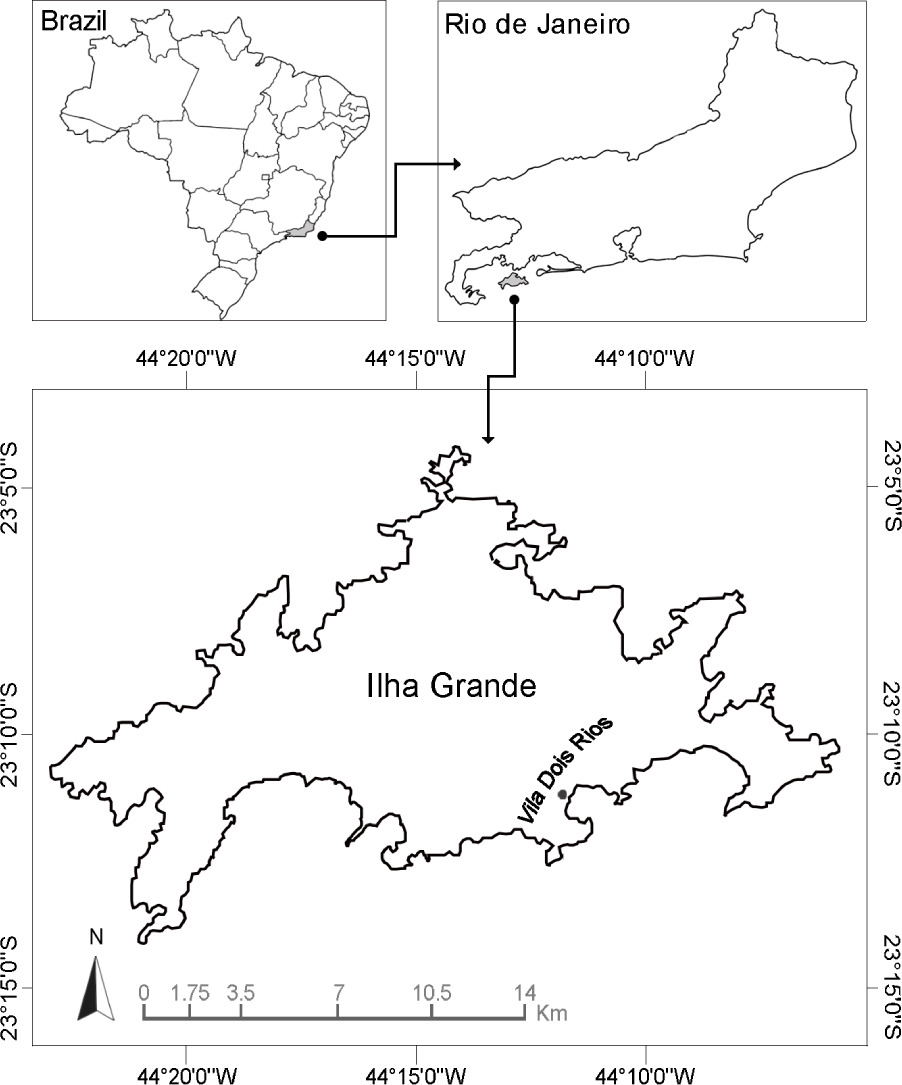
 Wood as Cultural and Biodiversity Heritage: a case study at Fazenda Dois Rios, Rio de Janeiro, Brazil
 Thumbnail
 Thumbnail
 Thumbnail
 Thumbnail
 Thumbnail