 Ephemeroptera Along Altitudinal Gradients: a Scientometric Review
Abstract
Altitude is a key environmental factor influencing ecological patterns and biodiversity in ecosystems. In aquatic organisms, taxonomic richness typically declines with increasing altitude, although studies on Ephemeroptera show variability in this trend. To better understand this relationship and identify research gaps, we conducted a literature review using the Web of Science database using the terms “Ephemeroptera”, “Mayfl*”, “watercourse” and “altitude” in English, Portuguese, and Spanish, complemented with data from a global study on aquatic insects. Out of 228 identified articles, 74 met our criteria. The most relevant journals were Freshwater Biology (n = 11) and Hydrobiologia (n = 5). Studies were concentrated in the Palearctic (40.5%) and Neotropical (29.7%) regions, with Algeria (n = 6), Slovakia (n = 4), Ecuador (n = 8), and Argentina (n = 8) as the most studied countries. Most studies investigated the influence of environmental factors on community composition and diversity (n = 35). Only ~30% focused exclusively on Ephemeroptera, emphasizing nymph stages and species-level taxonomy. Sampling was concentrated at up to 20 sites (n = 42) at elevations below 3,000 m. Our analysis confirms that Ephemeroptera species richness, genus richness, and overall abundance significantly decline at higher elevations.
Key words
High Elevations; Freshwater Ecosystems; Mayfly; Species Richness; Mountain Streams; Aquatic Insects
INTRODUCTION
The relationship between altitude and biodiversity has been studied since the 18th century, with Alexander von Humboldt pioneering the study of vegetation across different regions of the world (West 2021). Since then, numerous studies have further explored this relationship, highlighting environmental changes associated with increasing altitude, such as reductions in available land area, atmospheric pressure, and temperature, as well as an increase in solar radiation (Blumthaler et al. 1997, Körner & Paulsen 2010, Peacock 1998, Sarmiento 1987). These variations also affect aquatic ecosystems, influencing temperature, oxygenation, the concentration of suspended solids, and water flow (Jacobsen 2008). These factors, in turn, impact gas exchange and the dispersal of organisms inhabiting these environments (MacDonald & Coe 2007, Theodoropoulos et al. 2017), as well as the distribution and diversity of species, with a general trend of decreasing species richness at higher altitudes (Füreder et al. 2006, Rahbek 1995, Sekar et al. 2024, Wolda 1987). Studies evaluating the relationship between altitude and biodiversity have documented contrasting patterns that differ among taxonomic groups. These patterns reflect the interaction between altitude and environmental factors, such as temperature, oxygen availability, productivity and habitat heterogeneity. For instance, fish richness typically shows a continuous decline with increasing altitude (Bistoni & Hued 2002, Jaramillo-Villa et al. 2010). In contrast, benthic macroinvertebrates frequently display unimodal or mid-elevation peaks, associated with transitional climatic zones or enhanced habitat heterogeneity (Henriques-Oliveira & Nessimian 2010), although some studies have reported monotonic declines in these groups as well (García-Ríos et al. 2020, Suren 1994). Conversely, other analyses have detected no significant relationship between altitude and aquatic insect diversity, indicating that local factors may override elevational gradients (Siri et al. 2022, Torrejon et al. 2022). This variability highlights a gap in the existing literature and emphasises the need for a comprehensive synthesis that can integrate results from different regions, methods and taxonomic groups.
Ephemeroptera have a life cycle characterized by an aquatic immature stage and two winged stages, the subimago and the imago (Da-Silva & Salles 2024). They are notable for their ecological importance and sensitivity to environmental changes (Ramulifho et al. 2020). Their nymphs are highly sensitive to temperature and dissolved oxygen variations that occur with elevation (Shah et al. 2020). Furthermore, Ephemeroptera are present across a wide range of altitudes, from lowland tropical streams to high-mountain environments, which enables their communities to respond to environmental filtering along these altitudinal gradients (Grigoropoulou et al. 2023). Functionally, their immature stages play key roles in nutrient cycling, organic matter processing, and energy flow within lotic ecosystems (Dijkstra et al. 2014, Jacobus et al. 2019, Mariano & Costa 2014), making changes in their assemblage (i.e, richness and abundance) ecologically meaningful. These characteristics make Ephemeroptera an effective biological model for evaluating altitudinal patterns in freshwater biodiversity and environmental change. Accordingly, mayfly assemblages often reflect the environmental filtering imposed by elevation, with species richness generally decreasing at higher altitudes (Grigoropoulou et al. 2023, Miserendino & Pizzolán 2001, Pohe et al. 2024, Sartori & Brittain 2015). However, some studies report different patterns, with greater species richness at mid or high altitudes (Jiang et al. 2013, Lang & Reymond 1993, Vilenica et al. 2018).
Our main aim was to provide a comprehensive synthesis of how Ephemeroptera responds to altitudinal gradients worldwide by integrating scientometric evidence with quantitative analyses of richness and abundance. Specifically, we compiled global publication trends, mapped the geographic distribution of studies, summarized the methodologies employed, and evaluated how altitude has been used to explain patterns in Ephemeroptera diversity. In addition, we tested the hypothesis that Ephemeroptera richness and abundance vary systematically along altitudinal gradients, with a general expectation of decreasing diversity at higher elevations, as suggested by previous ecological and biogeographical studies.
MATERIALS AND METHODS
To understand the effects of altitude on Ephemeroptera, we conducted a scientometric analysis, which quantitatively examines scientific production (Leydesdorff 2001, Mingers & Leydesdorff 2015). To identify published studies relating Ephemeroptera to altitude, we searched the Web of Science database (WoS – https://www.webofscience.com/). Preliminary exploratory searches in Scopus and SciELO indicated a high degree of overlap with Web of Science. Therefore, WoS was selected as the sole database due to its broader temporal coverage and consistent performance. In particular, WoS indexes publications dating back to 1900, offering a much wider historical scope than other databases such as Scopus, whose indexing begins in 1966 (Falagas et al. 2008). The search was conducted between July 24, 2024, and January 15, 2025, using the exact query strings entered into the Web of Science database in English, Portuguese, and Spanish. The search strategy consisted of the following expression: “Ephemeroptera AND stream* AND Altitud* OR Ephemeroptera OR river* AND Altitud* OR Ephemeroptera OR rio* AND Altitud* OR Ephemeroptera OR córrego* AND Altitud* OR Ephemeroptera OR riacho* AND Altitud* OR Ephemeroptera OR igarapé* AND Altitud* OR Ephemeroptera OR arroyo* AND Altitud*”. A second search was performed using the same query string:
“Ephemeroptera AND stream* AND Altitud* OR Ephemeroptera OR river* AND Altitud* OR Ephemeroptera OR rio* AND Altitud* OR Ephemeroptera OR córrego* AND Altitud* OR Ephemeroptera OR riacho* AND Altitud* OR Ephemeroptera OR igarapé* AND Altitud* OR Ephemeroptera OR arroyo* AND Altitud*. The asterisk was employed to capture all lexical variations of “mayfly”, the common English designation for insects of the order Ephemeroptera. The Boolean operator AND was applied, and the “Topical” search option was used (Figure S1). The search covered records available up to December 2024.
Criteria for inclusion or exclusion of articles
Each article was carefully examined based on its title, abstract, objectives, and results. For our analysis, we selected studies that met the following criteria: (1) included representatives of Ephemeroptera; (2) featured at least two collection sites with altitudinal variation between them; (3) focused on streams as the study area; and (4) were scientific articles, excluding books, book chapters, and other non-article publications.
Data extracted from articles
To achieve our objectives, we extracted the following information from the selected articles: (i) year of publication; (ii) journal of publication; (iii) country and biogeographical region of the study (determined based on the area described in the Methodology); (iv) study objectives, categorized as follows: diversity and composition vs. environmental factors (factors influencing community diversity and composition); relationships between altitude and community structure (effects of altitude on species composition and interactions within communities); geographical distribution and species composition (spatial analysis of species and regional comparisons); environmental changes and community responses (community responses to environmental changes such as pollution, climate change, and land-use modifications); (v) keywords; (vi) altitudinal variation of collection sites; (vii) taxonomic group analyzed (Ephemeroptera; EPT - Ephemeroptera, Plecoptera, and Trichoptera community; aquatic insects - Ephemeroptera and other aquatic insect orders; other groups - Ephemeroptera and additional non-insect taxa); (viii) taxonomic level analyzed (order, family, genus, or species); (ix) Ephemeroptera life stage examined (nymph or imago); and (x) number of collection sites (categorized into the following intervals: 1-25, 26-50, 51-100, 101-500, >500).
Data analysis
To analyze the frequency of keywords in the articles, we used the online tool WordClouds (https://www.wordclouds.com/). The tool generated a word cloud in which the size of each word corresponds to its frequency, ranging from 0 to 1 (from the lowest to the highest occurrence).
To assess the relationship between altitude and Ephemeroptera, we used two data sets: (1) EXT - composed of information extracted from the articles included in the scientometric analysis, which consisted of 1,230 streams for species richness, 253 streams for genus richness, and 335 streams for abundance; and (2) GRI - derived from the global study by Grigoropoulou et al. (2023), from which we extracted data that met the same selection criteria as the first set, resulting in 740 streams for species richness and 59,042 streams for genus richness.
Using these two data sets separately and combined, we fitted Generalized Additive Models (GAMs; gam function from the mgcv package) to examine the relationship between altitude and richness or abundance. The default thin-plate regression spline was used as the smoothing basis for altitude in all models, with smoothing parameters estimated by restricted maximum likelihood (REML). To account for the non-independence of observations derived from the same publication, as well as methodological differences across studies, we included “article of origin” as a random effect using a random-smooth term. Model diagnostics included inspection of residual patterns, assessment of concurvity, and evaluation of deviance explained and adjusted R². Additionally, we employed Moving Average Models (using the mutate function from the dplyr package) to identify trends and capture variations in Ephemeroptera richness and abundance along the altitudinal gradient. All analyses were conducted in RStudio (RCore Team 2022).
RESULTS
General information
We identified 228 articles published in the Web of Science that investigated the relationship between Ephemeroptera and altitude. Of these, 154 were excluded based on the pre-established criteria, resulting in 74 articles for analysis.
The first publication on this subject dates back to 1948. Between 1948 and 1999, 12 articles were published, while from 2000 to 2024, there was a significant increase in the number of studies, with 62 articles published (Figure S2). During this period, the year with the highest number of publications was 2008 (n = 7), followed by 2015 (n = 6). From 2010 onwards, there was a slight increase in the annual average number of publications, with 2.85 articles per year, compared to the period from 2000 to 2009, when the average was 2.4 articles per year.
A total of 44 scientific journals published articles on the subject. Of these, only 13 journals published more than one article, while the remaining 31 journals contributed a single publication each. The journals with the highest number of publications addressing the relationship between altitude and Ephemeroptera were Freshwater Biology (n = 11) and Hydrobiologia (n = 5) (Figure S3).
Location and biogeographical context
The majority of studies were conducted in countries within the Palearctic (n = 30; 40.5%; Figure 1a) and Neotropical (n = 22; 29.7%) regions. In the Palearctic, the most frequently studied countries were Algeria (n = 6; Figure 1b) and Slovakia (n = 4), while in the Neotropical region, the most commonly studied countries were Ecuador (n = 8), Argentina (n = 8), and Peru (n = 4). The Nearctic (n = 3; 4%) and Afrotropical (n = 2; 2.7%) regions had the fewest published articles, with studies from the United States (n = 3), Uganda (n = 1), and Kenya (n = 1). No studies were found in the Oceanic or Antarctic regions.

Geographical distribution of articles published by region and country during the analyzed period (1948–2024).
Study approach
In the studies analyzed, the most frequently used keyword was “Stream” (28 occurrences), followed by “Invertebrates” (21 occurrences), “Ephemeroptera” (18 occurrences), “Impacts” (17 occurrences), “Biodiversity” (16 occurrences), and “Altitude” (13 occurrences) (Figure S4).
Among the objectives, the majority of studies aimed to analyze the influence of various environmental factors on the diversity and composition of organisms (n = 35) (Figure S5). The next most common objectives were to examine the relationship between altitude and community structure (n = 14) and to investigate the geographical distribution and composition of species (n = 14). Finally, the responses of communities to environmental changes were the focus of 11 studies.
Taxonomy resolution
Half of the articles analyzed addressed Ephemeroptera in conjunction with macroinvertebrates and other animal groups, such as birds and fish (n = 37; Figure S6a). Among the studies that considered other orders of aquatic insects (n = 15), seven focused on the EPT group, which includes Plecoptera and Trichoptera, while the remaining eight examined other insect orders. In total, only 22 of the 74 articles analyzed focused exclusively on Ephemeroptera.Most studies focused on more specific taxonomic levels, such as species (n = 37) and genus (n = 22; Figure S6b). In contrast, broader taxonomic levels, such as family (n = 14) and order (n = 1), were addressed less frequently. The nymph stage was studied in all the articles (Figure S7), while the imago stage was not examined in isolation but only in conjunction with the nymph stage (n = 3).
Sampling data
Most of the studies analyzed used a maximum of 50 collection points (n = 57; Figure S8), while only 17 studies included more than 50 points. Among these, two studies exceeded 500 collection points, with 2,647 and 2,206 points, respectively. The altitudes of the sampled sites ranged from 0 to 5,062 meters, with an average altitude of 731 meters at the lowest sites and 1,972 meters at the highest.
Altitudinal variation and assemblage structure
The individual analysis of each article revealed varying patterns. Most studies found a negative relationship between altitude and species richness (51.7%), genus richness (51.9%), and abundance (56.3%; Figure 2). For species richness, the least frequent patterns were null (13.8%) and positive (13.8%), while for genus richness, the least common pattern was positive (11.1%). Regarding abundance, no studies reported a null relationship.

Relationship between the number of articles published and the biodiversity indicators assessed during the analyzed period (1948–2024).
Using two Ephemeroptera databases, we analyzed abundance and taxonomic richness data along an altitudinal gradient ranging from 0 to 5,062 meters. In the dataset extracted from the articles used in scientometrics (EXT), species richness ranged from 0 to 38, genus richness ranged from 0 to 14, and abundance ranged from 0 to 3,661 individuals. In the dataset from Grigoropoulou et al. (2023; GRI), species richness ranged from 0 to 20, while genus richness ranged from 0 to 25.
In both datasets, altitude had a significant, non-linear effect on Ephemeroptera species richness. The different Generalized Additive Models (GAM) explained between 10.9% (EXT; Fig. 3a) and 19.7% (GRI; Fig. 3b) of the variation in species richness along the altitudinal gradient. The GAM models accounted for between 15% (EXT) and 20.2% (GRI) of the variability in the data. Analysis using moving average models revealed that, for the EXT and EXT + GRI datasets, the highest average species richness values were recorded between 2,500 and 3,000 meters (Fig. 4) while altitudes above 3,000 meters exhibited the lowest values. In the GRI dataset, which had an altitudinal range from 0 to 1,751 meters, the highest average species richness was observed at altitudes up to 1,000 meters (Fig. 4e).

Relationship between altitude and Ephemeroptera species (a–c) and genus (d–f) richness based on Generalized Additive Models (GAM).
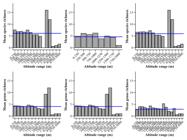
Average Ephemeroptera species (a-c) and genus (d-f) richness along the altitudinal gradient based on moving average models.
In all the databases used, altitude had a significant, non-linear effect on the richness of Ephemeroptera genera. The different Generalized Additive Models (GAM) explained between 9.6% (EXT; Figure. 3d) and 18.8% (GRI; Figure. 3e) of the variation in genus richness along the altitudinal gradient. The GAM models accounted for between 12.5% (EXT) and 20.4% (GRI) of the variability in the data. Analysis using moving average models revealed that, for all datasets, the two highest peaks in average genus richness occurred between 2,500 and 3,000 meters and between 1,250 and 1,500 meters (Fig. 4), while altitudes above 3,750 meters showed lower values.
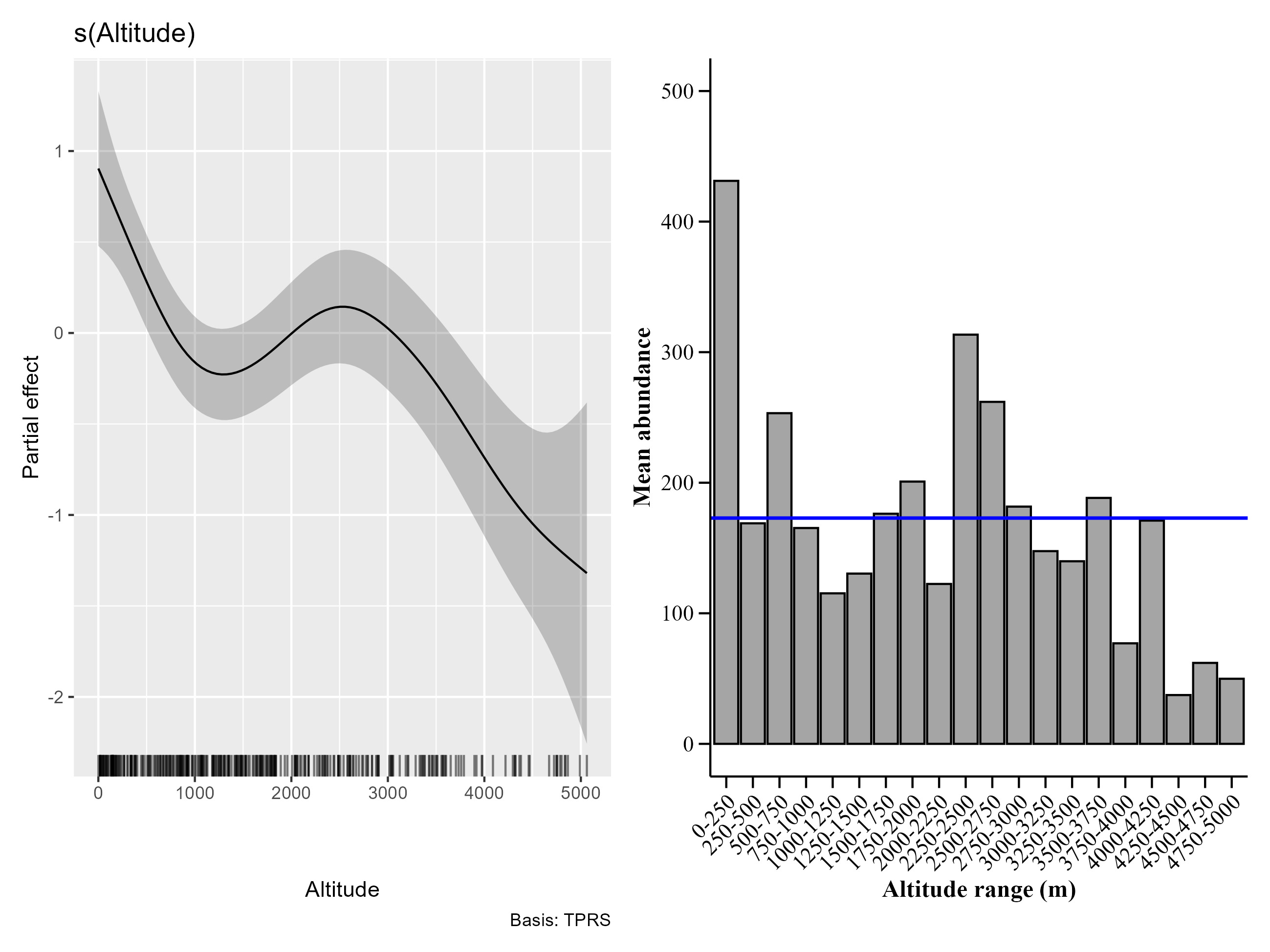
Altitude had a significant, non-linear effect on Ephemeroptera abundance. The Generalized Additive Model (GAM) explained 38.7% (Figure. 5a) of the variation in Ephemeroptera abundance along the altitudinal gradient and accounted for 53.6% of the variability in the data. Analysis using the moving average model revealed that the highest average abundance was recorded between 0 and 250 meters, with a peak between 2,250 and 2,750 meters, while altitudes above 4,000 meters exhibited lower values (Figure. 5b).

a- Relationship between altitude and Ephemeroptera abundance based on Generalized Additive Models (GAM); b- Average abundance along the altitudinal gradient based on moving average models.
DISCUSSION
General information
Since the 2000s, there has been a significant increase in the number of publications examining the relationship between Ephemeroptera and altitude. This growth reflects an expansion in taxonomic and ecological research on the group, as well as a broader scientific interest in climate-driven changes affecting mountain streams. The scarcity of publications prior to 1999 may be attributed not only to a lack of resources, specifically significant logistical challenges, high costs associated with remote field expeditions, and technological limitations (Mellor 2011), but also to the predominant focus on other environmental variables, such as water quality (e.g., nutrients, dissolved oxygen, and conductivity) and land use changes (e.g., urbanization and deforestation), which were central themes in aquatic ecology throughout much of the 20th century (Lenat & Crawford 1994, Malmqvist & Rundle 2002, De Mendoza & Catalan 2010). The gradual increase in the annual average of publications post-2010 also coincides with increasing recognition of mountain streams are particularly vulnerable to warming, altered hydrological regimes, and changes in precipitation patterns (Jacobsen 2008, Lewin et al. 2015), reinforcing the ecological relevance of studies of altitudinal biodiversity patterns.
The increasing number of publications highlights the consolidation of this topic across various scientific journals, particularly Freshwater Biology and Hydrobiologia, which account for the largest share of publications. Both journals are recognized as leading references in the ecology of aquatic ecosystems, covering not only studies on Ephemeroptera but also on other taxonomic groups such as macroinvertebrates, fish, bryophytes, and diatoms (De Castro et al. 2017, Dominguez & Ballesteros Valdez 1992, Ormerod et al. 1994). In addition, these journals publish research spanning various aspects of aquatic biology, including ecology, genetics, and physiology (Loayza-Muro et al. 2013, Rostgaard & Jacobsen 2005, Sylvestre & Bailey 2005). This thematic diversity reflects their capacity to address both specific topics related to the ecology of Ephemeroptera (e.g. Espinosa et al. 2023) and broader themes concerning aquatic ecosystems.
In contrast, journals with a more specialized focus, such as ZooKeys and Austral Entomology, contain fewer publications on this subject. This can be attributed to their narrower scope, which often restricts their focus to specific geographical regions or less interdisciplinary topics. This distinction underscores the central role of generalist journals in fostering broad, integrative studies on the relationship between altitude and aquatic biodiversity.
Location and biogeographical context
Publications on Ephemeroptera have been predominantly concentrated in the Neotropical and Palearctic regions, a pattern that can be attributed to the vast geographical extent of these areas, their rich biodiversity, and the availability of mountainous aquatic environments. The Palearctic region, encompassing all of Europe, North Africa, and parts of Asia and the Middle East, has a longstanding tradition of ecological research and substantial investment in scientific studies, particularly in European countries. Similarly, the Neotropical region, which includes all of South and Central America and part of North America (Olson et al. 2001), is notable for hosting major mountain ranges, such as the Andes, which provide ideal conditions for biodiversity studies along altitudinal gradients (Vetaas 2021). Although the Nearctic has active Ephemeroptera research groups (e.g., Mayfly Central at Purdue University; IUCN SSC Mayfly, Stonefly and Caddisfly Specialist Group), few studies explicitly address altitudinal gradients, which likely explains its low representation in our dataset.
This spatial concentration of research has important implications for the observed global patterns. Since most studies in the Palearctic and Neotropical regions focus on low-and mid-elevation streams, overall trends in our synthesis may be disproportionately influenced by these environments. In contrast, the Afrotropical, Oriental, and Australasian regions are underrepresented, often due to logistical constraints, limited funding, or restricted access to montane areas. This results in fewer studies examining high-elevation systems (Bauernfeind & Soldan 2012, Jacobsen & Dangles, 2017). Consequently, altitudinal responses characteristic of tropical mountain regions, including potential high-elevation assemblages or steeper richness declines, may be underrepresented in global assessments. Expanding research efforts in these understudied areas is essential for refining the worldwide understanding of Ephemeroptera responses to elevation.
Study approach
The analysis of keywords revealed key insights into the predominant themes and approaches of the studies examined. The high frequency of the terms Stream and Invertebrates reflects the research context, indicating that most studies were conducted in stream environments with a primary focus on aquatic invertebrates (Oliveira-Junior et al. 2022). Similarly, the prevalence of the terms Biodiversity and Impacts as keywords suggests that many studies aimed to assess the effects of various environmental factors on stream biodiversity (Wang et al. 2023). Aquatic invertebrates are widely used as bioindicators of water quality and ecosystem health, with Ephemeroptera being particularly common bioindicators in studies on lotic environments (Restello et al. 2024). The frequent occurrence of the terms Ephemeroptera and Altitude directly reflects the scope of this study, which seeks to understand how altitude influences the distribution and diversity of this order. Other studies investigating the relationship between environmental variables and biological groups have also identified keywords directly related to their research focus as among the most frequent (Wang et al. 2023). This underscores the importance of carefully selecting keywords when indexing scientific articles, as it facilitates information retrieval in databases and enhances the visibility of research.
The objectives of the analyzed studies align closely with the trends observed in the most frequent keywords. Most studies focused on assessing the influence of environmental factors on the structuring of aquatic invertebrate communities. This approach is consistent with existing literature, which highlights the role of both internal factors (e.g., physical and chemical characteristics of streams) and external factors (e.g., land use and climate change) in shaping these communities (Brasil et al. 2020, De Castro et al. 2017, Fathi et al. 2022, Min & Kong 2020). Among the various environmental factors examined, altitude stands out due to its indirect influence on a range of ecological variables at local and regional scales (Jacobsen 2008, Körner 2007). For instance, altitudinal variation affects temperature, water oxygenation, nutrient availability, and water flow, all of which play a crucial role in determining the composition and diversity of aquatic communities (Bonacina et al. 2023, Calapez et al. 2017). Furthermore, the presence of studies investigating how these communities respond to environmental changes underscores the importance of understanding anthropogenic impacts on aquatic ecosystems. This topic has gained increasing attention in recent decades, particularly in light of growing human pressures such as deforestation, pollution, and alterations to water regimes (Jaureguiberry et al. 2022).
Taxonomy resolution
Although the analyzed articles focus on the order Ephemeroptera, most also examine the group alongside other organisms, particularly benthic macroinvertebrates. This integrated approach is widely employed in ecological studies due to the characteristics of macroinvertebrates, such as the simplicity of sampling equipment, ease of sample processing, and the low mobility of these organisms (Kenney et al. 2009). Consequently, macroinvertebrates are frequently used to assess water quality, as they respond rapidly to environmental changes and serve as reliable bioindicators (Orozco-González & Ocasio-Torres 2023, Ruaro et al. 2016). In the case of Ephemeroptera, nymphs are often studied in association with representatives of the orders Plecoptera and Trichoptera, forming the group known as EPT, which is widely used in biomonitoring studies due to its sensitivity to environmental changes (Souza et al. 2024). In most of the studies analyzed, organisms were identified at the genus or species level, reflecting advances in the development of identification keys for Ephemeroptera across different regions (e.g. Bauernfeind & Soldan 2012, Domínguez et al. 2006, Edmunds, Jr et al. 1963, 1976, Elliot et al. 1988, Macan 1979, Salles et al. 2018). These tools have facilitated more precise identification, contributing to the refinement of ecological studies. However, caution is needed, as species-level identification based on nymphs is only possible for a limited number of families, meaning that many taxa cannot be reliably resolved beyond the genus or even family level. In regions where taxonomic knowledge remains limited, such as Australasia, the Indomalayan realm, and certain Neotropical countries, studies are often restricted to broader taxonomic levels, such as family or order (Barber-James et al. 2008, Sartori & Brittain 2015). This variation in taxonomic resolution can significantly influence results, as it affects the accuracy of ecological analyses (Valente-Neto et al. 2016). Additionally, the higher number of studies identifying organisms at finer taxonomic levels may reflect a bias introduced by the keywords used in our search, given that distinguishing macroinvertebrates at the genus or species level requires advanced technical expertise (Hauer & Resh 2017). Furthermore, the identification of Ephemeroptera individuals is often challenged by two main factors: the loss of key morphological structures during collection and preservation, and the fact that most taxonomic keys are developed for mature or late-instar nymphs, which complicates the accurate assignment of younger instars (Bauernfeind & Moog 2000, Brito et al. 2018, Salles et al. 2018).
Most of the analyzed articles focused on the nymph stage, while few examined the adult stage. This imbalance is partly due to the difficulty of locating adult Ephemeroptera individuals. Moreover, although mayfly systematics is traditionally based on adult morphology, Baetidae, one of the most species-rich and ecologically dominant groups of Ephemeroptera in streams, is often difficult to identify at this stage because taxonomic knowledge is based on nymphs. This results in a preference for nymphs in ecological studies (Burian 2019). Nymphs play essential ecological roles in aquatic ecosystems and represent the dominant stage of the life cycle (Da-Silva & Salles 2024, Jacobus et al. 2019). In contrast, adults are short-lived and primarily serve a reproductive function (Da-Silva & Salles 2024). Dias et al. (2011) highlight the frequent lack of association between nymph and adult stages in taxonomic descriptions, which are often based only on the adult stage. This study supports the findings of Shimano et al. (2013), who also identified a considerable number of articles focusing exclusively on the nymph stage.
Sampling data
Although most studies analyzed fewer than 50 collection sites, the predominance of studies with smaller sample areas may be attributed to financial and time constraints, which are key factors in determining sample sizes in biological research (Eckblad 1991). Additionally, there may be a tendency to conduct studies on a smaller spatial scale, focusing on local rather than regional patterns that encompass broader geographical areas. The choice of study scales can directly influence the observed results, a phenomenon known as scale dependence (Hobbs 2003, Mod et al. 2020).
The studies analyzed exhibited a broad altitudinal range (0–5,062 m), with mean values ranging from 731 to 1,972 m and a median of 1,392 m. This variation can be attributed to the heterogeneity of the altitudinal gradients examined across different studies. For example, Dos Santos et al. (2018) evaluated extensive altitudinal gradients (1–4,320 m), while Odhiambo et al. (2024) focused on more restricted altitudinal ranges (1,786–2,149 m). A notable proportion of the articles analyzed were conducted in environments at altitudes above 3,000 m (20.2%), classified as “high altitude” (Jacobsen & Dangles 2017). This altitudinal range is commonly studied in mountain aquatic environments due to its extreme conditions and its relevance as a model for investigating the impacts of climate change and anthropogenic activities (Füreder et al. 2006). However, most studies were conducted at intermediate (1,500–3,000 m) or low (1–1,500 m) altitudes, due to the logistical challenges of working in high-altitude regions. Researchers collecting data in these areas often face obstacles such as respiratory and physiological issues, difficulties in transporting equipment, and unpredictable weather conditions (Rivera-Ch et al. 2008). This uneven distribution of studies along the altitudinal gradient underscores the need to expand research into underexplored regions, particularly those between 3,000 and 4,500 m, where there are fewer sampling points. Additionally, few studies have conducted long-term sampling (Fathi et al. 2022, Scheibler et al. 2014). Future research should consider not only the extent of the altitudinal gradient but also the temporal resolution of sampling to capture more comprehensive and representative ecological patterns.
Altitudinal variation and assemblage structure
Analysis of the patterns observed in the studies revealed varying relationships between altitude and the Ephemeroptera metrics tested. Most studies (51.7%) indicated a negative correlation between altitude and species richness, genus richness (51.9%), and abundance (56.3%), suggesting that higher-altitude environments tend to have lower diversity and fewer individuals of these organisms. This trend can be explained by the more extreme environmental conditions at higher altitudes, including lower temperatures, reduced food availability, and limited land area (Birrell et al. 2020). However, in our study, these effects may be obscured by strong latitudinal variation in temperature and seasonality. This variation interacts with elevation and can modify the expected richness patterns. Less frequent patterns, such as null, intermediate, or positive relationships, were also observed, highlighting the complexity of the interactions between altitude and biodiversity. These divergent results can be attributed to local variations in altitudinal gradients, such as specific microclimates or differences in habitat structure (Chiu et al. 2020). Moreover, factors like environmental heterogeneity and local adaptation may enable some species to thrive at high altitudes, challenging the general expectation of decreasing biodiversity with increasing altitude (Jacobsen 2003).
The considerable variation in the patterns observed between altitude and Ephemeroptera in the studies evaluated underscores the importance of employing an integrated approach to data analysis. By using Generalized Additive Models (GAM) and moving average models, more robust and consistent trends were identified. The results revealed that altitude significantly affects the taxonomic richness and abundance of Ephemeroptera. For abundance (EXT) and species and genus richness data from the GRI database, the highest values were recorded at lower altitudes. These streams typically have higher temperatures (Jacobsen 2020), which lead to increased primary productivity and higher decomposition rates (Dodds et al. 2019, Raich et al. 1997). These factors contribute to a greater availability of food resources, such as detritus and periphyton, which are essential for the predominantly herbivorous Ephemeroptera nymphs (Sartori & Brittain 2015). Consequently, warmer environments with a higher supply of organic matter support greater species diversity. In contrast, at higher altitudes, environmental conditions become more extreme, limiting the presence of only specialist organisms that are adapted to such conditions (Jacobsen et al. 2003).
When we conducted the analyses using the EXT databases and the combined EXT+GRI databases, both species and genus richness showed non-linear responses to elevation, with peaks at intermediate altitudes (2,500–3,000 m). This pattern is consistent with ecological conditions typically found in mid-elevation transition zones, where moderate temperatures, greater habitat heterogeneity, and balanced resource availability (e.g. allochthonous inputs, periphyton production) can enhance niche diversification (Körner 2007, Jacobsen 2008). Such environments also experience intermediate levels of environmental variation, aligns with the Intermediate Disturbance Hypothesis, as moderate fluctuations in temperature, flow and nutrient levels can reduce competitive exclusion and enhance coexistence (Connell 1978, Siegloch et al. 2008, Souza et al. 2011). Additionally, the observed pattern may reflect a mid-domain effect, whereby the overlapping elevational ranges of taxa with different physiological tolerances result in higher richness in the middle of the gradient (Colwell & Lees 2000, Colwell et al. 2004). This mechanism is particularly evident in the tropical Andes, where the South American Transition Zone brings together two major biogeographical realms, increasing faunal overlap at mid-elevations (Morrone 2015). However, the ecological meaning of intermediate altitude varies strongly with latitude. For example, at ~26°S, 2,500 m corresponds to cold high-Andean conditions, whereas near the equator the same elevation represents warm and humid montane forests. Thus, the richness peak detected here likely reflects the combined effects of elevation and latitude.
Although altitude showed statistical significance, the relatively low deviance explained by the GAM models suggests that other environmental factors also play a crucial role in the observed variation in the distribution of Ephemeroptera. In addition to altitude, variables such as pH, water temperature, flow velocity, dissolved oxygen, and light availability are key determinants in the distribution of aquatic organisms (Beschta 1997, Garner et al. 2017, Hamid et al. 2020, Kalny et al. 2017, Vannote et al. 1980, Tadesse et al. 2004). These factors often interact with each other, creating specific conditions that can either favor or limit the presence of species at different altitudes. For instance, water temperature, which decreases with increasing altitude, directly affects the metabolic rate of organisms and the availability of food resources, such as detritus and periphyton (Bonacina et al. 2023). Similarly, dissolved oxygen generally increases at higher altitudes due to lower water temperatures, but this effect is counterbalanced by the decline in atmospheric pressure, which limits gas diffusion into the water column (Jacobsen 2008). Consequently, only species that are physiologically adapted to these contrasting conditions tend to persist in high-elevation streams (Calapez et al. 2017). Flow velocity and pH also influence the structure of aquatic communities, affecting processes such as larval dispersal and habitat colonization (Calapez et al. 2017). Therefore, while altitude remains an important factor, its influence should be considered together with other environmental variables, such as temperature, pH, dissolved oxygen, flow, and habitat structure (Da Costa Siqueira & Rocha 2013), as well as latitude, which strongly modulates thermal regimes and the ecological meaning of a given elevation (Sundqvist et al. 2013). Considering these interacting drivers provides a more comprehensive understanding of the mechanisms that regulate the distribution of Ephemeroptera along altitudinal gradients.
CONCLUSIONS
This study offers a comprehensive analysis of the relationship between altitude and Ephemeroptera diversity, revealing important patterns while also identifying significant gaps in current knowledge. The underrepresentation of certain biogeographical regions, such as the Afrotropical, Oriental and Australasian realms reflects significant geographical gaps, as these areas harbor montane streams where Ephemeroptera remain insufficiently studied. Additionally, the predominant focus on the nymph stage underscores the importance of expanding sampling across underrepresented regions and ecological contexts in future research. To provide a more holistic understanding of the factors shaping Ephemeroptera distribution and biodiversity, future efforts should focus on expanding the sampling effort into poorly documented altitudinal zones and under sampled biogeographical regions. Furthermore, examining different life stages, particularly adults, is critical for accurately assessing dispersal dynamics, and incorporating a wider variety of aquatic habitats (e.g., lentic systems) will be essential.
When analyzed separately, most studies indicated a negative relationship between altitude and richness (species and genus) and abundance, suggesting that higher altitude environments tend to support lower diversity. However, the GAM and moving average models revealed divergent patterns, with peaks in richness and abundance observed at both low and intermediate altitudes. These findings reinforce the complexity of the interactions between environmental factors and Ephemeroptera assemblages. Furthermore, interactions between elevation and latitude play a key role in shaping assemblage structure because, as environmental factors change markedly across latitudinal zones at a given altitude. This underscores the importance of a more nuanced interpretation that considers altitude alongside latitude and other ecological factors.
These results emphasize the importance of considering a broader range of environmental variables (e.g., pH, temperature, water velocity, and dissolved oxygen) and latitude to gain a more comprehensive understanding of the effects of altitudinal gradients on Ephemeroptera communities. By accounting for these additional factors, we can better elucidate the complex interactions that shape the distribution and diversity of Ephemeroptera along altitudinal gradients.
Acknowledgements
We would like to thank the Graduate Program in Ecology and Natural Resources (PPGERN) at the Federal University of São Carlos (UFSCar) for academic support, as well as the Amazonas State Research Support Foundation (FAPEAM - posgrad) and the Coordination for the Improvement of Higher Education Personnel (CAPES) for additional support. This study was funded by the Brazilian National Council for Scientific and Technological Development (CNPq) through the following grants: 131496/2023-9 (scholarship to CFD), 101112/2024-6 (postdoctoral fellowship to RTM), 403758/2021-1 (Universal Research Project), 400700/2024-7 (Amazon+10 Initiative), and the National Institute of Science and Technology for Studies on Aquatic Adaptation in Amazonia (INCT ADAPTA III; grant 409202/2024-0). The authors declare that they have no conflicts of interest relevant to the content of this article.
References
-
BARBER-JAMES HM, GATTOLIAT J-L, SARTORI M & HUBBARD MD. 2008. Global diversity of mayflies (Ephemeroptera, Insecta) in freshwater. Hydrobiologia 595: 339-350. https://doi.org/10.1007/s10750-007-9028-y.
» https://doi.org/10.1007/s10750-007-9028-y - BAUERNFEIND E & MOOG O. 2000. Mayflies (Insecta: Ephemeroptera) and the assessment of ecological integrity: a methodological approach. Hydrobiologia 422: 71-83.
- BAUERNFEIND E & SOLDAN T. 2012. The mayflies of Europe (Ephemeroptera). Leiden: Brill, 781 p.
- BESCHTA RL. 1997. Riparian shade and stream temperature: an alternative perspective. Rangeland Manage 20: 25-28.
-
BIRRELL JH ET AL. 2020. Insects in high-elevation streams: life in extreme environments imperiled by climate change. Glob Change Biol 26: 6667-6684. https://doi.org/10.1111/gcb.15356.
» https://doi.org/10.1111/gcb.15356 -
BISTONI MA & HUED AC. 2002. Patterns of fish species richness in rivers of the central region of Argentina. Braz J Biol 62: 753-764. https://doi.org/10.1590/S1519-69842002000500004.
» https://doi.org/10.1590/S1519-69842002000500004 -
BLUMTHALER M, AMBACH W & ELLINGER R. 1997. Increase in solar UV radiation with altitude. J Photochem Photobiol B 39: 130-134. https://doi.org/10.1016/S1011-1344(96)00018-8.
» https://doi.org/10.1016/S1011-1344(96)00018-8 -
BONACINA L, FASANO F, MEZZANOTTE V & FORNAROLI R. 2023. Effects of water temperature on freshwater macroinvertebrates: a systematic review. Biol Rev 98: 191-221. https://doi.org/10.1111/brv.12903.
» https://doi.org/10.1111/brv.12903 -
BRASIL LS ET AL. 2020. Aquatic insects and their environmental predictors: a scientometric study focused on environmental monitoring in lotic environments. Environ Monit Assess 192: 194. https://doi.org/10.1007/s10661-020-8147-z.
» https://doi.org/10.1007/s10661-020-8147-z -
BRITO JG ET AL. 2018. Biological indicators of diversity in tropical streams: congruence in the similarity of invertebrate assemblages. Ecol Indic 85: 85-92. https://doi.org/10.1016/j.ecolind.2017.09.001.
» https://doi.org/10.1016/j.ecolind.2017.09.001 - BURIAN SK. 2019. Ephemeroptera. In: Merritt RW, Cummins KW & Berg MB (Eds), An introduction to the aquatic insects of North America, 5th ed., Dubuque: Kendall Hunt Publishing, p. 1481.
-
CALAPEZ AR ET AL. 2017. Macroinvertebrate short-term responses to flow variation and oxygen depletion: a mesocosm approach. Sci Total Environ 599-600: 1202-1212. https://doi.org/10.1016/j.scitotenv.2017.05.056
» https://doi.org/10.1016/j.scitotenv.2017.05.056 -
CARDOSO DA SILVA JM, CARDOSO DE SOUSA M & CASTELLETTI CHM. 2004. Areas of endemism for passerine birds in the Atlantic forest, South America. Glob Ecol Biogeogr 13: 85-92. https://doi.org/10.1111/j.1466-882X.2004.00077.x.
» https://doi.org/10.1111/j.1466-882X.2004.00077.x -
CARDOSO MN, SHIMANO Y, NABOUT JC & JUEN L. 2015. An estimate of the potential number of mayfly species (Ephemeroptera, Insecta) still to be described in Brazil. Rev Bras Entomol 59: 147-153. https://doi.org/10.1016/j.rbe.2015.03.014.
» https://doi.org/10.1016/j.rbe.2015.03.014 -
CHIU M-C ET AL. 2020. Elevation shapes biodiversity patterns through metacommunity-structuring processes. Sci Total Environ 743: 140548. https://doi.org/10.1016/j.scitotenv.2020.140548.
» https://doi.org/10.1016/j.scitotenv.2020.140548 -
COLWELL RK, RAHBEK C & GOTELLI NJ. 2004. The mid-domain effect and species richness patterns: what have we learned so far? Am Nat 163: E1-E23. https://doi.org/10.1086/382056.
» https://doi.org/10.1086/382056 -
COLWELL RK & LEES DC. 2000. The mid-domain effect: geometric constraints on the geography of species richness. Trends Ecol Evol 15: 70-76. https://doi.org/10.1016/S0169-5347(99)01767-X.
» https://doi.org/10.1016/S0169-5347(99)01767-X -
CONNELL JH. 1978. Diversity in tropical rain forests and coral reefs: high diversity of trees and corals is maintained only in a nonequilibrium state. Science 199: 1302-1310. https://doi.org/10.1126/science.199.4335.1302.
» https://doi.org/10.1126/science.199.4335.1302 -
DA COSTA SIQUEIRA C & ROCHA CFD. 2013. Gradientes altitudinais: conceitos e implicações sobre a biologia, a distribuição e a conservação dos anfíbios anuros. Oecol Australis 17: 92–112. https://doi.org/10.4257/oeco.2013.1702.09.
» https://doi.org/10.4257/oeco.2013.1702.09 - DA-SILVA ER & SALLES FF. 2024. Ephemeroptera Hyatt & Arms, 1891. In: Rafael JA, Melo GAR, Carvalho CJB, Casari SA & Constantino R (Eds), Insetos do Brasil, 2nd ed., Manaus: 880 p.
-
DE CASTRO DMP, DOLÉDEC S & CALLISTO M. 2017. Landscape variables influence taxonomic and trait composition of insect assemblages in Neotropical savanna streams. Freshw Biol 62: 1472-1486. https://doi.org/10.1111/fwb.12961.
» https://doi.org/10.1111/fwb.12961 -
DE MENDOZA G & CATALAN J. 2010. Lake macroinvertebrates and the altitudinal environmental gradient in the Pyrenees. Hydrobiologia 648: 51-72. https://doi.org/10.1007/s10750-010-0261-4.
» https://doi.org/10.1007/s10750-010-0261-4 -
DIAS LG ET AL. 2011. Association of nymphs and adults of Ephemeroptera (Insecta) using the amplified fragment length polymorphism (AFLP) technique. Ann Limnol - Int J Lim 47: 151-157. https://doi.org/10.1051/limn/2011005.
» https://doi.org/10.1051/limn/2011005 -
DIJKSTRA K-DB, MONAGHAN MT & PAULS SU. 2014. Freshwater biodiversity and aquatic insect diversification. Annu Rev Entomol 59: 143-163. https://doi.org/10.1146/annurev-ento-011613-161958.
» https://doi.org/10.1146/annurev-ento-011613-161958 -
DODDS WK ET AL. 2019. The freshwater biome gradient framework: predicting macroscale properties based on latitude, altitude, and precipitation. Ecosphere 10: e02786. https://doi.org/10.1002/ecs2.2786.
» https://doi.org/10.1002/ecs2.2786 -
DOMINGUEZ E & BALLESTEROS VALDEZ JM. 1992. Altitudinal replacement of Ephemeroptera in a subtropical river. Hydrobiologia 246: 83-88. https://doi.org/10.1007/BF00005624.
» https://doi.org/10.1007/BF00005624 - DOMÍNGUEZ E ET AL. 2006. Ephemeroptera of South America. In: AQUATIC BIODIVERSITY IN LATIN AMERICA, 2nd ed., Pensoft Publishers, Bulgaria, p. 646.
-
DOS SANTOS DA ET AL. 2018. Cold/warm stenothermic freshwater macroinvertebrates along altitudinal and latitudinal gradients in Western South America: a modern approach to an old hypothesis with updated data. J Biogeogr 45: 1571-1581. https://doi.org/10.1111/jbi.13234
» https://doi.org/10.1111/jbi.13234 -
ECKBLAD JW. 1991. How many samples should be taken? BioScience 41: 346-348. https://doi.org/10.2307/1311590.
» https://doi.org/10.2307/1311590 - EDMUNDS JR GF, ALLEN RK & PETERS WL. 1963. An annotated key to the nymphs of the families and subfamilies of mayflies (Ephemeroptera), 1st ed., Salt Lake City: William H. Behle, Chairman and Seville Flowers, Margaret Schell.
- EDMUNDS JR GF, JENSEN SL & BERNER L. 1976. The mayflies of North and Central America, 1st ed., Minneapolis: University of Minnesota Press.
- ELLIOT JM, HUMPESCH UH & MACAN TT. 1988. Larvae of the British Ephemeroptera: a key with ecological notes. Ambleside, Cumbria.
-
ESPINOSA ACE ET AL. 2023. Functional diversity of mayflies (Ephemeroptera, Insecta) in streams in mining areas located in the Eastern Amazon. Hydrobiologia 850: 929-945. https://doi.org/10.1007/s10750-022-05134-x.
» https://doi.org/10.1007/s10750-022-05134-x -
FALAGAS ME, PITSOUNI EI, MALIETZIS GA & PAPPAS G. 2008. Comparison of PubMed, Scopus, Web of Science, and Google Scholar: strengths and weaknesses. Faseb J 22: 338-342. https://doi.org/10.1096/fj.07-9492LSF.
» https://doi.org/10.1096/fj.07-9492LSF -
FATHI P ET AL. 2022. Spatiotemporal variation in macroinvertebrate community composition along the stressor gradients in rivers of a middle-eastern basin. Int J Environ Sci Technol 19: 8587-8612. https://doi.org/10.1007/s13762-022-04094-y.
» https://doi.org/10.1007/s13762-022-04094-y -
FÜREDER L ET AL. 2006. Macroinvertebrate diversity in alpine lakes: effects of altitude and catchment properties. Hydrobiologia 562: 123-144. https://doi.org/10.1007/s10750-005-1808-7.
» https://doi.org/10.1007/s10750-005-1808-7 -
GARCÍA-RÍOS RF, MOI DA & PELÁEZ OE. 2020. Efectos del gradiente altitudinal sobre las comunidades de macroinvertebrados bentónicos en dos períodos hidrológicos en un río altoandino neotropical. Ecol Austral 30: 033-044. https://doi.org/10.25260/EA.20.30.1.0.995.
» https://doi.org/10.25260/EA.20.30.1.0.995 -
GARNER G, MALCOLM IA, SADLER JP & HANNAH DM. 2017. The role of riparian vegetation density, channel orientation and water velocity in determining river temperature dynamics. J Hydrol 553: 471-485. https://doi.org/10.1016/j.jhydrol.2017.03.024.
» https://doi.org/10.1016/j.jhydrol.2017.03.024 -
GRIGOROPOULOU A ET AL. 2023. The global EPTO database: worldwide occurrences of aquatic insects. Glob Ecol Biogeogr 32: 642-655. https://doi.org/10.1111/geb.13648.
» https://doi.org/10.1111/geb.13648 -
HAMID A, BHAT SU & JEHANGIR A. 2020. Local determinants influencing stream water quality. Appl Water Sci 10: 24. https://doi.org/10.1007/s13201-019-1043-4.
» https://doi.org/10.1007/s13201-019-1043-4 - HAUER FR & RESH VH. 2017. Macroinvertebrates. In: Methods in stream ecology, Volume 1, Elsevier, p. 297-319.
-
HENRIQUES-OLIVEIRA AL & NESSIMIAN JL. 2010. Aquatic macroinvertebrate diversity and composition in streams along an altitudinal gradient in Southeastern Brazil. Biota Neotrop 10: 115-128. https://doi.org/10.1590/S1676-06032010000300012.
» https://doi.org/10.1590/S1676-06032010000300012 -
HOBBS NT. 2003. Challenges and opportunities in integrating ecological knowledge across scales. For Ecol Manage 181: 223-238. https://doi.org/10.1016/S0378-1127(03)00135-X.
» https://doi.org/10.1016/S0378-1127(03)00135-X -
JACOBSEN D. 2003. Altitudinal changes in diversity of macroinvertebrates from small streams in the Ecuadorian Andes. Arch Hydrobiol 158: 145-167. https://doi.org/10.1127/0003-9136/2003/0158-0145.
» https://doi.org/10.1127/0003-9136/2003/0158-0145 -
JACOBSEN D. 2008. Low oxygen pressure as a driving factor for the altitudinal decline in taxon richness of stream macroinvertebrates. Oecologia 154: 795-807. https://doi.org/10.1007/s00442-007-0877-x.
» https://doi.org/10.1007/s00442-007-0877-x -
JACOBSEN D. 2020. The dilemma of altitudinal shifts: caught between high temperature and low oxygen. Front Ecol Environ 18: 211-218. https://doi.org/10.1002/fee.2161.
» https://doi.org/10.1002/fee.2161 - JACOBSEN D & DANGLES O. 2017. Ecology of high altitude waters, 1st ed., Oxford.
-
JACOBSEN D, ROSTGAARD S & VÁSCOANEZ JJ. 2003. Are macroinvertebrates in high altitude streams affected by oxygen deficiency? Freshw Biol 48: 2025-2032. https://doi.org/10.1046/j.1365-2427.2003.01140.x.
» https://doi.org/10.1046/j.1365-2427.2003.01140.x -
JACOBUS LM, MACADAM CR & SARTORI M. 2019. Mayflies (Ephemeroptera) and their contributions to ecosystem services. Insects 10: 170. https://doi.org/10.3390/insects10060170.
» https://doi.org/10.3390/insects10060170 -
JARAMILLO-VILLA U, MALDONADO-OCAMPO JA & ESCOBAR F. 2010. Altitudinal variation in fish assemblage diversity in streams of the central Andes of Colombia. J Fish Biol 76: 2401-2417. https://doi.org/10.1111/j.1095-8649.2010.02629.x.
» https://doi.org/10.1111/j.1095-8649.2010.02629.x -
JAUREGUIBERRY P ET AL. 2022. The direct drivers of recent global anthropogenic biodiversity loss. Sci Adv 8: eabm9982. https://doi.org/10.1126/sciadv.abm9982.
» https://doi.org/10.1126/sciadv.abm9982 -
JIANG X, XIE Z & CHEN Y. 2013. Longitudinal patterns of macroinvertebrate communities in relation to environmental factors in a Tibetan-Plateau river system. Quat Int 304: 107-114. https://doi.org/10.1016/j.quaint.2013.02.034.
» https://doi.org/10.1016/j.quaint.2013.02.034 -
KALNY G ET AL. 2017. The influence of riparian vegetation shading on water temperature during low flow conditions in a medium sized river. Knowl Manag Aquat Ecosyst 5. https://doi.org/10.1051/kmae/2016037
» https://doi.org/10.1051/kmae/2016037 -
KENNEY M, SMITH R, SUTTON-GRIER A & GRESENS SE. 2009. Benthic macroinvertebrates as indicators of water quality: the intersection of science and policy. Terr Arthropod Rev 2: 99-128. https://doi.org/10.1163/187498209X12525675906077.
» https://doi.org/10.1163/187498209X12525675906077 -
KÖRNER C. 2007. The use of ‘altitude’ in ecological research. Trends Ecol Evol 22: 569-574. https://doi.org/10.1016/j.tree.2007.09.006.
» https://doi.org/10.1016/j.tree.2007.09.006 - KÖRNER C & PAULSEN J. 2010. Exploring and explaining mountain biodiversity: the role and power of geophysical information systems. In: DATA MINING FOR GLOBAL TRENDS IN MOUNTAIN BIODIVERSITY, Spehn E & Körner C (Eds), Boca Raton, Florida: 181 p.
-
LANG C & REYMOND O. 1993. Empirical relationships between diversity of invertebrate communities and altitude in rivers: application to biomonitoring. Aquat Sci 55: 188-196. https://doi.org/10.1007/BF00877448.
» https://doi.org/10.1007/BF00877448 - LENAT DR & CRAWFORD JK. 1994. Effects of land use on water quality and aquatic biota of three North Carolina Piedmont streams. Hydrobiologia 294: 185-199.
-
LEWIN I, SZOSZKIEWICZ K, JUSIK S & ŁAWNICZAK AE. 2015. Influence of selected environmental factors on macroinvertebrates in mountain streams. Open Life Sci 10:. https://doi.org/10.1515/biol-2015-0008.
» https://doi.org/10.1515/biol-2015-0008 -
LEYDESDORFF L. 2001. The challenge of scientometrics: the development, measurement, and self-organization of scientific communications. SSRN J. https://doi.org/10.2139/ssrn.3512486
» https://doi.org/10.2139/ssrn.3512486 -
LOAYZA-MURO RA ET AL. 2013. Ultraviolet-B-driven pigmentation and genetic diversity of benthic macroinvertebrates from high-altitude Andean streams. Freshw Biol 58: 1710-1719. https://doi.org/10.1111/fwb.12161.
» https://doi.org/10.1111/fwb.12161 - MACAN TT. 1979. A key to the nymphs of British Ephemeroptera, 3rd ed.
-
MACDONALD LH & COE D. 2007. Influence of headwater streams on downstream reaches in forested areas. For Sci 53: 148-168. https://doi.org/10.1093/forestscience/53.2.148.
» https://doi.org/10.1093/forestscience/53.2.148 - MALMQVIST B & RUNDLE S. 2002. Threats to the running water ecosystems of the world. Environ Conserv 29: 134-153.
- MARIANO R & COSTA SS. 2014. Ephemeroptera do Semiárido. In: Bravo F & Calor A (Eds), Artrópodes do Semiárido, biodiversidade e conservação, 1st ed., Feira de Santana, 298 p.
- MARQUES MCM, TRINDADE W, BOHN A & GRELLE CEV. 2021. The Atlantic Forest: an introduction to the megadiverse forest of South America. In: Marques MCM & Grelle CEV (Eds), The Atlantic Forest, Cham: 3-23.
- MCCAIN CM & GRYTNES JA. 2010. Elevational gradients in species richness. In: Encyclopedia of Life Sciences, 1st ed., Wiley.
- MELLOR A. 2011. Research at high altitudes. BMJ Mil Health 157: 5-7.
-
MIN J-K & KONG D-S. 2020. Distribution patterns of benthic macroinvertebrate communities based on multispatial-scale environmental variables in the river systems of Republic of Korea. J Freshw Ecol 35: 323-347. https://doi.org/10.1080/02705060.2020.1815599.
» https://doi.org/10.1080/02705060.2020.1815599 -
MINGERS J & LEYDESDORFF L. 2015. A review of theory and practice in scientometrics. Eur J Oper Res 246: 1-19. https://doi.org/10.1016/j.ejor.2015.04.002.
» https://doi.org/10.1016/j.ejor.2015.04.002 - MISERENDINO ML & PIZZOLÁN LA. 2001. Abundance and altitudinal distribution of Ephemeroptera in an Andean-Patagonian river system (Argentina). In: Domínguez E (Ed), Trends in research in Ephemeroptera and Plecoptera, Boston, MA: Springer US, p. 135-142.
-
MOD HK, CHEVALIER M, LUOTO M & GUISAN A. 2020. Scale dependence of ecological assembly rules: insights from empirical datasets and joint species distribution modelling. J Ecol 108: 1967-1977. https://doi.org/10.1111/1365-2745.13434.
» https://doi.org/10.1111/1365-2745.13434 - MORRONE JJ. 2015. Biogeographical regionalisation of the world: a reappraisal. Aust Syst Bot 28: 81-90.
-
ODHIAMBO CO, NGUGI CC, SHARMA RR & OYOO-OKOTH E. 2024. Macroinvertebrate metrics and lipid profiles as potential indicators of land use influence in a high altitude tropical highland stream (Sagana River Basin, Kenya). Ecol Indic 160: 111848. https://doi.org/10.1016/j.ecolind.2024.111848.
» https://doi.org/10.1016/j.ecolind.2024.111848 -
OLIVEIRA-JUNIOR JMB ET AL. 2022. A bibliometric analysis of the global research in Odonata: trends and gaps. Diversity 14: 1074. https://doi.org/10.3390/d14121074.
» https://doi.org/10.3390/d14121074 -
OLSON DM ET AL. 2001. Terrestrial ecoregions of the world: a new map of life on Earth. BioScience 51: 933. https://doi.org/10.1641/0006-3568(2001)051[0933:TEOTWA]2.0.CO;2.
» https://doi.org/10.1641/0006-3568(2001)051 -
ORMEROD SJ ET AL. 1994. Altitudinal trends in the diatoms, bryophytes, macroinvertebrates and fish of a Nepalese river system. Freshw Biol 32: 309-322. https://doi.org/10.1111/j.1365-2427.1994.tb01128.x
» https://doi.org/10.1111/j.1365-2427.1994.tb01128.x -
OROZCO-GONZÁLEZ CE & OCASIO-TORRES ME. 2023. Aquatic macroinvertebrates as bioindicators of water quality: a study of an ecosystem regulation service in a tropical river. Ecologies 4: 209-228. https://doi.org/10.3390/ecologies4020015.
» https://doi.org/10.3390/ecologies4020015 -
PEACOCK AJ. 1998. ABC of oxygen: oxygen at high altitude. BMJ 317: 1063-1066. https://doi.org/10.1136/bmj.317.7165.1063.
» https://doi.org/10.1136/bmj.317.7165.1063 -
POHE SR, WINTERBOURN MJ & HARDING JS. 2024. Species richness and similarity of New Zealand mayfly communities (Ephemeroptera) decline with increasing latitude and altitude. Insects 15: 757. https://doi.org/10.3390/insects15100757.
» https://doi.org/10.3390/insects15100757 -
R CORE TEAM. 2022. R: a language and environment for statistical computing. R Foundation for Statistical Computing, Vienna. https://www.R-project.org/
» https://www.R-project.org/ -
RAHBEK C. 1995. The elevational gradient of species richness: a uniform pattern? Ecography 18: 200-205. https://doi.org/10.1111/j.1600-0587.1995.tb00341.x.
» https://doi.org/10.1111/j.1600-0587.1995.tb00341.x -
RAICH JW, RUSSELL AE & VITOUSEK PM. 1997. Primary productivity and ecosystem development along an elevational gradient on Mauna Loa, Hawai‘i. Ecology 78: 707-721. https://doi.org/10.1890/0012-9658(1997)078[0707:PPAEDA]2. 0.CO;2.
» https://doi.org/10.1890/0012-9658(1997)078 -
RAMULIFHO PA, FOORD SH & RIVERS-MOORE NA. 2020. The role of hydro- environmental factors in mayfly (Ephemeroptera, Insecta) community structure: identifying threshold responses. Ecol Evol 10: 6919-6928. https://doi.org/10.1002/ece3.6333.
» https://doi.org/10.1002/ece3.6333 -
RESTELLO RM ET AL. 2024. Ephemeroptera genera as bioindicators of agricultural impact on Atlantic Forest streams. Iheringia Sér Zool 114: e283573. https://doi.org/10.1590/1678-4766e2835737.
» https://doi.org/10.1590/1678-4766e2835737 -
RIVERA-CH MR, CASTILLO A & HUICHO L. 2008. Hypoxia and other environmental factors at high altitude. IJENVH 2: 92. https://doi.org/10.1504/IJENVH.2008.018675.
» https://doi.org/10.1504/IJENVH.2008.018675 -
ROSTGAARD S & JACOBSEN D. 2005. Respiration rate of stream insects measured in situ along a large altitude range. Hydrobiologia 549: 79-98. https://doi.org/10.1007/s10750-005-4165-7.
» https://doi.org/10.1007/s10750-005-4165-7 -
RUARO R ET AL. 2016. Comparison of fish and macroinvertebrates as bioindicators of Neotropical streams. Environ Monit Assess 188: 45. https://doi.org/10.1007/s10661-015-5046-9.
» https://doi.org/10.1007/s10661-015-5046-9 - SALLES FF ET AL. 2018. Order Ephemeroptera. In: Thorp and Covich’s Freshwater Invertebrates. Elsevier, p. 61-117.
- SARMIENTO G. 1987. Ecological features of climate in high tropical mountains. In: Vuilleumier F & Monasterio M (Eds), High altitude tropical biogeography, 1st ed., Oxford, p. 671.
- SARTORI M & BRITTAIN JE. 2015. Order Ephemeroptera. In: Thorp JH & Rogers DC (Eds), Ecology and general biology: Thorp and Covich’s freshwater invertebrates, 4th ed., p. 1096.
-
SCHEIBLER EE, CLAPS MC & ROIG-JUÑENT SA. 2014. Temporal and altitudinal variations in benthic macroinvertebrate assemblages in an Andean river basin of Argentina. J Limnol 73: https://doi.org/10.4081/jlimnol.2014.789.
» https://doi.org/10.4081/jlimnol.2014.789 -
SEKAR KC ET AL. 2024. Plant species diversity and density patterns along altitude gradient covering high-altitude alpine regions of west Himalaya, India. Geol Ecol Landsc 8: 559-573. https://doi.org/10.1080/24749508.2022.2163606.
» https://doi.org/10.1080/24749508.2022.2163606 - SHAH AA ET AL. 2020 Temperature dependence of metabolic rate in tropical and temperate aquatic insects: support for the climate variability hypothesis in mayflies but not stoneflies. Glob Change Biol 27: 297-311. https://doi.org/10.1111/gcb.15400.
-
SHIMANO Y, SALLES FF & JUEN L. 2013. Study of the mayfly order Ephemeroptera (Insecta) in Brazil: a scienciometric review. Rev Bras Entomol 57: 359-364. https://doi.org/10.1590/S0085-56262013005000043.
» https://doi.org/10.1590/S0085-56262013005000043 -
SIEGLOCH AE, FROEHLICH CG & KOTZIAN CB. 2008. Composition and diversity of Ephemeroptera (Insecta) nymph communities in the middle section of the Jacuí River and some tributaries, southern Brazil. Iheringia Sér Zool 98: 425-432. https://doi.org/10.1590/S0073-47212008000400002.
» https://doi.org/10.1590/S0073-47212008000400002 -
SIRI A ET AL. 2022. Composition and structure of the Chironomidae (Insecta: Diptera) assemblage of Ventania hill system streams (Argentina) along an altitudinal gradient. Rev Soc Entomol Arg 81: 11-28. https://doi.org/10.25085/rsea.810202.
» https://doi.org/10.25085/rsea.810202 -
SOUZA HMDL, CABETTE HSR & JUEN L. 2011. Baetidae (Insecta, Ephemeroptera) em córregos do cerrado matogrossense sob diferentes níveis de preservação ambiental. Iheringia Sér Zool 101: 181-190. https://doi.org/10.1590/S0073-47212011000200005.
» https://doi.org/10.1590/S0073-47212011000200005 -
SOUZA NF ET AL. 2024. Bioindicator aquatic insects at risk from climate change in a biodiversity hotspot. Sci Total Environ 948: 174824. https://doi.org/10.1016/j.scitotenv.2024.174824.
» https://doi.org/10.1016/j.scitotenv.2024.174824 - SUNDQVIST MK, SANDERS NJ & WARDLE DA. 2013. Community and ecosystem responses to elevational gradients: processes, mechanisms, and insights for global change. Annu Rev Ecol Evol Syst 44: 261-280.
-
SUREN AM. 1994. Macroinvertebrate communities of streams in western Nepal: effects of altitude and land use. Freshw Biol 32: 323-336. https://doi.org/10.1111/j.1365-2427.1994.tb01129.x.
» https://doi.org/10.1111/j.1365-2427.1994.tb01129.x -
SYLVESTRE S & BAILEY RC. 2005. Ecology of leaf pack macroinvertebrate communities in streams of the Fraser River Basin, British Columbia. Freshw Biol 50: 1094–1104. https://doi.org/10.1111/j.1365-2427.2005.01373.x.
» https://doi.org/10.1111/j.1365-2427.2005.01373.x -
TADESSE I, GREEN FB & PUHAKKA JA. 2004. Seasonal and diurnal variations of temperature, pH and dissolved oxygen in advanced integrated wastewater pond system® treating tannery effluent. Water Res 38: 645-654. https://doi.org/10.1016/j.watres.2003.10.006.
» https://doi.org/10.1016/j.watres.2003.10.006 -
THEODOROPOULOS C ET AL. 2017. Response of freshwater macroinvertebrates to rainfall-induced high flows: a hydroecological approach. Ecol Indic 73: 432-442. https://doi.org/10.1016/j.ecolind.2016.10.011.
» https://doi.org/10.1016/j.ecolind.2016.10.011 -
TORREJON SE, PEREYRA L, VARGAS N & MOLINERI C. 2022. Diversidad de Chironomidae (Diptera) en ambientes extremos (Salar de Olaroz, Desierto de Puna, Argentina). Ecol Austral 32: 1029–1038. https://doi.org/10.25260/EA.22.32.3.0.1902.
» https://doi.org/10.25260/EA.22.32.3.0.1902 -
VALENTE-NETO F ET AL. 2016. Toward a practical use of Neotropical odonates as bioindicators: Testing congruence across taxonomic resolution and life stages. Ecol Indic 61: 952-959. https://doi.org/10.1016/j.ecolind.2015.10.052.
» https://doi.org/10.1016/j.ecolind.2015.10.052 -
VANNOTE RL ET AL. 1980. The River Continuum Concept. Can J Fish Aquat Sci 37: 130–137. https://doi.org/10.1139/f80-017.
» https://doi.org/10.1139/f80-017 -
VETAAS OR. 2021. Mountain biodiversity and elevational gradients. Front Biogeogr 13: https://doi.org/10.21425/F5FBG54146.
» https://doi.org/10.21425/F5FBG54146 -
VILENICA M, ERGOVIĆ V & MIHALJEVIĆ Z. 2018. Mayfly (Ephemeroptera) assemblages of a Pannonian lowland mountain, with first records of the parasite Symbiocladius rhithrogenae (Zavrel 1924) (Diptera: Chironomidae). Ann Limnol - Int J Lim 54: 31. https://doi.org/10.1051/limn/2018023.
» https://doi.org/10.1051/limn/2018023 -
WANG X ET AL. 2023. The impact of land use on stream macroinvertebrates: a bibliometric analysis for 2010–2021. Environ Monit Assess 195: 613. https://doi.org/10.1007/s10661-023-11235-4.
» https://doi.org/10.1007/s10661-023-11235-4 -
WEST JB. 2021. Alexander von Humboldt (1769–1859): early high-altitude explorer and renowned plant naturalist. Am J Physiol Lung Cell Mol Physiol 320: L583-L589. https://doi.org/10.1152/ajplung.00404.2020.
» https://doi.org/10.1152/ajplung.00404.2020 -
WOLDA H. 1987. Altitude, habitat and tropical insect diversity. Biol J Linn Soc 30: 313-323. https://doi.org/10.1111/j.1095-8312.1987.tb00305.x.
» https://doi.org/10.1111/j.1095-8312.1987.tb00305.x
Edited by
-
Handling editor
Karina Dias-Silva
The datasets and R scripts used to generate the results of this study can be obtained from the corresponding author upon reasonable request.