
 Rise and decline of the land planarian genus Geoplana (Platyhelminthes: Tricladida)
ABSTRACT
A taxonomic history of Geoplana, one of the most popular names for land planarians, is presented. The number of species within the genus has varied significantly since its unnoticed establishment in 1847. The number rose to 339 species in the 1980s before declining to 61 species, including 48 species incertae sedis. Eight diagnoses of Geoplana have since been proposed, resulting in the inclusion or removal of species. Accordingly, the genus underwent changes in its geographic range, expanding to encompass several continents in 1899 but ultimately being reduced to its current presence in Southeast Brazil. The genus is considered monophyletic, though it still houses 48 species incertae sedis. To better understand Geoplana, it is necessary to reassess the taxonomic status of these 48 species and describe several undescribed species.
KEY WORDS:
Brazil; Geoplaninae; Geoplanini; Neotropical; nomenclature; taxonomy; systematics
Planarians, or triclads are free-living invertebrates with a tripartite digestive system. Hallez (1892) classified the triclads according to habitat into Maricola (marine), Paludicola (freshwater), and Terricola (terrestrial). Recent molecular studies have demonstrated that the Tricladida is monophyletic, but Paludicola is paraphyletic, since the lineage giving rise to the group, also originated the Terricola (Carranza et al. 1998a, 1998b, Baguñà et al. 2001, Sluys and Riutort 2018). Carranza et al. (1998a) suggested the name Continenticola for the freshwater (i.e., the Planariidae, Dendrocoelidae, and Dugesiideae) and terrestrial planarians. Based on molecular phylogenies, Sluys et al. (2009) proposed a new classification of the main triclad ingroups and the names Paludicola and Terricola were abandoned, while Geoplanidae was proposed for the land planarians. This group comprises over 980 species.
While Planaria is one of the most familiar triclad names, Geoplana might be the commonest genus name among the land planarians. A simple search on google.com and webofknowledge.com done on 12th October 2023 returned 604,000 and 161 results, respectively, for Geoplana; 16,500 and 238 for Bipalium, 27,700 and 63 for Platydemus, 36,400 and 65 for Microplana, 9,590 and 36 for Arthurdendyus, and 6,380 and 143 for Rhynchodemus.
The popularity of Geoplana is probably multifactorial: (i) the name itself is euphonic and mnemonic (from the Greek geo, land + the Latin plana, flat); (ii) it is also one of the oldest names given to a land planarian; (iii) some species of the genus are colorful and have attracted people’s attention (Fig. 1); (iv) the genus eventually housed a large number of species from different continents; and finally (v) the authorship of some species was credited to famous researchers, such as Charles Darwin (1809-1882), Fritz Müller (1822-1897), and Ludwig von Graff (1851-1924).
The name Geoplana has two synonyms which also are homonyms, namely Geoplana Müller, 1856, and Geoplana Stimpson, 1858. Currently, the name Geoplana is used for a small number of Brazilian species of Geoplaninae, but it eventually housed 339 species in the 1900s (see below). Here I outline the taxonomic and nomenclatural history of this name.

Geoplana vaginuloides. Living neotype photographed in Rio de Janeiro, Brazil. Cephalic region to the left. ~60 mm in length.
From Müller (1856) to Graff (1899)
Müller (1856) introduced Geoplana (Fig. 2) and described 12 Brazilian species of this genus, while Schultze (1856) described one. Schultze also transferred all 14 known land species to this genus: ten species of Planaria from Brazil, Chile, Uruguay and New Zealand (Darwin 1844), one species of Polycladus from Chile (Blanchard 1845), and two species of Rhynchodemus, from Europe (Müller 1774) and North America (Leidy 1852).
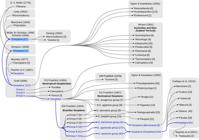
Flowchart of the nomenclatural and taxonomic changes of the species eventually in Geoplana. An asterisk indicates a new genus introduced by the author mentioned above. Numbers in brackets refer to species in the genus after the author mentioned above.
The third erection of Geoplana was by Stimpson (1858) who also introduced the family Geoplanidae. Stimpson was the first one to give a diagnosis of Geoplana:
“Body flattened or slightly flattened, elongated or linear, with a continuous head. Numerous eyes, located marginally or placed in submarginal groups in the head.” [Corpus depressum. v. depressiusculum, elongatum v. lineare, capite continuo. Ocelli numerosi marginales, v. in acervos submarginales, in capite dispositi] Stimpson (1858: 24).
Stimpson (1858) also described a new species of Geoplana from Japan.
Years later, the British naturalist Moseley established Caenoplana Moseley, 1877 for three Australian land planarians with well-developed dorsal and ventral cutaneous longitudinal muscular bundles. Caenoplana was the first land planarian genus to be diagnosed with microanatomic features observable on histological sections, such as the musculature and the nervous system (Moseley 1877). Nonetheless, Fletcher and Hamilton (1888) felt that the arrangement of the muscles and of the nervous system was not sufficient to separate Caenoplana from Geoplana, and subsumed Caenoplana into Geoplana. They also adopted the diagnosis of Geoplana modified from that of Stimpson by Gulliver (1879) to correspond to the distribution of the eyes along the sides of the body observed in some species already known and a new species he described from the island of Rodriguez (Republic of Mauritius):
“Corpus depressum, vel depressiusculum, elongalum vel lineare, capite continuo. Ocelli numerosi, marginales, v. submarginales; v. in parte anteriori corporis solum, vel passim circa corpus, singulatim plerumque, nonnunquam in acervos dispositi” [Body flattened, or slightly flattened, elongate or linear, head continuous. Eyes numerous, marginal, or submarginal; either in the anterior part of the body alone, or scattered along the body, generally singly, sometimes arranged in groups] Gulliver (1879: 562).
The massive work of the Austrian Zoologist Graff (1899) increased the number of species of Geoplana to over one hundred with the description of 58 new species and thus Geoplana species occurred in Central and South America, Australia, New Zealand and Indonesia (Graff 1899). Graff (1896, 1899) gave two diagnoses of Geoplana, with some variation between them:
“Geoplanidae ohne Kriechleiste und ohne Drüsenpolster, mit bauchständigen Leibesöffnungen, glockenförmigem oder cylindrischem Pharynx, von gestreckter Gestalt und mit einfachem, accessorischer Hilfsorgane entbehrendem männlichem Copulationsorgane” [Geoplanidae without creeping sole and without glandular cushions, with ventral openings, bell-shaped or cylindrical pharynx, elongated body and with simple male copulatory organs lacking accessory auxiliary organs] (Graff 1896: 64).
“Geoplaniden von gestrecktern Körper, mit breiter Kriechsohle, die am Vorderkörper von einer Drüsenkante umsäumt ist. Mund und Geschlechtsöffnung bauchständig, der Copulationsapparat entbehrt der musculösen Drüsenorgane, Drüsenpolster fehlen” [Geoplanidae with an elongated body, with a broad creeping sole, which is surrounded by a glandular margin on the anterior body region. Mouth and gonopore ventral, the copulatory apparatus lacks muscular glandular organs; glandular cushions are absent] (Graff 1899: 292).
In the same work, Graff (1899) divided Geoplana into three informal groups based on the relative position of the testes and the subepidermal and parenchymal musculature:
Group a: species with strong cutaneous muscle bundles and no parenchymal bundles; typical of wide and flattened Neotropical species, most with dorsal testes, from the Neotropical region;
Group b: elongated species with both cutaneous and parenchymal weak bundles, typical of elongated, flat-convex-shaped bodies mainly from Australia;
Group c: small and subcylindrical species with cutaneous bundles stronger than those of group a and with a weak parenchymal tube of loose bundles. Species in this group are mainly from Australia.
From Graff (1899) to Winsor (1991) and Ogren and Kawakatsu (1990-1992)
Graff’s groups a, b, and c were not elevated to formal taxa because of the very scattered information available on the microanatomy of the species then known (Graff 1899), but the Brazilian CG Froehlich (1954) studied these groups to initiate formal taxonomic changes.
In 1953, Geoplana contained 280 species. CG Froehlich (1954) noted that the glandular margin, a diagnostic feature of the genus, was not present in all species. Furthermore, this feature was notably absent in species with an elongate body. The author also reported the dorsal position of the testes in the Brazilian species, as in Graff’s group a (CG Froehlich 1954), and made contrasting observations on the longitudinal parenchymal musculature. Graff (1899) noted that in transverse sections the Brazilian Geoplana rufiventris Müller, 1856 showed longitudinal muscle fibers throughout the body, while these fibers were loosely bundled on the inner side of the dorsal pigment layer. However, CG Froehlich noted that other Geoplana species lack dorsal parenchymal longitudinal muscle bundles. Instead, they possess diagonal parenchymal muscle fibers. Consequently, Geoplana was re-diagnosed to include species with only dorsal testes and lacking longitudinal parenchymal musculature, as follows:
“Geoplanidae de corpo alongado. Sola rastejadora com um terço ou mais da largura do corpo. Musculatura longitudinal cutânea forte. Musculatura longitudinal parenquimática fraca ou ausente. Testículos dorsais. Órgãos músculo-glandulares adesivos e papilas sensoriais ausentes. Aparelho copulador sem adenodáctilos” [Geoplanidae with elongated body. Creeping sole sole one third or more the width of the body. Strong cutaneous longitudinal musculature. Parenchymal longitudinal musculature weak or absent. Dorsal testes. Musculo-glandular adhesive organs and sensory papillae absent. Copulatory apparatus without adenodactyls.] ( CG Froehlich 1954: 208).
Thus, Geoplana now included only Neotropical species. In agreement with this proposal, the notogeic and oriental species of Geoplana, which belong to Graff’s group a or b with respect to their musculature system and with ventral testes, should be transferred to Caenoplana Moseley, 1877 ( CG Froehlich 1954). It is interesting to note that the type species of Geoplana, G. vaginuloides (Darwin, 1844), as designated by EM Froehlich (1954) and related species have conspicuous longitudinal parenchymal musculature (Almeida et al. 2019).
EM Froehlich (1954) revised the taxonomic status of the Brazilian species of Geoplana. She grouped these species into six non-formal “probably natural groups”. The species were grouped based on similarities in the body shape, eye distribution, and aspect of the copulatory apparatus:
“Grupo A: Vermes longos e estreitos em reptação muito contraídos e achatados quando em repouso. Bordos aproximadamente paralelos. Tamanho máximo em reptação: 130 mm de comprimento por 5 mm de largura; tamanho mínimo: 48 mm por 4,5 mm. Sem papila penial, átrio amplo, geralmente pregueado. Átrios masculino e feminino separados por dobra dorsal. Canal genital feminino longo, encurvado para baixo. Olhos pequenos, largamente espalhados pelo dorso” [Group A: Long and narrow worms when crawling, very contracted and flattened when at rest. Approximately parallel margins. Maximum size at crawling: 130 mm long by 5 mm wide; minimum size: 48 mm by 4.5 mm. No penis papilla, wide atrium, generally folded. Male and female atria separated by a dorsal fold. Female genital canal long, curved downwards. Small eyes, widely spread across the dorsum. Species in this group: Geoplana pasipha, G. penhana, G. pinima, G. plana, G. pulchella, G. rosea, G. velutina. Doubtful species: G. astraea, G. chimbeva] ( EM Froehlich 1954: 327)
“Grupo B: vermes grandes, largos e chatos. Tamanho máximo: 160 mm de comprimento por 20 mm de largura, em reptação. Olhos marginais e dorsais. Papila peniana ocupando quase todo o átrio, que é pequeno. Sem separação entre átrios masculino e feminino. Canal genital feminino encurvado para o dorso” [Group B: large, wide, flattened worms. Maximum size: 160 mm long by 20 mm wide, when crawling. Marginal and dorsal eyes. Penis papilla occupying almost the entire atrium, which is small. Male and female atria notseparated. Female genital canal curved towards the back. Species in this group: G. argus, G. braunsi, G. carinata, G. divae, G. duca, G. itatiayana, G. ladislavii, G. notocelis. Doubful species: G. arpi, G. blaseri, G. fryi] ( EM Froehlich 1954: 328).
“Grupo C: na maioria, vermes de tamanho médio (30 a 50 mm); corpo chato, cuja maior largura se situa no segundo ou no último terço; papila penial presente; canal genital feminino encurvado para o dorso” [Group C: mostly medium-sized worms (30 to 50 mm); flattened body, whose greatest width is in the second or last third; penis papilla present; female genital canal curved towards the dorsum. Species in the group: G. pseudovaginuloides, G. metzi, G. evelinae, G. yara, G. taxiarcha, G. ferussaci, G. nigrofusca, G. dictyonota, G. tamoia, G. regia, G. pavani, G. trigueira, G. livia, G. splendida. Doubtful species: G. crioula] ( EM Froehlich 1954: 328).
“Grupo D: Constituído pelas espécies: G. leucophryna, com papila mais musculosa; hina e vaginuloides, com papila mais alongada. As duas primeiras espécies poderiam ser colocadas no grupo C quanto aos caracteres externos e à morfologia geral do aparêlho genital. Prefiro, todavia, separá-las porque o tamanho da papila penial é muito maior que o máximo em C (G. splendida). A incorporação da última espécie deve-se à minha decisão de não deixar o genótipo de Geoplana entre as espécies inagrupáveis. De fato, a papila de G. vaginuloides não ultrapassa sômente o máximo observado no grupo anterior, mas é ainda bem maior de que a das duas primeiras espécies do grupo D” [Group D: Consisting of the species: G. leucophryna, with a more muscular papilla; hina and vaginuloides, with a more elongated papilla. The first two species could be placed in group C in terms of external characters and the general morphology of the genital apparatus. However, I prefer to separate them because the penial papilla is much larger than the maximum in C (G. splendida). The incorporation of the latter species is due to my decision not to leave the genotype of Geoplana among the ungroupable species. In fact, the papilla of G. vaginuloides not only exceeds the maximum observed in the previous group, but is even much larger than that of the first two species in group D] ( EM Froehlich 1954: 328).
“Grupo E: espécies de comprimento inferior a 20 mm, dorso alto, quase cilindricas. Colorido do dorso interrompido por uma ou mais faixas claras transversais. Na primeira, os olhos são marginais, nas duas restantes, largamente espalhados pelo dorso. Aparêlho reprodutor do tipo condensado. Vesícula seminal tubular e sinuosa, papila penial presente, canal genital feminino encurvado para o dorso” [Group E: Species in the group: G. barreirana, G. cassula, G. zebroides. Species less than 20 mm long, dorsum high, almost cylindrical. Dorsal color interrupted by one or more transverse light bands. In the first, the eyes are marginal, in the remaining two, widely spread across the dorsum. Compact copulatory apparatus. Tubular and sinuous seminal vesicle, penis papilla present, female genital canal curved towards the dorsum] ( EM Froehlich 1954: 329).
“Grupo F: Reúno aquí: G. modesta, parca, albonigra, sextriata, trina. O aparelho copulator é desprovido de papila: o átrio, mais ou menos amplo e dobrado, recebe na parte ental masculina os ductos eferentes, faltando, assim, uma vesícula seminal independente. A parte feminina é muito pequena e quase que só representada pelo canal genital feminino encurvado para o dorso. Quanto à forma do corpo, os três últimos membros são mais semelhantes entre si, o mesmo acontecendo com os dois primeiros. Os olhos são marginais em todos” [Group F: Species in this group: G. modesta, G. parca, G. albonigra, G. sexstriata, G. trina. The copulatory apparatus is devoid of papilla: the atrium, more or less wide and folded, receives the efferent ducts from the male ental part, thus lacking an independent seminal vesicle. The female part is very small and almost only represented by the female genital canal curved towards the dorsum. As for the shape of the body, the last three members are more similar to each other, the same happening with the first two. The eyes are marginal in every one] ( EM Froehlich 1954: 329).
CG Froehlich (1956a, 1956b) added a few species to EM Froehlich’s groups, namely grupo A (G. splendida, G. oliverioi, G. cafusa, G. joia), C (G. polyophthalma), D (G. chita, G. vaginuloides), and E (G. picta), and F (G. mourei, G. plumbea) and described other species not assignable morphologically to any of the groups.
CG Froehlich (1967) complemented the grouping of EM Froehlich’s (1954) by analyzing most of the known Neotropical species, which he divided into seven non-formal groups, partly corresponding to those of EM Froehlich (1954):
Geoplana applanata group (= Graff’s Group a = EM Froehlich’s Grupo B plus Geoplana hina, from EM Froehlich’s Grupo D). Large, broad and flat species, with a penis papilla, without separation between male and female atria, and the female canal comes from the dorsal side. The distribution of this group covers South America, the colder southern part excepted and includes 28 species.
Geoplana amagensis group. Similar to the G. applanata group but with a very small penis papilla or lacking it. It includes seven Andean species from Peru and Colombia.
Geoplana gigantea group. Similar to the G. applanata group but with the female canal horizontal or coming from below, most of the species provided with glandular ridges on the penis papilla, some with a dilated female atrium. The group extends from Costa Rica to Peru and Trinidad and embraces eight species.
Geoplana taxiarcha group (= EM Froehlich’s Grupo C). Mostly medium-sized species with the body relatively less flat than in the G. gigantea group, always provided with a penis papilla, and with the female canal coming from the dorsal side. It includes 28 species from Panamá, Colombia, Brazil, Peru, and Chile, plus 14 doubtful species from Brazil, Peru, and Trinidad.
Geoplana barreirana group (= EM Froehlich’s Grupo D). Copulatory apparatus approaches that of the G. taxiarcha group, but all species are small, rounded, and the colour pattern includes transverse bands on the back. It includes four species from Brazil.
Geoplana pasipha group (= EM Froehlich’s Grupo F). With an elongate body, without a penis papilla, presenting a folded male atrium, and a female canal arriving from the ventral side. Fifteen species from Brazil belong to this group.
Geoplana abundans group. Species with medium-sized, elongate and muscular body. They lack a penis, the male atrium is large, with folded walls, and the female canal comes from the dorsal side. It includes five species from South Brazil and Paraguay.
CG Froehlich did not consider EM Froehlich’s group F, but one species within it, G. albonigra, was placed in his abundans group. CG Froehlich also refused to give the groups a formal taxonomic name, because “most groups pass gradually to others or show only minor differences between them” (CG Froehlich 1967: 157).
EM Froehlich (1978) studied non-type material of Geoplana cruciataGraff, 1899, from Chile. Since the external and internal aspects were rather different from those of other Neotropical species, she established the genus Gusana and transferred G. cruciata to Gusana. Although the internal anatomy of the type specimens remained unstudied, the same taxonomic action was later performed with Geoplana lata Graff, 1899 and Geoplana platei Graff, 1899 by Ogren and Kawakatsu (1990).
The number of species within Geoplana rose steadily in the years after Graff’s (1899) work, reaching 339 species in the period 1978-1986 (Fig. 3). This was followed by a stepwise decline to the current 13 species, with notable declines in 1990 and 1991 (Ogren and Kawakatsu 1990, 1991, Winsor 1991). Ogren and Kawakatsu (1990) revised the classification of the Neotropical species of Geoplanidae and proposed the subfamily Geoplaninae for species with dorsal testes and without longitudinal parenchymal musculature. They based their taxonomic actions mainly on the informal subdivisions of EM Froehlich (1954) and CG Froehlich (1967) and split Geoplana into several new genera, namely Amaga Ogren and Kawakatsu, 1990 (with 11 species), Gigantea Ogren & Kawakatsu, 1990 (10), Enterosyringa Ogren & Kawakatsu, 1990 (1), Notogynaphallia Ogren & Kawakatsu, 1990 (25), Pasipha Ogren & Kawakatsu, 1990 (22), Pseudogeoplana Ogren & Kawakatsu, 1990 (55). They in turn divided Geoplana into the subgenera Geoplana (Geoplana) Ogren and Kawakatsu, 1990 (101) and Geoplana (Barreirana) Ogren and Kawakatsu, 1990 (5). Species of Geoplana with poorly known internal organs were transferred to Pseudogeoplana, a group erected for species inquerendae and nomina dubia of Geoplaninae. Thus, Geoplana lost 124 species and the diagnosis of this genus became more restricted:
Geoplaninae of elongate body form; creeping sole broader than a third of body width; strong cutaneous longitudinal muscles; mc:h [thickness of the subepidermal musculature relatively to the body height] value from 4%-18%; parenchymal longitudinal musculature, weak or absent, not in a ring zone; testes are dorsal; penis papilla present; female canal enters genital antrum dorsally; cephalic glandulo-muscular organs, sensory papillae and adenodactyls absent. (Ogren and Kawakatsu 1990: 85).

(A) Number of species annually added (green bars) to and removed (red bars) from the genus Geoplana since its erection in 1856 to 2023. The authorship of the main taxonomic changes is indicated by arrows. Species considered incertae sedis or nomina dubia are counted. (B) Number of species in Geoplana over time, since its erection in 1856 to 2023.
Winsor (1991) proposed a provisional classification for species from Australia and New Zealand based on characteristics such as body color, presence of pigmented rhabdoids, strength and organization of the epidermal musculature, and shape of pharynx and copulatory organs. As a result, many species were removed from Caenoplana, and especially Geoplana and transferred to six new genera, namely Australoplana Winsor, 1991, Parakontikia Winsor, 1991, Reomkago Winsor, 1991, Fletchamia Winsor, 1991, Lenkunya Winsor, 1991, and Tasmanoplana Winsor, 1991. Winsor also re-diagnosed Artioposthia to mention the ventral position of the testes and transferred some Geoplana species to it.
Three months after Winsor’s provisional classification, Ogren and Kawakatsu (1991) undertook a taxonomic review of the Geoplanidae land planarians from the Australasian and Indo-Pacific regions, i.e., the species of Geoplana considered incertae sedis by CG Froehlich (1954). The subfamily Caenoplaninae Ogren & Kawakatsu, 1991 was erected for species from these regions that also have ventral testes and a thick layer consisting of bundles of longitudinal muscle fibers. Species of Geoplana from these geographic regions were transferred to the new genera Endeavouria Ogren & Kawakatsu, 1991 (1 species), and Newzealandia Ogren & Kawakatsu, 1991 (6). Furthermore, Australopacifica Ogren & Kawakatsu, 1991 was erected as a collective genus for 117 species considered as species inquerendae and nomina dubia. Thus, with the publications of Ogren and Kawakatsu (1990, 1991) and Winsor (1991), Geoplana lost more than 236 species, which were transferred to other genera of Geoplaninae or Caenoplaninae.
From Carbayo et al. (2013) to the present time
One of the distinguishing features of Geoplaninae was a negative character, namely ‘longitudinal parenchymal muscle absent, or not well developed, not forming a ring zone’ (Ogren and Kawakatsu 1990: 83). However, Carbayo et al. (2013) noted exceptions, since some species were very similar morphologically to Geoplana vaginuloides (Darwin, 1844), the type species of the genus as designated by EM Froehlich (1954) and do bear this type of musculature. Accordingly, they restricted the diagnosis of Geoplana to:
Geoplaninae with medium-sized body, 30-100 mm in length; body slender, with nearly parallel margins; dorsum strongly convex; eyes monolobulated, cone shaped in the anterior region of the body; muscle tube around the intestine composed of parenchymatic longitudinal muscle fibres; pharynx cylindrical; prostatic vesicle intrabulbar, narrow; thick well-delimited male genital muscle coat and; penis papilla protrusible, cylindrical, very long, extending even along the entire female genital atrium; muscle fibres of penis papilla and ejaculatory duct densely packed in a thick layer; male atrium not folded; ascending portion of the ovovitelline ducts lateral to female atrium, joining each other above it; genital canal dorso-anteriorly flexed, arising from the posterior region of the female atrium; female atrium long, not folded.Carbayo et al. (2013: 519).
Only three out of the 112 species of Geoplana known by 2013 met this new diagnosis, while 47 species of Geoplana were considered incertae sedis. The remaining 56 species were removed from Geoplana and placed in six new genera, namely Cratera Carbayo et al., 2013, Imbira Carbayo et al., 2013, Matuxia Carbayo et al., 2013, Obama Carbayo et al., 2013, and Paraba Carbayo et al., 2013, while the subgenus Geoplana (Barreirana) was elevated to the genus Barreirana Ogren & Kawakatsu, 1990 (Carbayo et al. 2013).
Almeida et al. (2019) added ten new species from Brazil to Geoplana. Their research, which incorporated both morphological and molecular data, led to a re-assessesment of the diagnosis of the genus:
Geoplaninae with medium-sized body, 25-100 mm in length; slender body, with nearly parallel margins; dorsum strongly convex; eyes monolobulated, cone shaped in the anterior region of the body; parenchymal longitudinal muscle fibres present and organized in a muscular cylinder around the intestine, or in two layers, one supra-, another subintestinal, each intermingled with parenchymal transverse fibres; pharynx cylindrical; prostatic vesicle absent; part of penis bulb musculature detached and running obliquely towards ventral epidermis, behind gonopore; thick, well-delimited male genital muscle coat; penis papilla protrusible, cylindrical, very long, extending into female genital atrium; muscle fibres of penis papilla and ejaculatory duct densely packed in a thick layer; male atrium not folded; ascending portion of the ovovitelline ducts lateral to female atrium, joining each other above it; female genital duct dorso-anteriorly flexed, arising from the posterior region of the female atrium; female atrium long, generally not folded. Almeida et al. (2019: 62)
Negrete et al. (2021) recently moved Geoplana chanca Froehlich, 1978 and G. tirua Froehlich, 1978, both considered incertae sedis, to the genus Inakayalia Negrete et al., 2021. They proposed this change based on the fact that species in this genus characteristically exhibit extremely widened distal ovovitelline ducts (Negrete et al. 2021). Geoplana now consists of 13 species and 48 species incertae sedis.
Geoplana is recognized as monophyletic (Almeida et al. 2019, Lago-Barcia et al. 2023) but its phyletic relationship to other members of the subfamily Geoplaninae is not fully understood (Lago-Barcia et al. 2023). This genus can be diagnosed by the presence of longitudinal parenchymal musculature (convergent with Imbira, Geoplaninae) (Almeida et al. 2019, Lago-Barcia et al. 2023). Further steps to better understand Geoplana include a taxonomic revision of the 48 incertae sedis species, along with the description of seven previously reported undescribed species (see table S1 in Almeida et al. 2019) and two newly collected species (pers. obs.) from Southeast Brazil.
The nomenclatural story of the genus Geoplana seemed to be well established and stabilized. However, very recently, AB Kury, R Sluys, and F Carbayo discovered a third homonym and synonym of the name Geoplana. Accordingly, they submitted an application to the International Commission on Zoological Nomenclature to rule in order to preserve the prevailing usage of Geoplana. Otherwise, the name Geoplana would have to be replaced with a new name, and the name Geoplana would disappear from the classification system.
ACKNOWLEDGEMENTS
I thank the São Paulo Research Foundation (FAPESP, process #2022/11972-2) for financial support and the two anonymous reviewers for their careful review of the manuscript.
LITERATURE CITED
-
Almeida AL, Marques FPL, Carbayo F (2019) ‘Endless forms most beautiful’: taxonomic revision of the planarian Geoplana vaginuloides (Darwin, 1844) and discovery of numerous congeners (Platyhelminthes: Tricladida). Zoological Journal of the Linnean Society 185(1): 1-65. https://doi.org/10.1093/zoolinnean/zly022
» https://doi.org/10.1093/zoolinnean/zly022 - Baguñà J, Carranza S, Paps J, Ruiz-Trillo I, Riutort M (2001) Molecular taxonomy and phylogeny of Tricladida. In: Littlewood DTJ, Bray RD (Eds) Interrelationships of the Platyhelminthes. CRC Press, Boca Raton, 49-56.
- Blanchard E (1845) Recherches sur l’organisation des vers. Recherches anatomiques et zoologiques faites pendant un voyage sur les côtes de 1a Sicile et sur divers points du littoral de la France par MM. H. Milne-Edwards, A. de Quatrefages et E. Blanchard, troisième partie. Paris, vol. 4, 1-353.
-
Carbayo F, Álvarez-Presas M, Olivares CT, Marques FPL, Froehlich EM, Riutort M (2013) Molecular phylogeny of Geoplaninae (Platyhelminthes) challenges current classification: proposal of taxonomic actions. Zoologica Scripta 42: 508-528. https://doi.org/10.1111/zsc.12019
» https://doi.org/10.1111/zsc.12019 - Carranza S, Littlewood DT, Clough KA, Ruiz-Trillo I, Baguñà J, Riutort M (1998a) A robust molecular phylogeny of the Tricladida (Platyhelminthes: Seriata) with a discussion on morphological synapomorphies. Proceedings of the Royal Society B 265: 631-640.
- Carranza S, Ruiz-Trillo I, Littlewood DTJ, Riutort M, Baguñà J (1998b) A reappraisal of the phylogenetic and taxonomic position of land planarians (Platyhelminthes, Turbellaria, Tricladida) inferred from 18S rDNA sequences. Pedobiologia 42: 433-440.
- Darwin C (1844) Brief descriptions of several terrestrial planariae, and of some remarkable marine species, with an account of their habits. Annals and Magazine of Natural History, Annales de Sciences Naturelles 14: 241-251.
- Fletcher JJ, Hamilton AG (1888) Notes on Australian Land-Planarians, with descriptions of some new species. Proceedings of the Linnean Society of New South Wales 2: 349-374.
-
Froehlich CG (1954) Sobre morfologia e taxonomia das Geoplanidae. Boletins da Faculdade de Filosofia, Ciências e Letras, Universidade de São Paulo, Série Zoologia 19: 195-279. https://doi.org/10.11606/issn.2526-3382.bffclzoologia.1954.120092
» https://doi.org/10.11606/issn.2526-3382.bffclzoologia.1954.120092 - Froehlich CG (1967) A contribution to the zoogeography of Neotropical land planarians. Acta Zoologica Lilloana 23: 153-162.
- Froehlich CG (1956a) Planárias terrestres do Paraná. Dusenia 7(4): 173-197.
- Froehlich CG (1956b) Tricladida Terricola das regiões de Teresópolis e Ubatuba. Papéis Avulsos do Departamento de Zoologia 12: 313-344.
-
Froehlich EM (1954) Sôbre espécies brasileiras do gênero Geoplana Boletins da Faculdade de Filosofia, Ciências e Letras, Universidade de São Paulo , Série Zoologia 19: 289-369. https://doi.org/10.11606/issn.2526-3382.bffclzoologia.1954.120096
» https://doi.org/10.11606/issn.2526-3382.bffclzoologia.1954.120096 - Froehlich EM (1978) On a collection of Chilean landplanarians. Boletim de Zoologia 3: 7-80.
- Graff L von (1896) Über die Morphologie des Geschlechtsapparates der Landplanarien. Verhandllungen der Deutchen Zoologishen Gesellschaft 6: 75-93.
- Graff L von (1899) Monographie der Turbellarien. II. Tricladida Terricola (Landplanarien). I-XII. Atlas von Achtundfünfzig Tafeln zur Monographie der Turbellarien II. Tricladida Terricola (Landplanarien). Pls I-LVIII. Wilhelm Engelmann, Leipzig, 574 pp.
- Gulliver G (1879) Turbellaria. In: The zoology of Rodriguez. Philosophical Transactions of the Royal Sociey 168: 557-563.
- Hallez P (1892) Catalogue des Turbellariés (Rhabdocoelides, Triclades et Dendrocoelides) du Nord de la France and de la Cote Boulonnaise. Revue biologique du Nord de la France 4: 301-326, 338-350, 425-456.
-
Lago-Barcia D, Álvarez-Presas M, Riutort M, Oceguera-Figueroa A, Carbayo F (2023) Phylogenetic relationships of the Geoplaninae land planarians (Platyhelminthes, Tricladida) assessed with a total evidence approach, with the description of a new species of Gigantea Molecular Phylogenetics and Evolution 184: 107750. https://doi.org/10.1016/j.ympev.2023.107750
» https://doi.org/10.1016/j.ympev.2023.107750 - Leidy J (1852) Corrections and additions to former papers on Helminthology published in the Proceedings of the Academy. Proceedings of the Academy of Natural Sciences of Philadelphia 5: 284-290.
- Moseley HN (1877) Notes on the structure of several forms of land planarians, with a description of two new genera and several new species, and a list of all species at present known. Quarterly Journal of Microscopical Science, New Series 17(67): 273-292.
- Müller OF (1774) Vermium terrestrium et fluviatilium, seu animalium infusoriorum, helminthicorum et testaceorum, non marinorum, succincta historia. Vol. 1, Pars prima: 1-136. Vol. 2, Pars altera: 1-214.
- Müller F (1856) In: Schultze M (1856) Beiträge zur Kenntnis der Landplanarien nach Mittheilungen des Dr. Fritz Müller in Brasilien und nach eigenen Untersuchungen. Abhandlungen der naturforschenden Gesellschaft zu Halle 4: 19-38.
- Negrete L, Álvarez-Presas M, Riutort M, Brusa F (2021) Integrative taxonomy of land planarians (Platyhelminthes: Geoplanidae) from the Andean-Patagonian Forests from Argentina and Chile, with the erection of two new genera. Journal of Zoological Systematics and Evolutionary Research 59: 588-612.
- Ogren RE, Kawakatsu M (1990) Index to the species of the Geoplanidae (Turbellaria, Tricladida, Terricola). Part I: Geoplaninae. The Bulletin of the Fuji Women’s College, Ser. II, 29: 79-166.
- Ogren RE, Kawakatsu M (1991) Index to the species of the Geoplanidae (Turbellaria, Tricladida, Terricola). Part II: Caenoplaninae and Pelmatoplaninae. The Bulletin of the Fuji Women’s College, Ser. II, 29: 25-102.
- Ogren RE, Kawakatsu M (1992) Index to the species of the Geoplanidae (Turbellaria, Tricladida, Terricola). Part II: Caenoplaninae and Pelmatoplaninae (a continuation). The Bulletin of the Fuji Women’s College, Ser. II, 29: 33-58.
- Schultze M (1856) Beiträge zur Kenntnis der Landplanarien nach Mittheilungen des Dr. Fritz Müller in Brasilien und nach eigenen Untersuchungen. Abhandlungen der naturforschenden Gesellschaft zu Halle 4: 19-38.
-
Sluys R, Riutort M (2018) Planarian diversity and phylogeny. In: Rink JC (Ed.) Planarian Regeneration. Humana Press, New York, 1-56. https://doi.org/10.1007/978-1-4939-7802-1_1
» https://doi.org/10.1007/978-1-4939-7802-1_1 -
Sluys R, Kawakatsu M, Riutort M, Baguñà J (2009) A new higher classification of planarian flatworms (Platyhelminthes, Tricladida). Journal of Natural History 43(29-30): 1763-1777. https://doi.org/10.1080/00222930902741669
» https://doi.org/10.1080/00222930902741669 - Stimpson W (1858) Prodromus descriptionis animalium evertebratorum quae in Expeditione ad Oceanum Pacificum Septentrionalem, Johanne Rodgers Duce a Republica Federate missa, observavit et descripsit. Proceedings of the Academy of Natural Sciences of Philadelphia 9: 19-31.
- Winsor L (1991) A provisional classification of Australian terrestrial geoplanid flatworms (Tricladida: Terricola: Geoplanidae). The Victorian Naturalist 108(2): 42-49.
ADDITIONAL NOTES
-
3
ZooBank register https://zoobank.org/B559DB07-2033-4F91-AA85-94029DED2687
-
4
How to cite this article Carbayo F (2024) Rise and decline of the land planarian genus Geoplana (Platyhelminthes: Tricladida). Zoologia 41: e23076. https://doi.org/10.1590/S1984-4689.v41.e23076
-
5
Published by Sociedade Brasileira de Zoologia at Scientific Electronic Library Online - https://www.scielo.br/zool


