Current methods to control scorpions, with emphasis on Brazil: why a shift in culture is needed
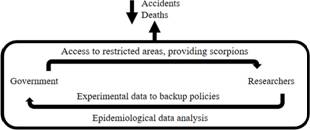
Scorpionism is a major global public health concern, with an estimated one million cases occurring annually worldwide. However, current control strategies implemented in the field often lack robust scientific validation and standardization. Here, we review the global burden of scorpionism, with a detailed focus on the public health context in Brazil. We systematically surveyed and evaluated all reported methods currently used for scorpion control, categorizing them into manual collection, chemical control (pesticides), natural repellents, mechanical barriers, and biological control. Although manual collection remains the primary control procedure in Brazil, its widespread use has not resulted in a demonstrable reduction in accident rates. Evidence gaps persist regarding the efficacy of pesticides and biological control for widespread use, while certain natural repellents show promise for repelling scorpions. This review underscores the critical need for a cultural and operational reassessment of current practices, advocating for robust collaboration between government bodies and the scientific community to effectively mitigate the global burden of scorpionism.
KEYWORDS:
Biological control; chemical control; management; pesticide; Tityus
 Thumbnail