Local-scale distribution and habitat filtering of annelids in a subtropical estuary
ABSTRACT
Recording the small-scale distribution of organisms in changing environments is crucial for understanding local ecological patterns. We surveyed annelids from mangroves across different estuarine environments (open areas as unstable environments; control and closed areas as more stable environments) and habitats (vegetated, non-vegetated, and transitional zones) at Ararapira Inlet, Guaraqueçaba, Paraná, Brazil. During spring and autumn, we collected 288 samples using a corer, with a 0.5 mm mesh to separate fauna from sediment. We identified 937 individuals across 33 species, 18 families, and 28 genera, with Nereididae being the most represented family. The nereidid species Laeonereis acuta and Nereis oligohalina were the most abundant, with 254 and 149 individuals, respectively. Regarding endemism, 17 species are native and eight are non-indigenous, while information is lacking for seven. Our Linear Mixed Model showed that both abundance and species richness were generally lower in Control and Open areas, as well as in vegetated habitats, with positive interactions between area and vegetated habitats. The Control area exhibited higher Shannon diversity and evenness, while Simpson diversity was higher in the closed area. The transitional zone had the highest richness (23 taxa), followed by the non-vegetated habitat (19) and the vegetated habitat (14). Differences in Shannon and Simpson diversity were observed among areas, with the most established environments displaying the highest diversity. Microphage was the dominant feeding mode, with 15 taxa (46%), followed by omnivory with ten (30%), and macrophage with eight (24%). We conclude that the species respond to a complex combination of spatial scale and environment type, reinforcing the need to consider multiple ecological drivers when analyzing community structure.
KEYWORDS:
Checklist; macrofauna; mangrove; polychaeta; spatial scale
INTRODUCTION
Mangrove ecosystems are among the most structurally complex coastal habitats, providing highly heterogeneous environments that sustain diverse faunal assemblages (Schaeffer-Novelli et al. 1990). Such environmental heterogeneity creates a mosaic of microhabitats that influences how species are distributed at small spatial scales, reflecting differences in functional requirements, life-history strategies, and morphological adaptations (Stein et al. 2014, Van Son et al. 2014). The structure and functional traits of annelids in mangroves depend on the spatial scale (Freitas and Pagliosa 2020). Understanding how this fine-scale variation shapes community composition is essential to interpret the structure and functioning of mangrove ecosystems (Stein et al. 2014, Van Son et al. 2014).
Environmental processes act at multiple spatial scales and influence the structure and function of marine macrofauna communities (Freitas and Pagliosa 2020). As global-scale biodiversity loss in coastal habitats advances, understanding how benthic community diversity responds to environmental change is essential (Rodil et al. 2021). The southern hemisphere harbors a higher diversity of polychaete species, many of which are endemic (Pamungkas et al. 2021). Investigating local-scale distribution across different spatial scales provides essential information to understand biodiversity changes related to environmental variations of conservation concern (Chave 2013, Pincebourde et al. 2016).
There is a known relationship between macrofauna diversity and gradients of environmental complexity (Rodil et al. 2021). Mangrove invertebrates often show zonation patterns, colonizing a variety of micro-environments (Nagelkerken et al. 2008), and the presence of vegetated habitats in mangroves influences the local-scale distribution of macrofauna (dos Santos et al. 2024). As such, annelids can serve as environmental indicators of ecosystem health, particularly because of their sensitivity to degradation and pollution (Giangrande et al. 2005, Dean 2008) and their rapid response to environmental changes (Elías et al. 2021). Nonetheless, assessing biodiversity changes over seasons or following environmental disturbances is not a trivial task (Magurran 2021). Hence, investigating the local-scale distribution patterns of macrofaunal biodiversity can provide valuable insights into the functioning of mangrove environments (Quiroz-Martínez et al. 2021) and serve as a baseline for studying future environmental issues.
Annelida is one of the most diverse animal groups, with representatives from terrestrial, freshwater, and marine environments (Capa and Hutchings 2021). These animals are the predominant group in terms of abundance in soft-bottom substrates (Nagelkerken et al. 2008), exhibit a high degree of diversification, and possess complex functional traits (Freitas and Pagliosa 2020). The number of known species in the group is steadily increasing, primarily due to recent taxonomic revisions that have led to the discovery of new species (Capa and Hutchings 2021). Studies on benthic ecology and the taxonomy of marine annelids in Brazil date back to the 1960s (Lana et al. 2017). According to Amaral et al. (2022), about 1,343 species of polychaetes are currently known to occur in the country, spanning 463 genera and 76 families. Among members of macrofaunal communities, annelids are one of the most common taxa, exhibiting relatively high species richness and dominant abundance, comprising more than half of soft-bottom communities (Quiroz-Martínez et al. 2021). They also display a high diversity of feeding types (Jumars et al. 2015) and functional traits (Faulwetter et al. 2014).
The most recent checklist of polychaetes from Paraná state included collections from Paranaguá and Guaratuba bays and samples from shallow bottoms on the northern continental shelf of the state, recording 44 families, 164 genera, and 259 species (Lana et al. 2006). Despite the historical efforts of numerous researchers who contributed to the inventory of species in the state (e.g., Lana et al. 2006), the Ararapira Inlet remained unexplored. This vast inlet is a dynamic estuary with periodic landscape changes (Angulo et al. 2019).
Given the pronounced geomorphological and hydrological shifts recently observed in the Ararapira Inlet, establishing a baseline inventory of its benthic fauna is essential. This study provides the first assessment of local-scale species distribution in the region, generating baseline data to detect potential spatial trends and future changes in mangrove ecosystem structure and function.
MATERIAL AND METHODS
Study area
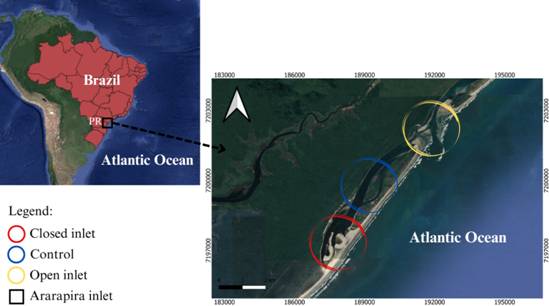
The Ararapira Inlet is located between the states of Paraná and São Paulo, in the municipality of Guaraqueçaba (Fig. 1), forming part of the Cananéia-Paranaguá Estuarine Complex (Italiani et al. 2020). It spans approximately 16 km, with an average width of 400 m (Angulo et al. 2009). Over the last few years, a significant landscape change has impacted the local habitats: a new inlet opened in August 2018, and the older inlet closed in 2019 (Angulo et al. 2019).
Ararapira Inlet, Paraná, Brazil. The three different sampling areas are shown: Closed inlet (red), Control area (blue) that remained relatively unchanged during the dynamic landscape events, and the Open inlet (yellow), which appeared in 2018.
Sampling and identification
We sampled the Ararapira Inlet during two seasons (Spring - October 2023 and Autumn - April 2024) in unconsolidated mangrove sediments and sandy beach substrates using a PVC corer (20 cm height × 15 cm diameter). Sampling was carried out across three areas (50 × 50 m each) representing a disturbance gradient: Closed inlet (area undergoing stabilization), control (ecologically stable area with minimal landscape changes), and Open inlet (unstable area under intense hydrodynamic influence).
Within each area, we established three habitats representing a vegetation gradient from mangrove to bare sand: vegetated (V) (mangrove forest, with salt marshes also present in the Closed inlet), transition zone (TZ) (interface between vegetated and bare areas), and non-vegetated (NV) (mud or sand flats).
In each habitat, four 1 × 1 m quadrats were randomly placed, and four random sampling units were collected within each quadrat, totaling 16 samples per habitat and 48 samples per area. This design resulted in 144 samples per season (288 in total). All samples were stored in plastic bags and sieved through a 0.5 mm mesh to separate the fauna from the sediment.
We anesthetized the annelids with isotonic magnesium chloride, fixed them in 3.7% formaldehyde, and then transferred them to 70% ethanol. For identification, a stereomicroscope and a Primo Star microscope (Zeiss) were used. Families and genera were initially identified based on Amaral and Nonato (1996), and more recent literature was used for detailed identifications (e.g., Conde-Vela and Salazar-Vallejo 2015, Wilson et al. 2023).
Species identification was performed by checking specialized taxonomic literature. Temporary glycerol slides were prepared to observe the morphology of parapodia and chaetae. We followed the most recent Annelida phylogenetic classification (Rouse et al. 2022) and adhered to the nomenclature in the World Register of Marine Species (WoRMS 2025). The dataset follows the Darwin Core format (Table S1). For feeding types, we followed Jumars et al. (2015), considering Microphage (MICRO), Macrophage (MACRO), and Omnivore (OMN). We conducted a literature review on the Brazilian distribution of each taxon recorded in the area and added new records for Paraná state. Their invasive status in Brazil was categorized as Native (N), Non-Indigenous Species (NIS), or Cryptogenic (C) based on Lopes (2009), Rocha et al. (2013), and Teixeira and Creed (2020).
Data analysis
We used R version 4.3.3 (R Core Team 2024) to analyze the data. Diversity was estimated using Simpson’s and Shannon’s indices. Pielou’s evenness was also calculated for each area. Hill numbers represent the effective diversity of a biological community; this approach unifies different diversity indices within a single framework modulated by a sensitivity parameter (q). A rarefaction curve was built using the vegan package.
We used linear mixed-effects models (LMM) to evaluate the effects of area (Closed, Control, and Open inlet) and habitat (vegetated, transition zone, and non-vegetated) on annelid abundance and species richness across seasons (spring and autumn). Separate models were fitted for each season to account for potential seasonal differences in community structure. Both area and habitat were included as fixed factors, as well as their interaction (area × habitat). The sampling design included four quadrats per habitat within each area; therefore, quadrat ID nested within habitat and area was included as a random factor to account for the hierarchical structure and potential non-independence of observations. The models were fitted using the restricted maximum likelihood (REML) method with the lmer function from the lme4 package (Bates et al. 2015). Model assumptions of normality and homoscedasticity were verified by inspecting residual plots. The general model structure was richness ~ area * habitat + (1 | quadrat nested), and abundance ~ area * habitat + (1 | quadrat nested) for each season. Significant effects were further explored using post-hoc pairwise comparisons with estimated marginal means (emmeans package; Lenth et al. 2025), adjusted using Tukey’s method. Estimates are interpreted relative to the reference levels (Closed area; Non-vegetated habitat).
RESULTS
We recorded 937 individuals in total, classified into 18 families, 28 genera, and 33 species (Table 1). Within Polychaeta, the subclasses Errantia and Sedentaria had similar species richness (52% and 48%, respectively). We also identified annelids from other groups, including three Sipuncula morphospecies and one Magelonidae species. Nereididae was the family with the highest species richness, with five taxa across five genera. Spionidae, Orbiniidae, and Capitellidae had the second-highest species richness, with three species each, distributed in three genera. Onuphidae had two species distributed in a single genus. The least representative families were Serpulidae, Magelonidae, Melinnidae, Eunicidae, Lumbrineridae, Terebellidae, Oenonidae, Cirratulidae, Goniadidae, Pilargidae, Nephtyidae, Sternaspidae, and Phyllodocidae, each with only one species.
List of species recorded at Ararapira Inlet. Feeding type: Macrophage (MACRO), Microphage (MICRO), and Omnivore (OMN). Habitat: Vegetated (V), Transition zone (TZ), and Non-Vegetated (NV). Status: Natural (N), Non-indigenous (NIS), and Cryptogenic (C). Distribution in Brazilian states: Pará (PA), Maranhão (MA), Piauí (PI), Ceará (CE), Rio Grande do Norte (RN), Paraíba (PB), Pernambuco (PE), Alagoas (AL), Sergipe (SE), Bahia (BA), Espírito Santo (ES), Rio de Janeiro (RJ), São Paulo (SP), Paraná (PR), Santa Catarina (SC), Rio Grande do Sul (SC). First record at Paraná State (*).
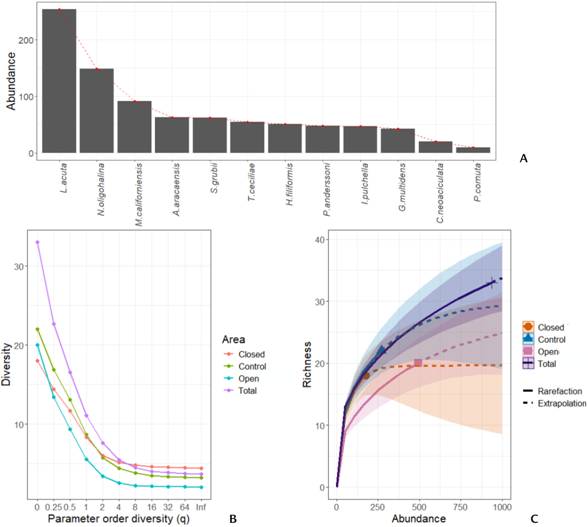
The most abundant species were the nereidids Laeonereis acuta and Nereis oligohalina, with 254 and 149 individuals, respectively (Table 1, Fig. 2A). The higher abundance of L. acuta compared to other polychaetes also occurred during spring. Most of the recorded taxa are microphages (15 taxa, 46%), 10 taxa (30%) are omnivores, and eight taxa (24%) are macrophages. In the present study, omnivores represent the second-highest richness, followed by macrophage annelids (carnivores or herbivores).
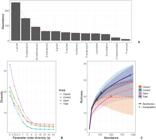
(A) Total abundance of the 12 most abundant recorded species; (B) Diversity profile by Hill’s number among areas and total; (C) Rarefaction and extrapolation curve of each area and the total.
Of the 33 recorded taxa, 11 species are new records for the state of Paraná: Aglaophamus fabrun, Marphysa sebastiana, M. formosa, Lumbrineris cruzensis, Arabella aracaensis, Diopatra marinae, D. hannelorae, Timarete ceciliae, Leitoscoloplos cf. fragilis, Namalycastis lanai, and Terebella leslieae. Some of these species were expected to occur in the state of Paraná, as they are recorded in the neighboring states of São Paulo and Santa Catarina (Table 1).
The total richness was similar among areas: control with 22 species, Open inlet with 20, and Closed inlet with 18 species (Fig. 2C). Rarefaction and extrapolation curves did not reach an asymptote, indicating that species richness in the areas is higher than what was sampled, despite the extensive sampling effort (Fig. 2C). The clear exception is the Closed inlet, where the curve indicates that sampling covered most of the area’s diversity (Fig. 2C).
Regarding diversity indices, the Shannon index was higher in the Control area (2.15), while the Simpson index was higher in the closed area (0.83). Pielou’s evenness was higher in the closed area (0.73). The diversity profile showed that the Closed inlet had higher evenness than the other areas (Fig. 2B).
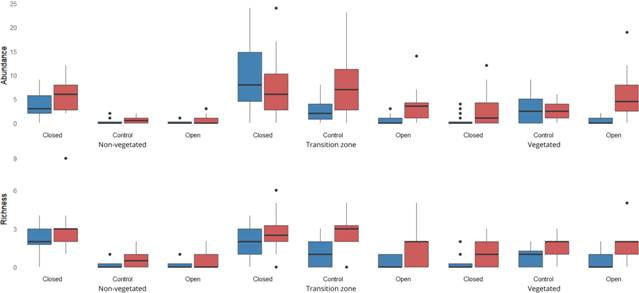
Species richness was considerably lower during autumn (Fig. 3). Of the 33 recorded species, 16 were sampled in this season, whereas 32 were sampled during spring. The sampling period with the highest abundance was spring, with 588 individuals, while during autumn only 349 individuals were recorded.
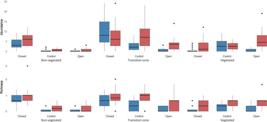
(A) Abundance of annelids at the Ararapira Inlet. The boxplots show median abundance and richness at each collected area (Closed, Control, and Open), within the three habitats (non-vegetated, transition zone, and vegetated), and across the two seasons (Autumn in blue, and Spring in red), and (B) Richness.
The main effects of area, habitat, and their interactions on annelid abundance and species richness are summarized in Table 2 (full results in Table S2). Linear mixed models (LMM) revealed that both abundance and species richness were generally lower in Control and Open areas, and in vegetated habitats. Positive interactions between area and vegetated habitats, however, led to higher abundance and richness in specific combinations. Seasonal differences were observed: in spring, declines were more pronounced in vegetated habitats, whereas in autumn, abundance increased in the transition zone. These patterns indicate that habitat type and spatial modifications jointly shape community structure.
Estimated effects, standard errors (SE), and t values from linear mixed models (LMMs) for species abundance and richness across areas and habitats by season. Estimates are relative to reference levels (closed area; non-vegetated habitat). Direction of effect indicated by arrows: ↑ increase, ↓ decrease, ≈ tendency. Post-hoc pairwise comparisons (Tukey-adjusted) were used to interpret significant differences.
DISCUSSION
Ararapira Inlet annelids’ responses differ among seasons, areas, and habitats. During spring, higher abundances were generally observed in the transition zone and vegetated habitats, depending on the area. Vegetated environments increase macroinvertebrate diversity compared to non-vegetated habitats (Qiu et al. 2019, Dos Santos et al. 2024). Besides vegetation, transitional habitats influence ecological processes (Fagan et al. 2003) and increase diversity (Wimp and Murphy 2021). Similar trends have been reported in previous studies, which suggest that seasonal dynamics can influence species composition and abundance, particularly in ecosystems exposed to environmental fluctuations (Amorim et al. 2020, Medeiros et al. 2022).
Habitat changes are the primary drivers of biodiversity loss (Swan et al. 2022). Regarding environmental changes at Ararapira Inlet, annelids’ responses to habitat change have led to reduced biodiversity (Singer et al. 2023, Gammal et al. 2023). Ecosystems facing multiple stressors are vulnerable to cascading environmental changes, leading to a decline in annelid diversity (Gammal et al. 2023). The diversity response among species and environments is crucial to resilience for ecosystem reorganization (Elmqvist et al. 2003) and ecological stability (Ross et al. 2023).
Corroborating our results, Laeonereis acuta and Nereis oligohalina are the most abundant species in estuarine environments from the southeastern Brazilian coast (Omena and Amaral 2001, Sampieri et al. 2021). This is not surprising given that Nereididae is one of the most numerous and common families of polychaetes in the world (Wilson et al. 2023). Nereidids such as Namalycastis lanai were recorded in high abundance in environments at early ecological succession stages (Alves et al. 2024). The differences observed between the areas in this study may indicate that the region is currently at a moderate stage of restoration five years after the inlet opening. Similar to other nereidid species, Perinereis anderssoni has a fast growth rate and a short lifespan (around one year) (Peixoto et al. 2018). According to Jumars et al. (2015), nereidids are deposit-feeding polychaetes, mostly omnivorous, and their feeding strategies are closely linked to mobility and habitat type. The relationship between motility and feeding mode is a well-established pattern in annelids, as there are no completely sessile macrophage feeders, and most microphagous species act as suspension feeders, consuming fine suspended particles (Fauchald and Jumars 1979, Jumars et al. 2015). Omnivory is particularly common among members of Nereididae, Eunicidae, and Onuphidae. In our study, habitats with greater structural complexity, such as vegetated and transition zones, supported a higher diversity of feeding modes. In contrast, non-vegetated areas were dominated by more mobile species, a pattern consistent with observations that motile and small-bodied annelids prevail in muddy sediments, while sandy environments harbor species with more heterogeneous traits (Otegui et al. 2016).
Some species, such as N. oligohalina, showed seasonal differences in our study. Seasonal variations in population density and biomass of N. oligohalina have been attributed to the seasonal fluctuation of salt marshes, which regulate the species’ reproductive strategies (Pagliosa and Lana 2000). Because our sampling was conducted near salt marshes, the high abundance of these species in the present study may also be attributed to seasonal fluctuations, with a predominance in the spring season. Additional studies replicating both sampled seasons may help explain the variations observed between spring and autumn. Similarly, populations of L. acuta increased in density in late summer and were reduced to their minimum in spring (López-Gappa et al. 2001). This difference in L. acuta abundance across seasons between studies may be related to the species’ adaptive responses to environmental changes in Ararapira Inlet. Although Sampieri et al. (2021) explored the molecular diversity of Laeonereis, and Conde-Vela (2021) explored the morphological diversity, an integrative study of Laeonereis along the southwestern Atlantic is still lacking.
On the other hand, the less abundant species were Diopatra marinae, D. hannelorae, Hydroides sp., Scoloplos sp., Sternaspis sp., Paranaitis chitinosa, Aglaophamus fabrun, and Marphysa formosa, with only one individual each. Many of the above-mentioned species are omnivores. Diopatra marinae was found in syntopy with another congener in Bahia, and it is believed that this generalist behavior prevents competitive exclusion, allowing the co-occurrence of similar species (Seixas et al. 2020). Marphysa formosa feeds only on algae and builds its fragile sandy tubes among them (Pardo and Amaral 2006).
Before the discovery that Diopatra cuprea (Bosc, 1802) comprised four species in Brazil, including D. marinae and D. hannelorae (Seixas et al. 2020), the cosmopolitan Diopatra cuprea was considered vulnerable due to a drastic reduction in abundance in southern and southwestern Brazil (ICMBio 2018). Therefore, D. marinae and D. hannelorae are expected to be included in future lists of threatened species. Since the Ararapira Inlet is well preserved and inhabited only by a small traditional fishing community, the low abundance in this locality is not necessarily attributed to the factors mentioned above; thus, other factors must be considered to explain their low abundance in the studied area, which are beyond the scope of this study.
These results highlight the complex interactive influence of environmental factors on species abundance, suggesting that the effects of habitat, area, and season do not act in isolation but rather interact to structure biological communities (Table 2). Species richness responds non-additively to the combination of habitat, area, and season, and is particularly influenced by interactions among these factors. These results were observed in other studies, in which different processes act on the structure of the annelid community, such as seasonal changes, especially in ecosystems subject to environmental variations (Amorim et al. 2020, Medeiros et al. 2022).
In addition to spatial and temporal factors, natural environmental changes that disrupt Ararapira Inlet environments also explain the annelid diversity recorded in our study. The intermediate disturbance hypothesis (IDH) suggests that peak species diversity occurs at intermediate-scale disturbances (Moi et al. 2020), which vary in disturbance-induced spatial and temporal changes in resources and environmental conditions (Roxburgh et al. 2004). However, this hypothesis has received criticism, as the relationship between disturbances and species diversity is generally not unimodal (Fox et al. 2013, Moi et al. 2020).
The composition of annelid assemblages changes between vegetated and non-vegetated environments, with a decrease in the density of dominant species and an increase in rare species in less complex environments (Checon et al. 2017). The higher diversity of annelids recorded in the vegetated habitats can be explained by the presence of seagrass (Barrio-Froján et al. 2006, Henseler et al. 2019). In addition to the transition zone habitat, mangrove structural complexity promotes taxonomic diversity, as evidenced by greater diversity in vegetated than in non-vegetated habitats (Delfan et al. 2021). This higher diversity in vegetated habitats can be related to the number of niches and food density (Barrio-Froján et al. 2006) and structural complexity (Henseler et al. 2019). In the present study, the transition zone habitat had a higher richness than the other two habitats. One possible explanation that warrants further investigation is that this habitat concentrates species adapted to both non-vegetated and vegetated habitats.
Concerning endemism, 17 species are native to Brazil, eight are non-indigenous, and seven lack information because we could only identify them to the genus level. About 292 polychaete species have been recorded as non-indigenous worldwide (Çinar 2013), belonging to families such as Spionidae, Serpulidae, Sabellidae, and Nereididae, which ranked highest in non-indigenous species richness (Alvarez-Aguilar et al. 2022). In this study, we recorded a high number of non-indigenous species, considering that the study area is part of an environmental protection area, with the Superagui National Park, Cardoso Island State Park, and Guaraqueçaba Environmental Protection Area surrounding the location, and has a low human population density. This high number can result in environmental impacts (Lovel et al. 2006), altering community structure and food webs (Alvarez-Aguilar et al. 2022). Some common non-indigenous species occurring in Brazil (Radashevsky 2005, Ferreira et al. 2024) were recorded in the Ararapira Inlet, such as the nereidid Alitta succinea and the spionid Polydora cornuta. This high number of species may be related to port activities near the study area.
ACKNOWLEDGMENTS
We thank the Universidade Federal do Paraná (UFPR), the Programa de Pós-Graduação em Zoologia (PPGZoo-UFPR), and the Centro de Estudos do Mar (CEM-UFPR) for institutional and technical support. We are grateful to the logistics staff and boat pilots at CEM for field transportation. For their assistance with sample collection and sorting, we thank Matheus H. Luchese, Luís Henrique M.C. Vergès, Priscila C. Nogueira, Anna J. Tonial, Natália D. Lopes, João V. Rodrigues, Felipe S. Simões, Zeninho P. da Silva, João L.L. do Nascimento, and Barbara M. de Carvalho. We also thank Nataliya Budaeva for her assistance with taxonomic identifications. Special thanks are due to the Ararapira Inlet community, Humberto Gerum (Betão), Adilso Maria Muniz (Dico), and his family for their hospitality and support during fieldwork.
LITERATURE CITED
-
Alvarez-Aguilar A, Van Rensburg H, Simon CA (2022) Impacts of alien polychaete species in marine ecosystems: a systematic review. Journal of the Marine Biological Association of the United Kingdom 102(1-2): 3-26. https://doi.org/10.1017/S0025315422000315
» https://doi.org/10.1017/S0025315422000315 -
Alves PV, Glasby CJ, Paiva PV, Santos CSG (2024) Is Namalycastis abiuma (Grube, 1871) (Annelida: Nereididae) restricted to its type-locality? Evidence from morphological and molecular data. Ocean and Coastal Research 72(Suppl. 1): 1-16. https://doi.org/10.1590/2675-2824072.23098
» https://doi.org/10.1590/2675-2824072.23098 - Amaral ACZ, Nonato EF (1996) Annelida Polychaeta. Características, glossário e chaves de famílias e gêneros da costa brasileira. Ed. UNICAMP, Campinas, 116 pp.
-
Amaral ACZ, Nallin SAH, Steiner TM, Forroni TO, Gomes-Filho D, et al. (2006-2022) Catálogo das espécies de Annelida “Polychaeta” do Brasil. http://www.ib.unicamp.br/museu_zoologia/files/lab_museu_zoologia/Catalogo_Polychaeta_Amaral_et_al_2022.pdf [Accessed: 01/05/2025]
» http://www.ib.unicamp.br/museu_zoologia/files/lab_museu_zoologia/Catalogo_Polychaeta_Amaral_et_al_2022.pdf -
Amorim RM, Delgado JF, Baptista Neto JA, Crapez MACC, Fernandez CS, et al. (2020) The benthic macrofauna along the estuarine gradient of the Paranaguá estuary. Regional Studies in Marine Science 39: 101459. https://doi.org/10.1016/j.rsma.2020.101459
» https://doi.org/10.1016/j.rsma.2020.101459 -
Angulo RJ, Souza MC, Muller ME (2009) Previsão e consequências da abertura de uma nova barra do Mar do Ararapira, Paraná-São Paulo, Brasil. Quaternary and Environmental Geosciences 1(2): 67-75. https://doi.org/10.5380/abequa.v1i2.14577
» https://doi.org/10.5380/abequa.v1i2.14577 -
Angulo RJ, Souza MC, Sielskibe LJ, Nogueira RA, Muller MEJ (2019) Morphology, bedforms and bottom sediments of Mar do Ararapira, southern Brazil. Quaternary and Environmental Geosciences 10(1): 1-9. https://doi.org/10.5380/abequa.v10i1.59468
» https://doi.org/10.5380/abequa.v10i1.59468 -
Barrio-Froján CR, Kendall MA, Paterson G, Hawkins LE, Nimsantijaroen S, Aryuthaka C (2006) Patterns of polychaete diversity in selected tropical intertidal habitats. Scientia Marina 70(3): 239-248. https://doi.org/10.3989/scimar.2006.70s3239
» https://doi.org/10.3989/scimar.2006.70s3239 -
Bates D, Mächler M, Bolker B, Walker S (2015) Fitting Linear Mixed-Effects Models Using lme4. Journal of Statistical Software 67(1): 1-48. https://doi.org/10.18637/jss.v067.i01
» https://doi.org/10.18637/jss.v067.i01 - Bosc LAG (1802) Histoire naturelle des vers, contenant leur déscription et leurs moeurs, avec figures dessinées d’après nature. Deterville, Paris, vols 1-3, 324 pp.
-
Capa M, Hutchings P (2021) Annelid diversity: historical overview and future perspectives. Diversity 13(3): 1-14. https://doi.org/10.3390/d13030129
» https://doi.org/10.3390/d13030129 -
Chave J (2013) The problem of pattern and scale in ecology: what have we learned in 20 years? Ecology Letters 16(1): 4-16. https://doi.org/10.1111/ele.12048
» https://doi.org/10.1111/ele.12048 -
Checon HH, Corte GN, Silva CF, Schaeffer-Novelli Y, Amaral ACZ (2017) Mangrove vegetation decreases density but does not affect species richness and trophic structure of intertidal polychaete assemblages. Hydrobiologia 795(1): 169-179. https://doi.org/10.1007/s10750-016-2879-7
» https://doi.org/10.1007/s10750-016-2879-7 -
Conde-Vela V, Salazar-Vallejo S (2015) Redescriptions of Nereis oligohalina (Rioja, 1946) and N. garwoodi González-Escalante & Salazar-Vallejo, 2003 and description of N. confusa sp. n. (Annelida, Nereididae). ZooKeys 518: 15-49. https://doi.org/10.3897/zookeys.518.956
» https://doi.org/10.3897/zookeys.518.956 -
Conde-Vela VM (2021) Revision of Laeonereis Hartman, 1945 (Annelida: Phyllodocida: Gymnonereidinae), with a review of shaft morphology in nereidids. Journal of Natural History 55(7-8): 381-455. https://doi.org/10.1080/00222933.2021.1903601
» https://doi.org/10.1080/00222933.2021.1903601 -
Çınar ME (2013) Alien polychaete species worldwide: current status and their impacts. Journal of the Marine Biological Association of the United Kingdom 93(5): 1257-1278. https://doi.org/10.1017/S0025315412001646
» https://doi.org/10.1017/S0025315412001646 - Dean HK (2008) The use of polychaetes (Annelida) as indicator species of marine pollution: a review. Revista de Biología Tropical 56(4): 11-38.
-
Delfan N, Shojaei MG, Naderloo R (2021) Patterns of structural and functional diversity of macrofaunal communities in a subtropical mangrove ecosystem. Estuarine, Coastal and Shelf Science 252: 107288. https://doi.org/10.1016/j.ecss.2021.107288
» https://doi.org/10.1016/j.ecss.2021.107288 -
Dos Santos TMT, Aviz D, Rosa Filho JS (2024) Variations in macrobenthic fauna of mangrove and unvegetated habitats in an Amazon estuary. Wetlands Ecology and Management 32(4): 523-538. https://doi.org/10.1007/s11273-024-09993-0
» https://doi.org/10.1007/s11273-024-09993-0 -
Elías R, Méndez N, Muniz P, Cabanillas R, Rojas CG, et al. (2020) Los poliquetos como indicadores biológicos en Latinoamérica y el Caribe. Marine and Fishery Sciences 34(1): 37-107. https://doi.org/10.47193/mafis.3412021010301
» https://doi.org/10.47193/mafis.3412021010301 - Elmqvist T, Folke C, Nyström M, Peterson G, Bengtsson J, et al. (2003) Response diversity, ecosystem change, and resilience. Frontiers in Ecology and the Environment 1(9): 488-494. https://doi.org/10.1890/15409295(2003)001[0488:RDECAR]2.0.CO;2
- Fagan WF, Fortin MJ, Soykan C (2003) Integrating edge detection and dynamic modeling in quantitative analyses of ecological boundaries. BioScience 53(8): 730. https://doi.org/10.1641/0006-3568(2003)053[0730:IEDADM]2.0.CO;2
- Fauchald K, Jumars PA (1979) The diet of worms: A study of polychaete feeding guilds. Oceanography and Marine Biology: An Annual Review 17: 193-284.
-
Faulwetter S, Markantonatou V, Payloudi C, Papageorgiu N, Keklikoglou K, et al. (2014) Polytraits: a database on biological traits of marine polychaetes. Biodiversity Data Journal 2: 1-41. https://doi.org/10.3897/BDJ.2.e1024
» https://doi.org/10.3897/BDJ.2.e1024 -
Ferreira LM, Seixas VC, Villalobos-Guerreiro TF, Santos CSG (2024) Another candidate for human-mediated transport: molecular evidence confirms that Alitta succinea (Nereididae: Annelida) is a widespread species. Marine Biodiversity 54(12): 1-6. https://doi.org/10.1007/s12526-024-01407-x
» https://doi.org/10.1007/s12526-024-01407-x -
Fox JW (2013) The intermediate disturbance hypothesis should be abandoned. Trends in Ecology & Evolution 28(2): 86-92. https://doi.org/10.1016/j.tree.2012.08.014
» https://doi.org/10.1016/j.tree.2012.08.014 -
Freitas R, Pagliosa P (2020) Mangrove benthic macrofauna: Drivers of community structure and functional traits at multiple spatial scales. Marine Ecology Progress Series 638: 25-38. https://doi.org/10.3354/meps13260
» https://doi.org/10.3354/meps13260 -
Gammal J, Hewitt J, Gladstone-Gallagher R, Thrush S, Douglas E, et al. (2023) Stressors increase the impacts of coastal macrofauna biodiversity loss on ecosystem multifunctionality. Ecosystems 26(3): 539-552. https://doi.org/10.1007/s10021-022-00775-4
» https://doi.org/10.1007/s10021-022-00775-4 -
Giangrande A, Licciano M, Musco L (2005) Polychaetes as environmental indicators revisited. Marine Pollution Bulletin 50(11): 1153-1162. https://doi.org/10.1016/j.marpolbul.2005.08.003
» https://doi.org/10.1016/j.marpolbul.2005.08.003 -
Henseler C, Nordström MC, Törnroos A, Snickarsa M, Pecucheta L, et al. (2019) Coastal habitats and their importance for the diversity of benthic communities: a species- and trait-based approach. Estuarine, Coastal and Shelf Science 226: 1-14. https://doi.org/10.1016/j.ecss.2019.106272
» https://doi.org/10.1016/j.ecss.2019.106272 - ICMBio (2018) Livro Vermelho da Fauna Brasileira Ameaçada de Extinção. Instituto Chico Mendes de Conservação da Biodiversidade, Ministério do Meio Ambiente, Brasília, vol. 7, 730 pp.
-
Italiani D, Siegle E, Noernberg MA (2020) Tidal inlet migration and formation: the case of the Ararapira inlet - Brazil. Ocean and Coastal Research 68: 1-16. https://doi.org/10.1590/s2675-28242020068314
» https://doi.org/10.1590/s2675-28242020068314 -
Jumars PA, Dorgan KM, Lindsay SM (2015) Diet of worms emended: an update of polychaete feeding guilds. Annual Review of Marine Science 7(1): 497-520. https://doi.org/10.1146/annurev-marine-010814-020007
» https://doi.org/10.1146/annurev-marine-010814-020007 -
Lana PC, Santos CSG, Garraffoni ARS, Oliveira VM, Radashevsky V (2006) Checklist of polychaete species from Paraná state (Southern Brazil). Check List 2(3): 30-63. https://doi.org/10.15560/2.3.30
» https://doi.org/10.15560/2.3.30 - Lana PC, Pagliosa P, Paiva PC, Carrerette O, Paresque K, et al. (2017) Polychaetes in Brazil: people and places, past, present and future. Boletín del Instituto Oceanográfico de Venezuela 1(1): 24-50.
-
Lenth RV, Piaskowski J, Bánfai B, Bolker B, Bürkner P, et al. (2025) emmeans: Estimated Marginal Means, aka Least-Squares Means. R package version 2.0.0. https://rvlenth.github.io/emmeans/
» https://rvlenth.github.io/emmeans/ - Lopes RM (2009) Informe sobre as espécies exóticas invasoras marinhas no Brasil. Ministério do Meio Ambiente, Brasília, 440 pp.
-
López-Gappa J, Tablado A, Fonalleras MC, Adami ML (2001) Sazonalidade e padrões espaciais de populações de anelídeos em sedimentos intertidais do estuário de Quequén Grande (Argentina). Hydrobiologia 455: 61-69. https://doi.org/10.1023/A:1011987301885
» https://doi.org/10.1023/A:1011987301885 -
Lovel SJ, Stone SF, Fernandez L (2006) The economic impacts of aquatic invasive species: a review of the literature. Agricultural and Resource Economics Review 35(1): 195-208. https://doi.org/10.1017/S1068280500010157
» https://doi.org/10.1017/S1068280500010157 -
Magurran AE (2021) Measuring biological diversity. Current Biology 31(19): R1174-R1177. https://doi.org/10.1016/j.cub.2021.07.049
» https://doi.org/10.1016/j.cub.2021.07.049 -
Medeiros CR, Simone LRL, Barbosa de Melo D, Dolbeth M, Molozzi J, Ligeiro R (2022) Functional and taxonomic diversity of macroinvertebrates present opposite patterns in tropical estuarine ecosystems. Estuarine, Coastal and Shelf Science 278: 108093. https://doi.org/10.1016/j.ecss.2022.108093
» https://doi.org/10.1016/j.ecss.2022.108093 -
Moi DA, García-Ríos R, Hong Z, Daquila BV, Mormul RP (2020) Intermediate disturbance hypothesis in ecology: A literature review. Annales Zoologici Fennici 57(1-6): 67. https://doi.org/10.5735/086.057.0108
» https://doi.org/10.5735/086.057.0108 -
Nagelkerken I, Blaber SJM, Bouillon S, Green P, Haywood M, et al. (2008) The habitat function of mangroves for terrestrial and marine fauna: a review. Aquatic Botany 89(2): 155-185. https://doi.org/10.1016/j.aquabot.2007.12.007
» https://doi.org/10.1016/j.aquabot.2007.12.007 -
Omena EP, Amaral ACZ (2001) Morphometric study of the nereidid Laeonereis acuta (Annelida: Polychaeta). Journal of the Marine Biological Association of the United Kingdom 81(3): 423-426. https://doi.org/10.1017/S0025315401004040
» https://doi.org/10.1017/S0025315401004040 -
Otegui MBP, Brauko KM, Pagliosa PR (2016) Matching ecological functioning with polychaete morphology: Consistency patterns along sedimentary habitats. Journal of Sea Research 114: 13-21. https://doi.org/10.1016/j.seares.2016.05.001
» https://doi.org/10.1016/j.seares.2016.05.001 - Pagliosa PR, Lana P (2000) Population dynamics and secondary production of Nereis oligohalina (Nereididae: Polychaeta) from a subtropical marsh in southeast Brazil. Bulletin of Marine Science 67(1): 259-268.
- Pamungkas J, Glasby CJ, Costello MJ (2021) Biogeography of polychaete worms (Annelida) of the world. Marine Ecology Progress Series 657: 147-159.
-
Pardo EV, Amaral ACZ (2006) Foraging and mobility in three species of Aciculata (Annelida: Polychaeta). Brazilian Journal of Biology 66(4): 1065-1072. https://doi.org/10.1590/S1519-69842006000600014
» https://doi.org/10.1590/S1519-69842006000600014 - Peixoto AJ, Costa TMM, Santos CMG (2018) Population structure and dynamics of Perinereis anderssoni (Polychaeta: Nereididae) in a subtropical Atlantic beach. Pan-American Journal of Aquatic Sciences 13(3): 188-199.
-
Pincebourde S, Murdock CC, Vickers M, Sears MW (2016) Microclimatic variation can shape the responses of organisms to global change in both natural and urban environments. Integrative and Comparative Biology 56(1): 45-61. https://doi.org/10.1093/icb/icw016
» https://doi.org/10.1093/icb/icw016 -
Qiu D, Yan J, Ma X, Gao F, Wang F, et al. (2019) How vegetation influence the macrobenthos distribution in different saltmarsh zones along coastal topographic gradients. Marine Environmental Research 151: 104767. https://doi.org/10.1016/j.marenvres.2019.104767
» https://doi.org/10.1016/j.marenvres.2019.104767 -
Quiroz-Martínez B, Hernández-Alcántara P, Salas-de-León DA, Solís-Weiss V (2021) Polychaete (Annelida) diversity patterns in southern Gulf of Mexico: the influence of spatial structure and environmental variables. Diversity 13(9): 1-13. https://doi.org/10.3390/d13090425
» https://doi.org/10.3390/d13090425 -
R Core Team (2024) R: A language and environment for statistical computing. R Foundation for Statistical Computing, Vienna. https://www.R-project.org/
» https://www.R-project.org/ -
Radashevsky VI (2005) On adult and larval morphology of Polydora cornuta Bosc, 1802 (Annelida: Spionidae). Zootaxa 1064(1-14): 1-24. https://doi.org/10.11646/zootaxa.1064.1.1
» https://doi.org/10.11646/zootaxa.1064.1.1 -
Rocha RM, Vieira LM, Migotto AE, Amaral ACZ, Ventura CRR, et al. (2013) The need of more rigorous assessments of marine species introductions: a counter example from the Brazilian coast. Marine Pollution Bulletin 67(1-2): 241-243. https://doi.org/10.1016/j.marpolbul.2012.12.009
» https://doi.org/10.1016/j.marpolbul.2012.12.009 -
Rodil IF, Lohrer AM, Attard KM, Hewitt JE, Sthrush SF, Norkko A (2021) Macrofauna communities across a seascape of seagrass meadows: environmental drivers, biodiversity patterns and conservation implications. Biodiversity and Conservation 30(11): 3023-3043. https://doi.org/10.1007/s10531-021-02234-3
» https://doi.org/10.1007/s10531-021-02234-3 -
Ross SRPJ, Petchey OL, Sasaki T, Armitage DW (2023) How to measure response diversity. Methods in Ecology and Evolution 14(5): 1150-1167. https://doi.org/10.1101/2022.04.26.489626
» https://doi.org/10.1101/2022.04.26.489626 - Rouse GW, Pleijel F, Tilic E (2022) Annelida. Oxford University Press, Oxford, 432 pp.
-
Roxburgh SH, Shea K, Wilson JB (2004) The intermediate disturbance hypothesis: Patch dynamics and mechanisms of species coexistence. Ecology 85(2): 359-371. https://doi.org/10.1890/03-0266
» https://doi.org/10.1890/03-0266 -
Sampieri BR, Vieira PE, Teixeira MAL, Seixas VC, Pagliosa PR, et al. (2021) Molecular diversity within the genus Laeonereis (Annelida, Nereididae) along the west Atlantic coast: paving the way for integrative taxonomy. PeerJ 9: 1-22. https://doi.org/10.7717/peerj.11364
» https://doi.org/10.7717/peerj.11364 -
Schaeffer-Novelli Y, Cintron-Molero G, Adaime RR, Camargo TM (1990) Variability of mangrove ecosystems along the Brazilian coast. Estuaries 13(2): 204-218. https://doi.org/10.2307/1351590
» https://doi.org/10.2307/1351590 -
Seixas VC, Steiner TM, Solé-Cava AM, Amaral ACZ, Paiva PC (2020) Hidden diversity within the Diopatra cuprea complex (Annelida: Onuphidae): morphological and genetic analyses reveal four new species in the south-west Atlantic. Zoological Journal of the Linnean Society 191(3): 637-671. https://doi.org/10.1093/zoolinnean/zlaa032
» https://doi.org/10.1093/zoolinnean/zlaa032 -
Singer A, Bijleveld AI, Hahner F, Holthuijsen SJ, Hubert K, et al. (2023) Long-term response of coastal macrofauna communities to de-eutrophication and sea level rise mediated habitat changes (1980s versus 2018). Frontiers in Marine Science 9: 963325. https://doi.org/10.3389/fmars.2022.963325
» https://doi.org/10.3389/fmars.2022.963325 -
Stein A, Gerstner K, Kreft H (2014) Environmental heterogeneity as a universal driver of species richness across taxa, biomes and spatial scales. Ecology Letters 17: 866-880. https://doi.org/10.1111/ele.12277
» https://doi.org/10.1111/ele.12277 -
Swan CM, Baker M, Borowy D, Johnson A, Shcheglovitova M, et al. (2022) Loss of phylogenetic diversity under landscape change. Science of The Total Environment 822: 153595. https://doi.org/10.1016/j.scitotenv.2022.153595
» https://doi.org/10.1016/j.scitotenv.2022.153595 -
Teixeira L, Creed J (2020) A decade on: an updated assessment of the status of marine non-indigenous species in Brazil. Aquatic Invasions 15(1): 30-43. https://doi.org/10.3391/ai.2020.15.1.03
» https://doi.org/10.3391/ai.2020.15.1.03 -
Van Son TC, Halvorsen R, Norling K, Bakke T, Kaurin M, Melsom F (2014) Identification of fine-scale marine benthic ecoclines by multiple parallel ordination. Journal of Marine Biology 2014: 1-23. https://doi.org/10.1155/2014/462529
» https://doi.org/10.1155/2014/462529 -
Wilson RS, Glasby CJ, Bakken T (2023) The Nereididae (Annelida) - diagnoses, descriptions, and a key to the genera. ZooKeys 1182: 35-134. https://doi.org/10.3897/zookeys.1182.104258
» https://doi.org/10.3897/zookeys.1182.104258 -
Wimp GM, Murphy SM (2021) Habitat edges alter arthropod community composition. Landscape Ecology 36: 2849-2861. https://doi.org/10.1007/s10980-021-01288-6
» https://doi.org/10.1007/s10980-021-01288-6 -
WoRMS (2025) World Register of Marine Species. https://www.marinespecies.org [Accessed: 01/05/2025]
» https://www.marinespecies.org
ADDITIONAL NOTES
ZooBank register
Data Availability Statement
Funding
Ethical Statement
AI Statement
How to cite this article
Published by
Supplementary material 1
Table S1
Table S2
Copyright notice: This dataset is made available under the Open Database License - ODBbL (https://opendatacommons.org/licenses/odbl/1.0/). The ODbL is a license agreement intended to allow users to freely share, modify, and use this Dataset while maintaining this same freedom for others, provided that the original source and author(s) are credited.