Redescription of Asolene meta (Caenogastropoda: Ampullariidae) from the São Francisco basin, Brazil
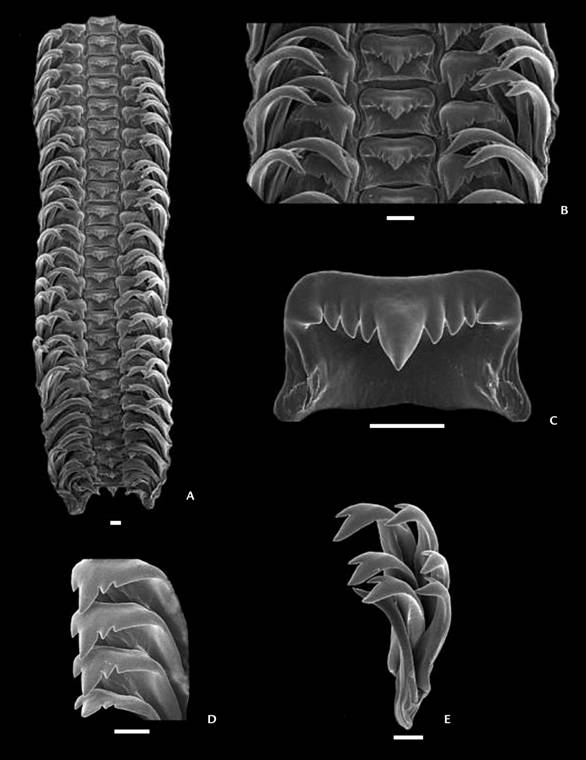
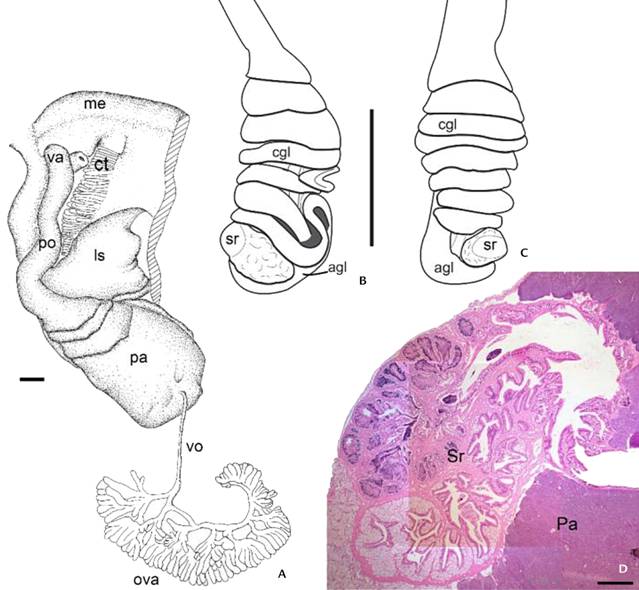
Ampullariids are freshwater snails distributed widely in tropical and subtropical regions of Asia, Africa, and the Americas. Asolene d’Orbigny, 1838, Felipponea Dall, 1919, Marisa Gray, 1824, and Pomacea Perry, 1810 constitute the New World genera. Despite their importance and wide distribution, the species limits are still confusing, especially in less studied genera such as Asolene. The original description of Asolene meta (Ihering, 1915) was based on a single shell, from the municipality of Barra, state of Bahia, northeast Brazil, but provided few characteristics to reliably distinguish it from congenerics. We redescribe A. meta based on topotypes and additional specimens from other localities of the São Francisco Basin, where this species is endemic. The combined characters of shell morphology (thick shell and wide and deep umbilicus), the respiratory siphon, and egg morphology (oviposition under water and non-calcareous eggs) confirmed A. meta as a valid species within Asolene. Key anatomical characters include, in males, a penis sheath with two accessory glands on the dorsal surface, one rugose apical and one smooth, a rounded internal basal gland, as well as one gland on the external basal surface; and in females, the pallial oviduct dominating the floor of the mantle cavity, a muscular, oval elongated seminal receptacle, two blind diverticula of the albumen gland and spiral lamellae on the capsule gland, embedded within a mass of parenchymal tissue, peach colored in live specimens. This is the first description of the internal anatomy of A. meta, the only species of the genus known to occur in northeast Brazil, extending from west of Bahia to Pernambuco.
KEYWORDS:
Apple snail; conchology; morphology; taxonomy
 Thumbnail
 Thumbnail
 Thumbnail
 Thumbnail
 Thumbnail
 Thumbnail
 Thumbnail
 Thumbnail
 Thumbnail
 Thumbnail