Temporal variation in the detection of endangered birds in the Northern Atlantic Forest
ABSTRACT
The detectability of birds may shift seasonally in response to changes in environmental conditions and social interactions. Seasonal variation in bird behavior may influence the findings of avifaunal inventories, by making it difficult to detect some species, especially the rarest ones. We investigated how variation in rainfall patterns affects the detection of bird species in a fragment of tropical forest in the most threatened region of the Brazilian Atlantic Forest, in its northern extreme. The data were collected between January and September 2018, and October to December 2019, during which, two observers walked transects within a forest fragment. Considering the complete set of species studied, detection correlated negatively with rainfall, with a decrease in detection of bird species two months before the onset of the rainy season, between February and June. We identified distinct patterns of variation in bird detection. While 10 bird taxa were detected throughout the year, others were detected more frequently during the dry season, or at the onset of the rainy season. A positive correlation was found between rainfall and the detection of Momotus momota marcgravianus Pinto & Camargo, 1961, Xiphorhynchus atlanticus (Cory, 1916), and Xenops minutus alagoanus Pinto, 1954. Negative correlations, with reduced detection, were found in relation to the onset of the rainy season in the detection of Hemitriccus griseipectus naumburgae (Zimmer, 1945) and Chiroxiphia pareola (Linnaeus, 1766). The combined detection of these species was more frequent between the peak of the dry season and the onset of the rainy season. We recommend scheduling future surveys in the study region during this period to maximise the likelihood of detecting the greatest number of species.
KEYWORDS:
Behavior; cross-correlation; detection; Pernambuco Center of Endemism; rainfall; tropical forest
INTRODUCTION
Variation in bird detection can affect the reliability of bird surveys, and influence the definition of priority areas for conservation, the identification of rare species, the assessment of extinction risk, and other conservation strategies (Parker III 1991, Antunes 2008, Anderson et al. 2015). This variation in detection is associated with seasonal shifts in the vocal activity of birds, and may affect the probability of recording, in particular, rare species (Anderson et al. 2015). Birds may often adjust their vocal activity to seasonal changes in environmental conditions and associated shifts in patterns of social interaction. Seasonal fluctuations in bird vocal activity are related to reproduction (mating calls) (Amrhein et al. 2002), territorial defense, and environmental conditions, including habitat type, food availability, the abundance of predators, the photoperiod, temperature, and rainfall levels (Gahr 2014).
At low latitudes, there is relatively little seasonal variation in temperature and day length (Ricklefs 1993, Dawson et al. 2001, Moore et al. 2005), although in most tropical regions, there is marked seasonal variation in rainfall (Peres 1994). This variation in rainfall in the tropics is considered to be the key factor determining primary productivity (Ricklefs 1993, Ahumada 2001), plant phenology and fruit production (Van Schaik et al. 1993), insect abundance and activity (Vasconcellos et al. 2010, Osborne 2012), and bird reproductive phenology (Wolda 1980, Blake and Loiselle 1991, Poulin et al. 1992, Araujo et al. 2017). The rainfall-driven variation in these parameters can influence the vocal behavior of birds, which can also impact their detection. For example, Vokurková et al. (2018) recorded higher bird detection rates between the end of the dry season and the onset of the rainy season in humid tropical forests in Cameroon, west Africa.
In tropical regions, few studies have attempted to identify the main patterns of seasonal variation in bird detection (Karr 1976, Chiver et al. 2015, Brawn et al. 2017, Vokurková et al. 2018, Pérez-Granados and Schuchmann 2021). In addition to the importance of understanding these patterns in the case of rare and endangered species, this knowledge can be used to determine the optimal period for scheduling bird counts (Best 1981). Censuses of endangered species are crucial for diagnosis of the real risk of extinction, as well as for identifying priority areas for conservation and defining effective population management actions (Kamino et al. 2012, Tonetti and Pizo 2016, ICMBIO 2018).
With more than 1971 bird species, Brazil has one of the richest avifaunas on the planet (Pacheco et al. 2021), of which 13% (n = 257) are threatened with extinction (MMA 2022). The northern extreme of the Brazilian Atlantic Forest, which is located in northeastern Brazil, is the most fragmented portion of this biome, and is also home to the largest number of endangered bird species in the entire Atlantic Forest (Araujo et al. 2023). Extensive deforestation in this region, primarily for sugar cane plantations, has left only 12% of the original forest cover (Ribeiro et al. 2009). Two birds, Alagoas Foliage-gleaner, Philydor novaesi Teixeira & Gonzaga, 1983, and Cryptic Treehunter, Cichlocolaptes mazarbarnetti Buzzetti, 2014, from the Northern Atlantic Forest (NAF) have been added to the global list of extinct species, and others, such as Alagoas Antwren, Myrmotherula snowi Teixeira & Gonzaga, 1985, are critically endangered (Araujo et al. 2023). The most recent Brazilian list of threatened species (ICMBio 2023) has added Pernambuco Pygmy-Owl, Glaucidium mooreorum Silva, Coelho & Gonzaga, 2003, to the list of extinct species. In this context, understanding how environmental factors may influence the detection of threatened species will be crucial for the effective monitoring of birds in the study region.
In the present study, we investigated (i) how fluctuations in rainfall influence the detection of birds, including endangered species, in a fragmented tropical forest in the Northern Atlantic Forest, (ii) whether bird detection peaks during the transition period between the dry and rainy seasons, and (iii) whether species detection is heterogeneous, given that different species respond differently to local seasonal variation.
MATERIAL AND METHODS
Study area
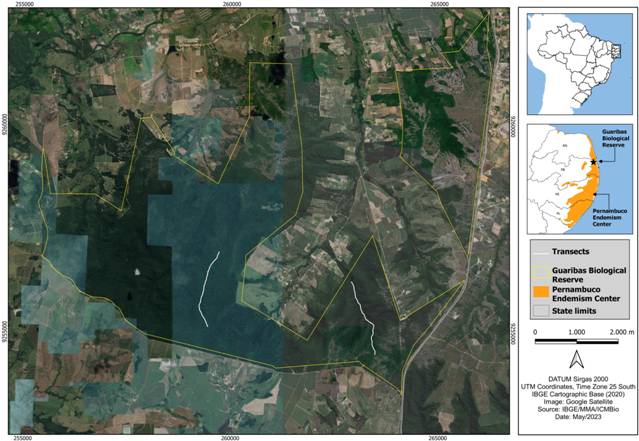
We conducted the present study in the Guaribas Biological Reserve (REBIO Guaribas) (6°43’26”S; 35°10”44”W, Fig. 1), a fully-protected federal conservation unit. The reserve is located in the municipalities of Mamanguape and Rio Tinto, on the northern coast of the Brazilian state of Paraíba. The REBIO Guaribas covers a total area of 4,028.55 ha, divided into three sectors - SEMA I, with 673.64 ha, SEMA II (3,016.09 ha), and SEMA III (338.82 ha), in accordance with federal decree number 98,884, of January 25th, 1990 (Ibama 2003). Most of the vegetation in this protected area is lowland seasonal semi-deciduous forest (RADAMBRASIL 1981). The local landscape can be divided into forest, tableland forest, and open areas, and the REBIO Guaribas is surrounded by sugarcane plantations, highways, settlements, indigenous lands, and urban areas (Ibama 2003, Pereira and Barbosa 2004).
The local climate is tropical and humid, with dry summers and rainy winters (Ibama 2003, Köppen 1936). The mean temperature in the protected area is 24-26 °C, with an absolute annual maximum of 36 °C. Annual rainfall varies between 1,750 and 2,000 mm, with the rains beginning in February and lasting until July, with dry months between August and January (Ibama 2003). The study area is located on fluvial and marine plains, and also tablelands, with elevations between 60 m and 204 m above sea level, with the highest altitudes in the SEMA II sector (Ibama 2003, Melo and Vieira 2017).

Transects surveyed in the present study at REBIO Guaribas, Paraíba, Brazil, between January and September 2018, and October to December 2019.
We collected the data in SEMA II (Fig. 1), within a semi-deciduous seasonal forest, with a canopy of 15-20 m in height, medium to large trees, with some emergents that may reach up to 30 m (Ibama 2003). The forest canopy is dominated by trees such as Ocotea canaliculata (Rich.) Mez (Lauraceae), Paubrasilia echinata (Lam.) Gagnon, H.C. Lima & G.P. Lewis (Fabaceae), Protium heptaphyllum (Aubl.) Marchand (Burseraceae), and Inga blanchetiana Benth. (Fabaceae) (Ibama 2003). There is also a number of other tropical hardwood species, including Manilkara salzmannii (A.DC.) H.J.Lam (Sapotaceae), Tabebuia spp. (Bignoniaceae), Apuleia leiocarpa (Volgel) J.F. Macbride (Fabaceae), Bowdichia virgilioides Kunth (Fabaceae), Brosimum guianense (Aubl.) Huber (Moraceae), Cariniana legalis (Mart.) Kuntze (Lecythidaceae), and Eschweilera ovata (Cambess.) Mart. ex Miers (Lecythidaceae).
Rainfall
We obtained daily rainfall data for the study between January and September 2018 directly from the administration of the REBIO Guaribas. Rainfall is measured on site, every day, using an analog rain gauge (accuracy of 2.5 mm), which is installed at the headquarters of the reserve. For the period between October and December 2019, we obtained daily rainfall data for the municipality of Mamanguape (municipality in the study area) from the online historical database provided by PROCLIMA/CPTEC (http://proclima.cptec.inpe.br). Based on these data, we calculated the monthly rainfall for the study period.
Bird detectability
We assessed the detectability of the local birds through monthly surveys representing each of the 12 months of the year (between January and September 2018, and in October and December 2019). We collected data using a perpendicular distance sampling approach (Buckland et al. 1993, Cullen and Rudran 2004), based on two 2 km transects within the forest (Fig. 1). We walked the transects once a month at a constant speed (1-1.5 km/h) during the period of peak bird activity between 5:30 am and 9:00 am. Each survey was conducted by two trained observers, with a minimum interval of 10 days between monthly visits. The birds were detected either visually, using binoculars, or from their vocalizations (we consider songs and calls). Each detection, whether by vocalization or visual contact of an individual, was considered as a contact. Finally, we added all contacts, recorded in the two transects, for each taxon in the month.
The surveys focused on 10 bird taxa, including six considered to be at some risk of extinction in Brazil (MMA 2022) and four non-threatened species. The threatened species were Rusty-margined Guan, Penelope superciliaris alagoensis Nardelli, 1993 (Critically Endangered - CR), Momotus momota marcgravianus Pinto & Camargo, 1961 (Endangered - EN), Ceara Gnateater, Conopophaga cearae Cory, 1916 (EN), Golden-tailed Parrotlet, Touit surdus (Kuhl, 1820) (Vulnerable - VU), Xiphorhynchus atlanticus (Cory, 1916) (VU) and Xenops minutus alagoanus Pinto, 1954 (VU). The non-threatened (Least Concern) species were Chiroxiphia pareola (Linnaeus, 1766), Pale-bellied Tyrant-Manakin, Neopelma pallescens (Lafresnaye, 1853), Hemitriccus griseipectus naumburgae (Zimmer, 1945) and Black-cheeked Gnateater, Conopophaga melanops nigrifrons Pinto, 1954 (Near Threatened). However, two of these species (P. superciliaris alagoensis and T. surdus) were excluded from the individual analyses due to insufficient numbers of records (< 13 records).
Data analysis
To evaluate the relationship between rainfall and bird detection rates, we used the Cross-Correlation Function (CCF) and lagged regressions (Brockwell and Davis 1991, Cryer and Chan 2008). The CCF identifies possible patterns in a time series that can be used to explain the variation in the series over time. For example, here we use this approach to identify the time lag of the precipitation variable (x) that may be a potential predictor of bird detection (y).
The CCF between two time series (xt and yt) (e.g., in this work, precipitation and records species per month) is defined as the set of sample correlations between xt+h and yt for h = 0, -1, -2, -3, etc. (Armenteras et al. 2016). Correlations with a negative lag in h indicate a relationship between the first series and the values of the preceding periods in the second series (Armenteras et al. 2016). In this case, when x is a predictor of y and the lag is negative, x leads y. When there is a positive lag in h, the y series leads the x series. The values of the Autocorrelation Function (ACF) indicate the coefficient of autocorrelation of h at each lag. To understand the relationship between the rainfall and detection of the birds, we applied the lag indicated by the CCF plots to a lagged regression, to obtain the P and R2 values. A significance level of p = 0.05 was used in all the analyses, which were run in R program, version 4.2.3, using the ACF function available in the basic software package.
RESULTS
Rainfall varied considerably among the months of the study period (Fig. 2). The months between August and December had the lowest rainfall, with total monthly rainfall not exceeding 37 mm. February (242 mm) and March (227 mm) were the rainiest months, with monthly rainfall of 137-148 mm being recorded in January, April, May, June and July.

Temporal variation in rainfall (columns) and the detection (line) of the 10 study species monitored in the REBIO Guaribas, between January and September 2018, and October to December 2019.
The months with the lowest bird detection were April (n = 36) and July (n = 48). Some species had relatively high detection, in particular, C. pareola, which was recorded 45 times in October and 40 times in December. Momotus m. marcgravianus, X. atlanticus and X. m. alagoanus were detected most frequently in January and February, while H. g. naumburgae was detected least frequently between April and July, and most frequently between October and January. Conopophaga cearae and C. m. nigrifrons were detected at similar rates throughout the year.
Overall (Fig. 3), a significant negative correlation between bird detections and rainfall was observed two months before the rainfall peak (lag (h) = -2, autocorrelation coefficient = -0.559; R2 = 0.55, p = 0.01). Bird detections decreased during this period when all species were considered together. However, when we analysed the correlograms recorded for each species, however, we identified three different patterns: (i) no significant correlation between detection and rainfall for C. m. nigrifrons and C. cearae (Fig. 4); (ii) detection correlated positively with rainfall in the same month and one month after the peak in rainfall, with continuous detection in the subsequent months, M. m. marcgravianus (lags (h) = 0, Autocorrelation Coefficient = 0.582; R2 = 0.33, p = 0.04), X. m. alagoanus (lags (h) = 1, Autocorrelation Coefficient = 0.600; R2 = 0.36; p = 0.04) and X. atlanticus (lags (h) = 1, Autocorrelation Coefficient = 0.598; R2 = 0.35; p = 0.05), and (iii) bird detection was negatively correlated with rainfall, decreasing during the rainy season, one to two months prior to the peak in rainfall, and increasing detect in the third and fourth months after this peak., H. g. naumburgae (lags (h) = -2, Autocorrelation Coefficient = -0.600; R2 = 0.50; p = 0.02) and C. pareola (lags (h) = -1, Autocorrelation Coefficient = -0.643; R2 = 0.54, p = 0.01). Neopelma pallescens showed the same pattern (iii) in its detection, but it was not significant (Fig. 4).

Cross-correlation function (CCF) of the number of birds detected during the present study in the REBIO Guaribas, Paraíba, Brazil, between January and September 2018, and October to December 2019. The correlation is significant when the value of the autocorrelation function (ACF) exceeds the dashed line (significance interval), and the lag (number of months, on the x-axis) when it is negative, the vocal activity responses precede the period of greatest rainfall and positive, it indicates that the vocal activity responses were more frequent during or follow the period of greatest rainfall.
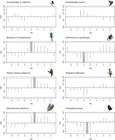
Cross-correlation of the number of birds of each of the study species detected during the present study in the REBIO Guaribas, Paraíba, Brazil, between January and September 2018, and October to December 2019. The correlation is significant when the value of the autocorrelation function (ACF) exceeds the dashed line (significance interval), and the lag (number of months, on the x-axis) when it is negative, the vocal activity responses precede the period of greatest rainfall and positive, it indicates that the vocal activity responses were more frequent during or follow the period of greatest rainfall. The values highlighted in gray are significant correlations (p < 0.05). Silhouette of birds: M. m. marcgravianus (author: Emanuel Barreto); X. m. alagoanus (author: Thiago Zanetti); X. atlanticus (author: Ciro Albano); C. m. nigrifrons, C. cearae, H. g. naumburgae, C. pareola and Neopelma pallescens (author: Diego Lima).
DISCUSSION
Overall, the findings of the present study indicate that bird detection are not homogeneous over time, and tend to vary with seasonal fluctuations in rainfall. While the detection of some species was not associated with rainfall, others were detected more frequently during the first two or three months of the rainy season, or during the dry season, with a significant reduction in their detectability during the rainy season. Overall, the largest numbers of individuals were detected during the dry season, and at the onset of the rainy season in the NAF.
While rainfall may not directly predict bird vocal activity, it serves as a trigger that regulates climatic conditions favorable for breeding and resource availability, which in turn can influence bird activity (Araujo et al. 2017) and vocal detection (Best 1981, Senapathi et al. 2011, Vokurková et al. 2018, Pérez-Granados and Schuchmann 2021). For example, the accumulation of rain in a tropical forest may reduce the availability of invertebrate prey, as they become less active during intense rainfall and seek shelter under the foliage and leaf litter, making them less visible to birds (Foste 1974). Furthermore, birds tend to reduce their displays and vocal activity during rains (Robbins 1981, Zuberogoitia et al. 2019), which may be due to air temperature (Garson and Hunter 1979, Strain and Mumme 1988), cloudy conditions (Bas et al. 2008) or rain noise (Ryan and Brenowitz 1985, Lengagne and Slater 2002). Phenology data indicate that flowers and fruits are available throughout the year in the NAF, although fruit availability is greater in the months preceding the annual peak in rainfall (Fortunato and Quirino 2016). The combination of these processes may explain for the higher detection rates recorded during the dry season and the onset of the rainy season in the REBIO Guaribas.
One of the main factors influencing bird detection is the length of the breeding season (Best 1981). Some studies have found that many tropical forest birds sing infrequently most of the year, but increase their vocal activity during the breeding period (Koloff and Mennill 2013, Chiver et al. 2015, Hill et al. 2015). While the considerable diversity of birds found in the Brazilian Atlantic Forest is reflected in an enormous variety of breeding strategies, there is a general tendency for breeding to occur between September and February (Sick 1997), the period in which we recorded the highest detection. However, it is important to note that detection patterns vary considerably between species, especially considering that their breeding behaviour may be synchronised with different biological and physiological factors within this time window (Staicer et al. 1996, Wiley 1996, Morais et al. 2012).
We found at least three patterns in the detection of the study species monitored in the REBIO Guaribas, including threatened birds. The simplest pattern was observed for C. m. nigrifrons and C. cearae, whose detection remained consistent throughout the study period. This consistent detection pattern may be due to their very distinctive vocalizations, which are easily heard throughout the forest (Whitney and Juana 2020).
A second detection pattern was identified in M. m. marcgravianus, X. m. alagoanus and X. atlanticus. The detection of these species was significantly correlated with rainfall, often coinciding with the onset of the rainy season. In particular, M. m. marcgravianus, a rare species in the Atlantic Forest that typically vocalizes during the crepuscular hours before dawn, has a low probability of detection during early morning surveys for most of the year. However, this study revealed a shift in its vocal activity between January and March, when it vocalized intensely until 9 am.
The third pattern was recorded in H. g. naumburgae, C. Pareola and N. pallescens, which are relatively common in the study area. The detection of the first two species was correlated negatively and significantly with the onset of the rainy season, one to two months prior to the peak of the rains. Neopelma pallescens showed the same pattern (iii) in its detection, but it was not significant. This pattern may be associated with the end of the breeding season, which coincides with the peak of the dry season, between September and December (Clock 2004, Snow 2020a, 2020b), just prior to the onset of the rainy season. While H. g. naumburgae, for example, vocalizes frequently throughout the year (Schulenberg 2020), in our study, we recorded a peak in its detection rate between September and January. However, as data on breeding patterns are not available for most of the taxa in the study area, further research is needed to determine whether the higher detection rates recorded here actually correspond to breeding patterns.
The findings of the present study indicate that rainfall has a variable influence on bird species detection in the NAF. Detection patterns differed among species, with some being consistently detected year-round, while others peaked during the dry season or at the onset of the rainy season. Similar patterns have been observed in bird assemblages from humid African forests (Vokurková et al. 2018) and certain species in the Pantanal Matogrossense, Brazil (Pérez-Granados and Schuchmann 2021), where greater vocal activity occurred in the dry season. These results suggest that the optimal period for bird surveys in the NAF, particularly for endangered species, is between the peak of the dry season and the onset of the rainy season. We recommend scheduling future surveys during this period to maximize species detection.
LITERATURE CITED
-
Ahumada JA (2001) Comparison of the reproductive biology of two neotropical wrens in an unpredictable environment in Northeastern Colombia. The Auk 118(1): 191-210. https://doi.org/10.1093/auk/118.1.191
» https://doi.org/10.1093/auk/118.1.191 -
Amrhein V, Korner P, Naguib M (2002) Nocturnal and diurnal singing activity in the nightingale: correlations with mating status and breeding cycle. Animal Behaviour 64(6): 939-944. https://doi.org/10.1006/anbe.2002.1974
» https://doi.org/10.1006/anbe.2002.1974 -
Anderson AS, Marques TA, Shoo LP, Williams SE (2015) Detectability in audio-visual surveys of tropical rainforest birds: The influence of species, weather and habitat characteristics. Plos One 10(6): e0128464. https://doi.org/10.1371/journal.pone.0128464
» https://doi.org/10.1371/journal.pone.0128464 -
Antunes AZ (2008) Diurnal and seasonal variability in bird counts in a forest fragment in southeastern Brazil. Revista Brasileira de Zoologia 25(2): 228-237. https://doi.org/10.1590/S0101-81752008000200011
» https://doi.org/10.1590/S0101-81752008000200011 -
Araujo HFP, Vieira-Filho AH, Barbosa MRV, Diniz-Filho JAF, da Silva JMC (2017) Passerine phenology in the largest tropical dry forest of South America: effects of climate and resource availability. Emu 117(1): 78-91. https://doi.org/10.1080/01584197.2016.1265430
» https://doi.org/10.1080/01584197.2016.1265430 -
Araujo HFP, Vilela HALS, Phalan B, Develey PF (2023) Bird diversity and conservation of the Northern Atlantic Forest. In: Pereira Filho GA, França FGR, Alves RRN, Vasconcellos A (Eds) Animal biodiversity and conservation in Brazil’s Northern Atlantic Forest. Springer, Cham, 185-200. https://doi.org/10.1007/978-3-031-21287-1_12
» https://doi.org/10.1007/978-3-031-21287-1_12 -
Armenteras D, Gibbes C, Vivacqua CA, Espinosa JS, Duleba W, Goncalves F, Castro C (2016) Interactions between climate, land use and vegetation fire occurrences in El Salvador. Atmosphere 7(2): 26. https://doi.org/10.3390/atmos7020026
» https://doi.org/10.3390/atmos7020026 -
Bas Y, Devictor V, Moussus J-P, Jiguet F (2008) Accounting for weather and time-of-day parameters when analysing count data from monitoring programs. Biodiversity and Conservation 17(14): 3403-3416. https://doi.org/10.1007/s10531-008-9420-6
» https://doi.org/10.1007/s10531-008-9420-6 - Best LB (1981) Seasonal changes in detection of individual bird species. In: Ralph CJ, Scott JM (Eds) Studies in avian biology. Allen Press, Lawrence, vol. 6, 252-261.
-
Blake JG, Loiselle BA (1991) Variation in resource abundance affects capture rates of birds in three lowland habitats in Costa Rica. The Auk 108(1): 114-130. https://academic.oup.com/auk/article/108/1/114/5172561
» https://academic.oup.com/auk/article/108/1/114/5172561 - RADAMBRASIL (1981) Folhas SB. 24/25 Jaguaribe/Natal: geologia, geomorfologia, pedologia, vegetação, uso potencial da terra. Projeto RADAMBRASIL, Rio de Janeiro, vol. 23.
-
Brawn JD, Benson TJ, Stager M, Sly ND, Tarwater CE (2017) Impacts of changing rainfall regime on the demography of tropical birds. Nature Climate Change 7(2): 133-136. https://doi.org/10.1038/nclimate3183
» https://doi.org/10.1038/nclimate3183 - Brockwell PJ, Davis RA (1991) Time Series: Theory and Methods. Springer, New York, 580 pp.
- Buckland ST, Anderson DR, Burnham KP, Laake JL (1993) Distance Sampling: Estimating abundance of biological populations. Chapman and Hall, University of California, Los Angeles, 441 pp.
-
Chiver I, Stutchbury BJM, Morton ES (2015) The function of seasonal song in a tropical resident species, the Red-throated Ant-tanager (Habia fuscicauda). Journal of Ornithology 156(1): 55-63. https://doi.org/10.1007/s10336-014-1139-4
» https://doi.org/10.1007/s10336-014-1139-4 - Clock BM (2004) White-bellied Tody-Tyrant Hemitriccus griseipectus del Hoyo J, Elliott A, Christie DA (Eds) Handbook of the birds of the world. Lynx Edicions, Barcelona, vol. 9, 323.
- Cryer JD, Chan KS (2008) Time Series Analysis: with Applications in R. Springer, New York , 2nd ed., 487 pp.
- Cullen Jr L, Rudran R (2004) Transectos lineares na estimativa de densidade de mamíferos e aves de médio e grande porte. In: Cullen Jr L, Rudran R, Valladares-Pauda C (Eds) Métodos de estudos em biologia da conservação da vida silvestre. Editora Universidade Federal do Paraná, Curitiba, 2nd ed., 169-179.
-
Dawson A, King VM, Bentley GE, Ball GF (2001) Photoperiodic control of seasonality in birds. Journal of Biological Rhythms 16(4): 365-380. https://doi.org/10.1177/074873001129002079
» https://doi.org/10.1177/074873001129002079 -
Fortunato MEM, Quirino ZGM (2016) Efeitos da fragmentação na fenologia reprodutiva de espécies arbóreas presentes em borda e interior de Mata Atlântica Paraibana. Rodriguésia 67(3): 603-614. https://doi.org/10.1590/2175-7860201667305
» https://doi.org/10.1590/2175-7860201667305 - Foste MS (1974) Rain, feeding behavior, and clutch size in tropical birds. Auk 91(4): 722-726.
-
Gahr M (2014) How hormone-sensitive are bird songs and what are the underlying mechanisms? Acta Acustica United with Acustica 100(4): 705-718. https://doi.org/10.3813/AAA.918749
» https://doi.org/10.3813/AAA.918749 -
Garson PJ, Hunter ML (1979) Effects of temperature and time of year on the singing behaviour of wrens Troglodytes and great tits Parus major Ibis 121(4): 481-487. https://doi.org/10.1111/j.1474-919X.1979.tb06688.x
» https://doi.org/10.1111/j.1474-919X.1979.tb06688.x - Hill SD, Amiot C, Ludbrook MR, Ji W (2015) Seasonal variation in the song structure of tui (Prosthemadera novaeseelandiae). New Zealand Journal of Ecology 39(1): 110-115.
-
Ibama (2003) Plano de Manejo Reserva: Biológica Guaribas. Ministério do Meio Ambiente, Ibama, Brasília, vol. 1, 520 pp. https://www.gov.br/icmbio/pt-br/assuntos/biodiversidade/unidade-de-conservacao/unidades-de-biomas/mata-atlantica/lista-de-ucs/rebio-guaribas/arquivos/rebio_guaribas.pdf [Accessed: 07/03/2025]
» https://www.gov.br/icmbio/pt-br/assuntos/biodiversidade/unidade-de-conservacao/unidades-de-biomas/mata-atlantica/lista-de-ucs/rebio-guaribas/arquivos/rebio_guaribas.pdf -
ICMBio (2023) Sistema de Avaliação do Risco de Extinção da Biodiversidade - SALVE. Ministério do Meio Ambiente, Instituto Chico Mendes de Conservação da Biodiversidade, Brasília. https://salve.icmbio.gov.br/ [Accessed: 07/08/2023]
» https://salve.icmbio.gov.br/ - ICMBio (2018) Livro Vermelho da Fauna Brasileira Ameaçada de Extinção. Ministério do Meio Ambiente, Instituto Chico Mendes de Conservação da Biodiversidade, Brasília, vol. 1, 492 pp.
-
Kamino LHY, Stehmann JR, Amaral S, De Marco P, Rangel TF, de Siqueira MF, De Giovanni R, Hortal J (2012) Challenges and perspectives for species distribution modelling in the neotropics. Biology Letters 8(3): 324-326. https://doi.org/10.1098/rsbl.2011.0942
» https://doi.org/10.1098/rsbl.2011.0942 - Karr JR (1976) Seasonality, resource availability, and community diversity in tropical bird communities. The American Naturalist 110(976): 973-994.
-
Koloff J, Mennill DJ (2013) Vocal behaviour of Barred Antshrikes, a Neotropical duetting suboscine bird. Journal of Ornithology 154(1): 51-61. https://doi.org/10.1007/s10336-012-0867-6
» https://doi.org/10.1007/s10336-012-0867-6 - Köppen W (1936) Das geographische System der Klimate. Handbuch der Klimatologie, Berlin, 44 pp.
-
Lengagne T, Slater PJB (2002) The effects of rain on acoustic communication: tawny owls have good reason for calling less in wet weather. Proceedings of the Royal Society of London, Series B: Biological Sciences 269(1505): 2121-2125. https://doi.org/10.1098/rspb.2002.2115
» https://doi.org/10.1098/rspb.2002.2115 -
Melo JIM, Vieira DD (2017) Flora da Reserva Biológica Guaribas, PB, Brasil: Boraginaceae. Hoehnea 44(3): 407-414. https://doi.org/10.1590/2236-8906-04/2017
» https://doi.org/10.1590/2236-8906-04/2017 -
MMA (2022) Lista Nacional Oficial de Espécies da Fauna Ameaçadas de Extinção. Portaria MMA n° 148, de 7 de junho de 2022. https://www.in.gov.br/en/web/dou/-/portaria-mma-n-148-de-7-de-junho-de-2022-406272733 [Accessed: 07/08/2023]
» https://www.in.gov.br/en/web/dou/-/portaria-mma-n-148-de-7-de-junho-de-2022-406272733 -
Moore IT, Bonier F, Wingfield JC (2005) Reproductive asynchrony and population divergence between two tropical bird populations. Behavioral Ecology 16(4): 755-762. https://doi.org/10.1093/beheco/ari049
» https://doi.org/10.1093/beheco/ari049 -
Morais MRPT, Velho ALMCS, Dantas SES, Fontenele-Neto JD (2012) Morfofisiologia da reprodução das aves: desenvolvimento embrionário, anatomia e histologia do sistema reprodutor. Acta Veterinaria Brasilica 6(3): 165-176. https://doi.org/10.21708/avb.2012.6.3.2965
» https://doi.org/10.21708/avb.2012.6.3.2965 -
Osborne PL (2012) Tropical Ecosystems and Ecological Concepts. Cambridge University Press, Cambridge, 522 pp. https://doi.org/10.1017/CBO9781139057868
» https://doi.org/10.1017/CBO9781139057868 -
Pacheco JF, Silveira LF, Aleixo A, Agne CE, Bencke GA, Bravo GA, et al. (2021) Annotated checklist of the birds of Brazil by the Brazilian Ornithological Records Committee-second edition. Ornithology Research 29(2): 94-105. https://doi.org/10.1007/s43388-021-00058-x
» https://doi.org/10.1007/s43388-021-00058-x - Parker III TA (1991) On the use of tape recorders in avifaunal surveys. The Auk 108(2): 443-444.
-
Pereira MS, Barbosa MRV (2004) A família Rubiaceae na Reserva Biológica Guaribas, Paraíba, Brasil. Subfamílias Antirheoideae, Cinchonoideae e Ixoroideae. Acta Botanica Brasilica 18(2): 305-318. https://doi.org/10.1590/S0102-33062004000200010
» https://doi.org/10.1590/S0102-33062004000200010 -
Peres CA (1994) Primate Responses to Phenological Changes in an Amazonian Terra Firme Forest. Biotropica 26(1): 98. https://doi.org/10.2307/2389114
» https://doi.org/10.2307/2389114 -
Pérez-Granados C, Schuchmann KL (2021) Seasonal Climate Impacts on Vocal Activity in Two Neotropical Nonpasserines. Diversity 13(7): 319. https://doi.org/10.3390/d13070319
» https://doi.org/10.3390/d13070319 -
Poulin B, Lefebvre G, McNeil R (1992) Tropical avian phenology in relation to abundance and exploitation of food resources. Ecology 73(6): 2295-2309. https://doi.org/10.2307/1941476
» https://doi.org/10.2307/1941476 -
Ribeiro MC, Metzger JP, Martensen AC, Ponzoni FJ, Hirota MM (2009) The Brazilian Atlantic Forest: How much is left, and how is the remaining forest distributed? Implications for conservation. Biological Conservation 142(6): 1141-1153. https://doi.org/10.1016/j.biocon.2009.02.021
» https://doi.org/10.1016/j.biocon.2009.02.021 - Ricklefs RE (1993) The economy of nature: a textbook in basic ecology. WH Freeman, New York, 3rd ed., 576 pp.
- Robbins CS (1981) Effect of time and day on bird activity. Studies in avian biology 6: 275-286.
-
Ryan MJ, Brenowitz EA (1985) The role of body size, phylogeny, and ambient noise in the evolution of bird song. The American Naturalist 126(1): 87-100. https://doi.org/10.1086/284398
» https://doi.org/10.1086/284398 -
Schulenberg TS (2020) White-bellied Tody-Tyrant (Hemitriccus griseipectus). In: Schulenberg TS (Ed.) Birds of the world. Cornell Lab of Ornithology, Ithaca. https://doi.org/10.2173/bow.whbtot1.01
» https://doi.org/10.2173/bow.whbtot1.01 -
Senapathi D, Nicoll MAC, Teplitsky C, Jones CG, Norris K (2011) Climate change and the risks associated with delayed breeding in a tropical wild bird population. Proceedings of the Royal Society, Series B: Biological Sciences 278(1722): 3184-3190. https://doi.org/10.1098/rspb.2011.0212
» https://doi.org/10.1098/rspb.2011.0212 - Sick H (1997) Ornitologia Brasileira. Nova Fronteira, Rio de Janeiro, 912 pp.
-
Snow D (2020a) Blue-backed Manakin (Chiroxiphia pareola). In: del Hoyo J, Elliott A, Sargatal J, Christie D, Juana E (Eds) Birds of the world. Cornell Lab of Ornithology, Ithaca . https://doi.org/10.2173/bow.blbman1.01
» https://doi.org/10.2173/bow.blbman1.01 -
Snow D (2020b) Pale-bellied Tyrant-Manakin (Neopelma pallescens). In: del Hoyo J, Elliott A, Sargatal J, Christie D, Juana E (Eds) Birds of the world. Cornell Lab of Ornithology, Ithaca . https://doi.org/10.2173/bow.pbtman1.01
» https://doi.org/10.2173/bow.pbtman1.01 -
Staicer CA, Spector DA, Horn AG (1996) The Dawn Chorus and Other Diel Patterns in Acoustic Signaling. In: Kroodsma DE, Miller EH (Eds) Ecology and evolution of acoustic communication in birds. Cornell University Press, Ithaca, 453 pp. https://doi.org/10.7591/9781501736957-033
» https://doi.org/10.7591/9781501736957-033 -
Strain JG, Mumme RL (1988) Effects of food supplementation, song playback, and temperature on vocal territorial behavior of Carolina Wrens. The Auk 105(1): 11-16. https://doi.org/10.1093/auk/105.1.11
» https://doi.org/10.1093/auk/105.1.11 -
Tonetti VR, Pizo MA (2016) Density and microhabitat preference of the Southern Bristle-Tyrant (Phylloscartes eximius): Conservation policy implications. Condor 118(4): 791-803. https://doi.org/10.1650/CONDOR-16-89.1
» https://doi.org/10.1650/CONDOR-16-89.1 -
van Schaik CP, Terborgh JW, Wright SJ (1993) The phenology of tropical forests: Adaptive significance and consequences for primary consumers. Annual Review of Ecology and Systematics 24(1): 353-377. https://doi.org/10.1146/annurev.es.24.110193.002033
» https://doi.org/10.1146/annurev.es.24.110193.002033 -
Vasconcellos A, Andreazze R, Almeida AM, Araujo HFP, Oliveira ES, Oliveira U (2010) Seasonality of insects in the semi-arid Caatinga of northeastern Brazil. Revista Brasileira de Entomologia 54(3): 471-476. https://doi.org/10.1590/S0085-56262010000300019
» https://doi.org/10.1590/S0085-56262010000300019 -
Vokurková J, Motombi FN, Ferenc M, Hořák D, Sedláček O (2018) Seasonality of vocal activity of a bird community in an Afrotropical lowland rain forest. Journal of Tropical Ecology 34(1): 53-64. https://doi.org/10.1017/S0266467418000056
» https://doi.org/10.1017/S0266467418000056 -
Whitney B, Juana E (2020) Black-cheeked Gnateater (Conopophaga melanops). In: del Hoyo J, Elliott A, Sargatal J, Christie D, Juana E (Eds) Birds of the world. Cornell Lab of Ornithology, Ithaca . https://doi.org/10.2173/bow.blcgna1.01
» https://doi.org/10.2173/bow.blcgna1.01 -
Wiley RH (1996) Bird song, biological themes and variations. Condor 98(3): 670-670. https://doi.org/10.2307/1369590
» https://doi.org/10.2307/1369590 -
Wolda H (1980) Seasonality of tropical insects. The Journal of Animal Ecology 49(1): 277. https://doi.org/10.2307/4289
» https://doi.org/10.2307/4289 -
Zuberogoitia I, Burgos G, González-Oreja JA, Morant J, Martínez JE, Zabala Albizua J (2019) Factors affecting spontaneous vocal activity of Tawny Owls Strix aluco and implications for surveying large areas. Ibis 161(3): 495-503. https://doi.org/10.1111/ibi.12684
» https://doi.org/10.1111/ibi.12684
ADDITIONAL NOTES
-
Funding
Instituto Chico Mendes de Conservação da Biodiversidade This study was supported by the Instituto Chico Mendes de Conservação da Biodiversidade.
- ZooBank register
-
How to cite this article
Lima DM, Sousa AEBAS, Araujo HFP (2025) Temporal variation in the detection of endangered birds in the Northern Atlantic Forest. Zoologia 42: e24019. https://doi.org/10.1590/S1984-4689.v42.e24019
-
Published by
Sociedade Brasileira de Zoologia at Scientific Electronic Library Online - https://www.scielo.br/zool