 Aleppo, Mari and the aleppine-mariyanum dinastic project in the ancient Syria
This research aims to present aspects of diplomatic relations in the ancient Near East during the Proto-Babylonian period, focusing on the territorial state of Yamḫad, located in the northwestern Levant, and the expansionist project of Mari, situated in the Middle Euphrates. By establishing an agreement between their respective kingdoms, Yarīm-līm and Zimrī-līm conveyed an ambition to control the northwestern Levant. War policies and commercial interests were set against the backdrop of the dynastic marriage between Zimrī-līm and Shibtu, daughter of Yarīm-līm, which is why this alliance became the foundation for the union of two dynastic lineages of the same Amorite origin. Our hypothesis is that, from a Levantine perspective, Yamḫad became the center of Semitic civilization at the same time that Zimrī-līm ascended the throne of Mari with political and military ambitions aimed at territorial expansion and participation in the trade networks controlled by Yamḫad, through which it would reach connections with the eastern Mediterranean. However, Yarīm-līm, as the highest regional authority, allowed neither political nor religious parity. This research seeks to historicize, through contextual intersections, the alliances and environments – perhaps culturally conflicting, yet also capable of fostering affections – through which two dynastic houses may have integrated various ethnic groups from semi-autonomous spheres while maintaining dynamic borders.
Keywords
Amorite Yamhad kingdom; Syro-Mesopotamian civilization; alliances in the Ancient World
 Thumbnail
 Thumbnail
 Thumbnail
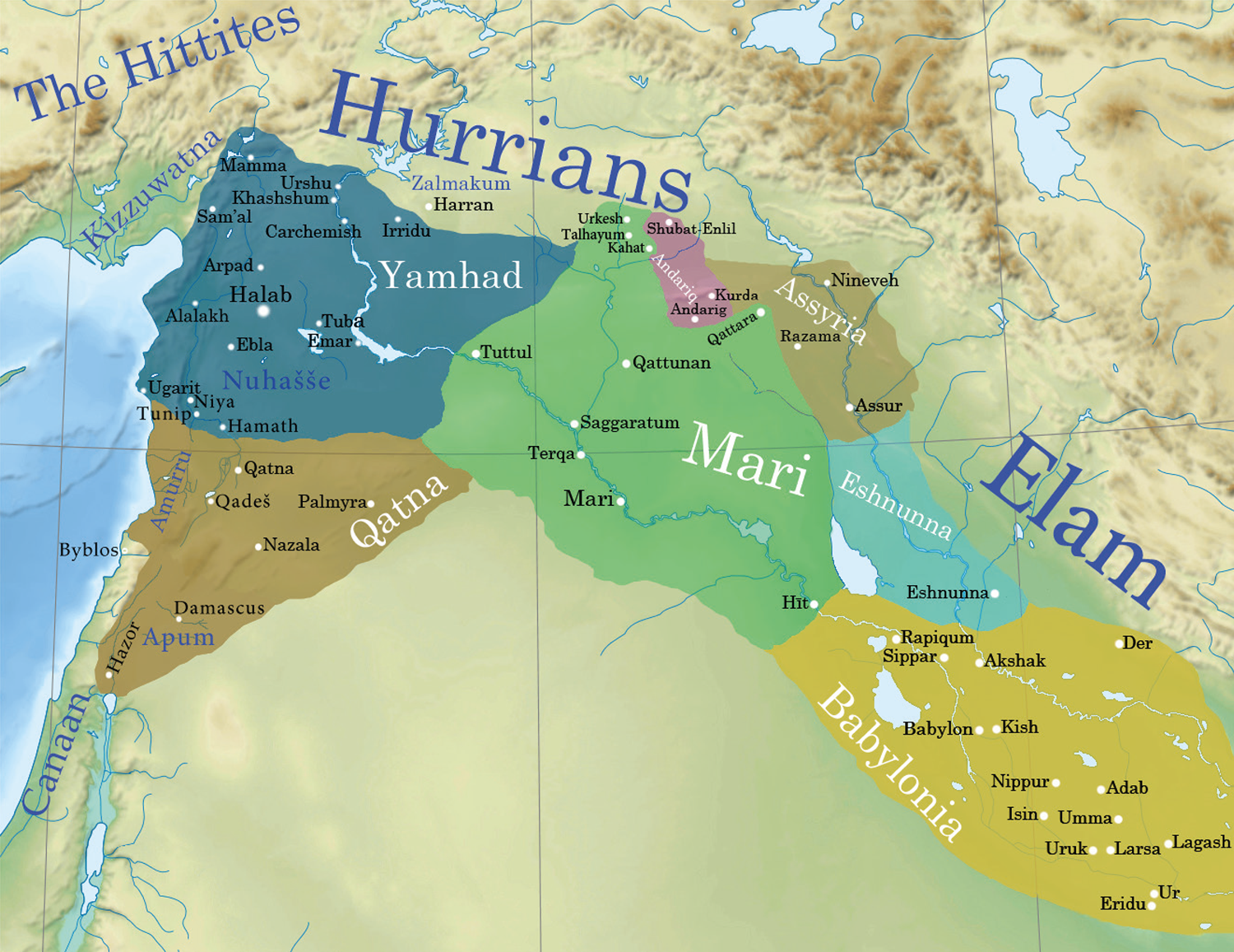 Source: Image edited and translated by the author from a map available on the Wikimedia Commons platform: https://commons.wikimedia.org/wiki/File:Yamhad_and_Vassals.png. Accessed on: April 24, 2023.