 Underground territorialities: frontier and territory in the rap battle scene of Marabá, Pará, Brazil
Abstract:
Rap emerged in the United States as one of the aesthetic, ethical, and political expressions of Hip-hop. In the 1980s, it took to the streets worldwide, being recreated in diverse sociocultural contexts. The analysis presented here examines rhyming battles in performative disputes between MCs (Masters of Ceremony) during the occupation of the urban space in the city of Marabá /PA, in the eastern Brazilian Amazon. We seek to describe the processes of how rhyming battles intertwine with the underground scene of Marabá in order to highlight the importance of these relationships in street sociability. The concept of underground territorialities connects theoretical and methodological reflections on frontiers and territory, revealing modes of organization and collective occupation of urban public space.
Keywords:
Rap Battle; Frontiers; Territory; Underground; Marabá/PA
Resumo:
O rap, enquanto uma das expressões estéticas, éticas e políticas do Hip-hop, surgiu nos Estados Unidos e, na década de 1980, ganhou as ruas mundialmente, sendo transcriado por diversos contextos socioculturais. As análises examinam as batalhas de rima em disputas performáticas entre MCs (Mestres de Cerimônia) na ocupação do espaço urbano da cidade de Marabá/PA, na Amazônia oriental brasileira. Buscamos retomar o processo de imbricação das batalhas de rima com a cena underground de Marabá para marcar a importância que essas relações têm para a sociabilidade da rua. O conceito de territorialidades underground conectou reflexões teóricas e metodológicas sobre fronteira e território, revelando modos de organização e ocupação coletiva do espaço público urbano.
Palavras-chave:
batalha de rima; fronteira; território; underground; Marabá/PA
“I WANT A VIBE!”
This phrase commonly announces the beginning of a rap battle.1 Before shouting this out at the top of their lungs, the battle’s host will employ many tricks to bring people together, creating a contagious energy that excites everyone present. This makes for a good battle.
In this introduction, we seek to bring the reader closer to a rap battle. Our initial considerations are part of creating a vibe, an energy, an atmosphere. which we will maintain until the final fatality.
The rebellious years of the 1960s (Pimentel 1997) are the pillars that support the accumulated indignation and hatred of a system that privileges white people and oppresses black people and migrants2 in peripheries abandoned by public authorities. The only State intervention in these areas occurs through the police who, in practice, leave a trail of violence and impunity.
In this context of violence, leaders of the Black movement in the US - Malcolm X and Martin Luther King Jr. - organized to confront the situation in very different ways, the former through armed defense and the latter through dialogue and peaceful marches. These heterogeneous strategies had the same goal: the end of racism. At the time, it was necessary to end the blatant racial segregation that existed in the US. In much of the country a Black person couldn’t legally enter certain establishments or sit in seats reserved for whites.3 Even in cities and states such as New York, where formal segregation was prohibited by law, de facto segregation continued in force. Black populations were confined to urban ghettos, were subject to what amounted to legal lynching by the police, and were the last to be hired, the first to be fired. Black men were being forced to fight in a failing imperialist war in Vietnam in disproportionate numbers. What kind of democracy was this where Black people only served the nation as cannon fodder?
The 1970s marked an intensification of class warfare, with capital advancing over labor. Business demands for profitability became increasingly stringent under the militarized Keynesian State. In the following decades, neoliberalism brought forth a new global rationality (Dardot and Laval 2016) that advocated for the privatization of all social services to generate greater productivity in all aspects of life.
In the late 1960s, the Black Panther Party4 emerged from the wreckage of the civil rights movement following the assassinations of Malcolm and MLK. Pimentel (1997) states that the BPP’s notions of organization, dedication to study, and commitment to justice were integrated into the founding principles of hip-hop.5 This began to manifest itself in the late 1970s through its four elements (DJ, MC, breakdancing, and graffiti), which were connected by the fifth element popularized by Afrika Bambaataa - and previously enunciated by “the godfather of rap”, Gil Scott-Heron (Sharrock 2011) - knowledge. Hip-hop is the circulation through art of revolutionary, anti-racist thought concerned with life in urban peripheries.
This historical approach concentrate on “the history of the losers” (Benjamin, 2012 and Gagnebin, 1993). Grand events, statues, and textbooks limit our perceptions of history, as well as its hauntings and circular, cyclical, and dynamic aspects. Here, we are interested in looking at how hip-hop is a manifestation intimately connected to a rebellion present in the streets, in public spaces, and in underground territorialities (Possas and Ribeiro, 2024) - which we will discuss throughout this article.
Hip-hop has a history spanning more than a half century. As a stylistic form and a revolutionary praxis, it has spread to numerous countries across the globe. Its adaptability to local realities is possible thanks to the knowledge of young people who incorporate their stories, affections, encounters, and traumas into hip-hop culture, constantly recreating it. This is how and why rap can be a key to understanding the context and territorial dynamics of southeastern Pará, especially urban areas like the city of Marabá.
Hip-hop culture, which arrived gradually in the Amazon Basin, became intertwined with local problems that sometimes resembled the ills of the American inner city and, at other times, were specific to the identities of the Brazilian suburbs. Brazilian hip-hoppers have modified and still modify the culture, according to their experiences in material and daily life.
In Marabá, the story is no different, starting with the type of urbanity constructed within this region. As economic dynamics advanced into indigenous territories in the Amazonian Basin in the later half of the 20th century, villages took shape. These would from the nexuses around which future cities would crystalize. Tatiane Costa Malheiro (2019) shows the temporal and spatial discontinuities of Amazonian urban phenomenon. Similarly, João Pacheco de Oliveira (2016) uses the concept of frontier to consider the dynamics of exploitation and suppression of peasant and indigenous autonomy in the region. This notion will help us decodify life in an Amazonian city like Marabá.
Violeta Loureiro (2019) points out that the type of modernization projected from large-scale ventures exploiting natural resources and migrant and local labor led to the emergence of a network of cities that “constitute a visible break with the myth of modernization and Amazonian development” (Loureiro 2019: 351). Ethnic relationships have become overwhelmed by the distancing that has occurred from nature and through acts of the State itself. Local societies, in general, have lost control over the territory of the Amazon: relations have become guided by business, national and international interests.
The Amazon has experienced intense processes of natural resource exploitation and the installation of large-scale enterprises (rubber, Brazil nuts, diamonds, iron ore, cattle ranching, monoculture planting, hydroelectric power, and road construction) since the first settlements along the Itacaiúnas and Tocantins rivers were established in the early 20th century. The region is quite solidly under the yoke of coloniality in terms of its forms of power and knowledge (Quijano 2005). Colonial logic empties nature and strips the humanity from the migrant and indigenous workers of the region: these must then struggle to reclaim the very conditions of their own existence.
The intimate relationship between the urban periphery and territorial disputes in the city of Marabá demands that the concepts of territory and territoriality are emphasized in this work. Rogério Haesbaert (2004) emphatically relates territory to politics: territory, in its material or symbolic sense, is always already a dispute. This tension, always present in public spaces, manifests itself mercilessly in Amazonian cities characterized not only by colonial forms of territorial control, but also by reciprocal and collective ways of belonging to this region.
It is in the experiences of violence and inequality in the Amazon - themselves a result of the logic of large-scale colonial extractive projects - that hip-hop finds a response to its call. The organization and consolidation of hip-hop did not happen suddenly, however. It was slow and gradual, picking up speed by listening to the movements already existing in the local territory. Before speaking, hip-hop listens to the artistic, cultural, and political expressions already present in the localities it infiltrates. Therefore, we must examine what its presence means, as well as its specific characteristics, in an Amazonian city like Marabá.
The organizational movement of associations, bancas, and posses6 is part of a conceptual shift that Bruno Borda, in his observations of hip-hop in Belém (2008, 2016), makes between hip-hop culture and the hip-hop movement. The former refers to the elements of artistic manifestations that give shape to symbolic and aesthetic identification; the latter involves a critical capacity for mobilization, articulation, and social and racial awareness.
It is important to say that these two dimensions are in constant correlation. It is not possible to separate aesthetics from politics, because it is understood that, in a capitalist world that constantly appropriates popular manifestations, there is always the risk of hollowing out history for ideological or market purposes. The underground, linked to perspectives of social invisibility and collectivity, has a tense relationship to the mainstream: a contradiction, or rather, a battle that does not yet have a winner (and perhaps might never have).
The question we want to ask, then, is what can the hip-hop movement7 - and particularly rap battles in a city like Marabá -- reveal about the production of urban life in the Amazon? Considering the construction of what we call “underground territorialities”, how is this way of organizing reflected in the city’s public spaces? Finally, how can we understand a periphery in the city of Marabá based on its own historical and territorial dynamics?
The present article will be divided into five parts:
-
An explanation of underground ethnography and how this relates to the concept of underground territoriality;
-
A historical account of the formation of rap battles in Marabá, linked to various other underground movements;
-
A brief theoretical discussion on frontiers and the dynamics of power in Marabá;
-
An description of how the underground territorialities of rap battles function and are organized in the city;
-
And, finally, the fatality, in which we will bring together reflections around the central questions exposed by the article.
UNDERGROUND ETHNOGRAPHY
Mariza Peirano (2014) states that ethnography is intimately related to life, which broadens its designation as a simply method. Ethnography needs to go beyond simple methodological considerations, which is why Peirano calls it a theoretical-methodological formulation. The author highlights that one of the virtues of this method (which is also not a method) is that we need to “constantly borrow from other modes of knowledge (biology, linguistics, psychoanalysis)” (Peirano 2014: 382). These intellectual bridges cross borders and allow researchers to be guided by their subjects, who present us with the questions that are important to their cosmologies.
It is no coincidence that we were constantly challenged during our research to engage in dialogue with other areas of knowledge, especially history (Gagnebin 1996) and geography (Haesbaert 2004). People in the field do not seek to make a strict division of knowledge; perhaps that is why ethnography is so strategic for expanding strategies for bridge building between knowledge forms.
Ethnography doesn’t present us with a ready-made model of what to do and how to do it. This lack of definition is a principle that allows us to expand our imagination, in the sense of creating images. For example, when MCs call for a vibe from the audience, when they ask for shouts, when they refer to where they are from and where they are, when they travel to rap battle in other places, when they circulate around the city, their bodies, speech, actions, and ways of organizing themselves elaborate, in dialogue with the researcher, theoretical perceptions about space, time, the right to the city, territory, identity, blackness, or questions about the ethnographic process itself. (Figure 1)
Presenter asking the public a vibe. Source: Batalha do Foguete Instagram. Available at: https://www.instagram.com/batalhadofoguete.2019/.
Our proposal here is that a marginal ethnographer is someone who: (1) is committed to marginal art and engaged with the subjects who produce it; and (2) can perceive and analyze marginal situations in the field. It is from the margins that remains and reminiscences are found (Gagnebin 1993 and Benjamin 2012) and that the invisible issues can emerge.
A marginal ethnography can also be described as underground ethnography. The etymology of the word “underground” refers to that which is below the ground. The term situated in opposition to mainstream, which, if translated literally, the principal current of some sort of flow. In cultural terms, it is that which is the most viewed, the most accessed, the most popular - in short, that which is the most successful in terms of sales.
Certain clubs, bars, alternative party venues, and (especially) the street form a network of relationships among young people who learn how to arrive in, behave, and leave these spaces. It is also in these spaces that artists meet each other, establish reciprocal exchanges in personal and professional terms, and become visible to one another and to their audiences.
Underground ethnography can be seen as taking participant observation to a different level. Bonds of trust are established between the ethnographer and their subjects through a cooperative and collaborative relationship that develops in the collective construction of rap battles. This lived experience is an underground approach that brings together seemingly distant social realities.
For a long time during their fieldwork, one of the authors of the present article wanted to emphasize participation more than observation in collaborating in the construction of rap battles. Bruce Albert (Albert and Kopenawa 2015) addressed this issue when he perceived his shift in the field from “participant observer” to “observing participant” as he became involved in the Yanomami land demarcation processes. Later, we realized that this dichotomy is illusory. It is understandable that Albert (Albert and Kopenawa 2015) would draw attention to participation in a world where historically ethnographers have only observed. During our fieldwork, however, these dimensions were neither separate nor hierarchized.
When the ethnographer is challenged to think about projects, judge raps, recite poetry, to produce, organize events, and even to rhyme(!), their sense of engagement and commitment to this underground, marginal art intensifies. What also intensifies, however, is their ability to observe what had previously gone unnoticed. This is why João do Rio’s (2021) notion of the intelligent vagabond is so important to this work. The act of wandering through one’s field - being a flaneur - creates an epistemic capacity to zigzag between academia and the street. An intelligent vagabond is able to relax while simultaneously worrying; they let things happen and can also make them happen. They have a commitment to becoming to and spontaneity, as well as to practice.
Finally, we can affirm that one’s perception of the underground is related to one’s notion of space (Massey 2015) and territory (Haesbaert 2004). This helps us to understand ethnographic analysis from the perspective of conflict, co-existence, heterogeneity, otherness, multiplicity, and power relations (both material and symbolic). An underground approach is related to movement and circulation. An underground movement is a movement not seen in the broader context of society - not perceived by or as part of the mainstream - but which nonetheless occurs.
This is why we affirm that, in the construction of our research, there are underground territorialities in which the researcher encounters and engages with the displacements and occupation of territories, as well as the specific ways of organizing these movements. We will now address how this historically occurred in the city of Marabá.
THE EXPANDED CULTURAL WHEEL: THE BATTLE FOR THE BATTLE8
To better organize the story we want to tell, we will divide our writing into processes.9 Dates will only serve to situate us in time: they are not to be used as a chronological determination of events. We will be attentive to institutional political movements, cultural events, artistic and cultural expressions, and collective street movements that were linked in some way to the region’s hip-hop dynamics.
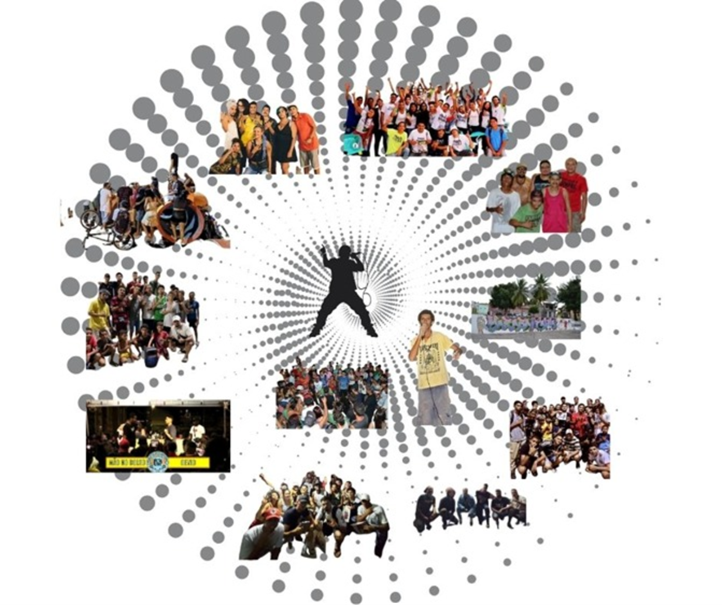
We have developed two mental maps10 to guide us throughout the writing process. The first displays the cultural movements occupying public space in Marabá. These are linked with and converge on the central idea of the struggle for the city that is rooted in underground territorialities. Rap battles are located in the middle of this map, represented by an MC with a microphone in hand. Although the rap battle is at the center of our analysis, what matters here is to consider that this movement towards centrality is also marginal, because that is how a spiral moves: marginalizing the center and centralizing the margin. In this sense, movement from the margin to the center and vice-versa is the struggle for the city. (Figure 2)

Mental map: a cartography of confluences in the cultural occupations of urban space in Marabá. Source: Prepared by Ribeiro (2025).
This mental map was constructed from interviews with interlocutors11 some readings about the culture of Marabá. At the far end of the spiral are the dove of the Holy Spirit, Bumba-Meu-Boi, the Carimbó, Oxum (representing the Afro-Brazilian religious terreiros (temples), and the bandeirinhas of the June festivals. As we will see, popular festivals occupy the public spaces of Marabá in many differenmt ways.
Next, we see the coat of arms of Marabá city hall and also a handshake, symbolizing the pressure and dialogue between the Marabá cultural movements and the municipal public authorities (Botelho 2016). The UNIFESSPA logo12 comes next, along with a poster advertising the Marabá Song Festival, the flag of the Landless Workers’ Movement, and the photo of the Tapiri cultural space at the university. These show the relationships between various social movements and the university that have expanded over the years.
The hand holding a megaphone symbolizes the first known organized movement to connect rap music into a broader Black hip-hop music movement in Marabá: the “Voices of the Periphery.” The Afro hairstyle along with the comb was chosen to represent the Black consciousness movement, important for the artistic and cultural connections between Black people in Marabá.
We then see a sound system, that refers to the region’s boom box (radiola) circuit; a person tagging or graffitiing; a DJ; a hall with a globe, indicating dance music; a b-boy doing a breakdance move; a man with a Jamaican cap, representing the reggae scene; a hand making the rock symbol; a half-pipe (a track for skateboarding and biking maneuvers); and, finally, the poster for the UNIFESSPA University Song Showcase (MUCANPA).
For the second part of our analysis, we developed a second mental map:
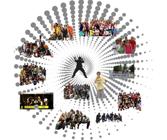
Mental map: mapping confluences in the expansion and development of rap battles. Source: Prepared Ribeiro (2025).
This second map refers to the process of emergence and consolidation, not only of the rap battles themselves, but also of everything related to and strengthening them within the set of cultural activities in the urban space of Marabá. This mental map aims to highlight the breadth of the battles’ activities in Marabá. The images are of diverse locations: different squares scattered throughout the city and beyond, theaters, schools, cultural spaces, and universities.
The battle cannot be viewed in isolation. It must be understood as part of a set of local manifestations, created by many hands. In short, it is not possible to think of any cultural manifestation in isolation. The battle only exists within the broad set of already existing expressions and connections. This means that MCs directly or indirectly create and are created by these interrelations. The first mental map shows how the various manifestations surrounding cultural issues pave the way for the agencies that manifest a rap battle: the second demonstrates how rap battles reciprocally return occupations to Marabá, expanding the disputes over the city and underground territories.
We wish to highlight two issues in this section:
-
All these initiatives to occupy urban space end up connecting in some way, whether through the relationships that subjects have with each other, or through the experiences that such manifestations point to, paving the way for others to emerge.
-
To talk about Black art and culture is to talk about exogenous aspects -- such as the structural racism of the dominant society and the forms of Black resistance in various parts of the world. More than that, however: it is to turn our gaze to local experiences of domination and resistance.
In 2023, the University of Southern and Southeastern Pará (UNIFESSPA) celebrated its 10th anniversary. In this context, part of the academic community and various social movements mobilized for a three-day event aimed at discussing the struggle for land and territory in Southern and Southeastern Pará, mining and other socio-environmental issues, the fight for popular education, and cultural histories and resistances.
Some milestones stand out in this process of regioonsal cultural and political articulation: the proposal to expand UFPA’s reach into the interior of the state and the construction of the Marabá campus (1987), the creation of the Tocantins Agro-Environmental Center (CAT) (1988), the Oziel Alves Landless Youth Camp (2006),13 the institutionalization of the National Program for Agrarian Reform Education (PRONERA) (2000), the Regional Forum for Rural Education (2005), the consolidation of the Marabá Rural Campus of the Federal Institute of Pará (CRMB - IFPA) (2009), the creation of the Latin American Institute of Agroecology (IALA) in the city of Parauapebas (2011), the first “University and Indigenous Issues” seminar (2014), and the graduation of the university’s first students of land law (2016).
The articulations of this alliance remain active even today, with periods of greater and lesser engagement. This history serves to highlight that the political construction of the “landmarks of resistance to the advance of a hegemonic project of capital consolidation” (Engelmann 2018) has never been disconnected from cultural and artistic concerns in southeast Pará.
In the context of the former UFPA campus and later UNIFESSPA, the university’s tapiri (a type of makeshift shelter) has, over the years, 'become a reference point for artistic and cultural production. In addition to being an artist, Dudu (2024)14 was also a student of Social Sciences. He comments that the tapiri was the space that touched him most in his life:
Regarding alternative music events, the university was the only space that brought people together. It brought together samba fans, rap fans, rock fans, punk fans, people from various subcultures… And, in a way, everyone would get together at the same time - a meeting, a social gathering. That didn’t exist anywhere else I went in Marabá, and I move around a lot. So much so that I tell people that the place where I played the most in my life was at the Tapiri. [...] It was drums, percussion, singing. There were also the social movements, FETAGRI15 and the union16 people, along with the CPT, people from the church… incredibly important. I was also with LASAT,17 which was a participatory branch of these more alternative events. The pedagogy students were there too because, at the time, the Rural Education didn’t even exist yet. The university was a space where SerAnata - which Evandro18 organized - took place, and Cinefront19 also started there. Several cool events. The Tapiri cultural center. Several events were held there with the aim of engaging with a more alternative and less commercial scene.
In this sense, social movements and universities engaged in dialogue with the cultural expressions that existed in both the countryside and the city, using Marabá as an interface between these two worlds. Hip-hop was no different. As the culture strengthened and consolidated in the region, social movements and the university began to open spaces for it. Today, it’s rare for hip-hop not to be invited to participate in some cultural event. (Figure 4)

University tapiri in 2014 during the SerAnata event. Source: Nelson Jean’s Facebook page (2014). Available at: https://www.facebook.com/nelson.jean.14.
In 2018, one could see that a real process of consolidation of rap battles in relation to social movements and universities had taken place. Students played a key role in this mobilization, starting with the Batalha do Conhecimento (BDC). Instead of a blood battle (a confrontation between two MCs, with free themes, where the objective is to creatively criticize the other MC), the objective of the BDC was to demonstrate knowledge, based on a theme drawn at random. The BDC no longer exists, but MCs are still invited whenever there is a cultural event in the university space.
At the beginning of the 21st Century, racial quotas -- an affirmative action program for the entry of poor, Black, and Indigenous people into universities -- began to gain national momentum in Brazil. This discussion reached Marabá. Alongside the implementation of quotas20 came the issue of cultural diversity. When Black and Indigenous people, peasants, and people from the periphery accessed the university, their knowledge accompanied them and brought an epistemic tension along with it.21
Following the implementation of affirmative action programs and rap workshops at the university, a self-proclaimed group called “Voices of the Periphery” began to carry out actions around the city. They worked towards the creation of an event in a more central space in Marabá, in 2005 or 2006. The first difficulty they encountered were civil police bureaucrats who wanted to prevent events related to “those songs that speak ill of the police” (Oliveira 2025).22 In other bars, concert halls, and events, however, the bureaucrats were not as strict, leading us to believe that the reason behind their resistance was more political than bureaucratic.
Shortly after this, the organization and circulation of people around rap in Marabá fell apart. Members of the movement began to encounter tragedies in their personal lives. Between murders and imprisonments, the movement began to fade away.
The murder of our partners also affected us. The first to die was N., then S. Both deaths were related to drug debts. At the time, I already had a cell phone. He called me saying that N. had died. First he had been arrested, but then when I went to visit him, he had been released. Then a few weeks later he was killed. When he told me, it was already after his death. S. said that he warned N. many times that it was a bad idea, but then a short time later S. also went down the same road. (Oliveira 2025)
Artistic and cultural experiences like this leave a legacy in the collective memory of the occupation of public spaces in the city, however. Subsequent movements appropriated the ideals and values that drove underground territorialities in the urban spaces of Marabá. This materialized in collective and popular cultural manifestations, such as terecô,23 boi-bumbá, the processions of the divine, and carimbó, considered traditional in Marabá - even if they are all the result of Black migration and cultural influence.
The collective production of art already existed in Marabá in the waters, in the squares, in the streets, in the neighborhoods, in the bars. Various movements, involving different actors, were and are important in (re)producing Marabá’s culture.
With regards to the research here in the neighborhood,24 within the narratives, there was no prejudice against the terreiro (Candomblé temple). To the contrary, this issue of musicality… the children played drums [...]. The celebrators of the Devine circulated a lot around here too. There was the Divino da Pedra (Divine of the Stone), which was a stone that was found with the image of Our Lady. It was here at the bar where we are now, at Dona Ana’s. Her mother took care of this stone. The Devine folks came from various places in the city [...]. This thing by the riverside was very common. We roasted cashew nuts, the children would float down on inner tubes on truck tires. (Oliveira 2024)
All this cultural diversity interacted and interacts with specific uses of the city of Marabá, which fosters a shared affection among those who participate in the city’s artistic activities. The emergence of rap battles in the 2010s was related to this diversity, and especially to rock, reggae, and skate culture.
The aggregation of the street, of rebellion, of rap lyrics, of the spontaneity of improvisation, because in a way, within this logic, rock came to be seen as a cultural manifestation of social criticism. Rock took on a symbolic subversion of the established order [...] Rock was already occupying the public square when the rap battles emerged. (Dudu 2024)
This cultural movement produced many benefits for Marabá, one of which was the Rock in Rio Tocantins Festival. This began in 2009, bringing together rock band performances. Around the same time, there was a place called Chaplin Show Bar in a very central location on the Marabá waterfront. Rock music dominated the musical programming at the bat. There were also the institutional spaces, such as the university, that always included rock music.
Rock was the sensation of alternative music in the city. Its presence not only spread to institutional and commercial spaces, but also consolidated itself in the street in a more everyday way. The main places where people who enjoyed rock music gathered were São Francisco Square, in Cidade Nova, and 16th Square, in Nova Marabá. The common point of these two squares, so far from each other, was that skateboarders and BMX bikers circulated in both.
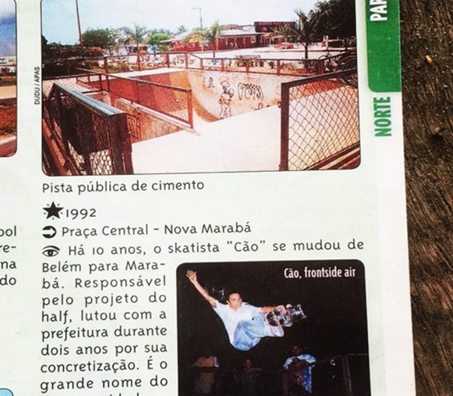
Nelson Jean, known as Cão, was one of the key figures responsible for consolidating and fighting against the marginalization of skateboarding in Marabá through the construction of the half-pipe, a place for performing skate tricks. The first rap battles would take place here. (Figure 5)
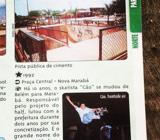
News of Nelson’s role in the construction of the half pipe. Source: Nelson Cão’s Instagram (2020). Available at: https://www.instagram.com/nelsonjean/
Skateboarding had a good relationship with rock music, so it’s no wonder that skaters also developed a good relationship with the early rap battles that began to emerge around the halfpipe. Within hip-hop culture, skateboarding has often been considered a possible fifth element of the culture, due to skating and hip-hop’s extensive interactions in so many parts of the world (Gomes 2012). The relationship between rap and rock music was no different.
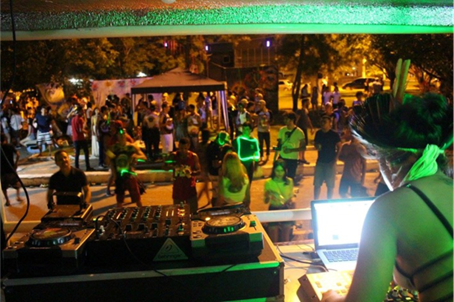
The same thing happened in Folha 27 Square, in a reggae space called “Universo Underground”. Influenced by the tradition of colorful Maranhão “boom box” sound systems called radiolas, the “pedradas” (classic reggae songs) played throughout the outskirts of Marabá. This specific space was already in a more central location, which provided a meeting place for the “malucada” (alternative crowd), according to Dudu (2024). It was there that the rhyming game found a space to organize itself better and began to propose battles throughout the city in a more systematic way. (Figure 6)
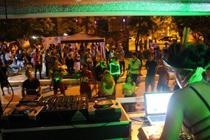
Universo Underground. Source: Universo Underground’s Facebook page (2016). Available at: https://www.facebook.com/UniversoUndergroundMBA.
Underground culture thus served as a foundation for the development of hip-hop. DJing and graffiti, within the hip-hop cultural context, faced financial and cultural difficulties in establishing themselves as active elements in the city. Breakdancing and rap managed to consolidate themselves, however, both aesthetically and politically. These two elements sometimes worked together, employing diverse strategies, to spread throughout the city and assert themselves as an underground: a collective, independent, and transformative culture in both the city and its periphery.
Alliances with educational institutions were part of the strategies used by breakdancing and rap to extend their influence in Marabá. As we have seen, universities are important allies in the city, with a demstrated capacity to organize events, cultural projects, and intellectual debates about artistic creation. Similarly, public schools were places that participants in hip-hop culture focus on, as it is through these social and institutional spaces that new MCs and b-boys / b-girls emerge. It is also through schools that it becomes possible for culture to make an impression before youth turn to crime.
In general, hip-hop manifests itself as an open culture, ready to engage in dialogue with local expressions. In Marabá, the outline of its cultural specificity that we have described was present and active in the streets and institutions. The rap battles took advantage of this and began to conquer their place through dialogue. In this way reggae, rock, skateboarding, popular demonstrations, the fight for quotas, and the struggle for the city can also be understood as part of hip-hop.
FRONTIERS, TERRITORY AND POWER: THE LOGIC OF DEPLETION IN SOUTHEASTERN PARÁ
The processes of hip-hop formation in the Amazon have a specific contour because the Amazon itself has political, economic, and social formation processes that differ from the rest of Brazil. The Brazilian Amazon is very much viewed as a subservient backwater by the rest of the country. The history of the victors leaves forgotten fragments along its path and this is nobe no different from what global capitalism has left in the Amazon.
The colonial regime25 in the Amazon has employed three strategies that are very much part of the region’s territorial formation: war, religion, and the subjugation of indigenous peoples (Malheiro, Porto-Gonçalves and Michelotti 2022). The first involves capture, enslavement, and extermination. The second involves religious orders exercising power to control, manipulate, and lead through catechism. The third is manifest in the appropriation of necessary indigenous knowledge and labor as indispensable components in the plunder and exportation of the region’s riches.
As a practical consequence of these colonial strategies, indigenous languages and other cultural practices were prohibited, criminalized, and - to a certain extent - abandoned. Missionaries promoted the salvation of Amazonian sinners. Forced settlement of indigenous populations in centralized villages facilitated control over indigenous bodies.
In this context, city planning designed for the Amazon loses its human and biological diversity. Race, gender, art, and culture don’t exist in the cities, and indigenous and migrant knowledge of nature is also absent. The city is an ordered layout designed to control people and subjugate them to the region’s colonial project. This strategy was implemented with the aim of contesting the territory through control.
Large exploration projects have been established in the region, accompanied by media propaganda promoting migration. The national government did not developed social policies that could accommodate the resulting population boom, however. From the 1970s onwards, cities emerged in the Amazon without schools, healthcare, public transportation, or paved roads. This is what Violeta Loureiro (2019) calls “modernization in reverse”.
From the 1970s onwards, successive Brazilian military governments interpreted the Amazon as a “demographic void” (Hébette 2004). The region was cast as something of a national sacrifice zone that would be filled up according to the generals’ and their capitalist allies’ terms. These discourses operated to empty the region of meaning, even as it was opened to resource exploitation. In this view, the Amazon is understood to be backward, wild, hostile, and a serious obstacle that must be overcome for Brazil to develop economically. “Order and progress” act to fill the resultant void, eliminating any threats that arise along the way. These threats were personified in the forest itself: in dangerous animals, in subversive indigenous peoples, and in migrant populations who question their subordination to the process of capitalist plunder.
The portrayal of a wilderness devoid of human presence authorized violence against the region and the people who lived there. It also implied that these peoples were devoid of knowledge, techniques, and culture. These presumptions stigmatize indigenous peoples, peasants, and Afro-Amazonian communities, causing all cultural complexity in the region to be erased or stolen (Almeida 2021).
Regarding road infrastructure projects, it is important to highlight how the connection between Belém-Brasília (BR-010) - the Trans-Amazonian Highway - and PA-150 facilitated the consolidation of livestock farming in southeastern Pará. Roadside towns arose from large landowners who transformed their land into urban plots. Within this logic, streets have no soul (Rio 2021): they are merely a layout that allows flows of capital and people (Bispo 2015). Urban dynamics of speculation and commercialization intertwine with the historicity of land concentration and disputes. It is important to remember, in this context, that these territories are themselves the result of the expropriation of indigenous lands.
In this context, Michelotti (2019) points to the heterogeneous social groups that interact in the disputes over land: the local nut-growing oligarchy, concerned with the process of profit accumulation and large corporate estates; large and medium-sized farmers from the Center-South of Brazil, seeking to expand their land holdings; and landless peasants. This tangle of agents has established conflictual relationships over the decades. Peasants, the weakest group in this set of agents, have been systematically murdered and have seen their rights massively violated.
Airton Pereira (2010), however, points out that the pressures and a continuous process of politicization of conflicts in the Amazon has produced important results, such as a certain amount of agrarian reform. He states that “[land] occupations created political facts, giving visibility to the demands of peasants” (Pereira 2010: 14). The experience of struggle has accumulated over the years, along with an admirable capacity for organization and articulation with institutions, movements, and partner groups. Rural workers are increasingly establishing themselves as political subjects in the region.
It is from questioning the perverse logic of colonization that organizations fighting for land in the countryside emerge. These include the Rural Workers’ Unions (STRs), the Landless Workers’ Movement (MST), and various indigenous political organizations. The groups’ struggles are interconnected and strengthened in the region’s urban peripheries, mainly due to demands for decent housing. This territorial character is a hallmark of the political struggle in Marabá. The urban periphery of Marabá is deeply linked to the struggle for land occupation. An expression of this was the struggle for the occupation of the Liberdade neighborhood, which also boosted the Landless Workers’ Movement’s struggle in rural settlement areas (Guido 2016).
The agriculturalist logic economically imposed in the southeastern region of Pará was, and still is, a continuation of the logic of territorial depopulation for capitalist accumulation. The concentration of income and land and the associated widening of inequality are symptoms of excessive exploitation of nature. The forest’s natural diversity has, over the last few years, been replaced by monotonous stretches of pastures and a landscape that echoes with emptiness (Ribeiro 2025).
José Pacheco de Oliveira (2016), a theoretical proponent of an anthropology based on frontier theory, elaborates important considerations that support our discussion. For this author, a frontier “presupposes a totality composed of heterogeneous parts with functioning rhythms” (Pacheco de Oliveira 2016: 126). This creates a perspective that considers a diversity of viewpoints and power relations, and which manages to move beyond generalizing propositions.
The economic model based on the concept of “cycles” is a historical example that has sought to encompass other analytical dimensions (social, cultural, and political) in order to conceive of Brazilian history as a series of economic booms and busts. The notion of the frontier seeks to question homogeneous conceptions of historical moments, as well as denaturalize established power and ideological relations. Thus, Pacheco de Oliveira’s critical analysis of frontiers (2016) makes it possible to understand the power dynamics that have historically consolidated the Amazon, while also highlighting the territorial resistance of rap battles in the Marabá underground.
We seek to break with this historical description that generalizes the perspective of the Amazon in terms of homogeneous and monotonous accounts of economic cycles. The colonization models that succeed one another in this region are highly variable - something that can be perceived and analyzed, in time and space, through the notion of the frontier.
According to the Pacheco de Oliveira, “the frontier exists to annihilate or subordinate the small independent producer” (Oliveira 2016: 126). One should not believe in a natural and spontaneous capitalist integration, united in a homogeneous whole, without conflict, as if the process were some natural destiny. The theory of the frontier is capable of politicizing what is naturalized.
The frontier deprives workers of means of subsistence, implants ideological propaganda to promote migration from other regions of Brazil, and creates a hierarchical narrative that foregrounds the importance of the economic sphere. All of this is swept away in narratives about “cycles.” The cyclic view of history presumes that after a linear and progressive period of economic boom, another cycle naturally falls into decline. In the case of our region, the narrative follows cycles of rubber, Brazil nuts, diamonds, agriculture, livestock, and iron.
Reflecting on indigenous ethnicity in the context of Amazonian urbanization, Costa-Malheiro (2019) highlights that indigenous cultures are “essentially dynamic and subject to reconfiguration, as they need to construct their ethnic boundaries while taking into consideration the (mis)encounters of diversity in the city.” Indigenous social and political organization undergoes constant and intense reformulations in the Amazon’s cities, whether due to colonial impositions or indigenous resistance strategies.
According to Costa-Malheiro, we must understand indigenous labor as a constituent part of the historical formation of urban areas in the Amazon, as well as see “heterogeneity as intrinsic and structuring to the production of space, creating alterity and, in turn, the understanding of space as open and disjointed” (Costa-Malheiro 2019: 2,610). This essentially political process creates many transformations, in which history is always in the process of being made.
In this sense, the Costa-Malheiro’s concept of the frontier discussed by the author resonates strongly with what we want to consider here: “a place of otherness and conflict” (Costa-Malheiro 2019: 2,610). The frontier thus does not follow the path of conservative interpretations (ibid.), which focus on the radical changes in landscapes, but rather represents a mode of socialization in the urban environment founded on the economic dynamics of the market and the structuring processes of technical networks. The frontier is more than just the migratory processes of populations who seek better life and the modernizing progress of capital advancement.
In the Amazon, urban life and indigenous ethnicity have been mutually constituted in a historically constructed contact based on interdependence, which has acquired different meanings throughout the history of interethnic contact permeated by colonialist relations (internal and external) of violence and expropriation of indigenous peoples. (Costa-Malheiro 2019: 2,611)
Costa-Malheiro’s (2019) reading of this process helps us to reflect upon a type of urbanity that is intrinsically related to the process of exploiting natural resources and labor in the region. The production of the urban often seeks to distance itself from the countryside in order to assert itself as a city. In the interstices, however, and in the most everyday banalities, ethnicity circulates, breathes, and shows its face.
It is in this disarray that the city manifests itself and indigenous peoples invent and reinvent the city. In this view of things, frontiers are profoundly relational and produce an Amazonian urbanity rich in ethnicity. The unresolved contradictions of the city also clash with the cultural boundaries of the MCs, who are generally children of migrant families, with a personal historical background that is intertwined with the history of the region.
The notion of territory as defined by Rogério Haesbaert (2004) is also fundamental to understanding how frontier dynamics operate. According to Haesbaert, there is a dual and dynamic aspect to the concept of territory, encompassing both its material and symbolic dimensions. The very etymology of the word derives from a double dimension: (1) land (a legal-political concept) and (2) terror (that which inspires fear or affect). In this context, “territory” encompasses a dimension related to domination (the power of control) and something related to appropriation, resistance, and affection for a place.
Haesbaert (2004) takes into account a more complex approach to territory in its social aspect: lived space-time. This means that territory is understood not as static, natural, or given. It relates to political movements, power games, and power relations between subjects.
To highlight the importance of functional and symbolic territory, Haesbaert differentiates two ways of thinking about the concept: (1) as a resource, in which territory offers a group means of reproduction; (2) as something which exerts an affective character, in which culture and representations give meaning to place. To a greater or lesser extent, these dimensions are always present for this author (2004).
As can be seen, the authors we cite above are profoundly concerned with reflecting upon power relations within the Amazon. These involve the occupation and contestation of urban space. The material and symbolic conflicts of these territories are fundamental to understanding the political dimension of the actions of individuals within them.
We can thus construct a dialogue between these authors and the notion of “underground territorialities”. Understanding territory as a space of constant and intense political disputes, always under construction and permeated by interrelations, the underground enters the scene as a subterranean contesting force. Underground territories are physical and symbolic. They acquire affective layers as individuals interact with them.
Underground territoriality, in this sense, is a system of circulation through the city. Every time a rap battle arises, the underground is renewed, because it moves. The underground territories of rap battles are only momentarily fixed, as they are alive in the reality of the rhymes exchanged between MCs, in the shouts that start the battles, and in the colors of the designs on the flyers promoting the event.26 An underground territory resides in the feeling of belonging of those who live hip-hop culture: as the public square belongs to you, you also belong to it. Finally, the territorial underground is the will to converge (Bispo 2015).
That said, it’s worth remembering that the concept of territory has gained political life in the last twenty years (Zibechi 2015), mainly among indigenous peoples and traditional communities. But it has also become more present in the city. Social movements, organizations, and artistic groups, among others, have used this word in order to express demands and contest urban territory. This leads us to the next topic.
“WHAT HAPPENS HERE?”: UNDERGROUND TERRITORIALITIES IN MOTION
As mentioned above, the term “underground” is what organizes the way in which urban resistance cultures understand themselves in the city. These socially invisible cultures seek to discovers themselves in urban space. They use music to resist the processes of the emptying out of public spaces, but also the symbolic emptying of what is thought and felt. In this sense, we are engaging here both with the process of elaborating possible resistances and also with a quest to see what is hidden, what lies beneath the ground.
In the logic of the streets, the more battles an MC attends, the more visibility they have among other people who are part of the culture. Gaining respect is thus directly related to their ability to circulate through battles in and around the city. Based on our questionnaire,27 the following map illustrates the distribution of battles in the city of Marabá and where our interviewees live. (Figure 7)
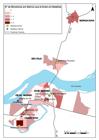
Number of residents who have been involved in battles, by neighborhood. Source: Prepared by the author (Ribeiro 2025).
The blue dots represent the location of inactive battles: the Batalha do Conhecimento, on UNIFESSPA’s Campus I, inactive since 2018; the Batalha da Fish, which had two or three editions in 2023; and Marabatalha, the city’s first battle, a symbol of the beginning of the whole scene. The yellow dots are the active battles: the Batalha of the Half[pipe], which occurs sporadically on Sundays; the Batalha da Torre, which takes place in Foguete Square (but not very regularity, as it is coordinated by a specific organizer). Finally, there are those battles that occur more regularly: the Batalha da VM (reserved for larger events) the Batalha da Liberdade, the Batalha do Foguete, and the Batalha do Pesadelo.
The map shows a gradation in the number of residents in the neighborhoods. The highest concentration is clearly of people living in the Liberdade neighborhood, with between 8 and 9 residents, followed by the Morada Nova, Km 7, Folha 7, Folha 28, and Cidade Nova neighborhoods. The widespread distribution of residents throughout Marabá is also noticeable. There are people spread across all five urban centers: Cidade Nova, Velha Marabá, Nova Marabá, São Félix, and Morada Nova.
The only settlement that doesn’t yet have an active battle is Morada Nova, but its residents travel to participate in battles in other settlements. If someone from Morada Nova decides to go to the Batalha da Liberdade - which often happens - they will have to travel 28 km to get there. The minimum distance that person can travel from the neighborhood to reach a battle is 10 km to the Batalha do Pesadelo. This hasn’t prevented 5 to 7 people from regularly attending battles throughout the region.
I saved two audio messages from two MCs and organizers on a Whatsapp group who were provoking other MCs to go to BdH. In the audio, there is a differentiation between the “neighborhood MC” and the “real MC”:
Hey guys, let’s go to the Batalha do Half today! Now, if you’re a neighborhood MC, please stay in your neighborhood, only rap in your neighborhood. But if you’re a real MC, let’s go, let’s make things happen there! Seven thirty, please, seven thirty!
After some MCs arrived at the square, they sent the following audio message to the group:
Hey bro, where are you? We’re here already, bro! Isn’t rap about commitment? What kind of commitment is this, man? Are you a neighborhood MC? No, only if you’re a neighborhood MC... If you’re not a neighborhood MC, you’re coming over, now! We’ve already hit eight [MCs], we’re just waiting for you!
In this context, calling someone a “neighborhood MC” is an insult and a way to try to get the MC to leave their own neighborhood and go to a battle further away. In the view of MCs, a neighborhood MC is limited, has little experience, doesn’t study, and doesn’t dedicate themselves to their art. MC’s enrich and improve their improvisational skills by attending city battles. A true MC is ready to rhyme anywhere, anytime, in any battle. This preparation is achieved through the accumulated experience MCs gain in the different battles where they perform.
In April 2025, the organizer Mak explained in more detail what a neighborhood MC would be:
A neighborhood MC is nothing more and nothing less than that guy who only goes to battles in his neighborhood. He doesn’t want the trouble of going to other battles in other neighborhoods. He doesn’t want to leave his municipality to battle in another neighboring city, in other nearby cities (...). A neighborhood MC is the guy who ‘s there for the TikTok likes, the current trend, the trend is to be a battle MC, you know? The trend is in battles, but the guy doesn’t want to go to the trouble of going to other battles, doesn’t want to stay until the end of the battle, doesn’t want to leave his neighborhood.
Besides being someone who only attends neighborhood rap battles, a neighborhood MC is also someone who only goes to rap: his intention is purely individual. He’s not “in it for the culture,” as is aid; he only wants what suits him. He doesn’t contribute collectively to battles. I questioned Mak about the importance of rhyming and knowing about other battles:
I don’t think it’s important, I think it’s an obligation. The MC should always go to other battles whenever possible because it’s just us for ourselves. If the MC doesn’t support the culture of their own municipality, I think they’re just trying to ride the wave. The MC has to understand that the rap battle isn’t just about what happens in their own backyard; there are other people who come from far away, so they have to consider that aspect. The MC isn’t just there to rhyme, but to help as a judge, to present, to be part of the audience so that there’s a public there to express their passion for rap.
By contrast, there’s the true MC. This person will find a way to circulate between city neighborhoods, municipalities, or even states in order to broaden their experience as an MC. And they are not just an MC: they are trying to earn how battles function and are organized in other locations. Mak also comments on true MCs, claiming they those who are “on the ball,” releasing music, promoting battle cards, organizing, arriving early, dedicating themselves, appearing in many battles. In short, real MCs are exemplary MCs who “take it all seriously.”
In order to better understand the territorial dynamics of the movement of people involved in rap battles, we organized data to create a flow map. This identifies the origins of people traveling to four different battles in the city: (Figure 8)
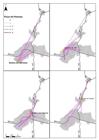
The yellow dot refers to the location of each of the four weekly rap battles taking place throughout the city of Marabá. The purple lines originate from the interviewees’ residences and lead towards the rap battles. The thicker the purple line, the more people leave a particular neighborhood.
The lines indicate that many MCs take the obligation to circulate throughout Marabá very seriously. The city’s rap battles demonstrate and demand the reclaiming of the right to the city, the right to mobility and leisure. The flow map helps us visualize the trajectories of those who frequent the rap battles and shows that people from across all the centers of Marabá see an interest in these artistic and cultural spaces.
The underground scene is constantly concerned with the collective process of building rap battles. The underground territoriality of the battles is reflected in the collective thinking about what happns in public squares. True MCs seek to engage with the diversity of life trajectories surrounding a rap battle, turning the neglect of public authorities into an artistic and cultural revitalization of the city’s spaces.
In this sense, space and history are in dispute. When Nego Bispo (2015) speaks of confluence, he provokes us with a way to think about a city (even though he is speaking about quilombos) that is not conceived as homogenous. For this author, difference is rivers flowing into each other, meeting. The backflow of urban utilitarianism prevents things, people, and other living beings from meeting as sharing beings. Defying this is an important challenge in a city that produces various types of emptiness.
In this sense, rap battles - in their hidden weekly actions, in the invisibility of police violence, or in the neglect of public spaces - seek to contest the city from the underground. This means that the participants in the culture create ways to organize themselves collectively and, whenever possible, to think critically about their reality. It is therefore possible to conclude here with a necessary statement, in order to shift the focus of our thoughts: the battle is not simply against another MC, it is a battle for territory. A battle for the battle.
FATALITY
A fatality occurs when there is no longer any possibility of the rival MC recovering. The MC in question will succumb, inevitably dying. One could say that a fatality is an accumulation of punchlines.28 After several punchlines hit, the MC staggers and falls, just like the characters in the game Mortal Kombat, After the final blow, he lays unconscious on the ground. In short, a fatality is the MC’s last breath after being murdered by a rhyme. Everyone notices this when it happens.
The fatality is a final point, but one that is always open to a new paragraph. Disputes will be made through new punchlines and exchanged in a future battle. Moreover, the MC can not only return the following week, but is encouraged by everyone to do so. A battle depends on the circulation of MCs throughout the territory and this is what shapes the dynamics of underground territoriality in the city’s public spaces. The underground MC is constantly concerned with the collective process of building rap battles.
The underground territoriality of rap battles, then, becomes an interesting formulation for exploring the concept of frontiers (Pacheco de Oliveira 2016; Costa-Malheiro 2019) in an Amazonian city, where power relations are evident in an urban layout forged by the capitalist force of large enterprises, but which encounter obstacles of resistance that manifest themselves in quotidian life.
This conception challenges the monotony of thinking about the region solely through its economic cycles, leading us to include in the city concepts of race, gender, art, culture, belonging, and identity. It’s also interesting to imagine that, in a city like Marabá, hip-hop can provoke new ways of thinking about the urban environment, without the opposition to the rural being a guiding principle. Instead, the idea of the frontier could be broadened to include the marginalized territories of the Amazonian underground.
Rap battles seem to highlight a sense of territorial dispute. They are the result of a form of resistance built up over years in the rural and urban areas of southeastern Pará. The insistence on an underground artistic mode that occupies and circulates through public spaces situates hip-hop in a dialogue with the urgent demands of an unequal and dispersed city, itself the result of the colonization and control of territories. Hip-hop, guided by its open and dialogical character, seems to understand and relate to other artistic expressions that have already claimed the use of public space.
Underground territorialities, then, reveal themselves in a connectivity that borders the center and centralizes the margin, questioning the control of urban space and its ostentatious forces, as well as expanding the territorial repertoire of peripheral youth. Underground territorialities ally themselves with older forms of resistance in the urban space of Marabá, while at the same time renewing territorial resistance. The rap battles, in short, fight for territory.
Acknowledgments/funding:
The authors are grateful to the Fundação Amazônia de Amparo a Estudos e Pesquisas (FAPESPA) for its financial support of the master's research conducted within the Graduate Program in Territorial Dynamics and Society in the Amazon (PDTSA/UNIFESSPA). The authors also acknowledge the financial support provided by the Amazon Legal Region Graduate Development Program (PDPG Amazônia Legal/CAPES, Call No. 13/2020), under the project “Amazonian Studies, Sociocultural Diversities and Sustainable Practices”, which funded the translation of this manuscript
REFERENCE
- ALBERT, Bruce, and KOPENAWA, Davi. 2015. “O ouro canibal”. PISEAGRAMA, (8): 32-41.
- ALMEIDA, Alfredo Wagner Berno de. 2008. “Antropologia dos archivos da Amazônia”. Rio de Janeiro: Casa 8; Fundação Universidade do Amazonas. pp. 15-153.
- BENJAMIN, Walter. 2012. “Teses sobre o conceito de história”. In: Walter Benjamin, Obras Escolhidas vol 1: Magia e técnica, arte e política São Paulo: Brasiliense. pp. 241-252.
- BISPO, Antônio. 2015. Colonização, quilombos: modos e significações Brasília: INCTI/UnB.
- BORDA, Bruno Guilherme dos Santos. 2008. Palavras sagradas, rimas e experiências: uma tentativa de compreensão sobre cristianismo pentecostal, rap e Antropologia Master’s thesis, Graduate Program in Ciências Sociais, Instituto de Filosofia e Ciências Humanas, UFPA - Pará.
- BORDA, Bruno Guilherme dos Santos. 2016. Vivências, tecnologias, ritmo e etnografia: uma visão afro amazônica sobre o Rap Nacional 2016. Doctoral dissertation, Instituto de Filosofia e Ciências Humanas, Universidade Federal do Pará - Belém-PA.
- BOTELHO, Deíze Almeida. 2016. Cultura no desenvolvimento local: uma estratégia do movimento artístico em Marabá, Pará Master’s thesis, Graduate Program in Dinâmicas Territoriais e Sociedade na Amazônia, UNIFESSPA - Marabá.
- CARVALHO, José Jorge, and FLORÉZ, Juliana. 2014. Encuentro de saberes: proyeto para decolonizar El conocimiento universitário eurocêntrico Bogotá: Universidad Central.
- CARVALHO, José, and ÁGUAS, Carla. 2015. “Encontro de Saberes. Um desafio teórico, político e epistemológico”. In: Boaventura de Sousa Santos and Teresa Cunha (orgs.), Colóquio Internacional Epistemologias do Sul: Democratizar a Democracia Coimbra: Universidade de Coimbra/Centro de Estudos Sociais. v. 1, pp. 1,017-1,027.
- COSTA-MALHEIRO, Tatiane. 2019. “(Des)Encontros entre etnicidade indígena e urbanização na Amazônia”. Oral presentation in XVI Simpósio Nacional de Geografia Urbana, Vitória, November 14-17.
- DARDOT, Pierre, and LAVAL, Christian. 2016. A nova razão do mundo: ensaio sobre a sociedade neoliberal 1st ed. São Paulo: Boitempo.
-
ENGELMANN, Solange. 2018. “IALA Amazônico é um marco de resistência contra o capital, aponta dirigente Sem Terra”. MST, November 23. https://mst.org.br/2018/11/23/iala-amazonico-e-um-marco-de-resistencia-contra-o-capital-aponta-dirigente-sem-terra/
» https://mst.org.br/2018/11/23/iala-amazonico-e-um-marco-de-resistencia-contra-o-capital-aponta-dirigente-sem-terra/ - FERRETTI, Mundicarmo. 2003. “Formas sincréticas das religiões afro-brasileiras: o Terecô de Codó (MA)”. UFMA em Cadernos de Pesquisa, 14(2): 95-108.
- GAGNEBIN, Marie Jeanne. 1993. Walter Benjamin: os cacos da história São Paulo: Editora Brasiliense.
- GOMES, L., Renan. 2012. Território usado e movimento hip-hop: cada canto um rap, cada rap um canto Master’s thesis, Universidade Federal de Campinas - Campinas.
- GUIDO, Claudiana Gomes. 2016. Educação e cotidiano: um enfoque na materialização das políticas educacionais na escola pública Master’s thesis, Graduate Program in Dinâmicas Territoriais e Sociedade na Amazônia, Universidade Federal do Sul e Sudeste do Pará - Marabá.
- HAESBAERT, Rogério. 2004. Dos múltiplos territórios à multiterritorialidade Porto Alegre: Editora da UFRGS.
- HÉBETTE, Jean. 2004. Cruzando a fronteira: 30 anos de estudo de campesinato na Amazônia Ed. da UFBA.
-
JEAN, Nelson. 2014. “Tapiri da universidade em 2014 durante o evento SerAnata”. Facebook, August 1. https://www.facebook.com/nelson.jean.14/photos
» https://www.facebook.com/nelson.jean.14/photos -
JEAN, Nelson. 2020. “Notícia do reconhecimento de Nelson na construção do Half”. Instagram, August 19. https://www.instagram.com/p/CEFEJegJRIRiPYe2tfV971KloYVaEXlyuzJoz40/
» https://www.instagram.com/p/CEFEJegJRIRiPYe2tfV971KloYVaEXlyuzJoz40/ - LANDER, Edgardo (org.). 2005. La colonialidad del saber: eurocentrismo y ciências sociales Buenos Aires: CLACSO.
- LOUREIRO, Violeta Refkalefsky. 2019. Amazônia: Estado-Homem-Natureza 4th ed. Belém: Cultural Brasil.
- MALHEIRO, Bruno C., PORTO-GONÇALVES, Carlos Walter, and MICHELOTTI, Fernando. 2022. Horizontes amazônicos: para repensar o Brasil e o mundo 1st ed. São Paulo: Expressão Popular. v. 1.
- MASSEY, Doreen. 2015. Pelo espaço: uma nova política da espacialidade Translation by Hilda Pareto Maciel and Rogério Haesbaert. 2nd Ed. Rio de Janeiro: Bertrand Brasil.
- MICHELOTTI, Fernando . 2019. Territórios de produção agromineral: relações de poder e novos impasses na luta pela terra no sudeste paraense Doctoral dissertation, Programa de Pós-Graduação em Planejamento Urbano e Regional, Universidade Federal do Rio de Janeiro - Rio de Janeiro.
- OLIVEIRA, Eric Belém. 2025. Entrevista concedida ao autor. Marabá, Pará, 11 de Jun. 2024.
- PACHECO DE OLIVEIRA, João. 2016. O nascimento do Brasil e outros ensaios: “pacificação”, regime tutelar e formação de alteridades Rio de Janeiro: Contra Capa.
- PEIRANO, Mariza. 2014. “Etnografia não é método”. Horizontes Antropológicos, 20(42): 377-391.
- PEREIRA, Airton dos Reis. 2010. “Conflitos de terra e violência no Sul do Pará”. Oral presentation at X Encontro Nacional de História Oral, Recife, April 26.
- PIMENTEL, Spency. 1997. O livro vermelho do hip hop Senior thesis, Escola de Comunicação e Artes, Universidade de São Paulo - São Paulo.
- PORTELLI, Alessandro. 2010. Ensaios de história oral São Paulo: Letra e Voz.
- POSSAS, Hiran, and RIBEIRO, Estevão. 2024. “Territorialidades underground: a ocupação do espaço público pelo rap em Marabá e região”. In: Francisco Adriano de Oliveira Carvalho, Bio(socio)diversidade e pluralidade na Amazônia Sul Oriental: VIII Anais do Encontro de Pós-Graduação da Unifesspa São Paulo: Pimenta Cultural. pp. 741-762.
- QUIJANO, Aníbal. 2005. “Colonialidad del poder, eurocentrismo y América Latina”. In: Aníbal Quijano, A colonialidade do saber: eurocentrismo e ciências sociais - perspectivas latino-americanas Buenos Aires: CLACSO . pp. 116-142.
- RIBEIRO, Estevão. 2025. “Isso é batalha no estilo undeground”: as batalhas de rima em Marabá/PA e a disputa pela cidade Master’s thesis, Graduate Program in Dinâmicas Territoriais e Sociedade na Amazônia, UNIFESSPA - Marabá.
- RIO, João do. 2021. A alma encantadora das ruas Edição comemorativa Organized by João Carlos Henrique. Rio de Janeiro: Garnier.
-
SHARROCK, David. 2011. “Gil Scott-Heron: music world pays tribute to the ‘Godfather of Rap’”. The Guardian, May 29. https://www.theguardian.com/music/2011/may/29/gil-scott-heron-godfather-of-rap
» https://www.theguardian.com/music/2011/may/29/gil-scott-heron-godfather-of-rap -
UNIVERSO UNDERGROUND. 2016. “Universo Underground”. Facebook, February 7. Available at: https://www.facebook.com/UniversoUndergroundMBA/photos/pb.100054222351747.-2207520000/1686378944970907/?type=3
» https://www.facebook.com/UniversoUndergroundMBA/photos/pb.100054222351747.-2207520000/1686378944970907/?type=3 - ZIBECHI, Raúl. 2015. Territórios em resistência: cartografia política das periferias urbanas latino-americanas Rio de Janeiro: Consequências.