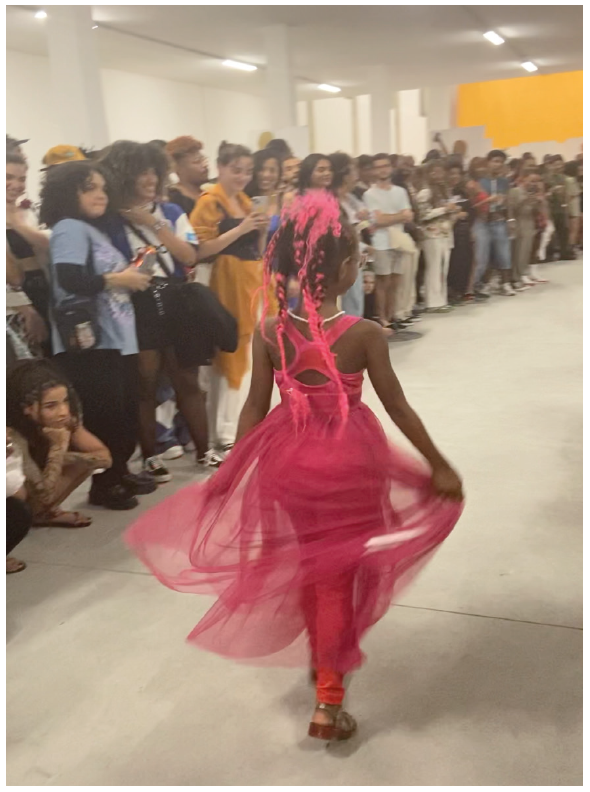
 How to narrate the periphery: ethics, aesthetics and style in Rio de Janeiro
In this article, I turn to the verbal, visual and sonoric discourses of two peripheral fashion designers in their conversations with a black visual artist, proposing that the fashion they create encapsulates memory, kinship, locality and history - an interweaving that translates through the style of their productions, bringing together ethics and aesthetics. I also demonstrate that they aim at the epicentre of taste production while resisting to maintain their non-hegemonic character. With the coincidence between ethics and aesthetics and the residual character with which these creators occupy the formal fashion industry, I consider that each city produces its own ways of narrating what it means to be peripheral and its own mode of conceptualising the periphery. I suggest, therefore, that Rio de Janeiro is governed by a utopia of connections and that Rio funk provides the material for peripheral subjectivation.
Keywords:
Fashion; Style; Ethic; Aesthetics; Funk Carioca; Formative Processes
 Thumbnail
 Thumbnail
 Thumbnail
 Thumbnail
 Thumbnail
 Thumbnail
 Thumbnail
 Thumbnail
 Thumbnail
 Thumbnail
 Thumbnail
 Thumbnail
 Thumbnail