 A critique of the anthropology of knowledge: experience and research
Abstract
This article sets out to analyse a number of research approaches in light of Tim Ingold’s provocations regarding anthropology as both a means of knowledge production and a field of knowledge, in communion and correspondence with life, people and things. Drawing from fourteen years of experience in different knowledge traditions - especially Capoeira Angola - I reflect on how these ways of knowing connect with academic practices and their specific professional methods. Ethnographic premises, I argue, especially those developed through autoethnography, should not be dismissed on the basis of Ingold’s critique of ethnography. Finally, the article proposes that an expanded notion of knowledge can contribute to rethinking the epistemology of academic traditions, especially within Ethnography and Sociology.
Keywords:
Anthropology; Knowledge; Ethnography; Autoethnography; Research
Resumo
Este artigo propõe analisar algumas abordagens de pesquisa a partir das provocações ingoldianas sobre a Antropologia como um meio de produção e uma área do conhecimento, em comunhão e correspondência com a vida, pessoas e coisas. Assim, intento demonstrar, tendo em vista uma vivência de quatorze anos em distintas tradições de conhecimento, partindo de modo central da Capoeira Angola, como essas se conectam enquanto saber junto às tradições acadêmicas e seus métodos específicos de ofício profissional. Além disso, a ideia é também propor que os pressupostos etnográficos, tendo em vista a Autoetnografia como seu desdobramento, não podem ser desprezados com base na crítica ingoldiana da Etnografia, e que a noção ampla de conhecimento pode ser útil para pensar a epistemologia das tradições acadêmicas, que ademais se abrem em torno de inúmeras perspectivas a partir da Etnografia e da Sociologia.
Palavras-chave:
Antropologia; Conhecimento; Etnografia; Autoetnografia; Pesquisa
INTRODUCTION
In this article, I discuss my fourteen-year research trajectory among diverse knowledge traditions, focusing primarily on Capoeira Angola, and encompassing the people and things that inhabit the locality where I lived these experiences, namely, the northeastern region of Brazil, along the coasts of Paraíba, especially, as well as Rio Grande do Norte and parts of Bahia. The concept of knowledge tradition I use here is taken from the research developed by Barth (2000b), in which the author examines social groups and their specialists as transactors of cultural knowledge. These traditions can also be understood as the diverse ways in which a group of specialists organises its understanding of reality (Barth, 1987) within a concrete world of objects. In this sense, scientists - and anthropologists, in particular - can be conceived as part of this same world, imbuing the notion of knowledge with a resonance that extends far beyond academic study to include local traditional knowledges, ethnographies and autoethnographies, constituting an expansive multidisciplinary field.
Accepting this premise, I wish to explore how anthropology, and more recently autoethnography, have contributed as practices of knowledge production and transformative reflection within my research, which I aim to extend through writing to a wider readership, based on my experience in the field. Accordingly, the article seeks to reflect on local modes of knowing and on epistemology, while also discussing the possibilities for developing anthropological and ethnographic research in a critical manner. Ultimately, the various critiques highlighted here can be seen to converge towards the same objective: an anthropological science more deeply connected to the self-in-the-world.
Along these lines, I wish to discuss the themes of learning and education by problematising the status of the apprentice in two knowledge traditions with which I have had direct experience: an Afro-Brazilian martial art (Capoeira Angola) and an Afro-Amerindian religion (Jurema), which will receive less emphasis here. This discussion will involve revisiting certain anthropological propositions from a critical vantage point, drawing on Ingold’s provocations concerning anthropology and ethnography, while also including autoethnography and carnal sociology (Wacquant 2002), among other theoretical approaches with analogous objectives. My intention is to use these methodological provocations to reflect on diverse epistemologies. I should make clear that I do not propose to conduct a full autoethnography here: instead, I discuss this mode of research alongside other methodologies - notwithstanding the recurring debate over method and theory - and how these approaches have dialogued with my ongoing doctoral research on Capoeira Angola.
I begin, therefore, by exploring the thought of Ingold (2010, 2015, 2020). In these three works, the author is emphatic about the role of anthropology as an education in practical attention to the world, involving both people and things. In one of these works (Ingold, 2015), where the author develops the notion of anthropology as education through the philosophy of Dewey, the notion of the taskscape is mobilised as a ‘dynamic of landscapes’ and ‘joint tasks’ within which individual skill is acquired. Through various analogies designed to ground these concepts, Ingold seeks to leave behind earlier anthropological ideas that tend to close off the discipline from the world, such as the distinction between nature and culture, environment and mind, and even society and life. Writing against these dualist philosophical notions, he advances his critique by revisiting, for example, Radcliffe-Brown’s (1952) proposal (cited in Ingold 2015) to establish an ‘analogy’ between life and society rather than an identity, as Ingold proposes in his attempt to transcend this dualism. His critique extends to his understanding of landscape (not conceived as merely a repository of the mind). From my own perspective, I tend to agree with his critical position regarding dualism.
Ingold (2015; 2020) questions the premises separating university-based knowledge from knowledge transmitted outside the academy, located in what we customarily call the ‘field,’ which forms the basis of his critique of ethnography. Anthropology needs to transcend ethnography, he contends, since the latter, in his view, separates the subjects and objects of research, rather than fostering dialogue and learning between people in different positions. Ingold thus invokes the provocative idea of an antidiscipline (Ingold 2013b: 12, cited in Ingold 2020).
According to Cohen (2012), the anthropologist’s task is to communicate knowledge and transcribe it through experience, remaining faithful to the data. Anthropologists thus engage with multiple aspects of behaviour in diverse contexts of cultural learning practices. In this way, they occupy a privileged position from which to describe how knowledge is created and transformed. Hence, we can identify two similar propositions in the authors cited above: first, anthropology as a form of knowledge and an education of attention within a lived environment; second, the privileged position held by anthropologists vis-à-vis contexts of practice and learning, placing them in a singular professional role of describing how knowledge is produced, mediating between distinct contexts that transform reality. Anthropologists can be said to work precisely where different forms of practical knowledge are generated, promoting dialogue between diverse modes of thought, which does not necessarily result in culturalism.
Drawing on my fieldwork experience as a trainee professional, occupying a position of privileged mediation, I intend to reflect, therefore, on how these two places of learning - situated inside and outside academia - overlap and how they are also imbued with complex relations in the construction of the self as an experimental professional (setting out from the experiment of a relationship with the world) and with knowledge that is transformed through research experiences.
However, does the anthropological proposal of freedom and antidiscipline (to use Ingold’s term) tend to converge towards a role more strongly idealised by the scientist in relation to the real, as Weber (2001) proposes? Yet it seems to me closer to the contingent complexity of reality than to an organising position on the part of scientists and their ideal types, for example. Conversely, the reality of knowledge traditions, including the academic tradition itself, is that of an environment controlled by its specialists and by status relations,1 aimed primarily at maintaining its own reality. This leads me to wonder whether this antidisciplinary freedom is truly possible when the researcher is part of the same environment of practice that he or she researches, as is my case, and as becomes evident in autoethnographic research.
Abu-Lughod (2018) begins her inquiry by criticising Clifford and Marcus (1986) for omitting ‘two fundamental groups’ in their critiques of cultural anthropology: feminists and ‘halfies’ (mestizos). In response, she brilliantly proposes both a writing ‘against culture’ and an ‘ethnography of the particular.’ The latter, she explains, entails a form of writing that corresponds to the actions of individuals in their particular lives, without excluding extralocal considerations. It is, she suggests, a question of telling stories about individuals as a way to avoid the cultural generalisations of ‘otherness.’ This reminds us that individuals are always socially positioned through their distinct social and political attributions.
Ingold’s notion of antidiscipline, on the other hand, names an academic practice that eschews rigid parameters, but perhaps may not apply to knowledge produced outside academia - and perhaps not even within it, depending on the situation, as I intend to discuss below. However, if these two places are blurred, then this provocation must hold for both insofar as the possibility of such experimentalism is concerned. In this sense, it is important to mobilise formulations relating to autoethnography, which seek to address this dual relationship between the professional researcher (ideally distanced) and the researcher who inhabits the world and experiences it through a range of emotions and sensations. Both positions are crucial for epistemological reflection, clearing space for a more robust discussion of the researcher’s position in relation to those who inhabit the field of study, situating us within a space where the notion of the other is continuously under debate.
To develop this proposal, I turn now to a discussion of the knowledge traditions embedded and manipulated by local practice groups. Knowledge traditions are maintained by groups and their specialists. Evans-Pritchard (2005) had already observed that a group - conceived here as one preserving a given tradition - comprises a set of people internally distinguished by reciprocal relations and who differentiate themselves from other people, thus acting in relation to their interior and exterior. A person, Evans-Pritchard proceeds to observe, may simultaneously be a member of a group and excluded from it, insofar as the values guiding both the person and the group are conflictual and situational. Thus, the cohesion of a group depends on diverse kinds of forces.
I raise these questions precisely to stimulate a reflection on the production of knowledge within anthropology as a discipline, as well as the vital knowledge produced by social groups, both human and non-human, often beyond academic settings - the kind of provocation Ingold himself poses in his critique of ethnography. Anthropological and ethnographic debates can become particularly fertile when they expose the conflicts, power relations and hierarchies shaping the sites where knowledge is produced. In this way, the anthropologist’s role comes into sharper focus: in my own case, as an apprentice who is at once subordinate and deeply engaged in the knowledge involved and who also transmits written, filmed, photographed or drawn materials far from their ‘original’ sources, generating new reflections in the process. This position, Ingold (2020) argues, should be that of an apprentice. It is important to emphasise, therefore, that a power relation always exists in the production of such vital knowledge and that the dual boundaries between the local and the universal - to which academic knowledge sometimes tends - can be critiqued by understanding the learning process as a general, situated experience in the world. In this sense, learning is not necessarily a free and boundless practice.
Nonetheless, it is still possible for the anthropologist to act as a participant observer with a rebellious potential - exploring the critical potential that Ingold’s approach affords - while also moving between and comparing different forms of knowledge across multiple environments. In other words, the anthropologist can (and generally does) traverse distinct groups and localities. It is in this sense that I intend to explore this double belonging, considering the status of the apprentice anthropologist in a broad sense: as both a ‘professional’ researcher and a person who practises a particular knowledge tradition, someone who may also be a professional within the tradition concerned - in this case, Capoeira Angola.
APPRENTICESHIP, EDUCATION AND STATUS THROUGH RESEARCH EXPERIENCE AND HOW THESE NOTIONS INTERCONNECT
In seeking to allow these notions to converge, my aim is to explore apprenticeship and education within a specific tradition, emphasising how these processes also occur in anthropological research too - that is, how knowledge is formulated in a situation of learning, but also in a research context that involves a readership and the issue of representation, as Abu-Lughod (2018) highlights. Yet beyond this aim, my primary concern is to examine how a researcher learns in the situational context of anthropological investigation.
When I first set out to conduct fieldwork, I found myself faced with knowledge traditions that, while part of my familial and geographical reality, were somewhat distant from my primary process of socialisation (Berger and Luckmann, 1985). This distance became clearer when I began to take an interest in studies of the Jurema religion, a context that also elicited questions of familial and consanguineal belonging, since my great-grandmother had been a priestess within the tradition. I was unable to learn about this religion while she was alive, however - an experience that would only come about later when I entered the university, exploring a dual pathway of self-knowledge and academic research. So these works, which I began to undertake after entering the university, functioned as a new perceptual opening - in Ingold’s (2010) sense - on both sides of what is typically conceived as the divide between academia (the university) and life, a separation that both Ingold’s thought and the autoethnographic perspective tend to reject. This situation should also be comprehended as an initiation into a new professional field - in this instance, the world of academic research -which can also be viewed as part of a new perception of reality. When I speak of knowledge, here, I am referring to the social construction of reality, both academic and what might be considered non-academic.
In this regard, there exists a diverse range of studies addressing knowledge and learning, within which I locate Ingold’s perspective as a provocative guiding thread for this work -though other approaches could be cited. It is important to emphasise that when dealing with the anthropology of knowledge, we need to consider multiple and not always convergent perspectives, as well as the specific contexts in which such knowledge is produced and reproduced, since these are of profound relevance to the systems emergent from them.
Lave (2015), a key scholar of learning and knowledge, posits that culture and learning are situated in relation to one another in the moment of practice. For her, it is impossible for us to speak of learning without reckoning with its contextual, political, cultural and historical entanglements, problematizing both its coherences and incoherences. Although her approach resembles Ingold’s in various respects, the latter critiques the premises of cultural transmission, while Lave does not problematise them as such, since, for her, learning is the implicit outcome of social coexistence - something that, for Ingold, cannot be distinguished from organic and perceptual life.
In other approaches pertinent to the study of knowledge, we find the institutional affiliations of individuals, which shape and recreate distinct technical objectives. This type of knowledge is understood as situated (Uribe 2014), a notion first introduced by Lave (2015). In this sense, it becomes possible to distinguish, for example, between data produced in controlled environments like laboratories and data generated in the field. Through the notion of technological transfer, one flow of data can be conceived to influence the other, especially, as Uribe discusses, in the context of scientific projects conducted in collaboration with rural communities.
This moment of experiential exchange, so to speak, in contact with the environment generates new forms of knowledge (Uribe 2014). Following Lave’s premises still, culture is neither something transmitted nor acquired - or, rather, this is not the right question to ask. Instead, she argues, we need to focus on how the practical changes involved in cultural, collective and personal processes are historically situated and shaped by these scenarios (Lave 2014). The conception of history as transformative is also central to Ingold’s position, although he does not attribute significance to the concept of culture.
According to Nazarea, when it comes to advancing studies of knowledge, two types of work exist that focus on local knowledge: one concerned with the internal coherence of so-called native knowledge systems, and another that seeks to demonstrate the universal primacy of the intellect by comparing non-Western native forms of knowledge with Western varieties. Through the framework of cultural ecology, Nazarea argues, we can distinguish between native knowledge and ethnological categories. At this intersection between research and native knowledge, the positionality of individuals the existence of hierarchies can be rendered visible, thereby highlighting perceptual environmental data and historical, social and economic components (Nazarea 2006).
This appears to be a useful complement, allowing us to work with both the perceptual and skill-based arguments developed by Ingold and the influential elements of power relations, less explicitly addressed in his work.
Continuing the autobiographical narrative explored in my research, while field experience offered me a reality distinct from my own, albeit still part of my wider cultural environment, 2 my experience at university brought other kinds of learning, more universal and comparative. These functioned as tools for explaining the experiences I was living and the new perceptions that emerged in my social life through my engagement with earlier academic theorists. So novelty was present in both settings: the academic (more universalist) and the extra-academic, what we conventionally call the ‘field,’ but which was, in my case, part of my own neighbourhood. In Barth’s (2000a) terms, this can be understood as an experience of diversity within a complex society, grounded in the recognition that diverse traditions exist, generating multiple cultural flows within the same territory. Furthermore, the notion of technological transfer, discussed earlier, can also be invoked here, to describe the circulation of knowledge products through distinct situational contexts.
While I was emerging in the academy as a researcher beginning to learn how to study my own locality, the places where I conducted field research demanded a presence that went beyond that of a university researcher: they required me to be a co-participant within those groups, practising their knowledges and advancing through their initiatory stages. In both environments I was learning, though not always and not in every case. What I learned was something that had to be practised, since the process demanded ritual initiations and a hierarchical submission for which I was not prepared to follow. At the same time, my identity as a researcher was also present since I identified myself as such on entering the field3 and did not necessarily wish to be initiated and become an insider. Here, above all, what came into play were relations of distancing and close experimentation of the knowledge I encountered.
According to Ingold (2020), knowledge is acquired in a peaceful manner and the discoverer acts through a certain passivity in relation to the experiential world - though this passive stance is, paradoxically, itself a form of action. Ingold proposes, therefore, to organise the activity of knowing within a dual triad: volition, agency and intentionality; and habit, agencement and attention (Manning 2016: 6, cited in Ingold 2020: 45, author’s emphasis). The author conceives science as a correspondence that is not detached from the empirical world, but rather unfolds with things and people, guided by organic impulses that later become reflexive. In this sense, anthropology becomes an educational process in which we place ourselves in a position of vulnerability and, I would add, disequilibrium, as I propose here through capoeira4 training and games, as well as through the intoxication of the spiritual entities of the terreiro.5 The vulnerable state, therefore, should be seen as the central point at which the researcher enters into a complex interplay of knowledge production.
In a capoeira game, the two participants seek to maintain their own balance while simultaneously unbalancing their opponent. This dynamic involves an education of attention and continuous training to maintain the skills needed for this endeavour. The outcome of this performance translates into status within the martial art tradition and its maintenance through the relationship between subjects and objects of the action who - as Mura (2011) observes - are in a state of constant permutation based on skill. Turning to de Certeau, Gravina (2009) asserts that the capoeira game is defined by tactics, which in turn depend on the relationship with the other.
An environment of practice and knowledge production is permeated, therefore, by diverse kinds of interests (Weber 2001). Moreover, although from a Weberian perspective, ideal types must be synthesised by the scientist for a clearer explanation of reality to emerge, it is only within practical reality that sensory experience can provide the perceptual cues needed for learning to occur.6 These interests, given the [re]active position occupied by the researcher/apprentice, situate us within a complex web of relations determining the production of knowledge. We are thus left to ask: what are the social and material constraints that shape the transmission of this cultural knowledge?7
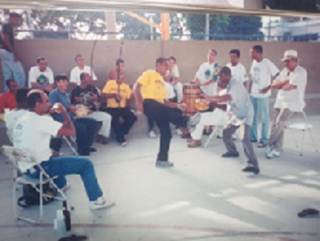
In the relationship between body, brain and environment, therefore, the understanding of knowledge can be either facilitated or constrained (Cohen 2012). These environments are natural insofar as our biological and organic perception operates within them, and social given that they manifest the hierarchical and organising relations of learning established by specialist individuals in a given profession or discipline. In the case of capoeira, these relations are embodied above all by the mestres or masters, while in Jurema they are manifested by spiritual entities - the Mestres and Caboclos - who act spiritually through trance on their leaders and ritual specialists (Mont’mor 2017). (Figure 1)

In Almeida’s (2023) research, situated in the context of a Chinese martial art, knowledge is accessed in two ways: one offered by the master and another emerging through the practitioner’s own ‘autodidactic’ openness. Learning thus occurs at both an individual and a collective level. A similar dynamic can be observed in Wacquant’s (2002) study, where boxing is approached as a form of individual and collective learning, taking place within the enclosed and controlled environment of the gym.8 Access to a practice may be peripheral or central, therefore, depending on an array of conditions - such as the structuring of classes, the practitioners’ life histories and the environmental characteristics (Almeida 2023).
Along these lines, we can turn to the following provocation:
The notion of training allows knowledge to be approached as a situated activity, acknowledging its spatio-temporal coordinates and its intersubjective and contextual nature of production. In contrast to the ahistorical approaches that long prevailed in the anthropological use of the notions of transmission and internalisation, legitimate peripheral participation enables us to address learning processes while recognising the conflictual nature of social practices: the relationships that novices and experienced practitioners establish around ‘know-how’ shape processes of social transformation at the everyday level. (Lave and Wenger 2007: 48, quoted in Padawer 2020: 17)
The above passage points to a sociological perspective based on the fact that, through practice and learning, people modify their social contexts and that these contexts may also be sites of conflict. Approaching from a different angle, Ingold (2020) attempts to explore education in terms of initiatory and perceptual changes, paying less attention to social transformations and conflicts. What emerges here, then, are two key elements: situated learning and the conflictual processes of social transformation, which, combining these two perspectives, also make it possible to consider transformations at an individual level.9
Since the beginning of my own research on Capoeira Angola and Jurema (Mont’mor 2015 - the former an African-derived martial art, incorporating diverse elements such as dance and music, the latter a distinctly indigenous religion that I have explored via the notion of encantaria, which constitutes an experience of relativising death for all beings, human and non-human alike, by combining historical and symbolic elements with the diverse understandings of ritual specialists concerning the dwelling places of ancestral spirits - it became apparent that learning in both traditions involves an engagement in social relations that are at once conflictual and collaborative. Access can be either facilitated or denied by senior specialists, whether living or ancestral, based on networks of value and kinship that are also inherently political, as noted by Evans-Pritchard (2005) in his treatment of group relations. Here we must also consider the enablements and constraints shaped by each apprentice’s life history.
Discussing religion, Velho (2010) argues that it constitutes a form of transformation of the individual and, as such, a form of knowledge. Pursuing this idea, the author raises an epistemological question of particular interest here, expressed as follows:
Instead of opposing ethnography and theory, anthropologists would do better to recognise the difference between scientific discourse and actual scientific practices, something that scientists in general (also, non-propositionally!) seem to do rather well. This, in fact, suggests that it may be a corporatist illusion to suppose that only anthropology possesses an artisanal and personalised mode of knowledge. Perhaps it is our particular (and somewhat embarrassing) difficulty in acknowledging the difference between discourse and practice that explains (at least in part) the strong influence among us by the positivist view of knowledge. (Velho 2010: 24)
Here, conversely, the critique is directed at anthropology itself as an exclusively particularist and experimental science, which, in this case, counters Ingold’s (2015) position arguing for the closer proximity between anthropology and philosophy. For Velho (2010), it is the knowledge present in religion that constitutes a valid and productive mode of knowing, a mode we may fail to recognise because of the positivist paradigms applied to anthropology as a legitimate science. Drawing on the critiques of Ardener (1985) and Strathern (1990) concerning the end of modernist anthropology, Velho (2010: 23) suggests ‘a new operational stance, even an experimental one.’ Accordingly, the way I propose to approach the knowledge traditions in which I have past and present research experience is to treat them as modes of knowing the world, experimental and productive in themselves. This, in my view, is a point of convergence among the authors discussed so far, despite their specific divergences.
Hence, the role of the researcher who is also regarded as a member by veteran specialists in these traditions, seen to be contributing to their collective endeavour, has always been framed as a mode of engagement in research and in the understanding of the self and the tradition in an ontogenetic sense (Simondon 2020). To think of tradition ontogenetically is to conceptualise it in terms of its development over time (in its becoming) as it transforms through the actions of individuals and the formation of a collective. What remains, then, is to consider the status of apprentice and academic researcher as an integral part of this complexity.
In his seminal text on knowledge traditions in Southeast Asia and Melanesia, Barth (2000b) offers a crucial perspective on the problems inherent in the transaction of knowledge within these two regions. The performative processes of ritual concealment and revelation, as well as the transmission of knowledge across large distances - mediated by guru-type figures, individuals specialised in the accumulation and dissemination of a tradition’s cultural content - unfold within complex social relations, particularly with regard to the maintenance of the status of these individuals.
In another text, Barth (1983) observes that in a large city where the most highly valued knowledge tradition is Islam, individuals differentiate themselves according to social position, determined by class, ethnic group, kinship and various other factors. Accordingly, people occupy particular social statuses that demand specific practical skills. What the author sets out to demonstrate is that a sociocultural reality is not constituted by apparent similarities between people, but rather by their diversity and difference, arranged in specific configurations as the outcome of temporal processes. Social identities and categories thus organise groups and offer individuals alternative positions from which to act, depending on where they perceive greater personal advantage or likelihood of success.
What emerges as a provocation for the present observations on learning in relation to status is that these two phenomena are deeply shaped by the social relations described above. The learner’s position within a tradition becomes a determining condition for their access to knowledge and this, in turn, influences how such learning is later rendered into anthropological writing when research is involved. In my own field contexts, the position of apprentice, while facilitating proximity, can also lead to the concealment of knowledge by more experienced specialists from the novice seeking to attain a new status, as Barth (2000b) himself remarks in his discussion of the different types of knowledge transactors.
According to Gravina’s (2009) research, several factors may influence access to knowledge and the dissemination of the capoeira tradition. These include militant political processes linked to ethnicity, as well as a somewhat indeterminate notion of competitiveness and the sport-like nature of capoeira. Such factors vary according to each practitioner’s interpretation in practice and their local context. Recognition of a practitioner’s status depends above all on the continuous demonstration and reproduction of their skills within the roda de capoeira (capoeira circle) over time. (Figure 2)

What was observable in my research is that a newcomer who provides valuable resources to the groups - such as financial support, human resources or prestige - may be welcomed and acquire significant access to knowledge or to the affective positions associated with the masters, thereby attaining a high status within the tradition. Such cases relativise notions of the time usually required for changes in status. It is possible to distinguish between external members who support the groups and internal members who work to become skilled capoeiristas and seek mastery. Until quite recently, I considered myself to be an internal member, seeking access to the group and the development of skills and status. However, I later realised that the logic of belonging has to be maintained in various more or less costly ways.
In my case and from the outset, belonging to the two traditions of knowledge (the academic and the incursions into local non-academic traditions) has always placed me in an ambivalent position: on one hand, submissive to local hierarchies of knowledge and their political relations; on the other, actively writing, observing these relations and testing my capacity (or not) to meet the expectations of more experienced practitioners, such as keeping up with their pace of training. In the case of capoeira, as Zonzon (2019) asserts, political relations of status unfold across diverse categories (gender, social class, nationality and affective relations with the masters of each group) which function as a ‘sieve’ (peneira), a term present in the tradition - one I have adopted - to refer to those who persist and those who abandon the practice.
These sievings take place in relation to values shared between apprentices and masters, as well as performance in the game, the skills developed and, above all, what Ingold (2015) refers to as wandering and individual learning. This allows the apprentice to migrate from group to group, from master to master, and, according to the status they attain, to found their own group, thereby disseminating the tradition across space and time. This depends on the moment at which the practitioner is recognised as such,10 on the number of followers they are able to gather around them, and on their endurance in sustaining the arduous training.
The power to recruit new members in Capoeira Angola groups is assigned to a few individuals: the masters and their closest, most trusted assistants. There is a seasonal turnover of novices or ‘sponsored novices,’ that is, experienced capoeiristas who have left other groups due to conflicts or other circumstances and who are taken in by specialists from other groups. In this way, they can continue their work under the protection of the new group, expanding both own activity and that of the group that has recruited them.
Recruitment within Capoeira Angola groups, which Zonzon (2019) also discusses under the term of ‘new identities,’ occurs for a variety of reasons, such as survival and the periodic increase in membership, financial factors and so on. In the case of capoeira, belonging to the group as a community of values is expressed through uniforms and commitments, never fully observed, or even through the conception of the group as a personal enterprise of a master, similar to a company with its employees and logos.
A Capoeira Angola group, for instance, is typically characterised by its own uniform and logo, often bearing the name or image of the founding mestre, which may be displayed on walls and other objects, as well as by specific technical movements developed by the mestre and perceptible in their disciples. The group is also sustained by values of loyalty and reciprocity.11 This means that a capoeirista cannot simply develop their movements as they wish while under the tutelage of a more experienced specialist, since they will tend to follow the bodily techniques taught to them and reproduce these as faithfully and skilfully as possible within the educational context.
Many of the musical chants in the traditions I have researched convey messages stating that remaining within them is not for everyone: certain abilities are required for continued participation. In the case of capoeira, these include virility, rigorous training, having students, making financial contributions and having the political skills needed to foster the group’s material growth. This last capacity has given rise to a particular type of member, one that might be described as an external member responsible for securing resources for popular culture.12 This has become one of the most effective means of exchanging favours between mestres and novice apprentices through relations of monetisation, which are widespread, though not necessarily or directly linked to the payment of monthly fees, the more common form of contribution. This relation may be based, for example, on more recent phenomena, such as the registration of capoeira groups and mestres in public funding schemes and cultural award programmes run by the federal government.
Although controversial, since mestres sometimes insist that knowledge should not be sold but lived, at other times the discourse takes the opposite direction, with specialists in these traditions complaining about the lack of payment for their activities. By way of comparison, they often cite other, better-paid martial arts and sports, such as bodybuilding gyms.13 Capoeira thus occupies an intersection between a sport and a tradition regarded as ancestral and ‘against the monetary-capitalist system,’ as frequently asserted in the discourse of some capoeiristas. According to Gravina (2009), categorical definitions of capoeira do not follow a binary logic but reflect the dynamic situation of transition among multiple situational factors.
In the case of learning relationships within knowledge traditions like those of Capoeira Angola or the Afro-Amerindian religion I studied, it is possible to approach them in similar terms, especially with regard to the conflicts that arise and, consequently, the segmentation of groups into different localities based on individual relations of skill and efficacy between specialists and their disciples.14
In my fieldwork, I have observed the importance of member recruitment and the status positions that are attained, both of which can lead to the outflow of other members. A new member, depending on the interest of a group’s mestre, may rapidly acquire a significant status within the new group. This makes migration advantageous and a phenomenon common in capoeira when it comes to acquiring knowledge. Medeiros (2011) describes these segmentations as ‘impacts and processes of negotiation’ in João Pessoa (PB) following the arrival of Mestre Zumbi Bahia. I would take issue, however, with her interpretation of causality in this case and her identification of conflicts based on the movements of mestres as cause-effect relations.
With regard to the system of lineages, the contact that produces segmentation also takes place through the capoeira game, a combat full of codes that generates either contingent segmentation or the maintenance of status through technical efficacy (Mauss 2007), as well as through the conflict and cooperation intrinsic to the game and central to its public, performative character.15 In my own case, the apprentice relationship has shown me that the coexistence between mestres and disciples is simultaneously cooperative and conflictual, permeated by interests and emotions, and sustained through the wandering (Ingold 2015) of apprentices through different environments and mestres. These movements generate whispered conversations, conflicts and rivalries that are manifested both within and beyond the roda. Recognition thus becomes a cornerstone that is constantly sought, yet difficult to attain, especially when the skills developed fail to produce an effective performance, whether in the game itself or in the social relations surrounding it.
In this way, since my concern here is to discuss status and its relationship to learning and knowledge, I now turn to some ideas taken once again from Mura’s (2017) research on technique and the use of objects among the Guarani Kaiowá of Mato Grosso do Sul, a study highly relevant to the discussion of knowledge traditions. As he writes:
[...] the world is also constituted by objects, delimited through constraining actions, the outcome of deliberate acts shaped by the properties of the social world, whose highest expression, in my view, is operative political behaviour. (Mura 2017: 44)16
For the Kaiowá, the author observes, human actions and consequently the functioning of the cosmos arise from relations between people who alternately occupy the positions of subjects and objects of an operative action, with operation itself understood as a performance. In question, therefore, is a sphere of political action. Mura emphasises that Kaiowá people act through strategies and decisions that are fundamentally political in nature - or rather, they develop politics as a technical and figurative status, one that entails specific modes of using things (Mura 2017). Leroi-Gourhan (2002), upon whom Mura draws and whose analytical framework I also find pertinent, conceives both aesthetics and functionality as divided into functional, physiological, and figurative dimensions. Figuration, according to this French author, emerges from the social group through deliberate and constraining acts. I would argue that the capoeira game likewise expresses an exchange of positions between subjects and objects of action, and that its figuration is political in nature-manifested as a style practised by individuals who continually shift between the roles of subject and object, in line with Mura’s (2017) formulation. Leroi-Gourhan (2002), whose work Mura draws on and whose analytical framework I also find pertinent, conceives both aesthetics and functionality as divided into functional, physiological and figurative dimensions. According to the French author, figuration emerges from the social group through deliberate and constraining acts. I would argue that the capoeira game likewise expresses an exchange of positions between the subjects and objects of an action. Moreover, its figuration is political in nature, manifested as a style practised by individuals in distinct positions, continually shifting between subject and object, as Mura (2017) proposes.
My interpretation, therefore, is that political relations in Capoeira Angola involve robust strategies developed over time that, as Mura (2017) posits, transform people both morally and cognitively. In the situations of learning and knowledge acquisition that I am analysing and in which I have been participating, these dynamics situation the relationship between masters and apprentices within a relational logic of power, technical status and personal transformation, foregrounding the importance of educational experience.
ON AUTOETHNOGRAPHY
Various capoeirista researchers have used their own experience as apprentices to develop studies of the theme. However, most have not placed any strong emphasis on self-exposure in their research, focusing instead on explaining the concepts of Capoeira Angola for an outside readership, generally seeking to achieve a form of ‘cultural translation.’ Examples include Varela (2021) and Magalhães Filho (2011). In addition, there have been mestres who have written in more or less autobiographical ways about capoeira, such as Capoeira (1999) and Pastinha (1960; 1988). Both authors, however, go beyond personal narratives to develop critical reflections on the tradition and the body.
It cannot be said that any ethnographic text written in the first person qualifies as an autoethnography. An autoethnographic study involves a much deeper exposition of subjectivity. What I mean here, however, is that different researchers who, in various ways, have sought to explore themselves have done so with the aim of breaking with dualisms they believed to be unproductive, thereby opening up new perspectives and political possibilities.
My immersion in the academic study of the practices examined here did not arise from institutional projects or similar demands aimed at a professional researcher, but rather in a more or less unplanned way. Wacquant, when he first entered the boxing gym in Chicago, had no interest in developing the research that he eventually produced. Yet through his immersion, under the influence of Bourdieu, he was able to create a new way of apprehending the pugilistic habitus (Wacquant 2013a; 2013b).
In autoethnographic language, these studies can be called ‘opportunistic,’ which is when researchers connect with people and with the subject of their research before having formally decided to undertake research (Douglas & Carless 2016). This suggests that our social and perceptual positions may themselves lead us to develop more formal research and reflections on particular topics that capture our interest.
Speaking about oneself is not easy, however, given the inherent problem of exposing both oneself and those others involved in the research relationship. It requires a certain technique to ensure that writing up the research does not reveal too much, either of oneself or one’s companions. Indeed, there is not necessarily any reason for researchers to expose themselves unless this forms part of their methodological focus. The ethical issues associated with autoethnography are not unique to this approach, yet they are distinctive in that they lead us, together with the research itself, into places beyond our control, as Douglas and Carless (2016) have shown.
In terms of my own writing, for example, how should I deal with my temporary distancing from the group, stemming from feelings and interests related to the practice that not even I can clearly define? Can this be regarded as a departure from the ‘field of research’? Or a shift in horizons?
As I have been outlining, one of the objectives of this article is to analyse the role of anthropology through Ingold’s provocations, approaching anthropology itself as both a means of producing knowledge and a field of knowledge, in communion and correspondence with life, people and things (human and non-human). I have already noted, however, that Velho (2010) questions anthropology’s claim to a specifically experimental nature. I first became aware of autoethnography during my doctorate, when I entered more deeply into anthropology, having previously completed a master’s degree in religious science, where I had already made partial use of ethnographic studies.
Here Abu-Lughod’s (2018) discussions become particularly relevant, specifically her endeavour to show how ‘halfie’ and feminist anthropologies have helped clarify the ‘self/other’ distinction, cited by here as central to the anthropological paradigm. In her critique of Strathern, Abu-Lughod argues that the geographic division of power led anthropology to construct selves that are ‘diametrically opposed’ (Abu-Lughod 2018: 195). She contends that the creation of a self through opposition to an other entails a form of ‘repressive violence’ exerted ‘on other forms of difference’ (Abu-Lughod 2018: 195).
According to the author, the ‘halfie’ is blocked from assuming the self in a confident and assured way within anthropology. As she writes:
Feminists and halfie anthropologists cannot easily avoid the issue of positionality. Standing on shifting ground makes it clear that every view is a view from somewhere and every act of speaking a speaking from somewhere. Cultural anthropologists have never been fully convinced of the ideology of science and have long questioned the value, possibility, and definition of objectivity. But they still seem reluctant to examine the implications of the actual situatedness of their knowledge. (Abu-Lughod 2018: 197)
Here, as in the works of Ingold and Velho, the critiques are directed toward the bias of scientific objectivity. These authors have sought new and critical ways of doing anthropology, based on differing perspectives and above all the idea of situatedness - a theme developed by Lave and also explored by Abu-Lughod. Inspired by Ingold’s provocations concerning ethnography and anthropology, where he proposes, as noted earlier, the education of attention and philosophy as epistemological approaches (Ingold 2010; 2015; 2020), I have come to regard his ideas as a suggestion for an experimental living practice and mode of research. But what then becomes of the roles of ethnography and autoethnography, if anthropology itself is conceived as the study of life, already achieving the purposes that these approaches propose and perhaps in a less problematic way?
Let us consider, therefore, some autoethnographic premises in order to, through Ingold’s provocations, discern the similarities between his approach and autoethnography, showing that they are not in fact mutually exclusive. Initially, given my dual and complex insertion/relation with my ‘object’ of knowledge, I thought about abandoning autoethnography, especially after contact with Ingold’s critiques (2015; 2020). However, after reading further work on autoethnography, I was able to reappraise my questions.17 According to Ellis (2016), autoethnography functions as a way of being in the world that is conscious, emotional and reflexive.
The performative dimension of this approach also applies neatly to bodily practices (Jones, Adams and Ellis 2016), as in the case of martial arts. Ingold (2020), in proposing anthropology as an education of attention within the experiential world, grounds his argument in the idea of a relation of communion between the person and the world - a communion that, he suggests, is disrupted by the elitist notion of ethnography as the description of the other, which fails to see the classroom, for instance, as a potentially experimental and anthropologically analytical environment.
However, the autoethnographic ideas developed, for example, by Jones, Adams and Ellis (2016) treat autoethnography precisely as a literary style that seeks this communion with the world and with the narratives about it. I would contend that these proposals on, in Ingold’s (2015) philosophical formulation, dwelling in the world and reflecting on the self, can also be aligned with the ‘postmodern’ and reflexive styles of autoethnography. In this sense, I do not believe that the proposals concerning habitation, reflection, education and knowledge can be separated from the other approaches discussed here. These visions converge on most points.
Returning to Abu-Lughod (2018) and her discussion of the ‘halfie’’s position - also where I situate myself - it becomes possible to reflect on the dilemma at the core of this debate, in which the author critiques the notion of the ‘external’ situated in a political and historical complex. These notions, I would add, can be both political and ecological, tending to unsettle dualisms. According to Abu-Lughod, ‘halfie’ researchers face particular ethical challenges, as they are speaking about themselves and their communities, problems that likewise pertain to autoethnographic practice.
Peirano (2014), in turn, questions ethnography as a method and conceives of it instead as an instinct - that is, as a way of producing knowledge through dwelling in the world via the senses. Although her critique differs from Ingold’s, it similarly points to knowledge as an embodied, sensorial practice, aligning in many ways with the proposals of Ingold himself (2015; 2020) and Jones, Adams and Ellis (2016). Ultimately these are educational modes of being and feeling. What autoethnography proposes, therefore, is that people, through their lived experiences, are led to explicate their political and emotional identities as constitutive of their own act of knowing the world and within the world. In my own case, I have sought to reflect on how I first approached the practice of Capoeira Angola and how I gradually began to construct an identity as a capoeirista, leading me to consider the ontogenesis of this knowledge tradition - and of myself as a researcher-practitioner - as one of its components.
These processes have revealed how my perceptions of practice, for example, have shifted from an initially external approach to a more advanced immersion in the hierarchical levels of the tradition. Over time, I developed a more reflexive and academic relationship with capoeira, adopting a professional stance from the outset, even though I did not then perceive that this approach was simultaneously bound to a mystical and romanticised view of belonging and forming an identity. I now see this more as a form of work and a concern with both bodily and textual performance. Conversely, the knowledge to which I was denied access, along with the demands placed on me by experienced mestres, demonstrate what can be viewed as formative experiences in shaping an individual practitioner within a given tradition, conceived in its sociological and educational dimensions.
In the field of martial arts studies, Almeida’s (2023) work is particularly relevant here with the author employing another kind of ethnographic methodology called ‘performance ethnography.’ As an apprentice within a community of practice, Almeida sought to access the knowledge of Tai Chi Chuan from the Chen family lineage, aiming to highlighting an apprenticeship in Chinese culture through this art form. This example illustrates how ethnography has diversified into innumerable possibilities, depending on the ways in which researchers choose to engage with their subjects and their environments of practice.
In Mura (2019), we can observe how knowledge is enacted among the Guarani Kaiowá, where social mechanisms generate concepts formulated in shamanic narratives, musical chants and ritual performances. The social mechanisms in question here concern the legitimacy of the speaking subject and the moral evaluations to which individuals must correspond. Knowledge operates through a ritual construction aimed at constructing a cosmology in continual transformation, within which individuals manipulate objects and reflect on the natural world in which they live their everyday lives (Barth 1987).
Let us look at an example from Mura’s thesis:
The corpus of knowledge concerning the order and transformative processes of the universe allows the shaman to turn the normative framework into a regulatory device, one that does not prohibit specific behaviours or the utilization of techniques, materials and objects not originally attributed to the Kaiowá, but rather limits or conditions their influx, subjecting them to the rules of ñande reko (the indigenous way of being), that is, to the knowledge tradition itself. (Mura 2019: 320)
A way of being thus comes to be reflected as an identity, a habitus in Wacquant’s (2002) terms, but one that cannot be understood through its outward expression alone. Instead, it should be seen as a processual development that integrates a range of factors to be analysed by the researcher. Knowledge, therefore, does not operate merely through initiation at a specific ritual moment, but develops across the individual’s organic phases of life (Mura 2019) and their gradual attainment of seniority vis-à-vis the social world.
With reference to these perceptual and gradated levels of an individual’s life, Oyěwùmí (2002) foregrounds the fact that, in Yoruba societies, seniority is a defining principle in relation to forms of knowledge that possess both visual and oral dimensions (Abimbola 1976, cited in Oyěwùmí 2002).
Once again, Gravina (2009), in her research on capoeira in France, shows how one of her interlocutors admitted that, when she first began practising, she had no idea what she was getting involved in. Only later did she come to understand the many elements composing the knowledge tradition in question. Other interlocutors, by contrast, approached the practice through a racial or ancestral framework. Since capoeira is a public performance composed of multiple situational elements, many of which are not immediately evident to those not initiated into the practice, it can be apprehended, at first contact, in diverse possible ways.18
From this, I propose that processes of education and learning are not merely passive or peaceful, but tense and conflictual. The segmentation of knowledge traditions can, in fact, be generated by such conflicts within learning environments, leading to the dissemination of the tradition across geographical space through migrant-apprentices, as in my own case. In sum, this can be understood as an ontogenesis emergent from dynamic, informative and relational processes that combine forces and technical operations (Simondon 2020).
In this way, I find myself disinclined to continue within the capoeira community of practice, not because I am seeking to join another group, but because, after all these years, this particular community no longer generates the effects that meet my current aims, especially as a space capable of providing emotional and professional fulfilment, both of which are subjective in nature.
On the other hand, certain contingent aspects of the practice have also made me uneasy about the moral rules that have to be followed. These have also shown me that I do not depend on capoeira as I initially thought. As I asked earlier: does this amount to a distancing from the field, an abandonment of practice, a period of reflection? Or am I, in a sense, betraying my long-time companions due to my academic commitments?
Thus, having returned to weight training, a more solitary activity, I found myself reflecting on this transition. In conversation with a friend, the teacher and philosopher Felipe Araújo, also a practitioner of capoeira and kung fu, he told me that after a certain period of dedication to martial arts, starting to teach becomes an attractive proposition. We agreed that giving lessons transforms how we view our engagement. It marks a passage of status within the traditional system from the apprentice to the person who transacts knowledge - a status carefully regulated by specialists and demanding some exertion from the practitioner to attain.
Yet both he and I reached a similar conclusion: we are not individuals with strong professional ambitions within the practice, nor do we engage in capoeira as a daily compulsion (as we believe some specialists in the tradition do) - since we had been talking about the theme of compulsions and altered states of consciousness achieved through the use of drugs. So, we concluded, regardless of the status held within a knowledge tradition, there are multiple ways of being in a tradition and developing personal abilities through it, in the sense of dwelling, as Ingold (2021) would put it, and, in this case, through an academic investigation and a form of writing that is also performative and evocative (Gannon 2016).
Up to this point, it has been important to recognise that anthropology, as Ingold proposes, can be understood as a form of knowledge about and within the world that is not separate from other modes of knowing - at least not from those more conscious ways of practising academic traditions more attuned to the local knowledge of the diverse social groups they seek to study, traditions like anthropology itself, ethnography and autoethnography.
FINAL REMARKS
My aim here has been to provide an overview of my anthropological experience in an ontogenetic way, describing my immersion in the knowledge traditions I have researched, seeking to transgress disciplinary boundaries and consider this entire complex as an act of vital knowledge making, formative of the researcher’s identity in correspondence with the world. And however much I am currently somewhat distanced from the practices I learnt, I have not ceased to reflect on them in textual form. I have been weaving new ways of being with my long-time research companions. Recently, for example, after acquiring a car, I was able to transport mestres and contramestres to capoeira events far from our home cities, establishing other ways of being present.
In a sense, this may seem like a withdrawal from the field to the writing desk, though not from the world, nor from myself as an ontological reality. This is especially true because, in autoethnography, the field itself can become a space that exposes the researcher’s vulnerability. Moreover, this perspective demonstrates that research does not conclude with the ‘end of the field’ (Gubrium and Holstein 1997, cited in Anderson and Glass-Coffin 2016: 58), a view that resonates with Ingold’s viewpoint (2015; 2020).
In other words, my distancing from engagement in the taskscape (Ingold 2021) may expose this condition of vulnerability, my feeling less adapted and more uneasy within the environment of practice, or even physically resistant to training and the anticipated affects after years of involvement. This emerges from the collaborative yet also conflictual dynamics of teaching and learning, as I now find myself more immersed in reflection, questioning and academic performance. As Laurendeau, Jenks, and Ellis (2004, cited in Anderson and Glass-Coffin 2016) suggest, autoethnography also allows research to take on a memorial quality, in which the researcher can access vignettes of remembered experience. The field can become a space for self-reflection, for revisiting experiences with others, or even a state of mind (Richardson 1994, cited in Anderson and Glass-Coffin 2016). These factors are important since my distance from the practices I once researched and embodied sometimes manifests to me more like a demand to be and be present.
As I have sought to show, moreover, conflicts are constitutive of social relations and knowledge, opening possibilities for new realities. They can lead individuals to movement and wandering in search of further knowledge, enabling them to approach different communities of practitioners and encounter new correspondences.
Finally, it should be emphasised that the relationship between apprentices and specialists unfolds within contexts involving the use of bodies and objects, and, furthermore, it is through these that new forms of knowledge are produced. As Foucault (1979) argues, the power-knowledge relation is productive: the more power is dispersed, the more effective it becomes. In this way, groups also become spread out in space, since the productive potential of power-knowledge allows for the continual generation of new knowledge.
My experience with academia and the wider world has been shaped by a continuity of knowledge, mediated through different traditions, including those connected to my own locality, such as Jurema, which also possesses a personal and consanguineal dimension through my great-grandmother, who founded a terreiro in the city of João Pessoa (PB). These forms of belonging have continually prompted me to question my position as both apprentice and intellectual researcher, observing that this duality, as understood in the academic tradition, already becomes problematised here. So, given the increasing number of researchers who study their own environments and themselves, it remains for us to conceptualise the emergence of a more critical form of writing, one that reflects on and elucidates the processes in which we are involved, not merely as a legitimisation of traditions seen through an insider gaze. While such approaches remain peripheral, they invite us to imagine and create a more habitable world - assuming such a thing is still possible - through an epistemological inquiry that allows us to reflect on our own cultural traditions.
In this sense, autoethnography also becomes a positive approach, making possible a mode of writing that reveals both individual and community values, such as seeing positively the exposition of spiritual beliefs (Bonnie, cited in Anderson and Glass-Coffin 2016). The power relations and the exhaustion associated with the capoeira profession are often romanticised by practitioners as a task ‘done for love.’ Moreover, the way in which Capoeira Angola has become inserted into the monetized sporting and transnational market logic must be registered and discussed through our own experiences as practitioners and through the diverse approaches expounded in this article (as has increasingly been the case among researchers from diverse backgrounds and viewpoints). This must, of course, be undertaken respecting the ethics of anthropological practice, but also with an openness to speaking about our experiences and impressions in a careful, critical and productive way. Such a role can be best expressed precisely through autoethnography, through the proposals of ecological anthropology and through ‘carnal sociology,’ as per Wacquant’s (2002) contributions briefly cited above.
Although, throughout the text, the concepts of autoethnography and the anthropology of knowledge may appear to blur, this occurs precisely because both approaches are deeply attuned to the act of knowing. While they are capable of communicating with each other, they possess their own specific limitations that merit further discussion, especially with regard to overcoming the dualisms of body and mind, or body and discourse. I believe these dichotomies are increasingly being transcended by autoethnography, Ingoldian anthropology and even ethnography more broadly speaking. Finally, perhaps it is worth thinking less in terms of boundary-defining labels and more within a critical and scientific perspective that is more inclusive. What I have sought to demonstrate here are precisely these points of connection and the validity of them all.
REFERENCES
- ABU-LUGHOD, Lia. 2018. ‘Writing against Culture’ from Richard G. Fox (ed.) Recapturing Anthropology: Working in the Present (1991)
- ALMEIDA, Gabriel Guarino Sant’Anna Lima de. 2023. Ressonâncias de uma arte do punho: uma etnografia da aprendizagem de Chen Shi Taijiquan na diáspora chinesa da cidade de São Paulo (Brasil) Tese de Doutorado, Pontifícia Universidade Católica do Rio de Janeiro - Rio de Janeiro.
- ANDERSON, Leon, and Bonnie GLASS-COFFIN. 2016. “I Learn By Going: Autoethnography Modes of Inquiry”. In: Stacy Holman Jones, Tony E. Adams, Carolyn Ellis (org.), Handbook of autoethnography New York: Routledge. pp. 57-84
- BARTH, Fredrik. 1983. Sohar: Culture and Society in an Omani Town Baltimore: The Johns Hopkins University Press.
- BARTH, Fredrik. 1987. Cosmologies in the making: A generative approach to cultural variation in inner New Guinea Cambridge: Cambridge University Press.
- BARTH, Fredrik. 2000a. “A análise da cultura nas sociedades complexas”. In: Fredrik Barth, O guru, o iniciador e outras variações antropológicas Rio de Janeiro: Contra Capa Livraria. pp. 107-141.
- BARTH, Fredrik. 2000b. “O guru e o iniciador: transações de conhecimento e moldagem da cultura no sudeste da Ásia e na Melanésia”. In: Fredrik Barth, O guru, o iniciador e outras variações antropológicas Rio de Janeiro: Contra Capa Livraria . pp. 25-69.
- BARTH, Fredrik. 2000c. “Os grupos étnicos e suas fronteiras”. In: Fredrik Barth, O guru, o iniciador e outras variações antropológicas Rio de Janeiro: Contra Capa Livraria . pp. 25-69.
-
BARTH, Fredrik. 2005 “Etnicidade e o conceito de cultura”. Antropolítica: Revista Contemporânea de Antropologia e Ciência Política, (19): 15-30. https://www.ppgcspa.uema.br/wp-content/uploads/2015/06/docslide.com_.br_barth-etnicidade-e-o-conceito-de-cultura.pdf Consulted 28 June 2024.
» https://www.ppgcspa.uema.br/wp-content/uploads/2015/06/docslide.com_.br_barth-etnicidade-e-o-conceito-de-cultura.pdf - BERGER, Peter L, and Thomas LUCKMAN. 1985. A construção social da realidade: tratado de sociologia do conhecimento Petrópolis: Vozes.
- BRITO, Celso de. 2015. O processo de transnacionalização da capoeira angola: Uma etnografia sobre a geoeconomia nativa. Dissertação, Programa de pós-graduação em Antropologia Social, UFRS - Porto Alegre.
- CAPOEIRA, Nestor. 1999. Capoeira: Pequeno Manual do Jogador Rio de Janeiro: Record.
- CAVANELLAS, Diego Vartulli. 2023 Ritual, conhecimento e técnica na cosmologia do candomblé Ketu Trabalho de conclusão de curso, Universidade Federal da Paraíba - Rio Tinto.
-
COHEN, Emma. 2012 “Antropologia do conhecimento”. Primeiros Estudos, (3): 143-158. https://revistas.usp.br/primeirosestudos/article/view/52545
» https://revistas.usp.br/primeirosestudos/article/view/52545 - DOUGLAS, Kitrina, and David CARLESS. 2016. “A history of Autoethnographic Inquiry”. In: Stacy Holman Jones, Tony E. Adams, Carolyn Ellis (eds), Handbook of autoethnography New York: Routledge . pp. 84-106
- ELLIS, Carolyn. 2016 “Preface: Carrying the Torch for Autoethnography”. In: Stacy Holman Jones, Tony E. Adams, Carolyn Ellis (eds.), Handbook of autoethnography New York: Routledge . pp. 9-13.
- EVANS-PRITCHARD, E. E. 2005. Os Nuer: uma descrição do modo de subsistência e das instituições políticas de um povo nilota São Paulo: Perspectiva.
- FOUCAULT, Michel. 1979. Microfísica do poder Rio de Janeiro: Edições Graal. Organização e tradução de Roberto Machado.
- GANNON, Susane. 2016. “Sketching Subjectivities”. In: Stacy Holman Jones, Tony E. Adams, Carolyn Ellis (eds.), Handbook of autoethnography New York: Routledge . pp. 228-244.
- GRAVINA, Heloisa. 2009. “Le monde de la Capoeira Angola vu de Marseille: Corps, imaginaries et hiérarchies en jeu”. Vibrant, 6(1): 123-151
-
INGOLD, Tim. 2010 “Da transmissão de representações a educação da atenção”. Educação, 33(1): 6-15. https://revistaseletronicas.pucrs.br/ojs/index.php/faced/article/view/6777
» https://revistaseletronicas.pucrs.br/ojs/index.php/faced/article/view/6777 - INGOLD, T. 2013. Fazendo: Antropologia, Arqueologia, Arte e Arquitetura Abingdon: Routledge.
- INGOLD, Tim. 2015. “Antropologia não é etnografia”. In: Tim Ingold, Estar vivo: ensaios sobre movimento, conhecimento e percepção Petrópolis, RJ: Vozes. pp. 327-341.
- INGOLD, Tim. 2020. Antropologia e/como educação Petrópolis, RJ: Vozes .
-
INGOLD, Tim. “A temporalidade da paisagem”. 2021. In: Altamiro Sergio Mol Bessa (org.), A unidade múltipla: ensaios sobre a paisagem Belo Horizonte: Escola de Arquitetura da UFMG. pp. 101-158 https://sites.arq.ufmg.br/posgraduacao/arquiteturaeurbanismo/wp-content/uploads/2021/03/A-Unidade-mu%CC%81ltipla.-Ensaios-sobre-a-paisagem-.pdf
» https://sites.arq.ufmg.br/posgraduacao/arquiteturaeurbanismo/wp-content/uploads/2021/03/A-Unidade-mu%CC%81ltipla.-Ensaios-sobre-a-paisagem-.pdf - JONES, Stacy Holman, ADAMS, Tony, and Carolyn ELLIS. 2016. “Introduction: Coming to Know Autoethnography as More than a Method”. In: Stacy Holman Jones, Tony E. Adams, Carolyn Ellis (eds.), Handbook of autoethnography New York: Routledge . pp. 17-49.
- LAVE, Jean. “Aprendizagem como/na prática”. 2015. Horizontes Antropológicos, 21(44): 36-47.
- LEROI-GOURHAN, André. 2002. O gesto e a palavra I: Técnica e Linguagem Lisboa: Perspectiva do homem; Edições 70.
- MAGALHÃES FILHO, P. A. 2011. Jogo de discursos: a disputa por hegemonia na tradição da capoeira angola baiana Dissertação de mestrado, FFCH UFBA - Salvador.
- MAUSS, Marcel. 2017. “As técnicas do corpo”. In: Marcel Mauss, Sociologia e Antropologia São Paulo: Ubu Editora. pp. 421-441.
- MEDEIROS, Wênia Xavier de. 2011. “Impactos e processos de negociação na construção e desenvolvimento do grupo Capoeira Angola Comunidade”. Encontro Nacional da Associação Brasileira de Etnomusicologia, 5: 727-741.
- MONT’MOR, Luís Felipe Cardoso. 2015. Em busca da mandinga: um olhar antropológico sobre às relações entre a Capoeira Angola e o Terreiro Trabalho de conclusão de curso, Curso de Ciências das Religiões, Universidade Federal da Paraíba - João Pessoa.
- MONT’MOR, Luís Felipe Cardoso. 2017. Os planos encantados da jurema: Acais, Tambaba, outras cidades e reinos em uma análise antropológica Dissertação de Mestrado, Curso de Ciências das Religiões, Universidade Federal da Paraíba - João Pessoa.
-
MURA, Fabio. 2011 “De sujeitos e objetos: um ensaio crítico de Antropologia da técnica e da tecnologia”. Horizontes Antropológicos, 36: 95-125. https://www.scielo.br/j/ha/a/8MLhkYcSBtqwBH6b796LWkp/
» https://www.scielo.br/j/ha/a/8MLhkYcSBtqwBH6b796LWkp/ -
MURA, Fabio. 2017 “A política como técnica de uso e como ato transformador: algumas reflexões a partir do caso dos Kaiowa de Mato Grosso do Sul”. In: Carlos Emanuel Sautchuck (ed.), Técnica e transformação, Rio de Janeiro: Perspectivas Antropológicas, ABA Publicações. pp. 37-69. http://www.abant.org.br/files/142_00160298.pdf
» http://www.abant.org.br/files/142_00160298.pdf - MURA, Fabio. 2019. À procura do “bom viver”: território, tradição de conhecimento e ecologia doméstica entre os Kaiowa Rio de Janeiro: Associação Brasileira de Antropologia.
- NAZAREA, Virginia D. 2006. A View from a Point: Ethnoecology as Situated Knowledge. In: Nora Haenn, Richard R. Wilk (eds.), The Environment in Anthropology: A Reader in Ecology, Culture, and Sustainable Living New York and London: New York University Press. pp. 34-40.
- OYĚWÙMÍ, Oyèrónkẹ́. 2002. “Visualizing the Body: Western Theories and African Subjects”. In: Peter H. Coetzee, Abraham P. J. Roux (eds.), The African Philosophy Reader New York: Routledge : pp. 391-415.
-
PADAWER, Ana. 2020. “Estudios Sociales sobre la producción de conocimiento en la agricultura familiar, la capitalización mediana, la agroindustria y sus agendas públicas”. In: Ana Padawer (ed.), El mundo rural y sus técnicas Ciudad Autónoma de Buenos Aires: Editorial de la Facultad de Filosofía y Letras Universidad de Buenos Aires. pp. 11-45. http://publicaciones.filo.uba.ar/sites/publicaciones.filo.uba.ar/files/El%20mundo%20rural%20y%20sus%20te%CC%81cnicas_interactivo.pdf
» http://publicaciones.filo.uba.ar/sites/publicaciones.filo.uba.ar/files/El%20mundo%20rural%20y%20sus%20te%CC%81cnicas_interactivo.pdf - PASTINHA, Vicente Ferreira. 1960. Quando as pernas fazem mizerêr (metafísica e prática da capoeira) Manuscrito. Salvador: C.E.C.A.
- PASTINHA, Vicente Ferreira. 1988. Capoeira Angola Salvador: Fundação Cultural do Estado da Bahia.
-
PEIRANO, Mariza. 2014 “Etnografia não é método”. Horizontes antropológicos, 20(42): 377-39. https://www.scielo.br/j/ha/a/n8ypMvZZ3rJyG3j9QpMyJ9m/?lang=pt
» https://www.scielo.br/j/ha/a/n8ypMvZZ3rJyG3j9QpMyJ9m/?lang=pt - SIMONDON, Gilbert. 2020. A individuação à luz das noções de forma e de informação Editora 34: São Paulo - SP.
- URIBE, Ramiro de. 2024 “Técnica, ambiente y conocimientos en ensayos agronómicos: reflexiones etnográficas en programas de desarrollo de un fertilizante de liberación controlada en Misiones, Argentina”. In: VII Congreso Asociación Latinoamericana de Antropología, Rosario, Santa Fe (Argentina).
- VARELA, Sergio Gonzáles. 2021 “Aprendiendo con el cuerpo y más allá del cuerpo: la enseñanza de la capoeira angola y la importancia de la relación Mestre-alumno”. Revista Educação Online, 38: 41-46.
-
VELHO, Otávio. 2010 “A religião é um modo de conhecimento?”. Plura: Revista de Estudos de Religião, 1(1): 3-37. https://revistaplura.emnuvens.com.br/plura/article/view/25
» https://revistaplura.emnuvens.com.br/plura/article/view/25 - WACQUANT, Loïc J. D. 2002. Corpo e alma: notas etnográficas de um aprendiz de box Rio de Janeiro: Relume Dumará.
- WACQUANT, Loïc J. D. 2013a. “Habitus as Topic and Tool: Reflections on Becoming a Prizefighter”. In: Raúl Sánchez García, C. Spencer Dale (eds). Fighting Sholars: Habitus and Ethnographies of Martial Arts and Combat Sports London, New York: Anthem Press. pp. 1-19.
- WACQUANT, Loïc J. D. 2013b. “Homines in Extremis: What Fighting Scholars Teach Us about Habitus”. In: Raúl Sánchez García, C. Spencer Dale (eds.), Fighting Sholars: Habitus and Ethnographies of Martial Arts and Combat Sports London, New York: Anthem Press .
- WEBER, Max. 2001. Metodologia das ciências sociais Parte 1 São Paulo: Cortez.
- ZONZON, Christine Nicole. Nas rodas da capoeira e da vida: corpo, experiência e tradição 2nd ed. Salvador: EDUFBA, 2019.
-
1
See Barth (2000a).
-
2
Culture is understood here in Barth’s (2005) terms, as the creative materials manipulated by social groups.
-
3
This unfolded somewhat differently in the case of capoeira, which I became involved in almost simultaneously - as a practitioner and soon afterwards as an academic researcher - although my initial interest was in its religious dimensions, which I also found, in a certain sense, n capoeira. I turn later to the question of how capoeira may be defined as a knowledge tradition, as already indicated.
-
4
At this moment, I do not intend to focus on the different styles of capoeira practice. For now, the reader need only know that capoeira is an Afro-Brazilian martial art that incorporates diverse other ethnic elements - combat techniques, dance, theatre and music. I have been a practitioner of this tradition since 2013 and currently hold the status of treinel in the Capoeira Angola style, meaning a training assistant who is also authorised to give lessons. At times, I shall use capoeira to refer to the tradition in general, and at other moments Capoeira Angola to specify the particular style I practise. As already mentioned, I do not dwell on stylistic distinctions in this text. The term jogo (game) refers to the moment within the roda de capoeira when practitioners perform their bodily techniques.
-
5
The term for Afro-Amerindian places of worship where ancestral spirits are invoked to become present among ritual practitioners for a certain period of time.
-
6
Rosaldo had already addressed this discussion of the supposed objectivity and separation of scientific knowledge in Weber (2001).
-
7
Transmission and transaction are terms used by various authors working on the theme of knowledge, including Barth and Cohen, both of whom are cited in this article. I believe that both terms are valid for describing the movement of knowledge between people, although I take into account Ingold’s (2010) critique of transmission as implying the mere copying of information.
-
8
In his research, the author seeks to highlight the concept of habitus as something acquired through the body, drawing on what he terms ‘carnal sociology,’ a methodological approach that seeks to understand these acquisitions in sociological terms through bodily experience.
-
9
In his 2023 thesis, Almeida articulates the ideas of Ingold and Jean Lave, highlighting both their differences and their convergences as explored here too.
-
10
Evans-Pritchard (2005), in his discussion of lineage segmentation among the Nuer, shows that although every male member is capable of founding a lineage, not all actually do so since it is necessary to be remembered and possess a distinct personality to achieve this feat. In the cases presented here, we can observe similar dynamics among practitioners who leave one group and join another due to conflicts or incompatibilities, as well as mestres who are more or less remembered through oral tradition.
-
11
For an analysis of the fundamental relationships between apprentices and the mestre, see Varela (2021).
-
12
In informal conversations, I have even heard people who fit this profile use expressions like ‘I take care of Mestre X,’ referring to the mestre whom they assist in securing funding.
-
13
There is a common idea that if a capoeirista has achieved financial success through capoeira, they should give back what they have gained. As practitioners say of the mestre: ‘To him I owe money, health and obligation!’
-
14
Just to note that what I am saying here is not entirely new: Brito (2015) conducted research on the transnationalisation of Capoeira Angola, its lineage system, and traced connections with the material found in Evans-Pritchard’s (2005) work. What I have done here is to extend that argument to other contextual analyses.
-
15
Today, with the massive presence of online video, it is not uncommon for capoeiristas whose games are filmed and posted on social media to edit and share only their best moments, those in which they have gained some technical advantage over their opponent, thereby showcasing their situational skills. The roda is thus continually a space of competitiveness and status maintenance, but also one of camaraderie and celebration.
-
16
It is important to emphasise that his results are highly contextual, grounded in his fieldwork among the Guarani Kaiowá, an indigenous people often in conflict with landowners. However, these analyses do not preclude making analogies with the logics of object use in other social contexts involving the pursuit of status, knowledge and technique.
-
17
I would like to thank Gabriel Guarino de Almeida, Fabio Mura and Alexandra Barbosa da Silva for encouraging me to persist with both autoethnography and ethnography.
-
18
Cavanellas (2023), drawing on Mura (2011), concludes that a repertoire of possibilities exists in the Ketu tradition of Candomblé (Mura 2011, cited in Cavanellas 2023) when it comes to the distribution of various priestly roles and their meanings within the tradition. Similarly, in capoeira, we encounter multiple understandings and attributions of meaning that a practitioner may develop regarding the practice, whether in its musical, bodily or other expressive dimensions.
-
This article was translated with support from ‘The Vibrant Project: Publishing Indigenous and Black Brazilian Anthropologists in foreign languages,’ funded by the Wenner-Gren Foundation for Anthropological Research as part of its Global Initiative Grant programme.
-
Data availability statement:
The entire dataset supporting the results of this study is published within the article itself.
Edited by
-
Dossier Editors
Vinícius Venancio (vini.venancio2@gmail.com | https://orcid.org/0000-0003-3245-1204)Federal University of Goiás, Faculty of Social Sciences, Goiânia, GO, Brazil Universidade Federal de Goiás, Faculdade de Ciências Sociais, Goiânia, GO, BrasilAndréa Lobo (andreaslobo@yahoo.com.br | https://orcid.org/0000-0001-7525-1953)University of Brasília, Departament of Anthropology, Brasília, DF, Brazil Universidade de Brasília, Departamento de Antropologia, Brasília, DF, Brasil
The entire dataset supporting the results of this study is published within the article itself.