
 CHARACTERISTICS OF A RESTAURANT WITH ORGANIC APPEAL AND ITS RELATIONSHIPS WITH THE SOCIAL AXIS OF ESG: CONNECTIONS BETWEEN THE OWNER'S PRACTICES AND CONSUMER PERCEPTION
Abstract:
Purpose : this article aims to understand how the characteristics (food, service and environment) of a organic restaurant are linked to the principles of the social axis of ESG and how they are perceived by consumers.
Design/methodology/approach : the research was configured as exploratory, with a qualitative approach. Through in-depth interviews, supported by a semi-structured script, with the restaurant owner and consumers. The questionnaire used to guide the interviews was prepared considering the criteria of the Social axis of ESG of the ABNT PR 2030 (2022) standard and validated by experts. The selection of interviewees took place using non-probabilistic, convenience sampling techniques. The interviews were carried out in April 2024 in person with the owner and some consumers. Likewise, the Google Meet® tool was used to interview other customers. The interviews were transcribed and content analysis was subsequently used.
Findings : the research showed that there is coherence between the restaurant's purposes and customers' perception of practices related to the social axis of ESG as provided for in the ABNT PR 2030 Standard (2022). The analysis of the owner's and consumers' statements showed that the five themes of the social axis (social and territorial dialogue, human rights, diversity and inclusion, work relations and practices and social responsibility in the value chain) are present in the enterprise's routines and are recognized by visitors. It was found that dialogue with the community occurs in a welcoming and informal way, through interaction with customers, employees and suppliers, in addition to the use of social networks. Respect for human rights and cordiality were perceived both in the internal organization of activities and in the environmental climate experienced by customers. Actions related to diversity, equity and inclusion are reflected in the physical space, furniture and living possibilities, being understood as differentiators. Concern for the well-being, health and qualifications of employees was perceived by consumers as an element that improves service and the experience at the location. Trust relationships with suppliers and the use of seasonal inputs were also observed, reinforcing the bond with the territory. Thus, the results show that the daily practice of the restaurant incorporates, in an integrated way, social values that benefit employees, customers, suppliers and the community.
Practical implications : the analysis showed that simple and sometimes informal practices, when aligned with social values and well perceived by customers, can generate positive impacts both internally and externally. The study shows that prioritizing local suppliers, taking care of interpersonal relationships with employees and customers, promoting physical and cultural inclusion in the environment and maintaining transparent communication contribute to socially responsible management. Thus, the enterprise strengthens ties, generates benefits for the community and reinforces the importance of practices aligned with the social axis even without necessarily formalizing processes.
Originality/value : the study offers originality/value by highlighting how a restaurant with organic appeal incorporates, in a practical and everyday way, themes from the social axis of ABNT PR 2030, proven both by the owner's speech and by the customers' perception. The research contributes by demonstrating that the alignment between real practices and external perceptions adds legitimacy and strengthens social impact. The work also shows that it is possible to produce positive effects on labor relations, human rights and inclusion without relying on complex formal structures.
Research limitations: the research was based on the report of the owner and a group of customers, not covering all possible audiences involved. The practices observed are valid for the specific context of the restaurant analyzed, not allowing generalizations. Furthermore, the absence of formal procedures for some practices may limit the verification of systematic evidence.
Key-words:
Organic restaurant; ESG; Servicescape; Consumer behavior; Consumer perception
Resumo:
Objetivo : este artigo tem como objetivo compreender como as características (alimentação, serviço e ambiente) de um restaurante com apelo orgânico se vinculam aos princípios do eixo social do ESG e como são percebidos pelos consumidores.
Desenho/metodologia/abordagem : a pesquisa configurou-se como exploratória, com abordagem qualitativa. Por meio de entrevistas em profundidade, apoiadas em roteiro semiestruturado, com o proprietário e consumidores do restaurante. O questionário utilizado para guiar as entrevistas foi elaborado contemplando os critérios do eixo Social do ESG da norma ABNT PR 2030 (2022) e validado por especialistas. A seleção dos entrevistados decorreu a partir das técnicas de amostragem, não probabilística, por conveniência. As entrevistas foram realizadas no mês de abril de 2024 de forma presencial com o proprietário e alguns consumidores. Assim como, foi utilizada a ferramenta do Google Meet® para entrevista com demais clientes. As entrevistas foram transcritas e posteriormente utilizou-se de análise de conteúdo.
Resultados : a pesquisa evidenciou que há coerência entre os propósitos do restaurante e a percepção dos clientes quanto às práticas relacionadas ao eixo social do ESG conforme previsto na Norma ABNT PR2030 (2022). A análise das falas do proprietário e dos consumidores mostrou que os cinco temas do eixo social (diálogo social e territorial, direitos humanos, diversidade e inclusão, relações e práticas de trabalho e responsabilidade social na cadeia de valor) estão presentes nas rotinas do empreendimento e são reconhecidas pelos frequentadores. Verificou-se que o diálogo com a comunidade ocorre de forma acolhedora e informal, por meio da interação com clientes, funcionários e fornecedores, além do uso das redes sociais. O respeito aos direitos humanos e a cordialidade foram percebidos tanto na organização interna das atividades quanto no clima do ambiente experimentado pelos clientes. As ações relacionadas à diversidade, equidade e inclusão se refletem no espaço físico, mobiliário e possibilidades de vivências, sendo compreendidas como diferenciais. A preocupação com o bem-estar, saúde e qualificação dos funcionários foi percebida pelos consumidores como elemento que melhora o atendimento e a experiência no local. Também foram observadas relações de confiança com fornecedores e uso de insumos sazonais, reforçando o vínculo com o território. Assim, os resultados mostram que a prática cotidiana do restaurante incorpora, de forma integrada, valores sociais que beneficiam funcionários, clientes, fornecedores e comunidade.
Implicações práticas : a análise mostrou que práticas simples e por vezes informais, quando alinhadas aos valores sociais e bem percebidas pelos clientes, podem gerar impactos positivos tanto internos quanto externos. O estudo evidencia que priorizar fornecedores locais, cuidar da relação interpessoal com funcionários e clientes, promover inclusão física e cultural no ambiente e manter comunicação transparente contribuem para uma gestão socialmente responsável. Assim, o empreendimento fortalece vínculos, gera benefícios para a comunidade e reforça a importância de práticas alinhadas ao eixo social mesmo sem necessariamente a formalização de processos.
Originalidade/valor : o estudo oferece originalidade/valor ao evidenciar como um restaurante com apelo orgânico incorpora, de forma prática e cotidiana, temas do eixo social da ABNT PR2030, comprovados tanto pela fala do proprietário quanto pela percepção dos clientes. A pesquisa contribui ao demonstrar que o alinhamento entre práticas reais e percepções externas agrega legitimidade e fortalece o impacto social. O trabalho também mostra que é possível produzir efeitos positivos em relações de trabalho, direitos humanos e inclusão sem depender de estruturas formais complexas.
Limitações da pesquisa : a pesquisa baseou-se no relato do proprietário e de um grupo de clientes, não abrangendo todos os possíveis públicos envolvidos. As práticas observadas são válidas para o contexto específico do restaurante analisado, não permitindo generalizações. Além disso, a ausência de procedimentos formais para algumas práticas pode limitar a verificação de evidências sistematizadas.
Palavras-chave:
Restaurante orgânico; ESG; Servicescape; Comportamento do consumidor; Percepção do consumidor
Resumen:
Propósito: este documento tiene como objetivo comprender cómo las características (comida, servicio y entorno) de un restaurante con atractivo orgánico se vinculan con los principios del eje social de ESG y cómo son percibidos por los consumidores.
Diseño/metodología/enfoque : la investigación se configuró como exploratoria, con enfoque cualitativo. A través de entrevistas en profundidad, apoyadas en un guion semiestructurado, con el dueño del restaurante y los consumidores. El cuestionario utilizado para guiar las entrevistas fue elaborado considerando los criterios del eje social de ESG de la norma ABNT PR 2030 (2022) y validado por expertos. La selección de los entrevistados se realizó mediante técnicas de muestreo no probabilístico por conveniencia. Las entrevistas se realizaron en abril de 2024 de manera presencial con el propietario y algunos consumidores. Asimismo, se utilizó la herramienta Google Meet® para entrevistar a otros clientes. Las entrevistas fueron transcritas y posteriormente se utilizó el análisis de contenido.
Hallazgos: la investigación demostró que existe coherencia entre los propósitos del restaurante y la percepción de los clientes sobre las prácticas relacionadas con el eje social de ESG previsto en la Norma ABNT PR2030 (2022). El análisis de las declaraciones de propietarios y consumidores mostró que los cinco temas del eje social (diálogo social y territorial, derechos humanos, diversidad e inclusión, relaciones y prácticas de trabajo y responsabilidad social en la cadena de valor) están presentes en las rutinas de la empresa y son reconocidos por los visitantes. Se encontró que el diálogo con la comunidad se da de manera acogedora e informal, a través de la interacción con clientes, empleados y proveedores, además del uso de las redes sociales. El respeto a los derechos humanos y la cordialidad se percibieron tanto en la organización interna de las actividades como en el clima ambiental vivido por los clientes. Las acciones relacionadas con la diversidad, la equidad y la inclusión se reflejan en el espacio físico, el mobiliario y las posibilidades de habitabilidad, entendiéndose como diferenciadores. La preocupación por el bienestar, la salud y las calificaciones de los empleados fue percibida por los consumidores como un elemento que mejora el servicio y la experiencia en el lugar. También se observaron relaciones de confianza con proveedores y el uso de insumos de temporada, reforzando el vínculo con el territorio. Así, los resultados muestran que la práctica diaria del restaurante incorpora, de manera integrada, valores sociales que benefician a los empleados, clientes, proveedores y la comunidad.
Implicaciones prácticas: el análisis demostró que las prácticas simples y en ocasiones informales, cuando están alineadas con los valores sociales y bien percibidas por los clientes, pueden generar impactos positivos tanto a nivel interno como externo. El estudio demuestra que priorizar los proveedores locales, cuidar las relaciones interpersonales con empleados y clientes, promover la inclusión física y cultural en el entorno y mantener una comunicación transparente contribuyen a una gestión socialmente responsable. Así, el emprendimiento fortalece vínculos, genera beneficios para la comunidad y refuerza la importancia de prácticas alineadas con el eje social aún sin necesariamente formalizar procesos.
Originalidad/valor: el estudio ofrece originalidad/valor al resaltar cómo un restaurante con atractivo orgánico incorpora, de manera práctica y cotidiana, temas del eje social de la ABNT PR2030, comprobado tanto por el discurso del propietario como por la percepción de los clientes. La investigación contribuye demostrando que la alineación entre las prácticas reales y las percepciones externas agrega legitimidad y fortalece el impacto social. El trabajo también muestra que es posible producir efectos positivos en las relaciones laborales, los derechos humanos y la inclusión sin depender de estructuras formales complejas.
Limitaciones de la investigación : la investigación se basó en el informe del propietario y de un grupo de clientes, no abarcando todos los posibles públicos involucrados. Las prácticas observadas son válidas para el contexto específico del restaurante analizado, no permitiendo generalizaciones. Además, la ausencia de procedimientos formales para algunas prácticas puede limitar la verificación de pruebas sistemáticas.
Palabras Clave:
Restaurante orgánico; ESG; Paisaje de servicios; Comportamiento del consumidor; Percepción del consumidor
INTRODUCTION
Consumer interest in organic foods has grown in recent years (Demirtas, 2019). The customers show an interest in knowing the necessary processes to produce their meals and the impacts that can be generated through their choices.
For entrepreneurs, the concern with offering products and services that satisfy the needs of their target audience is considerable. Consumer behavior must be trained and applied to bring the success and maintenance of your business closer. For Mazón (2023), identifying needs and desires, understanding how they will be offered and creating a good relationship with customers demonstrates importance and simultaneously expresses a complex activity to be performed.
Marketing tools may be included to achieve food service objectives to provide a positive experience for consumers. The creation of a concept for food service is the first guide for the development of methods that will be used in the design of products and services aligned with the ESG axes. This alignment can be found in the study by Bae, Lee, and Luan (2023) who developed research in the food and beverage segment, which demonstrated the relationship between the three ESG attributes and trust in the brand as a positive and significant effect. According to Lambin (2000), marketing strategy duties involve attention to the rise of the market, identification of different product-markets and current or potential segments, based on the analysis of the diversity of needs to be met.
Entrepreneurs must be aware of these marketing tools as well as changes in consumer behavior. This way, you can articulate the environment, adding value and satisfying the consumer through the servicescape. The use of organic stuffs in food preparation is part of the characterization of the space where they will be consumed as the gastronomic flagship will dictate the systemic concept of the business. Regarding the social part of the food service, it is also influenced not only by the characteristics of the ingredients - suppliers -, but also by the people who are served and the people who contribute to the operation of the establishment. The social axis of ESG, according to ABNT PR 2030/2022, directs practices towards advancement, both for the business and for the people involved in the activities, in different ways. Therefore, the question that guides this research is: which characteristics - food, service and environment - of an organic restaurant are aligned with the social axis of ESG and how does the consumer perceive them?
Considering this, the objective of this research is to understand how the characteristics (food, service and environment) of a restaurant with organic appeal are linked to the principles of the social axis of ESG and how they are perceived by consumers. The importance of the study includes the need for understanding in relation to the owner's strategies and the perception of consumers, as well as aligning practices developed or not that are linked to the Social Axis of the ABNT PR 2030 standard of December 2022.
THEORICAL BACKGROUND
Consumer Behavior
Consumer behavior can reflect different aspects valued by each individual. By understanding what consumers' needs and desires may be, companies can be more assertive in relation to supply and demand. According to Mazon (2023), understanding needs and desires, incorporating and developing a good relationship with customers are factors of increasing importance, although they are complex actions.
To start a relationship with consumers, it is important to search for information about them. Personality is a key concept within Consumer Behavior themes. The difficulty of standardization, as well as the constant changes that individuals go through in their lives, can be analyzed in certain contexts with the aim of guiding consumer markets. According to Mowen (2000), personality is composed by elements hierarchically related to intrapsychic constructs that demonstrate consistency over the time and that dialogue with the context to stimulate the subjects' feelings, thoughts and behaviors.
One of the consumer behaviors that deserves attention and study by organizations refers to purchasing decisions, which are closely related to customer expectations and perceptions. When it comes to the service context, Santos, Ferreira, Cucato, Silva and Bizarrias (2023) describe that when the service provision compares their expectations with the service received, the customer realizes, or not, that their expectations have been met, which will culminate in their satisfaction or dissatisfaction with the experience (Oliver, 2010). According to Cezar, Zucatto, Borba and Segatto (2023), to identify customer satisfaction, based on the perception of quality, different levels of satisfaction must be estimated for each experience, that is, consumers are always rectifying their perceptions regarding services. Therefore, it is essential to use devices that analyze, measure and improve quality, developing potential with the aim of continuous improvement as a way of satisfying your customers.
Concept formation for Food Service
The search for customer experiences is a constant in restaurant services. Based on the entrepreneur's intentions, these experiences can be understood and acquired by customers when they understand the company's meaning, mission and vision.
From the beginning of the creation of a food service, there must be a direction, an idealized concept that conveys to customers the fundamentals of the proposal being offered. The planning of a theme/concept covers everything from the physical structure, the form of distribution, the type of food and how it is produced, the marketing direction, the decoration of the environment, the principles of hiring people, the formation of the sales price according to market segmentation, among other factors that go beyond the production of the food itself, but rather the entire environment involved in the marketing of food and drink.
The creation of a food service concept, according to Godoy, Moretti and Oliveira, (2017), involves all the information about the food service in order to deliberate the type of business, the target audience, the products and the type of service that is intended to be offered, which is equivalent to marketing concepts linked to strategic marketing positioning. Strategic marketing will be present in the search for quality, distribution and customer service in terms of product and service offerings, in situations where there is an interest in exchanges that benefit consumption (Oliveira, 2021). The same author emphasizes that it will be convenient if, in addition to the administrator, employees are involved, so that this ability to gather information from different fields can improve organizations.
Food service with an organic appeal
Food services with an organic appeal have shown growth in the gastronomy field. According to the National Confederation of Shopkeepers (Varejo S. A., 2023), almost 46% of the Brazilian population consumes organic food. In a survey conducted by Martins et al. (2020), the reasons for consuming organic food are: taste (because they are tastier), nutrition (because they are more nutritious), environmental concerns (because these consumers report being environmentally conscious), the search for quality of life (because they improve the quality of life) and health (because they are healthier).
Organic food is the result of growing crops that respect an organic agricultural production system, which complies with specific techniques involving the sustainable use of natural and socio-economic resources. In addition to enshrining the cultural integrity of rural communities, this production system aims to achieve economic and ecological sustainability, praising the social benefits, reducing dependence on non-renewable energy, applying, whenever possible, cultural, biological and mechanical methods, as opposed to the use of synthetic materials, not using genetically modified organisms and ionizing radiation, at any stage of the production, processing, storage, distribution and marketing process, and protecting the environment (Brasil, 2003).
It is perceived as a business opportunity, food services that meet health for consumers and for the planet. A restaurant with an organic appeal is concerned with the entire chain that includes the operations involved in the production and distribution of food. In this way, the selection of suppliers, production methods, control and management of waste in production resulting from the types of services (offered on the menu, buffet, self-service), as well as social concerns in hiring people from the community and local development are fundamental for these establishments.
One of the first operations that must be carried out in order to proceed with the food service project is menu planning. According to Ribeiro and Monteiro (2019), menu planning is fundamental for food services because, in addition to guiding management actions, it must take into account the characteristics expected by the establishment's customers. The same authors reinforce the importance of seasonality in the choice of ingredients that will make up the preparations of these menus, the balance of food colors, textures, flavors as well as the particularities of each region in the offering of certain foods.
Suppliers are fundamental to fulfilling the offers included in menus and carrying out the existing operations in a food service. According to Cardoso, Costa and Carneiro (2022), suppliers are part of the external stakeholders of restaurants, along with customers and the community, and actions aimed at them may be involved in promoting social sustainability.
Family farming stands out as a local alternative for buying inputs, developing the local economy, as well as regional social expansion. According to the Ministry of Agrarian Development and Family Farming (MDA, 2023), family farming is a social, cultural, economic and environmental enterprise in which agricultural activities are carried out in rural areas, managed by a family with a predominantly family workforce. In the study by Santana, Andrade and Andrade (2023), the possibility of reverting from modern agriculture to agro ecological agriculture was analyzed and the results found show that the use of the fundamentals of agroecology in family farming are possible and practicable, contributing to the maintenance of agro ecosystems that are still preserved and providing an opportunity to reverse others that are already degraded, portraying more respectful social cooperation, prioritizing the preservation of ecosystems and valuing cultural, social, environmental, political and economic expressions.
Inserted into the food service, food-sourced inputs will go through processes that can result in different objectives. The techniques and cutting/cooking methods used to prepare the food can have a direct impact on the quality of the products and the generation of waste. In relation to the use of natural resources, Ribeiro and Monteiro (2019) present the concept of the green kitchen, which is being estimated and propagated in food services, and deals with actions such as preserving the air, rationalizing energy, reusing water, using certified food, eliminating cleaning with chemical products, selecting local suppliers, alternatives to reduce the consumption of plastic, paper or cans and eliminating the use of non-recyclable materials.
By relating food service practices to the Sustainable Development Goals (SDGs), we can see the possible contribution of enterprises to the operations carried out in this niche. According to the United Nations (UN, 2024), the SDGs are called for at a global level with the aim of overcoming poverty, protecting the environment and the climate and ensuring that people everywhere can enjoy peace and prosperity.
Servicescape
The layout of a service space depends on the nature of the activities carried out and the experience that is intended to be offered to the consumer. According to Bitner (1992), restaurant environments are interpersonal services, since there is interaction between customers and staff. In terms of physical space, they can be considered “‘elaborated’ environments”, since they present a high level of complexity in terms of elements and forms. The built environment can influence the internal reactions and behavior of customers and employees.
Bitner (1992) describes the physical environment of service organizations as a “servicescape”. The servicescape includes the following dimensions: environmental conditions; physical layout and functionality; signs, symbols and artifacts. These dimensions tend to be understood holistically by users (both employees and consumers) and trigger internal responses (cognitive, emotional and psychological), which in turn lead to different behaviors, such as approach (positive) or avoidance (negative). Figure 1 shows the framework proposed by the author.

Elements such as lighting, noise, music, smell and temperature configure environmental conditions and, according to Bitner (1992), tend to be more perceived when they are extreme or when they conflict with customer expectations. Lighting is an element of the servicescape analyzed by various authors in different types of service. Authors in the field have found different perceptions regarding the color of light, quantity and way of lighting a space, related to issues such as store intimacy, attractiveness, perceived quality and perceived price (Baek, Choo & Lee, 2018; Wu, He, King & Mattila, 2021; Schielke & Leudesdorff, 2015). The location of equipment and furniture relates to the overall spatial layout. The way these elements are used relates to functionality. These elements tend to be more perceptible in self-service environments (Bitner, 1992).
Signs, symbols and artifacts are related to implicit elements placed in the environment that aim to communicate something to users. They can be elements used intentionally or unintentionally, and generally make the first impression of the environment (Bitner, 1992). The authors Liu, Bogicevic and Mattila (2018) analyzed the influence of elements such as furniture and decoration with a circular X angular form in restaurants. They found that consumers exposed to rectangular elements had higher levels of overall satisfaction when the place was crowded.
In the same context, Lunardo, Roux and Chaney (2016) analyzed the level of consistency between the servicescape and the food options on the menu. One of the physical spaces had fast-food characteristics, with vibrant colors and metallic furniture, while the second environment had natural characteristics, with earthy colors and natural materials such as wood. On the menus, one of the offerings was a non-organic menu, containing, for example, burgers and fries, and the other offered organic food, with salads and natural foods. As a result, the authors identified that the consistency between the servicescape and the menu has a positive impact on consumers' cognitive responses.
Environmental, Social, Governance (ESG)
Sustainability and ESG, according to ABNT PR 2030/2022, are terms that are often used interchangeably and, although they both point in the same direction, they are not synonymous. According to this standard, it has been clear for decades that human interference in ecosystems and natural cycles has brought undesirable results in the reduction of biodiversity, the extinction of animal and plant species, the eradication of ecosystems, climate change with growing economic and social impacts on a global scale. It is these impacts that have prompted discussion about how to reconcile economic development while minimizing the environmental impacts generated, and how to promote greater inclusion and the generation of social value.
The necessity to conciliate economic development while minimizing environmental effects and contemplating social inclusion are present in ESG (Environmental, Social, Governance), three words that together, according to Atchabahian (2022), make up the best-known acronym in the corporate world nowadays. Concerns about the environment, social issues in the broadest sense and corporate governance are now on the agenda of the most in-depth discussions about the future of companies and global capitalism itself. According to the author, the first mention of the acronym ESG came with the report Who Cares Wins: Connecting Financial Markets to a Changing World, drawn up by the Global Compact in 2004, when the market began to take a closer look at environmental and social issues in the corporate sphere, beyond just making a profit. This, according to the author, mobilized not only corporations and suppliers, but all subjects and actors involved in decision-making processes and business activity - such as consumers, investors, states, international organizations and civil society organizations - increasingly demanding the implementation of measures by businesses to meet each of the letters that make up the acronym ESG.
From this perspective, ABNT PR 2030/20222 reinforces that organizations need to go beyond compliance with local regulations and adopt good international practices to meet the needs of all key stakeholders. In addition, they need to expand their reach, moving away from focusing only on shareholders to considering stakeholders more broadly, such as workers, customers, suppliers and the communities in which they operate. Organizations are operating in increasingly complex environments and the answer to meeting this challenge lies in finding a balance between financial priorities and social and environmental aspects.
Ifraim and Cierco (2022) also reinforce the need for organizations to anticipate risks in order to increase their chances of not only avoiding them, but mitigating them, and describe ESG and its respective guiding principles as a positive differentiating component for companies.
Given the above, ESG can be defined, according to ABNT PR 2030/2022, as a set of environmental, social and governance criteria to be considered when assessing risks, opportunities and their respective impacts, with the aim of guiding sustainable activities, businesses and investments. The relevant ESG topics also vary for each organization or business niche. In the ABNT PR 2030/2022 standard, based on international standards and best practices, we have selected ESG themes and criteria that are considered relevant to many organizations and which can serve as a starting point for identifying their material themes.
This article is focused on the social axis of the ESG. As part of this, the environmental and governance axis is briefly presented and then, in Figure 2, the social axis is presented in more detail. In the environmental axis, according to ABNT PR 2030, all organizations affect and are affected by the environment. Organizations depend on natural resources and physical assets to carry out their operations. Therefore, the environmental axis includes the natural and energy resources consumed by the organization, as well as the waste generated, the resulting impacts and the consequences for living beings. Products and services can have a direct or indirect impact on the environment. In the Axis of governance, the standard states that all organizations, considering their own legal constitution, require governance. Governance is the internal system of practices, controls and procedures that an organization adopts to govern itself, make effective decisions, comply with the law and meet the needs of its stakeholders. When making decisions and allocating their natural, human and financial resources, organizations must consider how they will create long-term value to benefit all stakeholders.
In the social axis of ESG, ABNT PR2030 mentions the approach of the impact on institutions and human relations, respect for fundamental human rights, and considers potential or actual changes in the surrounding community and workers, the standard cites health and safety, supply chain, diversity and inclusion as examples.
The approach mentioned in ABNT PR 2030 is also present in the studies by Alves, Ferraz and Kamel (2012), and they show that the model of company-society interaction has been widely discussed from the perspective of sustainability and corporate social responsibility. According to the authors, in a scenario of poorly defined roles, companies have increasingly taken on the role of providers of common goods and have been called upon to act socially both by communities and by the government itself.

Soler and Palermo (2023) argue that Corporate Social Responsibility strategies are linked to the transparency of organizational events, the improvement of relations with stakeholders and the publication of sustainability reports. These stakeholders include customers, who are increasingly looking for information on social and environmental investment by organizations. With regard to social and environmental investment, Soler and Palermo (2023) stress that the change in consumer behavior, especially among younger consumers, who believe that companies play an important social and environmental role, is reflected in their purchasing decisions and the acquisition of services, demonstrating the importance of adopting an ESG agenda, which, theoretically, should voluntarily communicate the organization's strategy in the face of transformations.
On this subject, Atchabahian (2022) stresses the importance of the existence of an intimate desire on the part of the organizations' leaders to transform society through their activities, with profit being the natural consequence of their practices. The importance of the leadership's intention to transform society is defended by Park (2023) when he argues that although the concepts of corporate citizenship in the literature have subtle differences, they are generally related to concepts such as social responsiveness, social contribution, sustainability and relationships. Revisiting the understanding of Atchabahian (2022), who considers profit to be the natural consequence of managers' business practices with the intention of transforming society, Soler and Palermo (2023) reinforce that imprinting social dynamics through the ESG aspect implies considering the social issue as a value so that it unfolds into culture. It's not enough just to mention it as a value, it's important that it is strategically worked on and disseminated through the appropriate corporate channels and the managers responsible. It is suggested that social issues from an ESG perspective lead to greater inclusion and adherence by individuals.
METHOD
Research characterization
This is an exploratory study with a qualitative approach based on the collection of verbal data through semi-structured interviews with the owner of an organic restaurant and with consumers. The goal of the interviews was to understand which attributes were fundamental in the stages of development and continuity of the enterprise from the owner's point of view and to elucidate which aspects are perceived and valued by the restaurant's consumers and how they relate to the social axis of ESG.
Exploratory research, according to Gerhardt and Silveira (2009), has the purpose of clarifying the problem in order to convert it into hypotheses or make it more understandable. In accordance with Rejowski and Ferro (2020), this kind of research provides a general overview of certain themes or characteristics, verifying variables and developing problems and hypotheses for subsequent studies.
The qualitative approach seeks to understand how, in a certain context, the people involved comprehend and relate to the scenario in question (Flick, 2009; Marconi & Lakatos, 2022). In the words of Nique and Ladeira (2014), qualitative techniques adopt more intimate relationships, select participants and can use diaries. The same authors emphasize that these techniques seek to explore the wide range of opinions and the different representations that the interviewees have on the subject.
This research was done in a restaurant that is characterized by offering its customers food made up mostly of organic ingredients and an environment that includes space for sports activities. During the interviews, the technique of direct observation was used. The researchers used field diaries to record the information, and the owner was asked for documentation to prove the intentions and actions that make up the concepts of organic food service. The definition of the study object was done through convenience sampling. According to Malhotra (2019), convenience sampling consists of selecting sample elements based on ease of obtaining, as they are the most accessible to researchers.
Data collection through semi-structured interviews was carried out in order to clarify the owner's actions and intentions regarding his practices and how his customers perceive and value them, whether or not they are a reason to frequent the establishment. According to Flick (2009), semi-structured interviews are being used because they promote the opinions of the interviewees being articulated through open planning. The same author emphasizes that the collection of verbal data characterizes one of the main methodological approaches of qualitative research, in which different techniques are used with the aim of generating as much openness as possible between the object of study and the perspectives of the interviewees, narrators or participants in the discussions.
Based on the previous literature, questions were defined to structure the interview script, which means that categories were organized to develop the questions. According to Flick (2009), the use of key concepts to access important stages, the use of triangulation of perspectives to demonstrate the full diversity of factors, increase the degree of proximity to the object throughout the analysis of the cases. The same author (2009) supports the idea that the design of general questions guides the study as a whole and not just the formulation of specific questions used, for example, in interviews. The questions were formulated according to the subject of the study, guided by a script of questions categorized a priori, based on the items in the table of the social axis of the ABNT PR 2030 Technical Standard on ESG. The development of the questions was guided by the examples of practices that appear on the items that make up the Figure 2 - Terms and criteria of the social axis (ABNT PR 2030:2022, p. 45), previously presented. According to Gerhardt and Silveira (2009), the composition of the questions for data collection is established after problematizing the topic to be researched and thus developing the appropriate questions on the topic that have not yet been analyzed in other studies.
In order to guarantee the credibility and validation of the research, the questionnaire used as a script was validated by experts in the field who provided their feedback. After the experts' proposals were restructured, the interview scripts, both the questions for the owner and the questions for the consumers, were finalized and used for data collection.
The next step was the selection of interviewees. According to Malhotra (2019), the sample represents a subgroup that shares a common set of characteristics. In this study, all interviewees are or have been customers of the organic food service that is the subject of this research. Based on Schiffman and Kanuk (2000), deciding who to research requires limiting the market to the data that will be investigated and thus obtaining a suitable sample.
The selection was based on non-probabilistic, convenience sampling techniques. Indeed, Malhotra (2019), states that this type of sampling is based on the convenience or judgment of the researcher, who can decide witch elements to included in the sample. This technique, also cited by the author, can be used in exploratory research with the aim of generating ideas, intuitions or hypotheses. As for the size of the sample, it was determined by saturation of results, and the collection was ended when it was found that the interviewees had no new elements to contribute to the research (Fontanella et al., 2011).
Results analysis
The recordings obtained from the interviews were transcribed using free text software. The notes collected during the face-to-face interviews were also digitalized with the support of Microsoft Word software, taking care to ensure fidelity and interpretation (Gibbs & Flick, 2009). The collected answers were organized according to the questions in the semi-structured script used in the interviews. The content analysis technique was used to examine the language expressed in the interviews with the owner and consumers. The categories used for content analysis were the ESG social axis criteria, as described in ABNT PR 2030 (2024) and presented in the theoretical framework in figure 2. In the words of Bardin (2004), content analysis deals with the word, the practice of language carried out by verifiable speakers in an attempt to understand the participants or the environment in a given context, with the contribution of the parties involved.
In order to be impartial, the interviews were collected by two researchers in this study. Flick (2009, p. 361) mentions Denzin when he calls triangulation by researchers who use more than one observer or interviewer to identify and reduce perspectives that are influenced by the researcher's human condition. The results obtained were analyzed and contrasted with the expectations of the ESG's social axis.
Research Object
As a case study, we used a restaurant located in Serra Gaúcha. It has been operating since 2011 and is located in a neighborhood close to the city downtown. The restaurant is characterized by offering a themed indoor space for physical activity, which caters for different age groups. The food tables are arranged overlooking the activity area. The food service is à la carte, and the restaurant offers naturally fermented pizzas, among other vegan and gluten-free options, prepared with organic ingredients.
The restaurant's physical space is located in an old shed, which was renovated to install the service. The space has high ceilings, the walls are made of stone and exposed brick, the electrical infrastructure is exposed, and the mezzanine and staircase structures are made of reused wood, as are the dining tables. The activity area is painted in vibrant colors. The decor is made up of paintings, vegetation and various rustic elements. The lighting is soft in the table areas and more intense in the thematic area.
RESULTS
Characterization of the interviewees
The interviews with consumers and the person in charge of the food service were carried out between April 11 and 16, 2024. The owner was interviewed in person at the establishment that is the subject of this study. The consumers were mostly interviewed by videoconference, at an opportune time previously scheduled, and some interviewees were able to meet the researchers in person.
The sample size resulted in 10 interviews. Schiffman and Kanuk (2000) state that a small sample can often result in highly reliable results, depending on the sampling method adopted. The average interview time was approximately 22 minutes.
The interviewees' ages vary between 23 and 73, with an average of 48. In terms of professional activity, one of the respondents was a student, while the others were teachers, lawyers, sales representatives, advertising professionals, industry analysts at local companies and retirees. The variety in the age of the interviewees and their professional activities aimed to increase the richness and plurality of the research (Denzin & Lincoln, 2010).
Analysis of Results
In the Private Social Investment criterion, the owner indicated that he gets involved in community activities by buying inputs form local producers of na ecological nature, since mosto f the suppliers are located in the region Where the restaurant is situated. IN the UN’s Agenda 2030 document (UM,2015), goal number two (2) contains practices that are in line with the owner's conduct, as he buys food for the restaurant from local family farmers. The owner prefers the quality of the products first and the price second. In the opinion of consumers, food and the physical environment are the main factors to take into account when choosing a restaurant, followed by price, quality of food and service, entertainment facilities for children and ease of access.
Among the factors that move the city's economy, the organic products purchased from local producers are highlighted, followed by the profile of the customers, as well as the number of users and the incidence of frequency. In the owner's words, it is possible to see the alignment with the description of ABNT PR 2030/2022 in the "private social investment" criteria, which points out the importance of assessing the impacts generated in society and not just in terms of the financial amount allocated. This standard mentions as an example "considering criteria for selecting suppliers, diversity, equity and inclusion". In relation to the voice of consumers, in addition to the criteria mentioned above, the standard stresses the importance of the organization listening to its stakeholders, including consumers.
Concerning the Stakeholder Dialogue and Engagement item, in relation to communication with employees, the owner usually gives guidance at times of difficulty and when the establishment is busiest, when he notices that the service is not up to scratch. There is no standard procedure for communication. Regarding the owner's communication with customers during service, he said that on certain occasions he sits at the table informally to take orders and answer questions. He also interacts through social networks, the main ones being Instagram and WhatsApp, which are managed by both the owner and other employees.
In the research by Costa and Brito (2020), the results found in relation to the use of Instagram were positive, as this tool proved to be useful since it boosts marketing, which is favorable for the development of a brand. From the consumers' point of view, the ways they seek information about the restaurant are primarily through mouth-to-mouth, through indications from friends and acquaintances, followed by the social network Instagram and the Google search page.
Regarding Social Impact, the owner's perception was aligned with that of the customers. The restaurant has a positive impact because it generates a flow of people in a residential area where there are no other commercial establishments, providing a sense of security. At the same time, there is the perception of a negative impact from the noise caused by both the movement and the live music that happens occasionally, even though there is a permit for this type of activity and the owner tries to respect the regulations in relation to the time. That way, it can be seen that the owner seeks harmony with the surrounding community, respecting the hours defined by legislation in relation to noise generation. ABNT PR 2030 (2024) provides that actions involving the community must consider principles that involve accountability, transparency, ethical behavior and respect for the interests of the parties involved.
Under the criteria of Respect for Human Rights, the owner knows his input suppliers and has visited practically all the properties. In terms of his relationship with his employees, the relationship is organic, he values partnership. With regard to the perception of cordiality between managers and employees, most of those interviewed claimed that they did not observe this requirement in relation to the establishment. The second most common response was the perception of the energy of the environment. The other respondents observed friendliness because they felt tranquility, a pleasant atmosphere and good service. In contrast to the previous answers, one interviewee reported that he had a bad experience with the service and perceived the staff to be rude. These perceptions are important because, as the authors Al-Kilan and Hedhli (2021) state based on their research, consumers understand a restaurant as authentic (or not) based on the atmosphere of the place. Authenticity is defined as the ability of an establishment to create, maintain and communicate its identity, to enable experiences and sensations for customers. By providing these experiences, customers can establish bonds with the restaurant and foster support through word-of-mouth communication (Al-Kilan & Hedhli, 2021).
As far as Combating Forced or Compulsory Labor is concerned, the business's policies and planning are transmitted organically and punctually. The owner believes that the results are visible to the employees, considering the number of orders and people present in the restaurant. The staff are trained and the activities are carried out in teams, which help each other prepare the dishes. There is a structure of employees, both in the kitchen and in the lounge (waiters), who are responsible for their sectors.
Judging by the perception of consumers, they reported that the service was available when the attendants explained the menu and the dynamics of the service, as well as providing continuous attention and showing good will. In agreement with Mazón (2023), the relationship between internal agents is fundamental in service environments. On the other hand, there were responses indicating that there are few attendants to meet demand and that staff turnover makes it difficult to align good service. The importance of this item is that, according to Bitner (1992), the response of employees can influence consumer behavior, either positively (closeness) or negatively (avoidance).
Concerning the Combating Child Labor criterion, the owner reported that he visits his suppliers. The owner mentioned that the food service has developed together with the suppliers, resulting in joint growth. Following Elkington (2011), who established the concept of the "Triple Bottom Line", one of the pillars of sustainability is people, who appreciate ethics, fair wages, compliance with labour agreements, a good organizational climate, employee development and a commitment to the community or a social purpose. About the production process, the owner explains that he learns about the inputs he uses in a practical way, observing seasonality. The consumers responded that they had never searched for information about the teams involved in the food production and distribution process at this restaurant and said they were not interested in this information.
When it came to Diversity and Equity Policies and Practices and Culture and the Promotion of Inclusion, specifically with regard to employees, the owner indicated that they do not declare themselves to belong to any diversity group. In terms of the restaurant's proposal, the owner said that the initial idea was to create a gastronomic establishment combined with sports. The physical space should have a high ceiling and be large. In terms of decoration, he went for a rustic style because he felt that this style was in line with the service's proposal. The decoration should feature vegetation, rustic wood and other elements of nature. The structure of the restaurant in mezzanine and third floor, both made of wood, comes from the idea of a "tree house". Still on the subject of physical space, the owner and the staff guide the public to the different spaces based on practical experience and the owner mentioned that families generally prefer the first floor, closer to the place of physical activity, and couples prefer the upper rooms because of the privacy.
The owner's goal regarding the physical space was aligned with the interviewees' perception. Six interviewees indicated that they see the space as a rustic environment and five indicated that the environment is in accordance with the proposal as a whole (both in terms of food and the idea of service). The interviewees' perception is in line with Bitner's (1992) view, which states that the service environment is understood as a holistic concept. It is also aligned with the authors Lunardo, Roux and Chaney (2016), who identified that the congruence between the servicescape and the menu has a positive impact on consumers' cognitive responses. Other responses indicated that the space transmits tranquility and warmth, as well as good taste and simplicity (in a positive sense).
After being asked who they go to the restaurant with, eight interviewees said that they go with friends, and there were also six who said that they only go as a couple or in pairs of friends. In addition, three respondents go to the establishment with children, grandchildren and godchildren.
The preference regarding the place to be occupied varies according to the profile of the interviewees and involves the service provision. People who go there with children prefer the first floor, meanwhile, respondents who go without children prefer the upper floors because it is a more private and intimate area, with lower sound levels when live bands are playing. Three respondents indicated that, even without children, they prefer the first floor for the service and another three respondents indicated that the place where they sit is indifferent to their experience at the restaurant.
Speaking about aspects related to Professional Development, the owner was asked if the restaurant provides qualifications for its employees, and he indicated that this happens organically and frequently. The owner is trained as a chef, and in this way he coordinates the activities of the staff, helping them to improve their skills. With regard to consumer perception, eight interviewees indicated that the attendants are familiar with the service offered, and three people indicated that they had already experienced a situation in which the attendant did not understand some information and tried to check with another employee.
Based on Hanks and Line (2018), the appearance and behavior of other people in a service environment can have an impact on evaluations of the establishment. In their research, the authors identified that consumers tend to evaluate positively when environments are occupied by similar people. In this way, the researchers stress the importance of analyzing the profile of employees when hiring them, as well as the importance of training your staff.
Turning to Occupational Health and Safety, the owner reported that employees use the Personal Protective Equipment (PPE), although he didn't specify which PPE, and that they are trained to use the equipment. Moreover, employees take the periodic exams required by the Consolidation of Labor Laws (CLT). The interviewees were asked which safety measures are considered the most important for the establishment, and the answers indicate equipment for use in the kitchen, as well as hygiene and cleanliness issues.
The interviewees were also asked if they observe safety measures in place at the restaurant, and five of them replied that they never observed any of the items, and another five indicated issues related to fire protection, such as fire extinguishers and safety licenses. Among the other responses were questions about food safety and questions about whether there is monitoring of existing physical activity. It should be noted that the question was aimed at employee safety measures, but most of the answers obtained indicate questions about the physical environment and should be taken into account, since it is the users' perception of the issue.
As far as Quality of Life is concerned, according to the owner, the restaurant's concept was based on the idea of healthy eating, with ingredients sourced from family farms. He believes that health is the main factor contributing to quality of life. The relationship with the employees is based on trust, where everyone is considered "family". When asked about growth within the company, the owner said that he realizes that the employees who need the financial return the most are those who stand out the most in the team.
Regarding the users' preference for the type of service offered, six participants indicated that they prefer service offered in the menu, due to its convenience, comfort and hygiene. The restaurant's proposal includes that pizzas are eaten with the hands and, in this context, two interviewees indicated that this system is in accordance with the proposal and, instead, another three people prefer to use cutlery to eat their meal.
In the context of Freedom of Association, eight participants indicated that they had not seen or did not remember the restaurant taking any action with associations. The owner indicated that the restaurant came about through an association, as the physical activity sector present in the restaurant was part of another company. Furthermore, he understands that the main association is the purchase of inputs from family and local producers, an item identified by one of the participants.
Meanwhile, with regard to the Remuneration and Benefits Policy, the owner stated that he uses the salary floor for the activities as a basis for employee remuneration. As for benefits, he reported that there are no standard benefits, but that occasionally extra amounts are shared. Regarding this item, the establishment applies what is recommended by ABNT PR 2030/2022, with wages according to the position held. As an extension of this standard that could be implemented, the regulation mentions remuneration above the average market value, when possible, and other benefits, including vouchers and assistance with health and education, for example.
To the interviewees' understanding, none of them verify information about the wages paid to employees. When questioned as to what the salaries paid by the establishment are in relation to the market value, the majority indicated that they had no parameters for answering the question.
Consumer and Customer Relations are the main form of communication via Instagram, with content posted with little or no editing. Social media is managed by the owner and some specific employees, which, according to Oliveira (2021), tends to improve the information shared. There are some changes to the menu depending on the seasonality of the ingredients, a fundamental issue for restaurants offering an organic menu, as indicated by Ribeiro and Monteiro (2019).
After being questioned about what he believes drives customers to choose the restaurant over other establishments, the owner believes it is the proposal as a whole: the physical space itself, the proposal for physical activity on site, and the quality and organic proposal of the food. This view is in accordance with the perception of the customers, who indicated the food as the first factor in choosing the restaurant (eight people), followed by the proposal as a whole, both the food and the physical environment (03 participants). The interviewees also mentioned the integrated sports activity, the facility of access and the fact that the restaurant is open on Mondays, a day of the week when other establishments are closed. Although they were aligned in their perception of the choice of location, users indicated that they would frequent the restaurant even more if the price were more attractive, answered by five customers. Additionally, the interviewees indicated that the restaurant could offer soft drinks and bacon on the menu, perhaps contrary to the restaurant's proposal, as well as options for non-alcoholic drinks at a reasonable price, and increase publicity to reach other groups who don't know about the place yet.
Looking at the Relationship with Suppliers, the owner always requests invoices for products and has a relationship of trust because he is aware of the work done by his business partners. The point of view of the customers is that the interviewees don't try to find out who the restaurant's suppliers really are. Even so, six of the respondents indicated that suppliers influence their choice of restaurant in well-known and/or controversial situations involving food issues. In the same way, another six people indicated that they could create business links with the restaurant's suppliers if they had access to information.
FINAL CONSIDERATIONS
As the main results derived from the purpose of the research, to understand the characteristics (food, service and environment) of a restaurant with an organic appeal and how they are connected to the social axis of the ESG, considering how they are perceived by customers, after listening to the owner and consumers, it emerged that there is an alignment between practices and perceptions. The ABNT PR2030 regulation provides for five themes and fifteen criteria within the Social Axis. The themes are: Social dialogue and territorial development (criteria - private social investment, stakeholder dialogue and engagement and social impact); Human rights (criteria - respect for human rights, combating forced or compulsory labor, combating child labor; Diversity, equity and inclusion (diversity and equity policies and practices); Labor relations and practices (criteria - professional development, occupational health and safety, quality of life, freedom of association and remuneration and benefits policy) and Promotion and social responsibility of the value chain (criteria - relationship with consumers and clients and relationship with suppliers). The main results are summarized below.
Regarding social dialogue and territorial development, it was identified that the owner's practices related to using local suppliers and prioritizing product quality are perceived by consumers. In relation to communication/dialogue with employees, it was possible to see that, although there are no formal procedures for this, it takes place smoothly and quickly. Meanwhile, communication with customers is informal and perceived by them as welcoming. Communication with customers also takes place via social networks. The establishment has had an assertive impact on its relationship not only with its customers, but also with the local and surrounding community.
Concerning human rights, it was verified that the owner makes periodic visits to his suppliers in order to get to know the structure in general (especially with regard to child labor), and has a cordial relationship with them, as well as with his employees, who are respectful and careful. Internally, activities are carried out in a shared manner by the employees responsible for each sector. This same cordiality was noted by the customers, who said that they could perceive it in the " friendly" energy of the environment.
Equity and inclusion, part of the diversity theme, is clearly aligned between the enterprise's proposal and practices, related to diversity and equity items, culture and the promotion of inclusion with the understanding of customers, among other things related to the physical space, decoration (furniture), possibilities for physical activities, which are even differentials pointed out by consumers.
The owner's concern regarding employee qualifications and health and safety was identified in the workplace relations and practices. Another item highlighted is the care taken with employees' well-being, as this reflects on their quality of life and indirectly on their activities in the business. Customers also reported that they perceived the staff to be qualified and that health and safety was perceived in the spaces being used.
The promotion of social responsibility in the value chain shows that the relationship with consumers takes place through social networks, including the menu, which suffers some changes due to the seasonality of the ingredients. The relationship between suppliers is a relationship of trust and cordiality.
Therefore, considering the data collected through semi-structured interviews with the restaurant's owner and a group of customers, it was possible to find out how the establishment contemplates the social axis of ESG in its practices. The conclusion is that there is a relationship between the internal players (owner and employees) and the external players (customers, suppliers, community) and that this respectful relationship promotes interaction between them and also contributes to respect for fundamental human rights, since through its activities, the business promotes benefits for internal and external players, including society.
This research contributes to the academic field by offering a theoretical perspective with practical applicability, providing a theoretical framework that integrates food services, consumer behavior, and the social axis of ESG. In professional practice, the study enables entrepreneurs to analyze food service strategies that can be aligned with ESG-driven social practices. Future studies may examine other food service operations aligned with the environmental and governance dimensions, as well as different types of restaurants, thus broadening research opportunities and generating valuable insights for the professional market.
ACKNOWLEDGEMENTS
Acknowledgements to the Coordination for the Improvement of Higher Education Personnel - CAPES and to the National Council for Scientific and Technological Development - CNPq.
REFERENCES
-
Al-Kilan, S., & Hedhli, K. (2021). How do restaurant atmospherics influence restaurant authenticity? An integrative framework and empirical evidence. Journal of Retailing and Consumer Services , v, 63. https://doi.org/10.1016/j.jretconser.2021.102729
» https://doi.org/10.1016/j.jretconser.2021.102729 - Alves, J., Ferraz, F., & Kamel, J. (2012). Gestão do investimento social privado em projetos de desenvolvimento local - o caso de uma escola de turismo no estado do Espírito Santo. Sistemas & Gestão , v, 7, 262-273.
- Atchabahian, A. C., & Ruy, C. (2022). ESG: Teoria e prática para a verdadeira sustentabilidade nos negócios Saraiva.
-
Baek, E., Choo, H. J., & Lee, S. H. (2018). Using warmth as the visual design of a store: Intimacy, relational needs, and approach intentions. Journal of Business Research, 88, 91-101. https://doi.org/10.1016/j.jbusres.2018.03.013
» https://doi.org/10.1016/j.jbusres.2018.03.013 - Bardin, L. (2004). Análise de conteúdo Lisboa: Edições 70.
-
Bitner, M. J. (1992). Servicescapes: The Impact of Physical Surroundings on Customers and Employees. Journal of Marketing, 56(2), 57-71. https://doi.org/10.1177/002224299205600205
» https://doi.org/10.1177/002224299205600205 -
Brasil. Lei n. 10.831, de 23 de dezembro de 2003. (2003). Dispõe sobre a agricultura orgânica e dá outras providências. Brasília, DF. Recuperado de http://www.planalto.gov.br/ccivil_03/leis/2003/l10.831.htm
» http://www.planalto.gov.br/ccivil_03/leis/2003/l10.831.htm -
Brasil. (2024). Vitrine: O que é a agricultura familiar? Brasília, DF. Recuperado de https://sistemasweb.mda.gov.br/vitrine/o-que-e-a-agricultura-familiar
» https://sistemasweb.mda.gov.br/vitrine/o-que-e-a-agricultura-familiar - Associação Brasileira de Normas Técnicas. (2022). ABNT PR 2030: Ambiental, social e governança (ESG) - Conceitos, diretrizes e modelo de avaliação e direcionamento para organizações Rio de Janeiro: ABNT.
-
Cardoso, L. de M., Costa, L. S., & Carneiro, A. C. L. L. (2022). Práticas adotadas por restaurantes comerciais para promover a sustentabilidade social. DEMETRA: Alimentação, Nutrição & Saúde, 17, e66576. https://doi.org/10.12957/demetra.2022.66576
» https://doi.org/10.12957/demetra.2022.66576 -
Cezar, F. V., Zucatto, L. C., Borba, V. T., & Segatto, S. S. (2023). Qualidade do serviço público por meio do modelo SERVQUAL: uma análise das dissertações e teses brasileiras (2000-2020). Revista De Gestão E Secretariado, 14(12), 21145-21161. https://doi.org/10.7769/gesec.v14i12.3243
» https://doi.org/10.7769/gesec.v14i12.3243 -
Costa, M. de A., & Brito, M. L. de A. (2020). A utilização da ferramenta Instagram para impulsionar o crescimento de uma pequena empresa. E-Acadêmica, 1(2), e8. Recuperado de https://eacademica.org/eacademica/article/view/8
» https://eacademica.org/eacademica/article/view/8 -
Demirtas, B. (2019). Assessment of the impacts of the consumers’ awareness of organic food on consumption behavior. Food Science and Technology, 39(4), 881-888. https://doi.org/10.1590/fst.10518
» https://doi.org/10.1590/fst.10518 - Denzin, N. K., & Lincoln, Y. S. (2006). O planejamento da pesquisa qualitativa: teorias e abordagens Porto Alegre: Artmed.
- Flick, U. (2009). Introdução à Pesquisa Qualitativa Porto Alegre: Artmed .
- Flick, U. (2009). Desenho da pesquisa qualitativa Porto Alegre: Artmed .
- Fontana, A., & Frey, J. H. (2010). The Interview: From Structured Questions to Negotiated Text. In N. K. Denzin & Y. S. Lincoln (Orgs.), Collecting and Interpreting Qualitative Materials
-
Fontanella, B. J. B., Luchesi, B. M., Saidel, M. G. B., Ricas, J., Turato, E. R., & Melo, D. G.. (2011). Amostragem em pesquisas qualitativas: proposta de procedimentos para constatar saturação teórica. Cadernos De Saúde Pública, 27(2), 388-394. https://doi.org/10.1590/S0102-311X2011000200020
» https://doi.org/10.1590/S0102-311X2011000200020 - Gerhardt, T. E., & Silveira, D. T. (2009). Métodos de pesquisa Porto Alegre: EDUFRGS.
- Gibbs, G., Flick, U. (2009). Análise de dados qualitativos Porto Alegre: Grupo A.
- Godoy, A., Moretti, S. A. L., & Oliveira, S. L. I. Modelo para criação de conceito para restaurantes de pequeno porte: Uma proposta combinando segmentação de mercado e planejamento de cardápio. RAU/UEG - Revista de Administração da UEG, 8(2) 2017.
-
Hanks, L., & Line, N. D. (2018). The restaurant social servicescape: Establishing a nomological framework. International journal of hospitality management, 74, 13-21. https://doi.org/10.1016/j.ijhm.2018.01.022
» https://doi.org/10.1016/j.ijhm.2018.01.022 - Ifraim Filho, Rubens, & Cierco, A. A. (2022). Governança, ESG e Estrutura Organizacional Almedina Group.
- Lambin, J. J. (2000). Marketing estratégico Lisboa: McGraw-Hill.
-
Liu, S. Q., Bogicevic, V., & Mattila, A. S. (2018). Circular vs. angular servicescape: “Shaping” customer response to a fast service encounter pace. Journal of Business Research , 89, 47-56. https://doi.org/10.1016/j.jbusres.2018.04.007
» https://doi.org/10.1016/j.jbusres.2018.04.007 -
Lunardo, R., Roux, D., & Chaney, D. (2016). The evoking power of servicescapes: Consumers’ inferences of manipulative intent following service environment-driven evocations. Journal of Business Research , 69(12), 6097-6105. https://doi.org/10.1016/j.jbusres.2016.06.017
» https://doi.org/10.1016/j.jbusres.2016.06.017 - Malhotra, N. (2019). Pesquisa de marketing: uma orientação aplicada (7o ed). Bookman.
- Marconi, M. de A., & Lakatos, E. M. (2022). Metodologia Científica Rio de Janeiro: GEN Group.
-
Martins, A. P. de O., Bezerra, M. de F., Marques Júnior, S., Brito, A. F., Andrade Neto, J. C. de, Galvão Júnior, J. G. B., Lima Júnior, D. M. de, & Rangel, A. H. do N. (2020). Consumer behavior of organic and functional foods in Brazil. Food Science and Technology , 40(2), 469-475. https://doi.org/10.1590/fst.03519
» https://doi.org/10.1590/fst.03519 -
Mazon, F. S. (2023). Comportamento do consumidor: uma revisão teórica sobre conceitos e campos de estudo. Revista Perspectiva, 47(178), 31-43. https://doi.org/10.31512/persp.v.47.n.178.2023.315.p.31-43
» https://doi.org/10.31512/persp.v.47.n.178.2023.315.p.31-43 - Mowen, J. C. (2000). The 3M model of motivation and personality: theory and empirical applications to consumer behavior Kluwer Academic Publishers.
-
Varejo S. A. (2023). Pesquisa aponta crescimento de 16% no consumo de alimentos orgânicos no Brasil em 2023 Recuperado de https://cndl.org.br/varejosa/pesquisa-aponta-crescimento-de-16-no-consumo-de-alimentos-organicos-no-brasil-em-2023/
» https://cndl.org.br/varejosa/pesquisa-aponta-crescimento-de-16-no-consumo-de-alimentos-organicos-no-brasil-em-2023/ - Nique, W., & Ladeira, W. (2014). Pesquisa de Marketing: uma orientação para o mercado brasileiro Atlas.
- Oliveira, D. M. (2021). Marketing Estratégico InterSaberes.
- Oliver, R. L. (2010). Satisfaction: a behavioral perspective on the consumer Armonk.
-
Organization of the United Nations in Brazil (UN). (2015). Agenda 2030 para o Desenvolvimento Sustentável. Brasília, DF. Recuperado de https://brasil.un.org/pt-br/91863-agenda-2030-para-o-desenvolvimento-sustent%C3%A1vel
» https://brasil.un.org/pt-br/91863-agenda-2030-para-o-desenvolvimento-sustent%C3%A1vel -
Organization of the United Nations in Brazil (UN). (2024). Sobre o nosso trabalho para alcançar os Objetivos de Desenvolvimento Sustentável no Brasil. Brasília, DF. Recuperado de https://brasil.un.org/pt-br/sdgs
» https://brasil.un.org/pt-br/sdgs - Rejowski, M., & Ferro, R. C. (2020). Metodologia da pesquisa em gastronomia no campo científico do turismo. Rosa dos Ventos: Turismo e Hospitalidade, 12(3), 463-483. doi:10.18226/21789061.v12i3p463
- Ribeiro, R. C., & Monteiro, M. A. A. (2019 ). Planejamento de Cardápios e a Gestão da Produção de Refeições. In R. C. Ribeiro. Cardápios: uma nova abordagem para o diagnóstico, planejamento e avaliação (pp. 13-19). Belo Horizonte: UFMG.
- Santana, G. R., Andrade, H. M. L. S., & Andrade, L. P. (2023). Agroecologia e agricultura familiar sustentável: percursos e estratégias para a transição. Revista Brasileira de Planejamento e Desenvolvimento, 12(01), 55-72. 10.3895/rbpd.v12n1.15189
- Santos, C. R., Ferreira, M. C. O., Cucato, J. S. T., Silva, J. G., & Bizarrias, F. S. (2023). Percepção da qualidade e familiaridade no ambiente de serviços varejistas. In: Encontro de Programas de Pós-graduação Profissionais em Administração (EMPRAD), São Paulo, SP.
-
Schielke, T., & Leudesdorff, M. (2015). Impact of lighting design on brand image for fashion retail stores. Lighting Research & Technology (London, England: 2001), 47(6), 672-692. https://doi.org/10.1177/1477153514541831
» https://doi.org/10.1177/1477153514541831 - Schiffman, L., & Kanuk, L. (2000). Comportamento do Consumidor LTC.
- Soler, F., & Palermo, C. (2023). ESG (environmental, social and governance): from theory to practice. Saraiva E-book . ISBN 9786553624276
-
Wu, L., He, Z., King, C., & Mattila, A. S. (2021). In darkness we seek light: The impact of focal and general lighting designs on customers’ approach intentions toward restaurants. International journal of hospitality management , 92(102735), 102735. https://doi.org/10.1016/j.ijhm.2020.102735
» https://doi.org/10.1016/j.ijhm.2020.102735
-
Editor
Luiz Carlos da Silva Flores
-
Section Editor
Ana Paula Sohn
-
Editorial Assistant
Bruno Fernandes Mendes
The research data can be requested from the authors.

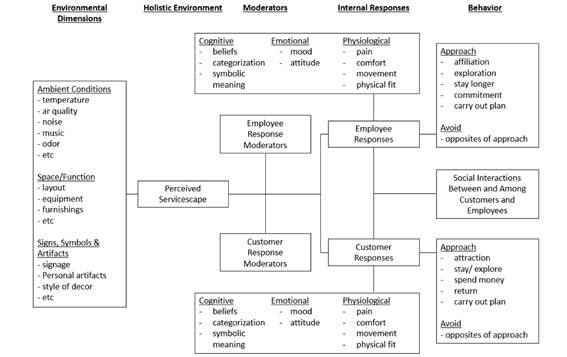 Source: adapted from Bitner (1992)
 Source: ABNT, (2022)