
 White Dreams for Black Deeds: Cinema, Epic, and Racial Hierarchy during the First Republic
ABSTRACT
This article analyzes the connection between the narrative elements and commercial success of the film Spartaco (Giovanni Enrico Vidali, Pasquale Film, Italy, 1913), the media coverage surrounding the Revolt of the Lash, the construction of common sense for the public regarding these events and, more generally, the recent past of slavery and the role of Afro-Brazilian citizens in the claiming of rights during the immediate post-Abolition period. In regard to a racially oriented reading of the film, this article argues that the consumption of Spartaco by Brazilian spectators worked to erase Black references of heroism and rebellion from events close in time to the exhibition of the film and connected to the legacy of slavery – the Revolt of the Lash and the trial of João Cândido. Concerning the methodology for analyzing written sources, this article adopts the evidential paradigm, as advocated by Carlo Ginzburg.
Keywords:
Cinema; First Republic; Revolt of the Lash; Epic; Post-Abolition
RESUMO
Este artigo pretende analisar a conexão entre os elementos narrativos, o sucesso comercial alcançado pelo filme Spartaco (Giovanni Enrico Vidali, Pasquale Film, Itália, 1913), a cobertura midiática da Revolta da Chibata, o enquadramento de um senso comum por parte do público quanto a esses eventos e, de modo mais geral, quanto ao passado recente da escravidão e ao papel da população afro-brasileira na conquista de direitos no momento imediato pós-Abolição. Em se tratando de uma leitura racialmente dirigida à obra, nosso argumento principal é o de que o consumo de Spartaco por parte dos espectadores brasileiros atuou no apagamento do referente negro de heroísmo e de rebelião a partir de episódios temporalmente muito próximos à exibição do filme – a Revolta da Chibata e o julgamento de João Cândido – e conectados à herança do período escravocrata. Como metodologia para análise das fontes escritas, adotamos o paradigma indiciário, tal como preconizado por Carlo Ginzburg (2007).
Palavras-chave:
cinema; Primeira República; Revolta da Chibata; épico; pós-abolição
RESUMEN
Este artículo pretende analizar la conexión entre los elementos narrativos, el éxito comercial alcanzado por la película Spartaco (Giovanni Enrico Vidali, Pasquale Film, Italia, 1913), la cobertura mediática de la Revuelta de Chibata, el encuadramiento de un sentido común por parte del público cuanto a esos eventos y, de modo más general, cuanto al pasado reciente de la esclavitud y al papel de la población afrobrasileña en la conquista de los derechos después de la su abolición. Tratándose de una lectura racialmente dirigida a la obra, nuestro argumento principal es el de que el consumo de Spartaco por parte de los espectadores brasileños actuó en la eliminación del referente negro de heroísmo y de rebelión a partir de episodios temporalmente muy próximos a la exhibición de la película – la Revuelta de Chibata y el juicio de João Cândido – y conectados a la herencia del periodo esclavista. Como metodología para el análisis de las fuentes escritas, adoptamos el paradigma indiciario, tal como preconizado por Carlo Ginzburg.
Palabras Clave
cine; Primera República; Revuelta de Chibata; épico; pos-abolición
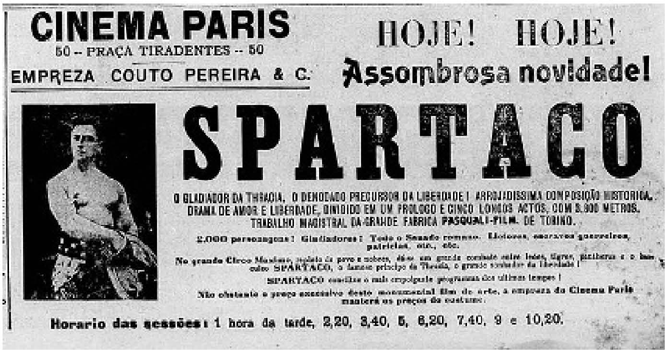
To ease the heavy workload they were anticipating for that week, a reader buys the Monday edition of O Paiz newspaper to catch up on the latest news and perhaps find a play or a movie to see. When they see an ad by Cinema Paris about the premiere of Spartaco that day, they get excited. A photo of the star playing the Roman hero catches their eye, as well as a high production value and the luxury of the theater. They rush to buy a ticket before the session is sold out.
Not long before the debut, the same reader had been systematically exposed, for months, to news directly or indirectly related to an event that marked the national memory and, especially, that of Rio de Janeiro: the Revolt of the Lash. From its outbreak in November 1910 until João Cândido was court-martialed, the theme was widely covered over news, editorials and political cartoons.
In turn, Spartaco (Giovanni Enrico Vidali, Pasquale Film, Italy, 1913) was released in theaters in different Brazilian cities between the months of March and April 1914. It was screened in the capital city, in several state capitals and in many medium-sized cities in the countryside. This happened a little over a year after João Cândido’s trial was concluded in December 1912, alongside with other leaders of the rebels who survived the massacre imposed by the military and Hermes da Fonseca’s administration1. Repercussion in the press didn’t let up until the following month (MOREL, 2009a, p. 229-245).
Carrying on with the discussion present in Lapera (2023), the issue to be considered by this article is the connection between the narrative elements of the film, its commercial success, the media coverage surrounding the Revolt of the Lash2 and the construction of a common sense for the public regarding these events. Broadly speaking, Brazil’s recent past of slavery and the role of Afro-Brazilian citizens in the claiming of rights during the immediate post-Abolition period are also themes pertaining to this article.
In terms of a racially oriented interpretation of the film, our main argument is that the consumption of Spartaco by Brazilian spectators acted as a form of erasing Black references of heroism and rebellion. This argument is based on episodes close in time to the screening of the film – the Revolt of the Lash and the trial of João Cândido – and connected to the legacy of slavery in Brazil3. By investing in an erasure through the oblivion of traces (RICOEUR, 2007, p. 452-457), the consumption of the film disseminated among its viewers the protagonism of a White slave in a rebellion, obliterating Afro-Brazilian protagonists close in time to them4.
Moreover, we introduce three complementary arguments. The first is that, with the success of the movie, the idea of White fear (AZEVEDO, 2004), widespread since the mid-19th Century, grew deeper , due to the potential for subversion of order by Afro-Brazilians instilled by the recent Revolt. This fear was reinforced after the developments of the Revolt of the Lash, by the bombs that fell on Rio de Janeiro at the time, by the rebels’ threat of bombing the entire city and, above all, by the sensationalist coverage by part of the corporate press5.
Furthermore, the substitution of João Cândido by Spartaco on a more symbolic level can be seen as a form of psychic compensation (ADLER, 1955). In the case at hand, it acts as a symbolic possession of an unattainable asset – a White hero from a remote past – in order to repair a loss felt on the emotional and/or moral level. As such, compensation would come through the consumption of this White hero’s images and would relieve the feeling of shame felt by a large part of the audience. At the time of the Revolt, the public identified with the officers killed during the mutiny and with the military and politicians humiliated by the amnesty approved for the rebel soldiers in the Brazilian Congress.
Finally, the widespread exhibition of Spartaco in Brazilian theaters was part of a public construction of the Revolt of the Lash as a non-event (TROUILLOT, 1995, p. 70-107). That is, the massive projection of a classical hero helped mitigating the unpredictability, the protagonism ofAfro-Brazilian men and their ability to lead the contemporary Revolt against the republicans6. Together, these arguments allow us to draw some parallels of interpretation regarding the presence of the film in the national exhibition circuit, which, evidently, do not intend to halt the discussion7.
When it comes to the intellectual debates that took place during the First Republic and were popularized by the press, it is important to highlight the role of whitewashing ideology in shaping practices related to the State and the common sense of the upper segments of the population (SCHWARCZ, 2005), being addressed also in correlation to the mass culture of the moment (CAMINHA, 2020).
Connected to this, the debate on “Hellenism” – that is, the constant reference to the repertoire of Greco-Roman classical culture – gained traction not only among intellectuals, but also within the middle classes of the population, who read newspapers and books and attended entertainment venues available in big cities (theaters, cafés, movie theaters, beaches, sports events, etc). In addition to the intellectual disputes with clear references to Classical Antiquity and a racially oriented reading of this content (BARBOSA, 2017; BROCA, 2005; SEVCENKO, 1983), these middle classes were also included in the debate through films premiering in theaters during the first decades of the 20th Century (LAPERA, 2023). Several films exhibited had themes relating to Ancient Greece and Rome, in a plain expansion of “Greek mania” (BROCA, 2005, p. 157) through mass culture, part of the integration perceived by Martín-Barbero (2004, p. 209-210) spawning from mass culture8 and not only from the literate arena in Latin American societies.
In the case of João Cândido, we pursued a clue left by Morel (2009a). When reporting on the heated discussion in Congress about the bombing of the city of Salvador in January 1912, the author realized that the leader of the Revolt had been portrayed in a way similar to our analysis:
In the National Congress, the opposition, which laid out restrictions to the amnesty granted to the naval insurgents of 1910, once again stirred up the issue of bombing Salvador, praising João Cândido as a humanitarian sailor with Christian beliefs, since he did not drop a single bomb on the population of Rio. They compared him to the great heroes of the Ancient Times, placing him in opposition to Marechal Hermes da Fonseca (MOREL, 2009a, p. 202, our emphasis).
In terms of researching paths, we identify with what Martín-Barbero (2004, p. 18) has said about his proposal for a nocturnal map: “a map to investigate domination, production and work, but from the other side: the side of gaps, of pleasure”. Although the author presented this for contemporary communication, it is possible to situate it historically and recognize some revealing inflections about the social categorizations in the first decades of the 20th Century through moments of leisure provided by going to the movies. We can thus perceive, in traces of these processes, markers of hierarchies and exclusions in those apparently “relaxed” and “neglected” moments.
As for sources, we will use the film itself, the ads published by exhibitors, and the news coverage of the Revolt of the Lash and the trial of rebel sailors in newspapers held by the Publicações Seriadas Department of the National Library of Brazil and deposited in Hemeroteca Digital da Biblioteca Nacional. It is important to emphasize that we did not find any qualitative sources regarding the reception of Spartaco by the Brazilian audience – letters from spectators, editorials, articles by columnists, etc. Given the absence of qualitative sources directly correlating these two events, our work will focus on another type of evidence that allows us to draw parallels between them: the proximity in time between the Revolt itself, the trial, and the screening of the film, at a historical moment when the perception of time was experienced individually and collectively more slowly than it is today9; the degree of circulation of the film among the Brazilian audience; and the similarities between the narrative structures of the fictional work and the media coverage of the events surrounding the Revolt, as well as the construction of heroes by journalists and chroniclers of the time and by the cinematographic work discussed.
The methodology for the written sources is the evidentiary paradigm, by Carlo Ginzburg (2007), as explained by Lapera and Souza (2010). It is important to underline that the method proposed by Ginzburg is based on the principle that incidental traces would be capable of revealing socially structural processes and, as a method of textual criticism, it aims to infer some of these processes from a heterogeneous universe of written sources (GINZBURG, 2007, p. 143-171). In the analysis of the film, we will mobilize authors who have focused on the epic in its Modern national or transnational shapes (MORETTI, 1996; FREITAS, 2016).
Still on the sources, we emphasize that the films produced at the time about the Revolt and João Cândido are considered missing. After consulting the Filmografia Brasileira database of Cinemateca Brasileira, we found that some works were referenced thanks to press sources cataloged by researchers10 regarding their circulation. Given the impossibility of comparing film sources, the media coverage of the Revolt gains prominence due to the issue and the arguments raised in our article.
Looking for a White hero: the presence of Spartaco (1913) in Brazilian theaters
Spartaco11 focuses its narrative on the adventures of the homonymous gladiator slave and follows the revolt against slavery in the Roman Empire. It is important to observe that the film itself is constructed as a window into the past (ROSENSTONE, 1995), as it announces in its opening credits: “and let us pass in imagination through the gates of Ancient Rome”12. This was common in silent films that dealt with historical themes (ROSENSTONE, 1995).
Muscio (2013, p. 163-164) places the film within an array ofItalian silent film productions. The researcher argues that movies on Classical Antiquity – mainly about the expansion and decline of the Roman Empire – were the type of production most valued by national studios, both for local and foreign audiences. It follows that the historical reconstruction proposed by Spartaco would be situated within the idea of using the classical past to reach massive consumption by spectators from all over the world.
In the film, Roman authorities praise Spartaco in gladiator fights at the Colosseum, and the hero is applauded for hurting his opponents. Afterwards, he returns to his hometown – Thrace – and tries to organize a slave revolt against Rome, something emphasized in scenes where an angry crowd walks ahead through the region’s alleys and valleys. There are moments in the movie where Spartaco is shown rallying the mass of slaves, which marks his position of leadership. To thwart his purpose, Spartaco is set up, being accused of murdering Heronius (a crime in fact committed by Noricus – the villain of the film –, which is only revealed in the last scene).
Späth and Thröler (2013) point out issues that directly concern us regarding the character’s body and its media portrayal. First, the authors underline that a muscular body to represent the slave is something that has been used since silent cinema and quote Vidali’s version as an example (2013, p. 47). After that, they connect this element to the commercial campaign of the film, as this athletic body was shown in the film’s advertising for distributors, exhibitors and audiences (2013, p. 57-58). Theater ads published in Rio de Janeiro’s newspapers - such as the one reproduced below – confirm this:
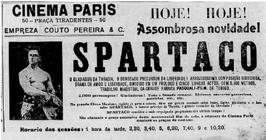
In relation to the audience reached by the film, some inferences can be highlighted from the placement of these ads in newspapers in different Brazilian cities. During our research, we discovered screenings in the following cities: Rio de Janeiro, São Paulo, Recife, Manaus, São Luís, Curitiba, Florianópolis, Caxias do Sul and São Félix. This is not a definitive list of the cities where the movie was screened, but rather a sign of the wide circulation of the film in the Brazilian exhibition market13.
Although data on these cities are asymmetrical and, in some cases, quite scarce, it is possible to deduce from the material collected through the press that Spartaco was shown in several theaters aimed at local elites and middle classes, reinforcing the audience reached by film exhibitions in the capital after some of its areas were renovated (ARAÚJO, 1985; BERNARDET, 1995; LAPERA, 2020; 2023). We infer that the exhibitions in other cities followed patterns similar to those adopted in Rio de Janeiro, that is, ads about the film weeks in advance, release in theaters located in noble and/or recently renovated areas and, only for some locations, the expansion of movie sessions to theaters in places further away from these areas14.
In short, we can argue that, during that period, cinema exhibitors targeted consumption by the elite and the expanding middle classes in different Brazilian cities at different levels: appealing to the artistic quality of the film itself; underlining the characteristics of theaters that set them apart within their local exhibition circuits15; and engaging with audiences with a higher level of literacy and knowledge of the codes of conduct regarding forms of entertainment attended by these groups – mainly the theater16.
Besides, some notes in the press endorsed this class hierarchy operated by the consumption of the film, such as the comment in A Notícia newspaper (1914, p. 3) about the audience:
Always very well attended, Theatro Phenix’s seats are always difficult to find and its sessions are always sold out for the stupendous film “Spartaco”, the gladiator of Thrace.
Last night, as with previous sessions, the dazzling artistic film was well matched with the audience’s looks in the gallery, box seats and everywhere else, with the room fully occupied by the highest of society17.
Considering the target audience not only for Spartaco, but for cinematographic entertainment as a whole, we carried out a comparative analysis between the film and the media coverage about the Revolt of the Lash under four aspects: a) the leadership of the revolts by charismatic figures – Spartaco and João Cândido, whose images were presented and reconstructed by the media at different moments; b) the military dimension of the revolts, which brings them symbolically closer together; c) the conspiracies against their leaders; and d) the issue of amnesty and trial.
Before moving on to the topics of our analysis, it is important to emphasize that a racially oriented reading of Spartaco’s character is not something entirely new when it comes to the historiography of the film. While addressing Ricardo Freda’s version of the same character, Lapeña Marchena (2015) inferred that it could be read in correlation to the liberation movement of Black populations in the USA and Latin America throughout the 19th Century. In his words, “this particular view of Spartacus fosters the dichotomy of freedom vs. slavery and makes the Thracian hero a precursor of nineteenth-century abolitionist thinking” (2015, p. 173).
In turn, Davis (2000, p. 34) compares the effort of Pasquale company to portray slavery in Antiquity to that of Griffith in dealing with the legacies of the North American slavery system in The Birth of a Nation, very close in time in the international film market. At several instances, the author establishes relations between different moments of ancient and Modern slavery in cinema, situating them in the construction of the sensitivity of 20th Century viewers for the then new medium (DAVIS, 2000, p. 61).
Spartaco, a detour from João Cândido: heroes, villains and whitewashed doubles
The hero is presented to the audience in crescendo. From a warrior captured in combat with the Thracians in the first sequence of the movie, he is shown as a leader in the gladiator academy and in the fights held at the Colosseum. He defeats several opponents, including his main rival, Noricus.
In the first sequence, he is displayed as a war trophy by Roman general Crassus. The film presents Crassus in a long shot with the subtitle “To witness the return of the conqueror Crassus – fresh through the conquest of Thrace”18 and, in the sequence, Spartaco is shown with his sister Idamis walking under the watchful gaze of the general and accompanied by a crowd cheering the procession on. His presentation ends with “But yesterday a warrior of Thrace – young, joyous, triumphant – today a shackled slave of Rome”19.
In the first combat at the Colosseum, Spartaco appears as the only survivor of his battalion, imposing a humiliating defeat on Noricus just the same, knocking him down and holding his sword over his enemy’s stomach. After the Roman emperor – who was present for the combats – acknowledges Spartaco’s victory, the gladiator helps Noricus to stand up, and his enemy begrudgingly does so.
In turn, the rebel sailors were presented to the public in a rather diffuse manner at first. The press reported that the one leading the Revolt or the reasons for its outbreak were not known for sure, as Morel (2009a, p. 73-76) points out. Correio da Manhã newspaper, in its edition of November 23, 1910, highlights the city’s mood in the face of the latest events: “The city is in complete panic. The revolt in the Navy, which seemed to be limited to a few ships only, quickly spread, and it is no longer just a revolt of sailors, but a revolt of the fleet”20.
In addition to the diffuse dimension of the Revolt, the press also questioned not only the sailors’ ability to lead the Revolt from the ships21, but also the fact that they were capable of rebelling on their own, without political motivation or sponsorship, with O Paiz newspaper being the most explicit in exposing the debate taking place on the streets. When addressing the sailors’ telegram to President Hermes da Fonseca with the movement’s demands, the November 23, 1910 edition of the newspaper describes the atmosphere as follows:
Some people infered political affiliation in the fact. For them, the firing of war cannons could not be the exclusive work of sailors. There must have been a secret, a mystery behind those thundering cannons... Others, more aware of the facts and more prudent, saw the uprising as mere internal disciplinary disturbance, a genuine domestic issue on board some of the units in our fleet22.
It follows that the contrast between Spartaco’s leading role, outlined from the beginning of the movie, and this diffuse and disdainful treatment towards the rebel sailors can be seen as the starting point in the construction of this whitewashed slave hero on the public arena, constituting the foundation for the substitution to be made in relation to the protagonists of the 1910 movement.
In contrast to this, we could point out that the figure of João Cândido was already well-known in 1914, when the film premiered on the Brazilian exhibition market. To counter this argument, we recall Moretti’s analysis (1996, p. 11-34) on the instability surrounding the Modern hero, far from its references in classical culture and the epic genre. In the case at hand, this instability was translated both by the film hero carrying signs of modernity – muscular body, emphasis on a love relationship relevant to the action, which also marks the combination between epic and melodrama - and by the representation of the sailors as a “Black wave” by the press, a typical element of “White fear” (AZEVEDO, 2004).
This way of representing the sailors23 was further stressed by a curious fait divers published by Correio da Manhã newspaper in its first edition of November 23, 1910. When reporting the feeling of unease that took hold of Rio de Janeiro, the newspaper described as follows the encounter, at the Maritime Police, with a sailor from one of the vessels mutinying:
This sailor was from scout Bahia, tall, Black, and had a huge cigar between his lips. We listened very carefully to what he was saying. Apparently half drunk, he staggered, mumbling in a low voice: “At six o’clock, my Commander called me and told me to move his family to the furthest point in the city, to Cascadura. I moved them and here I am, ready to embark.” The Black man laughed, chewing on the syllables. He concluded: “And I tell you that at two o’clock you’ll see... all this will turn into a mess...”24
The tone of threat and revenge, the racial marker and the description of the sailor as a comic type – in line with the racist humor present throughout the media culture of the period (CAMINHA, 2020) – can be seen in direct opposition to the magnificence and the personalization around Spartaco, performed at a subsequent moment by the film’s narrative and enhanced by its consumption.
In another sequence of the movie, when the slaves revolt, Spartaco is portrayed as a charismatic mentor capable of converting more soldiers to the cause. They are shown marching through Rome shouting and raising their swords, tridents and shields in exaltation of the gladiator. His coronation as a hero occurs during a speech before Emperor Crassus after the revolt is victorious: “As the price of thy liberty we ask only the common right of all men – to live in peace and freedom!”25.
As for João Cândido, the press considerably varied in his treatment as the leader of the Revolt, an aspect already pointed out by Morel (2009a), Nascimento (2010; 2016), Almeida (2010; 2011) and Silva (1982). Gilberto Amado’s chronicle published in O Paiz newspaper, already analyzed by historiography (MOREL, 2009a, p. 60-63) – after praising João Cândido and the rebels and highlighting the fair reasons for the insurrection –, concludes with this statement about his presence on the public arena:
However commonplace it may seem, it is inevitable to repeat that we need to work with seriousness and intensity, to quickly address the real issues, the basic problems of Brazilian sociology. Only after we come to a solution can Brazil be a strong country, a serious Nation, which cannot, in short, comically oscillate to the whims of other Joões Candidos that come along (AMADO, 1910, p. 3, our emphasis).
From the writer’s point of view, even though the sailors had willpower and reason and could be seen as heroes in this situation, the ultimate goal was to erase them. In a kind of “suture” (BHABHA, 2005), Amado’s language is very revealing of the desire to prevent the figure of João Cândido from gaining resonance in the political arena and from being seen as a model for future claims. The ambiguity present in Amado’s chronicle can be seen as a synthesis of the media coverage surrounding the image of João Cândido.
Furthermore, it is important to remind Freitas’ (2016, p. 62-72) observations regarding the debate on the epic genre in Brazil throughout the 19th Century. When listing the arguments of several authors on the affirmation of the epic in Brazilian literature, the author outlined the forefront presence of White colonizers and Native Brazilians in the role of heroes, while Afro-Brazilians were erased from literary protagonism. We would add that, within the scope of mass consumption, the erasure of Afro-Brazilians as heroes was carried out at multiple times during the First Republic. The coverage of the Revolt and the screening of Spartaco are examples in line with the exclusion of Afro-Brazilians from the national imagination concerning their role as heroes. So, it is fair to say that mass consumption during the First Republic is situated within the same array of expectations as the debate that took place throughout the 19th Century in the Brazilian literary field.
Moreover, it is necessary to weight Moretti’s argument (1996, p. 52, author’s emphasis) that, in the Modern epic, the “contemporaneity of the non-contemporaneous moves into the foreground: the ‘Before-and-After’ is transformed into an ‘Alongside’ – and history thus becomes a gigantic metaphor for geography”. The substitution of João Cândido by Spartaco on the symbolic domain is in harmony with this emptying of a “before-and-after” temporality in the Modern epic, which is enhanced by the massive dimension of cinematographic consumption and its capacity to level figures from different times at the same historical moment.
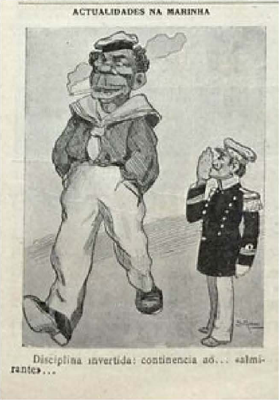
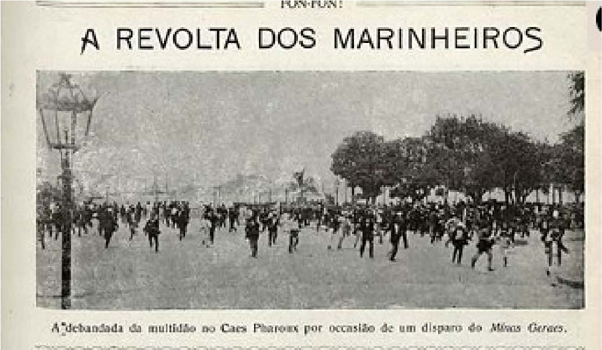
At this point, we should observe two images published by the press at the time of the Revolt:

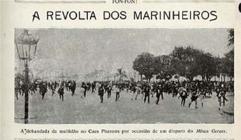
Photo of the crowd in Praça XV running from cannonballs fired by dreadnoughts at Baía de Guanabara during the Revolt
The racist content of the cartoon in the portrayal of João Cândido26 is complemented by a White Commander represented in a much smaller scale, dressed in uniform and saluting the sailor. This cartoon symbolizes the feeling of humiliation experienced by Navy officers and, ultimately, a sense of intellectual and physical inferiority of the White man, with whom a significant portion of the film audience identified27.
This feeling was enhanced by the widespread fear among citizens regarding the risk of a generalized Revolt against the institution. If that were to happen, the capital would have suffered the consequences, with the photo published in Fon-fon magazine being a summary of the situation. It follows that the humiliation, inferiority, and fear experienced during the Revolt of the Lash would be the basis for the media construction of Spartaco throughout its exhibition.
The film addresses Spartaco’s heroism during the revolt against the Roman generals with the subtitle: “History records no more gloriously daring act than the escape of the gladiators from the heights of Vesuvius”28. Later on, he is shown guiding the gladiators down Mount Vesuvius, and his muscular body is further highlighted by the use of physical strength during this escape.
In line with the film’s narrative, the press also explored the heroic dimension of Spartaco’s behavior to the public. O Paiz newspaper published that the film portrayed a “wonderful drama, full of scenes of love and fighting for freedom”29, recognizing the centrality of the protagonist, “prince of Thrace, and invincible fighter for the freedom of the oppressed”30.
We go back to the argument of Späth and Thröler (2013, p. 45-47) that the heroes of Classical Antiquity, such as Spartaco, were presented in a Modern guise, since the iconography surrounding their bodies was unknown and required investment of the public imagination. Hence, we can see that, in the Brazilian example, the occupation of the public arena by Spartaco through cinematographic exhibition helped in the construction of this whitewashed slave hero and, consequently, in the softening of João Cândido and the rebel soldiers’ presence in 1910.
While the figure of Spartaco did not suffer any kind of embarrassment in its circulation within the public arena, there was a pressure for censoring the leader of the movement against the lash in the Navy. Shot between the Revolt and its trial, the film A vida de João Cândido, directed by Alberto Botelho, was banned in January 1912. Almeida (2011, p. 64-65), Araújo (1985, p. 382) and Kushnir (2004, p. 86-87) all investigated the fact. The authors compiled articles published in the press attributing the censorship to Belisário Távora, Chief of Police in Rio de Janeiro at the time. Almeida (2011, p. 65) even mentions that Távora was in the audience of a performance by the Spinelli circus in homage to the leader of the Revolt the year after the film about his life was censored, which could be seen as contradictory behavior.
A document found during our fieldwork at the National Archives of Brazil sheds new light on this censorship episode. Official Letter 58/1912, issued on January 19, 1912 by the Navy Captain heading the Personnel Superintendence of the 5th Section of the Brazilian Admiralty, orders the removal of the posters advertising the film and the immediate prohibition of its screening:
Some theaters in this capital, such as the one on Marechal Floriano Street, near the Church of Santa Rita, have on display large posters with a painted sailor and the slogan “João Candido”, soon! – since it is highly inconvenient for the discipline in the Navy not only to have these posters on display but also to screen a movie recollecting the sad episodes of the rebellions that have recently occurred among sailors, I pray your orders will remove those posters and prohibit the exhibition of the corresponding film31.
On the left side of the typed text signed by the Navy Captain, a handwritten rubric by Belisário Távora was limited to providing internal guidance for the case: “Communicate Dr. 2nd Deputy Assistant for action”, that is, the deputy responsible for censoring public entertainment.
We point out the Captain’s concern in relation to the massive dissemination of João Cândido’s image as a hero, a character to be erased, not praised. There is evidence that some individuals - who went beyond police action even – invested in an active oblivion by erasing the traces of the recent Revolt (RICOEUR, 2007, p. 452-457), trying to officially portray the Revolt of the Lash as a non-event (TROUILLOT, 2005, p. 70-107). Thus, the possibility of public engagement with the figure of an Afro-Brazilian hero needed to be previously eliminated, as it was perceived as a danger or, paraphrasing the Navy Captain, “highly inconvenient”.
There are some indicators that this possibility was a cause for concern since the repercussions of the Revolt itself. In their November 27, 1910 edition, Correio da Manhã and O Paiz newspapers reported the arrest of photographers and cameramen who approached rebel sailors from São Paulo dreadnought, Correio da Manhã emphasized that this arrest was carried out by guards from the Navy Arsenal32. We can thus conclude that the order for the arrest was given by Navy officers and that it was a breach of authority, yet another. The effort, however, was unsuccessful and the images of João Cândido and the rebel sailors gained traction in the press and movie theaters in the following weeks.
We can therefore ascertain that Spartaco managed to catalyze the qualities of a hero in both the narrative and the film’s advertisement, and his media construction can be compared with that of João Cândido’s in several ways: the personification from the beginning of the film in contrast to the representation of the sailors’ movement as a “Black wave”; the praise of Spartaco’s body, physical strength and behavior in direct contrast to João Cândido being the target of racist comedy by sectors of the press at the time, with his intellectual and leadership capacity questioned on several occasions, in addition to having his behavior characterized as excessive and even extreme in several articles and editorials. The “blurring” between the film hero and the hero popularized by the then recent Revolt gains an intentional oblivion dimension (RICOEUR, 2007), as “moral conscience seeks in them its arsenal of excuses for its exculpation strategy” (RICOEUR, 2007, p. 454), in a defensive standing on the part of the subjects who perpetrate this oblivion.
Empty amnesties and conspiracies of restrained memories: whitewashing the epic experience in Rio de Janeiro’s Belle Époque
In the film, the conspiracy against the success of the revolt is witnessed by Idamis (Spartaco’s sister). Noricus arranges the murder of Heronius, the Emperor’s advisor, so that the blame would fall on the hero. The film cross-cuts between the assassination of Heronius, the arrest of Spartaco and the kidnapping of Idamis by the conspirators, who lock her in a cell at the Colosseum.
Heronius is attacked from behind in his palace’s garden by one of the conspirators. Next, Noricus places Spartaco’s sword on the corpse and sends a note to the hero, falsely attributed to Heronius: “Greetings! I would have word with thee at once and shall await thee in my garden”33. Narona (Crassus’ daughter and Spartaco’s girlfriend) is warned by one of the conspirators that Spartaco was going to attempt against Heronius’ life, while the hero falls into the trap: when he touches Heronius’ body, he discovers the man is dead, a scene witnessed by Narona and one of the conspirators. Narona screams in despair, and the conspirator falsely accuses Spartaco, calling for the guards, who arrest him and take him to Crassus.
Heronius’ body is then carried by a procession of Roman soldiers and citizens, who cry out for revenge. In a summary trial, the conspirator addresses the Emperor and asks: “How canst thou doubt his guilt? Are not these his blood-stained mantle and sword?”. Spartaco begs Narona: “Ah, Narona, where is the faith that thou hast pledged to me?”, being rejected by her. The hero is sentenced to death and imprisoned at the Colosseum, where he hears Idamis’ screams. He manages to free her and escorts her to the Emperor with the help of Narona. Standing before Crassus, the hero proves his innocence with Idamis’ testimony, which exposes Noricus. As a reward, Spartaco is acquitted and Noricus is thrown to the lions.
The plot of the film is quite similar to the developments of the Revolt of the Lash, massively covered by the press at the time. Except for the outcome, the conspiracy present in the film and the trial of Spartaco relate to what happened in reality to João Cândido and the sailors in the Revolt.
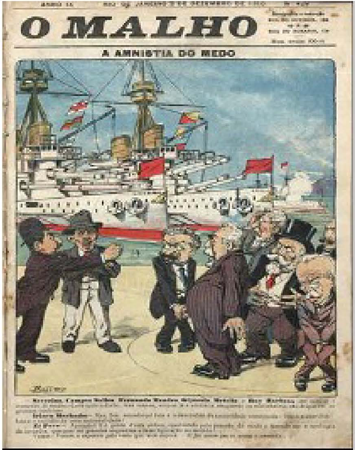
Just like with the film’s hero, the Revolt of the Lash was also a target of conspiracy, false amnesty and a fallacious trial, which have been widely discussed in historiography (MOREL, 2009a; SILVA, 1982; NASCIMENTO, 2010; 2016). While amnesty was the prize for the victory of the enslaved gladiators in the film, the one granted to João Cândido and the rebel sailors in 1910 was steeped in dispute and contradiction. After intense debate in Congress between groups represented by Rui Barbosa – in favor of amnesty – and by Irineu Machado – against it and speaking ill of the rebels –, amnesty was granted amid dissatisfaction and resentment, which was captured by the press coverage, such as the following cartoon, for instance:
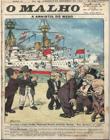
There is tension in the gestures of the Congressmen, quite nervous standing before the dreadnought cannons pointed at them. The word “fear” in the title of the cartoon regarding a possible bombing of the capital by the rebels can be interpreted from a racialized perspective, since the protagonists of the Revolt were portrayed in this light by the press. We recall the fact pointed out by Nascimento (2010, p. 15) regarding a widespread perception among the upper and middle classes during the Belle Époque about the relationship between Afro-Brazilian men, “backwardness” and lack of civility. In the context of the cartoon, White men from the upper classes (politicians, in this case) are represented as being affronted by feelings of fear and frustration in the face of the success of Afro-Brazilian sailors.
The resentment resulting from the amnesty signed at the end of November 1910 by Congress would not remain unanswered. A second revolt was harshly repressed, with the arrest of the leaders of the first mutiny at Ilha das Cobras, followed by a massacre from which only João Cândido and another sailor would get out alive (MOREL, 2009a, p. 161-163; NASCIMENTO, 2010, p. 26; ALMEIDA, 2011, p. 62-63). Subsequently, the sailors who participated in the riot were forcibly sent by ship, Satélite, to the North of the country, a voyage during which many were subjected to summary executions and others to exile (MOREL, 2009a, p. 177-188; ALMEIDA, 2011, p. 62).
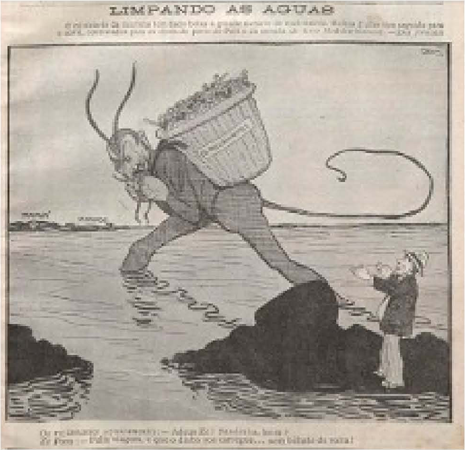
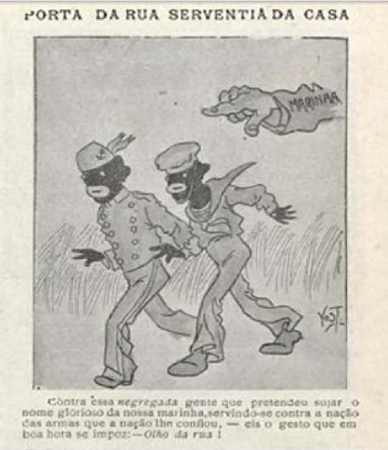
This feeling of vendetta was echoed by the press. Below are two cartoons that symbolize and endorse it:
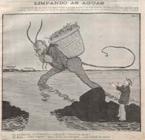
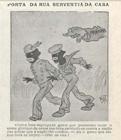
The way the cartoons portray the Black body and refer to it show their racist bias, placing them within the perspective of “racist comic narratives [, which] become a convenient mask for projecting colonizing policies that make race one of the central criteria for discrimination” (CAMINHA, 2020, p. 129). In addition, the laughter intended by the cartoons is bitter, fueled by resentment for the protagonism of Afro-Brazilian men in the public arena. For those subject to this resentment, it was necessary to erase their presence, hence the relief of putting them – albeit symbolically – in a basket carried by the Devil. The institutional exclusion satirized in the cartoons was accompanied by another symbolic one from the public arena of Belle Époque. It is at this point that the psychic compensation (ADLER, 1955) intended for Spartaco’s imagery consumption acts.
In the film, the military dimension of the revolt is accentuated in the articulation between the protagonist and the gladiators after Emperor Crassus threatens to arrest him, following Spartaco’s refusal to fight his fellow countryman and friend Artemon. The Roman guards do not arrest Spartaco, instead answering his call (“Follow me! I will lead ye to freedom”34). Later on, the slave troops led by Spartaco are cornered on a hill by the Roman army. The hero notices vine branches capable of supporting the weight of the slaves and has the idea of using them to go downhill.
The plan is successful: the slave gladiators manage to escape the siege of the mountain and outflank the Roman army, which, caught off guard by the initiative of the troops led by Spartaco, succumbs to the revolt in a humiliating way, as many Roman soldiers run to escape the rebels and those who try to fight are killed or wounded.
Therefore, Spartaco and the gladiators’ victory in the revolt against the Romans and the technical superiority demonstrated by them in the narrative operate as a replacement for the technical primacy of the sailors in dealing with the dreadnoughts and their victory in abolishing the Navy’s lashes. The consumption of this hero can be read as a form of compensation (ADLER, 1955) for the feelings of frustration and inferiority arising from the public humiliation of Navy officers due to the amnesty granted by Hermes da Fonseca’s administration and the death of some officers during the Revolt.
On several occasions, these feelings were publicly admitted by the military segments and their civilian representatives. For instance, during a debate in the Chamber of Deputies regarding the trial ofJoão Cândido, deputy Mauricio de Lacerda (1912, p. 189) – representing the military – expressed his opinion on the leader of the Revolt: “What a generous beast! His generosity was paid for with the price of our shame, the dignity of the Nation, shrouded in amnesty”35.
On this last topic, it is interesting to observe the drawing In Memoriam Baptista das Neves e seus companheiros, published on the cover of Jornal do Brasil newspaper in the November 25, 1910 edition36. Symbolizing the mourning around the death of the Minas Gerais’ Commander, the drawing shows a young White man laying a funeral garland and, in the background, a dreadnought with a mast that resembles a cross. Being a drawing and not a cartoon – a marker of distinction –, it appeals to a feeling of compassion on the part of the readers and aims at making them identify with the dead officer. This compassion is constructed in an antithetical way in relation to the figures of João Cândido and the Afro-Brazilian sailors, who are portrayed as those responsible for the deaths and represented as savages by the press.
This type of judgement would reappear at the end of João Cândido’s trial in 1912.
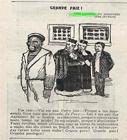
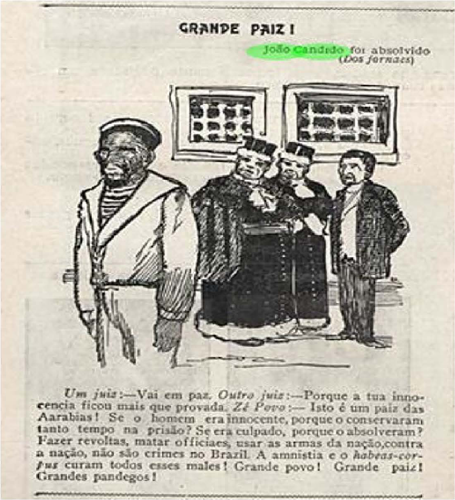
Although celebrated by part of the press (MOREL, 2009a, p. 217-220), another considerable portion mocked the verdict handed down by the military court, considering the acquittal of the 1910 rebels an insult to the institutions, as is shown in the cartoon above. Once again, the resentment against João Cândido and the Revolt of the Lash was put forth so that the causes of the Revolt were outshone by a teratological image around the rebels. The amnesty and the inversion of hierarchies at the time of the Revolt would be condemned, another point of contact with the narrative presented by Spartaco.
Moretti (1996, p. 13-14) points out the contradiction between the experience of the epic and modernity. In this contradiction, the epic hero is portrayed by modernity as a barbarian/savage. In the case of Spartaco’s consumption, we affirm that this barbaric dimension of the experience of the Modern hero appears quite attenuated in the narrative, and can be read as an update that mitigates the danger represented by the Afro-Brazilian sailors in the elite and middle classes’ point of view.
Furthermore, the humiliation of the Roman generals and soldiers in the film, following the victory of Spartaco and his army, can be seen, at the time of its consumption, as a projection into a distant past away from the inversion of hierarchies caused by the success of the Revolt against the lash. With this, a relief from White fear (AZEVEDO, 2004) – regarding the potential for rebellion by Afro-Brazilian citizens in the post-Abolition period – is provided via imagery consumption.
This way, we can infer that the spread of the epic genre intended by the Brazilian literary field throughout the 19th Century (FREITAS, 2016, p. 48-49) was ironically achieved by a foreign film. The potential and pedagogy of the then new mass medium allowed the dissemination of a narrative in which the White hero was responsible for freeing the enslaved masses.
In short, the amnesty and the redemptive end of the hero in Spartaco operate as a reconciliation, in the fictional realm, of the differences highlighted and extensively explored in the case of the Revolt of the Lash. Therefore, the resentment and frustration of part of the public after the outcome of the Revolt and the trial of its leaders are reread by a whitened double. In this context, recognition, as a mnemonic act (RICOEUR, 2007, p. 438), is displaced to the figure of the White hero in the fictional domain. As a result, social change sought by the rebel sailors is dampened by the pleasure provided by the consumption of the image of this hero via cinema and, finally, by the repositioning of this White man – Spartaco in fiction, Navy officers after the Revolt – in the social hierarchy, in addition to the erasure of the protagonism of the Afro-Brazilian man as a possible national hero.
Conclusion
For over a century, the figure of Spartaco has had broad media coverage in film and television, with a large number of adaptations already analyzed by a vast historiography (DAVIS, 2000; MUSCIO, 2013; LAPEÑA MARCHENA, 2015; SPÄTH; THRÖLER, 2013). As a hero widely explored by the Modern imagination, his circulation contributed to the popularization of the history of Classical Antiquity among many sectors of the population in different continents, who would otherwise have difficulty accessing academic discussions around classical texts.
In turn, it is possible to observe occasions in which the achievements of rebel sailors in 1910 were revived in the public arena, such as in audiovisual works, plays, books and songs. Almeida (2011), Morel (2008; 2009b) and Nascimento (2010, p. 29-35) took inventory on the circulation of these memories in popular, media and literary cultures. In addition to the products discussed by these authors, we highlight the documentaries Abolição, by Zózimo Bulbul (1988) – which includes an interview with Edmar Morel about the Revolt of the Lash -, and João Cândido e a luta pelos Direitos Humanos, by Tania Quaresma (2008). We also recall projects that, albeit not carried out, demonstrate the strength and impact of this movement, such as the documentary conceived by Sílvio Tendler in the 1960s, mentioned by Marco Morel (2009b, p. 16) in the new edition of his grandfather’s work.
Throughout this article, our intention was to focus on the encounter between the figures of João Cândido and Spartaco and their presence in media culture conveyed during the First Republic, as well as the forms of racial hierarchy arising from this encounter. It is important to emphasize that the Revolt of the Lash as a non-event (TROUILLOT, 1995) was a partially successful strategy, to the extent that it was remembered only a few times in the following decades until the release of Morel’s book in 1959. The author even mentions that João Cândido was forgotten in the 1920s and 1930s (MOREL, 2009a, p. 236-239), to which Almeida (2011, p. 67) adds: “if it was already difficult to deal with the sailors’ movement until the beginning of the 1930s, during Getúlio Vargas’ Estado Novo (1937-1945) the subject seems to have disappeared from bookstores and public life”.
In this sense, investigating the traces around the erasures and active investment of numerous subjects in the oblivion (RICOEUR, 2007, p. 452-457) of the Revolt proved to be relevant for understanding the racialized hierarchies in the period analyzed.
Almost a decade after the Revolt, Lima Barreto (2010) would mock the military in the satirical short story “Coisas Parlamentares”37. Feared by his colleagues, a military Congressman goes up to the Congress podium and gives a rather strange speech, mixing references of the Brazilian and Ancient Rome’s armies. After talking about “centurions”, “fabri”, “tribunes” and “maniples”, he ends up being the target of widespread ridicule and concludes: “I read the thing in a book; but I forgot to adapt it, to the point of not remembering that we no longer have centurions, etc. Next time, I’ll whip up something cleaner” (BARRETO, 2010, p. 425).
By exposing the military’s fear of being the target of satire, the writer summarized the undue appropriation of references related to classical culture by the debate of the period. Intuitively, he explored the links and continuities between this classical past and his lifetime. Practically a displacement of Spartaco through the shadows of more recent events and the recognition of the contradictions in the racialized discourses of his contemporaries.
-
1
Morel (2009a, p. 207-227) highlighted the vendetta undertone of the trial against the leaders of the Revolt, which disregarded the amnesty granted by the government in December 1910, claiming that a second revolt had ensued. The only source to sustain the claim, however, is the report of Navy officers (NASCIMENTO, 2016).
-
2
We adopted the name established after the publication of the homonymous book by journalist and historian Edmar Morel in 1959.
-
3
Nascimento (2016, p. 155-156) argues that the lashes were directly associated with slavery by sailors at the time of the Revolt.
-
4
Although João Cândido was a free man at the time of the Revolt, the connection with the experiences related to slavery was very close and recent to him, to the rebel sailors (MOREL, 2009a; NASCIMENTO, 2016) and to the movie audience of the time. This allows us to draw a parallel between him and Spartaco.
-
5
For example, through the exploitation of the images of two children living in Morro do Castelo who were killed by grenades fired from the battleships, whose photos were published by several newspapers, such as Correio da Manhã, Correio Paulistano, Careta and Fon-fon, and addressed by Morel (2008, p. 50).
-
6
It is not our intention to carry out a historiographical revision of the Revolt of the Lash itself. We will simply use the available historiography on the subject to address the issue and the arguments we have put forward.
-
7
In addition, it is not a question of overstating the importance of an isolated film, but only of inserting it into a larger context of the production of oblivion.
-
8
When it comes to slavery in Classical Antiquity as theme, I found eighteen films researching Gazeta de Notícias, Jornal do Brasil and O Paiz newspapers between 1907 and 1916 (LAPERA, 2023).
-
9
A gap of just over a year is something that can be considered historically very close given this temporality. We would like to thank the anonymous reviewer who highlighted this aspect regarding our analysis.
-
10
Here is a list of materials found: A revolta da esquadra (William Auler, 1910), Revolta no Rio ([s.a.], 1910), A vida de João Cândido (Alberto Botelho, 1912), Revolta da esquadra na baía do Rio ([s.a.], 1910), A Revolta do Batalhão Naval ([s.a.], 1910), Revolta do Batalhão Naval e a Ilha das Cobras antes da revolução ([s.a.], 1910) e A revolta dos marinheiros (Paulino Botelho, 1910).
-
11
A copy of the film, from which we gathered some elements for our analysis, is available at: https://www.youtube.com/watch?v=3PhWK6JMmz8. Accessed on: March 21, 2023.
-
12
Excerpt at 0’28 of the film. We transcribed all of the subtitles from the copy available on Youtube and maintained their original writing.
-
13
It is interesting to call attention to a note published in A Província newspaper, which highlights that some families directly asked the person responsible to screen Spartaco again, since they had missed the first screenings at Theatro Santa Isabel. This is yet another vestige of the film’s commercial success. Cf.: Diversões. A Província, Recife, p. 1, March 16, 1914. Available at: http://memoria.bn.gov.br/DocReader/DocReader.aspx?bib=128066_01&pesq=Spartaco&pasta=ano%20191&hf=memoria.bn.gov.br&pagfis=27314. Accessed on: June 22, 2022.
-
14
In this sense, Recife proved to be a very interesting case that we were able to map with greater precision. The film premiered at Theatro Santa Isabel (downtown) on March 12, 1914, and was exhibited there for approximately 10 days. Between May and July 1914, we found records of screenings at Polytheama (downtown), Popular (downtown, far from the area that was renovated), Variedades (Olinda, a city next to the capital of Pernambuco), and Santo Amaro (in the neighborhood of same name) theaters. In October and November 1914, Cinema Royal published ads about screening Spartaco at some point during the period. Finally, in 1915, there were reruns at High Life (Casa Amarela) and Victoria theaters, which indicates that the film reached different segments of the middle classes through this logic of dissemination within Recife’s urban space. For the relations between theaters, location in the city, and audience by social class, see Silva (2018).
-
15
Cinema Theatro Phenix’s ad published in O Paiz newspaper on the day of the film’s premiere mentions several distinguishing features, such as “a large orchestra in the screening room”. It presents itself as “the largest and most luxurious movie theater in South America” and highlights its location across from the Jockey Club building. Finally, it emphasizes that “our theater, after the Municipal Theater, is the best theater in the capital due to its luxury, wealth, comfort, and beauty, it is not a warehouse pretending to be an entertainment space”. See O Paiz, Rio de Janeiro, p. 12, March 16, 1914. Available at: http://memoria.bn.gov.br/DocReader/docreader.aspx?bib=178691_04&pasta=ano%20191&pesq=Spartaco&pagfis=22004. Accessed on: June 22, 2022.
-
16
As an example, here is part of an ad for Theatro Santa Isabel, where the film premiered in Recife, published in A Província, p. 2, March 12, 1914: “N.B. – Entry will not be allowed before the end of each session of the soirée, in order to avoid crowding and poor seating arrangements for such a respectable audience. We therefore kindly ask that, after each session, spectators vacate their seats, as they will have already been sold for the next session.” From this excerpt, we can deduce the audience was expected to adopt a standard of behavior typical of theatrical performances, not only because the film screenings took place in the same space, but also due to expectations surrounding paying customers with a reasonable degree of engagement in this kind of entertainment. Available at: http://memoria.bn.gov.br/DocReader/DocReader.aspx?bib=128066_01&pesq=Spartaco&pasta=ano%20191&hf=memoria.bn.gov.br&pagfis=27275. Accessed on: June 22, 2022.
-
17
Chronica theatral. A Notícia, Rio de Janeiro, p. 3, March 18-19 1914. Available at: http://memoria.bn.gov.br/DocReader/docreader.aspx?bib=830380&pasta=ano%20191&pesq=Spartaco&pagfis=21175. Accessed on: June 22, 2022.
-
18
Excerpt at 1’06 of the film.
-
19
Excerpt at 1’45 of the film.
-
20
A Esquadra Revoltada. Correio da Manhã, Rio de Janeiro, 2. ed., p. 1, November 23, 1910.
-
21
This misplaced idea regarding the lack of capacity to operate the dreadnoughts and organize on the part of the rebel sailors was largely refuted by Morel (2009a), Nascimento (2016, p. 153; 2019, p. 390-397) and Almeida (2010), who even pointed out the racist dimension in this downgrading.
-
22
Uma revolta de marinheiros da esquadra. O Paiz, Rio de Janeiro, p. 1, November 23, 1910.
-
23
Nascimento (2016, p. 162-163) and Almeida (2010, p. 93-94) highlight that, although there was diversity in the ethnic-racial composition of sailors, the majority were in fact Black and framed as such by the contemporary press.
-
24
Alguns navios da esquadra revoltam-se. Correio da Manhã, Rio de Janeiro, p. 1, November, 23 1910.
-
25
Excerpt at 43’46 of the film.
-
26
Morel (2009b, p. 15) related this image of the leader of the Revolt to the stereotype of the malandro.
-
27
Nascimento (2016, p. 156) analyzes that the Navy officers were mostly White and belonged to the upper classes at the time of the revolt, concluding that “their privileges and images were corrupted at that time by Black, poor and poorly educated sailors”.
-
28
Excerpt at 40’32 of the film.
-
29
Cinematographos. O Paiz, p. 5, March 16, 1914. Available at: http://memoria.bn.gov.br/DocReader/docreader.aspx?bib=178691_04&pasta=ano%20191&pesq=Spartaco&pagfis=21997. Accessed on: June 22, 2022.
-
30
Idem, ibidem.
-
31
Arquivo Nacional, Gifi – Fundo Ministério da Justiça e Negócios Interiores, cx. 6C-378.
-
32
Os photographos são presos. Correio da Manhã, p. 1, November 27, 1910; A prisão de photographos. O Paiz, p. 2, November 27, 1910.
-
33
Excerpt at 54’17 of the film.
-
34
Excerpt at 30’34 of the film.
-
35
Annaes da Camara dos Deputados, sessão de 2 de outubro de 1912, p. 189. Available at: https://me-moria.bn.gov.br/DocReader/docreader.aspx?bib=060917_03&pasta=ano%20191&pesq=Jo%C3%A3o%20Candido&pagfis=23401. Accessed on: March 19, 2023.
-
36
The image can be viewed at https://memoria.bn.gov.br/DocReader/docreader.aspx?bib=030015_03&pasta=ano%20191&pesq=Jo%C3%A3o%20Candido&pagfis=5282 Accessed on: March 19, 2023. We cannot reproduce the drawing in the body of the article because it is copyrighted material. Source: Jornal do Brasil, p. 1, November 25, 1910.
-
37
This short story was originally published in October, 1919 (BARRETO, 2010, p. 563).
Acknowledgments
To the reviewers of this article, for their suggestions regarding its improvement. To Prof. Dr. Irineu Corrêa, for the bibliographical references on the work of Alfred Adler. To the employees of the National Library of Brazil and the National Archives of Brazil, for their hard daily work and attention to our research. To Luiza Conde for proofreading my English translation. To my friends Marina Caminha, Luiza Conde, Christianne de Jesus, Juliana Amorim Silva and Felipe Davson P. da Silva, for the intellectual exchanges throughout the research process. For their affection, there is no way to thank them, only to live it.
References
- ADLER, Alfred. The Individual Psychology of Alfred Adler: A Systematic Presentation in Selections from His Writings. Organização e comentários: Heinz e Rowena Ansbacher. Nova Iorque: Basic Books, 1955.
- ALMEIDA, Sílvia Capanema Pereira de. Vidas de marinheiro no Brasil republicano: identidades, corpos e lideranças da revolta de 1910. Antíteses, v. 3, n. esp., p. 90-114, dez. 2010.
- ALMEIDA, Sílvia Capanema Pereira de. Do marinheiro João Cândido ao Almirante Negro: conflitos memoriais na construção do herói de uma revolta centenária. Revista Brasileira de História, São Paulo, v. 31, n. 61, p. 61-84, 2011.
- ARAÚJO, Vicente de Paula. A bela época do cinema brasileiro. São Paulo: Perspectiva, 1985.
- AZEVEDO, Célia Maria Marinho de. Onda negra, medo branco: o negro no imaginário das elites. Século XIX. São Paulo: Annablume, 2004.
- MARTIN-BARBERO, Jesús. Ofício do cartógrafo: travessias latino-americanas da comunicação na cultura. Tradução: Fidelina Gonzáles. São Paulo: Loyola, 2004.
- BARBOSA, Francisco de Assis. A vida de Lima Barreto. Belo Horizonte: Autêntica, 2017.
- BARRETO, Lima. Contos completos. Organização e introdução: Lilia Schwarcz. São Paulo: Companhia das Letras, 2010.
- BHABHA, Homi. O local da cultura. Belo Horizonte: Ed. UFMG, 2005.
- BERNARDET, Jean-Claude. Historiografia clássica do cinema brasileiro: metodologia e pedagogia. São Paulo: Annablume, 1995.
- BROCA, Brito. A vida literária no Brasil — 1900. Rio de Janeiro: José Olympio; Academia Brasileira de Letras, 2005.
- CAMINHA, Marina. O humor racista midiático: as políticas da dor e do ódio como desenho risível do corpo negro. ArtCultura, Uberlândia, v. 22, n. 41, p. 126-147, jul./dez. 2020.
- DAVIS, Natalie Zemon. Slaves on Screen: Film and Historical Vision. Cambridge: Harvard University Press, 2000.
- FREITAS, Olívia de Barros. Dialética e historicidade do gênero épico no processo de formação da literatura brasileira. 2016. 212 f. Tese (Doutorado em Literatura Brasileira) – Programa de Pós-Graduação em Letras, Universidade Federal do Rio Grande do Sul, Porto Alegre, 2016.
- GINZBURG, Carlo. Mitos, emblemas, sinais: morfologia e história. São Paulo: Companhia das Letras, 2007.
- KUSHNIR, Beatriz. Cães de guarda: jornalistas e censores, do AI-5 à Constituição de 1988. São Paulo: Boitempo, 2004.
- LAPEÑA MARCHENA, Óscar. The Stolen Seduction: The Image of Spartacus in Ricardo Freda’s Spartaco, Gladiator Della Tracia. In: KNIPPSCHILD, Silke; MORCILLO, Marta Garcia (org.). Seduction and Power: Antiquity in the Visual and Performing Arts. Londres; Nova Iorque: Bloomsbury, 2015. p. 171-182.
- LAPERA, Pedro Vinicius Asterito. De “bom exemplo” em “bom exemplo”: consumo cinematográfico e presença das mulheres no espaço urbano da Belle Époque carioca. Cadernos Pagu, n. 60, 2020. p. 1-35.
- LAPERA, Pedro Vinicius Asterito. Sofrimentos em quadros embranquecidos: filmes históricos e representações da escravidão no Rio de Janeiro da Primeira República (1907-1916). Varia Historia, v. 39, n. 80, p. 1-36, maio/ago. 2023.
- LAPERA, Pedro Vinicius Asterito; SOUZA, Bruno Thebaldi de. Cinematógrafo e espetáculos de massa através do acervo da Biblioteca Nacional: algumas notas metodológicas. In: BRAGA, José Luiz; LOPES, Maria Immacolata Vassalo de; MARTINO, Luiz Claudio (org.). Pesquisa empírica em comunicação – Livro Compós 2010. v. 1. São Paulo: Paulus, 2010. p. 381-401.
- MOREL, Edmar. A Revolta da Chibata. São Paulo: Paz e Terra, 2009a.
- MOREL, Marco. Apresentação. In: MOREL, Edmar. A Revolta da Chibata. São Paulo: Paz e Terra, 2009b. p. 13-28.
- MOREL, Marco. João Cândido e a luta pelos direitos humanos. Brasília: Fundação Banco do Brasil, 2008.
- MORETTI, Franco. Modern Epic: The World System from Goethe to Garcia Marquez. Londres; Nova Iorque: Verso, 1996.
- MUSCIO, Giuliana. In Hoc Signo Vinces: Historical Films. In: BERTELLINI, Giorgio (org.). Italian Silent Cinema: A Reader. Bloomington: Indiana University Press, 2013. p. 161-170.
- NASCIMENTO, Álvaro Pereira do. A Revolta da Chibata e seu centenário. Perseu, ano 4, n. 5, p. 11-41, 2010.
- NASCIMENTO, Álvaro Pereira do. João Cândido, o mestre sala dos mares: trabalho e cotidiano na vida marítima dos marinheiros da Belle Époque. Almanack, Guarulhos, n. 21, p. 358-403, abr. 2019.
- NASCIMENTO, Álvaro Pereira do. “Sou escravo de oficiais da Marinha”: a grande revolta da marujada negra por direitos no período pós-abolição (Rio de Janeiro, 1880-1910). Revista Brasileira de História, v. 36, n. 72, p. 151-172, 2016.
- RICOEUR, Paul. A memória, a história, o esquecimento. Campinas: Ed. Unicamp, 2007.
- ROSENSTONE, Robert A. Visions of the Past: The Challenge of Film to Our Idea of History. Cambridge: Harvard University Press, 1995.
- SCHWARCZ, Lilia. O espetáculo das raças: cientistas, instituições e questão racial no Brasil (1870-1930). São Paulo: Companhia das Letras, 2005.
- SEVCENKO, Nicolau. Literatura como missão: tensões sociais e criação cultural na Primeira República. São Paulo: Brasiliense, 1983.
- SILVA, Felipe Davson Pereira da. Novidade, imaginário e sedentarização: o espetáculo cinematográfico no Recife (1896-1909). 2018. 152 f. Dissertação (Mestrado em História) – Programa de Pós-Graduação em História, Universidade Federal Rural de Pernambuco, Recife, 2018.
- SILVA, Marcos A. da. Contra a chibata: marinheiros brasileiros em 1910. São Paulo: Brasiliense, 1982.
- SPÄTH, Thomas; TRHÖLER, Margrit. Muscles and Morals: Spartacus, Ancient Hero of Modern Times. In: RENGER, Almut-Barbara; SOLOMON, Jon (ed.). Ancient Worlds in Film and Television: Gender and Politics. Leiden; Boston: Brill, 2013. p. 41-75.
- TROUILLOT, Michel-Rolph. Silencing the Past: Power and the Production of History. Boston: Beacon Press, 1995.
-
Responsible editors: Vinicius Liebel and Silvia Liebel

 Source: O Paiz, Rio de Janeiro, p. 12, March 16, 1914.
 Source: O Malho, Rio de Janeiro, p. 17, December 10, 1910.
 Source: Fon-fon, Rio de Janeiro, p. 17, November 26, 1910.
 Source: O Malho, Rio de Janeiro, p. 1, December 3, 1910.
 Source: O Malho, Rio de Janeiro, p. 19, December 24, 1910.
 Source: O Malho, Rio de Janeiro, p. 25, December 17, 1910.
 Source: O Malho, Rio de Janeiro, p. 13, December 14, 1912.