
 AI-Mediated communication as a trend and new developments in politeness studies (1995-2024) through scientometric analysis
Abstract
Over the past three decades, the field of politeness studies has undergone significant growth and theoretical refinement. Despite this expansion, a comprehensive overview that maps the evolution of politeness studies remains limited. This study aims to visualise the emerging trends and new developments in politeness studies, identify thematic shifts, highlight key contributors, and outline evidence-based directions for future research. Using a scientometric approach, 8,574 publications from the Scopus and Web of Science databases, from 1995 to 2024, were analysed through the CiteSpace 6.3 R3 Advanced version. Co-citation, keyword co-occurrence, author country, and institution network analyses were conducted to uncover influential trends and emerging hotspots. Results show that publication output increased roughly tenfold from 1995 to 2024, with 2024 marking the peak. Seven distinct co-citation clusters were identified (Q = 0.803; average silhouette = 0.94), encompassing classical theories like “Politeness Theory” and “Relational Work,” as well as newer trends in “Digital Communication”, “Social Media”, and “Computational Linguistics”. The United States and the United Kingdom remain central contributors, while recent citation bursts in China, Indonesia, and Saudi Arabia indicate growing global participation. Thematic shifts include a transition from face-threatening acts to directive speech acts and AI-mediated communication interactions, with notable influence from scholars such as Culpeper, Leech, Bousfield, Kádár, Haugh, Mills, Eelen, and Locher. These findings offer a data-driven roadmap for future research, emphasising underexplored areas such as cross-cultural/comparative pragmatics and computational (NLP-based) approaches. The study supports scholars and practitioners in navigating the complex and evolving landscape of politeness in digital and intercultural contexts.
Keywords:
Politeness studies; Politeness strategies; Scientometric analysis; CiteSpace; AI-mediated communication
Resumo
Nas últimas três décadas, o campo dos estudos sobre polidez passou por um crescimento significativo e por um consistente refinamento teórico. Apesar dessa expansão, ainda é limitada a existência de uma visão abrangente que mapeie a evolução dos estudos sobre polidez. Este estudo tem como objetivo visualizar as tendências emergentes e os novos desenvolvimentos nos estudos sobre polidez, identificar mudanças temáticas, destacar os principais contribuintes e delinear direções futuras de pesquisa baseadas em evidências. Utilizando uma abordagem cientométrica, foram analisadas 8.574 publicações das bases de dados Scopus e Web of Science, no período de 1995 a 2024, por meio do software CiteSpace 6.3 R3 Advanced. Análises de cocitação, coocorrência de palavras-chave, redes de países de autoria e instituições foram realizadas para identificar tendências influentes e focos emergentes. Os resultados mostram que a produção científica aumentou aproximadamente dez vezes entre 1995 e 2024, sendo 2024 o ano de maior pico. Foram identificados sete clusters distintos de cocitação (Q = 0,803; silhueta média = 0,94), abrangendo teorias clássicas como “Teoria da Polidez” e “Trabalho Relacional”, bem como tendências mais recentes em “Comunicação Digital”, “Mídias Sociais” e “Linguística Computacional”. Os Estados Unidos e o Reino Unido permanecem como principais contribuintes, enquanto recentes explosões de citação na China, Indonésia e Arábia Saudita indicam uma crescente participação global. As mudanças temáticas incluem uma transição dos atos ameaçadores da face para os atos de fala diretivos e interações mediadas por IA, com influência significativa de estudiosos como Culpeper, Leech, Bousfield, Kádár, Haugh, Mills, Eelen e Locher. Esses achados oferecem um roteiro orientado por dados para pesquisas futuras, enfatizando áreas ainda pouco exploradas, como a pragmática intercultural/comparativa e abordagens computacionais (baseadas em PLN). O estudo apoia pesquisadores e profissionais na compreensão do complexo e dinâmico panorama da polidez em contextos digitais e interculturais.
Palavras-chave:
Estudos sobre polidez; Estratégias de polidez; Análise cientométrica; CiteSpace; Comunicação mediada por IA
1 Introduction
Politeness studies have undergone a marked transformation since the late-twentieth-century formulation of Politeness Theory by Brown and Levinson (1987). What began as a quest to explain universal face-saving strategies has evolved into a vibrant, interdisciplinary field that interrogates how individuals negotiate identity, power, and rapport across diverse social settings and media. This rapid thematic expansion has yielded both theoretical innovation and methodological pluralism, positioning politeness research at the intersection of pragmatics, sociolinguistics, and, increasingly, computational linguistics. The first decade of our review period (1995-2005) focused primarily on extending Brown and Levinson’s (1987) framework to cross-cultural contexts. Scholars investigated face-threatening acts (FTA), face-saving strategies, and relational work, deepening our understanding of how cultural norms, gender, and social identity shape polite behaviour (Eelen, 2001; Mills, 2003; Watts, 2003). During this phase, qualitative discourse analyses dominated, yet they laid a crucial empirical foundation for subsequent quantitative and corpus-based approaches.
A second wave coincided with the rapid adoption of computer-mediated communication (CMC). Researchers explored impoliteness, pragmatic competence in second-language acquisition, and service-interaction dynamics, highlighting how platform affordances recalibrate normative expectations (Bousfield; Culpeper, 2008; Culpeper, 2005; Locher; Watts, 2005a). Interdisciplinary cross-fertilisation, particularly through discourse pragmatics and conversation analysis, broadened methodological repertoires and introduced large, electronically mediated corpora into politeness scholarship.
Recent years have brought new methodological and communicative complexities as social media, big-data analytics, and AI-mediated interaction reshaped communicative practices. Emerging themes, such as mock politeness, multimodal discourse, and directive speech acts, now coexist with studies that employ natural language processing (NLP) and social-network analysis to model politeness at scale (Culpeper; Hardaker, 2017; Kádár, 2017a). Simultaneously, the expansion of participation from scholars in China, Indonesia, and Saudi Arabia, as reflected in recent citation bursts in our dataset, indicates a shift toward genuinely global and multilingual perspectives.
Despite the field’s breadth, researchers still lack a systematic cartography of its thematic trajectories, influential works, and collaborative networks. Existing reviews remain largely narrative, limiting their ability to detect emerging clusters or capture temporal dynamics. A transparent, replicable scientometric analysis is therefore essential to illuminate intellectual structures, quantify citation influence, and guide evidence-based agenda setting.
Although these are significant steps forward, the rapid growth and spread of politeness studies across various fields still pose substantial challenges. Scholars are finding it increasingly difficult to sift through the vast number of publications, identify key works, and integrate information from different subfields. It is even more challenging to obtain a clear understanding of how the field has evolved over time, given the numerous research topics, methods, and theories. Literature reviews are helpful, but they may not always capture fast-moving, large-scale patterns across the field.
One significant gap in the current research is the scarcity of comprehensive scientometric reviews that focus solely on politeness studies. Most of the reviews currently available employ narrative or thematic analyses. These are useful, but they aren’t as precise or organised as scientometric methods. These old methods may not reveal new thematic clusters, citation bursts, and collaborative networks that shape how the field evolves over time. Because of this, there is a strong need for data-driven syntheses that show how politeness research is organised and map out the intellectual landscape of the field.
This study fills that gap by employing a scientometric approach using CiteSpace, a well-established scientometric AI visualisation and analysis tool for mapping knowledge domains and identifying key trends in the scientific literature (Chen, C., 2006; Chen; Ibekwe-Sanjuan; Hou, 2010). Developed by Chen, CiteSpace is designed to detect and visualise emerging trends and transient patterns in scientific literature. It can identify patterns of co-citation, keyword co-occurrence, and collaboration networks through scientometric analysis. This provides a comprehensive view of what scholars are doing and how themes are evolving. The purpose of this study is to utilise these tools to identify key research groups, track changes in themes, and map global collaboration networks in politeness studies from 1995 to 2024.
This study has three primary objectives. The first step is to categorise the main cluster of themes and illustrate how they have evolved over time. The second step is to identify key authors, institutions, and countries that are shaping the direction of politeness studies. The third is to identify new topics that indicate where future research should be directed. This study offers a clear and repeatable framework for understanding how politeness studies have evolved over time and where they are headed. It does this by using modularity and silhouette scores, as well as co-citation analysis, burst detection, centrality measures, and cluster validation.
This research is important because it contributes to both academic knowledge and practical applications. As politeness becomes increasingly significant in digital communication, AI interaction, and conflict resolution between people from different cultures, it is important to have a structured under-standing of its academic roots. The results can inform teaching methods by identifying high-impact themes and representative studies that can be incorporated into relevant curricula, policy suggestions, and the design of future research in fields such as linguistics, communication studies, education, and human-computer interaction.
2 Methods
2.1 Scientometric analysis using CiteSpace
The study used scientometric methods to examine the structure and themes of politeness studies from 1995 to 2024. Scientometric analysis provides a quantitative mapping of research domains by modelling relationships among publications, citations, and keywords, enabling a systematic view of how themes and influences evolve over time. CiteSpace, developed by Chaomei Chen (2006), facilitated this analysis by identifying important patterns and knowledge areas in academic work. CiteSpace generates graphs of co-citation, keyword co-occurrence, and collaboration networks (Chen; Ibekwe-Sanjuan; Hou, 2010). It was selected because it integrates timeline visualisation and burst detection, allowing both structural mapping and temporal tracking of emerging topics. It also calculates network metrics such as betweenness centrality, citation burstness, and sigma scores (Yaqin; Bilad, et al., 2025a). In this study, betweenness centrality is interpreted as a bridging role between clusters, citation burstness as a rapid rise in scholarly attention to a node, and sigma as a combined indicator of structural position and temporal momentum (without implying a direct theoretical “shift” on its own). These results help determine the significance and impact of key nodes in academic networks.
2.2 Search strategy and data collection
The study searched the literature in two major academic databases, Scopus and Web of Science (WoS), which are recognised for their extensive coverage and high credibility within the scientific indexing (Mongeon; Paul-Hus, 2016; Yaqin; Alas; Ja’afar, 2025b). The Boolean search keywords use politeness* OR impoliteness* OR “politeness strategies.” The inclusion of impoliteness was intentional to capture the politeness-impoliteness continuum and ensure retrieval of closely related subfields that frequently co-cite and co-develop with politeness scholarship. The goal was to identify a substantial amount of relevant literature. The criteria for inclusion were meant to be broad, including articles, book chapters, reviews, conference proceedings, and books from both the arts and humanities and the social sciences. This is because politeness studies are a field that overlaps with other fields. To improve comparability and data quality, we excluded editorials, notes, errata, and non-scholarly items, and we did not limit the language records indexed in Scopus/WoS.
The initial query retrieved a total of 8,600 records. Following deduplication, 8,574 unique records were retained, comprising 4,548 from Scopus and 4,026 from WoS. All documents were exported in tag-delimited plain text format, ensuring compatibility with CiteSpace’s processing requirements. Most records were peer-reviewed research articles, ensuring scholarly rigour, and the time range from 1995 to 2024 allowed for longitudinal tracking of key developments, emerging themes, and influential contributions. A complete record of data inclusion and exclusion procedures was maintained to ensure transparency and replicability in Figure 1.

2.3 Data analysis
Data analysis was conducted using CiteSpace version 6.3 R3 Advanced. The analysis focused on several core dimensions: co-citation analysis, keyword co-occurrence, author collaboration networks, and institutional and country-level mapping. Units of analysis included authors, documents, journals, keywords, institutions, and countries, each providing a unique perspective on the structure and dynamics of politeness research (Chen; Ibekwe-Sanjuan; Hou, 2010).
Co-citation analysis was utilised to uncover intellectual foundations and thematic clusters. Keyword co-occurrence mapping revealed research trends and interrelations between topics over time. Both employed undirected network graphs, which were essential for visualising the relational structure within the dataset (Boyack; Small; Klavans, 2013). The focus is on two network metrics, modularity (Q) and silhouette score (S), to assess the quality and reliability of the clusters. Scores of modularity above 0.3 were considered evidence of well-formed clusters, indicating clear thematic divisions within the network. Silhouette scores above 0.7 indicate that clusters are highly consistent with each other, suggesting they have a clear theme. Noun phrases from citing articles were used to automatically label clusters; however, experts later refined these labels to ensure they were semantically and contextually correct. We used betweenness centrality to determine how nodes in the network influenced each other. Nodes with high centrality values were considered important for linking different areas of research, serving as intellectual bridges. We measured citation burstness to assess rapid increase in scholarly attention over time, and we used sigma scores to combine structural bridging influence (betweenness centrality) and temporal momentum (burstness) into a single indicator of scholarly impact (i.e. higher sigma suggests a “breakthrough connector” that both links clusters and attracts intensified attention). Because scientometric indicators are correlational, interpretations were treated as signals of attention, connectivity, and novelty rather than direct evidence of theoretical change. This multidimensional approach is based on systematic search procedures and supported by robust network analytics. It provides us with a clear and repeatable way to examine how politeness studies have evolved over time. By combining computer-based and expert-driven interpretation, the study achieves both depth of analysis and relevance to the context, thereby supporting its goal of providing a comprehensive and insightful overview of the field. Finally, we acknowledge the limitations common to scientometric studies, including database coverage constraints, citation time lags, and potential language and indexing biases, which may influence the visibility of certain research communities.
3 Results
This section presents the results of a scientometric analysis of politeness studies from 1995 to 2024, covering co-cited reference networks, keyword trends, research hotspots, and emerging themes. It also analyses publication growth, influential journals, country and institutional collaborations, and the impact of authors. These results inform the discussion of major findings, future research directions, and the value of scientometric approaches.
The original dataset and all supplementary materials, including figures and related data, are openly available via Mendeley Data (Yaqin, 2026) to ensure transparency and reproducibility.
3.1 Co-cited reference analysis
Figure 2 shows that the co-citation network analysis of references published between 1995 and 2024 found seven main thematic clusters. The high modularity score (Q = 0.8031) and the average silhouette score (0.9363) indicate that they have strong structural and thematic validity. This means that the groups are well-defined and consistent within each cluster (Supplementary Data 1). The largest cluster, referred to as “Politeness Research,” comprises 59 members and has a silhouette score of 0.932. This cluster primarily focuses on discussing rudeness, moral issues, and the impact of politeness on relationships. Kádár (2017b), Culpeper (2021) and Culpeper and Hardaker (2017) are three important works in this area. This cluster began by asking basic questions about politeness, but it has since expanded to examine how people interact online and how new forms of politeness are emerging in communication facilitated by technology.

Cluster #1, “Politeness Theory,” includes 48 members and demonstrates a remarkably high silhouette score (S = 0.986), indicating exceptional internal coherence. Core contributions in this group come from Culpeper (2011a), Kádár and Haugh (2013) and Leech (2014). The research trajectory within this cluster traces a progression from classical politeness theory to investigations of impoliteness, intercultural communication, and pragmatic variation across languages and contexts.
Cluster #2, titled “Relational Work,” comprises 45 members and has a silhouette score of 0.919. This cluster includes key works by Bousfield (2008a), Watts (2003) and Locher and Watts (2005a), emphasising the negotiation of social identities and interpersonal alignment. Over time, the focus of this cluster has shifted from general relational politeness to more nuanced investigations of impoliteness, identity construction, and discourse positioning. Cluster #3, “Institutional Power Role,” includes 35 members and a silhouette score of 0.955. Foundational works by Mills (2003, 2004) and Harris (2001) foregrounded the intersection of gender, class, and institutional discourse. This cluster has since expanded to incorporate analyses of institutional authority, power asymmetries, and sociopolitical hierarchies embedded in communicative practices.
Cluster #4, known as “Discursive Negotiation,” consists of 26 members with a silhouette score of 0.888. Prominent studies by Haugh (2007) and Holmes and Schnurr (2005) investigate gendered politeness and negotiation of meaning within workplace and institutional discourse. The cluster reflects a shift from surface-level politeness to deeper discourse-pragmatic analyses involving identity and power. Cluster #5, “Foreign Language Learner,” comprises 22 members with a silhouette score of 0.947. This group focuses on politeness within second language acquisition and cross-cultural pragmatic competence. Influential contributions by Félix-Brasdefer (2006, 2008) and Haugh (2004) examine how non-native speakers manage face, politeness strategies, and socio-pragmatic variation in language learning contexts. There are 19 members in Cluster #6, which is called “Strong Disagreement.” The silhouette score is 0.885. This group’s research examines rudeness, confrontational speech, and actions intended to hurt someone’s feelings. Culpeper (2011b) and Haugh (2010) landmark works have transformed the way people perceive conflictual and adversarial communication. This cluster has recently expanded to include digital communication contexts, encompassing online interactions and media discourse.
Highly cited landmark publications show important turning points in the history of politeness studies. For instance, Culpeper (2011b) made big improvements to theoretical frameworks for linguistic impoliteness, and Leech (2014) improved pragmatic models that are useful for cross-cultural politeness. Bousfield (2008a) provided important insights into how impoliteness is enacted in conversation, and Watts (2003) challenged traditional notions of politeness, leading to the development of relational and postmodern approaches. Citation burst analysis highlighted periods of heightened attention to these influential studies. Culpeper (2011b) had the largest citation burst (36.71), indicating a significant shift in theory toward research on impoliteness. Other impactful works include Bousfield (2008a), with a burst score of 32.74, and Leech (2014), with a burst score of 32.51, both representing periods of heightened scholarly interest. The recent emergence of Kádár (2017b), with an intense citation burst, also points to growing attention on moral order, ritual, and relationality in politeness research (Supplementary Figure 1). In this section, burst strength is interpreted as a signal of rapid citation growth rather than direct evidence of theoretical change.
3.2 Author keyword co-occurrence
3.2.1 Keyword trends (timeline: 1995-2024)
The analysis of co-occurring author keywords across the timeline from 1995 to 2024 revealed eight major thematic clusters, each representing evolving scholarly interests and methodological shifts in politeness studies (Supplementary Data 2). These clusters not only reflect the core concerns of politeness research but also illustrate its interdisciplinary development and responsiveness to socio-technological changes (Figures 3 and 4).


Cluster #0, labelled “Politeness Strategies,” is the largest, consisting of 66 keywords with a silhouette score of 0.856. This cluster highlights the increasing relevance of politeness in digital environments, particularly in computer-mediated communication (CMC) and intelligent tutoring systems. A central work in this cluster is McLaren, DeLeeuw, and Mayer (2011), which explored the implementation of politeness principles in educational technology, signalling the incorporation of computational methods into pragmatics and human-computer interaction. Cluster #1, “Face-threatening Act,” comprises 57 keywords and has a silhouette score of 0.801. Early studies in this group extended Brown and Levinson’s (1987) politeness framework to various domains, including political discourse, business interactions, and gender-based analysis. Notably, Harris (2001) significantly shaped this cluster by applying politeness theory to adversarial discourse. Over time, this cluster evolved to include diverse communicative settings in which face is challenged or negotiated, illustrating the enduring significance of FTAs in understanding conflictual and persuasive language use.
There are 53 keywords in Cluster #2, which is called “Linguistic Politeness.” The silhouette score is 0.751. This cluster is primarily interested in applying speech acts in real-life situations, particularly when learning a new language and exploring interlanguage pragmatics. It includes studies of how second-language learners make requests, refuse requests, and give compliments. For example, Wijayanto et al. (2013) discussed how Indonesian learners of English handle politeness in complaint speech acts. This supports the cluster’s focus on cross-cultural and pedagogical uses of politeness theory. The 48 keywords in Cluster #3, which is called “Directive Speech Act,” have a silhouette score of 0.829. This group focuses on the impact of politeness strategies on directive language in both historical and contemporary speech. It shows how relational work and authority interact in different types of institutions. Ronan (2022), who played a significant role in this theme, examined directives in corpus-based studies. This shows a shift in pragmatics toward more quantitative, data-driven analysis. There are 32 keywords in Cluster #4, “Social Media,” with a silhouette score of 0.764. This cluster has gained significance since the mid-2010s, indicating that an increasing number of academics are interested in politeness online. Some of the topics they discuss include how to manage impressions, recognise verbal aggression, and navigate online identities. Gina Masullo Chen (2015) examined how face threats influence digital interactions and demonstrated how social media alters people’s behaviour, self-presentation, and self-perception. Notably, explicitly digital and computational themes appear as smaller clusters (e.g., Cluster #4 with 32 keywords) relative to foundational clusters (e.g., Cluster #0 with 66 keywords), indicating emerging strands rather than a wholesale replacement of core topics. Cluster #5, labelled “Cross-cultural Comparison,” consists of 22 keywords and has a high silhouette score of 0.932, suggesting that the themes within this cluster are highly consistent. This group examines research that compares politeness in various languages and cultures to demonstrate how politeness strategies and meanings can differ. Cluster #6, “Graphie Urbaine,” is a small group with eight keywords and a silhouette score of 0.999, which is the highest of all the clusters. This means that the keywords are very similar to each other. This group of people differs from most pragmatics researchers in that it examines how politeness has evolved over time and across various contexts, particularly in urban public discourse. Peltonen (2005) employs a historical sociolinguistic approach to examine the role of civility and decorum in public spaces during the 18th century. Cluster #7, “Pitch Height,” is the smallest cluster, with only seven keywords and a silhouette score of 0.955. It examines how prosodic features, such as pitch and intonation, influence the way polite people sound when they speak. There is a growing interest in the intersection of phonetics and pragmatics, especially in how suprasegmental cues affect social signalling and pragmatic interpretation. These findings map how politeness research has evolved: core concerns (face, strategies) remain central, and new strands emerge (social media, computational methods, prosody, historical civility). The cluster structure shows continuity plus expansion. It calibrates claims about “digital shifts” and provides a roadmap for targeted synthesis and future research directions.
3.2.2 Research hotspots
The identification of research hotspots was conducted using citation burst detection, which highlights keywords experiencing sharp increases in attention over specific periods (Figure 3). Here, keyword bursts are treated as indicators of a short-term increase in attention, rather than direct evidence of conceptual change. These bursts indicate evolving research priorities and reflect how politeness studies adapt to social change, technological advancement, and shifting communicative norms. Notable burst keywords include “computer-mediated communication,” “discourse analysis,” “speech act,” “directive speech acts,” and “social media,” each making different thematic transitions and expansions in the field. The burst analysis provides insight into areas of rapid development and suggests emerging research frontiers that may shape future studies.
The keyword “computer-mediated communication” exhibited an intense citation burst (6.96) between 2006 and 2019, indicating its central role in redirecting politeness research from face-to-face contexts to digitally mediated interactions. This shift marked the beginning of a broader trend toward analysing how politeness is reconfigured in email exchanges, online forums, intelligent agents, and social networking platforms. The nature of CMC, characterised by synchronicity, multimodality, and anonymity, challenges traditional assumptions about politeness norms, prompting the development of new frameworks for understanding politeness in virtual environments.
The term “discourse analysis” maintained an intense burst (6.39) from 1999 to 2014, emphasising its foundational role in uncovering how politeness is constructed and interpreted in natural language use. Discourse analytic methods provided us with ways to examine politeness beyond single speech acts, which helped us better understand sequential structure, indexicality, and contextual nuance. This approach made the field’s interpretations more accurate and its theories more profound, particularly in areas such as political debates, classroom discussions, and media discourse.
With a citation burst of 6.3 between 2015 and 2024, “speech act” indicates that academics remain interested in the illocutionary component of civility. Traditional actions, such as requests, rejections, apologies, and compliments, have been re-examined by researchers, this time from the perspectives of students and individuals from diverse cultural backgrounds. Because speech act theory is straightforward to comprehend and applicable in both traditional and digital contexts, it remains a significant contributor to politeness research.
Recent studies on directive speech acts have concentrated on how they convey authority, power, and agreement in various kinds of conversations. Since 2020, the keyword “directive speech acts” has experienced significant growth (4.48) and continues to increase. Scholars have investigated how to behave civilly in various contexts, including online discussion boards, courts, institutions, and schools. This suggests that people’s interest in manipulating others through relational work has returned. By allowing researchers to analyse directive patterns across languages and genres on a large scale, corpus-based approaches have advanced this field.
These high-burst keywords highlight significant events in the history of politeness research. They show that the field is now more aware of social issues, has more tools at its disposal, and is better connected to technology. The fact that people still use core pragmatics terms like “speech act” and “discourse analysis” demonstrates that the theory remains valid. However, the emergence of terms like “computer-mediated communication” and “directive speech acts” indicates that politeness is evolving in response to shifting communication norms and digitalisation.
3.2.3 Recent emerging keywords (2020-2024)
The study of keyword trends from 2020 to 2024 reveals that politeness research is increasingly shifting towards digital, interdisciplinary, and computational areas. Several keywords emerged during this period, accompanied by strong citation bursts, indicating that the focus of the themes and methods used was shifting (Figure 4 and Supplementary Figure 2). With a citation burst strength of 4.48, the keyword “directive speech acts” remains strong. This ongoing interest demonstrates that studying authoritative, persuasive, and instructive language remains important in a world where social hierarchies are evolving and people are interacting through various media. Increasingly, research on this topic examines how instructions are conveyed in various ways across asynchronous digital communication, formal institutional settings, and intercultural exchanges. Corpus linguistics and discourse annotation frameworks are frequently employed for this purpose.
“Social media” (burst strength = 4.39) is another new term that shows how politeness is becoming more important on digital platforms like Twitter, Facebook, and YouTube. Researchers are examining how politeness is negotiated, questioned, and reconstructed in online public discourse, particularly in contexts involving face-threatening acts, self-presentation, and digital aggression. This trend also indicates that we are moving toward understanding how multimodal and algorithmically shaped environments influence practical norms.
The keyword “computational linguistics” (burst strength = 2.86) stands out as a particularly important new term. It marks a major cross-disciplinary connection between politeness research and natural language processing. This illustrates a shift in the way things are done, where large datasets and machine learning models are employed to identify, categorise, and count aspects related to politeness. Applications include conversational agents that are aware of politeness, automated sentiment analysis, and comparisons of corpora from different cultures. The fact that this keyword is becoming more common indicates that politeness studies are aligned with other fields of digital humanities and AI-driven communication research. These patterns primarily reflect computational methods used to study politeness at scale, alongside (not instead of) interactional analyses.
All of these new keywords indicate that politeness studies are expanding into areas transformed by digital technology, algorithmic mediation, and global cultural exchange. The integration of computational tools, alongside continued interest in social interaction and relational language use, suggests a promising trajectory toward more data-driven, scalable, and socially relevant investigations of politeness in the coming decade.
3.3 Publication output and journals
3.3.1 Publication growth trend (1995-2024)
Figure 5 illustrates a significant and steady increase in scholarly work related to politeness studies from 1995 to 2024. A total of 8,574 unique publications were found, showing that the field has a strong and growing academic presence. In the late 1990s, annual publication volumes were modest, averaging fewer than 60 papers per year. However, a consistent upward trajectory began in the early 2000s, with exponential growth observed particularly after 2010. This post-surge suggests a broadening interdisciplinary envelope rather than simple numerical accumulation: politeness research increasingly engages with adjacent domains such as digital discourse and computer-mediated communication, applied and educational pragmatics, and computational/corpus-based approaches, as reflected in the emergence and strengthening of technology and platform-oriented themes (e.g., CMC and Social Media) alongside enduring speech act and face-related concerns.

This growth peaked between 2019 and 2024, during which the number of publications averaged 679 annually. The surge reflects the growing academic relevance of politeness studies across various disciplines, including linguistics, communication studies, education, and artificial intelligence. Taken together, the pattern suggests both (i) consolidation of politeness studies as a recognisable pragmatics subfield, evidenced by sustained attention to core concerns such as facework and speech acts, and (ii) increasing uptake/embedding of politeness as a transferable analytical lens within broader disciplines, particularly intercultural communication, education, and AI-mediated or computational studies of discourse. It also corresponds with a broader trend in academia toward interdisciplinary, cross-cultural, and technology-driven research paradigms. The expansion of publication output is further linked to the integration of new research themes such as digital discourse, computational pragmatics, and intercultural communication, which have attracted diverse scholarly communities. The growing accessibility of online platforms and open-access publishing may also have contributed to this increased visibility and output.
3.3.2 Most productive and cited journals
A journal-level analysis indicates that several key academic venues have played a central role in disseminating politeness research (Figure 6 and Supplementary Data 3). The Journal of Pragmatics emerges as the most prolific and influential outlet, consistently publishing high-impact work on discourse, pragmatics, and politeness-related phenomena. Its central position reflects its foundational contribution to both theoretical and empirical developments in the field.

Other prominent journals include the Journal of Politeness Research, Multilingua, and Language in Society. These journals have collectively shaped academic discourse by offering platforms for research on linguistic politeness, intercultural pragmatics, and sociolinguistic interaction. Their publication records reflect both continuity in foundational topics and openness to emerging themes, including impoliteness, online communication, and political discourse.
Analysis of citations reveals that these journals have a significant impact. The Journal of Pragmatics received the most citations, which solidified its position as a key component of the politeness research network. The Journal of Politeness Research consistently achieved high citation metrics, despite its more specialised focus. This demonstrates the importance of specific theoretical debates and research communities.
Additionally, burst detection analysis revealed journals that experienced short-term increases in influence. For example, Language and Communication and Applied Linguistics experienced very strong but short-lived citation bursts, indicating that they were important during specific research periods. These short bursts suggest that episodic interest is caused by thematic special issues, new methods, or well-known individual publications.
A dual-map overlay analysis (Figure 7) further illustrates how politeness research intersects with various fields. Linguistics and communication studies remain the primary fields, but citation paths also lead to psychology, education, and computer science. Earlier works mostly cited research from linguistics and language philosophy. More recent works, on the other hand, increasingly draw on literature from cognitive science, AI, and applied social research. This change demonstrates that the field is evolving and embracing complexity and diverse approaches.

The journal landscape in politeness studies is both stable and in a state of change. Core journals continue to provide theoretical and empirical support, while interdisciplinary and context-specific journals help the field expand in new directions. The rise of citation bursts and cross-disciplinary citation paths indicates that politeness studies are gaining importance in academic fields beyond language studies.
3.4 Cooperation network countries and institutions
The analysis of country-level contributions reveals an increasingly global landscape in politeness research between 1995 and 2024 (Table 1 and Supplementary Data 4). The United States emerged as the most prolific and influential contributor, with 791 publications and the highest betweenness centrality (0.25). This indicates its pivotal role in connecting international research clusters and facilitating global academic discourse in politeness studies. The United Kingdom, with 510 publications and an identical centrality score (0.25), similarly demonstrated a leading role in shaping theoretical developments and transnational collaboration.
Other prominent contributors include Spain (290 publications, centrality 0.10), Australia (189 publications, centrality 0.05), and Germany (180 publications, centrality 0.08), all of which function as regional hubs fostering thematic and institutional connectivity. These countries have supported both foundational and emerging topics, including impoliteness, political discourse, and cross-cultural communication.
Emerging contributors such as Indonesia, China, and Saudi Arabia have gained increasing scholarly visibility in recent years. For example, China (165 publications, centrality 0.04) and Indonesia (178 publications, centrality 0.03) exhibited notable expansion, particularly in research related to educational pragmatics and sociocultural variation. Citation burst analysis further confirms these trends. The United States experienced a citation burst (strength = 9.16) between 2005 and 2014, reflecting a high-impact phase of productivity. Meanwhile, Finland (5.46, 1998-2014) and the United Kingdom (5.54, 2005-2009) also experienced periods of heightened influence.
A striking observation is the emergence of new citation bursts in countries that were previously underrepresented in politeness literature. Iran (burst strength = 13, 2010-2019), Russia (12.36, 2015-2024), and Saudi Arabia (10.36, 2020-2024) illustrate rapid scholarly development and growing participation in global academic dialogue. These bursts signify shifting research geographies and the diversification of epistemic perspectives within politeness studies (Supplementary Figure 3).
The centrality metrics and burst data collectively suggest a transition from a Western-dominated discourse to a more pluralistic and globally interconnected field. As new regions contribute to theoretical innovation and empirical breadth, politeness research increasingly reflects the diversity of communicative practices across linguistic and cultural contexts.
Visual network analysis of international collaboration (Figures 8 and 9) reveals the structural complexity of country-level cooperation in politeness studies. Several prominent clusters were identified, each reflecting thematic specialisation and regional connectivity. The “Politeness Strategies” cluster is prominently associated with the United Kingdom, which has facilitated collaborations across Europe and Asia. This cluster emphasises discourse-level analyses of politeness and impoliteness across varied institutional and interpersonal contexts.


The “Case Study” and “Electoral Debate” clusters, involving countries such as Australia and Canada, reflect collaborative engagement in context-specific pragmatics, including political communication, gendered discourse, and public interaction. These thematic alliances underscore the importance of case-based methodologies in advancing politeness theory. The “Twitter Complaint” cluster is anchored by the United States, reflecting its centrality in digital discourse research. Studies in this cluster focus on politeness in online conflict, complaint management, and the algorithmic detection of verbal aggression, representing a convergence of pragmatics, media studies, and computational linguistics.
At the institutional level (Figure 10 and Supplementary Data 5), key contributors were identified based on citation burst analysis. Griffith University (Australia) demonstrated the strongest burst (strength = 8.08, 2007-2019), indicating sustained research productivity and impact. Islamic Azad University (Iran) (7.62, 2011-2019) and the National and Kapodistrian University of Athens (Greece) (7.17, 2015-2024) similarly showed concentrated influence, driven by focused contributions in cross-cultural politeness and language education. Other institutions, such as the University of Helsinki (6.49, 2002-2014) and the University of Central Lancashire (5.73, 2003-2014), contributed significantly to foundational work, especially in relational work and interactional pragmatics (Supplementary Figure 4).

The institutional and national collaboration networks reflect a growing trend toward interdisciplinary, multilingual, and multi-regional engagement in politeness research. The emergence of non-Western institutions and collaborative clusters suggests a broadening of academic participation and a shift toward a more inclusive and globally responsive scholarly community.
3.5 Author collaboration and impact
This section examines the intellectual impact of individual scholars and author networks within politeness studies using citation burst metrics, sigma scores, and co-authorship analysis. The data reveal patterns of scholarly influence, collaboration density, and thematic clustering that have shaped the field from 1995 to 2024.
The co-authorship network (Figure 11) illustrates distinct clusters of collaborative engagement, each associated with particular thematic foci. The largest cluster, labelled “Relational Work/Business Communication,” features foundational contributions by Watts (2003) and Locher and Watts (2005b). Watts’ seminal critiques of classical politeness theory laid the groundwork for more interactionally sensitive models of politeness and impoliteness, particularly in institutional and workplace settings. Locher and Watts (2005b) further advanced the concept of relational work, which continues to influence analyses of identity, power, and norm negotiation in communicative practices.

A second influential cluster, “Politeness Research/Mock Politeness,” includes key scholars such as Kádár (2017a), Kádár and Haugh (2013), Culpeper (2011b) and Culpeper and Hardaker (2017). Culpeper’s contributions, particularly his theoretical expansion on linguistic impoliteness and the strategic use of offence in communication (Culpeper, 2011a), have been widely cited and continue to shape both theoretical and applied strands of research. The high citation bursts and sigma scores of authors in this cluster indicate both foundational importance and centrality within the scholarly network. Kádár’s interdisciplinary work on politeness, ritual, and moral order has similarly expanded the analytical scope of the field, especially in intercultural and high-context communication settings. Another notable cluster is “Case Study/Taboo Metaphor Face Attack,” which showcases emerging scholarship dealing with culturally sensitive forms of politeness and impoliteness. Xie (2024) and Abdel-Raheem (2024) have both done recent studies on how taboo, metaphor, and face-threatening strategies are used across sociocultural boundaries. These contributions demonstrate that an increasing number of people are interested in how politeness theory relates to issues of cultural identity, sociopolitical sensitivity, and semiotic complexity.
The “Foreign Language Learner” and “Email Opening” clusters, led by researchers such as Félix-Brasdefer (2008), examine interlanguage pragmatics, speech act production, and digital discourse. Félix-Brasdefer has been very helpful in illustrating how people from different languages and cultures approach politeness when declining an offer, requesting something, or extending an invitation. Haugh has made contributions in various areas, including pragmatic competence, intercultural variation, and rudeness in digital environments (Haugh, 2015). Citation burst analysis identifies key papers that significantly impacted the field. For instance, Watts (2003) and Eelen (2001) had strong bursts between 2003 and 2008, with burst strengths of 26.58 and 23.00, respectively. This demonstrates the significance of their contributions in critiquing and revising the theoretical foundations of politeness.
These studies questioned the universality and prescriptivism of earlier models, calling for approaches that were more grounded in ethnography and social context.
Bousfield (2008b), Culpeper (2011b) and Leech (2014) work significantly influenced people’s perceptions of impoliteness, interactions, and communication across cultural boundaries. Recent work by Kádár (2017b) and Culpeper (2021) demonstrates the evolution of politeness studies, emphasising ritualistic and moral aspects, civility, hate speech, and online interactions. High sigma values are awarded to authors such as Culpeper, Watts, and Leech, demonstrating their significant influence on theory, methods, and applications.
Figure 11 and Supplementary Data 6 display the co-authorship map, illustrating the collaborative work of these individuals. The larger nodes represent authors who write extensively and have numerous connections. The clusters of different colours show how the authors are grouped by theme. These figures illustrate how the study has evolved over time, including new partnerships between diverse fields, as well as traditional and cutting-edge perspectives. A small number of influential scholars have had a significant impact on the study of politeness, and their work continues to inspire new developments in the field. The fact that authors from diverse backgrounds, specialties, and approaches can collaborate demonstrates the field’s flexibility and its ability to adapt to new research directions and communication challenges.
4 Discussion
4.1 Summary of main findings
The politeness studies from 1995 to 2024 provide a comprehensive picture of the field’s intellectual structure, thematic pathways, and collaborative approaches. The results indicate that the field has undergone various historical phases, each characterised by its own distinct set of theoretical approaches and innovative methods. Overall, this intellectual trajectory suggests a gradual shift from predominantly theory-driven, face-focused models toward more interactional, identity-oriented, and increasingly data-driven approaches. The co-citation analysis found seven main groups. Each group was a different but related area of research. The early work was primarily based on theories of politeness and relational work, with significant influences from Watts (2003), Culpeper (2011a) and Brown and Levinson (1987). These works made it possible to study how language is used in polite communication, social norms, and actions that threaten someone’s face. Recent works by Culpeper (2021) and Kádár (2017b) demonstrate that the field has expanded to encompass more nuanced discussions about impoliteness, online interactions, and moral issues, while continuing to rework earlier theoretical debates in response to new communicative settings.
The trend in productivity indicates that the number of publications is increasing steadily, particularly since 2000. This suggests that politeness is becoming more salient across intercultural, institutional, and digital contexts. International collaboration networks are expanding, and the US, UK, and China are emerging as key players in this growth. At the same time, the collaboration map indicates that Western hubs remain structurally central, even as new regions become more visible and connected. Lancaster University, Griffith University, and Monash University are three universities that have made important contributions to the field through their ongoing work and partnerships.
4.2 Trend identification and future evidence synthesis
The thematic analysis reveals that the main areas of research have undergone significant changes over the last 30 years. Initially, the researchers examined how to be polite and what actions could potentially hurt someone’s feelings. They are now examining linguistic politeness, directive speech acts, and the formation of social identity more closely. Since 2010, it has become increasingly clear that corpus-based and computational methods are gaining popularity in the field. This is a response to technological changes and the availability of large amounts of data. Importantly, these methods tend to extend rather than replace core pragmatic concerns by making it easier to test patterns across genres, languages, and platforms.
The keyword trend analysis shows how these changes are happening. Words like “computer-mediated communication,” “speech act,” and “directive speech acts” demonstrate that digital contexts and pragmatics-informed computational modelling are being used in conjunction. Between 2020 and 2024, new terms such as “computational linguistics” and “AI-mediated communication” emerged. This is a clear sign of a shift toward interdisciplinary and applied research in technology-integrated environments, where politeness is studied both as an interactional phenomenon and as a target for computational modelling.
In the future, it will be beneficial for researchers to utilise computational methods, network analysis, and AI-driven tools to examine politeness in large-scale digital conversations. These tools can help us conduct more detailed and repeatable studies of politeness, especially in multilingual and cross-cultural online spaces. This provides us with new ways to interact with areas that haven’t been studied extensively, such as algorithmically controlled communication, virtual assistants, and systems that automatically detect politeness. To strengthen interpretative value, future work can combine these quantitative mappings with close analysis of exemplar studies within key clusters and hotspots.
4.3 Strengths and limitations
This review benefits from several methodological strengths. First, it draws on two major academic databases (Scopus and Web of Science), ensuring comprehensive coverage of peer-reviewed literature. Second, it employs validated analytical metrics such as modularity, silhouette scores, and citation bursts to ensure robustness and replicability. Third, expert interpretation was applied to validate cluster labelling, providing semantic accuracy and disciplinary relevance.
However, the study is not without limitations. The reliance on citation-based metrics may favour highly cited works, potentially overlooking influential but under-cited contributions, especially those from early-career researchers or non-English-language publications. Additionally, recent works may not have accumulated sufficient citations to register prominently in the analysis, which may obscure cutting-edge developments. The data is also limited to the Scopus and WoS databases. These databases’ focus may underrepresent scholarship from regions and publication venues that are less comprehensively indexed, potentially skewing the apparent global distribution of research activity. Further triangulation with other data sources, such as Google Scholar and Dimensions, is needed. Moreover, scientometric indicators cannot fully capture the interpretative richness of pragmatic analysis; they should therefore be read as a map of influence and visibility rather than a direct measure of theoretical quality. Nevertheless, this scientometric review provides a comprehensive understanding of how politeness studies have evolved and where they currently stand. It equips researchers, universities, and professionals with a robust framework for strategically planning and advancing future research in the field.
5 Conclusion
The study offers valuable insights into the politeness studies in the last three decades, transitioning from face-threatening models and relational work to more complex, interdisciplinary approaches that address issues such as cultural diversity, digital discourse, and computational pragmatics. Taken together, these patterns suggest that the field has matured from primarily debating universality versus socio-cultural variability toward explaining how politeness and impoliteness are negotiated in real-world institutional, intercultural, and digitally mediated settings. The field is both stable and dynamic, as evidenced by the seven main research clusters that have been identified. Stability is reflected in the continued centrality of foundational clusters such as politeness theory and relational work, which remain conceptually relevant because later research often extends or recontextualises their core concerns (e.g., face, norm, and interpersonal alignment) rather than replacing them. Newer clusters are focusing on topics such as institutional discourse, second language learning, and online communication. This combination of continuity and expansion indicates a gradual shift from face-centred accounts toward more interaction, identity, and context-sensitive perspectives, supported by larger datasets and computational tools. The study also examined the frequency of citations to other scholars, including Leech, Haugh, Kádár, and Culpeper. Over time, their research has had a significant impact on theoretical debates and the conduct of research. Geographic and institutional mapping provides us with more information about how politeness research has spread globally. The US and the UK are still in the lead, but countries such as Saudi Arabia, Indonesia, Iran, and Russia are becoming increasingly involved. This means international involvement is growing, underscoring the increasing importance of politeness studies in addressing socially complex, technologically mediated, and culturally nuanced forms of communication. These developments also point to practical relevance: the identified hotspots and emerging themes can inform intercultural training, institutional communication guidelines, and the design of socially aware language technologies.
Future research can build on this scientometric map by pairing large-scale trend detection with closer qualitative analysis of representative claims about how politeness theories evolve across contexts and how (im)politeness is reshaped by AI-mediated and platform-based communication.
Data availability
Research data is available in the repository.
Supplementary Materials
Figure
1. Supplementary Figure 1.
2. Supplementary Figure 2.
3. Supplementary Figure 3.
4. Supplementary Figure 4.
Data:
1. Supplementary Data 1.
2. Supplementary Data 2.
3. Supplementary Data 3.
4. Supplementary Data 4.
5. Supplementary Data 5.
6. Supplementary Data 6.
References
- ABDEL-RAHEEM, Ahmed. The pragmatics of denial and resistance: Some theoretical and methodological considerations. Russian Journal of Linguistics, v. 28, n. 3, p. 491-511, 2024.
- BOUSFIELD, Derek. Impoliteness in interaction. [S. l.]: John Benjamins Publishing Company, 2008b.
- BOUSFIELD, Derek. Impoliteness in the struggle for power. In: IMPOLITENESS in Language: Studies on its Interplay with Power in Theory and Practice. Preston, Lancashire, United Kingdom: De Gruyter, 2008a. p. 127-154.
- BOUSFIELD, Derek; CULPEPER, Jonathan. Impoliteness: Eclecticism and diaspora an introduction to the special edition. Journal of Politeness Research, v. 4, n. 2, p. 161-168, 2008.
- BOYACK, Kevin; SMALL, Henry; KLAVANS, Richard. Improving the accuracy of co-citation clustering using full text. Journal of the American Society for Information Science and Technology, v. 64, n. 9, p. 1759-1767, 2013.
- BROWN, Penelope; LEVINSON, Stephen C. Politeness: Some universals in language usage. [S. l.]: Cambridge University Press, 1987. v. 4.
-
CHEN, Chaomei. CiteSpace II: Detecting and visualizing emerging trends and transient patterns in scientific literature. Journal of the American Society for Information Science and Technology , v. 57, p. 359-377, Feb. 2006. DOI: 10.1002/asi.20317.
» https://doi.org/10.1002/asi.20317 - CHEN, Chaomei; IBEKWE-SANJUAN, Fidelia; HOU, Jianhua. The structure and dynamics of cocitation clusters: A multiple-perspective cocitation analysis. Journal of the American Society for Information Science and Technology , v. 61, n. 7, p. 1386-1409, 2010.
- CHEN, Gina Masullo. Losing face on social media: Threats to positive face lead to an indirect effect on retaliatory aggression through negative affect. Communication Research, v. 42, n. 6, p. 819-838, 2015.
- CULPEPER, Jonathan. Impoliteness and entertainment in the television quiz show: The Weakest Link. Journal of Politeness Research , v. 1, n. 1, p. 35-72, 2005.
- CULPEPER, Jonathan. Impoliteness: Using language to cause offence. Lancaster, United Kingdom: Cambridge University Press, 2011.
- CULPEPER, Jonathan. Politeness and impoliteness. In: PRAGMATICS of Society. Lancaster, United Kingdom: De Gruyter, 2011. p. 393-438.
- CULPEPER, Jonathan. Impoliteness and hate speech: Compare and contrast. Journal of Pragmatics, v. 179, p. 4-11, 2021.
- CULPEPER, Jonathan; HARDAKER, Claire. Impoliteness. In: THE Palgrave Handbook of Linguistic (Im)politeness. Lancaster, United Kingdom: Palgrave Macmillan, 2017. p. 199-225.
- EELEN, Gino. A Critique of Politeness Theories. Manchester: St. Jerome Publishing, 2001.
- FÉLIX-BRASDEFER, J. César. Linguistic politeness in Mexico: Refusal strategies among male speakers of Mexican Spanish. Journal of Pragmatics , v. 38, n. 12, p. 2158-2187, 2006.
- FÉLIX-BRASDEFER, J. César. Perceptions of refusals to invitations: Exploring the minds of foreign language learners. Language Awareness, v. 17, n. 3, p. 195-211, 2008.
- HARRIS, Sandra. Being Politically Impolite: Extending Politeness Theory to Adversarial Political Discourse. Discourse & Society, v. 12, n. 4, p. 451-472, 2001.
- HAUGH, Michael. Revisiting the conceptualisation of politeness in English and Japanese. Multilingua, v. 23, n. 1, p. 85-109, 2004.
- HAUGH, Michael. The co-constitution of politeness implicature in conversation. Journal of Pragmatics , v. 39, n. 1, p. 84-110, 2007.
- HAUGH, Michael. Intercultural (Im)politeness and the micro-macro issue. In: PRAGMATICS across Languages and Cultures. Queensland, Australia: De Gruyter, 2010. p. 139-166.
- HAUGH, Michael. Impoliteness and taking offence in initial interactions. Journal of Pragmatics , v. 86, p. 36-42, 2015.
- HOLMES, Janet; SCHNURR, Stephanie. Politeness, humor and gender in the workplace: Negotiating norms and identifying contestation. Journal of Politeness Research , v. 1, n. 1, p. 121-149, 2005.
- KÁDÁR, Dániel Z. Politeness, impoliteness and ritual. [S. l.]: Cambridge University Press, 2017a.
- KÁDÁR, Dániel Z. Politeness, impoliteness and ritual: Maintaining the moral order in interpersonal interaction. Huddersfield, United Kingdom: Cambridge University Press, 2017b.
- KÁDÁR, Dániel Z.; HAUGH, Michael. Understanding politeness. Huddersfield, United Kingdom: Cambridge University Press , 2013.
- LEECH, Geoffrey N. The pragmatics of politeness. [S. l.]: Oxford University Press, 2014.
- LOCHER, Miriam A.; WATTS, Richard J. Politeness Theory and Relational Work. Journal of Politeness Research. Language, Behaviour, Culture, v. 1, n. 1, Jan. 2005b.
- LOCHER, Miriam A.; WATTS, Richard J. Politeness theory and relational work. Journal of Politeness Research , v. 1, n. 1, p. 9-33, 2005a.
- MCLAREN, Bruce M.; DELEEUW, Krista E.; MAYER, Richard E. A politeness effect in learning with web-based intelligent tutors. International Journal of Human Computer Studies, v. 69, n. 1-2, p. 70-79, 2011.
- MILLS, Sara. Gender and politeness. [S. l.]: Cambridge University Press, 2003.
- MILLS, Sara. Class, gender and politeness. Multilingua, v. 23, n. 1-2, p. 171-190, 2004.
- MONGEON, Philippe; PAULHUS, Adèle. The journal coverage of Web of Science and Scopus: a comparative analysis. Scientometrics, v. 106, n. 1, p. 213-228, 2016.
- PELTONEN, Markku. Politeness and Whiggism, 1688-1732. Historical Journal, v. 48, n. 2, p. 391-414, 2005.
- RONAN, Patricia. Directives and Politeness in SPICE-Ireland. Corpus Pragmatics, v. 6, n. 2, p. 175-199, 2022.
- WATTS, Richard J. Politeness. Berne, Switzerland: Cambridge University Press, 2003.
- WIJAYANTO, Agus; LAILA, Mauly; PRASETYARINI, Agus; SUSANTI, Susi. Politeness in Interlanguage Pragmatics of Complaints by Indonesian Learners of English. English Language Teaching, v. 6, n. 10, 2013.
- XIE, Fang. Politeness Variation: Politeness in Britain, Australia, and Hong Kong. Corpus Pragmatics, v. 8, n. 4, p. 313-333, 2024.
-
YAQIN, Lalu Nurul. Supplementary Dataset on Emerging Trends and New Developments in Politeness Studies. Mendeley Data, v. V2, 2026. DOI: 10.17632/hzyt7ny5k2.2. Available from: Available from: https://data.mendeley.com/datasets/hzyt7ny5k2/2 Visited on: 22 Apr. 2026.
» https://doi.org/10.17632/hzyt7ny5k2.2» https://data.mendeley.com/datasets/hzyt7ny5k2/2 - YAQIN, Lalu Nurul; ALAS, Y.; JA’AFAR, S. Three Decades of Malay Linguistics Research: A Scientometric Analysis of Trends, Impact, and Emerging Directions. GEMA Online Journal of Language Studies, v. 25, n. 4, 2025b.
- YAQIN, Lalu Nurul; BILAD, M. R.; YUSOF, B.; HASSAN, H.; DAMIT, A. R.; CHUCHU, I. F. Mapping research evolution in higher education: A scientometric analysis of Brunei Darussalam (1986-2024). Discover Sustainability, v. 6, n. 1, p. 142, 2025a.
Edited by
-
Section Editor:
Daniervelin Pereira https://orcid.org/0000-0003-1861-3609
-
Layout editor:
Saula Cecília https://orcid.org/0009-0006-3069-8480

 Source: Author’s own elaboration.
 Source: CiteSpace version 6.3. R3 Advanced.
 Source: CiteSpace version 6.3. R3 Advanced.
 Source: CiteSpace version 6.3. R3 Advanced.
 Source: Author’s own elaboration.
 Source: CiteSpace version 6.3. R3 Advanced.
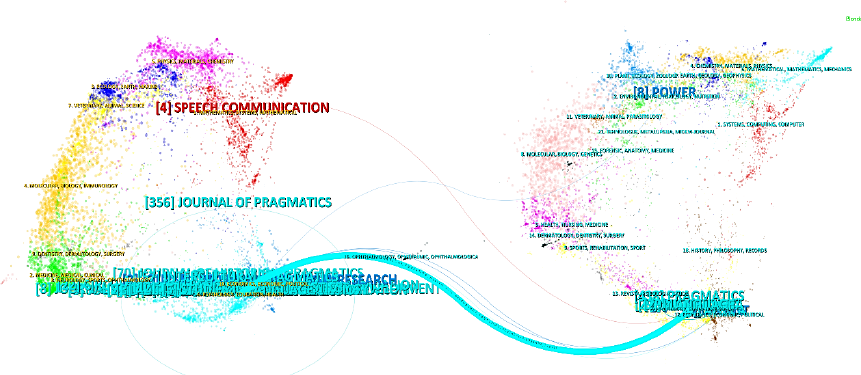 Source: CiteSpace version 6.3. R3 Advanced.
 Source: CiteSpace version 6.3. R3 Advanced.
 Source: CiteSpace version 6.3. R3 Advanced.
 Source: CiteSpace version 6.3. R3 Advanced.
 Source: CiteSpace version 6.3. R3 Advanced.