
 DEVELOPMENT AND VALIDATION OF AN EDUCATIONAL VIDEO ON PEDIATRIC PALLIATIVE CARE FOR HEALTHCARE PROFESSIONALS
ABSTRACT
Objective: to develop and validate an educational video on pediatric palliative care for healthcare professionals.
Method: this methodological, descriptive, and quantitative study was conducted in four stages: 1. pre-production; 2. validation of the script and storyboard content; 3. video production and validation by a panel of judges; and 4. face and semantic validation of the video with the target audience. Descriptive statistics (frequencies, percentages, and means) were used to characterize participants and calculate the Content Validity Index, Content Validity Coefficient, and Semantic Agreement Index. The video was produced using VideoScribe® software.
Results: a total of 78 articles were selected in the first stage. Five professionals participated in the second and third stages, and 23 healthcare professionals participated in the final stage. Most suggested changes during script validation concerned the video’s duration. Validation by the panel of judges yielded a Content Validity Index of 0.90, and the Semantic Agreement Index based on the target audience analysis was 0.96, indicating near-perfect agreement. The final video length was 12 minutes and 55 seconds.
Conclusion: this study successfully validated an educational video on pediatric palliative care for healthcare professionals. The coefficients obtained demonstrate that the video is valid and reliable, with the potential to support the dissemination of scientific knowledge. It is easily accessible and features engaging illustrations, making it a useful resource for healthcare teams.
DESCRIPTORS:
Palliative care; Pediatrics; Instructional film and video; Educational technology; Health personnel
RESUMO
Objetivo: desenvolver e validar um vídeo educativo sobre cuidados paliativos pediátricos para profissionais de saúde.
Método: estudo metodológico, descritivo e com abordagem quantitativa, desenvolvido em quatro etapas: 1. Pré-produção; 2. Validação do conteúdo do roteiro e do storyboard; 3. Produção do vídeo e validação por um comitê de juízes; 4. Validação aparente/semântica do vídeo com público-alvo. Foram utilizados estatística descritiva, frequência, percentagem e média para caracterização dos participantes e cálculo do Índice de Validade de Conteúdo, Coeficiente de Validade de Conteúdo e Índice de Concordância Semântica para análise das respostas. O programa VideoScribe ® foi utilizado para produção do vídeo.
Resultados: na primeira etapa foram selecionados 78 artigos de relevância para o estudo. Participaram da segunda e terceira etapas cinco profissionais, e da quarta e última etapa, 23 profissionais da saúde. Durante a validação do roteiro, a maioria das solicitações de alterações foram relacionadas ao tempo do vídeo. Da validação com o comitê de juízes, obteve-se um Coeficiente de Validade de Conteúdo igual a 0,90, e um Índice de Concordância Semântica de 0,96 a partir da análise do público-alvo, indicando uma concordância quase perfeita. A duração final do vídeo foi de 12 minutos e 55 segundos.
Conclusão: esse estudo cumpriu a proposta de validar um vídeo educativo sobre cuidados paliativos pediátricos para profissionais da saúde. Os coeficientes alcançados mostram que o vídeo é válido, podendo contribuir na disseminação de conteúdo científico, sendo de fácil acesso, com ilustrações atrativas para os profissionais que atuam nas equipes de serviços de saúde.
DESCRITORES:
Cuidados paliativos; Pediatria; Filme e vídeo educativo; Tecnologia educacional; Pessoal de saúde
RESUMEN
Objetivo: desarrollar y validar un video educativo sobre cuidados paliativos pediátricos para profesionales de la salud.
Método: estudio metodológico, descriptivo con abordaje cuantitativo, desarrollado en cuatro etapas: 1. Pre-producción; 2. Validación del contenido del guión y del storyboard; 3. Producción del video y validación por un comité de jueces; 4. Validación aparente/semántica del video con público-objetivo. Fueron utilizadas: estadística descriptiva, frecuencia, porcentaje y media para caracterización de los participantes y cálculo del Índice de Validez de Contenido, Coeficiente de Validez de Contenido e Índice de Concordancia Semántica para análisis de las respuestas. El programa VideoScribe ® fue utilizado para la producción del video.
Resultados: en la primera etapa fueron seleccionados 78 artículos de la relevancia para efectuar el estudio. Participaron, de la segunda y tercera etapas, cinco profesionales, y de la cuarta y última etapa, 23 profesionales de la salud. Durante la validación del guión, la mayoría de las solicitudes de alteraciones fueron relacionadas al tiempo del video. De la validación del comité de jueces, se obtuvo un Coeficiente de Validez de Contenido igual a 0,90, y un Índice de Concordancia Semántica de 0,96, a partir del análisis del público-objetivo, indicando una concordancia casi perfecta. La duración final del video fue de 12 minutos y 55 segundos.
Conclusión: este estudio cumplió la propuesta de validar un video educativo sobre cuidados paliativos pediátricos para profesionales de la salud. Los coeficientes alcanzados muestran que el video es valido, pudiendo contribuir para diseminar el contenido científico, siendo de fácil acceso, con ilustraciones atractivas para los profesionales que actúan en los equipos de servicios de salud.
DESCRIPTORES:
Cuidados paliativos; Pediatría; Película y video educativos; Tecnología educacional; Personal de salud
INTRODUCTION
Is to enhance the quality of life of adult and pediatric patients and their families by helping them cope with life-threatening illnesses through the prevention and relief of suffering, including pain and other physical, psychosocial, and spiritual challenges1.
In Brazil, efforts are underway to expand the provision of palliative care in response to the growing needs of the population. However, according to a survey conducted by the Academia Nacional de Cuidados Paliativos (ANCP) [National Academy of Palliative Care], access remains limited, with only 190 registered services equivalent to one specialized service for every 1.1 million inhabitants2. In light of this scenario, the global population, including Brazil, increasingly requires healthcare approaches centered on palliative care, where the value of care is defined by quality, ethical decision-making, and respect for the patient-family relationship in the face of suffering.
Pediatric Palliative Care (PPC) aims to minimize excessive interventions and therapies, improve quality of life through effective symptom management, and support families in addressing emotional challenges3. Notably, children with non-malignant yet life-limiting conditions are among those who most need this type of care. As a result of advances in medical technology, an increasing number of these children are experiencing improved survival rates4.
Another essential aspect of pediatric care is recognizing that children are individuals with rights and thus deserve comprehensive and specialized attention across all spheres of life5. In this context, the government has a responsibility to guarantee that every child receives care and treatment tailored to their individual needs, in accordance with the Estatuto da Criança e do Adolescente (ECA) [Child and Adolescent Statute]6. Comprehensive healthcare for children and adolescents must therefore be prioritized for this vulnerable population. It is also crucial to promote personalized care that addresses all dimensions of life, focusing on the child as a whole and including the family, as outlined in the ECA7.
However, an analysis of how and where PPC is implemented reveals that several myths persist, hindering its adoption in settings where it could be appropriately applied. One common misconception is that PPC is intended only for terminally ill patients or those with cancer. Other myths include the belief that it cannot be provided alongside curative treatment, that it hastens the dying process, or that the healthcare team ceases efforts to preserve the patient’s life8.
A study analyzing videos about PPC on the YouTube® platform showed that many of the posted videos attempt to challenge several of these myths. However, a significant portion still associates palliative care primarily with terminal illness and cancer, thereby contributing to the persistence of these misconceptions and a misunderstanding of the PPC approach9.
Thus, these challenges particularly the lack of knowledge about the topic, even among healthcare professionals may hinder access to PPC10.
Consequently, digital educational technologies, such as educational videos, have been increasingly used in the healthcare sector to train and guide professionals, primarily because they are easily accessible and already integrated into individuals’ personal and professional lives11.
These resources can make a positive contribution to healthcare professionals by facilitating the understanding of a new approach or reinforcing existing knowledge12.
In this context, the relevance of educational technologies becomes evident, as they serve as a foundation for promoting more effective, humane, and empathetic palliative care approaches. Therefore, this study aimed to develop and validate an educational video on PPC for healthcare professionals.
METHOD
This methodological, descriptive, and quantitative study was conducted online and carried out in four stages: 1. pre-production; 2. content validation of the script and storyboard; 3. video production and validation by a panel of judges; and 4. face and semantic validation of the video with the target audience. Methodological studies allow for the investigation of strategies for data collection and organization (development), as well as the description of processes for validating and evaluating tools and research methods. The objective of this study was also to support the creation of a reliable, accurate, and usable instrument13 in this case, an educational video.
The first stage involved a search for national and international publications on the topic, with the aim of grounding the script and storyboard for the educational video in current evidence. To this end, the following databases were consulted: Latin American and Caribbean Literature in Health Sciences (LILACS), PubMed, Scopus, PsycInfo, Web of Science, and the Cumulative Index to Nursing and Allied Health Literature (CINAHL).
The development of the script and storyboard was informed by scientific articles and additional materials on PPC, including those published by the Sociedade Brasileira de Pediatria [Brazilian Society of Pediatrics] and the World Health Organization1-8.
A panel of judges validated the script and storyboard. The panel consisted of professionals with specializations, master’s or doctoral degrees, scientific publications, and/or experience in palliative care and/or pediatrics. Nineteen individuals were pre-selected via the Lattes CV platform and invited to participate.
In the second stage, judges were invited via email, which included all relevant study information, ethical considerations, and an informed consent form. Upon providing consent, the judges accessed a Google Forms® link to review the submitted material. Although there is no consensus in the literature regarding the ideal number of judges, the adopted theoretical framework recommends a total of six judges to ensure adequate validation, provided there is at least 70 % agreement among them14. Professionals who did not complete the evaluation or provide feedback within 21 days, despite receiving up to three follow-up contacts, were excluded.
The panel of judges consisted of healthcare professionals who validated the content of the video script and storyboard using a previously validated data collection instrument15-16, adapted to a virtual format via Google Forms®. The instrument comprises 13 items that assess the materials in terms of their purpose, content, relevance, setting, verbal language, and space for comments and suggestions15-16.
In the third stage, the educational video was produced based on the script and storyboard validated by the panel of judges. The video featured a narrative voice accompanied by illustrative images and was created and edited using VideoScribe®, a software program that simulates hand-drawn animations to visually present the narrated content.
Also during the third stage, the video was uploaded to the YouTube® platform as a private link to prevent sharing before the study's completion. It was then sent to the same panel of judges from the second stage for validation. The panel evaluated the video using a second data collection instrument, adapted to a virtual format, consisting of 16 questions addressing its functionality, usability, efficiency, audiovisual technique, and overall presentation16.
Finally, in the fourth stage, face and semantic validation of the video was conducted with the target audience (healthcare professionals). In accordance with established recommendations, a minimum of six participants was included in the face and semantic validation process17.
For this stage, the target audience was recruited through email, social media platforms such as Instagram® and Facebook®, and messaging applications like WhatsApp®. The objective was to reach the largest possible number of healthcare professionals across the country. Participants were selected using the snowball sampling technique, in which each participant referred another individual who might be interested in participating in the study18.
An instrument developed for the comprehensive validation of educational technologies (ET) was used to assess the video with the target audience. This instrument comprises five evaluation domains: objectives, organization, writing style, appearance, and motivation18. Permission from the original author was requested and granted. To tailor the instrument to the context of this study and enhance comprehension, explanatory notes were added to clarify acronyms, for example, specifying “video” after ET and “healthcare professionals” after target audience, without altering the instrument’s original structure.
Professionals from the following fields were eligible to participate in the target audience evaluation of the video: nursing, medicine, nutrition, physical therapy, occupational therapy, psychology, and social work. The aim was to validate the video with a broad representation of the professions involved in PPC, provided participants were Brazilian and had internet access.
The analysis of the characteristics of both the judging panel and the target audience was conducted using descriptive statistics, including frequency, percentage, and mean. To assess inter-rater agreement among the judges, the Content Validity Index (CVI) and the Content Validity Coefficient (CVC) were calculated19-20. For the target audience's responses, the Semantic Agreement Index (SAI) was used18. A CVC value above 0.80 is considered acceptable21, while an SAI value above 0.70 indicates adequate content validity18.
The study was submitted to and approved by the local Ethics Committee. As it was conducted entirely online, an informed consent form was made available to participants via Google Forms®, with the option to download the document.
RESULTS
First stage - Pre-production of the script and storyboard
The search for Brazilian and international publications resulted in 78 articles, which were selected for full-text review. These articles, along with materials from the Brazilian Society of Pediatrics and WHO on palliative care, were used in the development of the video’s script and storyboard1-8-22. The content covered the following topics: definition; epidemiology; who can benefit from palliative care; the needs of children receiving palliative care; demystifying concepts and applications; and the role of healthcare professionals in delivering palliative care and its benefits for children referred to such care.
Second stage - Validation of the script and storyboard by the Panel of Judges
A total of 19 professionals were invited to participate in the second stage, which involved validating the script and storyboard content by a panel of judges. Each invitee was contacted up to three times, and the response deadline was flexible. However, due to unavailability, lack of response, or refusal (detailed in Figure 1), only five judges ultimately participated. The response time ranged from 7 to 30 days. Among the participants, four (80 %) were female, with a mean age of 36.2 years (SD ± 3.1; range: 31-39 years). Four judges (80 %) held doctoral degrees, and one (20 %) had a specialization obtained through a Multiprofessional Residency program.

Regarding professional training, the panel was composed of the following professionals: a nurse, a physical therapist, a physician, a psychologist, and an occupational therapist.
At this stage, two rounds of evaluation were conducted to develop a consensus version of the script and storyboard. Most of the panel’s suggestions were incorporated, even though the CVI values obtained were already above 0.80. Accepted suggestions included the addition of phrases to clarify the concept of palliative care emphasizing its focus on quality of life regardless of age guidance on communicating bad news, identifying groups of children who may benefit, summarizing the roles of healthcare professionals, eliminating distinctions between adult and pediatric palliative care, and adjusting terms that could lead to misinterpretation. The CVI for the final consensus version of the script and storyboard was 0.85, indicating agreement above the threshold required for content validation among the evaluators21.
Third stage - Video production and validation by a panel of judges
Following the validation of the script and storyboard content, the video was produced through the following steps: recording the validated audio narration; selecting the images to be included; adding written content to the video; synchronizing the audio and pauses with the visuals and text; and refining final details.
The audio was recorded using a mobile application in mp3 format. The content was divided and recorded in segments for later unification. After the individual segments were recorded, the Audio Joiner website was used to merge them and, when necessary, adjust the intervals between recordings.
The authors initially selected images from the image bank available in the free version of the VideoScribe® app and added written content to the video. Subsequently, the editor refined the background, added or modified certain images, and included additional text (Figure 2). The core video runs for 12 minutes and 15 seconds, with a final total duration of 12 minutes and 55 seconds, including references and authorship credits.
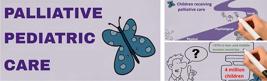
Cover and images with topics presented throughout the video “Pediatric Palliative Care for Healthcare Professionals”. Uberaba, MG, Brazil, 2024.
Using the data collection instrument, the panel of judges evaluated the video, and only one round of validation was conducted to reach a consensual version. The CVI values obtained are presented in Table 1.
The only item with a CVI of 0.60 was related to the video’s duration and its ability to assist healthcare professionals clearly and efficiently without becoming tiring. Although suggestions were made to reduce the video length in order to maintain audience engagement, it was not possible to implement these changes, as they would have altered content already validated in the previous stage. To support clarity and efficiency, visual elements such as drawings and keywords were incorporated, along with an appropriate narrator tone. All other items in the instrument received CVI scores above 0.80. The final consensus version achieved a CVI of 0.90, which is considered acceptable as it exceeds the pre-established threshold21.
Fourth stage - Face and semantic validation of the video with the target audience
A total of 23 healthcare professionals participated in this evaluation stage. The majority of participants were women (n = 20; 86.9 %) and self-identified as white (n = 18; 78.2 %). Most responses were from the Southeast region of Brazil (n = 16; 69.6 %), including seven from the state of Minas Gerais, six from São Paulo, and three from Rio de Janeiro. Additional responses came from the South (n = 6; 26.0 %), all from the state of Rio Grande do Sul, and one (4.4 %) from the Central-West region, specifically the Federal District. Participants’ ages ranged from 25 to 63 years, with a mean age of 41.6 years.
Regarding professional background, the sample included ten nurses, six physicians, two physical therapists, two social workers, two psychologists, and one occupational therapist. Of these, 13 participants (56.5 %) had completed at least one specialization, five (21.7 %) held a master’s degree, and five (21.7 %) held a bachelor’s degree. At the time of participation, all professionals had been graduated for at least one year, with an average of 12.5 years of professional experience. Among them, 13 (56.5 %) did not work with children, while 10 (43.5 %) reported working with pediatric populations.
Furthermore, participants were asked whether they had experience with children with severe or life-threatening illnesses or with PPC. Of the total, 19 (82.6 %) reported having such experience, while four (17.4 %) reported none.
Regarding the validation of the video by these professionals, 63.2 % of the 23 evaluations were classified as fully adequate, 33.1 % as adequate, and 3.7 % as partially adequate, as shown in Table 2. Based on these responses, the SAI was calculated for each item, all of which achieved values above 0.70. According to previous studies, this threshold indicates acceptable validity18-23.
Several suggestions and comments were made, particularly regarding the video’s length, potential adjustments, and modifications to specific sentences and phrases. The authors carefully discussed whether these changes were necessary. Additionally, it was suggested that the target audience be expanded to include the general public, with the aim of raising broader awareness of PPC. However, a separate video was developed specifically for that audience.
DISCUSSION
This study aimed to develop and validate an educational video on PPC for healthcare professionals. This type of technological resource has been widely used across various fields to promote knowledge. A panel of experts validated the video’s content, and the validation process helped ensure its quality and reliability for practical application. The selection of judges for content validation must be carried out carefully, as they are responsible for evaluating the appropriateness of the proposed construct and its alignment with the study’s objectives24.
Due to the specificity of the topic, the minimum qualification required was a specialization or residency-level training, combined with professional experience in the field under study. It is important to emphasize that formal academic credentials alone do not qualify an individual as a judge; rather, relevant professional experience and years of service play a key role10. Regarding the number of judges needed for the validation process, there is no consensus in the scientific literature on a minimum requirement. However, one study suggests that the number should depend on the availability and willingness of qualified individuals to participate, and that a minimum of five judges is considered adequate for validating the educational technology in question20.
The content validation phases of the script and educational video were challenging, particularly in obtaining responses from potential judges to serve on the panel. It is worth noting that, even before the Covid-19 pandemic, faculty members were already experiencing significant work overload, struggling to balance teaching, research, extension activities, and administrative responsibilities. This burden has been associated with increased rates of mental health issues among faculty in academic settings25. In light of these limitations, the feedback period was extended, and professionals with relevant field experience, though not necessarily holding doctoral degrees, were included in the validation process to ensure the video could be adequately assessed.
In Brazil, Resolution No. 41 of October 31, 2018, establishes that PC must be integrated into the Health Care Networks of the Unified Health System (SUS), with multiprofessional and interprofessional collaboration as one of its guiding principles7. Accordingly, this study sought to invite professionals representing the main healthcare categories in Brazil, such as physicians, nurses, psychologists, physical therapists, and occupational therapists, to join the panel of judges. While each member of an interprofessional PC team has specific responsibilities, they are expected to work collaboratively. When professionals coordinate and communicate effectively, patients benefit from comprehensive care that addresses their physical, mental, spiritual, and social needs26. Despite the growing need for interprofessional education, opportunities for joint teaching and learning remain limited27.
All members of the judging panel were from the Southeast region of Brazil, representing a single cultural perspective that may introduce bias. However, a 2018 survey conducted by the ANCP found that 58 % of registered palliative care services in the country were located in the Southeast28.
Regarding video validation, the only item with a CVI below 0.80 was related to the video’s length. A new version was not produced to shorten the video, as the content had already been validated in a previous stage. Moreover, the judges had recommended changes and additions to the initial version to make the video more comprehensive and effectively serve as a guide for healthcare professionals, which contributed to a longer duration than originally planned. Some judges, despite the CVI of 0.75 for this item, commented that the video was not tiring. The final version remains within the recommended time frame and is consistent with the length of similar videos commonly found online9. Additionally, one study advises that educational videos should not exceed 15 minutes, as longer durations may lead to fatigue and reduced engagement, hindering content assimilation29.
The video developed and validated in this study used a blue and lilac color scheme: blue to convey care and well being, and lilac to suggest spirituality and ressignification28. Butterfly illustrations were incorporated throughout, as the butterfly is commonly used as a symbol of palliative care.
Regarding usability defined as the effort required to use the video and individuals’ perceptions of its ease of use one positive comment highlighted that the video would help healthcare professionals understand key aspects of PPC, while also being easily accessible. When developing educational and informational materials in healthcare, it is recommended to use technologies that facilitate communication with the target audience by employing appropriate and accessible language that aligns with the intended purpose. Such resources should also support the teaching-learning process and promote changes in behavior and practices that contribute to improved care29.
Regarding the video’s face and semantic validation with the target audience, and considering the previously mentioned importance of teamwork, the authors agreed on the need to gather responses from professionals across multiple health fields to ensure a multiprofessional validation process.
Although most participants were concentrated in the Southeast region, which has a higher number of registered services compared to other regions27, there was still cultural diversity at this stage. The relatively heterogeneous sample of evaluators contributed to a broader range of perspectives on the video.
The lowest SAI in the video evaluation was related to its length. The video's duration was discussed based on the idea that a more engaging and concise video content could enhance professional learning. However, the video’s length was already within the recommended limit established by the study mentioned earlier29. Therefore, the final version, lasting 12 minutes and 55 seconds, was considered appropriate for this type of educational technology. Moreover, the majority of responses regarding the video’s duration rated it as fully adequate.
One participant highlighted the importance of including information in the video about how to seek support from a specialized palliative care team. However, a separate video is being developed for the general public, which will provide key information for patients and their families. Another participant suggested adding information on where professionals can pursue training or specialization in PC or PPC. If this suggestion is implemented, a list of relevant institutions or courses will be included in the video description when it is made publicly available on the platform.
In this context, educational videos serve as a tool to translate scientific evidence into dynamic and interactive content, functioning as a means of communication among researchers, healthcare professionals, and family members30.
A potential limitation of this study is that the video may reflect a specific cultural context that does not fully represent other regions of Brazil, as the panel of judges was composed in majority of professionals from the Southeast, specifically the states of São Paulo and Minas Gerais. It is worth noting, however, that this region has the highest concentration of registered palliative care services and academic institutions. As a result, professionals from other regions often study in the Southeast and may disseminate the knowledge they acquire upon returning to their home regions. In this way, the video may contribute to broader knowledge dissemination. Additionally, as previously mentioned, the study faced challenges in obtaining responses from potential judges to compose the content and video validation panel.
CONCLUSION
This study aimed to develop and validate the script and storyboard content of an educational video on PPC for healthcare professionals, achieving a CVC of 0.90. The video was also developed and validated by a judging panel composed of members from a multidisciplinary team. Likewise, the video validation process resulted in a CVC of 0.90, classifying the material as valid.
Furthermore, the educational video was found to be valid for its target audience in terms of both face and content validity and demonstrated strong potential to enhance healthcare professionals’ knowledge of PPC and demystify related concepts, achieving a high SAI. The coefficients obtained confirm that the video is both valid and reliable, having been developed based on the most current scientific evidence and using an engaging and easily accessible format.
Thus, the video is expected to support the training of healthcare professionals in PPC, contributing to increased confidence and knowledge in their practice and, consequently, to more effective care delivery, ultimately aiming to uphold the rights of every child in need of this type of care.
DATA AVAILABILITY
The dataset that support the findings of this study are not publicly available. However, the final product, an educational video, can be accessed at [https://youtu.be/mwEIIIPNPhs?si=yS7zCwbtF4z-xUzB].
REFERENCES
-
1. World Health Organization (WHO). Palliative care [Internet]. 2020 [cited 2023 Fev 11]. Available from: https://www.who.int/news-room/fact-sheets/detail/palliative-care
» https://www.who.int/news-room/fact-sheets/detail/palliative-care -
2. Academia Nacional de Cuidados Paliativos (ANCP). Atlas dos cuidados paliativos no Brasil 2019 [Internet]. 2023 [cited 2022 Oct 05]. Available from: https://paliativo.org.br/ancp-atlas-dos-cuidados-paliativos-no-brasil
» https://paliativo.org.br/ancp-atlas-dos-cuidados-paliativos-no-brasil -
3. Palaré MJ, Tavares F, Machado MC. Validação da versão portuguesa de um instrumento de avaliação de necessidades paliativas pediátricas: A Pediatric Palliative Screening Scale. Acta Méd Port [Internet]. 2023 [cited 2024 Mar 02];9(1):83-91. Available from: https://doi.org/10.20344/amp.18071
» https://doi.org/10.20344/amp.18071 -
4. Kiernan, G, Hurley, F, Price, J. ‘With every fibre of their being’: Perspectives of healthcare professionals caring for children with non-malignant life-limiting conditions. Child Care Health Dev [Internet]. 2022 [cited 2023 Mar 23];48(2):250-8. Available from:Available from:https://doi.org/10.1111/cch.12923
» https://doi.org/10.1111/cch.12923 -
5. Valete COS, Ferreira EAL, Bruno CH. O protagonismo da criança em cuidados paliativos para a efetivação da sua segurança. Cad Ibero Am Direito Sanit [Internet]. 2022 [cited 2023 Mar 23];11(3):52-69. Available from: https://www.cadernos.prodisa.fiocruz.br/index.php/cadernos/article/view/927/905
» https://www.cadernos.prodisa.fiocruz.br/index.php/cadernos/article/view/927/905 -
6. Brasil. Presidência da República. Lei nº 8.069, de 13 de julho de 1990. Estatuto da Criança e do Adolescente. Art. 11, alínea 2 [Internet]. 1990 [cited 2025 Mar 11]. Available from: https://www.planalto.gov.br/ccivil_03/leis/l8069.htm
» https://www.planalto.gov.br/ccivil_03/leis/l8069.htm -
7. Brasil. Ministério da Saúde. Resolução nº 41, de 31 de outubro de 2018. Dispõe sobre as diretrizes para a organização dos cuidados paliativos, à luz dos cuidados continuados integrados, no âmbito Sistema Único de Saúde (SUS) [Internet]. 2018 [cited 2023 Jan 05]. Available from: https://www.in.gov.br/web/guest/materia/-/asset_publisher/Kujrw0TZC2Mb/content/id/51520746/do1-2018-11-23-resolucao-n-41-de-31-de-outubro-de-2018-51520710
» https://www.in.gov.br/web/guest/materia/-/asset_publisher/Kujrw0TZC2Mb/content/id/51520746/do1-2018-11-23-resolucao-n-41-de-31-de-outubro-de-2018-51520710 -
8. Sociedade Brasileira de Pediatria. Departamento científico de medicina da dor e cuidados paliativos. Cuidados paliativos pediátricos: o que são e qual sua importância?: cuidando da criança em todos os momentos [Internet]. 2021 [cited 2023 Feb 13]. Available from: http://paulomargotto.com.br/documentos/20983
» http://paulomargotto.com.br/documentos/20983 -
9. Pan R, Ferreira GA, Ramalho AJN, Silva JLS, Manzan LO. Cuidados paliativos pediátricos: análise de vídeos do YouTube®. Contrib Cienc Soc [Internet]. 2024 [cited 2024 Sep 09];17(8):e9673. Available from: https://ojs.revistacontribuciones.com/ojs/index.php/clcs/article/view/9673
» https://ojs.revistacontribuciones.com/ojs/index.php/clcs/article/view/9673 -
10. Oliveira JL, Rodrigues RP, Barreto LA. O conhecimento dos fisioterapeutas sobre cuidados paliativos em pediatria em um hospital materno infantil. Rev Pesqui Fisioter [Internet]. 2021 [cited 2023 Mar 23];11(2):375-83. Available from: https://www5.bahiana.edu.br/index.php/fisioterapia/article/view/3769/4131
» https://www5.bahiana.edu.br/index.php/fisioterapia/article/view/3769/4131 -
11. Campos DC, Silva LF, Reis AT, Góes FGB, Moraes JRM, Aguiar RCB. Elaboração e validação de vídeo educativo para prevenção de queda em criança hospitalizada. Texto Contexto Enferm [Internet]. 2021 [cited 2023 Feb 11]30:e20190238. Available from: https://www.scielo.br/j/tce/a/d9Tszkbt4QWhKWr3V8X7sMp/?format=pdf⟨=pt
» https://www.scielo.br/j/tce/a/d9Tszkbt4QWhKWr3V8X7sMp/?format=pdf⟨=pt -
12. Rosa BVC, Girardon-Perlini NMO, Gamboa NSG, Nietsche EA, Beuter M, Dalmolin A. Desenvolvimento e validação de tecnologia educativa audiovisual para famílias e pessoas com colostomia por câncer. Texto Contexto Enferm [Internet]. 2019 [cited 2023 Feb 11];28:e20180053. Available from: https://www.scielo.br/j/tce/a/xm7r8rMqXyTgVMhNF7mvqgD/?format=pdf⟨=pt
» https://www.scielo.br/j/tce/a/xm7r8rMqXyTgVMhNF7mvqgD/?format=pdf⟨=pt - 13. Polit DF, Beck CT. Delineamento de pesquisa em enfermagem. In: Polit DF, Beck CT, editors. Fundamentos de pesquisa em enfermagem: avaliação de evidências para prática de enfermagem. Porto Alegre, RS(BR): Artmed; 2018. p. 247-368.
- 14. Pasquali L. Teoria e métodos de medida em ciências do comportamento. Brasília, DF(BR): Laboratório de Pesquisa em Avaliação e Medida da Universidade de Brasília; 1996.
-
15. Campoy LT, Rabey SAN, Castro FSS, Nogueira PC, Terçariol CAS. Bowel rehabilitation of individuals with spinal cord injury: Video production. Rev Bras Enferm [Internet]. 2018 [cited 2021 Sep 20];71(5):2376-82. Available from: https://www.scielo.br/j/reben/a/C6nH7PfFYnTrBXvw6R9qhNm/?format=pdf⟨=en
» https://www.scielo.br/j/reben/a/C6nH7PfFYnTrBXvw6R9qhNm/?format=pdf⟨=en -
16. Ferreira M, Godoy S, Goes FSN, Rossini FP, Andrade D. Lights, camera and action in the implementation of central venous catheter dressing. Rev Latinoam Enferm [Internet]. 2015 [cited 2021 Sep 28];23(6):1181-86. Available from: https://www.scielo.br/j/rlae/a/ztRZRMNypdDnpNRrwJmyShK/?format=pdf⟨=pt
» https://www.scielo.br/j/rlae/a/ztRZRMNypdDnpNRrwJmyShK/?format=pdf⟨=pt -
17. Pasquali L. Psicometria. Rev Esc Enferm USP [Internet]. 2009 [cited 2023 Jan 26];43(Spc):992-99. Available from: https://www.scielo.br/j/reeusp/a/Bbp7hnp8TNmBCWhc7vjbXgm/?format=pdf⟨=pt
» https://www.scielo.br/j/reeusp/a/Bbp7hnp8TNmBCWhc7vjbXgm/?format=pdf⟨=pt - 18. Teixeira E, Mota VMS. Tecnologias educacionais em foco. São Paulo, SP(BR): Difusão; 2011.
-
19. Rubio DM, Berg-Weger M, Tebb SS, Lee ES, Rauch S. Objectifying content validity: Conducting a content validity study in social work research. Soc Work Res [Internet]. 2003 [cited 2021 Oct 29];27(2):94-105. Available from: https://academic.oup.com/swr/article-pdf/27/2/94/4668485/27-2-94.pdf
» https://academic.oup.com/swr/article-pdf/27/2/94/4668485/27-2-94.pdf - 20. Lynn MR. Determination and quantification of content validity. Nurs Res. 1986;35(6):382-385.
-
21. Souza AC, Alexandre NMC, Guirardello EB. Propriedades psicométricas na avaliação de instrumentos: avaliação da confiabilidade e da validade. Epidemiol Serv Saúde [Internet]. 2017 [cited 2024 Sep 05];26(3):649-59 Available from: https://doi.org/10.5123/S1679-49742017000300022
» https://doi.org/10.5123/S1679-49742017000300022 -
22. World Health Organization (WHO). Integrating palliative care and symptom relief into paediatrics: A WHO guide for health-care planners, implementers and managers [Internet]. 2018 [cited 2021 Sep 22]. Available from: https://apps.who.int/iris/bitstream/handle/10665/274561/9789241514453-eng.pdf?sequence=1&isAllowed=y
» https://apps.who.int/iris/bitstream/handle/10665/274561/9789241514453-eng.pdf?sequence=1&isAllowed=y -
23. Dantas DC, Góes FGB, Santos AST, Silva ACS, Silva MA, Silva LF. Produção e validação de vídeo educativo para o incentivo ao aleitamento materno. Rev Gaúch Enferm [Internet]. 2022 [cited 2022 Sep 01];43:e20210247. Available from: https://doi.org/10.1590/1983-1447.2022.20210247.pt
» https://doi.org/10.1590/1983-1447.2022.20210247.pt - 24. Pasquali L. Instrumentação psicológica: Fundamentos e práticas. Porto Alegre, RS(BR): Artmed ; 2010.
-
25. Souza LL, Lima AVV. Estresse ocupacional, síndrome de burnout e docência universitária: uma revisão sistemática da produção acadêmico-científica brasileira. Trab (En)Cena [Internet]. 2022 [cited 2024 Aug 10];7:e022007. Available from: https://sistemas.uft.edu.br/periodicos/index.php/encena/article/view/14007
» https://sistemas.uft.edu.br/periodicos/index.php/encena/article/view/14007 -
26. Teoli D, School C, Kalish VB. Palliative Care. Treasure Island, FL(US): StatPearls Publishing; 2022 [cited 2023 Jan 27]. Available from: https://www.ncbi.nlm.nih.gov/books/NBK537113/
» https://www.ncbi.nlm.nih.gov/books/NBK537113/ -
27. Piper-Vallillo E, Zambrotta ME, Shields HM, Pelletier SR, Ramani S. Nurse-doctor co-teaching: A path towards interprofessional collaboration. Clin Teach [Internet]. 2022 [cited 2022 Dec 20];20:e13556. Available from: https://onlinelibrary.wiley.com/doi/epdf/10.1111/tct.13556
» https://onlinelibrary.wiley.com/doi/epdf/10.1111/tct.13556 -
28. Academia Nacional de Cuidados Paliativos. Panorama dos cuidados paliativos no Brasil [Internet]. 2018 [cited 2023 Jan 05]. Available from: https://paliativo.org.br/wp-content/uploads/2018/10/Panorama-dos-Cuidados-Paliativos-no-Brasil-2018.pdf
» https://paliativo.org.br/wp-content/uploads/2018/10/Panorama-dos-Cuidados-Paliativos-no-Brasil-2018.pdf -
29. Guimarães EMR, Barbosa IV, Carmo TG, Probo DRG, Rolim KMC. Construction and validation of an educational video for patients in the perioperative period of robotic surgery. Rev Bras Enferm [Internet]. 2022 [cited 2023 Jan 04];75(5):e20210952. Available from: https://www.scielo.br/j/reben/a/djwNvcWXRMsZhsN78YQQhrP/?format=pdf⟨=pt
» https://www.scielo.br/j/reben/a/djwNvcWXRMsZhsN78YQQhrP/?format=pdf⟨=pt -
30. Silva TSS, Santos R, Silva IS, Silva AC, Silva RF, Silva EM. Desafios da equipe multiprofissional em cuidados paliativos no Brasil: revisão integrativa. Res Soc Dev [Internet]. 2022 [cited 2023 Jan 14];11(6):e18511628904. Available from: https://www.researchgate.net/publication/362391270_Desafios_da_equipe_multiprofissional_em_cuidados_paliativos_no_Brasil_revisao_integrativa
» https://www.researchgate.net/publication/362391270_Desafios_da_equipe_multiprofissional_em_cuidados_paliativos_no_Brasil_revisao_integrativa
NOTES
-
ORIGIN OF THE ARTICLE
Stages 1, 2, and 3 were derived from the dissertation titled “Construção e Validação de Vídeo Educativo sobre Cuidados Paliativos Pediátricos para Profissionais de Saúde” [Development and Validation of an Educational Video on Pediatric Palliative Care by Healthcare Professionals] submitted to the Graduate Program in Health Care (PPGAS) at the Federal University of Triângulo Mineiro (UFTM) in 2023. Stage 4 was derived from a funded undergraduate research project under Call No. 14/2023 of the National Council for Scientific and Technological Development/ Federal University of Triângulo Mineiro (CNPq/UFTM).
-
FUNDING INFORMATION
Federal University of Triângulo Mineiro. PIBITI - UFTM. Public Notice No. 14/2023.
-
APPROVAL OF ETHICS COMMITTEE IN RESEARCH
Approved by the Ethics Committee in Research of the Hospital das Clínicas, Federal University of Triângulo Mineiro, under Opinion Report No. 5.411.820/2022 and Certificate of Presentation for Ethical Appreciation (CAAE) No. 56902122.0.0000.8667, for the development of an educational video. The face and semantic validation of the video was also approved by the Institutional Review Board at the Hospital das Clínicas, Federal University of Triângulo Mineiro, under Opinion Report No. 6.674.063/2023 and CAAE No. 76648823.5.0000.8667.
-
TRANSLATED BY
Arlete Belluzzo.


